Dealer-Owner Erin Evenson and the team at Watrous Home Hardware Building Centre joined members of the Watrous Recreation Committee and families from the Watrous Minor Ball Association to plant trees in celebration of National Tree Day. The event was held on September 6 at the Watrous Sports Grounds in Watrous, Saskatchewan. (CNW Group/Home Hardware Stores Limited)
Home Hardware Stores Limited marked National Tree Day recently by partnering with Tree Canada to support tree planting initiatives in 25 communities across the country.
The events are part of National Forest Week, held Sept. 21 to 28, and involve local stores collaborating with Tree Canada, volunteers and municipal partners to plant native trees in public spaces such as parks and schoolyards.
Ian White
“For more than 30 years, our Dealers have supported environmental initiatives in the communities they call home,” said Ian White, president and CEO of Home Hardware Stores Limited. “We are honoured to continue this important partnership with Tree Canada and to help make a positive, lasting impact.”
Tree planting activities took place earlier this month, including an event on Sept. 6 at the Watrous Sports Grounds in Watrous, Sask., where Dealer-Owner Erin Evenson and the Watrous Home Hardware Building Centre team were joined by members of the Watrous Recreation Committee and families from the Watrous Minor Ball Association.
Nicole Hurtubise
The retailer began its partnership with Tree Canada in 1992. Since then, more than 30,000 trees have been planted as part of joint reforestation and sustainability efforts.
“Tree Canada is thrilled to once again join forces with Home Hardware to green our communities,” said Nicole Hurtubise, CEO of Tree Canada. “Their continued leadership and support help bring local tree planting projects to life and inspire others to take action for the environment.”
Joseph Tassoni back stage at his fashion show in Arcadia Earth at The Well on September 19, 2025. Photo: George Pimentel
Canadian designer Joseph Tassoni redefined the runway this past Friday, September 19, with his Spring/Summer and Fall/Winter 2026 collection, presented in an immersive showcase at Arcadia Earth inside The Well in Toronto. The sold-out event, followed by an official afterparty at Le Germain Mercer, blended robotics, artificial intelligence, and climate-conscious couture in what many described as one of the most ambitious Canadian fashion presentations in recent memory.
“This collection is about more than clothes. It’s about our planet, sustainability, and the ways we respond to a warming world,” said Tassoni. “Every fabric was locally sourced and designed to be worn with pride, care, and consciousness, proudly made in Canada.”
A First-of-Its-Kind Canadian Runway Experience
From the outset, it was clear that the Joseph Tassoni fashion show was designed to be unlike anything Toronto had ever seen. Guests arrived to a red carpet hosted by Rina DiRisio and were greeted by celebrity photographer George Pimentel, who captured the night’s arrivals.
The runway itself was divided between two immersive spaces within Arcadia Earth, allowing two audiences to experience the show simultaneously. “We had 55 models because the show was running in two rooms at once,” explained Tassoni. “Each room was at capacity, and models had to move between spaces through immersive environments built from recycled materials.”
The presentation included a surprise element — Bolt, a prototype robot designed for disaster-response scenarios, took to the runway. “I was not sure how the audience would react to Bolt,” said Tassoni. “But people embraced him, taking photos and asking questions. It was important to show that technology is not just novelty, but connected to real issues of climate and safety.”
The Joseph Tassoni presentation included a surprise element — Bolt, a prototype robot designed for disaster-response scenarios, took to the runway. Image: George Pimentel
Technology Meets Sustainability
While robots and AI-generated backdrops caught attention, Tassoni emphasized that the deeper narrative remained sustainability. The designer staged the show in Arcadia Earth because each room in the venue is a physical response to environmental challenges, from plastics in oceans to deforestation.
“What I loved about Arcadia Earth was how much it tied to the collection,” said Tassoni. “All my materials were locally sourced, sustainable, and designed to return to the earth. The venue and the clothing spoke the same language.”
Video projections layered AI-enhanced imagery with personal touches from the designer. “The opening remarks featured me on screen, filmed on my iPhone and then layered with AI techniques,” he recalled. “I told my team: don’t try to perfect it, embrace the technology for what it is right now.”
Opening remarks by Joseph Tassoni at his runway presentation in Arcadia Earth at The Well in Toronto, September 19, 2025. Photo: George Pimentel
The Three-Part Collection
The SS/FW 2026 collection was divided into three themes: Island, City, and Mountain. Each reflected Tassoni’s vision of how people live, move, and dress across different environments.
Island: Breezy linen suiting and flowing wrap garments designed for versatility in warm climates. “I wanted to take classic tailoring and reimagine it in lightweight linen, perfect for hot summers while still looking polished,” Tassoni explained.
City: Staple pieces for urban life, from structured blazers to evening gowns, paired with functional outerwear.
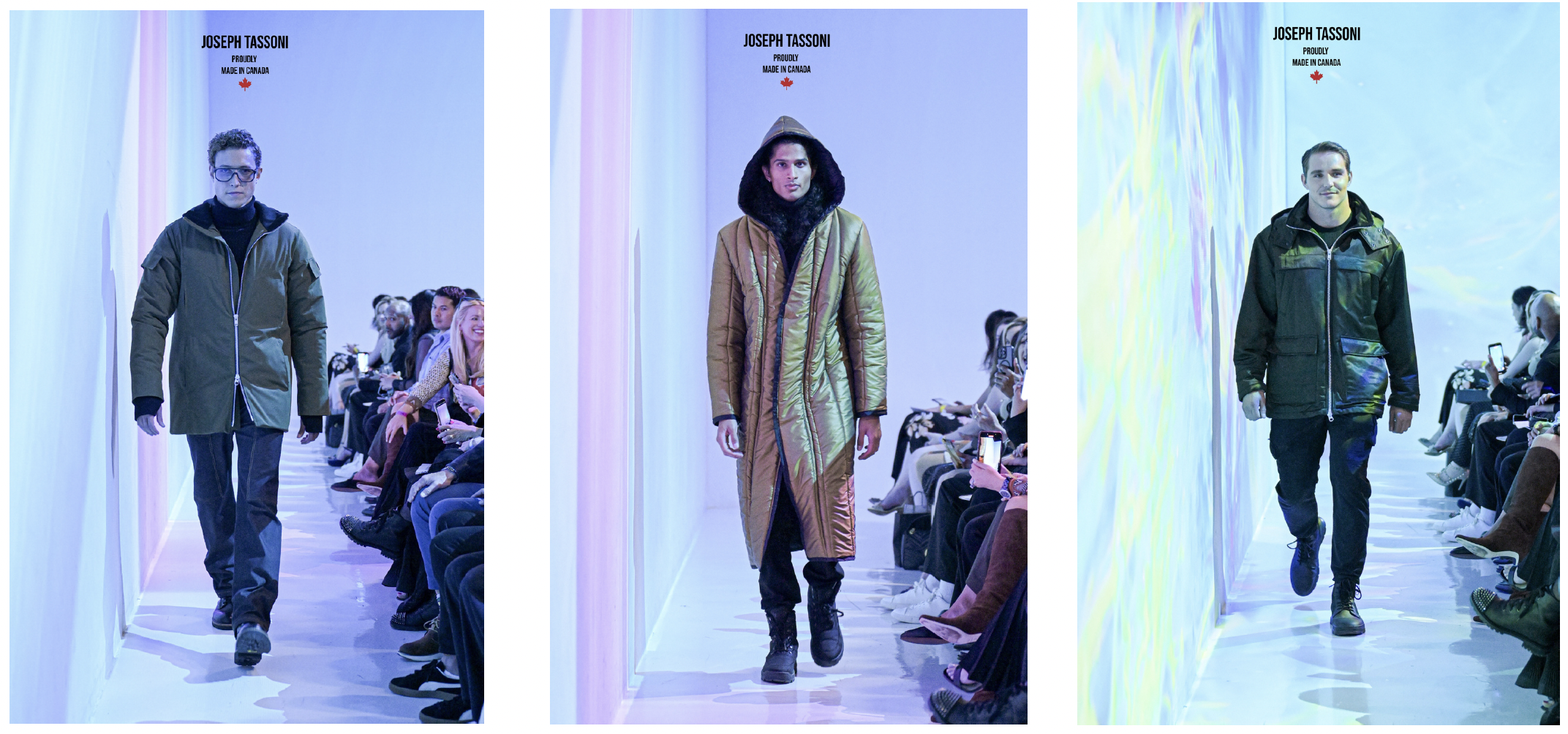
Mountain: Outerwear crafted from 100% recycled plastics, including reversible parkas in bronze and black. Tassoni also reintroduced his brand’s signature tulip parka, first launched in 2017.
“I always like to offer options,” said Tassoni. “When people invest in one of my pieces, it’s sustainable, made in Canada, and designed with multiple styling possibilities.”
Joseph Tassoni runway show in Arcadia Earth at The Well in Toronto, September 19, 2025. Video: Craig Patterson
Inclusivity on the Runway
The casting reflected a deliberate choice to showcase diversity. Alongside professional models were public figures, a drag performer, cancer survivor, and international beauty queens.
One highlight was Aliya Jasey, who survived years of chemotherapy as a child and walked in the show for her second year. “She’s beautiful inside and out, and an inspiration,” said Tassoni.
The lineup also included Miss Fiercalicious of Canada’s Drag Race, former Miss Venezuela Keysi Sayago, and several Canadian supermodels. “I wanted to show every way people identify,” said Tassoni. “It’s about giving models a platform and creating an elevated experience not typically offered in Canada.”
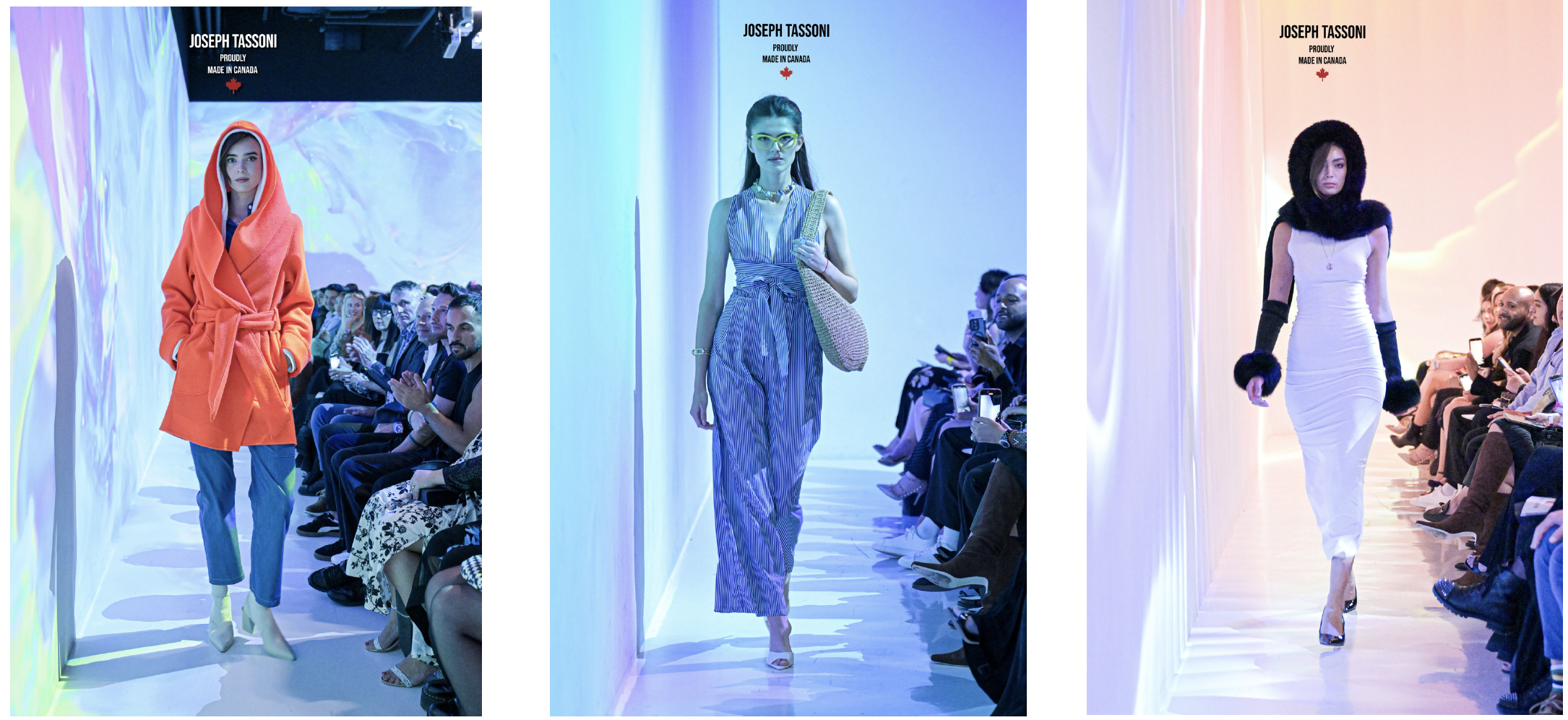
Looks from the Joseph Tassoni runway show in Arcadia Earth at The Well in Toronto, September 19, 2025. Photo: George Pimentel
Birks Diamonds and Aldo Footwear
The show also carried unexpected partnerships. Four Birks diamond pieces, valued in the hundreds of thousands of dollars, were quietly featured in select runway looks, representing the four seasons. “We kept it very low key for security purposes, but it was special to incorporate these Canadian jewels,” Tassoni noted.
Every model wore footwear provided by Aldo, marking the second year of collaboration between the Montreal-based global brand and the designer. “They told me they believe in my message and want to support a Canadian brand like mine.”
“I was very proud to partner with Birks and Le Germain, both heritage Canadian companies.”
Looks from the Joseph Tassoni runway show in Arcadia Earth at The Well in Toronto, September 19, 2025. Photo: George Pimentel
An Audience of Loyalists and Newcomers
The energy in the crowd underscored Tassoni’s growing influence. Half of the audience travelled from Halton, Niagara-on-the-Lake, and surrounding communities where he has built a loyal client base. Many guests wore custom Tassoni pieces, some dating back to the brand’s early years.
“I was humbled to see clients wearing pieces I made when I launched in 2017,” Tassoni said. “It reminded me that my work has longevity and meaning beyond just trends.”
Toronto’s fashion community and media also turned out in force. The show reached capacity quickly, and according to Tassoni, some individuals even attempted to impersonate press to gain entry.
Looks from the Joseph Tassoni runway show in Arcadia Earth at The Well in Toronto, September 19, 2025. Photo: George Pimentel
Afterparty at Le Germain Mercer
Following the show, guests moved to the official afterparty at Le Germain Mercer, where the hotel unveiled its new restaurant with a disco-infused celebration.
“I ran over to greet people and then started losing my voice,” Tassoni admitted with a laugh. “But the energy was incredible. People were dancing, networking, and celebrating well into the night.”
Curated drinks, hot pink décor, and DJ sets created a lively atmosphere that extended the night’s narrative of fashion meeting community.
Looks from the Joseph Tassoni runway show in Arcadia Earth at The Well in Toronto, September 19, 2025. Photo: George Pimentel
A Designer Shaping Canadian Fashion
This marks the third consecutive year that Joseph Tassoni has staged an independent large-scale fashion event in Toronto. Unlike collective fashion weeks, Tassoni’s shows are self-directed, immersive productions that emphasize his brand’s DNA: sustainability, Canadian production, and inclusivity.
“There’s no platform in Canada offering an elevated guest experience like this,” Tassoni said. “That’s why I create my own shows. Guests arrive and it’s complimentary, with food, drinks, and an atmosphere that celebrates Canadian fashion.”
For Tassoni, the Joseph Tassoni fashion show was about launching a collection while creating community, pushing technological boundaries, and showcasing how Canadian-made design can compete on a global stage.
“This was a lot of love,” he reflected. “From the music to the styling, everything was led by me and my team. Nobody has done anything like this before in Canada.”
A new wellness retreat focused on private thermal therapy is set to open in Calgary next month. Leela Thermal House will open its doors on Oct. 6 at 6180, 5111 Northland Dr. N.W., offering two-hour sessions that combine guided hydrotherapy with massage therapy.
The 2,400-square-foot space features private thermal contrast therapy suites, designed to accommodate one or two guests in a device-free, self-paced environment.
The concept is the latest from Leela Eco Spa and SKA Thermal Spa, and is the first spa in Alberta dedicated to private thermal contrast therapy.
“In most spaces, wellness is shared with crowds and strangers, which can make it harder to fully relax or feel at ease. We believe wellness is a deeply personal journey.
“That’s why every session here takes place in a private suite, where guests can choose the tranquillity of solitude, allowing their mind and body to renew in silence, or share the rhythm of heat and cold with a partner or friend. A private space makes wellness feel comfortable, safe, and freeing – exactly as it should be.”
Each session begins with essentials such as a robe, slippers, towels, body scrub and a secure phone sleeve. The 60-minute hydrotherapy circuit includes:
A preparation shower (5–10 minutes)
Sauna session with guided meditation (20 minutes)
Cold plunge immersion (3 minutes)
Tea break and relaxation (5 minutes)
Second sauna session (10 minutes)
Final cold plunge (3 minutes)
Salt scrub shower and tea service during the remaining time
Each suite is equipped with an Estonian wood sauna, custom cold plunge, shower, meditation experience, rejuvenation station and private changing area. Following the hydrotherapy circuit, guests are guided into a 60-minute massage treatment to complete the session.
The full Thermal Retreat and massage experience begins at $170. Thermal Retreat-only options are available upon request. Guests must be 18 years or older and not be pregnant to access the facilities.
The new retreat will employ a team of 20 and adds to Leela’s growing portfolio of wellness destinations. The company began with a single spa in Calgary and now includes multiple Leela Eco Spa locations across Calgary, Winnipeg and Oakville, along with SKA Thermal Spa in Calgary’s Beltline neighbourhood.
With Kensington confirmed as the next community to host a Thermal House, the company plans to continue expanding its private hydrotherapy concept.
A widespread decline in retail trade held back Canada’s economic growth in July, as real gross domestic product rose 0.2 per cent, following a 0.1 per cent decline in June, Statistics Canada said Friday.
The retail sector contracted 1.0 per cent in July, offsetting some of the gains made across goods-producing and service industries. The agency reported broad-based declines, with 8 of 12 subsectors posting losses.
“After leading the growth in June, food and beverage stores (-2.0%) was one of the largest contributors to the decrease in July,” Statistics Canada said, attributing the drop largely to weaker activity at supermarkets and other grocery retailers.
Other significant declines came from clothing and clothing accessories stores (-3.4 per cent), sporting goods, hobby, book and music stores (-8.2 per cent), and building material and garden equipment and supplies dealers (-1.5 per cent), which all saw pullbacks after gains the previous month. However, non-store retailers — which include online sales — rose 2.4 per cent, softening the overall decline.
Despite the drag from retail, the overall economy grew, marking the first monthly GDP increase in four months, driven mainly by a rebound in goods-producing industries, which expanded 0.6 per cent after three consecutive months of contraction. Services-producing industries edged up 0.1 per cent. In total, 11 of 20 industrial sectors posted gains in July.
The mining, quarrying, and oil and gas extraction sector led growth with a 1.4 per cent increase. Metal ore mining rose 2.6 per cent, contributing to a 2.6 per cent gain in the broader mining and quarrying category (excluding oil and gas). The oil and gas extraction subsector expanded 0.9 per cent, supported by a 1.2 per cent rise in oil sands extraction as production ramped up following spring maintenance work. Oil and gas extraction outside the oil sands grew 0.6 per cent, reflecting higher output of natural gas and crude petroleum.
Transportation and warehousing increased by 0.6 per cent in July, recovering from a 0.7 per cent decline in June. Pipeline transportation (+2.8 per cent) posted its strongest growth since September 2022, driven by gains in crude oil and other pipeline transportation (+3.3 per cent) and natural gas pipelines (+2.3 per cent), in line with higher exports.
Photo: Jack Sparrow
Support activities for transportation rose 1.0 per cent, the largest gain since April 2024. Statistics Canada noted this increase “reflects in part the higher activity at the LNG Canada facility in Kitimat, which completed its first full month of operations in July.” Rail transportation also grew by 1.1 per cent.
The manufacturing sector expanded 0.7 per cent, partly reversing a 1.5 per cent decline in June. Durable goods manufacturing rose 1.0 per cent, led by transportation equipment manufacturing (+3.2 per cent). Motor vehicle parts manufacturing surged 10.5 per cent, while motor vehicle manufacturing climbed 9.1 per cent. Statistics Canada noted that planned summer shutdowns at Ontario assembly plants were less pronounced this year “due to the continued production slowdown, influenced by factors such as the new tariffs imposed by the United States.”
Primary metal manufacturing, however, fell 5.5 per cent, dampening growth in the sector. Iron and steel mills and ferro-alloy manufacturing dropped 19.1 per cent — the sharpest monthly decline since April 2020 — as U.S. tariffs on Canadian steel imports doubled to 50 per cent in early June.
Non-durable goods manufacturing rose 0.4 per cent, with chemical manufacturing up 4.8 per cent. “Pharmaceutical and medicine manufacturing expanded 12.6% in the month, offsetting most of the decline recorded in June,” the agency said.
Wholesale trade increased 0.6 per cent, marking the third consecutive monthly gain. Motor vehicle and parts wholesalers led the sector (+5.4 per cent), in line with rising production and exports. Building material and supplies wholesalers grew 2.5 per cent, driven by lumber and millwork.
Real estate and rental and leasing rose 0.3 per cent in July, reaching a new record high for the second month in a row. “Growth in July was driven in large part by higher activity at the offices of real estate agents and brokers and activities related to real estate (+3.6%),” Statistics Canada said. The increase reflected stronger home resales, particularly in large markets in Ontario and British Columbia. Legal services, which are closely tied to real estate transactions, grew 0.5 per cent.
Looking ahead, advance data suggest that real GDP was essentially unchanged in August. Gains in wholesale and retail trade were offset by declines in mining, manufacturing, and transportation. These preliminary figures will be updated on Oct. 31, when official August data are released.
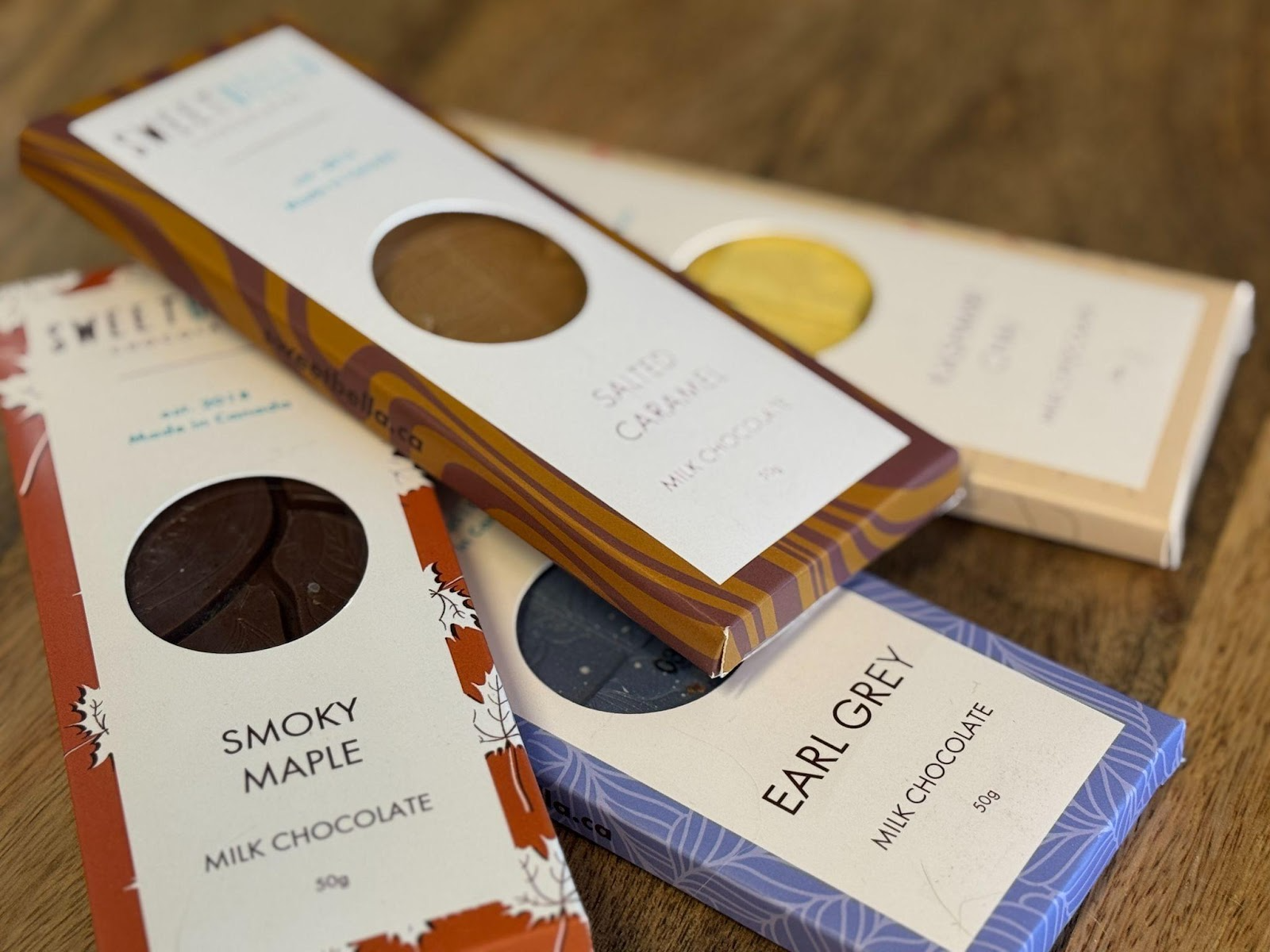
A Calgary-based artisan chocolate brand is expanding its retail footprint and production capacity as demand for its handcrafted bars continues to grow. Sweet Bella Chocolates, founded by pastry chef Kevin Conniff, is now available in a growing number of retailers across Calgary and select locations in the United States.
The brand gained local attention in 2023 when Conniff was named runner-up and the only Canadian finalist on Season 10 of Food Network’s Holiday Baking Championship. Since then, the company has increased its production capabilities, introduced new flavour combinations and attracted a roster of new retail partners.
Kevin Conniff
“Our recent production expansion means we can now deliver many more bars to retailers across Calgary and beyond,” Conniff said. “With new production machinery, we’re able to create larger batches, while incorporating our premium chocolate ingredients and natural flavours to create a unique and delicious bar.”
The chocolatier is now stocked in several Alberta retailers including Sunterra Market, Luke’s Drug Mart, The Italian Centre, The Cookbook Co. Cooks, Springbank Cheese Co., Lina’s Italian Market and Calgary International Airport Relay stores. Sweet Bella products are also available in select retail shops in Colorado, Texas and Connecticut.
Sweet Bella began as a home-based project with handmade, small-batch production. It has since grown into a team of five dedicated staff members crafting bars daily.
Kevin Conniff
“Sweet Bella began in my home kitchen with small-scale production, where every bar was made by hand in tiny batches,” Conniff said. “What started as a passion project has since grown into a dedicated production team of five who craft our chocolate bars daily. The journey from a single kitchen to a growing business has been incredible, and we’re proud to bring the best chocolate to our retailers and customers.”
The company emphasizes originality and high standards in its offerings, using quality ingredients and distinctive flavour infusions. According to the release, Sweet Bella’s commitment to handcrafted production and innovation sets it apart in the premium chocolate market.
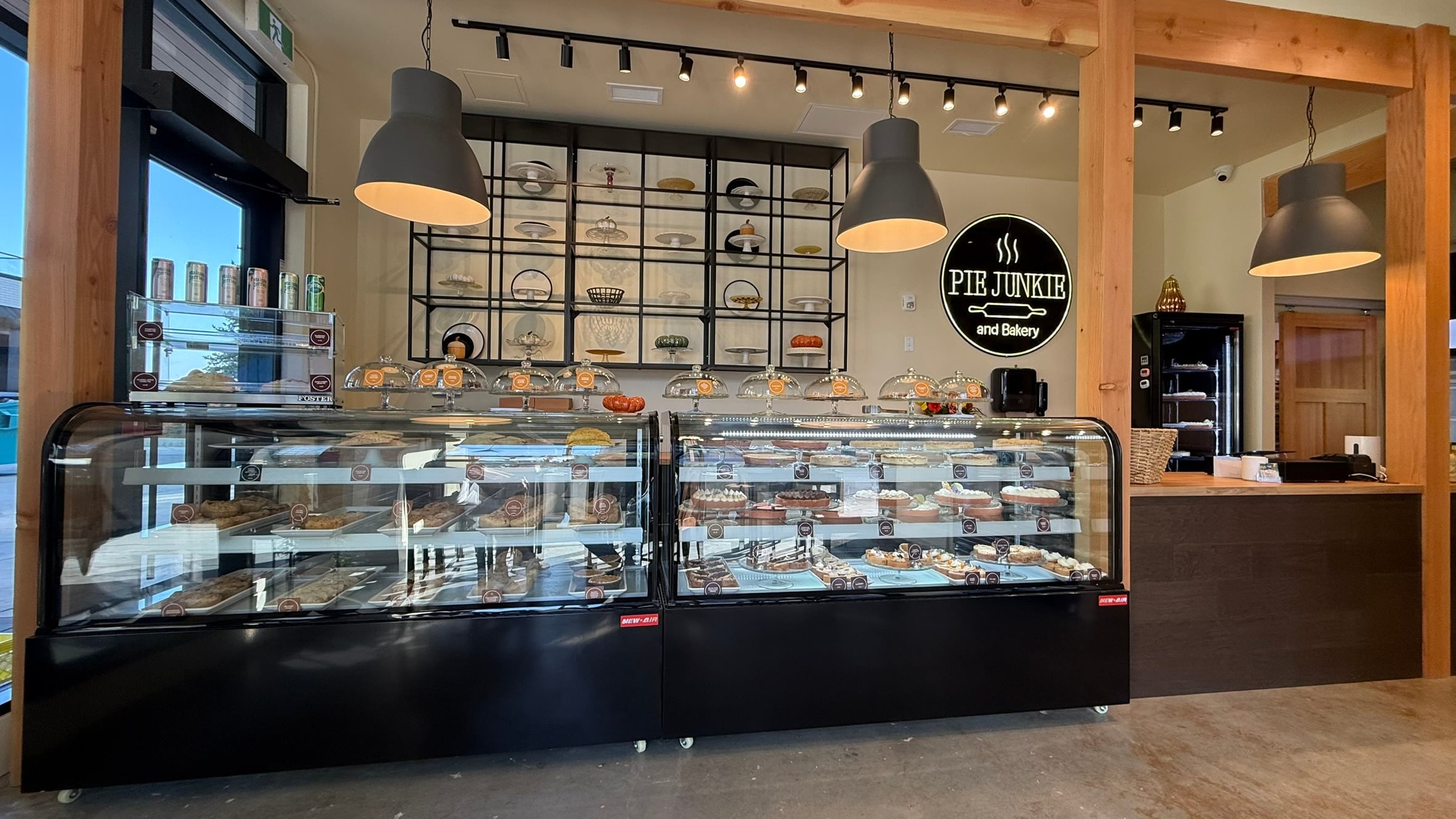
Calgary-based bakery Pie Junkie is celebrating its 10th anniversary with the opening of a new location in the city’s West District.
Founded in 2015 by Nancy Goemans, Pie Junkie began as a single neighbourhood pie shop and has grown into a local favourite known for hand-made sweet and savoury pies. The business is co-owned by Jo-Anne Caza, who joined a year after its launch.
Jo-Anne Caza (left) and Nancy Goemans
“Ten years ago, we set out to make pies the way they’re supposed to be made – by hand, with care, and with ingredients we’re proud of,” said Goemans. “What started as a neighbourhood pie shop has grown into a citywide community of pie lovers who have been with us every step of the way.”
Located at 8234 Broadcast Avenue S.W., the new 1,167-square-foot store will be open daily from 10 a.m. to 7 p.m. and will offer the bakery’s full menu, including seasonal features and pre-order pickup. The opening adds seven new roles, bringing Pie Junkie’s team to more than 50 full- and part-time employees.
“As we celebrate this milestone anniversary and open our fifth Calgary location, we’re reminded that pies aren’t just about pastry and filling, they’re about bringing people together,” said Goemans.
Pie Junkie
The expansion comes just ahead of the Thanksgiving season, one of the bakery’s busiest times. Pre-orders are now available across all locations, including the new West District shop. Offerings include Pie Junkie’s Turkey Dinner pie, bourbon pumpkin pie, classic apple with caramel, salted-honey, pumpkin cheesecake, and mushroom wellington.
Customers are encouraged to place orders early due to limited capacity and high demand.
Pie Junkie operates five locations in Calgary: Spruce Cliff, Crowfoot, Mahogany, Legacy and West District. The company also partners with more than 15 retailers and hospitality businesses across Alberta and B.C., and operates an e-commerce platform with citywide delivery.
The bakery supports community initiatives through its Easy as Pie fundraising program and contributes to local food security efforts by donating surplus pies. It also uses biodegradable and compostable packaging materials as part of its sustainability efforts.
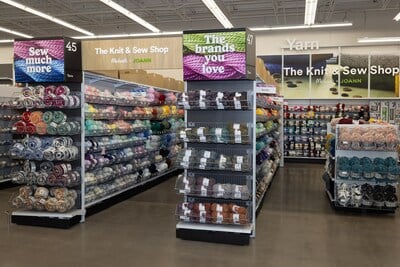
Michaels® Debuts The Knit & Sew Shop and The Party Shop in all Stores across Canada (CNW Group/The Michaels Companies, Inc.)
Michaels has launched two new in-store experiences, The Knit & Sew Shop and The Party Shop, now available in all stores across Canada, the company announced this week.
The new shop-in-shops feature expanded product assortments and services in the yarn, sewing, and party categories. Michaels said the additions build on its earlier expansion of party offerings and the acquisition of the intellectual property and private label brands of JOANN earlier this year.
David Boone
“The launch of The Knit & Sew Shop and The Party Shop at Michaels is a transformative step forward on our mission to become the go-to destination for fueling creativity and celebration,” said David Boone, chief executive officer at Michaels. “We are proud to offer an unmatched experience for creating and celebrating through our expansive product assortments, enhanced services, lower price points, and seamless in-store and online shopping options.”
The Knit & Sew Shop at Michaels
The Knit & Sew Shop
Now featured in 138 stores across Canada, The Knit & Sew Shop offers a curated assortment of yarn, threads and sewing supplies. Michaels said the expanded selection includes brands such as Big Twist®, which will be available in stores by the end of October.
To meet customer demand, Michaels has increased in-store space for its sewing and yarn sections and plans to grow its yarn selection by 25 per cent this year. The company is adding hundreds of new skeins, including new and returning brands, and has introduced Gütermann® threads, sewing machines from Singer and Brother, beginner needle-crafting kits, and other sewing notions.
The Party Shop
The Party Shop includes more than 700 new products across all Michaels stores. The expanded section features custom balloon bundles, themed paper goods, balloon arch kits and other party supplies. A dedicated Balloon Bar in each store offers latex and foil balloons, including customizable options for various occasions.
Michaels said its party supplies start at $2.99 and include exclusive themes such as rodeo, bows, milestone birthdays and a blue gingham line with a nostalgic design.
Birthday party pricing reduced
The retailer has also lowered its in-store birthday party prices, reducing the starting cost from $299 to $149. According to Michaels, this change makes it easier for parents to host creative, stress-free celebrations.
All parties include a guided craft led by a Party Captain and a range of themed options. So far in 2025, Michaels has hosted more than 4,200 birthday parties, serving over 36,000 children.
In June, Michaels announced the acquisition of the intellectual property and private label brands of JOANN, including the development of the beloved Big Twist brands as part of the Michaels portfolio.
At the time, Michaels said it is expanding its fabric, sewing, and yarn assortment, adding over 600 products across new and existing brands, including sewing and quilting supplies, fabric, yarn, specialty threads, sewing machines, and more. The acquisition and expanded product assortment reflect progress as Michaels continues to reimagine the customer experience to become the go-to destination for fueling creativity and celebration.
“We’re honored to have the opportunity to welcome JOANN customers into our creative community and are committed to delivering the selection, value, and inspiration they are looking for at Michaels,” said Boone. “This acquisition allows us to better serve both new and existing customers, respond to rising demand across categories, and build on our momentum as the destination for creating and celebrating in North America.”
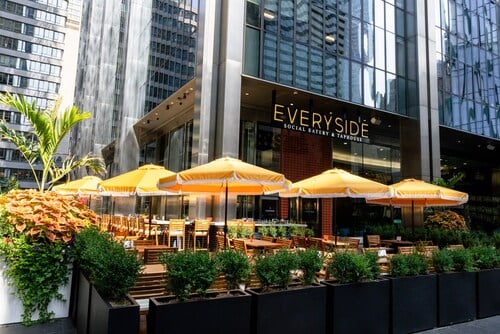
Street view of Everyside Social Eatery & Taphouse at #100-120 Adelaide St W, Toronto (CNW Group/Everyside Social Eatery & Taphouse)
A new social eatery and taphouse has opened in the heart of downtown Toronto, offering a casual atmosphere, locally crafted beer and a menu of Canadian-inspired classics. Everyside Social Eatery & Taphouse, located at 100-120 Adelaide Street West, is now open daily from 11 a.m. to 2 a.m. The venue features more than 40 taps, including house-made brews such as Easy Lager, Easy Amber and Easy IPA, alongside selections from Toronto breweries.
“In the heart of downtown Toronto, Everyside warmly welcomes everyone — it’s the place where you walk in and know this is your new favourite hangout,” said Brian James, CEO of Everyside, in a statement. “Whether you’re a local 9-5er, visiting for a game, or connecting with friends, guests can kick back and feel at home at Everyside with food made to share, unfussy vibes, and locally crafted beer from us and our friends in the brewing community.”
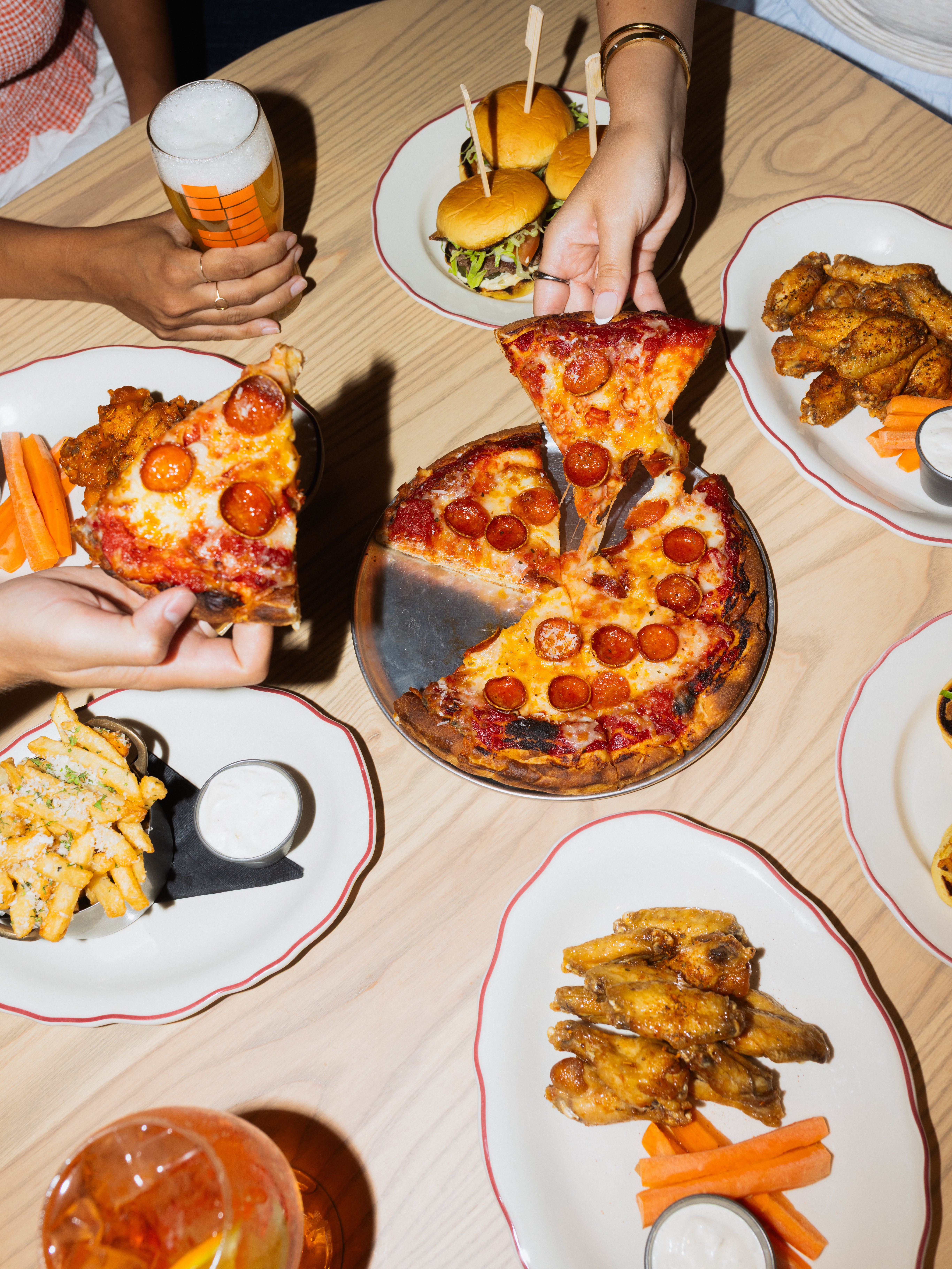
The eatery’s menu, designed by chef Stefan Skeene, includes shareables such as burrata and tartare, as well as burgers, salads, bowls and sourdough pizzas, with a gluten-free option available.
Everyside offers classic and feature cocktails, a curated wine list, and twice-daily happy hour specials. Promotions run from 2 p.m. to 5 p.m. and 9 p.m. to 2 a.m., featuring $5 Everyside beers, $6 local beer, $7 wine on tap, $10 select cocktails, and specialty shots starting at $5. Food specials include $10 truffle fries, hummus and pita, $15 wings, sliders, and a buy-one-get-one half-off deal on pizzas.
The venue was created by Warm Welcome Hospitality, the team behind Saint John’s Tavern, Melrose on Adelaide and Piccolo Caffe e Vino.
More information is available at drinkeveryside.com or on social media @drinkeveryside.
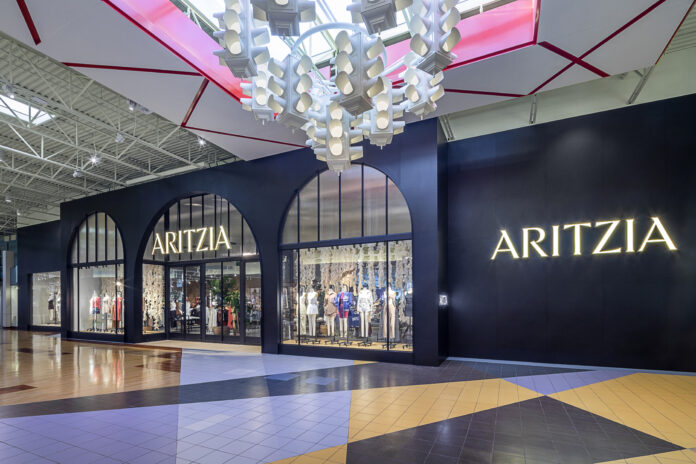
Aritzia at Vaughan Mills, photo provided by Vaughan Mills.
Canadian retailer Aritzia is continuing its strong momentum across North America, with Stifel Nicolaus Canada Inc. raising its target price for the company to $96.00 per share. The investment bank’s latest research note, authored by Martin Landry, Managing Director and equity research analyst, highlights better-than-expected earnings trends and solid market share gains as reasons for the higher valuation.
The new forecast comes as Aritzia prepares to report its second quarter fiscal 2026 earnings on October 9. Analysts now expect adjusted earnings per share for the quarter to come in at $0.41, nearly double the $0.21 reported in the same quarter last year. That represents a 96 percent year-over-year increase, slightly ahead of consensus estimates of $0.39.
Martin Landry
Aritzia has exceeded analyst expectations in each of the last eight quarters, and Landry believes this streak is poised to continue. Credit card data show robust sales growth in both Canada and the United States, and the company’s ongoing store expansion is contributing to higher square footage.
Canadian Momentum Supports Upgraded Forecast
Within the Canadian market, Aritzia continues to post healthy comparable sales. Stifel increased its Canadian comparable sales forecast by 300 basis points to a 10 percent year-over-year gain. The revised estimate follows strong first-quarter results, when the retailer posted 17 percent growth in Canada.
“Given the Canadian economy is performing better than expected and Aritzia’s significant growth in Q1, we are comfortable with our revised 10 percent revenue growth forecast,” Landry noted in the report. He added that Aritzia’s investments in digital marketing are expected to continue supporting growth throughout the remainder of the year.
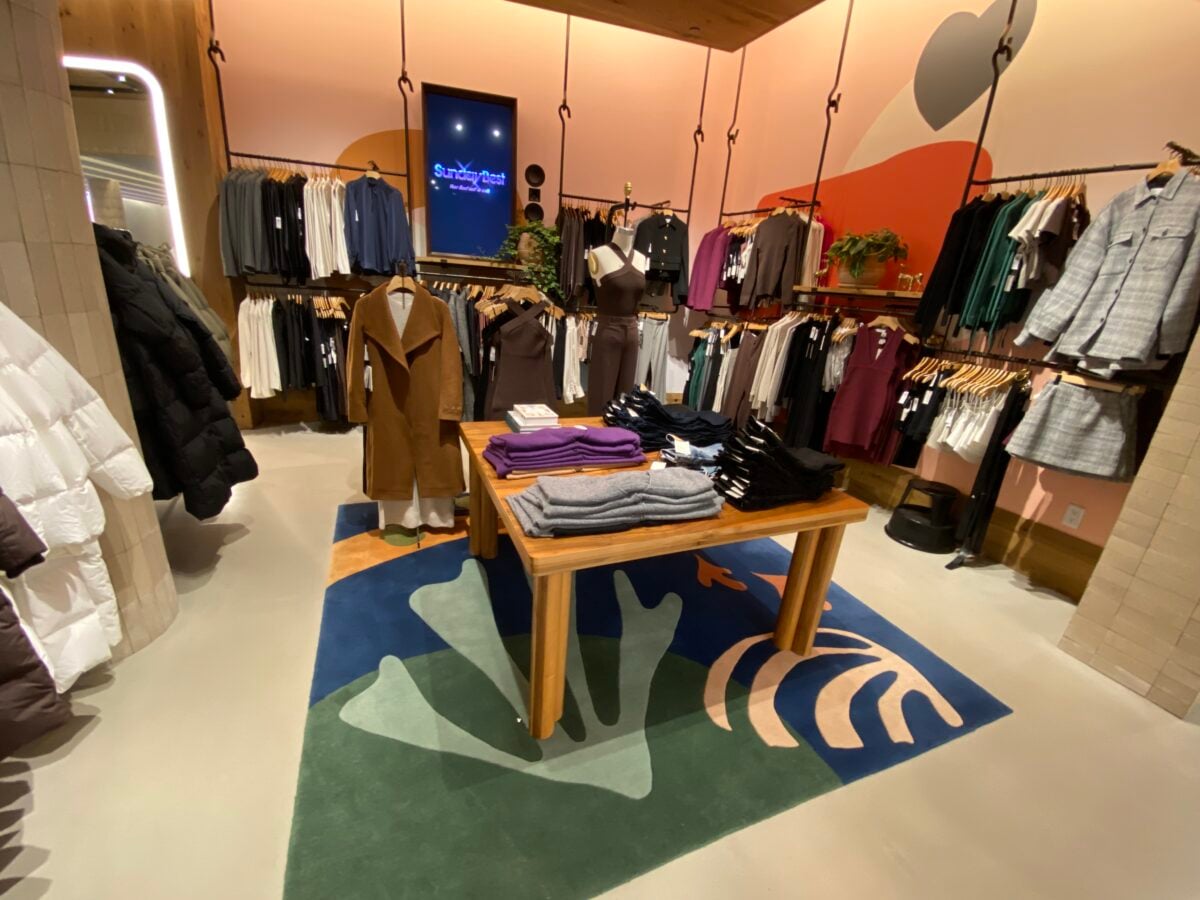
Under renovation: Aritzia at CF Toronto Eaton Centre, september 2025. Photo: Dustin Fuhs/6ix Retali
U.S. Growth Drives Revenue Expansion
The United States has become an increasingly important driver for Aritzia, and Stifel projects comparable sales growth of 15 percent year-over-year for the quarter. That translates into total revenue growth of 37 percent in local currency, only a slight moderation from the 40 percent growth reported in the previous quarter.
Data from analytics firm Second Measure, which tracks credit and debit card spending, indicates U.S. sales rose at a pace closer to 40 percent during the period, suggesting the possibility of upside to Stifel’s forecast. “We are comfortable with our U.S. revenue assumption and see potential for a small upside,” said Landry.
Aritzia’s expansion south of the border has been one of the most closely watched growth stories in Canadian retail. With stores in major American cities and a growing digital footprint, the company is carving out a larger share of the premium women’s fashion market.
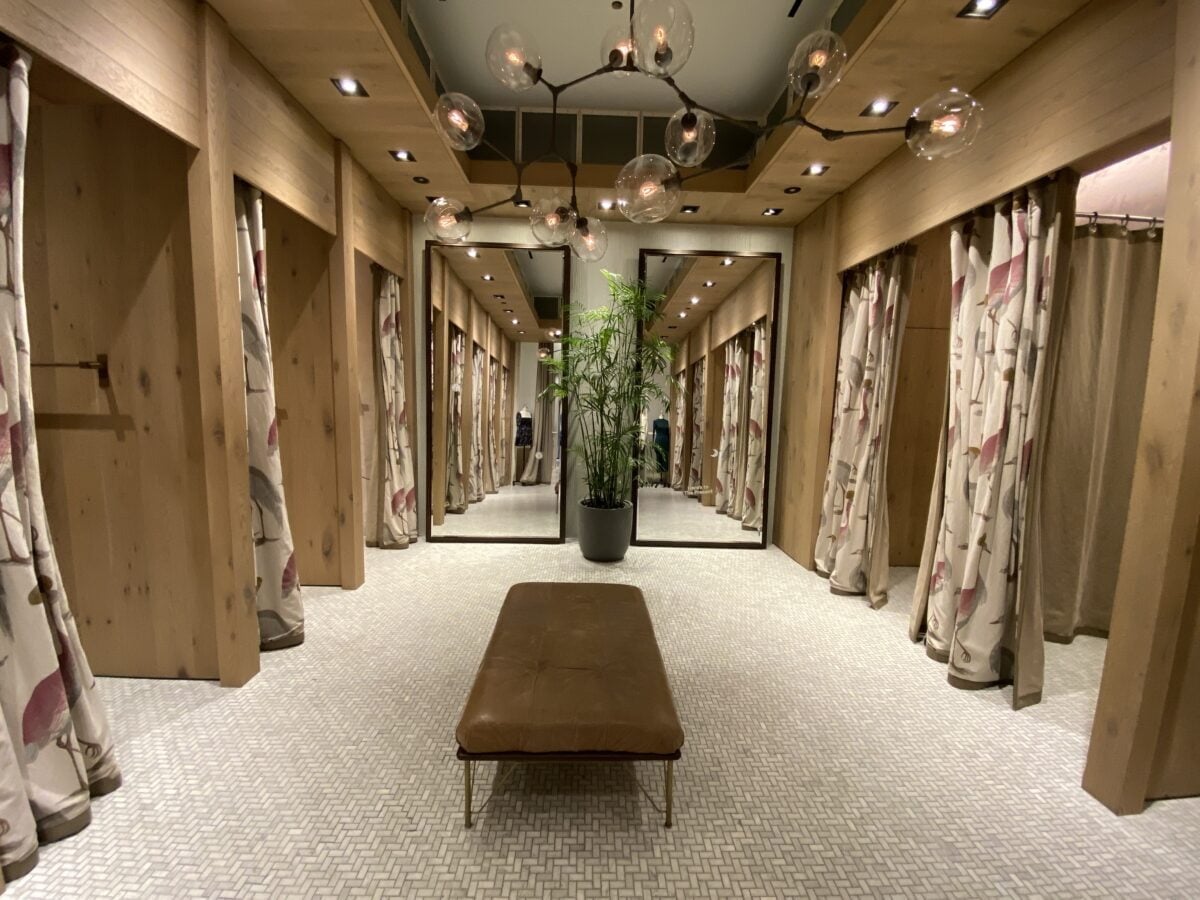
Aritzia Yorkdale (Image: Dustin Fuhs)
De Minimis Exemption Removal Creates New Headwinds
While the outlook remains strong, Aritzia faces new challenges stemming from changes to U.S. trade policy. Effective August 29, 2025, the U.S. government removed the De Minimis exemption, which previously allowed goods valued under $800 to enter duty-free.
Aritzia had used the exemption to fulfill some U.S. e-commerce orders from its Canadian distribution centres. The change is expected to impact gross margins by roughly 100 basis points, or approximately $0.10 in annual earnings per share, if no mitigation measures are adopted.
The company had already accounted for the exemption’s removal for goods from China but had not anticipated its removal globally. Stifel expects Aritzia to update its annual guidance to reflect the change when it reports its second-quarter results.
Key Metrics for the Second Quarter
Stifel’s preview of Aritzia’s second-quarter fiscal 2026 results anticipates net revenue of $774.3 million, representing a 25.8 percent increase over the prior year. Gross profit is projected at $323.7 million, a 30.8 percent rise, with gross margin expanding 160 basis points to 41.8 percent.
E-commerce revenue is forecast to increase 14.9 percent to $218.4 million, while retail store revenue is expected to climb 30.6 percent to $556.0 million. Adjusted EBITDA is projected at $90.7 million, up 64.3 percent year-over-year, with an 11.7 percent margin. Adjusted net income is forecast at $48.9 million, nearly double the $24.5 million reported in the same period last year.
These results would mark another period of outperformance, solidifying Aritzia’s reputation as one of Canada’s fastest-growing apparel retailers.
Aritzia Yorkdale (Image: Dustin Fuhs)
Stifel Raises FY26 and FY27 Estimates
In addition to its quarterly outlook, Stifel modestly increased its full-year fiscal 2026 revenue estimate to $3.28 billion from $3.26 billion. Adjusted earnings per share were also lifted to $2.58 from $2.52.
Looking ahead to fiscal 2027, Stifel projects revenue of $3.69 billion and adjusted earnings per share of $3.50. The brokerage sees adjusted EBITDA reaching $687.3 million, with a margin of 18.6 percent.
These projections align with Aritzia’s longer-term targets. At its 2022 investor day, management outlined a goal of reaching $3.5 to $3.9 billion in revenue and a 19 percent EBITDA margin by fiscal 2027. After setbacks in fiscal 2024, those targets now appear within reach.
Strategic Initiatives to Drive Growth
Aritzia’s growth is being supported by a series of strategic initiatives designed to improve both top-line and margin performance. The retailer continues to invest in digital marketing, helping to attract new customers and build loyalty with its existing base.
The company has also launched a “Smart Spending Initiative” aimed at reducing costs. Stifel expects this program, alongside improvements in initial markups, to contribute to margin expansion in the years ahead.
In the second half of fiscal 2026, Aritzia plans to introduce a dedicated mobile app, which should enhance customer engagement and support e-commerce growth.
The brand is also maintaining its cultural relevance through campaigns featuring well-known figures. Its Fall 2025 campaign, for example, spotlights American fashion designer and businesswoman Jenna Lyons in a series of advertisements for cashmere sweaters.
Financial Strength Supports Expansion
Another factor supporting Aritzia’s growth outlook is its balance sheet. The company currently has no bank debt and a growing cash position, giving it flexibility to pursue strategic investments.
With its market capitalization now exceeding $10 billion, Aritzia’s shares are becoming increasingly attractive to a broader base of institutional and international investors. Liquidity and scale are expected to aid in further expanding its shareholder base.
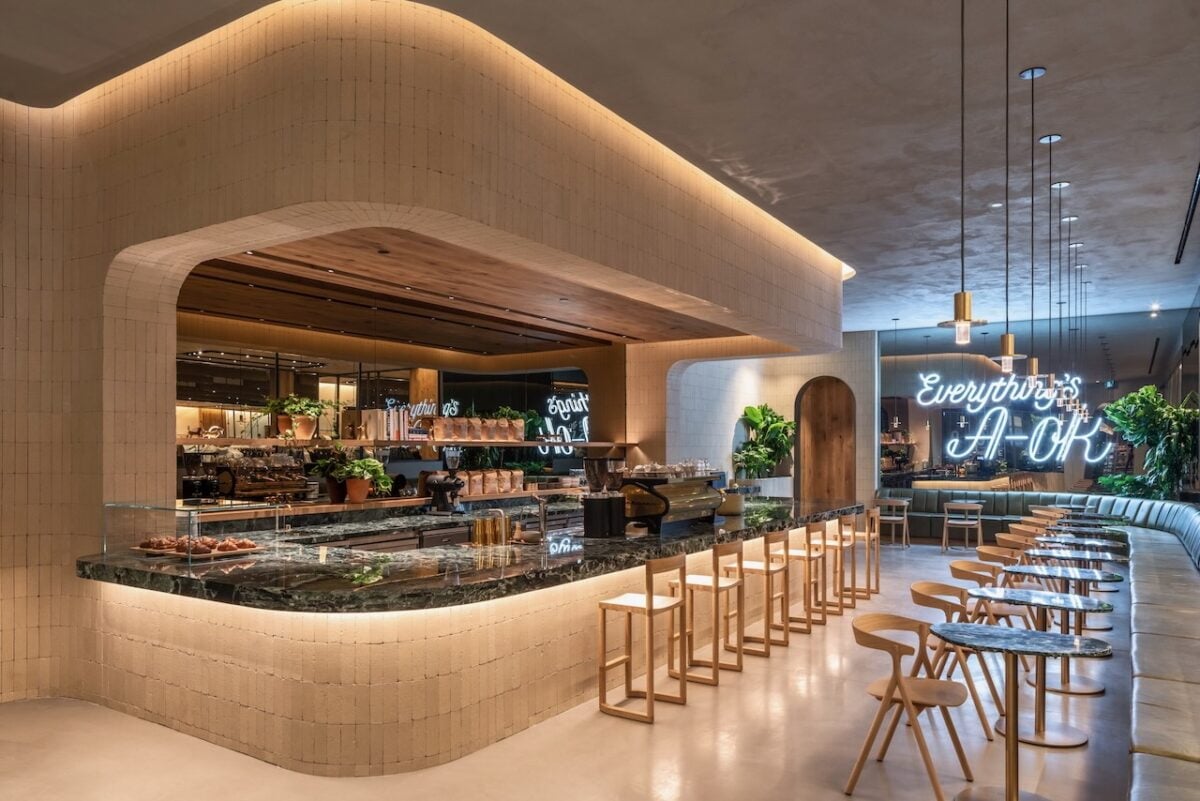
A-OK Cafe at Aritzia, CF Markville (Image: Aritzia)
Investor Focus and Risks Ahead
Stifel notes that investors are likely to focus on three key areas when Aritzia reports its results: the strength of sales momentum heading into the fall season, management’s updated guidance in light of the De Minimis exemption removal, and progress toward margin expansion and the 2027 EBITDA targets.
Despite optimism, several risks remain. Aritzia could face challenges if the United States introduces tariffs on Canadian imports, which would raise selling prices and potentially reduce demand. The brand also risks losing momentum if consumer tastes shift, while inflationary pressures and higher interest rates could constrain discretionary spending. In addition, with a large portion of its costs in U.S. dollars, Aritzia remains exposed to currency fluctuations.
Valuation and Target Price Methodology
Stifel’s increased target price of $96.00, up from $82.00, is based on higher valuation multiples. The firm derived its target by averaging three methods: applying a 27.5 times multiple on fiscal 2027 earnings per share, a 17.5 times multiple on fiscal 2027 EBITDA, and a discounted cash flow analysis.
The firm points out that Aritzia shares currently trade at 25 times forward earnings, leaving room for multiple expansion. Historically, the company has traded above 30 times forward earnings, even during periods of slower growth.
Aritzia’s Growth Runway Remains Intact
Overall, Stifel’s analysis underscores that Aritzia remains on a strong growth trajectory. The company is gaining market share in both Canada and the United States, supported by a loyal customer base, successful product lines, and investments in marketing and digital infrastructure.
“Momentum appears to be continuing into this fall, supporting a higher valuation than historically,” wrote Landry.
With initiatives underway to improve margins, expand digitally, and strengthen brand engagement, Aritzia appears well positioned for sustained growth in the years ahead.
Ontario-based chicken wing chain WingsUp! has opened its first British Columbia location in Vancouver, marking the company’s debut on the West Coast as part of a broader national expansion.
Founded in 2005, WingsUp! currently operates more than 36 locations in Ontario and recently entered the Calgary market. The Vancouver opening is a strategic step in the company’s coast-to-coast growth plans.
Darren Czarnogorski
“Vancouver is a natural fit for our brand,” said Darren Czarnogorski, president of WingsUp!, in a statement. “The city’s appreciation for fresh, high-quality food aligns with our core values.”
The company’s business model features small-format stores built for dense urban areas, with all delivery services handled in-house rather than through third-party providers. Orders are available for pickup, delivery or catering.
WingsUp!’s menu focuses on made-to-order, never-frozen wings and includes flavours such as Jamaican Hot, Medium BBQ, Honey Garlic Parmesan and Texas Tequila. The brand positions itself as a comfort food option that offers convenience for both lunch customers and at-home diners.
Fresh never frozen (CNW Group/WingsUp! Restaurants)
WingsUp! is actively recruiting franchisees in British Columbia to support its westward expansion. The company highlights a low-barrier entry model for prospective operators, with support in training, marketing and supply chain logistics.
“This is just the beginning for us in British Columbia,” Czarnogorski said. “We see strong potential in this market and look forward to expanding our footprint across the province.”
Franchise information is available at wingsup.com or by contacting franchise@wingsup.com.