The corporation said it has two reportable segments: Canada (which includes the contribution of the Corporation’s equity-accounted investments in Latin America) and Australia since the completion of its acquisition of The Reject Shop Limited on July 21.
Fiscal 2026 Third Quarter Results Highlights Compared to Fiscal 2025 Third Quarter
Sales increased by 22.2% to $1,909.4 million, compared to $1,562.6 million
In Canada, Comparable store sales increased by 6.0%, compared to 3.3% in the corresponding period of the previous year
EBITDA increased by 20.1% to $612.0 million, representing an EBITDA margin of 32.1%, compared to 32.6%
Operating income increased by 18.1% to $481.2 million, representing an operating margin of 25.2%, compared to 26.1%
Net earnings increased by 16.6% to $321.7 million, resulting in a 19.4% increase in diluted net earnings per common share to $1.17, compared to $0.98
19 net new stores opened in Canada, compared to 18 in the corresponding period of the previous year and 6 net new stores opened in Australia under the TRS banner
2,605,912 common shares repurchased for cancellation for $484.6 million
“In an economic environment that has remained unpredictable, our business model continues to demonstrate its enduring relevance and resilience, driving strong 6.0% Comparable store sales growth in Canada for the quarter,” said Neil Rossy, President and CEO of Dollarama.
“Internationally, we also continued to advance our growth plans and the rollout of the Dollarama model. Dollarcity delivered another quarter of strong financial and footprint growth, opening their 700th store in Latin America and fifth location in Mexico after quarter-end. In Australia, we have begun laying the groundwork for The Reject Shop’s transformation as we prepare the platform for the deployment of our value proposition in the coming years.”
Founded in 1992 and headquartered in Montréal, Dollarama is a leading Canadian value retailer with international reach with more than 2,700 stores and over 41,000 people serving customers in seven countries on three continents.
Dollarama operates more than 1,600 stores in Canada with a presence in all 10 provinces and two territories. In Australia, Dollarama operates the country’s largest discount retail chain, The Reject Shop, with a national network of over 400 stores. Dollarama is also the majority shareholder, through its equity-accounted investments, in Latin American value retailer Dollarcity which has more than 700 stores located in Colombia, El Salvador, Guatemala, Mexico and Peru.
Empire Company Limited released on Thursday its second quarter Fiscal 2026 financial results for the second quarter ended November 1, 2025. For the quarter, the company recorded net earnings of $159 million ($0.69 per share) compared to $173 million ($0.73 per share) last year.
“Our core business is performing well, with 2.5% same-store sales growth,” said Pierre St-Laurent, President & CEO, Empire. “This growth was supported by all our formats – with Full Service achieving more than 2% same-store sales growth and Discount maintaining its momentum and market share gains in its channel.”
Pierre St-Laurent
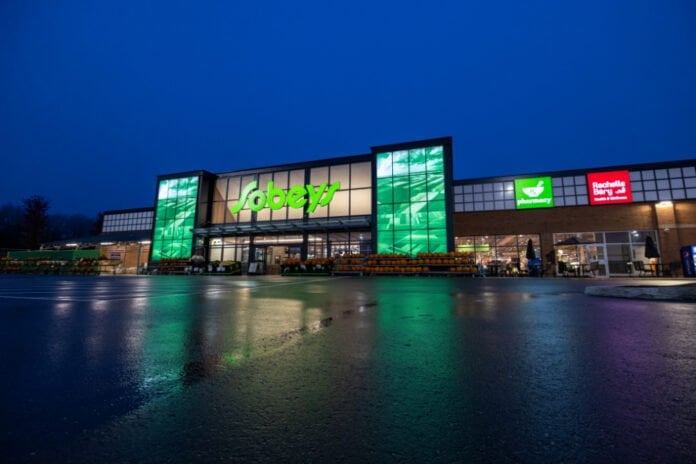
Empire is a Canadian company headquartered in Stellarton, Nova Scotia. Empire’s key businesses are food retailing, through wholly-owned subsidiary Sobeys Inc., and related real estate. With approximately $31 billion in annual sales and $17 billion in assets, Empire and its subsidiaries, franchisees and affiliates employ approximately 129,000 people.
Key financial results:
Earnings per share and adjusted EPS of $0.69 Prior year EPS and adjusted EPS of $0.73;
Sales of $7,995 million, an increase of 2.8%;
Food sales increased by 3.4%; Same-store sales- food increased by 2.5%;
Gross margin, excluding fuel, increased by 14 basis points
“Over recent years, the Company has accelerated investments in renovations, conversions, and new stores along with store processes, communications, training, technology and tools. Investing in the store network will remain a key priority, demonstrated by a sustained emphasis on renovations and continued new store expansion. The Own Brands program enhancement will remain a priority through increased distribution, product innovation and supporting Canadian suppliers,” it said.
“The Company intends to invest capital in its store network and is on track with its plan to renovate approximately 20% to 25% of the network, which started in fiscal 2024 and continues through fiscal 2026. This capital investment includes important sustainability initiatives such as refrigeration system upgrades and other energy efficiency initiatives.”
For fiscal 2026, capital spend is expected to be approximately $850 million, with approximately half of this investment allocated to renovations and new store expansion (including a 1.5% increase in store footprint expansion from new stores), 25% allocated to IT and business development projects and the remainder allocated to logistics and sustainability. By the end of fiscal 2026, the company said it expects to complete the network renovations of approximately 20% to 25%, which began in fiscal 2024.
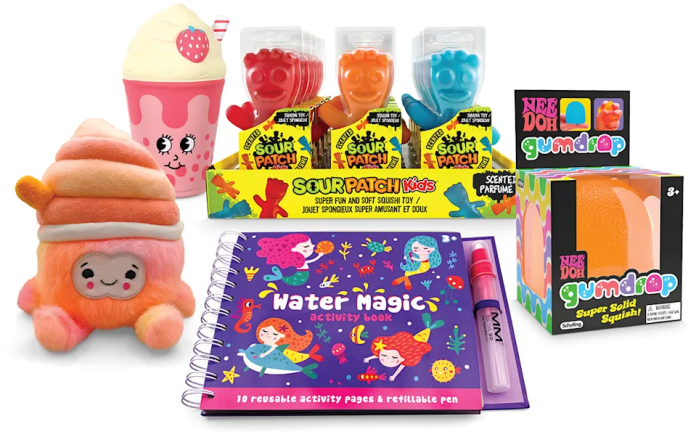
The holiday season has brought an unexpected and strategically ambitious collaboration to the Canadian retail landscape. 7-Eleven Canada and Mastermind Toys announced a cross-retail partnership that places Mastermind’s MM on the Go toys and games inside 7-Eleven stores while bringing some of 7-Eleven’s signature candies and snacks to Mastermind’s checkout areas. Prices are under $15. It is the first arrangement of its kind for either retailer and is timed to reach families during the busiest shopping weeks of the year.
Both companies say the partnership was designed to meet a growing consumer desire for convenience during the holiday season. For 7-Eleven, the addition of Mastermind’s curated mini-collection provides shoppers with accessible gifting options during quick visits. For Mastermind Toys, it is an opportunity to appear in hundreds of neighbourhood locations at a moment when many families are pressed for time and budget. The partnership, which can be explored further on Mastermind’s website, includes plush characters, puzzles, games and a selection of travel-ready toys.
Marc Goodman, Vice President and General Manager of 7-Eleven Canada, said the chain wanted to make holiday shopping easier while maintaining affordability. He noted that customers can now find exclusive MM on the Go toys and games that reflect Mastermind’s quality standards while still enjoying 7-Eleven favourites such as Slurpee drinks, baked goods and fresh meals.
Danielle Bazely, Senior Director of Marketing at Mastermind Toys, emphasized the importance of accessible gifting. She said the holiday period is critical for families and that the partnership helps place Mastermind’s curated toys in convenient locations while establishing the groundwork for an ongoing collaboration. Both retailers indicated that this first iteration serves as a test of broader possibilities beyond the holiday season.
Mastermind’s New Chapter of Growth and Reinvention
The timing of the 7-Eleven collaboration aligns with a pivotal moment for Mastermind Toys. After a challenging period that included creditor protection in late 2023, the company is emerging with renewed leadership, an expanded ownership structure and a deeper strategic commitment to transforming the brand into a children’s lifestyle destination.
Mastermind was acquired in January 2024 by Unity Acquisitions Inc., a company owned by three well-known Canadian retail leaders: Joe Mimran, Frank Rocchetti and David Lui. All three owners are influential figures who have guided national retail brands through expansion and reinvention. Their involvement brought both stability and vision as the chain navigated a competitive market and the residue of restructuring.
The company’s ownership grew again in April 2025 when toy industry veteran Stéphane Tétrault joined as an equity partner and investor. Tétrault founded Imports Dragon, one of Canada’s most prominent toy companies, and co-owned McFarlane Toys. His expertise in product development, licensing and global distribution provides Mastermind with new depth as it modernizes its assortment and strengthens supplier relationships.
CEO John Bayliss and Vice President of Operations Marcello Piane have continued guiding the company through its transition. They have consolidated operations to 48 company-owned stores across Canada, down from 66 before restructuring, and have overseen the rollout of new merchandising, new partnerships and a redesigned store format.
Ravi Prakash, chair of the Edmonton-basedO & O Group of Companies, says the hospitality sector remains a resilient and growing industry despite economic pressures, international tariffs and shifting post-pandemic conditions.
Prakash said the company operates about 23 restaurants under multiple quick-service brands, including Second Cup, Marble Slab and Pita Pit. O & O is preparing to open its first Jimmy John’s location in Sherwood Park in mid-January and plans between 12 and 14 more outlets in the Edmonton region over the next two years.
Prakash said the company, founded nearly a decade ago and named after his daughters, has expanded steadily since purchasing its first Pita Pit on Edmonton’s Whyte Avenue.
Ravi Prakash
“We opened the second, third and we never stopped afterwards,” he said.
He said hospitality is “in my blood” after 18 years in the sector and remains one of the world’s largest industries. “No matter how big you become, you have to depend on hospitality people,” he said.
Prakash said quick-service restaurants continue to thrive because of their convenience and relatively low cost.
“Everyone is running out of time nowadays,” he said. “Your average ticket nowadays, even if you stretch yourself… you are between $12 to $15. If you’re going to cook at home, it is going to cost you more.”
He added that the company’s growth has not changed his interest in visiting stores daily and eating from the brands he operates.
“My favourite is Pita Pit because it’s healthy, lighter,” he said.
Prakash said he and his wife, Khushbu Singh, divide the company’s workload, with him focusing on development and new outlets while she manages operations and human resources.
Khushbu Singh
Travel is their main personal activity outside of work, he said, and they aim to take frequent short trips and two longer vacations each year “to refresh ourselves.”
Looking ahead, Prakash said O & O is preparing to expand internationally.
“Very soon we are going to announce that we are going global,” he said, citing plans targeting the Middle East and the United States.
He also pointed to industry challenges, including tighter financing conditions for restaurants and the impact of new U.S. tariffs.
He said margins were already thin and are becoming “even thinner,” adding that Canadian industries should not be vulnerable to political pressure.
“That bullying needs to be stopped,” he said.
When asked about entrepreneurship, Prakash said persistence and focus are essential.
“Believe in yourself,” he said. “Do what you are a master in. You don’t want to be a jumping jack who wants to do each and everything.”
Long-term success, he added, comes from “repeating yourself every morning with the same energy.”
The pressure is on for parents this holiday season. Three-quarters of Canadian parents recently surveyed (76 per cent) say creating a magical holiday for their children is a top priority – but higher prices are turning wonder into worry.
A new Interac survey reveals two-thirds (66 per cent) of Canadian parents say rising costs are making it harder to manage their holiday spending, and half (52 per cent) are worried about overspending this holiday season.
So much so, grandparents are stepping up, with one in five parents (21 per cent) relying on them for holiday support. A third of parents (33 per cent) say grandparents spend more on gifts for the kids than they do themselves.
Interac said its transaction data forecasts that December 19, will be the busiest shopping day of the year, with 24.8 million Interac Debit purchases predicted. The majority of the transaction volumes are expected to take place at fast food restaurants, grocery stores and discount stores. As parents head to the shops this holiday season, more than four in 10 (45 per cent) plan to spend a total of under $500 on gifts, one in four (25 per cent) plan to spend $500 – $999, and nearly three in 10 (28 per cent) plan to spend $1,000 or more.
Chris Lee
“Interac survey and transaction data point to a clear pattern: Canadians are approaching the holidays with a heightened sense of caution on spending,” said Chris Lee, Head, Payments at Interac. “As we approach peak shopping season, household budgets will be tested by high prices and high expectations. Using Interac Debit can help Canadians manage their finances by using their own money- keeping holiday magic alive and providing a sense of financial confidence and security as we approach the festive season.”
Interac said most parents say the pressure to overspend comes from within, as they strive to make the holidays feel special (56 per cent). Nearly half (47 per cent) are driven by a desire to give their children what they never had. Other factors driving parents to go over budget include keeping up with family expectations (37 per cent), making the most of retail promotions (25 per cent) and trying to recreate the holiday ideal seen on social platforms (15 per cent).
Key findings from the Interac holiday spending snapshot include:
Older Kids, Big Budgets: As kids grow, the pressure on parents increases. Parents say the teenage years (age 13-17) are the most demanding for holiday spending, with kids aged six to nine following in second place. Parents of toddlers under two feel the least spending pressure;
Lingering Regrets: 74 per cent of parents have felt financial strain after overspending for the holidays in the past; nearly two in five (40 per cent) experience this every year. Recovery takes weeks for some, but 44 per cent need until the spring, and 12 per cent feel the impact most of the year. Among parents who reflected on their holiday spending last January, 56 per cent felt stressed, overextended or remorseful;
AI Assistance: Only about a fifth of parents (23 per cent) say they wish AI could handle their shopping for them. As agentic commerceplays an increasing role in Canada, four in 10 (40 per cent) would use an AI tool if it could identify the best day or time to shop for the lowest prices;
Hosting Pressure: Nearly half (46 per cent) feel pressure to go above and beyond when hosting; three in 10 (34 per cent) have scaled back due to the cost of having people over. Nearly six in 10 (58 per cent) find it awkward to ask guests to share expenses.
Retail Insider is streamlining its Canadian retail news from around the web to include a handful of top news stories that can be viewed quickly during the day. Here are the top stories from the past 24 hours.
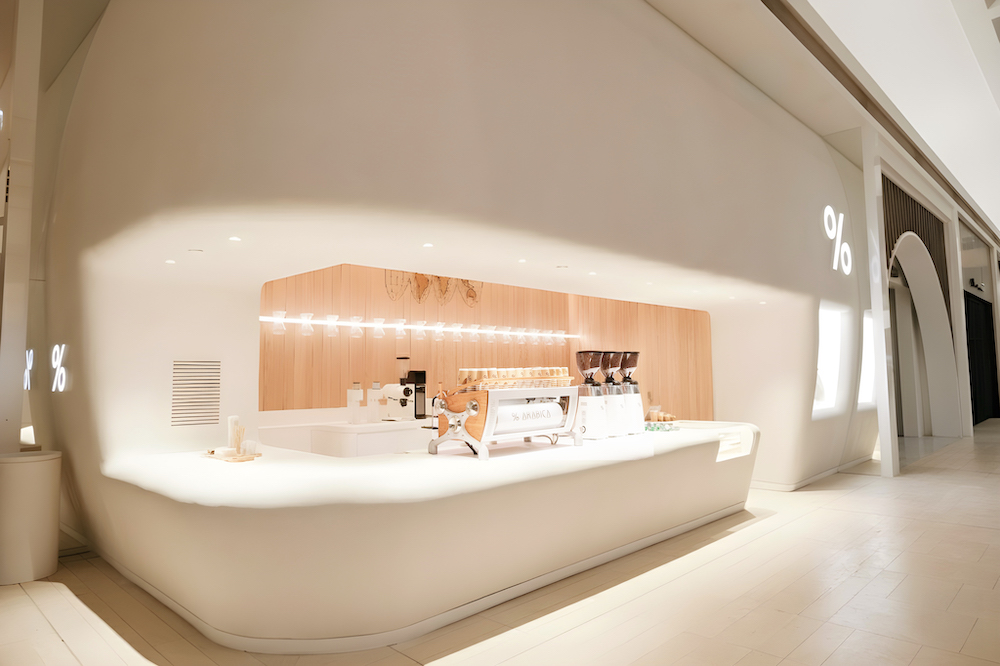
Japanese specialty coffee brand % Arabica has opened at CF Richmond Centre, introducing Metro Vancouver to the minimalist design, handcrafted beverages, and global aesthetic that have defined the chain’s rise to international prominence. The location represents a meaningful moment in the company’s Canadian expansion, which continues to advance through development partner Accencis Group. For founder and Creative Director Kenneth Shoji, Richmond marks a key step in shaping the brand’s long-term presence across the west coast.
The Richmond café arrives after the brand’s successful Whistler debut in 2024 and an extremely popular downtown Vancouver pop-up that drew considerable attention earlier this year. With stores already operating across Toronto and the GTA, the brand has steadily grown its Canadian profile since entering the market in late 2022. Shoji described the Richmond launch as both strategic and symbolic in terms of anchoring the brand in British Columbia.
Kenneth Shoji
“Opening our first permanent Metro Vancouver café at CF Richmond Centre is an important step in our Canadian journey,” he said. “After Whistler and our successful downtown pop-up, Richmond allows us to build a long-term home for our community and bring our handcrafted coffee to a wider audience.”
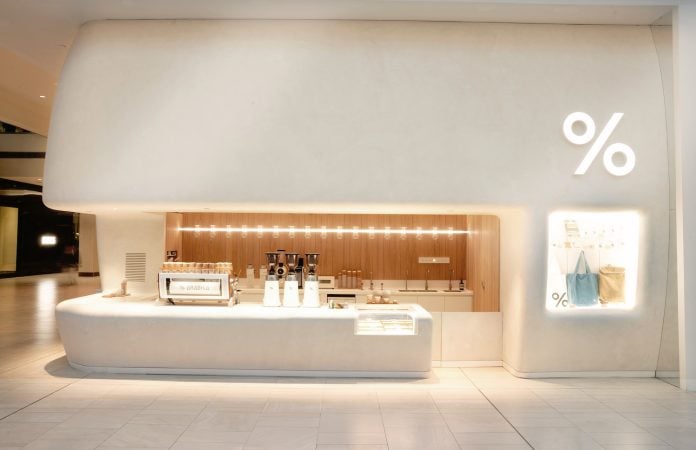
The new café occupies the former Starbucks space near the food court escalators. The high-visibility unit offered the flow, natural light, and overall scale required to showcase the brand’s approach to calm, intentional café design. Shoji said the selection was deliberate. “We chose CF Richmond Centre because it is a vibrant, well-connected location with strong local coffee culture,” he explained. “The former Starbucks space offers the visibility and room we need to create a beautiful % Arabica experience in the middle of a busy mall.”
A Distinct Architectural Statement in a West Coast Setting
One of the defining features of any % Arabica location is its design, shaped by a Kyoto-rooted aesthetic that emphasizes precision, quietness, and minimalism. At the same time, the brand regularly adapts each café to its surroundings. The Richmond location reflects this philosophy through a sculptural façade inspired by a Kamakura, a traditional snow dome found in northern Japan. Its rounded form helps filter sunlight while introducing a symbolic visual anchor inside the mall’s galleria.
The concept divides the storefront into two seamless facades, each connected through a continuous curve that guides guests toward the order counter and pickup area. The resulting effect is a compact but visually striking presence within the shopping centre. It also supports an open view of the barista bar, where guests can observe drinks prepared by hand.
“Our design approach is intentional and rooted in a desire to create spaces that feel calm and elegant,” Shoji said. “The Richmond café reflects this vision, blending our Kyoto heritage with the character of the west coast.”
The design team, led by Shohei Suzuki and Chika Yamagami, focused on clear lines of movement, uninterrupted sightlines and a façade that stands out in the mall without overwhelming it. The goal was to create a sculptural form that embodies % Arabica’s worldview while remaining practical for daily operations.
% Arabica at CF Richmond Centre. Photo: supplied
Signature Beverages With a Global Following
The menu at CF Richmond Centre features many of % Arabica’s globally popular beverages, including the Kyoto Latte, Spanish Latte and Maple Latte. These drinks have become staples for the brand worldwide, celebrated for their balance of technique and ingredients.
“Yes, our beloved classics like the Kyoto Latte, Spanish Latte and Maple Latte will be part of the menu for Vancouver,” said Shoji. “These signatures are cherished by fans around the world, and we are excited to share them here.”
While the brand remains committed to global consistency, Shoji noted that % Arabica takes inspiration from each community it enters. However, he emphasized that any local adaptations remain restrained and aligned with the brand’s focus on craft.
“At % Arabica, we stay true to our identity as a specialty coffee brand that values simplicity and perfection,” he explained. “Any local twists will always respect the purity and elegance that define our approach. Our goal is not to overwhelm the menu but to ensure every item is thoughtful, consistent and unforgettable.”
This focus reflects the brand’s longstanding analogy of specialty coffee to refined sushi, where technique and ingredients carry equal weight. The company also continues its tradition of sourcing high-quality beans, often roasted in-house, to maintain control over flavour and consistency.
Creating a Smooth Guest Experience in a High-Traffic Mall
One of the clearest learnings from % Arabica’s downtown Vancouver pop-up was the need for a choreographed customer flow during busy periods. The temporary location attracted lengthy lineups, which underscored the necessity of a layout that can maintain calmness even during rush times.
“At % Arabica, we know that great coffee begins with a calm, welcoming environment,” Shoji said. “The response to our downtown pop-up helped us refine how we manage flow during peak hours.”
The Richmond café incorporates a streamlined order and pickup system designed to move customers efficiently while preserving handcrafted quality. Highly trained baristas prepare drinks in full view of guests, and the layout uses clear zones for ordering, waiting and receiving drinks to avoid congestion. Shoji said the intention is to give mall visitors a moment of quiet in an otherwise high-energy setting.
“Even in a busy mall, we want guests to experience the same calm, intentional, beautifully crafted moment that defines % Arabica worldwide,” he noted.
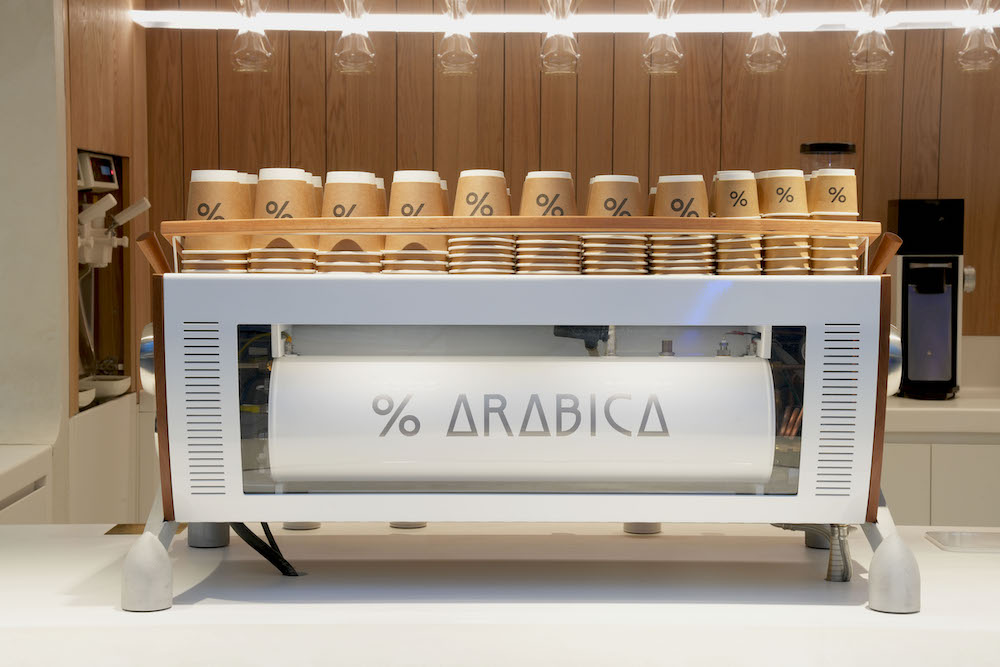
The format at CF Richmond Centre is a full-service café rather than a kiosk model, allowing guests to watch beverages prepared with precision at the barista bar’s centrepiece equipment.
% Arabica at CF Richmond Centre. Photo: supplied
Establishing a National Presence
The Richmond opening builds on % Arabica’s strong performance in Canada since its arrival in 2022. The brand established its flagship Canadian store at Toronto’s Yorkdale Shopping Centre in December of that year, followed by a high-profile café at Union Station in 2023. In December 2024, the chain opened at CF Toronto Eaton Centre, reinforcing its strategy of positioning cafés in major retail destinations.
In 2025, the company opened locations at CF Sherway Gardens and Square One Shopping Centre, each featuring localized design themes that drew attention for their unique interpretations of the brand’s aesthetic. These openings have helped build national recognition, with Canadian consumers responding strongly to the chain’s focus on simplicity, quality and design.
“The reception across Canada has been incredibly positive,” Shoji said. “From Yorkdale and Union Station to Whistler and the GTA, guests have embraced our handcrafted approach and calm café experience.”
This widespread interest has shaped the brand’s strategy in British Columbia, where it sees significant opportunity for long-term growth. Shoji said that Canadians consistently value three things in a café experience: quality, consistency and warm service. These insights are guiding the development of the company’s growing presence in Metro Vancouver.
More Metro Vancouver Stores Coming
The CF Richmond Centre café is only the beginning for % Arabica’s west coast expansion. The company has already confirmed that its next Metro Vancouver location will open at Oakridge Park, one of the region’s most ambitious redevelopment projects. Shoji said the café is scheduled to open in the first quarter of next year.
“Definitely we will be opening new locations,” he confirmed. “Our next location is Oakridge Park, and we are always on the lookout for beautiful spaces that match % Arabica standards.”
The company has also indicated interest in transit-oriented hubs and neighbourhoods that reflect the cultural and architectural diversity of the region. Each future location will carry both the brand’s global design cues and subtle elements inspired by its surroundings.
Connecting Kyoto Craft With Vancouver’s Multicultural Spirit
While % Arabica’s architectural and beverage programs are central to the brand, Shoji said the heart of the company lies in its philosophy of travel, connection and community. This perspective informs the brand’s presence in every market, and Vancouver’s multicultural identity made the city a natural fit.
“At % Arabica, our philosophy is rooted in a love for coffee, design and exploring the world. Our mission has always been to see the world through coffee,” Shoji explained. “Vancouver is a city where cultures connect, where creativity thrives, and where café life plays a meaningful role in bringing people together.”
For Shoji, each café serves as a bridge between Kyoto heritage and local expression. He said the company hopes guests experience both familiarity and discovery when they visit % Arabica in Richmond.
“Every cup we serve carries a story,” he said. “We hope guests feel a sense of home or a memory of where they came from, or excitement for where they are going. Because wherever you are, a cup of % Arabica can reflect the taste of your hometown or open a window to the world.”
Shoji added that the brand aims to create spaces where people pause, share conversations and see life a little differently. “This is what it means to see the world through coffee,” he said. “We are excited to see Vancouver through yours.”
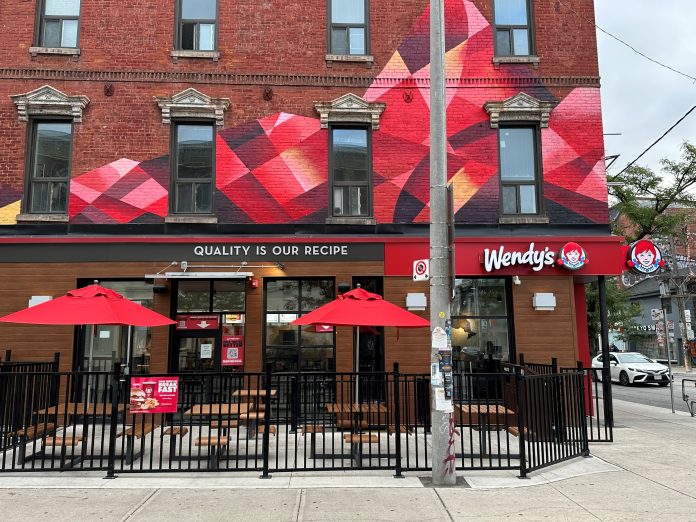
Wendy’s is accelerating its Canadian growth strategy by expanding into high-density urban markets, bringing new small-format restaurants to the downtown cores of Toronto, Montreal, and Vancouver. The shift reflects a broader evolution in Canadian quick-service dining, where convenience, technology, and proximity to daily life now shape where and how consumers choose to eat.
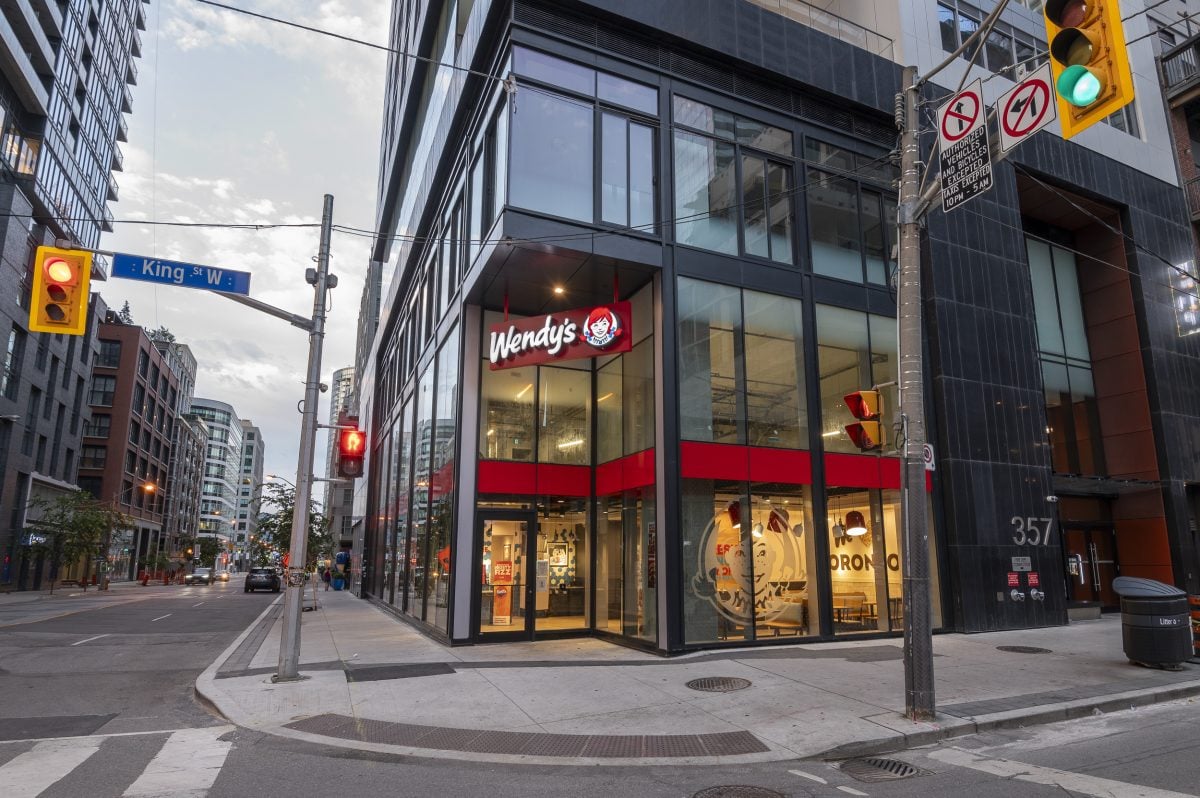
The newest example of this strategy is the opening of Wendy’s on Baseball Place in Toronto’s east end. The restaurant marks the brand’s latest venture into non-traditional urban formats designed to serve busy neighbourhoods with high delivery demand, extended hours, and walk-by traffic from residents and office workers.
For more than 50 years, Wendy’s has been part of Canada’s food landscape, beginning with the opening of its first restaurant in Hamilton in the 1970s. The brand has grown steadily across the country, but its next decade will look different as it focuses on meeting customers in new ways and new spaces.
Dana Calvert, Wendy’s Vice-President and Chief Development Officer, International, said this evolution reflects both changing consumer habits and the company’s commitment to accessibility.
Dana Calvert,
“Wendy’s Canada is committed to growth and meeting our customers where and how they choose to enjoy their Wendy’s favourites,” said Calvert. “Our focus on urban locations reflects Wendy’s ‘globally great, locally loved’ mantra by creating spaces that feel personal, connected, and ready for the future of QSR in Canada.”
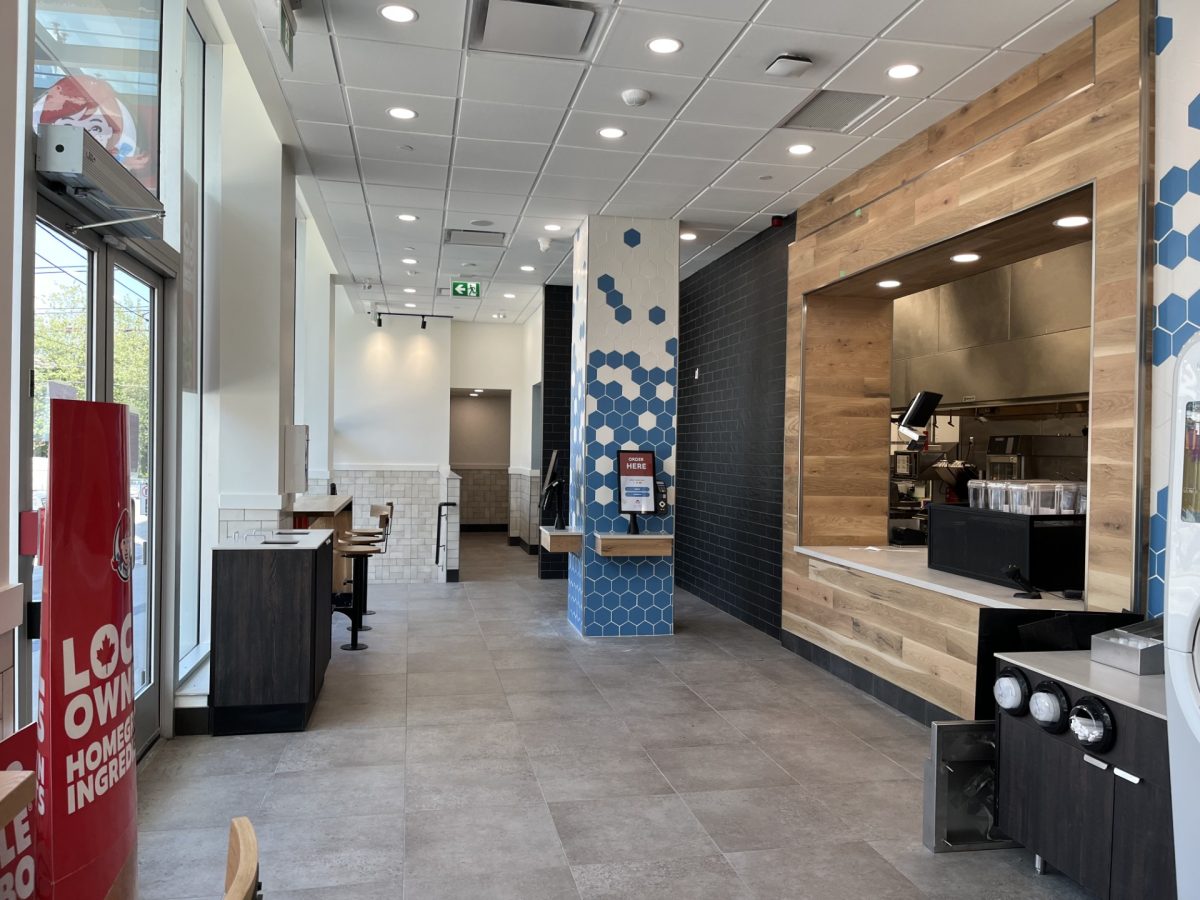
These new restaurants are considerably smaller than suburban drive-thru locations but are equipped with features suited to city life, including advanced digital ordering capabilities and expanded capacity for delivery services.
Toronto’s Baseball Place Opening Connects Food and Community
The latest addition to the Wendy’s network sits at the heart of Toronto’s baseball heritage. Baseball Place, located near the site of the city’s original baseball grounds, is steeped in local history.
The restaurant is operated by longtime franchisee John Ribson, who also opened a Wendy’s on Blue Jays Way in 2024. The Baseball Place location is his 52nd in Canada and contributes to the broader shift toward compact, urban-friendly formats.
“Baseball has always brought people together, and that’s what we love about Wendy’s too,” said Ribson. “Opening my 52nd restaurant on Baseball Place feels like a home run and the perfect way to celebrate our love for the city and the game.”
Like its West End counterpart, the Baseball Place restaurant incorporates Wendy’s Global Next Gen design. It offers self-order kiosks, seamless integration with delivery platforms, and modern digital tools that help serve customers quickly and efficiently during peak traffic and late-night hours.
Wendy’s on King St. W in Toronto. Photo: Wendy’s
The Role of Non-Traditional Development
Calvert noted that Wendy’s urban expansion in Canada is unfolding alongside a broader strategy to grow in locations not traditionally associated with quick-service restaurants.
“Non-traditional development will play a role in the next wave of Wendy’s growth in Canada,” she said. “We’re partnering with our franchisees to bring Wendy’s to places like airports, colleges and universities, malls, petroleum stations and urban centres across Canada.”
These formats are helping Wendy’s reach new customers, particularly younger Canadians who frequent downtown neighbourhoods, university campuses, and commuter hubs.
In Quebec, the brand recently opened its 25th Wendy’s location and plans to more than double its footprint to over 50 restaurants by 2030, a milestone that highlights its renewed focus on provincial growth.
Wendy’s in Vancouver. Photo: Wendy’s
Built for the Pace of City Life
The new urban restaurants are designed to operate efficiently in dense neighbourhoods with limited space and high delivery demand.
“Our flexible restaurant design includes features like self-order kiosks, seamless delivery integration, and digital enhancements tailored for the on-the-go consumer,” said Calvert. “Our urban locations have been designed for extended operating hours, extra delivery capacity and in favour of our team and late-night fans.”
These digital-first experiences are now central to how many Canadians interact with quick-service restaurants. Kiosks, mobile ordering, and app-based loyalty programs allow Wendy’s to meet the expectations of a customer base that values customization, speed, and convenience.
Calvert said digital adoption has grown significantly. “Customers have adapted to new technology quickly as delivery, kiosk and app usage continues to rise,” she explained. “These channels enable us to launch personalized offers, implement seamless ordering and customization for customers, and new payment methods that deliver speed and accuracy for a better crew and guest experience.”
Wendy’s plans to continue enhancing its digital channels to support ordering, loyalty, and future personalization features.
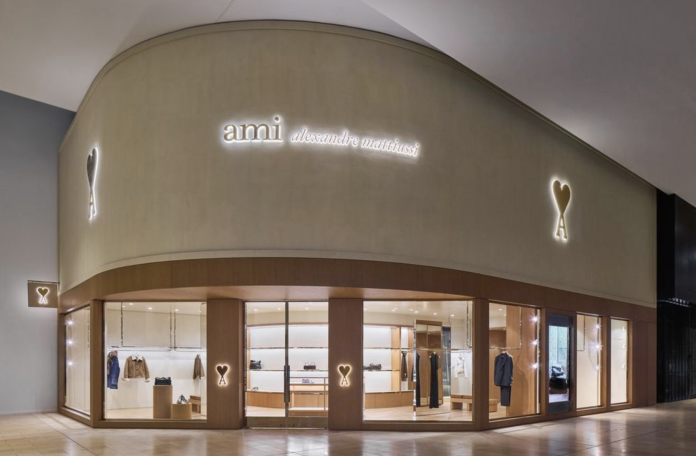
Ami Paris at the Yorkdale Shopping Centre in Toronto. Photo: Michael Muraz
Ami Paris has arrived in Canada, bringing its understated Parisian sophistication to Toronto’s Yorkdale Shopping Centre with the opening of its first Canadian flagship. The boutique, which measures about 2,500 square feet, opened this month and anchors a prominent stretch of Yorkdale’s growing luxury corridor. The arrival marks a meaningful step for the brand as it continues expanding internationally and signals the latest chapter in Yorkdale’s ongoing evolution into one of North America’s most robust destinations for luxury fashion.
The shop replaces a former Nespresso location, a transformation that reflects the mall’s consistent strategy of trading up into premium retail. Yorkdale has spent the past several years attracting high-profile brands from Europe, Asia, and the United States, and the introduction of the Ami Paris Yorkdale boutique reinforces that momentum. For Ami Paris, the location provides immediate exposure to the Greater Toronto Area’s diverse, fashion-forward customer base and positions the brand within a setting where global labels continue to find success.
Designing a Paris-Inflected Space
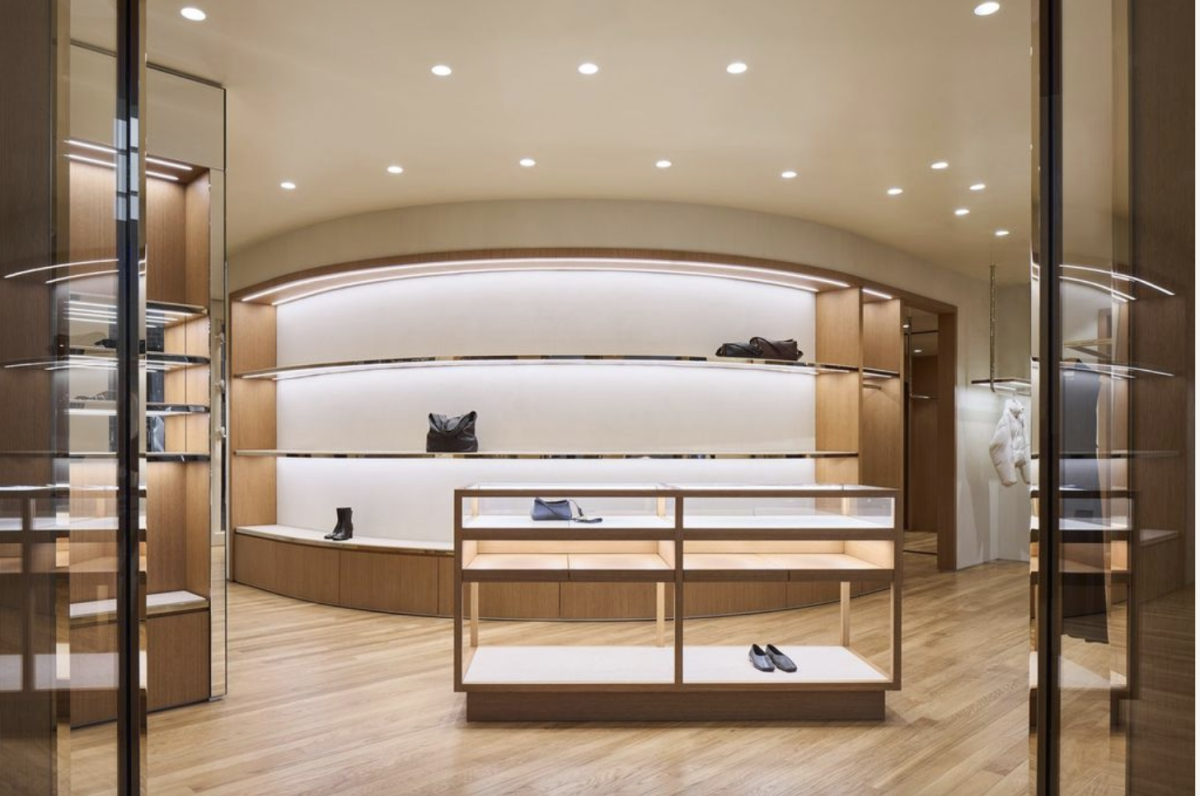
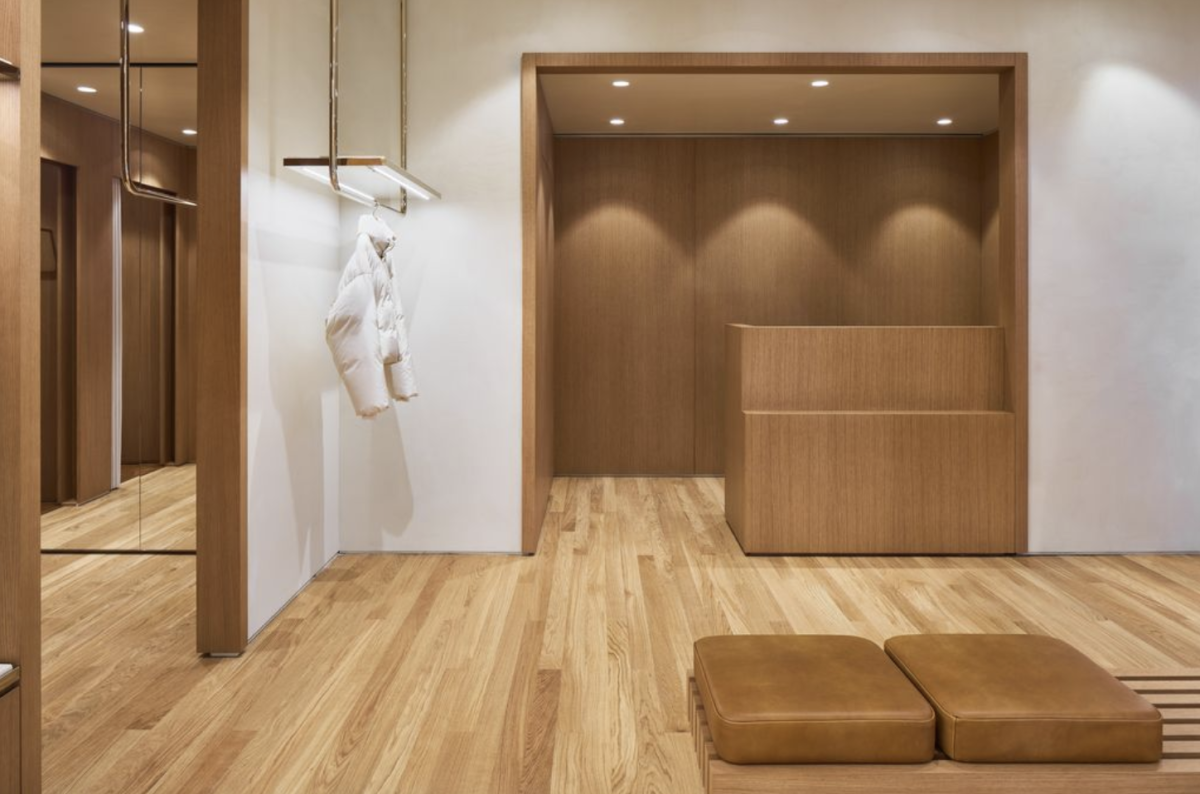
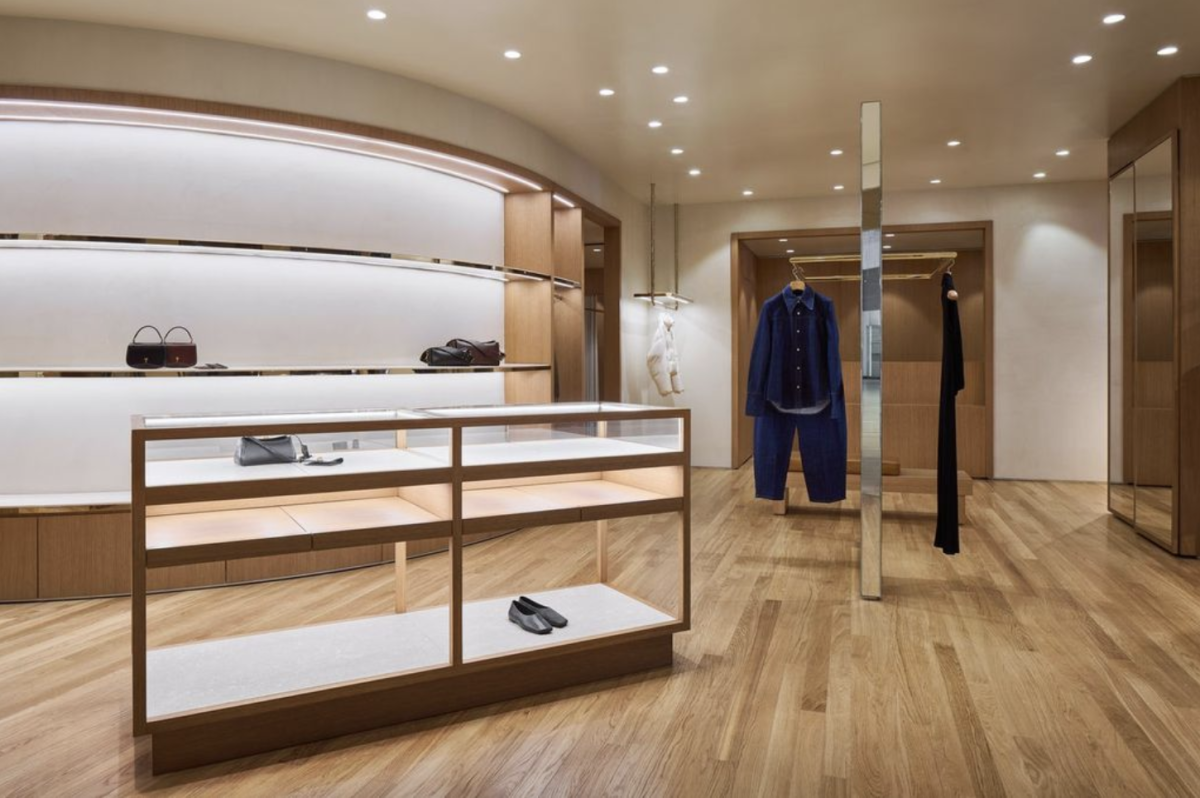
Inside, the boutique mirrors the refined, contemporary identity that has come to define Ami Paris. The brand has recreated aspects of its Paris flagship, using materials such as Euville stone, beige limewash, and dark oak wood to establish an environment that is both soft and architectural. The striped parquet floor, a nod to Ami’s signature stripes, adds warmth and movement to the room, while champagne gold accents and multiple mirror surfaces create a residential feel reminiscent of an elegant Paris apartment.
The design concept reflects the brand’s approach to luxury, which is guided by ease, authenticity, and modern simplicity. Rather than overwhelm shoppers with ornate displays, the boutique favours an atmosphere that is inviting and calm, allowing tailoring, outerwear, accessories, and footwear to stand out through craftsmanship and silhouette.
Jeff Berkowitz of Aurora Retail Group negotiated the lease on behalf of Ami Paris. Oxford Properties is the landlord of Yorkdale Shopping Centre.
Ami Paris now operates six points of sale across North America and more than 700 worldwide. The Yorkdale boutique represents the company’s first Canadian brick-and-mortar location, building on a presence through department store partners such as Holt Renfrew.
Ami Paris at the Yorkdale Shopping Centre in Toronto. Photo: Michael Muraz
A Brand Shaped by Paris and Guided by Its Founder
Ami Paris was founded in 2011 by Alexandre Mattiussi, whose experience designing menswear for Dior, Givenchy, and Marc Jacobs shaped his interest in creating a pragmatic, articulate wardrobe. The label’s name, meaning “friend” in French, captures the brand’s ethos of warmth, sincerity, and accessibility. Mattiussi sought to build a house that blended classic tailoring with contemporary ease, resulting in collections that feel polished but approachable.
The brand gained early recognition for its relaxed silhouettes, minimalist palettes, and the now-famous Ami de Coeur logo, which has become one of the most recognizable graphic signatures in contemporary fashion. Ami began as a menswear label but has expanded seamlessly into womenswear, offering coordinated styles that share a common language of understated Parisian chic.
Growth accelerated after a fund associated with Sequoia Capital China acquired a majority stake in 2020. With support behind retail expansion, Ami Paris has opened flagship locations in cities including Tokyo, Seoul, London, Hong Kong, New York, and Hamburg. Sales now exceed three hundred million euros, and the company continues to strengthen its international presence.
Ami Paris at the Yorkdale Shopping Centre in Toronto. Photo: Michael Muraz
Yorkdale’s Role in the Brand’s Global Strategy
The selection of Yorkdale for Ami Paris’s first Canadian store aligns with a broader pattern among global luxury brands entering Canada. Yorkdale’s performance metrics, from high sales volumes to its wide-reaching customer catchment area, have made it a priority destination for international brands seeking physical visibility. The centre has become one of the most competitive retail environments in Canada, and its ongoing expansion into premium fashion has attracted recent openings from Creed Fragrance, Oliver Peoples, and Stone Island.
The Ami Paris Yorkdale boutique benefits from its proximity to these brands, placing it among a cluster of retailers that draw both local shoppers and international visitors. For consumers who already follow the brand through its global campaigns or online presence, the boutique presents a chance to interact with the collections in a physical setting that mirrors the aesthetic of its Paris flagship.
The store complements the brand’s Canadian online platform, amiparis.com/en-ca, which offers a full range of products for national customers. Together, the physical and digital channels establish the foundation for future expansion in Canada.
Ami Paris at the Yorkdale Shopping Centre in Toronto. Photo: Michael Muraz
Fall Winter 2025 Collection Debuts in Toronto
The opening coincides with the launch of the Fall Winter 2025 collection, which serves as the boutique’s inaugural display. Shot in Paris by photographers Angelo Pennetta and Hedi Stanton, the campaign highlights the brand’s focus on relaxed tailoring, gentle textures, and silhouettes that balance ease with structure.
The collection’s palette emphasizes soft pastels, warm neutrals, and charcoal grey. Fabrics such as satin, flannel, poplin, and shearling add richness to oversized coats, poplin shirts, tailored trousers, and knitwear. Shoes and accessories, including supple trainers and leather goods, complete the line. Together, these pieces reflect the brand’s DNA, which prioritizes comfort without sacrificing sophistication.
Alongside the fall collection, the boutique carries the Ami Holidays assortment, designed for the winter festive season. The seasonal offering introduces giftable accessories and elevated apparel that align with the brand’s view of celebratory dressing.
“Even in a dynamic retail environment, our heritage, quality, and focus on comfort continued to differentiate the brand and drive engagement across our omnichannel platform. We remain disciplined in execution and committed to strengthening the foundations of the brand to support long-term value creation.
“While early in the fourth quarter, we continue to experience positive trends.”
Third Quarter Highlights
Sales were $71.5 million, a 6.8% increase compared to $66.9 million in Q3 2024
DTC sales were $56.8 million, a 4.8% increase compared to $54.2 million in Q3 2024
DTC comparable sales growth was 6.3%
Gross margin was 60.8%, up 80bps compared to 60.0% Q3 2024
DTC gross margin of 65.4%, up 140bps compared to 64.0% in Q3 2024
Net income totaled $2.3 million, decreasing 4.5% from $2.4 million in Q3 2024
Excluding the impacts from the revaluation of cash settled instruments under our share-based compensation plan, net income would have been $2.4 million, improving 1.5% compared to $2.3 million in Q3 2024
Adjusted EBITDAamounted to $7.5 million, a 5.3% improvement from $7.1 million in Q3 2024
Excluding the impacts from the revaluation of cash settled instruments under our share-based compensation plan, Adjusted EBITDA would have been $7.6 million, improving 7.3% compared to $7.0 million in Q3 2024
Net debt reduced 5.9% year-over-year to $44.1 million
The Company repurchased 415,200 common shares for $1.3 million under its normal course issue bid
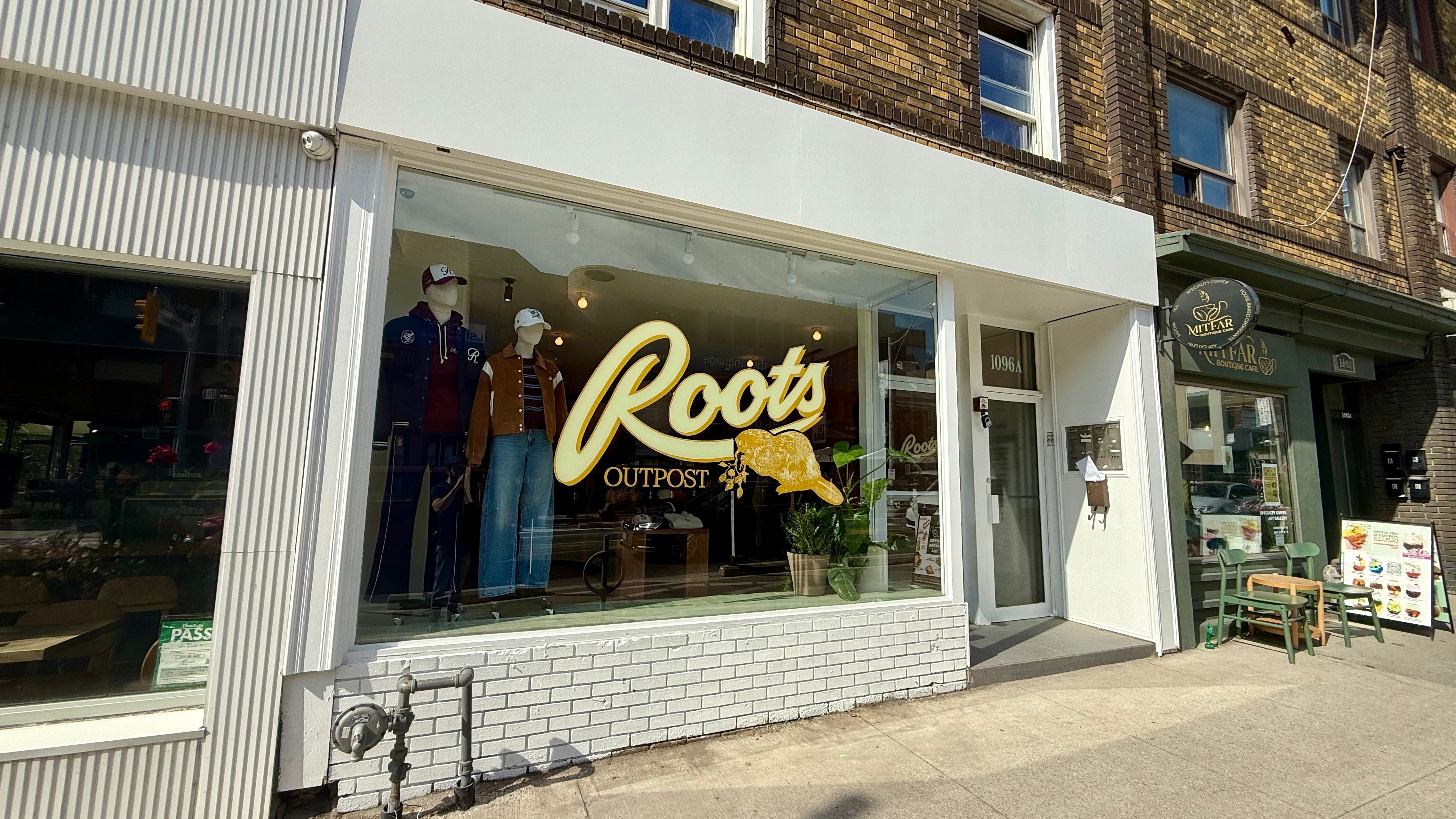
Established in 1973, Roots is a global lifestyle brand. Starting from a small cabin in northern Canada, Roots has become a global brand with over 100 corporate retail stores in Canada, two stores in the United States, and an eCommerce platform, roots.com. It has more than 100 partner-operated stores in Asia, and it also operates a dedicated Roots-branded storefront on Tmall.com in China.