Voilà, Sobeys’ online grocery home delivery service, recently launched its largest awareness campaign of the year, one that redefines what “value” means to Canadians in the grocery delivery space.
Rooted in deep consumer research, the campaign highlights Voilà’s most unique differentiator as the only online destination that brings together several of Canada’s most beloved grocery banners, including Sobeys, Farm Boy, and Longo’s in Ontario, and IGA in Quebec, under one seamless experience.
To bring this to life, an eye-catching creative concept was developed: where the Voilà delivery van acts as a digital portal, and an animated “delivery crew” representing each grocer jumps out alongside the driver, visually expressing the collaboration between brands in a fresh, engaging way – far beyond a traditional logo lineup. The message is simple yet powerful: Many of the most trusted grocery brands Canadians love live together in one seamless experience with Voilà, explained the company.
The comprehensive campaign rolled out across TV, online video, social, display, and OOH in the GTA and Montreal, and will run through the holiday season and into the New Year.
In addition to its creative storytelling, the company said the campaign reinforces Voilà’s leadership position in the market, ranked #1 for best overall value among all major Canadian grocery retailers in a 2024 price perception study.
This initiative was brought to life through close collaboration between Voilà’s in-house creative team, Sid Lee (creative production), and SHED (animation and character design), it said.
Mohit Grocer, SVP of e-commerce, Empire Company Limited, said the company’s research shows that Canadians define value as much more than just price, it’s about transparency, quality, and the overall shopping experience.
“At Sobeys, we’re committed to delivering that value by offering the same prices online as in-store, with no hidden fees and guaranteed freshness. This campaign reflects how Voilà continues to deliver on those priorities. By uniting trusted grocery brands like Sobeys, Farm Boy, Longo’s, and IGA under one seamless online experience, we’re offering Canadians a convenient, reliable way to shop their favourites without compromise,” he said.
Grover said what makes Voilà truly unique is its ability to bring multiple grocery banners together in a single, integrated platform, through close collaboration between brand teams and advanced technology.
“This is powered by a commitment to the same service standards
Canadians expect from each banner. Whether you’re shopping for Farm Boy’s fresh produce, Longo’s prepared meals, or Sobeys’ broad selection, Voilà delivers it all together, accurately, on time, and with the same pricing as in-store,” he said.
Grover added that the creative idea stemmed from wanting to visually capture what makes Voilà different, which is multiple trusted grocery brands working together in one place.
“The Voilà van became our “digital portal” that brings this to life in a fun and human way, with an animated delivery crew representing each grocer. The concept was developed by our in-house marketing and creative teams in collaboration with Sid Lee, who led production, and SHED, who brought the animation and character design to life,” he said.
“The end result is a fun, eye-catching campaign that celebrates how Voilà connects Canadians to all their favourite grocery brands in one seamless experience.”
Photo: Voilà
Grover said the company is incredibly proud of its #1 ranking for best overall value among major Canadian grocery retailers, based on a recent 2024 price perception study.
“This campaign builds on that momentum by reinforcing the service attributes our customers value most – transparency, freshness, and convenience. The grocery delivery space is constantly evolving, but that also presents opportunities. Our focus remains on consistency and trust and ensuring that every order lives up to the same high standards our customers expect,” he said.
“Voilà has become an integral part of the Empire family of brands, helping extend each banner’s experience into customers’ homes. As consumer expectations around delivery continue to evolve, our role is about deepening that connection – delivering the same trusted quality, freshness, and service Canadians expect from our stores, now through a seamless online experience.”
JLL, a global leader in real estate services, has released its annual Canada Retail Holiday Survey unveiling shopping preferences and trends across the country.
Canadian shoppers are planning to spend an average of $1,646 this holiday season across gifts, experiences, and non-gift items such as food and decorations. This represents an 8% increase from last year, amounting to roughly an additional $122 in holiday spending. Notably, the entire increase is driven by higher spending on experiences and non-gift items, underscoring a clear shift in how Canadians are choosing to celebrate, explained JLL.
When it comes to where they’re headed for holiday shopping and experiences, Canadians are turning to shopping centres, with 90% saying they’ll visit at least once this season, it said.
Paul Ferreira
“Holiday errands are turning into holiday outings with shopping centres being the focal point,” said Paul Ferreira, Senior Vice President, Retail, JLL Canada. “With experience budgets rising and gift spending tightening, shoppers are engaging with centres more intentionally, combining shopping, dining and entertainment in each visit.”
Here’s some highlights from the JLL survey:
Holiday spending shifts as self-gifting rises
Self-gifting is on the rise this season, with 56% of Canadians planning to treat themselves to clothing and shoes. Self-gifting has increased by 7% from last year, while gift-giving to others has fallen by 3%.
Experiences now account for 39% of holiday budgets, with spending in this category up 17% from last year as Canadians shift more spending toward dining out, entertainment and seasonal activities.
Spending on non-gift goods such as decorations and food has increased by 19% from last year, marking the largest rise among holiday spending categories.
How Canadians will shop and experience the holidays
Nearly two-thirds (64%) of Canadians are planning to shop in a shopping centre.
87% of Canadians are planning to dine at a restaurant over the holidays, with 47% dining out 2–4 times.
60% of Canadians are planning to go to the movies, and 45% are planning to travel and stay at a hotel.
Black Friday’s grip on holiday spending
Black Friday remains the top holiday purchasing period, with 78% of Canadians planning to shop and 31% saying it will be their biggest spending day.
ROYALMOUNT, which bills itself as Montreal’s premier lifestyle destination, has just been recognized as a leader in design excellence, taking home the most awards of any nominee at the 2025 Interior Design Awards.
“Founded in 2007 in Montréal, a UNESCO City of Design, the GRANDS PRIX DU DESIGN Awards celebrate excellence, creativity, and innovation in design, architecture, and the built environment. Organized by Agence PID and presented on the INT.design platform, the competition was originally created to highlight the talent and exceptional achievements of Québec designers and architects. Over time, it has evolved into a prestigious international program, now open to professionals and firms from around the world,” according to officials.
Among ROYALMOUNT’s multiple wins, most notably, the property took home the “Award of the Year” for Inclusive Bathrooms(By: Borrallo Interiors + Chrome Design + Lemay). Focused on lived experience, Carbonleo, the developer behind ROYALMOUNT, considers green spaces and inclusivity as essential and relevant elements in contemporary Canadian society. This experience of inclusivity is extended as the main concept for the design of the public bathroom in ROYALMOUNT.
In addition to this top honour, several ROYALMOUNT tenants and collaborators were also recognized across categories, highlighting the site’s collective design excellence:
Birks (Aedifica Architectes) – Gold, Retail ≤ 1,600 sq. ft.
Dynamite (GDI Design) – Multiple Gold and Silver awards including Retail > 5,400 sq. ft., Lighting, Integration of Art, Collaboration, and Product Design.
Le Fou Fou (Lemay Michaud Architectes) – Gold, Food Court Design, Branding & Signage, Art Installation.
Together, these wins reinforce ROYALMOUNT’s position as a destination where art and design intersect to create a truly one-of-a-kind experience for visitors.
“The goal was to design a truly inclusive, human-centred environment that reflects the diversity, creativity, and sophistication of Montreal. Guided by principles of accessibility, connection, and timeless elegance, the design transforms every visitor touchpoint into an elevated experience that is both welcoming and inspiring,” she explained.
“This philosophy is exemplified in ROYALMOUNT’s award-winning all-gender washrooms, which received the Award of the Year at the INT Design Awards. Developed in close collaboration with Ana Borrallo, Chrome Design, and Lemay, these spaces redefine public amenity design by merging functionality, artistry, and emotion.
“At the heart of the space, a hand-themed art video installation by artist Cristina Mejías serves as a powerful metaphor for connection, empathy, and inclusivity reminding visitors that every gesture and interaction can bridge differences. This immersive piece, paired with the space’s carefully choreographed lighting, signature scent, and ambient soundtrack, transforms the washroom into a multisensory experience of calm and belonging.
“The design encourages privacy and comfort through individual enclosed stalls and a communal vanity island, while the materials, finishes, and acoustics evoke a sense of serenity and refinement. The result is a space that goes beyond function: a celebration of inclusivity, artistry, and human connection.”
Larochelle said Carbonleo’s emphasis on green spaces and inclusivity extends beyond the architecture to shape the entire visitor experience.
“The space was built with the intention of creating spaces for the community to enjoy. With over 77,000 square feet of landscaped public areas ROYALMOUNT stands as a true urban oasis – inviting guests to slow down, connect, and enjoy nature within a vibrant metropolitan setting. Featuring tree-lined promenades, abundant natural light, and a unique skybridge connecting the property to public transit, ensures the site remains welcoming, sustainable, and easily accessible,” she said.
Credit: Lemay – Photographer: Frederic Bouchard
“These international design recognitions reinforce ROYALMOUNT’s position as a world-class retail and lifestyle destination and elevate Montreal’s profile on the global design stage. Winning the INT Design Award of the Year for inclusive spaces underscores the project’s ability to blend innovation, empathy, and architectural sophistication – setting a new benchmark for inclusive, people-focused design in commercial environments.”
Behind this success lies a highly collaborative process between Carbonleo and its partners: including numerous talented design firms, architects, and tenant stakeholders, added Larochelle.
“From the earliest concept phase, Carbonleo’s internal design, tenant delivery, and construction teams worked hand in hand with these partners to translate the ROYALMOUNT’s vision into reality,” she noted.
Credit: Lemay – Photographer: Frederic Bouchard
“Through open dialogue, shared creative intent, and rigorous coordination, every element: from public spaces and façades to brand environments and interior details was carefully orchestrated to ensure design cohesion, technical precision, and experiential quality across the entire development.
“This seamless integration of vision and execution is what defines ROYALMOUNT: a project where collaboration, craftsmanship, and purpose converge to create a truly immersive and inclusive destination that reflects the best of Montreal’s design excellence.
“Looking ahead, these design recognitions both set the standard and inspire for the next phases of ROYALMOUNT and future Carbonleo projects. They reaffirm the company’s commitment to innovation, inclusivity, and environmental stewardship as essential pillars of modern urban development, ensuring that each new addition continues to celebrate design as a catalyst for connection, sustainability, and meaningful human experience.”
Here are all the links to the Interior Design Award winners from ROYALMOUNT:
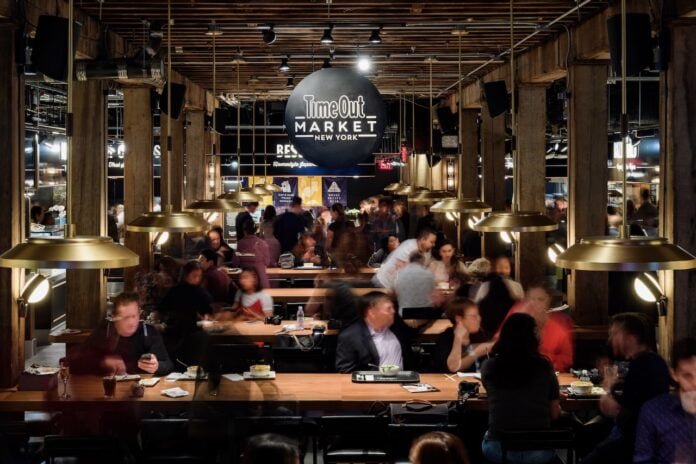
Time Out Market Vancouver has released the first group of chefs and restaurateurs who will anchor its food and cultural hall when it opens in Spring 2026 at Oakridge Park. The market, which spans 50,000 square feet and will offer nearly 1,000 seats, is positioned as a major new venue for dining and entertainment in the city. It will be the second Time Out Market in Canada, following the Montreal location that opened in 2019.
The concept, created by Time Out Group, centres on an editorially curated mix of local chefs, cultural programming and community-oriented experiences. Each market is designed to showcase the city it inhabits, bringing together notable culinary talent, rising chefs and beloved neighbourhood restaurants. The Vancouver roster introduced today reflects that intent, combining award-winning chefs with popular local favourites.
Six Chefs and Restaurateurs Join the Launch Roster
Chef Rob Feenie, one of Vancouver’s most recognized culinary figures, will open Feenie’s, a counter focused on gourmet burgers. Feenie is the Executive Chef and Partner of Le Crocodile and previously led Lumiere. His career includes a win on Iron Chef America and multiple victories on Iron Chef Canada. For the market, he will serve dishes such as his signature Classic Burger and a Time Out Market Burger made with house-ground wagyu and gruyere, inspired by the Burger De Maison at Le Crocodile.
Chef Chanthy Yen, winner of Top Chef Canada 2024, will introduce Mee Bar, a concept rooted in his Cambodian heritage. Yen has worked in respected kitchens across Canada and internationally for more than twenty years. His menu for the market will include Mee Kola, a rice noodle dish served with charcoal-grilled meat and seafood, Cambodian-style chicken wings with lime and Kampot pepper, and Nom Banh Chok, a traditional combination of curry broth, rice noodles and fresh herbs.
Lunch Lady will bring its well-known Vietnamese street food to the venue. Since opening in Vancouver in 2020, the restaurant has grown from a neighbourhood favourite into a Michelin-recognized name across North America. Created in partnership with Chef Nguyen Thi Thanh, the original Lunch Lady of Saigon street food fame, the concept will offer dishes such as Steak Luc Lac, Garlic Fried Noodles and other flavourful signatures.
Rendering of the Time Out Market at Oakridge Park in Vancouver. Image: QuadReal
Chef Nutcha Phanthoupheng of Baan Lao will launch MaKaam, a new concept created for Time Out Market Vancouver. Baan Lao was named Canada’s Best Restaurant at the World Culinary Awards in both 2024 and 2025 and ranked number twelve on the North America’s 50 Best Restaurants list. MaKaam will present modern Thai cuisine with an artisanal approach, including a reimagined pad Thai prepared with aged tamarind and water buffalo milk gouda.
DownLow Chicken, founded by Doug Stephen and Lindsey Mann in 2018, will serve its Nashville hot chicken, which has become a local staple on East Hastings. The menu will include The OG Sando, signature macaroni and cheese and other dishes that helped build the restaurant’s following.
Barnacle by Bar Bravo, led by Head Chef Jonah Joffe, rounds out the first wave of vendors. Bar Bravo opened in 2023 and quickly earned Michelin recognition in 2024 and 2025. Its seafood program has received acclaim, including an award from Vancouver Magazine. Barnacle will offer a selection of raw and cooked seafood featuring local oysters, a Jonah crab cocktail and a seafood tower highlighting fresh and sustainable ingredients.
Oakridge Park. Image: QuadReal
A Curated Approach to Representing Vancouver’s Culinary Scene
Time Out Market’s model depends on local editorial expertise to identify restaurants and chefs who reflect the character of a city. The company develops a list of cuisines central to the region’s dining identity, then selects chefs who stand out within each category. The aim is to present a mix of established voices and new talent while representing a broad spectrum of culinary styles.
Julien Lavoie, General Manager of Time Out Market Vancouver, said the venue is intended to become a gathering place for both residents and visitors. He described the market as a destination that will feature outstanding culinary talent while remaining broadly accessible, offering dishes ranging from fine dining to casual favourites. He noted that the lineup announced today reflects the goal of showcasing both award-winning names and long-time local favourites.
In addition to food and drink, Time Out Market Vancouver will host cultural programming throughout the year. The concept draws from Time Out’s global editorial roots, which have focused on urban culture since the brand was founded in London in 1968. Markets typically feature live music, art installations, events and other activations designed to connect guests with the city’s creative community.
A Key Venue Within the Oakridge Park Redevelopment
Time Out Market Vancouver is opening inside Oakridge Park, one of the most significant redevelopment projects underway in North America. The site, co-developed by QuadReal Property Group and Westbank, covers more than five million square feet and combines residences, retail, offices, cultural institutions, a community centre, a library and a nine-acre public park. Once complete, the project will include more than 140 global brands across 650,000 square feet of retail space and will house more than 6,000 residents.
The market will be located at 650 West 41st Avenue, at the meeting point of West 41st and Cambie. Its design includes eighteen kitchens, a dessert counter, a coffee counter, three bars and several event spaces, along with a terrace overlooking the park. Communal seating and open kitchens are central to the layout, allowing guests to see chefs at work.
For Oakridge Park, the market is expected to serve as a core attraction that will draw steady foot traffic and support the development’s broader retail and cultural offerings. For chefs, it provides a prominent platform that allows them to reach new audiences.
Oakridge Park north Atrium — several luxury brands will operate flagships nearby. Rendering via QuadReal
A Global Network Continues to Expand
The Vancouver location joins a growing list of Time Out Markets around the world. The original market opened in Lisbon in 2014 inside the historic Mercado da Ribeira and quickly became one of the city’s most visited destinations. The company has since expanded to cities including New York, Montreal, Dubai, Cape Town, Osaka, Barcelona and Budapest.
Several additional markets are in development, including projects planned for Porto, Bahrain, Abu Dhabi, Prague and Riyadh. Time Out operates some of its markets directly while partnering with landlords for others through revenue-sharing or management agreements. The approach allows the brand to expand internationally while tailoring each site to the local culinary landscape.
Looking Ahead to Spring 2026
More vendors will be announced in the months leading up to opening, along with details on the market’s beverage program and cultural events. The first wave of chefs establishes a clear direction for the project, highlighting a mix of established names, rising talent and long-standing neighbourhood favourites.
When it opens next spring, Time Out Market Vancouver is expected to become a new centre for dining and entertainment within a rapidly changing part of the city. Its mix of curated food counters, cultural programming and communal design positions it as a large-scale addition to Vancouver’s evolving culinary scene.
eSIMs have begun to revolutionize many industries, including retail. The whole world is becoming more digitized by the day, which is why companies across sectors should prepare for a digital revolution. eSIMs are virtual SIM cards embedded in devices and can be easily connected, without a physical card.
The retail sector must keep up with evolving customer needs and offer seamless communication to help companies achieve success much faster. In this way, they will allow better communication between systems, teams, and customers worldwide. eSIMs can actually aid in keeping up with these constant changes.
eSIMs reduce the need for physical SIM cards, so retail customers won’t need to buy new SIM cards or switch between carriers. This also brings good news for companies, as they can remain secure and operate more smoothly. eSIMs have already revolutionized travel, and travelers worldwide are now seeking reliable eSIM providers when visiting a new place. The best answer in this regard is the Holafly travel eSIM, which provides unlimited data, a fast and reliable internet connection, and eliminates roaming charges.
In this article, we will explore why eSIMs have started to reshape operations in the retail industry, so keep reading to learn more.
What challenges are retailers facing with international mobile connectivity?
Global retailers are facing several issues that affect their connectivity and may reduce their chances of thriving and reaching their full potential. Here are some of them.
Time consumption
Retail businesses still using traditional SIMs face time-consuming processes and struggle to manage their communication when operating across multiple regions. This is why they need to integrate various solutions, including using multiple SIM cards, working with inconsistent data plans, and juggling carrier contracts. Unfortunately, this consumes a lot of time, and time is precious, especially in the business landscape.
Bad signal
Those in retail who are still relying on traditional options also have poor mobile signals, which can cause them to lose customer orders. This occurs because poor mobile signal quality can disrupt mobile apps and affect mobile payment systems. Customers don’t have the patience to wait for the site to recover, and they will most likely abandon their carts. This is why they need to fix this problem, if they don’t want to impact sales.
Security risks
Traditional SIM cards also pose various security risks that can affect a company’s reputation. The SIM cards come with physical risks, such as losing or swapping them. This can open the door to unauthorized users who can access companies’ data, leading to data breaches.
Why have retail companies turned to eSIMs?
eSIMs have emerged as a technology that can overcome the limitations of traditional SIM cards. Here are some of the benefits they bring to the retail industry.
Instant connectivity
eSIMs are virtual SIMs already embedded in devices that can be connected in seconds with a simple QR code scan and by following the steps from the provider. This is why companies will no longer need to go to stores to buy other SIM cards and swap them out when they need a different kind of connectivity. This simplifies and saves time, which is why eSIMs are a better answer for the retail sector.
Help with international launches
When a business expands into new markets, it needs connectivity to keep up with the information flowing between people. The good news is that eSIMs will greatly help them, as they simplify logistics and enable seamless communication. In this way, staff across all business operations will remain connected. Moreover, they won’t need to deal with expensive roaming. With eSIMs, retailers will gain a long list of advantages, including faster data sharing, real-time collaboration, and greater social media engagement.
Offering the right tools for employees working across borders
Now, remote work has enabled companies to hire employees from all over the world, including in the retail industry. However, when using traditional SIM cards, companies also had to pay roaming charges, which further increased costs. But eSIMs cut these roaming extra fees, so workers abroad can enjoy great connectivity without incurring expensive bills or experiencing less downtime.
Enhanced security
As mentioned above, traditional SIM cards can also pose numerous security challenges. This is why it is good to know that eSIM solves some of these problems, offering more protection for global retail operations. eSIMs are more secure and easier to manage for all companies. eSIMs reduce vulnerabilities such as cloning and theft that are common with physical SIM cards.
What might lie ahead for the retail industry with the integration of eSIMs?
eSIM technology has truly helped reshape the retail industry’s operations. In the future, as this technology grows in popularity, the number of retail partnerships will surely increase. eSIMs will continue to improve and offer many other advantages, such as private networks, 5G, and integration with other smart devices. With 5G, eSIMs can enhance low-latency connectivity and offer a faster solution. With this approach, new technologies can begin to emerge in eSIMs, such as augmented reality shopping experiences, real-time analytics, and seamless mobile payments.
AI could also be integrated into other technologies beyond smart devices, such as AR-enabled tools, wearables, and sensors.
The bottom line
Retailers that integrate eSIMs into their operations to reduce reliance on traditional SIMs will bring several advantages and gain a competitive edge. eSIMs offer better personalization, higher engagement, and greater convenience. This is why they won’t only reshape the operations of retail companies, but also the customer experience. eSIMs have the power to offer solutions to the retail industry, integrating them into more than just mobile devices.
What’s your opinion about eSIMs in the retail sector?
Artificial intelligence has quickly transformed into a science fiction theme to a feasible product that alters the way we operate, study and create. AI is a frontier that is exciting to writers. It offers intelligent help that may assist in the polishing of academic arguments and inspire creativity. Learning to use those tools, writers will know how to become more skilled, effective, and push their creative limits. That development in writing does not involve substituting human prowess but supplementing it and forming an affiliation between author and algorithm.
Artificial Intelligence Products in Academic Writing
Academic writing requires researchers and students to be precise, clearly organised, and well-researched. These tasks can be greatly simplified with the use of AI tools. They have the potential to structure ideas, which are logical, and have each argument backed well. To clarify, AI can be used to analyse large quantities of data and academic literature and summarise the significant themes and find pertinent sources in fractions of the time it would legally take humans to do the same. This level of business process automation can free up scholars to focus on critical analysis and original thought.
Moreover, these tools include the best refinement of language. They are able to propose different wording, run grammatical edits, and maintain an academic tone in a paper across the whole text. There are also more sophisticated platforms that assist in the creation of citations in a number of formats, minimising the chances of unintentional plagiarism. This type of help is something that cannot be overrated to write quality and polished academic work. Many are now using AI outsourcing services to handle the more tedious aspects of research and formatting.
AI Assistants in Creative Writing
Even creative writers suffer the feared writer block because ideas appear to disappear and the blank sheet of paper becomes a nightmare. AI could also be an inspirational co-pilot, providing ideas, recommending storyline developments, or even creating whole ideas of characters, to get the story back in motion. This use of outsourced intelligence can help writers explore new directions and overcome creative hurdles.
In addition to addressing the problem of writer block, AI tools can assist the author in improving his/her style. They are able to critique the prose of a writer and give an idea of how to slow down pace, use better words and increase descriptive language. This form of business process automation allows writers to experiment with different narrative voices and techniques, ultimately enriching their storytelling. Even the emotional tone of a piece can be analysed with the help of some AI tools, which will contribute to the assumption that the intended feeling will be delivered to the reader. Through these tools, writers are able to simplify their creative process and can put more focus on the core of their story. Using AI outsourcing services for brainstorming can save a huge amount of time.
The Math Solver application is created to give simple answers and explanations. It is also of great assistance to many students in doing their homework. You have to try it now to see how it works. The app can streamline operations AI for your study routine.
Ethical Considerations
Although AI provides effective support, there are significant moral obligations attributed to its application in writing. The first issue is originality. It is important that AI be used as a support tool rather than in place of original thinking. Over-importance and over-utilisation of AI generated text may result in plagiarism and deter academic or creative integrity. You need to cite them properly, and in case an AI tool assists in generating ideas or summarising sources, it must be stated accordingly, under the suggestions of your institution or publisher. This is where smart operations AI comes into play, helping to manage citations and check for originality.
Transparency is also key. Authors should specify the degree to which they have utilised AI in their work. This keeps the audience engaged and it is ethical. Ultimately, the goal is to use outsourced intelligence responsibly, ensuring that the final piece is a genuine reflection of the author’s own intellect and creativity. Adopting smart operations AI practises can help maintain this balance.
Replacing the Flesh with the Spirit
AI is not in the business of replacing the art of writing, it merely seeks to improve it. With the establishment of AI as an aid to writing, academic and creative authors can unlock new horizons of productiveness and creativity. These tools will get the backing to clarify arguments, inspire ideas and refine prose to perfection.
The only way to do it is to think about the AI in a conscientious and ethical way, with a constant in the back of the mind that it serves to help and not to substitute the human mind. Due to the further evolution of technologies, the collaboration between writers and AI will become stronger, and there are new opportunities in telling stories and academia. This is the future of streamline operations AI in the creative and academic fields.
Luxury fashion retail in Canada is going through weird times. High-end stores opening in some cities, closing in others. The reasons aren’t always what you’d expect either. Everyone talks about foot traffic and rent costs and online competition, all real factors obviously. But chargebacks are quietly killing profit margins for retailers who can’t control them, and this doesn’t get discussed much outside industry circles.
How Prevention Tech Affects Store Viability
Stores that implemented better chargeback management saw their dispute rates drop, which sounds obvious but the impact goes beyond just saving money on individual chargebacks. Tools like Chargeflow automate the dispute response process using AI, handling evidence collection and submission that used to take hours of manual work. Lower dispute rates mean better relationships with payment processors. That translates to lower processing fees overall, and for a luxury retailer doing millions in online transactions that difference in processing fees alone can determine whether a location stays profitable or needs to close.
The competitive advantage isn’t just preventing losses though. Retailers with good fraud prevention can afford to be more aggressive with their return policies and customer service, they’re not operating from a place of suspicion with every transaction. Customers notice when checkout is smooth and when returns get processed without hassle. Builds loyalty in a market where customers have lots of options, can shop anywhere they want basically. Physical store locations in Canada are expensive. Especially in premium retail districts where luxury brands need to be, the rent is insane. A location that’s marginally profitable can become unprofitable quickly if online fraud cuts into margins. Some store closures that got blamed on “changing consumer behavior” were probably more about operational costs including fraud losses that made the math stop working. Not the whole story obviously but part of it.
The Canadian Luxury Retail Landscape Right Now
Holt Renfrew keeps expanding in some markets while Nordstrom pulled out of Canada completely back in 2023. Saks OFF 5TH has been growing, Harry Rosen is consolidating stores. The luxury fashion market isn’t dying in Canada but it’s definitely shifting around. Who wins and who loses gets decided by factors beyond just having nice products or good locations.
Online sales changed everything. COVID accelerated that shift, it’s not going back to how things were. Stores that survived learned they needed strong e-commerce alongside physical locations, which seems obvious now but some retailers resisted for too long. The thing is, online transactions come with fraud risks that brick-and-mortar stores never dealt with at this scale. You can’t walk out of a store with a $2000 coat then call your credit card company claiming you never got it, doesn’t work that way.
Chargebacks happen when customers dispute charges with their bank instead of the retailer. Sometimes it’s legitimate fraud, stolen credit cards and stuff. Other times it’s friendly fraud where customers claim they never received items they actually got. Or they say products were damaged when they weren’t, trying to get free stuff basically. Luxury goods are prime targets because transaction amounts are high, makes fraud more profitable.
Why Chargebacks Hit Luxury Fashion Harder
A chargeback on a $15 item hurts but whatever, it’s manageable. A chargeback on a $3500 designer handbag or a $5000 men’s suit? That’s completely different math. The retailer loses the product and the money, plus chargeback fees from payment processors get added on top. Get enough chargebacks and payment processors start categorizing you as high-risk. Which means higher processing fees for all transactions, not just the fraudulent ones. This eats into margins that are already thin in luxury retail where inventory costs are massive to begin with.
Canadian luxury retailers dealing with cross-border transactions face extra complications too. Currency conversion, different fraud patterns by region, consumer protection laws that vary. A store selling to customers across Canada and internationally needs to verify transactions without creating so much friction that legitimate customers just abandon their carts. Getting that balance right is tricky, mess it up either way and you lose money.
Some luxury fashion retailers in Canada started using AI-driven prevention systems that analyze purchase patterns in real-time. The technology looks at hundreds of variables during checkout. Stuff like device fingerprinting, shipping address history, purchase behavior patterns, whether the customer’s email has been associated with fraud before. It all happens in seconds while the transaction processes, customers don’t even notice usually.
The Tech Isn’t Perfect But It Helps
AI prevention systems make mistakes, legitimate customers sometimes get flagged which is frustrating for everyone. The technology needs constant adjustment because fraud patterns evolve, what worked six months ago might not catch new schemes today. Retailers need staff who understand the systems and can handle false positives without losing sales, which requires training and knowledge that not every store has.
Smaller luxury boutiques in Canada struggle to afford sophisticated prevention tools that bigger chains use. The technology exists but subscription costs and setup aren’t trivial, it’s a real investment. This creates a gap where large retailers can protect themselves better than independent stores. Affects who survives in competitive markets. An independent boutique losing 2 percent of revenue to chargebacks might not make it, while a chain can absorb those losses across multiple locations and stay afloat.
Conclusion
The luxury fashion retailers opening new Canadian locations now are the ones who figured out their operational costs including fraud prevention. They’re not just betting on having desirable products, they’re managing the entire transaction ecosystem better than competitors who closed down. Chargeback prevention became part of baseline infrastructure needed to operate profitably, not an optional add-on anymore.
Technology keeps improving and getting more accessible, which helps. Cloud-based prevention tools with lower upfront costs are making it possible for mid-sized retailers to compete with bigger players on fraud prevention. The gap is narrowing but it’s still there, still matters. Five years from now the Canadian luxury retail landscape will probably look different again. Fraud management will be one of several factors determining which stores are still around, not the only thing that matters but pretending it doesn’t matter at all misses a big part of why some retailers succeed while others don’t. The stores that survive will be the ones that figured this out along with everything else that goes into running a profitable luxury retail operation.
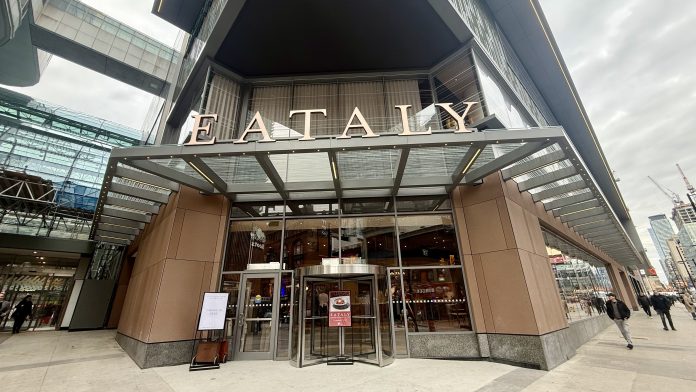
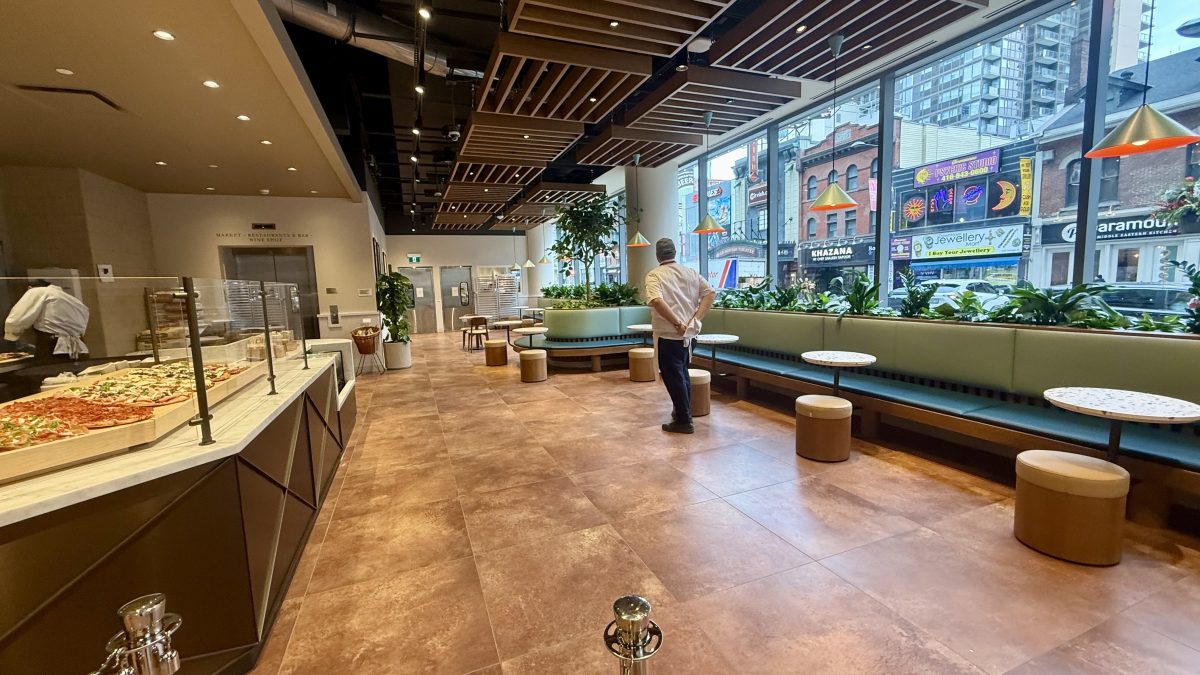
Yonge Street exterior entrance to Eataly at CF Toronto Eaton Centre in Toronto, November 25, 2025. Photo: Craig Patterson
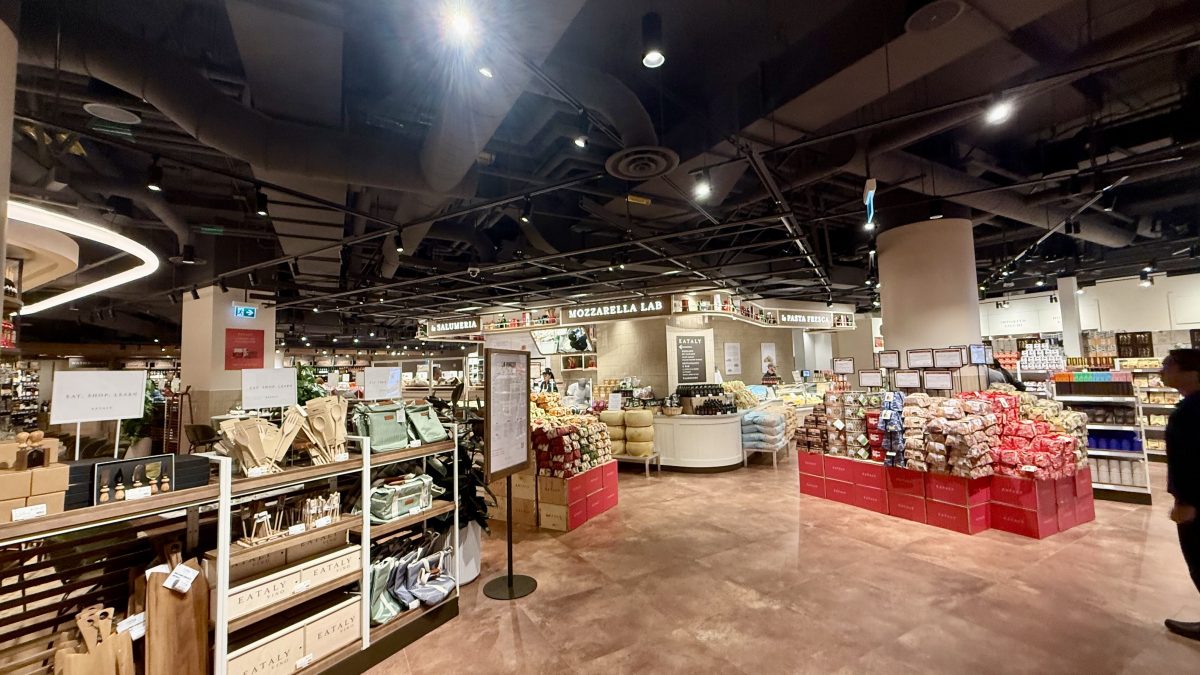
Eataly at CF Toronto Eaton Centre opened to the public on Tuesday afternoon, marking an important moment for the Italian marketplace. The launch represents Eataly’s fourth permanent Toronto location and reinforces the brand’s deepening relationship with the local community since entering Canada in 2019. The new two-level, 25,000 square foot space arrives at a time of renewed energy downtown, positioned inside Canada’s busiest shopping centre and situated on Toronto’s highest-traffic pedestrian corridor. Drawing on years of local momentum and a growing audience of loyal guests, the opening further underscores Eataly’s confidence in the Toronto market and its long-term expansion strategy within the country.
Tommaso Brusò, CEO of Eataly North America, said the launch reflects the company’s ongoing commitment to Canada. “Eataly Eaton Centre is a continuation of our story in Canada, cementing our appreciation for the community we have built here since first opening Eataly Yorkville in 2019. As an icon of the city and a premier destination for shopping, dining, and entertainment, we are excited to bring a taste of Italy to CF Toronto Eaton Centre’s impressive roster of retailers, just in time for the holiday season.”
Tommaso Brusò, CEO of Eataly North America
The opening also extends Eataly’s growing relationship with landlord Cadillac Fairview. CF Toronto Eaton Centre becomes the brand’s third location within a CF property in the city, following earlier openings at CF Sherway Gardens and CF Shops at Don Mills. Eataly’s first Canadian store debuted at Manulife Centre in Yorkville in 2019 (in a non-CF property). The brand’s continued expansion across multiple property types demonstrates how adaptable Eataly’s marketplace model is within Toronto’s varied retail environments, from an upscale mixed-use complex to a suburban regional mall and now North America’s most visited shopping destination.
A Two-Level Experience Anchored by Dining, Marketplace Retail, and Grab-and-Go Counters
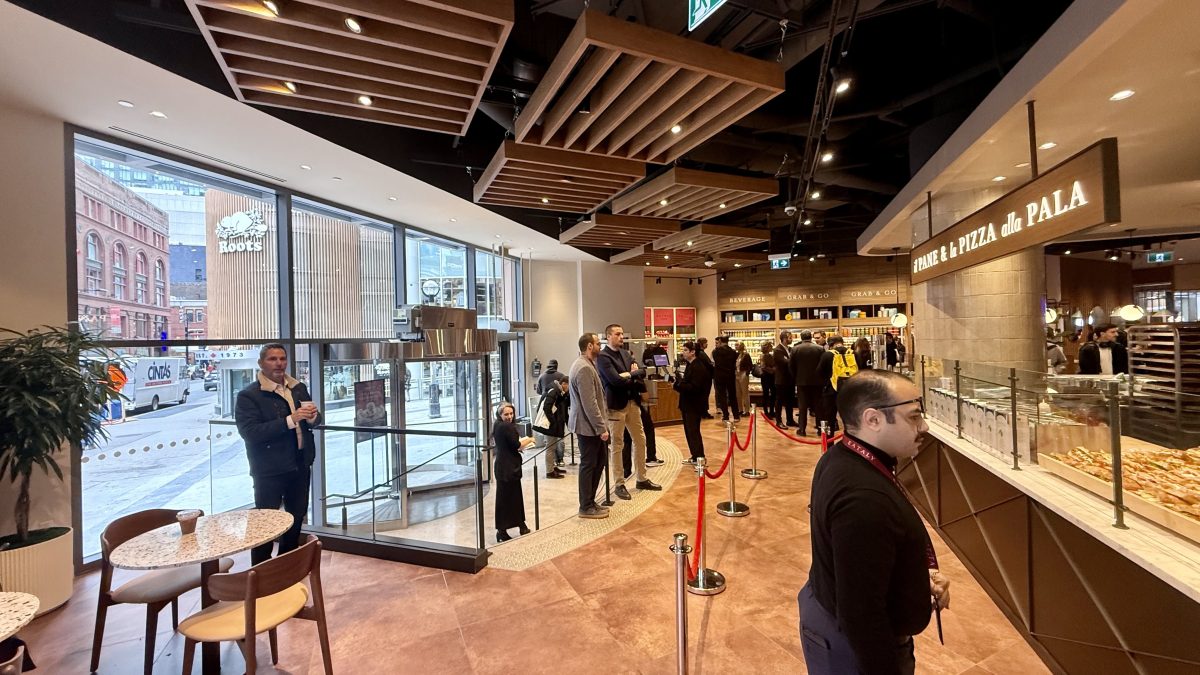
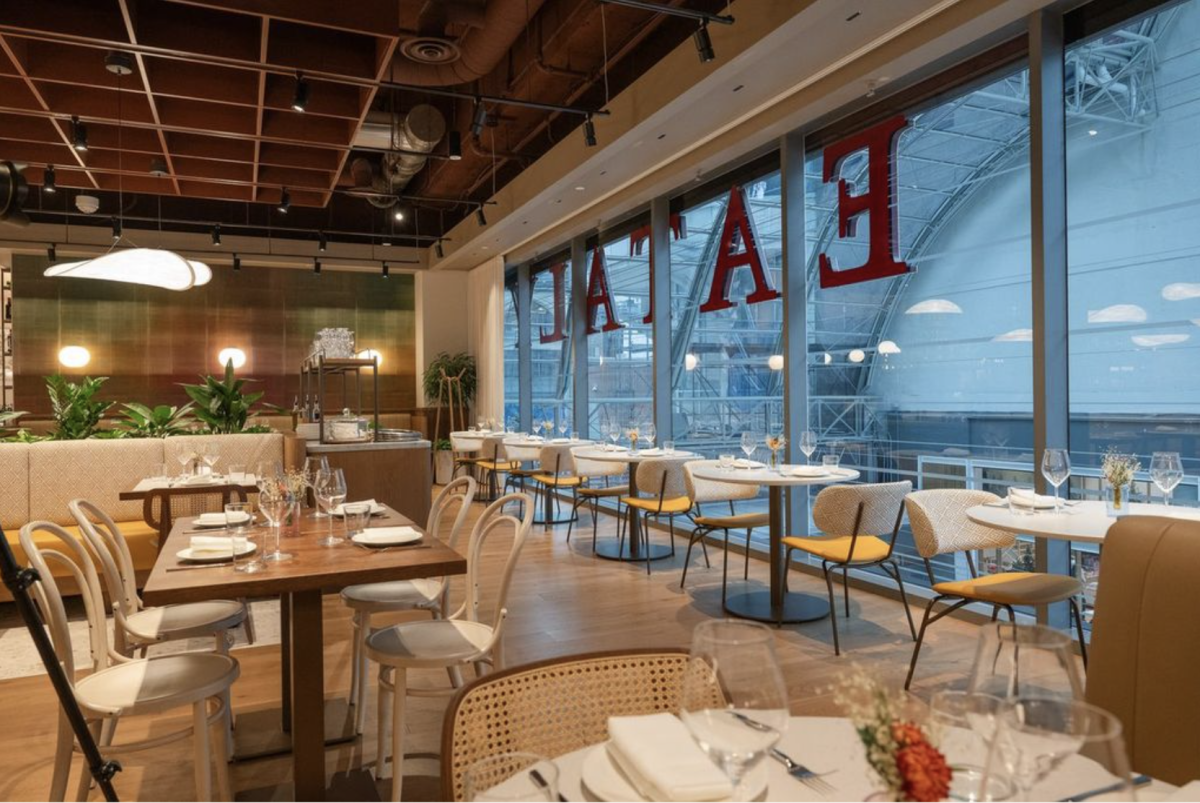
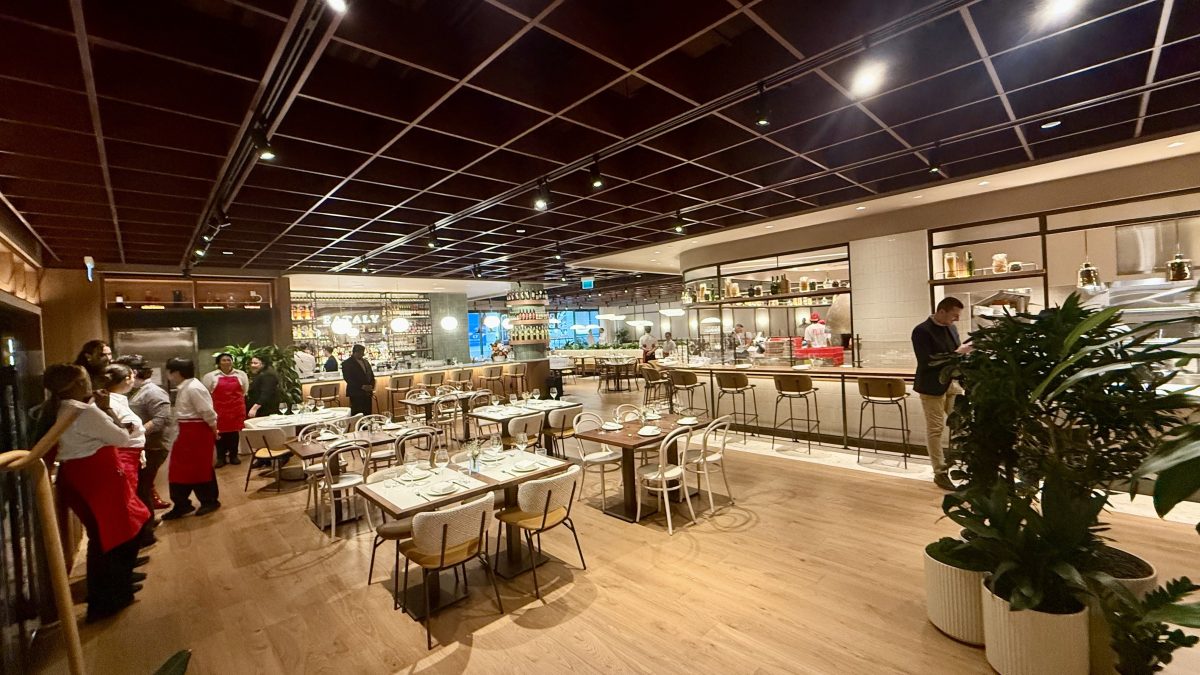
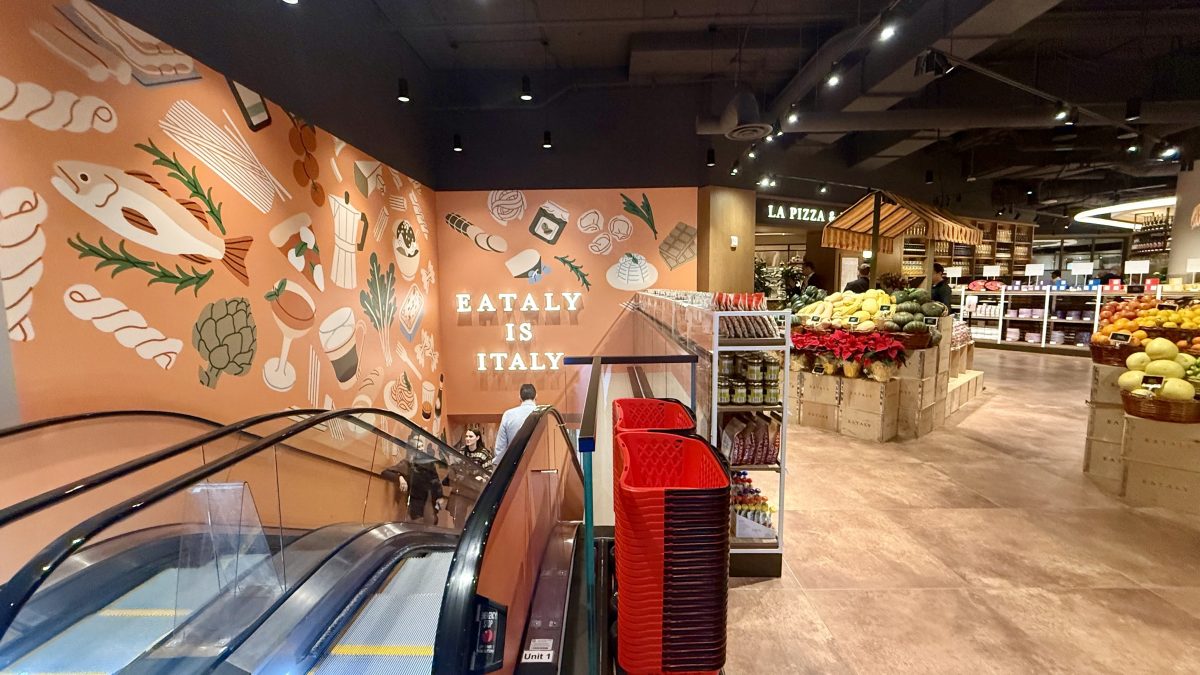
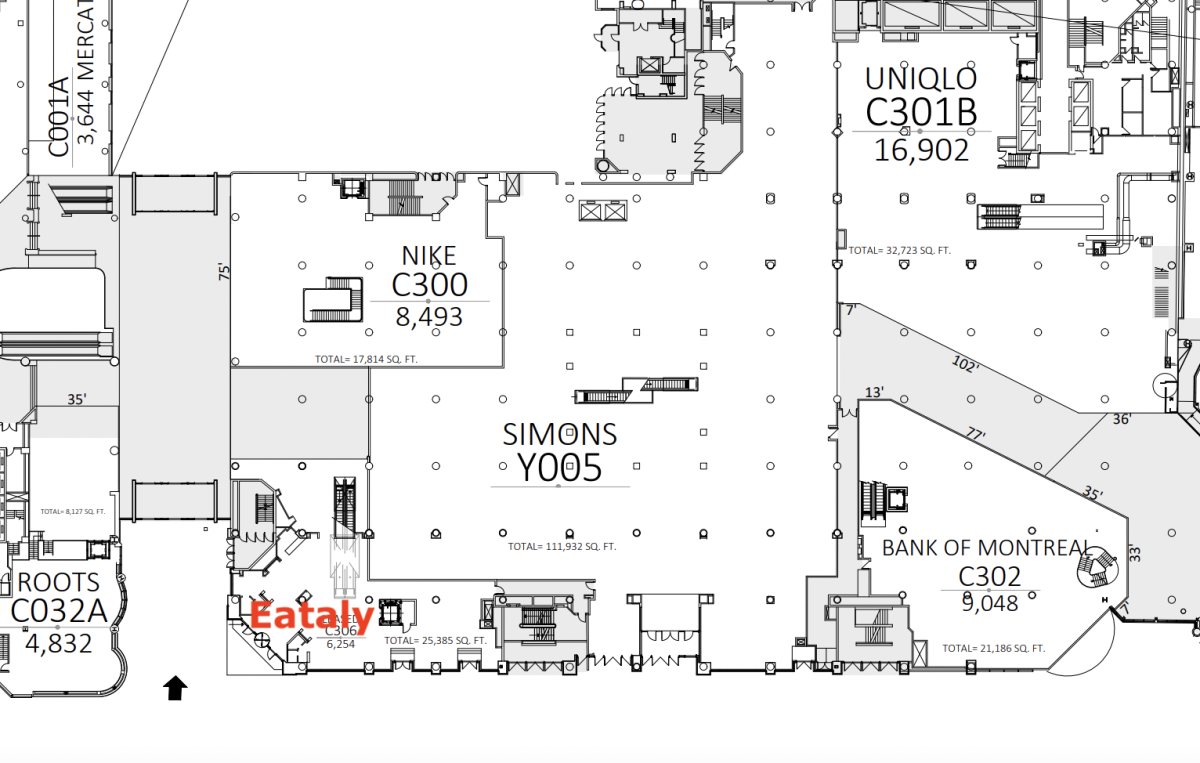
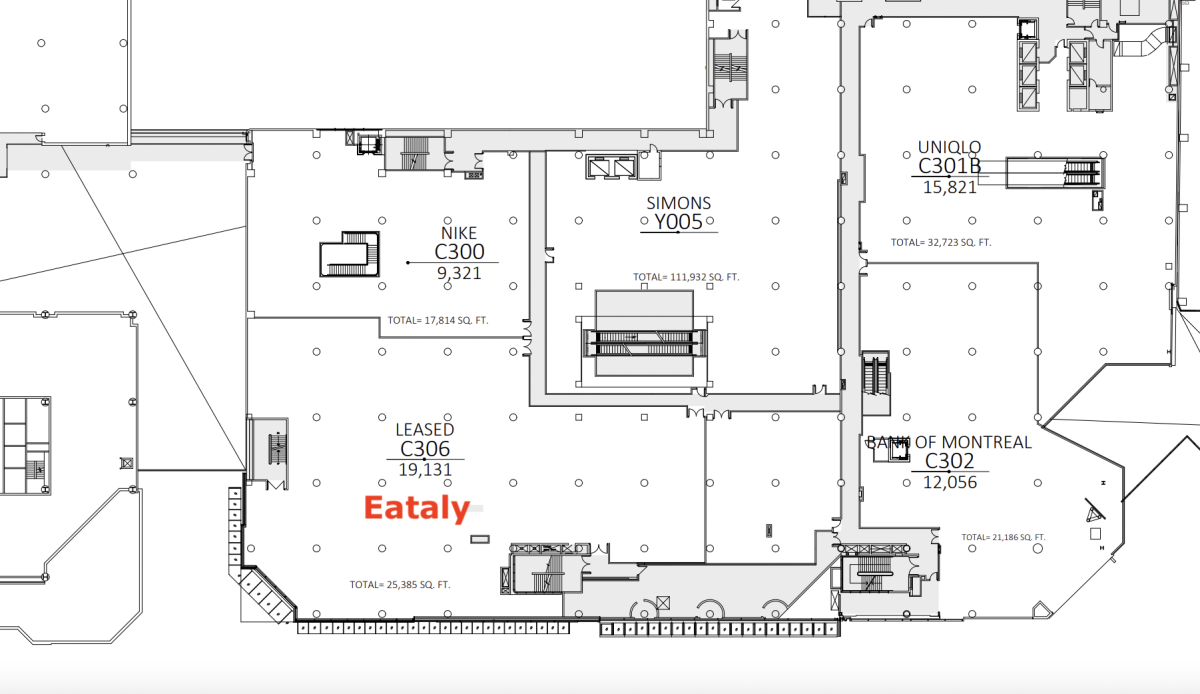
The new Eataly CF Toronto Eaton Centre spans more than 25,000 square feet over two floors formerly part of Nordstrom’s footprint. The layout was designed to deliver what Eataly executives describe as a full Italian experience for guests looking to shop, dine, or explore. The main floor features quick-service counters and grab-and-go offerings, while the upper level brings together full-service restaurants, marketplace retail, a wine shop, and the immersive atmosphere that has become central to the brand’s identity.
During an interview ahead of the opening, Brusò explained that the split-level design is intended to respond to the needs of the site and the movement patterns of the mall. “It is on two floors, so we have the ground floor where it is more like a service area with the entrance from the street where people can buy, take a pizza or something. Then the upper floor is more like the restaurant, the Eataly that we know. It is really a destination, but it also considers the mall and the traffic of the mall.”
He described CF Toronto Eaton Centre as a location uniquely suited to a fast-paced grab-and-go element with a deeper full-service experience upstairs. “Inside the mall of course there is a lot of traffic. The size we open, we think is the right size where you can really have this environment with the food, the atmosphere, and the furniture is very Italian.”
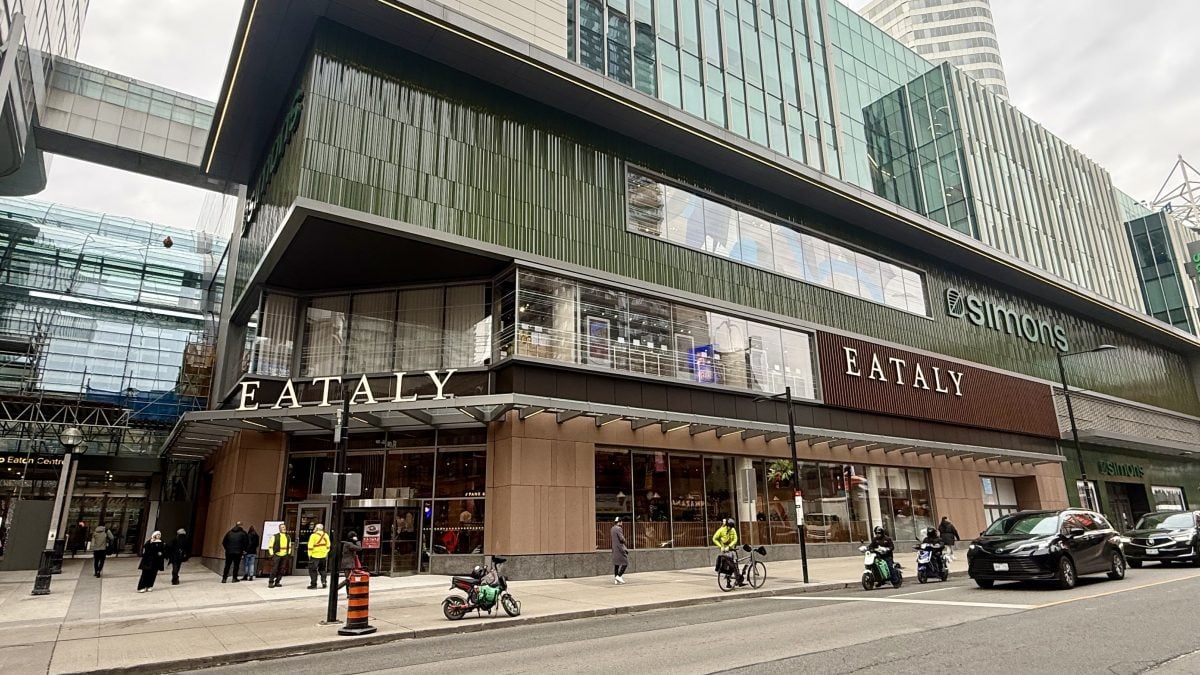
Yonge Street exterior of Eataly at CF Toronto Eaton Centre in Toronto, November 25, 2025. Photo: Craig Patterson Main floor of Eataly at CF Toronto Eaton Centre in Toronto, November 25, 2025. Photo: Craig Patterson Eataly at CF Toronto Eaton Centre in Toronto. Photo: Eataly
La Pizza & La Pasta Anchors the Full-Service Dining Experience
At the heart of Eataly CF Toronto Eaton Centre is La Pizza & La Pasta, the signature restaurant concept found across many of the company’s locations globally. The new 190-seat restaurant focuses on Neapolitan pizza and artisanal pasta prepared by expert pizzaioli and pasta chefs. Dishes include classic regional combinations and seasonal specialties such as white truffle offerings. The robust wine list features more than one hundred labels, reinforcing the brand’s dedication to presenting a curated selection of Italian varietals.
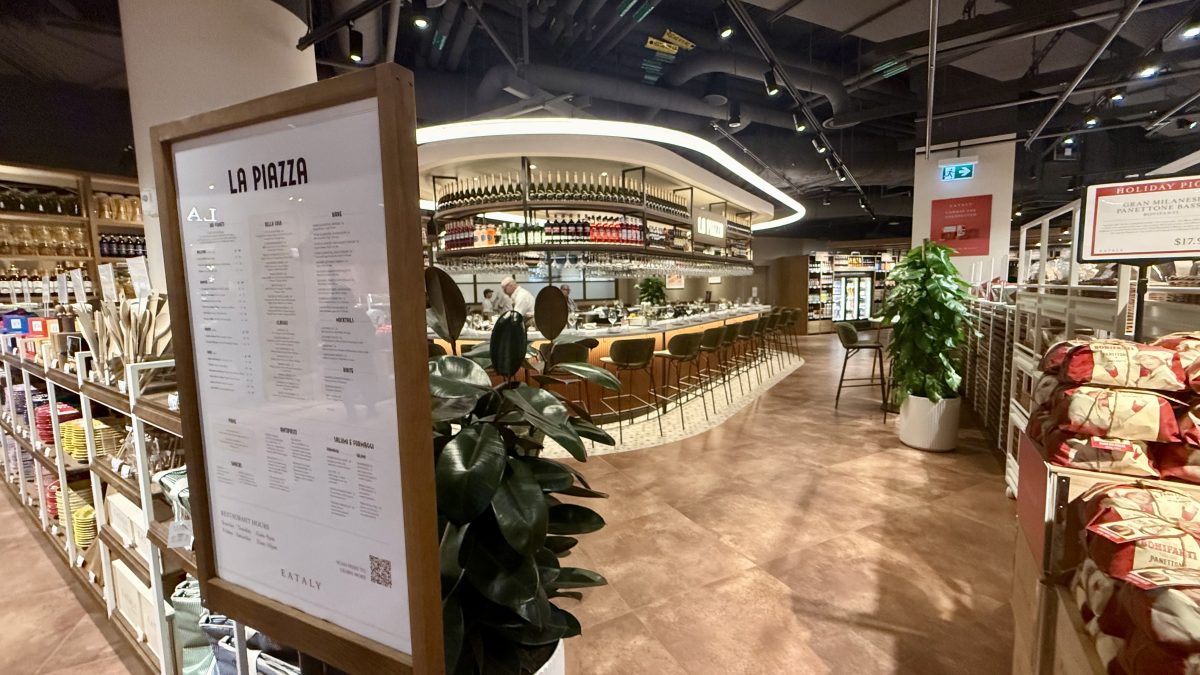
Nearby, La Piazza offers a more intimate bar and restaurant setting with fifty seats. The menu centres on aperitivo culture, with Italian wines and hand-shaken cocktails that range from classic spritzes to creations like the Earl Grey Vodka Martini, smoked tableside. Light fare includes freshly baked focaccia and shareable plates of salumi and formaggi.
Brusò said the aim is to create emotional resonance through the dining experience. “It is about emotion. It is important that we keep this emotional element because we are competing with the quality of time people spend. People spend a lot of time in the store because they enjoy the experience.”
Eataly at CF Toronto Eaton Centre in Toronto, November 25, 2025. Photo: Craig Patterson Second floor, Eataly at CF Toronto Eaton Centre in Toronto, November 25, 2025. Photo: Craig Patterson Second floor restaurant at Eataly at CF Toronto Eaton Centre in Toronto, November 25, 2025. Photo: Craig Patterson
Marketplace Retail and a Dedicated Wine Shop Enhance the Offering
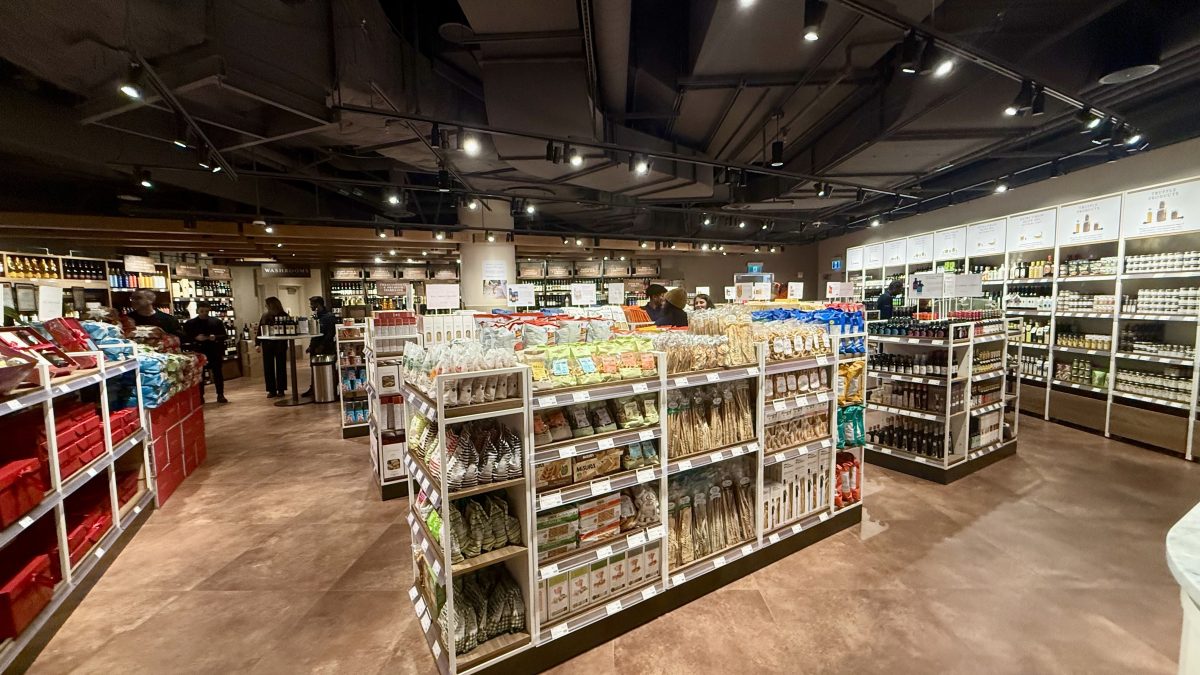
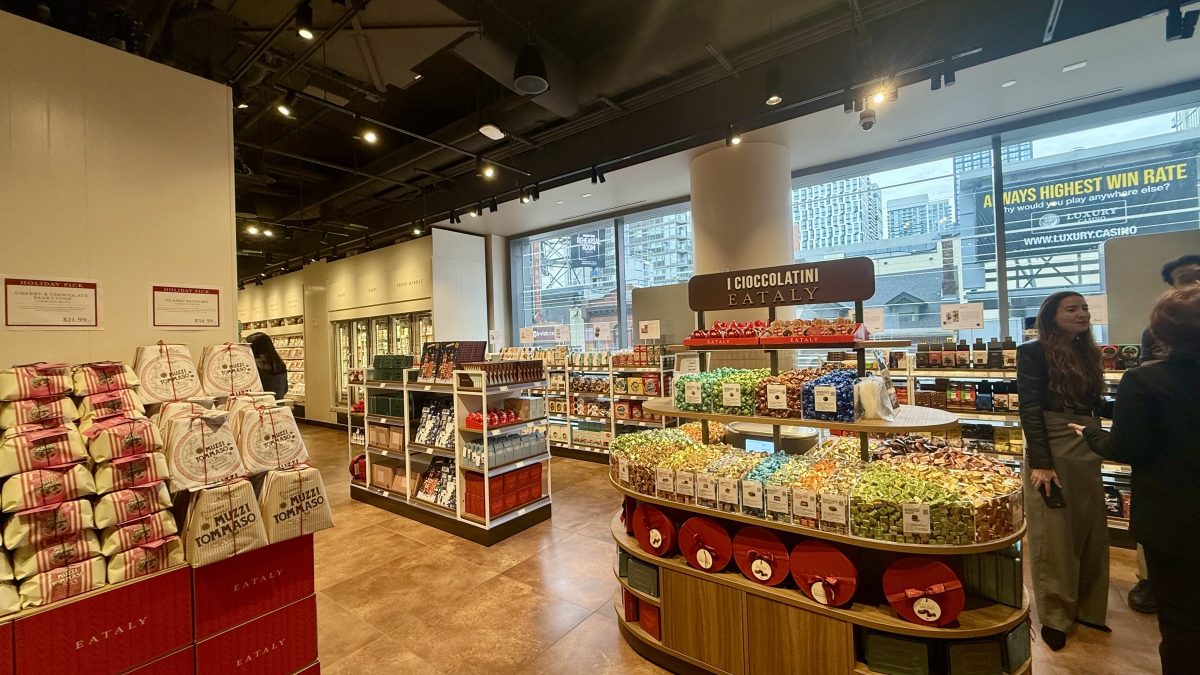
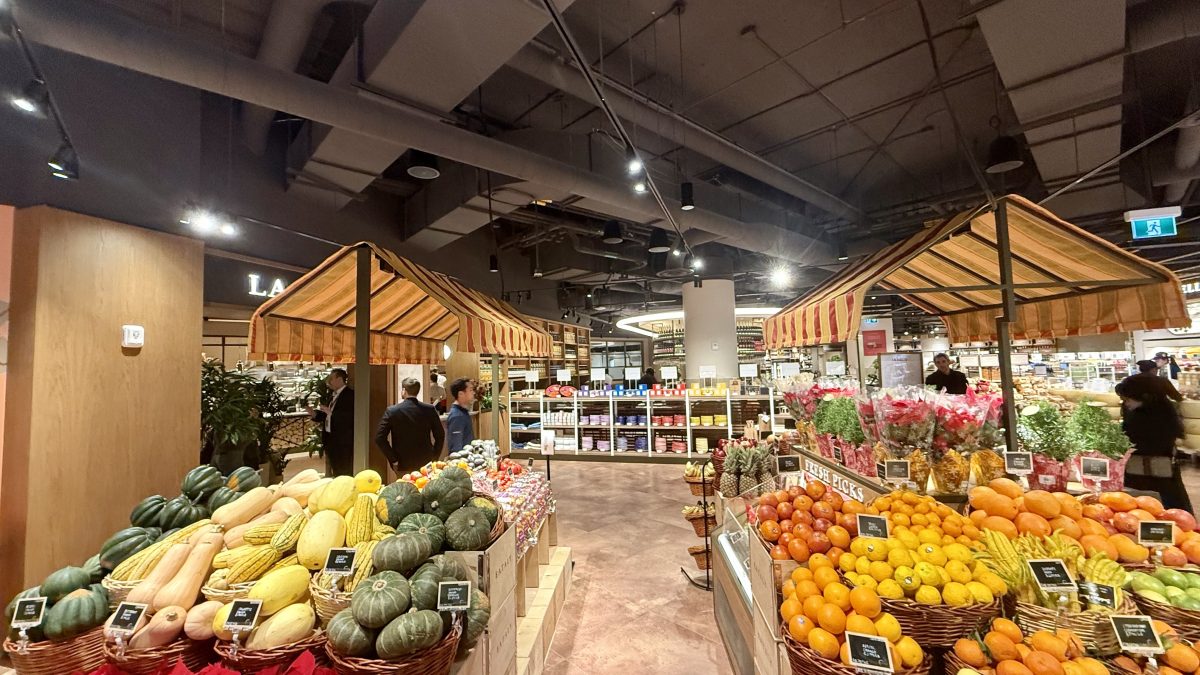
The marketplace retail area offers a substantial selection of Made in Italy products, including olive oils, balsamic vinegars, artisanal pasta, tomatoes, imported goods, cheeses, cured meats, and ready-to-cook essentials.
The assortment reflects Eataly’s long-standing commitment to small producers, traditional Italian food craftsmanship, and Slow Food principles.
A counter for fresh pasta and cut-to-order salumi and formaggi anchors the retail level, while the wine shop expands the offering significantly. With more than five hundred labels and selections from all twenty regions of Italy, the wine store is one of the most comprehensive Italian wine destinations in Canada.
Brusò noted that local partnerships continue to be essential for the company’s Canadian operations. Eataly CF Toronto Eaton Centre carries Toronto-area and Ontario products as part of its expanded produce and specialty food range. “We work with local producers on the fresh side. We work with some local producers on cheese and different things. We try to integrate the local community because from the day we open, we start to engage. We want to become part of the community.”
Second floor of Eataly at CF Toronto Eaton Centre in Toronto, November 25, 2025. Photo: Craig Patterson Escalators at Eataly at CF Toronto Eaton Centre in Toronto, November 25, 2025. Photo: Craig Patterson
Quick-Service Counters Bring Accessible Italian Essentials to the Main Level
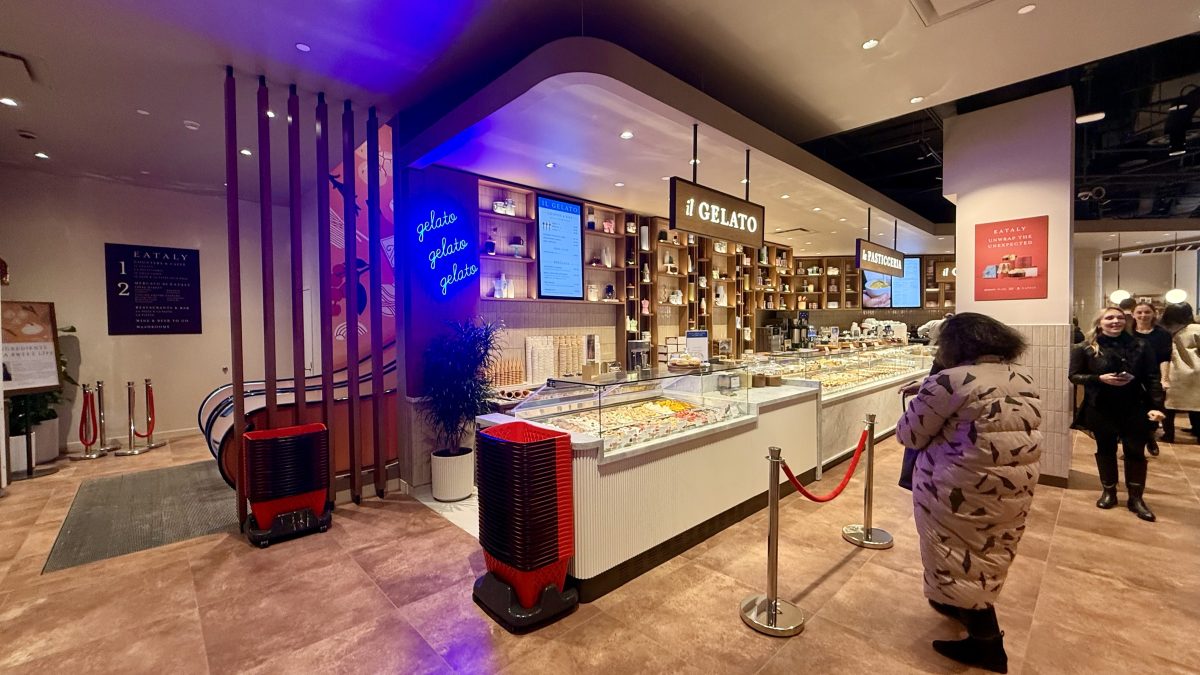
The main level of the new Eataly CF Toronto Eaton Centre location features several quick-service counters designed for mall guests seeking a fast bite or a takeaway option.
These include Il Gran Caffè with Illy espresso, La Pasticceria with classic Italian pastries, Il Gelato with gelato and sorbetto, and Pizza alla Pala serving Roman-style pizza by the slice and stuffed farcita sandwiches. The quick-service strategy reflects Eataly’s ability to integrate its Italian culinary identity into high-traffic environments where convenience is a priority.
Brusò emphasized that this format is intentional. “There is an entrance from the street, so people can have a bite of Eataly and walk outside. The retail experience and the restaurant are there. The upper level is the Eataly that people know from our other locations.”
Main floor of Eataly at CF Toronto Eaton Centre in Toronto, November 25, 2025. Photo: Craig Patterson Main floor of Eataly at CF Toronto Eaton Centre in Toronto, November 25, 2025. Photo: Craig Patterson
A Growing Network of Toronto Locations Demonstrates Strong Local Demand
With the opening of Eataly CF Toronto Eaton Centre, Toronto now becomes one of the rare cities outside Italy to support four permanent locations, plus a seasonal pop-up in the Distillery District. The city’s first location, the 50,000-square-foot Yorkville flagship at Manulife Centre, opened in 2019 and remains Eataly’s largest store in Canada.
CF Sherway Gardens followed in 2023 with a more streamlined 25,000 sq ft concept, and Eataly CF Shops at Don Mills opened in 2024 as a compact 9,800-square-foot space with a curated offering suited to the open-air shopping centre.
Brusò said the Toronto market has proven to be exceptionally strong, noting that each location continues to perform well. “Toronto is a place to be. I am familiar with North America and especially Toronto, and I have seen what has happened in the last years. It is really like New York with a lot of young people, very vibrant. For me, Toronto is a hub of Italian culture and lifestyle.”
Main floor lease plan showing Eataly at CF Toronto Eaton Centre Second floor lease plan showing Eataly at CF Toronto Eaton Centre
He added that the city can support two downtown locations. “Of course there is a potential of cannibilization, but we believe the market can sustain it. The Eaton Centre is very high traffic with commuters and visitors. The other downtown location is more of a destination. We believe both can thrive.”
When asked whether the company plans further Toronto or national expansion, Brusò said the team remains open to opportunities. “Never say never. We see for now there is nothing in the radar for another location, but I never say never. We have the Distillery pop-up and we like that concept. It could become permanent one day.”
He also noted that the company continues to explore other cities in Canada. “Canada is a market we are looking at. If the right opportunity comes, why not.”
Second floor grocery at Eataly at CF Toronto Eaton Centre in Toronto, November 25, 2025. Photo: Craig Patterson Second floor of Eataly at CF Toronto Eaton Centre in Toronto, November 25, 2025. Photo: Craig Patterson
Celebrating the Opening with Ten Days of Community Events
To mark the launch, Eataly CF Toronto Eaton Centre will offer ten days of complimentary tastings, demonstrations, and community-focused programming starting Wednesday, November 26. Brusò described this initiative as central to the brand’s philosophy of creating meaningful local ties. “This is the way to engage the community. We want to become part of the community, and we start to engage from the moment we open.”
Globally, Eataly has more than sixty locations in fifteen countries and continues to embark on an ambitious expansion plan. The CF Toronto Eaton Centre opening strengthens the brand’s North American presence and marks its eighteenth location on the continent.
Since 2023, Investindustrial has held a majority stake in the company, supporting new openings across major international cities. Canadian company Wittington owns a share of Eataly in Canada.
Brusò said North America remains a key market. “Canada and the United States are central to our strategy. What is important is that we maintain the emotional concept of our stores. For us, living well is our mission. Everything we do connects to that.”
The official start of Cyber Week is upon us, and itʼs time to read the signals about where the market stands and what we might expect over the coming month.
This season is shaping up around three contradictory truths all moving at full speed. On one side, value retailers are posting strong earnings and entering Cyber Week with the confidence of clear consumer demand: deep deals, bulk value, and convenience continue to win the day (think TJX, Costco, Walmart). On another, luxury (Hermès, Richemont, LVMH) is humming along on its own frequency, insulated for now by high-income shoppers who havenʼt pulled back, even as the broader market cools…though aspirational shoppers are noticeably more cautious. And running between them is everyone else: department stores, specialty players, mid-tier brands, all caught in a promotional arms race where margins are tight, loyalty is fickle, and algorithmic visibility means everything.
The result is a holiday landscape that feels both energized and, if weʼre honest, a bit uneasy. Shoppers are trading down and trading up simultaneously, hitting Walmart for essentials, Sephora for gifts, and Amazon for everything in between, each channel chosen with sharp intentionality. It isn’t just product retailers are competing on, theyʼre also competing on value perception, storytelling, convenience, and speed. And this Cyber Week, the winners wonʼt be determined by who discounts the most, but by who calibrates best: the smartest promotions, the clearest value proposition, and the most frictionless path from cart to doorstep.
With these themes in the back of our minds, let’s take a look at the latest market data.
Current Market Data
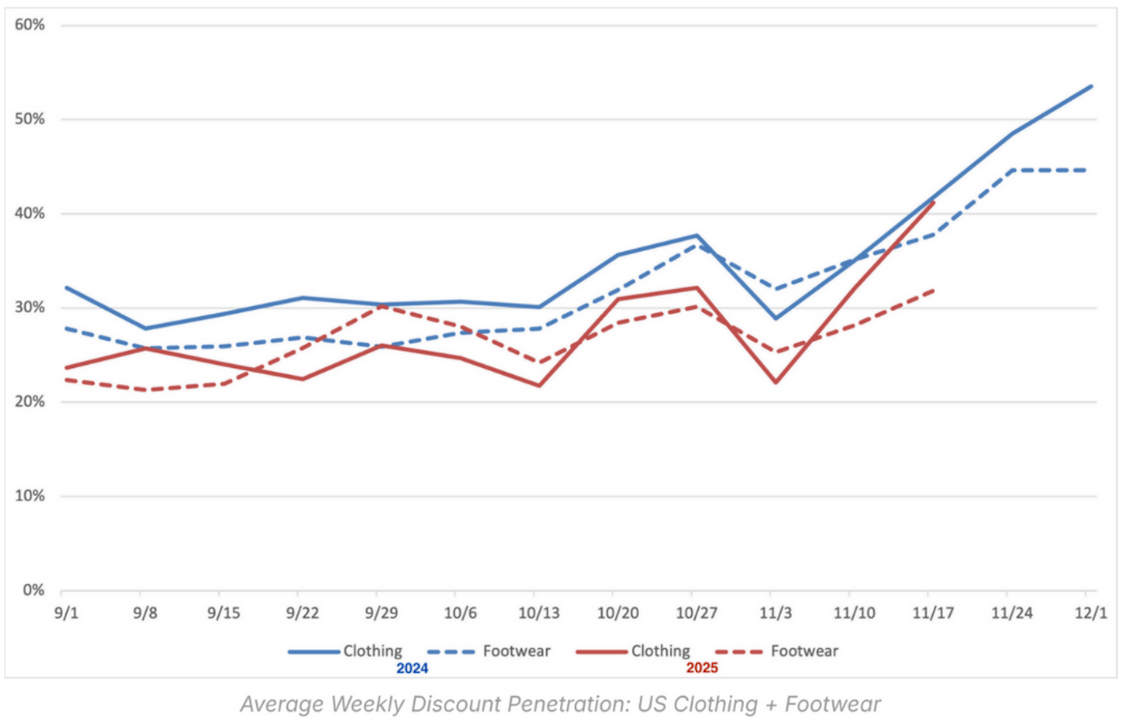
In the US market, weʼre seeing a clear trend: the share of merchandise on sale is running lower than last year, across both apparel and footwear. The clothing gap has narrowed in the past week, but footwear still sits roughly 3-4 points below last yearʼs discount levels, a meaningful signal that US retailers have kept inventories tighter (a necessity for many due to tariff volatility) and have avoided early-season promotional overreach.
Average Weekly Discount Penetration: US Clothing + Footwear. Data: Centric Software
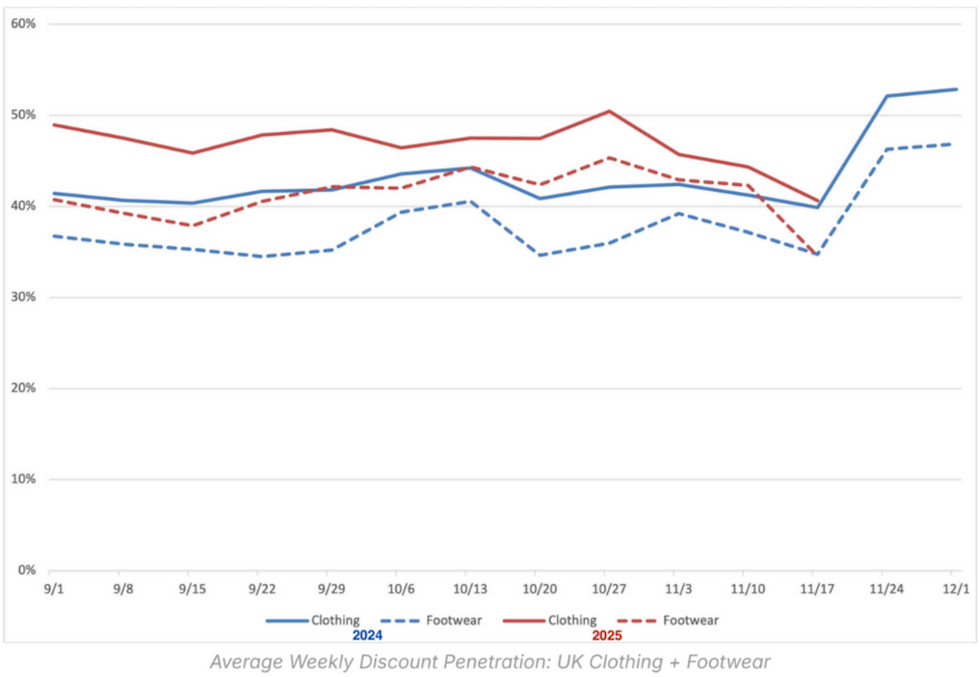
If we look at the UK market, the opposite trend is playing out. This year’s discounting has been tracking higher across both apparel and footwear, although levels have declined slightly over the past few weeks. The macro backdrop: persistent cost-of-living pressure is clearly pushing retailers toward deeper promotional moves earlier in the season.
Average Weekly Discount Penetration: UK Clothing + Footwear. Data: Centric Software.
Where Discounting Is Concentrated
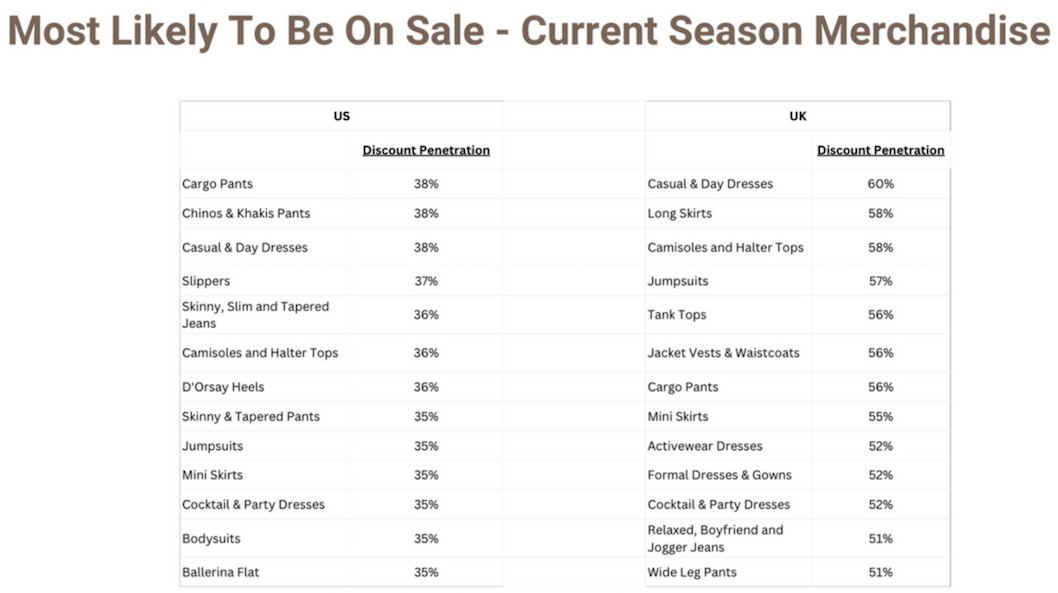
Zooming in, the November markdown landscape reveals just how differently the US and UK entered the season.
Most Discounted Categories During November. Data: Centric Software.
In the US, the categories most likely to be on sale were grounded in basics, think cargo pants, chinos, camisoles, even skinny jeans, signaling retailers cleaning up slow-moving apparel without resorting to broad, margin-eroding discounts. Footwear, notably, was largely absent from the list, a sign that American retailers planned conservatively or saw healthier sell-through in shoes.
Across the Atlantic, the story is completely different. UK retailers leaned heavily on promotions, with dresses, skirts and occasionwear posting discount penetration levels north of 55%. Itʼs a much more aggressive stance, suggesting softer consumer demand and greater inventory pressure. Altogether it looks like there will be a far more promotional holiday experience for UK shoppers compared with their US counterparts.
Whatʼs Selling Through at Full Price
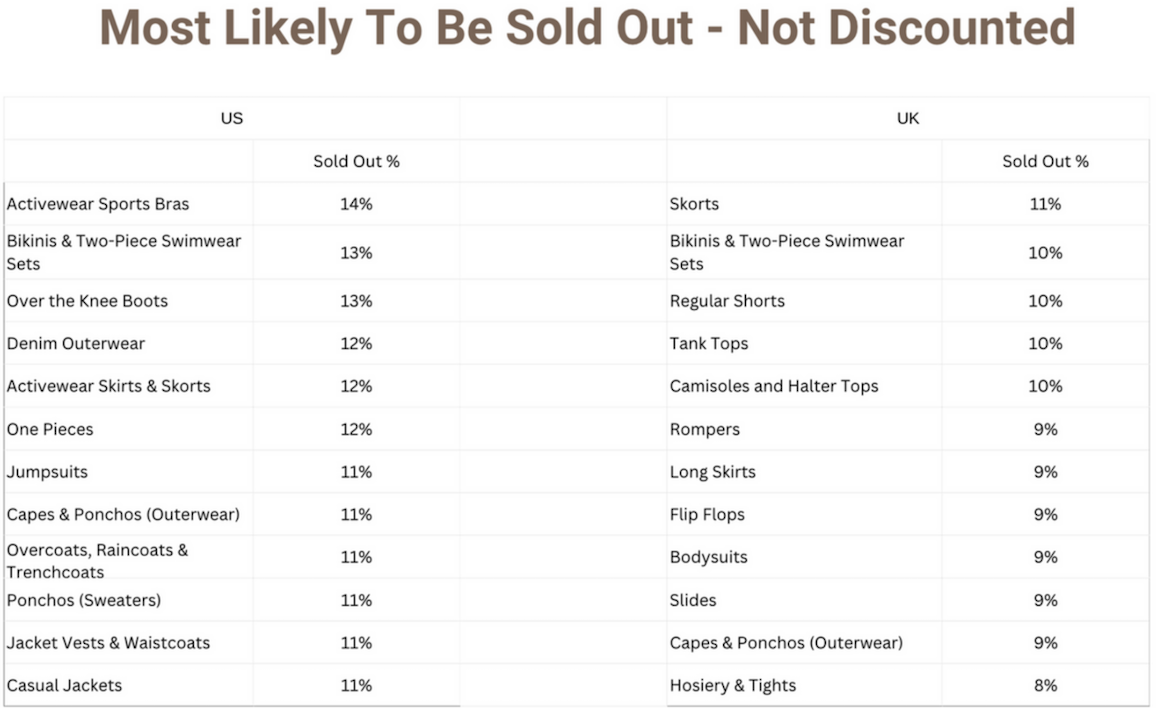
The sold-out data adds another layer, an insight into true demand strength.
In the US, shoppers are snapping up activewear, outerwear, and boots at full price. These are categories with momentum and tight inventory discipline, indicating retailers have anticipated demand accurately and have not needed to discount to move product.
Categories with the Highest Sold Out Rates in November – Non-Discounted Products. Data: Centric Software.
In the UK, the fastest-selling items are lighter, transitional pieces, including skorts, camisoles, swim, and shorts. Itʼs a clear indicator that UK consumers are still reluctant to commit to full-price winter apparel and are favoring seasonless staples and perhaps even planning warm-weather travel.
So What Does This Mean?
All signs point to a holiday season that will unfold unevenly and, in many cases, later than usual. With US shoppers buying selectively and UK consumers waiting for deeper deals, much of the real conversion may not materialize until mid-December, when urgency finally overrides hesitation. That means retailers need to stay agile: inventory thatʼs well-positioned and promotions that can be adjusted in real time will determine who captures this late-season surge.
The divide between markets, and between value, luxury, and the pressured middle, makes a one- size-fits-all strategy impossible. Success this year will hinge on precision: targeted promotions, clear value communication, and operational speed that supports last-minute purchasing. Retailers that stay disciplined now will protect margins and enter 2026 in a stronger position, while those who over- promote early may find themselves out of room when demand actually hits. In a season defined by delay and unpredictability, the winners will be the ones prepared to perform when the clock runs out.
This content was developed in partnership with Retail Insider and Centric Software. To work with Retail Insider, email Craig Patterson at craig@retail-insider.com
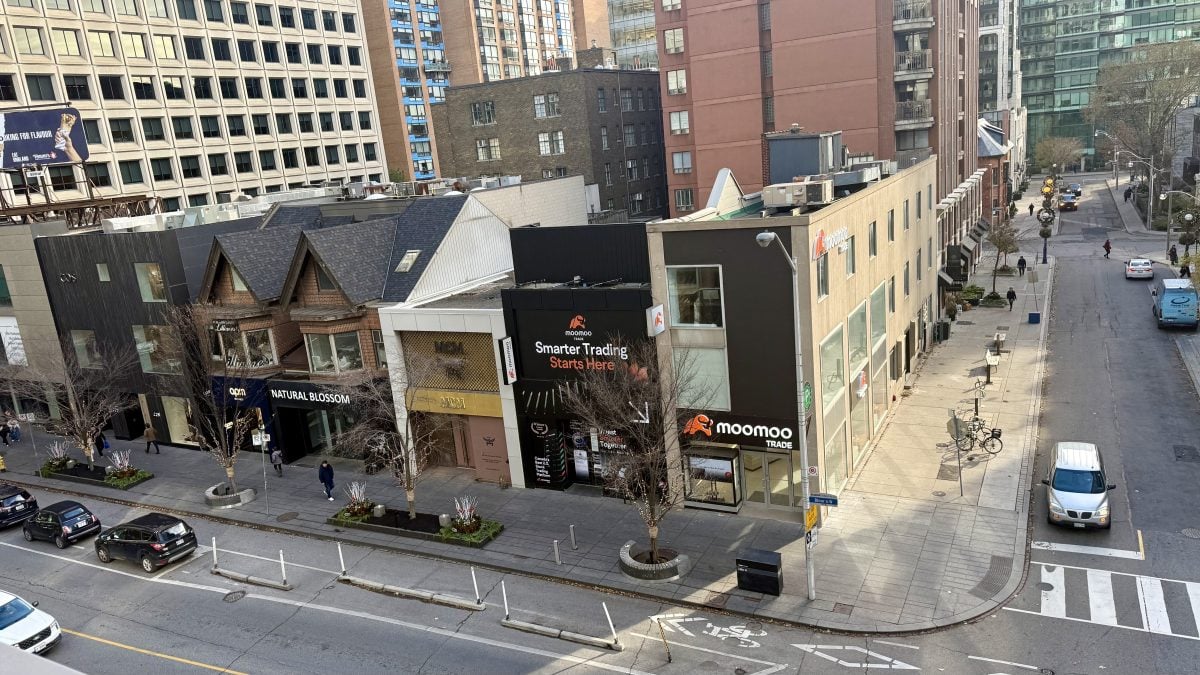
Moomoo Trade/Moomoo Financial Canada Experience Store at 95A Bloor St. W. in Toronto. Photo: Craig Patterson
Toronto’s Bloor Street luxury corridor has welcomed a new occupant, and it is neither a fashion label nor a jeweller. Moomoo Financial Canada has opened its first Canadian bricks-and-mortar presence at 95A Bloor Street West, unveiling an experience-driven hub for active investors in a heritage-listed building surrounded by Hermès, Van Cleef & Arpels and Rolex. The move places a global fintech brand on one of the most valuable retail streets in the country and signals a different kind of expansion strategy in Canada’s increasingly competitive financial services sector.
The Moomoo Experience Store Toronto, measuring nearly 10,000 square feet across 95A Bloor and an adjoining structure, is designed as a community centre for market learning rather than a traditional bank branch. For Michael Arbus, CEO of Moomoo Financial Canada, the decision to enter the Canadian market through the nation’s most prestigious retail corridor was both strategic and symbolic.
“We thought that from a brand equity standpoint, if you are going to put up a retail facing storefront, why not pick the best and the brightest and the most premium luxury to associate with our brand,” Arbus said in an interview with Retail Insider. “Globally, this is a worthwhile stand for Canadians because it shows that we are here, that we care, that we want to spend and invest in Canada.”
The lease for the 95A Bloor storefront, branded ‘Moomoo Trade’, was represented on the landlord side by Arlin Markowitz and Emily Everett of CBRE’s Toronto Urban Retail Team. Robert Weinberg of Oberfeld Snowcap represented Moomoo Financial.
A Global Platform Looks to Deepen Its Canadian Footprint
Moomoo is a substantial player in global retail trading markets. Founded in Silicon Valley in 2018 and backed by Futu Holdings, a Nasdaq-listed fintech group headquartered in Hong Kong, the company now serves more than 27 million users across seven markets. Its platform is known for real-time data, technical indicators, options trading in supported regions and social investing tools designed for active retail traders.
Canada joined that global footprint in 2023 when OTT Financial Canada rebranded as Moomoo Financial Canada Inc. The firm now operates as a regulated investment dealer and offers trading in Canadian and U.S. stocks and ETFs with registered and non-registered account types. The Canadian app emphasizes advanced analytics, Level 2 data and extended trading hours, aiming to compete directly with established discount brokerages and newer digital trading platforms.
By choosing Bloor Street as its first Canadian physical location, Moomoo is signalling that its brand belongs among the most visible and high-traffic retail tenants in the country. “We had reached a point where it was enough about being just a financial technology firm,” Arbus said. “We wanted to show that we are committed to this market.”
Moomoo Trade/Moomoo Financial Canada Experience Store at 95A Bloor St. W. in Toronto. Photo taken from 100 Bloor St. W. above Hermes. Photo: Craig Patterson
A Heritage Corner With a Future Super-Tall Tower
Moomoo’s new storefront occupies one of the most distinctive retail buildings on the Mink Mile. Known historically as the Georg Jensen Silversmiths location and, later, the Victorinox Swiss Army flagship, the property at 95A Bloor Street West is listed on Toronto’s heritage register as an early modernist commercial building. Its façade, with unusually large mid-twentieth-century display windows extending across two storeys, cannot be demolished.
“Architecturally, we were not allowed to touch the exterior at all,” Arbus said. “It is totally protected space because it was designed by one of the first architects in Toronto to use large open retail storefront windows.”
That façade will eventually be incorporated into a proposed 79-storey mixed-use tower that spans 83–95A Bloor Street West. Plans call for a retail podium beneath more than one thousand residential units. While zoning and site plan approvals continue, the heritage designation means the Bloor frontage will remain standing and integrated into the redevelopment.
For Moomoo, that heritage protection offers an unexpected benefit. “Our space is not even getting demolished,” Arbus said. “If the condo market takes time to advance, we have bought a decade and that is where we live out our brand development. It is a great starting point.”
The company took a second adjoining building on the corner to secure the full presence it wanted. “The second space was just the lesser of evils in order to secure that corner,” Arbus explained. “We had to take both.”
Moomoo Trade/Moomoo Financial Canada Experience Store at 95A Bloor St. W. in Toronto. Photo: Craig Patterson
A Retail Storefront That Does Not Sell Anything
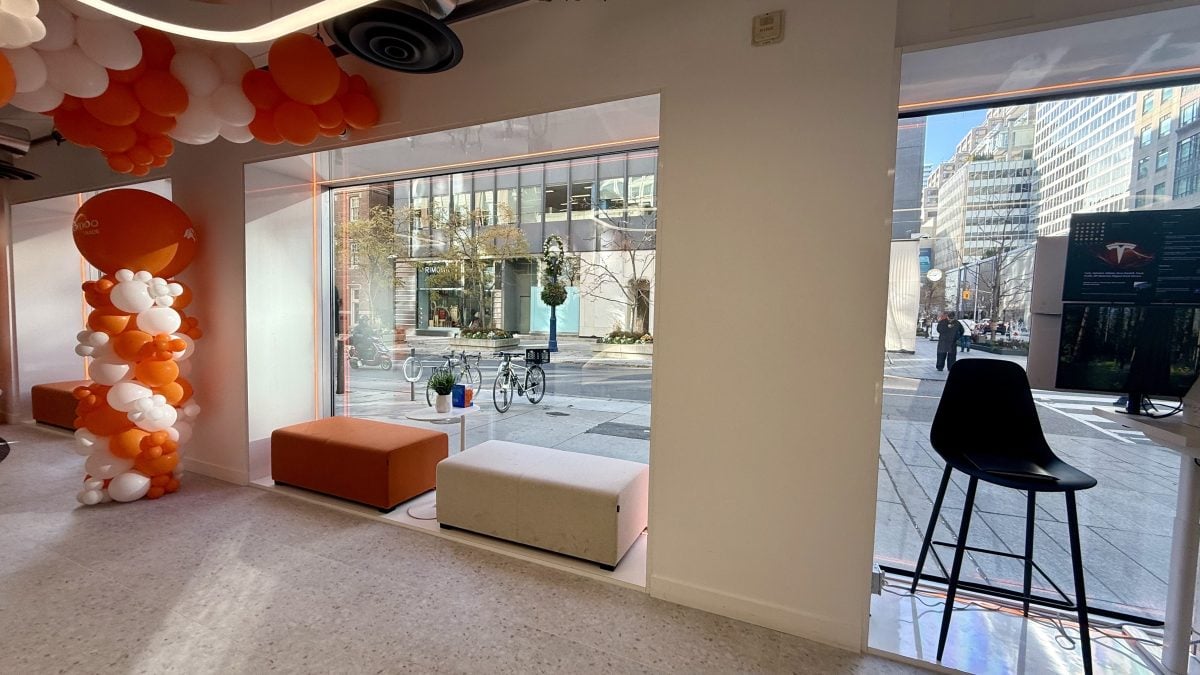
One of the most unusual qualities of the Moomoo Experience Store Toronto is that it functions without any traditional retail transactions. No accounts are opened onsite. No funds are moved. There are no teller counters and no investment products to buy.
“When we say store, what are we actually selling,” Arbus asked. “There is nothing we are selling. We are just a location for people from the community to walk in, warm up on a cold day and talk about what is happening in the investment universe.”
The space is designed to demystify market concepts, particularly for Canadians who feel disconnected from active trading culture. Visitors can explore the app on large interactive screens, ask staff about fundamentals like options or technical indicators and sit in on learning sessions in an environment that removes the intimidation factor typical of financial offices.
“Smarter trading starts with smarter investors and that is what Moomoo is all about,” Arbus said in the press release announcing the opening. “Whether you are just starting out or fine-tuning your strategy, we want Canadians to feel empowered to take control of their financial future and have a little fun doing it.”
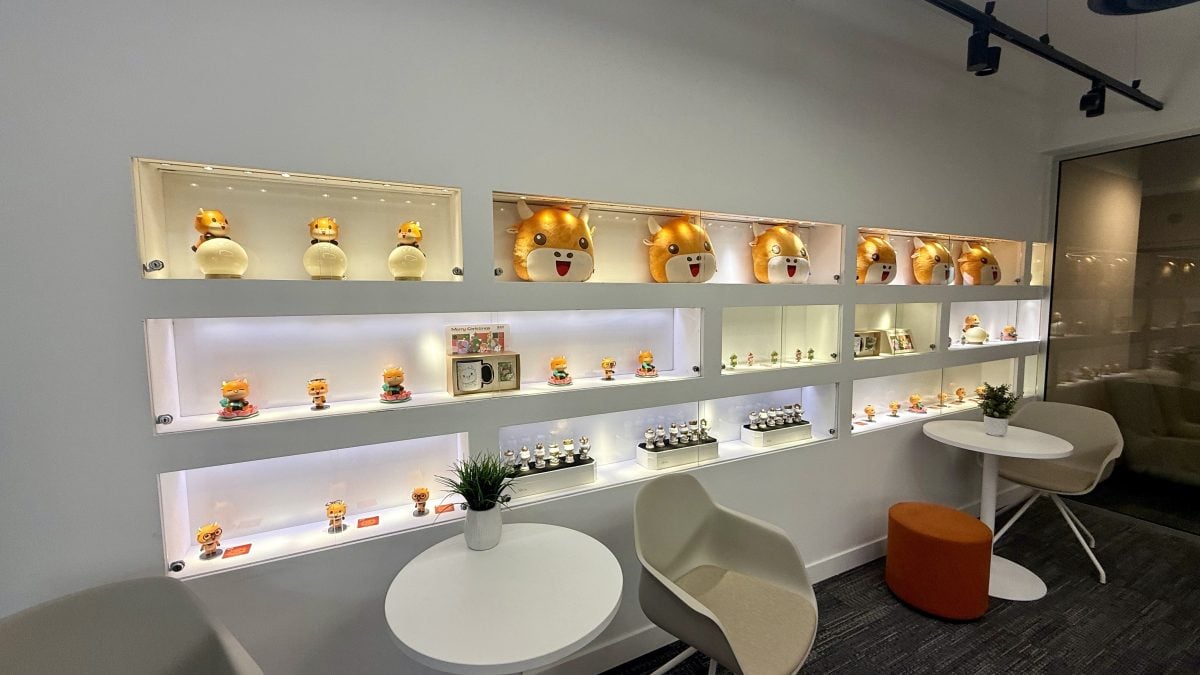
Moomoo Trade/Moomoo Financial Canada Experience Store at 95A Bloor St. W. in Toronto. Photo: Craig Patterson Moomoo Trade/Moomoo Financial Canada Experience Store at 95A Bloor St. W. in Toronto. Photo: Craig Patterson
Creating a Space for Community and Conversation
The ground floor serves as the entry point to Moomoo’s brand, but the second level is where the company wants to cultivate community life. The team has created a lounge-style venue with a large screen to host talks, demonstrations and events. The setup has been deliberately kept flexible so that visitors from a range of backgrounds can use it.
“Anyone who wants to use our space to host a community event of any kind, it is open,” Arbus said. “We want mom groups pushing strollers during the day who want a place to meet, have a coffee and maybe get their brains engaged talking about investment.”
He adds that the company will personally participate in many of those gatherings. “I love talking about this stuff. If it means that we get more people using our app, that is great. If not, it is okay. We are here.”
The plan includes regular educational sessions in partnership with post-secondary institutions. “If it is Thursday night and you are business or medical students who will be making money one day, come and learn a bit about option trading before you go out,” Arbus said. “That is the intention.”
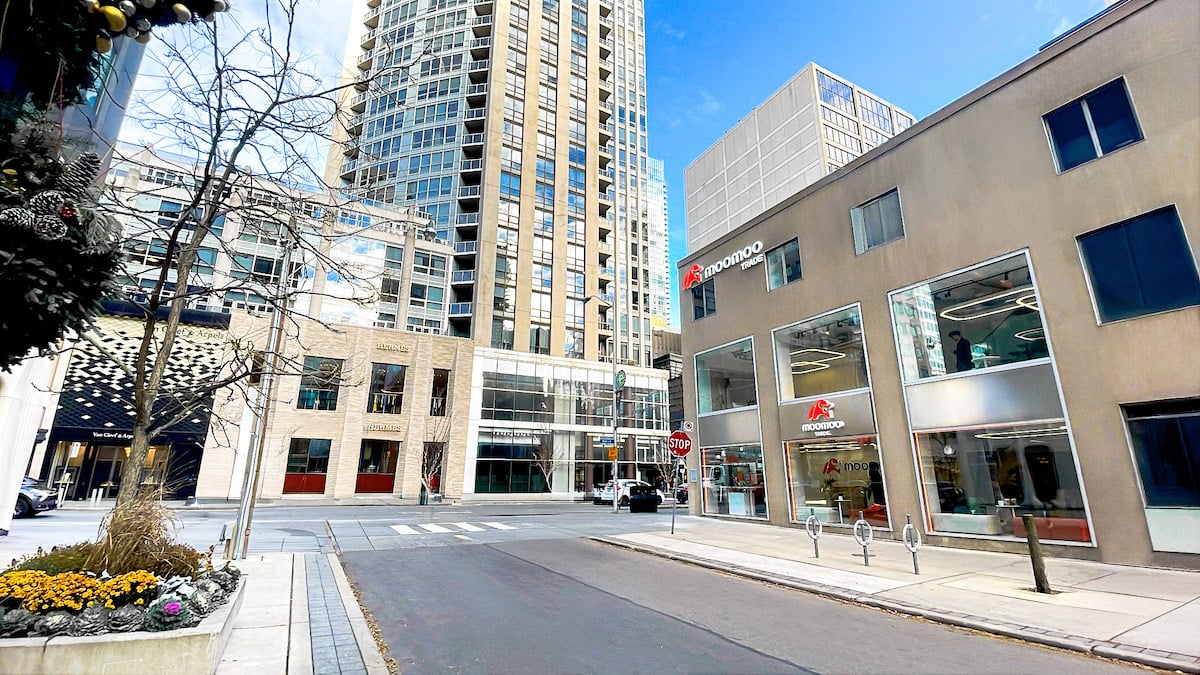
Looking north on St. Thomas Street towards 100 Bloor St. W.: Moomoo Trade/Moomoo Financial Canada Experience Store at 95A Bloor St. W. in Toronto. Photo: supplied
Aligning AI Tools With In-Person Support
One of the distinctive features of Moomoo’s global platform is its integration of artificial intelligence to help traders interpret news, trends and analytics. Canadian users can already ask the app’s AI system questions about sectors, technologies or market events, with the platform surfacing data and research rather than providing advice.
“We are the first broker in Canada to have an AI platform built into the app that is focused on you,” Arbus said. “We do not give you advice, but we lead you with information.”
The store extends that digital experience into a human-led setting where staff can show visitors how to research a topic or use the tools. “I cannot advise you, but here is where I would research that myself,” Arbus said. “Can I talk you through how to do that.”
He frames the approach as part of a broader shift toward investor empowerment at a time when Canadians face rising costs, market volatility and the emerging pressures of generational wealth transfer. “We work way too hard to make money,” he said. “I hate seeing people give it up for free to someone who says, give me two percent of your funds a year.”
Grand opening of Moomoo Trade/Moomoo Financial Canada Experience Store at 95A Bloor St. W. in Toronto. on Saturday, November 22, 2025. Photo: Moomoo Financial Canada
Challenging Canada’s Passive Investment Culture
Arbus believes many Canadians have been discouraged from learning about investing because traditional institutions reinforce a passive approach. “The typical Canadian profile seems to be more loyal to our banks, more complacent and prepared to pay for advice,” he said. “In other parts of the world, people rely on themselves. They join communities and use advanced tools.”
He argues that the middle section of the investing public, those between full-service advisory accounts and app-based novices, has been underserved. “Most people never get enough money to warrant getting a phone call from an advisor,” Arbus said. “They ignored this middle section.”
This is where the Moomoo flagship on Bloor Street is meant to intervene. The concept aims to show that active learning, community discussion and technologically advanced tools can live together in an accessible, street-facing retail environment. The Moomoo Experience Store Toronto is therefore a strategic introduction of the brand to a market that has historically leaned toward conservative investment behaviours.
Windows in the Moomoo Trade/Moomoo Financial Canada Experience Store at 95A Bloor St. W. in Toronto. Photo: Craig Patterson
A Test Case for National Expansion
The company sees the Bloor Street location as its Canadian beachhead, one that can grow into a network of similar experience stores across major cities. “We look at Canada by entering a market, hiring great Canadians and building out the brand,” Arbus said. “Then we spread across Canada.”
Other markets where Moomoo operates have adopted this model, with stores now opening internationally in tandem. “This is happening at the same time in seven different markets,” Arbus said. “Everything is becoming standardized.”
Traffic at the new location has already exceeded expectations. During Santa Claus parade weekend, close to a thousand people stepped inside over two days, driven by curiosity about the concept. For a brand that entered Canada just over a year ago, the initial footfall is promising.
Even with the site’s eventual redevelopment, the heritage designation ensures the Bloor property has time before construction begins, giving Moomoo the runway it needs to establish its presence. The company’s initial two-year lease can be extended, and Arbus suggests the team is ready for a long tenure. “We are locked into it for a long time,” he said.