The design of commercial space has changed. Corporate real estate strategy is no longer driven only by leases and square footage. Increasingly, the most influential decisions in property development are made in environments that do not resemble business meetings at all. These conversations happen at private dinners, inside restaurants where architecture supports attention, and across tables that allow people to speak without the urgency of deadlines. The city has discovered that space itself has become part of negotiation. Where people meet often determines what they decide.
In recent years, real estate leaders have begun using small curated events to test ideas before they become projects. Developers, capital partners, and cultural operators sit beside founders and nonprofit directors. Instead of pitch decks they examine settings. They talk about what atmosphere does to performance and whether the character of a neighborhood can match the ambition of a proposed build. The logic is simple. If the room works, it becomes easier to imagine the future of other rooms.
On October 30, that approach took shape in the West Village when Via 13 hosted a Champagne and Caviar Masquerade Mixer supporting Casita Maria Center for Arts and Education. The guest list included investors, architects, entrepreneurs, philanthropic partners, and sponsors such as RD Dubai, Electric Strategy, Moonride Capital, Bridge, CPF, Giapenta, BeLove, ALB Vertical, and LVH. The structure of the evening reflected the kind of design logic increasingly valued in real estate. The lighting was even. Sound moved in controlled layers. Movement was easy without being constant.
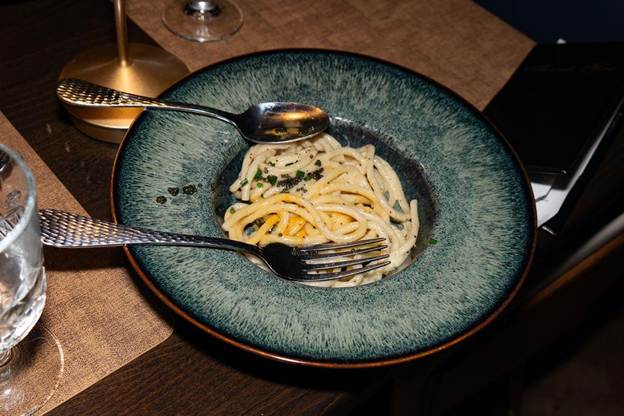
Dinner began with Lasagna Nigiri, a composed square of crisp pasta layered with béchamel, crème fraîche, caviar, and spicy tuna. Polpo Croccante followed with potato purée, hazelnut stracciatella, crispy pancetta, and Calabrian ’nduja oil. Guests chose either a three course or five course tasting menu. Dishes such as Tagliatelle Pistacchio e Tuna Tartare, Spaghettone Sea Urchin, Capesanta Scottata, Filet Mignon d’Oro, and Lobster Royale guided the pacing of conversation.
Throughout the night people discussed market cycles, geographic positioning, and the relationship between hospitality and development. Sponsors connected attendees who might otherwise never cross paths. Casita Maria remained present without interruption, giving the event a clear nonprofit purpose that stayed in circulation without ceremony.
The evening demonstrated a point becoming harder to ignore in corporate real estate. Space is not neutral. The right room at the right moment can influence how people think and what they decide. At Via 13, the model was simple. Create an environment where architecture and conversation meet, and let the work move forward at its own pace.
Instagram’s algorithm changed in 2025. Watch time ranks first, but comments still determine your reach. The platform weighs comment engagement heavily when deciding which posts to show your followers and push to new audiences.
Most creators struggle here. The average engagement rate dropped to 0.45% in 2025, down 28% year-over-year. The comment-to-likes ratio sits between 1:10 and 1:20 for most accounts. But accounts using strategic tactics see 200-300% more comments within 30 days.
This guide shows you exactly how to turn silent scrollers into active commenters. You’ll learn 14 algorithm-backed strategies, psychology-based prompts, and timing hacks that work right now.
Why Instagram Comments Matter More Than Likes in 2025
Instagram’s algorithm prioritizes three ranking factors: watch time, likes per reach, and sends per reach. Comments fall under a broader category called “relationship signals” that the algorithm uses to determine post visibility.
Here’s why comments outrank likes. When someone comments, they spend more time on your post. They type, think, and engage deeply. The algorithm interprets this as high-quality content worth showing to others. Likes require one tap. Comments require thought. That’s why many people buy custom comments on Instagram to boost their initial growth.
The first-hour engagement window determines everything. Instagram evaluates posts in the first 60 minutes after publishing. Posts that hit 200-250 views with strong comment engagement get algorithmic promotion. Miss this window, and your reach flatlines.
Quality beats quantity. The algorithm distinguishes between substantive comments (4+ words) and spam (emoji-only). A post with 15 thoughtful comments outperforms one with 50 generic emoji responses. Focus on conversations, not numbers.
Instagram Comment Engagement Benchmarks by Account Size
Understanding where you stand helps set realistic goals. Here’s how comment engagement breaks down by follower count:
Account Size
Follower Range
Average Engagement Rate
Typical Comment-to-Likes Ratio
Nano Influencer
1K-10K
5.03%+
1:8 to 1:12
Micro Influencer
10K-100K
2.5%-3.5%
1:12 to 1:18
Macro Influencer
100K-1M
1.5%-2.5%
1:15 to 1:20
Mega Influencer
1M+
0.5%-1.5%
1:20 to 1:30
Smaller accounts typically see higher engagement rates. If you’re below these benchmarks, the strategies in this guide will help you catch up.
1. Post Controversial or Opinionated Takes
Polarizing content drives comments. When you share a strong opinion, people feel compelled to agree, disagree, or add nuance.
Start posts with “Unpopular opinion:” followed by a debatable statement in your niche. For example, a fitness creator might say: “Unpopular opinion: Cardio is overrated for fat loss. Strength training burns more calories long-term.” This invites debate.
Frame it as a perspective, not an absolute truth. People comment when they can contribute their experience. Absolute statements shut down conversation. Opinionated takes invite it.
Test this formula: State your opinion in the caption, explain your reasoning in 2-3 sentences, then ask “What’s your take?”. This structure gives followers context while inviting them to share their views.
Avoid crossing into offensive territory. Controversial means debatable, not disrespectful. Stay within your niche’s accepted discourse boundaries.
2. Use Open-Ended Experience Questions
Generic prompts fail. “Tag 3 friends” or “Drop an emoji” generates low-quality engagement that hurts your reach.
Instead, ask about specific experiences. Compare these two captions:
Low-performing: “What’s your favorite food? 🍕”
High-performing: “What’s the worst meal you’ve ever cooked, trying to impress someone? Mine was burnt lasagna that set off the smoke alarm.”
The difference? Specificity triggers memory recall. When you ask a vague question, followers skip it. When you ask about a specific situation, their brain searches for a matching experience, and they share it.
Use this pattern: Share your story first, then ask theirs. Vulnerability creates psychological permission for others to be vulnerable. You go first, they follow.
High-Performing Question Frameworks
These five question types consistently drive comments:
Worst-case scenarios: “What’s the biggest mistake you made when starting [topic]?”
First-time experiences: “What surprised you most the first time you tried [activity]?”
Problem-solving: “How did you overcome [common challenge in your niche]?”
Preference with context: “Coffee or tea for late-night work sessions and why?”
Story completion: “Finish this sentence: The moment I knew I’d succeed was when…”
Each framework requires followers to think, recall, and type. That’s what drives algorithm-friendly engagement.
3. Create Story Completion Prompts
Start a narrative and let followers finish it. This taps into human psychology; we hate incomplete stories.
Here’s how it works. Begin your caption with a compelling setup: “I started my business with $500, a laptop, and…” Then stop mid-sentence. Followers feel compelled to imagine or share how they’d continue.
Another approach: Share the beginning and middle of a story, skip the ending, and ask followers how they’d handle it. For example: “Client asked for a refund after using the product for 89 days. Our policy is 90 days. What would you do?”
This works because you’re crowdsourcing solutions, not just asking for opinions. People love sharing their decision-making process.
Test both formats. Some audiences prefer open-ended completion (“finish this sentence”), while others engage more with dilemma-based prompts (“what would you do”).
4. Share Behind-the-Scenes Vulnerability Content
Perfect posts get likes. Messy reality gets comments.
Share struggles, failures, and lessons learned. When you admit “I messed this up,” followers feel safe sharing their struggles too. This creates conversation.
Example: Instead of “Just hit $10K/month!” try “Hit $10K this month after three months of barely making $2K. Here’s what I was doing wrong…”. The second version invites people to ask questions and share their journey.
Keep the vulnerability specific and relevant. Don’t trauma-dump or overshare. Focus on professional challenges, creative blocks, or skill-building struggles your audience faces, too.
End with a question that invites shared experience: “What’s a milestone that took you longer than expected to hit?”. This shifts the conversation from you to them while keeping the theme.
5. Use “You vs Me” Dilemma Posts
Present two options and ask which your followers prefer. Simple, effective, comment-generating.
This works especially well in carousel posts. Slide 1: Introduce the dilemma. Slides 2-3: Explain option A. Slides 4-5: Explain option B. Final slide: “Which would you choose and why?”.
Carousels already perform better than single images. They get engagement rates between 0.55% and 10.15% depending on optimization. Adding a binary choice makes them even stronger.
Make the options genuinely debatable. If one choice is obviously better, people won’t engage. Examples that work:
“Remote work with flexible hours or office job with mentorship?”
“Master one skill or be decent at five?”
“Launch fast with imperfections or wait until it’s perfect?”
The key is creating real tension between legitimate options. Each side should have valid arguments.
6. Optimize Your Caption Structure and CTAs
Where you place your question matters. Instagram truncates captions after 125 characters, showing a “more” button.
Place your hook and CTA in the first two lines or at the very end. The middle gets buried. Structure it like this:
Line 1-2: Hook or question Lines 3-8: Value, story, or context Final line: CTA or question (if not used at top)
Avoid these engagement-killing prompts:
“Drop an emoji if you agree” (generates spam comments)
“Tag 3 friends who need this” (attracts uninterested users)
“Link in bio” without context (self-promotional)
Generic “What do you think?” (too vague)
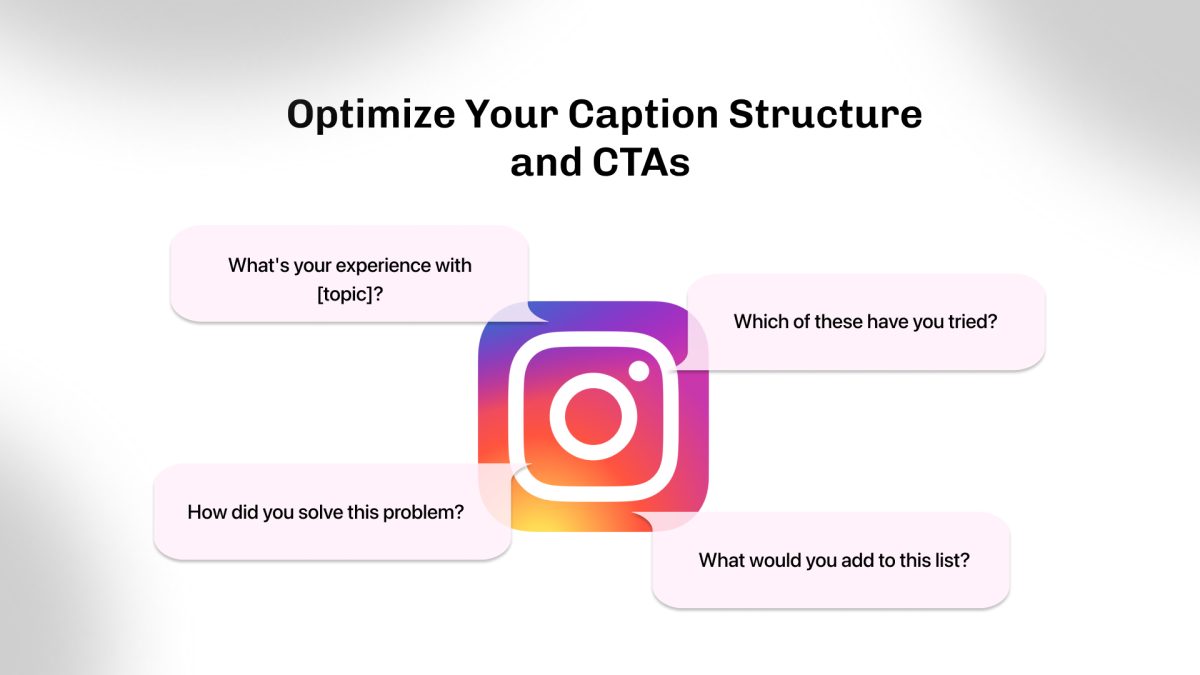
Instead, use experience-based CTAs:
“What’s your experience with [topic]?”
“Which of these have you tried?”
“How did you solve this problem?”
“What would you add to this list?”
Each CTA should invite specific, thoughtful responses. Generic prompts get generic results or none at all.
High-Performing vs Low-Performing CTA Examples
See the difference in action:
Low-Performing CTA
High-Performing CTA
Why It Works
“Thoughts? 💭”
“What’s the biggest challenge you’ve faced with this?”
Asks for specific experience
“Tag 3 friends”
“Who taught you this lesson the hard way?”
Creates meaningful tag context
“Follow for more tips.”
“What topic should I cover next?”
Crowdsources content direction
“Like if you agree ❤️”
“Do you agree or disagree with #3?”
Invites discussion, not just reaction
“Comment below ⬇️”
“What would you add to this list?”
Positions the audience as contributors
The pattern: Specificity, experience, and contribution invitations outperform vague requests every time.
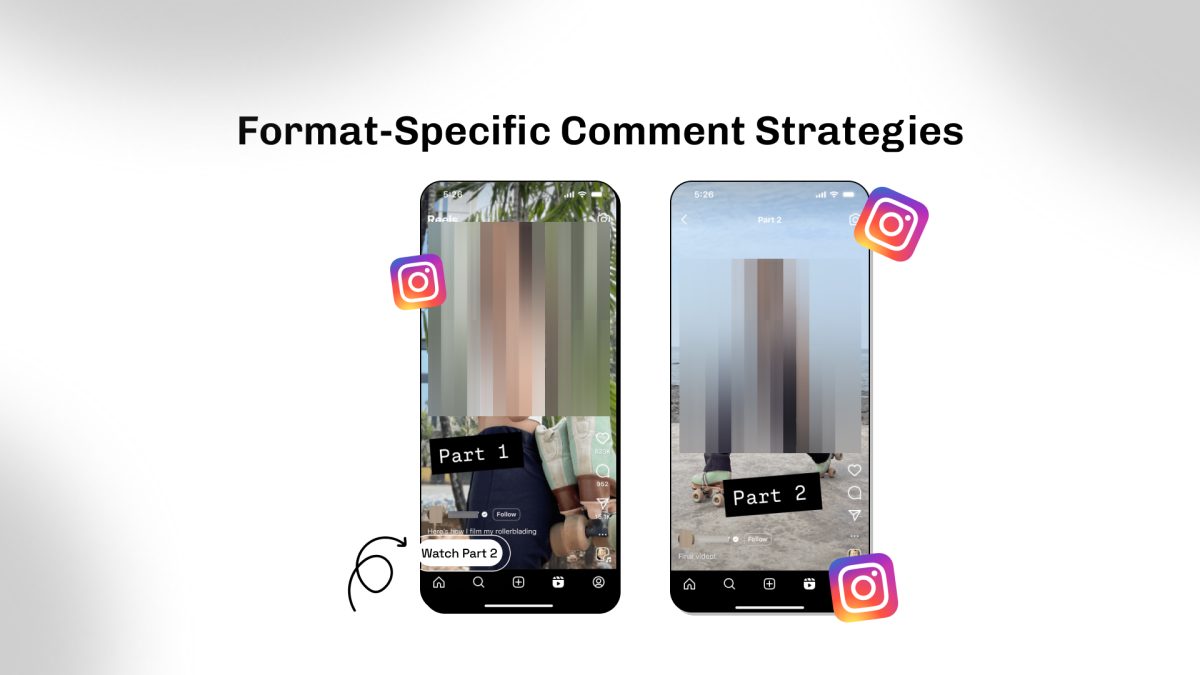
7. Format-Specific Comment Strategies
Different content formats need different approaches. Instagram’s algorithm ranks Reels, carousels, and single images differently.
Reels get the highest engagement rate at 2.08% for influencers. But watch time matters most here. Comments boost secondary reach after the initial watch-through drives distribution.
Carousel posts sit at 1.7% engagement and get 22-23% more saves than single images. They also generate significantly more comments because each swipe increases engagement signals.
Single photo posts average 1.17% engagement. They rely heavily on caption strength since there’s no swipe or watch time to boost algorithmic favor.
Here’s how to optimize each format for comments.
Reels: End with Voiceover Questions
Your last 3 seconds determine comment rates on Reels.
Don’t end with “Follow for more.” End with a question that requires an answer. Record a voiceover that says: “What’s your experience with this?” or “Which method works best for you?”.
The viewer just spent 15-30 seconds watching. They’re primed to engage. Give them a clear, specific prompt right as the video ends.
Test putting the question in text overlay too. Some viewers watch without sound. Cover both bases.
Carousel Posts: Save Questions for the Final Slide
Each carousel swipe tells Instagram the content is valuable. Build your CTA across multiple slides.
Structure: Slides 1-4 deliver value. Slide 5 asks the question. This ensures followers consume your content before you ask for engagement.
Carousels can produce 3.1 times more engagement than single images when optimized correctly. The final-slide CTA strategy maximizes that advantage.
Single Image Posts: Lead with Story, End with Question
Without swipes or watch time, your caption carries everything.
First 2 lines: Emotionally resonant hook or story opening. Middle section: Deliver value, share experience, or teach something. Final line: Experience-based question.
The story creates context. The question creates conversation. Don’t skip the setup to rush to the CTA.
8. sMaster the First-Hour Engagement Window
Instagram evaluates your post’s performance in the first 60 minutes. Hit 200-250 views with strong engagement, and the algorithm promotes your post. Miss this window, and organic reach dies.
Here’s how to win the first hour.
Post when your audience is most active. Check Instagram Insights under “Total Followers” → “Most Active Times”. Schedule posts for these windows.
Avoid oversaturated times. If your Insights show 8 PM as peak, but you know that’s when everyone in your niche posts, shift to 7:30 PM or 8:30 PM. You want active followers who aren’t drowning in content.
Reply to comments within 3 minutes. Fast responses signal “active post” to the algorithm. Target under 3 minutes for your first 5-7 commenters.
Pre-Engagement Tactics to Activate Your First Hour
Don’t just post and hope. Prime your engaged followers before hitting publish.
Send DMs to 5-10 loyal followers 5-10 minutes before posting. Message: “Just posted something I think you’ll find useful, would love your thoughts.” Keep it personal, not spammy.
Use your Close Friends list strategically. Post a teaser Story to Close Friends 15 minutes before your main post. Ask: “Posting about [topic] in 10 minutes, what’s your biggest question about this?”.
Close Friends engage 48% more often than regular followers, according to Meta’s internal data. This gives you a first-hour engagement boost from your most active community members.
While organic tactics should be your foundation, some creators use Instagram engagement services to build initial social proof that attracts genuine commenters, though this should complement, not replace, authentic community-building strategies.
9. Reply to Every Comment Meaningfully
The algorithm tracks comment depth, not just quantity. One 5-reply thread outranks five single-comment interactions.
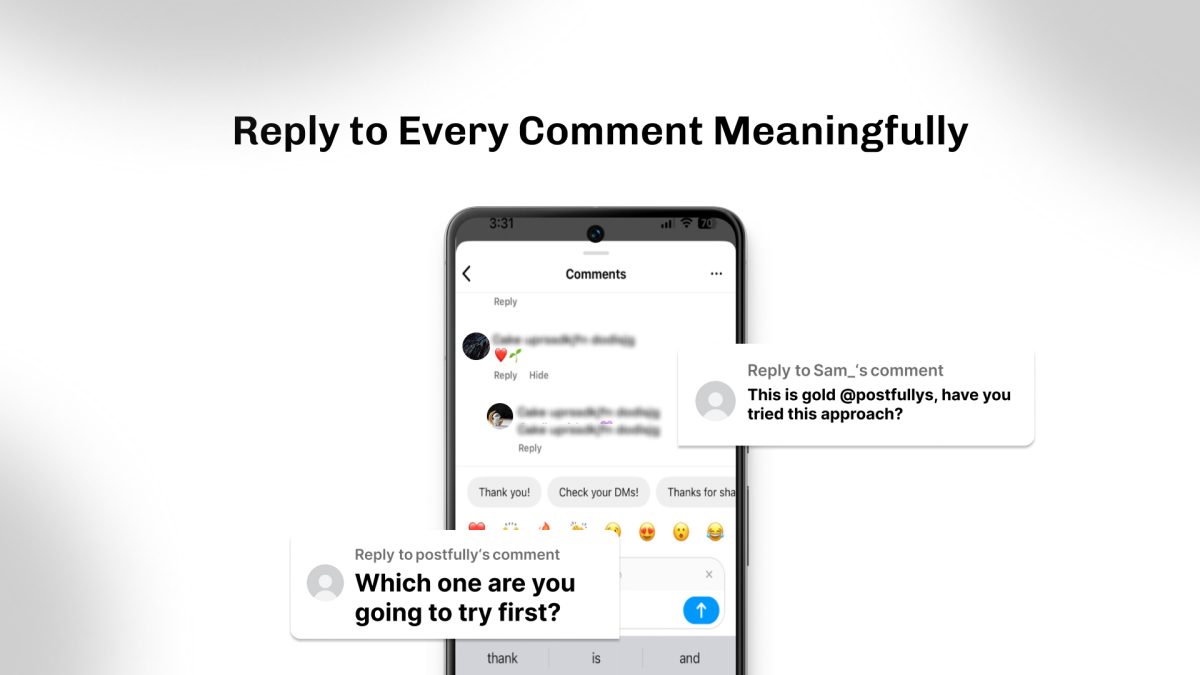
Ask follow-up questions in your replies. If someone says “Great tips!” respond with “Which one are you going to try first?”. This creates conversation threads that signal high-quality engagement.
Relationship signals are the algorithm’s top priority after watch time. Building back-and-forth conversations tells Instagram you have an engaged community worth promoting.
Target specific replies based on comment quality. Thoughtful 3+ sentence comments get detailed responses. Generic emoji comments get a like or brief acknowledgment. Invest where engagement is genuine.
Turn Comments into Community Conversations
Encourage peer-to-peer interaction between your followers.
When someone shares a great tip in the comments, reply: “sssss”. This gets followers talking to each other, not just to you.
Highlight insightful comments in your Stories. Screenshot a valuable comment, share it, and tag the commenter with “Great perspective from [username]”. This rewards engagement and shows others you read and value comments.
The goal isn’t just to reply to you. It’s building a community that talks to each other. That’s what the algorithm rewards most.
10. Practice Strategic Reciprocity
Comment on your followers’ posts before asking them to comment on yours.
Spend 10-15 minutes before you post, engaging with your audience’s content. Leave thoughtful comments on 10-20 posts from followers who consistently engage with you.
This works for two reasons. First, when you comment on someone’s post, they get a notification. They check your profile, see you just posted, and often engage. Second, the algorithm tracks your engagement patterns. Active commenters get more visibility.
Target your most engaged followers first. Check who comments regularly on your posts and prioritize their content. Build relationships with frequent interactors.
Comment quality matters here, too. Avoid generic “Great post!” remarks. Add specific observations: “The tip about [specific detail] is exactly what I needed, trying this today”.
Reaching the critical 200-250 view threshold in the first hour can be challenging for smaller accounts. Some marketers combine organic tactics with Instagram growth services to establish baseline visibility that attracts organic engagement.
11. Create Interactive Content That Demands Responses
Certain content types naturally generate more comments. Build these into your posting strategy.
Q&A sessions convert Story questions into feed posts. Collect questions via Story stickers, then create a carousel or Reel answering the best ones. Tag the people who asked in your caption.
Strategic giveaways work when entry requires thoughtful comments, not just tags. Example: “Win [prize] by sharing your biggest challenge with [topic] in the comments”. This attracts engaged followers who care about your niche, not freebie hunters.
High-Engagement Interactive Content Ideas
These seven content types consistently drive comments:
Myth-busting posts: “3 things everyone gets wrong about [topic]” invites debate and correction
Before/After transformations: Show progress and ask, “What transformation are you working on?”
Day-in-the-life problem-solving: Share a real challenge you faced this week and ask for advice
“Then vs Now” comparisons: Show your evolution and ask followers to share their journey
AMA (Ask Me Anything) posts: Announce in Stories, answer in a carousel
Crowdsourced advice: “Need your help: should I [Option A] or [Option B]?”
Community challenges: Launch a 7-day challenge and ask for daily progress updates
Rotate these formats. Don’t overuse any single type, or your audience gets fatigued.
12. Optimize Hashtags and Discovery for Comment-Friendly Audiences
Hashtags still work. Posts with 1+ hashtags get 12% more engagement than posts without them.
But strategy matters. Mix popular hashtags with niche-specific ones. Popular hashtags get you initial visibility. Niche hashtags attract engaged communities who comment more.
Example for a fitness creator:
Popular: #fitness #workout #gym (millions of posts)
Niche: #homeworkoutmom #resistancebandworkouts #morningroutine (thousands of posts)
The niche hashtags attract people who care specifically about your content angle. They’re more likely to comment because the content directly addresses their interest.
Additional Discovery Tactics (H3)
Location tags increase discoverability in geographic searches. If your business has local relevance, always add location.
Tag relevant brands and creators when appropriate. This encourages them and their audience to engage. Don’t spam-tag. Make it relevant.
Instagram search now rivals hashtags for discovery. Use keywords naturally in your captions. The algorithm indexes caption text for search results.
13. Use Psychology-Backed Comment Triggers
Understanding why people comment helps you create better prompts.
Emotional resonance drives responses. Vulnerability, frustration, excitement, and surprise make people want to share their experience. Neutral, informational content gets likes. Emotional content gets comments.
Give psychological permission to share. Normalize the experience you’re asking about. Example: “We’ve all been there, panicked the night before a deadline. What’s your worst procrastination story?”. The “we’ve all been there” removes shame and invites sharing.
Position your audience as experts. People love demonstrating knowledge. Instead of “What do you think?” ask “What’s your expert advice for someone dealing with this?”. This reframes them as authorities, not just opinion-givers.
Present real dilemmas you’re facing. Crowdsource genuine decisions. “I’m torn between launching version A (faster) or version B (better). What would you prioritize?”. Authenticity creates engagement. Authenticity can’t be faked.
14. Avoid These Engagement-Killing Mistakes
Some tactics actively hurt your comment rates and overall reach.
Comment pods and engagement groups violate Instagram’s terms. The algorithm detects artificial engagement patterns and penalizes your account. Short-term gains become long-term reach death.
Buying comments creates generic spam that hurts credibility. Services that promise “free Instagram comments” deliver low-quality, obvious bot responses. Real followers notice and disengage.
Generic giveaways attract ghost followers who never engage after the contest. They tank your future engagement rate. Only run giveaways that require niche-specific entry criteria.
Ignoring the first-hour engagement window wastes your post’s potential. Posts that don’t gain traction in 60 minutes rarely recover. Post when you can actively engage for that first hour.
Self-promotion in the comments section looks spammy and inauthentic. Don’t reply to every comment with “Check my bio for…”. This discourages genuine conversation.
What Kills Comments vs What Drives Them
See the clear differences:
Engagement Killers
Engagement Drivers
“Tag 3 friends” without context
“Tag someone who taught you this lesson.”
Emoji-only CTAs
Experience-based questions
Comment pods and fake engagement
Genuine reciprocal engagement
Posting and disappearing
Replying within 3 minutes
Generic giveaways
Niche-specific entry requirements
Perfect, polished content only
Behind-the-scenes vulnerability
Vague “thoughts?” prompts
Specific situational questions
Self-promotional replies
Conversation-building responses
The pattern repeats: Authenticity, specificity, and genuine interest in responses always win.
Measuring Your Comment Success
Track the right metrics to optimize your strategy.
Comment-to-reach ratio matters more than total comments. A post with 50 comments and 500 reach (10%) outperforms one with 100 comments and 5,000 reach (2%).
Benchmark against the median: 0.61% engagement in 2025. If you’re above 2-3%, you’re doing well. Above 5%, you’re excelling.
Analyze comment quality, not just quantity. Count substantive responses (4+ words) separately from emoji spam. The algorithm does the same.
Key Metrics to Monitor
Track these four metrics monthly:
Comment-to-reach ratio: Total comments ÷ total reach × 100
First-hour comment velocity: Comments in first 60 minutes vs 24 hours
Thread depth: Average replies per comment thread
Question-type performance: Which prompt formats drive most responses
Test different approaches and double down on what works for your specific audience. A finance audience might engage more with dilemma posts, while a fitness audience prefers transformation showcases.
To maintain consistent engagement signals, consider leveraging Instagram automation tools that help you stay active when you can’t manually engage, ensuring the algorithm sees consistent interaction patterns.
Once you’ve optimized organic engagement, scaling with Instagram ads requires reliable Facebook Business Manager access, as Instagram ads run through Facebook’s advertising platform essential for turning engaged commenters into customers.
Start Getting More Comments Today
Instagram comments determine your reach in 2025. The algorithm prioritizes relationship signals, and comments signal deeper engagement than any other metric besides watch time.
Start with three tactics this week:
Replace generic CTAs with experience-based questions
Reply to every comment within 3 minutes for the first hour
Engage with 10-20 follower posts before you publish
These three changes alone can boost comments 200-300% within 30 days. The key is consistency. Test different question frameworks, track what works, and refine your approach based on data.
Comments aren’t vanity metrics. They’re algorithmic currency. More meaningful comments mean more reach, more followers, and more impact for your content.
Campaign image. Monos x SIMONMILLER collaboration. Photo: Monos
Vancouver based travel brand Monos is entering a new creative chapter with the release of its first-ever fashion partnership, unveiling the Monos x SIMONMILLER collaboration. The limited-edition capsule introduces colour, playfulness, and a sense of expressive individuality that adds a fresh new dimension to Monos’ minimalist design philosophy. The collaboration, created with the Los Angeles label SIMONMILLER, signals an expansion of the Canadian company’s design universe at a time of considerable growth in both retail presence and global awareness.
Monos describes the capsule as an exploration of how fashion, travel, and design can merge to create a more personal and joyful travel experience. The two brands share a strong design identity, but bring notably different aesthetics to the table. The Monos x SIMONMILLER collaboration blends SIMONMILLER’s vibrant visual language with the simplicity, structure, and durability that define Monos’ best-selling luggage and accessories. The result is a collection that encourages travellers to see packing as a creative moment worth celebrating.
Merging Minimalism With Playfulness
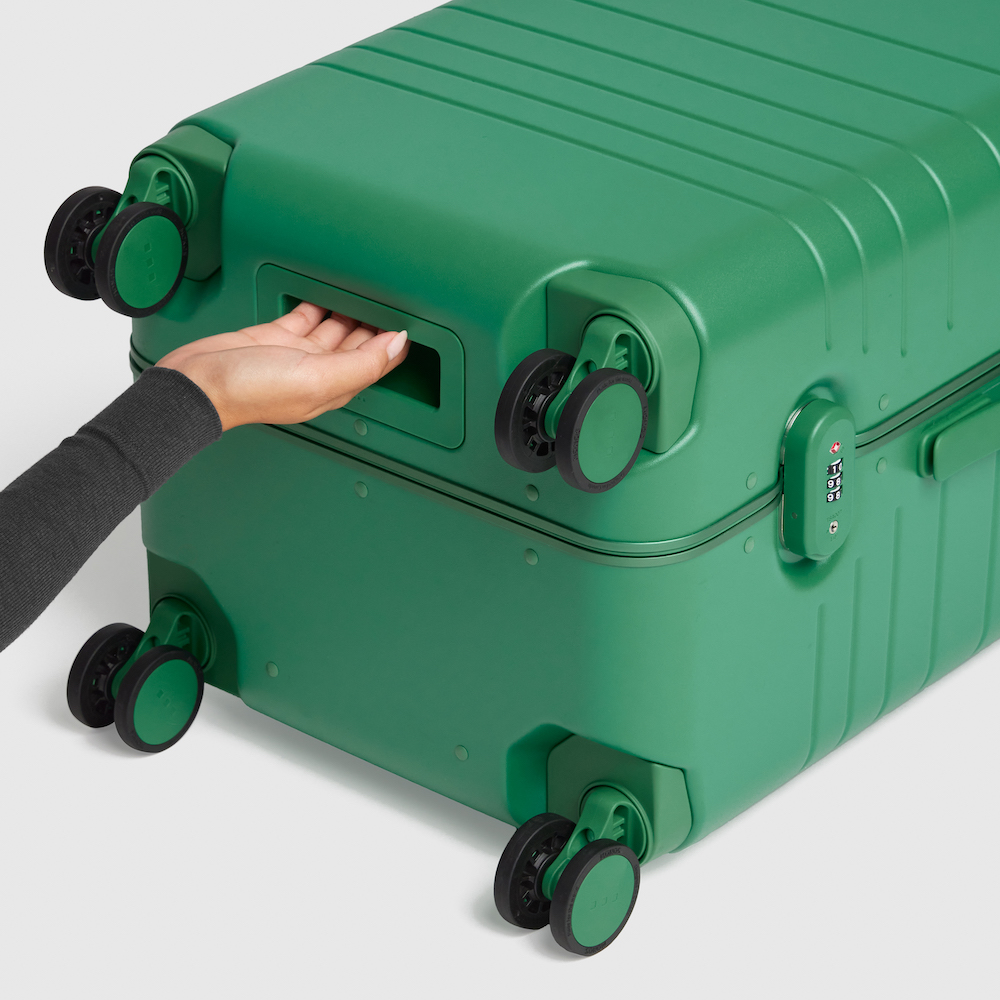
The centrepiece of the Monos x SIMONMILLER collaboration is a refresh of Monos’ Hybrid suitcase collection. For the capsule, the brands introduce two exclusive exterior colourways called Jungle Green and Coastal Blue. Each case features Monos’ signature aerospace-grade polycarbonate shell, reinforced aluminum corners, whisper-quiet spinner wheels, and two integrated TSA-approved locks. The exterior maintains the brand’s familiar sleek silhouette, while the interior reveals a signature SIMONMILLER surprise: blue and white cabana stripes that instantly depart from the neutral palette Monos is known for.
The capsule adds several tactile and visual touches inspired by SIMONMILLER’s world, including raffia-like textures and a banana charm that hangs from select pieces. The charm echoes one of SIMONMILLER’s recognizable motifs and creates a whimsical moment that complements the otherwise streamlined Monos design approach.
According to Victor Tam, co-founder and CEO of Monos, the partnership grew from the brands’ shared interest in storytelling through design. “SIMONMILLER stands for creativity and expressiveness. A brand that balances boldness with timeless refinement, they were the perfect partner to put a new spin on the Monos ethos, bringing joy to the journey through a sense of play,” said Tam. He emphasized the visual and tactile cues that run through the capsule. “In this capsule you will see distinct tactile and visual cues. The raffia-weave textures evocative of warm regions, a banana charm that adds an unexpected wink of delight, and striped interiors that reward discovery. Ultimately, we hope customers experience more than a product and that they encounter a feeling. The rush of departure, the dialogue between craft and character, and the quiet thrill of owning something both self-aware and effortlessly cool.”
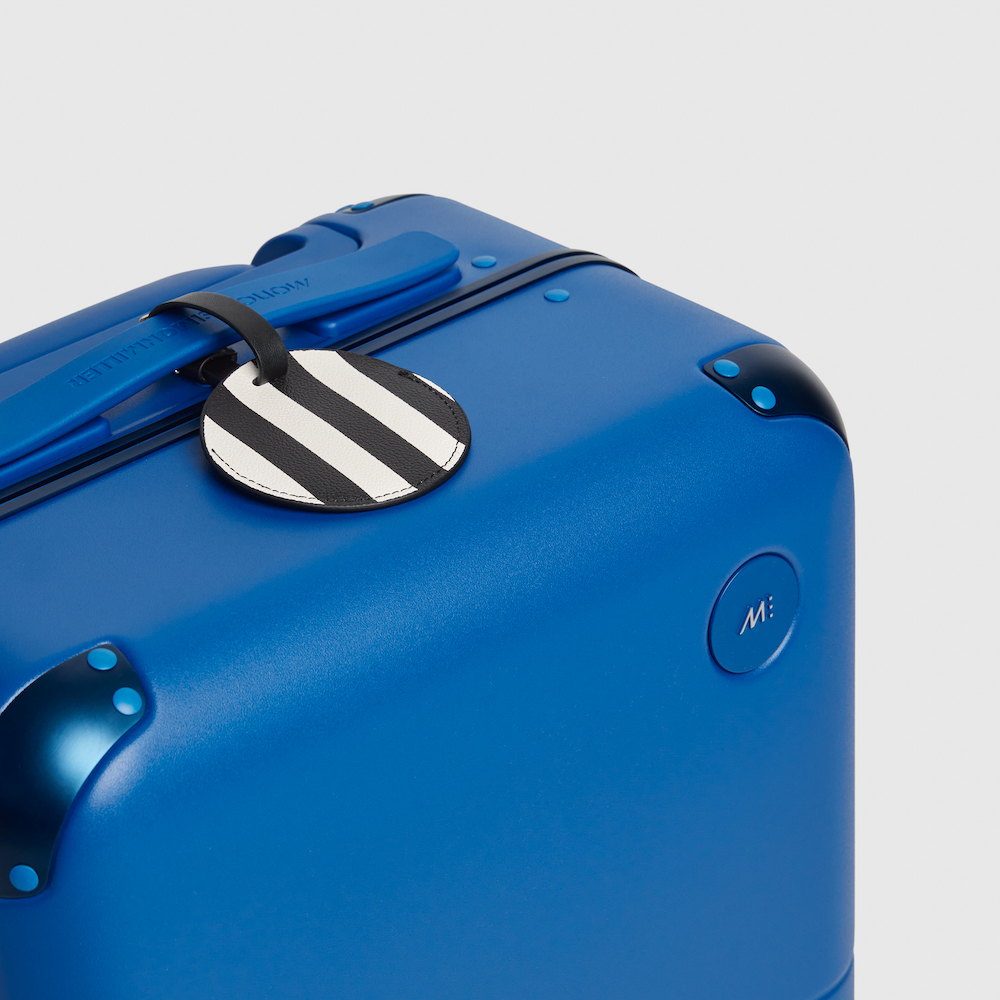
Luggage tag, Coastal Blue. Monos x SIMONMILLER collaboration. Photo: Monos
Accessories Designed for Expression and Utility
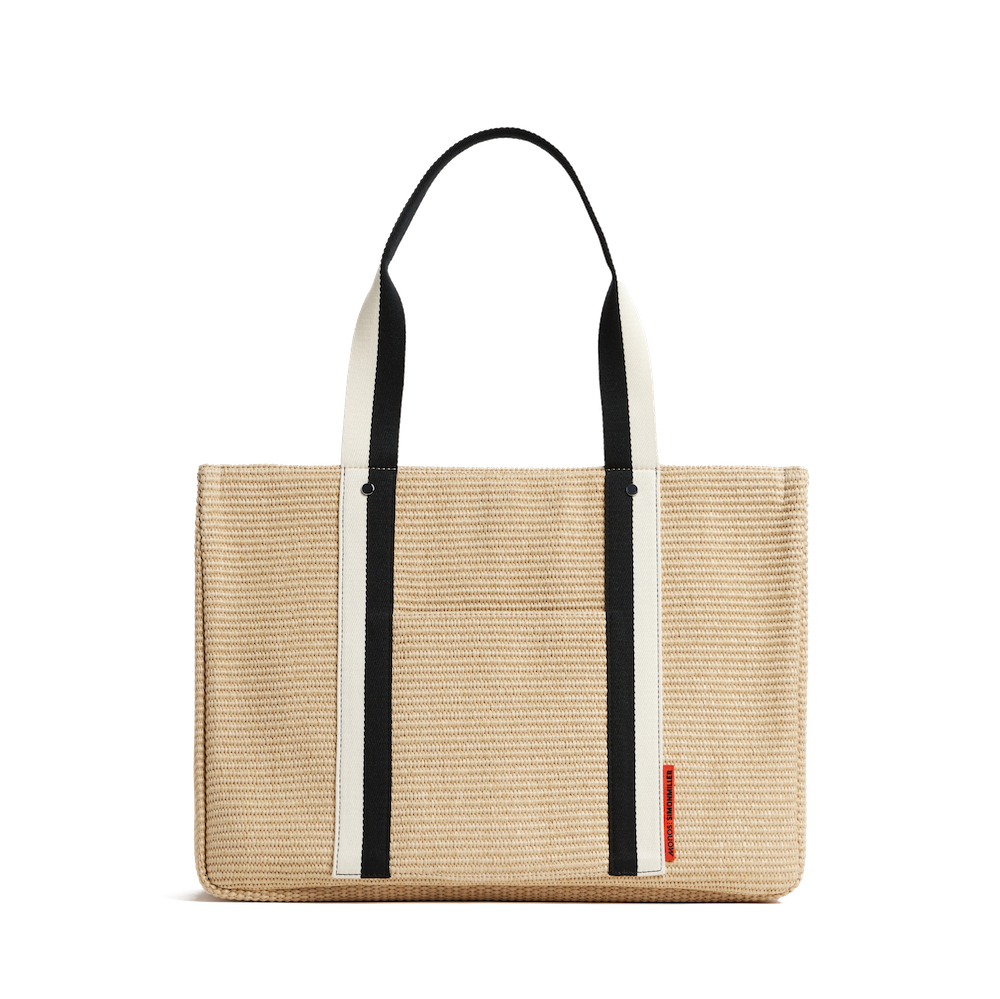
The Monos x SIMONMILLER collaboration extends beyond luggage. The capsule introduces an assortment of complementary travel goods intended to create a cohesive visual and functional ecosystem for travellers. The Canopy Tote, which debuts as part of the collaboration, mixes SIMONMILLER’s raffia-inspired textures with Monos’ structural approach to everyday travel carry. The piece includes bellowed side pockets, silver-tone accents, and a padded laptop compartment. The banana charm also appears on the tote, making it a signature item within the capsule.
A full lineup of packing cubes accompanies the luggage and tote. These sets are made from tear-resistant nylon twill and lined with the same soft, antimicrobial fabric found in Monos’ suitcases. The breathable mesh tops provide visibility, while anti-catch zippers ensure smooth movement. The cubes fit seamlessly within all Monos cases, reinforcing the brand’s modular approach to travel organization. SIMONMILLER’s influence appears through the capsule’s Poplin Stripe and Coastal Blue patterns, which match the luggage colours and interior designs.
Canopy Tote. Image: Monos
The collaboration also includes the Metro Toiletry Case in both small and large sizes. These pieces feature the capsule’s Poplin Stripe and Bananas prints and offer structured, easy-to-clean storage for travel essentials. The cases are designed to function as everyday items as much as travel pieces, expanding the capsule’s use beyond the airport and hotel.
Chelsea Hansford, CEO and Creative Director of SIMONMILLER, describes the project as an opportunity to bring SIMONMILLER’s colour-focused identity into the world of travel. “With this collaboration, I wanted to infuse Monos’ timeless silhouettes and incredible craftsmanship with SIMONMILLER’s world of colour and play,” said Hansford. “Our customer is a working creative, always on the go, always travelling, and always expressing herself with a bold playful, yet luxurious wardrobe. We brought that spirit directly into the collaboration with our signature greens and blues on the exterior shells and the blue and white cabana striped interiors inspired by our best-selling poplin sets.”
Monos x SIMONMILLER collaboration. Photo: Monos
A Campaign Inspired by Travel’s Lighter Side
The launch campaign for the Monos x SIMONMILLER collaboration was photographed in Los Angeles and reflects the imaginative, slightly surreal visual language often associated with SIMONMILLER. The imagery features unexpected characters in playful settings that blur the line between everyday life and escapist fantasy. Monos describes the campaign as a celebration of spontaneity, eccentricity, and the creative spirit of modern travel, aligning with the capsule’s emphasis on self-expression.
The colourful scenes mark a departure from the more subdued visual identity that has traditionally defined Monos, positioning the collaboration as a bold and confident move into a different creative space.
Toiletry case, Monos x SIMONMILLER collaboration. Photo: Monos
Available Online and In Stores Beginning December 4
The Monos x SIMONMILLER collaboration will be available starting December 4, 2025. The full capsule will launch in Monos’ Canadian retail network, which includes its Vancouver flagship and Toronto Ossington store, as well as its U.S. locations in Boston, Los Angeles, Chicago, New York, and Washington, D.C. The collection will also be available online through monos.com and SimonMillerUSA.com.
The release arrives during a period of expansion for Monos. What began as a direct-to-consumer brand in 2018 has evolved into one of the most visible modern travel companies in North America. Monos opened its first flagship store in Vancouver in 2023, followed by a Toronto location in 2024. The company then launched an ambitious U.S. retail rollout in 2025, adding stores in several major cities and introducing experiential elements such as repair services, personalization desks, and the Postcard Lounge concept in Chicago.
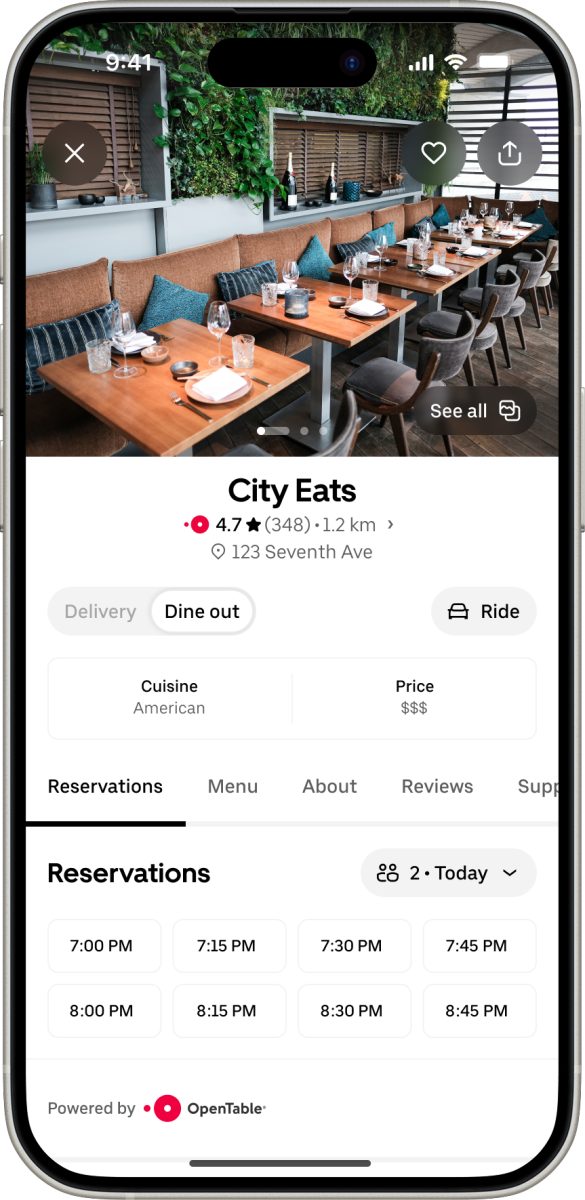
Uber Eats launched on Thursday Dine Out, a new feature that enhances the dining-out experience by helping people discover restaurants, book reservations powered by OpenTable, and get a ride — all in one app.
Dine Out begins with a new integration between Uber Eats and OpenTable, bringing reservations and ridesharing directly into the Uber Eats app so people can easily book a table and a ride.
The company said it’s a seamless experience that will help boost visibility, increase in-person reservations, and drive foot traffic, giving restaurants more opportunities to connect with customers and grow their business.
The company said 73% of Uber Eats users in Canada say that the app allows them to discover new restaurants.
Here’s how the new Dine Out icon on Uber Eats works:
Book a reservation in the Uber Eats app powered by OpenTable.
Request your Uber ride to the restaurant.
OpenTable Gold Members get six months of free Uber One membership so they can enjoy benefits like $0 Delivery and 5% off each order
The announcement of the Uber and OpenTable collaboration was initially made in March.
Dara Khosrowshahi
“We’re always looking for ways to help people go out and get the best of their cities,” said Dara Khosrowshahi, CEO of Uber, at the time. “As a first step, our partnership with OpenTable will make it easier than ever to find and book a great restaurant and get there without a hitch. And we’re excited to continue making Uber One even more valuable to our members.”
Debby Soo
“Together with Uber, we’re redefining what it means to dine out in a connected world,” said Debby Soo, CEO of OpenTable. “Dining, delivery and transportation are all intimately connected. This partnership strategically positions OpenTable to make those daily experiences as integrated and frictionless as possible for both restaurants and diners.”
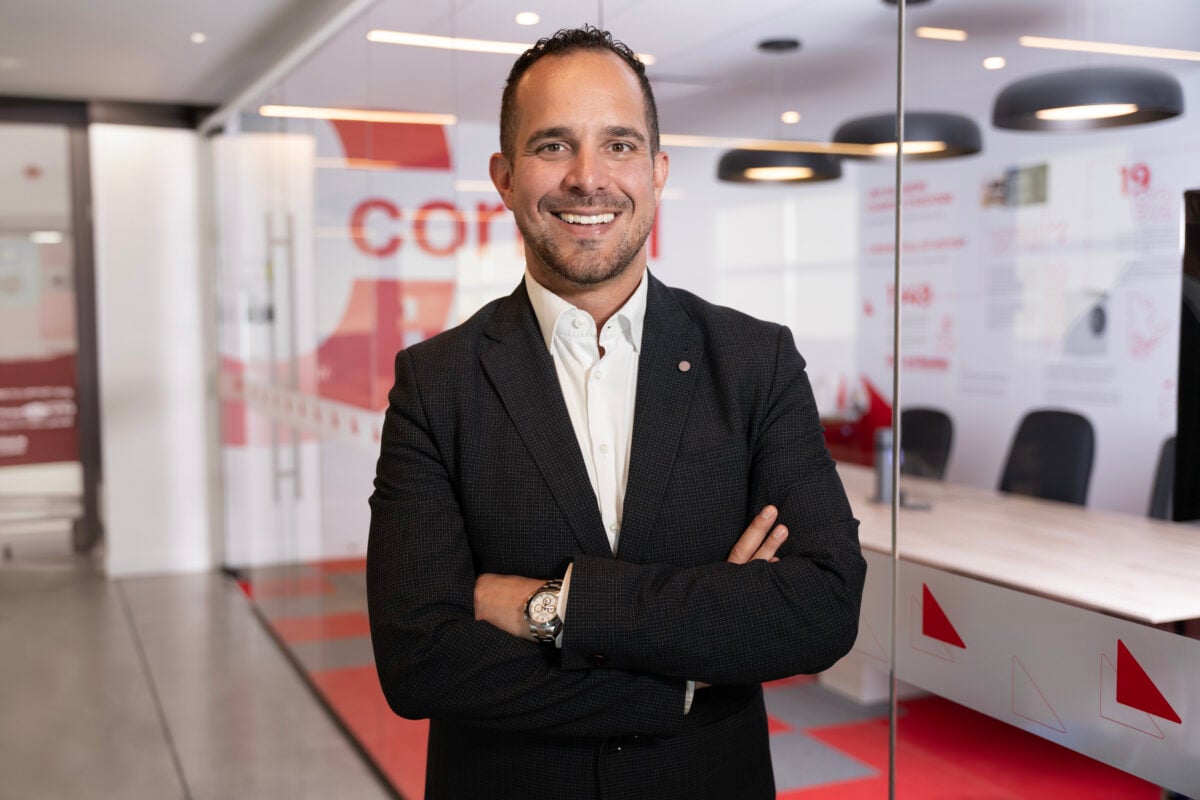
Corbeil Appliances has opened its brand-new store concept, located at 582 Boulevard de Touraine in Boucherville.
This opening marks the third new-concept store on Montreal’s South Shore, following the successful launches in Brossard and Saint-Hubert.
The arrival of Corbeil Appliances new concept store in Boucherville once again demonstrates the company’s ongoing commitment to leading the home appliance sector on Montreal’s South Shore and across Quebec. Designed to provide an immersive customer experience, the store features an inspiring layout, personalized support from specialists, and a carefully curated selection of the industry’s most reputable brands, explained the company.
“This opening more than ever reflects our commitment to providing Quebec consumers with the best shopping experience, backed by exceptional service and passionate specialists,” added Anthony Amiel, Chief Executive Officer.
The Boucherville store is 10,000 square feet.
Founded in 1949, Corbeil Appliances is a Quebec-owned company, part of Groupe Amiel since 2017, and is today the largest specialized home appliance network in Quebec, with 33 stores across the province and Ontario. Groupe Amiel is a holding company founded by Anthony Amiel in 2017. It was created to bring together Distinctive and Corbeil Appliances under one entity.
Lamothe said Corbeil has three stores in Ottawa and 31 in Quebec. About nine stores have been renovated into new concept stores.
“The new-concept stores started being renovated around 2020. Our first-generation new-concept store was in St-Leonard. But as all things go, it evolves with time. The three stores we mentioned on the South Shore—Brossard, St-Hubert, St-Bruno—and Boucherville, are three beautiful updated stores to serve that population,” said Lamothe.
“The founder, Anthony Amiel, purchased it from Sears in 2017. This is a kind of “dusty” industry, where changes don’t happen very fast. A lot of industries are like that. So when you’re offering the biggest purchase next to your house and your car—your appliances and furniture—he decided, back then, to stay with appliances only. Whether you’re spending $2,000 on a kitchen upgrade or $40,000, how do you create an environment where customers feel comfortable, well served, and inspired?
Photo: Corbeil
“When you walk into that store you’re in, it’s “knock your socks off.” It’s so clear. You shop kitchen by kitchen, and it’s truly inspiring. Well-lit is a big thing, and the environment—the people. We train our people a lot. The number of hours our employees go through every year to stay up to date on the newest things. The customer walks in, is inspired by the look, finds it easy to shop, has lots of space to move around, meets salespeople who know what they’re doing, and gets after-service that’s second to none in the industry. So the big change for us is really to keep upgrading what is fashionable in the appliance world and to surpass it.”
He said some of the key brands—Miele, Samsung, Bosch—you go to their showrooms and they’re beautiful, very up to date, showing the full brand experience.
“We took that, but if we showed each brand’s individuality the same way, the store would look wonky. So we package their individuality in a way that feels homogenous as you go through the store. You feel like you’re in one environment with many choices, rather than trying to figure out what part of the store you’re in at any given moment,” noted Lamothe.
“These showrooms from the brands are phenomenal, but in most stores in this industry you get a dowdy or confusing environment. Whoever can show the biggest setup for one brand or another often wins, but the consumer doesn’t see choices—they get stuck along the way.
Photo: Corbeil
“It was a fine balance. Anthony was probably told it couldn’t be done back then, and I think he achieved it. The new team brought in for retail is helping ask: how do we commercialize this even more? Boucherville is the latest rendition of modernizing this, and that’s a big thing for us with our pretty ambitious next three to five years of rollouts.”
Lamothe said the challenges south of the border created opportunities—crazy as it sounds—at the beginning of the year, because people were trying to get ahead of additional charges and whatever else.
“Since then it’s calmed down, but we’ll finish the year pretty well, not a huge increase, not a huge decrease—just in the middle. Our latest trends are showing very positive results. Nothing to write home about as far as comps, but we’re holding our own nicely. The industry—depending on the brand—American-fed brands are starting to see some comeback, but it was pretty tough.”
Photo: Corbeil
Lamothe said the retailer is constantly searching for the next place. Quebec—within a natural shipping radius—is pretty well maximized.
“We have a couple of ideas around the Montreal area. We have a couple of ideas for Ottawa. And within a five-year window, we’ll start opening flagships in cities across the country. Right now we’re focused on our home market—getting the formula right. Ottawa is already part of that; it’s an extension of what we do,” he said.
“We also still have about 10 stores to bring up to speed over time. So more renovations—next year there are about eight projects. Some are minor, but some are as significant as Boucherville.”
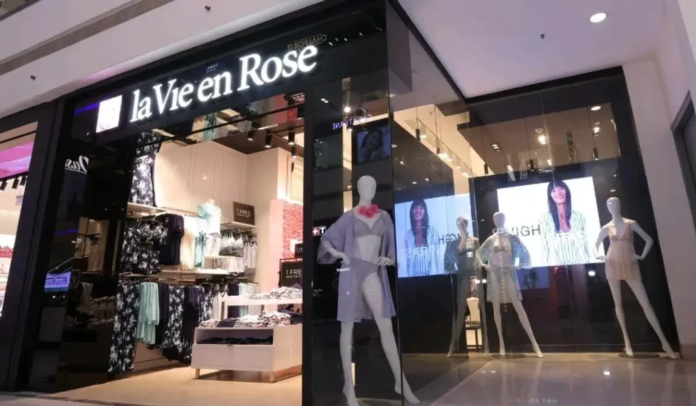
La Vie en Rose store in Delhi, India. Image: Apparel Group
By Selina Ved
Retail has always fascinated me as a dynamic industry that blends innovation, consumer behaviour, and global trends. Growing up immersed in retail through my family’s business, Apparel Group, I’ve had the privilege of witnessing firsthand the challenges and rewards of expanding brands to international markets — particularly in the Middle East and India, two of the world’s most exciting and fast-evolving retail regions.
From launching Aldo, Ardene, and La Vie en Rose in the Middle East to adapting brands like Tim Hortons to new cultures, I’ve come to appreciate the critical role of strategic planning, cultural adaptation, and choosing the right partners in global expansion.
The Unique Value of Quebec Brands
Quebec brands hold a special place in global retail. Their European-inspired sophistication combined with North American operational efficiency makes them highly adaptable in diverse international markets. However, while expansion brings exciting opportunities, it also requires brands to overcome key challenges—from regulatory compliance to cultural nuances. This article serves as a practical framework for Quebec brands and SMEs aiming to expand globally, with lessons drawn from the international journeys of Aldo and Tim Hortons.
Checklist for Successful International Expansion: 10 Key Factors
Before expanding globally, Quebec-based brands must assess several key factors to ensure a smooth and sustainable entry into a new market. The following checklist provides a structured approach for planning thoughtfully the international growth of a retail business.
1. Market Research
Analyze consumer behaviour, purchasing power, and local competition.
Identify regions with emerging demand for your product category and understand key growth drivers.
2. Regulatory Compliance
Understand franchising laws, import duties, product safety norms, and local retail regulations.
Ensure proper registration of trademarks and compliance with data privacy and labor laws.
3. Market-Driven Offer
Adapt product offerings to reflect local cultural, geographic, and consumer preferences—including climate, religious beliefs, lifestyle habits, and socioeconomic context.
Tailor packaging, sizing, and product names to resonate with local expectations, languages, and functional needs.
4. Cultural Sensitivity
Localize marketing messages, visuals, and campaigns to align with regional customs and values.
Avoid messages that could be misinterpreted or deemed inappropriate in the target market.
5. Choosing the Right Partner
Collaborate with experienced local partners—retailers, mall operators, or distributors— who are aligned with your brand’s vision, values, and goals.
The right partner brings market knowledge, cultural fluency, and operational expertise. A misaligned or inexperienced partner can hinder market entry and dilute brand execution.
6. Omnichannel Strategy
Develop a unified retail experience by integrating physical stores with digital commerce.
Ensure the online platform supports localized language, payment options, and shipping logistics.
7. Operational Readiness
Optimize inventory management, supply chain efficiency, and warehousing to meet local demand.
Train regional teams to ensure service quality and consistency across markets.
8. Brand Positioning & Pricing Strategy
Position the brand taking into account competition, economic conditions, income and consumer expectations in the target region.
Price products at a price point that is both accessible to the target clientele and aligned with the brand’s identity.
9. Digital & Social Media Marketing
Leverage local digital platforms (e.g., WeChat in China, Instagram and Snapchat in the Middle East, TikTok in Southeast Asia).
Collaborate with local influencers and content creators to build up a community and ensure brand authenticity.
10. Sustainability & Consumer Trends
Align with rising global demand for sustainability by highlighting eco-conscious materials, ethical sourcing, and fair labor practices.
Implement and promote Corporate Social Responsibility (CSR) initiatives relevant to the local community and environment.
Understanding Global Markets: Key Differences and Opportunities
For a successful international expansion, Quebec retailers must understand the distinct characteristics of each major market. Each region presents unique consumer behaviours, regulatory challenges and market entry strategies that businesses must carefully assess to effectively navigate their way through.
South Coast Plaza in Costa Mesa, CA. Image: South Coast Plaza
United States
The United States remains an attractive market due to its large consumer base, high purchasing power, and well-established retail infrastructure. Geographic and cultural proximity also make it a logical first step for many Quebec retailers, which is why businesses often see it as the most accessible international expansion route. However, it is also one of the most competitive retail landscapes—not only among U.S. brands but also global players. Despite proximity, entering the U.S. market is often more difficult and expensive than expected, especially when competing with well-established players and dealing with elevated customer acquisition costs (Smith, 2023). Success in the U.S. depends on omnichannel strategies that integrate brick-and-mortar stores with strong e-commerce capabilities, as well as differentiated brand positioning. Quebec brands entering the U.S. must focus on leveraging digital innovation, personalization, and customer experience to gain a competitive edge in a saturated environment. Some retailers even opt to test less competitive markets before tackling the U.S. to refine their approach.
Europe
European consumers prioritize premium experiences, craftsmanship, and sustainability. Quebec brands that emphasize eco-conscious initiatives, innovative product design, and high product quality are more likely to thrive in this market. However, companies must also navigate strict regulatory frameworks such as the EU’s General Product Safety Regulation (GPSR) and environmental standards like REACH (Registration, Evaluation, Authorization and Restriction of Chemicals), which regulates the use of hazardous substances in materials and packaging (European Commission, 2023.) These rules add complexity to product formulation, labeling, and packaging compliance. Furthermore, high operational costs and labor regulations in markets like France and Germany further reinforce the need for precision in expansion planning.
Emsphere in Bangkok, Thailand, June 2025. Photo: Carl Boutet
Asia
Asia, particularly China, India, and Southeast Asia, represents a high-growth opportunity driven by a booming middle class and increasing demand for international brands. However, this region also presents several complexities: differing consumer behaviours, intense digital-first competition, and region-specific regulations. For instance, China’s Personal Information Protection Law (PIPL), enacted in 2021, requires companies to obtain explicit user consent for data collection and to store data on local servers (Baker McKenzie, 2021).
In Southeast Asia, fragmented logistics networks and varying language and payment systems add to the challenge. Brands seeking success here must prioritize localized digital marketing, regional platform integration (e.g., Alibaba, JD.com, Flipkart), and culturally attuned brand experiences. In this environment, securing the right local partner is essential—but many global brands have struggled to find alignment in the region, particularly in China, where digital and offline retail operate under vastly different ecosystems.
South America
South America is an emerging market with growing appeal, especially in the affordable fashion and lifestyle segments. Countries like Brazil and Mexico offer a large middle-class population eager for global brands, but macroeconomic instability, import tariffs, and inflationary pressure pose significant entry barriers. For example, Brazil’s complex tax system—including ICMS (value-added tax at the state level) and IPI (federal excise tax)—can complicate import pricing and inventory forecasting (PwC Brazil, 2022). Success in South America requires flexible business models, affordability-focused pricing strategies, and alliances with established regional players who understand the regulatory terrain.
For Quebec retailers and SMEs, global expansion is not a one-size-fits-all endeavour. North America and Europe reward strong brand narratives, premium positioning, and sustainability, while Asia and South America demand agility, digital adaptability, and robust local partnerships. By understanding these key differences, businesses can develop tailored, market-specific expansion strategies that increase their chances of long-term success.
The Importance of Choosing the Right Partner in Global Expansion
One of the most critical factors in a brand’s successful international expansion is selecting the right local partner. A strong partner brings market knowledge, established distribution networks, and operational expertise, ensuring that a brand enters a foreign market seamlessly. For Quebec brands, this alignment is especially important when navigating new markets with distinct cultural, regulatory, and retail ecosystems.
Aldo store in the Middle East | Source : Selina Ved
Aldo’s International Journey
While the brand has seen great success in regions like the Middle East, some of its partner brands have struggled to find the right local partner in other parts of the world—including the all-important Chinese market. Over the years, Aldo has worked with several distributors in China and faced challenges related to supply chain efficiency, product positioning, and consumer engagement. These hurdles were compounded by the complexity of China’s fast-evolving, digitally dominant retail sector and the need for highly localized strategies (China Daily, 2024).
However, the brand is now refining its approach in China with a focus on e-commerce-driven growth and new partnerships with digital-first players, aiming to reposition itself more effectively in the market (China Daily, 2024). This signals a promising shift in strategy and an understanding of how alignment with the right local partner can significantly impact brand success.
In contrast, Aldo’s expansion in the Middle East underscores the transformative power of a well- matched partner. Collaborating with Apparel Group, Aldo benefited from a deep understanding of local fashion preferences, strong omnichannel operations, and prime placements in luxury malls that serve as both cultural and commercial hubs. Positioned as an affordable luxury brand, Aldo’s collections were adapted to regional trends, allowing them to expand swiftly while maintaining brand integrity and operational consistency. This strategic alignment enabled Aldo to become a recognizable and respected brand across the GCC and India.
Tim Hortons in the Middle East
Tim Hortons provides another compelling example. Although not a Quebec-based brand, its successful expansion into the Middle East—beginning in 2011—demonstrates the importance of localization and strategic franchising. Understanding the region’s long-standing coffee culture, Tim Hortons adapted its menu to feature popular items like Karak tea, Arabic coffee, and date- based sweets (Gulf Business, 2012). Through franchise agreements with experienced regional partners, the brand ensured operational excellence while allowing flexibility for cultural nuances. This approach enabled Tim Hortons to grow rapidly across the GCC and build a loyal consumer base.
Key Takeaways
The success of Quebec brands like Aldo and Tim Hortons in international markets highlights the importance of strategic planning, cultural adaptation, and choosing the right local partners. While global expansion offers immense opportunities, it also presents challenges that require market- specific strategies, strong brand positioning, and operational readiness. For Quebec brands and SMEs looking to expand, success depends on understanding regional differences, leveraging digital transformation, and ensuring adaptability while maintaining brand integrity. Ultimately, brands that combine global ambition with localized execution will be best positioned for long- term sustainability and international growth.
For SMEs and emerging Quebec brands, choosing the right partner is even more vital. Without the global infrastructure of larger brands, these businesses often rely on local expertise to bridge gaps in logistics, compliance, and customer engagement. A strong partner can provide the insights, credibility, and operational capacity needed to ensure a brand’s successful entry and long-term performance in a new market.
Ultimately, brand strength alone is not enough. Execution, cultural relevance, and strategic alignment with a trusted partner are critical. Whether through Aldo’s momentum in the Middle East or Tim Hortons’ culturally attuned expansion in the GCC, the evidence is clear: Quebec brands seeking sustainable international growth must prioritize the careful selection of the right local partners.
Selina Ved
About the Author:
Selina Ved is a second-generation entrepreneur, visionary founder of Nessa.com and co-founder of Nysaa. Her parents, Nilesh and Sima Ved, are the founders of the largest retail conglomerate in the Middle East.
Through Nessa, she has introduced over 250 global beauty brands to the Gulf States in the Middle East, including 25 exclusivities. By leveraging AI and predictive analytics to enhance the shopping experience, Selina has carved her own path in the beauty industry through her innovative approach. This success has earned her a place on Forbes Middle East’s 30 Under 30 list in 2022.
Selina also co-founded Nysaa, a joint venture Apparel Group and Nykaa which blends local culture with cutting-edge technology to revolutionize beauty retailing in the Gulf region. Ambitious, she aims to open 100 stores in the Middle East.
Currently pursuing her Master’s degree in Retail Management at McGill University’s Bensadoun School of Retail Business, Selina combines her academic knowledge with her entrepreneurial expertise to continue redefining the landscape of beauty retailing.
The Retail Council of Quebec presents the 2nd edition of the Next Gen Retail Perspective, a series of 4 articles, each written by a student from McGill University’s Bensadoun School of Retail Management (BSRM).
This series offers an opportunity to explore the ideas and perspectives of young professionals who are shaping the retail world of tomorrow. This article originally appeared on the CQCD website.
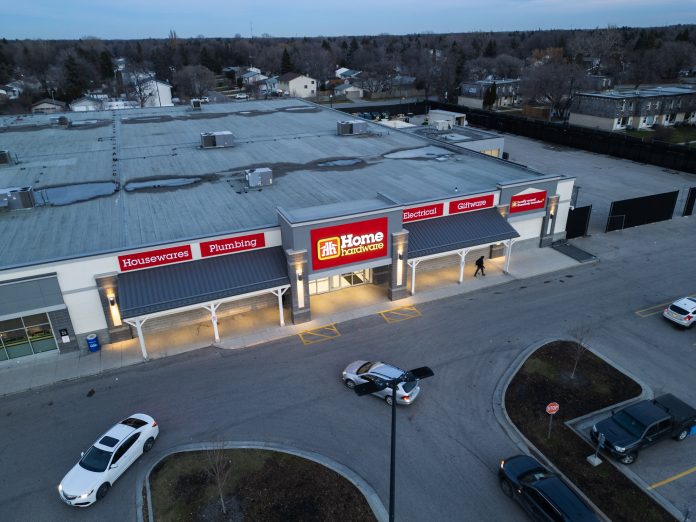
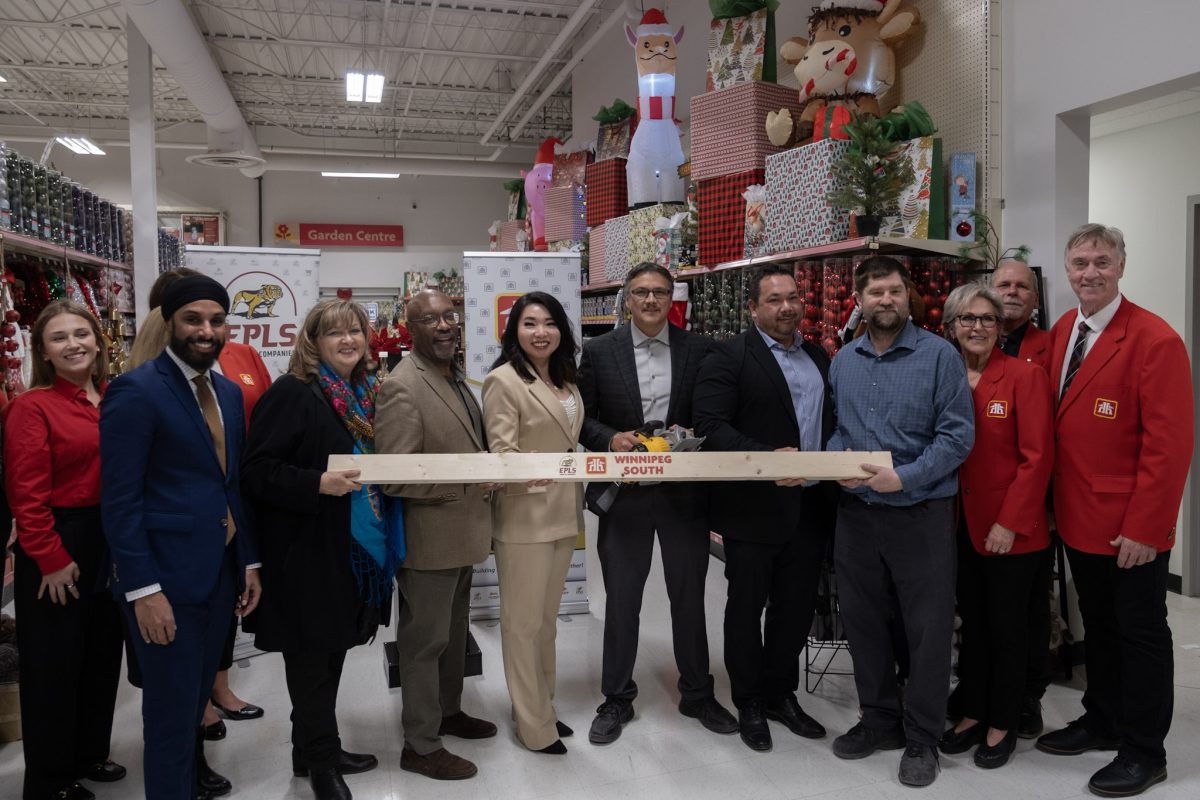
Home Hardware Stores Limited has opened its first Winnipeg location, Winnipeg South Home Hardware, expanding its presence in Western Canada.
The store, located at 2860 Pembina Hwy, Unit 30.
John Pierce
“As a proudly born and raised Winnipegger, I’m especially pleased to see Home Hardware join this great city,” said John Pierce, Chief Retail Operations Officer, Home Hardware Stores Limited. “This opening marks an exciting opportunity to grow our genuinely Canadian presence in Western Canada while reinforcing our commitment to investing in local communities and supporting the people who call them home.”
The owners of Winnipeg South Home Hardware are no strangers to the Home Hardware brand, already operating two stores in Nunavut: EPLS Home Hardware Building Centre in Arviat and EPLS Home Hardware Building Centre – Rankin Inlet.
Recognizing a need for expanded home improvement services in Winnipeg, Ryan St. John, Dealer-Owner, brought the Home Hardware banner to the south end of the city to better serve the community.
“Opening Winnipeg’s first Home Hardware store is an exciting milestone for the city,” said St. John. “As our third Home location, we’re proud to continue delivering friendly, knowledgeable service and everything needed to make home improvement projects easier and more enjoyable.”
Founded over 60 years ago in St. Jacobs, Ontario, Home Hardware Stores Limited is Canadian and the country’s largest Dealer-owned and operated home improvement retailer with more than 1,000 stores serving communities across the country.
He said the Winnipeg location is about 30,000 square feet of retail space.
“The founder, Don St. John, opened the first retail store in 1978 in Eskimo Point, which later became Arviat once the Nunavut Act was signed and Nunavut split from the Northwest Territories. The family started the retail store to service the community because it was underserved. From there, they added other operations—maintenance services, cargo and heavy equipment, hotels, and real estate holdings in Rankin and Arviat,” explained Colley.
“We had two retail stores, which later became Home Hardware stores about 10 years ago because we felt Home Hardware gave us a differentiating point in the communities: great products, Canadian owned and operated, the right brand to serve the community.
“We opened a Winnipeg office in the ’90s because Ryan St. John—who now owns the company and is Don’s son—had a vision to service Nunavut through Winnipeg. Winnipeg had better access to labour and services. That office grew to support our Nunavut operations, and we now have about 75 staff there.
“We were looking at ways to expand further into Winnipeg. Our mission, vision, and values focus on supporting community, and with such a large employee base in the city, we wanted an opportunity to open a store. When Peavey Mart closed earlier in the year, it provided that opportunity. We were able to put our Home Hardware in the building that Peavey Mart previously occupied.”
Colley said the retail climate is very focused on “buy Canadian, buy local.” Having a Home Hardware in Winnipeg gives Winnipeggers an opportunity to spend their money at a Canadian-owned and operated business that has been in Canada for over 50 years.
“Our business has been here that long, and Home Hardware even longer.
We felt this was a great time to introduce that to Winnipeg, especially since most hardware providers in the city are U.S.-owned,” noted Colley.
Winnipeg is a big market and the company is always looking for new opportunities.
“We want to use the synergies of having businesses in the south to help our northern businesses. Having a Winnipeg store helps with our buying power, staffing, and overall costs of running three stores instead of two. So yes, adding another store could potentially be in our future,” he said.
“I really think the climate right now is geared toward having a Canadian offering for hardware retail in Winnipeg and in our southern stores. I hope customers enjoy the experience and know that we’ve been in Canada for 50 years. Our mission, vision, and values don’t change just because we started in Winnipeg. Everything we stand for—passion, respect, integrity, and community—applies to our Winnipeg store as well.”
With OpenAI launching Instant Checkout this fall and Amazon rolling out AI-powered shopping tools, Canadian businesses face a critical window to understand the evolution in ecommerce that’s coming next.
Agentic commerce, where AI agents act on behalf of people and businesses to research, negotiate, and complete transactions, is beginning to take hold and is set to accelerate fast.
Mastercard’s new Agentic Commerce Report projects this shift will drive a $1.7 trillion market by 2030.
Walmart is consolidating numerous bots into four AI “super agents”— for shoppers; employees; developers; and suppliers, sellers and advertisers.
For customers, the shopping agent Sparky moves beyond product recommendations to do things like reorders, party planning and even recipe ideas based on fridge photos.
Employees and partners will get agents to handle leave requests, pull sales data, onboard sellers, manage orders and build and test new tools.
The goal is to reduce friction across shopping and operations and push e-commerce to 50% of sales within five years.
Amazon & Shopify
Amazon and Shopify use agentic AI to equip shopping assistants to learn from browsing history, cart behavior and even abandoned checkouts.
Adapting to each customer, they suggest complementary products, predict reorder needs and adjust suggestions based on real-time feedback.
According to Shopify’s 2025 Retail Report, stores that use AI-driven personalization see 25% higher average order values and 19% lower return rates.
Craig Reiff
“If we think about what agentic commerce is, the starting point of what we have today is really generative AI. When we think about the usage today, many users using ChatGPT or Gemini or Copilot, it’s generally asking for information, receiving information back. Really where it ends is around action,” said Reiff.
When we think about today’s world, generative AI is more about recommendations or predicting behaviours. What agentic commerce really starts to do is take those recommendations and move them into actions. Right now, generative AI is mostly about information and recommendations.
When we think about the next stage—agentic commerce—it takes that information and moves it into action, explained Reiff.
“It’s really the evolution: bringing together the world of e-commerce as we know it with generative AI to automate the purchasing process,” he said.
The first stage is what we’re in now, which is a lot of prototyping and piloting. That’s expected to continue over the next couple of years, through about 2027. The next phase—the back half or last couple of years of this decade—will be when the prototyping starts to complete, and we start to see winners and losers. These will be the tools and platforms users are actually interacting with. And then, roughly 2030 onwards, it becomes more native—more everyday use.
“We’re still in those early phases of prototyping. What we’re seeing across ecosystem partners is a lot of testing: what’s working, what’s not, and the basic fundamentals required. Something as simple as the discoverability of your goods and services—today consumers search your website, but now you have to start thinking about how agents will search. It’s a different language,” he explained.
User experience is extremely important, not just for the agent, but for users. And of course, everything around safety, security, and trust. These are the things the industry is learning in this first phase.
Photo: Antoni Shkraba Studio
Security is at the core. And when we think about agentic commerce, it will continue to be at the core.
“You’re looking at security from a few different angles. First, authenticating you and me as users of the agent. Second, authenticating the agent itself. Is the agent or bot I’m interacting with legitimate? And then ensuring that when an agent makes a transaction, it’s actually intended by the user,” added Reiff.
“Security has always been a core tenet in payments, and that continues in the world of agentic commerce. Many of the safety standards and frameworks Mastercard has put in place for payments overall will continue into this space.”
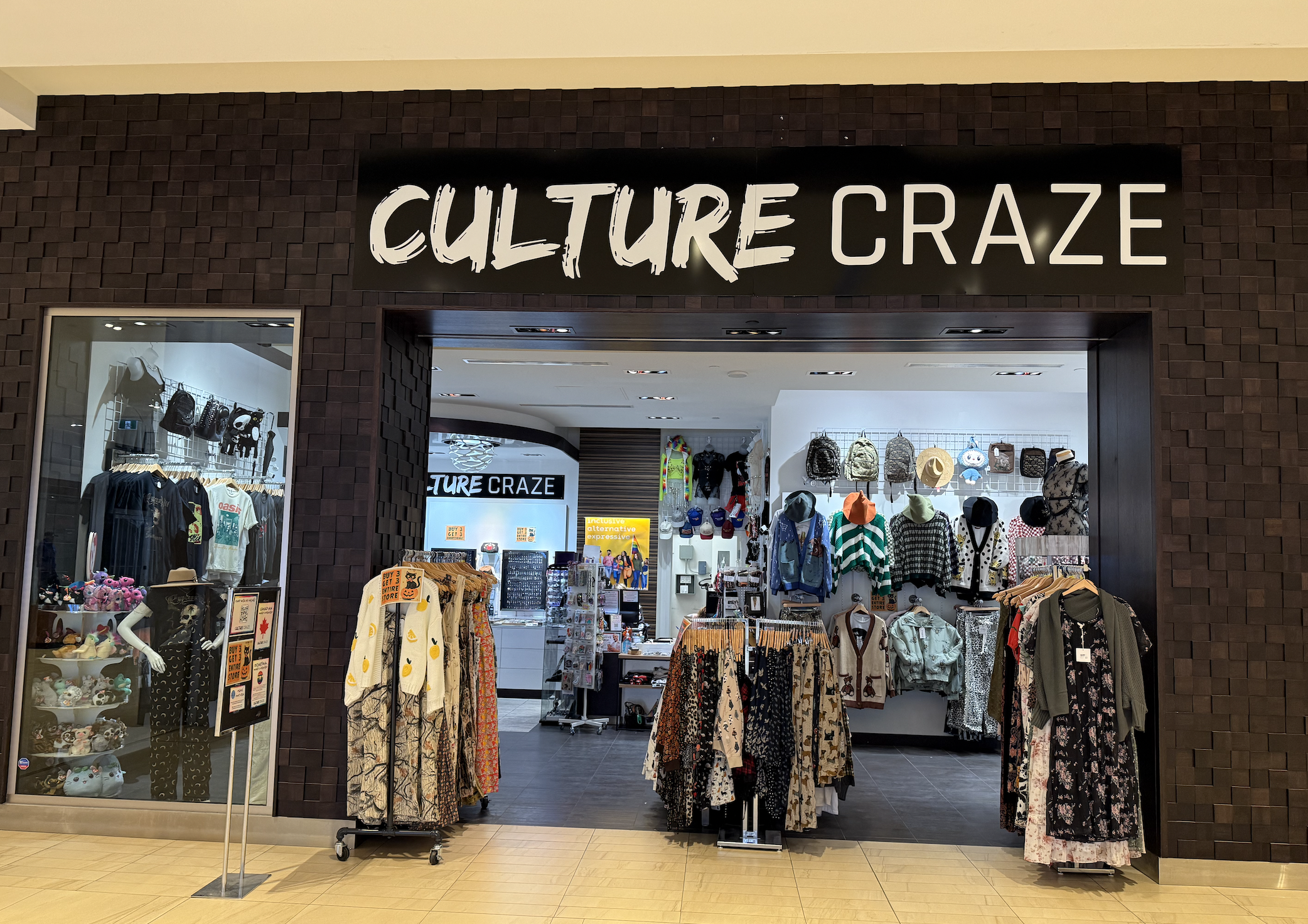
Culture Craze, Midtown Plaza, Saskatoon. Photo: Mario Toneguzzi
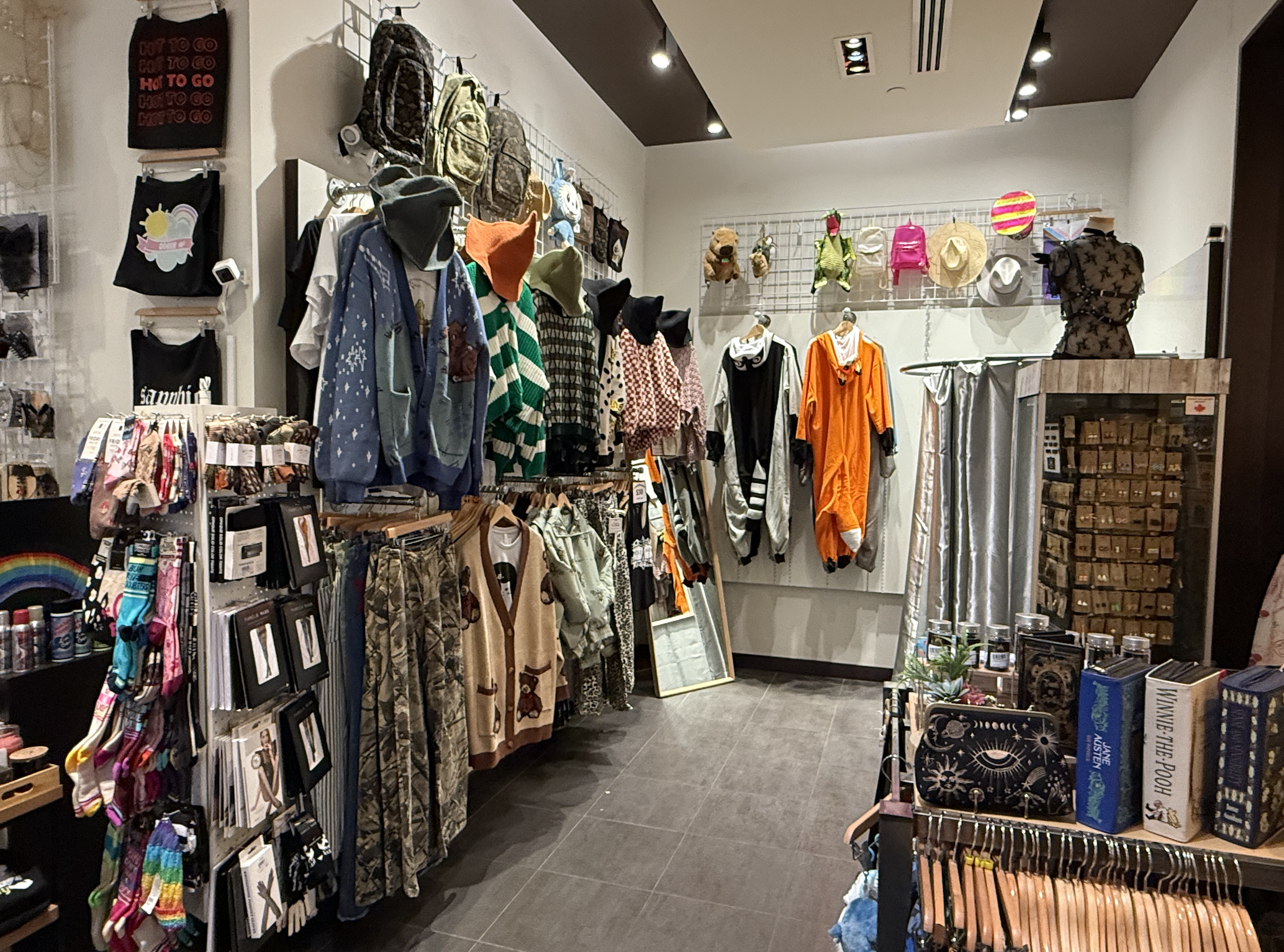
Culture Craze, a Canadian retailer known for body jewellery and self-expression, operates 13 locations across four provinces, company president Lisa Hayward said in a recent interview, adding it has plans for continued growth.
The first Culture Craze store opened in Central City, Surrey, in 2001. Hayward joined the company as a manager 20 years ago and purchased it from previous owners in 2007. She now leads the company, which has locations in British Columbia, Alberta, Manitoba and Saskatchewan.
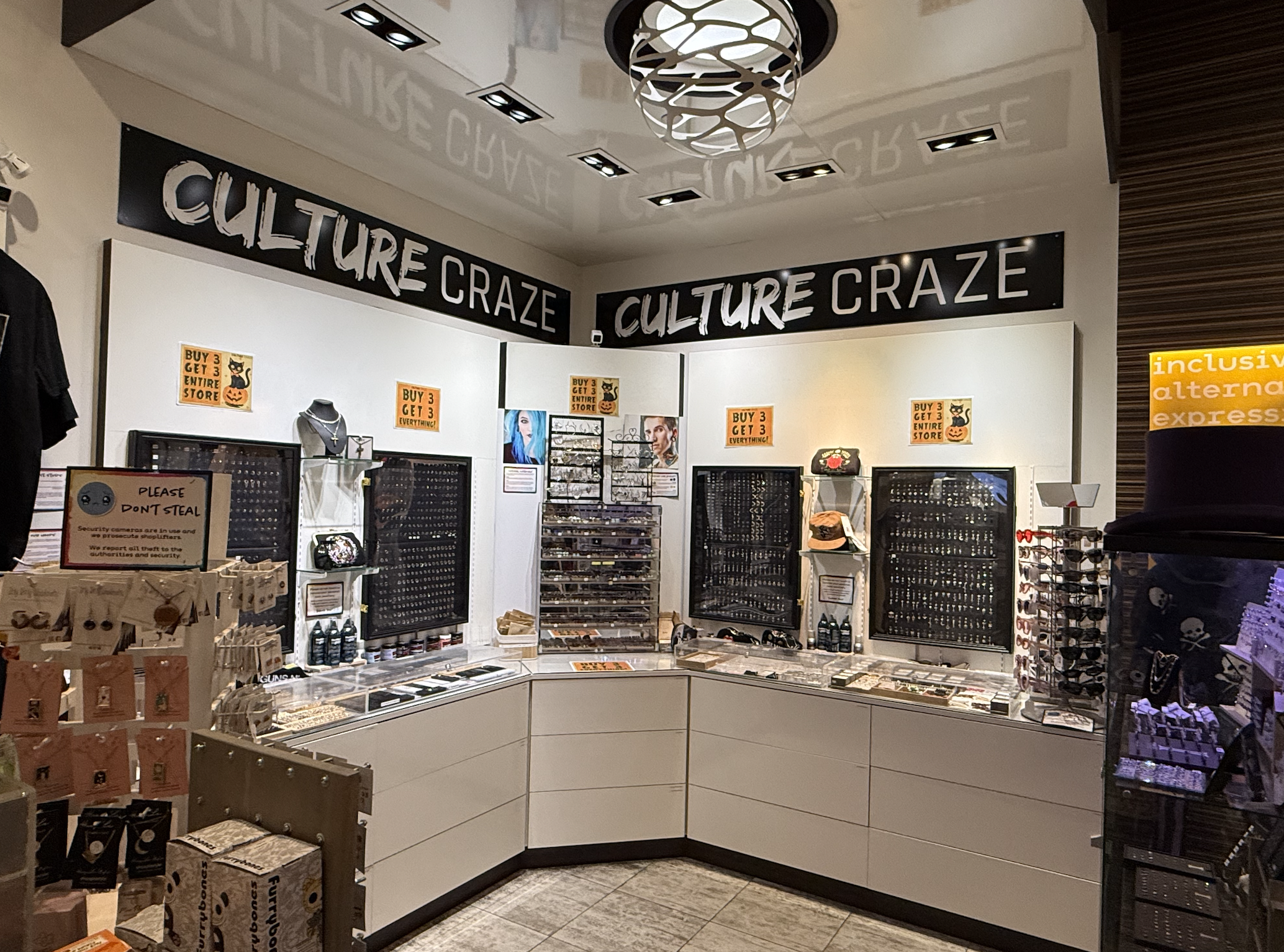
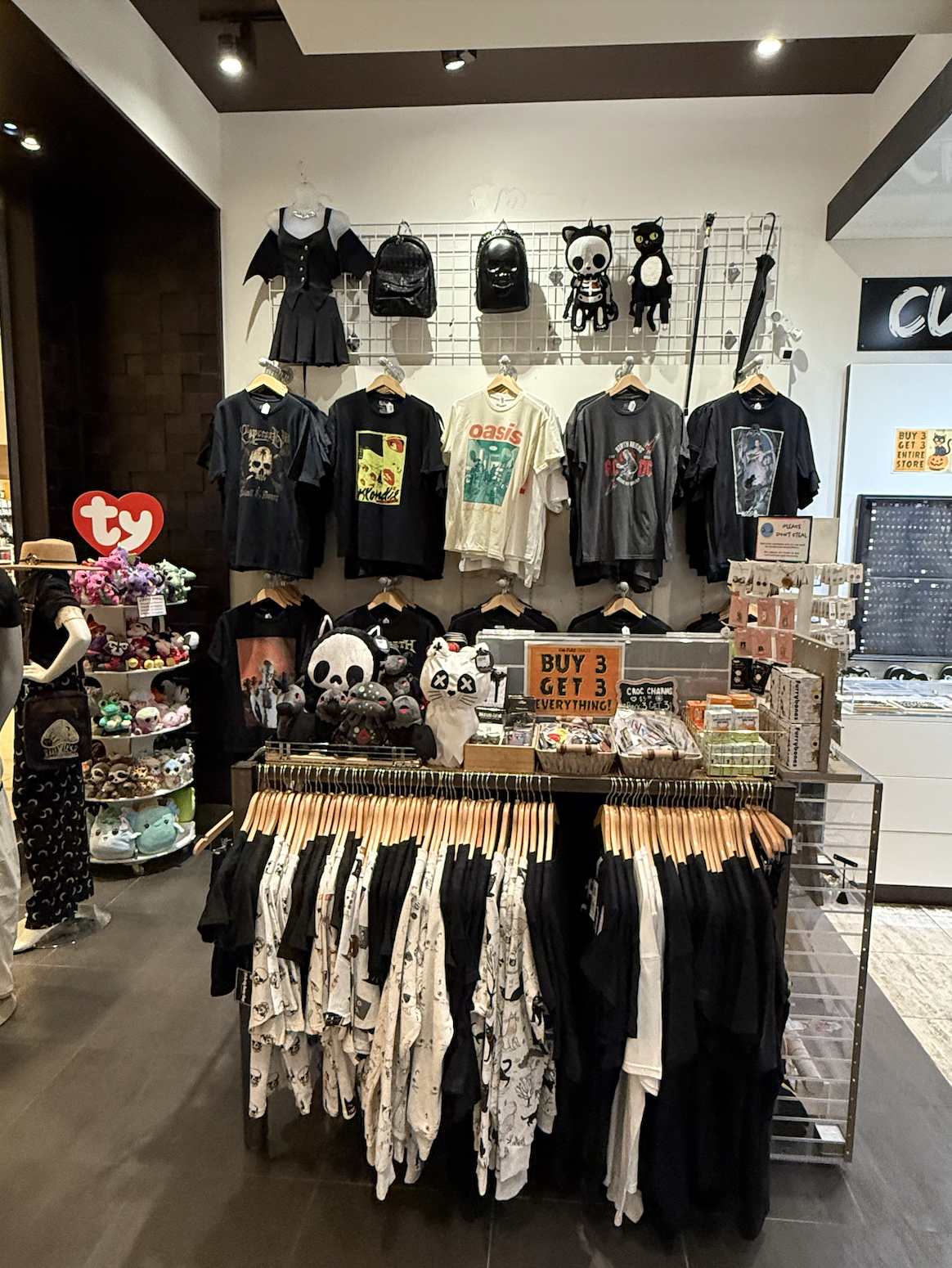
“Our heart and soul is body jewellery and self-expression. We are really all about defining oneself,” Hayward said. “We’ve expanded into clothing and accessories and leaned into fun, expressive, inclusive items. We really are creating a safe atmosphere for people to be themselves and to celebrate unique sides of themselves.
Lisa Hayward
“We’re trying to be that store where everyone walks by and says ‘ooh what’s that?’ It piques the interest of anyone in the shopping centre.”
The company’s newest location opened in Medicine Hat in July. Culture Craze also recently expanded its Sherwood Park kiosk into a full store, Hayward said, noting both locations are performing well.
Stores vary in size from 700 to 2,500 square feet, with an ideal location around 1,300 square feet, she added. “We’re looking for malls that will support us and locations that allow us to make a good home with not a large investment,” Hayward said.
“We’re trying to be smart. We’re not going to expand too quickly. But we are looking to expand next year.”
Culture Craze targets youth aged 18 to 25 who are “expressive, diverse, unique, colourful” and values self-expression over traditional demographic labels, she said.
Hayward said the company carefully evaluates potential mall locations, including co-tenants and sales per foot, and uses data analysis to guide expansion. While Culture Craze currently has a kiosk in Calgary, it hopes to open a full inline store there in the future and also considers small- to medium-sized towns with populations around 100,000 as ideal expansion locations.
Culture Craze, Midtown Plaza, Saskatoon. Photo: Mario Toneguzzi
The retailer gained additional national exposure after appearing on Dragons’ Den five years ago, which Hayward said helped connect Culture Craze with the LGBTQ community and increase awareness of the company’s philosophy.
“Since then our company has just skyrocketed.”
“We’re rolling into 2026 knowing it’s going to be another good year. We’re on fire right now,” Hayward said. “We’re expanding slowly but we’re very excited for the future.”
Retail Insider is streamlining its Canadian retail news from around the web to include a handful of top news stories that can be viewed quickly during the day. Here are the top stories from the past 24 hours.