Phillys, a brand-new quick-service restaurant (QSR) concept, has launched in Calgary, bringing gourmet sandwiches, Philly cheesesteaks, specialty hot dogs, and rice bowls to the city — all inspired by the street food culture of North America.
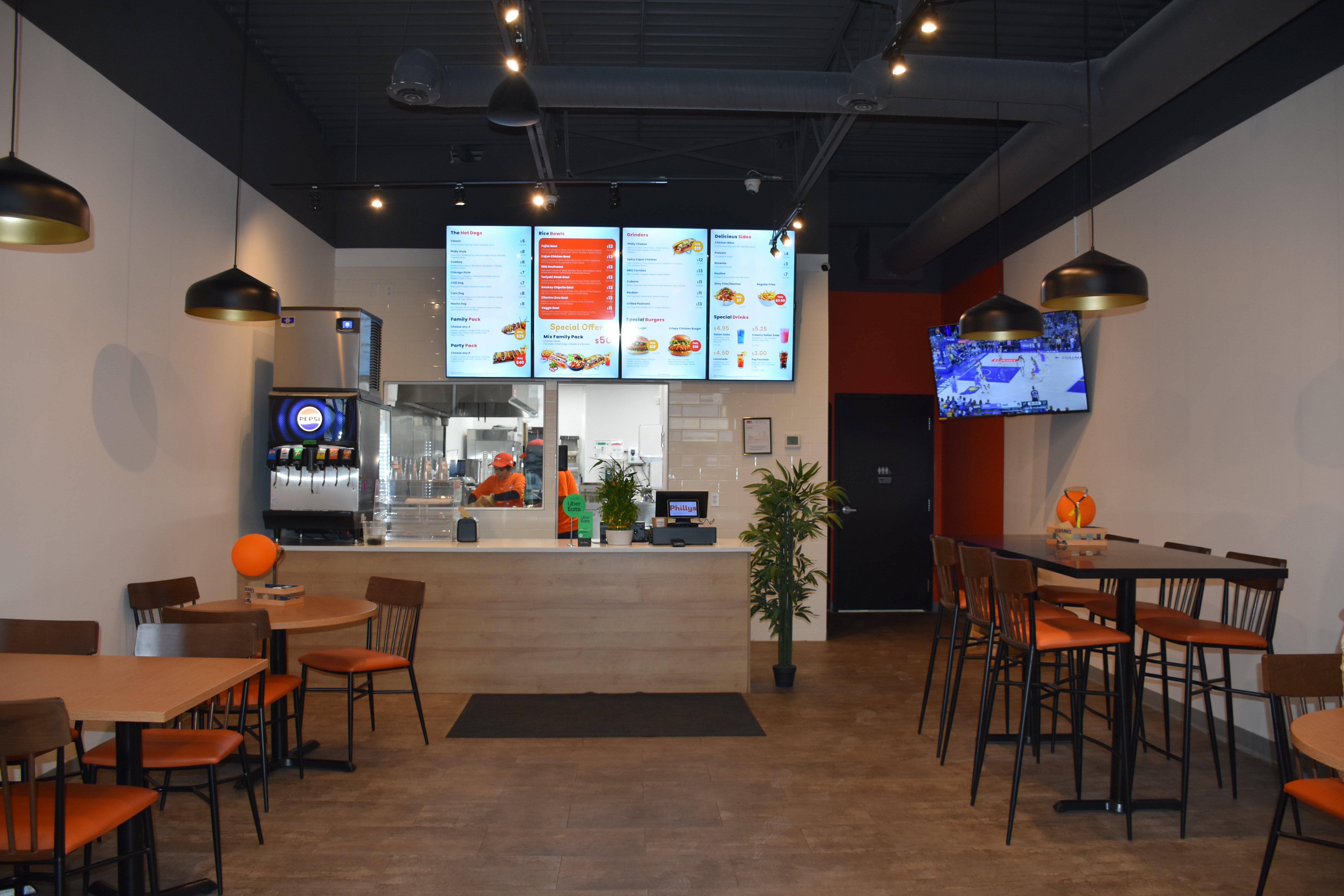
The first location is open at 5475 Falsbridge Dr NE, featuring a 1,300-square-foot space that’s bright, modern, and designed for speed and satisfaction, said the company.
“Phillys blends high-quality ingredients with bold, creative flavours — offering guests something familiar yet exciting,” said Julian Carreto, Operations Lead for Phillys.
“Our goal is to make great food fast, without compromise. From our gourmet hot dogs and hearty grinders to our fresh, customizable rice bowls, there’s truly something for everyone.”
Photo: Phillys
The first franchise is owned and operated by Harpreet Dhaliwal, who brings a decade of restaurant experience and a strong focus on quality and customer service.
“Phillys stood out to me because it hits that perfect balance between fast, fresh, and flavourful,” said Dhaliwal. “It’s the kind of place people can visit for a quick lunch or a relaxed family dinner and always leave satisfied. I’m proud to introduce this exciting new Calgary-born brand to our community.”
Phillyswill host itsofficial Grand Opening on Saturday, November 8, celebrating with aFree Classic Hot Dog for the first 100 gueststhrough the doors.
“Backed by a seasoned leadership team with deep roots in Canada’s restaurant industry, Phillys combines decades of operational expertise with a shared passion for food, innovation, and community,” said the company.
Photo: Phillys
Carreto has more than 25 years experience across various food service concepts.
“Created to fill a growing gap in the quick-service market, the brand delivers fresh, high-quality comfort food that’s both approachable and elevated. Its vision is to build a proudly Canadian company that supports local industry, creates meaningful jobs, and offers a flavour-forward dining experience worth sharing.”
Phillyssaid the menu was designed to offer variety and flexibility without overcomplicating the kitchen — a balance that makes the concept both crave-worthy and scalable.
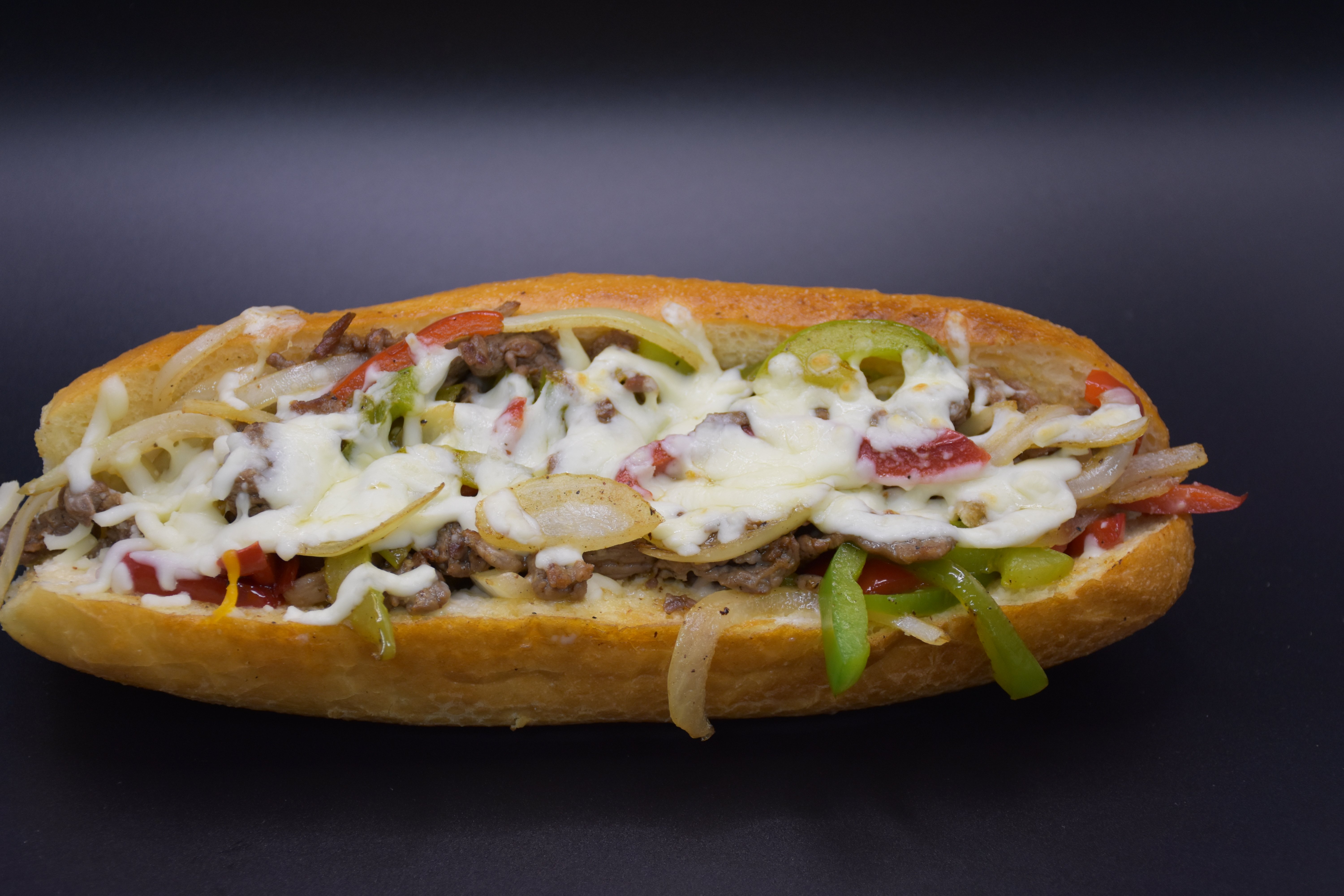
Gourmet Hot Dogs transform a street-food staple into something special, with premium toppings and international influences.
Rice Bowls provide a healthier, customizable base ideal for vegetarians, vegans, and gluten-free guests.
Grinders (Subs) round out the menu with hearty, made-to-order sandwiches stacked with flavour and freshness.
Photo: Phillys
“With franchising already in development, including a second location secured in Airdrie, Phillys aims to become one of Canada’s next major names in the QSR category. The brand’s model is built for flexibility and efficiency, offering franchisees a compact footprint and a menu that balances creativity with operational ease and broad consumer appeal — from quick lunch breaks to late-night cravings,” it said.“The timing is ideal: Canada’s quick-service restaurant market continues to see strong growth, driven by demand for convenience and quality — a space where Phillys sees a major opportunity to lead.”
What was a multi-year AI gap is now approximately a one-year difference. This surge is accelerated by accessible AI platforms and their structural advantage: fewer approval layers and faster decision-making. More importantly, in specific use cases like marketing automation, they’re deploying AI at rates that rival large enterprises, a reversal of the typical enterprise technology adoption pattern.
According to a Thryv survey, U.S. SMB AI usage more than doubled from 39% in 2024 to 55% in 2025, a 41% year-over-year increase. A McKinsey report shows globally 78% of companies now use AI in at least one function, with companies with 10-100 employees moving from 47% to 68% adoption in one year, indicating that SMBs are approaching enterprise adoption levels faster than previous technology waves predicted.
Where SMBs Deploy AI
The functional distribution of AI use differs sharply between small businesses and large enterprises. Among firms already using AI, SMBs show leadership in almost half of the 17 tracked use cases, with marketing automation especially common among small businesses.
AI Deployment Plans:
77% of SMBs think AI for marketing and customer engagement would have a great impact
84% SMBs are willing to automate marketing content creation
59% are open to automating customer service using AI
By comparison, large enterprises deploy AI primarily for IT process automation (33%) and security or threat detection (26%). The data suggests not that SMBs lead across substantial use cases, but that they concentrate deployment in customer-facing functions while enterprises prioritize infrastructure and security.
Measurable Returns
Small businesses report productivity and revenue gains that justify their AI investments
91% SMBs report revenue boosts from AI
87% say it helps them scale operations
86% see improved margins
Small businesses are saving 20+ hours, $500-$2,000 in cost savings monthly.
51% of SMBs that adopted generative AI reported revenue increases of 10% or more, indicating substantial returns for businesses that move beyond experimentation to systematic implementation.
Anirudh Agarwal
“What sets successful SMBs apart is how quickly they translate AI from concept to daily utility. The ones integrating it into routine operations are not just saving time, they’re creating measurable, repeatable performance gains that strengthen long-term competitiveness,” noted Anirudh Agarwal, CEO, OutreachX.
Workforce Impact Favors Expansion
Contrary to widespread concern about AI-driven job losses, small businesses using AI report net positive workforce effects.
34% of AI-using entrepreneurs upskilled existing employees
82% of AI-using small businesses increased their workforce in the past year
Job posts from SMBs seeking AI expertise rose 44% between January and July 2025
The pattern suggests AI functions as a capacity multiplier rather than workforce replacement, at least in the current adoption phase. Small businesses appear to be using AI to handle increased workload rather than to eliminate positions.
Photo: OutreachX
The Training Problem Affects Everyone
Training gaps:
95% of SMB decision makers say they need more AI training, though 72% describe themselves as AI experts
90% of SMB employees who received AI training reported better performance
Companies adopting AI continue to lag in employee training and upskilling, creating a vulnerability that affects organizations of all sizes. For SMBs, this is the execution gap that decides who turns AI into repeatable gains: the businesses that formalize lightweight, role-based training and certify a handful of “power users” will convert early experiments into durable, margin-positive workflows. In other words, close the skills gap, and the small-team advantage compounds.
From Catch-Up to Competitive Edge
Whether the one-year gap continues to close, stabilizes, or widens depends on factors that remain in flux: enterprise acceleration of AI investment, SMB access to increasingly sophisticated tools, and which segment addresses the training deficit first. What the current data establishes is that small businesses are adopting AI faster than conventional technology diffusion models predicted, and concentrating that adoption in the functions most directly tied to revenue generation. In AI, speed beats scale, and right now, small businesses are winning because they’re moving first.
Retail Insider is streamlining its Canadian retail news from around the web to include a handful of top news stories that can be viewed quickly during the day. Here are the top stories from the past 24 hours.
“Our strong financial performance this quarter reflects the health of our portfolio and the efforts of our team as we continue to make meaningful additions to our asset base,” said Kevin Salsberg, President and Chief Executive Officer, CT REIT. “CT REIT continues to execute on its strategy while providing Unitholders with an attractive combination of growth and stability.”
CT REIT is an unincorporated, closed-end real estate investment trust formed to own income-producing commercial properties located primarily in Canada. Its portfolio is comprised of over 375 properties totalling more than 31 million square feet of GLA, consisting primarily of net lease single-tenant retail properties across Canada. Canadian Tire Corporation, Limited, is CT REIT’s most significant tenant.
New Investment Activity
CT REIT announced two new investments which require an estimated $19 million to complete. The investments are, in aggregate, expected to earn a going-in yield of 6.45% and represent approximately 50,000 square feet of incremental gross leasable area.
The table below summarizes the new investments and their anticipated completion dates:
Property
Type
GLA (sf.)
Timing
Activity
Fort Saskatchewan, AB
Third Party Acquisition
20,000
Q4 2025
Acquisition of the freehold interest underlying a ground lease that CT REIT had an interest in, as well as a multi-tenant commercial retail building
Collingwood, ON
Intensification
30,000
Q2 2027
Expansion of an existing Canadian Tire store
Update on Previously Announced Investments
CT REIT invested $72 million in previously disclosed projects that were completed in the third quarter of 2025, adding 351,000 square feet of incremental GLA to the portfolio as detailed in the table below.
Property
Type
GLA (sf.)
Timing
Activity
Calgary (Northpointe at Country Hills), AB
Third Party Acquisition
197,000
Q3 2025
Third party acquisition of a Canadian Tire anchored property
Winkler, MB
Redevelopment
154,000
Q3 2025
Redevelopment of an existing enclosed mall
Financial Highlights
Net Income – Net income was $117.1 million for the quarter, an increase of $22.7 million, compared to the same period in the prior year, primarily due to increases in the fair value adjustment on investment properties, and higher revenues from the Property portfolio, partially offset by higher interest expense.
Net Operating Income (NOI) – Total property revenue for the quarter was $151.2 million, which was $6.6 million or 4.5% higher compared to the same period in the prior year. In the third quarter, NOI was $119.9 million, which was $6.2 million or 5.5% higher compared to the same period in the prior year. This was primarily due to the acquisition, intensification and development of income-producing properties completed in 2024 and 2025, which added $4.1 million, and rent escalations from Canadian Tire leases, which contributed $1.6 million.
Same store NOI was $115.1 million and same property NOI was $115.8 million for the quarter, which were $2.3 million or 2.0%, and $3.0 million or 2.6%, respectively, higher when compared to the prior year. Same store NOI increased primarily due to the increased revenue derived from contractual rent escalations and the recovery of capital expenditures. Same property NOI increased primarily due to the increase in same store NOI noted, as well as from the intensifications completed in 2024 and 2025.
Funds from Operations (FFO) – FFO for the quarter was $80.5 million, which was $2.4 million or 3.1% higher than the same period in 2024, primarily due to the impact of NOI variances discussed earlier, partially offset by higher interest expense. FFO per unit – diluted (non-GAAP) for the quarter was $0.338, which was $0.007 or 2.1% higher, compared to the same period in 2024, due to the growth of FFO exceeding the growth in weighted average units outstanding – diluted (non-GAAP).
Adjusted Funds from Operations (AFFO) – AFFO for the quarter was $75.4 million, which was $2.8 million or 3.9% higher than the same period in 2024, primarily due to the impact of NOI variances discussed earlier, partially offset by higher interest expense. AFFO per unit – diluted (non-GAAP) for the quarter was $0.317, which was $0.009 or 2.9% higher, compared to the same period in 2024, due to the growth of AFFO exceeding the growth in weighted average units outstanding – diluted (non-GAAP).
Operating Results
Leasing – CTC is CT REIT’s most significant tenant. As at September 30, 2025, CTC represented 92.2% of total GLA and 90.9% of annualized base minimum rent.
Occupancy – As at September 30, 2025, CT REIT’s portfolio occupancy rate, on a committed basis, was 99.4%.
As the 2025 holiday season approaches, Canadian retailers are preparing for what many expect to be a more deliberate, values-driven shopping period. According to Jaimie Harris, founder and CEO of Toronto-based sleepwear brand This is J, the landscape has evolved dramatically over her two decades in retail.
“What we’re seeing this year is a return to purposeful spending,” said Harris. “People don’t want to waste money. They’re being thoughtful, asking questions about where things are made, and seeking value in every purchase.”
Jaimie Harris
Harris, whose company has been producing its signature Bamboo Jammers and loungewear in Canada since 2003, says that the past few years have reshaped the psychology of holiday shoppers.
“During COVID, there was a sense of panic shopping. People just wanted to get whatever they could before delivery delays hit,” she explained. “Now, things have stabilized. There’s more time to think, and people are gravitating back toward gifts that mean something.”
This trend, Harris said, is being reinforced by both economic realities and logistical disruptions. “With tariffs, currency exchange rates, and the rotating Canada Post strike, shoppers are realizing that local is not just ethical, it’s practical,” she noted.
The Tariff Effect and the Rise of Local
For many Canadians, this year marks the first time they’ve felt the tangible effects of tariffs on imported goods. “People have been hearing about tariffs in the news, but they didn’t really understand how it impacted them until they started ordering items and getting hit with unexpected fees at the door,” Harris said.
She described how customers are now more cautious, comparing costs and origins before committing to a purchase. “They’re asking, ‘Where is this made? Who made it? How long has this company been around?’ We haven’t seen that level of curiosity in years.”
This shift has been a boon for Canadian manufacturers. “We’ve been saying for years that Canadian-made matters,” she said. “Now, shoppers are seeing the benefits firsthand. They don’t have to pay duties or worry about delays at the border. They can buy from someone down the street.”
Super mailboxes. Photo- Canada Post
The Canada Post Strike and Its Ripple Effects
The current rotating Canada Post strike has compounded existing challenges for small businesses. Harris, who ships thousands of orders across the country during the holidays, recalled the difficulties of the previous strike and how it informed her strategy this year.
“We stopped shipping with Canada Post as soon as they announced the possibility of a strike,” she said. “Last time, we had 75 packages stuck in limbo for weeks. It wasn’t catastrophic, but it was a wake-up call.”
For many smaller retailers, however, alternatives are limited. “If you’re in a rural community or your customers use PO boxes, Canada Post is often the only option,” Harris added. “Some businesses don’t have the flexibility we do.”
The uncertainty, she explained, has driven shoppers to act earlier than usual. “People are starting holiday shopping in September because they don’t want to risk delays,” she said. “They’re also visiting us in person at the One of a Kind Show to avoid shipping entirely.”
A Return to In-Person Shopping
Harris first exhibited at the One of a Kind Show 23 years ago and still remembers the early days vividly. “Back then, people came to discover new brands. If they didn’t buy on the spot, they had no idea how to find you again,” she said. “Now, shows like that are more like showrooms. Customers visit, learn your story, and then shop online.”
But 2025 feels different. “We’re seeing a resurgence of people wanting to shop in person. They don’t want to make mistakes online, pay tariffs, or deal with returns. They want to see the product, meet the maker, and know exactly what they’re getting.”
This year, This is J is using the event to celebrate its Canadian roots. “We’re launching an exclusive holiday pattern at the One of a Kind Show,” said Harris. “It’s our way of giving back to the customers who’ve supported us for more than two decades.”
Tree lighting at CF Toronto Eaton Centre in Toronto on November 13, 2024. Photo: Cadillac Fairview
Thoughtful Gifts and the ‘Value-Driven’ Consumer
According to Harris, shoppers are not necessarily spending less, they’re simply spending smarter. “It’s not about cutting back,” she said. “It’s about being careful. People want quality, longevity, and a story behind what they buy.”
She believes that storytelling will play a critical role for retailers this season. “Consumers are savvy now. They want transparency — who you are, what you believe in, and why your product matters,” Harris explained. “Whether you’re a brand or a retailer, you need to give people a reason to connect with you.”
At This is J, storytelling has always been central. The brand’s pajamas are marketed as “pajamas for more than just the bedroom,” designed for comfort at home and beyond. “Holiday time is about comfort, family, and togetherness,” said Harris. “Our focus is on creating those matching moments, families sitting around in their pajamas, making memories together.”
Photo: This is J
Preparing for a Shorter but Busier Season
The structure of the 2025 holiday calendar has also shifted shopping patterns. “Last year, all the big sale days…One of a Kind, Black Friday, Cyber Monday, fell in the same week. It was chaos,” Harris recalled. “This year, there’s more breathing room. It’s giving shoppers and retailers a little more flexibility.”
Despite that reprieve, Harris cautioned that the season will still move fast. “It feels like the time between American Thanksgiving and Christmas is shorter every year,” she said. “Retailers need to have inventory ready early, and consumers need to plan ahead.”
Lessons from Two Decades in Canadian Retail
Reflecting on her 20-plus years in business, Harris has seen holiday retail evolve from dial-up credit card machines to global e-commerce platforms. “When I started, it cost $500 just to connect a Visa machine at the One of a Kind Show,” she laughed. “Now, we can process transactions anywhere on a phone. The industry has changed completely.”
But what hasn’t changed, she emphasized, is the emotional core of retail. “People want connection. Whether it’s through a handmade gift or an online order, the best retailers make people feel something.”
For Harris, that human connection is at the heart of the season. “Holiday shopping isn’t just about buying things. It’s about comfort, care, and shared experiences. That’s what keeps people coming back year after year.”
Despite expectations of a difficult year, the foodservice industry outperformed early forecasts, thanks to strong domestic tourism and the GST/HST holiday at the start of the year, according to Restaurants Canada’s Q3 Quarterly Report.
Commercial foodservice revenue was up 6.9% in the first seven months of 2025, but after adjusting for inflation, Restaurants Canada expects real commercial foodservice sales to grow by 2.1% in 2025 and decline by 0.7% in 2026, said the organization.
Kelly Higginson
“There is reason for cautious optimism in the foodservice industry after some very challenging years, but we have to keep the ongoing inflationary pressures in perspective,” said Kelly Higginson, President and CEO of Restaurants Canada. “Operating costs continue to rise while consumers are pulling back on discretionary spending, conditions which make investment in technology and growth plans risky. The federal government needs to deliver on its promise to improve affordability for Canadians in its budget tomorrow.”
Quarterly Report at a glance:
Commercial foodservice sales are expected to grow by 5.4% in 2025 before adjusting for inflation, outperforming the previous quarter’s forecast (of 2.7% to 3.7% growth).
Canada’s restaurant industry continues to prove it is a job powerhouse, adding 23,600 jobs in the first nine months of 2025, more than the 21,200 jobs created across the broader private sector.
74% of Canadians say they are cutting discretionary spending because of cost-of-living increases, with eating out (56%) and take-out or delivery (50%) being the most common types of expenses they are cutting.
Foodservice businesses continue to face significant operating cost increases that challenge their profitability. Over the past two years, insurance costs have increased 14%, food costs 13% and labour costs 11%.
Commercial foodservice sales are projected to decelerate to 1.6% growth in Q2 2026. Growth is expected to gradually recover thereafter, plateauing at an average of 3.6% in 2027, indicating a return to more sustainable, pre-pandemic trends.
While technology could help foodservice businesses improve productivity and streamline operations, many remain cautious. The top barriers to adoption are high upfront costs (51%), uncertainty about return on investment (43%), and concerns about long-term stability in the business environment (35%).
Operators are looking for tools that demonstrate immediate value by helping reduce costs, strengthen operations, or simplify decision-making without placing additional strain on cash flow.
Photo: Mario Toneguzzi
Restaurants Canada said it is urging the federal government to permanently exempt all food, including restaurant meals, from GST/HST, to reduce the cost of living for Canadians and support growth in the foodservice industry. To sign Restaurants Canada’s petition calling on government to exempt all food from sales tax, visit foodisfood.ca.
Restaurants Canada is a national, not-for-profit association advancing Canada’s diverse and dynamic foodservice industry. Restaurants are a $124 billion industry employing nearly 1.2 million Canadians and the number one source of first-time jobs in Canada.
John Lederer, Executive Chairman of Staples Canada is pleased to announce the appointment of Jens Cermak as Chief Executive Officer, effective December 1, 2025. As CEO, Jens will oversee close to 300 Staples stores, its digital and services business, and Staples Professional, Canada's leading B2B business. (CNW Group/Staples Canada ULC)
As CEO, he will oversee close to 300 Staples stores, its digital and services business, and Staples Professional, Canada’s leading B2B business, said the retailer.
“I am thrilled to join Staples Canada at such an exciting time in the company’s journey,” said Cermak. “Staples has built an incredible foundation as a trusted partner for Canadian businesses and consumers. I look forward to working with the talented Staples team to enhance our customer experience, expand our solutions portfolio, and drive innovation across all channels. Together, we will continue to empower Canadian businesses and individuals to work and learn more effectively.”
“Jens brings an extraordinary combination of retail expertise, operational excellence, and strategic vision to Staples Canada,” said John Lederer, Executive Chairman. “His proven ability to drive transformation, build high-performing teams, and deliver exceptional customer experiences makes him the ideal leader to guide Staples Canada’s continued evolution as The Working and Learning Company. We are confident that under Jens’ leadership, Staples will accelerate its growth trajectory while continuing to serve as a trusted partner for Canadian businesses and consumers.”
With 30 years of distinguished experience spanning retail, finance, and operations, Cermak brings extensive leadership credentials to his new role. Most recently serving as Chief Executive Officer of Amica Senior Lifestyles, he successfully led the organization’s strategic initiatives across an organization of 5,000 team members. Prior to Amica, he spent 13 years at TJX Canada in progressively senior roles, including SVP Director of Operations where he led 400+ stores with more than 20,000 team members across Canada. His career also includes senior finance positions at internationally recognized brands including Grand & Toy, Pepsi, and Labatt. Cermak is a Chartered Professional Accountant and Certified Management Accountant who received an Honours BA from the University of Toronto, said Staples.
Brian McDougall, who has been serving as Interim CEO, will support the leadership transition to ensure continuity for customers, partners, and team members. He will continue in his role as Chief Retail Officer.
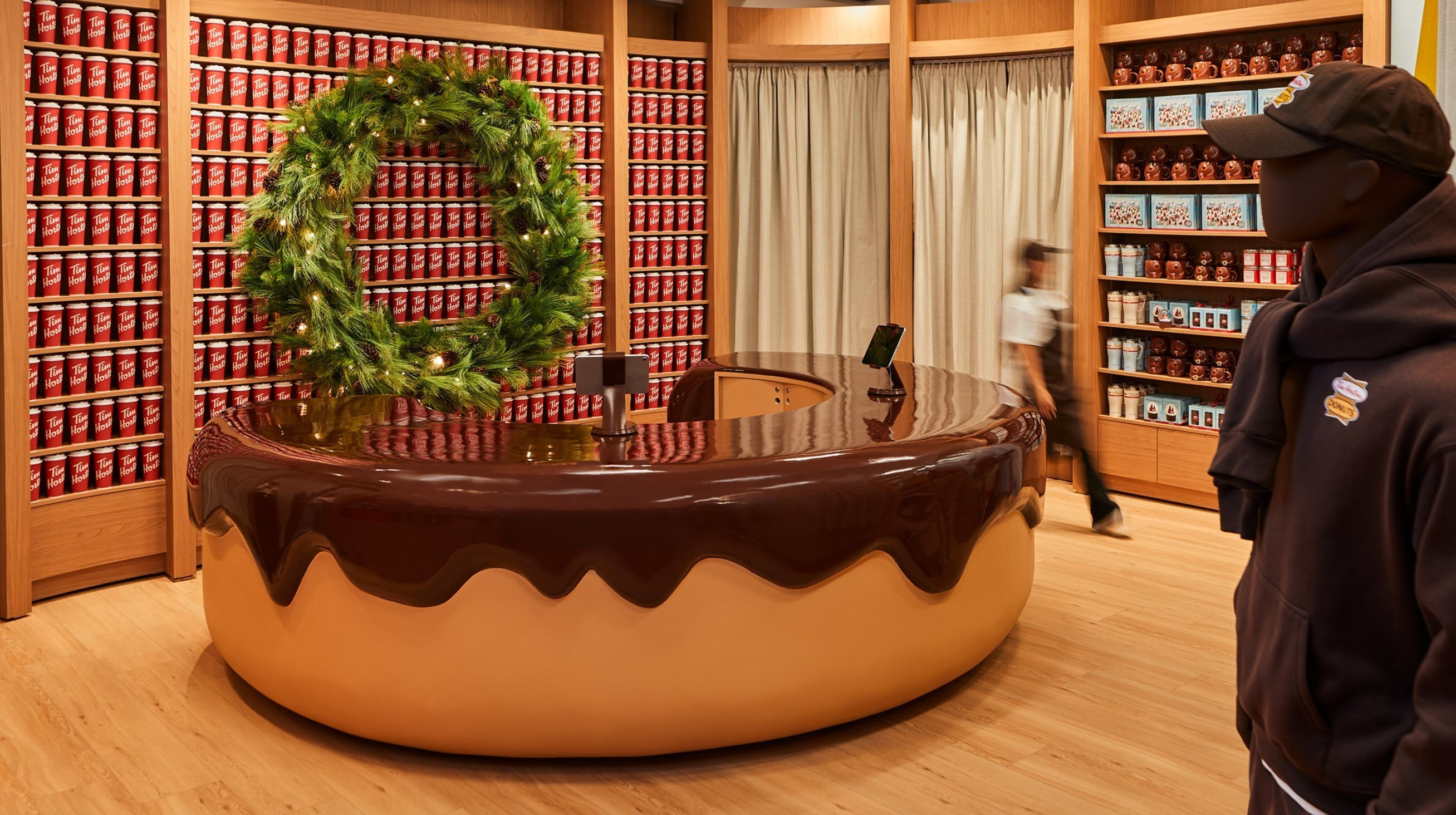
First-of-its-kind Tim Hortons pop-up merch store at the CF Toronto Eaton Centre (CNW Group/Tim Hortons)
The first-ever Tim Hortons TimShop pop-up merch store is now open at the CF Toronto Eaton Centre through the holidays with a wide range of Tims-inspired apparel and merchandise.
The TimShop pop-up is an extension of the popular TimShop.ca online store that launched in 2023, with an evolving selection of apparel, drinkware and other Tims merchandise, said the company.
Shoppers at the TimShop pop-up store will have the chance to experience some of the most popular TimShop.ca merchandise in person, along with this year’s limited-edition holiday collection featuring a range of sweaters, festive pajamas for the family, and other giftable items for Tims fans and tourists shopping for quintessentially Canadian souvenirs, it said.
Christie Song
“We’ve received amazing feedback about our TimShop.ca apparel and merch collections and we’re thrilled to be offering them to shoppers in-person at one of Canada’s most iconic shopping malls, a destination for locals and tourists alike,” said Christie Song, Head of Tim Hortons Retail.
“Our TimShop apparel and merch are inspired by the amazing food and beverages we serve in Tims restaurants across Canada and by the connection Canadians have with our iconic brand. We’re proud and honoured that so many Canadians consider Tims to be a part of their daily lives and launching this unique retail setting is another way for us to connect with our guests and share the holidays with them and their loved ones.”
First-of-its-kind Tim Hortons pop-up merch store is now open at the CF Toronto Eaton Centre through to the end of the holiday shopping season (CNW Group/Tim Hortons)
To celebrate the store’s opening, the TimShop Toy Truck – an interactive shopping experience featuring exclusive plushies inspired by popular Tims menu items – will also run at the CF Toronto Eaton Centre for a limited time, until Nov. 16, added the company.
The TimShop pop-up store and TimShop Toy Truck are located on level 1 of the CF Toronto Eaton Centre.
Mountain Equipment Company (MEC) is supporting Alberta’s outdoor community following the closure of Breathe Outdoors, formerly known as Campers Village, by honouring its gift cards and hiring several of the retailer’s staff in Edmonton and Calgary.
For a limited time, customers can redeem or transfer the balance of a Breathe Outdoors gift card to an MEC gift card of equal value at MEC’s Edmonton or Calgary stores. The initiative allows customers to access outdoor gear and expert advice while providing employment for some of Breathe Outdoors’ employees.
Following MEC’s return to Canadian ownership this year, the company has seen “positive momentum, fueled by a strong summer of camping, paddling, and close-to-home adventures,” according to the retailer. That success has placed MEC in a position to support the well-known Alberta business.
Peter Hlynsky
“We are deeply saddened by the closure of Breathe Outdoors, an iconic name in Alberta’s outdoor story,” said Peter Hlynsky, CEO of MEC. “As a fellow Canadian outdoor retailer, we know how much passion, resilience, hard work, and community connection goes into building a legacy like this.
“We’re fortunate to be able to step up and support Breathe Outdoors’ staff by welcoming some of them into the MEC family and support their customers by helping them gear up for the season ahead.”
Breathe Outdoors was a family-run business founded by the Bryant family and operated for more than 62 years, with two locations in Edmonton and one in Calgary. MEC said it recognizes the role the retailer has played in Alberta’s outdoor community and is proud to help carry that spirit forward.
“Breathe Outdoors and MEC have always shared the same mission, helping people get outside and enjoy the outdoors. If we didn’t have what a customer needed, we’d send them to MEC, and they did the same for us. Our customers are their customers, and together we’ve served this community for years. We are deeply grateful that MEC is stepping in to honour outstanding gift cards. It’s a gesture that shows their commitment to the people and places we’ve both been proud to serve,” said owners Ron and Terry Bryant.
Customers who redeem or transfer Breathe Outdoors gift cards to MEC gift cards this fall will have access to products from outdoor brands such as Arc’teryx, Patagonia, and Salomon, as well as MEC’s own label brand. MEC staff will provide guidance and advice, while customers can also participate in free clinics, workshops, and events that connect them with other outdoor enthusiasts.
Payroll employment in retail trade decreased by 4,600 (-0.2%) in August, bringing the overall decline from January to August to 24,200 (-1.2%), according to a recent Statistics Canada report.
“The decline over this period was driven by food and beverage retailers (-8,600; -1.6%) and general merchandise retailers (-7,200; -2.8%). On a year-over-year basis, payroll employment in retail trade was down 33,000 (-1.6%) in August 2025,” said the federal agency.
“Payroll employment also decreased in wholesale trade in August (-3,300; -0.4%), following little change in June and July. On a year-over-year basis, payroll employment in wholesale trade was down by 10,200 (-1.2%) in August, driven by declines in machinery, equipment and supplies merchant wholesalers (-3,500; -1.5%) and personal and household goods merchant wholesalers (-2,700; -2.6%).”
The number of employees receiving pay and benefits from their employer—measured as “payroll employment” in the Survey of Employment, Payrolls and Hours—was little changed (+3,300; +0.0%) in August, following an increase of 25,600 (+0.1%) in July. On a year-over-year basis, payroll employment was up 31,500 (+0.2%) in August 2025, reported Statistics Canada.
“In August, payroll employment increases were recorded in public administration (+5,000; +0.4%), construction (+2,300; +0.2%), administrative and support, waste management and remediation services (+1,600; +0.2%), and management of companies and enterprises (+900; +0.7%). These gains were offset by declines in retail trade (-4,600; -0.2%), wholesale trade (-3,300; -0.4%), professional, scientific and technical services (-2,600; -0.2%), and other services (except public administration) (-1,500; -0.3%),” explained the federal agency.
Meanwhile, job vacancies in Canada edged down to 457,400 (-11,300; -2.4%) in August, the lowest number of vacancies since August 2017 (435,500). On a year-over-year basis, job vacancies were down 82,100 (-15.2%) in August 2025.