As demand for food banks reaches unprecedented levels in Canada, Skip and Food Banks Canada are partnering for their sixth annual Giving Tuesday campaign, reaching more communities and providing even greater support to Canadians in need.
This year’s campaign follows a landmark 2024 effort that saw more than more than $1.6M raised for Food Banks Canada which enabled 3.2 million meals – achievements made possible through the generosity of Canadians. But as the need for support for food banks across Canada grows, so does the urgency to act, according to a news release.
According to Food Banks Canada’s latest HungerCount report, there will be close to 2.2 million visits to food banks this month alone. Food bank visits have doubled in just six years, with over 700,000 visits from children, marking the highest usage in Canadian history.
“We’re deeply grateful for our ongoing partnership with Skip, now in its sixth year. Their generous support and creative initiatives, like this year’s continued doorstep pickup program, are making a tangible difference for people in Canada who depend on food banks to help them through tough times.”
In response to this growing need, Skip said it is tripling the scope of its Giving Tuesday initiative this year. Building on its longstanding support of Toronto’s Daily Bread Food Bank, the campaign is expanding to Calgary, supporting the Calgary Food Bank, and Winnipeg, supporting Harvest Manitoba.
On December 2, residents in all three cities can schedule a non-perishable food pick-up directly from their doorstep at givewithskip.ca, making it easier than ever to give back. For every pick-up scheduled, Skip will match the donation with $100 to Food Banks Canada, doubling the impact for local communities.
From November 25 to December 2, all monetary donations made to Food Banks Canada’s Giving Tuesday campaign will also be matched by Skip, up to $100,000, for a total of $200,000 in support nationwide.
Skip’s Giving Tuesday campaign makes it simple for Canadians to support their neighbours in need, allowing them to fight food insecurity right from their front doors. Whether scheduling a doorstep non-perishable food donation, or making a monetary contribution online, anyone can take part and help make a difference.
Melanie Fatouros-Richardson
“Giving Tuesday demonstrates the power of collective action and generosity, proving that small acts amplified by community spirit can fill more plates and fuel more families nationwide,” said Melanie Fatouros-Richardson, Vice President, Communications and Government Relations at Skip. “With our campaign expanding to new cities this year, and our employees picking up donations for the first time, we’re reaching more families and food banks than ever before.”
For the first time, Skip employees are volunteering to collect food donations in Winnipeg, Calgary, and Toronto.
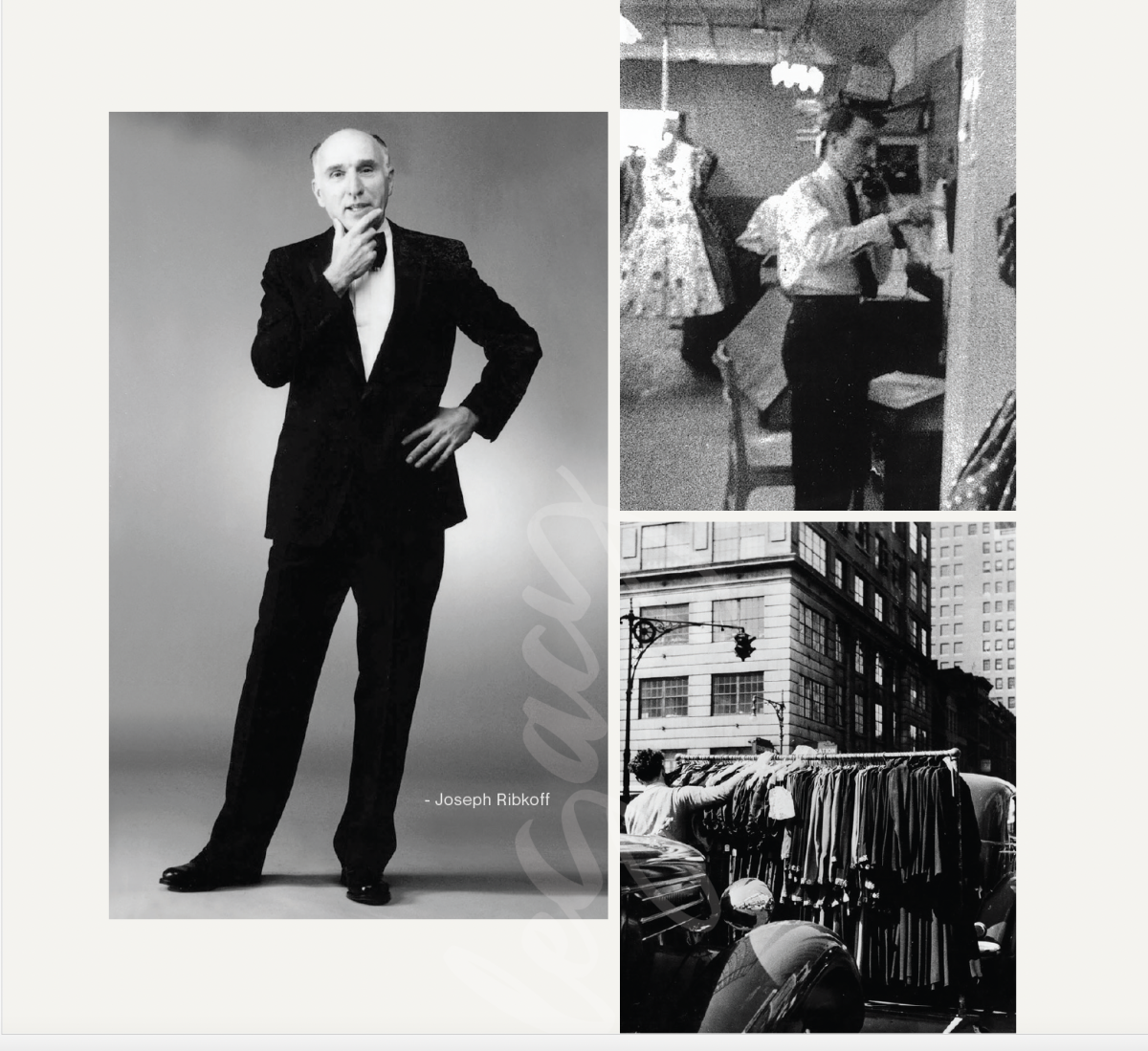
Canadian fashion house Joseph Ribkoff is expanding its senior leadership team as the company prepares for a new phase of international growth and brand development. The Montreal based womenswear label, founded in 1957 and now distributed in more than sixty five countries, has appointed two experienced industry leaders to guide its commercial and marketing strategy. The announcement signals the continuation of a long term plan aimed at strengthening the company’s global footprint and increasing its visibility across major markets. The moves also reinforce a sustained focus on supporting the broader Joseph Ribkoff global expansion strategy.
The company confirmed the appointment of Stephen Belfer as Vice President of Global Sales and Business Development. Belfer arrives from Marc Cain, where he spent twelve years leading global commercial initiatives across wholesale, retail, and ecommerce channels. In his new role, he will oversee international sales planning, market development, and the ongoing refinement of the brand’s commercial structure.
Stephen Belfer
At the same time, Joseph Ribkoff has appointed Brett Sugarman as Vice President of Global Marketing. Sugarman joins the company after more than fifteen years at Michael Kors, where she worked on a range of global brand communication and consumer engagement programs. She will now lead the company’s worldwide marketing strategy, with a focus on digital growth, storytelling, and initiatives designed to elevate the brand’s presence with consumers around the world.
“These appointments mark an exciting step forward for Joseph Ribkoff,” said Emmanuel Amzallag, Chief Executive Officer. “Stephen and Brett bring outstanding expertise in building international brands and driving growth. Their leadership will help us accelerate momentum, strengthen our customer connections, and reinforce our position as a global leader in premium contemporary womenswear.”
Strengthening Sales and Expanding Global Market Reach
Brett Sugarman
Belfer’s mandate includes the development of global sales strategies that reflect both established and emerging markets. His experience in scaling international business units is expected to support the company’s plans to deepen its retail partnerships and expand market access.
“I am honoured to join Joseph Ribkoff at this pivotal time,” said Belfer. “I look forward to working with the global teams to drive performance and operational excellence. We are not simply growing distribution, we are elevating the way the world experiences Joseph Ribkoff.”
Belfer brings a record of managing growth programs that balance long term vision with operational discipline. His leadership will contribute to the company’s continued efforts to refine its international strategy and strengthen global relationships. With thousands of retail partners and an extensive wholesale network, the brand continues to identify new opportunities for expansion in line with the wider Joseph Ribkoff global expansion plan.
Photos: Joseph Ribkoff
Marketing Strategy to Emphasize Brand Evolution and Digital Channels
Sugarman’s appointment reflects the company’s commitment to strengthening its consumer engagement and digital presence. Her background in global brand management, combined with experience developing integrated marketing programs, positions her to guide the next stage of the company’s brand evolution.
“Joseph Ribkoff has an incredible soul with decades of heritage, craftsmanship and a deeply loyal customer base,” she said. “My goal is to build the next chapter, a modern, relevant, global brand that continues to feel personal and authentic. It is about evolution, not reinvention and we are ready to accelerate digital transformation and meet our customers in the channels she trusts.”
The company plans to increase its digital investments across advertising, ecommerce, and global communication channels. This includes enhanced storytelling and refined marketing initiatives designed to strengthen the brand’s appeal in diverse markets. Sugarman’s role will be central as the company works to modernize its communication approach and increase visibility across international markets.
Photos: Joseph Ribkoff
A Canadian Fashion Brand with a Strong International Presence
Joseph Ribkoff’s legacy has helped guide its continued growth across global markets. Headquartered in Montreal, the brand produces a significant portion of its collections in Canada, with manufacturing concentrated in Quebec and Ontario. The company is known for offering womenswear that focuses on fit, comfort, and contemporary design, supported by quality materials and tailored construction.
Its collections, which include Joseph Ribkoff Collection, Joseph Ribkoff Signature, and Joseph Ribkoff Sport, are distributed through showrooms, independent boutiques, department stores, and select retail partners in major cities around the world. With a presence in more than sixty five countries, the company remains one of Canada’s most recognized global fashion brands.
The brand’s heritage is defined by craftsmanship, bold design, and a long standing commitment to quality. Many of the company’s core garments are designed to meet the needs of women seeking wardrobe versatility, travel ready fabrics, and seasonless pieces that can be worn across a range of occasions. These attributes have contributed to the brand’s loyal customer base and supported its endurance within a competitive retail environment.
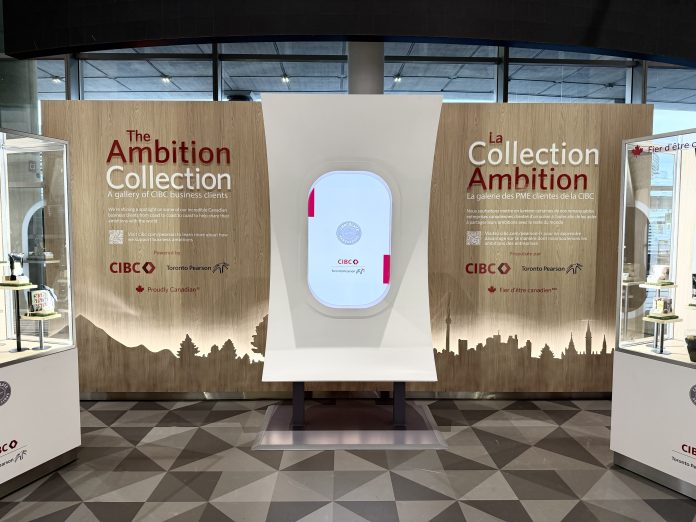
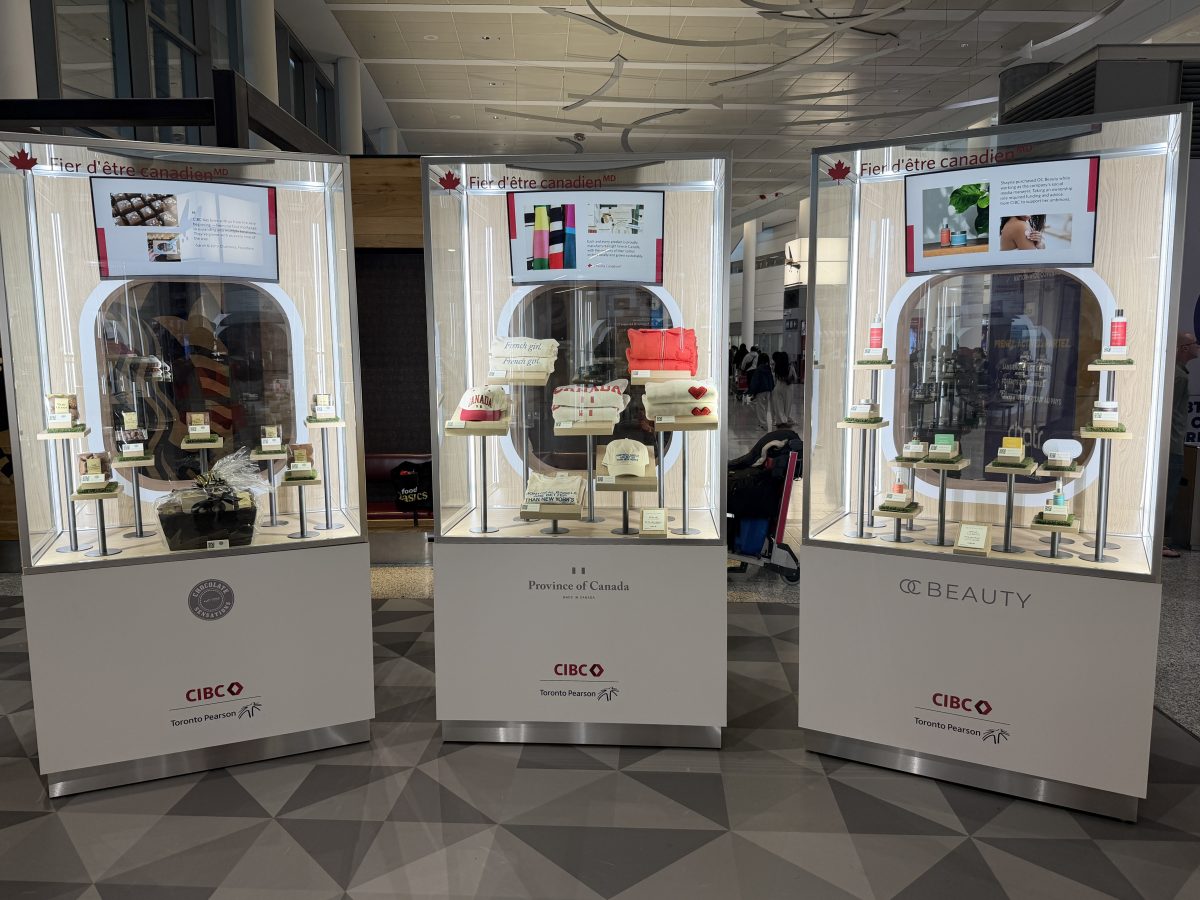
The Ambition Collection is a celebration of Canadian innovation, resilience, and small business success stories, offering travellers the chance to shop locally even while on the go. Every product in-store comes with a story, from handcrafted lifestyle goods to artisanal food items, and represents a real Canadian entrepreneur.
“The Ambition Collection, which launched in October aligned with Small Business Month, shines a light on Canadian-owned small businesses and demonstrates our commitment to helping them make their ambitions real by introducing them and their products to travelers from around the world.”
Greenlaw said the CIBC conducted a careful selection process to identify entrepreneurs who are CIBC clients and offer products that align with the unique needs and interests of airport travellers.
“At the same time, we wanted to showcase a diverse range of Canadian small businesses, reflecting the country’s innovation and entrepreneurial spirit. We prioritized products that offer convenience, comfort, or a memorable experience for individuals passing through the airport and each product was evaluated for its quality, uniqueness, and potential to resonate with local and international audiences.
Greenlaw said the CIBC will be measuring success and impact through a variety of key performance indicators, “but ultimately for us the opportunity with the Ambition Collection is to introduce travellers from around the world to incredible Canadian small businesses and celebrate their important contributions to the Canadian economy.”
“We are very proud that we were able to support the Ambition Collection through the design and build of the activation, including all branding elements, and promotion via digital and static branding across the airport. In addition, we are promoting it on our owned channels such as cibc.com/pearson as well as on social media channels, through our partnership with the Globe and Mail, and via a passenger and employee facing newsletter from Toronto Pearson.
“CIBC is committed to supporting the Canadian economy and Canadian-owned small businesses and we are working closely with the Toronto Pearson team to see how we can expand on this great initiative.”
Retail Insider is streamlining its Canadian retail news from around the web to include a handful of top news stories that can be viewed quickly during the day. Here are the top stories from the past 24 hours.
PAUME's Mini Probiotic Hand Balm debuted in 700 Ulta Beauty stores in late October, following an online launch earlier that month. Image: PAUME
Toronto-based hand care brand PAUME is taking a major step into the U.S. market with its launch at Ulta Beauty, the country’s largest beauty retailer. The expansion builds on the brand’s growing momentum since debuting in 2021 and reflects increasing consumer interest in skincare specifically designed for the hands.
“Launching with Ulta Beauty is a defining moment for PAUME since our debut in early 2021,” said Amy Welsman, Founder and CEO of PAUME. “It is a new chapter in our growth as we bring our hand care to a wider audience. This partnership will help further our mission to lead and define the hand care category, and get our products in the hands of more consumers.”
The brand’s Mini Probiotic Hand Balm debuted in 700 Ulta Beauty stores in late October, following an online launch earlier that month. PAUME’s entry into Ulta marks its first large-scale beauty retail partnership in the U.S. and follows its growing presence at Nordstrom, The Detox Market, and Grove Collaborative.
Amy Welsman, Founder and CEO of PAUME
From a Canadian Idea to a Global Hand Care Movement
Welsman founded PAUME in 2019 in Toronto, inspired by her own experience as a new mother. Frequent hand sanitizing led her to notice a gap in the market for products that combined hygiene, skincare benefits, and sustainability.
“I started to use sanitizer and recognized that everything on the market was utilitarian and not particularly pleasant to use,” Welsman said. “As a new mom, I was looking for products that made me feel good. Something that looked beautiful, smelled great, and had clean ingredients.”
That idea became the foundation for PAUME, named after the French word for “palm.” What began as a concept for a luxury hand sanitizer evolved into a full hand care line designed to cleanse, hydrate, and protect the skin barrier while addressing issues like dryness, aging, and irritation.
PAUME officially launched in early 2021, during the height of the pandemic, when awareness around hand hygiene was at an all-time high. The timing was both an advantage and a challenge, as the company faced global supply chain disruptions and intense competition from established beauty brands entering the sanitizer category.
Despite those challenges, PAUME distinguished itself through its focus on formula quality, ingredient transparency, and refillable packaging. “We took our time to develop the best formula,” said Welsman. “People told me to rush, but I knew it was more important to get it right before we got it out.”
Building a Canadian Foundation
While PAUME’s products are now available internationally, its early growth was rooted in the Canadian market. The brand gained national visibility through partnerships with Holt Renfrew, The Detox Market, and Well.ca, as well as smaller independent boutiques across the country.
“We partnered with Holt Renfrew through their H Project, which was amazing,” said Welsman. “That experience allowed us to reach a luxury customer who really values design and sustainability.”
At The Detox Market, one of Canada’s leading clean beauty retailers, PAUME’s sales have more than doubled year-over-year. “They were one of our first partners and have been with us since the beginning,” she said.
Online sales remain a significant channel, representing roughly 70% of PAUME’s Canadian business. The brand also sells through Amazon, recognizing the platform’s growing role in the beauty category. “Beauty is moving to Amazon,” said Welsman. “We want to be everywhere, but manage it thoughtfully.”
Photo: PAUME
Strategic Growth South of the Border
From its inception, PAUME’s strategy included a strong U.S. focus. “From day one, we had a U.S. warehouse,” said Welsman. “I felt strongly that we needed a U.S.-facing business right away. We wanted to build credibility through coverage in U.S. publications and smaller retail partnerships.”
That foresight paid off. PAUME launched at Nordstrom in 2023, first online and later in select physical stores, including a permanent location in New York. The brand has also rolled out holiday gift sets across all Nordstrom stores and has exceeded sales forecasts by more than 30%.
Photo: PAUME
“The Nordstrom partnership has been incredible for us,” said Welsman. “We view them as our luxury department store partner in the U.S., and we’re focused on growing with them long-term.”
PAUME at Ulta Beauty
The partnership with Ulta Beauty came after years of brand building. Ulta approached PAUME earlier this year while developing a new hand care category for its stores. “They told us they didn’t have a dedicated hand care brand and were looking for someone to own the category,” Welsman said.
PAUME began by offering its best-selling Mini Probiotic Hand Balm in 700 stores, strategically placed near checkout as part of Ulta’s “mini must-haves” section. The goal, according to Welsman, was to test consumer response at an accessible price point before expanding further.
“We’re cautious by nature,” she said. “When a retailer with 1,800 stores wants to put you everywhere, it’s tempting to say yes immediately. But we wanted to take it slow and be thoughtful.”
The phased rollout has been a success. PAUME is already planning to expand into 200 more Ulta locations by next fall and aims to build a permanent in-store presence. “We’re seeing the results very quickly,” said Welsman. “If we can win at Nordstrom and win at Ulta, we’re set up for strong growth in the U.S.”
Manufacturing, Logistics, and Sustainability
PAUME’s products are manufactured primarily in Canada, and that domestic focus has proven advantageous amid trade tensions and tariffs. “Ninety percent of our products are made in Canada,” Welsman explained. “Because of the USMCA, we haven’t been subject to additional tariffs. We ship in bulk to our U.S. warehouse and distribute from there.”
Some accessories and packaging are sourced internationally, but the company’s filling and formulation work remains Canadian. “We’ve been lucky,” Welsman said. “We’re mindful that things could change quickly, but for now, manufacturing in Canada has really worked in our favour.”
Sustainability remains a cornerstone of PAUME’s identity. The brand uses refillable packaging, recycled materials, and clean, plant-based ingredients. “Our customers care about performance and the planet,” said Welsman. “We want to deliver both.”
Photo: PAUME
A Distinctive Niche in Modern Beauty
Unlike broader body care brands, PAUME has stayed deliberately focused on hands — a strategy that has helped it stand out in a crowded beauty market. “What’s helped us succeed is our focus,” said Welsman. “We’re seen as true specialists, not just another brand with a hand cream in the lineup.”
The brand’s hand and foot masks, renewing hand serum, and probiotic hand balm have become cult favourites, particularly among those dealing with dryness or irritation from frequent washing. “People are starting to treat their hands like their face,” Welsman said. “They’re exposed and show signs of aging faster.”
The company plans to maintain that specialization while carefully exploring adjacent opportunities. “Feet are an area we’ve started to explore,” she said. “We also have plans to launch new scents and formats, and we’re developing an SPF product for hands, which has been challenging to formulate cleanly but is on track for 2027.”
The Canadian Consumer vs. the U.S. Shopper
While PAUME’s U.S. sales now make up roughly 60% of total revenue, a figure expected to reach 70% next year, Welsman continues to see distinct behavioral differences between Canadian and American consumers.
“Canadians are more cautious right now,” she observed. “Outside of promotional periods, they’re more resistant to purchasing. Inflation has made people thoughtful about what they buy.”
In contrast, U.S. customers have shown consistent demand. “The U.S. feels more Teflon to economic downturns,” Welsman said. “There’s just more spending power.”
That difference is shaping PAUME’s strategy. The brand is now exploring a Canadian mass retail partnership to complement its U.S. growth, ensuring a balanced, diversified business model.
Staying Grounded Amid Growth
For Welsman, maintaining focus and balance is key. “It’s easy to get caught up in expansion,” she reflected. “But we’ve grown thoughtfully. Every decision we’ve made has been about the long-term health of the brand.”
She credits her early experience at Knix, where she was the first employee and helped scale the brand to over $10 million in revenue, as formative. “Working with Joanna [Griffiths] taught me how to take an idea and bring it to life. It gave me the confidence to build something of my own.”
Now, just four years after PAUME’s launch, the brand is recognized by major beauty editors, stocked in top-tier retailers, and winning awards from Marie Claire, InStyle, and Women’s Health.
Despite the fast pace, Welsman remains reflective. “Sometimes I have to remind myself of how far we’ve come,” she said. “It’s not always easy, but it’s been incredible to watch this small Canadian brand grow into something that resonates across borders.”
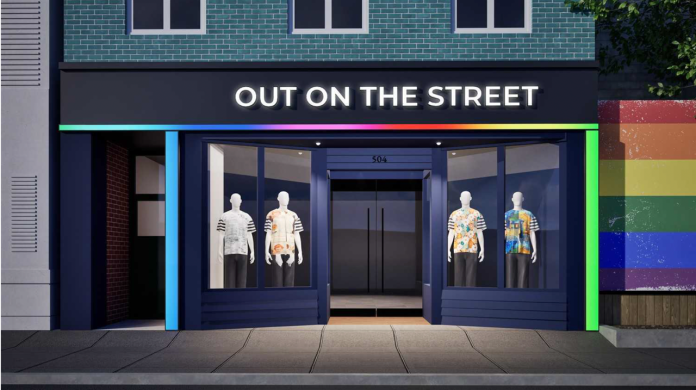
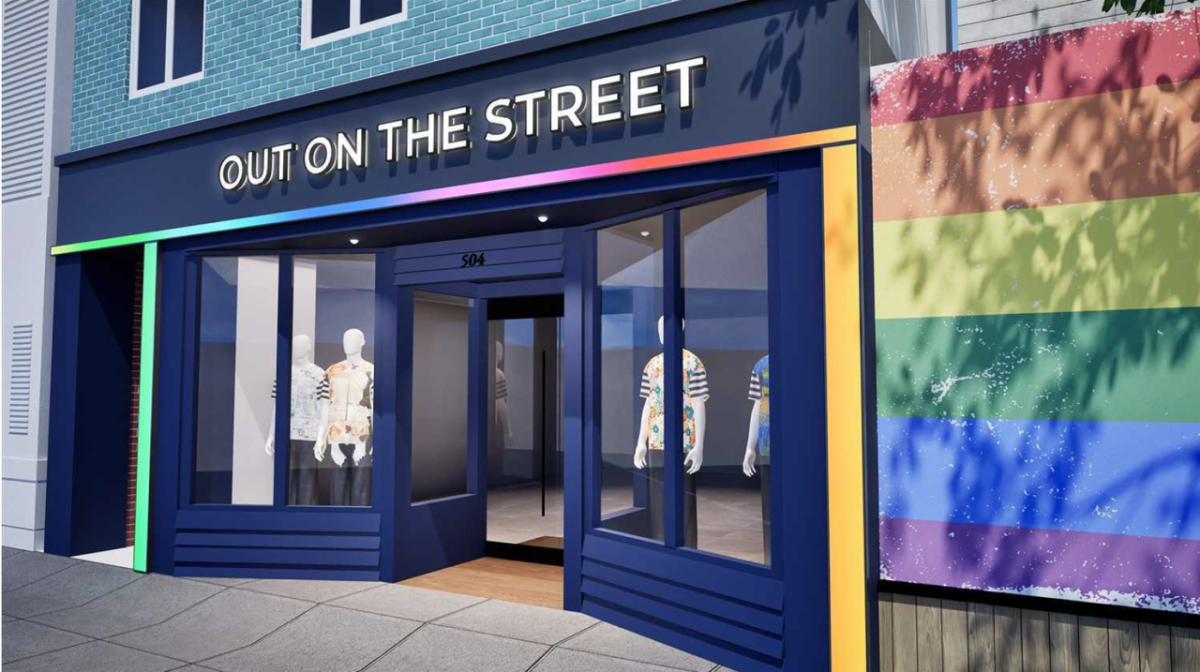
Rendering of the future Out on the Street store at 504 Church Street in Toronto. Rendering: Out on the Street
After 34 years operating from a three-level heritage building in Toronto’s Church-Wellesley Village, Out on the Street is preparing for its most significant transformation yet. The LGBTQ+ retailer, often described as “Canada’s gay department store” for its mix of apparel, Pride merchandise, and adult items, will relocate from its long-time home at 551 Church Street to a newly secured site at 504 Church Street near Alexander Street. The Out on the Street relocation marks a major shift for a business deeply rooted in the evolution of the Village itself.
Co-owner Michael Azzopardi says the move represents both a new beginning and a recommitment to the community the store has served since 1991. “This is something that I am really excited about and passionate about, carrying on the legacy for Ian with the store and hopefully taking it in a new direction,” he says. “We realized that we are needed in the community. It is something that cannot be captured online.”
The new store will occupy a single floor of approximately 1,600 square feet and will replace a space that has sat vacant for 13 years. While it is slightly smaller than the 1,800 square feet spread across three floors at the current address, Azzopardi says the shift to an accessible, street-level format is exactly what long-time customers have been asking for.
Out on the Street’s current storefront at 551 Church Street in Toronto. Photo: Gay Toronto [Gay Cities]
A Store Rooted in the Village Since 1991
Out on the Street was founded by Ian Kelly in 1991, at a time when the Church-Wellesley Village was firmly establishing itself as the heart of Toronto’s LGBTQ+ community. Kelly is still the co-owner today, now sharing the business with Azzopardi, who joined the company two and a half years ago.
The retailer has survived industry shifts, gentrification pressures, and the rise of online giants such as Amazon. Yet its relevance has endured through its strong emphasis on in-person community engagement. Customers regularly describe the store as welcoming, friendly, and essential, with its mix of clothing, accessories, novelty gifts, adult items, and Pride merchandise attracting shoppers far beyond the neighbourhood’s boundaries.
Azzopardi says the emotional reaction from patrons during Pride this year reinforced the store’s importance. “I heard so many people asking, you are not closing, are you. They said they would not know what to do without us, and that sealed the deal for me,” he explains. “That is when I told Ian that I would become his official business partner.”
Crews & Tangos bar on Church Street in Toronto, on the same block as the new 504 Church St. Out on the Street. Image: Destination Toronto
Why the Move Was Necessary
The decision to relocate was driven by customer feedback, accessibility concerns, and the changing geography of Toronto’s Village. While 551 Church Street is a beloved heritage property, its multiple staircases have long been a challenge for older customers and those with mobility barriers.
“One thing I said when we looked for a new location is that it had to be accessible,” Azzopardi says. “Our customers have been with us for 34 years and we are all getting older. People were telling us that they would skip going upstairs because the stairs were a problem. Moving to a single-floor plan is going to be really great for everybody.”
He also notes that the current site has become geographically disconnected from the most active stretch of the Village. For years, Church Street activity has concentrated south of Wellesley, near various bars, restaurants, and various other businesses serving the area.
“For twenty-three years I have been going to the Village and I never found the store because I never went north of Wellesley,” Azzopardi says. “I honestly thought the Village ended there. That area north of Wellesley has been run down. If the northeast corner at Church and Wellesley is redeveloped as proposed, we would be completely isolated where we are now.”
The Out on the Street relocation therefore positions the retailer at the centre of daily foot traffic, a strategic shift that Azzopardi believes will enhance visibility and support continued longevity.
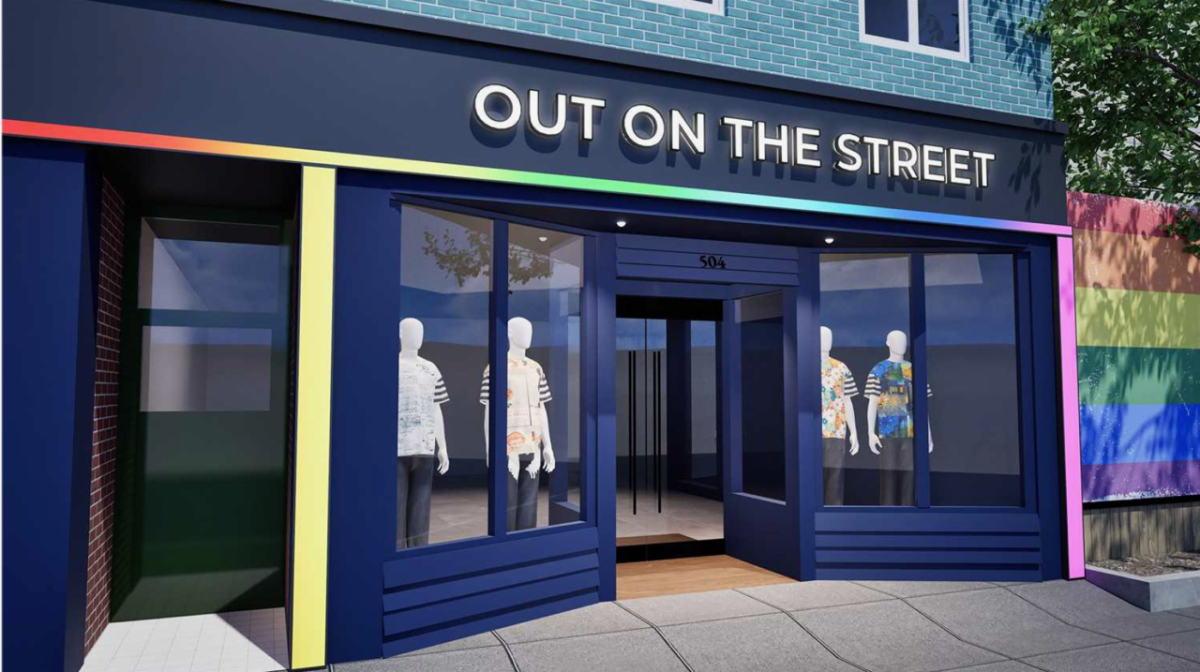
Rendering of the future Out on the Street store at 504 Church Street in Toronto. Rendering: Out on the Street
The Long-Vacant Space at 504 Church Street
The future home at 504 Church Street brings its own layered history. The building was once home to George’s Play, a bar that closed more than a decade ago, and before that an establishment called Gatsby’s. It has remained dark for 13 years.
The space was initially marketed toward restaurants and bars, but a residential tenant upstairs wanted a quieter use. “The occupant said it would be nice to have a quieter establishment so they could sleep,” Azzopardi says with a laugh. “Everything lined up at the right time for us.”
The building is privately owned and not part of the planned redevelopment that will eventually affect nearby properties, including areas once occupied by Boutique Bar and bar Crews & Tango. While future construction may occur around the site, the downturn in Toronto’s condominium market has slowed those timelines considerably, giving Out on the Street stability for the foreseeable future.
Rainbow Crosswalk on Church Street in Toronto. Photo: The Anndore House Hotel
Design Vision and Store Experience
The new storefront will feature a striking LED rainbow panel that Azzopardi describes as “radiating light through the street.” The contracting team is currently working on exterior and interior designs, with the store aiming for a warm, homelike environment that still reflects the brand’s playful and eclectic product mix.
“We are escalating the look while keeping that homey feel,” he says. “It is going to be incredible to be right on street level. So many people walk by our current store and do not even realize we are there because they do not look up the stairs.”
The interior layout has been carefully planned to ensure most of the existing product assortment can be carried over. Some space will be freed up following the closure of major vendor Andrew Christian, though the store will continue to curate apparel, streetwear, fetish items, Pride merchandise, greeting cards, gifts, and adult products that reflect the community’s needs and preferences.
A customer survey will launch soon to help shape the product direction. “We really want customer voices to drive our business,” Azzopardi says. “What do you need, and we will try to make it happen if possible.”
He also points to challenges unique to LGBTQ+ retailers. Some mainstream brands decline to work with stores that sell adult products, even though Out on the Street has been a respected fixture for more than three decades. “There are brands that do not want to be associated with us because we sell novelty items. It is unfortunate, but it is something we navigate every year.”
Rendering of the future Out on the Street store at 504 Church Street in Toronto. Rendering: Out on the Street
Staying in the Heart of the Village
With the Church-Wellesley Village facing cycles of change, including business closures, nightlife shifts, and ongoing debates about redevelopment, the Out on the Street relocation is viewed internally as an investment in the area’s future. Community geography was a critical factor in the decision.
Azzopardi says he and Kelly have asked themselves whether a new LGBTQ+ retail hub is emerging elsewhere in the city, such as Queen West. They have not found an alternative district that holds the same cultural and commercial weight as Church Street. “As long as Pride continues to happen at Church and Wellesley, we are good,” he says. “The core of the Village is still the core.”
Out on the Street has committed to at least six years at the new location, with optimism that the revitalized corner of Church and Alexander will serve the business well for many more.
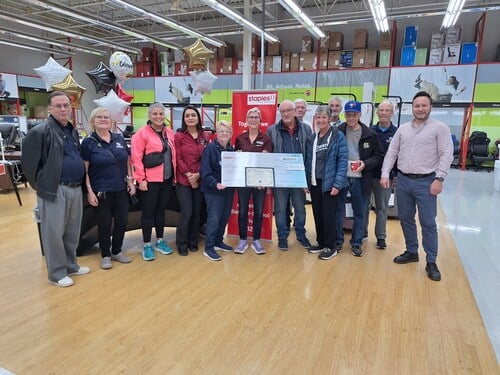
Staples Canada has closed out the 20th anniversary of its annual School Supply Drive by surpassing its $1-million fundraising goal, a record-breaking year that brings the program’s total community impact to more than $18 million since its inception in 2005. The annual Staples School Supply Drive supports students across Canada by ensuring they head back to school equipped with the supplies they need to succeed. (CNW Group/Staples Canada ULC)
Staples Canada has closed out the 20th anniversary of its annual School Supply Drive by surpassing its $1-million fundraising goal, a record-breaking year that brings the program’s total community impact to more than $18 million since its inception in 2005. The annual Staples School Supply Drive supports students across Canada by ensuring they head back to school equipped with the supplies they need to succeed, said the retailer.
Running from July 28 through September 28, the 2025 annual Staples School Supply Drive invited customers at Staples stores across Canada to add donations to their purchases in support of the Kiwanis Foundation of Canada (Ontario) and United Way Centraide (rest of Canada). One hundred per cent of donations raised went to supporting students and families in their local communities overcome barriers to learning, it said.
“Surpassing our fundraising goal is a testament to what’s possible when our customers, store teams, and charitable partners come together with a shared purpose. We’re not just providing supplies, we’re helping families feel supported and students feel seen. That’s what makes this initiative so meaningful.”
Staples said it is also continuing its commitment to supporting health equity across the country this month with the return of the annual “Gift of Giving” campaign, in support of Even the Odds. New for 2025, this exclusive candle and room spray gift set is available in-store for $9.48, while supplies last. All proceeds from the sale of this gift that gives back supports Staples’ Even the Odds partnership with MAP, supporting its mission of building vibrant, healthy communities across Canada.
In addition to purchasing the gift set, on Giving Tuesday, December 2, customers are invited to make an extra donation to support improving health equity for Canadians from coast-to-coast. Every dollar contributed on this special day of giving will go directly to Even the Odds, amplifying the impact and helping to drive meaningful change in communities across Canada, explained the company.
This year’s annual Staples School Supply Drive extended beyond traditional in-store donations through meaningful community partnerships that brought the initiative directly to families in need. In Edmonton, Staples partnered with the City of Edmonton to launch the city’s first-ever Stuff-a-Bus for Schools campaign in support of United Way. This new initiative invited Edmontonians to donate school supplies at city-run centres and Staples locations, culminating in a city-wide collection event with buses stationed outside all eight Staples stores, noted the retailer.
Dan Clement
“At a time when so many families are feeling the strain of rising costs and financial uncertainty–as highlighted in our recent United Way Centraide Canada–Léger poll–Staples Canada’s support has never been more vital,” said Dan Clement, President and CEO, United Way Centraide Canada.
“This year’s record-breaking School Supply Drive is a remarkable testament to Staples’ unwavering commitment to helping students thrive. For 20 years, their partnership has equipped children with the tools and confidence they need to succeed, while helping ease the burden on families and strengthen communities across Canada.”
In Toronto, Staples said it brought its commitment to giving back directly to families at SickKids Hospital through a special stop on the Back to School Made EASY Bus tour. The mobile experience delivered curated school supplies to children and families identified through the hospital’s Sponsor a Family program, ensuring that children facing health challenges could start the school year with the same sense of readiness and confidence as their peers.
“Each year, Kiwanis Clubs work with Staples to provide school supplies to deserving schools. This year, we raised over $383,000 across Ontario stores, giving local students, teachers and families the tools they need to thrive,” said Marjorie Buck, Region Trustee, Eastern Canada and the Caribbean District, Kiwanis International. “Our clubs value working alongside our partners at local Staples stores, and are proud to see firsthand the positive impact this partnership brings to the communities we support.”
The annual Staples School Supply Drive is part of Staples Canada’s commitment to making a positive impact by promoting equity, preserving the environment, and supporting education. In addition to this fundraising initiative, Staples said it is a proud partner of MAP through Even The Odds, a fundraising and awareness initiative that aims to eliminate critical gaps in health equity, as well as industry-leading innovative partners that inspire us to work even harder toward a greener future for all, including HP, TerraCycle, Tree Canada, Call2Recycle, eCycle and more.
It was a landmark year of growth for Kinton Ramen, which continued to expand its footprint across Canada and beyond as demand for authentic Japanese dining experiences soar.
Known for its bold flavours and commitment to quality, Kinton Ramen has transformed the ramen dining scene since opening its first standalone location in 2012. Over the past year, the brand has celebrated multiple grand openings across five provinces, with even more locations set to open in 2026.
“Each new restaurant gives us the opportunity to share our craft with communities that are eager to experience and embrace our take on authentic Japanese ramen – and as a result, we’re growing faster than ever.”
As Kinton Ramen continues to strengthen its presence in new markets, its success underscores the rising appetite for high-quality, experiential dining at accessible prices – setting strong momentum for another exciting year of expansion in 2026.
Kinton Ramen has surpassed 50 locations across Canada and is preparing for what it expects to be its biggest expansion year yet, according to White.
White said the company “definitely broke 50 this year” and confirmed 14 new restaurants opened in 2025, the most in a single year for the chain.
She added that “at least 20” new locations are planned for 2026.
“We’ve got lots of franchisees that are looking for real estate all over the country,” she said, noting there are “at least 12 under development right now that will definitely be open,” with hopes of securing sites for eight additional stores.
White said the company is targeting real estate “primarily in southwestern Ontario, the Golden Horseshoe and the east along the 401 corridor from Scarborough to Ottawa.”
She added that Kinton Ramen is also looking north to “Sudbury, Thunder Bay, any of the bigger suburban centres.”
White attributed the chain’s momentum to both customer demand and franchisee confidence. “Ramen is a great space that people want to enjoy,” she said. “The franchisees that are in the system are our main source of growth. They’re seeing tremendous success, so they’re wanting to open more and more and more.”
Photo: Kinton Ramen
She said Kinton differentiates itself through accessibility and appeal to a broad demographic. “It is very accessible, very affordable, and attracts a multitude of guests,” she said.
White noted the brand has built a strong following among young diners as well. “I guess because it’s on trend,” she said, adding that with her own teenagers, “they love ramen. I think Kinton is becoming a household name.”
Consistency across locations is another factor White highlighted. “We’ve been able to get a great, consistent product so it tastes exactly the same, whether you’re sitting in the original location at Baldwin in Toronto or on Vancouver Island,” she said.
Looking to 2026, White said the company expects to enter new markets following expansions in Edmonton, Calgary, Vancouver Island and Winnipeg. “The ones that are already under development and are going to open fairly early in ’26 are Nanaimo, Quebec City, hopefully Sudbury,” she said.
White added that Kinton Ramen will “be targeting eastern Canada next year, east of Quebec,” and said customers can expect the same core menu while seasonal specials continue to rotate. “It will be the ramen that you can count on,” she said.
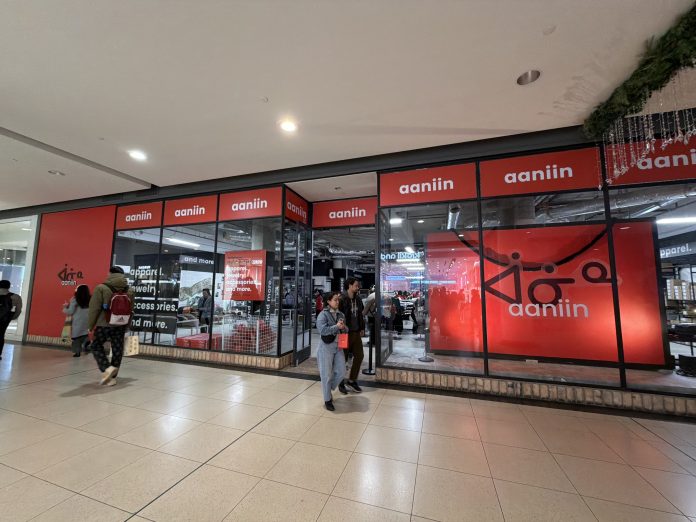
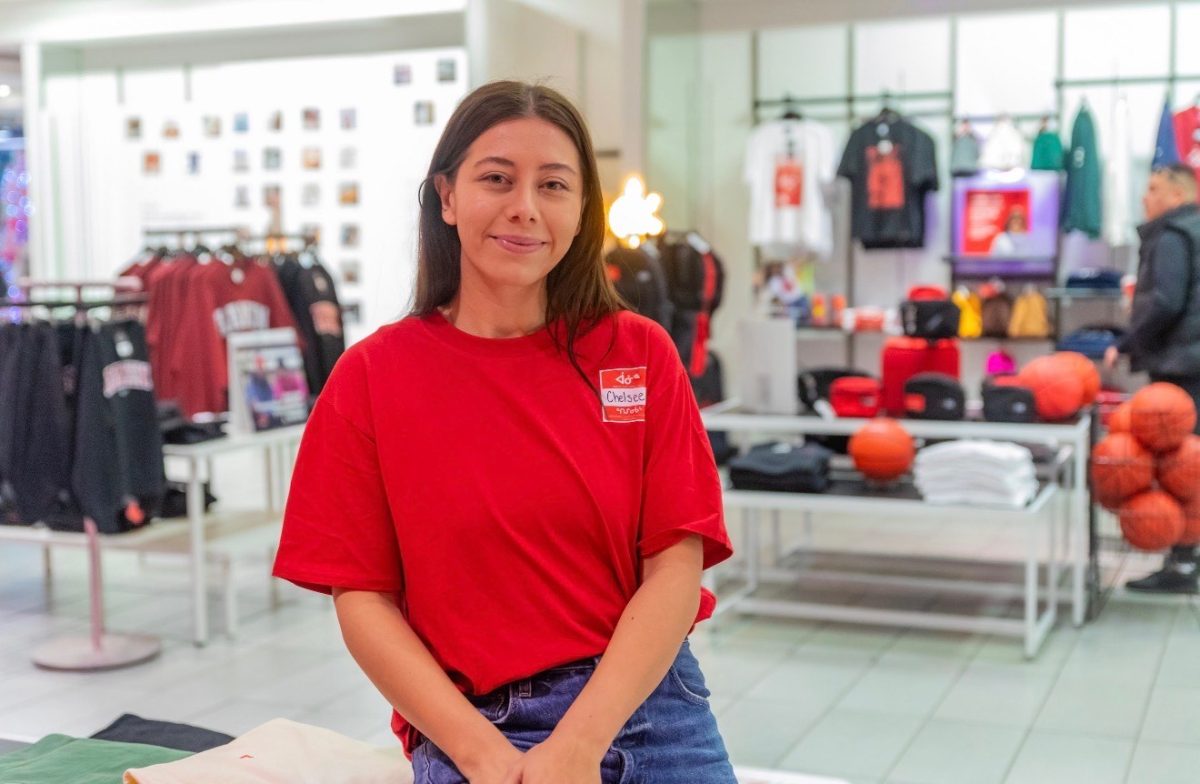
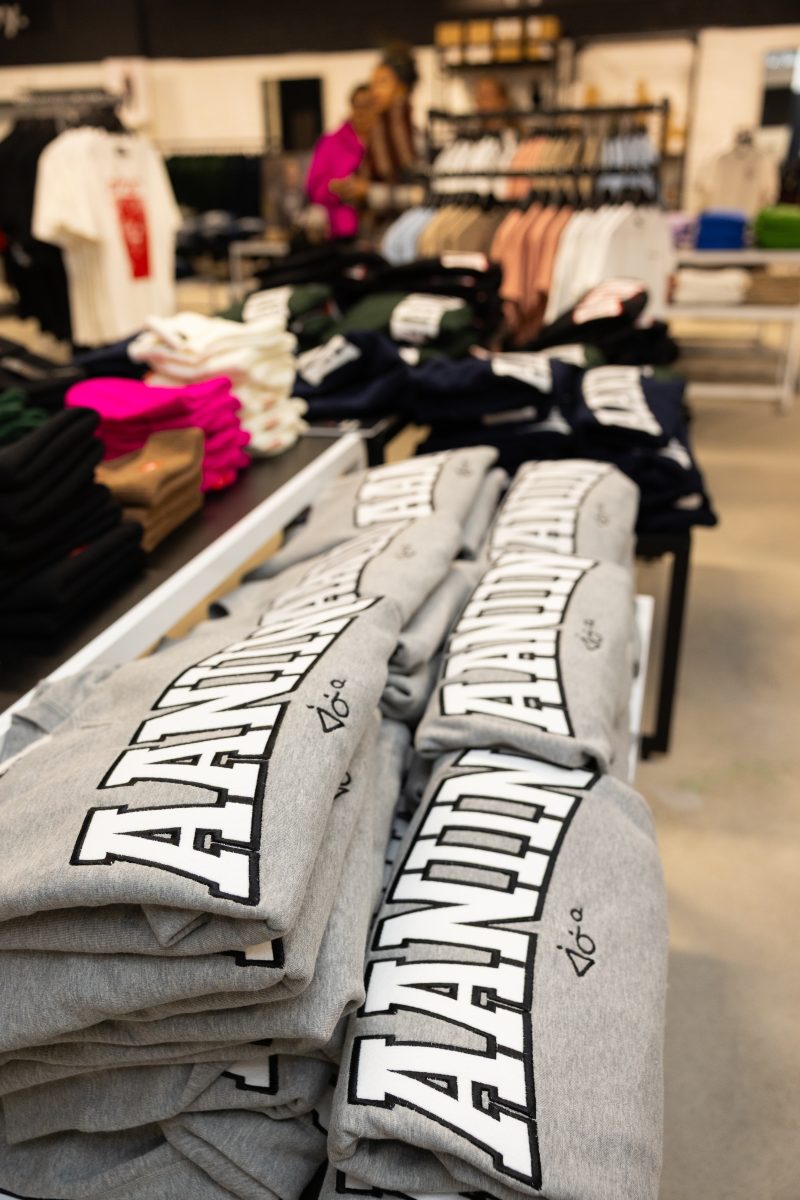
Aaniin at CF Toronto Eaton Centre has re opened for its second year, bringing a renewed vision for Indigenous retail leadership to one of Canada’s busiest shopping destinations. The 6,000 square foot pop up, located in the former Free People space on the second level, features more than 40 Indigenous owned brands across fashion, beauty, art, wellness, and home goods. It marks another major milestone for Anishinaabe entrepreneur Chelsee Pettit, whose mission driven approach continues to reshape how Indigenous commerce is represented and supported in Canadian retail.
Founded in 2021, Aaniin has grown from an early design concept into a full scale retail platform, a consulting business, and now a capacity building engine for Indigenous creators across the country. As Pettit described in an in depth interview with Retail Insider, this year’s pop up is not just a store. It reflects years of hands on learning, community investment, and a commitment to building long term sustainability for Indigenous brands.
“We are not just building a store, we are building an economy,” Pettit said. “True reconciliation lives in ownership and opportunity.”
With Aaniin CF Toronto Eaton Centre acting as the company’s most high profile retail setting, Pettit says this year’s expansion focuses on strengthening systems and supporting Indigenous entrepreneurs who are ready to grow into larger markets.
A Focused Assortment and a Shift Toward Capacity Building
This year’s edition of Aaniin CF Toronto Eaton Centre features about 45 Indigenous brands, a curated number that reflects Pettit’s strategic decision to scale responsibly. Last year the store showcased roughly 65 vendors, but Pettit said the team has shifted toward depth over breadth to ensure that creators receive meaningful support rather than short term shelf space.
“We have less in the store this year to really focus on building out capacity and making sure that our systems and processes are being streamlined,” Pettit explained. “Sometimes when that happens, we cannot run with everybody, so we have to cut back a little bit.”
The vendor selection process is based not only on product quality but also on readiness. After four years of running large scale retail pop ups, Pettit and her team found themselves informally mentoring dozens of small businesses with everything from pricing to packaging to fulfillment. That work has now evolved into a structured part of the business.
Chelsee Pettit. Image: aaniin
“We handhold a lot of people and we are running 50 other businesses and not our own,” she said. “So this year we are trying to run our own business for the first year.”
Aaniin now offers three tiers of vendor engagement, including a cohort based model where small makers pay to receive four to five months of hands on guidance. Participants learn how to optimize systems, build a self sustaining website, and partner with third party distribution so they no longer have to ship products from their homes.
“For a lot of small businesses, especially Indigenous businesses, that alone is a huge step,” Pettit said. “We have been able to do this ourselves, so now we can teach others.”
The company’s consulting arm is staffed by several members of her full time team, whom Pettit describes as “masterminds” who handle operations, logistics, and retail support daily.
A Pop Up Model Rooted in Growth and Resilience
While Aaniin has become synonymous with CF Toronto Eaton Centre, its retail journey has included several locations across the GTA. Pettit operated her first store at Stackt Market for about two years, a period she describes as essential but not ultimately scalable for the brand.
“It just was not the right environment for us to really grow,” she said. “It was something that helped me get my foot in the door, but it did not make sense for profitability long term.”
A major turning point came with a Square One pop up in late 2022 or 2023, where Pettit operated a short term retail space entirely on her own. She ran the store for forty days without a single employee and generated one hundred thousand dollars in sales. “I just did what I had to do,” she said.
In 2024, Aaniin CF Toronto Eaton Centre opened its first edition of the Indigenous pop up, generating $550,000 in sales in four weeks. Pettit employed twenty five Indigenous staff members and paid out more than $150,000 in wages.
This year’s return is entirely self funded apart from modest sponsorship from Mastercard, Meridian Credit Union, and Payworks. Pettit did not receive grants or government funding for the 2024-25 edition of the pop up.
“This year is entirely on my own dime, which is a lot of risk for a very small business,” she said. “But when you are trying to support your community, and you see how much potential there is, you find a way.”
Despite the financial pressure, Pettit says the team is steady, nimble, and highly solution oriented. “I can come up with a solution for anything within half a second,” she said. “We pivot very quickly.”
aaniin at CF Toronto Eaton Centre. Photo: aaniin
Operational Hurdles and the Push Toward Year Round E Commerce
Running the Aaniin CF Toronto Eaton Centre pop up requires managing more than five thousand SKUs across a warehouse, online channels, and the physical store. Pettit said balancing in store and online inventory is among her biggest challenges.
“These are the everyday obstacles and hiccups that we go through as a small Indigenous retailer who is trying to support other Indigenous brands and businesses,” she said.
While Aaniin generated roughly two hundred and fifty thousand dollars in online sales last year, Pettit said that growth happened “on accident” because she spends almost nothing on marketing. She invests instead in inventory and people.
“We have spent zero money on marketing, zero money on advertising, and basically zero on boosting posts,” she said. “I believe in investing in inventory and in people.”
The company typically saves revenue from January to June, then plans for the back half of the year. Pettit hopes this will be the first year Aaniin can maintain a full time online store, pending inventory capacity and system improvements.
“If I cannot do something well, I do not do it at all,” she said.
Planning for the Future and Supporting Indigenous Growth
Pettit’s long term focus is on building capacity within the Indigenous business community rather than expanding Aaniin CF Toronto Eaton Centre into a permanent year round store. While a longer stay at the Eaton Centre is being discussed, even a short term extension would primarily support operational transition rather than retail expansion.
“It is more that I do not want to be packing boxes in my apartment in January,” she said with a laugh.
Instead, Pettit’s primary goal is to support as many as one hundred Indigenous brands through cohort programming and consulting, helping them become operationally self sustaining.
“If I am bootstrapping a hundred brands on my own, it is not going to go very far,” she said. “But if I can amplify already successful Indigenous businesses, then my job will become a lot easier.”
She encourages Indigenous product based vendors to apply for the cohort, which will soon become the primary path for entering the Aaniin retail ecosystem.
“I can assure all of the Indigenous businesses that almost no-one is retail ready,” she said. “The cohort is essential for learning our systems.”
A Growing Digital Platform and New Partnerships
This year also marks the launch of the Bimaadiziwin Marketplace, a digital platform created through the Aaniin Business Growth Cohort and debuting on Black Friday. It will support twelve Indigenous entrepreneurs with year round online visibility and a structured pathway to scale beyond the temporary CF Toronto Eaton Centre space.
Corporate partners including Mastercard, Meridian Credit Union, and Payworks have supported the 2024 25 pop up, contributing to operational stability and increased visibility for Indigenous brands.
“Small businesses are the heartbeat of our communities, and Indigenous entrepreneurs are leading with extraordinary creativity and resilience,” said Nishant Raina, Vice President of Small and Medium Enterprises at Mastercard Canada. “When we invest in connections and create space for more Indigenous voices, we spark innovation and prosperity that uplifts everyone across Canada.”
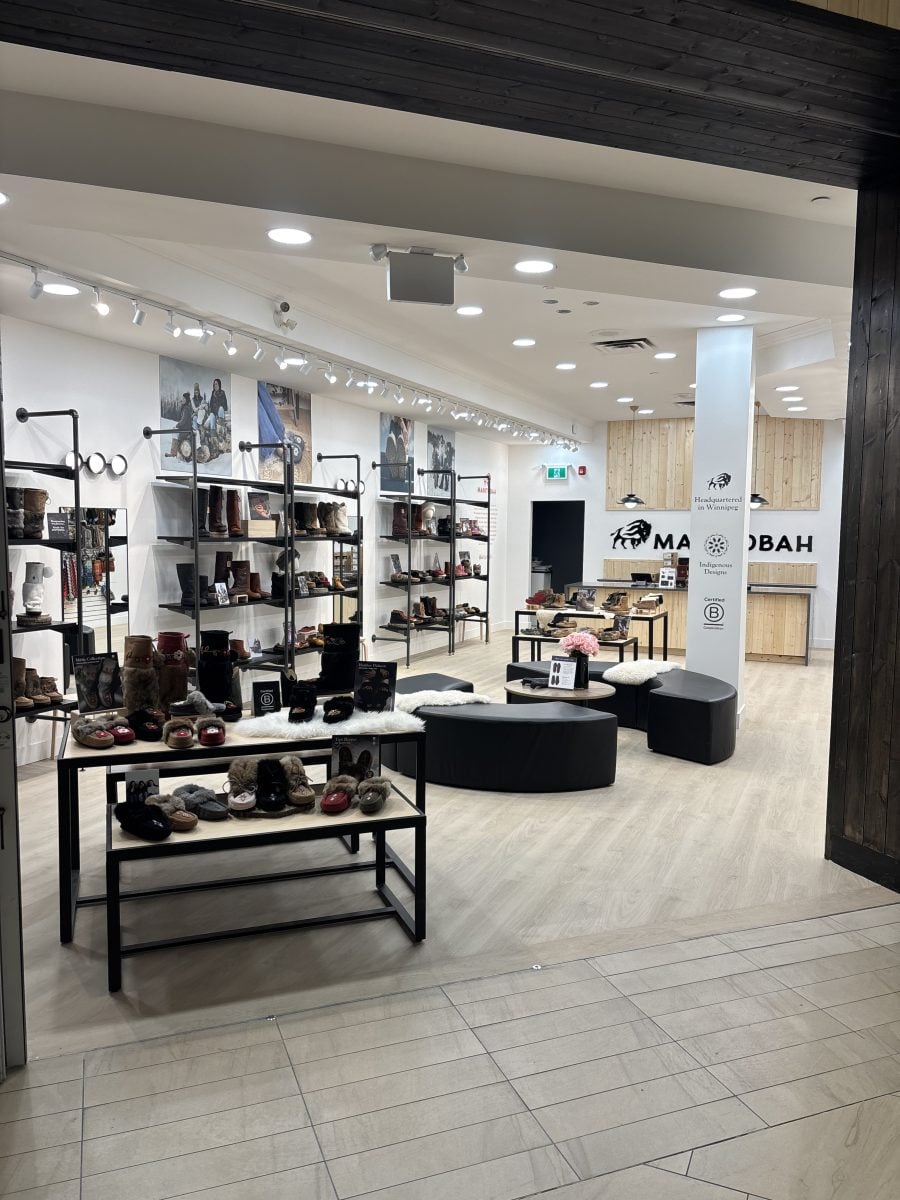
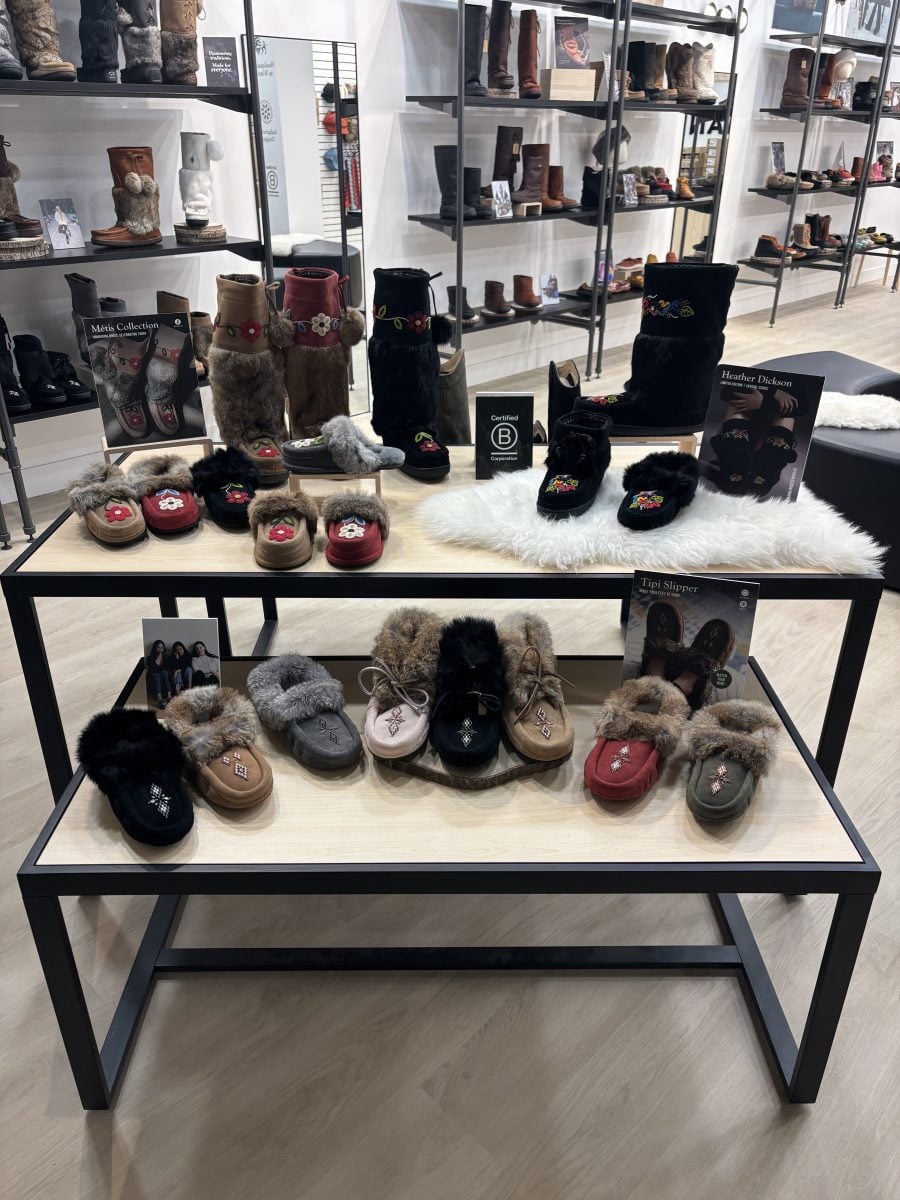
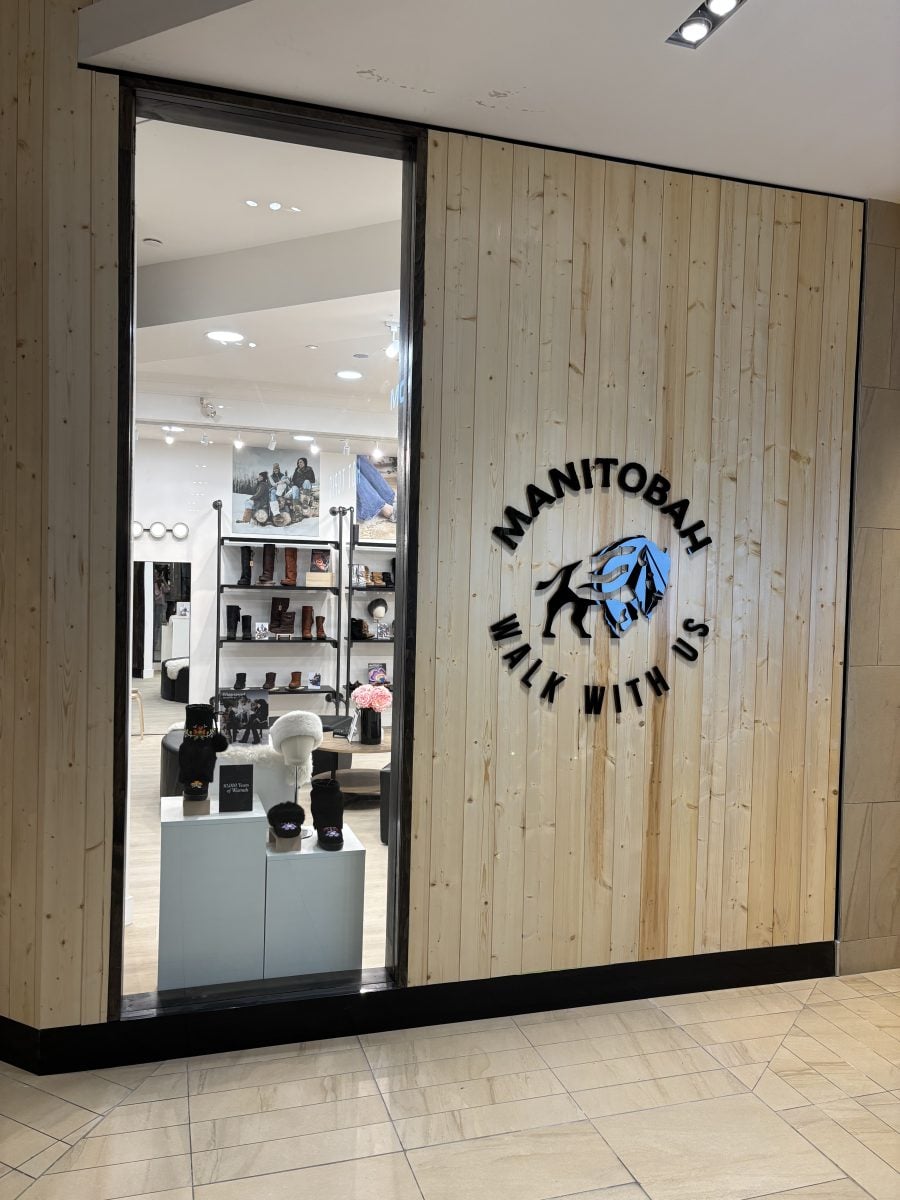
Manitobah, the Indigenous-rooted retail brand known for its mukluks, has opened a permanent store in Saskatoon’s Midtown mall after what the company describes as strong community support and sales at previous temporary locations.
Vos said the decision to establish a full-time presence at Midtown followed successful seasonal stores in the centre, including a year-long temporary location in 2024.
“We just had such a wonderful reaction from the community and such strong sales there that it made sense to do a permanent location,” she said.
As the company enters the winter season, Manitobah now operates seven stores.
Photo: Manitobah
“Five are pop ups,” Vos said, noting that only the new Saskatoon location and the permanent store at The Forks in Winnipeg operate year-round.
This year’s pop-up shops are in Kingsway Mall in Edmonton, Prairie Mall in Grande Prairie, Southcentre Mall in Calgary, Cornwall Centre in Regina, and Intercity Mall in Thunder Bay.
Vos said the Kingsway location was initially intended to become permanent but the company “decided against that one.”
Vos said Manitobah’s reliance on temporary shops aligns with the brand’s seasonal demand patterns.
“Manitobah is historically known for our winter footwear brand,” she said.
While the company has expanded into summer footwear in recent years, “we still predominantly are a winter brand, and so doing that pop up model is still beneficial… to get there in the peak season of snow.”
When choosing new pop-up markets, Vos said the company looks at a combination of past performance and online demand.
Photo: Manitobah
“Some of it is historical, where we had success in a previous time frame,” she said. “We look at also our e-comm business in a specific geographical region as well, and where we need to be.”
While Manitobah operated 14 pop-ups last year, Vos said the company opted for a smaller footprint this season due to its investment in the permanent Saskatoon shop.
She added that future permanent locations remain a possibility.
“We’re not closed off to growth,” she said, noting the company’s strategy centres on its “three pillars” of e-commerce, retail and wholesale.