The partnership, facilitated by OpenMind Media, brings together The Morning Show, which airs on Global TV, and President’s Choice, a brand under Loblaw Companies Limited. The collaboration aims to promote PC Coffees and beverages across multiple platforms.
Jordan Schwartz
“Corus Entertainment and The Morning Show are thrilled to partner with President’s Choice as our official beverage sponsor,” said Jordan Schwartz, Head of Morning Programming at Corus. “As the #1 choice for morning television in Canada, we know our viewers share our appreciation for the taste, quality, and innovation that Canadians have come to love from PC.”
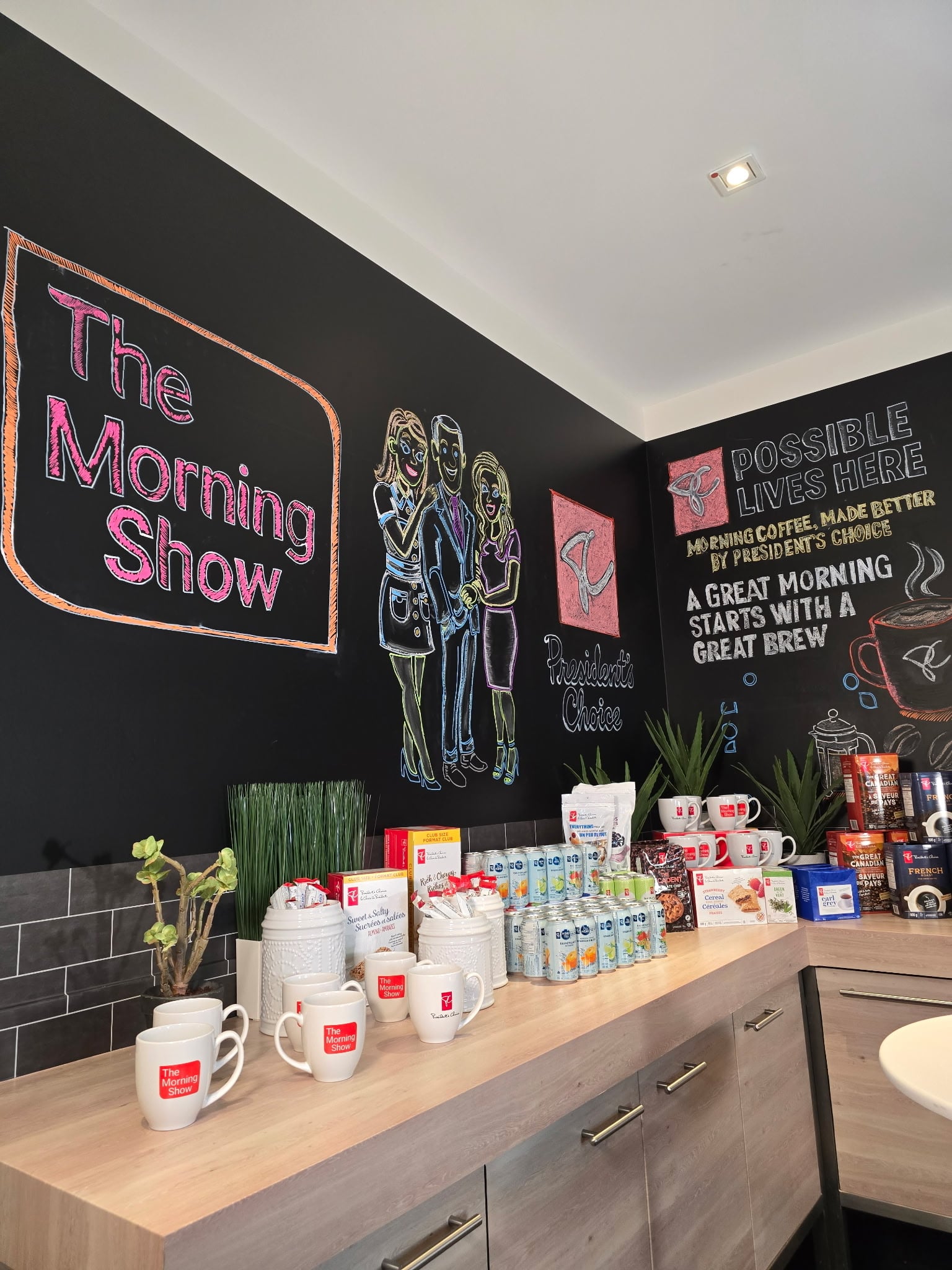
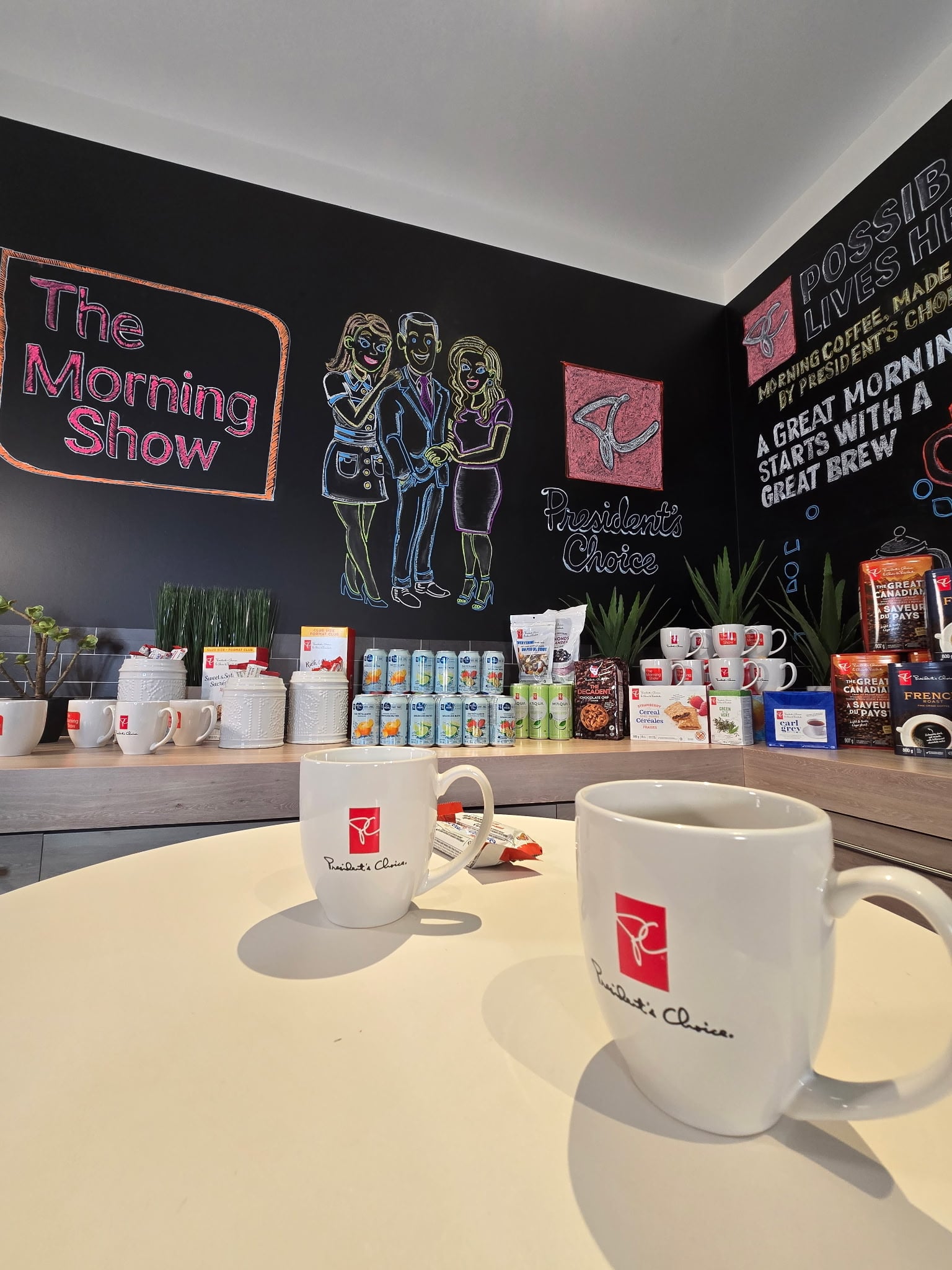
The campaign will include regular features, custom segments and a new “Beverage Cam” — a weekly feature filmed in the show’s Green Room, which has recently been renovated with joint branding from PC and The Morning Show. The segment will highlight upcoming guests in what the show describes as a dynamic and engaging format.
Lindsay Cook
“We are excited to partner with The Morning Show, a program that, much like a great cup of PC coffee, brightens and enriches the start of many Canadians’ day,” said Lindsay Cook, Vice President, Control Brand, Loyalty & Joe Fresh Marketing, Loblaw Companies Limited. “At President’s Choice, we’re always looking for meaningful and authentic ways to connect with Canadians and our partnership with The Morning Show truly embodies that. This collaboration provides an incredible platform to highlight why PC coffee offers gourmet coffee, at the exceptional value our customers expect, while being roasted in Canada.”
“To make a meaningful connection with the audience, we focused on creating emotionally engaging content and running it across linear, digital and social platforms,” said Athena Best, Associate Director at WPP Media. “Instead of a single launch, we wanted to have sustained storytelling to spark conversations and ensure what we produced resonated authentically with Canadians.”
Photo: Global TV
Hosts Carolyn MacKenzie, Jeff McArthur and Morgan Hoffman will showcase the partnership weekday mornings on The Morning Show, airing on Global TV from 9–10 a.m. ET/PT and 10–11 a.m. AT.
Schwartz said the show features the top news stories of the day, lifestyle segments and big-name celebrity guests along with entertainment news from Hoffman.
“Since its inception in 2011, The Morning Show has grown significantly, reaching audiences of nearly 1.2 million every week coast to coast, and seeing an impressive 17% audience increase year-over-year. In the key A18+ demographic, The Morning Show holds the top spot as the #1 Canadian News/Lifestyle Morning Show nationally. It delivers nearly double the audience of CTV’s Your Morning, and more than twice the viewers of Citytv’s Breakfast Television. It also consistently outperforms daytime favourites like The Social and The Good Stuff with Mary Berg,” he said.
“Just this past year, Carolyn Mackenzie, Jeff McArthur, and Morgan Hoffman were nominated for a Canadian Screen Award (CSA) for Best Host, Talk Show or Entertainment News Program.
Photo: Global TV
“What started as a local morning news program has evolved into a national morning show with consistent growth in viewership, audiences and reach. With a perfect blend of news of the day, the biggest names in entertainment and Canada’s best lifestyle experts, Canadians continue to choose us as their first choice for news and lifestyle content when they wake up, and that speaks to just how impactful of a program it is.” The Morning Show’spartnership with President’s Choice is an opportunity for it to unite Canada’s #1 morning news and lifestyle program with a brand that Canadians know and love, explained Schwartz.
“Through the What’s Brewingsegment each week, we blend PC’s signature coffee brands with uplifting news stories of the day, creating a consistent presence and natural connection between storytelling and their product,” he said.
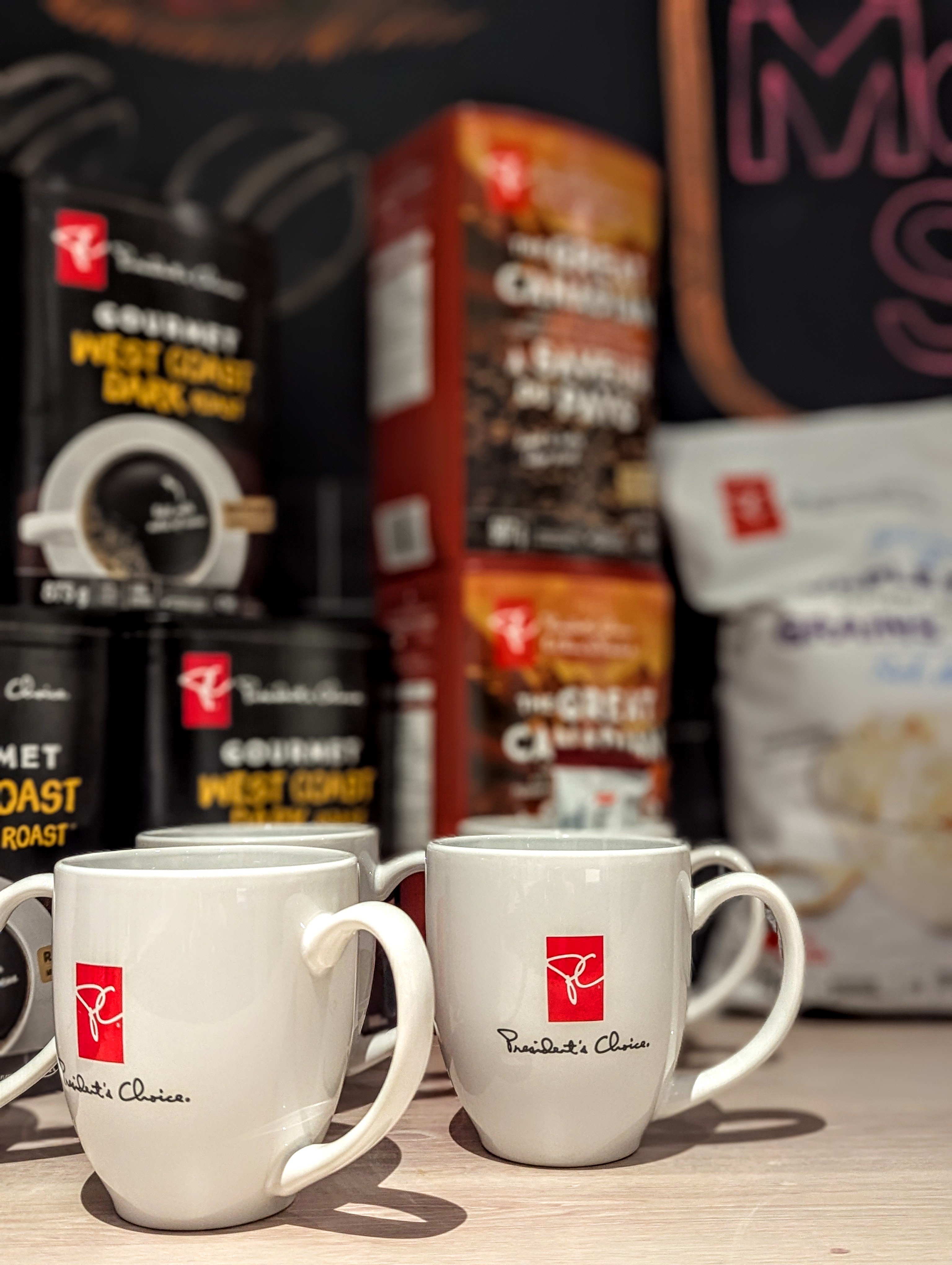
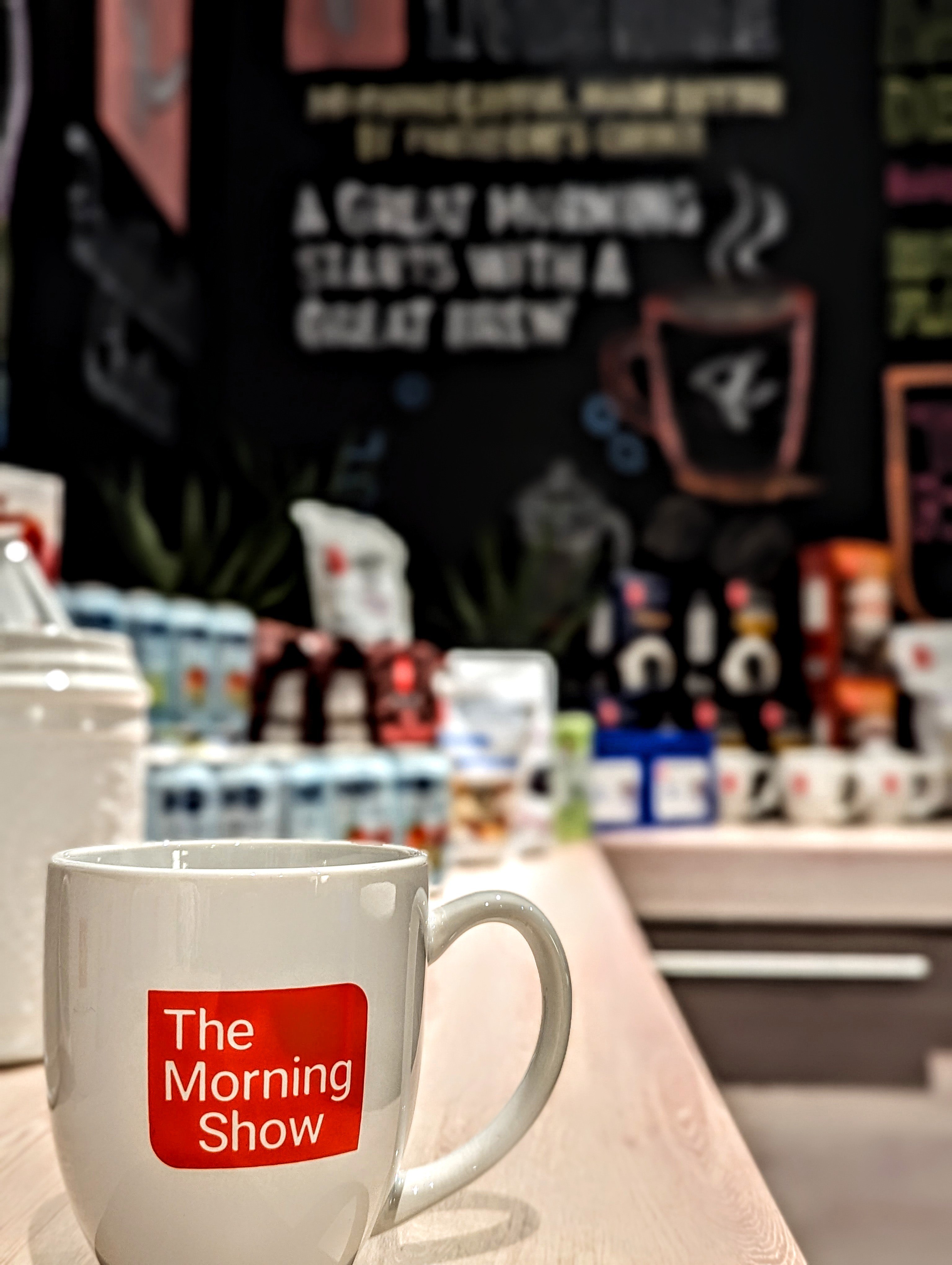
“In addition, PC will leverage custom integrated segments from our show in November and December to highlight key items from the PC Insider’s Report Holiday Edition. Beyond broadcast, the partnership extends into The Morning Show’s greenroom, where we’ve created a custom-branded PC Coffee Corner. This includes product displays, take-home offerings for guests, and fresh PC coffee.“The coffee and Consumer Packaged Goods (CPG) categories are extremely competitive right now, and by partnering with The Morning Show – #1 news and lifestyle morning program in Canada – PC is able to maintain a strong, daily presence that keeps their brand top of mind. By combining uplifting stories and a high-traffic environment, we are able to reinforce brand familiarity, ultimately driving brand lift at a time when differentiation in the category is more critical than ever.”
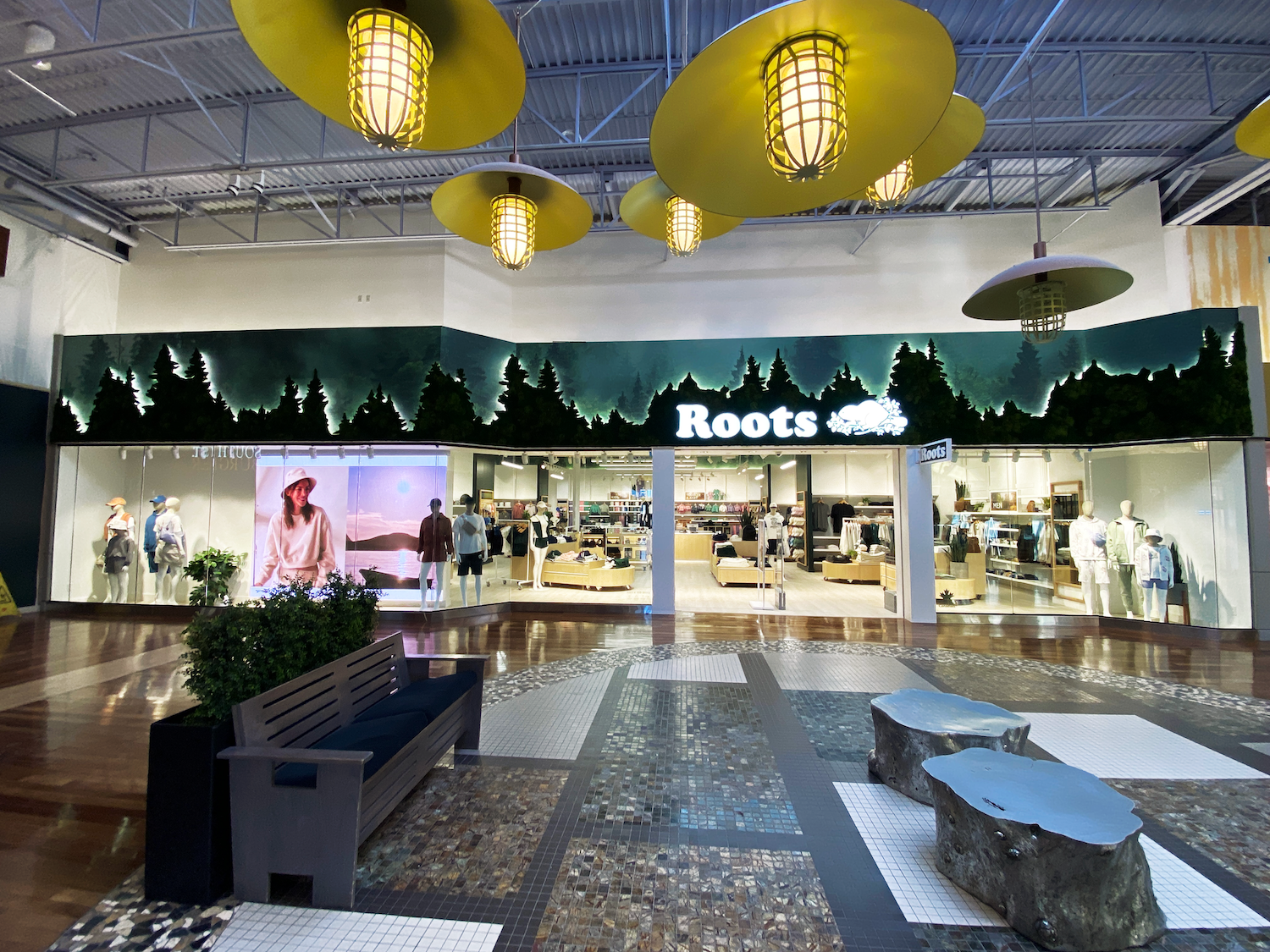
Canadian lifestyle retailer Roots continues to reinvest in its national retail footprint with the relaunch of two significant stores: Mont-Tremblant, which reopened on July 18, and Vaughan Mills, which celebrated its transformation on April 17. Both locations represent the company’s evolving vision, one that honours its heritage while introducing a refreshed and modernized brand experience tailored to contemporary shoppers.
These upgrades follow a broader strategy under the leadership of President and CEO Meghan Roach, who has been guiding Roots through a period of store renovations designed to balance tradition with innovation.
Meghan Roach
A Renewed Commitment to Heritage and Community
The Mont-Tremblant store has long held symbolic importance for Roots, serving not only as a high-volume location but also as a destination that captures the brand’s connection to nature and outdoor living. According to Roach, maintaining that legacy while modernizing the space was a central priority.
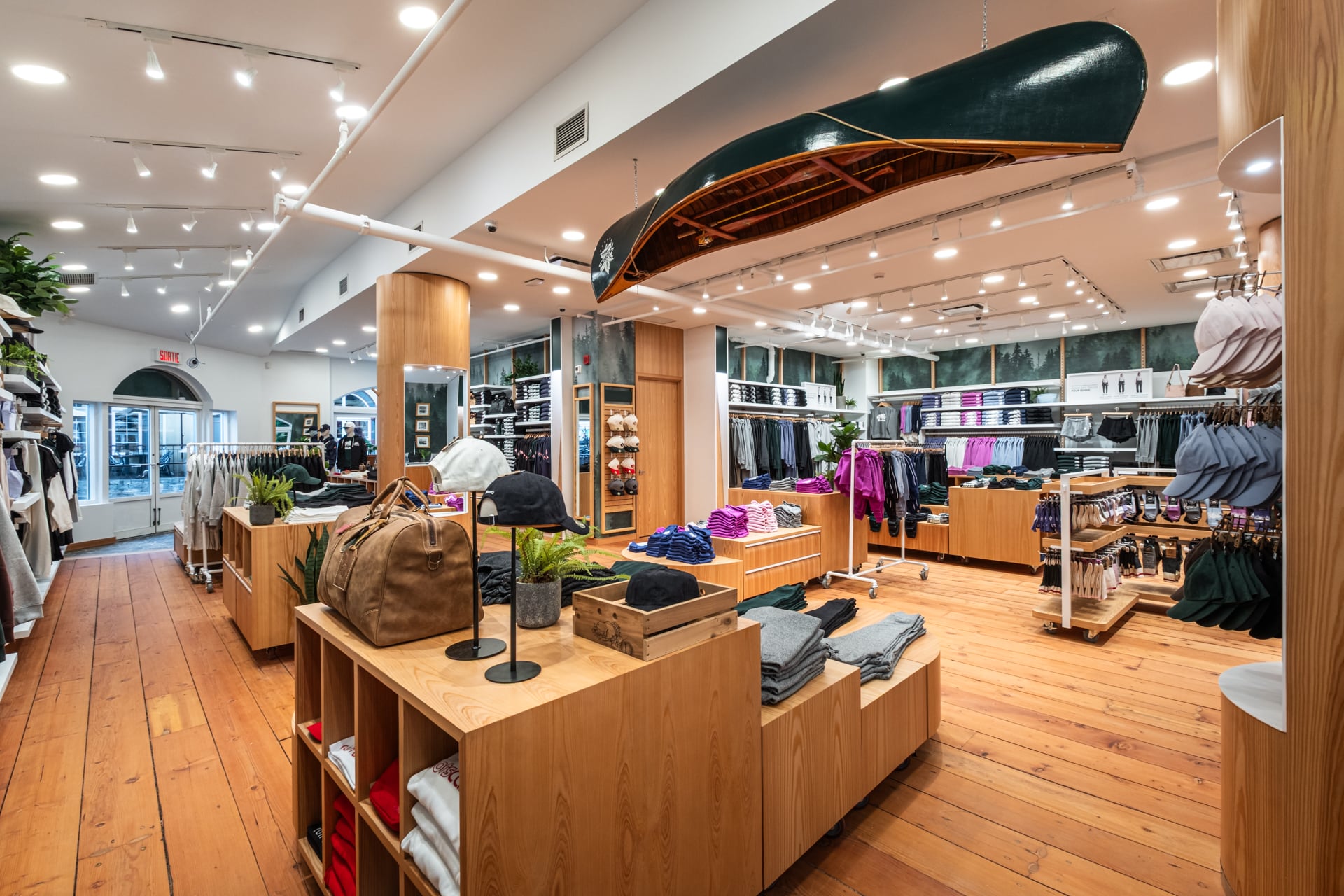
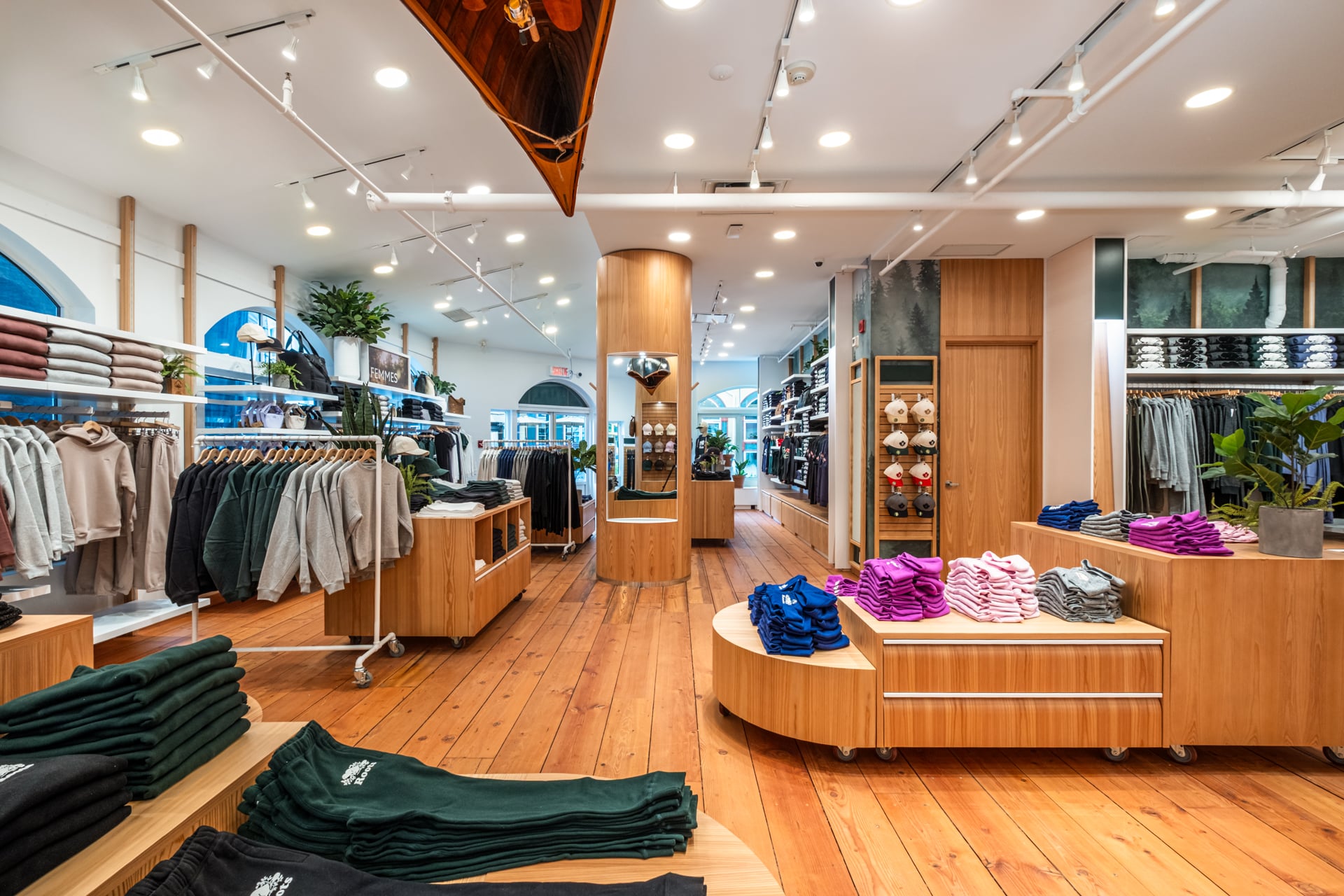
“We’ve been a member of the Mont-Tremblant community for many, many years,” she explained. “It was time for us to put a new, fresh face forward. You’re going to see some aspects of the old store left there, like the beautiful wood floors, which have been refreshed, alongside lighter, brighter colours, digital screens, and nods to nature that make the store feel alive again.”
The redesign includes moss installations and brand touchpoints that tie back to Roots’ iconic beaver logo, blending the rustic and the modern. For Roach, these elements serve as visual reminders of the company’s Canadian identity while ensuring the retail space feels contemporary.
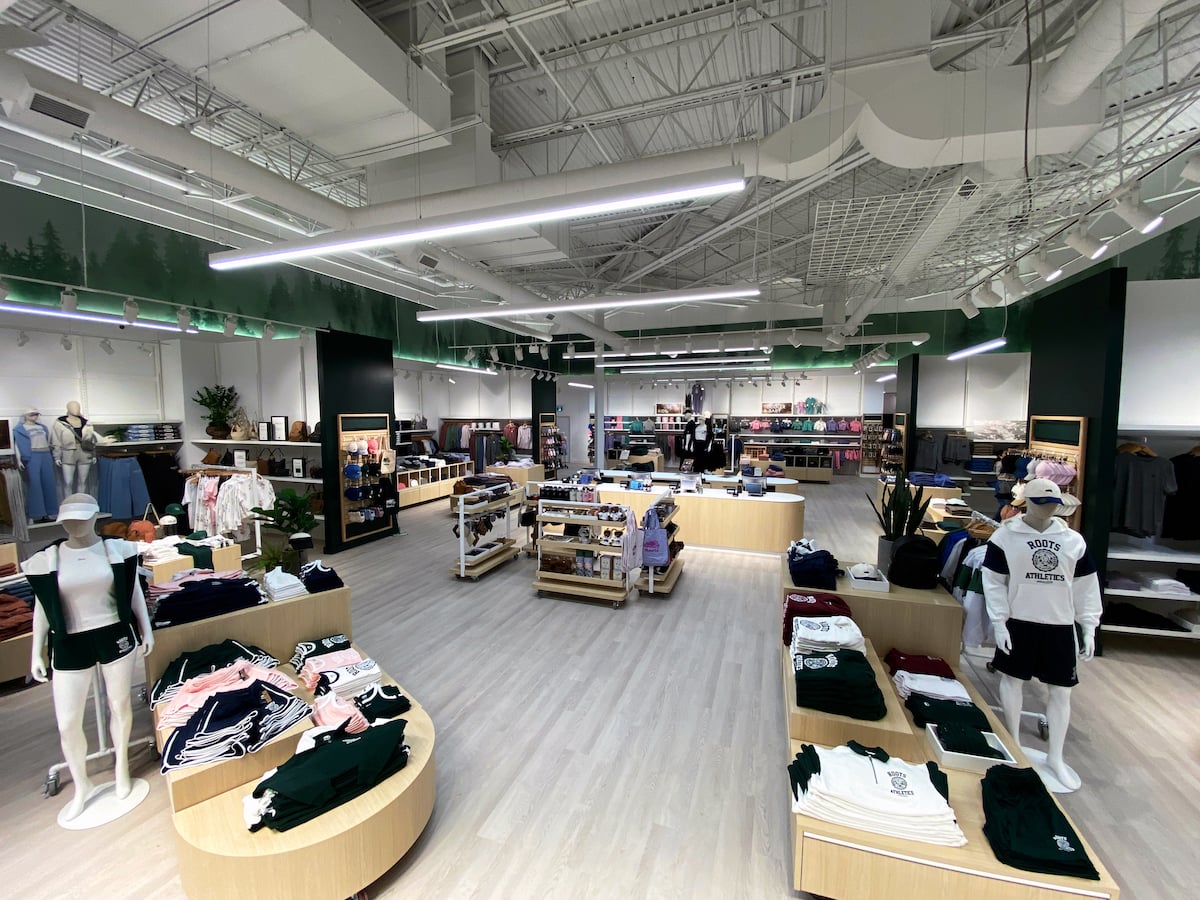
Roots store at Vaughan Mills. Photo: Roots
Vaughan Mills: Reinventing the Mall Experience
Roots’ Vaughan Mills location is one of the company’s busiest mall-based stores, and its renovation underscores the brand’s commitment to enhancing its suburban and outlet presence. The refreshed store integrates many of the design elements seen in other recent flagships, but with adaptations suited to the shopping centre format.
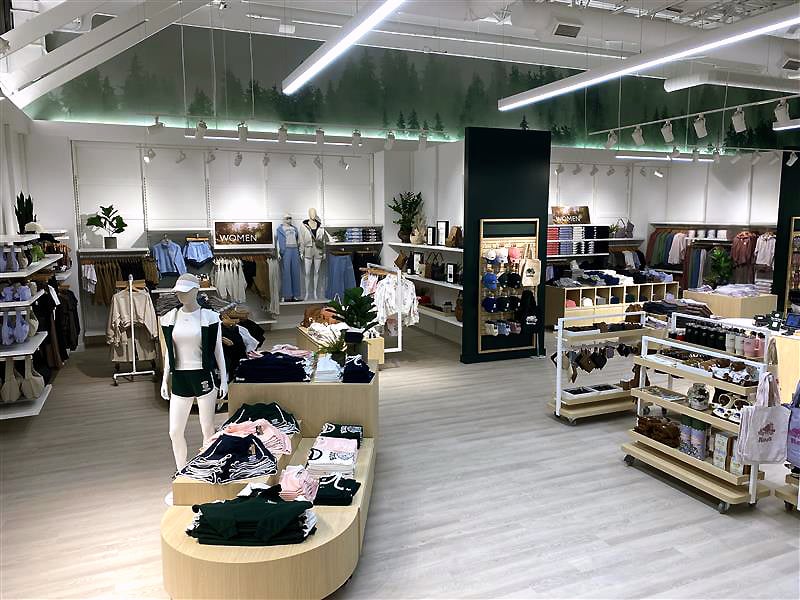
“Vaughan Mills for us is a really high-traffic, great location,” Roach said. “When we were thinking about the concept and how we modernize the experience, we wanted to make sure we considered all the different types of stores we operate. For a mall store like Vaughan Mills, that meant bringing in lighter, brighter colours, streamlined merchandising, and digital touchpoints, while still reflecting Roots’ heritage.”
The updates create a seamless shopping journey for customers, emphasizing clarity in product presentation and providing a warmer, more immersive atmosphere. The investment signals that Roots is not limiting its modernization efforts to flagship streetfronts but also sees value in mall locations that generate significant traffic.
Roots Tremblant store. Photo: Roots
A Broader Store Modernization Strategy
The renovations at Mont-Tremblant and Vaughan Mills are part of a larger initiative. In recent years, Roots has systematically invested in key stores across the country, from major flagships in Toronto and Vancouver to regional destinations that resonate with local communities.
“We’ve been investing behind the modernization and bringing nature and brand touchpoints into these stores a little bit differently than in the past,” Roach said. “We look at our portfolio in terms of flagship street stores, destination stores like Tremblant, and high-traffic mall stores like Vaughan Mills. Each one requires a slightly different approach, but the goal is always the same: to refresh the brand experience and ensure it feels both modern and true to our roots.”
Roach also noted that more store renovations are in the pipeline. “We do have a number of them coming in the next year,” she confirmed. “Once we have everything nailed down with our landlords, we’ll be able to share more details. We’re also identifying the elements from these renovations that have become iconic and can be rolled out more widely, even in stores that don’t undergo a full redesign.”
Roots store at Vaughan Mills. Photo: Roots
Roots’ Enduring Legacy
Founded in 1973 by Michael Budman and Don Green, Roots began as a footwear brand before expanding into apparel, leather goods, and accessories. The first store opened on Toronto’s Yonge Street, and the company quickly grew across Canada and internationally. Its signature beaver logo, introduced in 1985, has since become an icon of Canadian design.
The brand has long drawn inspiration from the wilderness and outdoor culture, which is evident not only in its product range but also in its store designs. Whether through wood finishes, natural motifs, or storytelling elements, Roots has consistently emphasized its connection to nature.
Roots remains a publicly traded company, with majority ownership held by U.S.-based Searchlight Capital Partners since 2015, while its headquarters and main leather factory remain in Toronto. The brand currently operates more than 100 company-owned stores across Canada, two stores in the United States, and maintains a strong global presence through eCommerce and partner-operated stores in Asia.
Roots Tremblant store. Photo: Roots
The Modern Retail Experience
The latest renovations reflect how Roots is adapting to evolving consumer expectations in Canadian retail. Modern shoppers are seeking experiences that are immersive and convenient, blending digital and physical touchpoints seamlessly. Roots has responded with brighter interiors, enhanced merchandising layouts, and interactive features such as digital screens.
These elements are paired with a renewed focus on craftsmanship and storytelling, ensuring that the brand’s Canadian-made leather goods and iconic sweats remain central to the experience. “It’s about bringing forward the heritage while modernizing it for today’s consumer,” Roach emphasized.
As Roots prepares additional store renovations across Canada, the company continues to refine its balance between tradition and innovation. The success of recent projects in Mont-Tremblant and Vaughan Mills demonstrates the brand’s ability to adapt while staying true to its core identity.
For Roach, the work is ongoing. “There’s going to be new product arriving every day and new experiences unfolding in our stores,” she said. “We want to make sure every Roots location feels fresh, welcoming, and true to who we are as a brand.”
Jeff Berkowitz of Aurora Realty Consultants represents Roots as broker in Canada, and negotiates leases for new locations.
Halloween is no longer just about candy and porch pumpkins. It has become one of the country’s fastest-growing retail moments, with Canadians expanding how they spend, shop, and celebrate.
According to a 2024 Leger study on Halloween spending in Canada:
53% of Canadians celebrated Halloween last year, with 83% planning to spend the same or more.
Over 47% of Canadians purchased 2-4 weeks out from Halloween, compared to only 34 per cent in 2023
The average Canadian household spent $67.65 on costumes, candy, and décor.
73% of those purchases happened in-store—showcasing the importance of physical retail experiences during this season.
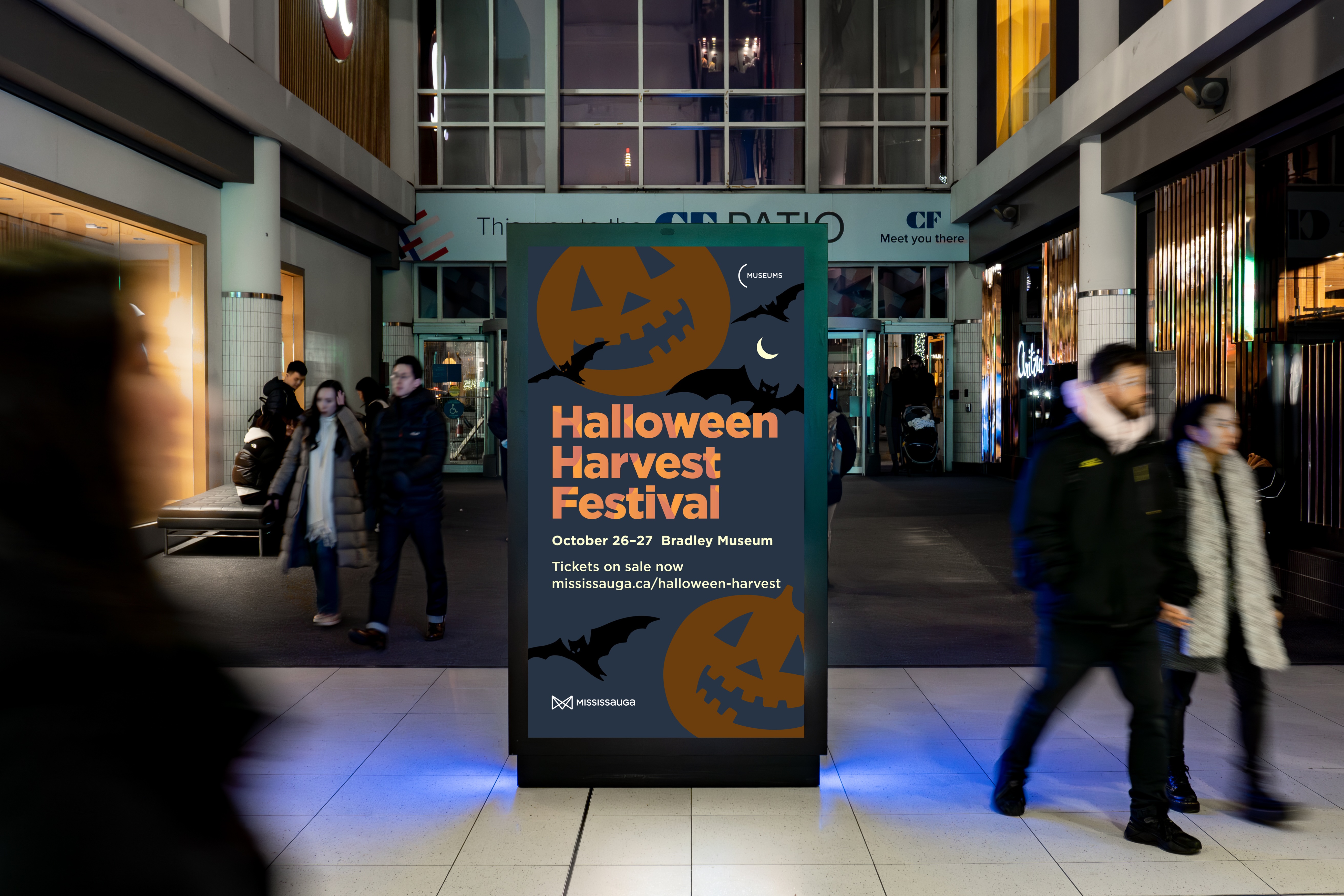
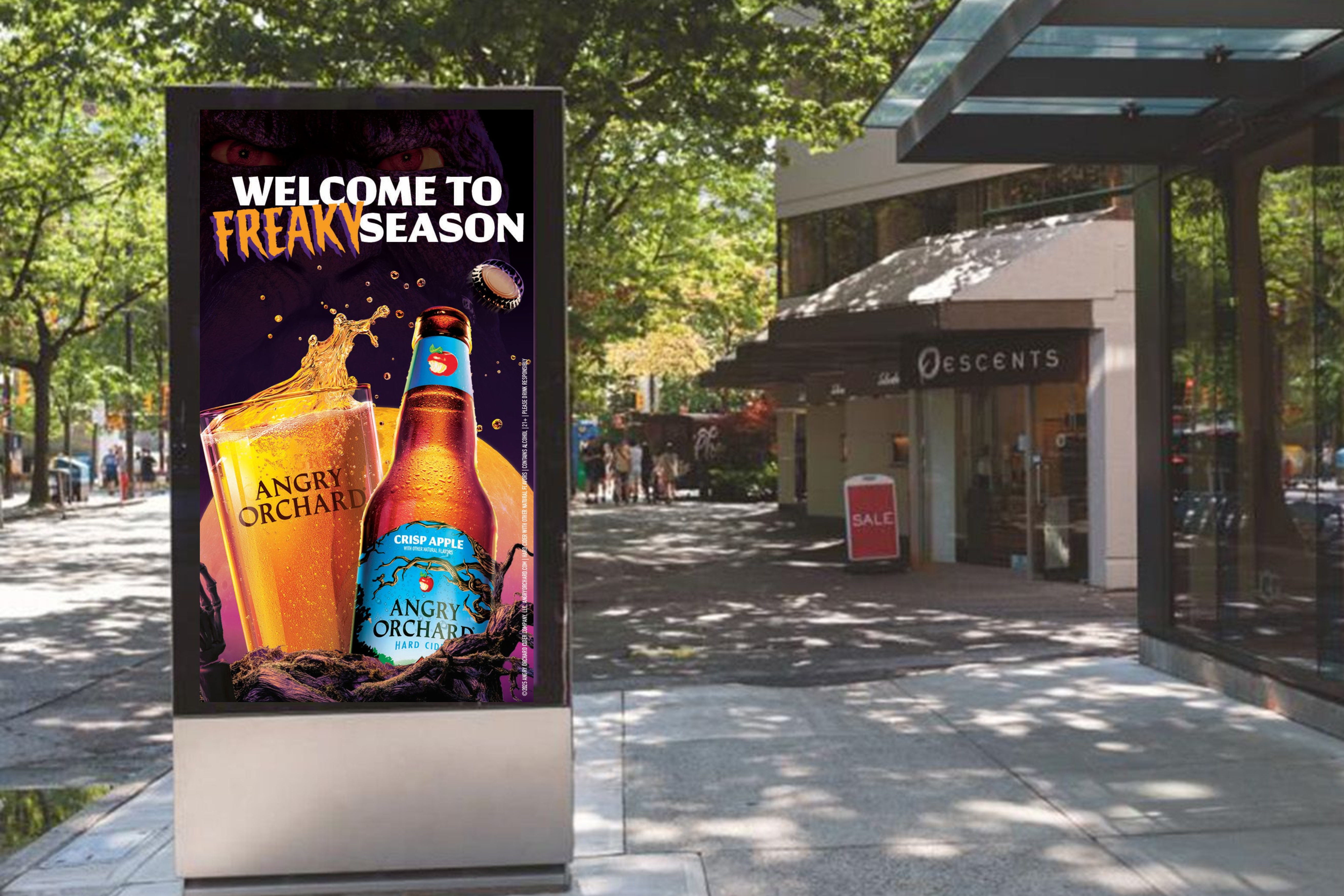
With Halloween being the second most commercially successful holiday after Christmas, it’s become a critical seasonal touchpoint for brands – with industries outside the expected jumping on the bandwagon. To associate a brand with Halloween, Out-of-Home (OOH) advertising has been a popular channel, using distinctive Halloween imagery alongside short messages to make the connection.
“It’s now one of Canada’s fastest-growing retail moments. What we’re seeing in the data is that consumers are broadening their spending into categories you wouldn’t have associated with Halloween a few years ago. Décor is becoming bigger, seasonal food and beverage launches are drawing attention, and fashion is now a big part of the mix with themed apparel and accessories,” he said.
“The average household is now spending close to $70, and importantly, 83% of Canadians say they plan to spend the same or more this year. That tells us Halloween isn’t a niche holiday anymore. It’s a lifestyle event where people are looking to create experiences, whether that’s decorating their homes, hosting gatherings, or finding unique products that tie into the season. And with that shift, brands are looking to explore and participate in channels like OOH to align with these new behaviours and target their audiences when and where they’re ready to spend.”
Photo: Vistar Media Canada
Mitchell said one of the biggest shifts we’ve seen in Halloween consumer behaviour is in the timing of purchases.
“Almost half of Canadians bought their Halloween items two to four weeks ahead last year, compared to only a third the year before. That’s a pretty dramatic change in behaviour. For retailers and brands, the opportunity is to lean into that earlier window — to capture excitement and influence decisions before the peak season hits,” he explained.
“We’ve seen with other holidays like Christmas that consumers enjoy the build-up, and Halloween is starting to follow that same pattern. By launching campaigns earlier, refreshing creative in-store and online, or offering limited-edition seasonal products, brands can own the anticipation phase and build stronger connections with shoppers. Programmatic OOH allows brands to activate those campaigns early, then dynamically adjust messaging right through to the big day, making it incredibly agile and impactful.”
Out-of-Home is playing a huge role in how brands are associating themselves with Halloween, noted Mitchell.
“It’s such a visual holiday — pumpkins, bats, moody colours — and OOH is designed for bold creative that grabs attention in a split second. This year, we’re seeing brands use high-impact digital OOH formats, interactive campaigns, and simple but powerful seasonal messaging to make that immediate connection. What’s particularly effective is OOH’s ability to reach people in those moments when they’re already out — shopping, commuting, or heading to events,” he said.
“It’s not about forcing a message; it’s about becoming part of the experience and amplifying the seasonal mood. Brands can take that a step further by leveraging data to target audiences contextually and deliver the right creative in the right place, making OOH a precision tool for seasonal campaigns like Halloween.”
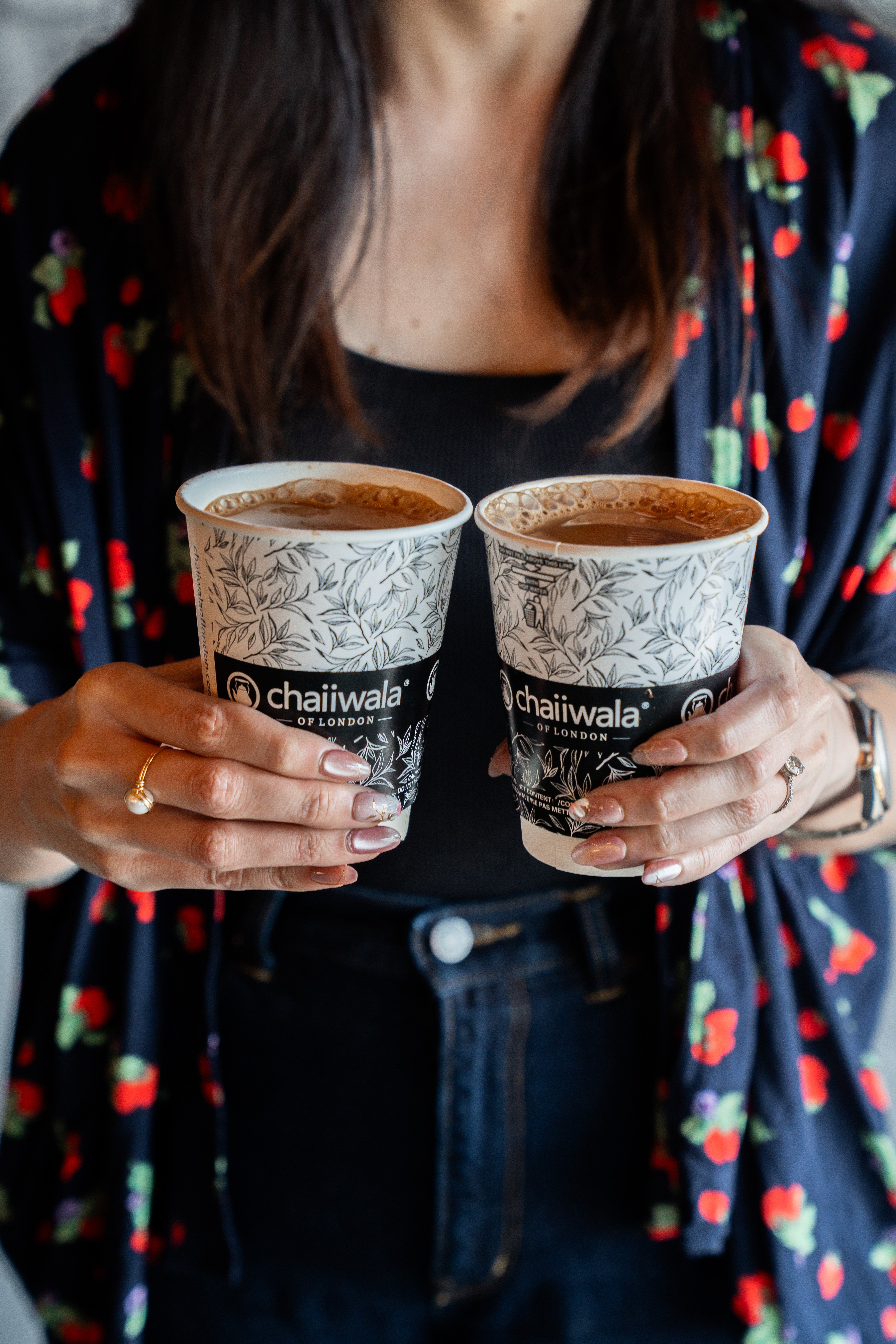
Chaiiwala of London – the UK-born chai café brand – is accelerating its Canadian expansion. Since arriving in Scarborough in 2021, Canadian
franchise co-founders Shiraj KothiwalaandAjmal Gundhra have been on a mission to share authentic chai culture and create inclusive community spaces.
Today, with 22 cafés open across four provinces and a bold target of 100 by 2030, Chaiiwala has quickly become one of Canada’s fastest-growing café brands. By blending tradition with a modern café vibe, the brand is redefining how Canadians experience chai and Indian street food.
Ajmal Gundhra
“We wanted to create a space that feels like home – a place where people can gather, connect, and enjoy authentic chai and street food,” said Kothiwala. “It’s more than a café; it’s a cultural experience.”
Gundhra added: “Chaiiwala is about more than serving great tea; it’s about preserving tradition while creating new experiences for a modern audience. Our growth across Canada proves there’s a real appetite for cultural connection through food and drink.”
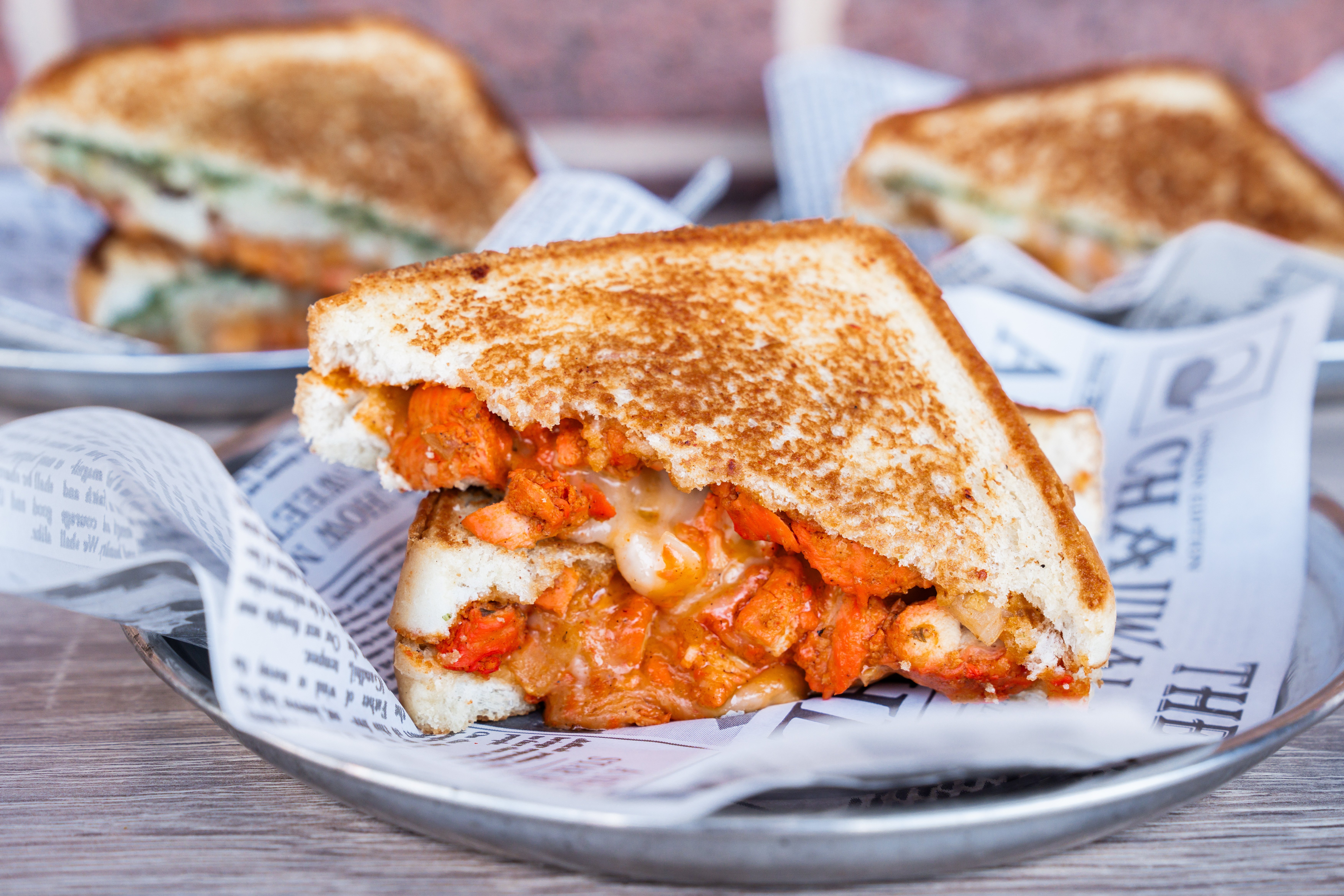
Chaiiwala’s menu blends East Indian, East African, and British culinary influences. Signature offerings include Karak Chaii, Pink Chaii, Karak Coffee, and street food favourites like Desi Breakfast, Bombay Toastie, and indulgent Gulab Jamun Cheesecake.
Chaiiwala’s growth story began in the UK in 2016, inspired by an ancestor’s tea stall in New Delhi, India dating back to 1927. Today, the brand operates over 100 locations worldwide, with Canada serving as its first international expansion market.
Upcoming Canadian openings include Edmonton (October 2025), King George Hub (January 2026), and additional locations in Kelowna, Saskatoon, and Vancouver in 2026.
“Chaiiwala of London started with a really simple idea. The founders wanted to bring the South Asian tea stall experience into a modern café. The story actually goes back almost a hundred years to tea stalls in India that served strong, spiced karak chai along with small savoury snacks. That heritage stayed with the family, and in the UK, it grew into a café chain that really took off,” say the owners.
Photo: Chaiiwala of London
“What makes Chaiiwala different is that it’s not just another coffee shop or bubble tea place. Our focus is of course on chai, and it’s bold, rich, and spiced the way people grew up with. But we also have an extensive street food menu that goes along with it. Things like samosas, masala chips, toasties, and parathas. They pair well with the chai and are great for grab-and-go too.
“And then our branding, it’s fresh, vibrant, and really works on social media. So, I’d say what sets us apart is this mix of authentic chai, a tasty street food menu, and a modern, approachable vibe.”
They say Canada is an important market for them.
“We already have stores in Ontario, BC, Alberta and Quebec, and we’re looking to grow in places where people really want it. Because we work on a franchise model, right now our focus is making sure the foundations are solid. That means proper training, quality control, and local marketing so new franchisees can hit the ground running. Long term, we want to be nationwide,” they say.
“Chai has broad appeal here. It’s familiar to the South Asian community, but also people outside that community are curious about the flavours. And our street food menu helps with that too. For now, we’re focusing on steady, sustainable growth and building momentum in the early clusters, but the potential is big.”
The owners say they’re confident about chai in Canada for a few reasons.
Photo: Chaiiwala of London
“First, chai isn’t just a drink, it’s comfort, it’s culture, it’s social. That connection is powerful. Second, our model works well here. Our stores don’t need huge spaces, the menu is simple and repeatable, and it performs well in-store and for delivery. And then there’s the food side.
“Canadians love trying new street foods, and our menu gives them something authentic but approachable. Items like samosas or butter chicken poutine are familiar enough to feel easy, but still different from what’s out there. Plus, the timing is right. People are looking for authentic, convenient, and shareable food experiences, and Chaiiwala delivers on all of that.”
The key to success these days really comes down to consistency and execution for them.
“Chai is simple in theory but unforgiving if you don’t get it right. The brew, the spice, the balance, it all has to be perfect every single time. The same goes for the food. Street food might look simple, but flavour and quality matter. That’s why training and standard processes are so important. Beyond that, it’s about being smart with location and connecting with your customers,” add the owners.
“You want to be in the right neighbourhoods, plazas, food courts, or transit hubs. And engaging with the community helps too, like cultural festivals, student outreach, or social media. Digital is also a big piece now, people expect to order ahead, get delivery, and have a smooth app experience. When you get all of that right, you give yourself the best chance to succeed.”
Shiraj Kothiwala
The owners say the number one thing customers these days are looking for is authenticity.
“The chai has to taste right, strong, spiced, comforting. But people also want choice. Some want it hot, some iced, some as a frappe or seasonal special. Variety keeps it interesting and brings in both regulars and new customers. The food matters too. People want quick, tasty snacks that go with their chai.
“Our street food menu hits that, it’s grab-and-go, pairs perfectly with chai, and keeps the experience fresh. Convenience and presentation are also key. Drinks and food that look good, packaging that feels premium, and a smooth ordering experience all make a difference. At the end of the day, customers want a brand that delivers authentic chai, craveable food, and a great overall experience, and that’s what we aim to give.”
LOJEL, the global brand that offers modern luggage and everyday carry products, has announced a new partnership with UNHCR, the UN Refugee Agency, with The Simplest Act campaign. This collaboration highlights how even the smallest gestures can help restore dignity, hope, and agency to displaced people.
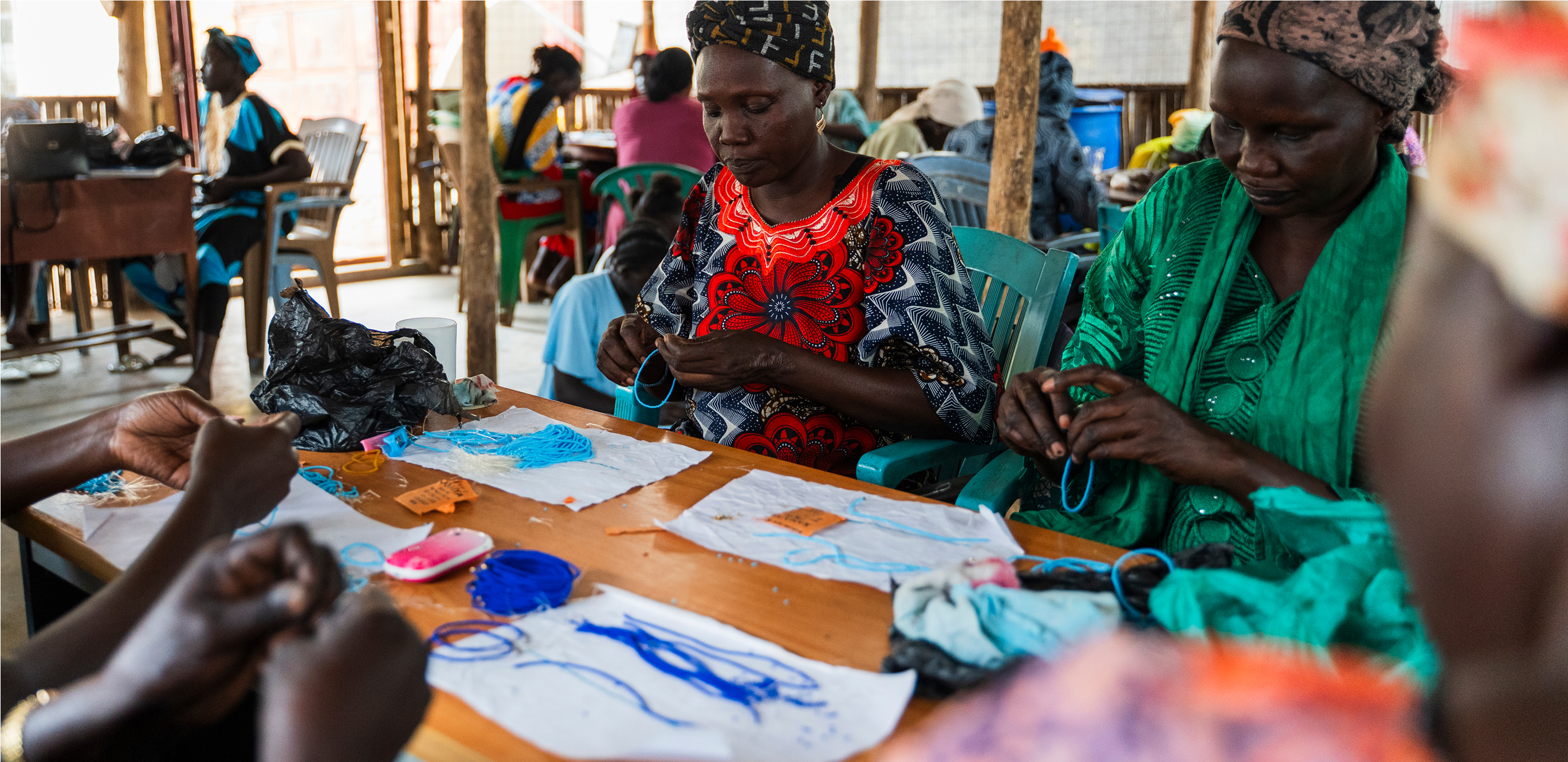
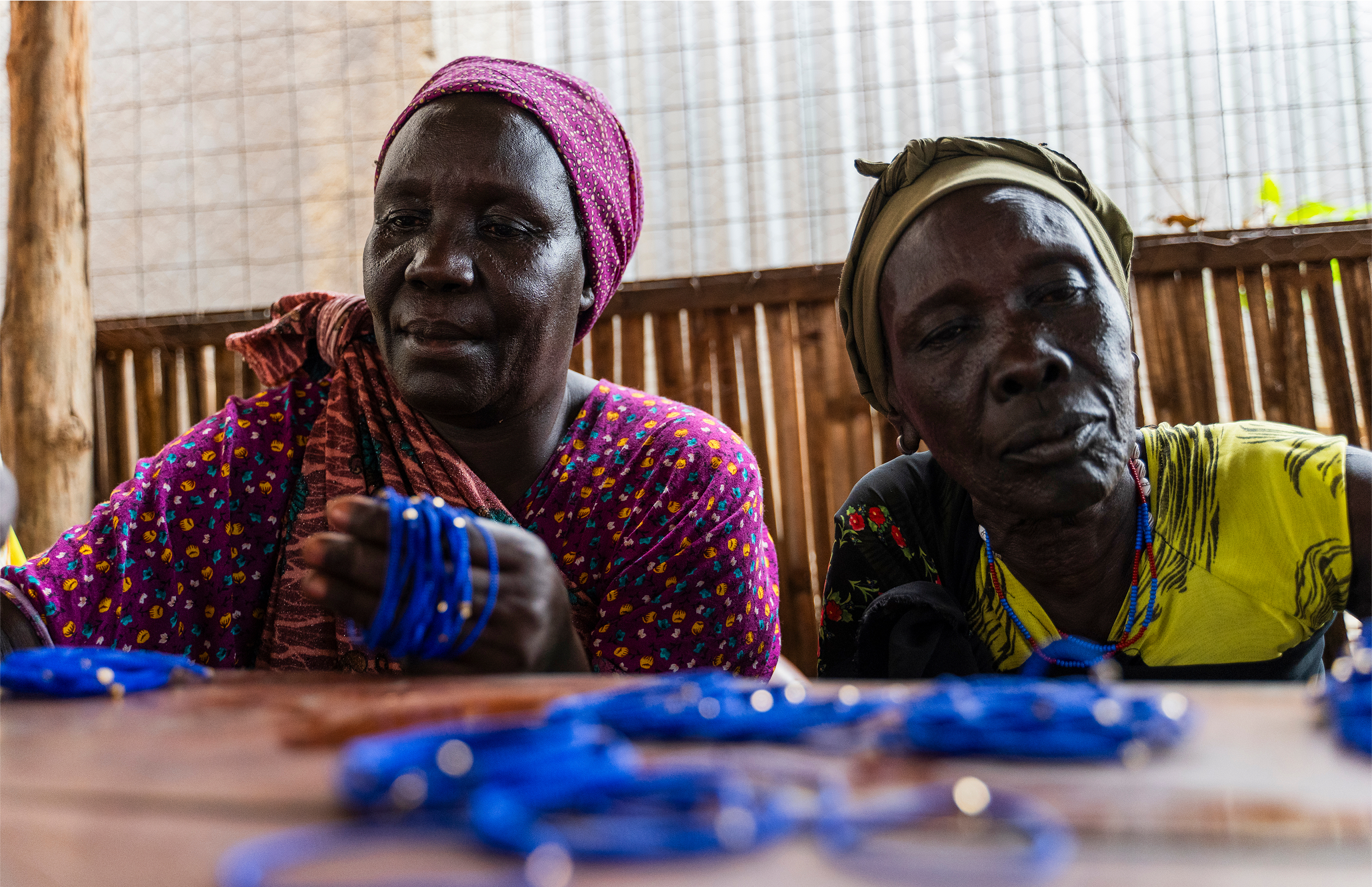
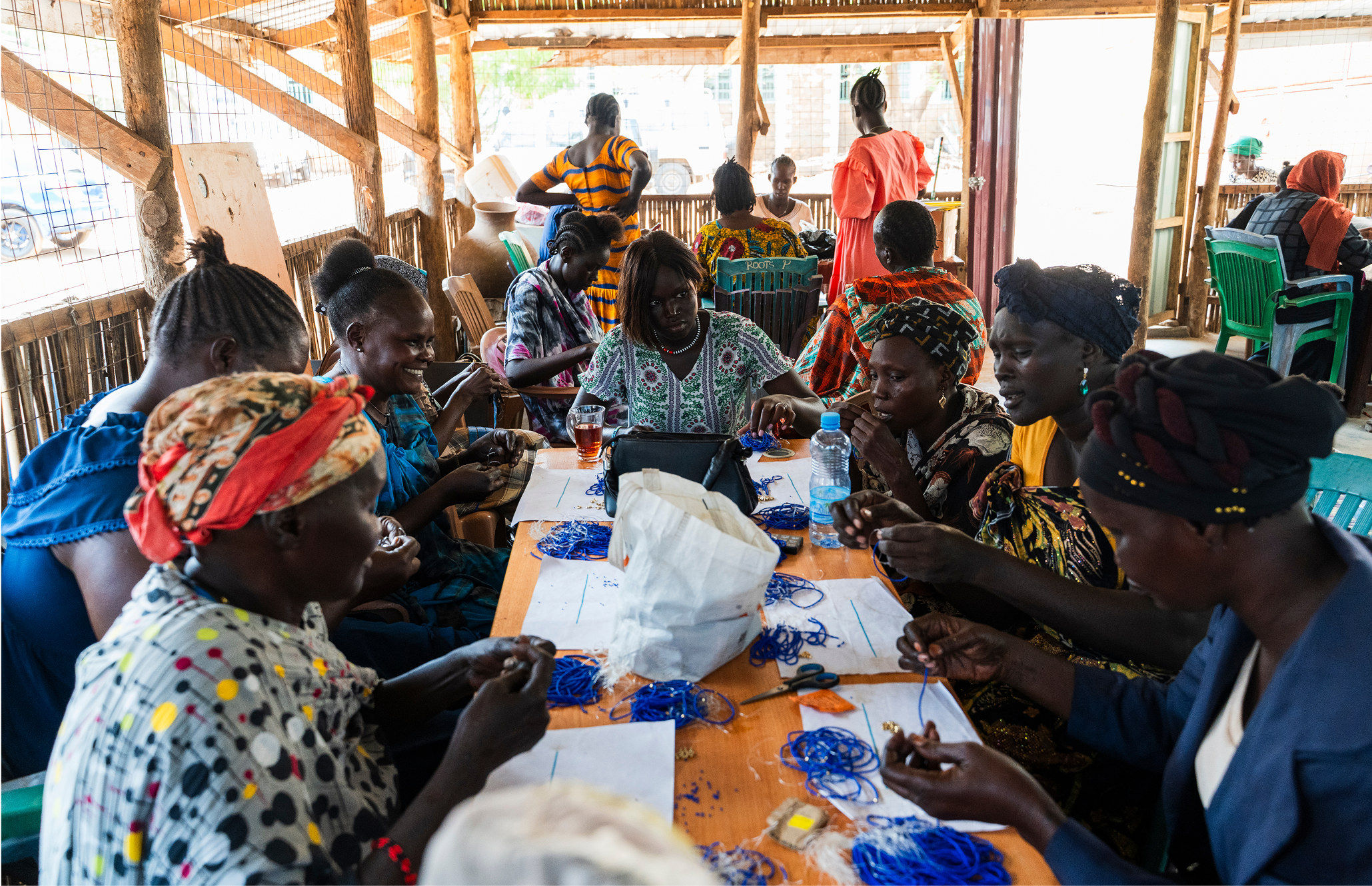
At the heart of this initiative is the launch of a special edition, handmade bracelet crafted by forcibly displaced artisans in South Sudan—a simple object with a powerful meaning. Designed in collaboration with UNHCR and MADE51, a global initiative brought to life by UNHCR that brings traditional skills and heritage of forcibly displaced persons to the world, LOJEL has introduced The Simplest Act – With Refugees Bracelet.
Made by displaced artisans living in South Sudan, the bracelet features a beaded band and an engraved metal emblem, with every detail speaking to intentionality and care. It is not a fashion item, but a quiet statement of solidarity—a reminder that empathy can be carried with us, worn openly, and shared. Proceeds from every bracelet go directly to supporting UNHCR’s work with displaced communities living in South Sudan.
LOJEL’s steps towards community empowerment make this collaboration a natural evolution of its sustainability initiatives. The brand works with local organizations to donate suitcases for displaced communities across Hong Kong, Singapore, and the U.S. Every Simplest Act – With Refugees Bracelet contributes to a cycle of support that provides essentials like clean water, shelter, and education to South Sudan’s forcibly displaced community.
The bracelets are available at both Canadian retail stores.
“The refugee crisis shows us the reality of forced displacement, and we felt a responsibility to act. That’s why we partnered with UNHCR, the UN Refugee Agency, to support individuals and families in South Sudan who’ve been forced to flee their homes,” she explained.
“Our collaboration has two parts:
The Simplest Act – With Refugees Bracelet: Co-created with UNHCR and MADE51, each bracelet is handmade by forcibly displaced people living in South Sudan. It’s a symbol of resilience and shared humanity, with 100% of the proceeds from the bracelets going to support refugee programs by the UNHCR.
Customer Donations: Contributions made in select stores and online also go directly to UNHCR’s work on the ground, providing clean water, shelter, and education for displaced communities.”
Paryani said UNHCR was chosen because of their deep expertise and trusted presence on the ground. They provide both urgent relief and long-term support with transparency.
“For the bracelets, we partnered through MADE51, UNHCR’s initiative that connects refugee artisans with social enterprises. This not only supports immediate needs but also empowers refugees with income and helps preserve cultural traditions. For us, this was essential, it’s about more than aid, it’s about dignity and opportunity,” she added.
Photo: LOJEL
“LOJEL’s mission is to support movement and enrich journeys. But we also recognize that not all journeys are voluntary or joyful. Through this partnership, we acknowledge that reality and extend our vision of movement to include solidarity with forcibly displaced people.
“This builds on earlier efforts, like donating luggage to local charities supporting refugees and migrants since 2023. Partnering with UNHCR is a natural next step in our social sustainability journey that addresses displacement on both a local and global scale.”
Paryani noted that sustainability isn’t just about materials or design, it’s about people, too.
Photo: LOJEL
“At LOJEL, we want to stay grounded in the world our customers move through. Our products are designed to empower journeys, but that only matters if the world is healthy and its communities are supported,” she said.
“Initiatives like this help us live our values, supporting not only our customers but also the wider global community, ensuring there’s a world worth exploring, together.”
In partnership with The Sobey Foundation and Canada’s Children’s Hospital Foundations (CCHF), the initiative is in its sixth year, continuing to fund and raise awareness for early intervention and crisis prevention programs through local children’s hospital foundations.
Since launching in 2020, the initiative has helped children’s hospitals across Canada treat and assess more than 220,000 children and youth – equivalent to approximately 120 children and youth per day. It has helped Canada’s 13 children’s hospitals cumulatively add and enhance close to 100 treatment spaces, train more than 17,000 mental health professionals and care providers, perform over 98,000 assessments and treat over 128,000 children and youth.
Photo: Empire
Empire Family of Brands, The Sobey Foundation, and CCHF have raised and donated more than $21 million in funds and in-kind support. 100% of funds raised go directly to local early intervention programs, helping expand access to mental health support for families in communities across the country.
From September 18–October 5, Empire Family of Brands, The Sobey Foundation, and CCHF continued their nationwide fundraising campaign to support early intervention and prevention programs for children and youth.
Renee Hopfner
Renée Hopfner, Head of Corporate Citizenship at Empire Company Limited, said the company launched the Family of Support: Child and Youth Mental Health initiative with Canada’s Children’s Hospital Foundations (CCHF) in 2020 to help more kids and families access local mental health support.
“The vision was always early help, close to home. Five years in, that vision continues to support 13 children’s hospitals with local programs focused on early intervention and crisis prevention. Since 2020, the initiative has helped Canada’s 13 children’s hospitals cumulatively add and enhance close to 100 treatment spaces, train more than 17,000 mental health professionals and care providers, perform over 98,000 assessments and treat over 128,000 children and youth,” she said.
“This five-year milestone reflects sustained investment and partnership, supporting programs that meet urgent needs and lay the groundwork for long-term change. As the need grows, so does the impact of Family of Support.”
Hopfner said one theme across Family of Support–funded programs is a holistic approach to early mental health intervention, one that goes beyond clinical treatment to support the overall well-being of children and youth.
“For example, in Calgary, Alberta, Family of Support is helping open access to child and youth mental health care at The Summit: Marian and Jim Sinneave Centre for Youth Resilience. Thanks to community support through the Alberta Children’s Hospital Foundation, hundreds of children and teens receiving care at The Summit benefit from specialized programming, including music, art, recreation, and horticultural therapy, that supports them on their mental health journey,” she said.
“Moreover, in Hamilton, Ontario, Family of Support is helping expand access to care at McMaster Children’s Hospital through Substance Use Supports for Pediatrics. McMaster Children’s Hospital is integrating youth substance use counsellors and peer support workers, in partnership with community providers to deliver integrated care, enhance community connections, and improve patient outcomes and safety by simultaneouslyaddressing mental health and substance use challenges.
“These are just two examples of how Family of Support is helping more children and youth access critical mental health programs early, but there are many more. Each program, across 13 children’s hospitals in Canada supported through Family of Support, has a regional focus, addressing urgent needs within the communities they serve.”
Photo: Empire
Hopfner said Empire partners with Canada’s Children’s Hospital Foundations (CCHF), which coordinates across 13 children’s hospital foundations, so funds stay local and align with each hospital’s priorities.
“Children’s hospitals are on the front lines of mental health care and understand the needs of their communities. Every dollar donated supports local programs directly. Children’s hospitals share how programs are
making an impact through assessments, patients served, care providers trained, and treatment spaces. This model blends national scale with local accountability, ensuring communities see tangible benefits where they live.”
At Empire Family of Brands, banners mobilize the local communities they serve. Customers were able to donate at checkout in participating stores across Canada, with campaign details promoted in store and online.
“We reinforce checkout giving with in-store and digital signage that connects customers to local hospital programs and FamilyofSupport.ca. Additionally, our banners also promote the campaign on social media, with amplification from children’s hospital foundation partners in each region.”
“Demand is rising, so our long-term focus is to support children’s hospitals in delivering early intervention and crisis prevention programs. Funding will continue to help Canada’s 13 children’s hospitals invest in assessments, treatment spaces, training, and research, using models of care that work in both clinical and community settings,” she added.
“Over the past five years, Empire Company Limited, The Sobey Foundation, andCanada’s Children’s Hospital Foundations (CCHF) have raised and donated $21.7 million in funds and in-kind support to local children’s hospital foundations. Looking ahead, we remain committed to ensuring families can access mental health support through their local children’s hospitals, translating national resources into solutions shaped by each community’s needs.”
Retail Insider is streamlining its Canadian retail news from around the web to include a handful of top news stories that can be viewed quickly during the day. Here are the top stories from the past 48 hours.
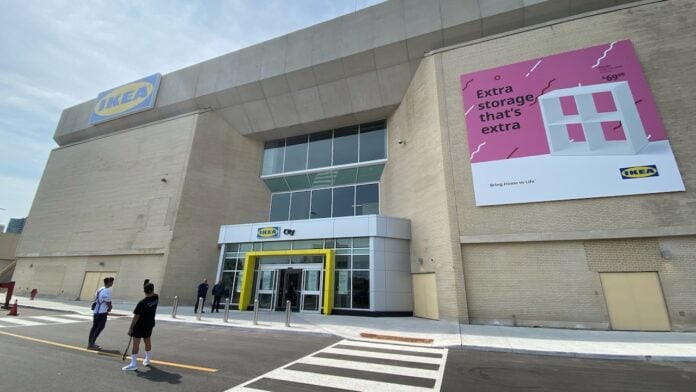
Scarborough Town Centre IKEA (Image: Craig Patterson)
IKEA Canada has announced that it will close its urban-format store at Scarborough Town Centre (STC) in early 2026, less than three years after opening the location. The decision marks a significant adjustment to the company’s evolving urban retail strategy as it continues to respond to shifting consumer shopping behaviours, particularly the growing preference for online purchasing.
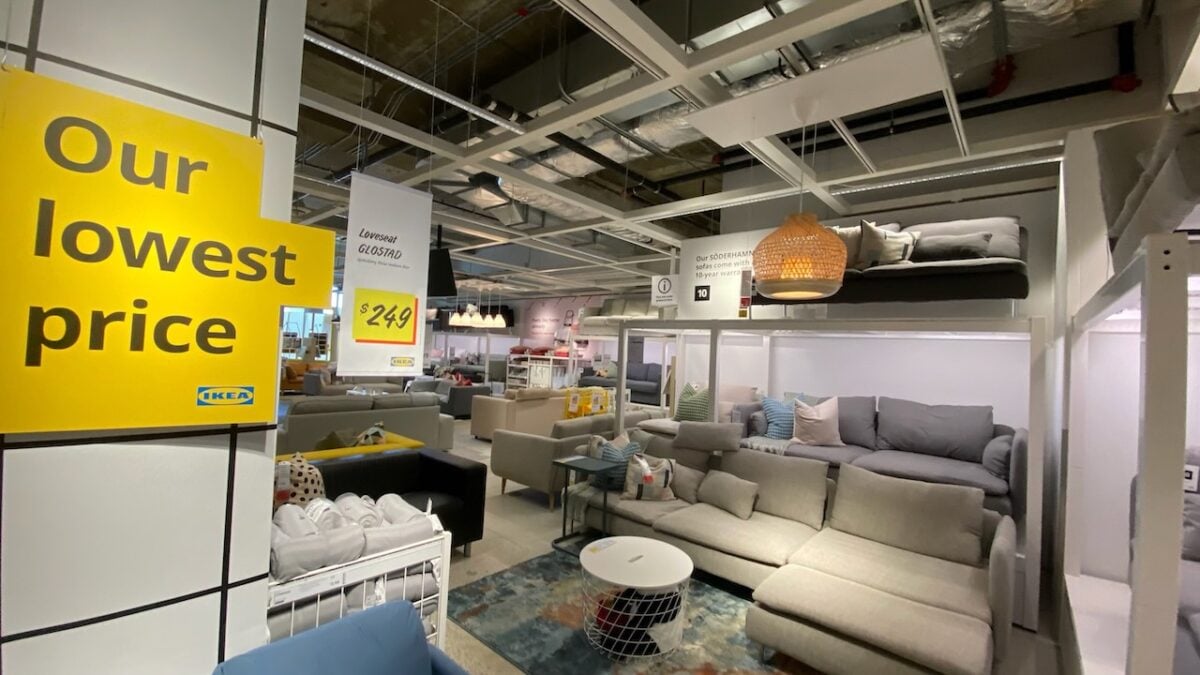
The IKEA Scarborough Town Centre closure represents the end of a short-lived chapter for the global retailer’s city-centre store experiment in Toronto’s east end. The location, which opened in August 2023, spans approximately 80,000 square feet and was designed to cater to the needs of urban residents through a smaller, more accessible store format.
Scarborough Town Centre was the second urban-format IKEA to open in Canada, following the company’s downtown Toronto location at Yonge and Gerrard, which launched in May 2022 and remains in operation. The Scarborough store was envisioned as a model for compact city retailing by offering convenience, local accessibility, and an omnichannel shopping experience that integrated in-store browsing with digital tools.
However, IKEA Canada said in a statement that the store’s performance had fallen short of expectations. “This decision has not been taken lightly,” said Selwyn Crittendon, CEO and Chief Sustainability Officer, IKEA Canada. “We are constantly renewing and improving our business in order to remain relevant in an ever-changing retail world and to secure our future as a leading omnichannel retailer for generations to come.”
Scarborough Town Centre IKEA (Image: Craig Patterson)
Changing Consumer Habits and Omnichannel Growth
Crittendon pointed to the rapid evolution of consumer behaviour as a major factor behind the closure. Over the past several years, IKEA Canada has seen dramatic growth in online shopping, with 162.6 million visitors to IKEA.ca in the past year, compared to 33.8 million in-store visitors across the country.
The Scarborough store’s limited floor space restricted the number of products it could display and stock, which may have influenced its underperformance. Unlike IKEA’s traditional warehouse-style stores, which average more than 300,000 square feet, the STC location carried only about 2,500 products available for immediate purchase. Larger furniture items had to be ordered online or through delivery and pickup options, which may not have met all customer expectations, and a full-sized warehouse store is located a few kilometres away.
The Scarborough store’s digital-forward model, which included planning hubs, home delivery services, and click-and-collect features, aligned with IKEA’s long-term omnichannel vision. However, the company acknowledged that the balance between physical and digital retail continues to evolve and that the lessons from the IKEA Scarborough Town Centre closure will guide future decisions.
Scarborough Town Centre IKEA (Image: Craig Patterson)
Impact on Employees and the Local Community
The Scarborough Town Centre location currently employs 130 workers. IKEA Canada emphasized that supporting its staff during this transition remains a top priority. “Even as we respond to market needs, we are committed to putting our people first and leading with our culture and values through this transition,” said Crittendon.
The company added that efforts will be made to minimize the impact of the closure by offering assistance and potential redeployment opportunities where possible.
Despite the closure, IKEA reaffirmed its commitment to the Scarborough community. Customers in the region will continue to have access to products and services through IKEA’s North York full-size store and various digital and physical touchpoints, including IKEA.ca, home delivery, click-and-collect services, and its network of plan-and-order points across the Greater Toronto Area.
Scarborough Town Centre’s Changing Retail Landscape
The closure also reflects broader shifts at Scarborough Town Centre, one of Toronto’s largest and most significant shopping malls. Managed by Oxford Properties, the 1.3 million-square-foot complex has faced a series of major tenant departures over the past two years.
In mid-2025, Hudson’s Bay Company closed its store at the mall, part of a nationwide wind-down following the department store’s liquidation process. Around the same time, French sporting goods retailer Decathlon shuttered its STC location, one of five closures in the Greater Toronto Area, as part of a strategic restructuring.
The exit of IKEA, a globally recognized brand, will leave another major vacancy at the property. For Oxford Properties, the mall’s owner, the challenge now lies in reimagining the large-format retail spaces once occupied by legacy anchors and large international brands.
Scarborough Town Centre IKEA (Image: Craig Patterson)
Inside the Scarborough Town Centre IKEA
When it opened in August 2023, the IKEA STC store was celebrated as a milestone for accessible urban retailing. The grand opening attracted thousands of visitors, complete with community festivities and remarks from local officials.
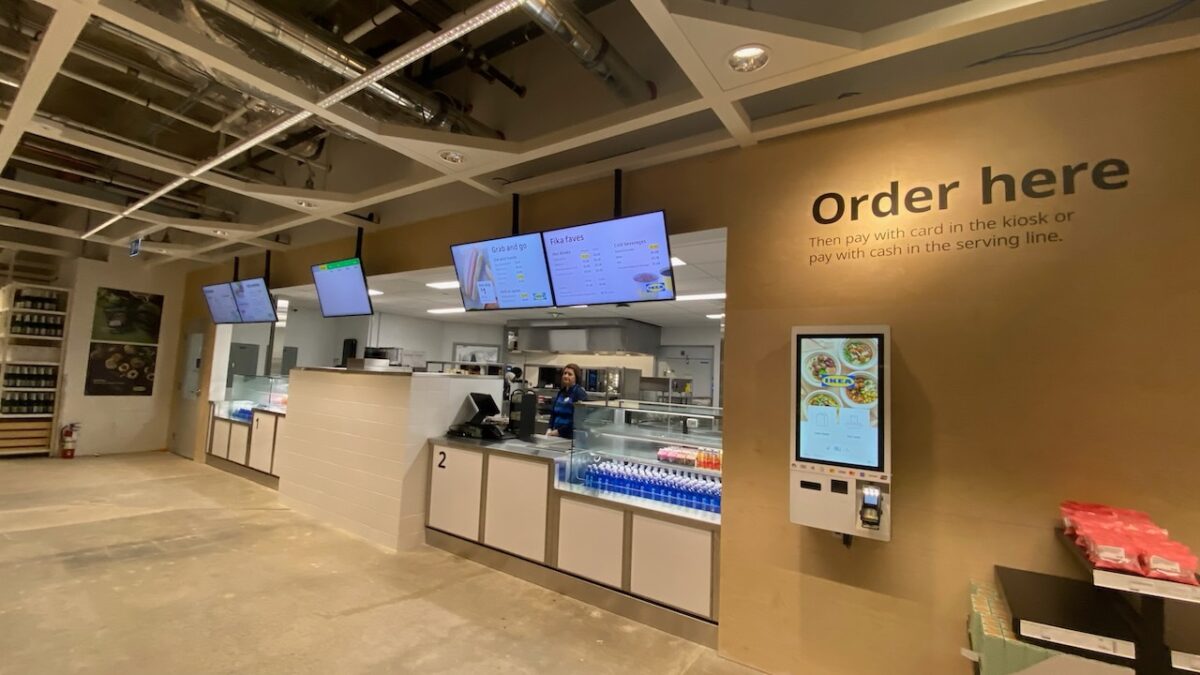
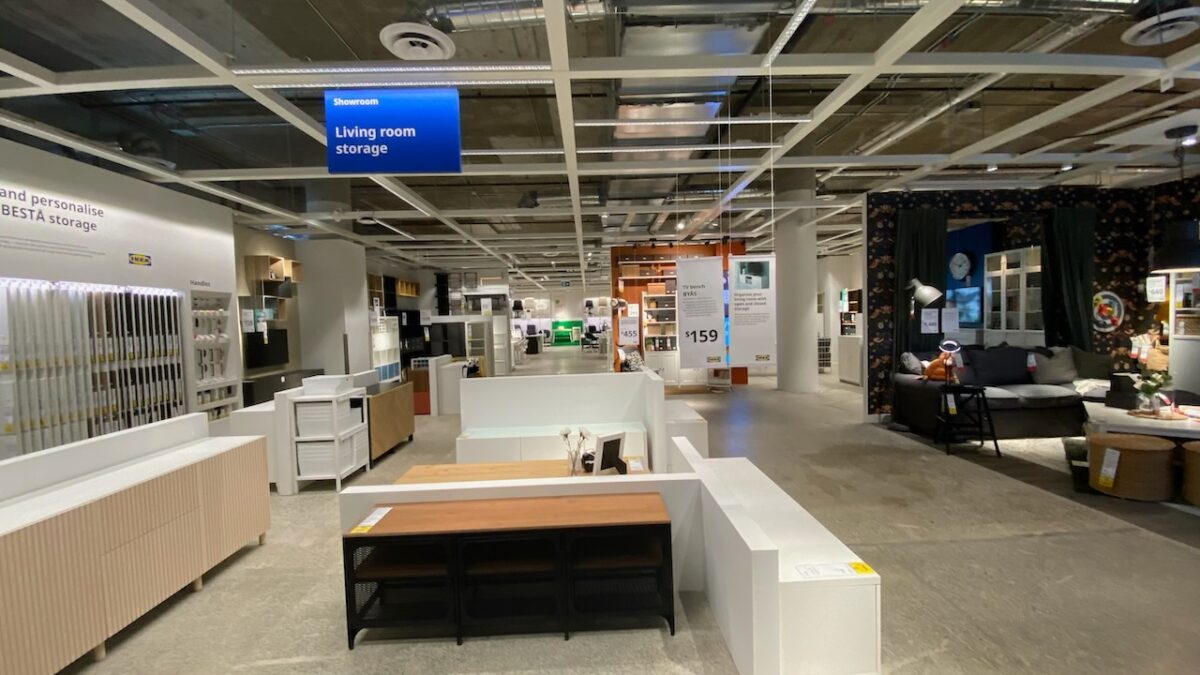
Designed specifically for smaller-space living, the 80,000-square-foot store included both mall and exterior entrances, two checkout areas, and an assortment of more than 2,500 take-home products. Customers could view larger furniture pieces and order them for home delivery or pickup. The store also featured a Swedish Deli offering signature dishes such as meatballs, veggie dogs, and frozen yogurt, further enhancing the in-store experience.
The store’s design and amenities reflected IKEA’s focus on sustainability, with eco-friendly packaging, renewable energy initiatives, and services that encouraged waste reduction. Despite these efforts, traffic levels and conversion rates failed to meet internal projections.
IKEA Downtown Toronto – AURA (Image: Dustin Fuhs)
Downtown Toronto Location Remains Operational
While the Scarborough Town Centre location prepares to close, IKEA’s downtown Toronto store at Yonge and Gerrard continues to perform strongly. Opened in May 2022, it marked the first urban-format IKEA store in Canada.
The downtown location, housed in the Aura tower, spans about 66,000 square feet over two levels. It has proven popular with downtown residents and students seeking affordable and space-efficient furnishings. The store operates on a cashless model, with self-checkout kiosks and mobile payment options, and integrates digital tools that streamline the urban shopping experience.
Its sustained success suggests that urban-format stores can work in certain markets, particularly those with high foot traffic, dense populations, and easy access to public transit. IKEA’s leadership has not indicated any plans to scale back operations at this location.
IKEA Canada’s Broader Retail Footprint
With the IKEA Scarborough Town Centre closure, IKEA Canada will continue to operate 15 locations nationwide. The retailer’s portfolio includes full-sized stores in major urban and suburban markets.
In recent years, IKEA has expanded its digital infrastructure and logistics network, introducing planning studios, pickup points, and enhanced delivery services to improve accessibility. These efforts align with the company’s commitment to sustainability, affordability, and convenience for Canadian consumers.
The company continues to adapt its physical footprint to the realities of e-commerce. Many of IKEA’s most successful markets now operate through a hybrid model that blends physical stores with an expanding network of online tools and delivery solutions.
I listened to the Nike Inc. (NYSE: NKE) Q1 Fiscal 2026 earnings call on September 30th after the bell. The call was hosted by Elliot Hill (President & CEO) and Matthew Friend (EVP & CFO). Nike is in the middle of a turnaround and although it has made some progress there is a lot of work to be done to return to glory.
Bruce Winder
GAAP Financials (all in $ USD)
Overall, for Q1/Fiscal 26, Nike revenue was $ 11.7 billion, up +1% vs. last year. Nike Wholesale was $ 6.8 billion, up + 7%. Nike Direct revenue was $ 4.5 billion, down -4%, which includes Nike Digital, which was down -12% & Nike Stores, which was down – 1%. Revenues for Converse were $366 million, down – 27%.
Gross margin rate for the quarter was 42.2%, down – 320 bps vs. Q1/ Fiscal 2025. This was a result of increased wholesale discounts, higher discounts at Nike factory stores, higher product costs (including new higher tariffs) & channel mix headwinds.
SG&A was $ 4 billion, or 34.3 % of revenue, down -1% for the quarter or down 60 bps to last year as a percentage of revenue. This was due to lower brand marketing expense. Operating overhead was flat to last year.
Operating income for the quarter was $ .927 billion, or 7.9% of revenue. This was down from $ 1.2 billion last year which was 10.4 % of revenue.
Nike’s effective tax rate for the quarter was 21.1%, up from 19.6% last year. This was due to a benefit from stock based compensation in Q1/Fiscal 2025.
Net income for the quarter was $ .7 billion or 6.2% of revenue, down -31% to Q1/Fiscal 2025. Last year net income was 9.1% of revenue.
EPS was .49 cents per share, down – 30% from last year.
Cash & cash equivalents were $ 7 billion, down -17%. Inventory was $ 8.1 billion, down -2% to last year. Cash generated from operations in the quarter was $ 222 million, down – 44% from $ 394 million last year.
Nike returned $ 714 million to shareholders in Q1, made up of $ 591 million in dividends, up + 6% to last year and share buybacks of $ 123 million.
Let’s look at how key Nike geography’s performed in the 1st quarter.
North America
Q1 revenue up +4%, Nike Wholesale up +11%, Nike Direct down -3%, Nike Digital down -10%, Nike Stores flat to LY, EBIT down -7%.
Nike indicated this region is “furthest ahead” on its transformation. The running, training & basketball businesses are all up double digits vs. last year. Sportswear also grew in the quarter but work still remains in that business. The Wholesale division returned to growth but was in part a result of higher liquidation volume to value channels. Nike feels it is reaching new customer segments. Inventory is down in units but up in dollars due to tariffs. The company says it’s closeout mix is approaching normalized levels.
Europe, Middle East & Africa (EMEA)
Q1 revenue up +1%, Nike Wholesale up 4%, Nike Direct down – 6%, Nike Digital down -13%, Nike Stores up +1%, EBIT down -7%.
Nike indicated that this region has a largely clean marketplace and that they have built momentum with sports & wholesale partners. The digital business is close to being exclusively full-price but issues remain in site traffic & demand. The running business enjoyed double digit growth in Q1, while the football & footwear businesses had low single digit growth. Sportswear declined low single digits. Nike selectively leveraged discounts to lower inventory in the region, which was down mid single digits by the end of the quarter.
Greater China
Q1 revenue down -10%, Nike Wholesale down -9%, Nike Direct down – 12%, Nike Digital down -27%, Nike Stores down – 4%, EBIT down -25%.
Nike indicated that low store traffic and poor in-season sell through are headwinds. Running is the bright spot growing high single digits. The market responds well to innovation. The region is highly promotional and relies heavily on local platforms that require discounts for events like 11/11 a.k.a. Singles Day. Inventory in the market is down about -11% to last year and the closeout mix is elevated. Nike’s priority for China is to increase seasonal sell through by refreshing store concepts around sport, creating greater brand distinction & merchandising, and lowering the mix of aged inventory at partners.
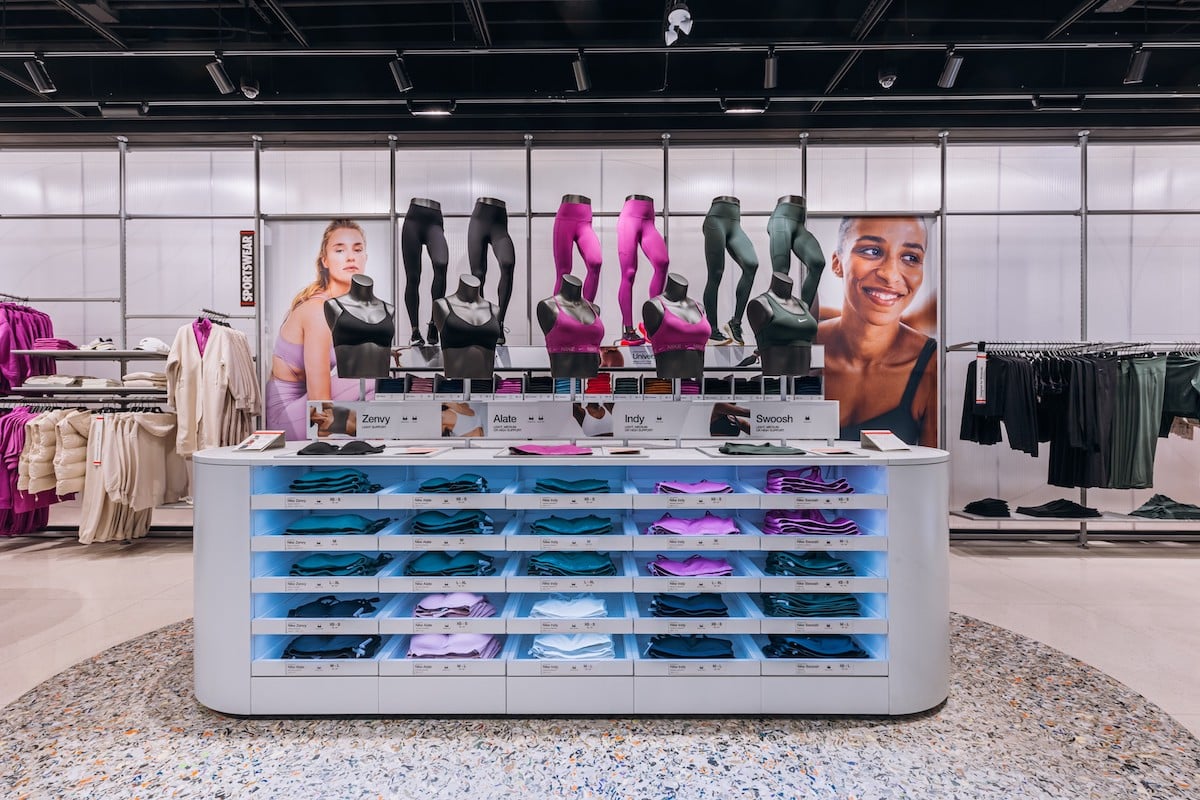
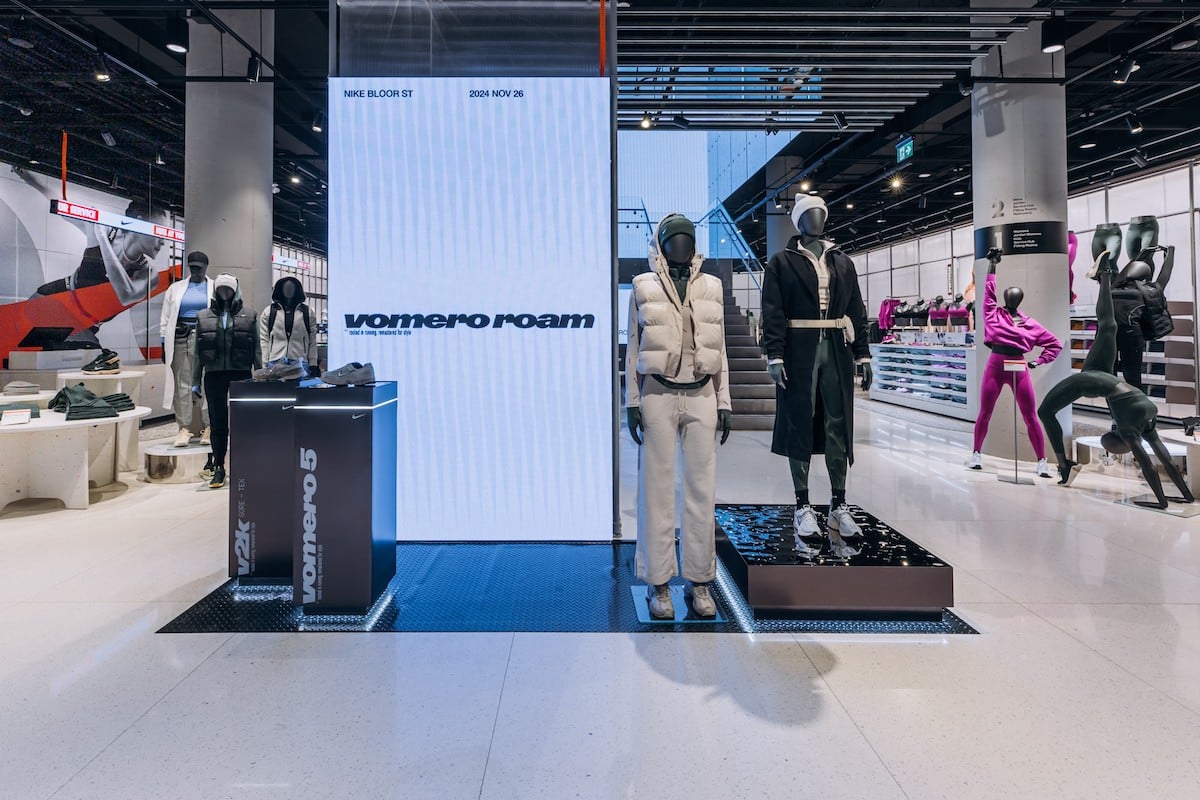
Bras and leggings at the Nike Bloor flagship in Toronto. Image: Nike
Asia Pacific & Latin America (APLA)
Q1 revenue up +1%, Nike Wholesale up + 6%, Nike Direct down -6%, Nike Digital down -8%, Nike Stores down -5%, EBIT down – 13%.
The region had mixed results as there are pockets of elevated inventory levels & much promotional activity. The market enjoyed double digit growth in running and high single digit growth in training. Sportswear declined low single digit. Inventory grew high single digit vs. last year. Nike plans on tightening buys and lowering inventory in some countries.
Management Commentary
Hill discussed the companies “win now” actions which include changes to Nike’s culture, product, brand marketing, marketplace & ground game.
So far, Nike has seen results across it’s top priorities including: it’s running business, the North America region and it’s relationship and growth of it’s wholesale business. According to Nike, consumers are responding.
Hill also mentioned that the company has onboarded about 8,000 employees to it’s new “sports offense” way of working. This includes organizing the company around it’s 3 main brands: Nike, Jordan & Converse. The company is migrating to smaller cross-functional teams who will be divided by brand & sport but also by country & type of account/channel of distribution. This is a change to Nike’s previous organization that was structured by men’s, women’s & children’s products. Nike’s long term vision is to use it’s sport offense approach to succeed beyond the traditional sports that the company competes.
The idea is that these more focused groups of product developers and brand marketers will obtain sharper consumer insights that enable them to connect with athletes in a more meaningful way to produce a “better coordinated attack”. More nimble, the athlete and the sport will become the center of attention again.
Hill acknowledged that there is still work to be done with: the sportswear business, the Greater China region & the Nike Direct channel.
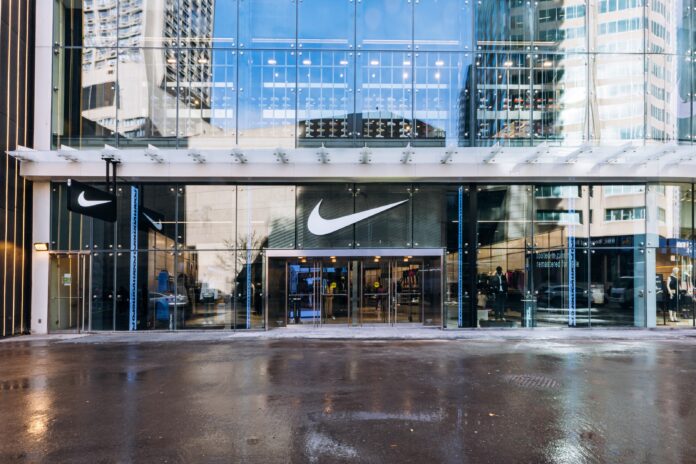
The CEO used the Nike House of Innovation flagship in New York as an example (I have visited this store and it is quite incredible). The store creates a unique retail experience by sport. A recent refresh has led to double digit revenue growth for this location. The idea is for Nike to create more of a specific point of view in retail. This clarity “works in smaller formats too”. Another example is the recent refresh of the Austin store that focusses on running & training and has seen a significant sales increase as a result.
Nike mentioned how they used the US Open to style several athletes during high profile moments at the tournament. Hill says “sports & the worlds greatest moments will always be Nike’s runway”.
Hill discussed how one of Nike’s advantages and differentiators is that it focusses on so many channels (wholesale, direct) across so many price points for so many athletes in so many geographies.
Running
The CEO discussed how the Nike running business was the first division to embrace the new way of working. Research indicated that runners want 3 things: 1) big cushioning 2) stability or 3) an everyday shoe that returns energy. Therefore Nike redesigned the “Vomero”, “Structure” & “Pegasus” models based on these insights while integrating other Nike technologies such as: Nike Air, Flyknit, ZoomX & Reactx. Hill indicated that Nike plans to introduce one new style each season. The idea is to create a “relentless flow of innovation”. Early results show the running business is up + 20% in this quarter.
The opportunity for Nike is to apply this formula to: global football, basketball & training sports.
Global Football
Nike is gearing up for the 2026 World Cup and has targeted a younger consumer with 3 unique silos at 3 different price points. The company has relaunched the “Phantom 6” with strong sell through thus far. In Q3 Nike will launch it’s new “Tempo” & new “Mercurial” cleats after that. The team used the “scary good” campaign to help build awareness and results on some of the new products.
ACG
Nike also invested resources in it’s All Conditions Gear (ACG) business with a new breathable platform called “Radical AirFlow” and a new ACG super shoe with “ultra fly”. The company also launched a new ACG elite race team as well.
NikeSKIMS Partnership
Hill discussed Nike’s partnership with SKIMS and how this tie-up brings a new customer into the Nike ecosystem. The partnership has created performance training product with a very different look. The company recently debuted 58 silhouettes and early results are very strong.
Sportswear Transformation
This business continues to decline and Hill acknowledged that there is a lot of work to be done. It is a major priority at Nike to be fixed. The Nike Air Force 1 business is “stabilizing” and the Nike Air Jordan 1 inventory levels are “returning to health”. The Nike Dunk line is being aggressively managed down in all regions of the world. The Chuck Taylor line is in the early stages of a “global market reset”. The Converse brand has new leadership to get that brand back to profitable growth.
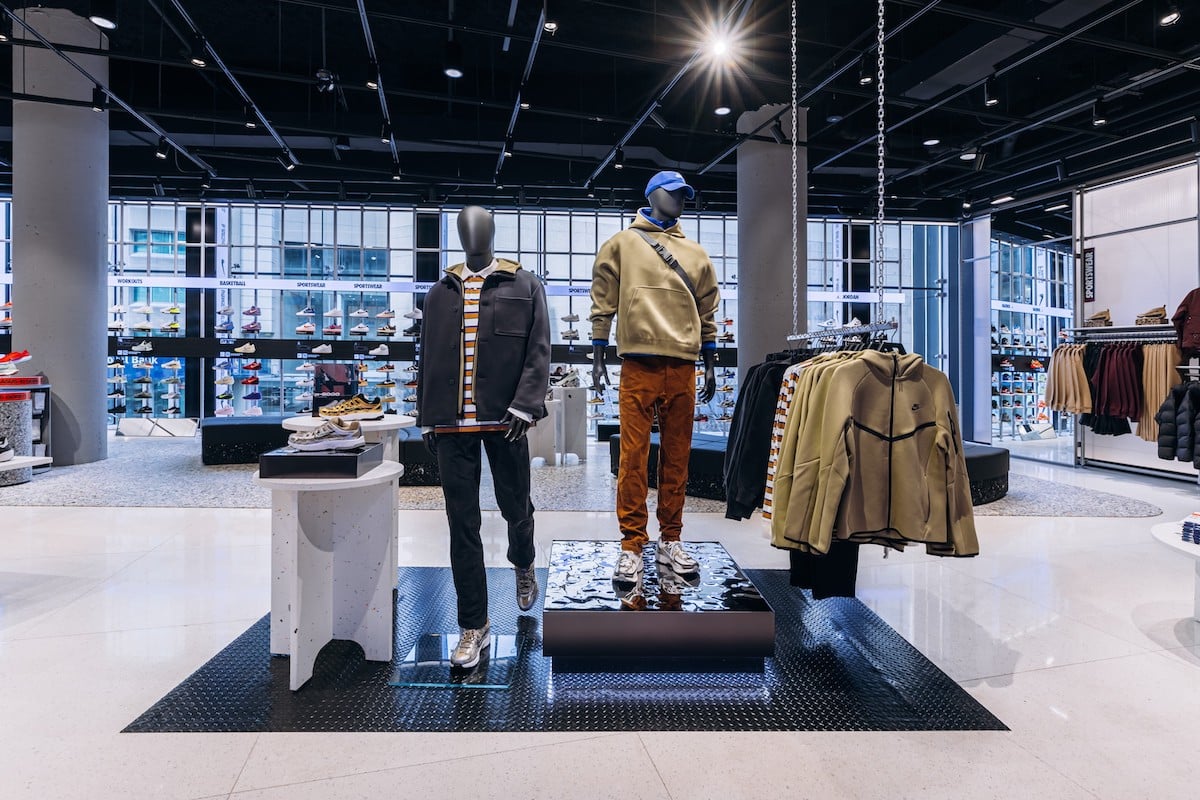
Men’s at the Nike Bloor flagship in Toronto. Image: Nike
North America
The Nike North America division took a number of positive steps to get the business back to profitable growth. The team worked hard to get product access to more premium locations. About 1,300 running spaces were reset at numerous retailers including Dick’s & Nordstrom in the quarter.
Hill indicated that Nike is pleased with the Nike brand store on Amazon and that it is performing better than anticipated.
There is still much work to do in the North American region as Nike strives to elevate & integrate the marketplace. Specifically as it relates to digital & physical channels and wholesale & Nike Direct. Nike would like to use work completed in North America as a blueprint for all other geographies.
For continued North America growth, Nike will focus on “win now” actions:
Focusing on the athlete
Marketing through emotional storytelling
Great product
Driving an integrated marketplace
Activate ground game
Greater China
There are “structural challenges” that Nike is facing in Greater China as it’s business was down -10% in Q1/Fiscal 26. Seasonal sell through was lower than expected which created large markdowns in order to keep the marketplace clean of excess inventory.
Nike remains committed to China as the country is passionate about several sports including basketball, football, running & training.
The plan for China is to lead with innovation & have sponsored athletes visit. This increases demand (this is the Nike formula for all regions). For Nike, sport is the pathway to winning in China.
Globally
Nike Digital is still “trying to find solid ground”. Although organic growth has slowed, the division is “pulling back” on promotions. Nike is trying to find the right assortment and marketing mix to bring consumers back to the Nike Digital “ecosystem”.
Nike has a presence in almost 190 countries and Hill warned that not all sports, channels & countries will recover on the same timeline. Nike’s recovery is not linear.
Hill is “realistic” that Nike is turning itself around at a time of fragile consumer confidence, evolving tariff dynamics and a Nike team that is “still settling” into it’s sport offense mentality. Nike realizes it has a lot “more to prove” and remains “hyper focused” on the athlete.
Tariffs
On the previous earnings call, Nike signaled that it was facing an annual tariff impact of $ 1 billion. Based on recent developments, this number has grown to $ 1.5 billion. Therefore, Nike forecasts that tariffs will negatively impact gross margin rate for fiscal 2026 by -120 bps, worse from the previous estimate of -75 bps 90 days ago.
Nike outlined a number of initiatives that are underway to try and mitigate some of this margin erosion.
Innovative Zone at the Nike Bloor flagship in Toronto. Image: Nike
Management Guidance
Q2/Fiscal 2026
The CFO indicated that Nike is anticipating revenue to grow by a low single digit percentage in Q2. He indicated that Nike Digital will face greater headwinds in Q2 than Q1. Gross margin rate is guided to be down between -300bps to -375bps in the quarter (this includes net headwinds to gross margin rate of – 175bps due to increased tariff impact). SG&A will grow by a high single digit percentage, which includes growth of operational overhead by a low single digit percentage. Nike’s tax rate for Q2 is anticipated to be in the low 20% range, due to changes in earnings mix.
Balance of Full Year – Fiscal 2026
Nike anticipates it will continue sales momentum with wholesale partners (returning to modest growth rates) as the companies spring order book is up over 2025. Growth will be led by sports. One of the priorities for fiscal 2026 is to fix Nike Digital and make it into a full-price business. Nike Direct will not be able to return to growth for fiscal 2026. North America will lead Nike’s recovery. Both Greater China & the Converse turnaround will require more time as well. There will be a modest headwind to revenue in both the Nike wholesale and Nike Direct businesses. Foreign exchange rates will be a tailwind to reported revenue overall. This will offer minimal benefit to margin rate however, as Nike is hedged. SG & A will grow low single digits as investments in demand creation are spent. Progress will not be linear for fiscal 2026.
As it relates to fiscal 2026 margin rate pressure, Nike discussed 3 drivers: 1) sell through, product mix, channel mix headwinds 2) transitory impacts from “win now” actions & 3) newly implemented tariffs.
Nike is planning to exit the first half of fiscal 2026 with a “healthy” marketplace. In the 2nd half, gross margin rate may be better as less is spent on discounts.
Analysts asked Nike if they will return to double digit profitability over time and management thinks this is achievable.
Nike indicated that the path back to double digit operating margins lies with organic growth. Nike aspires to have a greater full price mix which will help. Organic growth will drive operating leverage on SG&A and operating overheads.
Stock Dynamics
At the end of day September 30th, Nike stock was trading at $ 69.83 on the NYSE. Earnings were released after the bell and the stock opened October 1st at $ 73.03, up + 4.6%. The stock jumped further to $ 76.50 to open October 2nd but has since cooled to $ 71.74 at the time of writing (October 6th at 1:30 pm EST). Over the last year, Nike stock has dropped by – 12.7% & is down -43.3 % over the last 5 years.
My Commentary
Nike is a great brand and has shown signs of making progress on it’s transformation & recovery but much work remains. Although North America has shown positive signs in wholesale, overall global profits are down considerably and I wonder if the company needs to cut operational overhead further as more investment may be needed in product development and marketing. Emerging tariffs have hit Nike hard and must be mitigated to preserve gross margins. You can see the brand’s performance sinking in key markets like China & it’s Nike Direct business is not performing. I like Hill’s approach to turning around the company through it’s win now & sport offense methodology but time will of course tell how successful these efforts are given the new ultra competitive landscape and frugal consumer.
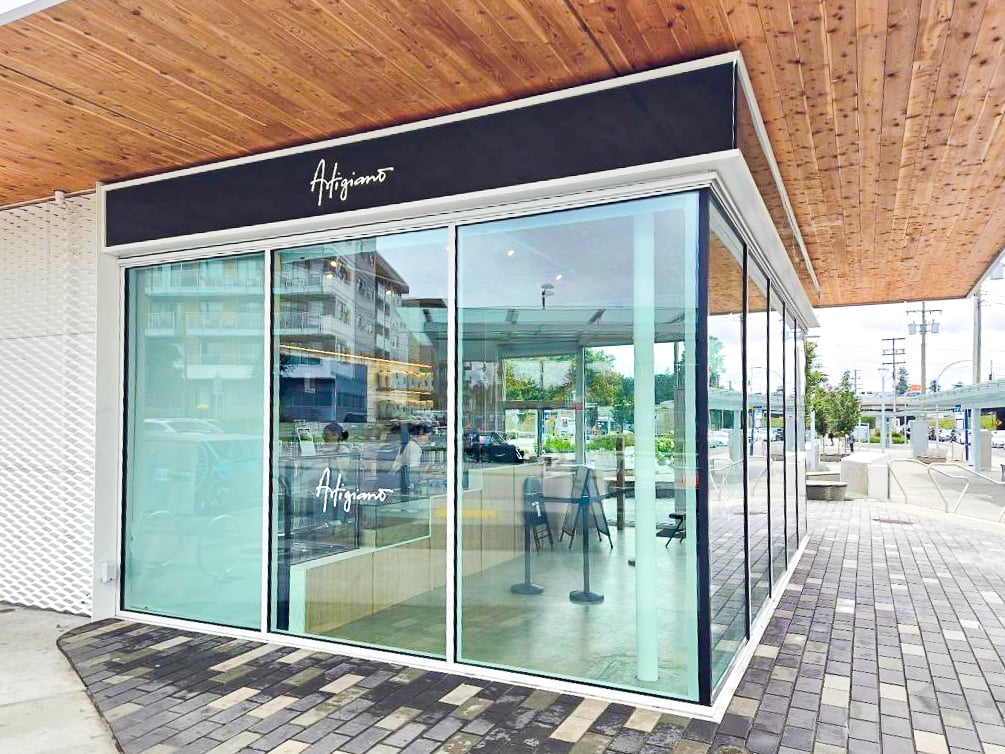
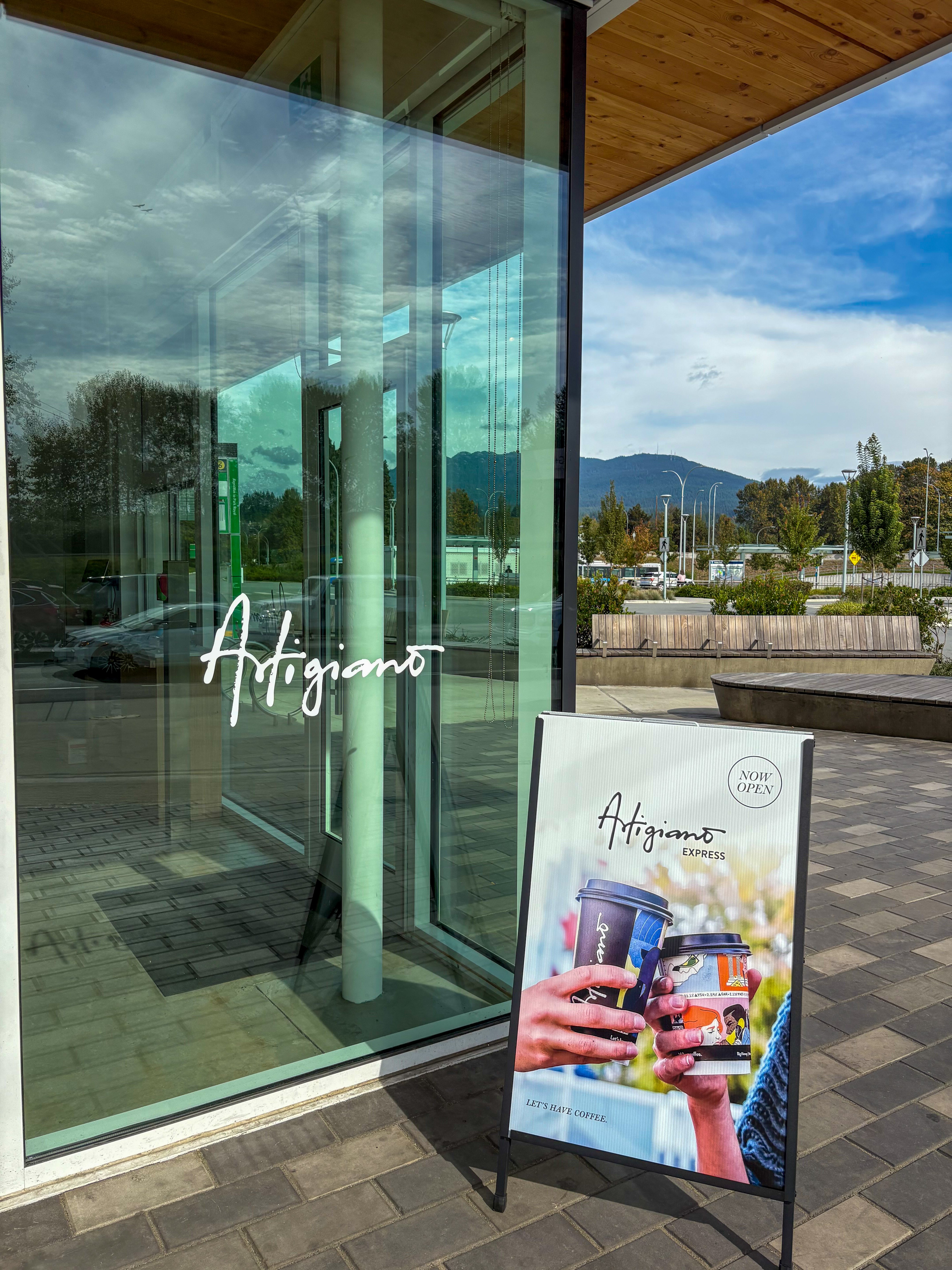
Vancouver cafe brand, Artigiano, has opened its first express location at Phibbs Exchange (1602 Main St, North Vancouver) in North Vancouver.
“Perfectly positioned in one of TransLink’s busiest transit hubs, this new Artigiano Express Cafe is designed for life on the move, offering commuters and travelers a quick, high-quality coffee and food experience before or after their bus ride,” explained the brand.
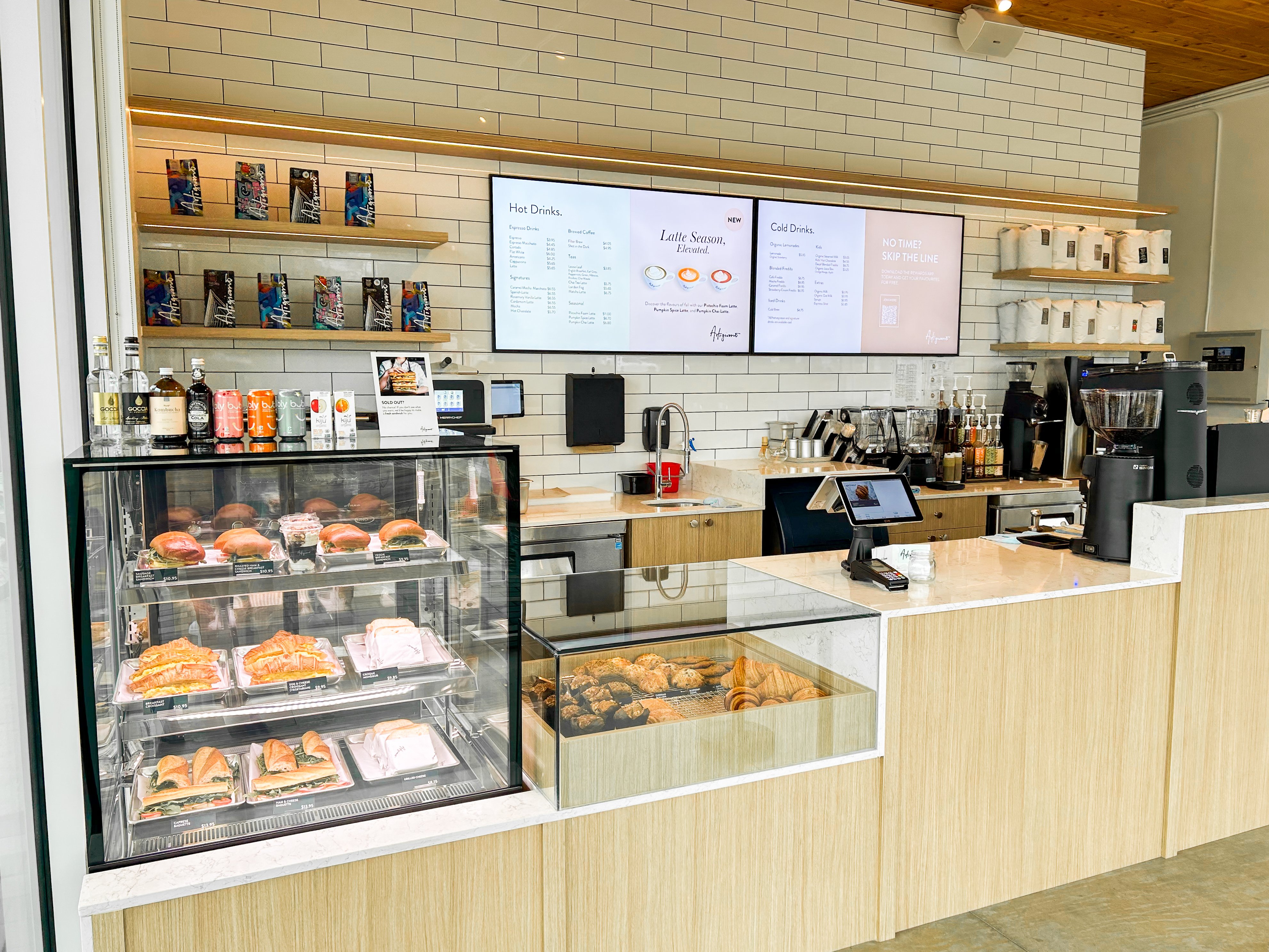
“With a streamlined menu built for speed and convenience, guests can expect Artigiano’s signature espresso beverages, fresh pastries, and handcrafted sandwiches – ready to grab, go, and enjoy. Despite its smaller footprint, the Phibbs Exchange location delivers the same dedication to quality that has defined Artigiano for over 25 years: expertly crafted drinks, fresh organic-forward, non-GMO and locally sourced ingredients, and friendly service.”
Dean Shillington
“This express concept is all about meeting our guests where they are – literally,” said Dean Shillington, President & Owner of Artigiano. “Phibbs Exchange is a bustling commuter hub, and we’re excited to offer a quick, elevated coffee and food experience for people on the go, without compromising the Artigiano quality they know and love.”
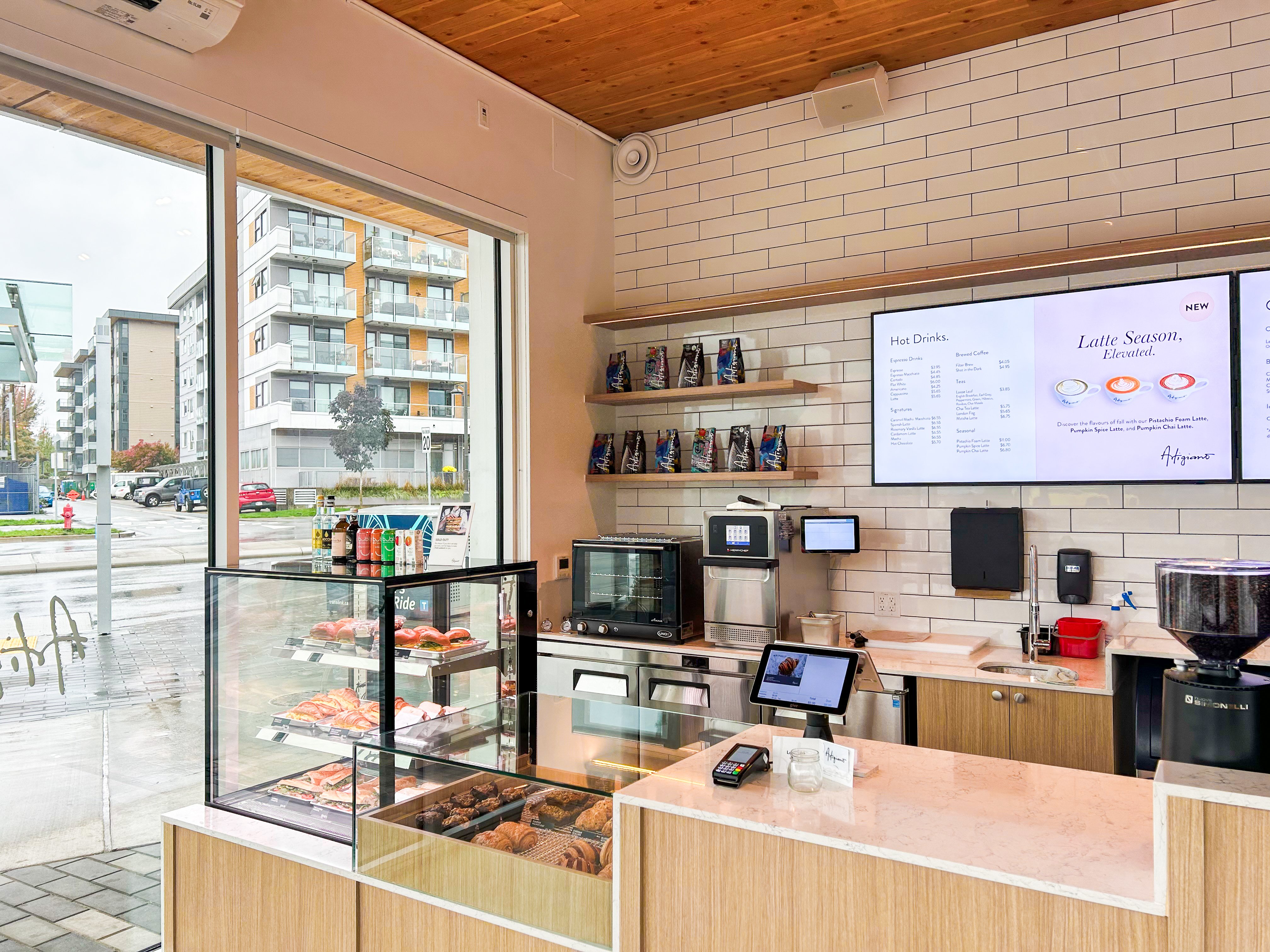
The Phibbs Exchange locations features a modern, efficient design with service tailored to peak commuter hours. Whether you’re grabbing a cappuccino before work, picking up a sandwich for your bus ride, or treating yourself to a pastry on the way home, this express cafe makes it easy to enjoy premium coffeehouse quality, fast, said the company.
“Adding to the convenience, Artigiano’s mobile app allows customers to pre-order and skip the line, making it even easier for busy commuters to enjoy their favorite beverages and snacks on the go. With just a few taps, customers can order ahead, pay seamlessly, and pick up their order when they arrive, making this express cafe experience even more efficient and tailored to modern lifestyles.”
Photo: Artigiano
Artigiano said the opening of this location underscores its ongoing growth and adaptability, bringing its European cafe-inspired approach to new formats that fit seamlessly into the daily rhythms of the community. Phibbs Exchange is Artigiano’s 22nd location.