Home Blog Page 337

Delancey Sports Blends Retail and Arcade Fun in Cottage Country

Josh Karam and Erika Mozes. Photo: Delancey Sports

In a world increasingly dominated by e-commerce giants and generic big-box stores, Delancey Sports has emerged as a distinctly personal, community-rooted alternative that blends athletic gear, local spirit, and even retro arcade games. The sporting goods retailer, co-founded by Erika Mozes and Josh Karam, has become a cottage country favourite, with three locations across Haliburton and Muskoka in Ontario. In just five years, what started as an impromptu response to the COVID-19 pandemic has evolved into a growing regional brand with national ambitions—and even a collaboration with one of Canada’s most iconic lifestyle names.

“We were running a tech company in New York City when the pandemic hit,” said Karam in an interview with Retail Insider. “New York was the epicentre, and we had to get out. So we left everything behind and came back to Canada.”

Settling in Haliburton, the couple found themselves drawn to the rhythms of a more outdoor, sport-oriented lifestyle, and quickly noticed a gap in the market.

“We were shocked there wasn’t a dedicated, modern sporting goods store serving the community,” said Mozes. “There was clearly an opportunity.”

By late 2020, Delancey Sports had opened its first store in Haliburton. The name, a nod to their old apartment at Delancey and Suffolk in Manhattan, served as a kind of tribute to their former lives. “We even named our lake house ‘The Suffolk,’” Mozes added with a laugh. “It just felt right to carry that energy into this next chapter.”

Photo: Delancey Sports

Retail With a Twist: Enter the Arcade

Today, Delancey Sports operates three storefronts: the original 1,500-square-foot Haliburton location, a seasonal pro shop at Sir Sam’s Ski Hill (launched in 2022), and a larger 2,500-square-foot space in Bracebridge opened in 2024. What sets Delancey apart—beyond its curated product mix—is the unexpected presence of a speakeasy-style arcade tucked into the back of its Bracebridge and Haliburton shops.

“I always wanted to open an arcade,” said Karam. “Standalone arcades aren’t always viable from a business perspective, but we realized it could work as a feature that added value to our retail concept.”

The arcade charges a flat $5 entry fee, with all games on free play. “It’s all sports-themed and family-friendly,” Mozes explained. “It gives parents a chance to shop, drop off their kids, or even just hang out with them.”

The idea proved to be more than just fun—it became a community touchpoint. “We’re seeing kids on PD days, grandparents babysitting grandkids—people love it,” said Karam. “There aren’t many intergenerational activities that work for everyone. This ended up being one.”

Curated for Cottage Country

Delancey Sports is not your average sporting goods store. The company focuses on high-quality, emerging brands with a strong Canadian component.

“We’re obsessed with sports ourselves, and everything we carry is tested or vetted by us,” said Mozes. “We’re proud to offer products that you won’t find in a typical big box.”

Brands like Left on Friday, Malvados, and Craft are part of the core assortment. “We’re also constantly looking to add more Canadian brands,” Mozes said. “It’s about showing people what’s new, what performs, and what aligns with the lifestyle out here.”

The company’s strategy targets both year-round residents and seasonal visitors in Ontario’s cottage country. “There’s been a huge population shift since 2020, with more people spending extended time in places like Haliburton and Muskoka,” said Karam. “These are active communities that want great gear. We’re here to serve them.”

Arcade area at Delancey Sports. Photo: Delancey Sports

From Whistler to Bracebridge: A Roots Partnership is Born

Delancey’s latest milestone is a co-branded product collaboration with Roots, the iconic Canadian lifestyle brand. What began as a chance visit to the Roots store in Whistler turned into something much larger.

“We were just skiing in Whistler and walked into the store,” said Karam. “We saw the location-specific product—like Roots Whistler—and thought, why isn’t there a Roots Halliburton or Roots Muskoka?”

Back home, they reached out to Roots and were thrilled when the brand agreed to collaborate. “For small business owners like us, this is a dream,” said Mozes. “As a kid in Ottawa, I used to go to the Roots store in Westboro. I still have vintage Roots pieces from back then.”

The first co-branded items launched last month in Bracebridge to coincide with the town’s 150th anniversary. Limited to just 150 hoodies and 150 t-shirts, the capsule collection sold briskly. Halliburton’s version is set to launch on Canada Day weekend.

“What’s really special is that Halliburton borders Algonquin Park, where the founders of Roots actually met,” said Karam. “So the Halliburton collection is inspired by that heritage, by the Algonquin vibe.”

Looking to the Future: Expansion and E-Commerce

While the co-founders are not rushing into new openings, expansion remains on the horizon. “I’d be surprised if we didn’t open more stores in the future,” said Karam. “There are still underserved towns, especially with ski hills or strong summer populations. The demand is there.”

In the meantime, the team is focusing on optimizing the existing stores and building out their e-commerce presence. “We already ship across Canada,” said Mozes. “But we want to continue growing in a way that stays true to what makes us different: community, curation, and authenticity.”

Delancey’s digital presence is also being used to spotlight Canadian brands and introduce them to a national audience. “It’s not just about selling product, it’s about telling stories,” said Mozes. “That’s what people connect with.”

Roots partnership with Delancey Sports. Photo: Delancey Sports

Navigating Retail Challenges: Tariffs and Tight Margins

Like many Canadian retailers, Delancey Sports has been affected by rising import tariffs, particularly on goods not manufactured domestically.

“Tariffs have been a challenge,” admitted Karam. “They haven’t been a nightmare, but they’ve definitely forced us to rethink some of our ordering decisions.”

Mozes added that while retail margins are already tight, they’re committed to making it work. “The reality is, we’ve become more focused on sourcing locally where we can,” she said. “That’s also why partnerships like the one with Roots make so much sense.”

A New Chapter for Small-Town Retail

Delancey Sports is more than a store — it’s a reflection of a lifestyle, a location, and a post-pandemic reinvention. For Mozes and Karam, the journey from Manhattan tech entrepreneurs to rural Ontario retailers may have been unexpected, but it’s one they’ve fully embraced.

“We’re entrepreneurs at heart,” said Mozes. “This wasn’t part of the plan, but it’s the best kind of surprise. We love what we’re building, and we’re excited about what comes next.”

More from Retail Insider: 

ATACZ opening first retail store in CF Richmond Centre

Photo: ATACZ
Photo: ATACZ

 ATACZ, the Vancouver-based, zero-waste brand known for transforming recycled plastic bottles into sleek, functional bags, is opening its first-ever retail store at CF Richmond Centre on July 19.

ATACZ has gained a loyal online following for its clean, minimalist designs and sustainable knit material, made from recycled plastic bottles. Now, the brand is excited to open the doors to its first-ever physical space in an 1,800-square-foot space.

Gigi Wong
Gigi Wong

Co-Founder and Head of Product Design, Gigi Wong described ATACZ as a Vancouver-based, zero-waste fashion brand that transforms recycled plastic bottles into sleek, functional bags.

“Our mission is to revolutionize how people perceive waste and fashion by merging sustainable practices with artistic design. Each ATACZ product embodies minimalist aesthetics, innovative craftsmanship, and a commitment to sustainability. We provide urban explorers with stylish, lightweight, and functional bags that align with their values without compromising on quality or style. By incorporating art and sustainability into every design, ATACZ is more than a brand—it’s a movement toward conscious consumption and a brighter future,” she said.

“ATACZ has built a loyal online community through our e-commerce platform, offering products to eco-conscious consumers across Canada and beyond. Beyond digital, we actively engage with our audience through pop-up shops, including regular appearances at Granville Island and an upcoming debut at Holt Renfrew. These events allow us to connect with customers face-to-face and share the story behind our brand. With the opening of our first retail store at CF Richmond Centre, we are expanding our presence and creating a space where customers can fully experience ATACZ’s commitment to sustainability and artistry.”

She said the retailer is unique because it blends sustainability, art, and functionality into every product.

“Our bags are crafted from recycled plastic bottles, showcasing the potential of upcycled materials in creating stylish, durable designs. We celebrate artistic expression by collaborating with talented artists whose work transforms our bags into wearable canvases. This focus on sustainability, artistic storytelling, and innovative craftsmanship sets us apart from competitors. ATACZ is not just a brand; it’s a lifestyle that empowers consumers to make conscious choices while embracing timeless, minimalist designs,” explained Wong.

“Opening our first retail store allows us to connect with customers in a more immersive and meaningful way. While our e-commerce and pop-up shops have been successful, a permanent retail space enables us to showcase ATACZ’s story, values, and products in a tangible environment. Customers can experience the craftsmanship, design, and sustainability of ATACZ firsthand. This store also represents a milestone in our journey, bringing us closer to our vision of inspiring a global upcycled fashion movement while building a strong community of conscious consumers.”

Photo: ATACZ
Photo: ATACZ

Wong said the brand chose CF Richmond Centre because it’s a high-traffic shopping destination that attracts a diverse and fashion-conscious audience.

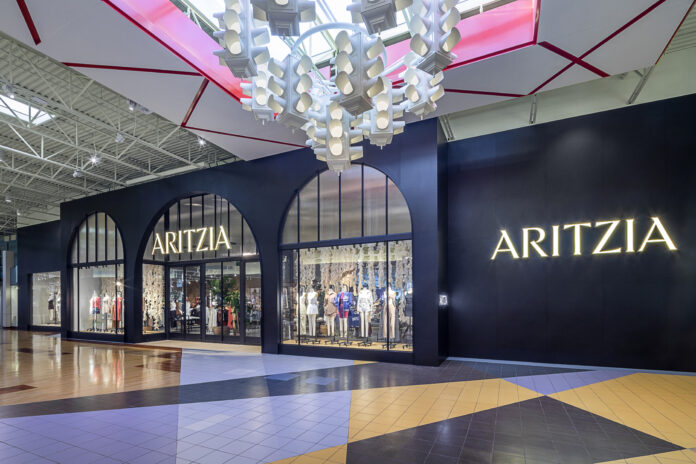
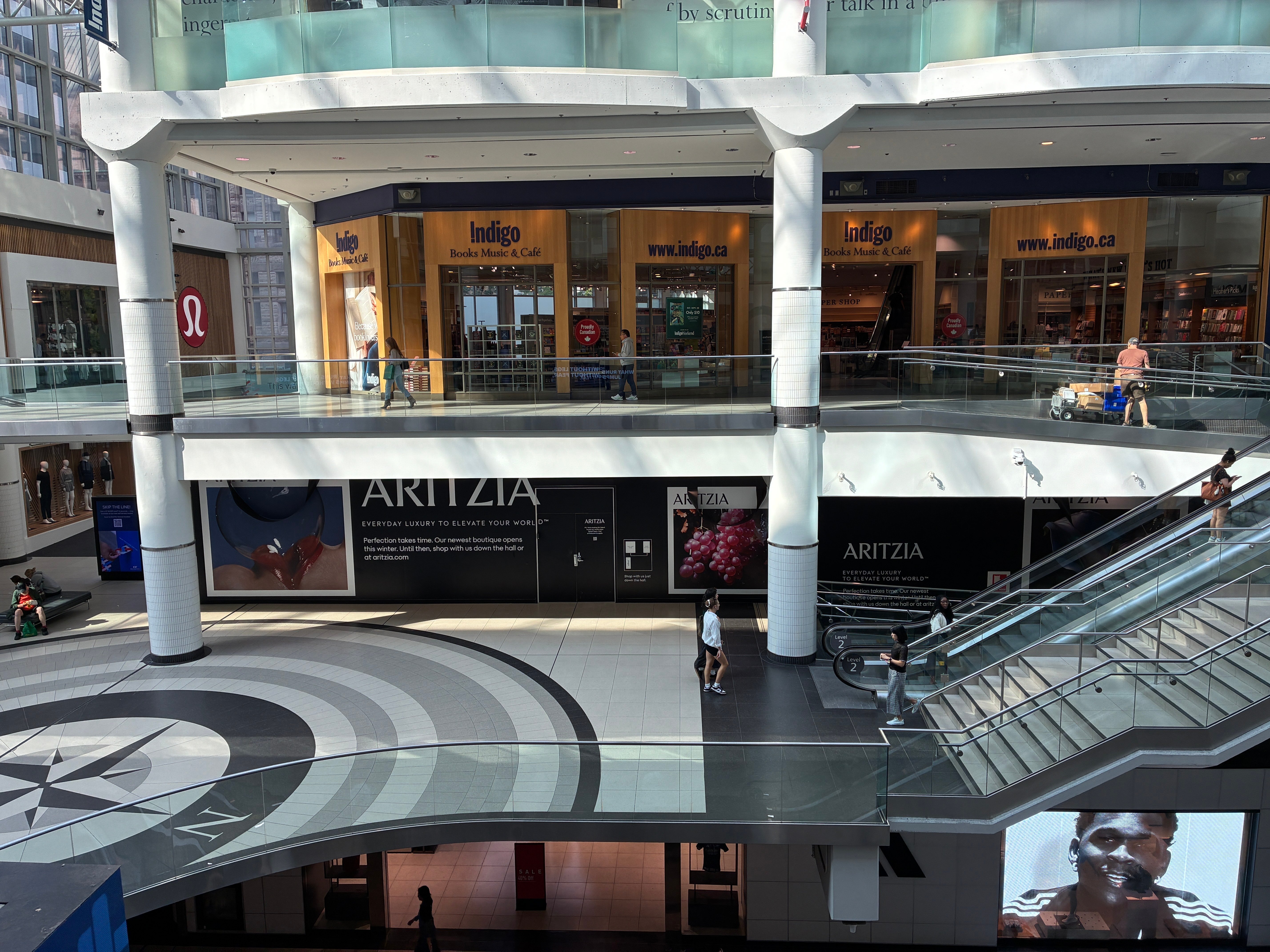
“As a proudly Canadian brand, opening our first store in Canada was important to us, and Richmond’s vibrant community aligns with our target market. The mall’s mix of innovative and lifestyle-focused brands, including Aritzia and Vessi, makes it the perfect location to introduce ATACZ to shoppers who value style, functionality, and sustainability. CF Richmond Centre provides an ideal platform to gain brand exposure and connect with like-minded consumers,” noted Wong.

“ATACZ has experienced rapid growth in just three years, culminating in the opening of our first store at Richmond Centre. In addition to our retail presence, we regularly host pop-up shops at Granville Island and are excited to debut at Holt Renfrew this month. Looking ahead, we plan to expand our e-commerce platform and organize more pop-up shops across Canada in 2026 and 2027. We also aim to explore collaborations with like-minded brands and hotels to create exclusive, sustainable products. At ATACZ, we’re building not just a brand, but a lifestyle and community that inspires conscious living.”

Related Retail Insider stories:

Farm Boy to Open 3 New Ontario Stores Amid Growing Demand

Image: Farm Boy

Farm Boy has announced the addition of three new locations to its growing network of Ontario grocery stores. The latest stores will be located in Kanata at 700 Terry Fox Drive, in Ottawa at Bank Street and Skipper Drive, and in downtown Collingwood at 39 Huron Street. These openings mark the continuation of Farm Boy’s steady provincial growth under parent company Empire Company Limited.

“The excitement for Farm Boy is contagious,” the company stated in a message shared on its website. “Our focus is on bringing fresh, high-quality food options to both urban and suburban areas, ensuring everyone has a chance to experience the Farm Boy quality and value.”

Although official opening dates have yet to be confirmed, Farm Boy emphasized that negotiations and construction timelines can be fluid, and it encouraged customers to check its website regularly for updates.

Strategic Expansion in Key Ontario Markets

The newly announced Farm Boy new Ontario stores are part of the brand’s broader growth strategy to deepen its footprint across the province. By selecting a mix of suburban and smaller urban markets, the retailer is demonstrating confidence in its proven formula of chef-prepared meals, fresh produce, and a distinct in-store atmosphere.

The upcoming Collingwood location at 39 Huron Street marks the brand’s first store in the Simcoe County town, which has seen an influx of residents and tourists in recent years. Meanwhile, the two new Ottawa-area stores continue the brand’s expansion in its home territory, where Farm Boy maintains a particularly strong customer base.

Ottawa Roots and a Province-Wide Presence

Founded in Cornwall in 1981 by Jean-Louis and Colette Bellemare, Farm Boy began as a modest 300-square-foot produce stand. Over the past four decades, it has evolved into a full-fledged grocery chain with 51 locations across Ontario. Headquartered in Ottawa, the company has retained its local roots even as it grows under the ownership of Empire Company Limited, which acquired Farm Boy in 2018.

Despite being part of a larger national grocery group, Farm Boy has remained focused solely on the Ontario market. Each new store reflects the brand’s emphasis on community, freshness, and curated offerings tailored to local tastes.

Farm Boy Sugar Wharf (Image: Dustin Fuhs)

A Distinct Shopping Experience

Farm Boy differentiates itself from larger supermarket chains through a fresh-market concept that places customer service and quality at the forefront. Unlike typical big-box grocers, Farm Boy stores are often smaller in scale and designed to feel more like boutique markets. The company avoids self-checkouts, instead emphasizing personal interaction with knowledgeable team members throughout the store.

Its slogan, “It’s All About The Food,” is reflected in the layout and offerings of every location. Stores feature a mix of farm-fresh produce, premium deli and butcher selections, local and international cheeses, bakery items, and sustainable seafood. The retailer also places a strong emphasis on chef-prepared meals, with in-store kitchens producing soups, salads, and entrees made from scratch.

Private Label and Local Sourcing

A defining feature of Farm Boy’s success is its expansive range of private-label products, many of which are exclusive to the brand. From snack foods and sauces to frozen items and bakery treats, these items have helped cultivate strong customer loyalty.

In addition, Farm Boy’s dedication to local sourcing is central to its identity. The company works closely with Ontario farmers and food producers to stock hundreds of regionally sourced items. This connection to community vendors aligns with the retailer’s brand values and bolsters its reputation as a supporter of the provincial economy.

Customer Enthusiasm Driving Growth

Farm Boy says its customer base is eager for new stores, and that community excitement plays a central role in site selection. “We hear from countless customers every day, eager to know when a store will be gracing their city,” the company noted on its website. “This outpouring of support is truly heartwarming, and we can’t wait to bring the Farm Boy experience to even more communities.”

The company also acknowledged the time required to finalize lease negotiations and complete construction. “We have some exciting plans brewing, but for now, we kindly ask for your patience. Negotiations can take time, and opening dates can sometimes shift due to unforeseen circumstances,” the statement read.

More from Retail Insider:

Canadian Retail News From Around The Web For July 18, 2025

Canadian Retail News From Around The Web

News at a Glance

Retail Insider is streamlining its Canadian retail news from around the web to include a handful of top news stories that can be viewed quickly during the day. Here are the top stories from the past 48 hours.

Quebec-based Couche-Tard pulls out of bid for 7-Eleven parent company (CBC)

Starting your back-to-school shopping before more tariffs hit? You may not save by going early (Globe & Mail)

Cizzle Brands’ CWENCH Hydration™ Now Sold in Over 300 Sobeys Locations Across Canada (Street Insider)

Little Caesars signs largest Canadian franchise deal yet (Chain Store Age)

Quebec’s international merchandise exports increased by 1.3 per cent in May (The Canadian Press)

Explorer Hotel’s owner buys lower Centre Square Mall in Yellowknife (Cabin Radio)

Creston area duty-free store struggling with sharp drop in Canadian travellers (My Creston)

SAQ tightens its return and exchange policy to curb revenue losses and limit fraud (CityNews)

lululemon to open 300,000 sq. ft. office above former Nordstrom in Vancouver | Urbanized

New restaurants among 21 businesses confirmed to open at Gilmore Place in Burnaby’s Brentwood district (Daily Hive)

Jimmy John’s Sandwich Chain Readies for Winnipeg Opening (ChrisD)

‘Trying to make ends meet’: Halifax store owner says construction is devastating business (Global)

Longtime Annapolis Valley grocery store clerk retiring (CBC)

Shooting at Yorkdale mall parking lot leaves man in his 20s dead (Global)

Hudson’s Bay fires back at lender seeking termination of Ruby Liu deal: court docs (CBC)

‘Keep your money in Canada’: Duty-free shop owner urges travellers to buy local (CTV)

Trump tariffs live updates: Canada struck with 35% tariffs, Trump floats higher blanket rates (Yahoo)

Aritzia Q1 revenue climbs 33% (Fashion Network)

Edmonton City Centre Mall ordered into receivership (MSN)

Loblaw opens 4 discount stores across 3 provinces (Fresh Plaza)

CHARLEBOIS: Everyone’s suddenly a supply management expert but few understand it (Yahoo)

New Maxi store opens in downtown Montreal (Grocery Business)

‘Not an easy decision’: The Beer Store is closing 10 more stores in Ontario, including 5 in the GTA (CP24)

ARI opens new Spectrum boutique at Québec City Jean Lesage International Airport (Global Travel Retail)

Toronto BIA warns business owners of ‘point of sale’ scam after thousands of dollars in thefts (CBC)

B.C.’s Meiga Supermarket to close its doors this summer (Canadian Grocer)

‘It’s getting out of hand!’ Jewellery store owners speak out after a rash of recent break-ins (CityNews Toronto)

Roadwork is costing Montague businesses some customers, store owners say (CBC)

Newmarket Costco set to open in August (Grocery Business)

A Bathing Ape to Open 1st Canadian Store in Vancouver

Image: A Bathing Ape (BAPE)

Japanese streetwear powerhouse A Bathing Ape (BAPE) is preparing to launch its first-ever Canadian storefront in downtown Vancouver. The cult-favourite fashion brand, known for its bold graphics and influential collaborations, has secured a 3,707-square-foot retail space at 1020 Alberni Street, right in the heart of the city’s luxury retail corridor.

The highly anticipated A Bathing Ape Vancouver location is adjacent to the newly opened Ralph Lauren store at 1026 Alberni Street. Both storefronts occupy what was formerly the home of Brooks Brothers, continuing the transformation of Alberni Street into one of Canada’s most sought-after luxury retail addresses.

Future location of A Bathing Ape (BAPE) at 1020 Alberni Street in Vancouver. Photo: Martin Moriarty

Entry into Canada’s Competitive Fashion Market

The Vancouver store marks A Bathing Ape’s formal entry into the Canadian market, where it will join a roster of high-profile fashion retailers catering to a young, fashion-conscious demographic. Known for its limited-edition releases, celebrity endorsements, and innovative collaborations, BAPE has built a loyal following around the world.

The new Vancouver location aligns with BAPE’s broader strategy to expand its physical presence in key global markets. With over 120 stores worldwide, including flagship locations in Tokyo, New York, Los Angeles, London, and Paris, the Canadian launch adds another milestone to its impressive global retail footprint.

Strategic Positioning on Alberni Street

Alberni Street has become Vancouver’s de facto luxury fashion district over the past 15 years, now home to brands such as Hermès, Cartier, Van Cleef & Arpels, Tiffany & Co., and Panerai. The addition of A Bathing Ape Vancouver highlights the growing convergence between high fashion and premium streetwear, particularly in global gateway cities such as Vancouver.

The lease deal for 1020 Alberni was negotiated by Jessica Adler of Lantern Real Estate (representing BAPE), with Mario Negris and Martin Moriarty of Marcus & Millichap Canada acting on behalf of the landlord. Negris and Moriarty have been instrumental in elevating Alberni Street into a retail destination with global prestige.

In May 2025, Ralph Lauren opened a 5,500-square-foot storefront at 1026 Alberni Street, reinforcing the appeal of the block to international fashion brands. BAPE’s arrival next door underscores the continued momentum for Alberni as a high-demand retail zone.

A Bathing Ape at American Dream in New Jersey. Image: A Bathing Ape (BAPE)

A Brand Born from Harajuku Cool

Founded in 1993 by designer and DJ Tomoaki “Nigo” Nagao, A Bathing Ape originated from the Harajuku district in Tokyo, where it quickly gained notoriety for its loud aesthetics and boundary-pushing fashion. The name itself, a nod to the 1968 film Planet of the Apes and a Japanese idiom about overindulgence, reflects the brand’s irreverent ethos.

BAPE is widely credited as a pioneer in Japanese streetwear, having helped shape the “Ura-Harajuku” movement alongside other influential designers like Jun Takahashi of Undercover. From its Ape Head logo to the iconic Shark Hoodie, Bapesta sneakers, and Bape Camo, the brand’s design language has become instantly recognizable.

BAPE’s sub-labels such as AAPE and BAPY (Busy Working Lady) have broadened its reach to younger and more female-centric audiences. Today, the brand produces men’s, women’s, and kids’ apparel, as well as footwear, watches, accessories, and even home goods.

Global Reach with Deep Cultural Roots

While BAPE’s streetwear identity remains firmly rooted in Japan, its cultural impact has always transcended borders. The brand’s global reputation has been bolstered by collaborations with music artists like Pharrell Williams, Kanye West, and Kid Cudi, along with fashion partnerships with Supreme, New Balance, adidas, and luxury watchmakers like Swatch and Casio.

Even after Nigo’s 2011 sale of the brand to Hong Kong-based I.T Group, and his formal departure in 2013, A Bathing Ape has retained its unique aesthetic. It has continued to thrive by maintaining scarcity, exclusivity, and cultural relevance in an increasingly crowded fashion marketplace.

BAPE’s approach to limited releases and high-profile collaborations continues to fuel demand in both primary and resale markets. The A Bathing Ape Vancouver location will likely attract both brand loyalists and first-time customers eager to experience the label’s immersive retail environment.

Vancouver as a Launchpad for Canadian Expansion

The opening of A Bathing Ape Vancouver could signal the beginning of a broader Canadian rollout for the brand. While no further store locations have been confirmed, Toronto would be a logical next step, given its scale and streetwear-savvy consumer base.

However, BAPE’s expansion model typically favours precision over rapid rollout, often testing new markets before committing to additional locations. If the Vancouver store proves successful, it could pave the way for more permanent retail footprints in other major Canadian cities.

More from Retail Insider:

Leyad acquires Niagara’s Pen Centre for $140 Million in landmark deal

Pen Centre owned by Leyad (CNW Group/Leyad)

Leyad has acquired the Pen Centre, Niagara Region’s dominant shopping destination, in a landmark transaction valued at $140 million.

Leyad is a privately held real estate investment and development firm focused on acquiring and repositioning strategic assets in high-growth markets. With a growing portfolio across major Canadian cities, Leyad said it is committed to building communities and creating long-term value through visionary real estate projects.

The shopping centre was previously owned by Investment Management Corporation of Ontario.

Located in St. Catharines, the Pen Centre comprises over 1.1 million square feet of gross leasable area on 2.8 million square feet of land. The property is anchored by leading national tenants including Loblaw Companies, Walmart Supercentre, Sephora, and Lululemon, all of which are secured under AAA covenants, noted Leyad.

Henry Zavriyev
Henry Zavriyev

“This is a transformational acquisition for Leyad,” said Henry Zavriyev, CEO of Leyad. “The Pen Centre is not only a premier retail destination serving over 8 million visitors annually, but also a site with extraordinary long-term development potential.

“We see the opportunity to bring thousands of multi-residential units to this already-thriving hub, adding immense value to the community.”

With current retail sales of approximately $650 per square foot, the Pen Centre is a high-performing asset in one of Canada’s most vibrant and growing regions, explained the company.

“Leyad’s vision is to maintain and elevate the Pen Centre’s role as the commercial anchor of the Niagara region while actively exploring the site’s significant mixed-use redevelopment potential,” it said.

“The acquisition marks one of the most substantial retail real estate transactions for the region in recent years and reflects Leyad’s continued focus on strategic, value-add investments across Canada.”

Pen Centre owned by Leyad (CNW Group/Leyad)

Related Retail Insider stories:

How Smart Office Tools Are Helping UK Retailers Save Time and Money

The Shift Toward Operational Precision

Across the UK, 2025 marks a turning point in how retail SMEs are managing their day-to-day operations. The macroeconomic climate, pressured by inflation, rising wages, and new tax structures, has made time not just a resource but a cost centre. As retailers search for new efficiencies, a clear pattern is emerging: small, low-cost optimisations at the office level are creating measurable savings.

From stockroom workflows to back-office routines, the strategic deployment of smart office tools is enabling businesses to cut costs, streamline processes, and reduce human error. Micro-efficiency has replaced scale as the new frontier of competitiveness.

Where Time (and Profit) Gets Lost

According to the Dojo Report, nearly one in three UK SMEs admit to lacking basic operational systems. The result? Duplicate orders, misfiled inventory sheets, and onboarding that takes three times longer than it should.

In practical terms, this kind of disorganisation translates directly into wasted time across multiple parts of the business. Staff regularly spend hours each week just trying to locate basic supplies that were misplaced, never labelled, or ordered inconsistently. It’s not uncommon for teams to lose entire mornings searching for documents or equipment that should have been easy to find, costing more than just time, but also energy and morale.

Onboarding new staff becomes another operational bottleneck. Without standardised materials or documented workflows, each training cycle turns into a unique, drawn-out process, often relying on improvised explanations or informal peer-to-peer support. This not only delays productivity for new employees but increases the chances of repeated mistakes as everyone learns a slightly different version of “how things are done here.”

Administrative errors compound the issue. Simple miscommunications, whether due to unclear processes, missing tools, or duplicated responsibilities, lead to rework, follow-up emails, or even lost orders. These aren’t dramatic failures, but small inefficiencies repeated daily. Over time, they create drag across the entire system.

Time is money, and in a retail environment, every hour spent untangling internal confusion is an hour not spent improving service, optimising stock, or generating revenue. Multiply that across a quarter or a full year, and even the leanest team can lose thousands of pounds in preventable inefficiency. The impact isn’t just operational. It becomes cultural, setting a tone where disorder is tolerated and improvement is perpetually postponed.

Micro-Efficiencies and the Hidden ROI of Office Tools

One of the most overlooked areas of cost-saving in UK retail? The physical tools in your back office.

Office machines may seem mundane, but they are operational powerhouses when deployed correctly. In particular, tools like label makers and laminators (e.g. Brother QL-series or basic GBC laminators), widely used across UK retail teams and available via dedicated office machine providers, have proven to save hours each month by reducing sorting errors, improving product visibility in stockrooms, and standardising internal processes.

A retailer running even three locations can waste hundreds of cumulative hours annually if each team uses different labelling standards, packaging routines, or documentation formats. Smart machines allow these processes to be systematised without requiring complex software or training.

Beyond time-saving, these tools also support better compliance. Laminated signage for health and safety regulations, clearly labelled emergency exits, or expiry-tagged stock bins can help businesses stay within the law while maintaining operational clarity.

This isn’t about upgrading to cutting-edge tech. It’s about using affordable tools to close the gaps in daily workflows, the kind of gaps that erode profit quietly, one misstep at a time.

The SME Productivity Gap

Xero’s 2024 SME Fallacy Report (UK Operations Edition) outlines a stark truth: smaller UK businesses trail behind mid-sized ones not due to lack of effort, but due to chaotic processes.

The research shows that SMEs lose up to 10% of potential revenue annually simply because of unclear workflows, inconsistent communication, and operational drag. While mid-sized competitors often have SOPs (Standard Operating Procedures) in place, micro-retailers rely on informal habits, which break down as teams grow or change.

This productivity gap isn’t just internal. Customers notice. A 15-minute checkout delay or an out-of-stock item that should have been reordered last week, these aren’t just slip-ups; they’re symptoms of a system under strain.

Smart office infrastructure isn’t about digital transformation buzzwords. It’s about applying business hygiene to everyday tasks. The payoff? Fewer mistakes, smoother team handovers, and a better customer experience.

Operational Clarity and Team Morale

While cost savings are essential, the emotional impact of disorganised systems is often underestimated.

Employees working in chaotic environments report higher stress levels, increased frustration, and lower trust in management. Without clear protocols or reliable tools, teams spend more time second-guessing, correcting each other’s work, or chasing down managers for simple clarifications.

Operational clarity, supported by structured office tools, creates a calmer, more productive environment. When expectations are clear and workflows are consistent, employee turnover drops, absenteeism declines, and performance improves.

In retail, where margins are tight and service quality is make-or-break, these human factors can have a material effect on profitability.

Team Efficiency and Operational Calm

One of the smartest moves a growing retailer can make is to standardise operational inputs across locations. That means consistent supply ordering, unified desk setups, and harmonised documentation.

By standardising their tools across locations, teams operate faster and with fewer mistakes. Suppliers offering essential stationery and office items like pens, folders, and storage solutions allow businesses to create consistent work environments that minimise confusion and speed up execution.

Standardisation reduces cognitive load. When teams across a business operate with the same tools, labels, formats, and storage methods, the number of micro-decisions each employee must make throughout the day drops significantly. They don’t need to ask, “Where do we keep X?” or “What type of paper do we use for Y?” They already know, because it’s the same answer across departments, across locations, and across roles.

This seemingly small consistency removes friction. It also enhances onboarding, because new employees can step into a predictable structure rather than decoding a personalised or improvised system. Over time, this kind of environmental fluency creates confidence and fluency in daily routines. People spend less time searching, second-guessing, or improvising and more time executing.

But the value isn’t just operational, it’s financial. Standardisation reduces cost volatility by creating more accurate forecasts and purchasing patterns. Instead of reactive orders from multiple suppliers, teams can batch purchases, consolidate vendor relationships, and benefit from negotiated discounts. It becomes easier to monitor usage, prevent overspending, and anticipate restocking needs before they become urgent.

In the bigger picture, the return on investment doesn’t arrive in a single dramatic savings event. It accumulates quietly through time saved, errors avoided, stress reduced, and systems reinforced. The real ROI shows up not in one big cost-saving moment, but in hundreds of small efficiencies that snowball into long-term predictability and control.

What Big Players Are Doing

The trend toward operational optimisation isn’t just for small businesses. 

As Reuters reported, large UK retailers began 2025 with a significant push to find internal savings ahead of planned tax hikes.

Unlike their smaller counterparts, large retailers have entire teams dedicated to procurement strategy, logistics, and productivity benchmarking. But the underlying tactic remains the same: invest in operational clarity now to reduce cost exposure later.

The message is clear. Whether you employ 5 people or 5,000, operational sloppiness is no longer affordable.

This is not simply a question of cutting waste, it’s about building organisations that can respond faster, train staff more effectively, and operate consistently under pressure. Companies that previously relied on informal systems are now investing in structure as a form of resilience.

The pandemic may have accelerated this trend, but the real driver now is economic volatility. From warehouse layouts to supply ordering protocols, everything is being examined through the lens of operational clarity.

And as the cost of inaction rises, more executives are beginning to treat internal efficiency as a form of strategic defence.

This shift has been widely documented across the UK retail sector, including recent coverage from Retail Insider, where operational discipline is increasingly positioned as a competitive advantage.

Decision-Making Under Pressure: When Structure Becomes Strategy

One often underestimated benefit of operational systems is their role in decision-making. In smaller retail businesses, choices about staffing, ordering, pricing, or customer complaints are frequently made in the heat of the moment. Without structure, these decisions tend to be reactive, and costly.

When workflows are inconsistent, and tools are ad hoc, managers spend more time firefighting than thinking strategically. Decisions become guesswork rather than informed moves. Over time, this reactive mode doesn’t just drain time, it shapes company culture. Teams get used to improvisation, which undermines predictability and increases the margin for error.

In contrast, structured environments, where roles, responsibilities, and systems are clearly defined, create space for better decisions. Leaders can rely on documented processes instead of reinventing the wheel. This clarity reduces emotional noise and enables teams to act with more confidence.

Especially in 2025, where margin pressure is high and agility is non-negotiable, procedural clarity isn’t just a productivity tool. It’s a filter for smarter, faster, lower-risk decision-making.

UK SME Productivity – The Data Doesn’t Lie

The ONS Productivity Report (2023 Trends in UK Business Dynamism) underscores an ongoing concern: UK SME productivity has plateaued.

Between 2010 and 2023, larger businesses saw modest gains in efficiency, while micro and small businesses showed little to no improvement. This stagnation is not due to laziness or lack of talent. It’s structural.

Tools, processes, and standardisation are what move the needle. Without them, even the best employees are operating with one hand tied behind their back.

Investing in basic office infrastructure, combined with training and expectations, can help smaller businesses escape this productivity trap.

Beyond Efficiency: How Structure Enhances Brand Perception

Operational workflow architecture quietly defines both how a business runs and how it’s perceived.

When customers interact with a well-organised store, receive consistent documentation, or notice the professionalism in product labelling, it builds trust. System design communicates seriousness. It shows that a business isn’t improvising its way through the day, but operating with intention.

In the age of Google reviews and instant comparisons, brand perception can be shaped in seconds. Messy store layouts, hand-written signs, or inconsistent packaging dilute credibility.

Smart retailers recognise that operations and brand are now intertwined. Efficiency is no longer just about what happens behind the scenes, it’s about what customers feel at the front lines.

How Physical Layout Affects Digital Efficiency

An often-ignored link exists between physical workspace layout and digital system performance. In retail back offices and small HQs, staff often switch between analogue tasks (e.g., inventory checks, packaging) and digital tools (e.g., order tracking, CRM updates). If the workspace is disorganised, it creates friction, even when digital systems are in place.

A cluttered environment slows down everything. It increases error rates when transferring physical to digital data, makes it harder to locate needed documents or devices, and leads to more interruptions. Retailers who redesign their workspaces with simplicity and repeatable workflows in mind often discover that even their digital performance improves.

The key is alignment. Physical systems and digital tools should support each other. When they do, teams become faster, more accurate, and less stressed.

The Compounding Power of Small Wins

There’s a myth in retail that only big overhauls create real progress. But as 2025 unfolds, a new narrative is gaining traction: consistent, minor optimisations can compound into transformative change.

When a team saves five minutes daily by using consistent folders, that adds up to over 30 hours a year. When three departments eliminate rework by using shared templates, it frees up capacity for growth initiatives. None of these shifts are dramatic in isolation, but together, they reduce friction, increase momentum, and generate resilience.

Retailers who embrace this mindset stop chasing perfection and start building smarter habits.

When Tools Replace Meetings

Another overlooked benefit of intelligent back-office systems is its ability to reduce unnecessary communication. When everyone knows what label goes where, or which version of a document to use, there’s no need for clarification emails or emergency meetings.

Tools, when used well, act as silent communicators. A properly labelled cabinet is a message. A laminated checklist on the wall is a form of guidance. These quiet interventions reduce decision fatigue, free up cognitive bandwidth, and make it easier for staff to focus on delivering value.

In smaller teams where multitasking is constant, these small moments of saved attention make a big difference.

The Operational Edge: What Retailers Can Do Today

Retailers looking to become more efficient in Q3 2025 don’t need to invest in major software or consultancy projects. They can start with what’s already within reach.

Unifying office machines across locations ensures consistent labelling, document formatting, and workflow habits. Creating simple, repeatable SOPs for key tasks like onboarding or ordering reduces mistakes and saves onboarding time. Partnering with a single supplier for basic tools, from folders to printers, removes chaos from procurement.

Adding visual systems like laminated signs or colour-coded storage helps teams move faster and with more confidence. Most importantly, leaders should begin tracking where their teams lose time each week, because what gets measured gets optimised.

Operational clarity is not a luxury for large enterprises. It’s a necessity for every retailer who wants to stay competitive in an increasingly time-sensitive, cost-conscious economy. It starts with the simple question: What can we fix today that will still save us time six months from now? Small fixes don’t just save time, they shape momentum.

How Arcade Entertainment Is Moving From Retail to Home in 2025

A New Era of Home-Based Arcade Leisure

Arcade entertainment is no longer confined to malls, cinemas, or niche bars. In 2025, the arcade is coming home, and it’s not a compromise. A new wave of consumers, particularly affluent Gen Z and millennial homeowners, are driving demand for immersive gaming experiences once reserved for retail environments. This trend is no longer marginal; it’s reshaping how we think about both entertainment and the home itself.

According to a report by Market Research Future, the global arcade gaming market is expected to grow from USD 12.45 billion in 2021 to USD 22.63 billion by 2030, fuelled by rising interest in retro gaming, multisensory play, and tech-enabled nostalgia.

Where once arcade machines were the domain of leisure complexes, they are now integrated into luxury home designs, entertainment basements, and even living rooms. The COVID-19 pandemic intensified this movement, accelerating consumer interest in home-based experiences that replicate, or surpass, what retail once offered.

The shift is no longer just about access to gaming. It’s about reclaiming the experience of arcade play in private, design-led environments. And that changes everything for both retailers and entertainment brands.

How Retail Is Using Arcade as an Experiential Layer

Retail strategy in 2025 has become increasingly about immersion. For the Gen Z consumer raised on touchscreens and TikTok, static displays no longer engage. Arcade setups are now being deployed inside physical retail environments to create experiential, interactive moments that slow the customer down, create emotional imprinting, and deepen dwell time.

Brands in sectors from sportswear to tech are integrating retro cabinets, racing simulators, and VR zones as part of their hybrid retail strategy. For luxury buyers, these aren’t gimmicks; they’re part of a broader lifestyle narrative. They tap into nostalgia, yes, but also demonstrate brand fluency in entertainment culture.

We see the rise of hybrid destinations: shopping centres that also serve as micro-theme parks. Nike, for example, experimented with immersive basketball simulations in its flagship stores. Smaller brands are following suit, integrating gaming as a way to humanise their brick-and-mortar experience.

This makes perfect sense in an era where consumer attention is fragmented and foot traffic is a privilege. The arcade offers an interaction that’s physical, social, and emotionally loaded. It’s not about gameplay, it’s about emotional engineering.

Experts from Home Games Room believe that the growing interest in immersive, game-inspired home spaces reflects how consumers now define leisure as something deeply personal, design-driven, and emotionally intelligent.

Rather than being novelty pieces, arcade machines have become part of a larger movement in interior design: creating “entertainment zones” that blend seamlessly into the home’s aesthetic and purpose. According to HGR, this is about more than nostalgia, it’s about curation.

These entertainment setups are evolving into lifestyle statements, not unlike wine cellars or private cinemas. “People want to recreate that emotional charge they once felt in an arcade, but in their own environment, where it’s theirs, where it’s styled, and where it reflects who they are,” says a strategist at Home Games Room.

The team also observes a growing interest in themed leisure corners, where entertainment intersects with décor. It’s no longer enough for a machine to work flawlessly, it has to look like it belongs in a luxury home. This crossover mentality is now influencing product design, material selection, and how brands present interactive products to consumers.

Bringing the Arcade Home: The Experience Migration

As with many retail innovations, what begins in flagship stores eventually finds its way into private homes. The desire to replicate retail-grade entertainment setups at home has never been stronger. What started with home cinemas and smart lighting has expanded into arcade-style gaming, now seen as a cultural and emotional upgrade.

Today’s luxury homeowners are creating immersive environments not just for themselves, but for guests, children, and family rituals. The immersive gaming unit has evolved into a design object: part conversation piece, part interactive experience.

And the expectations are high. Consumers want the same build quality, design sensibility, and user experience they would find in a commercial-grade retail environment.

According to a Technavio report shared on PR Newswire, the integration of AR and VR into arcade gaming systems is accelerating this demand. The home is now being reimagined not just as a place of rest, but as a competitive, sensorial entertainment venue.

This is especially relevant for high-net-worth individuals seeking exclusivity through experience, not just ownership. Having a personalised, high-quality arcade machine becomes an expression of taste, not just nostalgia.

From Solo Play to Shared Rituals

Home gaming isn’t just a solitary activity anymore, it’s becoming a social ritual. Families, housemates, and couples are using interactive entertainment setups as a new kind of evening or weekend anchor. This cultural shift is driving interest in immersive gaming furniture that can serve as both functional décor and shared experience hubs.

Whether it’s a multi-game cabinet in the living room, or a retro-style digital setup in a converted attic, these products now enable group experiences: kids learning classic games from their parents, guests competing at parties, or friends revisiting nostalgic formats.

In this context, gaming becomes less about high scores and more about emotional connection. Physical buttons, tactile feedback, and visual familiarity all play a role in recreating that warm, present-tense atmosphere that screen-based digital content often fails to deliver.

Brands and designers who understand this are now building shared-use into their product UX,  adding multiplayer modes, adjustable volume settings, custom lighting presets, and family-safe modes. These are no longer machines, they’re rituals in disguise.

Arcade Machines as Objects of Design and Function

No longer just black boxes of flashing lights and joysticks, today’s arcade machines are crafted to match the aesthetics of modern interiors. From mid-century wood panelling to matte black minimalist cabinets, the form factor has evolved to meet the tastes of design-conscious buyers.

Functionality and integration are key. Machines now feature multi-game systems, modern displays, Bluetooth audio, and seamless power management, all without losing the tactile appeal of classic gameplay. They are as much a part of the home as a designer coffee table or a luxury sound system.

This convergence of gaming and design reflects a broader trend: luxury is no longer defined by brand, but by cohesion. And in curated homes, arcade machines that merge nostalgia with modern design are now central to luxury leisure setups.

Interior designers working with affluent clients are increasingly treating arcade setups as extensions of lounge areas or game rooms. They are planned, installed, and styled like any other high-value feature in the home.

Blending Digital Play with Modern Living Spaces

One of the biggest changes in 2025 is the expectation that interactive products, including arcade machines, should no longer dominate a room. Instead, they must blend in. This idea is driving a whole new wave of design thinking around home-based entertainment.

For many homeowners, the question isn’t “Can I fit this machine into my space?”, it’s “Will it elevate the space I’ve already curated?” As a result, designers and manufacturers are reimagining classic gaming formats through the lens of form, material, and cohesion.

Cabinets are now built using premium hardwood, matte finishes, brushed metals, or custom prints. Lighting is adjustable, audio is discreet, and screens are often flush with cabinetry. The result? A seamless fusion of tech and design, where digital interaction doesn’t interrupt the flow of a room, but enhances it.

This demand for integration reflects a deeper truth: the home is no longer just a place of rest. It’s a programmable, multifunctional experience centre, and gaming must earn its place in that hierarchy by looking the part.

Expert Insights: What’s Powering the Trend?

This shift is not just aesthetic, it’s cultural. The convergence of retail, entertainment, and interior design is creating a new class of product that sits between categories. And experts are taking note.

For most buyers, the purchase isn’t just about nostalgia. It’s about creating an environment that feels like a personal lounge or private club, where everything, including the arcade machine, contributes to the mood. It’s gaming with presence.

As one of the brands at the forefront of this trend, Home Games Room has observed a sharp rise in bespoke arcade inquiries over the past 18 months, particularly from clients designing multi-purpose leisure rooms.

Design-Driven Gaming: A Blueprint Retail Should Watch

One of the most interesting side effects of the home arcade trend is how quickly it’s raising the bar for retail environments. Consumers now expect interactive gaming installations in public spaces to match the visual and emotional quality of what they’ve curated at home.

This flips the traditional innovation pipeline. Where once retail set the tone and homes followed, now the opposite is often true. The sophistication of personal leisure setups, from custom cabinetry to integrated audio zones, is outpacing what many stores deliver.

What does this mean for retail strategy? It means that experiential installations need to feel bespoke, not templated. They need to offer choice, subtlety, and a sense of ownership, not just spectacle. Consumers are less impressed by flashing lights and more impressed by thoughtfulness.

Retailers looking to integrate gaming zones into stores, pop-ups, or activations should now study home-first approaches: how lighting sets a mood, how sounds are calibrated, how interaction is layered into narrative. That’s where loyalty is forged, in attention to the little things.

What Retail Can Learn From Home Arcade Setups

Ironically, as arcade experiences migrate into the home, retail brands may find themselves learning from the very domestic environments they once inspired. The level of detail, seamlessness, and storytelling found in well-designed home arcade setups often outpaces what’s seen in many brick-and-mortar environments.

Post-purchase experience, for instance, has become a differentiator. Expectations have shifted. Home arcade buyers aren’t focused solely on the product; they care just as much about the delivery experience, the setup ritual, and the aftercare. Retail brands are being held to the same standard.

As IBISWorld data shows, the rise of arcade-food-entertainment complexes reflects a growing demand for mixed-use, emotionally engaging environments. Home setups follow similar logic: a space isn’t just for one function, it’s a platform for layered experience.

For retail strategists, the takeaway is clear. The home has become a stage, and those who design experiences that match its intimacy and intentionality will gain long-term loyalty.

What’s Next? Retail as Inspiration, Not Limitation

Arcade entertainment has crossed the boundary between retail novelty and lifestyle essential. In doing so, it’s changed how we think about leisure, luxury, and home design. What used to be exclusive to shopping malls is now becoming an extension of one’s personal space, refined, interactive, and emotionally charged.

In 2025 and beyond, omnichannel strategy isn’t just about click-and-collect or digital touchpoints. It’s about recognising the home as a legitimate experience environment. Retail is no longer the destination; it’s the reference point.

And arcade machines? They’re no longer a throwback. They’re a forward signal: that the future of leisure lies not in more content, but in more presence. More immersion. More joy, at home.

Volvo Won’t Start? Common Causes, Troubleshooting Tips, and DIY Fixes

Think of your Volvo like a finely-tuned orchestra. When it refuses to start, it’s often a single instrument out of tune. Your job is to find that one note—be it a dead battery, a faulty sensor, or a wiring hiccup—and set it right. And, you’re going to need a good Volvo repair manual (like Factory Manuals or Volvo’s official repair guides). They’ll tell you how to test the starter, check the fuse box, and scan for error codes—your secret weapons. And keep in mind that a simple diagnostic scanner can reveal stored trouble codes—sometimes the ECU already whispers the answer.

Crank-No-Start vs. No-Crank

Understanding this difference is crucial because it points you toward different causes—and saves you from chasing ghosts and complaining about your car mechanic’s work.

  • Crank-No-Start—The engine turns over (the crankshaft spins), but the car refuses to ignite or run.
  • No-Crank—The engine doesn’t turn over at all, no matter how many times you turn the key.

Crank-No-Start

Symptoms

  • You turn the key, hear the engine cranking (a rapid, consistent spinning), but the engine doesn’t catch or run.
  • Sometimes, you might notice the starter motor whirling but no ignition.

Common causes

  1. Fuel issues—No fuel or fuel pump failure—no fuel delivery, therefore, no fire.
  1. Ignition system problems—Faulty spark plugs, ignition coils, or crankshaft position sensors.
  1. Sensor glitches—Modern Volvos rely on sensors to tell the engine when to fire, so a bad sensor can prevent ignition.
  1. Immobilizer or security system lockout—If the car thinks it’s under threat (e.g., wrong key), it might crank but not start.
  1. ECU glitches—Electronic control units can sometimes throw a wrench into the works—rebooting might help.

What do you need to pay attention to:

  • без прапорцяStrange noises—Clicking sounds during startup might indicate a weak battery or starter issues.
  • без прапорцяDashboard lights—A flashing or unresponsive immobilizer light is a red flag.
  • без прапорцяFuel smell or no fuel gauge indication—Could be fuel pump or sensor.

No-Crank

Symptoms

  • The key turns, but the engine doesn’t move. No noise, no clicking, just silence.
  • Sometimes you get a “click, click, click” but no engine turn-over.

Common causes

  1. Dead or weak battery—The most common culprit—if the battery’s dead, no power to starter.
  1. Bad starter motor or solenoid—The starter isn’t getting the message or is physically faulty.
  1. Ignition switch failure—The switch that sends power to the starter could be broken.
  1. Broken or corroded wiring—Loose or corroded connections prevent the current flow.
  1. Faulty neutral safety switch or clutch switch—If the car thinks it’s in gear or clutch not pressed, it won’t start.

What to pay attention to if these happens

  • без прапорцяClicking noise—Usually a sign that the starter solenoid is trying to work but can’t turn the engine.
  • без прапорцяDashboard lights—Bright lights indicate power; dim or absent lights point to battery or electrical issues.

Imagine your Volvo as a high-performance chess game—every piece (battery, sensors, wiring, ECU) has to be in perfect harmony. When it stalls, it’s often a “weak link.” Therefore, always start with the basics—check the battery voltage (a healthy battery should be around 12.6V). 

  • If the battery’s weak, jump-start or replace it.
  • If the battery’s good but the engine won’t turn, inspect the starter motor and solenoid.
  • If the engine turns but doesn’t start, look into fuel delivery and sensor signals.

Replacing Your Volvo’s Battery 

Let’s start with the battery—your car’s heart, but also its most misunderstood.

When you’re thinking about swapping it out, safety first—because a dead or weak battery can be a sneaky troublemaker, but a spark or short circuit can turn your garage into a fireworks show. 

Precautions (!) when changing the battery:

  • Wear gloves and eye protection. Batteries contain sulfuric acid and produce hydrogen gas—both hazardous. Think of it as a mini chemical experiment—safety gear is your best friend.
  • Turn off all electrical accessories and remove keys. You don’t want any electrical surprise-surprise.
  • Disconnect the negative terminal first. This minimizes the risk of short circuits—like removing the negative pole from a high-voltage battery before doing anything else.
  • Disconnect the positive terminal second (!). Same safety rule, but in reverse order. Pay attention!
  • Handle the battery carefully—It’s heavy and fragile. Avoid dropping it or tilting it excessively—think of it as a precious gemstone.

Starter Motor and Solenoid Test

In car maintenance, how will I know if it’s the solenoid or the starter? 

  1. Listen for a click when turning the key—If you hear a single, solid click, it often points to a faulty solenoid or a weak battery.

If you hear rapid clicking — a series of quick clicks — it’s usually the starter motor struggling or the solenoid failing to engage properly.

  1. Check the dashboard lights—Bright, consistent lights suggest enough power; dim or flickering lights might mean a weak battery or bad connection.
  1. Try a simple test—Jump-start the car with jumper cables and a known good battery—if it starts, your battery was likely the culprit. If not, then it’s probably the starter or wiring.

No need to get your nose close. Use a voltmeter or multimeter (your new best friends). Then check the battery voltage—around 12.6V when off, above 13V when running (with engine on). And, while testing the starter, measure voltage at the terminal when you turn the key—if voltage drops significantly, the issue might be in the wiring or solenoid.

Do you need special equipment here? If you have a multimeter, you’re golden. No fancy diagnostic tools needed initially—just basic electrical detective work. If things get deeper, then maybe a scanner or a test light.

Fuel Delivery—Where to Start?

Think of the fuel system as a relay race; if one runner drops the baton, the whole team stalls. Here you need to start with the basics. First, check for fuel pressure at the rail—this can sometimes be done with a simple pressure tester if you’re comfortable.

Then listen for the fuel pump priming sound when turning the key to “On”—a faint whirring from the tank indicates the pump is working. And if no sound even then, check the fuse and relay—these are easy to access and replace. 

Following the chain farther. If fuel isn’t reaching the engine, the fuel filter might be clogged—consider replacing it if it’s old. Also, the fuel pump might be dead or dying—testing fuel pressure will tell you more about it. No sweat this far!

Your Garage DIY Mission

Start with basic electrical tests—battery voltage, jumper start, listening for fuel pump sounds. OBDII is your wizard’s wand—plug in, scan for error codes, and it will whisper secrets about malfunctioning sensors or misfires. First, those sensor signals are read via the scanner, and then the manual helps you interpret the data after—almost like a detective decoding clues.

Only using the OBDII diagnostics will help you to uncover hidden codes already—these are like secret messages from your car’s brain.

Tools Beyond the Basics: The Secret Arsenal

Apart from your trusty wrench set and OBDII scanner, consider these for your garage toolkit:

  • без прапорцяMultimeter—Essential for testing voltage, resistance, and continuity—your electrical detective’s magnifying glass.
  • без прапорцяTest Light—A simple tool to quickly check power at switches or fuses.
  • без прапорцяBattery Load Tester—To assess if your battery truly holds charge under load.
  • без прапорцяWire Strippers and Crimpers—For any wiring repairs or custom connections.
  • без прапорцяBasic Soldering Kit—For fixing or upgrading wiring connections.
  • без прапорцяElectrical Contact Cleaner—To ensure good connections free of grime and corrosion.
  • без прапорцяDigital Camera or Smartphone—To document wiring and repairs—helpful if you need to revisit your work or share with online communities.

Cleaning Corroded Grounds: The Art of Safe Preservation

Corrosion on ground terminals is like a bad relationship—unhealthy, but fixable with the right approach. Here are the main methods, from gentle to more involved.

  1. Simple Baking Soda & Water Paste
  • Mix baking soda with water to form a paste.
  • Use an old toothbrush or a wire brush to scrub the corrosion gently.
  • Rinse with water afterward, then dry thoroughly.

Why it’s safe: Baking soda neutralizes acid corrosion, and no harsh chemicals are involved.

Pro tip: Apply some dielectric grease afterward to prevent future corrosion.

  1. Vinegar Soak (for stubborn corrosion)
  • Soak the terminal in white vinegar for a few minutes.
  • Scrub with a brush again.
  • Rinse with water, dry thoroughly, and apply grease.

Note: Vinegar is mildly acidic but safe if used carefully; avoid prolonged soaking to prevent damage.

  1. Commercial Corrosion Cleaners
  • Use a product specially formulated for automotive terminals—like a corrosion remover spray.
  • Follow the instructions carefully—usually spraying and wiping or scrubbing.

Safety tip for you: Wear gloves and eye protection, and work in a well-ventilated area.

  1. Electrochemical Cleaning (more advanced)
  • For very stubborn corrosion, some enthusiasts set up a simple electrolysis cell with a power supply, washing soda, and a sacrificial piece of metal. This method is more involved and should be approached with caution—and proper knowledge.

Always (!) disconnect the battery before working on grounds—safety first, like a good engineer’s mantra.

Reprogramming Your Key Fob: Is it DIY or a ‘Special Forces’ Mission?

Reprogramming depends heavily on the vehicle model and year. Some Volvos allow DIY reprogramming, while others require dealer tools or access to special software.

General Approach

  1. Check your manual or online forums for your specific model—some Volvo key fobs can be reprogrammed by following a sequence of steps (turning the ignition, pressing buttons, etc.).
  1. If your car’s immobilizer is the issue:
  • Sometimes, disconnecting the battery for a few minutes resets the system.
  • Reprogramming the key fob often involves pressing a sequence of buttons with the ignition in specific positions—these are documented in community forums or repair manuals.
  1. When to call a pro

If the key fob’s transponder chip is damaged or the immobilizer ECU needs reprogramming via dealer tools, it’s best to trust the professionals—sometimes, it’s a matter of the car’s secret handshake.

Red Flags: When to Wave the White Flag and Call a Pro

  • Persistent electrical faults that throw error codes related to the ECM (Engine Control Module) or TCM (Transmission Control Module)—especially if multiple systems are affected.
  • Intermittent starting issues that don’t respond to simple fixes.
  • Complex wiring issues or ECU faults—Signs include erratic dashboard behavior, unexplained error messages, or if the car’s systems seem “confused”—like a disco with a broken DJ.
  • Repeated failures after basic troubleshooting—If replacing batteries, fuses, or sensors doesn’t fix the problem, it might be time for the specialists.

Think of each fix as a small victory—a step closer to mastering your car’s secret language. Yet, sometimes the smartest move is knowing when to call in the pros, but there’s immense satisfaction in trying, learning, and discovering along the way.

Keep safety gear on, and never rush—your curiosity and careful approach will turn this challenge into an adventure.

SHEIN opening a three-floor pop-up in Montreal

Photo: SHEIN
Photo: SHEIN

This summer, global fashion destination SHEIN is bringing its world to life in Montreal with an immersive, three-storey pop-up experience:

The SHEIN MTL Edit opens to the public on July 30 with two special weekend activations.

“Curated with Quebec shoppers in mind, the concept reflects SHEIN’s evolution from a fashion-first brand to a complete lifestyle destination. Visitors will be able to explore SHEIN’s multi-category offerings, from women’s and men’s fashion to home, beauty, accessories, and more – all under one roof. As with all Canadian SHEIN pop-ups, the Montreal edition will feature creative nods to the local market, with experiences and visual storytelling inspired by the city’s culture and style,” said the retailer.

Photo: SHEIN
Photo: SHEIN

SHEIN said the pop-up will also feature the largest selection of SHEIN’s premium Trend Stores ever showcased in Quebec, giving guests a chance to explore a range of curated sub-brands, including:

  • MOTF – elevated, tailored wardrobe staples crafted with premium fabrics and timeless design
  • MUSERA – bold, expressive womenswear perfect for concerts, festivals, and making a statement
  • SUMWON – versatile and on-trend menswear essentials for everyday style
  • GLOWMODE – performance activewear made with ultra-soft, butter-like fabrics that move with you
  • SHEGLAM – high-performance beauty and skincare at accessible prices, now available at select Sephora locations in the Middle East
  • JOIVIDA and Cirelle – thoughtfully designed home collections blending function with modern aesthetics

The pop-up will be at 1420-1422 Stanley, opening across two weekends, Wed.July 30 – Sun.Aug 3 and Fri. Aug 8 – Sun. Aug 10, from 10 am – 9 pm all days except Sunday (11 am – 8 pm)

For the first time ever, SHEIN recently brought its viral fashion and lifestyle experience to Calgary with two immersive pop-ups at CrossIron Mills from July 2 to 13, during the Calgary Stampede.

Related Retail Insider stories: