Canadian fashion designer Joseph Tassoni has become a prominent advocate for sustainability, quality craftsmanship, and inclusivity in an increasingly fast-paced industry. Since launching his namesake brand in 2017, Tassoni has worked tirelessly to position Canadian-made fashion as a force on the global stage. His philosophy is rooted in creating garments that combine elegance with functionality while preserving the integrity of local manufacturing.
“Everything we do starts with a commitment to quality, fit, and design,” says Tassoni from his Burlington, Ontario atelier. “Our customers invest in pieces that last a lifetime, support Canadian workers, and reflect their individuality.”
From Montreal Roots to Fashion Industry Experience
Born in Montreal and educated at Toronto Metropolitan University, Tassoni entered the fashion industry at a young age. His early career included roles at Pink Tartan, Joe Fresh, and other major Canadian labels, where he gained comprehensive experience across design, pattern-making, and brand management.
“I started working as a teenager,” he recalls. “I handled roles from junior pattern maker to brand manager because I wanted to understand every position. Knowing the value of everyone’s time makes you a better leader.”
After years in corporate fashion, Tassoni launched a successful consultancy, supporting Canadian and U.S. labels with design and brand development. This diverse experience provided the foundation for his own brand, which debuted during Toronto Women’s Fashion Week in 2017 to critical acclaim.
Tassoni’s early collections established outerwear as a defining symbol of Canadian identity. His runway presentations have expanded to showcase a full spectrum of product categories, celebrating inclusivity and sustainability while now pioneering the integration of AI into fashion.
The Ethos: Luxury with Purpose
Tassoni’s brand philosophy centres on community-driven luxury. His collections reflect an inclusive design approach, ensuring that pieces suit diverse identities without being restricted by traditional gender norms. Each garment is engineered for versatility, often featuring reversible elements, detachable components, and multiple styling options.
“For me, functionality is everything,” explains Tassoni. “Clients should feel empowered to reinvent their look without compromising quality. If someone loves a piece, I want them to wear it in different ways—maybe a suit that doubles as separates or a veil that transforms into a scarf.”
This practical creativity extends to materials. Tassoni prioritizes sustainable, locally sourced fabrics, allowing clients to make purchases that align with environmental values while supporting Canadian manufacturing.

Canadian Craftsmanship at the Core
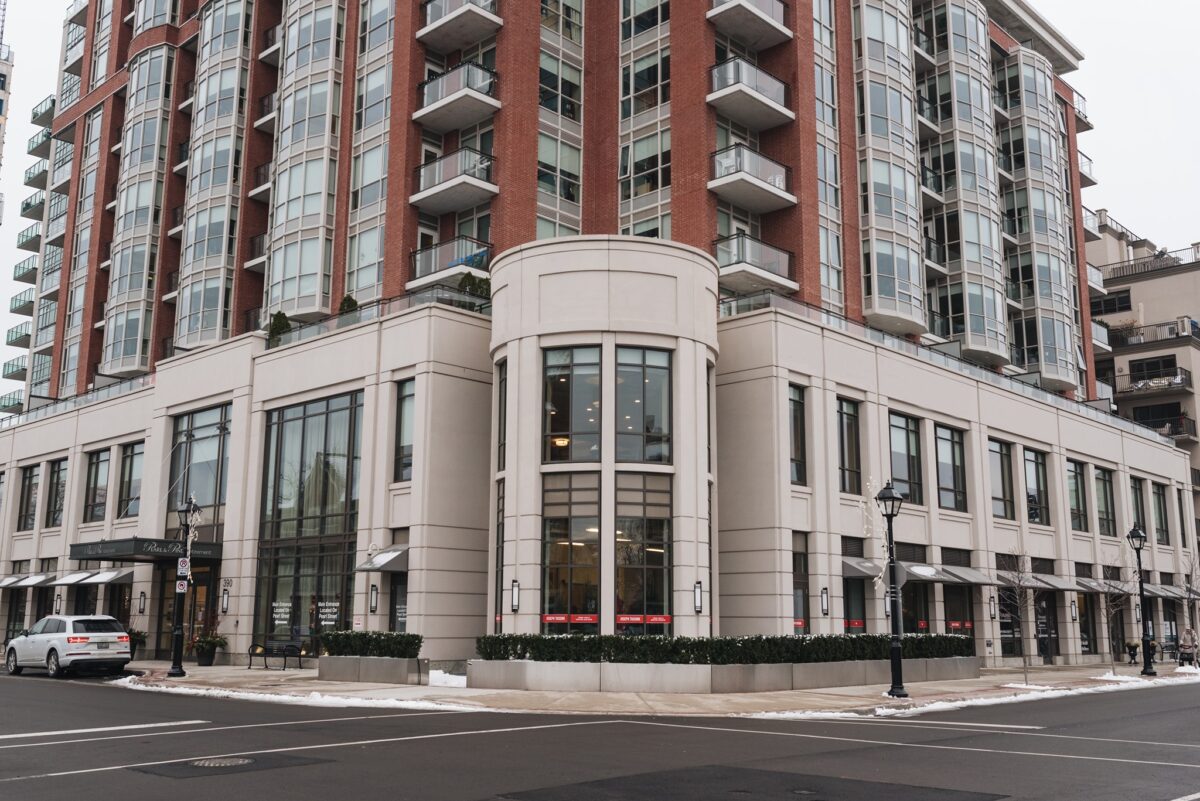
Unlike many upscale brands that rely on overseas production, Tassoni insists on creating everything in Canada. His flagship atelier at 390 Pearl Street in downtown Burlington doubles as a boutique and production facility, giving clients a rare behind-the-scenes look at the fashion process.
“When customers visit, they see the cutting tables, the sewing machines, and the craftsmanship in action,” he says. “It’s part gallery, part showroom, and it reminds people why Made in Canada matters.”
The space opened in late 2019 and now operates by appointment only, allowing for highly personalized service.
“People think that by appointment means you need to spend a certain amount, but that’s not the case,” Tassoni clarifies. “Often, if you add up what you spend on fast fashion, it equals or exceeds the cost of an investment piece made to last.”
Balancing Style and Functionality
Tassoni’s approach challenges the disposable nature of fast fashion. His garments, particularly outerwear, are designed for Canadian weather while maintaining elegance. “Too many coats on the market are expensive but lack substance,” he says. “They look good, but they’re not water or wind resistant. My goal is to combine beauty with performance.”
His collections often feature technical elements such as innovative closures, adjustable lengths, and lightweight packable fabrics. This emphasis on adaptability ensures that clients can maximize the value of their wardrobe while reducing overconsumption.
Community and Mentorship
Beyond design, Tassoni is deeply invested in community engagement and mentorship. He collaborates with local businesses, participates in philanthropic initiatives, and supports emerging talent through partnerships with institutions like Toronto Metropolitan University and George Brown College.
“I want to show the next generation what’s possible,” he says. “Respecting their time and encouraging creativity is crucial. I’ve had interns travel great distances to work here because they know they’ll be challenged and inspired.”
His commitment to mentorship contrasts with his own early experiences in the industry, which sometimes lacked meaningful learning opportunities. “When I was 16, I spent a summer organizing buttons,” Tassoni laughs. “Now, I ensure students see the full scope of what fashion can be.”
Resilience and Adaptability in Challenging Times
Operating a Canadian-made brand is not without challenges. Economic fluctuations, rising costs, and global tariffs have impacted many businesses, but Tassoni’s local production strategy insulated him from supply chain disruptions during the pandemic.
“Being based in Canada and sourcing locally gave us stability,” he explains. During COVID-19, Tassoni repurposed his atelier to produce personal protective equipment, donating proceeds to local healthcare facilities—a gesture that earned him both the Inspire Award from the City of Burlington and the Queen’s Platinum Jubilee Community Hero Award.
A Vision for Global Growth
Looking ahead, Tassoni’s ambitions are clear: he plans to expand across North America and into international markets, focusing on regions with strong trade agreements with Canada. “I want to build long-term relationships with retailers that value craftsmanship,” he says. “It’s about finding partners who share our commitment to quality and sustainability.”
While wholesale and e-commerce are integral to this strategy, Tassoni emphasizes the enduring importance of physical retail. “Bricks and mortar creates human connection,” he notes. “Our Burlington atelier proves that clients crave that personal experience.”
One long-term goal is to establish a presence in Toronto’s Yorkville neighbourhood, Canada’s luxury retail epicentre. “The timing has to be right,” Tassoni says. “My name is on every garment. This isn’t a seasonal project, it’s my life’s work.”
The Heart of Canadian Fashion
For Joseph Tassoni, fashion is more than clothing; it’s an ecosystem of creativity, community, and sustainability. His mission is to show that Canadian-made luxury can compete on a global scale without sacrificing ethics or quality.
“When clients choose us, they’re investing in more than a garment,” he says. “They’re supporting Canadian jobs, sustainability, and a vision for what fashion should be—timeless, inclusive, and deeply connected to the people who create it.”