The Canadian Federation of Independent Business (CFIB) said it welcomes Ottawa’s decision to scrap the carbon tax but is concerned about some important outstanding carbon, capital and alcohol tax matters.
Dan Kelly
“Small businesses will be pleased to see the end of the federal carbon tax. Given how long small business owners have been getting the runaround from the federal government, it’s not surprising that 83% of them wanted the entire system gone,” said Dan Kelly, CFIB president.
“But this move does not address all of the outstanding carbon tax business. Small firms need more certainty, especially as we gear up for a federal election and the ongoing trade war. They need clarity on the tax status of their carbon tax rebates heading into tax season. Despite repeated commitments from the Minister of Finance to ensure they are tax free, the CRA maintains that with no official order, the $2.5 billion small business rebate delivered last December remains taxable.”
While the federal government has announced the final round of carbon rebate payments for individuals on April 22, 2025, there is no word on the final year of the carbon rebate for small businesses which is expected to return over $500 million to small firms this year. In addition, many small firms are waiting on legislation which was to extend the deadline to qualify for the rebate to December 31, 2024, said the national organization.
The CFIB is Canada’s largest association of small and medium-sized businesses with 100,000 members across every industry and region.
As small firms are dealing with U.S.-Canada and Chinese tariffs, the CFIB is urging government and all parties to find a way to fix the outstanding tax matters:
Return over $500 million in 2024-25 carbon tax rebates to small business (as promised)
Pass legislation to prevent over $3 billion in small business carbon rebates from being taxed (as promised)
Extend the qualifying deadline for past rebates to December 31, 2024 (as promised)
Scrap the automatic April 1 increase in the alcohol excise tax
Pass proposed legislation to increase the lifetime capital gains exemption threshold to $1.25M and legislate the Canadian Entrepreneurs’ Incentive (as promised).
Corinne Pohlmann
“Leaving these tax issues outstanding is deeply unfair to Canada’s small businesses. Right now, Canadian entrepreneurs don’t even know if the rebate cheques they received in December are taxable, nor whether the 2024 payment will ever happen. Not only is this ridiculous, but it’s yet another tax uncertainty at a time of great economic turbulence,” said Corinne Pohlmann, Executive Vice-President of Advocacy at CFIB. “We need government and – in advance of the election – all political parties, to make clear where things are headed.”
Small businesses can learn more about CFIB’s advocacy on carbon tax here.
Breaking ground at the site of the future IKEA Hamilton CDC and Collection point // Selwyn Crittendon, CEO and Chief Sustainability Officer, IKEA Canada (CNW Group/IKEA Canada Limited Partnership)
IKEA Canada has broken ground at the location of the future IKEA Hamilton Customer Distribution Centre (CDC) and Collection point.
The new unit is part of a more than $400 million investment to enhance its omnichannel journey and retail experience to become even more affordable and convenient for Canadians. Located at 212 Glover Road, with a final size of 483,285 square feet, once certified, the Hamilton CDC will be among the top five largest zero carbon industrial buildings in Ontario, said the retail giant.
“This expansion is a testament to our commitment to becoming more accessible, affordable, and sustainable for our customers. The groundbreaking of our new Customer Distribution Centre and Collection point in Hamilton marks a major milestone in our journey to enhance the omnichannel shopping experience and better serve the needs and dreams of Canadians. We are grateful for the exceptional support of the City of Hamilton and the local community in bringing this vision to life.”
The new Hamilton CDC and Collection point is anticipated to open in the summer of 2027. In the meantime, the company said it will continue to optimize its existing network design to ensure that the necessary capacity is available to support Greater Toronto Area market growth until the future Hamilton CDC is open.
“As a home furnishings retailer, IKEA believes in having a positive impact on both people and the planet. Globally, IKEA is on a journey to accelerate its climate actions, aiming to halve emissions across the entire IKEA value chain by 2030, reach net zero emissions by 2050, and achieve more than 90% of home deliveries made by zero-emissions vehicles by 2028,” said the company.
“To support its sustainability ambitions, the new Hamilton CDC building will aim for Net Zero Carbon national certification, LEED Gold certification, net positive energy annually, and contribute to zero emission transportation targets.”
The retailer said it is strengthening its fulfilment network in the GTA to be able to provide accessible and affordable home furnishings solutions to even more Canadians. The new IKEA Hamilton CDC facility will play a crucial role in keeping products readily available and delivery times short, while providing a dynamic omnichannel shopping experience that meets local needs and dreams. The location of Hamilton is highly accessible from a transport perspective and ideal for future growth in the market, it said.
Breaking ground at the site of the future IKEA Hamilton CDC and Collection point. Left to right: Lisa Quondamatteo, Swedish Canadian Chamber of Commerce; Liz Wilson, IKEA Canada; Drina Omazic, Hamilton Chamber of Commerce; Tammy Hwang, Hamilton City Councillor; Esther Pauls, Hamilton City Councillor; Selwyn Crittendon, IKEA Canada; Mark Tadeson, Hamilton City Councillor; Beth Izatt, IKEA Canada; Terry Cado, Burlington Chamber of Commerce; and Geoff Macdonald, IKEA Canada (CNW Group/IKEA Canada Limited Partnership)
“The Hamilton CDC will feature a Collection point where customers can pick up their IKEA orders, providing a more convenient option for those living in the Greater Hamilton Area. IKEA products or food will not be available for immediate takeaway. IKEA has been successful in the Canadian market for nearly 50 years due to its deep understanding of how people live at home. Through home visits and life at home insights, IKEA understands its customers’ needs and dreams, helping to create functional and inspirational home furnishing solutions that meet them. It is the ambition that the IKEA Hamilton CDC will support customers in transforming their spaces to meet the evolving needs of home with affordable and convenient access to its home furnishing solutions,” added IKEA.
Andrea Horwath
“I would like to thank IKEA for their commitment to Hamilton and its residents. When this net-zero distribution facility is completed, it will be built to some of the Canada Green Building Council’s highest environmental standards. And in offering an additional pick-up point for merchandise, this site will further reduce the distance that Hamiltonians need to travel to access goods from IKEA,” says Mayor Andrea Horwath, City of Hamilton. “This investment is an outstanding example of how my Council colleagues, and I believe ecological stewardship and economic development are complementary forces to support long-term growth and prosperity.”
IKEA said the Hamilton CDC will create thousands of direct and indirect jobs, including warehouse, delivery, kitchen installation, design services, B2B, and third-party (Task Rabbit) assembly roles – all dedicated to helping customers bring their homes to life.
“IKEA is committed to creating a lifelong relationship with its co-workers and is proud to offer an inclusive and supportive workplace where they can build their careers. IKEA’s Co-worker Resource Groups (CRGs) support individuals from racialized, Indigenous, and 2SLGBTQ+ communities, as well as promote gender balance in the workforce, which is particularly important when it comes to opportunities in fulfilment. IKEA is equally committed to prioritizing co-worker wellness, ensuring that our approach is intersectional, addressing the diverse and overlapping needs of our workforce,” it said.
Founded in 1943 in Sweden, IKEA is a leading home furnishing retailer, offering a wide range of well-designed, functional home furnishing products at prices so low that as many people as possible can afford them. IKEA Canada is part of Ingka Group which operates 400 IKEA stores in 31 countries, including 16 in Canada. Last year, IKEA Canada welcomed 32.6 million visitors to its stores and 162.6 million visitors to IKEA.ca.
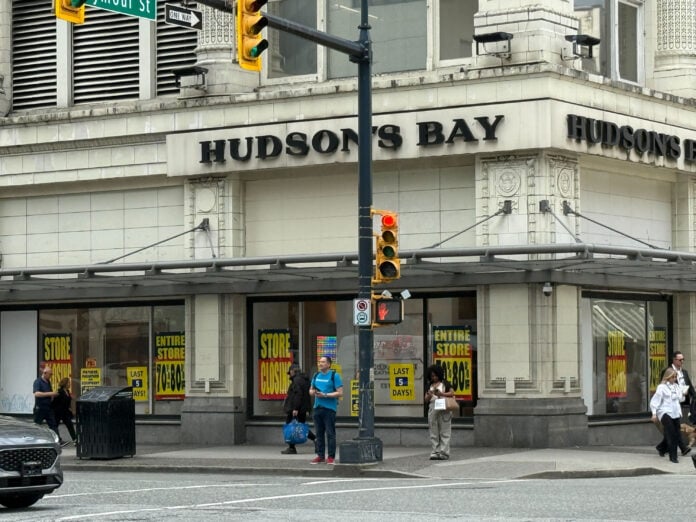
Hudson's Bay flagship store in downtown Montreal in 2021. Photo: Maxime Frechette
Toronto-based RioCan Real Estate Investment Trust has issued a statement in response to the Hudson’s Bay Company’s (HBC) recent filing under the Companies’ Creditors Arrangement Act (CCAA). The REIT, which has a long-standing relationship with HBC through the RioCan-HBC Joint Venture (JV), expressed its disappointment over the development but reiterated its confidence in mitigating any negative impacts on its portfolio.
HBC, which filed for CCAA protection on March 7, 2025, has been a key tenant in multiple RioCan properties. The restructuring process will likely lead to significant operational and financial changes for Canada’s oldest department store chain.
RioCan’s Exposure to HBC
According to RioCan, its financial exposure to HBC remains significant. As of December 31, 2024, the company held a $249 million carrying value in the RioCan-HBC JV, with the venture contributing $23.7 million to Net Operating Income (NOI) and $13.6 million to Funds From Operations (FFO). Additionally, RioCan has provided $88.7 million in credit support through a combination of loan guarantees and mezzanine loans to HBC, with collateral securing its interests in several JV properties. The company also earned $6.6 million in fees for these financial services and an additional $3.3 million in interest income from the JV.
Despite these figures, RioCan emphasized its strategic approach to protecting its assets and minimizing financial risk. The REIT stated that it has secured termination options and other rights to safeguard its position within the JV, ensuring flexibility as the situation unfolds.
Prime Locations and Redevelopment Opportunities
RioCan’s JV with HBC includes 13 properties, many of which are located in major Canadian cities, such as Montreal, Vancouver, Calgary, and Ottawa. Some of these locations operate as standalone HBC stores, while others exist within multi-tenant properties like Oakville Place and Georgian Mall. One of the 13 stores is a Saks OFF 5TH at RioCan’s Tanger Outlets in Ottawa.
Jonathan Gitlin, President and CEO of RioCan, highlighted the value of these properties and their long-term potential. “The HBC JV assets are located in prime urban markets and hold substantial value, either as operating retail centres or as redevelopment opportunities,” said Gitlin.
Gitlin also reaffirmed RioCan’s ability to adapt to changing retail landscapes. “RioCan has a demonstrated track record of successfully backfilling vacancies and repositioning assets. We are well-prepared to manage this situation and will take the necessary steps to protect the interests of our unitholders and stakeholders.”
Navigating the Uncertainty
While the impact of HBC’s restructuring remains uncertain, RioCan remains committed to actively managing the situation. The company acknowledged that navigating the complexities of HBC’s financial restructuring will require collaboration with all involved stakeholders.
“This process will take time and will require a thoughtful and strategic approach,” Gitlin added. “We have a strong core business, a dedicated team, and a solid balance sheet that positions us well to address these challenges.”
Exterior entrance to the Hudson's Bay store at West Edmonton Mall. Photo: Best Edmonton Mall
The proposed liquidation of the Hudson’s Bay Company (HBC) has cast uncertainty over its substantial real estate footprint, raising concerns among landlords and stakeholders about the broader impact on the retail sector. While immediate challenges are evident, particularly for property owners and creditors, the long-term outlook suggests that the sector will adapt, with prime locations poised to retain value.
Court adjourned Tuesday with no decision made by Ontario Justice Peter J. Osborne about the liquidation of stores or the sale of any Hudson’s Bay properties.
RioCan Real Estate Investment Trust is notably affected due to its joint venture with HBC, encompassing 12 store properties, including prominent downtown locations. In a press release on Tuesday, RioCan expressed disappointment over HBC’s filing for creditor protection under the Companies’ Creditors Arrangement Act (CCAA) on March 7, 2025. The trust emphasized the necessity for any restructuring to be conducted on fair and balanced terms, reaffirming its commitment to protecting the interests of its unitholders and stakeholders.
Jonathan Gitlin, President and CEO of RioCan, stated, “The HBC locations in the JV include prime real estate within Canada’s major markets, that have value either as operating retail centres or redevelopment opportunities. Our team has a proven track record of finding solutions for vacant space and will work to protect the value of the real estate in the JV.”
For the year ended December 31, 2024, RioCan’s exposure to HBC was detailed as follows:
Joint Venture Value: The RioCan-HBC JV had a carrying value of $249.0 million, representing 3.3% of RioCan’s equity.
Financial Contributions: The JV contributed $23.7 million to RioCan’s Net Operating Income (3.2% on a proportionate share basis) and $13.6 million to Funds From Operations (2.5% of FFO).
Credit Support: RioCan provided credit support totaling $88.7 million to HBC through the JV, including loan guarantees and mezzanine loans, secured by interests in several JV properties.
The specific properties involved in the JV include flagship locations in Montreal, Vancouver, Calgary, and Ottawa, among others, totaling approximately 842,000 square feet of net leasable area.
Hudson’s Bay at Toronto’s Yorkdale Shopping Centre is one of the stores jointly owned by RioCan. Photo: Greg Southern
Potential Redevelopment Opportunities
Despite the challenges posed by HBC’s liquidation, there are potential opportunities for landlords to repurpose the vacated spaces. Large retail areas could be transformed into smaller retail units, entertainment venues, or even grocery stores to align with evolving consumer preferences. This can be expensive, however.
The traditional reliance on department stores as anchor tenants has diminished, with brands like Nike, Apple, Canada Goose, and Lululemon now serving as primary traffic drivers. Mixed-use developments that incorporate residential, office, and entertainment spaces also help mitigate the impact of losing major retailers.
Gitlin emphasized the value of the prime real estate within the JV, noting that these properties hold potential as either operating retail centres or redevelopment projects. He highlighted RioCan’s proven track record in addressing vacant spaces and its commitment to protecting the value of the JV’s real estate.
Hudson’s Bay flagship store in downtown Montreal in 2021. Photo: Maxime Frechette
Broader Implications for the Retail Sector
The release of significant retail space into the market is anticipated to exert downward pressure on lease rates in the short term, particularly in secondary and tertiary shopping centres. Malls with weaker foot traffic may face challenges in attracting tenants for large spaces, whereas high-performing malls are likely to adapt by attracting sought-after brands and incorporating experiential retail elements.
Nonetheless, prime Hudson’s Bay locations are expected to remain in demand, and innovative repurposing strategies will be crucial for property owners aiming to maintain asset value.
HBC’s filing under the CCAA allows the company to restructure its operations, streamline costs, and refocus on its core strengths. The company is exploring strategic alternatives and engaging stakeholders to explore potential solutions to preserve and strengthen its business. However, industry observers remain skeptical about the retailer’s ability to execute a successful turnaround, and we’ll know more with Justice Osborne’s upcoming ruling.
In the bustling event industry of Vancouver, British Columbia, one name has consistently stood out for delivering exceptional service and quality equipment: Forever Party Rentals. Specializing in tables, chairs, and tents, this local business has become an integral part of the city’s celebration ecosystem, helping transform ordinary gatherings into extraordinary events.
The Foundation of Celebration
Forever Party Rentals emerged from a simple observation: Vancouver’s vibrant social scene and stunning natural backdrop make it an ideal location for events of all kinds, yet many residents and businesses struggled to find reliable, high-quality event equipment without breaking the bank. What began as a modest collection of folding chairs and tables has evolved into one of the region’s most comprehensive event rental inventories.
“We started with just the basics,” explains the founder. “But we quickly realized that Vancouver needed more than just equipment—people needed a partner who understood the unique challenges of hosting events in this beautiful but often rainy city.”
This insight became the cornerstone of their business philosophy: providing not just rental items, but complete event solutions tailored to the specific needs of Vancouver’s diverse communities and unpredictable climate.
Navigating Vancouver’s Unique Event Landscape
The party rental business in Vancouver comes with its own set of challenges and opportunities. The city’s famously rainy climate means that outdoor events require careful planning and equipment designed to withstand moisture while keeping guests comfortable. Forever Party Rentals has developed specialized expertise in this area, offering weatherproof tents and canopies designed specifically for Pacific Northwest conditions.
Additionally, Vancouver’s diverse population calls for versatility in event styles. From traditional Chinese weddings to Indian celebrations, corporate gatherings to intimate backyard parties, the company has cultivated an inventory that respects and accommodates cultural diversity while maintaining aesthetic coherence.
The seasonal nature of Vancouver’s event industry presents another challenge. While summer months bring a surge in weddings and outdoor celebrations, winter sees a pivot to holiday parties and indoor corporate events. Forever Party Rentals has mastered the art of inventory management to meet these fluctuating demands without compromising on quality or availability.
The Rental Inventory: Beyond the Basics
While tables, chairs, and tents form the foundation of Forever Party Rentals’ business, their inventory has thoughtfully expanded to meet evolving customer needs:
Tables and Seating
Their collection ranges from classic banquet tables to elegant round tables as well as, cocktail tables for standing receptions, and specialized children’s tables for family events. Seating options include everything from practical folding chairs to elegant Chiavari chairs, comfortable lounge furniture, and accessible seating for guests with mobility considerations.
Tents and Shelters
Vancouver’s climate demands versatile sheltering options. Forever Party Rentals offers frame tents, pole tents, clear-top tents for enjoying views while staying protected, and smaller pop-up canopies for casual gatherings. Their tent accessories include sidewalls, climate control options, and proper drainage systems specifically designed for Vancouver’s rainy conditions.
The Logistics of Celebration
Behind the scenes of every successful event lies a complex operation of logistics, timing, and expertise. Forever Party Rentals has refined these processes to an art form, ensuring seamless delivery, setup, and retrieval that remains invisible to event guests.
Their operation involves meticulous cleaning and maintenance protocols, strategic delivery routing to navigate Vancouver’s often congested streets, and crews trained not just in equipment handling but in customer service. The company utilizes proprietary software to track inventory, schedule deliveries, and ensure that every item is accounted for and properly maintained.
“Logistics might not be the glamorous part of the event industry,” notes the operations manager, “but it’s the foundation that allows everything else to shine. When our systems work perfectly, no one notices—and that’s exactly the point.”
Sustainability in the Rental Economy
In an era of increasing environmental awareness, Forever Party Rentals has positioned itself as a leader in sustainable event practices. The rental model itself is inherently eco-friendly, reducing the need for single-use items and extending the lifecycle of quality equipment through proper maintenance.
The company has further embraced sustainability by investing in energy-efficient delivery vehicles, biodegradable cleaning products, and paperless booking systems. They’ve also developed partnerships with local composting facilities to handle food waste from events and donation programs for linens that no longer meet their aesthetic standards but remain functional.
This commitment resonates strongly with Vancouver’s environmentally conscious clientele, who increasingly seek vendors aligned with their values.
Building Community Through Celebration
Beyond the transactional aspects of equipment rental, Forever Party Rentals has woven itself into the fabric of Vancouver’s community. The company regularly contributes to local festivals, provides discounted services to non-profit events, and offers educational workshops on event planning.
Their team includes staff fluent in multiple languages commonly spoken in Vancouver, including Mandarin, Cantonese, Punjabi, and Tagalog, ensuring that all clients can communicate comfortably and have their cultural event needs understood.
Looking Forward: The Future of Event Rentals
As Vancouver continues to evolve, so too does the event rental industry. Forever Party Rentals stays ahead of trends through constant research, customer feedback, and industry networking. The company has identified several emerging directions that will shape their future offerings:
Integration of technology, including virtual event supplements and enhanced visualization tools for event planning
Expanded eco-friendly options, including solar-powered lighting and locally-sourced, sustainable décor elements
Flexible packages designed for the growing micro-wedding and intimate gathering market
Specialized equipment for Vancouver’s expanding outdoor adventure event sector, including beachside and mountain celebrations
The Value Proposition
In an industry where reliability is paramount, Forever Party Rentals has built its reputation on being consistently excellent. From a bride planning her dream wedding to a corporate event manager organizing a product launch, clients return to Forever Party Rentals because they know what to expect: quality equipment, delivered on time, with service that anticipates needs rather than simply responding to them.
“At the end of the day, we’re not just renting tables and chairs,” says the customer service director. “We’re giving people the foundation for memories that will last a lifetime. That responsibility drives everything we do.”
In Vancouver’s competitive event market, Forever Party Rentals continues to thrive by understanding that they’re not merely in the equipment rental business—they’re in the business of making celebrations possible, one table, chair, and tent at a time.
Living in Myrtle Beach is quite lovely. It presents pleasant temperatures, sandy beaches, and a vibrant community. Many folks dream of owning a house here. Getting a reasonably priced house calls for preparation and investigation. Following the correct procedures can help you to locate a house inside your means.
Appreciating the Myrtle Beach Residential Scene
Myrtle Beach SC homes are perfect for those who want to enjoy the beach and vibrant community life. Myrtle Beach’s real estate scene is ever-shifting. Early 2025 finds the median house price to be roughly $253,000. This is rather less than in the year before. Homes remain on the market for roughly 119 days before they find purchase. This provides purchasers more time to choose the correct house. Compared to other cities, the market is not as competitive. This facilitates negotiations of the price.
Myrtle Beach’s home values have somewhat dropped recently. Typically, a house costs $302,000. Certain locations are costing more than others. Beachfront homes are more expensive than inland locations. Knowing these patterns will enable you to decide wisely. Before making a purchase, one should study consumer patterns in the markets.
Selecting the Correct Area of Living
Myrtle Beach boasts some excellent communities. Some are far inland, while others lie close to the sea. Living close to the ocean provides lovely vistas and simple water access. Usually, though, these houses are more costly. If you are on a tight budget, think of places outside of the shoreline.
Myrtle Beach boasts many reasonably priced areas. Some areas have first-rate parks, schools, and retail hubs. Though less expensive, homes in these neighborhoods nonetheless have considerable worth. Growing communities and fresh developments sometimes have less cost. They also give contemporary homes new conveniences.
Important considerations are local amenities, school quality, and crime statistics. Over time, a great community will raise the value of your house. Spend some time touring several locations and investigating your possibilities. Speaking with residents will also enable you to discover more about an area.
Funding and Undercover Hidden Costs
Purchasing a house calls for appropriate funding. Knowing your affordability is made easier by a mortgage pre-approval. When you find the perfect house, this also facilitates making an offer. A good credit score will enable you to pay a smaller interest rate.
One can find several lending possibilities. FHA loans call for a small down payment. Military families and veterans find VA loans to be excellent. Your financial status will determine the terms of conventional loans. Investigating loan choices will enable you to choose the greatest one for your particular requirements.
Apart from the buying price, one has other expenses to take into account. Myrtle Beach’s homeowners’ association (HOA) fees are somewhat typical. These costs pay for community facilities and maintenance. Your budget should also reflect insurance expenses and property taxes. The total cost of homeownership includes utilities, upkeep, and repair charges.
Offering a Smart Suggestion
Making a good bid is crucial if you have the perfect house. Check out Pawleys Island homes for sale and find your perfect beach getaway. Homes remain on the market for some period; hence buyers have opportunity to bargain. Less expensive houses sell faster, nevertheless. Should you come onto a wonderful offer, be ready to move fast.
Your offer should have an inspection contingency included. This lets you look for any serious problems before deciding on the buy. An apparitional contingency guarantees that you won’t overpay for the house. Dealing with a real estate agent will enable you to negotiate these specifics.
“We are pleased to report positive improvements in the business this quarter. While consumers continue to be cautious in their spending, we are seeing encouraging signs of resilience. Same-store sales were positive in both Canada and Europe compared to the same quarter last year, and we had sequential improvement in the United States, impacted by historic winter storms in our southern business units,” said Alex Miller, President and Chief Executive Officer.
“Food continued to grow in the United States as our meal deal promotions performed well and have been extended to Canada. In our fuel business, we are maintaining market share in the United States and margins aligned with recent quarters. As inflationary pressure persists, our number one priority is winning our customers by being ready with the products and services they want at compelling value.”
Filipe Da Silva
Filipe Da Silva, Chief Financial Officer, added: “We delivered notable progress this quarter, delivering our most improved performance in over a year as we continue to navigate challenging consumer trends, particularly in the United States. Our results reflect a balanced mix of organic growth and acquisitions, demonstrating the strength of our globally diversified network, the success of our integration activities and our commitment to drive long-term sustainable growth. This quarter also marks the one-year anniversary of the acquisition of certain assets from TotalEnergies, which is on track for synergy realization and continues to deliver solid results thanks to the dedicated efforts of all of our team members.”
Quarterly Highlights
Total merchandise and service revenues of $5.3 billion, an increase of 5.0%. Same-store merchandise revenues decreased by 0.1% in the United States, while it increased by 0.2% in Europe and other regions1, and by 2.8% in Canada.
Merchandise and service gross margin increased by 0.9% in the United States to 34.0%, decreased by 0.2% in Europe and other regions to 39.0%, and decreased by 1.8% in Canada to 32.4%.
Same-store road transportation fuel volumes decreased by 3.0% in the United States, by 0.9% in Europe and other regions, while it increased by 3.6% in Canada.
“Our revenues were $20.9 billion for the third quarter of fiscal 2025, up by $1.3 billion, an increase of 6.5% compared with the corresponding quarter of fiscal 2024, mainly attributable to the contribution from acquisitions and higher revenues in our wholesale fuel business, partly offset by a lower average road transportation fuel selling price, softness in fuel demand and traffic impacted by unusual winter conditions in the United States, as well as the net negative impact of approximately $212.0 million from the transaction of our foreign currency operations into US dollars,” said the company.
“For the first three quarters of fiscal 2025, our revenues increased by $4.9 billion, or 9.5%, compared with the corresponding period of fiscal 2024, mainly attributable to similar factors as those of the third quarter. The translation of our foreign currency operations into US dollars had a net negative impact of approximately $204.0 million on our revenues.”
Couche-Tard is a global leader in convenience and mobility, operating in 29 countries and territories, with close to 17,000 stores, of which approximately 13,000 offer road transportation fuel. With its well-known Couche-Tard and Circle K banners, it is one of the largest independent convenience store operators in the United States and it is a leader in the convenience store industry and road transportation fuel retail in Canada, Scandinavia, the Baltics, Belgium, as well as in Ireland. It also has an important presence in Luxembourg, Germany, the Netherlands, Poland, as well as in Hong Kong Special Administrative Region of the People’s Republic of China. Approximately 149,000 people are employed throughout its network.
DIY projects are a fantastic way to refresh your home without spending a fortune. Whether you want to personalize your space, upgrade furniture, or create something functional, there are plenty of budget-friendly ideas to explore. These projects not only save money but also unleash creativity and offer a sense of accomplishment. The best part? Many can be completed using items you already have at home.
Home Décor Makeovers on a Budget
A great way to update your space without expensive artwork is by creating your own. Try painting an abstract piece using acrylics, framing printable wall art, or making fabric wall hangings. These projects add personality to your walls without requiring artistic expertise.
Repurpose Old Picture Frames
Give old picture frames a new purpose by turning them into decorative trays, stylish memo boards, or jewelry organizers. A fresh coat of paint or some added embellishments can turn something simple into a statement piece.
DIY Mirrors for a Bigger Space Effect
Mirrors can make any room look more spacious and bright. Create a gallery wall with dollar-store mirrors, frame plain mirrors with rope for a coastal look, or repaint outdated frames to match your decor.
Simple Furniture Upgrades
Replacing a couch can be costly, but couch covers provide an easy and affordable makeover. Store-bought slipcovers offer quick solutions, while large fabric pieces can be tucked in for a DIY no-sew option. If you sew, making custom-fitted covers allows you to choose patterns and fabrics. Alternatively, you can order magic covers here: https://nolaninterior.com/collections/magic-covers.
Transform Old Furniture with Paint and Hardware
Give old furniture new life with a coat of chalk paint, which requires no priming and provides a stylish matte finish. Swapping out old hardware for modern handles or using a two-tone paint technique can instantly update the look of a dresser, cabinet, or chair.
Create a DIY Ottoman from Upcycled Materials
Upcycle materials to craft a unique ottoman. Attach legs to a wooden crate and add a cushion for a stylish storage ottoman. Wrap an old tire in rope for a trendy boho-style seat, or cover a storage bin with fabric for a functional piece.
DIY Organization Hacks
Repurpose everyday household items to enhance organization. Glass jars work well for storing small essentials, hanging baskets make great wall-mounted organizers, and a magnetic spice rack saves counter space in the kitchen.
DIY Floating Shelves for Extra Space
Floating shelves add storage while keeping floors clear. Use reclaimed wood and brackets for a rustic look, create invisible bookshelves by mounting metal brackets inside books, or repurpose wooden pallets into eco-friendly shelving.
Upcycled Shoe Organizers for Multi-Purpose Storage
Shoe organizers have many uses beyond storing footwear. Hang them on pantry doors to hold spices and snacks, in bathrooms for toiletries, or in kids’ rooms for toy storage.
DIY Garden and Outdoor Improvements
Easy Indoor Herb Garden Using Mason Jars
Grow fresh herbs like basil, mint, or rosemary indoors using mason jars. Add pebbles for drainage, fill with potting soil, and label the jars for a personalized touch. Placing them near a sunny window ensures optimal growth, making it easy to snip fresh herbs for cooking anytime.
Handmade Planters from Household Items
Turn everyday items into unique planters to add charm to your space. Small succulents thrive in teacups, colanders can be transformed into stylish hanging planters, and wooden pallets make great vertical gardens. You can even paint or decorate your planters to match your decor.
DIY Outdoor Lighting for a Cozy Ambience
Enhance your outdoor space with creative DIY lighting. Fill mason jars with LED candles or fairy lights for a rustic lantern effect, drape string lights over a patio for a warm glow, or repurpose glass jars with solar-powered lights for an eco-friendly touch. These simple additions create a magical atmosphere for evening gatherings.
Fun and Functional DIY Crafts
Give your sofa or bed a quick refresh by making your own throw pillows and cushion covers. Fabric adhesive or iron-on tape offers an easy no-sew option while repurposing old t-shirts or scarves creates unique and personalized designs. Adding decorative buttons, fabric paint, or patches can further enhance the look. You can also shop paint by number kits to create custom artwork that complements your handmade décor pieces and adds a creative touch to your living space.
DIY Scented Candles for a Cozy Atmosphere
Create a warm ambiance with homemade candles. Melt old wax or use soy wax flakes, mix in essential oils like lavender or citrus for fragrance, and pour into teacups, tin cans, or decorative glass jars. Add dried flowers, cinnamon sticks, or coffee beans for a visually appealing and aromatic touch.
Homemade Cleaning Products for a Greener Home
Switch to eco-friendly cleaning solutions with easy DIY recipes. Mix vinegar, water, and lemon oil for an all-purpose cleaner, or combine baking soda and dried flowers for a natural air freshener. A blend of rubbing alcohol and vinegar makes a streak-free glass cleaner while adding castile soap creates an effective dishwashing liquid. These alternatives reduce harsh chemicals in your home while keeping surfaces sparkling clean.
Conclusion
DIY projects prove that home upgrades don’t have to be expensive. With creativity and resourcefulness, you can transform your space without breaking the bank. Whether you’re refreshing your couch with a stylish cover, making custom storage solutions, or crafting homemade decor, these projects will make your home more functional and beautiful.
If there’s one thing that isn’t trendy in the U.S., it’s getting kids to go play outside. Instead of swinging from bar to bar, most kids spend their free time swiping up and down on a screen. The consequences have been obvious: Kids are showing higher levels of mental health disorders and lower levels of focus and concentration. Rates of preventable diseases like obesity, depression, and type 2 diabetes are on the rise, at least in part due to chronic inactivity.
As a playground equipment distributor, then, you have an important job to do. You have to find a way to incentivize kids to get off the screen and onto the playground. The challenge is to make your product enticing enough to compete with the constant dopamine drip of internet culture. So how do you do it? The answer is to look to the market and see what’s winning hearts and minds. Read on to stay on top of current trends — and get kids to hop, skip, and jump on board, too.
Accessibility and Inclusivity
Despite the current political administration’s efforts to nix DEI, savvy marketers know that inclusive, accessible design is still winning big sales. Kids, parents, and the schools and corporations that buy commercial playground equipment want a product everyone can use, regardless of ability. Smart commercial playground equipment distributors would be wise to stay on top of this market trend, especially given all the extra press of late.
As you plan for inclusivity playground design, consider a variety of wants and needs. Every playground should have adaptations, like signage and braille, to meet the needs of blind, deaf, and hard-of-hearing folks. They should also have jungle gyms with ramps and inclusive commercial swing sets made for wheelchairs. Increasingly, communities and developers want soothing sensory activities and quiet spaces for neurodivergent kids (and overstimulated parents).
Sustainability and Natural Design
As the ice caps melt and weather disasters devastate whole cities, consumers are more concerned than ever about sustainability. Is it too late, they wonder, to make a difference and reverse some of the impacts of climate change? This interest is revealed in the purchasing behaviors of U.S. citizens, who favor recycled materials, reusable bags, and products with less packaging. An astonishing 80% of consumers even say they’d be willing to pay more for sustainable products.
Where does this market trend factor into playground equipment distribution? Well, more and more developers are constructing their equipment out of recycled and natural materials, like locally sourced wood and post-consumer plastic. This isn’t to say you should scrap your current designs and start building slides out of fallen tree trunks (can you say splinters?). However, you can favor partnerships with suppliers who deal mainly in recycled and low-impact materials.
Fitness and Wellness
Health and wellness is a multi-trillion dollar industry, with personal fitness in particular dominating a huge percentage of the market. Americans are tired of their reputation as “fat and lazy,” and they’re desperate for more ways to get off the couch. The ones who can afford it are willing to spend big money to do so, while others look for more economical ways to move. That’s where playgrounds can step in, as a free community space for both child and adult fitness.
The kid part is simple: give them slides, ziplines, merry-go-rounds, and ladders, and let them run amuck — the calories basically burn themselves. More playground equipment distributors should think, however, about ways to make playgrounds a space for more grown-up fitness. Distributors should invest more in pull-up and parallel bars, as well as pneumatic (air-powered) outdoor exercise equipment. It’s an easy way to get buy-in from adults who want healthier families.
Creative Uses of Space
Wages are staying stagnant, rents are going up, and, well, it’s best not to talk about the price of eggs. The point is that outdoor space, too, is at a serious premium, especially in popular urban areas. Savvy playground equipment distributors would be wise to capitalize on the growing need to economize when it comes to size. In other words, if you want to sell to today’s consumer, consider giving special attention to those products that work well in smaller spaces.
For example, more and more developers are creating playgrounds in unexpected spaces, like looking at rooftop- and alley-sized options. Urban neighborhoods with community gardening spaces might take interest in adding small or modular playground sets. Consider offering options that are expandable, in case they want to grow with time, but focus now on the smallest units. Sell your customers a sense of optimism: they’re starting small today, to create a better future.
Creative Uses of Space
In spite of the prevalence of digital entertainment, consumers do still crave places to congregate outdoors. They need movement, they need community, and they need the tools to make good use of public space. While it might feel like TikTok and Instagram have fully taken over, the fact is that folks still want to connect with their bodies and with each other. The problem is often that they just don’t have a good, appealing communal space to make it all happen.
As a playground equipment distributor, you are uniquely positioned to create a healthier, happier, more playful society. You can create welcoming, inviting spaces that make everyone feel like a part of something. You can make it possible to carry out their vision or present them with a world of childlike possibilities. If you’re at a loss for ideas, just think about what you and your kids would want — then do what you can to make it happen for all of your customers.
In an effort to better understand the evolving landscape of Canadian fashion, Vainqueur Magazine (VQ) has launched an ambitious new survey aimed at decoding the behaviours, preferences, and cultural impact of consumers across the country. As Canada’s $35-billion fashion industry continues to shift, this study seeks to identify key trends, highlight influential designers, and map out regional style identities in an increasingly digital and globalized market.
“This is a transformative year for Canada’s economic nationalism,” says Danica Samuel, founder, CEO, and editor-in-chief of Vainqueur Magazine. “We’ve been pushed politically into celebrating the greener grass on this side: our brands, our businesses, and our talent. I love that Vainqueur followers and subscribers are also committed to spotlighting Canadian fashion. There’s a mutual desire to place our culture at the forefront of the global fashion industry.”
The survey, which marks the launch of VQ’s new insights division, is led by data analyst Selasi Dorkenoo, who brings expertise in both qualitative and quantitative research. Dorkenoo aims to provide strategic insights that will help redefine Canadian fashion culture and inform the magazine’s editorial direction.
“Many surveys and reports have overlooked the homegrown designers, brands, and trendsetters shaping our fashion landscape,” says Dorkenoo. “I’m excited to work with Vainqueur to examine how Canadians engage with their own style and brands—from the casual shopper to the high-fashion enthusiast.”
The Push for Canadian Fashion Identity
The initiative comes at a time when Canada is experiencing a cultural shift toward prioritizing local brands and homegrown talent. While Montreal alone generates $8 billion in fashion manufacturing and wholesale sales, the country has struggled to establish a globally competitive luxury market. As international brands continue to dominate major retail corridors, Canadian designers often look abroad for recognition and opportunity.
“We missed a crucial opportunity in 2015 when fashion manufacturing took a hit,” explains Samuel. “When the industry moved toward fast fashion, manufacturing jobs in Montreal dropped from 22,000 to about 6,000. That was the time for Canada to reposition itself with a strong fashion identity, but we didn’t. Instead, we continued to rely on imports and foreign trends.”
By gathering comprehensive consumer data, Vainqueur’s survey aims to identify the motivations driving Canadian fashion choices and provide key insights for economic strategies in major metropolitan markets like Toronto, Vancouver, and Montreal.
The Struggle to Retain Canadian Talent
Despite having a wealth of creative talent, many of Canada’s top designers have sought opportunities abroad. Christopher Bates operates in Milan, Dan and Dean Caten of DSquared2 base their global operations out of Italy, and Erdem Moralioglu has long been a fixture of London’s high-fashion scene.
“It’s a challenge for luxury designers to build a brand here,” Samuel acknowledges. “We’ve produced LVMH Prize winners such as Thomas Tai and Vejas Kruszewski. We have incredible talent, but we’re not supporting them the way other countries do.”
Retail, on the other hand, has seen stronger success. Brands like Aritzia, Canada Goose, and Lululemon have scaled internationally, proving that a Canadian retail model can work—just not necessarily in the luxury fashion segment.
“The question is, how do we treat these players at home? How do we claim them as part of our national identity?” Samuel asks.
Reclaiming Canada’s Fashion Capital Status
One of the biggest challenges for Canadian fashion has been the loss of major fashion weeks. While Montreal’s Mmode continues to host events, Toronto’s once-prominent Fashion Week collapsed in 2016 due to sponsorship losses. Unlike Paris, Milan, or even New York, Canada has struggled to maintain an internationally recognized platform for showcasing homegrown talent.
“Toronto Fashion Week was close to becoming a recognized stop on the global circuit,” Samuel recalls. “But when sponsors pulled out and Fashion Television ended, we lost momentum.”
Newer initiatives like Fashion Art Toronto (F.A.T) and the RCHIVE Fashion Club are attempting to fill the void, but sustaining a strong fashion identity requires broader industry support.
Encouraging Canadians to Shop Local
One key insight from early survey data suggests that Canadians want to support local fashion but often don’t know where to start. Samuel believes the media plays a crucial role in shaping consumer habits.
“We need to shift the conversation,” she says. “Rather than positioning Canadian fashion as a niche alternative, we should be presenting it as a world-class industry—just like we do in music, film, and literature.”
Vainqueur’s goal is to normalize Canadian fashion as part of the global conversation, rather than relegating it to “Canadian brands to watch” lists.
“We’re not framing Canadian fashion as an underdog story,” Samuel asserts. “We’re treating it as fashion—period.”
Next Steps: Data, Reports, and Policy Impact
The survey is set to run through Q3 and Q4 of 2025, with a target of at least 200 respondents. Vainqueur hopes to publish a comprehensive industry report detailing findings on regional style differences, spending habits, and brand recognition. The magazine is also exploring partnerships with major research firms like Léger, which could expand the survey reach to thousands of Canadians.
For Samuel and her team, this is just the beginning. “This survey is a stepping stone toward larger conversations on fashion policy, economic investment, and cultural capital. If we truly want to make Canada a leader in fashion, we need real data to support it.”
As the industry waits for the full results, one thing is certain: Vainqueur’s efforts could play a critical role in reshaping the future of Canadian fashion.