Canadian small businesses faced continued financial pressures in the second quarter of 2025, driven by a complex mix of macroeconomic factors and uncertain trade relations, as well as shifts in consumer and household spending, according to the latest Equifax Canada Market Pulse – Quarterly Business Credit Trends Report. Real GDP fell by 0.4%, impacting the overall business outlook.
The Canadian Small Business Health Index — a joint initiative between Equifax Canada and Business Development Bank of Canada that provides a quarterly snapshot of the health of Canadian Small and Medium Businesses — declined by 1.6% in Q2, driven by shifts in trade tensions and Canada’s widening trade deficit. At the same time, lower inflation and interest rate cuts offered some relief, helping certain businesses strengthen their overall credit performance, explained Equifax.
Jeff Brown
“Small businesses are navigating a complex environment,” said Jeff Brown, Head of Commercial Solutions, Equifax Canada. “We’re seeing sectors under stress, particularly those that represent industries tied to international trade and discretionary spending, while others businesses are holding steady or even improving. It’s a reminder that depending on your industry, the circumstances seem to be quite different across sectors.”
Over 286K businesses missed at least one credit payment in Q2 2025, 5.6% higher than a year ago. However, at a trade level, credit stress splits, financial credit delinquencies rose 13.5% in Q2, reaching a rate of 3.48%, while industrial trade (B2B) delinquencies declined by 1.7% to 5.55%. This suggests many businesses are keeping up with supplier payments but falling behind on loans and financial obligations — a pattern consistent with firms prioritizing supplier relationships to keep operations moving, noted Equifax.
Pullback in consumer spending seemed to affect businesses that rely on discretionary spending. In consumer-sensitive industries, delinquency levels remain sharply higher year-over-year, with delinquencies in Accommodation and Food Services businesses up 29.5%, Retail Trade up 13.3%, and Arts, Entertainment and Recreation up 7.5%, according to Equifax.
“Despite headline inflation easing, cost of essentials like grocery and rent continued to climb, impacting household budgets which could potentially leave less room for discretionary spending,” said Brown. “This shift in consumer spending toward essentials could be causing financial strain and delinquency in businesses that provide non-essential goods and services.
“The true economic impact of today’s trade tensions and rising unemployment will not be felt all at once. For many regions and sectors, the full effects may only materialize as the year’s economic headwinds continue to unfold.”
Province Analysis – 60+ days Delinquency Rates (Account Level)
Province
Delinquency Rate : Financial Trades(Q2 2025)
Delinquency Rate Change: Financial Trades(Q2 2025 vs. Q2 2024)
Delinquency Rate: Industrial Trades(Q2 2025)
Delinquency Rate Change: Industrial Trades(Q2 2025 vs. Q2 2024)
Photo: Universal Concept Mental Arithmetic System (UCMAS)
Megha Karia arrived in Canada from India in 2004 and was quickly confronted with a challenge many newcomers face: she couldn’t find work without Canadian work experience. So, she created her own path through franchising by bringing the internationally renowned Universal Concept Mental Arithmetic System (UCMAS) to Canada.
Megha Karia
UCMAS offers child development programs for kids aged 5 to 13 using mental math and abacus skills. The program has flourished in over 6,000 centres across more than 80 countries.
“I remember watching a demonstration at the UCMAS headquarters in Malaysia and being completely amazed by how students could perform high-speed, accurate math calculations with ease,” says Karia, CEO at UCMAS North America. “I immediately realized the potential of this ‘Math-magical’ program and the value it would bring to children in Canada. Since day one, my vision has been to build something that not only empowers children but transforms communities and creates opportunities for other entrepreneurs.”
Fast forward two decades, what began with just one location in Toronto in 2004 has grown to nearly 100 UCMAS centres across Canada, with locations in (Ontario, Alberta, British Columbia, Quebec, Saskatchewan and Manitoba). Almost all UCMAS Canadian franchisees are immigrants, hailing from over 20 different countries, and nearly 70 per cent of them are women. Half of the UCMAS Canada head office team are also women, and close to 700 women have served as course instructors.
When asked what advice she has for newcomers considering franchising as a career path, Karia says: “My advice would be to choose a proven franchise and make it your own. There are no shortcuts. The key is to be consistent, and success will follow.”
According to the Canadian Franchise Association (CFA), franchising is an ideal path for newcomers to Canada. It offers a proven business model, ongoing training and support, and opportunities in over 60 different industries, allowing immigrants to choose a business that aligns with their background or passion. UCMAS is an active member of the CFA community and is committed to the Association’s purpose of helping everyday Canadians achieve their dream of business ownership through the power of franchising.
Photo: Universal Concept Mental Arithmetic System (UCMAS)
Megha’s story is a powerful example of how newcomers to Canada are using franchising to achieve their entrepreneurial dreams.
“When we came here, we did not have any business plan or anything in mind that we would exactly do,” says Karia. “Typically, like new immigrants, we started to look for jobs, and that’s what we tried for a few months, realizing that we had the expertise in education business and we knew how to do it best.”
Before moving to Canada, Karia ran an after-school software education business in India for nine years.
The decision to immigrate was driven by opportunity. “While we were doing that business, there were a lot of opportunities that were coming abroad. And we wanted to think of options where we could stay current, where we could keep our doors open for opportunities around the globe.”
Karia and her husband, an IT professional, were accepted quickly into Canada. But they soon found the familiar challenge many newcomers face: employers asking for Canadian experience.
“That’s when we thought that let’s incorporate a company. Let’s not just think about ourselves. Let’s create opportunities for other people like us in this part of the world.”
The couple had earlier come across the UCMAS program while working in Malaysia, where they witnessed children demonstrating astonishing math capabilities. “We’d seen a few children doing some miraculous math calculations, some magical math calculations. And when we looked at them, we were like, what are they really doing?”
That curiosity led them to UCMAS—Universal Concept of Mental Arithmetic Systems—a global education franchise, and eventually to bringing it to Canada.
“We spoke with the Malaysian office that we would like to bring UCMAS to Canada, and they agreed. So that’s where our journey started in Canada.”
Headquartered in Mississauga, UCMAS Canada has grown rapidly since those early days. “We have close to a hundred locations all over Canada,” says Karia. “We are obviously in every, almost every city of GTA, and even in other parts of Ontario like Windsor, London, Ottawa, everywhere.”
Quebec has also become a strong market for the company. “Very soon in the first few early years, we started to get some traction in Quebec, so we have a great presence in Quebec as well—all parts of Montreal. And so about 15 locations in Quebec.”
UCMAS has expanded into Alberta with 14 locations and more recently, British Columbia. “This year, in fact, British Columbia has had the highest expansion and we’ve opened about six locations in British Columbia,” she adds. “So we now are at nine locations in British Columbia.”
Growth has also reached Saskatchewan and Manitoba. “Just before COVID, we got an opportunity to expand in Saskatchewan. So we opened a few locations in Regina, then Saskatoon, and, just a year and a half ago we opened in Winnipeg and now we are coming up to our fourth location in Winnipeg.”
And there’s no plan to slow down.
Photo: Universal Concept Mental Arithmetic System (UCMAS)
“There is a lot of scope still to expand, obviously. Even in places like Kingston, there are a lot of areas even in Toronto region, downtown Toronto, a lot of areas in Ontario left,” says Karia. “Our biggest push now is going to be for Nova Scotia and New Brunswick. Those are the two provinces we feel have a tremendous amount of scope, and in the next couple of years we are going to actually enter those provinces.”
Karia says her experience as a newcomer has helped shape the business model into one that creates opportunity for others. She offers advice for new immigrants looking to explore franchising as a path forward.
“There will be a lot of hurdles that would come your way. There would be a lot of sustainability issues that would come your way. But if you can find a franchise model that is also making a difference in the community… Our biggest advantage is we do impact-driven work,” she says.
Karia stresses the importance of helping children build critical thinking skills, particularly in an era dominated by technology. “In today’s day and age when children are becoming extremely dependent on apps and new platforms and AI tools, it’s become much more important for children to actually focus on critical thinking,” she said.
“A franchise, proven franchise model, which is present in 80 countries, and it’s trial and tested, that can work in your favour, can also make an impact and can also be future proof.”
She encourages newcomers to consider franchises that are “safe, yet can actually give you a great amount of money if you work the way right, if you give quality education.”
Ultimately, Karia believes combining purpose with profit is key.
“It’s important for anyone to make money, to actually live their lives in a country like Canada and enjoy their lives. But at the same time, if you have been given an opportunity and you can make a change—and bring the change through education—I think there is a huge impact that you’re making to the world,” she said.
Photo: Universal Concept Mental Arithmetic System (UCMAS)
“Find a business or a work or franchise through which you can make a difference and also make money.”
Referencing a recent article, she adds: “Jamie Dimon, who’s the CEO of JP Morgan Chase mentioned that the two most important things that the children will need in future would be physics, math, and critical thinking. And we work on all of this for children through the program that we have.”
“So math skills, critical thinking skills are becoming more and more important. And if you can stay in a business that can actually support that, you will have a bright future.”
Here are some stats from the CFA:
Newcomers Are More Likely to Be Entrepreneurs – According to Statistics Canada, immigrants are more likely to own businesses than individuals born in Canada.
1 in 4 Businesses in Canada Is Immigrant-Owned – A 2024 StatsCan survey revealed that 23.7% of private sector businesses in Canada are owned by immigrants.
Canada’s Immigrant Population Is Growing Rapidly – Over 8.3 million immigrants live in Canada – 23% of the total population, the highest proportion among G7 countries. This number is expected to grow to almost 32% by 2041.
Franchising Offers a Smoother Path to Entrepreneurship – For newcomers navigating a new legal system, unfamiliar markets, and limited local networks, franchising offers structured support, from training and location scouting to vendor access and marketing.
Business Ownership Supports Integration and Citizenship – Research by IRCC and Statistics Canada shows that immigrants who become Canadian citizens have higher employment rates and earnings, and business ownership can be a key pathway to citizenship.
Insights from CFA on why franchising is ideal for newcomers:
It offers a proven business model with training and ongoing support
It helps entrepreneurs navigate challenges like leasing, legal requirements, and vendor relationships
Franchises exist across almost every business category, in 60+ different industries, so newcomers can choose something that matches their background or passion
It provides a built-in network of fellow franchisees and community support
It presents a business opportunity where the franchisee lives, allowing them to engage with and give back to their local community
In many cases, it’s more affordable than starting from scratch
Veneto Bath, the Canadian-based luxury bathroom brand known for its Italian-inspired design, has opened its first flagship showroom in Canada, marking a milestone for the company. The new location, at 5434 Royalmount Avenue in Mont-Royal, represents the brand’s entry into the Canadian retail market after operating primarily online since its founding in 2007.
The debut space introduces Montrealers to Veneto Bath’s design philosophy, which blends sophisticated European aesthetics with practical functionality. The company has built a reputation over nearly two decades for delivering high-quality vanities, fixtures, and accessories to homeowners, architects, and designers. The new showroom now brings that offering into an immersive, physical experience.
Veneto Bath’s decision to open a flagship in Montreal signals its commitment to building a direct-to-consumer presence in Canada. The company, which has historically relied on e-commerce and wholesale distribution, is using this store to establish a destination that highlights the full spectrum of its luxury bathroom products.
“Montreal was the perfect choice for our flagship store in Canada,” the company stated at the September launch event. “The city’s cultural heritage, design-savvy community, and appreciation for high-end home solutions align beautifully with our brand. We’re excited to create a destination where customers can be inspired and experience the very best of Veneto Bath.”
5434 Royalmount Avenue in Mont-Royal. Image: Apple Maps
Inside the Showroom Experience
The showroom spans a curated selection of bathroom solutions, ranging from sleek vanities and minimalist faucets to premium bathtubs, mirrors, and tiles. Veneto Bath is particularly known for its prefabricated vanities, which balance design-forward styling with functionality.
The space has been designed as an immersive environment, featuring staged bathroom vignettes that allow visitors to visualize complete design solutions. Interactive product displays invite customers to engage with finishes, materials, and configurations, while in-house design specialists are on hand to offer tailored project consultations.
In addition to showcasing its in-house collections, Veneto Bath Montreal carries a selection of products from some of the most respected names in the industry. These include House of ROHL, Kohler, Brizo, Duravit, Toto, Rubi, Blanco, Franke, Phylrich, Rubinet, and Zomodo. The partnerships reinforce Veneto Bath’s position as a comprehensive destination for luxury bathroom design, catering to both residential and commercial projects.
The flagship is envisioned as a community hub for Quebec’s design and construction industries. Veneto Bath plans to host product launches, collaborative workshops, and networking events in the space, offering opportunities for designers, architects, and contractors to engage with the brand and with each other.
“Our goal is to go beyond retail,” the company noted. “This store is not just about selling products—it’s about inspiring people to reimagine what their homes can be.”
Founded in Ontario in 2007, Veneto Bath has drawn inspiration from Italian design fairs and European trends to create products that balance timeless aesthetics with modern function. The company focuses on durable finishes, eco-conscious materials, and storage-forward solutions that reflect the evolving needs of urban living.
Tahini’s Restaurants, Canada’s fastest-growing Mediterranean fusion brand, is officially crossing the border and firing up its grills in the United States.
Located at 1521 E Riverside Blvd, in Loves Park, Illinois, the restaurant officially opened last week, introducing Tahini’s bold Mediterranean fusion flavours, globally inspired dishes and signature hospitality to the U.S. dining scene.
Omar Hamam
“Expanding into the United States is an exciting milestone for Tahini’s,” said Omar Hamam, Founder and CEO of Tahini’s. “We’ve built incredible momentum in Canada, and now it’s time to share our fresh, innovative menu with U.S. guests. Loves Park is the perfect community to start our American journey.”
Tahini’s is not your typical Mediterranean spot, he explained. The menu combines traditional Middle Eastern staples with global flavour fusions like Korean BBQ Shawarma, Jamaican Jerk Shawarma and Butter Chicken Shawarma. For plant-based foodies, creations such as the Falafel Shawarma and Greek Halloumi Bowl hit the spot. Each dish is crafted with fresh, high-quality ingredients and house-made sauces.
At the helm of the new Illinois location is Minesh Patel, a seasoned entrepreneur who has been active in business since the age of 16. Patel and his wife will both play hands-on roles in the restaurant’s daily operations, ensuring every guest enjoys the full Tahini’s experience.
“It’s an honour to open the very first U.S. Tahini’s location here in Loves Park,” says Patel. “I can’t wait for guests here in Illinois to experience the fusion menu that has made the brand such a success in Canada.”
With steady growth across Canada, Tahini’s is projected to reach more than 80 locations in North America by the end of 2025, with plans for continued international expansion.
The company is actively seeking franchise partners and area representatives to help bring its unique Mediterranean fusion to even more communities. Interested parties can learn more at www.tahinis.com/franchise or contact Shawn Saraga at shawn@tahinis.com.
Tahini’s is a unique, category leading quick service restaurant group founded in 2012 and currently operating more than 60 locations across Canada, in addition to operating Tahini’s Kitchen within select FreshCo locations, a Sobey’s banner, and offering a selection of Tahini’s retail packaged products through select grocers. The brand has been fueled by nearly 2 billion views across all of its social media channels and is preparing for rapid growth across Canada and internationally.
Nüu Catering has launched as Toronto’s first catering platform designed exclusively for offices, making it easier than ever for teams to share meals without the hassle of traditional group ordering.
“We’re reimagining the way offices experience food, making it simpler, more inclusive and more enjoyable for every team member,” said Fahim Ahmadi, Co-Founder of Nüu Catering. “Mealtimes should bring people together, and our platform is designed to make that happen.”
Founded by seasoned restaurant owners with decades of experience, Nüu was built with one mission in mind – to help restaurants grow sales during slower periods, unlike other delivery platforms that push sales during busy hours and risk pulling traffic away from dine-in business, he said.
At the heart of Nüu’s platform is its “Order Together” feature, which solves one of the biggest frustrations of office catering: coordinating meal preferences across large teams. Instead of having one person managing the group order, each employee selects their own dish, with everything arriving in a single, seamless delivery, said the company.
The company said it also offers concierge-level support, ensuring HR professionals and office administrators spend less time coordinating logistics and more time focusing on culture and connection.
“The launch comes at a time when many Toronto offices are bringing employees back full-time, with Nüu offering a simple solution to make in-person workdays more engaging, allowing for teams to enjoy shared meals, strengthening workplace culture,” it explained.
Photo: Nüu Catering
“With the Ontario government mandating public service employees back in the office five days a week starting in 2026, we see a clear need for solutions that make the workplace more engaging,” said Ahmadi. “Shared meals are one of the simplest and most effective ways to build connection, and Nüu is here to make that process seamless for employers and enjoyable for employees.”
Nüu has already partnered with some of Toronto’s most recognizable restaurants, including Union Chicken, Ramona’s Kitchen and What-A-Bagel, bringing a wide variety of menus directly into workplaces.
With affordability top of mind for Canadians, DoorDash says it is making it even easier to save. DashPass subscribers can now unlock more value through three updates: an extended partnership with Amazon, the launch of Family Sharing, and the debut of DashPass Deal Drops.
“As Canadians continue seeking the convenience of on-demand delivery without compromising on value, we’re proud to debut new ways for DashPass subscribers to save, share, and sit back from the comforts of their own homes,” said Kyra Huntington, Head of Strategy and Operations for DoorDash Canada.
Kyra Huntington
Expanding Free DashPass with an Amazon Prime Membership
The company said Amazon Prime members in Canada can now receive free DashPass from DoorDash with their membership on a continued basis – a $120 annual value, plus access to additional savings when they order. With DashPass, subscribers can unlock unlimited $0 delivery fees and reduced service fees on eligible orders, exclusive member-only offers, and 5% back in DoorDash credits on Pickup orders. The offer builds on a previous limited-time partnership, which gave Amazon Prime members a one-year DashPass trial at no cost, it said.
For the first time, Amazon customers can also order from restaurants powered by DoorDash directly through a new DoorDash Digital Store on Amazon. With a streamlined ordering experience, customers can browse and place orders from their favourite local eateries without leaving Amazon’s website or app, and track every step of their delivery in real time through DoorDash updates, it said.
Amazon Prime members can activate free DashPass by clicking here.
Launching Family Sharing in Canada
Beyond providing DashPass for free with an Amazon Prime membership, DoorDash said it is creating more value through a new feature for DashPass subscribers. Canadians can now access Family Sharing, a benefit that allows DashPass subscribers to share their subscription with one other adult at no additional cost. Both individuals enjoy the full benefits of DashPass, while keeping separate logins and payment methods.
“Available just in time for DashPass Deal Drops, Family Sharing extends the value of a single subscription by giving two people the ability to enjoy DashPass benefits independently, without needing to coordinate orders,” said the company.
Share your DashPass subscription with another adult through Family Sharing by clicking here.
Unlocking Exclusive Savings with DashPass Deal Drops
“The richest savings of the year exclusively for DashPass customers are officially here. Now through October 13, DashPass subscribers can save big with DashPass Deal Drops – weeks of rotating discounts across restaurants, groceries, pet supplies, beauty, and more,” it said.
“In addition to savings of up to 40% off, DashPass subscribers can look forward to Flash Drops each week: three-hour surprise events offering 50% off from beloved brands. Follow DoorDash Canada on Instagram (@doordash_ca) to stay in the know on when the next Flash Drop is coming to DoorDash.”
Retail Insider is streamlining its Canadian retail news from around the web to include a handful of top news stories that can be viewed quickly during the day. Here are the top stories from the past 24 hours.
Everest Toys headquarters in Ancaster, ON. Image: Everest Toys
Canadian toy distributor Everest Toys has been placed into receivership, a development that underscores growing pressures across the Putman family’s retail holdings. The Ancaster, Ontario-based company, which has served as a key supplier for some of the world’s largest toy makers for more than three decades, is now under the control of court-appointed receiver Spergel Inc.
Court documents reveal that Everest Toys owed TD Bank roughly $25 million when the bank sought receivership in August, citing “deteriorating financial circumstances” and the wholesale resignation of the company’s board. TD told the court that Everest was “rudderless and no longer able to meaningfully work with the bank towards a mutually beneficial outcome.”
Everest Toys has long been a fixture in the supply chain, distributing products from global giants including Hasbro, Mattel, and The LEGO Group, as well as proprietary brands like Crazy Forts.
Image: Doug Putman
Founded in 1992 by Bob Putman, Everest Toys built its reputation as a go-to source for toys, games, and gift products. Over the years, it grew to become one of the largest toy distributors in North America, with a head office and warehouse on Cormorant Road in Ancaster.
The company employed more than 100 staff at its peak and serviced thousands of retail accounts across Canada and the United States. In addition to distributing third-party brands, Everest managed its own portfolio of products, including Alex Global Products and PlasmaCar, strengthening its position as a one-stop distribution partner for retailers ranging from independent toy shops to large chains.
Doug Putman, son of founder Bob Putman, is listed as vice-president of the company and sat on its board with other family members. He is also the head of Putman Investments, which owns several Canadian retailers, including Toys “R” Us Canada, Sunrise Records, Northern Reflections, and women’s apparel chains Ricki’s and Cleo.
Board Resignation Leaves Business Without Leadership
According to TD Bank’s court filing, Everest Toys’ entire board resigned in August 2025, leaving the company without effective leadership and creating uncertainty about employee wages and vendor obligations. The resignation was the final step in a series of financial missteps that included a failure to provide borrowing base certificates, a key requirement for maintaining credit lines.
The receivership process, which allows a neutral third party to assume control of a distressed company, will involve Spergel Inc. managing Everest’s assets in order to recover creditor funds. Whether the business can be restructured or sold to new owners remains to be seen.
Real Estate Sale Signaled Growing Distress
Signs of financial trouble had been emerging for months. Real estate listings show that earlier this year, Everest Toys put its 95,000-square-foot Ancaster property up for sale. The warehouse was marketed at $29.1 million, advertising its suitability for storage, loading, and distribution.
The property sale suggested that Everest was seeking to free up cash or restructure its operations. However, the sale appears to have been insufficient to meet the company’s financial obligations.
Putman Group’s Wider Retail Pressures
Everest Toys’ collapse is the latest challenge for the Putman retail empire, which has grown quickly over the past five years through a series of acquisitions. Putman Investments earned a reputation for buying struggling retailers and attempting turnarounds, most notably its 2021 purchase of Toys “R” Us Canada.
But some of these ventures have faced difficulties. Toys “R” Us Canada has been closing locations in 2024 and 2025 while renovating others to include play gyms, a strategy that industry observers say is intended to drive more foot traffic but may carry high capital costs. Last year, the company accepted $120 million in financing from Gordon Brothers, a move that further underscored its liquidity needs.
Meanwhile, Rooms + Spaces, a home goods retailer launched in the former real estate of Bed Bath & Beyond, has disappeared from Canada’s retail landscape. Landlords told Retail Insider that rents were unpaid, and several vendors told Retail Insider they had not been compensated for merchandise shipments.
Putman-owned locations for US-based FYE shut in Ontario last year. And T.Kettle, a tea retailer spun out of former DavidsTea locations, appears to have scaled back signficantly, with its website listing one physical store in Burlington ON as of September 2025.
For the first quarter of its 2025-2026 fiscal year, which ended on June 21, 2025, the Société des alcools du Québec (SAQ) reported on Monday net income of $307.5 million, a $0.9 million or 0.3% increase from the corresponding quarter of the preceding fiscal year.
Results in brief
Overall dollar sales rose 1.1% to $913.2 million. Volume sales fell 3.6% to 47.8 million litres.
Sales in the SAQ’s store and specialized centre network were up $18.2 million or 2.2%, compared with the corresponding quarter of the preceding fiscal year, while the related volume sales dropped 0.7 million litres or 1.7%.
Dollar sales in the wholesale grocer network decreased $8.4 million or 11.4%, compared with the corresponding quarter of the preceding fiscal year, with the related volume sales down 1.1 million litres or 14.3%.
Government revenues totalled $586 million, a $4.2 million decrease, compared with the corresponding quarter of the preceding fiscal year. The amounts payable to the Quebec treasury totalled $470.5 million and another $115.5 million is destined for the federal government.
Faced with a constant changing market and the trend toward lower volumes, the SAQ will continue to implement initiatives aimed at supporting its performance.
Net income $307.5 million+0.3%
Sales $913.2 million+1.1%
Gross margin $463.9 million+4.3%
Ratio of net expenses to sales 16.1%* 17.1% 15.3% in Q1 2024-2025
*Excluding non-recurring charges related to the modernization of the curbside recycling system
Created in 1921, the SAQ imports, distributes and sells a broad range of wines, beers and spirits. Its sales network comprises 405 stores and 428 agency stores located throughout Quebec as well as a transactional website, SAQ.COM. In fiscal 2024-2025, the SAQ remitted $2.1 billion to the Quebec government and supported some 250 organizations and events while also ensuring its business activities respected local communities and the environment.
Image: SAQ
Store and specialized centre network (permit holder, agency store and other customers)
Dollar sales in this network totalled $848.2 million, an $18.2 million or 2.2% increase.
Volume sales fell 0.7 million litres or 1.7% to 41.2 million litres.
Totalling $22.3 million and accounting for 3.3% of consumer sales, online sales were down 3.5%, compared with the corresponding quarter of the preceding fiscal year.
The value of consumers’ average shopping chart increased 1.5%, going from $61.93 to $62.83.
For consumer sales overall, the average per-litre sales price rose to $21.88, compared with $21.08 for the corresponding quarter of the preceding fiscal year.
Wholesale grocer network
Dollar sales in this network fell $8.4 million or 11.4% to end the quarter at $65 million.
Volume sales totalled 6.6 million litres, compared with 7.7 million litres for the corresponding quarter of the preceding fiscal year, a 1.1 million litre or 14.3% decrease.
The decline in first quarter sales in the wholesale grocer network is largely attributable to the high level of orders during the fourth quarter of the preceding fiscal year.
It should be noted that the SAQ acts as a wholesaler to the Quebec grocery and convenience store network. Consequently, the sales made in this network do not necessarily correspond to the sales these establishments made to consumers.
Net expenses
Net expenses totalled $156.4 million, compared with $138.1 million in the first quarter of fiscal 2024-2025. Excluding non-recurrent charges related to the modernization of the curbside recycling system, which are estimated at $11.4 million, the increase in net expenses is $6.9 million or 5% on a comparable basis.
Also on a comparable basis, expressed as a percentage of sales, the ratio of net expenses was 16.1% versus 15.3% for the same quarter of the preceding fiscal year. If the non-recurring charges related to the modernization of the curbside recycling system are included, the ratio of net expenses is 17.1%.
A new plant-based option is coming to IKEA stores this late fall: eight crispy falafel balls with couscous, mixed vegetables, garlic aioli and a lemon vinaigrette sauce for just $8.99. (CNW Group/IKEA Canada Limited Partnership)
This year marks the 40th anniversary of the IKEA Swedish meatball—a dish that has become as iconic to IKEA as its flat-packed furniture. With over 1.4 billion food balls sold annually, the meatball has evolved from a traditional Swedish staple into a global favourite, inspiring variations like the chicken ball and plant ball. To celebrate this milestone, IKEA Canada is launching a brand-new all-round menu in late Fall 2025, available in Swedish Restaurants and Swedish Delis nationwide. The refreshed menu honours the legacy of the meatball while introducing bold, globally inspired flavours that reflect the diversity of Canada.
Elena Pozueta
“At IKEA Canada, we believe food should be joyful, inclusive, and accessible to all,” said Elena Pozueta Larios, Head of IKEA Food at IKEA Canada. “Our new all-round menu is a celebration of the beloved meatball in all its forms—bringing together bold global flavours and sustainable ingredients that reflect the rich diversity of Canada.
“Whether you’re craving something plant-based, pescatarian, or simply comforting, there’s something for everyone at our Swedish Restaurants and Swedish Delis. We’re proud to offer these new dishes at prices that make dining out affordable, without compromising on taste or quality. This is just the beginning—we’re excited to continue evolving our menu to reflect the tastes and cultures of the many Canadians we serve.”
IKEA said it first ventured into food in 1960, opening its first in-store restaurant in Älmhult, Sweden. Founder Ingvar Kamprad believed that well-fed customers were happier shoppers. In 1985, he invited Swedish chef Severin Sjöstedt to develop a meatball recipe that would appeal to the many. After nearly a year of testing, the final recipe was born—one that remains largely unchanged today.
“Ingvar had a knack for knowing what would resonate with the IKEA customers and introducing a classic Swedish meatball was his big idea,” said Severin. “I came from high-end restaurants before IKEA, and the idea of finding one recipe that would appeal to the many and stand the test of time was an exciting challenge. We must have tested one hundred recipes before we declared this one the winner. It’s still the recipe I use when making meatballs at home for my grandchildren.”
IKEA Canada Celebrates 40 Years of the Iconic Swedish Meatball with a Bold New Menu Launch (CNW Group/IKEA Canada Limited Partnership)
By the 1990s, IKEA said its restaurants were expanding globally, offering affordable Swedish classics adapted to local tastes. In 2006, the Swedish Food Market introduced take-home frozen meatballs, sauces, and other Scandinavian favorites, allowing people to create a Swedish meal in their own home.
Over the years, IKEA said it tested and served different recipes, such as introducing chicken and veggies balls, innovating on the round food concept. The HUVUDROLL plant-based ball, designed to replicate the original flavour of the original meatball, launched in 2020 in an effort to offer healthier and more sustainable food choices.
“IKEA Canada is introducing a refreshed all-round menu that celebrates the entire meatball family, offering a variety of globally inspired dishes that reflect the rich cultural diversity of Canada. From plant-based nachos to Middle Eastern falafel and Scandinavian seafood options, the new menu brings bold flavours and sustainable ingredients to the forefront—available in IKEA Swedish Restaurants and Swedish Delis starting late Fall 2025,” said the retailer.
“Designed with affordability and accessibility in mind, the new menu offers six new dishes unique to Canada, alongside the classic eight-piece meatball dish that has long been a customer favourite. With prices starting at just $6.99, Canadians can enjoy high-quality, flavourful meals that suit a range of dietary preferences and budgets. This launch marks the beginning of an ongoing journey to bring more inclusive and globally inspired food experiences to IKEA customers across the country.”
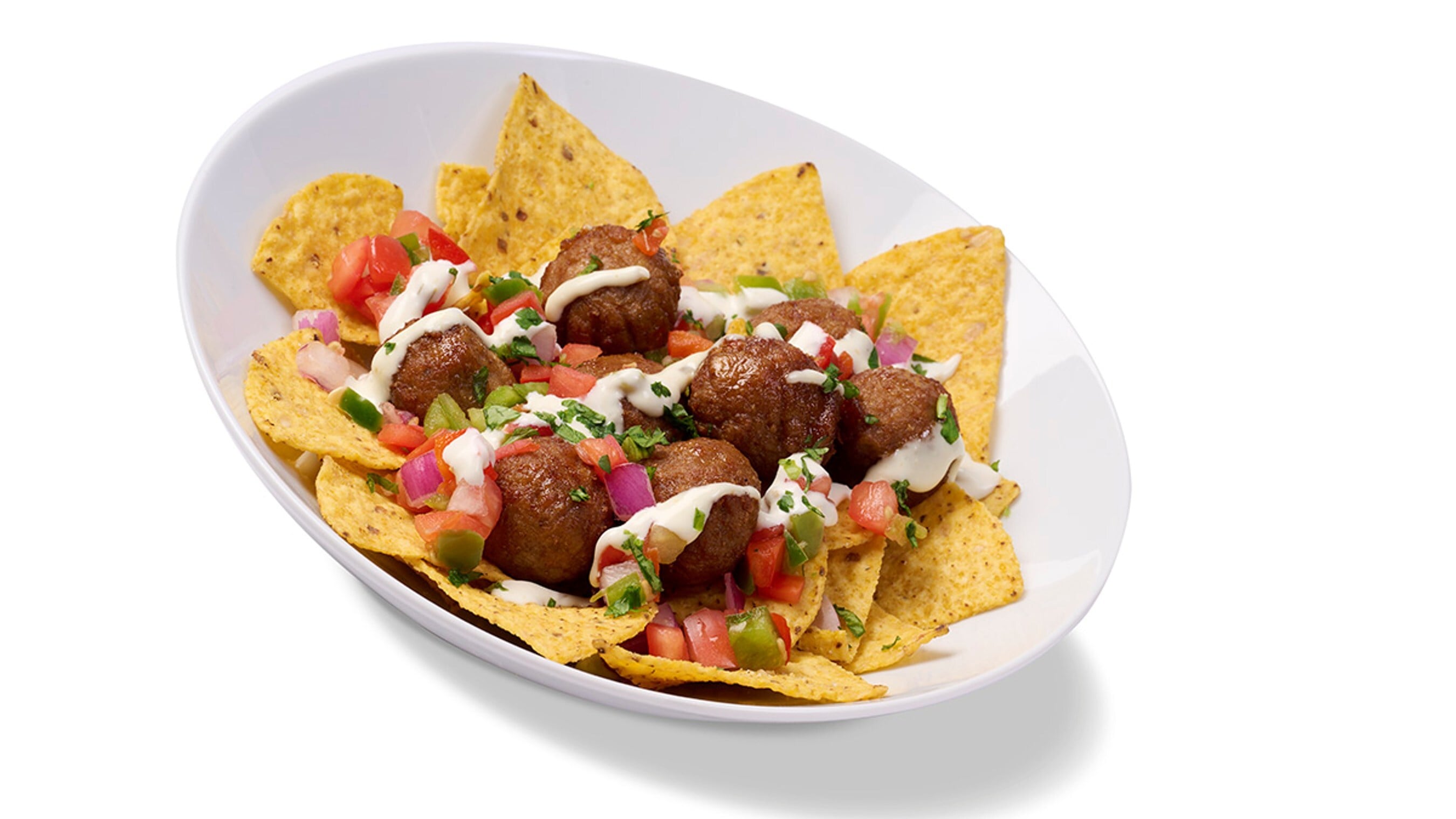
IKEA Canada’s new Plant Ball Nachos dish will launch across Canada late this fall for just $6.99. (CNW Group/IKEA Canada Limited Partnership)
In addition to the classic eight-piece Swedish meatball dish, the new menu will feature six new dishes, each offering a unique flavour profile and inspired by the diverse cuisine in Canada:
Plant ball nachos with pico de gallo and jalapeno aioli, $6.99
Eight-piece plant balls with roasted potatoes, scallions, pesto and parmesan cheese, $8.99
Eight-piece falafel balls with couscous, mixed vegetables, garlic aioli and a lemon vinaigrette, $8.99
Six-piece cod balls served alongside French fries and kale salad with Lingonberry vinegrette and tartar sauce, $9.99
Chicken ball tikka masala served with rice, yogurt and naan, $9.99
Salmon filet dinner with roasted pesto potatoes, peas, and lingonberry kale in a hollandaise sauce, $11.99
Canadians can enjoy the new all-round menu in IKEA stores nationwide starting late Fall 2025.