

Toronto’s historic Hudson’s Bay building at Queen and Yonge is set to glow again during the 2025 festive season, as landlord Cadillac Fairview launches a new program to lease the former department store’s street-facing display windows to brands and agencies. The initiative aims to reanimate one of the city’s most storied corners, while offering marketers an unusually large, street-level canvas on three major downtown corridors.
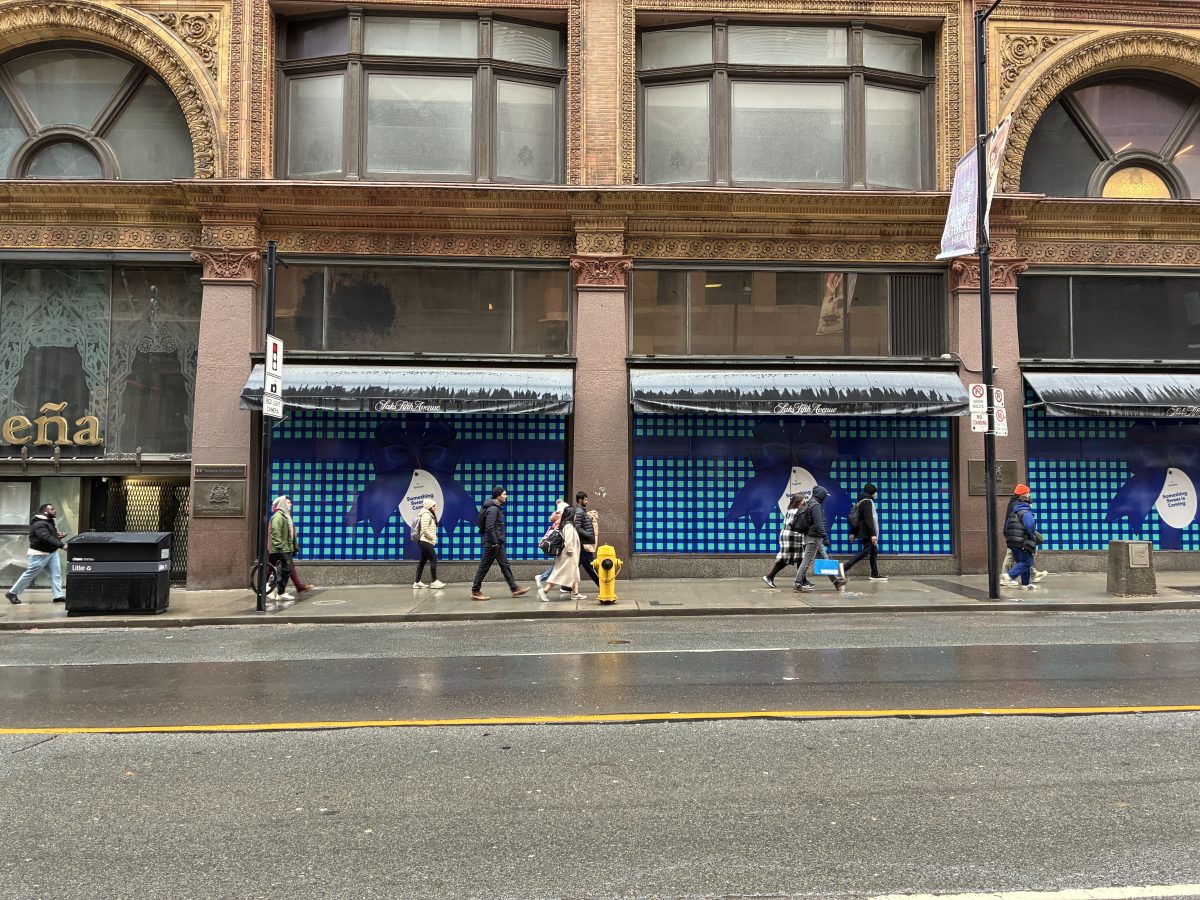
For decades, Torontonians associated the building with elaborate animated Christmas displays, first under Simpsons, then under Hudson’s Bay. Those Queen Street windows have been dark following the store’s closure June 1, prompting a steady trickle of nostalgic social media posts. According to Cadillac Fairview, that emotional connection is exactly what the program is tapping into, even as the format evolves.
“Just this morning a friend sent me a TikTok where people were panning those former windows and saying Toronto is not Toronto without them being activated,” says Jeff Simmonds, Director of Specialty Leasing at Cadillac Fairview. “There is definitely something in the air this time of year around those windows.”

The Cadillac Fairview holiday windows program will begin with a major unnamed brand taking over the run of seven street-level windows on Yonge Street for Holiday 2025, while additional bays along Bay and Richmond Streets are being offered to brands looking for high-impact seasonal displays or year-round storytelling opportunities.
Holiday Windows Return To A Storied Corner
The Queen and Yonge corner has anchored Toronto’s retail core for more than a century. Simpsons opened on the site in the 1890s and began creating Christmas windows aimed at children and their parents in the early 1900s. Archival accounts point to themed window displays at the store as early as 1913, with generations of families making a seasonal trip downtown to see the mechanical Santa scenes, toy vignettes, and storybook winter villages.
When the banner changed from Simpsons to Hudson’s Bay in 1991, the Christmas windows remained a constant. Under The Bay, the flagship typically presented five interconnected animated scenes along Queen Street each year, many designed and fabricated by specialists who also worked on major New York department stores.
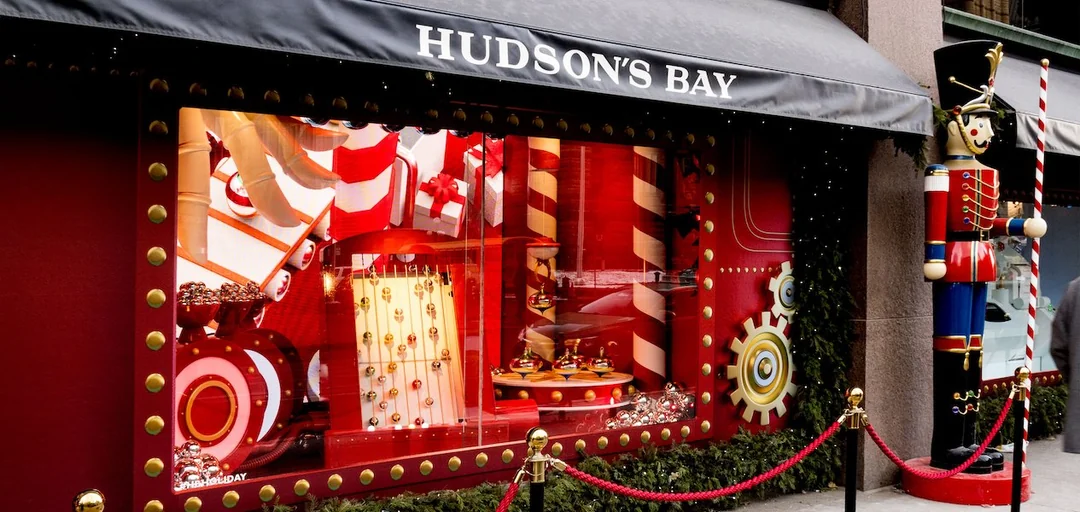
Installation was a complex operation. Teams of visual merchandisers and technicians spent days building the dioramas, crawling through hidden access panels to adjust props and repair motors. Hundreds of mechanisms ran day and night throughout the season, all above a busy subway station that sent vibrations through the building.
The outdoor windows went dark in 2023 and 2024 as the section of Queen Street in front of the building closed for Ontario Line construction. Hudson’s Bay shifted its holiday focus indoors, while commentators began to describe the traditional animated windows as effectively gone in their historic form. For Simmonds and his team, the public response to that absence made clear that the city still cared deeply about what happened at the building’s base.
“Those windows became part of people’s holiday ritual,” he says. “They were never just about selling product. They were about memory and emotion.”
Two Buildings, Three Streets, Dozens Of Window Bays
Cadillac Fairview has a unique vantage point on that heritage. The company acquired the Hudson’s Bay / Simpson’s Tower complex in 2014 through a roughly 650-million-dollar sale-leaseback with HBC, folding the historic property into CF Toronto Eaton Centre while Hudson’s Bay continued to operate as tenant.
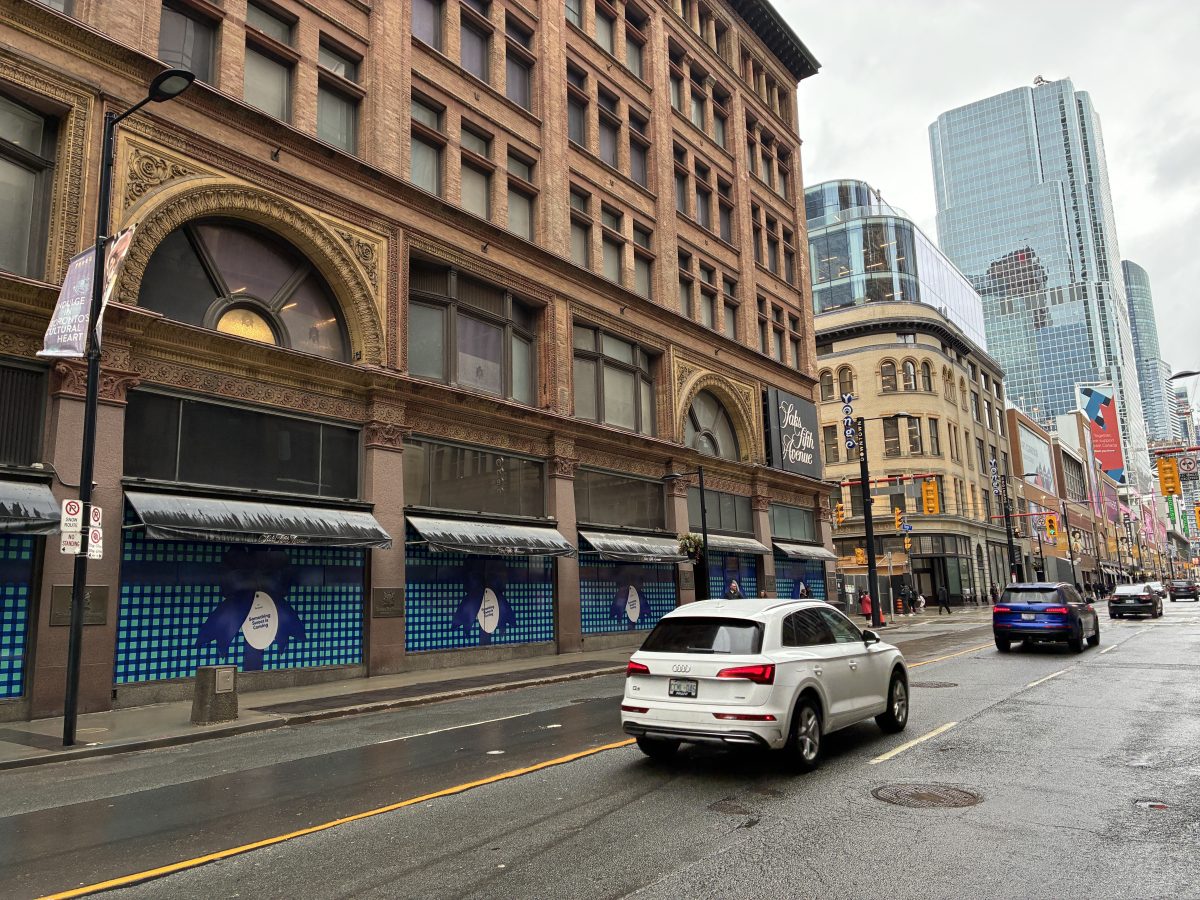
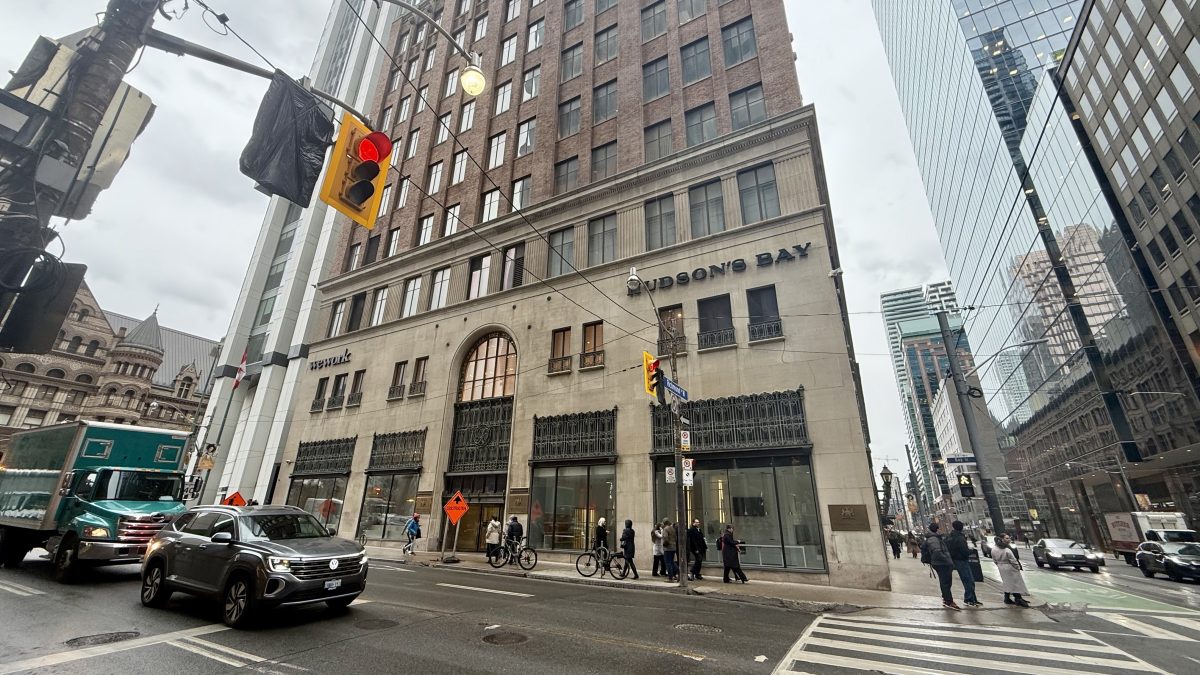
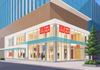
Today, the complex at 176 Yonge Street and 401 Bay Street includes a series of window runs that wrap around three sides of the block. Some are classic deep vitrines originally designed for storytelling displays, while others are shallower bays that lend themselves to bold graphic campaigns.
Simmonds breaks it down simply. The most visible opportunity for Holiday 2025 is the run of seven windows on Yonge Street between Richmond and Queen, including the former Louis Vuitton corner. These are the traditional deep displays that many Torontonians remember from past seasons, and they have already been leased to a single brand for this coming holiday.
“There are seven windows on the Yonge Street side, and all of them are now spoken for by one group,” he notes. “We are really excited. As a team, we have been working for quite a while to get the right partner locked in there.”
On the Bay Street side, just south of Simpson’s Tower, Cadillac Fairview has two connected window boxes that operate as a pair. Those bays already hosted a recent campaign for Sinai Health, produced with Diamond Marketing, that used bikinis and fabric in a bold women’s health message designed to stop pedestrians in their tracks.
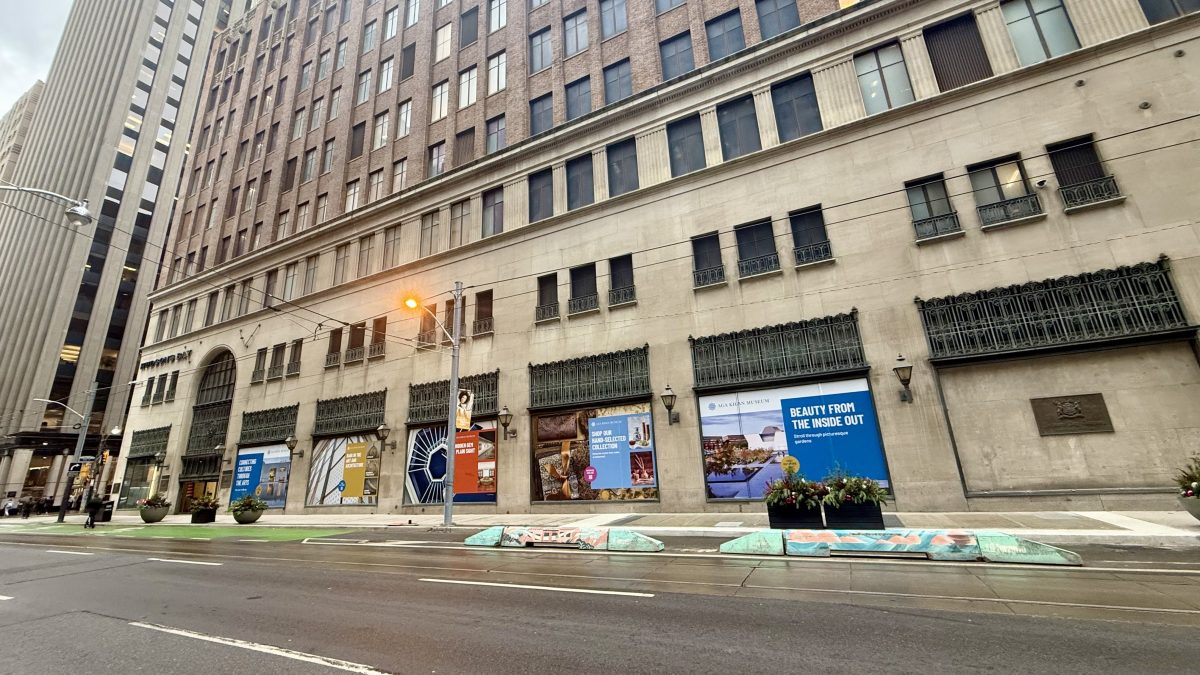
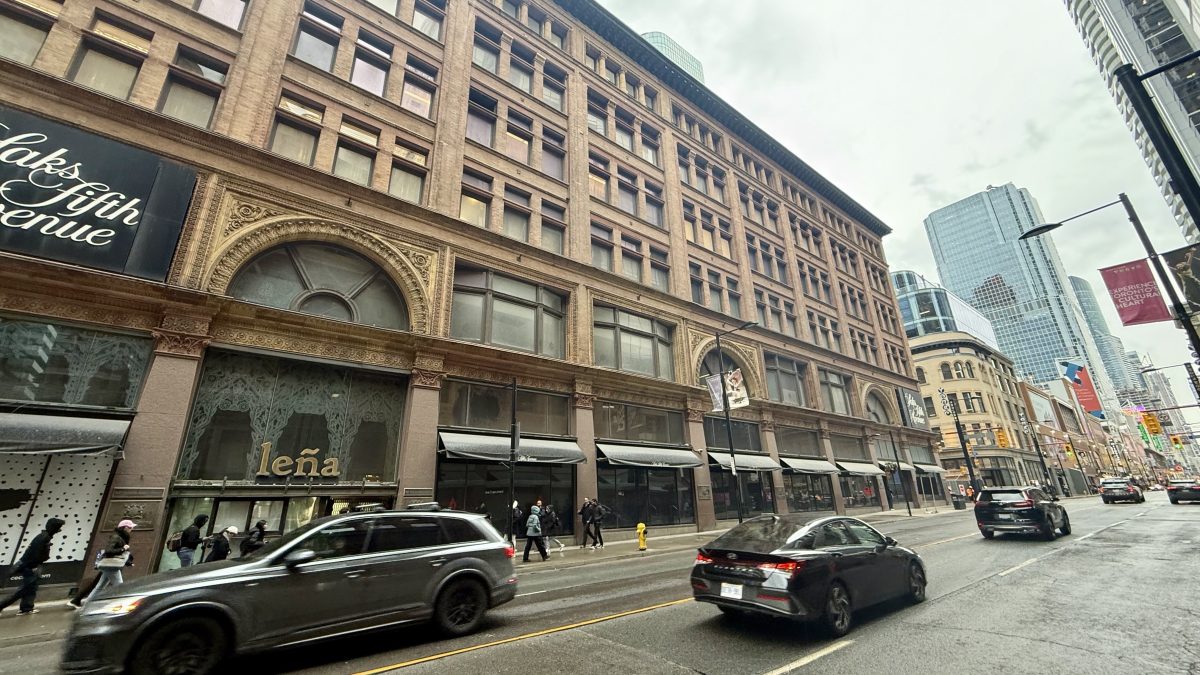
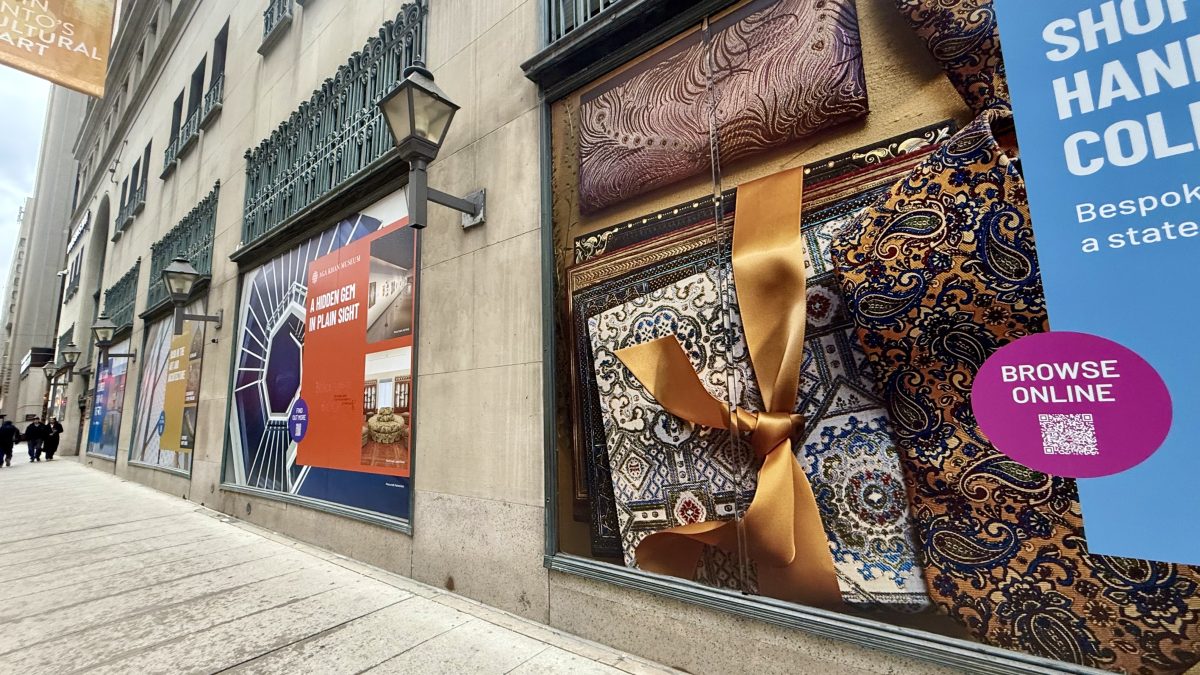
Along Richmond Street, the façade includes roughly a dozen windows. Five westerly bays at Richmond and Bay are currently wrapped in a museum campaign, while other sections of the run remain available. Historically, some of those Richmond windows were covered over with advertising skins when Hudson’s Bay was still operating the store, which meant many Torontonians never experienced them as true display vitrines. Simmonds says that is changing.
“Anything is on the table for me,” he explains. “I am more than happy to work with brands who are looking to activate. We have the means to make these windows work, whether it is a full 3-D takeover or a static call to action.”
From Animated Dioramas To Experiential Media
A key difference between the historic displays and the current program is that Cadillac Fairview is positioning the windows as an out-of-home and experiential platform rather than traditional department-store visual merchandising. The Hudson’s Bay holiday windows concept is less about a single retailer promoting its own assortment and more about hosted storytelling by external brands, agencies, cultural groups, and even charities.
“In out-of-home, static posters are one thing,” Simmonds says. “What we are offering is a chance to take something over, to build an immersive moment at street level, where people can really spend time with your story.”
That can mean different formats on different sides of the building. Deep windows on Yonge and Bay Streets are well suited to animated scenes, mannequins, or sculptural builds, while Richmond Street lends itself to large graphic treatments, bold typography, and QR codes aimed at drivers and cyclists. Traffic is often slow on Richmond, and Simmonds notes, with a smile, that motorists have plenty of time to absorb a message while they wait.
The first brand to take all seven Yonge Street windows is planning to start with a wrapped teaser campaign, covering the glass with static messaging before the full reveal later in the season. Simmonds says discussions have even included the idea of inserting a visible countdown clock into the run, so that people on the sidewalk can watch the days tick down to launch.
“It is a clever way to build anticipation while our teams are inside bringing the displays to life,” he says. “You get that sense that something is happening again at that corner.”
Beyond December: A Year-Round Platform For Big Moments
While holiday will be the emotional anchor, Cadillac Fairview is explicit that it does not view the program as a one-season experiment. Once installations prove out on Yonge, Bay, and Richmond, the company expects the Hudson’s Bay holiday windows initiative to evolve into a flexible platform that can support other moments on the cultural calendar.
“To me, there is no reason why those windows cannot become Lunar New Year windows, FIFA windows, or Winter Olympics windows,” Simmonds says. “We have a massive year ahead of us in Toronto and in Canada. Until I am told otherwise, I look at these as an opportunity.”
That longer view matters because the future of the Hudson’s Bay building itself remains uncertain. The store has closed, and various scenarios have circulated in political and real estate circles, from potential government use to future mixed-use redevelopment. Any large-scale repositioning will take time, however, and the windows give Cadillac Fairview a way to keep the street engaged in the interim.
The company is also looking at nearby assets. At the southwest corner of Bay and Queen, Cadillac Fairview has completed a dramatic renovation of the historic Two Queen building, which now features a new ground level designed for retail or activation uses. There are no confirmed plans there for this holiday period, but Simmonds expects the address to play a role in future city-wide celebrations.
“The Two Queen project is absolutely beautiful,” he says. “My job is to keep walking those spaces, taking meetings, and finding the right fit. When we bring a brand into a redeveloped building like that, we want it to feel aligned with who we are as a company.”
Specialty Leasing With An Experiential Mindset
The windows program sits within Cadillac Fairview’s specialty leasing team, which focuses on promotional activations, filming, pop-ups, and other non-traditional uses rather than just short-term store leases. Simmonds, who spent about a decade in experiential marketing before joining Cadillac Fairview ten years ago, says that background shapes how he looks at the portfolio.
“Any time I see a space that a brand can occupy, I am all over it and my team is all over it,” he notes. “We are always asking what can be done with a space, not just how it has been used in the past.”
That approach has already produced notable work at CF Toronto Eaton Centre, from centre court activations to branded takeovers tied to blockbuster movies and major sporting events. The Hudson’s Bay holiday windows program extends that logic to the building envelope itself, turning a closed department store into a changing gallery of narratives as different partners cycle through.
Simmonds says outreach for the windows has combined direct contacts with agencies and an unexpectedly creative use of AI tools. The team has been using generative platforms to mock up sample window concepts tied to specific brands, then sending those visuals to marketers to help them picture what a takeover could look like.
“If you think about the top ten brands you associate with holiday, chances are we have created a speculative window concept for them and sent it to someone on their side,” he acknowledges with a laugh. “We wanted people to see that these are not theoretical spaces. They are real, and they are ready.”
Linking Street, Skywalk And Mall
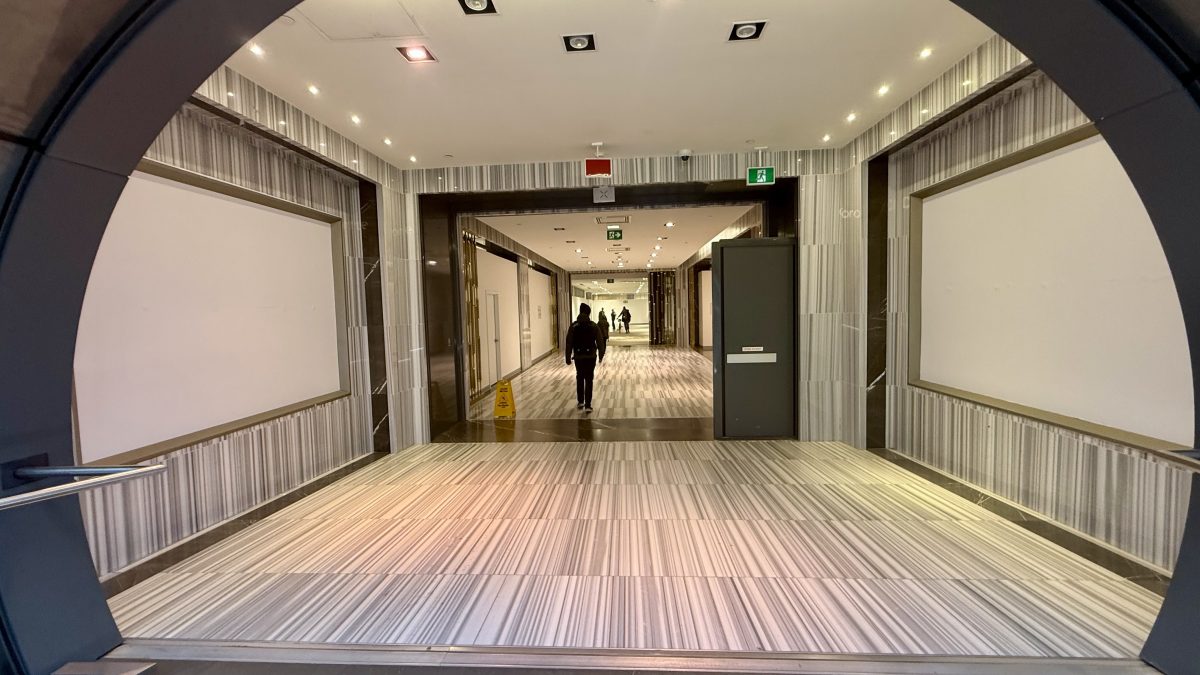
All of this happens within a larger circulation strategy at CF Toronto Eaton Centre. Cadillac Fairview recently reopened the elevated bridge that connects the mall to the former Hudson’s Bay building, allowing shoppers to move between the complex and the rest of the property at the upper level as well as through the underground concourse.
“There is a series of new corridors that guide people into the building and across the bridge,” Simmonds says. “That bridge is iconic, and we wanted it open in time for the holiday period so that we could maximize traffic for our retailers.”
As the mall prepares for a busy season that includes new openings like Eataly within the centre, the window initiative gives visitors another reason to explore the block at street level. Simmonds notes that retailers inside CF Toronto Eaton Centre may also choose to use some of the available bays to promote their own seasonal stories, pointing shoppers toward in-mall capsules and collections.
How Brands Can Participate
The windows will be priced on a negotiated basis that reflects factors such as length of term, production complexity, and whether a brand is taking a single bay or an entire run. Simmonds confirms that budgets need to account not only for leasing costs but also for building and installing the physical displays, which can be comparable to major trade show booths in terms of fabrication and logistics.
“Outfitting these windows is not something you do on a whim,” he says. “If you want to do it right, you invest in creating something that people will remember.”
At the same time, simpler executions remain possible, particularly along Richmond Street, where brands can deploy bold creative and QR codes in a more traditional out-of-home format. Cultural institutions, public-sector organizations, and non-profits are part of the conversation, building on the precedent set by the recent women’s health installation.
For Simmonds, the opportunity is as much about place-making as it is about media impressions.
“Those windows have always meant something to Torontonians,” he says. “If we can help brands become part of that story, while keeping this corner animated and interesting as the city evolves, that is a win for everyone.”
Brands, agencies, and cultural partners interested in future window opportunities can contact Cadillac Fairview’s specialty leasing team, led by Simmonds, to discuss availability on Yonge, Bay, and Richmond Streets for Holiday 2025 and beyond.










Christmas shopping just doesn’t feel the same with Hudson’s Bay. Weird to have Canada’s first Christmas without Hudson’s Bay. It’s always been there. Find myself really missing The Bay this time of year.
I am going to reach out to them asap as I want the windows on Richmond.