Luxury resale platform Luxe Du Jouris planning a major expansion as it looks to raise $13 million CAD in a Series B funding round, aiming to double sales once again and grow its physical retail and digital platform across North America.
CEO Tammy Phan confirmed the upcoming raise in an interview with Retail Insider, citing the company’s ongoing growth trajectory after a successful Series A round.
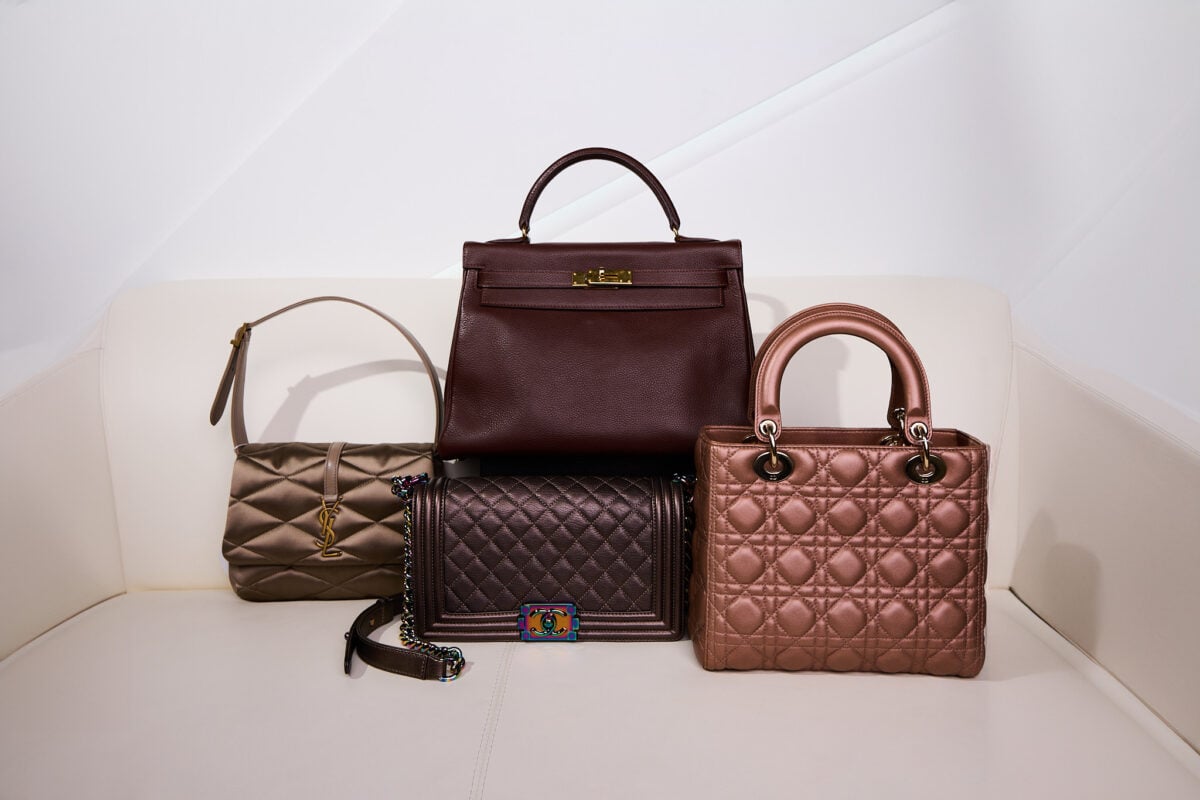
Luxe Du Jour is a Canadian-born one-stop online luxury boutique where you can shop, sell, consign, rent, restore and accessorize bags.
Tammy Phan
“We raised our Series A with one of our investors, a billionaire from Vancouver, and ever since that injection of cash, we doubled our sales,” said Phan. “So we know it takes money to make more money.”
The company raised $5 million in its Series A round in 2023. With a proven model and growth strategy, Luxe Du Jour is now pursuing a significantly larger raise.
“If our model is right, why don’t we raise now $10 million, double that what we raised last time, to prove that we can double sales again because we have a new strategy.”
Phan said the company is looking to close the funding round before the summer.
“Everyone’s shopping. Everyone wants to spend money, whether it’s on vacations or it’s on designer bags for vacations.”
Expanding Retail Footprint in Canada and the U.S.
Luxe Du Jour started in 2016 with the intent to bring sustainability to the luxury market. The founders put together their collection of handbags and started selling them on consignment! This was the initial launch of Luxe Du Jour. They found that they could easily re-home their pre-loved handbags by consigning them, recoup their investment, and save on new purchases by choosing to buy pre-loved.
Luxe Du Jour currently operates two head offices—one in Calgary, Alberta, and one in Irvine, California, which opened in March 2023.
“Because of the head office, we realized that we’re missing a huge opportunity when it comes to retail showrooms,” said Phan. “All the clients that are coming to our head offices, they’re like, ‘Oh my gosh, yes, I want to come to the shop, I want to see it, I want to have the whole luxury experience.’”
While Irvine includes a mini showroom within the office, Phan sees major growth potential through full-scale retail.
“Statistically, when you open up a luxury retail storefront, it’s proven with historical data that it typically increases sales by 30 to 40 per cent in that geographical region for companies,” she said.
“Imagine if we do open up one retail showroom in Toronto or Miami or New York, and it ends up increasing sales by 40 per cent. We would have a copy-and-paste model. We would start putting that in major cities.”
Luxe Du Jour
Retail Trial in Yorkville
The company recently opened a pop-up in Toronto’s Yorkville area in November 2024 in partnership with luxury fashion boutique CityLux Boutique.
“Customers can drop off their bags to us,” said Phan. “That was a lot of the friction point for our customers all the way in the East Coast. They were like, ‘We want to sell with Luxe Du Jour, but we don’t want to ship our $20,000 bags all across the country.’”
Phan said the pilot has been an early success.
“It’s really proved to be very, very successful and very, very helpful for our clients. So we know we need to open up a permanent location there.”
Investment in Technology and Global Reach
The upcoming investment will also support the company’s digital transformation and global ambitions.
“We’re improving our app and our software,” Phan said. “There’s a lot of new features we need to integrate into our platform so that it can make buying, selling, renting more seamless and open that up easily to the global clientele.”
While remaining tight-lipped on some initiatives, she added, “I just can’t tell you the confidential stuff because it’s not in progress. I can’t have a competitor stealing that yet.”
Growth of Circular Fashion
Phan believes Luxe Du Jour is positioned to benefit from a generational shift in shopping behaviour.
“Pre-owned is growing faster than the brand new luxury market,” she said. “The brand new luxury market is only growing by 3 per cent every year… the pre-owned secondhand market is going at a rate of 11 per cent per year.
“We’re really seeing that the future generation of shoppers—the Millennials, the Gen Zs—they’re the ones that care about shopping sustainably, being a part of circular fashion. ‘Used’ is the new ‘new’ for them.”
Calgary is undergoing a significant downtown transformation aimed at revitalizing the core while addressing major challenges stemming from the 2014 oil crash. Thom Mahler, Director of Downtown Strategy for the City of Calgary, explained how a sharp rise in office vacancies and a $16 billion drop in downtown property values forced the city to rethink its economic strategy. The resulting tax burden shifted to businesses outside the core, spurring the need for systemic change.
The Downtown Strategy, spearheaded by the City in collaboration with Calgary Economic Development, focuses on increasing downtown residential density through office-to-residential conversions. To date, 11 projects — 10 residential and one hotel — are underway, set to deliver 1,500 new housing units and bring approximately 2,400 new residents into the downtown area.
The city is also welcoming post-secondary institutions downtown. The University of Calgary’s School of Architecture, Planning and Landscape is relocating its full program to the former Nexen building, accommodating 1,200 students and staff and occupying 180,000 square feet. This academic presence is expected to further energize downtown retail and food sectors.
This population shift supports a broader vision of a vibrant, mixed-use downtown less reliant on traditional office workers. Retailers and restaurants are adapting to a diversified demographic, with new businesses like Value Village Boutique attracting younger consumers and residents.
With fresh federal funding through the Housing Accelerator Fund, the city anticipates more conversion projects and renewed investor interest in repurposing underused office buildings. At the same time, Calgary is addressing safety and homelessness with a multi-pronged, compassionate approach involving enforcement, support services, and long-term housing strategies.
The City is also revitalizing the east end of the downtown with redevelopment of Arts Commons, the Olympic Plaza and the Glenbow Museum.
Together, these efforts are reshaping downtown Calgary into a resilient, inclusive, and dynamic urban hub.
Retail Insider is streamlining its Canadian retail news from around the web to include a handful of top news stories that can be viewed quickly during the day. Here are the top stories from the past 24 hours.
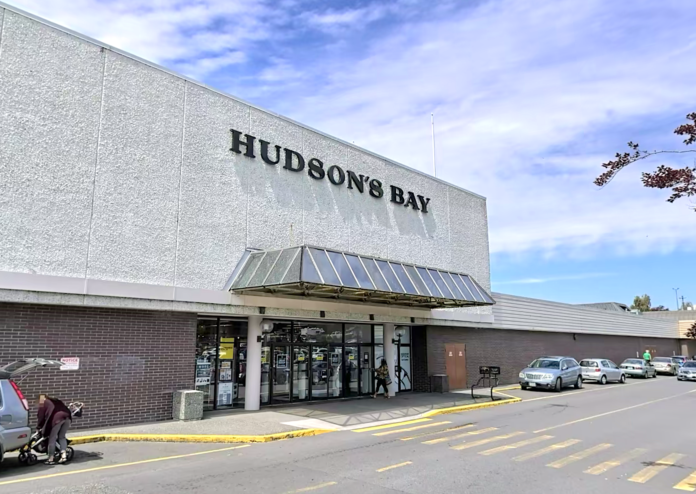
Hudson's Bay store at Mayfair Shopping Centre in Victoria, BC. Central Walk, owned by Ms. Liu, acquired the mall in 2021. Photo: Apple Maps
A British Columbia-based billionaire and prominent Canadian shopping centre owner has confirmed she has submitted a bid to acquire 25 Hudson’s Bay store locations, injecting new intrigue into the fate of one of Canada’s most storied retail brands.
Weihong Liu, the chairwoman of Central Walk, told the Toronto Star on Wednesday that she has already paid money toward the purchase, following public statements made earlier this month on Chinese social media app RedNote. In a series of videos, Liu declared her intent to acquire “dozens of stores,” describing the opportunity as transformational for both her business and the Canadian retail landscape.
“The money has already been paid,” Liu said to the Toronto Star when asked directly whether a bid had been submitted. She also indicated she would hold a press conference in 10 days, presumably to reveal more details.
Bidding Deadline and Sale Conditions
Liu’s confirmation to the Toronto Star came just hours before Wednesday’s 5 p.m. deadline for final bids for Hudson’s Bay assets, including the chain’s store locations and its intellectual property portfolio, which encompasses the brand’s recognizable logos and its iconic stripes.
As per court-supervised sale terms, each “final qualified bid” must include a refundable deposit of no less than 10 percent of the proposed purchase price, alongside documentation confirming committed financing. Each bidder must also outline plans for retaining Hudson’s Bay employees—a critical concern amid the company’s mass layoffs and liquidation.
“We need to hire workers, recruit people and attract investment, so the time is tight to get the work done,” Liu told the Star in Mandarin. “The landlords will hand over the keys in June and charge me rent.”
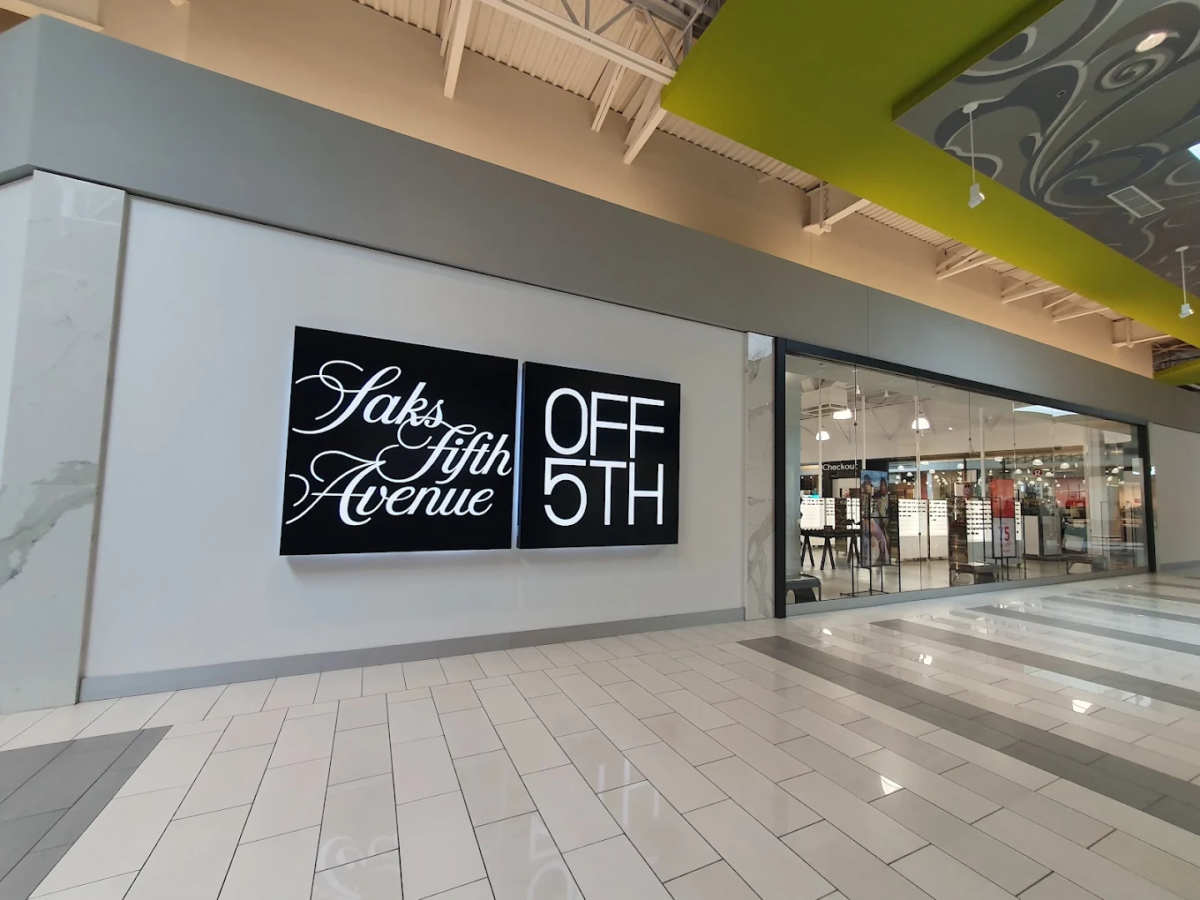
Hudson’s Bay-owned/licensed Saks OFF 5TH at Tsawwassen Mills in Delta, BC. Central Walk acquired the shopping centre near Vancouver in 2022. Photo: Mohammad Hosseini/Google Maps
A National Liquidation Underway
Hudson’s Bay, Canada’s oldest retailer, entered full liquidation earlier this year across more than 80 store locations, following a court-approved restructuring under the Companies’ Creditors Arrangement Act (CCAA).
Initially, six stores were slated to remain open, but on April 25, those too were put into liquidation after the retailer concluded there was “low probability of receiving a viable bid based on the six-store model.”
That hasn’t stopped hopeful interest. In an April 22 court filing, Hudson’s Bay disclosed that 18 parties had expressed interest in 65 of its store leases, while 36 leases had drawn no interest. The retailer now faces the prospect of disclaiming unclaimed leases, returning them to landlords.
Quebec may not be part of the locations being bid on by Liu, as her business partner, Linda Qin, stated in an April video that the “more than 20 stores” in their bid were in British Columbia, Alberta, and Ontario.
This geographic focus could signal the beginning of a regional play by Liu, with possible implications for Quebec where no active store bids have yet been publicly identified.
Liu’s Expansion and Revival Plans
Liu, who immigrated to Canada after selling a Shenzhen-based mall in 2019 for over $1 billion, has since assembled a portfolio of shopping centres in British Columbia through Central Walk. These include Tsawwassen Mills south of Vancouver, Mayfair Shopping Centre in Victoria, and Woodgrove Centre in Nanaimo—the latter listed for sale in early April shortly after Liu announced her intent to acquire Hudson’s Bay stores.
In a video posted to RedNote on April 3, Liu shared her motivation for entering the bidding process. “I saw The Bay closing down, and I saw how sad Canadians were. It moved me deeply … That ignited my fighting spirit,” she said.
Her goal, she added, is to “revive the retail industry, solve employment issues, create miracles, and make The Bay great again.”
In a separate April 17 video, Liu encouraged merchants to contact her to participate in a post-liquidation retail model she’s developing. “There are over 20 stores,” she said. “These stores are in city centres — the kind of prime locations we couldn’t get into before. Hurry up, if you have merchandise.”
Qin added that a warehouse sale would take place at select Hudson’s Bay stores after the official liquidation wraps in June, further underscoring the urgency of her team’s planning.
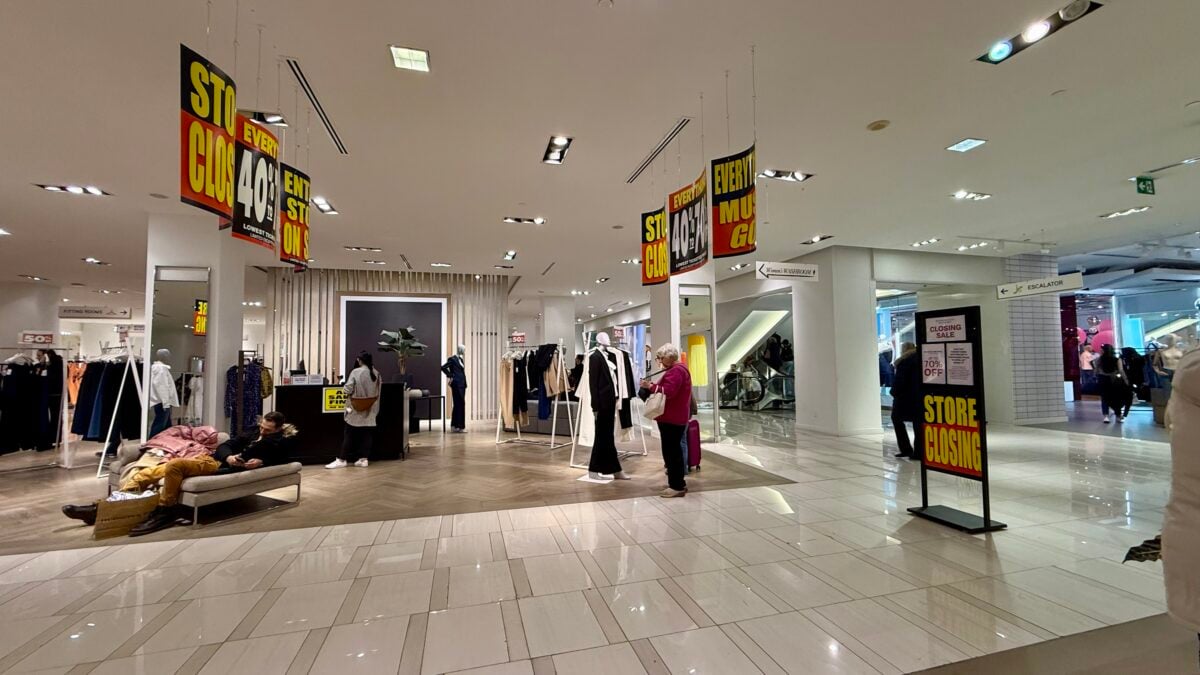
Third floor women’s fashions under liquidation at Hudson’s Bay Queen Street in Toronto on April 25, 2025. Photo: Craig Patterson
Bid from Urbana Corp. and Market Uncertainty
Liu’s is one of only two bids that have been made public. The other comes from Toronto-based investment firm Urbana Corp., which has made an offer for Hudson’s Bay’s intellectual property and brand assets, but not for store leases.
Thomas Caldwell, CEO of Urbana, told the Financial Post that he believes acquiring the HBC brand and Royal Charter could be profitable. However, his bid does not involve operating physical stores.
Hudson’s Bay and financial adviser Reflect Advisors have remained tight-lipped on the number of qualified bids received to date. However, Reflect’s Managing Director Adam Zalev said interest has been high. “With the bid deadline in the sales process approaching this week, the high level of sales at the stores really helps to prove the strength of the Canadian consumer and their desire to help support Hudson’s Bay, an iconic Canadian institution,” Zalev told The Canadian Press.
What’s Next: Auction and Court Approval
If multiple qualified bids are received, a court-supervised auction could take place in mid-May. Hudson’s Bay is scheduled to return to court by May 30 to seek approval of any completed sales.
The possibility remains that if a strong enough bid is received—such as Liu’s—the retailer could reverse some liquidation decisions and keep select stores open under new ownership. That would mark a stunning development for a company once considered beyond saving.
Liu’s bid, with its emotionally charged messaging and strategic retail ambitions, could represent not just a financial play but a highly symbolic gesture of revival in Canadian retail. Whether she becomes Hudson’s Bay’s next owner—or merely one of many suitors—remains to be seen.
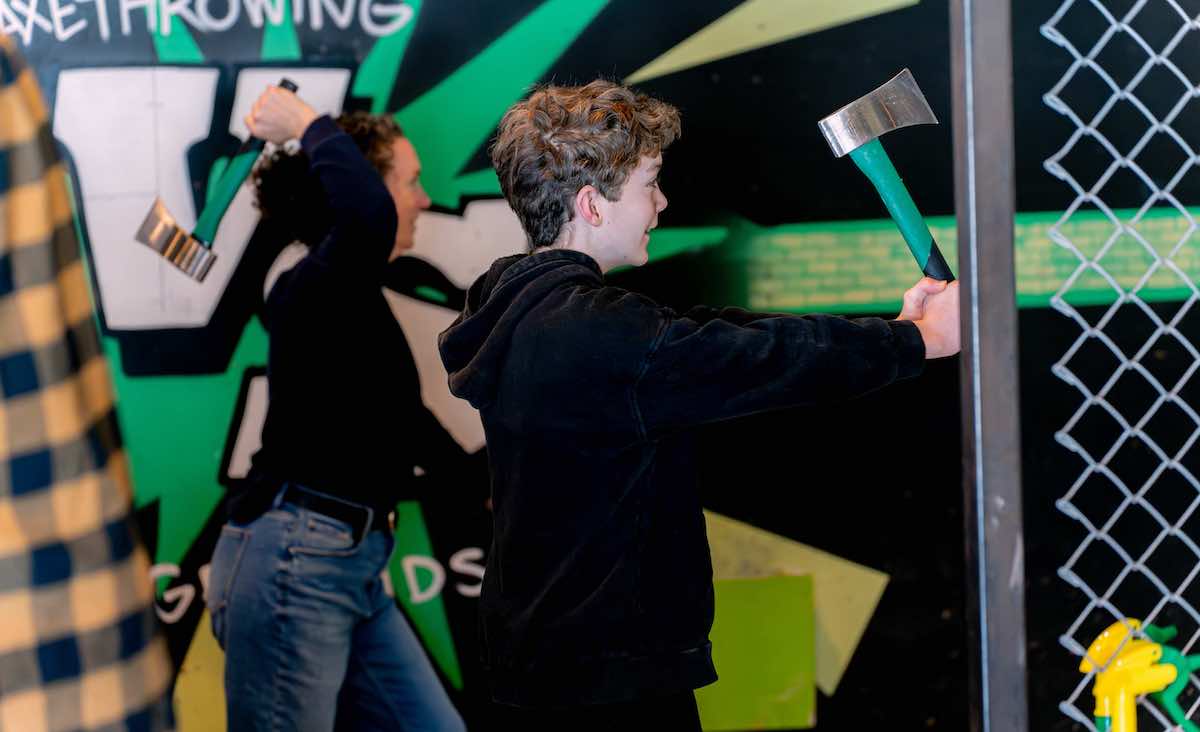
Toronto-based BATL Grounds, the pioneer of urban axe throwing, has officially opened a fully upgraded venue in Niagara Falls, Ontario, delivering a modernized blend of axe throwing, knife games, and exclusive archery — all powered by interactive technology. Located at 4437 Queen Street, the new site brings BATL’s signature style of competitive social entertainment to the broader Niagara region, drawing in locals from St. Catharines, Fort Erie, and tourists alike.
“Niagara Falls has always been known for its energy – and now we’re adding a whole new kind of thrill,” said Houman Javidnia, COO of BATL Grounds. “From cutting-edge gameplay to expertly mixed cocktails, we’ve designed this venue as a bold escape for locals and visitors alike. It’s not just entertainment – it’s an experience you’ll want to come back to again and again.”
Signature Activities and Features
The Niagara Falls location is designed to deliver high-energy, digitally enhanced experiences for all kinds of occasions — from team outings and date nights to parties and competitive leagues.
Core features include:
Traditional axe throwing, knife throwing, and tech-integrated archery, all equipped with digital scorekeeping and interactive gameplay.
A full-service bar with crafted cocktails and bar-side bites.
Event space ideal for social gatherings or corporate functions.
Expert coaches available to guide every group — with no prior experience required.
BATL’s archery offering is a first-of-its-kind experience in North America, adding a distinct layer of innovation to the venue.
“With this Niagara Falls location, we’ve elevated every detail, from interactive tech to hospitality,” said Javidnia. “This venue is a leap forward in immersive, social entertainment. Whether you’re picking up an axe for the first time or diving into our exclusive archery experience, we’ve built something that sparks connection, competition, and pure excitement.”
Image: BATL
From Backyard Game to Global Brand
BATL Grounds, short for the Backyard Axe Throwing League, was founded in 2006 by Matt Wilson in Toronto. What began as a casual cottage pastime among friends quickly grew into backyard gatherings and eventually organized leagues. In 2011, BATL opened its first indoor venue in Toronto’s Port Lands. By 2013, it had expanded to three locations in Toronto and has since become a North American leader in recreational axe throwing.
The company is also a founding member of the International Axe Throwing Federation (IATF), helping shape global standards for safety and gameplay in the sport.
Ontario Locations: A Growing Footprint
With the opening of the Niagara Falls venue, BATL now operates eight locations across Ontario. Each venue is tailored to host group events, league nights, and casual walk-ins:
Toronto – Port Lands (33 Villiers St.): BATL’s original indoor location with digital screens and a licensed bar.
Toronto – Stockyards (30 Weston Rd., Unit C109): Includes archery and knife throwing, located near the Junction.
Vaughan (Steeles & Dufferin): Easily accessible from the GTA, with a licensed bar and digital scoring.
Pickering (813 Brock Rd., Unit #11): Offers axe throwing for up to 120 guests, a full bar, and free parking.
Hamilton (80 James St. N): Centrally located in downtown Hamilton for a variety of group events.
London (38 Adelaide St. N): Popular for both corporate outings and casual nights out.
Niagara Falls (4437 Queen St.): The latest location, offering next-gen experiences for residents and tourists.
Ottawa (2615 Lancaster Rd.): Hosts both social and corporate bookings with flexible group offerings.
Each location emphasizes hospitality, safety, and accessibility, ensuring an engaging and inclusive environment for all participants.
Image: BATL
Social Connection Through Competition
Beyond the games, BATL continues to focus on building community and creating memorable shared experiences. The Niagara Falls venue’s launch is a continuation of that mission, offering both a competitive atmosphere and a welcoming social hub.
The company’s combination of high-touch hospitality, immersive technology, and experiential design has helped it remain a leader in the emerging “competitive socializing” category — where gameplay meets nightlife.
In a move set to reshape the retail packaging industry in Canada, Gather Packaging has officially launched as a new domestic manufacturer of premium, sustainable paper shopping bags.
Founded by Ben & David Hertzman, the owners of Progress Luv2Pak, which boasts over 100 years of experience in the retail packaging industry, the launch marks a return to Canadian manufacturing for the Toronto-based company.
“We started as a manufacturer,” said Ben Hertzman, President of both Progress Luv2Pak and Gather Packaging, during an in-depth interview. “Our company has been around for over a century, originally making hat and gift boxes in the 1920’s for icons in Canadian retail.”
But like many companies, Luv2Pak exited local manufacturing roughly 15 years ago in favour of international sourcing. That trend has now reversed.
“What’s old is new again,” Hertzman continued. “We truly believe the future of production is bringing supply chains closer to home.”
Ben Hertzman, President of Progress Luv2Pak and Gather Packaging
Made in Canada: A Strategic Business Advantage
At a time when global supply chains are riddled with unpredictability—from tariff instability to freight delays and added uncertainty—Gather Packaging offers retailers a safer, more stable solution: buying domestic.
“There are so many benefits to sourcing locally,” said Hertzman. “You reduce risk. You avoid unexpected disruptions. And you gain more control over timelines and quality.”
For Canadian retailers, this shift is not only about convenience—it’s also about branding. A “Proudly Made in Canada” paper bag is more than a vessel for purchases; it’s a walking billboard for values like sustainability, quality, and national pride.
“As patriotism grows, more retailers are telling us they want packaging that reflects their Canadian roots,” said Hertzman. “We’re here to deliver that.”
Image: Gather Packaging
World-Class Manufacturing in Toronto
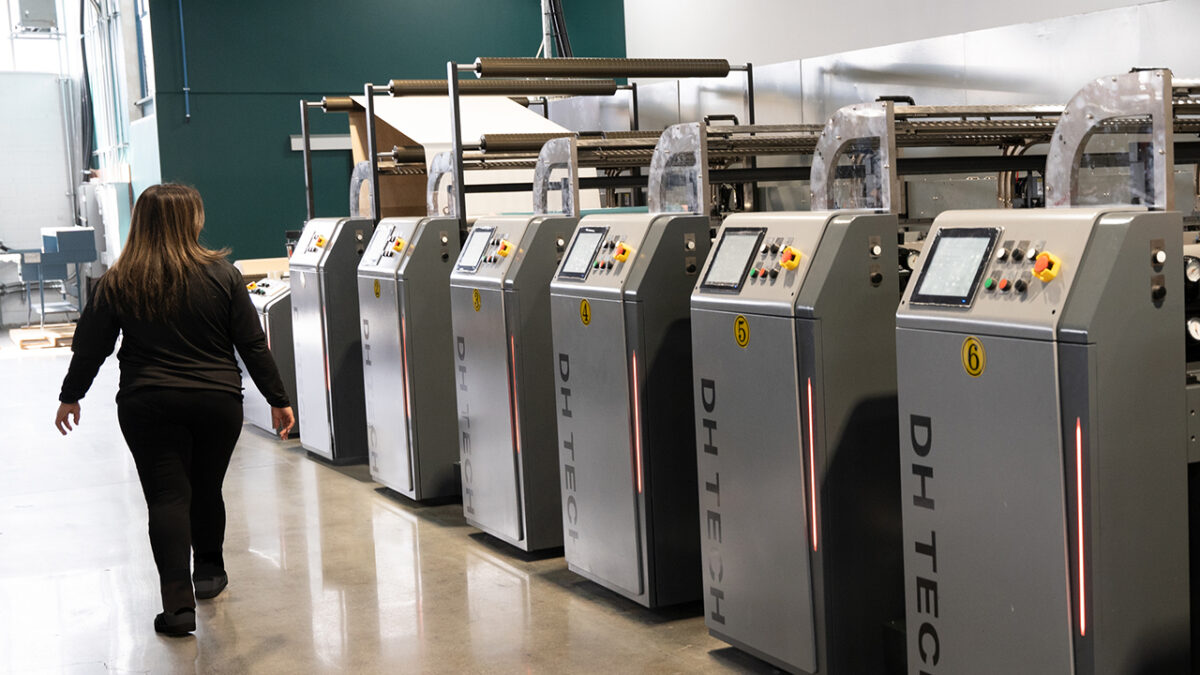
Located near York University in Toronto, Gather Packaging’s brand-new production facility is a multi-million-dollar investment in Canadian manufacturing. The plant features some of the most advanced printing and converting equipment available in the industry worldwide.
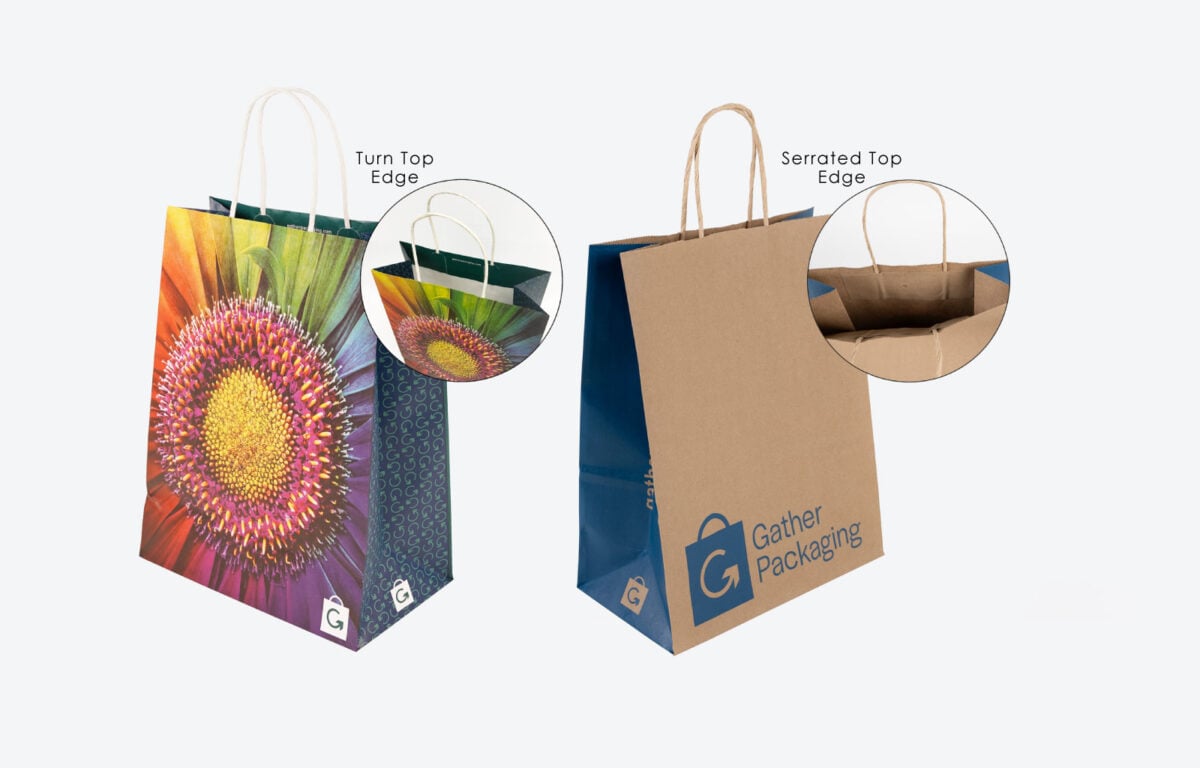
“We’re the only manufacturer in North America with the capability to produce a ‘turn top’ paper bag – the preferred style of many premium retailers,” said Hertzman. “This is in addition to the staple and most common ‘serrated top’ paper bag. We are also adding technology to add tamper-resistant adhesive tape for food or grocery delivery bags.”
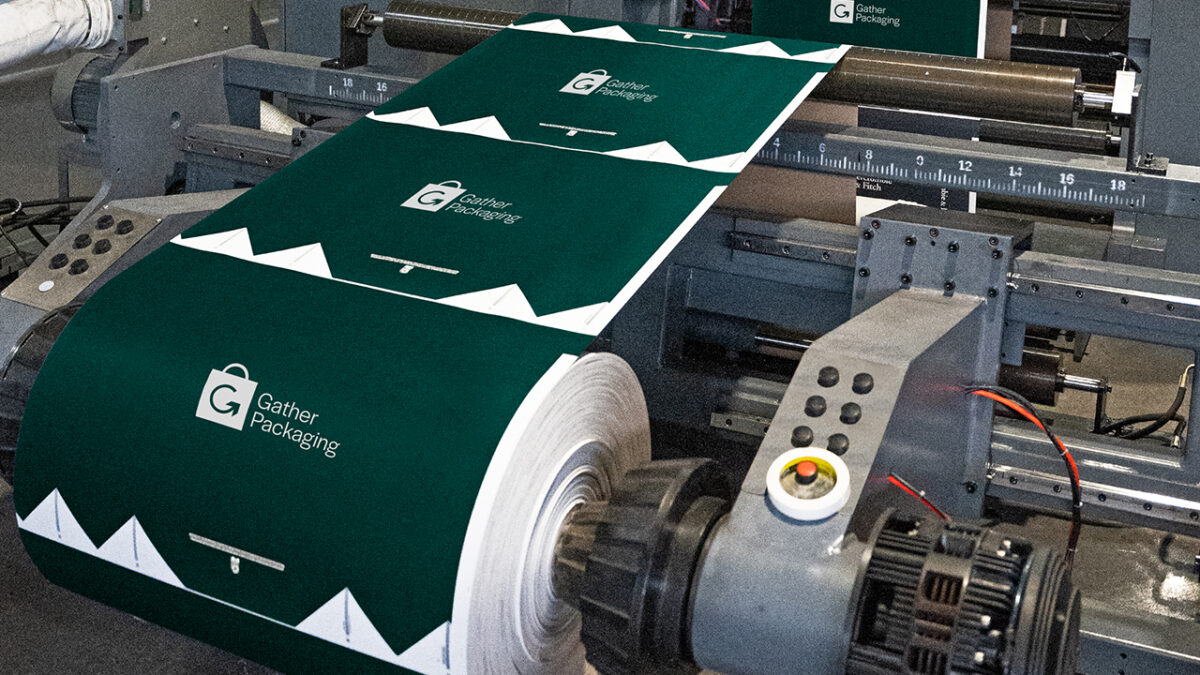
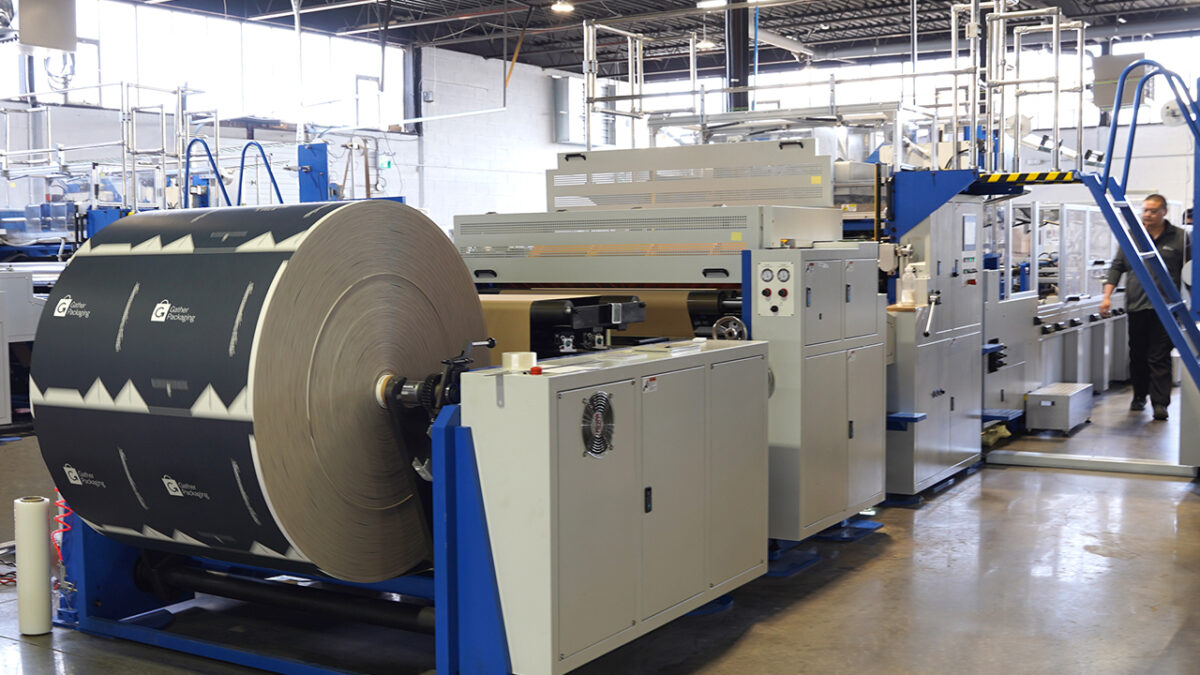
Gather’s manufacturing process is highly automated, making our domestic production efficient and cost-effective. According to Hertzman, “The machinery takes care of most of the work. Our team loads giant rolls of paper at one end of the machine, and thousands of bags an hour come out the other side. Just about everything is automated, which keeps our costs competitive.”
Quality bag manufacturing. Image: Gather Packaging
Not Just Commodity Bags—Craftsmanship Counts
Gather Packaging isn’t aiming to compete with low-cost, low-quality imports from overseas. The goal, instead, is to elevate the standard for what a paper bag should be.
“A lot of paper bags you find are commodity-grade,” said Hertzman. “Print quality is average. Bags are rough. Handles may break or detach. That’s not what we do. Over 100 years of working with the top retailers around the world have taught us that manufacturing a superior quality product is the benchmark.”
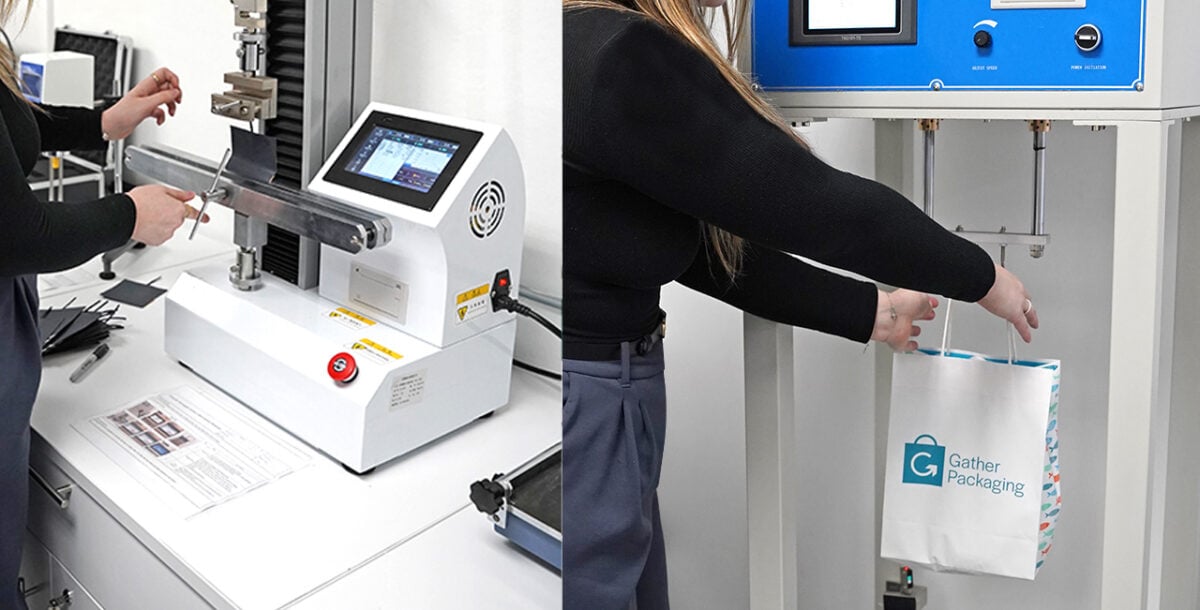
Bags are printed with up to 8-colour, vibrant flexographic print, with options to adjust size and customize finishes. They’re rigorously tested in an on-site quality control lab outfitted with advanced testing equipment to ensure consistency, strength, and reliability.
“Our bags can hold up to 40 pounds,” Hertzman added. “No more double bagging because you’re worried the handles will break or the bottom will fall out. Just using one high-quality bag where you used to use two is a huge win.”
Printing in the warehouse. Image: Gather Packaging
Targeting Retailers, Grocers, and Restaurants
While Progress Luv2Pak has long served some of the most iconic retailers across North America, Gather Packaging’s reach is intentionally broader. The new manufacturing operation is designed to serve any organization that relies on high-quality paper shopping bags, if they can meet minimum order quantities.
According to Hertzman, the company is focusing on three main customer groups. The first group is retailers, spanning categories such as apparel, gift, books, and toys. Both national and regional retail chains are ideal clients, especially those seeking to enhance their brand with durable, aesthetically pleasing packaging. “We’ve worked with a wide range of retailers over the years, many of whom are featured regularly in Retail Insider,” said Hertzman, “we know how to meet the high expectations of brands that care deeply about presentation and performance.”
The second group includes grocers—particularly those who want to integrate Canadian-made paper shopping bags into their inventory for in-store use or delivery. With more grocery retailers moving away from plastic and seeking sustainable, high-performing alternatives, Gather’s offerings are well-suited to meet that demand.
The third target group is the quick service restaurant (QSR) sector. Many QSR brands already rely on paper bags with twisted handles for takeout and delivery. Gather Packaging’s production includes options like tamper-evident adhesive strips, which are increasingly required for food safety and quality assurance. “These twisted-handle paper bags are a staple across retail, grocery, and foodservice,” said Hertzman. “Our versions are stronger, more attractive, and more customizable than most of what’s currently available.”
Gather Packaging’s machinery is best suited to chains and multi-location operators, rather than small independents. “Our factory is built for scale – the equipment we have invested in is geared for longer-run production. Specialization is key in manufacturing – we are tooled to run truckload quantities of paper shopping bags” added Hertzman. “If you’re looking for a beautifully crafted, Canadian-made product that represents your brand and performs reliably, then we’d love to talk.”
Gather Packaging facility north of Toronto. Image: Gather Packaging
Reducing Tariff Risk and Freight Costs
With volatile global trade policies and increasing scrutiny of environmental impact, sourcing locally is becoming not just desirable—but necessary.
“If there’s one certainty right now, it’s uncertainty,” said Hertzman. “Tariffs could change tomorrow. Freight rates can spike overnight. Buying from a Canadian factory means you’ve got one less thing to worry about.”
“Not only that – we source as many of our raw materials from Canada as we possibly can. From Canadian paper to inks, glues, corrugated boxes – the more we can keep our supply chain at home, the more resilient and self-sufficient we can be.”
Environmentally Friendly and Fully Recyclable
Sustainability isn’t an afterthought at Gather—it’s foundational. Every bag is 100% curbside recyclable, and the company uses FSC®-certified paper sourced from responsibly managed forests.
“With nimble material sourcing, we offer high percentage of post-consumer recycled content options to meet our customers’ specific needs,” noted Hertzman. “Our inks are water-based. Our glue and corrugated boxes are responsibly sourced. Sustainability is table stakes for us.”
The factory itself is designed for efficiency and minimal waste, aligning with the values of eco-conscious clients and end consumers alike.
Gather Packaging facility north of Toronto. Image: Gather Packaging
A Factory Tour That Wows
For retailers curious to see Gather Packaging in action, the company offers both in-person and virtual tours of its Toronto facility.
“Every retailer who’s walked through has said ‘Wow,’” said Hertzman. “They see the spotless floors, the advanced machinery, and the beautiful bags coming off the line—it’s like nothing else they’ve seen in North America.”
The factory opened earlier this year, is currently in production of a large-scale order for a global apparel brand and is now accepting new clients, with production capacity expected to sell out.
A Long-Term Vision Rooted in Quality
Looking ahead, Gather Packaging plans to grow—but not at the expense of quality or service.
“We’ve built this plant to scale,” said Hertzman. “There’s room for more lines, more products. We’ll grow by listening to our clients and investing in technology that helps us meet their evolving needs.”
When asked what keeps him motivated, Hertzman points to legacy and innovation in equal parts.
“This is about doing something meaningful here at home. We even managed to bring back some of our manufacturing staff; Progress’ long-standing Plant Manager returned after 15 years to work with Gather Packaging. That’s incredibly special.”
How to Get in Touch
For retailers interested in learning more, the company encourages reaching out directly through its website at gatherpackaging.com, or contacting Ben Hertzman directly via LinkedIn or email ben@gatherpackaging.com
“We’re proud to be doing this in Canada,” said Hertzman. “We’re building something that’s not just beautiful but built to last—and built close to home.”
*Partner Content. To work with Retail Insider, contact Craig Patterson at: craig@retail-insider-com
Primaris is Canada’s only enclosed shopping centre focused REIT, with ownership interests in leading enclosed shopping centres located in growing Canadian markets. The current portfolio totals 14.2 million square feet, valued at approximately $4.5 billion at Primaris’ share.
Quarterly Financial and Operating Results Highlights
$150.2 million total rental revenue;
+9.4% Same Properties Cash Net Operating Income** (“Cash NOI”) growth;
+10.2% Same Properties shopping centres Cash NOI** growth;
+7.8% weighted average spread on renewing rents* across 224,000 square feet;
+13.3% Funds from Operations** (“FFO”) per average diluted unit growth to $0.439;
52.8% FFO Payout Ratio**;
$31.1 million in net income;
$4.6 billion total assets;
5.7x Average Net Debt** to Adjusted EBITDA**;
$648.5 million in liquidity*;
$4.0 billion in unencumbered assets; and
$21.40 Net Asset Value** (“NAV”) per unit outstanding.
Business Update Highlights
Reaffirms 2025 guidance after accounting for the anticipated departure of The Hudson’s Bay (“HBC”);
Acquired a 50% interest in Southgate Centre in Edmonton, Alberta and a 100% ownership interest in Oshawa Centre in Oshawa, Ontario adding 1,639 thousand square feet of gross leasable area (“GLA”) to the portfolio;
Disposed of two enclosed shopping centres, a professional centre and 4 acres of excess land;
Issued $200 million aggregate principal amount of senior unsecured debentures at a fixed annual interest rate of 4.468%;
Repaid the outstanding principal amount of $133.1 million on the Series B senior unsecured debentures that matured March 30, 2025;
Entered into a $100 million three-year unsecured bilateral non-revolving term facility; and
Reported total normal course issuer bid (“NCIB”) activity since inception of the Trust of 11,834,409 Trust Units repurchased at an average price of $14.09, or a discount to NAV** per unit of approximately 34.2%.
Patrick Sullivan
“Our shopping centre portfolio continues to perform very well in 2025, with NOI growth coming from strong rental revenue growth and percentage rent, increasing occupancy, and rising cost recoveries,” said Patrick Sullivan, President and Chief Operating Officer. “Since June of last year, Primaris has transacted on approximately $1.2 billion of real estate, driving our portfolio quality significantly higher with same store sales productivity totaling $768 per square foot. We are very quickly moving towards our ambition of becoming the first call for retailers looking to grow and expand their footprint in Canada.”
Rags Davloor
Chief Financial Officer, Rags Davloor added: “Primaris has nearly reached our three-year target of acquiring over $1 billion in assets, while maintaining industry leading leverage metrics. With unencumbered assets of $4 billion and no debt maturing until 2027, we have reduced refinancing risk, with significant access to liquidity. Our commitment to maintaining an extremely well capitalized balance sheet positions Primaris as a highly credible transaction counterparty, at a time when accessing large scale capital has been challenging.”
Alex Avery
“Disciplined capital allocation is the foundation of our strategy. We have demonstrated its benefits through asset capital recycling and NCIB activity, driving strong financial and operating results, while also delivering transformative changes to our portfolio,” said Alex Avery, Chief Executive Officer. “We are increasing our relevance with retailers, and establishing a profile as an attractive buyer of large, high-quality assets. The changes we have made to the business are designed to deliver higher internal growth, which drives higher NAV per unit growth, higher FFO per unit growth and ultimately, consistent sector-leading distribution per unit growth.”
In-place occupancy increased 1.2% from March 31, 2024 to 93.2% at March 31, 2025.
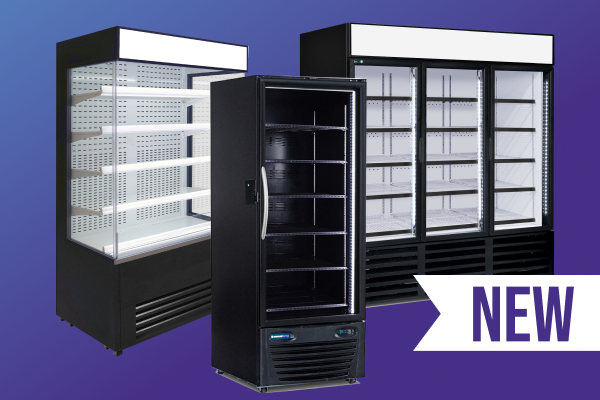
Due North, the Canadian-based leader in self-contained refrigerated merchandising solutions, has announced the launch of three new units under its QBD and Minus Forty brands. The announcement comes just ahead of the NAMA Show 2025, a major vending and convenience retail industry event set to take place in Las Vegas from May 7 to 9.
The new models mark a significant step in Due North’s “Idea to Aisle” promise—a corporate initiative aimed at helping customers accelerate the path from concept to in-store execution. According to the company, the newly unveiled merchandisers are designed to meet modern retail needs by combining performance, merchandising adaptability, and ease of maintenance with best-in-class energy efficiency.
“Our ‘Idea to Aisle’ promise focuses on helping our customers capture opportunities faster—with proven technology and ready-to-deploy solutions,” said Sean McGrann, Chief Commercial Officer at Due North. “These new models reflect our commitment to moving at the speed of retail.”
Canadian-Made Innovation Backed by ENERGY STAR®
Sean McGrann, Chief Commercial Officer of Due North
Due North, which manufactures its products in Canada, has consistently earned ENERGY STAR® accolades for its equipment’s sustainability performance. The company operates manufacturing facilities in Brampton, Ontario, and Stayner, Ontario, where both QBD and Minus Forty product lines are produced. The company has increasingly emphasized environmental responsibility, aligning its innovation roadmap with energy-saving goals across its portfolio.
The three new units now being introduced are no exception. Engineered with advanced insulation and high-efficiency cooling components, the merchandisers are built to reduce operating costs while improving product visibility and access—two critical concerns for retailers operating in micro markets, foodservice settings, and high-traffic convenience retail.
“Our engineering team prioritizes performance that retailers and brands can rely on, day after day,” said McGrann. “From energy efficiency to ease of maintenance, every detail is built to help maximize uptime, sales, and merchandising flexibility.”
Overview of the New Refrigerated Merchandisers
The three models cater to a range of uses, from beverage and grocery sales to fresh grab-and-go and pet food merchandising. Each unit incorporates Due North’s patented Cooling Deck, a technology developed to simplify service and reduce downtime.
1. QBD: Three-Door Cooler (Sliding and Swing Door Options)
Use Case: Beverage, Grocery, Micro Market, and Foodservice Retail
Highlights: The unit offers either sliding or swing doors, ideal for retailers managing limited floor space. The Cooling Cassette Deck allows for fast, low-cost maintenance, improving operational longevity and reliability.
2. Minus Forty: 48” Open Air Merchandiser
Use Case: Fresh Grab-and-Go, Grocery, Micro Market, Foodservice, and Convenience Retail
Highlights: Available in both standard and shallow-depth versions, this open-air unit is geared toward high-impulse sales. It features strong refrigeration performance that can support a mix of beverages and perishables while preserving freshness and visual appeal.
3. Minus Forty: 23 Cubic Feet High-Capacity Cooler
Use Case: Beverage, Pet Food, Grocery, and Micro Market Merchandising
Highlights: Building on the success of the existing 22-cubic-foot model, this new cooler offers 20% more pack-out space with the same footprint. The added capacity translates to greater inventory flexibility without sacrificing square footage—an important feature for modern compact retail formats.
Image: Due North
Positioned for Growth in Micro Market and Convenience Sectors
The launch of the new merchandisers aligns with broader growth trends in unattended retail formats and small-footprint convenience stores. The micro market category, which blends vending and open-shelf retailing in workplace and institutional settings, has seen rapid expansion across North America—particularly in the wake of shifting consumer demand for contactless, fresh, and convenient food access.
Due North is well-positioned to capitalize on this market evolution. Its products are already widely used by retailers, vending operators, and foodservice providers seeking reliable, energy-efficient, and aesthetically flexible refrigeration solutions.
“We’re seeing strong momentum in the micro market and convenience sectors,” noted McGrann. “Retailers are looking for flexible, modular refrigeration solutions that can adapt to evolving floor plans and consumer expectations. These three models check all those boxes.”
“Idea to Aisle”: A New Chapter for Due North
The newly launched products represent the first major SKUs released under the “Idea to Aisle” customer promise—a strategic commitment from Due North to bring new innovations to market faster and in closer alignment with customer needs.
According to the company, the initiative reflects an internal reorganization aimed at increasing speed-to-market through product modularity, engineering agility, and a streamlined development pipeline.
This reorientation toward agility was previewed earlier this year when Due North introduced its “EH Fridge” program—an initiative to design and manufacture commercial refrigeration units that support Canadian retailers with rapid turnaround and customizable features. That program was detailed in Retail Insider in April and is seen as a complementary effort to the broader “Idea to Aisle” promise.
A Strong Presence at the NAMA Show
All three new merchandiser models will be featured at Booth #2639 during the NAMA Show in Las Vegas. The event, hosted by the National Automatic Merchandising Association, is expected to draw thousands of industry professionals across vending, micro market, coffee service, and convenience sectors.
Due North’s booth will offer product demonstrations, consultations with its commercial team, and interactive displays showcasing how the company’s refrigeration systems can be configured for various store formats.
“NAMA 2025 is the perfect venue for us to showcase the power and flexibility of our latest designs,” said McGrann. “We invite attendees to come experience how our technology supports real-world retail needs—whether that’s a high-volume grocery aisle or a tightly configured micro market.”
A Canadian Brand Scaling Globally
With more than 20 years of experience and a growing presence across North America, Due North has cemented its reputation as a go-to provider of high-quality refrigerated display solutions. The company serves a wide customer base including major grocers, CPG brands, convenience store chains, and independent operators.
The integration of Canadian manufacturing with scalable design has become a core differentiator for the company. Unlike many competitors that rely heavily on offshore production, Due North emphasizes domestic engineering and fabrication, a move that resonates with customers concerned about global supply chain disruptions, tariffs, and speed to market.
Looking Ahead
The launch of these three new units signals a new phase of product development for Due North—one that is grounded in engineering excellence, customer-centric design, and market responsiveness.
With the “Idea to Aisle” promise now driving its go-to-market strategy, the company is doubling down on its commitment to being more than a manufacturer—it’s positioning itself as a partner in retail innovation.
“At the end of the day, it’s about helping our customers grow,” McGrann said. “Whether they’re launching a new store, piloting a fresh category, or scaling an entire merchandising program, we’re here to help them get there faster—and smarter.”
Ryan McInerney, CEO of Visa. Image: Screen shot from the Visa April 30, 2025 presentation in San Francisco
Visa is redefining the future of commerce with the unveiling of Visa Intelligent Commerce, a sweeping new initiative announced Wednesday, April 30, during a live product showcase in San Francisco. The payments giant introduced a host of innovations designed to power artificial intelligence-driven commerce, enable seamless payments for AI agents, and expand financial accessibility across the globe through new tools for mobile wallets and micro-sellers.
For Visa, this marks a bold step into a commerce landscape that is rapidly shifting toward autonomous digital transactions and real-time consumer personalization. The announcement reflects years of groundwork built on Visa’s global payments network, now fused with artificial intelligence, tokenization, and privacy-first personalization to support what executives describe as “agent-led commerce.”
“This is a world we all want to live in—and now, we can,” said Ryan McInerney, CEO of Visa, addressing a live studio audience and global livestream. “We are on the verge of a seismic shift in how people shop, buy, and engage with commerce. With Visa Intelligent Commerce, we are delivering secure, AI-driven payments designed to work at scale, globally, with trust at the core.”
Building the Foundation for AI-Driven Commerce
Visa’s vision for Intelligent Commerce is rooted in a reimagined payments infrastructure built on what the company calls its “Visa as a Service” stack. Jack Forestell, Visa’s Chief Product Officer, explained that the stack integrates Visa’s global connectivity, APIs, authentication layers, and personalization tools into a single platform that empowers both consumers and businesses—whether they are a small fintech in Nairobi or a global bank in London.
“Digital money isn’t just about being faster,” said Forestell. “It’s about being better—safer, more reliable, and smarter. Our role is to bring these capabilities together so any business, any platform, can operate at scale from day one.”
Visa now processes over 630 million transactions each day. Since 2000, it has handled more than 3.3 trillion payments globally—each with hundreds of data points. The company is now turning that rich data into contextual insight, using AI to detect behavioural rhythms in commerce, whether it’s an evening spike in Ramadan spending or a tourist making a tap payment in a foreign city. These insights underpin the company’s new personalization features, helping both buyers and sellers enjoy more relevant, seamless transactions.
Visa Intelligent Commerce: From Vision to Reality
At the centre of the announcement was the formal launch of Visa Intelligent Commerce, a unified solution that enables AI agents to complete transactions securely on behalf of users. Forestell demonstrated how Visa is solving one of the most pressing challenges in the emerging agent-based economy: how to empower AI tools with payment capabilities while preserving trust, control, and security.
“When your AI agent plans a trip to Miami or buys a fishing reel on your behalf, it needs to do more than browse,” Forestell said. “It needs to transact. But to do that, it must have the tools and guardrails to spend your money securely—with your permission and only on your terms.”
To make this possible, Visa has developed five interlocking services: AI-ready cards with tokenization and authentication; secure agent-enabled payment flows; personalization powered by consent-based data sharing; and APIs that verify purchase intent and deliver contextual payment data at the moment of transaction. Together, they allow users to give agents specific purchasing authority while retaining full visibility and control over their transactions.
“Without the payment, there’s no commerce. There’s just browsing,” said McInerney. “Our technology enables the magic to continue—seamlessly and securely.”
Trust and Transparency at the Core
Trust emerged as a recurring theme throughout the presentation, especially in the context of AI. “This is new territory,” said Forestell. “We are giving agents the ability to access your money. That means ensuring not only that they’re secure, but that they’re acting only on your behalf—and only within the permissions you’ve granted.”
Visa’s approach involves binding a tokenized version of a user’s card directly to their AI agent. This means the token can only be used within that agent environment, offering an added layer of security. Users must also authenticate themselves before granting their agent access, and consent can be revoked at any time.
The personalization engine was another highlight. Visa demonstrated how insights derived from a user’s own transaction history—without sharing raw data—could vastly improve AI-driven commerce. For example, an AI assistant planning a trip to Miami for a user who dislikes the beach might suggest motorsport activities or a Post Malone concert, based on past purchases.
“Our goal is not just to make commerce faster,” said Forestell, “but to make it fit you better. The power of personalization, if done responsibly, is transformative.”
Collaborations with AI Leaders
Visa’s move into AI commerce is backed by a growing list of collaborators that include OpenAI, Perplexity, Microsoft, Anthropic, and Mistral. Each is contributing to the effort to make agent-led shopping safe, intuitive, and scalable. Sarah Friar, CFO of OpenAI and former CEO of Nextdoor, appeared in a pre-recorded interview to share her perspective.
“We love what Visa is doing,” Friar said. “They’re not just solving technical challenges, they’re addressing the human ones—trust, transparency, and usability. Those are the things that will make this work at scale.”
Friar emphasized that OpenAI’s own products, including browser-based agents already capable of booking flights or reserving rides, often stall at the point of payment. “It’s at that moment that the experience breaks down,” she said. “Visa is helping build the bridge.”
Expanding Access: Visa Pay and Visa Accept
Alongside its AI-focused products, Visa also announced new tools aimed at increasing payment access in developing markets and among micro-sellers. Visa Pay allows mobile wallet users to spend anywhere Visa is accepted, effectively expanding local apps into global payment vehicles. Initial rollouts are planned with Line Pay in Taiwan, ZaloPay in Vietnam, Maya in the Philippines, and Woori Card in South Korea.
For small sellers without hardware terminals, Visa Accept turns an NFC-enabled smartphone into a tap-to-pay terminal with no additional hardware. “If you’re a street vendor in Guatemala or Vietnam and you have a smartphone and a bank account, you can accept Visa payments in minutes,” said McInerney.
These tools reflect Visa’s ongoing commitment to financial inclusion and digital accessibility, a theme that remains central to its global strategy.
Additional Innovations: Digital Identity, Flex Credentials, and Stablecoins
Visa also provided updates on several other key initiatives. Its Flexible Credential product, which allows users to toggle between debit, credit, and other funding sources from a single card, is gaining traction globally. New partnerships with Klarna and Liv were announced, along with integrations in Europe and the U.S.
The company reaffirmed its goal of reaching 100% tokenization of digital transactions, a move aimed at reducing online fraud. Visa is also piloting biometric-based payment passkeys and enhanced data-sharing protocols to improve authorization rates and cut down on transaction declines.
On the stablecoin front, Visa revealed that it has already processed over $225 million in USDC settlements and expects to cross $1 billion in volume within 12 months. Through its tokenized asset platform, Visa is now helping banks like BBVA issue their own stablecoins—a move that could signal a broader transition toward programmable money.
Looking Ahead: Bringing Everyone Along
To close the event, Oliver Jenkyn, Visa’s Group President of Global Markets, highlighted the company’s commitment to working closely with its partners—from banks and merchants to AI platforms—to bring Visa Intelligent Commerce to life in local markets.
“This is not just a Silicon Valley project,” said Jenkyn. “From Johannesburg to Singapore to Toronto, our teams are working with yours to make this vision real.”
Jenkyn emphasized that the success of agent-led commerce depends not just on technical feasibility, but on widespread adoption. “We need to bring everyone with us,” he said. “Not just developers and fintechs, but people like my retired mother in rural Canada, or your artist friend in Cairo. That’s what it will take.”
CF Carrefour Laval in Montreal. Photo: Cadillac Fairview
Cadillac Fairview continues to dominate Canada’s retail real estate landscape, placing nine of its shopping centres among the top 20 highest-performing malls in the country, according to the 2024 ICSC Canadian Mall Property Performance List. The landlord’s strong showing reaffirms its status as a leader in the sector, outpacing major competitors in terms of sales per square foot and overall portfolio consistency across multiple provinces.
In an interview with Retail Insider, Lillian Tummonds, Senior Vice President of Retail at Cadillac Fairview, emphasized that the company’s longstanding presence in the upper tier of the ICSC rankings is no coincidence.
Lillian Tummonds
“We continue to listen to our customers,” said Tummonds. “We know that people go to certain shopping centres because of the location and the offerings. If those offerings don’t resonate, they won’t come.”
CF Toronto Eaton Centre, CF Pacific Centre, and CF Richmond Centre Rank in the Top Five
Among Cadillac Fairview’s most notable performers in the 2024 ICSC study were CF Toronto Eaton Centre, CF Pacific Centre in Vancouver, and CF Richmond Centre. CF Toronto Eaton Centre ranked second in Canada with sales per square foot of $1,500, up $43 over the previous year. CF Pacific Centre came in third with $1,454 per square foot, a year-over-year increase of $130 — one of the strongest gains in the national survey. CF Richmond Centre placed fourth overall at $1,359 per square foot, marking another standout year for the downtown Richmond shopping destination.
These strong results were bolstered by CF Chinook Centre in Calgary, which ranked fifth with $1,336 per square foot, up $28 from the previous year. CF Sherway Gardens in Etobicoke also made the top 10, reporting $1,160 per square foot despite a year-over-year decline of $73.
Other Cadillac Fairview malls performing strongly included CF Carrefour Laval at $1,140 per square foot, CF Polo Park in Winnipeg at $1,120, CF Masonville Place in London at $1,094, CF Market Mall in Calgary at $1,090, and CF Fairview Mall in Toronto at $1,063. Most of these centres saw year-over-year gains, with CF Polo Park up $90 and Fairview Mall up $66, showing that CF’s mid-market and regional malls are also posting significant productivity growth.
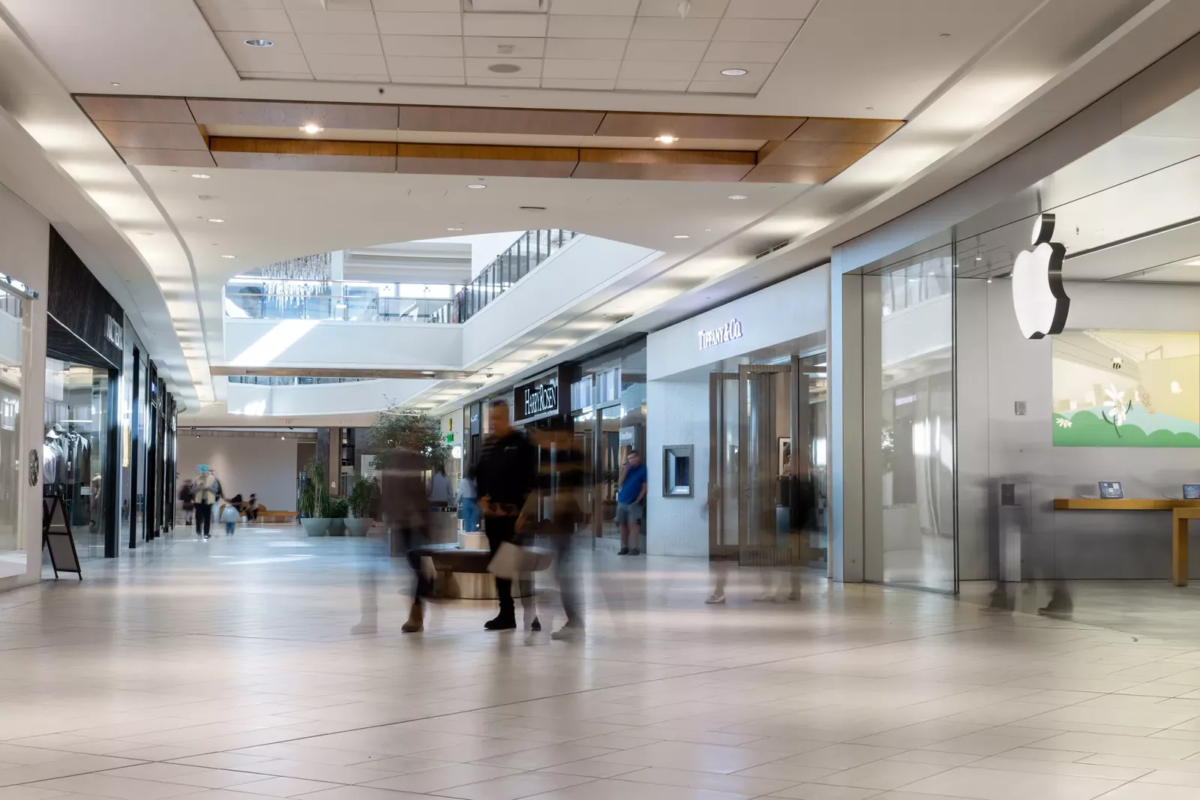
Main floor of CF Pacific Centre in downtown Vancouver. Photo: Cadillac Fairview
Reinventing the Retail Experience
According to Tummonds, Cadillac Fairview’s success is rooted in a deeply consumer-centric approach. “We try to build community experiences. You’re not just going there to shop. You might also go for a meal, meet friends, or take in an activation,” she said. “We’re always reinvesting in our centres to make sure they look and feel great when people are there. We try to emulate what our shoppers expect — from the moment they arrive to the time they leave.”
CF Toronto Eaton Centre, which remains Canada’s most visited mall, continues to evolve with the redevelopment of the former Nordstrom space. That area will soon house La Maison Simons and Eataly, which Tummonds said will contribute to making the property a “destination” shopping experience. Despite ongoing construction along Queen Street, the centre saw a 3.2 percent year-over-year increase in sales, signalling a steady recovery in downtown foot traffic.
At CF Richmond Centre, Cadillac Fairview is actively densifying the site with residential strata and rental units. The centre’s performance, which secured it fourth place nationally, reflects both a successful retail mix and the momentum from new mixed-use development. “We just welcomed the owners of the new strata units to phase one,” said Tummonds. “Again, we’re building community around the shopping centre.”
CF Richmond Centre in Richmond, BC. Photo: Cadillac Fairview
Expanding Through Pop-Ups and Strategic Leasing
Cadillac Fairview is increasingly embracing shorter-term leases and pop-up retail as part of a broader leasing and marketing strategy. Tummonds noted that these activations not only animate the shopping centres but also serve as test grounds for potential long-term tenants. One example she cited was Vessi, which began as a pop-up at CF Toronto Eaton Centre and has since expanded into a longer-term arrangement.
Pop-up experiences are often tied to seasonal or cultural programming, helping create a unique and memorable atmosphere. Tummonds said these initiatives are important both for community engagement and as a way to showcase retail innovation. “We try to incorporate these activations into the overall experience,” she explained. “It complements our events during the holidays, such as Lunar New Year.”
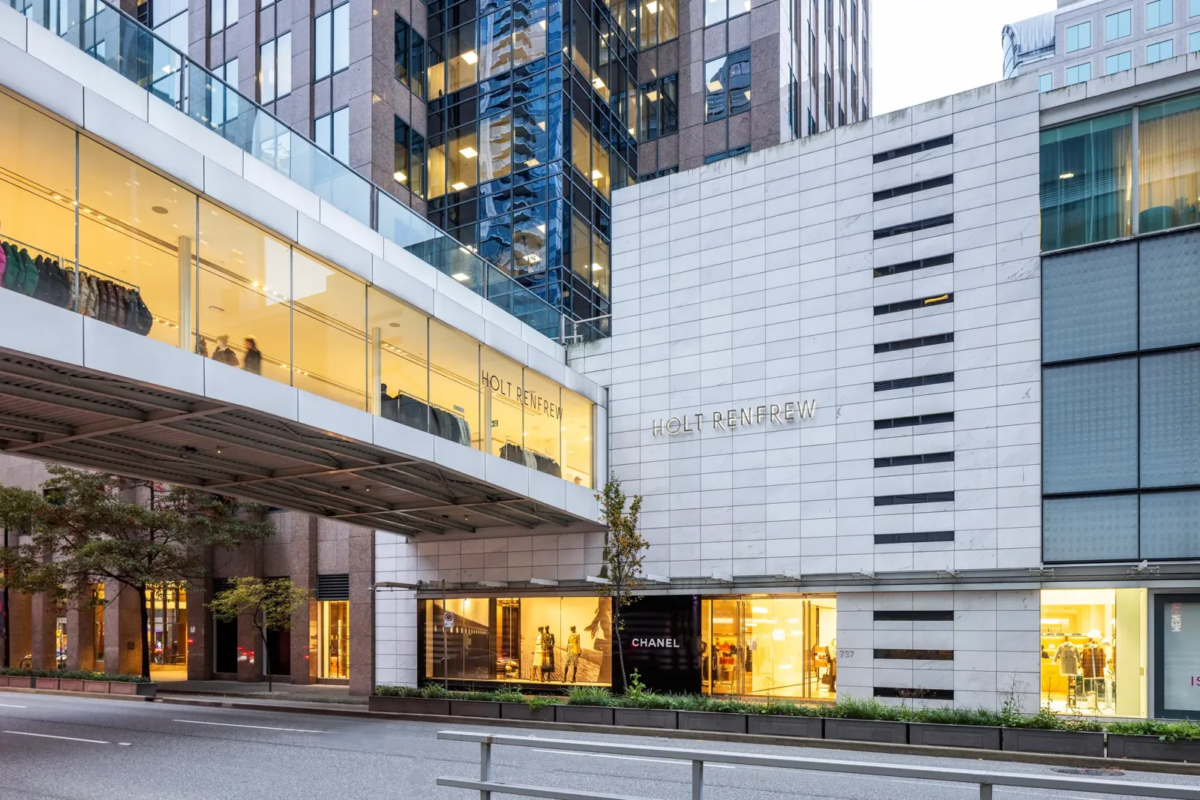
Holt Renfrew at CF Pacific Centre in downtown Vancouver. With the closure of Hudson’s Bay and the recent shuttering of Nordstrom, Holt Renfrew is the only large-format store of its kind left in downtown Vancouver. Photo: Cadillac Fairview
Culinary Strategy Plays a Key Role
In recent years, Cadillac Fairview has placed growing emphasis on food and beverage offerings across its portfolio. This includes the introduction of Japanese coffee brand %Arabica at both CF Toronto Eaton Centre and CF Richmond Centre. At CF Markville, Cadillac Fairview recently welcomed Chinese restaurant Auric King, while T&T Supermarket at CF Fairview Mall continues to serve a diverse and loyal customer base.
Eataly, the Italian food hall concept, is another central pillar of Cadillac Fairview’s culinary strategy. Already open at CF Sherway Gardens and CF Shops at Don Mills, Eataly will soon launch its fourth Toronto location at CF Toronto Eaton Centre — making Toronto home to more Eataly locations than any other city globally, tied with Tokyo.
Tummonds emphasized that food is no longer just a supplementary offering in malls but a core part of the experience. “It’s a great offering and it draws people in. We’re excited about how that category continues to grow,” she said.
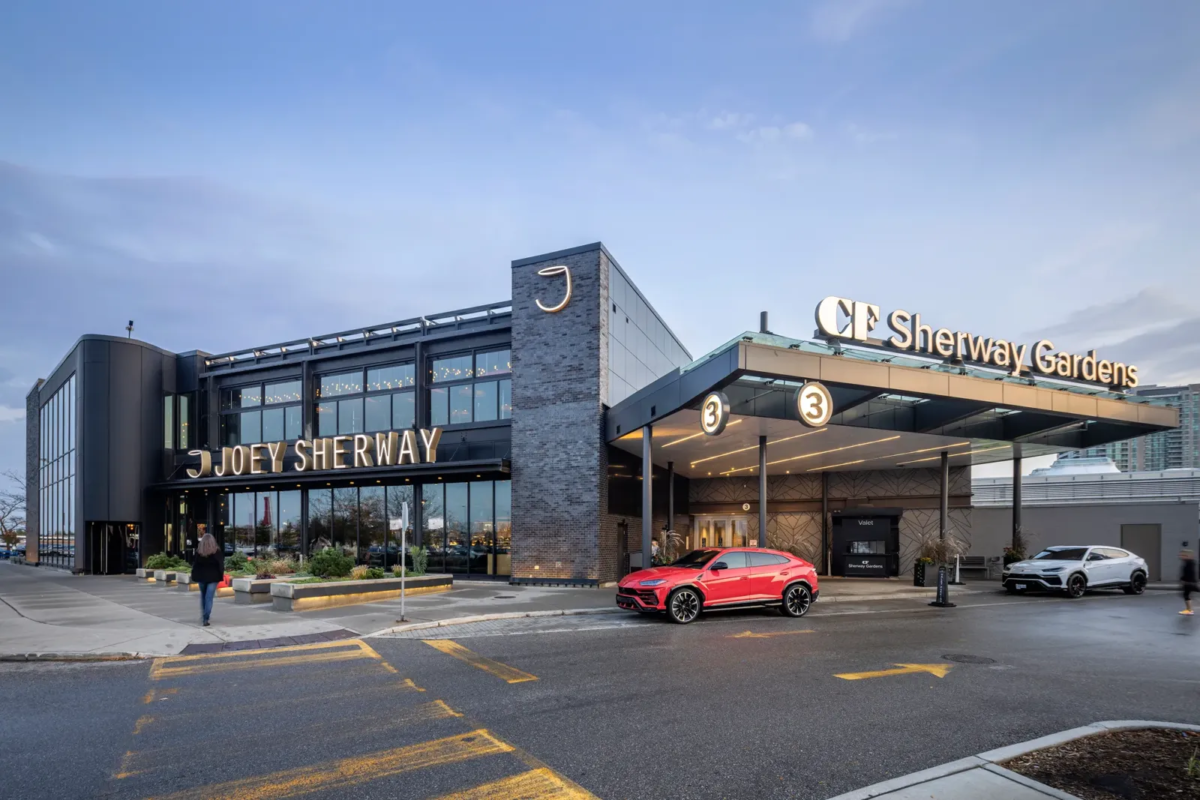
CF Sherway Gardens in Toronto. Photo: Cadillac Fairview
Leveraging Insights and Data to Stay Competitive
Another major advantage for Cadillac Fairview is its use of shopper data and market research to inform merchandising decisions. “We spend a lot of time analyzing our customer base at each centre — what brands they’re looking for, what categories they’re interested in,” said Tummonds. “That helps us ensure we’re always making the right decisions for each location.”
This data-driven strategy has helped Cadillac Fairview secure top-performing tenants and maintain a curated mix of retailers aligned to local needs. It has also allowed CF to navigate the continued reshaping of the Canadian retail environment — including the decline of anchor department stores.
CF Chinook Centre in Calgary. Photo: Cadillac Fairview
Adapting in the Wake of Anchor Store Departures
As department stores continue to exit malls across the country, including recent closures by Nordstrom and the uncertain future of Hudson’s Bay, Cadillac Fairview is actively planning how to reimagine large-format spaces.
Tummonds said the company has “a task force looking at all angles” and is working closely with leasing and development teams to identify new opportunities.
“We’ve survived Simpsons, Eaton’s, Woodward’s, Target, Sears, and now Nordstrom,” said Tummonds. “We’ve done this before and we’ll do it again. Look what we’re doing at TEC — re-demising the Nordstrom box for Simons and Eataly. We’re continuing to evolve, and we’ll find new ways to use those spaces.”
Cadillac Fairview owns the Queen Street Hudson’s Bay building in Toronto and is currently evaluating potential redevelopment strategies for the site. Cadillac Fairview bought the block for $650 million over a decade ago.
A National Portfolio That Continues to Outperform
Cadillac Fairview’s dominance in the 2024 ICSC rankings is not confined to one region or flagship property. With strong performances in Ontario, British Columbia, Alberta, Manitoba, and Quebec, the company’s portfolio-wide consistency underscores the effectiveness of its operational strategy.
In contrast, Oxford Properties had two malls in the top 10 — Yorkdale Shopping Centre and Square One Shopping Centre — while Ivanhoé Cambridge, though still competitive, placed fewer malls among the top-performing nationally. Cadillac Fairview’s results confirm its leading position in Canadian retail real estate by a considerable margin.
“We’re proud of the performance of our centres,” said Tummonds. “But more importantly, we’re proud of the experience we’re building for Canadians across the country. Our focus has always been — and will continue to be — on the customer.”