As trade tensions rise and the “buy Canadian” movement gains momentum, a Toronto-based wellness club is taking the patriotic message into the fitness space.
The Adelaide Club, located in the heart of Toronto’s Financial District, has launched its bold new “Train Canadian” campaign—encouraging Canadians to make a local choice not just at the checkout, but in their workout routines as well.
“Canadians are waking up to the idea that our choices—where we shop, what we eat, and yes, even where we sweat—matter,” said Clive Caldwell, CEO of the Adelaide Club. “If we can do without American liquor and take it off the shelves, surely we can do without American gyms. Especially since there are so many great Canadian alternatives.”
Source: Adelaide Club
The campaign, which officially launched April 15, is running on social media and out-of-home advertising under the banner “Elbows Up,” calling on Canadians to flex both their muscles and their patriotism. The message is clear: choose Canadian fitness over U.S. chains.
At a time when consumers are increasingly questioning their purchasing decisions, the Adelaide Club is tapping into a growing desire to support local businesses—especially ones with strong community roots and a uniquely Canadian approach to wellness.
“Many of our new members are telling us they’re rethinking all their choices—including where they work out. They want to support local, even when it comes to their health,” said Garth Sinclair, Membership Director at the Adelaide Club.
Source: Adelaide Club
The “Train Canadian” initiative is a direct response to the influx of American fitness chains in Canadian cities. But Caldwell believes that Canadian-owned clubs offer something different—and deeply meaningful.
“While American chains . . . have made their mark in cities like Toronto, we believe local clubs such as the Adelaide Club offer a more personalized and community-centric experience,” said Caldwell. “Our campaign calls Canadians to recognize the value in supporting homegrown businesses deeply rooted in our culture and community.”
The Adelaide Club positions itself as more than just a gym—it’s a wellness and social sanctuary, offering luxury amenities, elite personal training, and wellness programs sourced locally. Proudly Canadian and fiercely independent, the club continues to evolve while staying true to its roots.
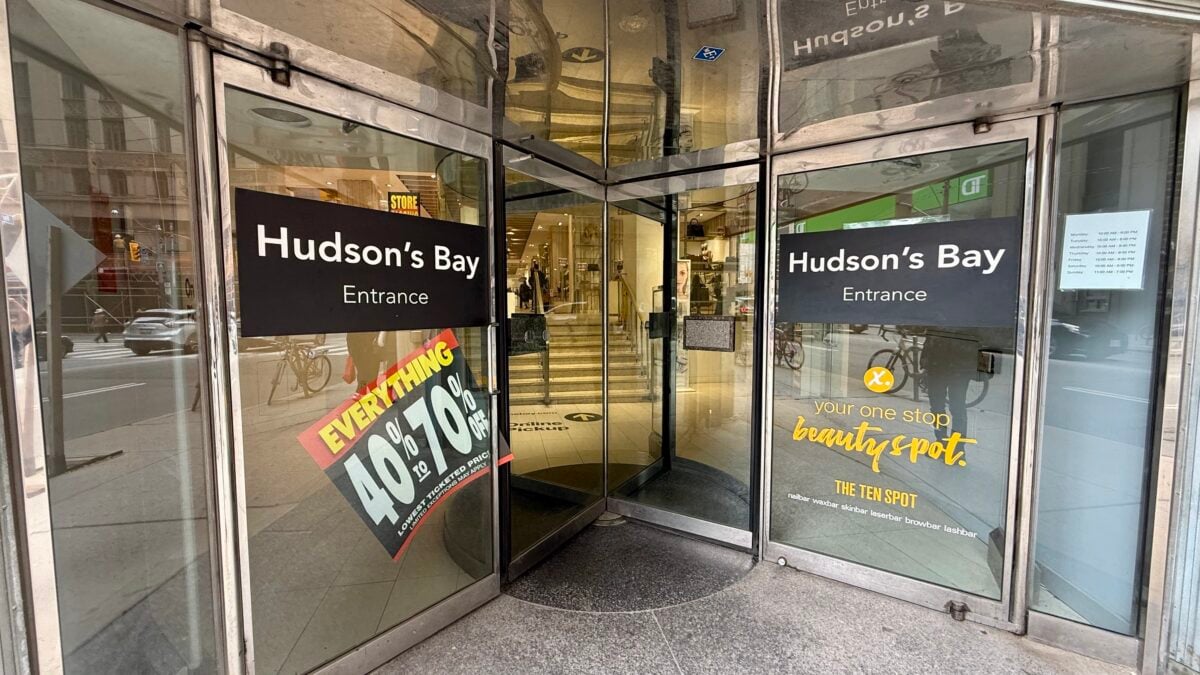
Bay Street entrance to Hudson's Bay Queen Street on Saturday, April 26, 2025. Photo: Craig Patterson
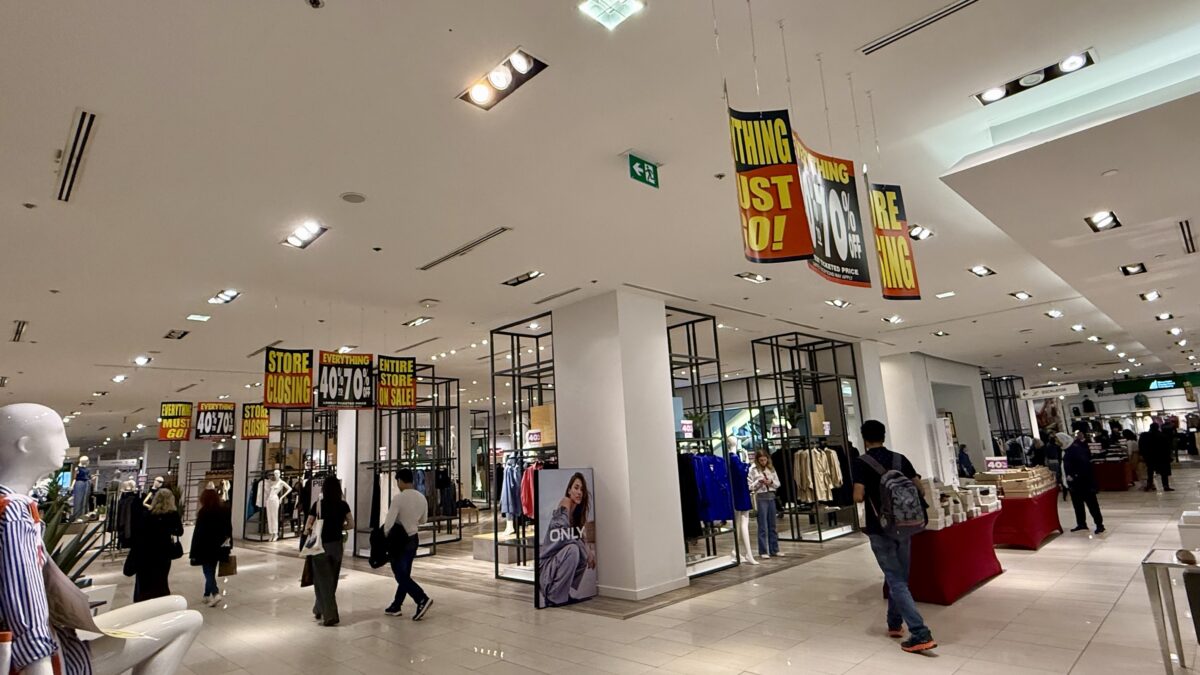
It was a scene both surreal and poignant this past weekend as thousands of shoppers flooded into Hudson’s Bay’s Queen Street flagship in downtown Toronto, lured by deep discounts amid the historic retailer’s liquidation sale. Starting Friday morning, April 25, clearance signs filled the massive store, spanning an entire city block, with eager bargain-hunters moving from floor to floor.
The heavy foot traffic reflected not just a rush for deals, but also a collective farewell to a brand that has been a part of Canada’s retail landscape for over 350 years. By Saturday afternoon, shelves that had been full just 48 hours prior were visibly bare, with shoppers combing through remaining stock on every level.
Retail Insider visited the store Thursday evening before liquidation officially began. At that time, the store’s stock appeared substantial. However, by Saturday, much of it had been sold, with areas of empty shelving and chaotic racks leaving a stark contrast to the grandeur once associated with the Queen Street location.
Bay Street entrance to Hudson’s Bay Queen Street on Saturday, April 26, 2025. Photo: Craig PattersonJewellery department on the ground floor of Hudson’s Bay Queen Street on Saturday, April 26, 2025. Photo: Craig Patterson
Shock and Nostalgia Among Shoppers
The emotional weight of the moment was not lost on customers. Retail Insider spoke with several shoppers who expressed shock and sadness at the store’s closure.
“I’m in a state of shock. I’ve been coming here for decades,” said one woman, who recalled shopping at the store when it was operated by Simpsons prior to Hudson’s Bay’s takeover in 1991. “It’s not just a store. It’s part of the city’s memory.”
Another customer admitted he hadn’t set foot inside a Hudson’s Bay store in years, but came specifically for the liquidation sales. “I’m here to find home goods, kid’s clothes — anything really,” he said. “It’s hard to believe this place is closing.”
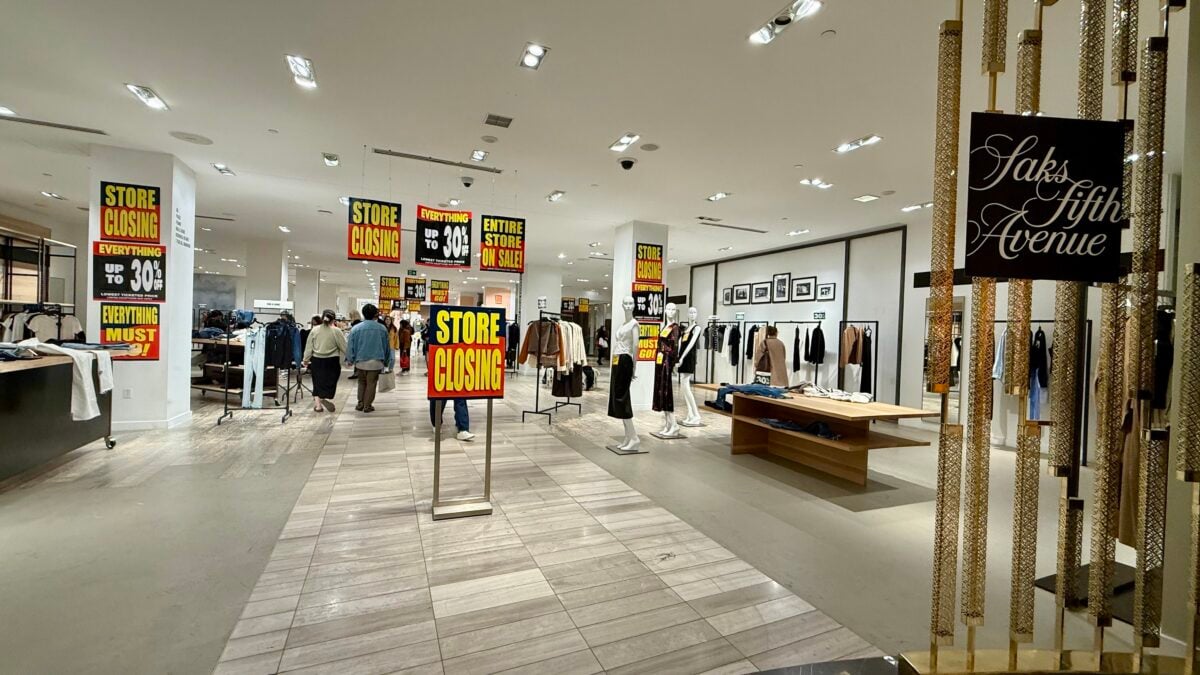
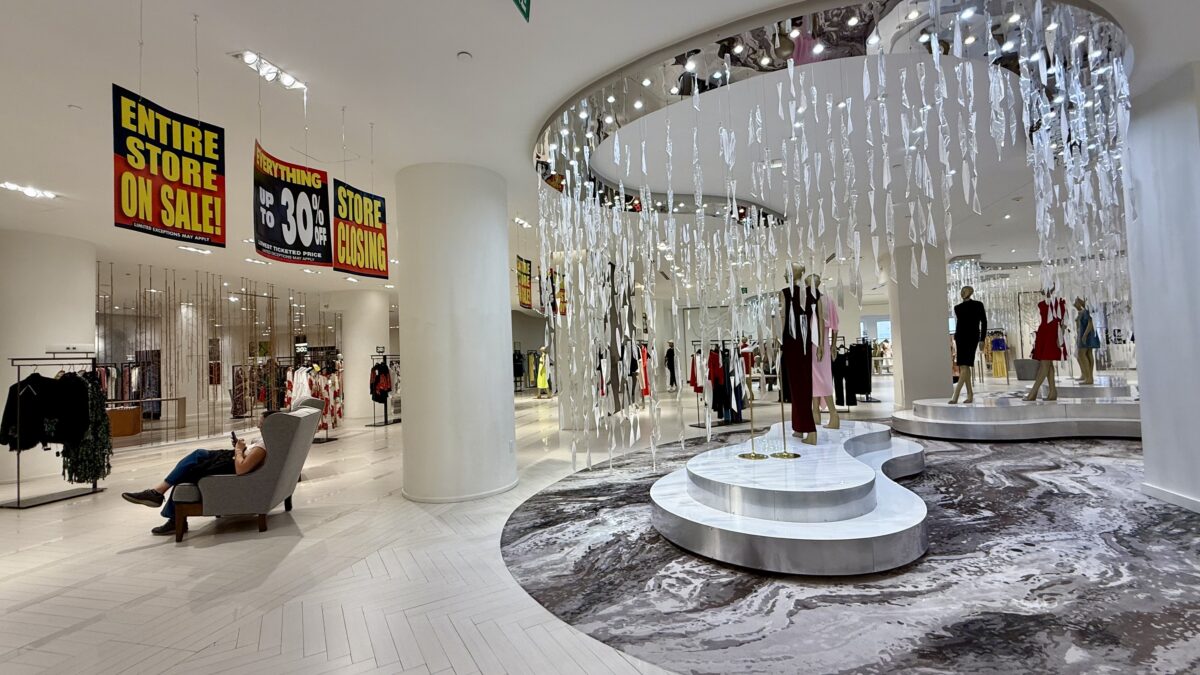
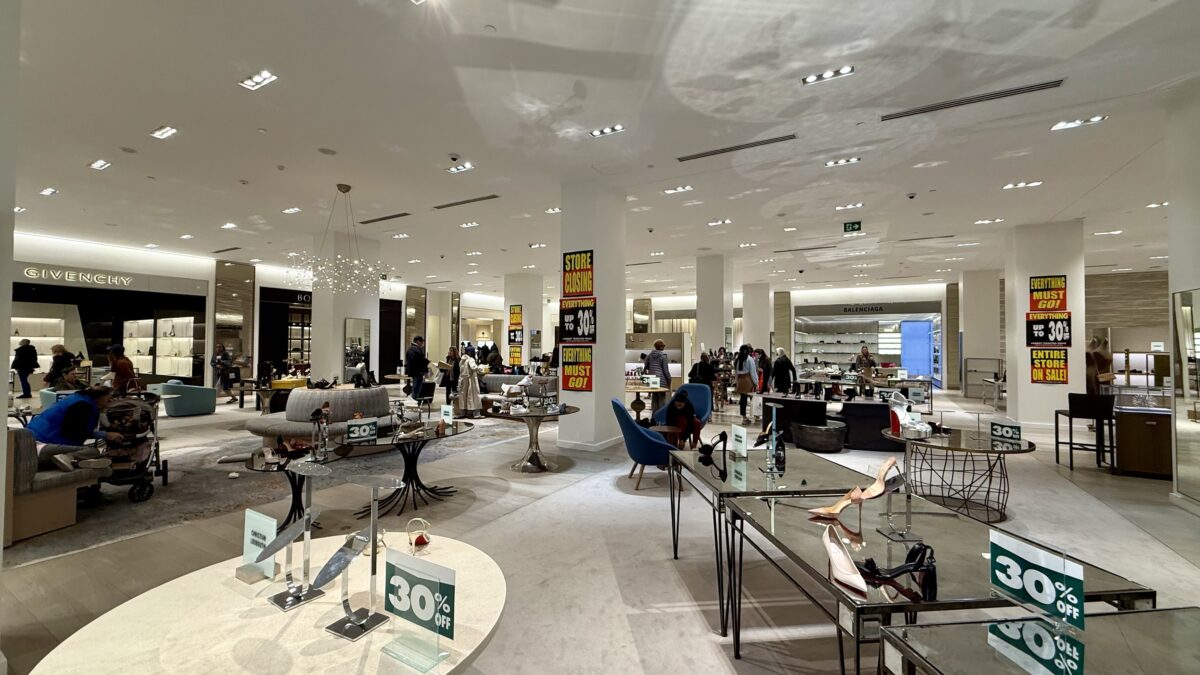
Large, bold clearance signage covered the interiors of both Hudson’s Bay and the attached Saks Fifth Avenue store, which is also undergoing liquidation. The sight of “Store Closing” banners and empty racks in the once-mighty Queen Street flagship marked a stark, almost unthinkable shift for the historic retailer.
Busy ground floor of Hudson’s Bay Queen Street on Saturday, April 26, 2025. Photo: Craig Patterson‘The Room’ luxury women’s fashion department on the 3rd floor of Hudson’s Bay Queen Street on Saturday, April 26, 2025. Photo: Craig Patterson
Staff Share Sadness and Frustration
Sales associates and department managers, many of whom had dedicated years of service to the company, expressed deep disappointment over the closure. Several employees who spoke with Retail Insider criticized Hudson’s Bay’s ownership under Richard Baker.
“It didn’t have to be this way,” said one department manager, speaking on the condition of anonymity. “There was no reinvestment in the stores, no strategy to turn things around. Meanwhile, Baker was making money off real estate sales. We were left to watch the stores crumble.”
Staff reflected on how Hudson’s Bay, once a retail powerhouse, gradually faded due to decisions perceived as prioritizing short-term gains over long-term stability.
Also liquidating: Saks Fifth Avenue in the Hudson’s Bay building in downtown Toronto on Saturday, April 26, 2025. Photo: Craig PattersonSaks Fifth Avenue in the Hudson’s Bay building in downtown Toronto on Saturday, April 26, 2025. Photo: Craig Patterson
The End for Hudson’s Bay?
The liquidation sales at Queen Street and five other major locations — including downtown Montreal’s Hudson’s Bay, Toronto’s Yorkdale Shopping Centre, Hillcrest Mall in Richmond Hill, and suburban Montreal stores at CF Carrefour Laval and CF Fairview Pointe-Claire — signal a grim reality: the end could be near for Hudson’s Bay as a traditional retailer.
On Wednesday, April 23, Hudson’s Bay announced that the six stores initially excluded from the wider liquidation strategy were now included. This decision came after it became clear that the likelihood of finding a viable buyer to take over Hudson’s Bay operations was slim.
Financial advisor Adam Zalev of Reflect Advisors acknowledged the difficult reality, noting in court filings last week that the continuation of operations at the six locations was “negatively impacting efforts to repay lenders.” He further stated that keeping the stores open without a buyer would only delay the inevitable.
The company, which filed for creditor protection under the Companies’ Creditors Arrangement Act (CCAA) on March 7, is burdened with $1.1 billion in debt and years of declining performance.
Women’s on 2 at Hudson’s Bay Queen Street in downtown Toronto on Saturday, April 26, 2025. Photo: Craig Patterson
Liquidation Sales Generate Crowds, But Time Is Running Out
Since launching national clearance events in late March, Hudson’s Bay has generated over $235 million in sales across its 74 department stores, two Saks Fifth Avenue locations, and 13 Saks Off Fifth stores. While initial sales were brisk, momentum had slowed until the latest announcement reignited consumer interest.
Friday morning saw a new surge, driven by Hudson’s Bay’s mass email to its customer database with the stark subject line: “You may have heard, we’re closing our doors.” The email also noted the company’s 355-year history — a message that some recipients found jarring and insensitive, given the gravity of the situation.
Still, the weekend turnout at Queen Street suggests that the brand’s deep emotional connection with Canadians remains intact, even as it teeters on the edge of collapse.
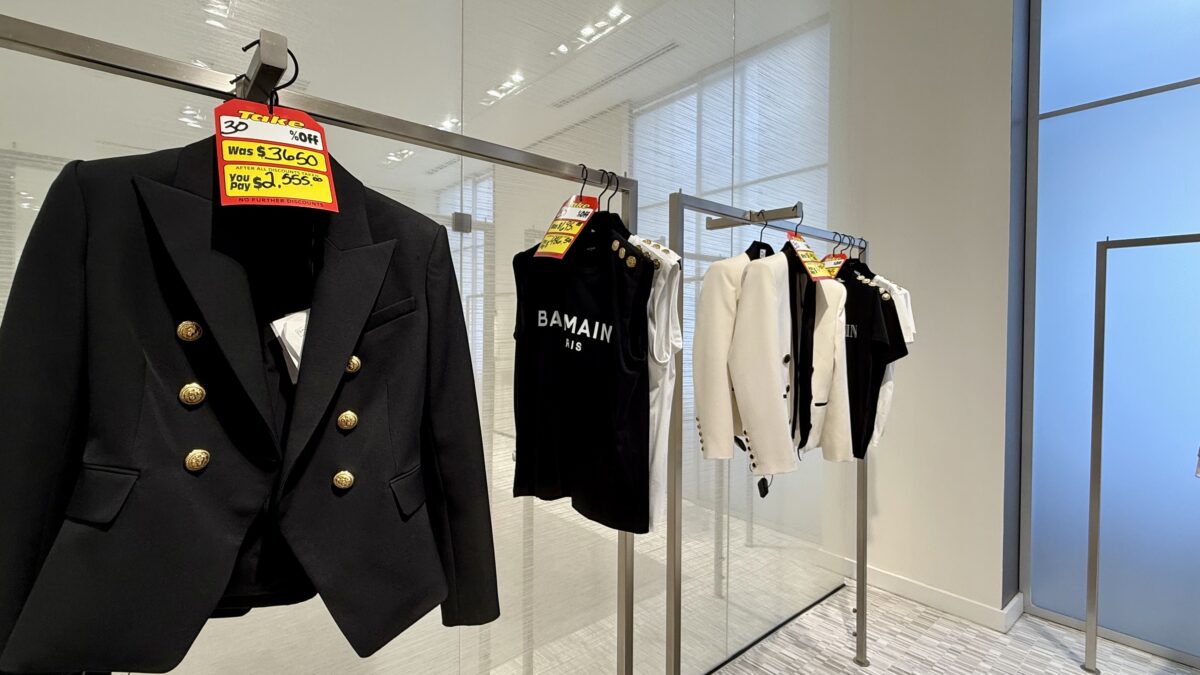
Inside the Balmain women’s boutique at Saks Fifth Avenue in the Hudson’s Bay Queen Street building in downtown Toronto on Saturday, April 26, 2025. Photo: Craig Patterson
Real Estate Interest Surpasses Interest in the Brand
Despite hopes that a saviour might emerge, signs point instead to a breakup of Hudson’s Bay’s vast real estate footprint.
While 18 letters of intent were submitted by parties interested in the retailer’s store leases, none expressed an interest in continuing operations under the Hudson’s Bay banner. Industry experts speculate that landlords and institutional investors, including RioCan, are eyeing key properties for redevelopment or subdivision into smaller retail spaces.
Turning the business around would require significant investment. A confidential pitch memo circulated earlier this month to prospective buyers indicated an $82 million first-year investment would be needed, with profitability unlikely for at least two years. It’s unclear if a buyer willing to undertake that level of risk has come forward.
Liquidation signs in the windows of Saks Fifth Avenue in the Hudson’s Bay Queen Street building in downtown Toronto on Saturday, April 26, 2025. Photo: Craig Patterson
Loss of a Landmark: Queen Street’s Decline
The Queen Street Hudson’s Bay store, long considered the crown jewel of the chain, has not been immune to the broader challenges facing department stores. Once a powerhouse generating $220 million annually, its fortunes declined sharply in recent years.
Factors contributing to the downturn included a lack of capital investment, changing consumer shopping habits, and external disruptions like construction of the Ontario Line subway project immediately adjacent to the store.
The deterioration was starkly visible this weekend, as empty shelves and discount banners replaced elegant merchandise displays and bustling departments once associated with the flagship.
Women’s designer salon at Saks Fifth Avenue in the Hudson’s Bay Queen Street building in downtown Toronto on Saturday, April 26, 2025. Photo: Craig Patterson
Art and Artifact Sale Sparks Backlash
Adding to the controversy surrounding Hudson’s Bay’s demise is the company’s plan to auction more than 4,400 pieces from its historical collection, including artifacts dating back centuries and culturally significant items like the 1670 Royal Charter.
While safeguards have been put in place to prioritize Canadian buyers and institutions, the planned auction has drawn sharp criticism. Indigenous groups, heritage organizations, and even federal agencies have raised alarms about the potential loss of national heritage.
Grand Chief Kyra Wilson of the Assembly of Manitoba Chiefs issued a public statement condemning the auction, calling it a continuation of colonial dispossession. Meanwhile, the Canadian Commission for UNESCO’s Memory of the World Committee has called for key artifacts to be transferred to public institutions.
Main floor of Saks Fifth Avenue in the Hudson’s Bay Queen Street building in downtown Toronto on Saturday, April 26, 2025. Photo: Craig Patterson
What Comes Next
The court-supervised sale process is set to conclude by April 30. As of now, it remains uncertain whether an offer might save some aspect of the business.
In the meantime, Hudson’s Bay is expected to request an interim cash distribution to secured lenders and an extension of the stay of proceedings beyond the current May 15 deadline.
For many Canadians, the closure of the Queen Street Hudson’s Bay store — and the likely dissolution of the brand — marks the end of an era. Hudson’s Bay is not just a retailer; it is woven into the country’s history, commerce, and culture. Its fall signals the profound changes sweeping the retail landscape, where even the most storied names are not immune to economic pressures, shifts in consumer behaviour, and the relentless rise of e-commerce. As Canadians continue to pass through the historic halls of Hudson’s Bay one final time, they are also witnessing the closing chapter of a brand that once helped shape the nation itself.
Toronto-based e-commerce portfolio EMERGE Commerce Ltd. reported strong financial results for the fourth quarter and full year ended December 31, 2024, highlighting significant gains in revenue, profitability, and operational streamlining, while setting the stage for further growth through a key acquisition.
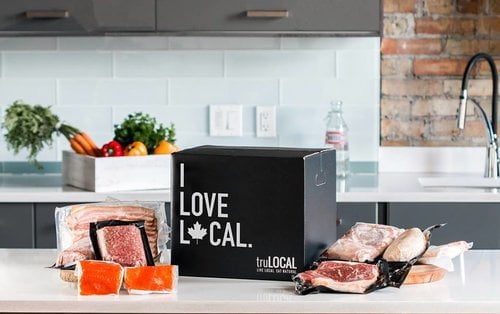
EMERGE is a premium Canadian e-commerce brand portfolio, operating subscription, marketplace, and retail businesses in grocery and golf. Its flagship brands include truLOCAL, UnderPar, JustGolfStuff, and most recently, Tee 2 Green.
Ghassan Halazon
“2024 was a transformative year for EMERGE,” said Ghassan Halazon, Founder and CEO of EMERGE. “We executed against our stated priorities with precision. We delivered on our promise to re-ignite organic revenue growth, we streamlined the business under our more focused EMERGE 2.0 strategy, we drastically improved profitability, we substantially reduced our debt, and we grew our cash position year-over-year without a capital raise.”
Fourth Quarter 2024 Highlights
In Q4 2024, EMERGE generated revenue of $5.6 million, up from $5.1 million in Q4 2023. When excluding Carnivore Club, which was sold in January 2025, revenue rose to $5.3 million from $4.6 million, representing a 15% increase. Gross profit for the quarter grew to $2.2 million from $2.1 million, while adjusted EBITDA improved sharply to ($11,000) compared to ($345,000) a year earlier.
Net income from continuing operations was $287,828, a significant turnaround from a loss of $10.7 million in Q4 2023. Overall net income came in at $287,828, compared to a loss of $17.5 million the previous year. EMERGE ended 2024 with $3.1 million in cash, up from $2.5 million.
“Perhaps nowhere was our progress more evident than in Q4, where we delivered double-digit revenue growth, close to breakeven Adjusted EBITDA and positive net income,” said Halazon. “Our stellar results in Q4 were the culmination of the team’s hard work all year long.”
Full-Year 2024 Financial Performance
For the full year, EMERGE posted revenue of $20.4 million, up from $19.6 million in 2023. Excluding Carnivore Club, annual revenue was $19.3 million compared to $17.7 million, reflecting 9% growth. Gross profit rose to $8.2 million from $7.6 million. Adjusted EBITDA improved to a loss of $463,828 from a deeper loss of $1.78 million.
Net loss from continuing operations narrowed to $1.1 million, a marked improvement over the $15.6 million loss in 2023. The total net loss also decreased significantly to $505,740, down from $21.3 million the prior year.
Carnivore Club Divestiture
On January 15, 2025, EMERGE completed the sale of Carnivore Club for $500,000. The company had been phasing out the non-core asset throughout 2024 to focus on its larger, more profitable operations. Future financial reporting starting in Q1 2025 will classify Carnivore Club as discontinued operations.
Acquisition of Tee 2 Green
On April 4, 2025, EMERGE closed the acquisition of Tee 2 Green Ltd. (T2G), a Canadian discount golf apparel and equipment company with a 38-year operating history. T2G reported unaudited 2024 revenue of $6.4 million, adjusted EBITDA of $1 million, and net income of $700,000. EMERGE financed the acquisition using proceeds from the Carnivore Club sale and the previously disclosed sale of dormant SHOP domains to Shopify.
“T2G is expected to be highly synergistic with EMERGE’s extensive golf business, which includes UnderPar and JustGolfStuff, along with a 400,000+ golf subscriber database,” the company said in its announcement.
Debt Refinancing and Improved Terms
Coinciding with the T2G acquisition, EMERGE also announced an amendment to its credit agreement with its existing lender, extending the maturity date by 18 months with an option for an additional 6-month extension. The company expects recent and anticipated interest rate cuts to drive “meaningful cash savings.”
Operational Outlook for 2025
Looking ahead, management says it sees “continued operational momentum year-to-date.” The company’s flagship subscription brand, truLOCAL, is benefitting from the “Buy Canadian” movement, contributing to strong revenue growth and profitability. EMERGE also expects continued strength from its golf vertical given the recession-friendly nature of discount-based models.
“The addition of Tee 2 Green, starting Q2 2025, is expected to substantially enhance the Company’s revenue, profitability and cash flow profile, and in the process, strengthen its balance sheet, and potentially improve its cost of capital over time,” the company noted.
Strategic Priorities
EMERGE outlined three top priorities moving forward:
Accelerate revenue growth
Extract further operational efficiencies and synergies
Opportunistically enhance cash flow and reduce interest expenses
Retail Insider is streamlining its Canadian retail news from around the web to include a handful of top news stories that can be viewed quickly during the day. Here are the top stories from the past three days.
Woman shopping in a grocery store. Image: iStock/licensed
Canada now leads the world in remote work among college-educated professionals, with nearly two full workdays per week spent at home, according to the latest Global Survey of Working Arrangements. That’s more than the United Kingdom, the United States, India, or Nigeria. This might appear to be just another workplace statistic, but it carries significant implications—not only for how Canadians work, but for how they eat, shop, and manage their time.
The shift to hybrid work is more than a matter of convenience. It’s a structural transformation that is quietly rewriting the script for our food economy. When people commute less, they eat out less. The rhythm of daily meals has changed. Downtown cafés and food courts are seeing thinner crowds, while grocery stores, delivery services, and meal kits are becoming more central to everyday sustenance. The kitchen table has re-emerged as the new lunchroom for millions of Canadians.
New Consumer Behaviours Are Reshaping Grocery and Retail Trends
For grocers and food providers, this represents a significant shift. Workers who spend more time at home now shop more frequently, at off-peak hours, and often expect fresh ingredients, smaller packaging, and seamless online delivery. We’re seeing a rise in demand for smaller-format grocery stores in suburban and residential zones, and more emphasis on convenience without sacrificing quality. Retailers must adjust to this evolving consumer—one who lives and works in the same space and sees food purchases as both a necessity and a lifestyle choice.
Yet these changes also highlight emerging risks and inequities. While home cooking can mean better control over ingredients, it assumes people have the time, knowledge, and equipment to prepare healthy meals. That’s not the case for everyone. Remote work may empower some to eat better, but it could just as easily widen the nutrition gap for others.
Affordability Pressures Grow for Home-Based Consumers
Affordability remains a key concern. Cooking at home is often cheaper than eating out, but only if grocery prices are manageable. Food inflation, though easing slightly, continues to outpace overall inflation. Canadians working from home aren’t just spending more time in the kitchen—they’re spending more money on groceries, and many are feeling the strain.
Food waste is another concern. With more groceries purchased and more meals prepared at home, there is greater potential for overbuying and underusing. Misunderstood date labels, poor storage habits, and unrealistic meal planning are all contributing to what is now an estimated almost $2,000 per year in food waste per household.
And then there’s the broader question many are beginning to ask: What does all this mean for productivity?
The benefits of remote work are well-documented—less commuting, more flexibility, better work-life balance. But there is growing concern that the shift may also come with hidden costs, particularly in sectors that depend on collaboration, creative exchange, and informal communication. Productivity data in Canada has been mixed, and some employers are quietly questioning whether hybrid arrangements are delivering the long-term efficiencies once promised. For food-related industries—retail, foodservice, distribution—fewer people downtown also means fewer spontaneous purchases, fewer business lunches, and weaker demand in key urban markets. These effects ripple through the economy.
The Future of Remote Work Requires Broader Planning
In short, Canada’s work-from-home culture is not just changing office life—it’s reshaping our food systems, our spending habits, and possibly our productivity.
If we’re going to lead the world in remote work, we must also lead in understanding its consequences. Policymakers and business leaders need to consider food literacy, equitable access to ingredients, and strategies to minimize household waste alongside workplace planning. The kitchen is no longer just where we eat—it’s where the effects of economic change are being felt most immediately.
If you get injured in an accident, you need representation to navigate the legal system and win your case. Hiring the right counsel can be challenging, especially when you are recovering and combating emotional distress. Who is the best personal injury attorney in Texas? Here is a guide to finding the best lawyers in the Lone Star State.
How to Select Your Personal Injury Attorney in Texas
Negligent drivers cause accidents and risk lives with their erratic behavior. The Insurance Institute for Highway Safety said Texas experienced 4,408 motor vehicle deaths in 2022 — the second-most total in the U.S. The risks of driving mean you need personal injury counsel on your side if you get in a crash. Here are six considerations before you enter the courtroom:
Experience: How long has the firm practiced in Texas? The attorneys should be experts in the state’s laws.
Court knowledge: Intelligent attorneys understand your county’s specific judges and court procedures and use the knowledge to win cases.
Resources: The law office should have sufficient resources to investigate the case thoroughly.
Communication: Legal counsel must effectively communicate with clients from the initial inquiry to the final verdict.
Client testimonials: Testimonials and online reviews share authentic experiences and interactions with the law firm.
Contingency fee: Check the contingency fee for each practice, as most do not charge unless they win your case.
Who Is the Best Personal Injury Attorney in Texas?
Excellent counsel will maximize your compensation and level the playing field with insurance companies. Here are the 13 best personal injury attorneys in the Lone Star State.
1. Thomas J. Henry Law
Thomas J. Henry Law is the best law firm in Texas, with over 250 attorneys ready to win your case. These experts specialize in numerous personal injury cases, including wrongful death and vehicle accidents. If you experienced harm, you can find excellent legal counsel with Thomas J. Henry and his associates.
The law firm has five offices statewide, from Houston to Dallas and the major cities between them. Thomas J. Henry’s attorneys set up a contingency fee, so you only pay if they win your case. Interested parties can seek a free case review to better understand their legal options. In the last four years, the practice has won over $1 billion for its clients.
Key Features
Full-service injury firm
Contingency-fee basis
Five offices statewide
Medical treatment assistance
2. Mullen & Mullen Law Firm
Since 1983, the Mullen & Mullen Law Firm has been a terrific legal avenue in Texas. The attorneys have a discounted 29% contingency fee on pre-suit settlements — a 4-6% decrease from other personal injury practices. Most of their cases settle before landing in a courtroom, thus putting more money into your pocket.
Mullen & Mullen prioritizes clear communication and a client-driven process. Accessing the law firm means speaking with an attorney, not a paralegal or another staff member. You can contact them at the office or on their cell phone to ask pertinent questions. Before your case starts, you can contact the professionals for an evaluation by phone, video conference or an in-person visit.
Key Features
Low contingency fee
Direct contact with attorneys
Client-driven handling of cases
Free case evaluations
3. Steven C. Lee & Associates
Steven C. Lee & Associates is based in Austin and covers numerous personal injury types. The attorneys will help with your case if it involves trucks, bicycles, motor vehicles, boats or wrongful death. If you hire this firm, you may receive assistance with rental car costs and medical expenses to focus on your health and recovery.
Recent results have demonstrated why Steven C. Lee & Associates is one of the best personal injury attorneys in Texas. For example, the law office won $2.5 million for the parents of a deceased child involved in a truck accident. You do not pay a fee unless they win your case, so clients can rest assured that there are no upfront costs.
Key Features
24/7 free consultations
Vehicle, construction and wrongful death cases
Over three decades of experience
Rental car and medical expense assistance
4. Jeff Davis Law Firm
The Jeff Davis Law Firm is famous for its catchy phone number and terrific legal service. Attorneys are available 24/7 to take your call and help you win your case. The practice has represented clients across Texas in personal injury cases, commercial vehicle accidents and other devastating experiences for families.
From Brownsville to the Permian Basin, clients get personalized service at the Jeff Davis Law Firm. Over 35 years of legal experience have helped the attorneys navigate Texas courtrooms and win cases. Past customers have raved about the support, efficiency and team-focused approach to winning settlements. When you need help, their lines are open 24/7 for assistance.
Key Features
35+ years of legal experience
Calls answered 24/7
Seven office locations statewide
Personalized service for each client
5. LOAR PLLC
LOAR PLLC is a woman-owned practice with offices in Texas metro areas and the U.S. Since 2006, the attorneys have advocated for clients regardless of their personal injury needs. Their cases have included trucking crashes, wrongful death lawsuits and ranch hand injuries. If you become injured, LOAR PLLC will fight for your settlement.
Satisfied clients have raved about LOAR PLLC’s comfort and communication during intimidating situations. Attorneys like Amber Russell make their customers feel validated and prepared for the complex legal road ahead. The firm’s excellent work has earned recognition from Martindale-Hubbell, Thomson-Reuters and other reputable organizations.
Key Features
Woman-owned law firm
Extensive injury case experience
Offices across Texas and nationwide
Martindale-Hubbell recognition
6. Shamieh Law
Shamieh Law serves clients 24/7 and strives to be the best personal injury attorney in Texas. The firm has over 40 years of combined experience and has recovered over $150 million for people in Texas and Louisiana. Shamieh and his associates specialize in cases involving vehicle accidents, workplace injuries and slips and falls.
Your journey with Shamieh Law starts with a free case consultation, with its toll-free number open 24/7 for clients. The firm helps people in unique situations, ensuring their voices are heard. Last year, the attorneys won a case for a family whose loved one fell into a utility hole in northwest Dallas.
Key Features
40+ years of experience
Over $150 million won for clients
Vehicle crashes, workplace accidents, slips and falls
Free case consultation
7. Jim Adler & Associates
Jim Adler & Associates has served the Lone Star State since 1973, regardless of where their plaintiffs live. Adler has become known as the Texas Hammer because his practice has won over $1 billion in settlements and verdicts. Clients who call the law firm get a free consultation and may speak Spanish if necessary.
The Texas Hammer provides legal services for personal injury needs, such as motorcycle accidents, product liability and wrongful death. Clients receive an average of $240,000 when they work with Jim Adler and his associates, with the entity accruing $1 billion in its history. The firm will pay for all upfront costs to ensure you do not pay a penny.
Key Features
Over 50 years in business
Average settlement of $240,000
Serves all of Texas
Comprehensive personal injury cases
8. Williams Caputo Injury Lawyers
Williams Caputo Injury Lawyers are attorneys with a long track record of helping clients after an incident. The Austin-based practice secures compensation in standard cases like car and motorcycle accidents. However, Williams Caputo also helps in dog bite lawsuits and gas explosions. Regardless of the situation, you will have help on your side.
The consultations are free of cost to you, and the team focuses on relieving your financial burden. Williams Caputo Injury Lawyers makes you the focus of each case by listening to your story and fighting for your rights. Texas residents can enjoy the firm’s services in Austin, San Antonio, El Paso, Lubbock, and Dallas.
Key Features
Numerous personal injury practice areas
No-cost consultation
Compassionate legal advocacy
Services across Texas cities
9. Arnold & Itkin Trial Lawyers
Arnold & Itkin Trial Lawyers are famous for getting record-setting results in personal injury cases. In 2019, the firm secured an $8 billion verdict against pharmaceutical company Johnson & Johnson in the Risperdal case. In other lawsuits, Arnold & Itkin has won multimillion-dollar verdicts for injuries, people with cancer and fatal crane accidents.
When an accident occurs, the practice shows why it has some of the best personal injury attorneys in Texas. Arnold & Itkin secures medical care for clients and gives their all to find answers and rebuild lives. Practice areas for the attorneys include railroad accidents, insurance claims and maritime law. People with catastrophic injuries call the firm to get the job done.
Key Features
Medical care assistance
Record-setting results nationwide
Offices across Texas and in Louisiana
Free consultation
10. The Callahan Law Firm
The Callahan Law Firm is one of the most unique groups in Texas because it does not accept a heavy volume of cases. Instead, it focuses on the most severe injuries and wrongful death incidents to help families in need. If the insurers make bad-faith claims, Michael Callahan’s team will combat them in court.
The lawyers and paralegals prioritize full justice for their clients instead of focusing on mass marketing. At The Callahan Law Firm, you can level the playing field with the insurance companies and hold them responsible in courtrooms. Over 25 years of legal experience have helped the counsels navigate Texas courts and defend plaintiffs’ rights.
Key Features
Contingency-based fee structure
Serious injuries and wrongful death cases
Fewer cases and specialized attention
24/7 communication accessibility
11. Terry Bryant Accident & Injury Law
Terry Bryant Accident & Injury Law understands the legal field and employs three board-certified attorneys to win your case. Your road to justice starts with a no-fee guarantee, as the lawyers will not charge unless they earn a verdict or settlement. Since its founding, Terry Bryant’s firm has won over $1 billion for plaintiffs.
Attorneys bring over 40 years of legal experience to the courtroom, ensuring you get excellent representation before the judge. Terry Bryant and his associates will deal with the insurance companies while you recuperate from your injuries. Past clients have raved about personal connections with the attorneys and the courtroom success.
Key Features
40+ years of legal experience
Over $1 billion recovered for clients
Three board-certified attorneys
No-fee guarantee until you win
12. The Ammons Law Firm
The Ammons Law Firm specializes in personal injury cases, especially those concerning automobiles and tires. Rob Ammons and his team have litigated cases about vehicle defects, leading to recalls of 100 million cars and tires. Since its founding, the Houston-based firm has won over $1 billion in verdicts and settlements for its clients.
Experience, resources and effort help The Ammons Law Firm win cases and maximize client payouts. After thousands of litigated cases, the experts understand how to get the most from every suit. If you need a free consultation, you can contact the practice online or by phone. The offices in Houston and Midland are open for clients with personal injury claims.
Key Features
$1 billion in verdicts and settlements
Tire and automotive defect cases
Helped recall over 100 million defective products
Contingency-based fee structure
13. McCormick Law Firm
TheMcCormick Law Firm uses a three-step approach to maximize your settlement: investigation, medical development and negotiation. This strategy has led to significant outcomes for clients, including $15 million won in 2023 after a Fort Worth accident. When you win your case, you pay a lower fee than working with other attorneys.
McCormick clients have noted the team’s efficiency and maximized settlements, especially when arranging medical treatment. Customers from Dallas to San Antonio benefit from free consultations and expedited medical care. While Cageny McCormick has offices in 11 states, he is a Texas native with extensive knowledge of state law.
Key Features
Four- to six-month average for cases
Offices in Dallas and San Antonio
Wide range of personal injury cases
Free consultation and low fees
Hiring the Best Personal Injury Attorneys in Texas
If someone else is at fault for your accident, you need an experienced professional to handle your case. The best personal injury attorney in Texas is the one who understands your specific needs and maximizes your payout. Find a law firm that understands the court system and will communicate each step. Your counsel’s goal should be to level the playing field and bring peace of mind.
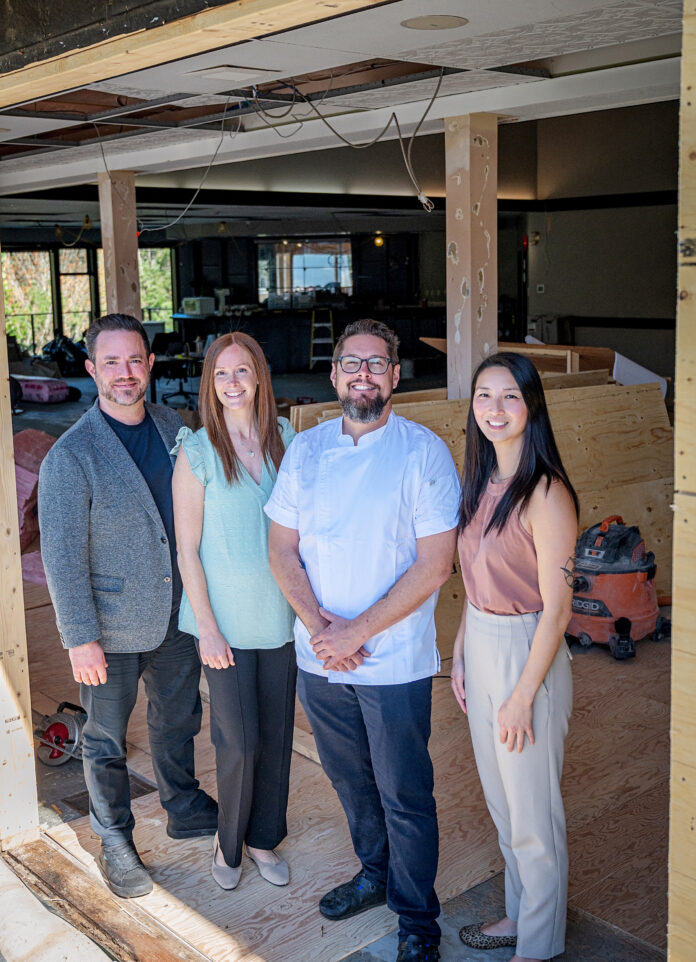
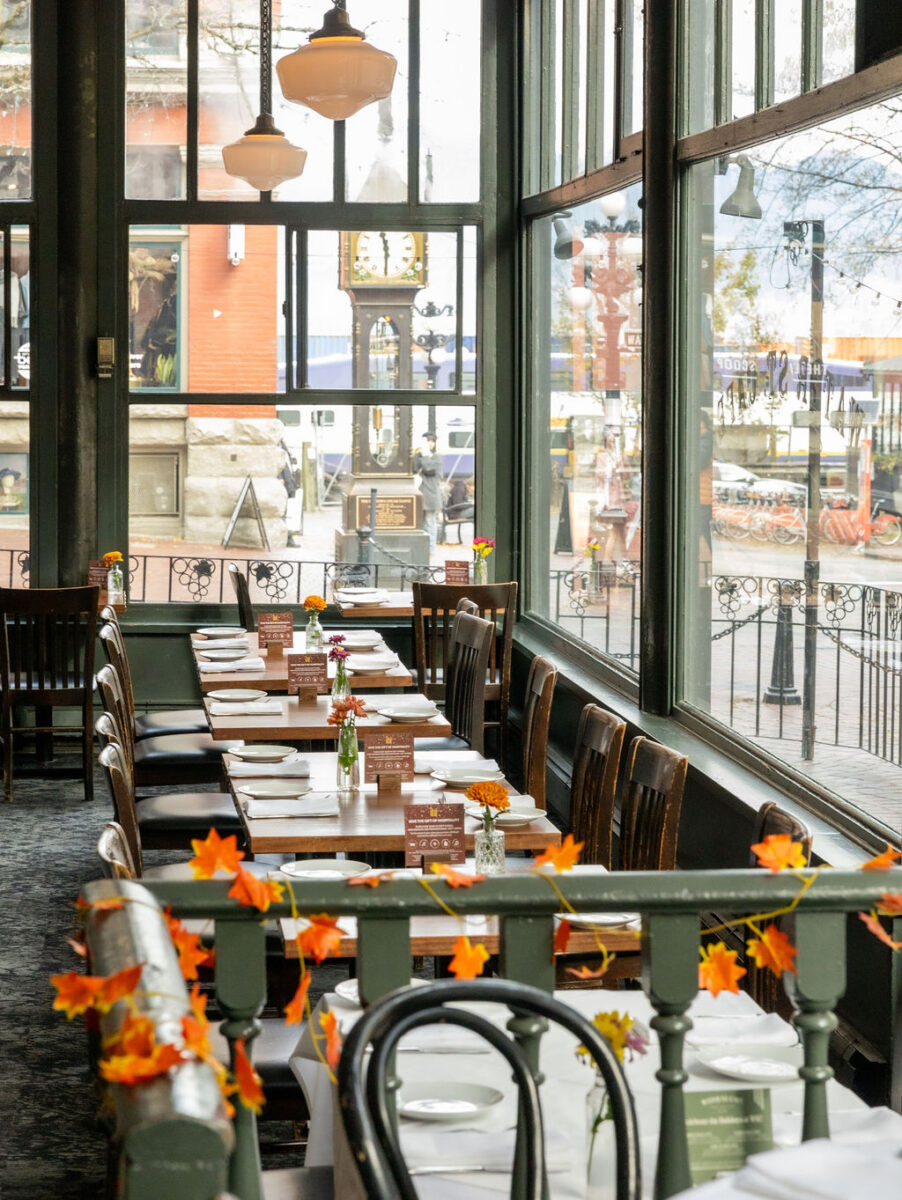
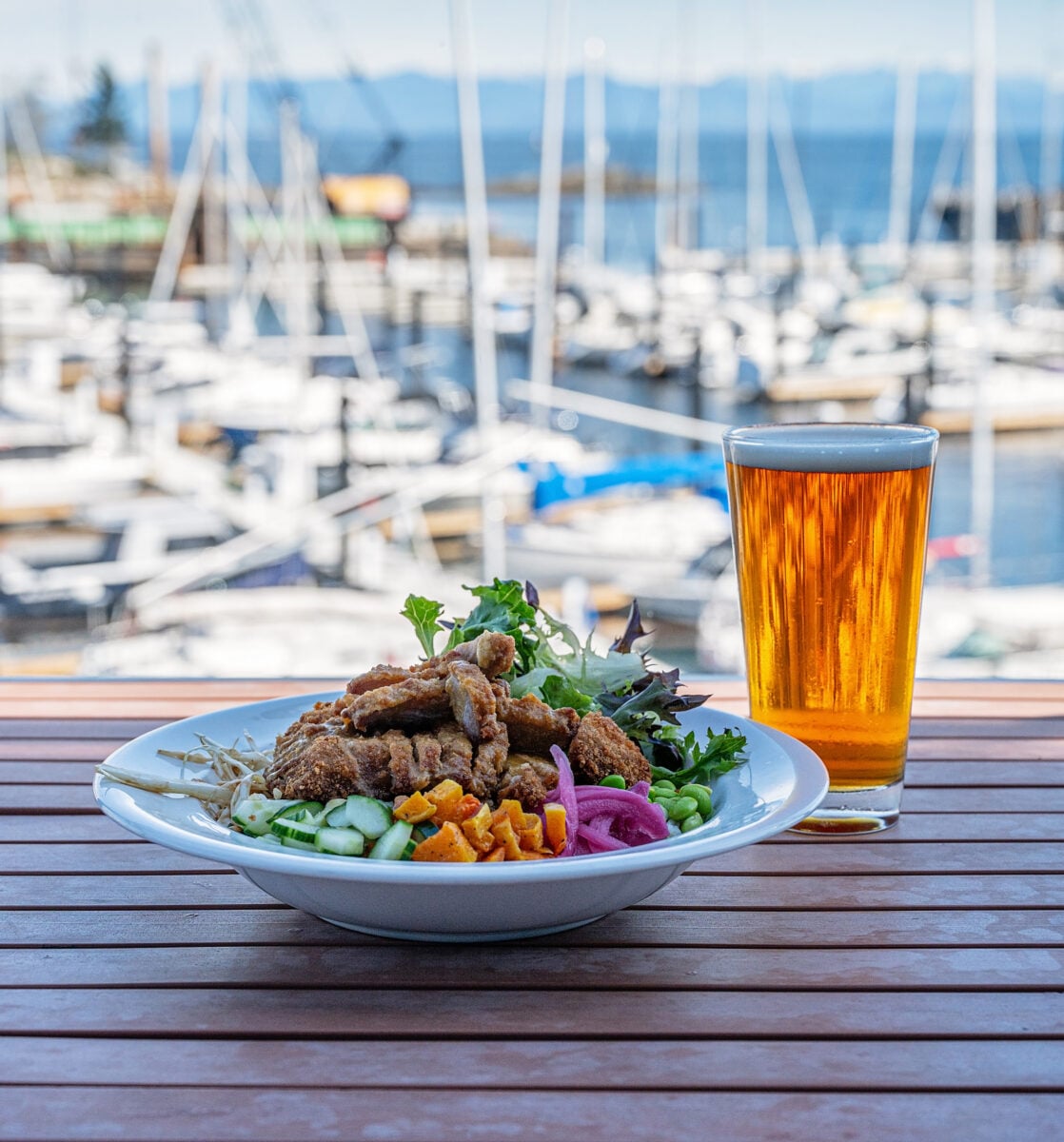
“Moments Hospitality Collective is our love letter to BC.,” said founding partner and director of operations Eli Brennan. “Each restaurant is integral to a place we call home, and a community we’re proud to be a part of. We’re not just creating places to eat, we’re creating spaces to be welcomed, to celebrate and to belong.”
Founded by longtime leaders in the Vancouver and Vancouver Island hospitality scene, Moments Hospitality Collective (MHC) is focused on offering unique yet inclusive dining experiences, entwined by a shared belief that hospitality should be heartfelt and that restaurants should feel like home. “Moments” reflects the company’s ethos; to provide meaningful, shared experiences that create lasting memories, it said.
Before ownership, Founding Partner and Director of Operations, Eli Brennan, worked with some of Vancouver’s most prominent restaurants including Cardero’s and The Teahouse in Stanley Park, alongside Founding Partner and Culinary Director Chef Alan Tse.
Also leading the kitchens as Culinary Director for Water St. Cafe, 2nd Floor Gastown and Qualicum Beach Cafe, Tse brings decades of experience and a reputation for excellence, where his dishes balance consistency with creativity and celebrate the best of BC’s regional ingredients. MHC’s two Operating Partners are Sandy Grant and Todd Bright, Operating Partner and General Manager of Water St. Cafe and 2nd Floor Gastown, and Operating Partner and Vancouver Island Regional Chef of Qualicum Beach Cafe, Nanoose Bay Cafe, and Deez Bar and Grill respectively.
The team also comprises Marketing and Communications Manager, Kaitlyn Brennan, and Nanoose Bay Area Operations Manager, Lynsee Yee. Together, they celebrate the best of British Columbia; its places, its people, and the stories that unfold when they come together around a table.
Retail sales decreased 0.4% to $69.3 billion in February. Sales were down in four of nine subsectors and were led by decreases at motor vehicle and parts dealers, according to a report released Friday by Statistics Canada.
Core sales—which exclude gasoline stations and fuel vendors and motor vehicle and parts dealers—were up 0.5% in February, said the federal agency, adding that in volume terms, sales decreased 0.4% in February.
“The largest decrease in retail sales in February was observed at motor vehicle and parts dealers (-2.6%), with all four store types within this subsector posting declines. New car dealers (-3.0%) led the decrease, falling for a second consecutive month in February. Lower sales were also recorded at automotive parts, accessories and tire retailers (-1.6%) in the month,” explained Statistics Canada.
“Sales at gasoline stations and fuel vendors (+0.3%) increased in February for a fifth consecutive month. In volume terms, sales at gasoline stations and fuel vendors increased 0.8%.”
The report said core sales increased 0.5% in February on higher sales at food and beverage retailers (+2.8%). Sales in this subsector were up on gains at supermarkets and other grocery retailers (except convenience retailers), which rose 3.7% in February after falling 3.2% in January. To a lesser extent, beer, wine and liquor retailers (+2.3%) also contributed to the increase in February.
“Higher sales were also recorded at general merchandise retailers, up 1.2% in February,” it said.
“The largest decrease to core retail sales in February came from furniture, home furnishings, electronics and appliances retailers (-2.9%).”
StatsCan said retail sales decreased in seven provinces in February. The largest provincial decrease in dollar terms was observed in Quebec (-0.9%), marking its second consecutive monthly decline. In the Montréal census metropolitan area, sales were down 2.5%.
In British Columbia, retail sales decreased 0.6% in February, led by lower sales at furniture, home furnishings, electronics and appliances retailers. In the CMA of Vancouver, retail sales were down 0.9%.
The largest provincial increase in retail sales in February was observed in Manitoba (+1.8%). This increase was led by higher sales at motor vehicle and parts dealers, added the report.
“On a seasonally adjusted basis, retail e-commerce decreased 0.3% to $4.3 billion in February, accounting for 6.3% of total retail trade,” noted Statistics Canada.
“Statistics Canada is providing an advance estimate of retail sales, which suggests that sales increased 0.7% in March.”
Bojana Sentaler, Founder, President and Creative Director of the internationally acclaimed luxury outerwear brand SENTALER, has emerged as one of Canada’s most influential figures in fashion. Born in Belgrade, Serbia, and raised in Toronto from the age of eight, Sentaler’s path to global recognition is a compelling story of creativity, courage, and entrepreneurial spirit.
Bojana Sentaler
From an early age, Sentaler demonstrated a natural talent for design and a sharp eye for aesthetics. While her childhood was filled with fashion sketches and creative expression, her academic strengths pointed toward a different path—math and finance. This duality of interests led her to the Schulich School of Business at York University, one of Canada’s top business schools, where she specialized in marketing and finance.
After graduating, Sentaler launched her career at a Fortune 500 beauty company. Despite the prestige, she quickly realized the limitations of the corporate world and felt a growing need to pursue something more fulfilling. Trusting her intuition, she made a bold decision to step away and explore her true calling—fashion design.
In 2008, Sentaler moved to Dubai, where she worked on economic reports focusing on emerging markets in the MENA (Middle East and North Africa) region. It was there she experienced a pivotal moment: a memorable interview with legendary fashion designer Karl Lagerfeld, who was then designing luxury villas in Dubai. His words sparked a renewed passion in Sentaler and reaffirmed her desire to enter the fashion world.
Soon after, a serendipitous trip to Peru changed everything. While exploring the Andean region, Sentaler discovered the luxurious and eco-friendly qualities of alpaca wool—a lightweight, exceptionally warm, and sustainable fabric revered in Peruvian culture. She spent months researching the material, becoming deeply knowledgeable about its properties and potential.
Inspired by her travels and recognizing a gap in the North American outerwear market, Sentaler returned to Canada in 2009 with a vision. She designed and launched her first collection—seven handcrafted alpaca coats created for modern women seeking both fashion and function. Thus, SENTALER was born.
Fifteen years later, SENTALER has grown into a globally recognized luxury fashion brand available at high-end retailers worldwide. The brand has become a favourite among royalty, Hollywood celebrities, supermodels, and athletes, all drawn to its signature blend of style, warmth, and ethical craftsmanship.
SENTALER remains proudly Canadian, cruelty-free, and sustainably sourced. The company continues to support environmental and charitable initiatives, reinforcing its commitment to both elegance and responsibility.
Bojana Sentaler
From a childhood dream to an international fashion powerhouse, Bojana Sentaler’s journey is a testament to following one’s passion and redefining luxury with purpose.
“I wanted to create a luxury, a global luxury outerwear brand,” said Sentaler in a recent interview. “I found a gap in the market for coats that were warm, functional, but they were also beautiful and elegant, and high-end at the same time.”
That gap led her to alpaca fabric—renowned for its warmth and softness—and sparked what she described as a business “aha moment.”
“When people asked me, what if you fail? And I said, well, I’m not going to fail. That’s not an option,” she said. “The recession was just at the launch. But it was more of strategic long-term vision of the kind of brand and company I wanted to build.”
SENTALER started with a modest by-appointment-only showroom on Richmond Street in Toronto, which opened in 2010. “When we opened the flagship in Yorkville, we closed the showroom. So the flagship replaced it,” Sentaler explained.
Today, the brand operates its flagship store in Toronto’s Yorkville and maintains a strong B2B presence through partnerships with major luxury retailers across North America.
“We have the flagship in Toronto, and then we have partnerships with B2B luxury retailers—the department stores in Canada and America,” she noted. “Holt Renfrew, Saks Fifth Avenue, Neiman Marcus, Bloomingdale’s, Nordstrom.”
Bojana Sentaler
But fashion wasn’t always a direct path for Sentaler. “I didn’t know what I wanted to end up doing, but I wanted to create,” she recalled. “Since I was young, I’ve been sketching fashion designs from grade school.”
Her education at the Schulich School of Business at York University, where she earned dual majors in marketing and finance, laid a critical foundation for her future. “It’s been great because I have two majors in marketing and finance. My financial acumen combined with marketing background, branding, advertising, sales, business management, entrepreneurship, organizational skills, accounting, public relations. These are all key sectors when running a business.”
Her passion for people, communication, and business strategy also played a role. “I loved fashion. I loved sketching and creating, but I also loved communication… and I was generally interested in business and the behind the scenes of the fashion industry.”
Throughout SENTALER’s growth, Sentaler has remained closely connected with her clientele—some of whom are globally recognized figures. “I did have the pleasure of meeting a lot of them,” she said, referring to high-profile clients. “Some of them have discovered the brand from the very early stages. It’s been such a pleasure to watch them continue to build their wardrobe with new SENTALER additions.”
Each collection is designed with the brand’s loyal clientele in mind. “The new collections don’t replace the previous year’s collections. I design knowing what our clients have in their closets and building your own SENTALER closet.”
Bojana Sentaler
Sentaler’s leadership style reflects her clarity of vision and emphasis on communication. “A great leader has to have a vision, but the best leader needs to be able to clearly communicate that vision to the team so that the team can execute that vision,” she said.
That vision remains rooted in the brand’s founding principles: making women feel beautiful and empowering people through timeless design. “You have to be a little bit of a dreamer to have a vision like this,” she said. “But then it can’t stay in my head. I have to be able to communicate this vision to my team.”
Her team plays a vital role in upholding the SENTALER brand. “Sometimes when I listen to them speak about the brand and protect the brand at all cost and always keeping in mind what the long-term vision is then I know I did my job.”
And when it comes to challenges, Sentaler’s mindset is firm: “No is never an answer. If you get a no now, just maybe you don’t have the resources of how to do that, but tell me what resources you need to turn that no into a yes.”
For Sentaler, strategic risk-taking has been a critical part of the brand’s evolution. “You can’t grow without taking risk,” she said. “But of course, I take strategic risk knowing when to make a bold move on expansion that’s going to lead us to success.
From humble beginnings to international acclaim, Bojana Sentaler continues to lead with vision, resilience, and a commitment to making women feel confident in every season.
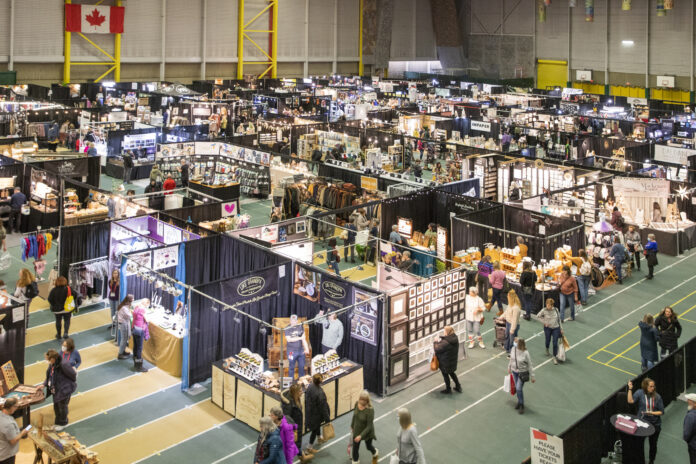
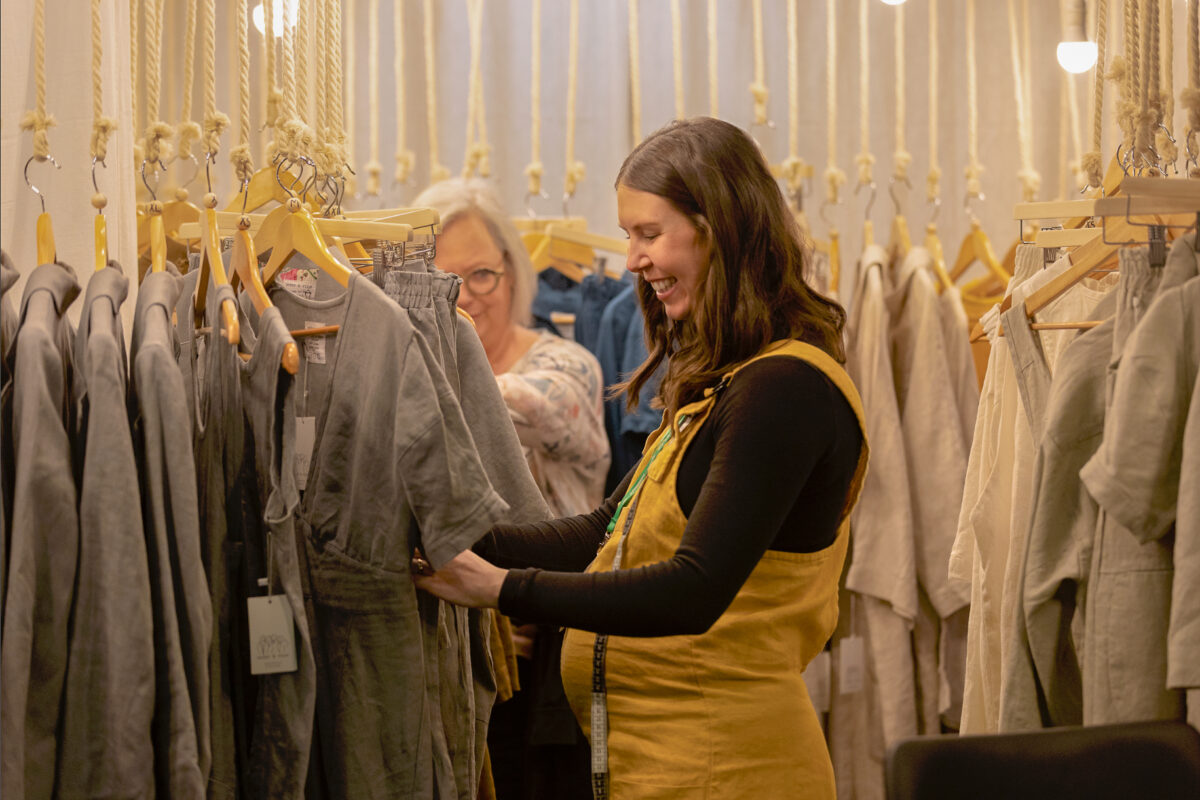
More than 135 artisans from across Canada will set up shop at Edmonton’s Butterdome May 2–4, giving Albertans a one-of-a-kind chance to support small businesses, make sustainable choices and, in the time of tariffs, put their money where it counts.
The 2025 Butterdome Spring Craft Sale will see vendors ranging from U of A alums to farm-to-table growers and longtime family businesses, with a slew of products that speak to Canadians’ newfound national pride: ‘Elbows up’ Beaver patches on rib-knit wrist wallets (POCCOT), subtle Cs and maple leafs carved into wood lamps (Jorge Izaza), novels set in The Prairies (Faery Ink Press), and gourmet foods such as “Poutine Dumplings” (Honest Dumplings) and “Poutine Pie” (South Island Pie Co).
Trevor Cobb
“Like most Canadians, Wanderlust took the ‘Elbows Up’ approach to our business plan by not letting one man dictate our future,” saidTrevor Cobb, Butterdome exhibitor and creator of push pin travel maps at Wanderlust Creatures. “We took this quite literally when Canada smashed The United States in the 4 Nations Cup […] and leaned more heavily into our NHL Stadium Tour Map, which we launched at the Butterdome Christmas sale to rave response. We are now opening conversations with NHL representatives to license the team logos for each pin on this map.”
In March, Wanderlust cut out its American cork supplier and took steps to instead expand into the European market.
Cobb said with shoppers seeking local goods, sales are up from previous years – and other Butterdome vendors agree.
Paul Harvey
After braving Dragon’s Den and being overlooked by major distributors for being “too small” and “too local,” Paul Harvey’s Calgary-based puzzle game publisherEscape Mail finally landed a game-changing deal with one of the world’s largest toy and game distributors.
“Since last summer, we’ve been knocking on doors, pitching to national distributors, and being told that our Canadian-made status was more of a novelty than a selling point,” said Harvey. “But something shifted. When Asmodee finally came back to us with a yes last week, we asked what changed—and their answer was clear: Canadian retailers and consumers are actively seeking games made by Canadian companies. And with over half of our products hand-assembled right here in Alberta, we suddenly went from ‘too indie’ to ‘exactly what shoppers are looking for.’
“This isn’t just about puzzles—it’s about a new era of Canadian consumer pride. Tariffs and global uncertainty may have sparked the conversation, but the movement is now driven by shoppers who want to support local creators in a meaningful way.”
Organizers say the Butterdome Spring Craft Sale will celebrate creativity, craftsmanship and Canadian innovation – with Edmonton-area shoppers and vendors alike reaping the benefits. Market-goers can sample and feel actual products, chat with artisans and hear their stories firsthand, and walk away with their purchases in hand. Meanwhile, makers and artists are making big changes: opting for local (or just non-American) materials, designing new Canadian-forward product lines, and feeling the love from local audiences more than ever before.
Source: Butterdome Craft Sale
“Over 35 years, the Butterdome community has flourished from humble 1990s beginnings to a bustling 70,000+ sq ft marketplace, featuring local creators, multi-generational family businesses, and craft food and drink purveyors from coast to coast. This year’s 135+ artisans include 20 Edmontonians, 75 Albertans, and vendors from as far as Waterloo, ON and Saltspring Island, BC. Butterdome visitors can shop jewellery, body care, home decor, gourmet treats, kids’ toys, pet accessories, handblown glass, woodwork, and more. With live music all weekend long, the sale is the perfect place to take in some spring shopping and get ahead of Mother’s Day gift-giving, Canadian-style.”