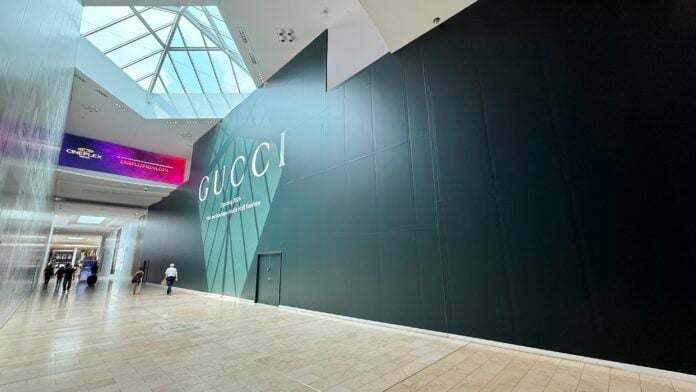
Gucci construction hoarding at Toronto's Yorkdale Shopping Centre. Photo: Craig Patterson
Gucci has begun construction on its largest store in Canada at Toronto’s Yorkdale Shopping Centre. The upcoming Gucci Yorkdale store will span about 12,000 square feet on a single level.
The location will anchor Yorkdale’s newest luxury wing, which has become a magnet for international brands. Gucci’s store will sit adjacent to a new 11,000-square-foot Saint Laurent flagship that is currently under construction. The Saint Laurent boutique will replace an existing location in the mall, creating an enhanced luxury corridor at one of Canada’s most productive shopping centres.
Current Gucci Presence in Yorkdale
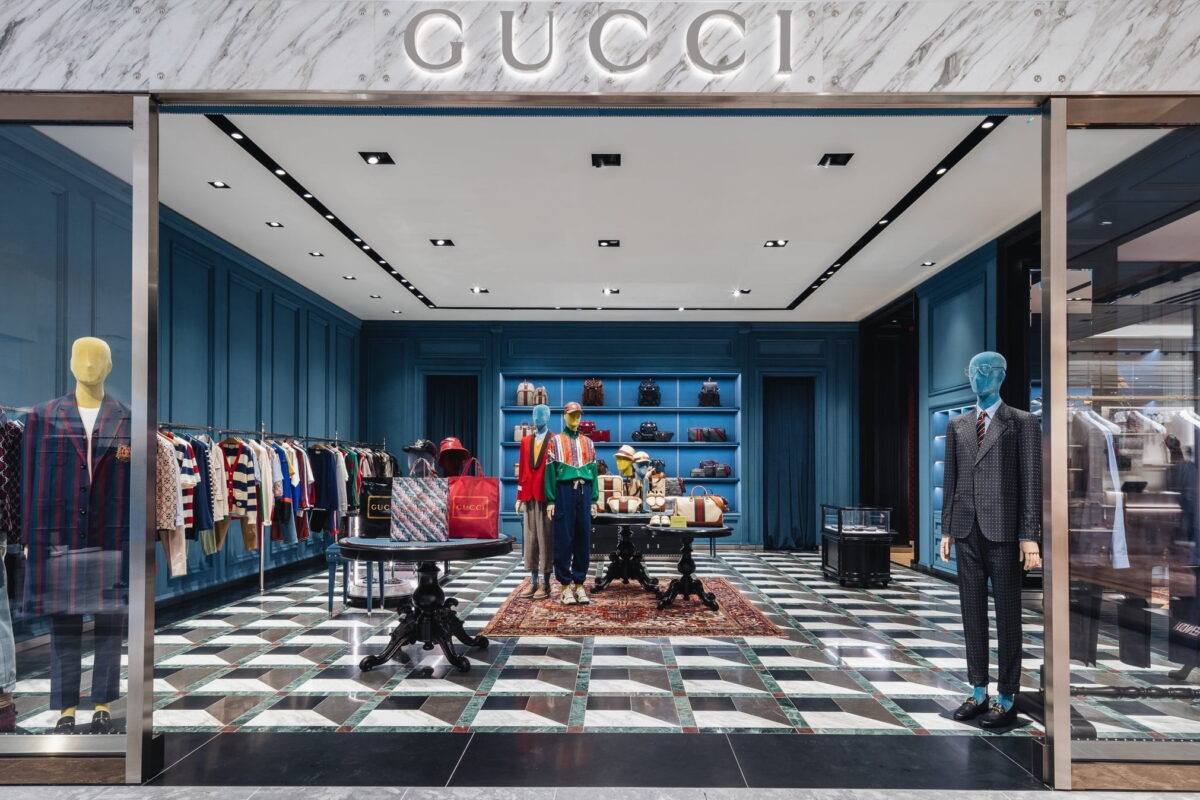
At present, Gucci operates a sizable concession within Holt Renfrew at Yorkdale. That boutique, which measures about 6,000 square feet and opened in 2019, is branded as a “World of Gucci” concept and features dual entrances, one facing into the mall and another accessible from inside Holt Renfrew. Whether this location will continue to operate once the larger Gucci Yorkdale store debuts remains uncertain.
The Holt Renfrew concession carries a mix of handbags, footwear, ready-to-wear, jewellery, and watches, and has been a key touchpoint for Gucci’s Canadian clientele. Its future will likely depend on how Gucci positions its new flagship within the mall, balancing brand presence inside Holt Renfrew with a full-scale standalone boutique.
Gucci concession at Holt Renfrew Yorkdale. Image via Gucci/Amachris
A Tight Canadian Network
Beyond Yorkdale, Gucci maintains a selective retail footprint across Canada. In Toronto, the brand operates a flagship at 130 Bloor Street West, which serves as the main downtown location. The Vancouver flagship at the Fairmont Hotel Vancouver, recently expanded to about 6,200 square feet, remains the largest Gucci store in Canada until Yorkdale’s opening.
Other Canadian locations include a full-line boutique at West Edmonton Mall and a new store at Montreal’s Royalmount development, which marked Gucci’s first standalone store in Quebec when it opened in 2024. In addition, Gucci maintains concessions within Holt Renfrew in Montreal, Vancouver, Calgary, and Toronto, along with a single outlet store at Toronto Premium Outlets in Halton Hills.
Yorkdale’s Growing Luxury Corridor
Yorkdale Shopping Centre has steadily built its reputation as Canada’s premier luxury retail hub. Anchored by Holt Renfrew, the mall has attracted an enviable roster of global luxury brands, including Cartier, Chanel, Dior, Louis Vuitton, and Prada. The addition of the largest Gucci Yorkdale store and the new Saint Laurent flagship underscores the property’s position as a central destination for luxury shopping in Canada.
Mall owner Oxford Properties has invested heavily in expanding and modernizing Yorkdale’s luxury offering over the past decade. The new Gucci boutique will be one of the crown jewels in this effort, providing Toronto with a dedicated, full-scale luxury environment that mirrors the brand’s flagship locations globally.
New luxury wing at Toronto’s Yorkdale Shopping Centre. Image: Craig Patterson
Gucci’s Global Strategy and Canadian Importance
Gucci’s decision to double its Yorkdale footprint comes at a pivotal moment for the brand. Globally, Gucci has faced financial headwinds, with sales declines reported in 2024 and 2025. Parent company Kering has responded by enacting leadership changes, appointing Stefano Cantino as Gucci’s CEO in January 2025 and naming Demna as Artistic Director in March 2025.
Canada, though a smaller luxury market compared to the United States, remains strategically important due to its stable consumer base and strong spending in urban centres. Gucci’s investment in Yorkdale aligns with the brand’s broader strategy of reinforcing its presence in key global luxury corridors, from New York’s Fifth Avenue to Vancouver’s West Georgia Street.
Despite recent financial turbulence, Gucci remains one of the world’s most recognized and influential luxury brands. Founded in Florence in 1921, the house is known for its bold designs, craftsmanship, and ability to blend tradition with modernity. Its signature motifs—the double-G logo, horsebit detailing, and bamboo elements—continue to resonate globally, while new collections under Demna’s direction are expected to refresh the brand’s creative vision.
New Dior and Gucci in the luxury wing at Toronto’s Yorkdale Shopping Centre. Image: Craig Patterson
France Laure, the Québec-based skincare company with a history spanning more than five decades, has taken a decisive step into the digital marketplace. On September 18, 2025, the brand will officially launch its first e-commerce platform, marking a turning point in how it engages with consumers.
The move opens direct access to products once reserved for spas and professional estheticians, offering customers across Canada the opportunity to explore France Laure’s complete line of skincare solutions online. From signature formulas to limited editions, the site is designed as both a shop and an educational tool, promising expert guidance at the click of a button.
Founded in 1957 by French pharmacist Joseph Fantin, France Laure relocated to Québec in 1970, embedding itself into the province’s professional skincare industry. Over three generations, the company has evolved from a Parisian family business into a wholly Québec-owned operation.
After moving its design and production facilities to Montreal in 2001, the brand placed a strong emphasis on local expertise. Today, France Laure manufactures its products under the watchful eye of international standards, including Health Canada, EU guidelines, and FDA requirements. Since 2017, under the leadership of Frédéric Fantin, the company has modernized its identity while maintaining its dual commitment to science and nature.
New Skincare Innovations for 2025
Coinciding with its e-commerce launch, France Laure is introducing two products it describes as “hero innovations.”
The Gentle Bi-Phase Makeup Remover with Cornflower Floral Water is priced at $50 for 150 millilitres. Formulated with sensitive skin in mind, it is a dual-action remover designed for both eyes and lips. Its water-and-oil blend promises to dissolve waterproof makeup without leaving behind greasy residue or compromising the health of lashes.
The second addition, a 10% Glycolic Acid Peel at $68 for 30 millilitres, blends glycolic acid with hyaluronic acid for a combination of exfoliation and hydration. The treatment is aimed at refining texture, minimizing pores, and delivering visible radiance while softening early signs of aging.
An Inclusive Approach to Skincare
France Laure has long built its reputation on a philosophy of balancing natural ingredients with scientific advancements. Its product lines are grouped into collections — including Hydrate, Regenerate, Calm, Balance, Nourish, Illuminate, Reshape, and Protect — each tailored to different stages of skin health.
This approach reflects the company’s broader mission: ensuring that skincare adapts to the evolving needs of customers, whether that means soothing sensitive skin or providing advanced anti-aging treatments. All products are paraben-free, cruelty-free, and certified by PETA.
For decades, France Laure has been a fixture in spas and esthetician practices across Canada, recognized for its professional-grade formulas. By establishing a consumer-facing e-commerce platform, the company is extending its professional credibility directly into homes.
The online shop is designed to replicate the personalized experience of spa consultations. Shoppers can expect curated advice, educational content, and access to the full breadth of France Laure’s catalogue, ensuring the company’s expertise translates seamlessly to digital retail.
Upholding a Heritage of Science and Nature
France Laure’s identity continues to be defined by its origins in pharma cocosmetology, a field that blends medical-grade science with cosmetic innovation. Over the years, the company has invested in biotechnology research, refining products such as cleansers, serums, and treatments that meet dermatological and hypoallergenic standards.
Its enduring presence in the Canadian skincare sector underscores a commitment to both authenticity and innovation. For a brand that began as a Parisian family enterprise, the France Laure e-commerce launch signals a new era, expanding its influence from spas and salons to a global online audience.
Sheertex, the Montreal-based maker of rip-resistant tights now operating under the name SRTX Inc., has appointed Sophie Boulanger as its new chief executive officer. The announcement comes at a critical moment for the company, which has endured a turbulent year marked by a steep drop in valuation, a major refinancing deal, and the departure of founder Katherine Homuth.
Ms. Boulanger, a veteran of Canada’s fashion and retail sector, assumes the role from interim chief executive Timothy Leyne, who had stepped in after Ms. Homuth left the company in April. The leadership change is intended to stabilize the business as SRTX works toward profitability and expands its presence in global retail.
Sophie Boulanger
Ms. Boulanger brings a wide-ranging background in fashion and consumer goods to the role. Her early career included positions with L’Oréal Canada, Christian Dior Couture, and Boutique Jacob, giving her direct experience with both the operational and consumer-facing sides of the industry.
In 2010, she co-founded BonLook, a direct-to-consumer eyewear company that disrupted Canada’s optical retail market with stylish, affordable frames. Under her leadership, BonLook grew to nearly 40 stores and more than 400 employees before it was acquired by FYidoctors in 2021. She later served as CEO of the property technology company 1Valet and currently sits on the boards of outdoor goods manufacturers La Canadienne and Pelican International.
In a joint statement, SRTX’s major investors, including BDC Capital, Export Development Canada, H&M Hennes & Mauritz AB, and Investissement Québec, praised her appointment, citing her “entrepreneurial mindset, operational expertise, and vision for consumer-centric growth.” They expressed confidence that she would “accelerate SRTX’s mission to transform the apparel industry.”
Building on a Founder’s Legacy
In her own statement, Ms. Boulanger emphasized continuity, describing herself as “honoured to join the company at such a pivotal stage.” She credited Ms. Homuth for laying the foundation with “vision and entrepreneurial drive” and said she was eager to “carry that legacy forward.”
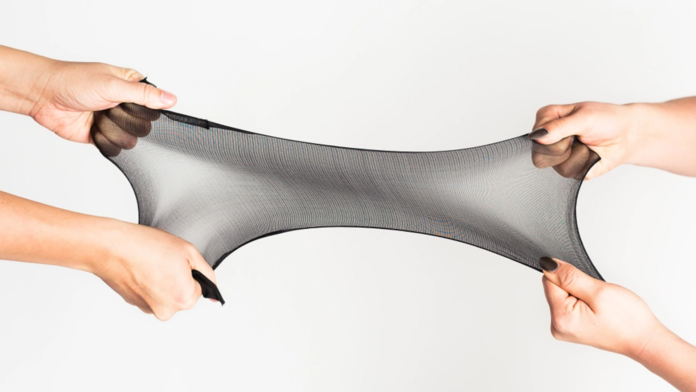
Ms. Homuth’s journey at Sheertex was widely recognized as one of Canadian retail’s most ambitious startup stories. She launched the company in 2017 with a product designed to solve a problem nearly every hosiery wearer knows well: runs and tears. By using ultra-high molecular weight polyethylene, a fiber more commonly associated with ballistic materials, Sheertex developed tights marketed as virtually unbreakable.
Her persistence convinced investors that durable hosiery could be a viable consumer product. The company went on to generate more than US$155 million in sales, with its tights eventually appearing on the shelves of H&M, Costco, Walmart, Macy’s, Holt Renfrew, and Kim Kardashian’s SKIMS brand.
Sheertex Advertisement
A Valuation Reset
Despite its successes, Sheertex faced a severe setback in 2024 when it struggled to raise US$75 million in new funding. Without the infusion, the company was unable to support its wholesale expansion and sustain operations while waiting for large retail orders to be fulfilled and paid.
The financing round that eventually closed earlier this year provided US$40 million from existing investors, but at a steep cost. The company’s valuation, once pegged at US$325 million, was slashed to US$95 million. The capital has given SRTX breathing room, funding production expansion and an ambitious goal to reach profitability by late 2025.
The recapitalization, however, underscored the challenges of scaling a capital-intensive manufacturing business, even one with an innovative product and strong retail partnerships.
Trade Pressures and Layoffs
SRTX’s troubles have not been limited to fundraising. The company has also faced geopolitical and trade-related headwinds, particularly the imposition of U.S. tariffs. The hosiery maker, which relies heavily on American customers, saw costs rise and competitiveness squeezed. In response, the company temporarily laid off about 40 percent of its staff in early 2025, a move that highlighted the fragile position of Canadian manufacturers navigating global trade policy shifts.
The layoffs and financial uncertainty contributed to Ms. Homuth’s decision to step down as CEO, marking the end of her tenure at the company she founded. She has since launched new ventures, continuing her entrepreneurial career.
From Disruptor to Mainstream Player
Sheertex began as Sheerly Genius, a Kickstarter-funded project that caught the attention of investors and consumers alike with its promise of sheer hosiery that would not rip. Its appearance in Y Combinator’s accelerator program and recognition from TIME Magazine as one of the “Best Inventions” helped propel its early growth.
By 2019, the company had relocated manufacturing to Montreal, building a vertically integrated operation to reduce costs and control quality. Over time, Sheertex broadened its scope beyond direct-to-consumer sales, signing distribution agreements with major global retailers.
The brand has also emphasized sustainability, seeking to change consumer perceptions of hosiery as disposable fashion. In 2024, Sheertex achieved B Corp certification, highlighting its environmental and ethical commitments, and announced recycling programs for used products.
Tim Hortons®, The PWHL and Barbie® Team Up on New Hockey Dolls in Collaboration with Superstars Sarah Nurse and Marie-Philip Poulin (CNW Group/Tim Hortons)
As part of a shared commitment to increasing access for girls in hockey, Tim Hortons will donate $5 to the Grindstone Foundation for every Barbie Tim Hortons PWHL Doll sold in participating restaurants and TimShop.ca, and the PWHL will match this with a $5 donation for each doll bought through its online store.
Hope Bagozzi
“Tim Hortons is incredibly proud of our hockey leadership in Canada including how our local restaurant owners collectively support 100,000 youth players in communities across the country every year through Timbits Hockey. We’re thrilled to be partnering with Barbie, Sarah Nurse, Marie-Philip Poulin and the PWHL on the new Barbie Tim Hortons PWHL Dolls and we’re proud that each doll sold at a Tims restaurant and at the PWHL Shop will result in a donation to the Grindstone Award Foundation to help break down financial barriers for girls who want to play the sport,” said Hope Bagozzi, Chief Marketing Officer for Tim Hortons.
As the most diverse doll line on the market, Barbie is continuing to empower young children to unlock their limitless potential. Studies show that girls who are involved in team sports are more likely to believe they are smart enough for their dream career, have high opinions on their abilities and competencies, increased leadership aspirations and enjoy higher levels of self-confidence.
The two Barbie Tim Hortons PWHL Dolls are inspired by members of Team Barbie and PWHL superstars Sarah Nurse and Marie-Philip Poulin, who were recognized as Barbie role models in 2020 for being trailblazers on the ice and breaking down barriers for women in hockey. Each Barbie doll comes with a Tim Hortons PWHL hockey jersey, hockey stick, helmet and skates and can be purchased for $34.99.
There are more ways for fans to celebrate the launch of the Barbie Tim Hortons PWHL Dolls, including:
Tims Rewards members who purchase a doll from a Tims restaurant will also be entered for a chance to win an exclusive PWHL game day experience. For more details and contest information, visit timhortons.ca/hockey-barbie.
The Barbie PWHL Donut — a yeast ring donut dipped in white icing and topped with pink sprinkles — and Barbie Pineapple Dragon Fruit Quenchers will also be available at participating Tims restaurants.
The Tims Barbie Hoodie is available at TimShop.ca.
“Our goal is to inspire the next generation of hockey players by bringing these Barbie dolls to life in partnership with Tim Hortons and the PWHL. Barbie has a long-standing partnership with Tim Hortons, built on a shared commitment of inspiring young hockey players. Now, with Barbie as an official partner of the PWHL in Canada since its inaugural season, it was a natural next step to bring together brands with a common goal. These Barbie dolls reflect our commitment to championing the belief that a girl can be anything she wants to be — including a hockey player — in and outside of the playroom,” said. Tara George, General Manager at Mattel Canada.
“We’ve heard from fans across the league that they’re eager to see Barbie Tim Hortons PWHL Dolls, making this collaboration with Tim Hortons and Barbie an ideal fit. We’re especially proud that this initiative also makes a meaningful impact, as the Grindstone Foundation continues to transform the lives of girls across Canada by helping to remove barriers and create more opportunities for the next generation of players,” said Amy Scheer, Executive Vice President of Business Operations at the PWHL.
“We’re incredibly grateful to Tim Hortons and the PWHL for their generous support, and for teaming up with Mattel to champion the growth of girls’ hockey across Canada. As a national charity, we’re proud to partner with organizations that not only support gender equality in sport, but understand that when girls are given the chance to play hockey, they gain confidence, build resilience, and grow into future leaders. This collaboration will help more girls access the game and discover all that Grindstone has to offer,” said Danielle Bell, President of the Grindstone Award Foundation.
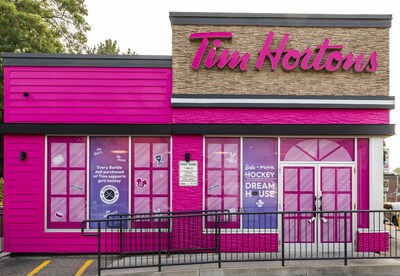
In celebration of the launch of the Dolls, the Tim Hortons restaurant located at 3157 Dundas St. W. in Toronto was transformed, with its iconic Tims red replaced with Barbie pink and PWHL purple. The restaurant makeover was available for guests to see until Aug. 13. (CNW Group/Tim Hortons)
The Grindstone Award Foundation is a registered Canadian charity that provides financial assistance to female hockey players under the age of 19 who want to play hockey but are unable to due to financial barriers. Founded in 2014 in Kelowna, British Columbia, Grindstone awarded its first grant in 2015, and has since gone on to provide over $140,000 in financial assistance towards registration fees to female players all across Canada. Funded entirely through generous donations from the public, Grindstone believes that all girls should have equal opportunity when it comes to playing the game they love. Their mandate is to help grow the game of hockey by supporting diverse Canadian families from coast to coast to ensure the sport is accessible for all female players.
Puratos, a global leader in bakery, patisserie, and chocolate innovation, has opened a new Innovation Centre, the third in Canada, “a creative hub where inspiration meets expertise.”
The new 3,500-square-foot Montreal facility joins the first Canadian Innovation Centre in Mississauga, Ontario, and a second facility in Chilliwack, British Columbia. Adding an Innovation Centre in Montreal extends Puratos Canada’s capabilities geographically, and reaffirms its commitment to offering tailored baking solutions to more Canadian businesses and the unique Quebec market specifically, said the company.
Based in Belgium, Puratos operates more than 120 Innovation Centres in countries around the world. This enables Puratos to fulfill its mandate to support “customers on both a local and regional level.” Innovation Centres provide three key services: product development, category management, and product profiling. As such, they are able to help companies at every stage, including how to craft delicious and competitive products that consumers will love, setting realistic profitability targets and strategies to achieve them, and analyzing existing products to find opportunities for improvement, said the brand.
Michael Simone
“Puratos believes that innovation thrives on collaboration. The new center will be a dynamic space where customers can engage directly with their experts, participate in workshops, and co-create new products. This hands-on approach ensures that the solutions developed are perfectly aligned with customer needs and expectations.” Michael Simone, President (Canada)
Local, Quebec-based baking, chocolate, and patisserie businesses will have unprecedented access to cutting-edge technology and hands-on support, said the company.
The combination of Puratos’ international reach with a local focus means they will get exceptional development help from a team that understands regional preferences, it added.
Unique Facility Capabilities
“The Montreal Innovation Centre offers access by appointment, with meetings and demonstrations coordinated through two full-time Technical Advisors and three Key Account Managers, all equipped to support bilingual service with a focus on locally relevant recipe development. Additionally, customers can learn about the latest global, regional, and local consumer trends through exclusive insights from Puratos’ groundbreaking Taste Tomorrow program. The largest consumer research ecosystem in the industry worldwide, the program reveals the trends set to shape the future of taste, health, and sustainability. With this unique combination of hands-on innovation and real-time consumer intelligence, Puratos Canada is set to help customers stay ahead of the curve and bring tomorrow’s creations to life today,” explained the company.
“Exclusive to the Montreal facility in Canada are enhanced chocolate preparation capabilities, including a refrigerated marble table and a full-size laminator. The facility also houses two separate proofers for simultaneous retarding and proofing, and will soon add a 140qt Hobart mixer to support large-batch testing and formulation.”
Source: Puratos
Sustainability and Economic Impact
“Designed with energy efficiency in mind, the centre is fully powered by clean electricity, with no reliance on natural gas. All lighting and equipment are energy-efficient, contributing to lower operating costs and alignment with Puratos’ global sustainability goals,” added the company.
“The centre is expected to drive indirect employment growth by helping local food businesses scale more efficiently. A trickle-down effect on the local economy will further support this unique market within Canada. Already operational and serving local clients, an inaugural event was held on August 20th for local media, government representatives, and members of the Puratos team.
“The Montreal Innovation Centre connects local manufacturers with the latest global trends via Puratos’ Taste Tomorrow research, while enabling tailored product development to meet evolving consumer preferences—especially around health, sustainability, and functionality.
eBay, Inc., a global commerce leader that connects millions of buyers and sellers around the world, today celebrates three decades of ecommerce success. Since its founding in 1995, eBay says it has shaped the way enthusiasts participate in the circular economy, empowering entrepreneurs and creating economic opportunity for millions.
The company also announced the launch of the ’95 Shop — a retail experience and online destination featuring the most iconic fashion, collectibles, and motors from the ’90s. Curated by actress and ’90s icon Sarah Michelle Gellar, the shop celebrates eBay’s 30-year legacy of shaping culture, fueling recommerce, and connecting people with the things they love.
Jamie Iannone
“eBay’s 30th anniversary is an important milestone we share with our global community of buyers and sellers, who’ve been with us every step of the way,” said Jamie Iannone, Chief Executive Officer at eBay. “Looking ahead, we’ll continue to leverage innovation and AI to make eBay simpler and more trusted, while building a stronger marketplace for the decades to come.”
To mark its 30th anniversary milestone, eBay is hosting a series of special events in New York City to honour the buyers and sellers who have shaped its journey since 1995, it said.
Celebration atNasdaq: Today, eBay CEO Jamie Iannone and company executives will rang the opening bell at the Nasdaq MarketSite. The moment reflects eBay’s impact on global commerce and its continued innovation designed to better serve small businesses, entrepreneurs and enthusiasts around the world, it said.
Immersive ’95 Shop: Complementing the ceremony, eBay is launching an immersive retail experience – the ’95 Shop – a tribute to the iconic trends and items from its founding year. The activation is where 90s nostalgia meets three decades of recommerce innovation. It features a “Greatest Hits” auction across Fashion, Collectibles, and Motors, a series of eBay Lives from leading sellers, and more immersive experiences. Located at 45 Grand St. in New York City, the shop will open on Sept. 4 for one day only.
AI-Powered Innovation At Scale
“eBay’s global scale, category expertise, and unparalleled breadth of inventory enable the company to deliver personalized, scalable, and magical experiences for its customers worldwide,” said the company.
“By combining sought-after inventory in focus categories, such as Collectibles, Fashion, and Motors, with innovative tools and strategies, eBay continues to expand its role as a trusted marketplace for sellers and buyers. AI helps in this mission by enhancing discovery, trust, and engagement: to date, eBay has enabled more than 10 million sellers to generate well over 200 million listings with AI tools. Internally, AI-powered services help streamline workflows, unlock deeper insights, and foster creativity, ultimately allowing employees to focus on higher-value activities.
“Beyond AI, eBay is reimagining ecommerce through innovations like eBay Live, a dynamic shopping experience that continues to scale with strong seller adoption and growing buyer engagement. Together, these initiatives drive eBay’s ability to build on its category strengths, technological capabilities, and community of sellers to shape the future of ecommerce.
“From vintage collectibles and pre-loved fashion to one-of-a-kind treasures, eBay has built one of the most dynamic and trusted marketplaces in the world, enabling customers all over the world to buy and sell with ease. As the company looks to the future, it remains committed to building communities, harnessing new technologies and reinventing the future of ecommerce. For a timeline of eBay’s historical moments, visit Our History.”
Photo: eBay
eBay technology empowers millions of buyers and sellers in more than 190 markets around the world. In 2024, eBay enabled $75 billion of gross merchandise volume.
Drawing on eBay data, the ’95 Shop collectioncollection features “greatest hits” that defined the decade and remain cultural staples today — from Jordan XI sneakers and Pokémon cards to vintage Gucci and a ’97 Land Rover Defender.
“It’s been so fun to see the best of ‘90s culture take center stage again, particularly as it was such a defining period for me personally,” said Gellar. “eBay has always been the place to find iconic pieces — from memorable looks to rare collectibles and more. Curating the ’95 Shop gave me the chance to spotlight items that defined the decade, including a few signed Buffy treasures.”
Shoppers can immerse themselves in ’90s nostalgia at the ’95 Shop pop-up in New York City or online at https://www.ebay.com/e/sales-events/ebay-30th-95-shop, where they can browse the collection and bid on coveted items. From Pokémon to Prada, fans will find some of the decade’s most sought-after grails, with items starting at just 95 cents, it said.
eBay said the “greatest hits” represent 30 of the most memorable items from the era that have captured the hearts of collectors for three decades and still top fans’ wishlists to this day, including:
1995 Karl Lagerfeld for Chanel Rue Cambon Paris Belt: Vintage Chanel is in remarkable demand, illustrated by more than 2,600 searches per hour during the first half of 2025.
Omega Seamaster Diver 300M: This dive watch reached new heights of fame when it first graced the wrist of James Bond in the ’90s. Fast forward to 2025 and “Omega Seamaster” was the top searched model in eBay.com’s watches category through the first half of the year.
1994-95 Michael Jordan Autographed Bulls M&N White 45 Jersey: Thirty years after his return to basketball, his Airness dominates the collectibles game as the most—searched athlete in eBay’s global collectibles category in 2025.
1999 Pokémon Charizard Holo 1st Edition Shadowless (PSA 5): Fans are still catching ‘em all on eBay, as Pokémon was the most—searched term in eBay.com’s collectible category every single month in 2025.
1997 Land Rover Defender 90: A symbol of rugged design and enduring cool, the Land Rover Defender 90 remains a cult favorite, with the Land Rover name pulling in more than 2,200 searches per hour in the first half of 2025.
And more ’90s icons to discover, including a few unique Buffy the Vampire Slayer pieces signed by Sarah Michelle Gellar!
Photo: eBay
Visit the ’95 Shop In Person and Online:
Shoppers can visit the ’95 Shop (45 Grand St., New York, NY 10013) on Sept. 4 from 11 a.m. to 7 p.m. ET.
The seven day online auction of the “greatest hits,” each with a starting bid of 95 cents, has begun online and will run through Sept. 9 at 9 a.m. ET, with all proceeds benefiting Make-A-Wish.
Top eBay fashion and collectibles sellers will also offer an extensive selection of unique finds from the era for immediate purchase at the pop-up, reflecting eBay’s unbeatable inventory of fashion, collectibles, and motors.
Fans that can’t join in person can tune into a marathon of eBay Lives on Sept. 3 and 4, including the eBay debut of vintage luxury seller What Goes Around Comes Around and an exclusive drop from sneaker OG and founder of streetwear brand STAPLE Jeff Staple — bid in real time and secure the most covetable items from the decade at https://www.ebay.com/ebaylive/channels/BdpoYdpqKNM8pbVL
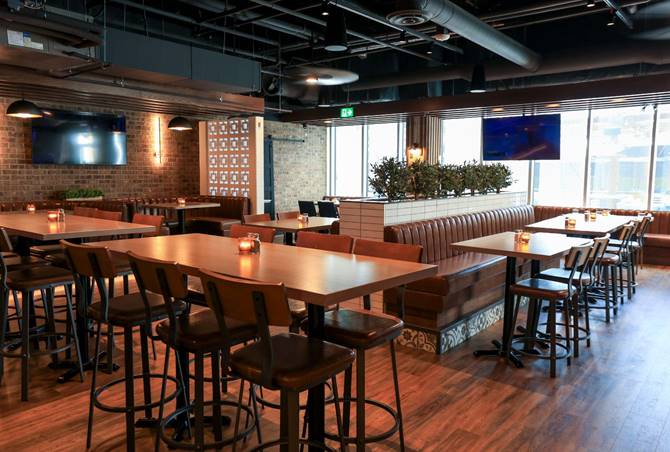
State & Main indoor dining space. Image: State & Main
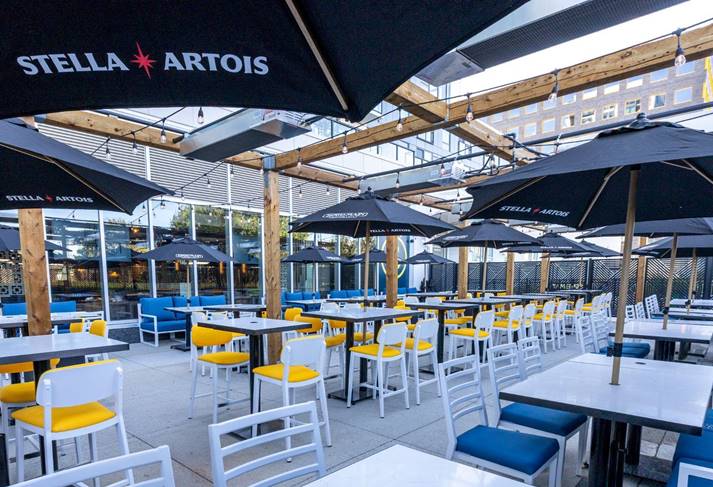
Calgary’s dining scene welcomed a new addition this week as State & Main Kitchen + Bar opened its third location in the city. The restaurant, located in the fast-growing Uxborough neighbourhood, began serving guests on September 1 and features a spacious patio that accommodates 116 diners.
The opening underscores the brand’s commitment to establishing community-focused restaurants in suburban markets while still offering the elevated atmosphere it is known for. The location is a short distance from McMahon Stadium, Foothills Medical Centre, and the University of Calgary, positioning it as a convenient destination for students, professionals, families, and sports fans.
Downtown Experience, Suburban Convenience
The company says the Uxborough outpost was designed to replicate the energy of downtown dining without requiring a commute into the city core. “This location is designed to be the go-to destination for anyone who wants the downtown experience without the hassle of venturing downtown,” Richard Homer-Dixon, Vice President and State & Main Brand Leader, said in a statement.
He added that the restaurant aims to become a flexible choice for the community. “Whether it’s a casual lunch, a pre-game gathering, or a night out with friends, we’re looking forward to serving our signature dishes and cocktails to both longtime fans of the brand and first-time guests.”
Comfort Food With a Twist
Guests at State & Main Uxborough will find a menu that blends classic comfort food with contemporary updates. The offering includes steaks, burgers, handhelds, and bowls, all prepared with what the company calls “an elevated twist.” The brand also emphasizes affordability, highlighting weekday food and drink specials, as well as a happy hour menu available twice daily.
Weekend brunch service, available on Saturdays, Sundays, and statutory holidays, adds another layer of versatility. The focus on brunch aligns with broader industry trends that have seen Canadian restaurants expand their weekend offerings to capture additional traffic.
State & Main Uxborough’s spacious patio. Image: State & Main
Part of a Growing Calgary Footprint
The Uxborough location joins State & Main’s two other Calgary restaurants in Nolan Hill and Mahogany, reflecting steady demand for the brand in Alberta. The new restaurant is open daily from 11 a.m. at 24 Uxborough Place NW.
State & Main currently operates more than 25 restaurants across Canada, with many clustered in Ontario and Alberta. The company has grown steadily since its founding, often targeting high-traffic suburban neighbourhoods where it can draw families, professionals, and groups looking for a casual but stylish dining experience.
A Canadian Brand With National Reach
Founded in 2012 by Calgary-based Franworks Group of Companies, State & Main entered the Canadian casual dining landscape with a vision to offer an approachable but slightly upscale alternative to traditional bar-and-grill chains. The company quickly expanded in Western Canada and entered Ontario in 2014, opening its first location in Guelph.
By 2016, Franworks sold a majority stake in its brands, including State & Main, to Recipe Unlimited, Canada’s largest full-service restaurant company. That move provided access to deeper operational resources and helped accelerate national growth.
Today, State & Main continues to refine its positioning in a competitive market by leaning into a mix of scratch-made dishes, handcrafted cocktails, and a relaxed yet modern setting. The brand’s consistent emphasis on neighbourhood integration, placing restaurants in suburban communities rather than exclusively in downtown cores, has become a hallmark of its expansion strategy.
Toronto-based startup SELLIT9 Trade is quickly establishing itself as a major innovator in Canada’s growing circular economy, offering consumers a way to turn idle household items into immediate value. The company’s digital platform enables shoppers to trade in electronics and other goods directly in the customer journey, receiving instant discounts or gift cards that can be applied to new purchases.
Co-founder and CEO Josh Guttman describes the service as a consumer-friendly alternative to debt-driven payment options like Affirm and Klarna. “We provide a way for people to unlock value from items they already own without taking on more debt,” he explained in an interview with Retail Insider. “It’s about making purchases more affordable while keeping products in circulation and out of landfills.”
Oswaldo Alvarez, left, with Josh Guttman. Photo supplied
Originally branded SELLIT9 Pay, the startup pivoted in spring 2025 to emphasize its role in issuing instant trade-in credits. The rebrand to SELLIT9 Trade reflects its integration into the heart of the shopping journey.
Guttman noted that feedback from retailers and customers highlighted friction when the service was positioned at checkout. “We realized that by the time customers were at the payment rails, they didn’t want to search their homes for items. But by presenting the trade-in option earlier, we could show them the savings immediately. It builds confidence in their purchase and often leads them to add more to their cart.”
Real-Life Trades Show Impact
The company has already facilitated more than 2,000 trades, with transaction volumes now reaching close to $100,000 per month. One story illustrates the impact of the platform: an 18-year-old customer who had been saving for years to buy a gaming PC was able to trade in his old PlayStation and instantly receive nearly $300 toward the purchase.
“He told us it allowed him to finally buy the computer he had dreamed of,” said Guttman. “That’s the type of outcome that keeps us motivated—helping people reach their goals in a financially sustainable way.”
Other trades have included Apple Watches, older iPhones, and laptops that customers applied toward cameras, refurbished electronics, and other items.
SELLIT9 Trade has timed its growth with a period of heightened consumer stress. Back-to-school shopping is traditionally costly for Canadian families, and with inflation eroding purchasing power, affordability has become a critical issue.
Partnering with merchants like Qnovum, which sells refurbished electronics, the startup allows parents and students to trade in older devices for instant discounts on laptops and other school essentials. “When you think about a student needing a reliable laptop, they can purchase a high-quality refurbished model and offset the cost further by trading in an older device,” said Guttman. “It’s a solution that fits both the financial and sustainability needs of the moment.”
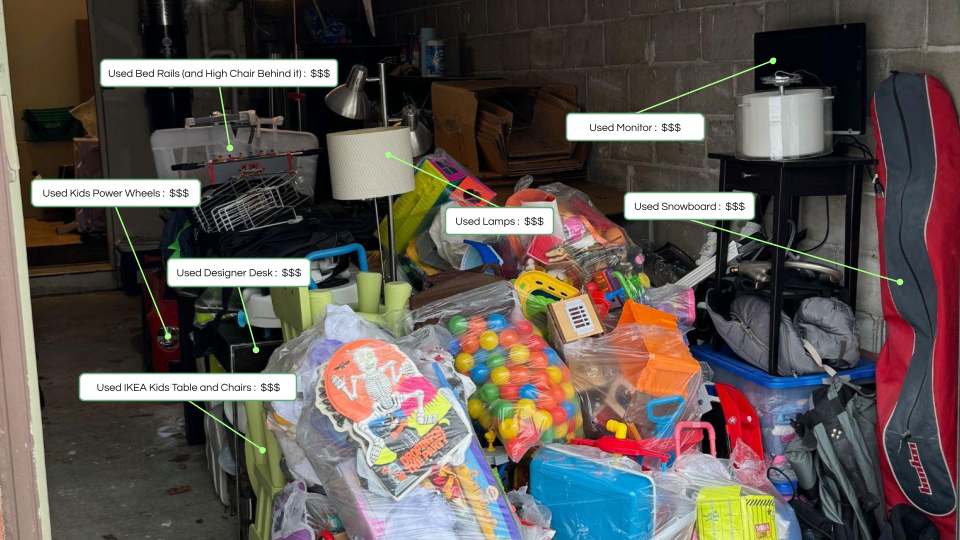
Potential value among items stored in a residential garage. Image: SELLIT9
Supporting the Circular Economy, Expanding Categories
Beyond affordability, the platform contributes to Canada’s circular economy. Items traded through SELLIT9 are routed to a network of refurbishers who restore and resell them. This reduces waste and supplies inventory to the growing second-hand market, which Canadians have increasingly embraced.
“The inspiration came from my own garage,” Guttman recalled. “I had items piling up, and most ended up in landfill because selling them was too difficult. It was bad for the environment and a missed financial opportunity. With SELLIT9 Trade, people can get instant value and give their items a second life.”
Although electronics remain the core focus, SELLIT9 is rapidly expanding into new product areas. One of the most promising is e-mobility, with scooters being added to the trade-in network.
“We’re working with a Canadian scooter brand to launch an upgrade and trade-in program,” Guttman revealed. “Scooters are expensive, and many people only use them part of the year in places like Toronto. Refurbishers are eager to resell them at lower prices, so this creates access for new buyers while reducing waste.”
Future categories under evaluation include appliances, small furniture, and potentially loyalty program tie-ins such as airline tickets.
Competing With Buy Now, Pay Later
While buy now, pay later (BNPL) services have become mainstream, rising debt levels across North America are causing concern. According to U.S. data, 41 per cent of BNPL customers paid late in 2025, up from 34 per cent the year before. Household debt is also climbing to record highs.
“Our goal isn’t to replace Affirm or Klarna,” said Guttman. “But when debt levels are already high, people need alternatives. We want to be as ubiquitous as BNPL, but with a sustainable model that helps people afford what they need without financial strain.”
In January 2025, SELLIT9 secured a $1.45 million CAD pre-seed funding round, led by Drive Capital and Northside Ventures. The investment has supported its expansion into new categories and retailers. The company is live with five stores, with another four confirmed and a fifth nearing launch.
SELLIT9 currently operates in Toronto, Montreal, Winnipeg, and London, with plans for broader Canadian rollout and eventual expansion into the U.S., South America, and overseas.
SELLIT9 was co-founded in 2024 by Josh Guttman, Chief Executive Officer, and Oswaldo Alvarez, Chief Technology Officer. Guttman leads the company’s retail and partnership strategy, while Alvarez directs the platform’s technology and integration with merchant systems. Together, they combine business insight and technical expertise to deliver a seamless solution for both retailers and consumers.
The founding team is small but ambitious, reflecting the scale of their mission. By aligning commerce, technology, and sustainability, Guttman and Alvarez have positioned SELLIT9 as one of the most promising startups in Canada’s re-commerce sector.
From Clutter to Currency
The startup’s tagline, “From Clutter to Currency,” captures its mission: to empower households to convert unused possessions into immediate financial relief. As Canadian consumers face reduced purchasing power—Bank of Canada data shows the dollar has lost 41 per cent of its buying power since 2000—the model offers an alternative to stretching household budgets.
“It’s about two things,” Guttman summarized. “First, supporting the circular economy by keeping items out of landfill. Second, making life more affordable for people at a time when every dollar matters.”
With 2,000 trades completed and nearly $100,000 flowing through the platform each month, SELLIT9 is still in its early stages. But Guttman and Alvarez are thinking big. “We want to be on every store, every loyalty program, every airline,” said Guttman. “This is a Canadian company with global ambitions.”
As national Hunger Action Month kicks off in September, Chick-fil-A, Inc. announced Wednesday it will reach a major milestone in addressing community hunger, donating the equivalent of more than 200 million meals across Canada and the U.S. to communities in need since 2020.
“This milestone reflects the collective efforts of local owner-operators, restaurant team members, Chick-fil-A, Inc. and community partners within the communities we serve,” said the company.
Chick-fil-A’s efforts to fight hunger include:
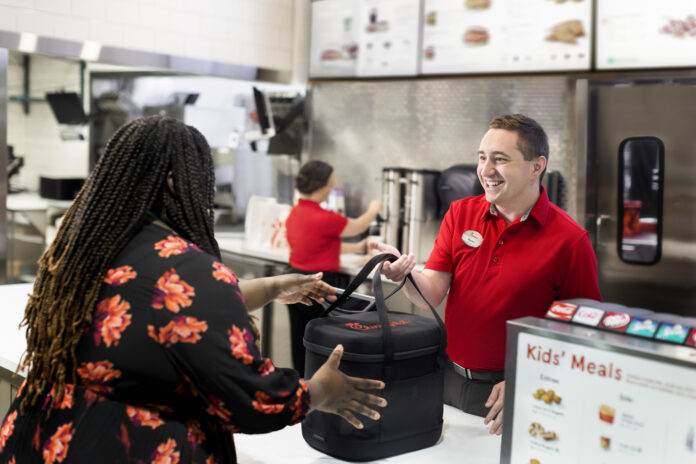
Over 192K meals have been created in Canada by Chick-fil-A Shared Table™, a program that allows local restaurants to donate surplus food to hunger-fighting non-profit organizations. All restaurants in Canada participate in Shared Table, donating leftover food and prepared items to local non-profits through Second Harvest who incorporate it into meals for the community.
Since 2020, the company has donated about C$2 million (US$1.46 million) to celebrate new restaurant openings in Canada.
Investing in the future: It is investing an additional C$300K in 2026 to support hunger relief efforts across Canada. This includes donations to Second Harvest for additional meals and awarding grants to help local non-profit organizations support hunger relief efforts.
Brent Fielder
“Every Chick-fil-A restaurant in Canada has stepped up to serve their communities through Chick-fil-A Shared Table, donating thousands of meals collectively,” said Brent Fielder, Vice President of Global Impact at Chick-fil-A, Inc. “As food insecurity continues to rise, Chick-fil-A Shared Table is a powerful reminder that when we come together with purpose, generosity multiplies, and lives are impacted.”
The Big Picture:
Hunger is on the rise with over 295 million people experiencing food insecurity – an increase of almost 14 million people compared to 2023.
8.7 million Canadians live in food-insecure households, according to the University of Toronto.
2.1 million children in Canada live in households where food is not always available or affordable, according to Second Harvest.
Lori Nikkel
“Access to wholesome, fresh food is a fundamental right for everyone, yet the reality of food insecurity is starkly visible. It impacts millions within our communities who, like all of us, simply desire the opportunity to flourish,” said Lori Nikkel, CEO of Second Harvest. “I deeply appreciate Chick-fil-A’s ongoing commitment to our shared goal of eliminating hunger in our communities.”
The brand said its commitment also includes diverting food from landfills, with more than 87K kilograms of food waste diverted in Canada since 2019.
For more information about the company’s global impact programs and sustainability initiatives: Chick-fil-A.com/global-impact.
Chick-fil-A, Inc. is the third largest quick-service restaurant company in the United States. More than 200,000 Team Members are employed by local Owner-Operators in more than 3,000 restaurants across Canada, the United States and Puerto Rico. It opened its first restaurant in the UK in early 2025 with the goal of launching five locations across the UK within the next two years. The first Singapore restaurant is set to open in late 2025, marking the brand’s entry into Asia. The family-owned and privately held company was founded in 1967 by S. Truett Cathy.
Queen’s Cross Food Hall at CF Toronto Eaton Centre (Image: Cadillac Fairview)
Despite economic uncertainty and cautious consumer sentiment, Canada’s commercial foodservice industry has posted strong growth in the first half of 2025, continuing a recovery trend that began in mid-2021. According to new data from Circana LLC, traffic across the sector rose 3.2% in the first half of the year, while consumer spending increased by 5.7%.
The performance underscores both the resilience of Canadian foodservice and the evolving dining habits of Canadians, who continue to prioritize local experiences and social outings even as household budgets remain stretched.
Quick-Service and Retail Foodservice Outperform
The strongest gains have come from quick-service restaurants (QSRs) and retail foodservice. QSRs posted a 4.3% increase in traffic during the most recent quarter, while retail foodservice matched that figure with its best growth in years.
Retail foodservice, which includes fully prepared meals and beverages purchased from grocery stores, convenience stores, and warehouse clubs for immediate consumption, has emerged as a particularly dynamic segment. As Vince Sgabellone, Foodservice Industry Analyst at Circana, explained, this reflects consumer preference for convenience and affordability.
Vince Sgabellone
“We like experiences, and we all eat,” he said in an interview. “Even if it’s a five-dollar coffee a day, that adds up quickly. People still want the experience, even if they’re saving money elsewhere.”
Full-service restaurants, by contrast, saw a 0.7% decline in traffic, as Canadians increasingly chose lower-cost formats that require less tipping and tax. The trade-down trend is being reinforced by rising meal prices and a growing appetite for value-driven promotions.
Independent Restaurants Outpace Large Chains
One of the most notable shifts in the market is the success of independent and small-chain operators. These restaurants are growing faster than their large-chain counterparts, benefitting from both consumer interest in supporting local businesses and Canada’s rapidly diversifying population.
“The shop local movement that started during the pandemic still has legs,” said Sgabellone. “People are discovering a whole world of small operators offering authentic food from cultural communities across the country. These independents and smaller chains are growing faster than the legacy brands.”
This momentum has been reinforced by immigration-driven population growth. Canada has added more than five million people since 2019, many of whom bring diverse culinary traditions. “People want the food they’re familiar with, and they won’t necessarily find it at a legacy chain,” Sgabellone noted. “That creates opportunities for local entrepreneurs.”
Value-Driven Promotions Keep Consumers Engaged
Deals are playing an increasingly important role in attracting diners. According to Circana’s CREST foodservice data, non-deal occasions have flattened, while deal-driven visits continue to grow.
“Consumers are stretched, but they’re still going out,” said Sgabellone. “The growth is coming from deal occasions, whether it’s a buy-one-get-one offer, a combo deal, or digital coupons.”
Digital adoption has accelerated this trend, with half of all coupons now delivered through mobile apps or online platforms. “Almost half of all digital orders include some sort of a deal,” Sgabellone added. “Operators are using apps to push promotions, reward loyalty, and drive frequency.”
Digital ordering continues to expand at double-digit rates, a trend that has persisted over the past three quarters. Delivery alone surged 13% in the last quarter, as consumers embraced convenience despite the added costs.
“What goes hand in hand with digital ordering is deals,” Sgabellone explained. “Operators are competing aggressively in this space, using apps to encourage larger orders or offering free delivery thresholds.”
For younger Canadians, delivery has become especially important. Many urban Gen Z consumers do not own cars, making drive-thru less accessible. “Staying home and ordering in may be more expensive than picking it up yourself,” Sgabellone observed, “but it’s still cheaper than going out to a full-service restaurant.”
Le Central – Photo: André Rainville (@villedepluie) via lecentral.ca
Lunch Leading the Way as Work Patterns Shift
Changing work patterns are reshaping demand across different dayparts. Lunch has become the fastest-growing segment of the day, supported by the gradual return to office work. With more Canadians commuting again, workplace-adjacent QSRs and cafés are benefitting from increased traffic.
Coffee and beverage occasions remain steady, but consumers are more price-conscious in their choices. “During the inflationary spike in 2022 and 2023, average spend only grew by two to three percent, not the eight to ten percent we saw with inflation,” said Sgabellone. “People adjusted by trading down, skipping extras, or choosing lower-cost formats. They preserved the experience, but made small sacrifices.”
Dining as an Experience
Beyond price sensitivity, dining out remains driven by the social and experiential value of foodservice. Circana’s consumer sentiment research finds that Canadians continue to prioritize restaurants as spaces to socialize, try new flavours, and enjoy time away from home.
“It’s not necessarily about hunger,” said Sgabellone. “It’s about getting out, trying something new, or just sitting in a coffee shop watching the world go by. That social and experiential factor is what keeps people coming back.”
Younger consumers are especially willing to splurge on experiences. “Gen Zers living at home may have fewer financial responsibilities but are earning incomes,” he added. “They’ll spend $200 on a special meal out, not every day, but for the experience.”
Food as a Retail Anchor
The expansion of foodservice is visible across Canada’s retail landscape, where restaurants and food halls are increasingly serving as anchors for shopping centres. Malls such as Toronto’s CF Fairview have repositioned around large food precincts, while concepts like Eataly demonstrate the power of food to draw repeat visits and animate retail environments.
“There are fewer restaurants in Canada today than there were in 2019, even with five million more people,” Sgabellone noted. “That means demand is being absorbed by those who are operating, and new entrants see opportunity. For international chains, the Canadian market looks attractive because of available retail real estate and continued population growth.”
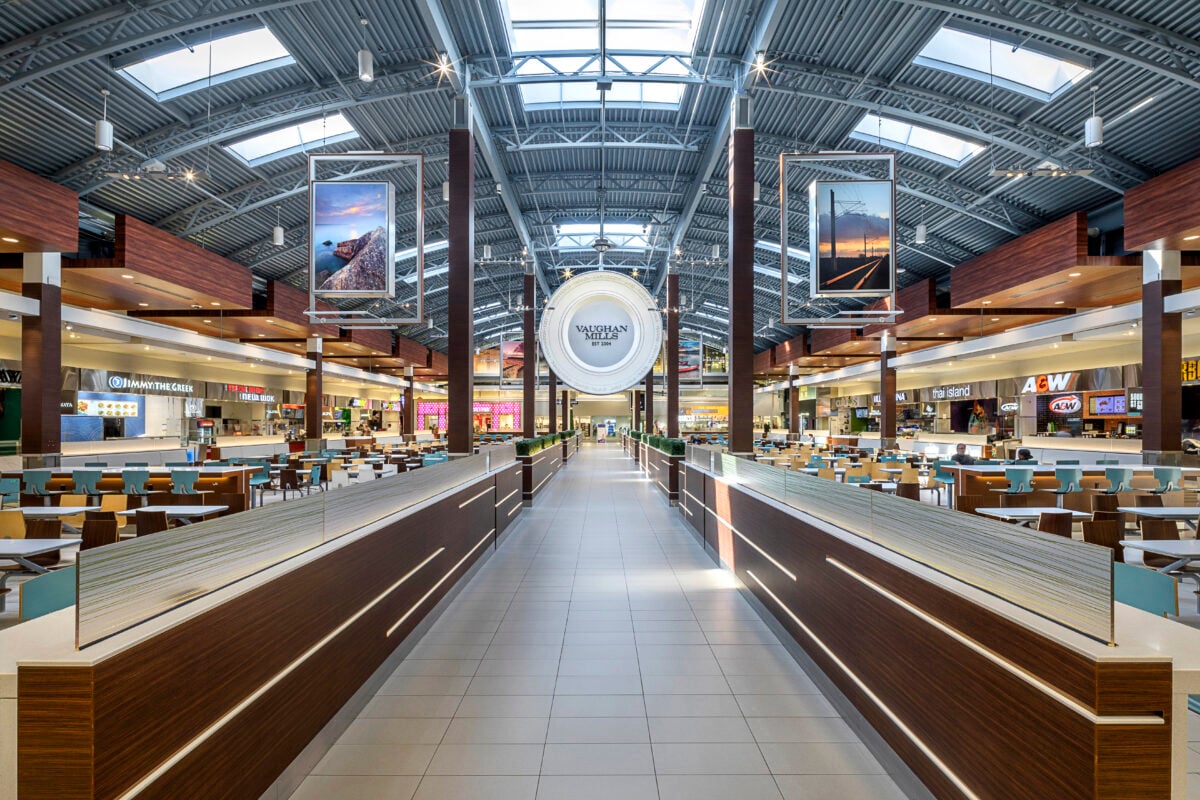
Top performing food court in Canada. Photo provided by Vaughan Mills.
Domestic Travel Fuelling Local Experiences
Reduced international travel is also shaping consumer spending. Many Canadians have scaled back or cancelled expensive vacations abroad, choosing instead to reallocate discretionary dollars to local activities.
“Money that had been put aside for vacations is now available,” Sgabellone explained. “People are spending locally, whether that’s restaurants, movies, or weekend trips. It’s very much a Canadian version of the ‘lipstick effect.’ You can’t afford Disney, but you can afford a new lipstick or a $7 latte.”
This reallocation of spending has benefitted QSRs, retail foodservice, and independent restaurants alike, reinforcing the industry’s resilience.
Outlook for the Next 18 Months
Looking ahead, Circana expects growth in Canada’s commercial foodservice industry to moderate in the near term. Broader economic forecasts point to slowing population growth, weaker housing starts, and a flattening economy.
“We are predicting the growth curve is going to flatten,” said Sgabellone. “We’re not forecasting declines, but we expect very low single-digit growth, likely in the one to two percent range over the next six to eighteen months.”
While the boom period of rapid recovery appears to be over, the industry remains on stronger footing than many other consumer categories. “Foodservice has that experiential component, and that keeps us slightly ahead,” Sgabellone added.
A Sector Positioned for Resilience
The first half of 2025 has reaffirmed that Canada’s commercial foodservice industry remains adaptable, innovative, and deeply tied to Canadian lifestyles. The sector’s ability to embrace digital tools, deliver value-driven promotions, and reflect Canada’s cultural diversity has fuelled growth in the face of inflation and cautious consumer sentiment.
For independents, immigrants, and entrepreneurs, opportunities continue to emerge, while international chains eye Canada as an expanding market with real estate availability and growing demand.
As Sgabellone summarized, “Canadians still want the experience. Whether it’s a five-dollar coffee, a local shawarma shop, or a digital deal from a QSR, foodservice continues to deliver what people are looking for — a sense of connection, indulgence, and everyday enjoyment.”