Advertisement
Advertisement
Home Blog Page 358

The Shortcomings of AI in Customer Service

Ernst Lubitsch’s The Shop Around the Corner was released in 1940, starring Margaret Sullavan and Jimmy Stewart. Decades later, in 1998, filmmaker Nora Ephron adapted the film into the Tom Hanks and Meg Ryan-starring vehicle You’ve Got Mail. But where the latter film honed in on the romantic tale at the center of the story, eschewing the location, time period, and themes of the earlier film, the original is as much about the customer service and retail industries as it is about the blossoming romance of the characters within it.

Perhaps no film more succinctly epitomizes the melancholy, joyous triumph, and profound hardships of working in customer service during the holiday season than The Shop Around the Corner. Throughout the film’s runtime, viewers can view the interworking of the relationships between these characters who all work together within the same titular ‘shop,’ and how they interact with one another and with the customers in the store. It all builds up to Christmas Eve, their busiest day of the year, where the team of workers bands together and makes it through the onslaught of sales, forging stronger relationships amongst themselves and their ardent shoppers in the process.

What The Shop Around the Corner so brilliantly foregrounds that so many films made about customer service roles since then have missed is the way in which the shared human experience is such a fundamental aspect of the industry. The way in which a worker’s relationship with their fellow workers and the customers they serve may begin within the strict confines of a capitalist system, but how through empathy, care, and genuine human emotion, it can evolve into something much more meaningful. This human element is at stake when it comes to implementing AI in customer service roles. As AI is more actively courted in interpersonal scenarios, such as an AI girlfriend or retail positions, the beauty of human connection may well be irreparably damaged.

The Essential Nature of Customer Service

Customer service roles are not exactly positions that many people aspire to, yet they are essential. This was proven, quite literally, during the COVID lockdowns, in which only ‘essential workers’ were allowed to leave their homes and continue working. These essential positions were almost entirely comprised of customer service roles, as sanitation and restaurant workers were allowed to continue working to better serve their local communities.

But beyond the essentialness of such positions to the community surrounding them, these positions are also essential to workers themselves. While working in these roles may not seem aspirational, they can be well-paying roles that allow people to make a living through the effort and grit of their day-to-day work. These roles serve as gateway positions for countless individuals in the workforce and have done so for decades. The number of people whose first job was working as a waitress or as a retail clerk is astounding, and it’s easy to see why. Though these positions are full of hardships and often underappreciated, they instill a rigorous work ethic and a core set of institutional values into the individual in a palpable fashion.

AI Encroaching Upon Invaluable Human Positions

To this degree, customer service positions benefit everyone. The worker gets a job, a paycheck, and a crash course in a professional field. The company gets a worker and the community surrounding the worker receives the service they desire, so it’s a win-win-win. Yet, despite this, as AI has grown increasingly common in professional fields, the customer service industry has been increasingly disrupted by this new technology. As businesses and companies realize that AI is capable of performing more work in a shorter period of time for a smaller amount of money, they have begun phasing out lower-class workers in favor of utilizing AI.

Initially, the workers themselves met the spread of AI in the customer service industry with open arms. Just as AI took over remedial, mundane, and repetitive tasks in the business sphere, so too did it do so within the customer service industry, bringing joy to the workers who were freed of the burden of performing these tasks themselves. When the first AI system was implemented into the drive-thrus of Checkers nationwide, few workers voiced any concerns or disdain for the move because working the drive-thru was a largely thankless task that workers weren’t exactly passionate about. However, if the AI system is running the drive-thru, there’s less human work necessary, meaning that one worker may be eliminated from the schedule.

The Checkers example illustrates the shift in a microcosm: what began as a change that incited relief in the human workers on-staff in customer service positions has gradually evolved into something that breeds far more resentment and fear than it does joy among the workers.

Theory vs. Execution

What AI has proven remarkably talented at in business during its implementation is the consumption and analysis of data. AI is more adept at filling out paperwork than any human worker, able to do so in record times at mass qualities, all while adhering vehemently to the template provided. What AI has proven not nearly as skillful at is anything involving human interactions. While services such as AI Girlfriend have proven highly advanced and capable of substantially benefitting many grappling with isolation or loneliness, the technology is not yet advanced enough to fully replace interhuman interactions.

To this extent, for businesses to assume that these customer service positions (even something as simple as taking a customer’s order or working the drive-thru) are equivalent to filling out paperwork in a sterile setting is folly. Customer service positions are built upon the back of human interaction and connectivity, no matter how rigidly a given company may attempt to sterilize and streamline the experience. Customers will have questions and modifications and even require guidance to some extent, and it is in these moments that human workers can step up to the plate and deliver in abundance. In such moments, workers can forge a genuine human connection with customers, and, in turn, repeat customers occur. Emotional connections bring people back to an establishment time and again, and those connections are fostered exclusively through interhuman interactions, something overactive AI implementation will come at the cost of.

The Shop Around the Corner is over eighty years old. Yet Lubisch’s film has stood the test of time, remaining a vitally prescient and deeply moving work that embodies the emotional rollercoaster of customer service in 2024 just as it did in 1940. But with further AI advancements looming, this realm of industry looks to change fundamentally. As the human element of the customer service interaction is removed, something essential may very well be taken away with it.

Montreal Jeweller Ecksand Expands to Toronto’s Yorkville

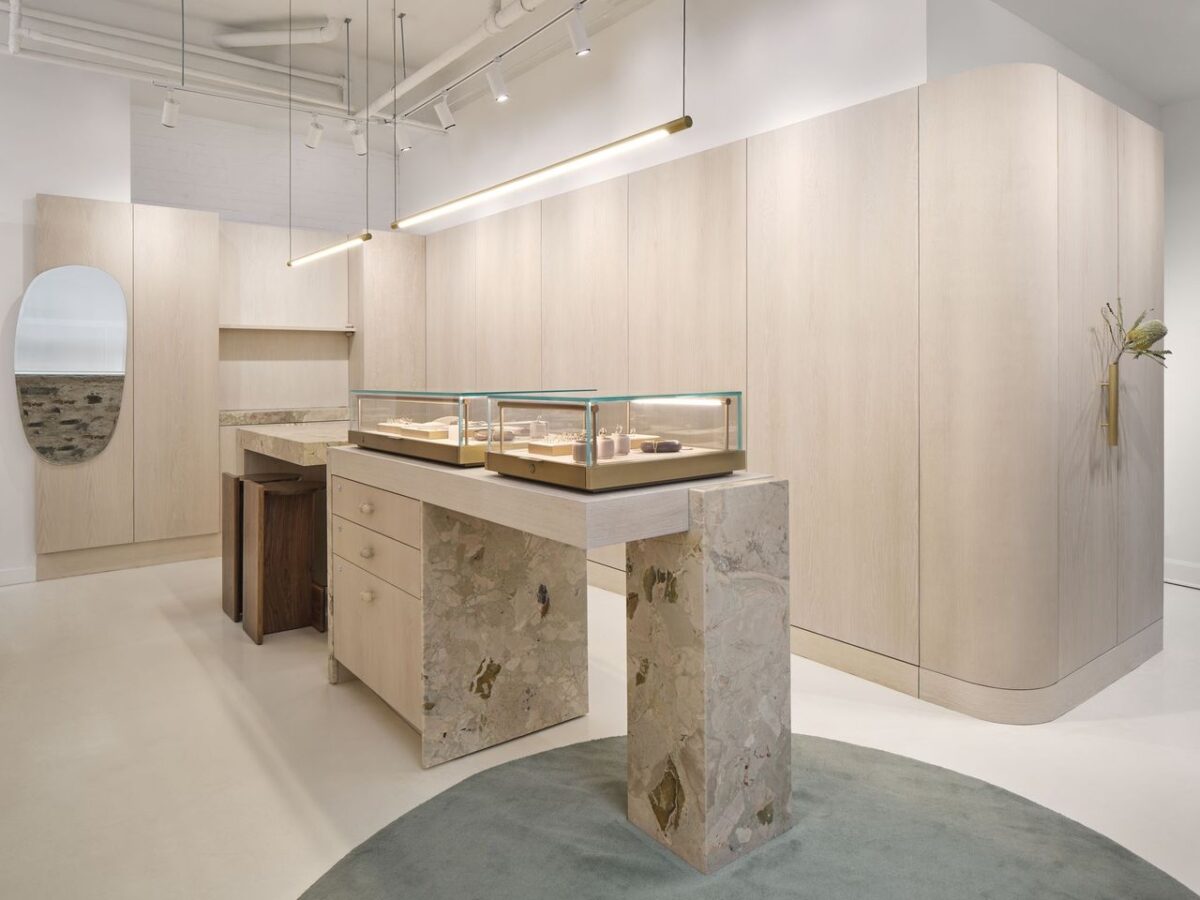
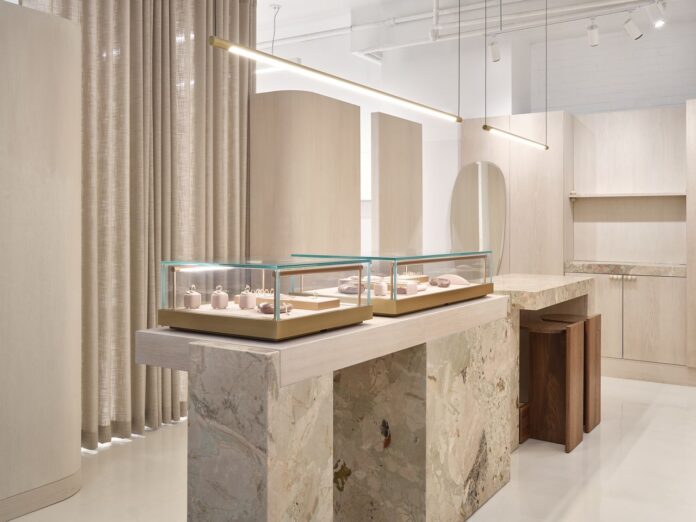
Montreal-based sustainable jeweller Ecksand has expanded into Toronto, opening its second retail location at 162 Cumberland Street in the city’s prestigious Yorkville neighbourhood. The boutique, which is just under 1,000 square feet, offers an intimate shopping experience designed to reflect the brand’s ethos of “quiet luxury.”

Ecksand, co-founded by Erica Bianchini, has made a name for itself in sustainable fine jewellery, emphasizing ethically sourced materials, high-quality craftsmanship, and minimalist design. The new Toronto boutique follows the success of its flagship in Montreal, marking a strategic move for the brand as it continues to grow its presence in Canada and beyond.

A Boutique Designed for Intimacy and Craftsmanship

Unlike many upscale jewellery stores that prioritize large retail spaces, Ecksand’s new Yorkville boutique embraces a smaller, more personal setting. According to Bianchini, this was an intentional choice that aligns with the brand’s values.

Erica Bianchini, Co-founder and Creative Director of Ecksand

“We wanted to embrace the fact that you don’t have to have big, grandiose things in life for them to be impactful,” Bianchini explained. “Even the small things make a world of difference. We didn’t want a massive space because a massive space means massive markups—and people don’t realize that. When you walk into a store with several security guards, who’s paying for it?”

The boutique’s layout is meticulously curated, with each section dedicated to a specific collection. “Every single inch of the space is customized so that we can bring forward how it feels with the packaging,” Bianchini said. The design reflects Ecksand’s philosophy of “less is more,” an approach that aligns with the growing consumer interest in understated, high-quality luxury.

The Process of Building the Toronto Boutique

Bringing the new Yorkville store to life was a carefully managed project that required a team effort. The brand partnered with PragerNuform, a firm specializing in retail fixtures, to ensure that every design element met Ecksand’s exacting standards.

“They worked with us on the accents. We didn’t want anything to be overly bright or in your face,” Bianchini said. “Ultimately, our clients are the statement. That’s what we’ve always been working for—we want to serve, and we want people to feel like their jewels are a representation of them.”

The CBRE Urban Retail Team, under the guidance of Arlin Markowitz and Jackson Turner, negotiated the lease deal.

First Montreal Storefront

In December 2018, Ecksand inaugurated its flagship boutique at 632 Rue Cathcart in Montreal’s historic jewellery district. The 1,700-square-foot space was meticulously renovated to showcase Ecksand’s collections, including diamond and precious gemstone engagement rings, wedding bands, and other fine jewellery. The expansion aimed to provide clients with an immersive brand experience in a centrally located, accessible setting. 

The opening of the Montreal boutique marked a significant milestone for Ecksand, transitioning from a predominantly online presence to establishing a physical retail space. This move allowed the brand to offer personalized consultations and a tangible experience of their handcrafted pieces, all designed and produced in-house at its Montreal atelier. 

Commitment to Ethical Jewellery Making

Ecksand distinguishes itself in the fine jewellery industry by ensuring complete control over its production process. Unlike many jewellery retailers that carry multiple brands, Ecksand exclusively sells pieces designed and crafted in-house.

“We don’t retail any other brand,” Bianchini said. “Everything we sell, we handcraft ourselves—engagement rings, wedding bands, fine jewellery—all using 100% recycled gold.”

The brand also offers a lifetime warranty on its jewellery, a testament to the quality and durability of its craftsmanship. “Being able to say that this piece will last you a lifetime, and if it doesn’t, come back to us—that’s a huge statement of confidence,” she said. “It’s why we can’t subcontract. We have to do it all in-house.”

Celebrity Endorsements and the Power of Quiet Luxury

Ecksand has gained traction among high-profile clientele, with celebrities such as Meghan Markle and Oprah Winfrey seen wearing the brand’s pieces.

The brand’s appeal lies in its approach to quiet luxury, a trend that is gaining momentum in the fashion and jewellery industries. “People are starting to notice that you don’t have to be overly flashy to make your mark,” said Bianchini. “It’s about quality materials, longevity, and timeless craftsmanship.”

She referenced Italian luxury brand Loro Piana, which remained relatively under-the-radar for years before experiencing a surge in popularity. “For so many years, nobody was talking about Loro Piana, and now suddenly everyone appreciates that quiet, understated elegance,” she noted.

Campaign image for Ecksand’s Arctic Dragon collection. Image: Ecksand

Launching the Arctic Dragon Collection in Toronto

One of the highlights of the new store is the launch of Ecksand’s Arctic Dragon Collection, the brand’s first unisex jewellery line. The collection debuted at New York Fashion Week and has since received widespread acclaim.

“We had some really incredible, iconic people tell us, ‘I’ve never liked jewellery, but this is the first time I actually wanted a piece,’” said Bianchini. “The Arctic Dragon Collection is about bringing together the mystical element of dragons with the real-world beauty of the Arctic—a place that needs protection.”

The collection features bold, edgy designs that maintain the brand’s commitment to sustainability. Every piece is handcrafted with 100% recycled gold and follows environmentally conscious production practices. Bianchini emphasized that sustainability is at the core of Ecksand’s identity.

“Our atelier in Montreal is optimized to avoid residue in the water system, no chemicals, and maximum recycling,” she said. “Even the gold dust is repurposed. That allows us to maintain fair pricing and fair practices, making sure everything goes back into the system.”

Screen shot from Ecksand’s website, showing the Arctic Dragon collection.

What’s Next for Ecksand?

Following the Toronto expansion, Ecksand has its sights set on New York City. “The next stop after Yorkville is New York,” said Bianchini. While a location has yet to be confirmed, the brand is eyeing SoHo as a potential option.

Bianchini also hinted at potential expansion beyond New York City. “Miami is on our horizon as well,” she revealed, noting the growing demand for ethical luxury brands in key U.S. markets.

More from Retail Insider:

Trail Appliances celebrates 50 years of growth and innovation

Source: Trail Appliances

Trail Appliances, a family-owned business, is celebrating its 50th anniversary this year. Since its founding in 1974, the company has expanded across Western Canada while maintaining a strong focus on customer experience and service.

Jason Broderick
Jason Broderick

Jason Broderick, CEO of Trail Appliances, reflects on the company’s journey: “We go back to 1974, when my grandpa and six sons within the family, my dad and five uncles, started the business in Calgary. Very humble roots, actually starting as an appliance rental company. A few years in, they decided to start selling appliances and found success quickly by providing genuine customer service.

“A 50th anniversary is a significant milestone for any business, but even more so for a family-owned business like ours that has been passed down three generations. My grandfather believed in providing customers with exceptional service and product expertise.”

The company opened its first B.C. showroom in Richmond in 1980 when his father and uncle moved to British Columbia. The first showroom was about 3,000 square feet. Other members of the family stayed in Calgary as the business grew in both provinces.

James Reynolds
James Reynolds

“Many retailers have shifted to a low-cost model at the expense of physical stores, customer satisfaction and employee retention,” says James Reynolds, President of Trail Appliances. “We believe though that long-term business success means giving customers the most value and we do that by investing in our showrooms, employees and technology to make buying a new appliance as easy and enjoyable as possible.”

Richard Broderick
Richard Broderick

“Trail’s showrooms are a key part of what sets us apart from the competition,” says Richard Broderick, Vice President of Trail Appliances. “In addition to featuring thousands of appliances on display, Trail’s showrooms give customers the opportunity to touch, test and experience appliances before buying.”

The company has invested in new experiential elements like education centres, digital displays and 125 award-winning display kitchens that allow customers to get inspired and imagine how different appliances will look in their home. The experience continues through to the delivery process, as the company still handles delivery and customer service in house, while other retailers have outsourced it.

Today, the company has 12 showrooms, including three outlet centres in B.C., and seven showrooms in Alberta. While the company operates with two head offices—one in Richmond, B.C., and another in Calgary—Broderick emphasizes that the family sees Trail Appliances as a unified brand. “We do think of ourselves as being just one Trail, all the family in the same business,” he says.

When asked about the key to longevity in a competitive retail industry, Broderick highlights agility and a relentless focus on customer needs. “We’ve managed to be successful by staying agile. Each day we come in trying to be better than the day before. So it’s a little bit of an insatiable desire to just continue to improve and add value for our staff and for our customers.

“As a retailer, our focus has always been on the customer. The thing that has allowed us to be successful for 50 years is by having a central focus on what are the customer’s needs and what can we do to not only meet those needs but add value and exceed those needs in as many ways as we possibly can. The last 50 years there’s been a great deal of evolution because customer needs have changed in that time. With customer needs and expectations shifting, it means that as a family and as a business we’ve had to evolve and adapt with those customer needs.”

Trail Appliances has faced challenges from big-box competitors but has remained committed to providing an elevated level of service, which Broderick says is second to none. The showrooms are designed to create a ‘wow’ moment for customers. Whether it’s beautiful kitchen displays or live appliances they can test, Trail wants them to experience something unique – something they haven’t seen anywhere else.

Looking ahead, Broderick says the family is entrepreneurial, always looking for opportunities. The company is investing in technology to enhance both in-store and online experiences. “Rather than adding store count in the immediate future, we’re very focused on implementing a new technology stack that will guide us into the number of years and generations ahead,” says Broderick, adding the retailer wants to make the shopping experience seamless. There’s also investment back into the showrooms.

Trail Leadership2 (l-r Richard Broderick, James Reynolds, Jason Broderick)
Trail Leadership (l-r Richard Broderick, James Reynolds, Jason Broderick)

Broderick says the kitchen has become the heart of the home with people spending more and more time there, where memories are made.

“It’s where life really takes place and takes shape,” he says. “As the heart of the home has grown and flourished, so too have our showrooms.”

The family-owned company’s longstanding focus on investing in customer service, product expertise, the physical retail environment, and technology has seen its sales volume triple over the past decade. The e-commerce offering has been elevated to reflect the showroom experience. The brand selection has evolved over time as well to meet customer needs and expectations.

As an investment into both its employees and customer service, Trail has developed the Trail Learning Experience. Through this industry-leading education program, more than 50 new Product Specialists per year participate in an intensive seven-week classroom and three-month in-store training program led by an in-house training team, says the company.

Another key to Trail’s success has been the expansive growth in the company’s B2B Division and the dedicated sales teams that serve real estate developers, builders, and interior designers. The specialized approach has allowed Trail to become the leader in B2B appliance sales in B.C., providing appliances for more than 500 real estate projects last year. Trail has been the appliance supplier for some of B.C.’s most iconic developments, including Vancouver House, The Butterfly and River District.

As a family-owned business, Trail cares deeply about the communities it operates in. In the past ten years, the company has donated more than $1 million to charities like the CKNW Kids Fund, BC Cancer Foundation and Ronald McDonald House. The company also donates appliances to victims of natural disasters like floods and wildfires whose homes have been damaged. To celebrate their 50th anniversary, Trail aims to raise $50,000 for Food Banks BC and will be matching all donations up to $25,000.

Related Retail Insider stories:

Ballroom Bowl Opens at Yonge-Dundas Square in Toronto

Ballroom Bowl, Yonge and Dundas (10 Dundas St. E.) in Toronto. Photo: Ballroom Bowl

Toronto’s entertainment and dining scene has a  new addition with the grand opening of Ballroom Bowl’s third location at The Tenor, at 10 Dundas Street East. Overlooking Yonge-Dundas Square, the venue offers an immersive entertainment experience, combining bowling, dining, and social activities in one of the city’s most vibrant areas.

Ballroom Bowl founder Paul Donato shared insights into the decision to expand to Yonge-Dundas Square, describing it as a natural evolution for the brand.

“As we looked to grow our presence in Toronto, the opportunity to open at The Tenor was an exciting venture to explore,” said Donato. “We saw a need for a central entertainment destination downtown, and The Tenor, situated at Yonge and Dundas, offers a space that hosts a wide range of events and community gatherings.”

With its high foot traffic and status as a bustling hub for tourists and locals alike, Yonge-Dundas Square provides a strategic location for Ballroom Bowl to reach a diverse audience. “Introducing The Ballroom Bowl in this area is an ideal match given the area’s popularity with both locals and visitors, making it a beloved hub for people coming to the city,” he added.

Paul Donato at Ballroom Bowl Yorkville (Image: Adrian Ozimek)
Ballroom Bowl, Yonge and Dundas (10 Dundas St. E.) in Toronto. Photo: Ballroom Bowl

A Unique Atmosphere with a Signature View

While Ballroom Bowl’s other locations at John Street and Yorkville have their distinct charm, the new venue stands out for its energy and dynamic atmosphere.

“Our new location at Yonge and Dundas stands out from our other Toronto venues with its energy and atmosphere reflecting the spirit of its surrounding neighbourhood,” Donato explained. “What sets this venue apart is its vantage point and panoramic views overlooking one of the most famed intersections in Toronto. Guests can dine, drink, and bowl while experiencing the glow and buzz of the bustling city below.”

The venue aims to strike a balance between the nostalgia of its John Street flagship and the refined experience of the Yorkville location, ensuring a blend of sophistication and fun.

The Tenor at 10 Dundas St. E. in Toronto Photo: Dustin Fuhs

Introducing Duckpin Bowling to Downtown Toronto

One of the standout features of this new Ballroom Bowl location is the introduction of duckpin bowling, a variation of the traditional game that brings a fresh and exciting challenge to Toronto’s entertainment landscape.

“Bowling is best enjoyed as a group, and our new location offers 15 duckpin bowling lanes that provide a fun yet challenging experience that’s perfect for all ages,” said Donato. “With its lighter balls, smaller pins, and shorter lanes, the aim isn’t to make the game easier but to introduce a fresh, exciting challenge that adds variety to the traditional bowling experience, and the response has been overwhelmingly positive.”

Ballroom Bowl, Yonge and Dundas (10 Dundas St. E.) in Toronto. Photo: Ballroom Bowl

Beyond Bowling: A Full Entertainment Experience

Ballroom Bowl has always positioned itself as more than just a bowling alley, and the Yonge-Dundas location is no exception. In addition to bowling, guests can enjoy a range of social games, dining options, and entertainment features.

“Beyond bowling, guests can enjoy our robust food and drink menu, a spacious bar, a pool table, shuffleboard, and more traditional social games providing plenty of entertainment for everyone,” Donato explained. “As they play, guests can relax on comfy couch seating or enjoy a meal at high-top tables, conveniently placed next to the lanes for the perfect balance of accessibility and comfort.”

Elevated Comfort Food and Signature Drinks

Dining is a major part of the Ballroom Bowl experience, with a menu that goes beyond typical bowling alley fare.

“We’re not just a typical bowling alley. We aim to be a destination for great food and drinks,” Donato emphasized. “Some of our standout dishes include Miso Honey Garlic Wings and Steak Frites, which put a contemporary spin on classic pub fare. House-made pizza is also one of The Ballroom Bowl’s most popular menu items, with each pie made from scratch using freshly prepared dough that undergoes a 72-hour fermentation process.”

Complementing the food menu is a well-curated beverage program featuring 16 draft beers, a selection of wines, and craft cocktails.

“Our standout cocktail, or signature cocktail, if you will, is aptly named ‘Spare the Details,’ a blend of vodka, lemon, lavender, and prosecco,” said Donato. “For those seeking non-alcoholic options, we also offer a selection of mocktails.”

Ballroom Bowl, Yonge and Dundas (10 Dundas St. E.) in Toronto. Photo: Ballroom Bowl

Building Community and Future Plans

With the opening of its Yonge-Dundas location, Ballroom Bowl aims to integrate itself into the fabric of the local community, offering a venue for gatherings, events, and celebrations.

“We want to contribute to the Yonge and Dundas community by offering a space where people can enjoy great entertainment, connect with others, and celebrate special occasions, whether it’s a birthday party or work event,” Donato said. “We believe in the power of shared experiences, and our goal is to become a local destination that complements the area’s culture while providing an inclusive, fun experience for everyone.”

Programming and special events will also play a key role in Ballroom Bowl’s engagement with its audience.

“We’re committed to bringing people together, so there will be no shortage of programming, events, and offers at the Yonge and Dundas location,” Donato said. “Similar to our other venues, we’ll have weekly events such as Brunch n Bowl and Thursday Night Strikes.”

Ballroom Bowl, Yonge and Dundas (10 Dundas St. E.) in Toronto. Photo: Ballroom Bowl

While the Toronto market remains a primary focus, Donato acknowledges the potential for further expansion.

“It has always been my vision to grow and expand the brand, and we’re incredibly proud of what we’ve built in Toronto,” he said. “While our future expansion plans may be influenced by the current economic climate, the original Ballroom Bowl was established during the subprime meltdown of 2009-2010. Similarly, both The Ballroom Bowl Yorkville and The Ballroom Bowl Yonge & Dundas were developed during the COVID pandemic—proof that we can adapt and thrive in challenging times.”

As for the evolution of the entertainment and dining landscape in Toronto, Donato believes that the demand for unique social experiences will continue to grow.

“We’re seeing an increasing demand for entertainment hubs in Toronto, where people can have fun without pressure and expectations,” he noted. “At The Ballroom Bowl, we’re dedicated to staying ahead of the curve. We continually adapt to trends, ensuring our venues remain a top choice for delicious food and entertainment.”

Alex Edmison of the CBRE Urban Retail Team negotiated the lease deal on behalf of Ballroom Bowl. BentallGreenOak operates The Tenor complex at 10 Dundas East.

Built by BUILD IT, the trusted construction partner behind Ballroom Bowl’s Yorkville location, the transformation of a third-floor restaurant and food court space at The Tenor showcases the team’s ability to execute complex projects in one of Toronto’s busiest commercial districts. Navigating the challenges of high foot traffic and a bustling urban environment, BUILD IT demolished and reconfigured the space to accommodate 15 lanes of duckpin bowling, dining, and entertainment. The team fabricated and installed high-end millwork, ensuring precise finishes, fixtures, and installed advanced mechanical systems, all while reinforcing a commitment to quality, innovation, and safety in every detail.

Ballroom Bowl, Yonge and Dundas (10 Dundas St. E.) in Toronto. Photo: Ballroom Bowl

Innovation in Social Entertainment

Since its inception in 2010, The Ballroom Bowl has redefined what a bowling venue can be, starting with its flagship location at John Street, which spans 23,500 square feet over two floors and includes nine ten-pin bowling lanes, multiple bars, and a variety of games. In 2024, the Yorkville venue followed, offering an upscale take on the traditional bowling experience with VIP lanes and a refined atmosphere. The newest location at Yonge-Dundas Square builds upon this legacy, further cementing Ballroom Bowl as a leader in Toronto’s entertainment landscape, blending entertainment, elevated dining, and community engagement into a single experience.

“Our focus has always remained on creating a space where the food is as memorable as the fun,” Donato said. “While we want to keep bowling as the traditional and beloved activity people look forward to, we look to transform an ordinary bowling outing into an experience people will talk about for days.”

The Tenor, 10 Dundas St. E. in Toronto. Image: BentallGreenOak

The Tenor at 10 Dundas Street East: A Premier Entertainment Hub

The Tenor, located at 10 Dundas Street East in Toronto, is a dynamic 10-storey, 360,000-square-foot entertainment, retail, and office complex situated at the bustling intersection of Yonge and Dundas. Managed by BentallGreenOak, the building underwent a rebranding in December 2021 to adopt its current name, “The Tenor,” a nod to its address and number of floors.

The complex offers approximately 268,392 square feet of retail space, housing prominent tenants such as Winners, Dollarama, and a Cineplex Cinemas with 24 screens. Notably, several of these theaters double as lecture halls for Toronto Metropolitan University during daytime hours. The Tenor also features a diverse array of dining options.

In the summer of 2024, The Tenor expanded its entertainment and dining offerings with the addition of Shake Shack, marking the brand’s first Canadian location. A Hard Rock Cafe will open on the upper floors of the complex in a few months.

More from Retail Insider:

Retail sales increase to close to $70 billion in December: Statistics Canada

Photo by Antoni Shkraba

Retail sales increased 2.5% to $69.6 billion in December. Sales were up in all nine subsectors and were led by increases at food and beverage retailers and motor vehicle and parts dealers, according to a report release Friday by Statistics Canada.

Core retail sales—which exclude gasoline stations and fuel vendors and motor vehicle and parts dealers—were up 2.5% in December, said the federal agency, adding that in volume terms, retail sales increased 2.5% in December.

“Retail sales were up 2.4% in the fourth quarter of 2024, marking a second consecutive quarterly increase. In volume terms, retail sales increased 1.8% in the fourth quarter,” said the report.

“In 2024, retail sales increased 1.3%, led by gains at motor vehicle and parts dealers. In volume terms, sales were up 0.7% in 2024.”

Following a decrease of 1.0% in November, core retail sales increased 2.5% in December on higher sales at food and beverage retailers (+3.5%). The increase in this subsector was led by gains at supermarkets and other grocery retailers (except convenience retailers), which were up 3.9% in December following a decline of 2.0% in November. Higher receipts at beer, wine and liquor retailers (+3.9%) and specialty food retailers (+2.4%) in December also contributed to the increase at food and beverage retailers, said StatsCan.

Higher sales were also recorded at general merchandise retailers (+3.2%) and clothing, clothing accessories, shoes, jewelry, luggage and leather goods retailers (+3.1%) in December, it said.

Photo by Antoni Shkraba

The federal agency said sales at motor vehicle and parts dealers (+1.9%) were up in December on the strength of higher sales at new car dealers (+2.0%), which posted their third consecutive monthly increase. Sales gains were also recorded at automotive parts, accessories and tire retailers (+4.7%) and used car dealers (+3.2%).

“Sales at gasoline stations and fuel vendors (+4.2%) increased in December for a second consecutive month. In volume terms, sales at gasoline stations and fuel vendors increased 0.7%,” it said.

“On a seasonally adjusted basis, retail e-commerce sales increased 3.1% to $4.3 billion in December, accounting for 6.1% of total retail trade.

Retail sales in 2024

The report said Canadian retailers finished 2024 with $803.1 billion in sales, up 1.3% from 2023, and increases were observed in five of the nine subsectors. Leading the gain in retail sales in 2024 were higher sales at motor vehicle and parts dealers (+2.9%), which were driven by gains at new car dealers (+3.7%). The largest decrease in retail sales in 2024 was observed at gasoline stations and fuel vendors (-2.5%), largely the result of lower gasoline prices in 2024 compared with 2023.

“Core retail sales increased 1.3% in 2024, led by higher sales at general merchandise retailers (+3.9%) and health and personal care retailers (+4.6%). Sales were also up at food and beverage retailers (+0.9%) on higher sales at supermarkets and other grocery retailers (except convenience retailers) (+2.0%), which saw gains in seven months in 2024,” noted the federal agency.

Statistics Canada said an advance estimate of retail sales suggests that sales decreased 0.4% in January 2025.

Related Retail Insider stories:

GoodLeaf Farms expands as Canada’s largest vertical farming company

Source: GoodLeaf Farms

GoodLeaf Farms, Canada’s leading vertical farming company, continues to grow, strengthening its position as a sustainable leader in the country’s leafy greens industry.

Andy O’Brien, President and CEO of GoodLeaf Farms, joined the company in July after an extensive research period. “I started discussions with GoodLeaf about a year ago and officially joined the company in July. Before that, I spent about six months researching the industry and the company. I reviewed employee files, strategy plans, business models, and competitive reviews. The previous CEO was stepping down for health reasons, so I was connected with him and spent three months working through the transition before officially joining. So while I’ve been here since July, in reality, it feels more like 10 months,” said O’Brien.

Founded in 2019, GoodLeaf Farms operates three large-scale vertical farms across Canada. “We are a Canadian-owned vertical farming company. We have three farms—our first was established in Guelph in 2019 and spans about 50,000 square feet. In 2023-2024, we expanded with two new farms in Calgary and Montreal, each about 115,000 square feet. That brings our total grow space to 280,000 square feet, making us the largest vertical farming company in Canada and, from what I understand, the largest in North America,” O’Brien explained.

Andy O'Brien
Andy O’Brien

GoodLeaf specializes in growing leafy greens, including baby greens like lettuce, romaine, and spinach, as well as nutrient-dense microgreens such as micro arugula, micro broccoli, and micro spinach. “These are highly nutrient-dense, sometimes up to 100 times, 40 times is kind of the average. They are extremely flavourful. They have a 21-day shelf life and reach stores within 10 days of harvesting. Because we operate in a controlled environment, we can grow year-round,” said O’Brien.

The company’s distribution network spans major Canadian retailers. “We pack everything in-house using automated harvesters and a traditional packaging line, similar to what you’d see in food production for juices or cereals. The real magic happens in our grow rooms—completely sealed, technologically controlled environments for light and irrigation. In our Calgary and Montreal farms, we have 1,300 large benches continuously rotating with fresh crops. Once packaged, our greens are distributed to every major grocery retailer across Canada, including Loblaws, Sobeys, Save-On-Foods, and Costco, all under the GoodLeaf brand. We’re also exploring expansion into convenience stores and drug stores,” O’Brien shared.

“There’s lots of growth opportunity.”

While GoodLeaf currently focuses on Canada, U.S. expansion is on the horizon. “Not yet, but it’s part of our long-term strategy. Over 90% of Canada’s leafy greens come from California and Arizona, requiring long transportation times that affect taste, quality, and nutrition. A vertical farming business uses a far less footprint 97% less and 99% less water, with no pesticides and a longer shelf life. Given that the northeastern U.S. faces similar supply chain challenges as parts of Canada, we see an opportunity there. But for now, our priority is to strengthen our presence in Canada,” said O’Brien.

“Because it’s farmed and then brought to the stores so quickly, the tastes are that much richer.”

Source: GoodLeaf Farms

Looking ahead, GoodLeaf has ambitious growth plans. “We have strong ownership partners, including the McCain family and Power Sustainable Lios out of Montreal. We have two very strong Canadian families that back us. We also have support from EDC and Farm Credit Canada. Two very strong government agencies who have been very supportive. We do have plans to continue to grow and evolve with new farms, new products and new categories,” O’Brien confirmed.

As the company continues to revolutionize farming, its long-term vision remains clear. “Our vision for the next five to seven years is to revitalize farming by providing Canadians—and eventually, the world—with healthier, sustainably grown products,” said O’Brien.

With sustainable farming at its core, GoodLeaf Farms is poised to redefine the future of agriculture in Canada and beyond.

Related Retail Insider stories:

Smaller QSR chains and independents drive growth and innovation in Canada: Circana

Photo by RDNE Stock project

The Canadian quick-service restaurant (QSR) market is undergoing a significant transformation, with smaller chains and independent operators emerging as key drivers of growth and innovation. According to a new report from Circana, The Rise of Small QSR Chains and Independents in Canada, the evolving dynamics of the QSR segment reflect changing consumer preferences, the popularity of global cuisine, and the digital advancements reshaping the industry.

Vince Sgabellone
Vince Sgabellone

“The rise of smaller QSR chains and independents reflects a broader shift in consumer behavior and market dynamics,” said Vince Sgabellone, foodservice industry analyst at Circana. “With Gen Z and ethnic communities leading the charge, the foodservice industry is ripe for transformation. Operators who are willing to adapt, innovate, and cater to evolving tastes will shape the future of this space. Those who hesitate may find themselves left behind.”

Key Findings from Circana’s Research:

Smaller Brands Leading the Charge
From 2019 to 2023, smaller chains have experienced impressive growth, adding approximately 900 units. In addition, independent operators have successfully rebuilt their presence, adding 1,000 units, even after facing pandemic-related disruptions. Meanwhile, major QSR chains collectively struggled, adding fewer than 200 units during the same period, highlighting the shift in consumer preferences toward smaller brands.

Gen Z and Ethnic Communities Driving Trends
Gen Z, which now accounts for over 20% of total foodservice visits, is a significant factor in the success of smaller QSR brands. This demographic commands a 30% share of visits to non-major chains, with a strong preference for authentic global cuisine and brands that align with their values. Additionally, ethnic consumers, who represent approximately one-third of all foodservice visits, are increasingly gravitating toward newer QSR brands offering authentic global flavours.

Digital Innovation Gives Smaller Operators an Edge
Smaller chains are leveraging digital tools more effectively than their larger counterparts. Focused on online ordering and digital marketing, these operators are using third-party aggregators at twice the rate of major chains, giving them access to a broader digital customer base. As a result, digital ordering now accounts for a higher proportion of visits to non-major chains compared to major chains. This advantage is partially due to the limited drive-thru infrastructure of smaller operators and the higher concentration of digitally savvy Gen Z consumers.

Mastering On-Premises Dining Experiences
While major chains dominate the grab-and-go morning meal occasion, smaller chains are excelling in creating on-premises dining experiences that cater to consumers’ growing desire for social interactions during lunch and supper. Many consumers perceive these smaller operators as offering higher quality or more unique dining environments, setting them apart from the larger, more traditional chains.

The growth of smaller QSR chains and independents in Canada signals a pivotal shift in the foodservice industry. By focusing on global flavors, digital innovation, and an elevated in-person dining experience, these operators are reshaping the future of the Canadian quick-service restaurant market.

About Circana
Circana is a leading advisor on the complexities of consumer behavior. Through advanced analytics, superior technology, cross-industry data, and deep expertise, Circana helps nearly 7,000 of the world’s leading brands and retailers unlock business growth. Circana’s insights guide clients in meeting consumer demand, outpacing the competition, and driving innovation.

Related Retail Insider stories:
No Holiday Miracle for Canadian Retailers in December [Analysis]

West Edmonton Mall in December, 2024. Photo: Craig Patterson

By J.C. Williams Group

The month of December is always a critical period for retail sales, as it encompasses the holiday shopping season. This year, Canadian retail sales showed a 3.7% YOY growth across all stores. For All Stores Less Automotive, Food, Pharmacies, the growth was 3.2% YOY. While these figures seem promising, a deeper dive into the data reveals some intriguing trends and raises questions about the underlying factors influencing these numbers.

Despite the introduction of the GST/HST break, which was expected to boost consumer spending, there was seemingly no impact on the food categories or alcohol sales, where we expected to see impact. In fact, some segments saw a decline:

  • Supermarkets and Other Grocery Stores: down -0.4% YOY
  • Convenience Stores: down -4.7% YOY
  • Specialty Food Stores: down -2.0% YOY
  • Beer, Wine, and Liquor Stores: down -7.9% YOY

These declines suggest that consumers may not have been significantly swayed by the tax break in these categories. Conversely, categories that could have benefited from the tax holiday through toys and children’s items showed impressive growth:

  • Clothing and Accessories Stores: up 4.9% YOY
  • Sporting Goods, Hobby, Book, and Music Stores: up 6.1% YOY

A notable trend that continued even during the holiday season is the shift away from alcohol consumption towards other categories. This trend is reflected in the following data:

  • Beer, Wine, and Liquor Stores: down -7.9% YOY
  • Cannabis Stores: up 11.4% YOY
  • Health and Personal Care Stores: up 6.14% YOY

The significant growth in cannabis sales suggests a continually changing landscape in consumer preferences. Additionally, the increase in health and personal care store sales indicates a growing focus on wellness and self-care among consumers.

Despite the Canada Post strike from November 15, 2024, to December 17, 2024, ecommerce sales showed remarkable resilience with a 14.1% YOY growth. Several factors contributed to this:

  • Cyber Monday falling in December this year boosted online sales.
  • Shopify reported a 24% increase in ecommerce sales over the Black Friday to Cyber Monday weekend.

As we reflect on the December retail sales data, several critical questions arise for JCWG as we navigate the future:

  • How will tariffs and counter-tariffs affect North American relations, particularly with the recently added steel and aluminum tariffs?
  • Will Canadian retailers continue to remove American products from shelves even if tariffs are not implemented?
  • Will American brands start to see large return merchandise authorizations (RMAs) coming back from Canadian retailers for fear that the products will no longer sell? How might this change the way vendor contracts are written going forward?
  • How are YOU preparing for the anticipated changes in the cost of goods in Canada?

Retail Sales by Product Category, Same Month Comparison

Sales for the Month of DecemberDec-24Dec-23YOY
All Stores71,636,30669,109,5183.66%
Motor Vehicle and Parts Dealers16,307,76114,643,42411.37%
Gasoline Stations5,982,1876,058,244-1.26%
All Stores Less Automotive49,346,35848,407,8501.94%
Food and Beverage Stores14,337,70214,668,881-2.26%
Supermarkets and Other Grocery Stores*9,806,2069,846,802-0.41%
Convenience Stores682,788716,061-4.65%
Specialty Food Stores1,125,0471,148,167-2.01%
Beer, Wine and Liquor Stores2,723,6612,957,851-7.92%
Health and Personal Care Stores6,533,1556,155,0206.14%
All Stores Less Automotive, Food, and Pharmacies28,475,50127,583,9493.23%
General Merchandise Stores11,014,29010,670,1523.23%
Furniture, Home Furnishings, Electronic and Appliance Stores4,384,9004,418,075-0.75%
Furniture Stores1,232,2981,245,030-1.02%
Home Furnishings Stores836,438811,7553.04%
Electronics and Appliance Stores2,316,1642,361,291-1.91%
Clothing and Accessories Stores5,359,7975,111,2204.86%
Clothing Stores4,029,2323,811,8325.70%
Shoe Stores551,706534,3563.25%
Jewellery, Luggage and Leather Goods Stores778,859765,0321.81%
Sporting Goods, Hobby, Book and Music Stores4,756,5414,482,3986.12%
Building Material and Garden Equipment2,959,9752,902,1051.99%
Miscellaneous Store Retailers2,697,4862,514,8647.26%
Cannabis Retailers499,730448,67211.38%

Retail Sales by Store Category, Year to Date Comparison

Year-to-Date Sales Ending DecemberDec-24Dec-23YTD
All Stores802,638,797792,369,0581.30%
Motor Vehicle and Parts Dealers219,061,700213,063,2662.82%
Gasoline Stations76,710,54078,855,491-2.72%
All Stores Less Automotive506,866,557500,450,3011.28%
Food and Beverage Stores154,346,449152,927,9560.93%
Supermarkets and Other Grocery Stores*109,440,316107,264,1952.03%
Convenience Stores8,573,0138,889,235-3.56%
Specialty Food Stores10,743,94110,425,5283.05%
Beer, Wine and Liquor Stores25,589,18126,348,994-2.88%
Health and Personal Care Stores67,665,83964,749,1934.50%
All Stores Less Automotive, Food, and Pharmacies284,854,269282,773,1520.74%
General Merchandise Stores108,263,439104,304,0703.80%
Furniture, Home Furnishings, Electronic and Appliance Stores43,269,27643,819,600-1.26%
Furniture Stores13,973,22314,335,015-2.52%
Home Furnishings Stores8,433,2518,591,731-1.84%
Electronics and Appliance Stores20,862,80420,892,853-0.14%
Clothing and Accessories Stores42,497,13042,074,3991.00%
Clothing Stores32,824,84732,385,9991.36%
Shoe Stores4,881,8884,953,458-1.44%
Jewellery, Luggage and Leather Goods Stores4,790,3964,734,9401.17%
Sporting Goods, Hobby, Book and Music Stores45,099,24745,990,823-1.94%
Building Material and Garden Equipment45,725,17746,584,265-1.84%
Miscellaneous Store Retailers28,991,30529,474,381-1.64%
Cannabis Retailers5,204,8965,162,5300.82%

Ecommerce Sales

Dec-24Dec-23%
Ecommerce Sales, YTD              48,339,615              45,076,4037.24%
Ecommerce Sales, YOY                5,345,770                4,684,49514.12%

Regional Sales, Year to Date Comparison

RegionYear-to-Date, 2024Year-to-Date, 2023%
British Columbia107,938,589107,766,0320.16%
Vancouver54,052,54153,461,0651.11%
Alberta103,597,693101,979,0951.59%
Prairies*53,170,74052,007,6962.24%
Ontario299,601,223297,337,0130.76%
Toronto135,093,200135,103,909-0.01%
Québec180,282,077177,080,3451.81%
Montréal89,980,31288,836,8271.29%
Atlantic Canada55,213,86953,492,3153.22%
Territories2,834,6062,706,5624.73%

NATIONAL RETAIL BULLETIN

Thank you J.C. Williams Group for this report.

More from Retail Insider:

Canada’s total consumer debt hits record $2.5 Trillion

Photo by Mikhail Nilov

Canada’s consumer debt reached a historic high of $2.5 trillion in the fourth quarter of 2024, marking a significant 4.5% increase year-over-year (YoY), according to TransUnion’s latest Q4 2024 Credit Industry Insights Report (CIIR). This growth is largely attributed to rising balances in both mortgage and non-mortgage debt, with the latter seeing a notable 5.8% YoY increase.

Revolving products, particularly credit cards and lines of credit, are central to the growth in non-mortgage debt. Credit card balances surged by 9.2%, maintaining a strong upward trajectory despite a slight slowing in growth. Similarly, line of credit balances grew by 4.2%. Although the pace of debt accumulation has slowed, the overall increase in balances remains substantial, says TransUnion.

Increased Credit Participation Reflects Changing Consumer Behavior

Credit participation also saw an increase, with 32.3 million Canadians now holding at least one open credit product, up by 2.5% YoY. This rise is partly attributed to a decline in interest rates and inflationary pressures that have made credit more accessible. Millennials and Gen Z consumers were the primary drivers behind this growth, collectively holding $1.1 trillion in outstanding balances, a 10% increase from the previous year. Gen Z, in particular, experienced a dramatic 29% YoY increase in credit participation as they expanded their debt portfolios beyond just credit cards, says the report.

Canada’s Consumer Credit Index Declines Amid Economic Uncertainty

Despite growth in overall debt, Canada’s Consumer Credit Index dropped to its lowest level since 2021, falling to 99.8 in Q4 2024. This decline indicates a weakening in the health of the Canadian retail credit market, driven by lower demand, slowing balances, and increasing delinquency rates. The index’s drop reflects deteriorating consumer behaviours and the broader economic uncertainty.

Credit Card Market Slows But Still Shows Growth

Credit card balances continued to grow in Q4 2024, marking the 31st consecutive month of YoY growth. However, the pace of this growth has slowed, indicating that the credit card market may be stabilizing. Bankcard originations, which refer to new credit card accounts, decreased by 3.7% YoY, with subprime originations seeing the most significant drop of 6.9%.

Despite this slowdown in new originations, credit card balance growth remained robust, with total market balances reaching $124 billion, up 9% YoY. This rise was fueled by an increase in revolving balances, indicating that consumers are increasingly carrying their credit card balances from month to month.

Delinquency Rates on the Rise Across All Generations

One of the more concerning trends highlighted in the report is the increase in consumer loan delinquency rates, particularly for credit cards. Serious consumer-level delinquency rates for bankcards rose to 0.93% in Q2 2024, up 9 basis points YoY. This uptick in delinquencies was most pronounced among younger consumers, with Gen Z experiencing a significant 26 basis point rise in their delinquency rate, now reaching 2.74%.

Matthew Fabian
Matthew Fabian

Matthew Fabian, Director of Financial Services Research and Consulting at TransUnion Canada, noted, “In an environment where new account growth is slowing, credit card issuers need to focus on optimizing account management strategies. Strengthening customer loyalty, fostering prudent balance growth, and engaging younger consumers to enhance lifetime value are crucial.”

Looking Ahead: The Future of the Credit Market

TransUnion’s data suggests that while the credit market is showing signs of stabilization, ongoing economic uncertainty and the high cost of living are weighing heavily on consumer spending decisions. The report anticipates that credit card originations will likely continue to slow into 2025, with a growing emphasis on managing existing accounts and optimizing consumer relationships.

“Gen Z consumers present a significant growth opportunity for lenders, especially through tailored credit card offerings,” Fabian emphasized. “They are educated and active credit users with a growing propensity to utilize credit throughout their lifecycle. Early management is crucial, as credit cards can be a valuable financial tool for Gen Z when managed responsibly.”

Related Retail Insider stories: