The Consumer Price Index (CPI) rose 1.7% on a year-over-year basis in July, down from a 1.9% increase in June. Prices for gasoline led the slowdown in the all-items CPI, falling 16.1% year over year in July, following a 13.4% decline in June. Excluding gasoline, the CPI rose 2.5% in July, matching the increases in May and June, according to a report released Tuesday by Statistics Canada.
Moderating the deceleration in July were higher prices for groceries and a smaller year-over-year decline in natural gas prices compared with June.The CPI rose 0.3% month over month in July. On a seasonally adjusted monthly basis, the CPI was up 0.1%, said the federal agency.
“Year over year, gasoline prices continued to reflect the removal of the consumer carbon levy, falling 16.1% in July, following a 13.4% decline in June. In recent months, prices for gasoline have been relatively stable, increasing 0.4% since April,” noted Statistics Canada.
“On a monthly basis, gasoline prices fell 0.7% in July. Lower crude oil prices, following the ceasefire between Iran and Israel, contributed to the decline. In addition, increased supply from the Organization of the Petroleum Exporting Countries and its partners (OPEC+) put downward pressure on the index.”
Photo: Los Muertos Crew
In July, prices for shelter rose 3.0% year over year, following a 2.9% increase in June, with upward pressure mostly coming from the natural gas and rent indexes. This was the first acceleration in shelter prices since February 2024, said Statistics Canada, adding that prices for natural gas fell to a lesser extent in July (-7.3%) compared with June (-14.1%). The smaller decline was mainly due to higher prices in Ontario, which increased 1.8% in July after a 14.0% decline in June.
“Rent prices rose at a faster pace year over year, up 5.1% in July following a 4.7% increase in June . . . Moderating the acceleration in shelter was continued slower price growth in mortgage interest cost, which rose 4.8% year over year in July, after a 5.6% gain in June. The mortgage interest cost index has decelerated on a year-over-year basis since September 2023.”
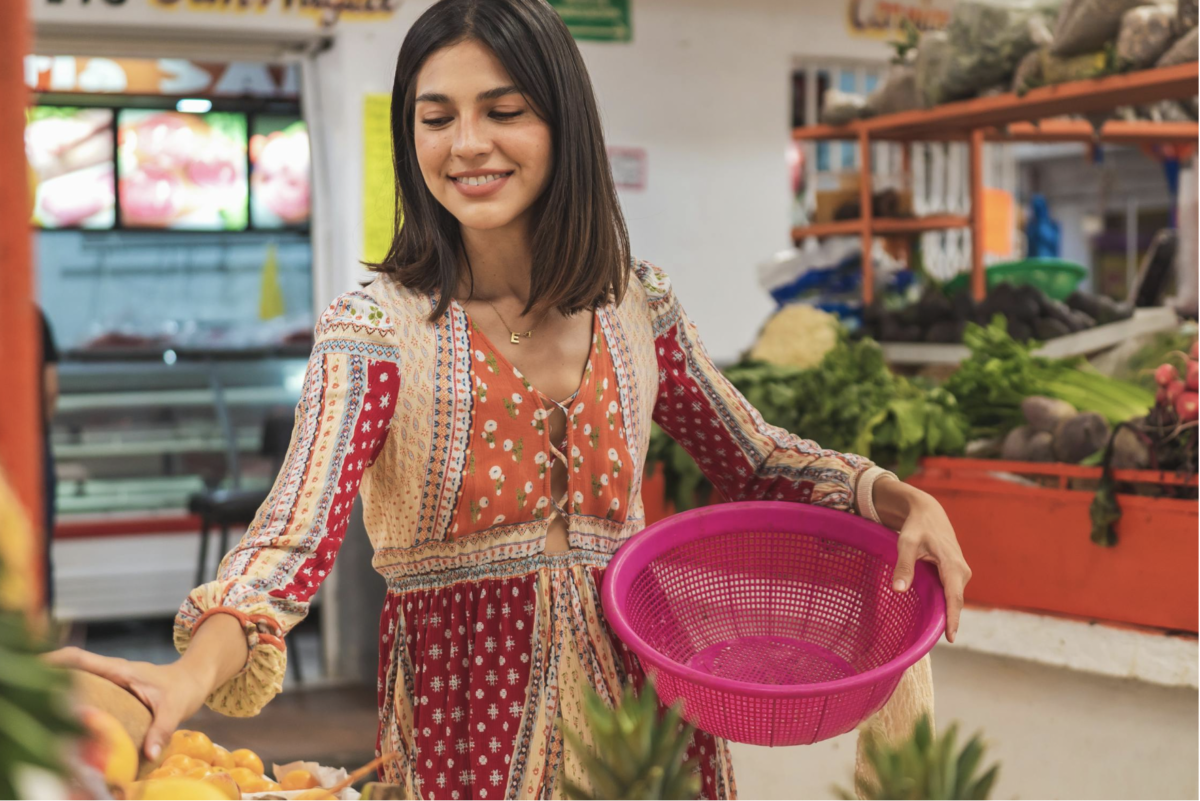
Year over year, prices for food purchased from stores rose at a faster pace in July (+3.4%) compared with June (+2.8%). Prices for confectionery (+11.8%) and coffee (+28.6%) accelerated, contributing to the increase in grocery prices. Unfavourable weather conditions in growing regions led to higher prices for the primary ingredients (cocoa and coffee beans) used to produce these food products, explained Statistics Canada. Additionally, prices for fresh fruit rose 3.9% year over year in July, following a 2.1% increase in June, largely stemming from higher prices for grapes (+29.7%). As of July 2025, Canadians were paying 27.1% more for food purchased from stores than they were in July 2020.
It’s been a hectic summer for many Canadians but as summer unfolds, retailers are already deep into the back-to-school season, a time that continues to start earlier each year, according to Jeff Doucette, General Manager of Field Agent Canada.
“We’ve already seen quite a bit of back-to-school in-store, for sure. Walmart was really quick out of the gate. I mean, Dollarama has already moved on to Halloween,” says Doucette.
Jeff Doucette
He notes a quirky new trend emerging in the U.S. retail landscape. “It’s been kind of interesting. In the States, we’ve seen this season come out of nowhere called Summerween, which is basically the candy manufacturers trying to get another wave of Halloween candy into stores earlier.”
According to a Field Agent survey, 39% of Canadians say they will spend more this year than last year and 67% say inflation is impacting them more this year.
The top five retailers for school supplies are Walmart, Dollarama, Costco, Staples and Real Canadian Superstore, said Field Agent.
The Field Agent survey also found that 71% say social media influences their shopping decisions and 95% will take packed lunches/snacks to school
As for the Canadian market, Doucette’s team has been tracking back-to-school shopping behaviour through its annual survey now in its 10th year.
“The results don’t change enormously year to year. But a few things really stood out this time: one is the bigger influence of online shopping, particularly Temu. It’s really starting to be a go-to online retailer for back-to-school.”
He attributes this growth to the rising influence of kids themselves in the shopping process.
“As kids get older, they become more influential in the process of what gets bought for back-to-school. For example, my daughter sent me her list from Amazon through a site called Share My List or something like that. She did all the shopping herself, sent me the link, I clicked a button and paid for it, that was it.”
Digital trends aren’t the only shift. Economic concerns are playing a major role this year as well.
“People are still concerned about inflation. That’s nothing new, but I think it’s driving people to shop earlier and to shop online more frequently, trying to find deals they might not get in-store.”
That concern is also causing more families to shop more conservatively, Doucette says.
Photo:
Alex P
“We’re seeing people not buying the full list anymore. They’re actually going back and seeing what they already have on hand. Maybe the backpack from last year is still good. Maybe the indoor shoes from last year become this year’s outdoor shoes.”
In his own household, Doucette approached back-to-school shopping with a creative twist.
“I said, ‘Let’s have a scavenger hunt around the house, see what we can find,’ and then we just bought the rest. That was a different take rather than just buying everything new, let’s use what we’ve already got. And surprisingly, I think we already had half the list in the house.”
The earlier start to the season is becoming more noticeable, particularly among major retailers.
“With back-to-school, there’s a bit of a hard stop when kids are still in school. I don’t think parents want to be seeing back-to-school displays before school’s even out. But we don’t see it taking long after. Walmart, for example, had displays up right after Canada Day, they went straight into back-to-school.”
But with the increase in online shopping, early physical displays are no longer the only path to sales.
“You don’t even need the displays. People are just grabbing things off the website or finding deals in-store as they go. Retailers that get an early start probably do benefit. Those early shoppers get wrapped up quickly and that’s always been Costco’s strategy, right?”
One clear distinction between Canada and the U.S. also stood out in this year’s survey.
“The primary difference is that Canadians send their kids to school with lunches way more than Americans do. About 95% of Canadians send packed lunches with their kids, compared to only around 40-something per cent in the U.S.”
That creates unique opportunities for Canadian grocery retailers during the back-to-school season.
“Back-to-school is a much bigger deal for grocery retailers in Canada than it is in the U.S. There’s a real opportunity, not just in September but throughout the school year, to help parents solve that ‘what’s for lunch tomorrow?’ problem.”
And while no retailer has fully seized on that idea yet, Doucette offers a suggestion.
“One of my best little consulting ideas is: imagine a refrigerated display where you could find everything you need for lunches, crackers, yogurt, carrot sticks, all in one spot. I think that would be really cool if someone gave it a try.”
Over the past five years, M&M Food Market has raised more than $450,000 to support BGC Canada (formerly Boys and Girls Clubs of Canada), funding essential programs for children and youth. What began as a pandemic initiative has evolved into a national partnership, with franchisees contributing locally through food and gift card donations, as well as event sponsorship.
Allan Lindsay
“We had been looking for a partner that we could get involved in with, a charitable partner, a cause we could get behind. One that fit well with who we are as a brand and what we want to support,” said Allan Lindsay, President of M&M Food Market. “We were looking at and eventually ended up landing on Boys and Girls Clubs of Canada.”
The fit made sense for the food retailer. “We are very involved in our communities, and youth and children, and food security for them, is an important play for us as well.”
M&M began the partnership by donating gift cards and other essentials to clubs during the early days of the pandemic. “We got involved in the early parts of the pandemic actually. What we were able to offer them were gift cards and other things for our stores so that they could secure food for the clubs.”
The relationship has since grown into a deeper commitment. “Now we support them in a multitude of ways. We support them still with some donations from head office, whether it be gift cards or other, we raise money in our stores, with a particular focus on their Club Day.”
Every year, the company runs a customer donation campaign from May through June. “We proactively collect donations, engage our customers at store level.”
Beyond corporate initiatives, many franchisees also build personal ties with local clubs. “They engage with local clubs and do separate events through the year. So they’ll have a partnership with a club to provide food, or our franchise partner will put on a barbecue to raise money or to support an event.”
“It’s really been a really positive relationship and one we’re proud of,” said Lindsay.
Lindsay has visited several clubs himself and is also a member of the BGC Foundation Board.
“The work they do is really amazing. It’s a place for kids to go whether it’s before or after school or during the day. Yes, it provides some food and nutrition for those kids that we can help to support. But also they help with homework, some of them have computer labs, gymnasiums. They’ll do music lessons, depending on the capabilities and skills of the people working in the club or the other club members.”
“Every time I’ve gone to one, it’s amazing to see how plugged into it the kids are, to see how much they offer. You hear stories, there are so many people, whether they’re adults now or teens, that have come up through a club, and the difference it’s made in their life, and how impressive these youth are. It’s very inspiring.”
“All of those things together just make us feel really good about being able to, in a small way, support it.”
Photo: M&M Food Market
Lindsay has been with the company for over a decade, playing a key role in its evolution as a leading frozen food retailer in Canada.
The company is based in Mississauga, Ontario, which also serves as its headquarters. The first store opened in the Kitchener area in 1980.
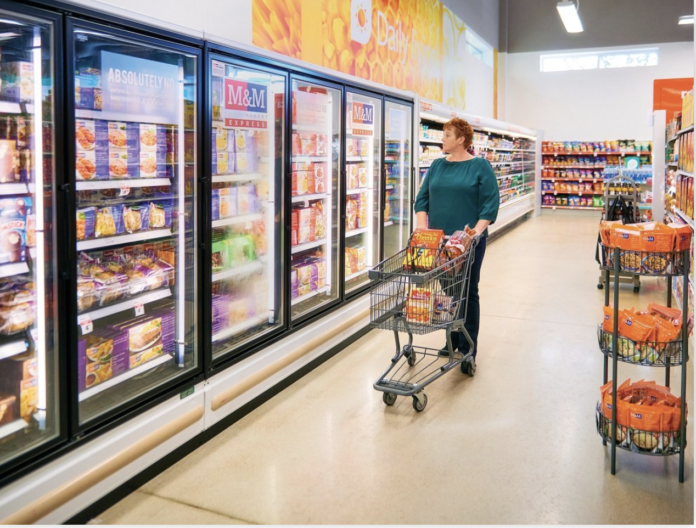
M&M Food Market currently operates in over 300 traditional locations across Canada. “Traditional stores like a traditional M&M, we’re about 315,” said Lindsay. “And in our Express format where we might have a couple of doors in a Rexall or something like that we’re over 2,000.”
Store expansion continues, albeit modestly. “It depends on the year, but probably five to 10 kind of thing,” Lindsay explained. “That would be slight growth because there’s always kind of a refreshing of the network. To really kind of accelerate growth, it’d probably have to be 10 plus, but we’re in kind of a five to 10 mode right now.”
M&M’s niche lies in offering convenient, high-quality meals designed for modern families.
“I think a lot of it stems from how we try and position ourself and our brand promise, which is helping make real food for real life,” said Lindsay. “A lot of times we truncate it and we just say ‘real food for real life,’ and that references more like our real food promise, which is no artificial flavours, colours, sweeteners in anything that has the M&M brand on it.”
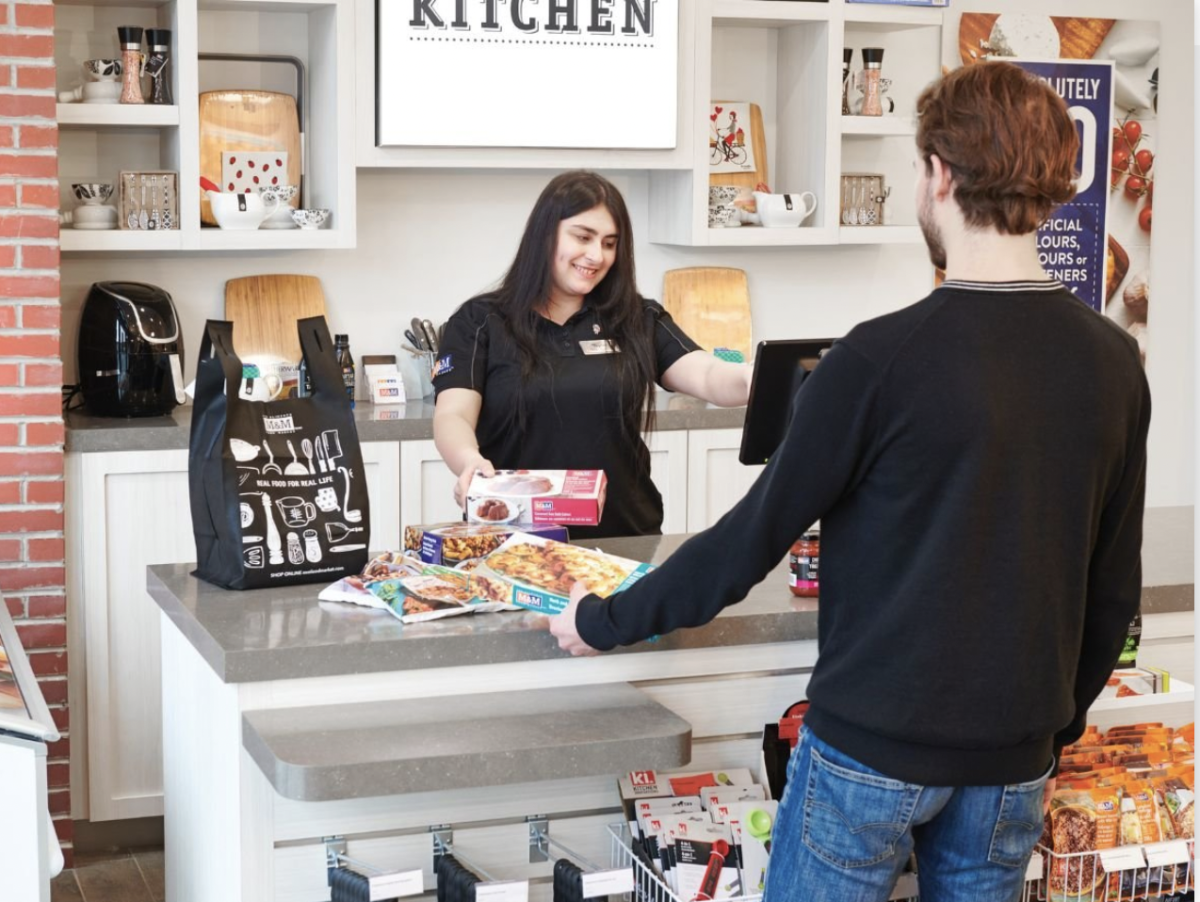
Their service model, which includes in-store meal advisors, helps differentiate the brand. “Our place is in helping busy families put meals on the table. It stems all the way from our service model in store, our meal advisors that give personalized experience and guidance to customers, all the way to having convenient, good-for-you meals and appetizers at home that are easy to make.”
“We’re a frozen food specialty retailer, I guess, if you wanted to get technical,” added Lindsay. “But I talk about us more as a food retailer that’s helping busy families and just busy people in general.”
Franchising is a key part of M&M’s business model, with the majority of stores operated by franchisees. “We’re about, say, 70% franchised,” said Lindsay. “The number kind of moves around a little bit.”
Retailers are increasingly in the crosshairs of cybercriminals, and their growing presence on digital and social platforms is a major reason why, says John Walsh, Field Chief Technology Officer – Critical Sectors at IGEL, a Germany-founded company specializing in endpoint security.
In an interview with Retail Insider, Walsh explained that IGEL, initially known for its thin client hardware, evolved by focusing on its operating system, an architecture that supports strong security from the endpoint outward.
John Walsh
“As I understand it, the company was founded in Germany and the original founders started a business that was, for the most part, a thin client,” said Walsh. “It was an operating system, but they also manufactured, the hardware that went with it.”
That operating system turned out to be remarkably resilient. “We have customers we run into who are still operating the platform from 25 years ago,” he added.
Over time, the company saw the value in separating the OS from proprietary hardware. “It became recognized that the value in the platform was really the operating system and to become more agnostic of hardware, so that we could have multiple hardware partners that the operating system would run on,” said Walsh.
The OS itself brought unique security advantages. “It was a read-only immutable Linux operating system… being able to, because it’s read-only, eliminate 70 to 90% of the attack surface right at the endpoint,” Walsh explained. “It had some very unique, also, hardware root of trust features. So it was designed for security.”
This endpoint OS is centrally managed by IGEL’s Unified Management System, allowing enterprise control across edge devices. “It had a second component that is called the Unified Management System,” said Walsh. “This unified management system centrally manages the endpoints, which is a very unique characteristic when you look at some of the competitors.”
Walsh said the system enables customized user experiences while maintaining strict security and control. “We can enforce specifically by downloading through our app portal the things that you need to do your work, the user experience that you have,” he said. “So essentially this created a very lightweight endpoint and very secure endpoint, and one in which you could enforce the user experience.”
Notably, no data resides on the endpoint. “There’s no data on the endpoint,” he emphasized. “The data on the endpoint is coming from your data centre, your cloud, whatever the instantiation is of the architecture.”
IGEL’s open ecosystem now includes more than 120 partners, with another 60 in the pipeline. “So now we can bring any combination of permutation of applications, architectural platforms that you as the end user need to essentially meet your objectives or your requirements,” said Walsh.
When asked about the growing number of cyberattacks targeting retailers, Walsh said motivations vary. “Some of the objectives could be to eliminate availability of the architecture to cost them money,” he said. “At the end of the day, these big attacks are all about how does the person who’s launching the attack benefit, right?”
Image: IGEL
“They’re either trying to get personal information, credit card information,” he added. “They’re trying to create a ransomware event that would make the retailer have to pay. They may even go further in terms of creating false transactions to gain access, if you will, to merchandise and things like that they can resell.”
The endpoint is often where such attacks begin. “Typically the endpoint is where the attack begins. So there’s some sort of social engineering or thought processes around how to get to an endpoint so that they can move laterally and vertically within the architecture,” said Walsh.
A major driver of retail vulnerability is the shift to social selling. “Retail systems are beginning to use more and more social media,” said Walsh. “They’re rapidly expanding the attack surface.”
He warned that attackers are leveraging digital storefronts and mimicking brands to lure consumers. “When I get on Facebook and I’m sitting there and I see kind of maybe a deep fake of what looks like Best Buy and as it turns out, it’s not Best Buy. It’s a really good fake.”
He shared a personal experience: “I was provided an offer to get a 30% reduction in my AT&T billings. They knew my phone number, so they obviously had done a lot of the upfront work.” However, red flags eventually revealed the scam. “I began to realize that it was a ploy simply to get personal information.”
Asked whether retailers are prepared to combat these threats, Walsh offered a measured response. “I wouldn’t want to say something that would suggest that they’re not doing their best,” he said. “But I would say that there certainly are things they need to start thinking about more.”
He cited internal friction as a challenge. “There typically tends to be some friction between your CISO (Chief Information Security Officer) … and then you’ve got your CIO (Chief Information Officer),” said Walsh. “There seems to be a lot of friction as we start to look at what the risks are with some of these new attacks versus the risks associated with implementing new capabilities.”
Walsh said the industry is in a state of transition. “We’re beginning to adopt newer ways of doing things and we’re to some degree in a transition period.”
Image: IGEL
He concluded with a warning about how artificial intelligence is amplifying the risks. “The launch of AI allows you to take a lot of these things that are in the wild and you can rapidly modify them faster than we can respond to them with the traditional monitoring and detect approach.”
His advice: start with securing the endpoints and embrace Zero Trust principles. “Retail has to start thinking about Zero Trust in order to get to resilient solutions,” said Walsh. “At the most granular level, the access that you’re providing, the request that’s being made is a valid request. You’re only giving it the least privileges that are required.”
That mindset must stretch across the business. “That should be prevalent across the supply chain and across the business and the backhaul all through the organization to eliminate the insider threat and things like that,” he said.
Walsh closed by noting the gap that retail still needs to close. “There are a lot of things that the industry needs to be doing to catch up with the critical industries.”
Retail Insider is streamlining its Canadian retail news from around the web to include a handful of top news stories that can be viewed quickly during the day. Here are the top stories from the past 24 hours.
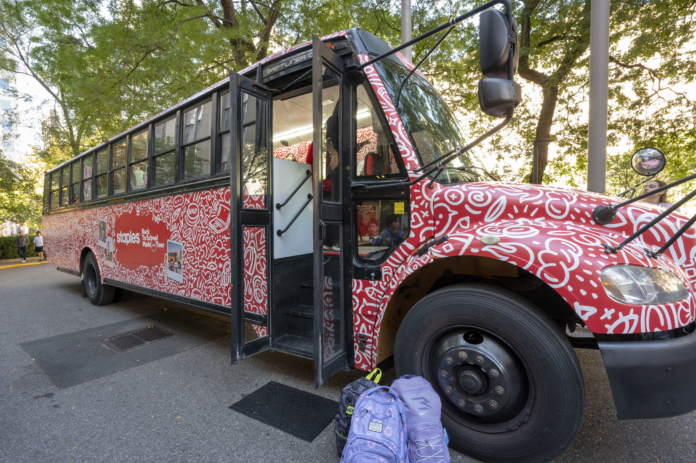
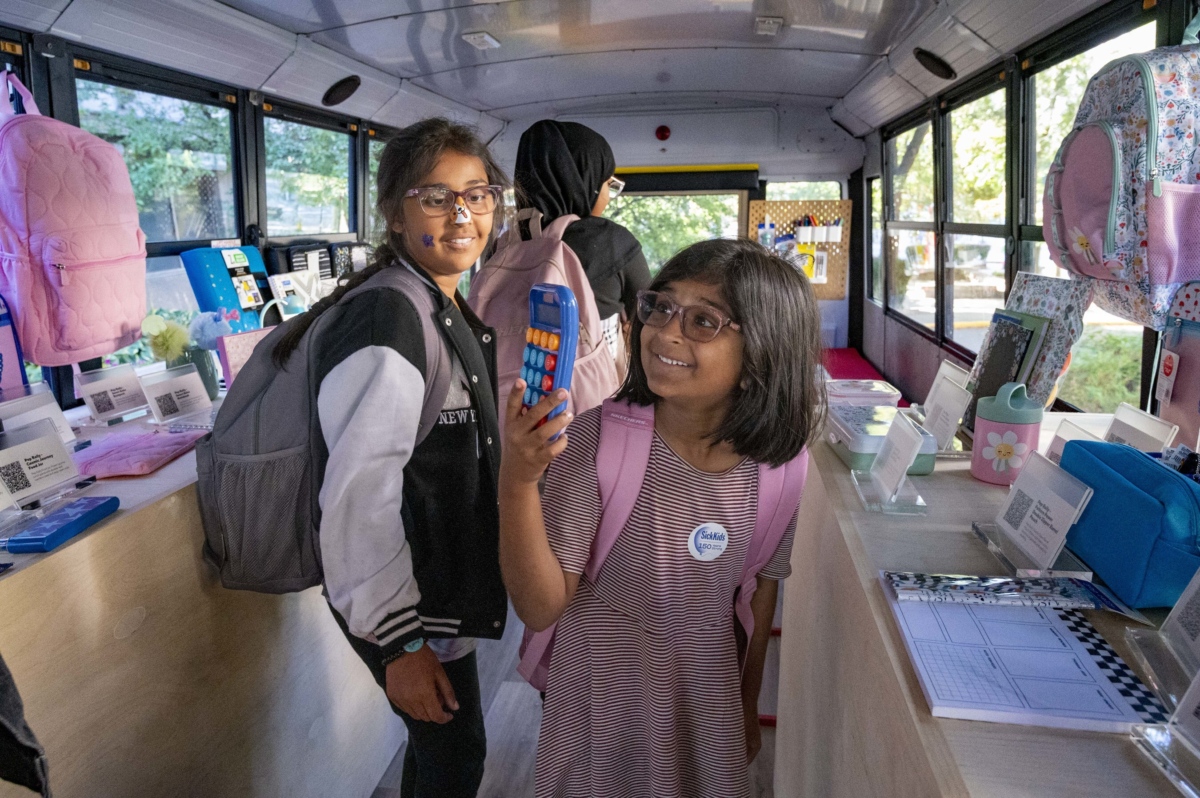
Staples Canada is taking its back-to-school campaign on the road this August with the launch of the Back to School Made EASY Bus. The travelling experience showcases interactive technology demonstrations, curated learning supplies, and expert advice designed to help families navigate the modern classroom.
The initiative begins at Toronto’s Hospital for Sick Children (SickKids), where Staples will donate classroom supplies through the hospital’s Sponsor a Family program. Families identified by social workers as being in need will receive items to support learning both at home and in hospital. Patient ambassadors and their families will also explore the EASY Bus, gaining hands-on experience with educational tools as they prepare for a new school year.
This donation aligns with the 20th annual Staples School Supply Drive, which has raised more than $17 million in partnership with United Way Centraide and the Kiwanis Foundation of Canada. Over two decades, the program has provided thousands of students across the country with essentials to start the school year with confidence.
“Donations like this bring meaningful support to patients and families as they prepare for the school year,” said Iris Garcia, a registered social worker at The Hospital for Sick Children. “We appreciate Staples’ commitment to making a difference.”
Hands-On Technology and School Essentials
Visitors to the Staples EASY Bus will encounter an array of educational innovations. Demonstrations include noise-cancelling headphones, AI-driven learning tools, and the chance to test products at an interactive pen-to-paper bar. Staples associates will also be on hand to provide expert guidance, reinforcing the company’s role as a destination for back-to-school readiness.
Guests can also take part in the Tech Trade-in by Allstate program, exchanging older electronics for Staples gift cards valued up to $500. The program helps families save on upgrades while reducing electronic waste, reflecting a growing emphasis on affordability and sustainability. Each visitor will also receive a coupon for in-store shopping, adding value to the overall experience.
“Back to school looks different today, and we’re bringing that experience directly to families with the Back to School Made EASY Bus,” said Brian McDougall, Interim CEO and Chief Retail Officer, Staples Canada. “From hands-on demos to expert advice and the latest in educational tech, the EASY Bus is designed to help families feel confident and prepared for the modern classroom.”
Greater Toronto Area Tour
The EASY Bus will travel across the Greater Toronto Area throughout late August. The schedule includes:
Thursday, August 21, at King Street West and Spadina Avenue, Toronto
Friday, August 22, at Scarborough Town Centre
Saturday, August 23, at Toronto Nautical Harbour Centre
Sunday, August 24, at Toronto Premium Outlets in Halton Hills
Each stop will run from 11 a.m. to 7 p.m., offering parents and students convenient access to the experience.
Staples’ Wider Back-to-School Solutions
The EASY Bus complements Staples Canada’s broader back-to-school programs. In-store technology experts, trained by Microsoft, Google, Samsung, and Apple, help families navigate an ever-growing array of devices. Staples curates solutions by features and capabilities, enabling parents to find what best suits their children’s needs.
Alongside technology support, Staples has committed to keeping classroom basics affordable. Essential supplies are priced from 25 cents, with weekly promotions and price matching available throughout the season. Educators receive added discounts, while the School Tools program provides bundled supplies with special savings for parents.
Shopping flexibility is also a focus, with options ranging from same-day delivery through DoorDash and Instacart to buy-online-pick-up-in-store services. Whether browsing grade-specific tools online or visiting one of Staples’ 298 locations nationwide, families can expect a consistent emphasis on convenience and value.
Supporting Canadian Communities
Headquartered in Richmond Hill, Ontario, Staples Canada positions itself as The Working and Learning Company. Its network includes retail stores, the Staples.ca e-commerce platform, Staples Print and shipping services, and Staples Studio co-working spaces. Through fundraising efforts such as Even the Odds, the company also invests in addressing health inequities across Canadian communities.
By combining community engagement with practical retail solutions, Staples Canada aims to make back-to-school a seamless experience for families nationwide. The EASY Bus highlights this strategy, bringing products, expertise, and charitable giving together under one mobile platform.
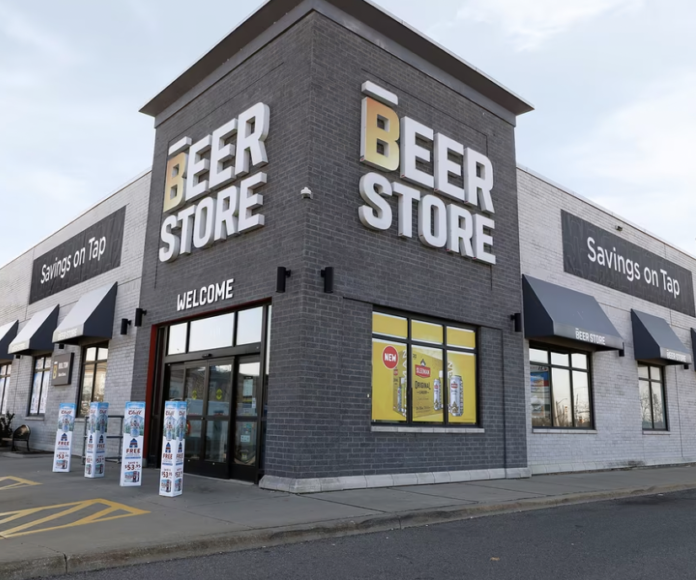
The Beer Store (TBS) said Monday it is making the difficult decision to close 12 retail stores effective end of business day October 19.
The Beer Store will close the following retail stores:
Bridgenorth – 882 Ward St., Bridgenorth, ON, K0L 1H0
Eganville – 8647 Hwy. #60, Eganville, ON, K0J 1T0
Forest – 89 Main St. S., Forest, ON, N0N 1J0
Grand Bend – 21 Ontario St. N., Grand Bend, ON, N0M 1T0
Harrow – 398 King St. W., PO Box 249, Harrow, ON, N0R 1G0
Little Current – 53 Meredith St. E., PO Box 210, Little Current, ON, P0P 1K0
Markdale – 33 Argyle St., Markdale, ON, N0C 1H0
Noëlville – 142 David St. N., Noëlville, ON, P0M 2N0
North York – 3078 Don Mills Rd., North York, ON, M2J 3C1
Sauble Beach – 704 Main St., Sauble Beach, ON, N0H 1P0
Toronto – 900A Don Mills Rd., Unit #100, Toronto, ON, M3C 1V6
Toronto – 800 Gerrard St. E., Toronto, ON, M4M 1Y7
Ozzie Ahmed
“Where we sell beer and collect empties in Ontario is changing. The Beer Store is modernizing to meet the changing marketplace and unfortunately this means making the hard decision to close retail locations. We know this is difficult news for customers and employees,” said Ozzie Ahmed, Vice President Retail, TBS.
“As The Beer Store modernizes, our locations will continue to provide friendly customer service and a deposit return system that gets consumers their money back.
“The Beer Store recognizes the contributions our employees make to the business and in the communities where we operate. All efforts will be made to support employees through this process in alignment with commitments and agreements.”
The Beer Store is encouraging customers to continue returning more than the 1.6 billion alcohol containers it processes annually to one of its local TBS locations or an empty return dealer located close by. The following alcohol containers purchased in Ontario can be returned to collect a deposit back: beer, wine and spirits bottles, aluminum cans, plastic bottles, tetra packs and kegs.
“All grocery stores that sell alcohol will be required to accept the return of empties and refund customer deposits starting January 1, 2026. This is part of consumer retail alcohol modernization, found in the Early Implementation Agreement and provincial regulations,” it said.
To help ensure that customers can still purchase beer and return empties conveniently, TBS is encouraging customers to use one of the following resources:
Owned by Ontario-based brewers and named one of Canada’s Greenest Employers 2025, the Beer Store is the largest beer retailer in Ontario. Its logistics division has 26 points of distribution strategically located across the province to meet the needs of customers. The Beer Store distributed 2.92 million hectoliters of beer to over 13,000 customers in 2024. In 2024, The Beer Store added over 5,300 new customers to its distribution network. The Beer Store employs 6,500 people.
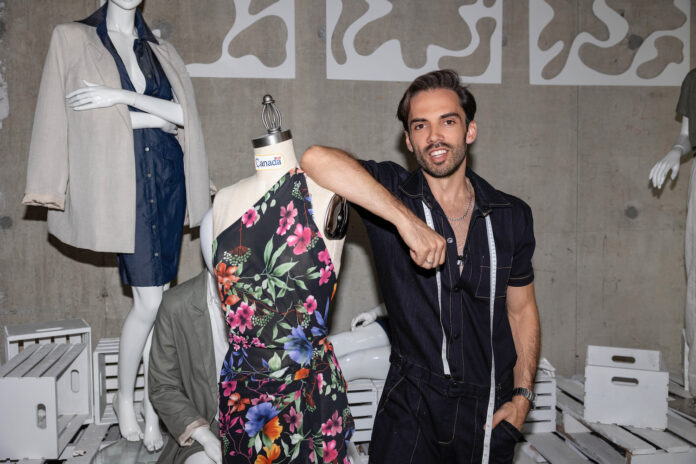
Canadian fashion designer Joseph Tassoni has become a prominent advocate for sustainability, quality craftsmanship, and inclusivity in an increasingly fast-paced industry. Since launching his namesake brand in 2017, Tassoni has worked tirelessly to position Canadian-made fashion as a force on the global stage. His philosophy is rooted in creating garments that combine elegance with functionality while preserving the integrity of local manufacturing.
“Everything we do starts with a commitment to quality, fit, and design,” says Tassoni from his Burlington, Ontario atelier. “Our customers invest in pieces that last a lifetime, support Canadian workers, and reflect their individuality.”
From Montreal Roots to Fashion Industry Experience
Born in Montreal and educated at Toronto Metropolitan University, Tassoni entered the fashion industry at a young age. His early career included roles at Pink Tartan, Joe Fresh, and other major Canadian labels, where he gained comprehensive experience across design, pattern-making, and brand management.
“I started working as a teenager,” he recalls. “I handled roles from junior pattern maker to brand manager because I wanted to understand every position. Knowing the value of everyone’s time makes you a better leader.”
After years in corporate fashion, Tassoni launched a successful consultancy, supporting Canadian and U.S. labels with design and brand development. This diverse experience provided the foundation for his own brand, which debuted during Toronto Women’s Fashion Week in 2017 to critical acclaim.
Tassoni’s early collections established outerwear as a defining symbol of Canadian identity. His runway presentations have expanded to showcase a full spectrum of product categories, celebrating inclusivity and sustainability while now pioneering the integration of AI into fashion.
The Ethos: Luxury with Purpose
Tassoni’s brand philosophy centres on community-driven luxury. His collections reflect an inclusive design approach, ensuring that pieces suit diverse identities without being restricted by traditional gender norms. Each garment is engineered for versatility, often featuring reversible elements, detachable components, and multiple styling options.
“For me, functionality is everything,” explains Tassoni. “Clients should feel empowered to reinvent their look without compromising quality. If someone loves a piece, I want them to wear it in different ways—maybe a suit that doubles as separates or a veil that transforms into a scarf.”
This practical creativity extends to materials. Tassoni prioritizes sustainable, locally sourced fabrics, allowing clients to make purchases that align with environmental values while supporting Canadian manufacturing.
At age 5 1/2, Joseph Tassoni cut up curtains in his parent’s house to create a dress for his sister — he says his family has been very supportive from the beginning. Image: Tassoni Family.
Canadian Craftsmanship at the Core
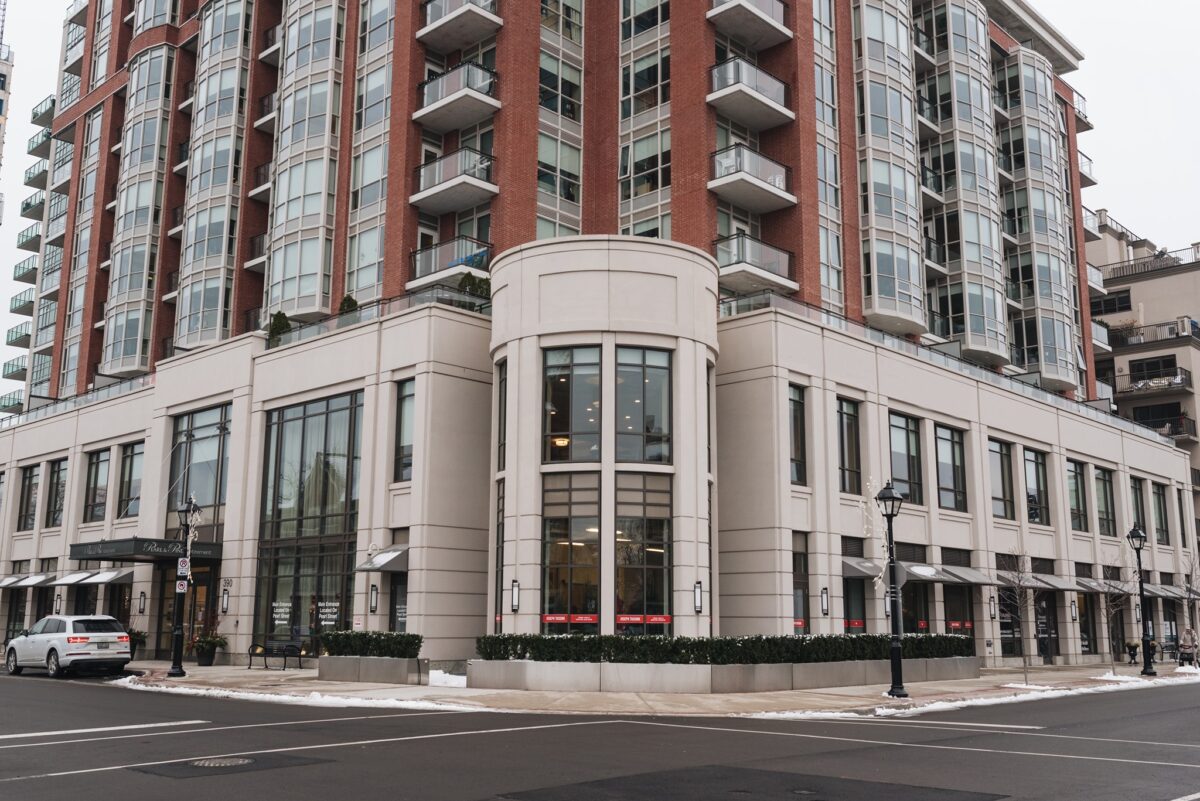
Unlike many upscale brands that rely on overseas production, Tassoni insists on creating everything in Canada. His flagship atelier at 390 Pearl Street in downtown Burlington doubles as a boutique and production facility, giving clients a rare behind-the-scenes look at the fashion process.
“When customers visit, they see the cutting tables, the sewing machines, and the craftsmanship in action,” he says. “It’s part gallery, part showroom, and it reminds people why Made in Canada matters.”
The space opened in late 2019 and now operates by appointment only, allowing for highly personalized service.
“People think that by appointment means you need to spend a certain amount, but that’s not the case,” Tassoni clarifies. “Often, if you add up what you spend on fast fashion, it equals or exceeds the cost of an investment piece made to last.”
Balancing Style and Functionality
Tassoni’s approach challenges the disposable nature of fast fashion. His garments, particularly outerwear, are designed for Canadian weather while maintaining elegance. “Too many coats on the market are expensive but lack substance,” he says. “They look good, but they’re not water or wind resistant. My goal is to combine beauty with performance.”
His collections often feature technical elements such as innovative closures, adjustable lengths, and lightweight packable fabrics. This emphasis on adaptability ensures that clients can maximize the value of their wardrobe while reducing overconsumption.
Community and Mentorship
Beyond design, Tassoni is deeply invested in community engagement and mentorship. He collaborates with local businesses, participates in philanthropic initiatives, and supports emerging talent through partnerships with institutions like Toronto Metropolitan University and George Brown College.
“I want to show the next generation what’s possible,” he says. “Respecting their time and encouraging creativity is crucial. I’ve had interns travel great distances to work here because they know they’ll be challenged and inspired.”
His commitment to mentorship contrasts with his own early experiences in the industry, which sometimes lacked meaningful learning opportunities. “When I was 16, I spent a summer organizing buttons,” Tassoni laughs. “Now, I ensure students see the full scope of what fashion can be.”
Resilience and Adaptability in Challenging Times
Operating a Canadian-made brand is not without challenges. Economic fluctuations, rising costs, and global tariffs have impacted many businesses, but Tassoni’s local production strategy insulated him from supply chain disruptions during the pandemic.
“Being based in Canada and sourcing locally gave us stability,” he explains. During COVID-19, Tassoni repurposed his atelier to produce personal protective equipment, donating proceeds to local healthcare facilities—a gesture that earned him both the Inspire Award from the City of Burlington and the Queen’s Platinum Jubilee Community Hero Award.
A Vision for Global Growth
Looking ahead, Tassoni’s ambitions are clear: he plans to expand across North America and into international markets, focusing on regions with strong trade agreements with Canada. “I want to build long-term relationships with retailers that value craftsmanship,” he says. “It’s about finding partners who share our commitment to quality and sustainability.”
While wholesale and e-commerce are integral to this strategy, Tassoni emphasizes the enduring importance of physical retail. “Bricks and mortar creates human connection,” he notes. “Our Burlington atelier proves that clients crave that personal experience.”
One long-term goal is to establish a presence in Toronto’s Yorkville neighbourhood, Canada’s luxury retail epicentre. “The timing has to be right,” Tassoni says. “My name is on every garment. This isn’t a seasonal project, it’s my life’s work.”
The Heart of Canadian Fashion
For Joseph Tassoni, fashion is more than clothing; it’s an ecosystem of creativity, community, and sustainability. His mission is to show that Canadian-made luxury can compete on a global scale without sacrificing ethics or quality.
“When clients choose us, they’re investing in more than a garment,” he says. “They’re supporting Canadian jobs, sustainability, and a vision for what fashion should be—timeless, inclusive, and deeply connected to the people who create it.”
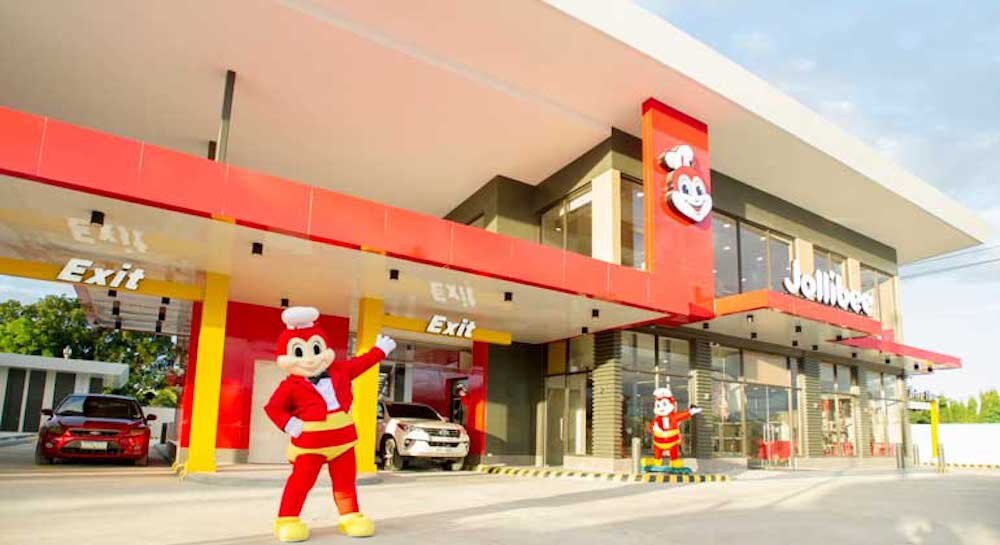
Jollibee, the global restaurant brand, has announced a new partnership with the internationally-acclaimed girl group, KATSEYE.
This landmark collaboration unites the restaurant brand’s rich heritage of bringing families and communities together through delicious food with the dynamic girl group’s vibrant energy and rapidly growing global fanbase of EYEKONS, said the brand.
“This collaboration is a natural fit, rooted in Jollibee and KATSEYE’s shared ability to spark joy among their global fanbases. Jollibee, with its unique flavors, universally loved offerings like its crispy, juicy Jolly Crispy Chicken, and welcoming service, has cultivated a loyal following across generations and cultures. Its journey from a humble ice cream parlor in the Philippines to a global QSR powerhouse mirrors the aspirational rise of KATSEYE, a group known for its youthful pop sound, diverse talent, and dedication to connecting with devoted fans worldwide,” it said.
“Both Jollibee and KATSEYE are currently taking the world by storm. Recently named the “best fast food fried chicken” by USA TODAY for the second year in a row, Jollibee is always looking for ways to bring joy to its community through next-level food and more. Having just sold out their Beautiful Chaos tour, KATSEYE continues to raise the bar, delivering hit after hit. With each brand at the top of its game, this collaboration is a moment fans won’t want to miss.”
PHOTO: JOLLIBEE
Complex, the media brand known for its sharp pulse on pop culture, will exclusively house the three custom Jollibee x KATSEYE items, which are designed to capture the upbeat and stylish nature of this perfectly fitting partnership. Quantities are extremely limited, so fans are encouraged to act quickly, as items are likely to sell out.
Shared Dream Tank Top: With its cosmic flair and clean lines, this tank captures the bold energy of EYEKONS chasing big dreams across galaxies, with a Jollibee twist.
Double Drop Denim Tote: Sturdy, stylish, and made to carry happiness, this two-sided denim tote flips between subtle flex and full fan mode.
“This is precisely why partnering with KATSEYE, a group that deeply resonates with a diverse, global audience and embodies such positive energy, is a perfect match for our beloved brand. Their passion and vibrant spirit align seamlessly with our distinctive heritage of fostering community and happiness. We’re incredibly excited to join forces with such a talented group of women and create unforgettable experiences for our fans.”
Following the August 15 merch drop, Jollibee and KATSEYE will continue to surprise fans with exclusive, “joy-filled experiences that blend bold flavor and fierce style. From crave-worthy bites to limited-edition collectibles, the partnership is just getting started—so keep your eyes (and taste buds) ready.” More announcements to come.
“We could not be happier to partner with Jollibee, a brand that we’ve been truly obsessed with for a long, long time,” stated KATSEYE. “This collaboration feels incredibly authentic to us, and it’s all about good vibes, bold flavor, and making memories with our EYEKONS. We can’t wait to share this journey with both our fans and Jollibee’s – it’s going to be beautifully chaotic.”
Jollibee is the flagship brand of the Jollibee Group, which is on a mission to become one of the top five restaurant companies in the world.
KATSEYE – comprising Daniela (Cuban/Venezuelan-American, from Atlanta, GA), Lara (Indian, from New York, NY), Manon (Ghanaian-Italian, from Zurich, Switzerland), Megan (Chinese-American, from Honolulu, HI), Sophia (Manila, Philippines), and Yoonchae (Seoul, South Korea) – has quickly risen to international prominence with their captivating performances, unique sound, and dedicated fanbase. A powerhouse of diverse talent, KATSEYE embodies the spirit of modern pop, inspiring millions with their music and message. To learn more, subscribe to updates at katseye.world or follow them at @katseyeworld on Instagram, TikTok, YouTube, and X.
Jollibee Foods Corporation is the one of the world’s fastest-growing restaurant companies. It manages and operates a portfolio which includes 19 brands with over 10,000 stores and cafés across 33 countries.
The Jollibee Group’s portfolio includes nine wholly owned brands (Jollibee, Chowking, Greenwich, Red Ribbon, Mang Inasal, Yonghe King, Hong Zhuang Yuan, Smashburger and Tim Ho Wan), five franchised brands (Burger King, Panda Express, Yoshinoya, Common Man Coffee Roasters, and Tiong Bahru Bakery in the Philippines), and ownership stakes in other key brands like The Coffee Bean and Tea Leaf (80%), Compose Coffee (70%), SuperFoods Group that operates Highlands Coffee (60%), and bubble tea brand Milksha (51%). The Company also has membership interests in Tortazo, LLC, along with Chef Rick Bayless, for Tortazo in the U.S. and has recently invested in Botrista, a leader in beverage technology.
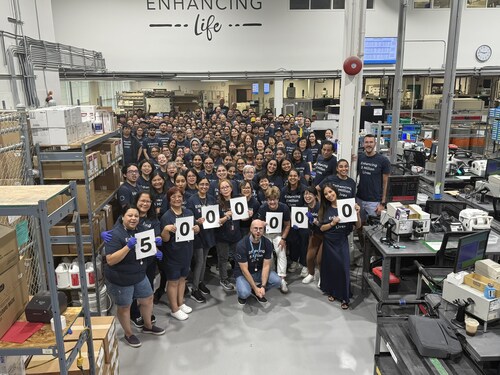
FYihealth group. Delta, BC. 5 Million Orders Milestone. August 2025. (CNW Group/FYihealth group)
FYihealth group, recognized as one of Canada’s Best Managed Companies from 2020-2025, and one of Canada’s Top Growing Companies for three years in a row, recently reached a significant milestone: the company’s state-of-the-art Delta Laboratory completed over 5 million patient eyewear orders.
As the central hub for eyewear production across FYihealth group’s network — including FYidoctors, Visique, BonLook, and solis optics clinics and stores, totalling over 370 locations — the Delta Lab combines leading-edge technology with expert craftsmanship to deliver high-quality, custom prescription lenses and frames to patients across Canada. From its proprietary premium exactFit® lenses that are crafted with edge-to-edge clarity for sharper and more natural vision, to lenses made to manage Myopia, a growing vision epidemic that impacts about 30% of children aged 11-13, the Delta Lab has provided millions of Canadians with eyewear solutions that ehance their lives, explained the company.
Nancy Morison
“This milestone is a reflection of the exceptional work and commitment of our Delta Lab team,” said Nancy Morison, VP of Delta Ophthalmic Laboratories. “From the very first order to our five-millionth, their dedication to precision, innovation, and patient care is unmatched.”
The Delta Lab, located in British Columbia, has long been recognized as one of the most advanced optical laboratories in Canada. In 2022, the Delta Lab made a series of changes to reduce its environmental impact with lens production including changing over its flourescent lights to LED, saving 45% in engergy usage, and using 50% less water to produce its lenses while simultaneously recycling 95% of the water that is used. With a focus on continuous improvement, minimizing it’s environmental footprint and investment in technology, the lab ensures every order meets the highest standards of quality while helping patients see their world more clearly, said FYihealth.
Dr. Alan Ulsifer
“This isn’t just about numbers,” said Dr. Alan Ulsifer, CEO & Chair of FYihealth group, “It’s about the lives improved through better vision and the people behind every pair of glasses. We’re proud of what we’ve accomplished and excited for what’s next.”
FYihealth group is Canada’s leading diversified healthcare organization comprised of FYidoctors, Visique, BonLook, and solis optics. Doctor-led, professionally managed, and patient-focused, the organization concentrates on delivering eye care with patient-centric products and services. Recognized as one of Canada’s Best Managed Companies from 2020-2025, the organization operates over 370 locations across the country.