Advertisement
Advertisement
Home Blog Page 384

Happy Belly Food Group acquiring Smile Tiger Coffee Roasters

Smile Tiger Coffee Roasters

Happy Belly Food Group Inc., a leading consolidator of emerging food brands, announced Wednesday that it has signed a definitive agreement to acquire 100% of Smile Tiger Coffee Roasters Inc – its first acquisition in the coffee sector.

Sean Black
Sean Black

“Today is a big day for Happy Belly Food Group as we announce the 100% acquisition of our newest brand Smile Tiger to our growing list of emerging brands,” said Sean Black Chief Executive Officer of Happy Belly.

“Entering the coffee & tea beverage category is something we have been exploring for some time, so finding our entry point with Smile Tiger is a great step forward. As we continue to execute on our consolidation strategy of brands that fit the 3 P’s of People, Product and Process, we welcome the entry into a new category with so much room for sector consolidation as well as menu expansion. This is another significant achievement as it demonstrates our commitment to our shareholders to focus on value creation across our portfolio.

Smile Tiger Coffee Roasters

“Our mandate is to deliver disciplined organic growth as well as accretive M&A. We look forward to sharing detailed development plans for the brand post closing, but buying cash-flow positive brands that are debt free with positive same store sales is a low-risk plan that I want more of for our shareholders. The key here is what happens to the brand post closing in our hands. Our team continues to demonstrate how we can buy low risk cash-flow positive assets at reasonable multiples and then immediately expand the brands EBITDA. Just like we did with Heal Wellness, Lettuce Love Café, iQ Foods, Via Cibo, Rosie’s Burgers, Yolks Breakfast & Pirho.”

Black said Smile Tiger will operate as a corporate-owned retail location, catering to walk-in customers in the Kitchener region while also reaching a nationwide audience through its online offerings. These include both consumer-packaged goods (CPG) and white-label products.

A key aspect of this acquisition is Smile Tiger’s role as a coffee roaster, enabling large-scale commerce and broad market opportunities including supplying our own brands across the country. Having this market advantage in addition to delivering exceptional coffee and outstanding service, positions us to capitalize on the strong growth potential in the coffee, teas, bubble tea, energy drinks and refreshers vertical that we believe is currently disrupting the beverage category across North America, added Black.

Smile Tiger Coffee Roasters

“We are excited about expanding our coffee capabilities, not only through both additional corporate and franchised retail locations but also in exploring opportunities to provide Smile Tiger products across our existing retail locations going forward. With our diverse portfolio of breakfast, lunch, and dinner brands, Happy Belly consumes a significant amount of coffee, making this expansion a natural fit for cross selling,” noted Black.

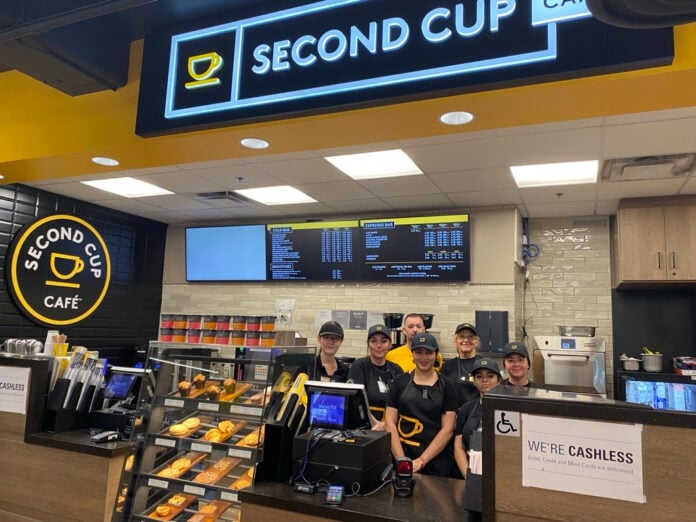
“The opportunity to broaden the footprint of our coffee brand-both in product offerings and physical reach-represents a significant growth avenue for us in 2025 and beyond. Thankfully we have significant bench strength in the coffee category within our leadership team. John Delutis brings experience from his time at Second Cup and Tim Hortons, Gary Fung previously served as Head of Finance and Strategy for Tim Hortons, and Randall Papineau successfully led Balzac’s Coffee; so we anticipate the integration to be smooth and acceleration of the brand to be immediate “

Related Retail Insider stories:

AI spending to surge as retail brands embrace innovation: IBM study

logistic management system using augmented reality technology to identify package picking and delivery . Future concept of supply chain and logistic business, artificial intelligence AI

A new global study from the IBM Institute for Business Value found that surveyed retail and consumer product executives are dramatically shifting their focus toward artificial intelligence (AI), with responses indicating that participants project spending outside of traditional IT operations could surge by 52% in the next year.

The report, titled “Embedding AI in Your Brand’s DNA,” reveals how brands are preparing for the next phase of AI-driven transformation across the enterprise, said IBM.

By 2025, retail and consumer products companies surveyed say they plan to allocate an average of 3.32% of their revenue to AI—equivalent to $33.2 million annually for a $1 billion company. This investment is set to span functions such as customer service, supply chain operations, talent acquisition, and marketing innovation, highlighting AI’s expansion beyond traditional IT applications, explained the report.

IBM said key findings from the report include:

  • Rapid Adoption Across the Enterprise: The report found that 81% of surveyed executives and 96% of their team are already using AI to a moderate or significant extent. Executives indicate they want to expand AI usage to more sophisticated use cases, such as integrated business planning where they plan to increase usage by 82% in 2025.
  • Workforce Transformation:  Executives surveyed expect that 31% of employees will need to learn new skills to work with AI in the next year, increasing to 45% within three years. AI use in customer service, particularly for personalized responses and follow-ups, could  grow by 236% in the next 12 months when compared to the prior year based on survey responses. Notably, responses indicate that 55% of these improvements are expected to involve human-AI collaboration, while only 30% would be fully automated—highlighting the need to equip employees for seamless AI integration.
  • AI Ecosystem Platforms: Investment in ecosystem platforms—tools that facilitate exchange of data and AI models—could skyrocket. Respondants indicated they expect growth from 52% today to 89% within three years as their companies look to blend AI capabilities with business and technology partners to accelerate innovation and drive efficiencies.
  • AI Governance Gap: Despite 87% of surveyed executives claiming to have clear AI governance frameworks, fewer than 25% have fully implemented and continuously review tools to manage risks like bias, transparency, and security. This reveals a critical gap in operational oversight.
Dee Waddell
Dee Waddell

“AI is no longer just a tool; it’s a strategic imperative,” said Dee Waddell, Global Industry Leader, Consumer, Travel & Transportation Industries at IBM. “Retail and consumer product companies are at a tipping point where embedding AI across their operations can help define not just productivity gains, but the future of brand relevance, engagement and trust.”

The report emphasizes that successful brands can evolve from viewing AI as merely a productivity booster to positioning it as a core driver of enterprise innovation. Achieving this transformation will require rethinking traditional governance and reskilling strategies, said IBM.

“Retailers should tailor AI initiatives to align with their brand priorities and collaborate with strategic partners, including start-ups and technology companies. Equally important is breaking down silos between finance, technology, and business leaders. By fostering cross-functional collaboration, these stakeholders can jointly build strong business cases that demonstrate how AI can help deliver a long-term competitive advantage,” it said.

Related Retail Insider stories:

Kelly Jessop West named new CEO of Chatters Hair Salon

Chatters Orchard Park Shopping Centre, Kelowna BC

Chatters Hair Salon has announced the appointment of Kelly Jessop West as its new Chief Executive Officer.

The company said she is an accomplished retail executive with over 25 years of experience and a proven history of delivering sustainable growth, driving innovation, and fostering collaboration in dynamic environments.

“Throughout her career, Kelly has demonstrated expertise in omni-channel retail, loyalty programs, and brand management while leading transformative initiatives that adapt to changing market trends and customer needs. Notably, Kelly held senior leadership roles as a Health & Beauty Executive at Shoppers Drug Mart and Loblaw Companies, where she spearheaded pivotal initiatives resulting in double-digit growth, enhanced market share, and strengthened organizational capabilities,” said Chatters.

“Kelly’s ability to lead through change and her collaborative, inclusive approach uniquely position her to guide Chatters forward while ensuring continuity in our mission and values,” said Jason Volk, Co-Founder and Chairman of the Chatters Board of Directors. “We are confident that her expertise and leadership will energize our teams and inspire innovative strategies to deliver enhanced value to all our stakeholders. Together, we will build on the solid foundation already in place and pursue new opportunities for success.”

In her new role, West will be working collaboratively with the brand’s stylists, beauty consultants, managers, and team members across Canada. Her leadership style is rooted in listening, learning, and fostering an environment where employees and customers alike feel valued and inspired, noted Chatters.

Kelly Jessop West (CNW Group/Chatters Hair Salon)

“I am truly honored to join Chatters, a company with a strong foundation and an exciting future,” said West. “I look forward to connecting with the talented team members who make Chatters exceptional and working together to build on its legacy of innovation, quality, and outstanding service. Together, we will create meaningful experiences that leave a lasting impact on our customers and communities.”

Chatters has over 115 salon locations nationwide with more than 1,200 stylists.

Related Retail Insider stories:

Frank And Oak Files for Bankruptcy Protection Amid $71M Debt

Frank and Oak at CF Toronto Eaton Centre
Frank and Oak at CF Toronto Eaton Centre - Photo by Dustin Fuhs

Frank And Oak, a notable Canadian fashion retailer known for its sustainable practices, has once again filed for protection under the Bankruptcy and Insolvency Act, seeking relief from mounting debts that total $71 million.

The filing, submitted just before Christmas by its parent company, Unified Commerce Group (UCG), reveals a substantial financial burden. Secured creditors, including UCG and Desjardins, are owed $55.5 million, while unsecured creditors are owed $14.6 million.

Among the unsecured creditors, significant claims include $3.5 million owed to the Canada Border Services Agency (CBSA), $1.7 million to the Canada Revenue Agency (CRA), and $529,000 to Ontario-based Shopify. Prepaid card customers are owed approximately $504,000, while manufacturers and logistics providers across Asia and the Americas are also heavily affected.

Dustin Jones, CEO of UCG, acknowledged the brand’s ongoing struggles in a letter to creditors dated December 16, stating, “Despite significant growth over the past few years, the company has struggled to recover from losses incurred as a result of the COVID-19 pandemic.”

Jones also emphasized plans to restructure the company’s operations and implement a more sustainable business model, though details remain scarce.

Frank and Oak Montreal (Image: Frank and Oak)

Industry Challenges and Competitive Pressures

Frank And Oak’s financial troubles reflect broader trends in Canadian retail. Damien Siles of the Quebec Retail Council noted that rising inflation, a weakened Canadian dollar, and reduced consumer purchasing power have created a challenging environment for retailers.

Additionally, global e-commerce giants like Shein and Temu have exacerbated competition by introducing thousands of new products daily at ultra-competitive prices. These companies leverage real-time production capabilities, creating a difficult playing field for traditional retailers.

Siles criticized governments for failing to adequately support domestic retailers, stating, “These global companies often bypass Canadian regulations, and more needs to be done to level the playing field.”

Frank And Oak’s Origins and Rise

Founded in Montreal in 2012 by Ethan Song and Hicham Ratnani, Frank And Oak began as an online-only retailer focused on sustainable and stylish clothing. The company quickly gained traction with its direct-to-consumer model, appealing to urban millennials seeking minimalist designs and eco-friendly options.

Frank And Oak’s innovative approach extended to its retail stores, where it introduced experiential shopping environments. Over time, the company expanded to physical locations across Canada, including boutiques in Montreal, Toronto, Halifax, and Vancouver.

The brand’s focus on sustainability—ranging from ethically sourced materials to environmentally conscious manufacturing practices—set it apart in a crowded market. At its peak, Frank And Oak was hailed as a leader in the Canadian fashion industry, garnering a loyal following.

However, financial challenges emerged as the company sought to scale. In 2020, Frank And Oak filed for bankruptcy protection for the first time, burdened by $19 million in debts. Later that year, it was acquired by Unified Commerce Group (UCG), a New York-based investment fund specializing in retail turnarounds.

The Current Financial Struggles

Despite UCG’s efforts to revive the brand, Frank And Oak has struggled to regain its financial footing. While the pandemic exacerbated existing challenges, the brand has also faced headwinds from rising operating costs and shifts in consumer behaviour.

The most recent filing for creditor protection shields the company from legal action while it works on restructuring. However, with debts now exceeding $71 million, the path to recovery is far from certain.

Broader Implications for Canadian Retail

Frank And Oak’s struggles highlight the difficulties faced by Canadian retailers in an increasingly globalized and competitive marketplace. According to data from the Quebec Retail Council, nearly half of Quebec’s retailers filed for bankruptcy in 2023, underscoring the fragility of the industry.

Damien Siles stressed the need for regulatory reforms to protect Canadian businesses. “Without stronger enforcement of Canadian laws, local retailers will continue to face unfair competition from global giants,” he said.

Looking Ahead

Frank And Oak’s future remains uncertain as it embarks on its second restructuring in three years. Unified Commerce Group has signalled its commitment to steering the brand toward sustainability, but significant challenges lie ahead.

The brand will need to address its substantial debt, adapt to shifting consumer preferences, and find innovative ways to compete with both domestic and international players.

As one of Canada’s most recognizable fashion retailers, Frank And Oak’s journey serves as a case study in the complexities of operating in today’s retail environment.

More from Retail Insider:

Comark to Close Cleo and Ricki’s Chains Amid Challenges

Ricki's at CF Market Mall
Ricki's at CF Market Mall in Calgary. Photo: Jessica Finch

Comark Holdings Inc., the Vancouver-based parent company of Bootlegger Clothing Inc., Cleo Fashions Inc., and Ricki’s Fashions Inc., has filed for creditor protection under the Companies’ Creditors Arrangement Act (CCAA). The move signals turbulence in the Canadian retail landscape, as the company announces plans to shutter its Cleo and Ricki’s brands entirely and downsize Bootlegger in an effort to find a buyer.

The company, which operates 221 stores across eight Canadian provinces, employs more than 2,000 people, including retail and head office staff. Comark’s decision to wind down operations for Cleo and Ricki’s comes after years of financial strain, exacerbated by the COVID-19 pandemic, a ransomware attack, and intensifying competition from ultra low-cost fashion retailers.

A Sobering Decision for Survival

“After careful consideration of all reasonably available options, the company has determined that it is in the best interests of its stakeholders to wind down its Ricki’s and Cleo operations and to close all retail store locations under those banners,” Comark said in a statement.

The company’s struggles have been mounting for years. The pandemic led to prolonged store closures, while a 2021 ransomware attack disrupted operations at a critical holiday sales period, resulting in an $8.2 million revenue loss. Additionally, global supply chain issues caused inventory delays that forced heavy markdowns, further straining profit margins.

Comark’s challenges reflect broader trends, where mid-tier retailers are being squeezed between high-end brands and aggressive low-cost players like Shein and Temu, according to the company in a statement. 

While Cleo and Ricki’s will be entirely liquidated, Comark hopes to salvage Bootlegger by downsizing its store footprint and seeking a buyer for the remaining business. The casual clothing retailer, which has been a staple in Canadian malls since the 1970s, has faced a 15% year-over-year decline in sales.

The closure of Cleo and Ricki’s, combined with downsizing at Bootlegger, could lead to as many as 200 vacant retail locations across Canada. This wave of vacancies will ripple through shopping malls, suburban plazas, and power centres where these stores are typically located.

Cleo at CF Polo Park in Winnipeg (Image: Cleo)

A Legacy of Fashion Retail in Canada

Founded in 1976, Comark has played a prominent role in Canadian fashion retail. Its banners, including Cleo and Ricki’s, catered to working women seeking professional and casual attire. Bootlegger, meanwhile, became a go-to destination for casual denim and activewear.

However, the rise of e-commerce, evolving consumer preferences, and a post-pandemic shift to hybrid work have upended demand for traditional officewear—a category that Cleo and Ricki’s heavily relied on.

Financial Pressures Come to a Head

Comark’s financial difficulties are well-documented. In 2024, the company reported a 19% decline in sales and a $21 million operating loss for the first nine months of the year. Total liabilities now exceed $168 million, including $61 million in accounts payable and $44 million owed to merchandise vendors.

The company’s largest creditor, CIBC, has issued demand notices, declaring all outstanding balances under its credit facilities immediately due. Vendors, landlords, and service providers have also initiated legal claims, seeking overdue payments.

PHOTO: BOOTLEGGER

A Perfect Storm of Challenges

Several factors contributed to Comark’s downfall:

  • Pandemic Disruptions: Extended store closures during key shopping periods led to steep losses in revenue.
  • Cyberattack: The 2021 ransomware attack halted operations for weeks, crippling inventory management and e-commerce.
  • Supply Chain Woes: Seasonal merchandise arrived late, forcing markdowns and eroding profit margins.
  • Competition: Ultra low-cost retailers disrupted the market, drawing budget-conscious consumers away from mid-tier brands.

What’s Next for Employees and Stakeholders?

Comark’s restructuring under the CCAA will leave more than 2,000 employees in limbo. While store-level staff will likely see their roles eliminated as stores wind down, head office employees may face a similar fate if a buyer for Bootlegger cannot be secured.

The ripple effects will extend to landlords, vendors, and service providers like Parian Logistics, which is owed $4.2 million for warehousing and distribution services. Without a steady revenue stream, many of these stakeholders will face significant losses.

A Difficult Road Ahead

As Comark begins the arduous process of liquidating two of its legacy brands, the future of Bootlegger remains uncertain. The once-thriving retailer must navigate a reduced footprint, intense competition, and a challenging economic climate to secure its survival.

For Canada’s retail industry, the closures serve as a stark reminder of the challenges ahead. From e-commerce disruption to shifting consumer habits, retailers must adapt swiftly to survive.

In the meantime, thousands of employees, landlords, and suppliers are left grappling with the fallout. And to some, this is the end of an era where it feels like we’re losing yet another piece of Canadian retail history.

More from Retail Insider:

PayMore opens 1st Canadian Stores with Expansion Plans

Image: PayMore Canada

PayMore®, a leading U.S.-based tech buy-back retailer, has officially expanded into Canada with the opening of its first two stores in Ontario. The company’s innovative buy, sell, and trade model promises to revolutionize the way Canadians engage with used electronics. 

With over 500 locations in development worldwide, PayMore is positioning itself for substantial growth in the Canadian market.

The First Two Stores in Canada: A Landmark Opening

On December 19, 2024, PayMore opened its inaugural locations in Brampton and Mississauga. Located in the Greater Toronto Area (GTA), these two stores—at 380 Bovaird Dr E in Brampton and 1476 Dundas St E, Unit 6, in Mississauga—are set to pave the way for over 120 locations across Canada within the next decade. These stores are the first steps in PayMore’s ambitious Canadian expansion plan.

Adam Corrin

Adam Corrin, Managing Partner and Co-Founder of Founder Brands, which holds the master franchise for PayMore in Canada, shared his enthusiasm about the company’s Canadian debut. “It’s been an exciting journey to bring PayMore to Canada. The launch of these two stores in Ontario represents the beginning of a much larger expansion,” he said in a recent interview. “We’ve been able to replicate the proven success of PayMore’s U.S. model, and we’re confident that Canadians will appreciate the value, convenience, and eco-friendliness that PayMore offers.”

Why Canadians Are Choosing PayMore

PayMore’s appeal lies in its unique approach to the buy-back industry. At its core, the business model revolves around providing consumers with instant cash for their old or unwanted electronics. From smartphones to laptops, gaming consoles, smartwatches, and tablets, PayMore purchases a wide range of tech devices. What sets PayMore apart from traditional pawn shops or online resale platforms is its focus on transparency, security, and sustainability.

“We offer top cash for your electronics, and you get paid on the spot,” Corrin explained. “Our customers can walk into the store, sell their devices, and leave with cash in hand. It’s that simple.”

Image: PayMore

In addition to providing instant payouts, PayMore places a strong emphasis on security. Every device sold to PayMore is securely wiped to ensure data privacy. This focus on data protection is a significant selling point for customers who may be hesitant about selling their devices due to concerns about personal information.

Furthermore, PayMore is committed to reducing electronic waste by giving devices a second life through resale. “The goal is not just to buy and sell electronics. It’s about promoting sustainability,” said Corrin. “By trading in old devices instead of throwing them away, our customers are actively contributing to a greener planet.”

Grand opening of the Brampton PayMore store. Image PayMore Canada

The PayMore Experience: A Hybrid Retail Concept

While PayMore’s primary business is buying used electronics, the stores also offer a retail component. Customers not only sell their devices but can also purchase pre-owned gadgets from the store’s inventory. This model is a hybrid between an electronics store and a buy-back center, offering a unique shopping experience that contrasts with traditional pawn shops.

“The in-store experience is key to PayMore’s success. We’ve intentionally designed our locations to feel more like an Apple store or a Rogers store,” Corrin noted. “Our customers can come in to sell their old electronics, but they can also find quality, affordable gadgets on the shelves.”

The store’s layout is carefully crafted to provide a seamless and enjoyable shopping experience. Electronics are displayed neatly, and customers are encouraged to browse the store for tech items they may need, making the buy-and-sell process convenient for all involved.

Expansion Plans: More Stores Across Canada

While the Brampton and Mississauga locations are just the beginning, PayMore has big plans for the Canadian market. “We’re targeting a total of 120 locations across Canada over the next 10 years,” said Corrin. “Our goal is to make PayMore a household name in Canada and to bring our services to communities nationwide.”

PayMore’s Canadian expansion is poised to continue with a strong focus on Ontario, where four additional stores are currently under construction, set to open in early 2025. But the company’s ambitions stretch beyond Ontario, with plans to open stores in major cities across the country, including Vancouver, Calgary, Montreal, and Halifax.

“Ontario is a natural starting point for our expansion given the density of the population, but we have already identified several key cities outside of Ontario for future stores,” Corrin added. “We’re actively seeking franchisees who are passionate about the tech industry and want to be part of a recession-proof, sustainable business model.”

Image: PayMore Canada

The Role of Franchisees in PayMore’s Growth

The franchise model is central to PayMore’s growth strategy in Canada. Founder Brands is looking to partner with multi-unit franchisees who are interested in taking on larger territories. According to Corrin, the ideal franchisee is someone with a background in technology or business who is looking for a high-return investment.

“We’re looking for franchisees who can manage multiple locations. In the U.S., PayMore has seen great success with multi-unit franchisees, and we want to replicate that model in Canada,” Corrin explained. “Our franchisees will benefit from a proven business model, strong corporate support, and access to PayMore’s proprietary technology.”

The business model offers a range of advantages for franchisees. PayMore’s proprietary point-of-sale system, PayMorePOS, and its PayStation technology streamline store management, enhance the customer experience, and minimize theft. These tools make the operational side of the business simpler and more efficient, which is especially important for new franchisees.

A Recession-Resilient Business Model

One of the factors that sets PayMore apart from other retailers is its recession-resistant model. As Corrin pointed out, the buy-back business thrives in both strong and challenging economic climates.

“In good times, people upgrade their devices, and in tough times, people look to declutter and trade in their old electronics for cash,” Corrin explained. “What’s great about PayMore is that it’s a business model that works regardless of the economic cycle. Consumers always need electronics, and they’re always looking for ways to save money.”

As the economy continues to shift, more and more Canadians are looking for ways to save on tech purchases. PayMore offers a solution by providing affordable, pre-owned electronics that are often priced much lower than new models. The company also ensures that its inventory remains fresh by constantly trading with customers and redistributing stock across its locations.

Looking Ahead: The Future of PayMore in Canada

With its innovative model and clear growth strategy, PayMore is positioned for success in Canada. As the brand continues to expand across the country, its emphasis on sustainability, affordability, and convenience will make it a popular destination for tech enthusiasts looking to buy, sell, and trade their electronics.

“We’re excited for what the future holds for PayMore in Canada,” said Corrin. “We’re just getting started, and we look forward to bringing our innovative approach to even more communities in the years to come.”

More from Retail Insider:

Is the Canadian retail loyalty program dead?

Loyalty Programs. Photo: Shutterstock/licensed

In the competitive landscape of retail, loyalty programs serve as essential tools for brands seeking to develop lasting relationships with consumers. As the retail environment continues to evolve, understanding the current state of loyalty programs in Canada has never been more crucial – but are retailers using them properly? Joanna Walker, Founder and CEO of Loyalty & Co, and Larry Leung, customer experience leader, discuss the current challenges facing programs, answering the question: are loyalty programs dead?

Remove barriers that make loyalty feel chore-like

Consumers are increasingly overwhelmed by complex loyalty programs and are in need of simple and personalized programs: “Consumers want simplification, they want things to be easier,” says Leung.

Larry Leung. Photo: LinkedIn.

He argues that personalization is critical. It’s not just about making a program simpler, but also about making it significantly more tailored to individual preferences, helping to create meaningful connections with customers.

“The goal is to present the right offers to the right customer at the right time,” says Leung. “Consumers today are looking for loyalty programs that don’t just bombard them with options, but instead focus on delivering what is actually useful and relevant to their needs. The challenge for retailers is to design programs that are easy to understand and use, while being sophisticated enough to offer personalized experiences. It is about removing barriers that make loyalty programs feel like a chore, making them a seamless part of everyday shopping.”

Leung emphasizes that personalized loyalty programs are not just about using the consumer’s email, but about understanding their shopping behaviours, preferences and spending habits: “This approach not only enhances the customer experience, but also significantly boosts the effectiveness of the loyalty program,” says Leung.

Going beyond the first impression

Walker says some loyalty programs offer sign-up discounts, which are beneficial if retailers plan to continue them, but can be annoying to consumers if ghosted. Walker says it is necessary for loyalty programs to extend value beyond initial discounts.

“Consumers all probably have a personal example of when they were like ‘oh my god, this is great – fantastic’ and then the retailer takes back the rewards and it is not a great customer experience,” suggests Walker.

Looking for relevance

Walker emphasizes that today’s consumers are not just looking for rewards; they are looking for recognition and relevance in the offers they receive from retailers. This includes connecting loyalty rewards with the consumer’s personal shopping habits and lifestyle.

“Consumers today are looking for more than just collecting points; they want offers that resonate with their specific needs and lifestyle choices,” she says. “They want to feel that the brands they are loyal to truly understand them. So, when we talk about personalization, it is about more than just addressing them by name in emails. It is about crafting offers that hit the mark by aligning with their shopping behaviours and personal preferences. For instance, if someone is frequently buying organic products, personalizing their rewards with offers on new organic items or providing them with exclusive early access to a sale on eco-friendly products can make all the difference.”

Reward programs must focus on value and personalization, and be timely and easy to use. One challenge Walker has noticed is retailers devaluing programs.

Finding a balance in loyalty offerings

Leung says the value attached to the program drives the success: “If it is only good for the business, but is of no value to consumers – you don’t have a good program,” he asserts. “Conversely, if it is only good for the consumer, but not the business, then the business doesn’t make any money. This equilibrium is crucial for the sustainability of loyalty programs.”

To maintain balance, Leung suggests that knowing your consumer by receiving proper data is critical.

“It is all about deepening your understanding of who your best customers are, what their behaviours are, making sure that you are serving up the right offers and delivering value to those best customers,” he says.

However, while creating offers, Leung warns against launching overly generous programs that might need scaling back as this can derail trust and engagement with consumers.

Although programs might have been created to attract consumers to sign-up; if those benefits and offers start to decrease, it can lead to consumers feeling underappreciated, causing longterm damage to their relationship with the brand.

“Retailers would never want to go back to market with a weak value proposition, but it is better to start with more of a conservative offer and build on that, than to take offers away,” says Leung. “If you launch with a very rich program and then have to pull it back, it damages trust. Consumers feel the loss deeply, which can sour the relationship.”

Keeping up with AI and consumer expectations

Like everything, Leung says the evolution of loyalty programs will be shaped by AI and data analytics. Leung believes these technologies will enable retailers to develop a deeper and more effective level of personalization.

“Loyalty programs offered by retailers in Canada must innovate to stay relevant,” he suggests. “The future of loyalty is bright, but it hinges on harnessing technologies that can truly understand and predict consumer behaviour. Brands also need to keep investing to ensure they evolve with consumer expectations and technological advancements. It is not just about maintaining a program; it is about continuously enhancing it to deliver genuine value.”

Going forward, Leung predicts a shift towards more integrated loyalty systems, where data from various sources are connected to provide a comprehensive view of the consumer.

“The integration of different data streams will allow for a more holistic approach to loyalty, where offers and rewards are precisely tailored, not just based on past purchases, but on a complete lifestyle understanding,” he says.

Walker’s future insights on loyalty programs

Walker highlights the need for retailers to continuously enhance loyalty programs, especially through the inroduction of new technologies that enhance service and offering:

“Incorporating new technologies enhances our ability to meet consumer needs and elevates the overall shopping experience,” she says.

Walker stresses that for retailers to continue improving their loyalty offering and ensure their long-term relevance, they need to keep up with the latest technologies.

In addition, she underlines the importance of redemption events as a means by which to not only bring consumers in, but to keep them. Redemption events not only benefit the consumer, but also the retailer.

“It is all about driving value,” she says. “The reason retailers do redemption events is because they are trying to burn points off their books as there are so many unused points out there. In addition to that, they will also get the uplift: if they give me $100 for 80,000 points, I am going to go in and I am actually going to spend $200. So, it is a good deal for them.”

If retailers hold more redemption events, Walker says this will also balance out providing points and discounts. As a result, consumers will feel more appreciated by the brand and will hopefully remain loyal.

Overall, Walker says retailers must focus on balancing loyalty reward programs so it benefits both the company and consumers. Not only should retailers be focusing on bringing balance and looking at what the consumer wants, they should also be keeping up with customer service.

“The level of customer service is diminishing, and there is no loyalty program that can help a retailer solve that,” she says. “And so, it is really important, from an operations perspective, that you are treating the customer well. People are in your retail location, and you are engaging with them, so make sure employees are trained well and then allow the program to do what you need it to do: deliver the right offers and make sure they are delivering value. If you have a really bad customer experience, but a great loyalty program – you are still going to have challenges from a retail perspective.”

Loyalty programs aren’t dead; they are evolving

Although Leung says most programs are not dead, he does acknowledge traditional systems are no longer efficient today. And, if a loyalty program is failing, Leung says it is a call for action for innovation rather than a sign of decreasing popularity.

“The entire industry is in critical need of rethinking how retailers and brands define loyalty, requiring an approach that moves well beyond points and discounts to create genuine connections and enriched experiences for consumers,” he says.

Leung’s insights show loyalty programs are not dead – yet. However, their survival depends on how well retailers adapt to new consumer expectations and technological advancements, moving from traditional reward systems to a more dynamic, personalized model.

Leung acknowledges that while some loyalty programs are struggling, the concept of loyalty programs itself is far from extinct.

“Brands must seize the opportunity to transform their loyalty strategies,” he says. “The future of the programs they offer them is not just what we offer, but on how we understand and engage with our consumers. Incorporating technology, like AI, to anticipate customer needs and crafting more personalized experiences is not just beneficial – it is imperative for survival in the competitive retail landscape.”

Both Walker and Leung emphasize the necessity of evolving loyalty programs to meet consumer demands. While Leung discusses the role of emerging technologies, Walker stresses the importance of integrating these technologies to provide exceptional customer service to create loyalty programs that are not only advanced, but also customer-centric.

*This article originally appeared in Retail Insider the magazine. To read the latest issue, click here.

VIDEO: Building the Retail Insider brand: Craig Patterson

Retail Insider continues to solidify its place as a leading voice in retail journalism, with Founder and Publisher Craig Patterson and Co-Editor-in-Chief Mario Toneguzzi named to RETHINK Retail’s prestigious Top Retail Experts list for 2025. This recognition not only highlights their individual expertise but also underscores the publication’s impact on the global retail landscape.

The honor is particularly significant for Retail Insider, which is the only Canadian news publication represented on the list. Patterson expressed pride in the achievement, noting, “It’s tremendous to have both Mario and myself recognized. It’s a testament to the hard work we’ve put into Retail Insider over the years, making it Canada’s top news publication for the retail industry.”

This isn’t the first time Retail Insider has been acknowledged on the global stage. Toneguzzi was recognized in 2024, alongside former Editor-in-Chief Dustin Fuhs. Patterson pointed out the consistent recognition as a reflection of the publication’s dedication to excellence. “This sustained acknowledgment highlights the depth and quality of our reporting and the importance of retail journalism in Canada,” he said.

Retail Insider began as a personal blog in 2012 when Patterson decided to channel his lifelong passion for retail into a creative outlet. Originally focused broadly on retail, the publication pivoted in 2014 to concentrate on Canadian retail news, filling a critical gap in the market. Today, Retail Insider has grown into a comprehensive platform, attracting more than 800,000 monthly visitors and boasting a strong social media following, with over 52,000 LinkedIn followers.

For Patterson, the growth of Retail Insider reflects his fascination with the art and history of retail. “I’ve always been intrigued by how retail spaces create experiences, whether in physical stores or online. It’s a dynamic industry that combines commerce with creativity,” he explained. This passion has been instrumental in shaping the publication’s unique voice and direction.

As the retail industry evolves, Retail Insider remains at the forefront of covering key trends and developments. Patterson emphasized that while the publication has historically had a strong focus on real estate, there is a growing interest in digital innovation, retail technology, and experiential retail concepts. “We’re expanding our content to include thought leadership in these areas and are even exploring the possibility of launching a dedicated e-commerce publication,” Patterson revealed.

Retail Insider’s coverage has also highlighted the changing face of Canadian retail, including the decline of traditional department stores, the rise of outlet malls, and the ongoing transformation of shopping centres. With recent projects like Montreal’s Royalmount and Vancouver’s Oakridge Park leading the way in retail innovation, the publication continues to report on the future of the industry while preserving its history.

For retailers, Retail Insider offers a platform to share their stories, whether they are celebrating milestones, launching new ventures, or expanding operations. Patterson encouraged businesses to reach out: “This is the time to tell the story of Canadian retail, whether it’s a long-standing retailer or a new entrant to the market.”

With a strong foundation and plans for future growth, Retail Insider is poised to remain an essential resource for the retail industry. Patterson summed it up best: “Retail Insider has changed my life, and I’m grateful to play a part in telling the stories that shape Canadian retail.”

Related Retail Insider stories:

Mario Toneguzzi and Craig Patterson Named 2025 Top Retail Experts

Retail Insider’s Co-Editor-in-Chief Mario Toneguzzi and Founder/Publisher Craig Patterson have both earned a place among Rethink Retail’s 2025 Top Retail Experts (TRE), a prestigious honour recognizing the global leaders and influencers in the retail and consumer packaged goods (CPG) industries. The recognition highlights their individual contributions to the retail sector as well as a significant milestone for Retail Insider, solidifying its position as the only Canadian publication to have members named in this distinguished category.

The TRE distinction is one of the most esteemed global accolades in the retail and CPG industries. It is awarded annually and includes various categories such as Academia, Analysts, Associations, Consultants, Finance, Media, Real Estate, Specialists, and Technologists. The honour is bestowed upon individuals who have made outstanding contributions to their respective fields, with their impact influencing and shaping the global retail landscape. Being named a part of the TRE community is considered a tremendous achievement, as recipients are recognized as the top thought leaders and market makers in their sectors.

For both Toneguzzi and Patterson, this recognition is a personal achievement and a testament to the work of Retail Insider and its continued growth as a key player in the Canadian retail media landscape.

Mario Toneguzzi: A Distinguished Career

This marks the second consecutive year that Mario Toneguzzi has been named to the TRE list, a remarkable achievement that underscores his expertise and respected voice in the retail industry. With more than 40 years of experience in journalism, Toneguzzi’s career includes over three decades as a writer, columnist, and editor at the Calgary Herald, where he covered a wide range of topics, including sports, crime, politics, health, and business. His work at the Herald laid the foundation for his later success in the retail sector, where he has proven himself a trusted source of news and analysis.

As Co-Editor-in-Chief of Retail Insider, Toneguzzi’s keen insights into the retail sector have played a pivotal role in shaping the publication’s content and vision. His ability to distill complex retail trends and developments into clear, engaging, and informative articles has made him a key figure in Canadian retail journalism. His continued recognition as one of the top retail experts is a testament to his influence in the field and his unwavering commitment to providing high-quality, in-depth reporting.

Craig Patterson: A Visionary Leader in Canadian Retail

For Craig Patterson, this honour further cements his status as one of Canada’s foremost retail experts. Based in Toronto, Patterson is the Founder and Publisher of Retail Insider, a platform he established in 2012 to provide comprehensive news and analysis of the Canadian retail industry. With over 25 years of experience as a retail analyst, consultant, and public speaker, Patterson has developed a deep understanding of the Canadian retail landscape. His expertise spans not only retail strategy and market trends but also the broader economic forces shaping the industry.

Patterson’s background is both diverse and extensive. Holding both a Bachelor of Commerce and a Bachelor of Laws degree, he has worked in various fields, including law and retail consulting. His work as an advisor at the University of Alberta School Centre for Cities and Communities reflects his commitment to contributing to the broader retail ecosystem, using his expertise to inform future generations of leaders and policymakers.

Under Patterson’s leadership, Retail Insider has become the largest and most influential publication focused on the Canadian retail industry. Through his dedication to high-quality journalism and his ability to identify emerging trends in retail, Patterson has shaped Retail Insider into an essential resource for professionals, analysts, and industry leaders across the country.

The Significance of the Award for Retail Insider

The recognition of Toneguzzi and Patterson as Top Retail Experts is a proud moment for Retail Insider, as it underscores the publication’s significant role in the retail media landscape. As the only Canadian publication to have members included in the TRE Community, Retail Insider’s standing as a thought leader in Canadian retail is solidified, offering insights into trends, challenges, and opportunities that shape the future of the industry.

For Toneguzzi and Patterson, being named to the TRE list also highlights the impact of their collective work at Retail Insider. It is a reflection of the publication’s commitment to providing accurate, timely, and valuable insights to the retail industry and its stakeholders. Both individuals have played crucial roles in cultivating a community of informed readers and industry professionals, driving forward the discourse around Canadian retail and contributing to its ongoing development.

A Global Recognition

The Rethink Retail Top Retail Experts list is highly regarded within the industry and is considered one of the most prestigious recognitions for leaders in retail. The TRE awards are based on recommendations from a variety of committees, corporations, and current members, making the process highly selective and rigorous. Toneguzzi and Patterson’s inclusion in this group places them alongside other influential figures in retail, offering them an opportunity to connect with the broader retail and CPG communities on a global scale.

This recognition also shines a light on the Canadian retail industry, which is often underrepresented on the global stage. By having two of its own named to this distinguished list, Canada’s retail sector gains a valuable opportunity to increase its visibility and demonstrate its importance within the global retail ecosystem.

Looking Ahead

As both Toneguzzi and Patterson look to the future, this recognition serves as a springboard for even greater accomplishments within the retail industry. For Toneguzzi, his ongoing work at Retail Insider will continue to influence how retail trends and developments are covered, helping to shape the future of retail journalism. Patterson’s leadership at Retail Insider will ensure that the publication remains at the forefront of Canadian retail news, while his ongoing contributions to the retail sector will continue to inform and inspire both current and future generations of retail professionals.

More from Retail Insider:

2024’s Top Retail Experts: Retail Insider’s Dustin Fuhs & Mario Toneguzzi Honoured [Video Interview]