Advertisement
Advertisement
Home Blog Page 40

Lululemon Q4 Profit Falls as Global Growth Shifts

lululemon at West Edmonton Mall (Image: West Edmonton Mall)

Vancouver-based Lululemon Athletica Inc. reported a decline in quarterly profit as revenue growth remained modest, reflecting a challenging North American environment alongside stronger international performance.

The company announced that net income for the fourth quarter ended February 1, 2026, totaled approximately $586.9 million, down from $748.4 million a year earlier. Diluted earnings per share fell to $5.01 from $6.14 in the prior year period. Revenue reached $3.6 billion, representing an increase of about one per cent compared to the same quarter last year.

However, the year-over-year comparison was impacted by the absence of a 53rd week that was included in the prior fiscal year. On a comparable basis, excluding that extra week, revenue growth was closer to six per cent.

Despite the modest headline growth, the latest Lululemon earnings exceeded analyst expectations, highlighting continued resilience in certain segments of the business even as profitability came under pressure.

Diverging Regional Performance Shapes Results

The latest results underscore what management described as a “tale of two markets,” with strong international growth offsetting continued softness in North America.

International revenue increased 17 per cent in the fourth quarter, with Mainland China emerging as a standout market, posting growth of 28 per cent. By contrast, revenue in the Americas declined four per cent, while comparable sales in the region slipped by one per cent.

This divergence reflects broader shifts in consumer demand and competitive dynamics. North America, which has historically been Lululemon’s core market, is experiencing slower traffic and increased promotional activity, while international markets continue to offer expansion opportunities and higher growth potential.

Men’s accessories at Lululemon at Yonge and Bloor in Toronto. Photo: Craig Patterson

Margin Pressure Weighs on Profitability

While revenue held steady, profitability was impacted by several factors, including rising costs and external economic pressures.

Gross margin declined by 550 basis points to 54.9 per cent, while operating margin dropped 660 basis points to 22.3 per cent. The company pointed to higher costs of goods sold, which rose nearly 15 per cent, as well as the impact of U.S. import tariffs.

Inventory levels also increased significantly, rising 18 per cent to $1.7 billion. The buildup reflects both expansion efforts and softer demand in certain regions, contributing to increased markdown activity and margin compression.

These dynamics highlight the challenges facing premium apparel brands as they balance growth, pricing power, and cost pressures in a shifting retail environment.

Digital Growth Continues to Drive Performance

One of the more positive elements in the latest Lululemon earnings was the continued strength of its digital business.

Digital revenue grew nine per cent in the quarter, reaching approximately $1.9 billion. Online sales now account for nearly 52 per cent of total revenue, reflecting a sustained shift in consumer shopping behaviour toward e-commerce.

Management indicated that digital channels are helping offset the higher operational costs associated with physical stores. At the same time, the company is leveraging digital platforms to support product launches, including its new “ShowZero” technology, which is being promoted through digital-first campaigns.

The growth of e-commerce remains a critical component of Lululemon’s strategy as it navigates changing consumer expectations and seeks to drive full-price sales.

Global Expansion Strategy Targets New Markets

Looking ahead, Lululemon is focusing its expansion strategy on international markets, particularly in Asia and Europe.

The company plans to open between 40 and 45 net new company-operated stores globally in fiscal 2026, building on a network that reached 811 locations at the end of fiscal 2025. This represents an increase from 767 stores the previous year.

In addition to organic growth, Lululemon is entering several new markets through franchise and partnership models. These include Greece, Austria, Poland, Hungary, and Romania in Europe. In Asia, the company is preparing for a major entry into India through a partnership with Tata CLiQ, scheduled for the second half of 2026.

China remains a central focus, with plans to expand further into Tier 2 cities following strong recent performance. The international strategy reflects a deliberate pivot toward higher-growth regions as North American expansion slows.

Future Lululemon store at 1035 Ste-Catherine St. W. in Montreal. Photo: Retail Insider

North American Strategy Shifts to Optimization

In contrast to its global expansion, Lululemon is taking a more measured approach in North America.

Rather than aggressively opening new stores, the company is focusing on optimizing its existing fleet. This includes relocating to larger spaces in high-performing malls, as well as evaluating successful pop-up locations for permanent conversion.

The strategy also involves refining product assortments to better align with consumer preferences. Interim leadership has indicated a shift toward a more curated offering, with fewer logos and a greater emphasis on technical lifestyle products.

This approach is intended to improve productivity and restore full-price selling in a market that has become increasingly competitive.

Leadership Transition and Board Developments

Calvin McDonald
Calvin McDonald

The latest Lululemon earnings come during a period of significant leadership transition.

Calvin McDonald officially stepped down as CEO on January 31, 2026, and is currently serving as Senior Advisor through March 31. The company is now led by Interim Co-CEOs Meghan Frank, Chief Financial Officer, and André Maestrini, Chief Commercial Officer, as the search for a permanent CEO continues.

At the board level, Lululemon confirmed that Chip Bergh, former president and CEO of Levi Strauss & Co., officially joined the board on March 17, 2026. His appointment adds significant global retail experience at a time when the company is navigating both operational and strategic shifts.

Activist Pressure Adds Strategic Complexity

Founder Chip Wilson has intensified his criticism of the company’s direction, arguing that Lululemon has strayed from its core identity.

He has called for the addition of new board members with stronger brand and product experience, while also criticizing what he views as an overreliance on discounting and a lack of innovation.

The company has pushed back against these claims, stating that Wilson has not been involved in the business for over a decade and that his comments are inaccurate and misleading.

This ongoing tension adds another layer of complexity to Lululemon’s strategic outlook as it navigates both operational challenges and governance debates.

Outlook Reflects Cautious Growth Expectations

Lululemon’s guidance for fiscal 2026 reflects a cautious outlook.

The company expects revenue to reach between $11.35 billion and $11.50 billion, representing growth of approximately two to four per cent. Earnings per share are projected to range from $12.10 to $12.30, below the $13.26 reported in fiscal 2025.

Management has emphasized a focus on improving full-price sales in North America while continuing to invest in international expansion and digital capabilities.

More from Retail Insider:
Alimentation Couche-Tard reports Q3 2026 financial results

PHOTO: CIRCLE K

Alimentation Couche-Tard Inc. announced Tuesday its results for its third quarter ended February 1, 2026, with total merchandise and service revenues of $5.8 billion, an increase of 8.7%.

Alex Miller
Alex Miller

“For the third consecutive quarter, we delivered positive same-store sales across every region and once again outperformed the broader industry. Customers continue to respond to the value and ease of our offer, from Meal Deals to our compelling Thirst and Nicotine programs, which along with healthy fuel margins and deepening loyalty program engagement are feeding our momentum as we execute our refreshed Core + More strategy,” said Alex Miller, President and Chief Executive Officer.

“Heading into the fourth quarter of our fiscal year, I couldn’t be prouder of the teams driving these results, focused on winning our customers and embracing our vision to become the world’s favorite stop for people on the go.”

Filipe Da Silva
Filipe Da Silva

“We delivered one of our best quarterly performance in over two years, with same-store sales accelerating as the quarter progressed and contributing to solid growth in both adjusted EBITDA and earnings per share,” said Filipe Da Silva, Chief Financial Officer.

“These results validate that the actions outlined in our Business Strategy Update are translating into measurable outcomes. Continued focus on traffic, customer value and operational execution is strengthening our growth algorithm and driving long-term value creation.”

Quarterly Highlights

  • Net earnings attributable to shareholders of the Corporation were $757.2 million for the third quarter of fiscal 2026 compared with $641.4 million for the third quarter of fiscal 2025. Adjusted net earnings attributable to shareholders of the Corporation were approximately $751.0 million compared with $641.0 million for the corresponding quarter of last year, representing an increase of 17.2%.
  • Net earnings attributable to shareholders of the Corporation were $0.82 per diluted share for the third quarter of fiscal 2026 compared with $0.68 per diluted share for the third quarter of fiscal 2025. Adjusted diluted net earnings per share were $0.81, representing an increase of 19.1% from $0.68 for the corresponding quarter of last year.
  • Total merchandise and service revenues of $5.8 billion, an increase of 8.7%. Same-store merchandise revenues increased by 2.8% in the United States, by 0.4% in Europe and other regions, and by 0.3% in Canada. Consolidated same-store merchandise revenues increased by 2.0%.
  • Merchandise and service gross margin decreased by 0.1% in the United States to 33.9%, and by 0.1% in Europe and other regions to 38.9%, while it increased by 0.1% in Canada to 32.5%.
  • Same-store road transportation fuel volumes decreased by 0.4% in the United States, and by 1.6% in Europe and other regions, while it increased by 4.2% in Canada.
  • Road transportation fuel gross margin of 47.71¢ per gallon in the United States, an increase of 3.43¢ per gallon, US 10.87¢ per liter in Europe and other regions, an increase of US 1.58¢ per liter, and CA 15.82¢ per liter in Canada, an increase of CA 2.28¢ per liter.
  • Solid pipeline execution with 37 new-to-industry openings, and 8 relocated or reconstructed stores, reaching a total of 80 stores since the beginning of fiscal 2026. As of February 1, 2026, another 58 stores were under construction and should open in the upcoming quarters.

“We acquired 12 company-operated stores, reaching a total of 26 company-operated stores acquired through various transactions since the beginning of fiscal 2026. We settled these transactions using our available cash,” said the company.

“During the quarter, we completed the construction of 37 stores and the relocation or reconstruction of 8 stores, reaching a total of 80 stores since the beginning of fiscal 2026. As of February 1, 2026, another 58 stores were under construction and should open in the upcoming quarters.”

Couche-Tard is a global leader in convenience and mobility, operating in 27 countries and territories, with close to 17,300 stores, of which approximately 13,200 offer road transportation fuel. With its well-known Couche-Tard and Circle K banners, it is one of the largest independent convenience store operators in the United States and it is a leader in the convenience store industry and road transportation fuel retail in Canada, Scandinavia, the Baltics, Belgium, as well as in Ireland. It also has a presence in Luxembourg, Germany, the Netherlands, Poland, as well as in Hong Kong Special Administrative Region of the People’s Republic of China. Approximately 149,500 people are employed throughout its network.

More from Retail Insider:



Healthcare Retail Expansion Surges as Traditional Canadian Stores Face High Vacancy Rates

Image generated by Gemini

Canada’s retail landscape is in a state of stark transition. While legacy department stores are leaving behind vast, empty spaces, a new type of tenant is quietly moving in: the doctor and the dentist. A recent JLL Canada report highlights a national retail vacancy rate of 2.5%, largely driven by these closures. This void, however, is being filled by a powerful trend known as “medtail”—the integration of healthcare services into traditional retail settings. This shift is more than just a real estate transaction; it’s reshaping community shopping centers into essential service hubs, creating a win-win for landlords, consumers, and surrounding businesses.

What’s Fuelling the Medtail Surge in Canadian Retail?

The rapid rise of medtail is not an accident but a response to converging market forces. On one side, commercial landlords are grappling with unprecedented vacancies left by traditional anchors. On the other hand, a confluence of demographic and policy changes is creating immense demand for accessible healthcare services, turning a real estate problem into a strategic opportunity.

The “Retail Landlord’s Dilemma”: An Opportunity in Disguise

The findings from the JLL report are clear: traditional anchor tenants like department stores are disappearing, leaving landlords with significant vacancies to fill. These large, well-located, and highly visible spaces are prime for redevelopment. As seen in other markets, tight leasing conditions are calling for the strategic redevelopment of existing assets to meet modern needs. In Canada, this means landlords are actively seeking stable, long-term tenants who are immune to the pressures of e-commerce, and healthcare providers fit that profile perfectly.

A Perfect Storm of Healthcare Demand

This real estate opportunity coincides with an unprecedented demand for accessible healthcare, driven by several key factors. First, Canada has a steadily aging population, which naturally increases the need for routine and specialized medical services—a demographic trend also fuelling medtail growth in other regions. Second, the federal government has introduced a policy game-changer: the Canadian Dental Care Plan (CDCP). This program aims to provide dental coverage to up to nine million previously uninsured Canadians, single-handedly creating millions of new consumers actively seeking care. Finally, the sector itself is proving its economic stability. The Canadian dental services market is not only projected to grow at a 5.4% compound annual growth rate but has already surpassed pre-pandemic productivity levels by $851 million, demonstrating its robust resilience.

The Ripple Effect: How Medtail Revitalizes the Entire Retail Ecosystem

The introduction of medtail tenants does more than just fill an empty storefront; it fundamentally alters the commercial gravity of a shopping plaza. By offering essential services, these healthcare clinics become the new, more resilient anchor tenants, creating a positive ripple effect that benefits landlords and adjacent retailers alike.

A Lifeline for Landlords: The Value of a Resilient Tenant

For property owners, medtail tenants are a crucial lifeline in a volatile market. They are both “recession-proof” and “e-commerce-proof,” as one cannot get a dental cleaning, a physiotherapy session, or a medical check-up online. These tenants are highly desirable because they typically sign long-term leases of 10 to 15 years, possess high creditworthiness, and invest significant capital into their spaces for specialized infrastructure. This provides landlords with the stable, predictable rental income needed to secure financing and maintain property value.

The New Anchor Tenant: Driving Consistent Foot Traffic

Unlike discretionary retail, healthcare appointments are necessity-based, creating a steady and reliable stream of visitors to a shopping center. These visits often occur during off-peak retail hours on weekdays, smoothing out traffic patterns throughout the week. This consistent flow of people generates significant positive externalities for neighboring businesses.

  • Increased Cross-Shopping: Patients frequently combine appointments with other errands, visiting nearby cafes, pharmacies, or grocery stores before or after their visit, boosting sales for co-tenants.
  • Consistent Daytime Traffic: Medtail draws a reliable daytime population to the plaza throughout the workweek, a demographic that traditional retail often struggles to attract.
  • Community Hub Creation: A plaza that offers essential health services becomes a trusted, one-stop destination for local families, enhancing its role and relevance in the community.
  • Enhanced Property Value: A diversified tenant mix with a stable medtail anchor makes the entire property more attractive to investors and other potential retail tenants.

A Tale of Two Anchors

The contrast between the old retail model and the emerging medtail-anchored model is striking. The new anchor provides a level of stability and consistent traffic that department stores, vulnerable to economic cycles and online competition, can no longer guarantee.

FeatureTraditional Anchor (e.g., Department Store)“Medtail” Anchor (e.g., Dental Clinic) 
Foot Traffic DriverDiscretionary; seasonal peaks (e.g., holidays)Necessity-driven; consistent year-round
Economic ResilienceVulnerable to e-commerce and recessionsHighly resilient; services are non-negotiable
Lease TermIncreasingly shorter-term or with break clausesTypically long-term (10-15+ years)
Benefit to Co-tenantsDraws shoppers, but traffic is decliningDrives reliable, errand-bundling foot traffic
Community RolePrimarily transactional (shopping)Essential service hub (health and wellness)

The Anatomy of a Model Medtail Tenant

Not all medtail tenants are created equal. The most successful and impactful models are those that go beyond offering a single service and instead position themselves as a comprehensive health destination for the entire community. This approach maximizes their value as a reliable traffic driver for the entire shopping center.

Beyond the Basics: Why an All-in-One Service Model Wins

The most sought-after medtail tenants are those that become a true “health home” for local families. By offering a comprehensive suite of services under one roof—from routine check-ups to specialized procedures—they encourage patient loyalty and generate multiple visits per year from each family member. This all-in-one strategy not only secures a stable business model for the clinic but also multiplies its foot traffic, which is the ultimate goal for any retail landlord.

A Case Study in Community-Centric Care

A prime example of this integrated model in action is Dawson Dental Clinics. The organization’s strategy directly aligns with the characteristics of a premier medtail anchor. By establishing a strong presence in accessible, convenient retail plazas across the country, they remove common barriers to care for busy individuals and families. Their “all-in-one” approach is key to their success as a plaza draw. Instead of just offering basic check-ups, their clinics provide a comprehensive range of services, including general dentistry, cosmetic procedures, orthodontics, and specialty care. This model fosters long-term relationships, turning a one-off visit into a consistent healthcare partnership. For a landlord, this means a single family might generate a dozen or more visits to the plaza annually for various treatments and check-ups for different family members. This consistent, non-discretionary foot traffic provides the lifeblood that supports surrounding retailers, demonstrating how a well-executed medtail strategy can elevate an entire commercial property.

Challenges and Considerations on the Path to Medtail

While the opportunity in medtail is significant, the path to converting traditional retail spaces into clinical facilities is not without its complexities. Landlords and healthcare providers must navigate considerable structural and economic hurdles to ensure a successful transformation.

Not a Simple Retrofit

Converting a former retail box into a functioning clinical space is a complex undertaking. As noted in markets that have seen a rise in medtail, it is not as simple as just reconfiguring walls. These projects require significant capital investment in specialized infrastructure, including enhanced plumbing for clinical needs, robust electrical systems to power medical equipment, specialized HVAC for air quality control, and soundproofing to ensure patient privacy and meet healthcare standards.

Navigating the Economics of Care

The financial models for retail health can also be complex, a factor that has created challenges in the U.S. market where services are often under-reimbursed. However, the Canadian market is buffered by government initiatives like the CDCP, which create a more stable and predictable reimbursement environment, mitigating some of these risks and encouraging further expansion. Nevertheless, cost can still be a barrier for some patients, as nearly a quarter of Canadians have avoided dental visits for this reason. This fact reinforces why accessible retail locations and programs like the CDCP are so vital for the trend’s continued success.

The Future of the Canadian Shopping Plaza is Healthy

The rise of medtail is a fundamental and permanent shift in the Canadian retail landscape, not a temporary trend. It represents a powerful convergence of a clear real estate opportunity—large, well-located vacancies—and undeniable healthcare demand driven by demographics and supportive government policy. By replacing struggling retail giants with essential health and wellness services, Canadian landlords are not just filling empty storefronts. They are building more resilient, future-proof, and community-focused properties. The once-humble strip mall is being reborn as a central hub for daily life and wellness.

Why Custom Embroidered Hoodies Are a Smart Retail Investment in 2026

A neatly folded premium hoodie with an embroidered chest logo

The personalization economy has moved well past monogrammed mugs. According to Business Research Insights, the global custom-made clothes market is valued at USD 63.82 billion in 2026 and is on track to nearly triple to USD 179.49 billion by 2033. For retail decision-makers, that trajectory signals something important: branded apparel is no longer a sideline marketing expense — it’s a category with serious strategic weight.

Custom embroidered hoodies sit at the intersection of brand identity, employee engagement, and rising consumer demand for personalized products. This piece breaks down the business case, the data behind the hoodie’s staying power, and what retail buyers should know before committing to a program.

The Business Case for Branded Apparel

Branded merchandise has matured into a genuine brand touchpoint — not a freebie at the bottom of a conference bag. According to PPAI research, apparel has overtaken writing instruments to become the number one promotional product category acquired by consumers. More telling: 72% of recipients said they made a purchase from a brand because of a promotional product they received, and 70% equate the quality of that product directly with the reputation of the company that gave it — a 30-point jump from 2021.

That last figure matters for retail brand managers. A cheap, poorly constructed item with a flaking logo doesn’t just fail to impress — it actively signals something about your brand. The inverse is equally true: a well-made, durable piece carries your brand story forward every time it’s worn.

Embroidery specifically elevates perceived quality. Unlike screen-printed transfers, embroidered logos are tactile, dimensioned, and don’t crack or fade with washing — attributes that translate directly to consumer perception of premium quality.

Why Hoodies? The Case for This Specific Format

Retail team in matching branded hoodies at a store event

Not all branded outerwear performs equally. Hoodies have undergone a structural shift in consumer culture. Driven by the convergence of athleisure and everyday casual dressing, hoodies are now worn in office environments, at events, and during everyday errands — which means each branded item generates more impressions per week than virtually any other wearable category.

The market reflects this. North America accounts for approximately 40% of the global custom apparel market, and Fortune Business Insights projects the U.S. hoodies and sweatshirt market alone will reach USD 85.22 billion by 2026. That’s a category with broad consumer acceptance and deep seasonal utility.

For retailers and brands building out a branded apparel program, custom embroidered hoodies offer a format that holds up across all three primary use cases: employee uniforms, corporate gifts, and consumer-facing merchandise. The heavyweight fleece construction typically used for quality hoodies also makes it one of the better base materials for embroidery — the thread sits cleanly, logo detail is preserved, and the finished product holds its form through repeated wear and washing.

Three Use Cases Driving Demand in 2026

Now, let’s check out three use cases in order to develop an in-depth understanding of the topic.

Employee Uniforms and Team Identity

Retail floor staff and event teams in matching branded hoodies project brand consistency in a way that lanyards and name tags never will. Apparel functions as ambient brand communication — visible to every customer who walks through the door. For multi-location retailers, consistent branded outerwear also reinforces culture and cohesion across teams who rarely interact.

Corporate Gifts and Client Appreciation

Generic corporate gifting is a diminishing returns game. A quality embroidered hoodie — well-chosen, well-constructed, and properly packaged — is the kind of gift recipients actually keep and wear. That means your brand stays visible for months or years, not days. PPAI’s industry outlook for 2025 notes that 65% of promotional product distributors expect continued sales growth, driven in part by demand for higher-quality, wearable gifting.

Consumer Merchandise and Loyalty Programs

More than 55% of consumers say they prefer customized garments over mass-produced alternatives, and online sales of custom clothing have grown 70% over the last three years. For brands with an engaged customer base, a well-designed hoodie as part of a merchandise drop or loyalty reward creates an additional revenue stream while deepening brand affinity. Online platforms now account for 65% of custom apparel sales — a channel that rewards brands who invest in quality product photography and clean customization UX.

The decorated apparel market — which covers embroidery, screen printing, and sublimation — was valued at USD 28.98 billion in 2023 and is projected to reach USD 68.17 billion by 2030, according to Grand View Research, growing at a 13% CAGR. Embroidery remains the dominant decoration method in that market.

Two additional trends are worth noting for retail planners. First, sustainability: made-to-order production eliminates the overstock problem that plagues conventional apparel retail, and consumers are increasingly aware of this — a growing share of shoppers view custom-ordered clothing as the more environmentally responsible choice. This holds true even with a drop in retail numbers.

Second, personalization at scale: platforms offering on-demand customization tools report significantly higher engagement than static product pages. Retailers building private-label or merch programs should consider whether their supplier can accommodate individual customization alongside bulk orders.

As covered in Retail Insider’s look at branded promotional merchandise, the promotional product category broadly is evolving from volume plays toward quality-driven, brand-aligned selections — and hoodies are a centerpiece of that shift.

Choosing the Right Embroidery Partner

Execution quality varies considerably across the industry. The most common failure point is digitizing — the process of converting a logo file into machine-embroidery instructions. Poor digitizing produces muddy lettering and blurred detail, particularly on smaller logo placements. Before committing to a bulk order, request a physical sample and evaluate thread density, color accuracy, and how the logo reads at the intended placement size.

Standard considerations for retail buyers: minimum order quantities (relevant for small and mid-size operators), fabric weight (320–400 gsm fleece holds embroidery well), and turnaround time for reorders. Left-chest placement at roughly 3.5 inches wide is the accepted standard for corporate logo embroidery — deviations from this should be intentional, not default.

Understanding the craft behind personalized clothing gives buyers the vocabulary to ask sharper questions and evaluate supplier samples more critically — a small investment of time that pays off in a better finished product.

A Wearable Brand Strategy

The numbers behind branded apparel point in one direction: the market is growing, consumer appetite for personalization is accelerating, and quality is becoming the differentiator. Custom embroidered hoodies offer retailers a single SKU capable of serving employee programs, gifting initiatives, and consumer merchandise — with a durability and perceived-value premium that cheaper decoration methods can’t replicate.

Retailers who are now building quality-branded apparel into their strategy are investing in brand visibility that compounds over time. Every wear is an impression; every impression is a touchpoint that no media buy can replicate.

Why Retail Brands Are Turning to Utah-Based 3PLs to Solve Their Western U.S. Fulfillment Problem

Aerial view of a modern distribution center with loading docks set against a Western U.S. mountain backdrop

E-commerce now accounts for nearly one in four retail dollars spent in the United States — and the consumer who placed that order expects it on their doorstep within two days. That expectation, once a premium offering from large marketplaces, is now the baseline. Brands that can’t meet it lose to those that can.

For retail operators still fulfilling exclusively from coastal warehouses in Los Angeles or Seattle, the math is working against them. Shipping to customers in the Mountain West and Midwest from either coast burns through higher zone charges and slower ground transit times. Meanwhile, a growing cohort of retail brands has found a more efficient answer: positioning a third-party logistics partner in Utah. The state has quietly become one of the most strategically valuable fulfillment hubs in North America — and the case for it is built on infrastructure, geography, and hard numbers.


Why Utah Has Become a Premier Logistics Hub

Utah’s value to retail logistics starts with its geography. Positioned at the intersection of Interstate 15 and Interstate 80, a Salt Lake City fulfillment center puts brands within ground-shipping reach of Los Angeles, Las Vegas, Phoenix, and Denver — all within one to two days. According to industry data, 96% of the U.S. population is reachable within two days via ground from a Salt Lake City warehouse. For brands managing national distribution from a single node, that coverage is difficult to match.

Infrastructure investment reinforces the geographic advantage. The Utah Inland Port Authority has launched more than 12 project areas statewide, with a new $22 million public infrastructure district approved in June 2025 covering rail, road, and utility improvements that directly benefit 3PL operations across the state. Salt Lake City International Airport adds multimodal flexibility, serving as a significant air cargo hub for time-sensitive shipments.

Map showing ground shipping radius from Salt Lake City with 1-day and 2-day delivery zones across the United States

Utah’s economic fundamentals are equally strong. The state’s GDP crossed $300 billion, growing at 4.6% — the highest rate in the nation — with unemployment at just 3.1%. Logistics-reliant industries contribute $78.2 billion annually to Utah’s GDP, representing 37% of total state output and supporting 547,000 jobs. That concentration of logistics activity creates a deep, experienced workforce for 3PL operators — an underrated factor when brands are evaluating service quality and operational reliability.

There is also a technology dimension. Utah’s “Silicon Slopes” tech corridor has shaped a culture of software adoption that extends into the logistics sector. Warehouse management systems, automation, and AI-assisted inventory tools are disproportionately common among Utah-based 3PL providers compared to national averages.


What a 3PL Actually Does for Retail Brands

A third-party logistics provider takes over the physical operations of getting products from manufacturer to end customer — warehousing, inventory management, pick-and-pack, shipping, kitting, and reverse logistics (returns). Brands hand off operational complexity and gain immediate access to shared infrastructure, negotiated carrier rate structures, and existing technology — without the capital expenditure of building or leasing their own warehouse.

The scale of the industry reflects how thoroughly this model has been adopted. According to IBISWorld’s 2026 analysis, the U.S. third-party logistics market is valued at $346.2 billion, with 68,728 businesses operating in the sector. More than 90% of Fortune 500 companies use at least one 3PL partner.

What separates capable providers from commodity ones is service depth. Quality 3PLs offer real-time warehouse management system (WMS) visibility, omnichannel fulfillment spanning direct-to-consumer, wholesale, and marketplace channels (Amazon, Walmart), kitting and light assembly, and documented order accuracy rates. As supply chain innovations continue reshaping modern retail, the tech stack a 3PL operates has become as important as its physical footprint.


What Retail Brands Should Look for in a Utah 3PL Partner

Business professional reviewing warehouse analytics dashboard on a tablet in a fulfillment center

Choosing a 3PL is a multi-year operational commitment. Brands that treat it as a transactional vendor search tend to pay for that approach later — in service failures, integration gaps, or inflexible contracts during peak season. The following criteria define what a credible evaluation process looks like.

  • Location and zone coverage: Does the facility’s address actually improve your shipping zone profile for your customer base? A Utah warehouse helps brands serving Western and Central U.S. markets — but that benefit diminishes if your buyers are concentrated on the East Coast.
  • Technology stack: Look for real-time WMS visibility, API, and EDI integration with your e-commerce platforms, and automated order routing. As AI reshapes retail supply chains, providers that haven’t adopted predictive inventory tools or machine-learning-assisted slotting are already operating at a disadvantage.
  • Scalability: How does the 3PL handle Q4 volume spikes? Ask for documented performance data from prior peak seasons — not assurances, but metrics.
  • Omnichannel capability: DTC orders, retail wholesale replenishment, and marketplace fulfillment should all operate from a unified inventory pool without separate SKU management or manual reconciliation.
  • Accuracy and accountability: Documented order accuracy rates, shrinkage guarantees, and transparent reporting are non-negotiable. Ask for SLA terms in writing.
  • Reverse logistics: Returns processing is table stakes for any retail brand operating in 2025. Verify the 3PL’s returns workflow before signing — and confirm how quickly returned inventory is restocked and made available.

For retail brands beginning their search in the Mountain West, working with a specialist in 3PL Utah operations means geographic advantage is already built into the partnership — but the evaluation criteria above still apply regardless of where a provider is based.


The Nearshoring and Tariff Tailwind Accelerating Utah 3PL Demand

Utah mountain range skyline paired with a logistics and shipping visual, reinforcing regional identity

Macro forces are pushing brands toward domestic, regional fulfillment networks faster than the geography argument alone would. The Extensiv 2025 State of the Third-Party Logistics Industry Report found that 76% of shippers and 71% of 3PLs are actively moving toward more regional or domestic production networks — a direct response to tariff uncertainty, import disruption, and the resilience imperative that came out of recent global supply chain stress.

Utah benefits from this structural shift as a domestic, centrally-located alternative to coastal distribution. For brands re-evaluating their sourcing and import network visibility and looking to reduce reliance on single-origin fulfillment, a Mountain West 3PL anchor fits the portfolio logic of distributing risk across multiple domestic nodes.

The demand side reflects this. More than 70% of 3PLs reported order volume growth in 2025, with retail consistently ranking as the top sector served across the industry. 3PLs now serve an average of 3.6 industries, but retail volume continues to drive the expansion of physical capacity — including in Utah.


Smarter Fulfillment Starts with the Right Location and Partner

Utah’s case as a fulfillment hub is not a marketing narrative — it is a function of highway intersections, airport infrastructure, state-level capital investment, and a workforce shaped by one of the country’s most logistics-dense economies. For retail brands serving Western and national markets, the geographic math increasingly points to the Mountain West.

The brands that evaluate Utah-based 3PL partners now are positioning themselves ahead of a delivery expectation curve that continues to tighten. Two-day ground delivery was once a premium; it is now the minimum threshold for competitive retail. The fulfillment infrastructure to meet it reliably — at sustainable cost — is not built overnight. The time to establish that foundation is before the next peak season, making the gap obvious.

We’re Using ShipStation, but Want a Tool to Better Manage Orders and Inventory Across All Our Sales Channels

ShipStation is a solid shipping tool. If your primary need is printing labels, managing carriers, and getting packages out the door, it does that job well. But if your inventory is never quite accurate, your orders are still scattered across multiple dashboards, and your team is spending too much time manually connecting the dots between sales channels and your warehouse, that feeling is telling you something important.

ShipStation was built to solve the shipping problem. It was not built to solve the operations problem. For multichannel e-commerce businesses that are growing, those are two very different things.

What ShipStation Does Well

ShipStation genuinely earns its place in many e-commerce stacks. It handles carrier rate shopping, label printing, batch shipments, tracking updates, and basic order importing well. For a business in its early stages, where shipping coordination is the main challenge, ShipStation delivers real value without a steep learning curve.

The issue is not that ShipStation is bad at what it does. The issue is what happens when your needs grow beyond shipping.

Where ShipStation Falls Short for Multichannel Sellers

Inventory management is the most common breaking point. ShipStation does not maintain real-time inventory across your sales channels. Stock levels across Shopify, Amazon, and Walmart drift apart, and overselling becomes a recurring problem.

Order management is another gap. ShipStation pulls orders in for shipping, but offers no deep visibility into order status across channels, no intelligent routing logic, and no reliable way to manage the full lifecycle of an order from placement to delivery.

For sellers managing multiple channels, multiple stock locations, and growing order volumes, these limitations create a ceiling that becomes harder to work around over time.

What You Actually Need at This Stage

When ShipStation starts to feel insufficient, sellers are usually looking for operational control, not just more shipping features. That means a platform that centralizes every order from every channel in one place, syncs inventory in real time the moment a sale is made, routes orders to the right warehouse automatically, and keeps product data clean and consistent across channels.

ShipStation covers the last mile of that picture. What you are looking for covers the whole thing.

Best Alternatives for Multichannel Operations

1) Goflow — Best overall for centralized multichannel operations

Goflow is the strongest option for sellers who have outgrown ShipStation as their operational backbone. It was purpose-built for exactly the situation most growing multichannel sellers find themselves in.

Where ShipStation starts at the shipping step, Goflow starts much earlier. Orders from Amazon, Shopify, Walmart, and every other channel flow into a centralized queue the moment they are placed. Inventory syncs in real time across all warehouses and selling locations, eliminating overselling. Routing logic sends each order to the right fulfillment location automatically.

Goflow also keeps your product catalog clean and consistent across channels, maintaining SKU mapping and attribute accuracy in one place. On the finance side, it integrates with NetSuite and QuickBooks so your accounting data stays aligned with actual sales and inventory movement without manual reconciliation.

It is worth noting that Goflow and ShipStation are not mutually exclusive. Some sellers use Goflow as their operational core and retain ShipStation for specific carrier workflows. But for businesses that want a single platform to anchor operations around, Goflow is the place to start.

2) Linnworks — Good for order and inventory automation

Linnworks covers order management, inventory tracking, and shipping automation across multiple channels. It is a step up from ShipStation in operational depth and works well for sellers who need solid automation rules and a broader range of integrations. Setup is more involved, but for sellers ready to invest in a proper implementation, it is a capable platform.

3) Cin7 — Strong for inventory-first operations

Cin7 is built around inventory management with strong multichannel support, purchasing workflows, and stock control. If your biggest frustration with ShipStation is specifically the inventory side, Cin7 addresses that well. Sellers who need a full operational hub rather than a focused inventory tool may still need to supplement it with other platforms.

How to Think About the Transition

Be clear about what you are trying to solve before evaluating tools. If the problem is inventory accuracy, focus on platforms with strong real-time sync. If the problem is order management and channel visibility, focus on centralized order management. If it is both — and for most multichannel sellers it is — look for a platform that handles the full operational layer.

Audit your current stack before you move. Understand what ShipStation is actually doing for you today, which parts you want to keep, and which parts you want a new platform to take over.

Conclusion

ShipStation is a good shipping tool, and there is no reason to replace it if shipping coordination is all you need. But if your inventory is out of sync, your orders are spread across too many dashboards, and your team is spending more time managing data than running the business, ShipStation is simply not the right tool for the job you now need done.

Goflow fills that gap directly, giving multichannel e-commerce businesses the operational hub that ShipStation was never designed to be. When your operation is ready for that level of control, Goflow is where to start.

Why Global B2B Brands Outsource Product Listing Management

The product catalog is the primary sales asset in the complex ecology of global B2B commerce. Unlike B2C transactions, which tend to be impulsive and aesthetics-oriented, business-to-business purchases are complicated, research-driven decisions that depend on accurate, detailed, fully structured product information. For brands selling globally across international markets, the challenge of managing this information, technical specifications, compliance data, localized descriptions, pricing tiers, and inventory levels for thousands of SKUs over several platforms is a monumental operational task. This is why a vast number of global B2B leaders make the smart decision to outsource product listing management for global B2B brands, turning what could be a logistical challenge into an opportunity for competitive differentiation.

The Unique Complexity of B2B Product Data

There is a chasm of difference between B2C and B2B product data. A B2C listing may need eye-catching imagery and a succinct description. A B2B listing, on the other hand, has to handle technical datasheets, CAD drawings, compliance certificates, material safety data sheets, multilingual specs, and a complex pricing model based on volume tiers or customer contracts. More precisely, keeping this dense information accurate and consistent as it flows through a complex global supply chain is an undertaking that is quickly beyond the capacity of internal teams. Mistakes are more than just annoying; they can result in incorrect orders, supply chain disruption, and compliance failures. When businesses outsource product listing management for global B2B brands, they gain access to specialized expertise to handle this complexity, ensuring that every technical attribute is correctly captured and presented.

The Scalability Imperative in Global Markets

For B2B brands, global expansion is a major growth driver, but it comes with exponentially more complexity in data management. Launching in a new geographic market frequently requires the localization of product listings for local languages, units of measure, regulatory standards, and marketplace requirements. It is a slow, expensive, and resource-intensive procedure to build an internal team that can take care of this for multiple regions. Outsourcing provides immediate, inherent scalability. A partner like Data Entry Outsourced (DEO), backed by a team of 250+ trained professionals, can quickly scale operations to support product line expansion and faster market rollout. This kind of agility enables B2B brands to implement global strategies without the delay of in-house recruiting and training.

Accuracy as a Pillar of B2B Trust

In B2B relationships, trust comes from dependability. The customer ordering industrial components knows that he depends on the absolute accuracy of the product specifications listed. A wrongly rated voltage, an uncoordinated thread size or a technician who has not been certified give rise to enormous monetary and safety consequences, while breaking down trust and endangering long-term collaborations. It’s a whole different ball game compared to B2C, with much higher stakes. That’s why B2B brands need advanced data accuracy controls. Specialized data entry providers reach this through a multi-tier quality assurance process. They prevent damaging the company’s reputation and appearance in B2B relationships by making sure every description, feature and specification is error-free.

Efficiency Gains and Cost Optimization

Maintaining an in-house product listing management team incurs a high fixed cost. It requires an investment of salaries, benefits, ongoing training and the technological infrastructure. To many B2B organizations, this is a poor use of capital. Outsourcing turns this fixed cost into a variable, predictable operating expense. As noted by providers such as DEO, the model offers cost savings with improved turnaround times. Professional service providers allocate dedicated resources to update catalogs and prices in real time so sales teams and distributors always have the most relevant information, reducing quote errors and speeding the sales cycle. That operational efficiency translates to a healthier bottom line.

Leveraging Specialized Expertise and Technology

In B2B ecommerce, product listing management goes way beyond data entry; it involves familiarity with industrial classifications, technical jargon and specific requirements of each sector. Top outsourcing partners build teams around this expertise based on the companies they serve. Moreover, they spend on expensive tools and technologies for data processing, validation, and synchronization that may be too costly for a single company to purchase. By leveraging this expertise and technology ecosystem, B2B brands enhance their internal capabilities, ensuring product data remains accurate and discoverable across international marketplaces and procurement platforms.

Allowing Internal Talent to Focus on Core Strategies

Perhaps the most powerful strategic advantage is that new leadership liberates internal talent. After all, when overworked product managers, engineers and marketers are no longer spending hours on data entry and catalog housekeeping, they can focus on higher-end activity. Product innovation, supplier relationship management, pricing strategy, and insights into customer needs can all get their attention. This redistribution of intellectual assets literally redefines the organization as it transitions from being in maintenance mode to operating from a place of growth and market dominance.

Conclusion

By outsourcing product listing management, B2B global brands make a strategic investment in scalability, accuracy, and competitive positioning. This partnership translates the convoluted ordeal of handling technical, multi-lingual, and compliance-heavy product data for international markets into a quick and seamless process. It makes sure every specification, certification, and pricing tier is painstakingly kept so the trust on which B2B relationships are built can be realised. Moreover, it frees internal teams to focus on innovation, new markets, and customer strategy instead of the drudgery involved in maintaining data. Isn’t it what every global B2B enterprise would want to leverage with specialized expertise when it comes to product listing management? This is by no means an operational aspect; rather, it has become a critical aspect that drives sustainable churn-free growth, keeping you ahead of the competition.

Marugame Udon Opens First Toronto Location

Marugame Udon at 494 Yonge St. in Toronto. Image supplied

Japanese fast-casual dining concept Marugame Udon is expanding its Canadian footprint with the opening of its first Toronto restaurant. The new location at 494 Yonge Street is set to open on Saturday, March 21, introducing the brand’s signature Sanuki-style udon experience to Ontario for the first time.

The arrival of Marugame Udon Toronto follows the company’s initial Canadian debut in Vancouver in 2024 and subsequent expansion into Calgary, reflecting a measured rollout into key urban markets.


Downtown Location Anchors Ontario Market Entry

Situated in the heart of downtown Toronto, the 80-seat fast-casual restaurant has been designed to deliver an immersive dining experience centered on freshly made udon noodles. The Yonge Street location places the brand in a high-traffic corridor near transit, residential density, and educational institutions, aligning with its broader site selection strategy.

At the new Marugame Udon Toronto restaurant, guests will be able to observe the preparation of noodles in real time. The open-kitchen format showcases each stage of production, from kneading and cutting to cooking, using traditional Japanese techniques that have defined the brand globally.

This “theatre-style” approach to food preparation has become a core element of the concept, differentiating it from conventional quick-service or casual dining formats and reinforcing its focus on freshness and craftsmanship.

Marugame Udon at 494 Yonge St. in Toronto. Image supplied
 

Menu Focused on Handmade Udon and Japanese Staples

The Toronto location will offer Marugame Udon’s core menu of handcrafted Sanuki-style udon bowls, known for their distinctive chewy texture and simple ingredient profile. In addition to its signature noodle dishes, the menu includes a selection of tempura options such as chicken, shrimp, and vegetables, along with rice bowls and other Japanese staples.

The brand’s emphasis on affordability and customization is expected to resonate with a broad customer base, including students, office workers, and downtown residents. The cafeteria-style service model allows guests to move through stations, selecting their preferred dishes and add-ons before completing their order.

Marugame Udon at 494 Yonge St. in Toronto. Image supplied

Leadership Highlights Toronto’s Food Culture

“We are excited to bring Marugame Udon to Toronto, a city with a truly vibrant and diverse food culture that will celebrate delicious handmade Japanese cuisine that is made fresh and that’s affordable,” said Shawn Du, President and Master Franchisee, Marugame Udon Canada. “Everyone is invited to come by our new Yonge Street location to discover the care that goes into every bowl. Toronto’s newest noodle hotspot is here!”

To mark the grand opening, the company will host a promotional giveaway, offering four $250 gift cards to customers who visit the location and enter for a chance to win. Winners will be announced on April 30.

Canadian Expansion Builds Momentum

The launch of Marugame Udon Toronto represents the brand’s third Canadian location and underscores its ongoing commitment to national growth. The company first entered the Canadian market with a Vancouver location at 589 Beatty Street in February 2024, which quickly achieved strong performance and ranked among the brand’s top global locations in its early weeks.

Expansion continued with a location at CrossIron Mills in the Calgary area, further extending its presence into Western Canada. The move into Toronto signals a strategic shift toward Eastern Canada and introduces the concept to one of the country’s most competitive and diverse restaurant markets.

Additional Canadian growth is already in development, including another Metro Vancouver location at CF Richmond Centre, which is expected to open in 2026.

Marugame Udon at 494 Yonge St. in Toronto. Image supplied

Global Brand Brings Proven Model to Canada

Founded in Japan in 2000, Marugame Udon has grown into the world’s largest Sanuki-style udon chain, with more than 1,000 locations worldwide. The brand’s global success has been built on a combination of operational consistency, authentic product execution, and a scalable fast-casual format.

Its Canadian expansion reflects a broader strategy of targeting high-density urban centres with strong pedestrian traffic and a growing appetite for international dining concepts.

More from Retail Insider:

The Salvation Army Thrift Store opens 7th Store on Vancouver Island

The Salvation Army Thrift Store invites the Sidney community to celebrate the grand opening of its new location on Thursday, March 19, from 9 a.m. to 7 p.m. (CNW Group/The Salvation Army Thrift Store – National Recycling Operations)

The Salvation Army Thrift Store is opening its newest location in Sidney, in the Greater Victoria Area.

The store, located at 2455 Beacon Avenue, will officially open its doors on Thursday March 19.

Located in the downtown core, the 4,300-square-foot store is the 7th Thrift Store location on Vancouver Island, expanding access to affordable, sustainable, and community-driven shopping options for residents across the region, said the organization.

“We’re thrilled to become part of the Sidney community,” said Ted Troughton, Managing Director of The Salvation Army Thrift Store. “This new location gives residents an easy way to shop sustainably while supporting life-changing Salvation Army programs and services that make a vital difference in the lives of individuals and families right here at home.”

Ted Troughton
Ted Troughton

Every purchase and donation made at The Salvation Army Thrift Store directly contributes to the organization’s mission of giving hope and transforming lives. Funds generated through the sale of donated items help support local programs such as food banks, shelters, rehabilitation for those struggling with addiction, and emergency relief efforts, said the organization.

“This new store represents so much more than a place to shop. It’s a celebration of community,” added Troughton. “Every visit to this store, whether to shop or donate, helps us extend hope, dignity, and support to our neighbours. We can’t wait to welcome the Sidney community into this new space.”

There are 97 Thrift Stores across Canada.

More from Retail Insider:
Bramalea City Centre Unveils Redesigned Food Court

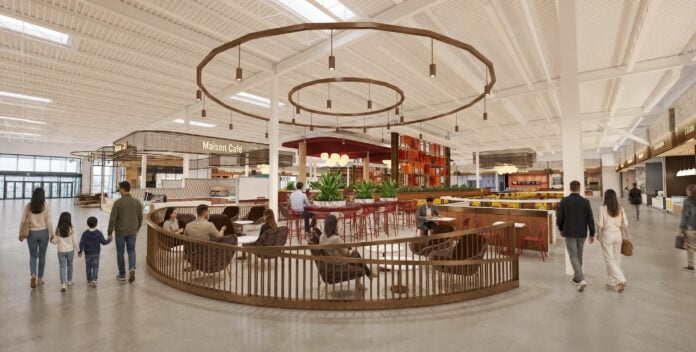
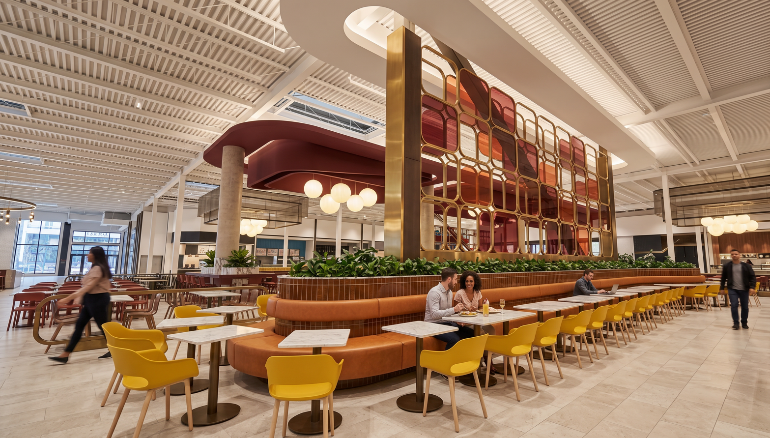
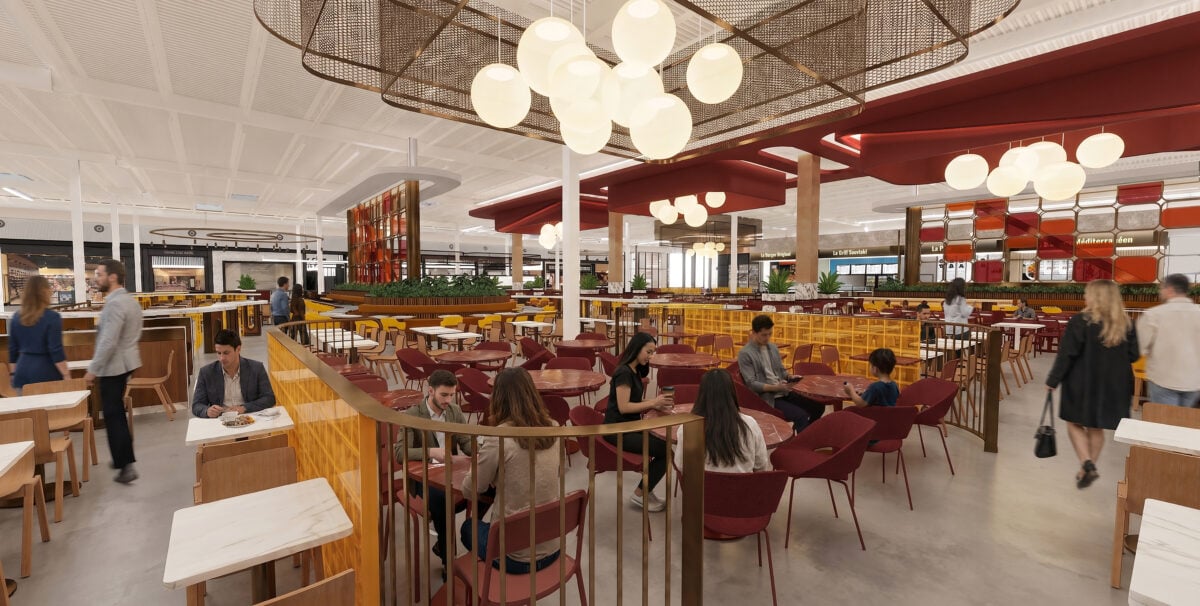
Bramalea City Centre food court. Image: Morguard

Bramalea City Centre has unveiled a newly renovated South Food Court, completing a multimillion-dollar project designed to modernize one of the busiest gathering spaces within the property and enhance the overall visitor experience.

Located at 25 Peel Centre Drive in Brampton, the super-regional shopping centre attracts roughly 16 million visitors annually and serves a rapidly growing population across the Peel Region. The renovation represents the latest investment in a property that continues to evolve alongside shifting retail trends and a growing community.

Management says the redesigned dining destination improves circulation, increases seating capacity, and creates a more open and contemporary environment that connects more effectively with the broader shopping centre.


A Brighter, More Contemporary Dining Environment

Spanning 31,701 square feet, the renovated food court has been repositioned closer to Centre Court, improving visibility from the mall’s main corridor and creating a stronger connection to surrounding retailers. The project also included infilling a previous floor opening to create a more cohesive layout and smoother circulation for visitors. 

The redesign was led by Pappas Design Studio Inc. in collaboration with Petroff Partnership Architects, introducing a contemporary aesthetic anchored in natural materials and layered textures.

A palette of white and light wood defines the space, complemented by accents of blue, green, black, caramel, and terracotta. Custom millwork, decorative lighting, integrated greenery, and banquette seating create a warm and welcoming environment intended to encourage visitors to linger.

“This transformation marks an exciting milestone for Bramalea City Centre,” said Andrew Butler, General Manager of Bramalea City Centre. “We wanted to create a design-forward space that reflects the energy of our community while improving comfort, sightlines, and the overall dining experience for our visitors.”

Layout Changes Improve Flow and Seating

The Bramalea City Centre food court renovation was prompted in part by the age of the previous space, which had last undergone a major update more than two decades ago.

“The last major renovation of the food court took place in 2004, so it was clearly time for reinvestment,” Butler said. “Our goal was to create a brighter, more contemporary environment by removing visual obstructions and opening the space so it feels more welcoming.”

During the redevelopment, several kiosks that surrounded a floor opening were removed or relocated. The design team then filled the opening and reconfigured the layout to improve customer movement through the dining area.

“We removed several kiosks and redesigned the layout to improve customer flow,” Butler said. “That allowed us to fill in the floor opening and add about 10 percent more seating, which enhances both the customer experience and visibility for our tenants.”

The redesign also improves sightlines across the dining area and provides stronger storefront exposure for food vendors.

Bramalea City Centre (Image: Morguard)

Food Courts Evolving to Meet Modern Needs

Shopping centre food courts have evolved in recent years, reflecting changes in how consumers use retail spaces.

Today’s dining areas often serve as informal workplaces, social gathering spots, and places where shoppers pause during longer visits.

“Today’s food courts serve a broader role than they did in the past,” Butler said. “People often sit down with their laptops or smartphones while they eat, so we’ve incorporated charging options throughout the space, including plug-in and wireless connections.”

The project also integrates sustainability considerations, including redesigned waste and recycling stations aimed at improving diversion and reducing landfill waste.

“Sustainability was an important consideration in the redesign,” Butler said. “We wanted to support recycling and waste diversion so we can reduce what ultimately ends up in landfills.”

New Dining Options Join the Food Court

The renovation also provided an opportunity to strengthen the centre’s food offering.

Two new food vendors, Szechuan Express and Poulet Rouge, have joined the food court lineup, expanding the range of dining options available to visitors.

Food and beverage has become a critical component of the modern shopping centre environment, driving both foot traffic and dwell time.

“If you don’t have a food court today, it doesn’t resonate with customers,” Butler said. “People expect quality food options when they visit a shopping centre.”

Beyond the food court, Bramalea City Centre also features several full-service restaurants located within and around the property, further strengthening its food and beverage mix.

A Social Hub for a Growing Community

Butler said the role of food courts expanded further following the pandemic, reinforcing the importance of shared public spaces within retail environments.

“One thing the pandemic reinforced is that people are social by nature,” he said. “Shopping centres provide a place where people can gather, interact, and spend time together, and the food court plays a big role in facilitating those connections.”

In diverse and fast-growing communities such as Brampton, those spaces also help newcomers integrate into the broader community.

“In a market like Brampton, the shopping centre can act as a place where newcomers connect with their community,” Butler said. “It’s a space where people observe, interact, and become part of the local culture.”

Continued Investment in a Major Retail Destination

With more than 300 stores and services, Bramalea City Centre is among the largest enclosed shopping centres in Canada. The mall continues to attract major international retailers, including UNIQLO and JD Sports, alongside a mix of Canadian and global brands.

According to Butler, continued reinvestment remains critical to maintaining the centre’s relevance as retail continues to evolve.

“In a shopping centre environment, if you’re not evolving, you’re regressing,” he said. “Our goal is to continue reinvesting in the property so Bramalea City Centre remains a AAA regional shopping destination for Brampton, the Peel Region, and the broader GTA.”

The mall’s ownership group has demonstrated confidence in the market by continuing to invest in both the physical property and its tenant mix.

“Our ownership group has shown strong confidence in this market by investing in the asset and attracting the right tenants,” Butler said. “We’re optimistic about the future and believe the centre is well positioned for continued growth.”


More from Retail Insider: