Advertisement
Advertisement
Home Blog Page 41

What Luxury Really Is in a Changing World

Editor’s Note: This article is the second in a special Retail Insider thought leadership series exploring how luxury retail actually works, based on insights from luxury retail executive Douglas Mandel. [See last week’s, ‘The New Luxury Client’]

Luxury is one of the most overused and misunderstood words in retail. It is applied to everything from handbags to hotels, from watches to wellness retreats. Yet as global markets shift and consumer expectations evolve, the question becomes more urgent: what luxury really is, and what it is not.

Douglas Mandel, former VP of Dior who led Canada and a longtime luxury retail executive, offers a strategic lens on the subject. Drawing from experience across Europe, the Middle East, and North America, Mandel argues that luxury is not defined by price alone. It is defined by discipline, provenance, clarity of direction, and the courage to protect long-term brand equity over short-term revenue.

For Canadian retailers operating in an increasingly complex environment, this distinction matters. Economic volatility, global expansion, sustainability pressures, and digital transparency are forcing brands to clarify their identity. In that context, understanding what luxury really is becomes a strategic necessity.

Douglas Mandel

Scarcity as Strategy

“One of the first and most powerful lessons I learned at Dior was this: Want is a strategy. Scarcity is a tool,” Mandel says.

He recalls overseeing leather goods at Selfridges in London when Dior’s Paris headquarters issued a directive to restrict the supply of its iconic Lady Dior handbag. The decision was not driven by shortage. Inventory was available. Instead, each boutique was given a strict quota in order to heighten desire and protect perception.

Mandel describes a moment when a young woman came in hoping to purchase a Lady Dior as a graduation gift, only to be told the store had reached its allocation. After confirming availability at another location and sending her there, he witnessed firsthand the emotional power of controlled scarcity. She did not simply purchase a handbag. She experienced a story, a chase, and a sense of rarity.

Scarcity in luxury is not about manipulation. It is about meaning. In a market saturated with product, controlled distribution reinforces value. High-end Canadian retailers, particularly those balancing global supply chains with local demand, face increasing pressure to move inventory efficiently. However, Mandel’s perspective suggests that discounting may solve a short-term sales challenge while weakening long-term brand positioning.

Burning Inventory, Not Brand Equity

Mandel also addresses one of luxury’s most controversial historical practices: destroying unsold inventory rather than discounting it.

As a former general manager for Dior in Russia and the CIS, he observed end-of-life products being pulled and, in some cases, physically destroyed instead of cleared through markdowns. The rationale was clear. Protect brand equity, pricing power, and the emotional currency of scarcity.

Today, growing sustainability expectations have forced evolution in how brands handle excess stock. Transparency and environmental responsibility have become strategic imperatives. Yet the underlying philosophy remains intact. Luxury brands often choose to sacrifice short-term revenue in order to preserve long-term perception.

For Canadian retailers, this tension is increasingly visible. Consumers are more value conscious, yet luxury still relies on disciplined distribution. The strategic question becomes not how quickly product can be moved, but how brand equity can be protected.

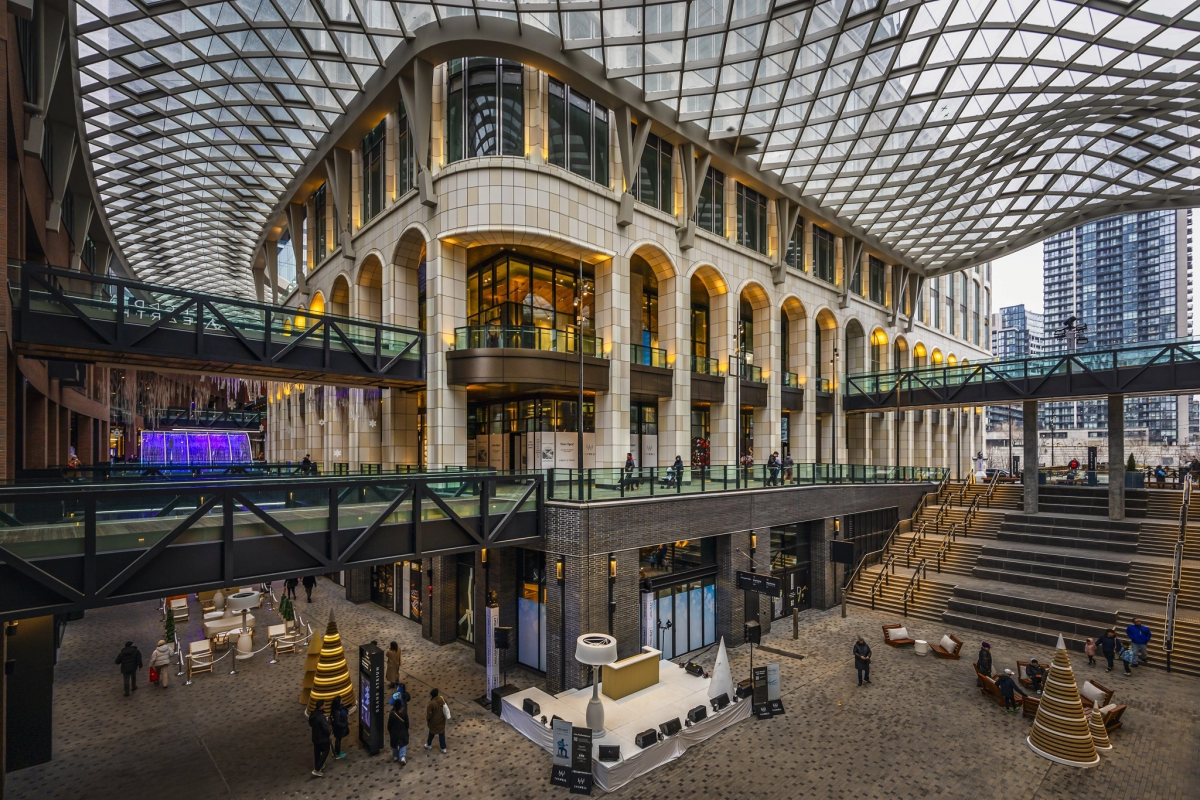
The Colonnade on Bloor Street in Toronto. Image: Morguard

The Power of Brand Home

Another core pillar in understanding what luxury really is lies in the concept of the Brand Home.

Mandel describes the Brand Home as more than a founding address. It is the physical anchor of identity, a place where provenance, production, and experience intersect. Whether it is a vineyard in Bordeaux, a leather workshop in Florence, or a flagship in Paris, the Brand Home signals permanence.

In his view, a luxury brand without a meaningful Brand Home risks weakening its claim to authenticity over time. Provenance builds trust. Craftsmanship requires space and continuity. Experience is amplified when rooted in geography.

This perspective resonates in Canada, where luxury retail often operates at a distance from European ateliers and historic workshops. For brands entering the Canadian market, the question becomes how to communicate origin and integrity in a way that feels tangible and credible.

Permanence, Mandel suggests, is power. In an era of rapid expansion and social media-driven visibility, luxury brands must anchor themselves somewhere real.

Global Expansion as a Mirror

Opening stores in new countries, Mandel argues, is one of the fastest ways to learn what a brand truly stands for.

Global expansion tests not only logistics and supply chains, but cultural intelligence and emotional clarity. A brand that thrives in Toronto may require different service rhythms in Paris or Dubai. Localization is not dilution. It is translation.

However, Mandel cautions that successful global expansion depends on transporting culture, not just aesthetics. Operating systems, training frameworks, and service rituals must be codified and scalable. Without that discipline, brand identity can fragment.

For Canadian retailers expanding internationally, or global brands deepening their presence in Canada, this lesson is particularly relevant. Consistency is not about identical floorplans. It is about emotional coherence. The store in Vancouver does not need to look like the flagship in Milan. It must feel aligned in spirit, intention, and quality.

Global perspective often clarifies domestic positioning. By seeing how a brand performs abroad, leaders gain insight into what is essential and what is adaptable.

Production Integrity and Provenance

When asking what luxury really is, Mandel returns repeatedly to quality and provenance.

Luxury traditionally implied heritage and longevity. Clients purchased not only the object, but the years of reputation behind it. Today, newer brands can enter the luxury space without centuries of history, but only through extraordinary execution and uncompromising quality.

Where a product is made matters. Manufacturing in a country of origin signals control, values, and integrity. Outsourcing production may support scale, but it can dilute narrative.

For Canadian consumers, who increasingly value transparency and sustainability, provenance is more than romantic storytelling. It is proof of commitment. The more accessible information becomes, the more important production integrity will be to maintaining trust.

Royalmount in Montreal. Photo: Bruno Ranieri

The Clear View Strategy

Luxury strategy ultimately depends on clarity.

Mandel references what he calls the Clear View Strategy, a framework rooted in knowing precisely where a brand is headed over the next several years. When direction is clear, decisions become simpler. Leaders can decline distractions and move decisively when opportunities align.

He points to examples where brands acted quickly on high-impact opportunities because their strategic objectives were defined in advance. Without clarity, even promising initiatives can create confusion.

In today’s changing world, where luxury brands face economic headwinds, digital disruption, and shifting generational expectations, clarity of vision becomes a competitive advantage. Strategy is not a static document. It is a lens through which every tactical decision is evaluated.

What Luxury Really Is

Luxury is evolving. However, its foundational pillars remain intact.

It is quality expressed at the highest level. It is scarcity used with discipline. It is production rooted in provenance. It is a Brand Home that signals permanence. It is expansion guided by cultural intelligence. It is strategy grounded in clarity.

For Canadian retailers operating within an increasingly global luxury ecosystem, these principles offer direction. The temptation to chase volume, visibility, or rapid growth is strong. Yet as Mandel’s perspective makes clear, true luxury is built on patience, consistency, and long-term thinking.

In a world defined by acceleration, luxury remains deliberate.

Understanding what luxury really is is not an academic exercise. It is a strategic imperative. The brands that protect their identity, safeguard their equity, and define their direction clearly will not simply survive change. They will shape the next era of luxury retail.

More from Retail Insider:
Tonica Kombucha founder reflects on two decades of growth from kitchen startup to national brand

Zoey Shamai
Zoey Shamai

What began as a small home-brewing experiment in a Toronto bachelor apartment has grown into a national beverage business producing about 1,000 cases a day, according to the founder of Tonica Kombucha.

Zoey Shamai, founder and owner of the Ontario-based company, says the kombucha maker is now operating from a 12,000-square-foot production facility in Woodbridge and selling products across Canada through major retailers, after starting the business two decades ago with no intention of building a company.

“When I started kombucha, there was zero kombucha anywhere.”

At the time, kombucha, a fermented tea drink, was largely unknown in Canadian retail markets. Shamai said it existed mainly as a home-brewed beverage passed through communities over centuries before appearing among health-focused groups in North America.

Her introduction to the drink came while studying yoga and living in an ashram in New Mexico, where kombucha was commonly made.

Zoey Shamai
Zoey Shamai

“It was the first time I had ever seen it,” she said. “The next day for my digestion, it was so amazing that I fell in love with it, started making it, brought it back to Toronto, and that was the beginning of what was Tonica.”

Today, the kombucha category has expanded significantly in grocery stores, where entire sections are dedicated to the drink. The brand was at the forefront of introducing the beverage to Canadians.

From kitchen batches to production facility

The business began modestly. Shamai brewed kombucha in her apartment while working as a yoga instructor and waitress. Her first commercial opportunity came through a Toronto restaurant where she worked.

The establishment, one of the city’s early raw vegan restaurants, agreed to place the beverage on its menu.

“It tasted like a delicious soda or like an alcohol substitute,” she said. “From there, people started to ask if they could buy bigger bottles, and it sort of organically started to grow.”

That early arrangement lasted about six months before the restaurant decided to produce its own version of the drink. The setback led Shamai to pursue retail distribution.

Encouraged by her mother, an entrepreneur who helped pioneer a hemp consumer packaged goods company in Canada, Shamai began gathering signatures from consumers who said they would buy the product if it were sold in stores.

She then approached a health food retailer in Toronto with the list of potential customers.

“He said, ‘If you get insurance, I’ll do it,’” Shamai recalled. “So that’s how it started.”

The company moved out of Shamai’s apartment and into its first dedicated facility in 2009. As the business expanded, production operations shifted through several locations before settling into the current Woodbridge facility in 2018.

“We’ve had five different facilities as we expanded,” she said. “We’re starting to get close to outgrowing this one too.”

Building a national beverage operation

Tonica Kombucha now produces multiple formats, including bottles, cans, kegs and private-label products. The company distributes its beverages through brokers and distributors across Canada.

Shamai estimates production reaches about 1,000 cases daily.

“We run all through the week,” she said. “We have litre bottles, small bottles, cans, we do kegs, and we also do white labels.”

The product line includes about 10 flavours, with variations between packaging formats. Shamai said she initially developed the first group of flavours herself before expanding the process with a quality assurance team.

“My goal was to make kombucha not a health food, but to make it so delicious that anyone would enjoy it as a regular soda,” she said.

She credits the lighter flavour profile of Tonica’s beverages as a factor behind its expansion into major retail chains.

Zoey Shamai
Zoey Shamai

Growing alongside the category

Shamai said Tonica’s growth has paralleled the rising popularity of kombucha among consumers.

“When I started bringing kombucha to stores, there was no kombucha category. It was nowhere,” she said. “Now you walk in and you see shelves and shelves filled.”

She believes consumer awareness around nutrition and digestive health has played a role in the category’s development.

“I think as baby boomers started to age and the generations after became much more educated about the foods that they eat being essential to the health they have every day,” she said.

Despite the category’s growth, the company’s expansion was largely self-funded. Shamai said she reinvested revenue back into operations during the early years instead of seeking outside investment.

“For the first 10 years, there wasn’t anything to put into advertising or even pay myself,” she said. “It was really just customer loyalty, repeat customers and incredible retail partners that helped us grow.”

Tonica Kombucha photo

Dragon’s Den exposure

A turning point in brand awareness came after Shamai appeared on the television program Dragon’s Den in 2012.

She said three investors offered deals during the episode, including Arlene Dickinson, Kevin O’Leary and Jim Treliving. Although she initially accepted an offer involving O’Leary and Treliving, she later declined the partnership after the show during due diligence.

“I realized I really didn’t want to have them as partners,” she said.

Shamai returned to the program in 2016 for a follow-up segment highlighting the company’s progress.

She said the exposure helped open doors with large retailers.

“We had Metro reach out,” she said. “Then Shoppers Drug Mart, Farm Boy. To get into those big doors, it really was Dragon’s Den that helped open the door to the awareness.”

Scaling production challenges

One of the biggest operational challenges in building the company involved scaling production of a fermented beverage that many manufacturers were reluctant to handle.

“A lot of beverages are co-packed, but nobody wanted to touch kombucha because of the bacteria in it,” Shamai said.

She approached multiple co-packers and beer producers but found little interest.

“The challenge was figuring out how do I scale up this very delicate process,” she said. “It’s easy to make a couple of batches, but scaling it to volume with forecasts and numbers to meet that was one of the biggest challenges.”

Tonica Kombucha photo

Expansion and new products ahead

Looking ahead, Shamai said the company is preparing to introduce new products outside the kombucha category for the first time.

The development comes as the company nears capacity at its current facility.

“We’re about to launch a bunch of innovation, not kombucha, for the first time,” she said. “That’s really exciting.”

To mark its 20th anniversary, Tonica is introducing a DIY Kombucha Kit, giving Canadians the opportunity to brew their own kombucha at home using Tonica’s starter.

Despite the company’s growth, Shamai said the business developed gradually through operational improvements and reinvestment rather than a deliberate expansion strategy.

“I didn’t really have a plan to grow it into such a big company,” she said. “I just kept improving the systems and putting everything back into the business.”

Reflecting on the company’s path, she said early success was driven largely by customers returning to buy the product.

“It grew naturally,” Shamai said. “Customers felt it, they loved it, and they came back for more.”

More from Retail Insider:
Vancouver’s The Candy Room marks decade in business with renovation and online expansion plans

Rami and Maya Hawari

A Vancouver candy retailer is marking a decade in business by reopening its flagship store following renovations and preparing to launch an online shop aimed at extending its reach beyond its single physical location.

Rami Hawari, co-owner of The Candy Room with his wife Maya Hawari, said the business has grown steadily by positioning itself as a destination for international and hard-to-find confectionery while maintaining a focus on product innovation and customer demand.

“We started back in 2016. So it’s our 10-year anniversary this month now,” Hawari said, noting the company continues to operate from its original Robson Street location.

The milestone comes as the retailer completes upgrades to the approximately 1,400-square-foot store, which recently reopened after renovations. Hawari said the business has maintained a deliberate strategy of concentrating resources on a single bricks-and-mortar site while exploring new channels for growth.

For now, that growth is expected to come through e-commerce rather than additional physical locations.

“We are now launching our online shop,” he said. “We are doing lots of efforts now on the online shop. It should be up and running, hopefully sometime next month.”

Customer demand drives online expansion

Hawari said customer demand has played a key role in shaping that decision, particularly from visitors who travel to Vancouver and later want to repurchase products from their home provinces or countries.

“Lots of our customers are asking us to have an online store, especially those who come and visit from different provinces or from outside the country,” he said. “They wanted to buy the products again.”

The planned online platform is expected to carry between 2,000 and 3,000 items and offer shipping across Canada and internationally, potentially widening the company’s customer base while allowing it to build on brand recognition established through its physical storefront.

Since its launch, The Candy Room has sought to differentiate itself by emphasizing direct imports and a curated assortment of nostalgic and global confectionery. Hawari said the founding concept was to move beyond what he described as a traditional candy store format.

The Candy Room photo

“When I first decided to open the store back in 2016, we wanted to present a candy store which is different than the traditional candy stores,” he said. “The focus was, and still is, to bring candies from all around the world to the customer base.”

The company has also built its identity around bulk product selection. Hawari said the store initially introduced more than 420 bulk candy options and has since expanded that offering following the recent renovation.

Emphasis on variety and international sourcing

“Once we just reopened now, it’s more than 440, something like that, different bulk items we have in the bin,” he said, adding he believes the store’s selection ranks among the largest in the country.

The emphasis on variety and international sourcing has shaped the retailer’s growth trajectory, according to Hawari, who described the business as becoming known for introducing emerging confectionery trends and unique flavours to the local market.

“We became like a trendsetter in that sense of the international candy trend,” he said. “It became known as exotic candy in terms of unique flavours and unique products in the market.”

While the company has remained focused on a single storefront, Hawari said the strategy reflects both operational discipline and a desire to strengthen the existing retail experience before pursuing broader physical expansion.

“For now, we’re focusing on that as a retail store,” he said.

Hawari’s interest in the confectionery sector predates the launch of The Candy Room. He said his family has been involved in the candy business for generations, providing early exposure to industry knowledge and shaping his long-term career direction.

“I come from a family who’s been in the candy business since my grandfather’s days,” he said. “I’ve always been around candy talk and the candy industry insights since I was a kid.”

That background contributed to his decision to pursue entrepreneurship within the sector, eventually leading to the creation of the Robson Street shop.

“I always had it on the back of my mind, whatever I do, candy was the main thing I always fell back to,” he said.

The Candy Room photo

Over the past decade, Hawari said the business has built a reputation among candy enthusiasts seeking specialty products and nostalgic brands that are not widely available through conventional retail channels.

“The growth was very steady,” he said. “We became like the candy destination in Vancouver for all candy lovers and candy enthusiasts.”

Maintaining a focus on innovation

Looking ahead, Hawari said the company intends to maintain its focus on innovation, product sourcing and industry partnerships as it navigates its next phase.

“We always focus on innovation in terms of bringing new products, collaborating, that’s what sets us apart from all other people in the industry,” he said.

With its renovated store now open and online operations expected to launch soon, The Candy Room’s leadership is positioning the business to build on a decade of niche retail success while testing new ways to connect with customers beyond its West Coast base.

“We have the heritage we have, the history we have in the industry, and the focus we have on international candy and the knowledge in that domain,” Hawari said.

The Candy Room is celebrating its 10-year anniversary with a soft opening right now of its renovated store. The grand opening is Friday March 20.

“We wanted to build a space that feels nostalgic yet current, where customers can discover viral, limited-edition and hard-to-find sweets from around the world,” said Maya Hawari.

More from Retail Insider:
Alabaster Homes expands Pavilion Cowork concept to Calgary with amenity-focused space

Pavilion Courthouse
Pavilion Courthouse

Vancouver-based developer Alabaster Homes is bringing its amenity-rich coworking model to downtown Calgary, aiming to provide flexible, experience-driven office space amid uncertain economic times. The new Pavilion Cowork location, which recently opened, occupies an entire floor near the Calgary courthouse and is being billed as the company’s largest and most thoughtfully designed facility to date.

The move underscores a shift in workplace strategy for many Canadian businesses, as demand grows for flexible, collaborative environments that foster community and networking rather than traditional office layouts. Herman Kwee, president of Alabaster Homes, said the Calgary expansion demonstrates how strategic amenities and flexible leases can help companies adapt to economic and operational uncertainty.

A Workspace Built for Collaboration

Alabaster Homes, originally a residential multifamily developer, launched Pavilion Cowork more than eight years ago to address both surplus space in its Vancouver offices and a desire to foster a collaborative environment for businesses. Rather than subleasing unused office square footage in a traditional model, the company created a shared workspace designed to facilitate networking, community, and operational support for member companies.

“The vision for our own space was to build a workplace where people enjoyed coming to every day, not somewhere they would just come in and sit behind a desk,” Kwee said. “We started thinking: instead of closing the doors, what if we opened them up and created one big space where people could do their best work together?”

Herman Kwee
Herman Kwee

Pavilion Cowork handles everything upfront for businesses, from IT setup to staff training and office build-outs, allowing tenants to focus on operations while avoiding significant capital expenditures. “It’s setup and us doing life together, walking alongside these businesses,” Kwee said.

Calgary Expansion Highlights Amenities

The new Calgary location emphasizes community-focused amenities that differentiate Pavilion from conventional office space. A large lounge will serve as a shared hub for member companies, complemented by regular events such as happy hours, fitness classes, and networking opportunities.

“What really makes Pavilion special is our approach to the way we’ve laid out and designed the space. It is not just office space or square footage. We lean heavily on experience for the members,” Kwee said. “It’s quite magical to see companies coexist, work and network among each other, and get to know each other.”

In addition to utilizing the location’s shared office spaces, members will benefit from high-speed secure internet, fitness facility and kitchen/lounge usage, private phone booth access, monthly event programming, and around the clock cleaning. Currently, the Pavilion team has brought on partners such as Caffe Levant, Better Day Meals, Coven Health Collective, Olia Macaron, Monogram Coffee, Sunday Flow, Sabi Mind, Field Kit Studio, and Hampton Inn by Hilton Calgary Downtown to provide members with exclusive access to discounts, offerings, and events. 

Clare Linton
Clare Linton

“Our hospitality-forward approach means we focus on supplying members with everything they need for their work day,” said Clare Linton, Vice President of Marketing & Corporate Operations. “The team has been working hard to curate offerings from Calgary’s most beloved brands and businesses. As someone who spent many years in this city, I’m really excited by the partners they’ve brought on board.”

Pavilion Cowork currently operates three locations in Vancouver, with additional sites planned for Greater Vancouver in late 2026 and early 2027. Calgary is the fourth location, marking the company’s first expansion outside its home market.

Flexibility in Uncertain Times

Kwee said the coworking model has been particularly well-suited to navigating economic uncertainty, including the challenges posed by ongoing tariff disputes and broader geopolitical pressures. By providing flexible, month-to-month memberships rather than long-term leases, Pavilion allows businesses to scale their office footprint in line with evolving needs.

“Business owners may not know what tomorrow beholds, but they still need office space and a place for their teams to work,” Kwee said. “The agreements and contracts we have allow them to grow or right-size as needed. It has been a very cost-effective and seamless way for businesses to provide office space for themselves.”

The approach also offers financial advantages. Pavilion assumes the upfront cost of build-outs on its balance sheet, spreading the expense across multiple member companies. “One of the benefits we provide is taking all of that upfront capital expenditure on ourselves, putting it on our balance sheet and doing the build-out on behalf of companies, and instead charging a membership fee,” Kwee said.

Pavilion Courthouse
Pavilion Courthouse

Building Optimism Through Community

Despite starting the coworking business at the onset of the COVID-19 pandemic, Kwee said the concept has proven resilient. Remote work remains common, but employees and business owners continue to value in-person community, collaboration, and culture-building.

“People who have been working from home for so many years are hungry to be in the midst of good community,” Kwee said. “We see a lot of companies motivated to get people back and for that collaborative spirit and culture to come back within the company.”

He added that the Calgary expansion reflects both market opportunity and a commitment to cultivating spaces where businesses can thrive in uncertain times.

More from Retail Insider:

Pavilion Courthouse
Pavilion Courthouse

Food businesses face penalties for mislabelling products as Canadian: CFIA

Canadians have been clear that they want to support Canadian businesses and buy Canadian products. Consumers deserve origin labels they can trust so they can make informed choices. Accurate origin labelling creates a fair marketplace that benefits both consumers and businesses. The Canadian Food Inspection Agency (CFIA) said it is protecting consumers from misleading food labels and advertisements.

Since April 1, 2025, the Agency said it has issued $47,000 in financial penalties to businesses for inaccurate or misleading country of origin claims:

  • 1000717809 Ontario Limited (Fortinos Etobicoke) received a $10,000 penalty;
  • Fresh in The City Inc. received a $7,000 penalty;
  • Meatex Farms Ltd. received a $10,000 penalty;
  • Oxford Frozen Foods Inc. received a $10,000 penalty;
  • Real Canadian Superstore received a $10,000 penalty.

Food businesses are responsible for ensuring that all food products they sell, whether made in Canada or imported, meet Canada’s legislative requirements, said the Agency.

“The CFIA takes labelling issues seriously and is directly addressing the growing concern with Canadian food businesses over inaccurate and misleading origin claims. In addition to responding to complaints, we conduct inspections to verify origin claims on labels and advertisements, including in-store signage,” it said.

The Agency said this includes CFIA inspectors:

  • raising awareness of the importance of accurate labelling and reminding businesses of their regulatory responsibilities;
  • reviewing labels and business processes;
  • issuing inspection reports and requests for corrective action;
  • verifying corrective actions are in place to prevent future non-compliance;
  • taking enforcement actions.

The CFIA said it selects appropriate compliance and enforcement actions based on a range of considerations including, the degree of risk, the harm caused by the non-compliance, the compliance history of the regulated party, whether there is negligence or intent to violate federal requirements, and responsiveness to resolving the issue.

To learn more about how the CFIA takes action to address non-compliance: 6 things the CFIA does to keep Canada’s food supply safe

The CFIA said it wants to know about foods that consumers think are labelled in a misleading manner. Consumers and industry are encouraged to report these to the CFIA through its food complaint or concern web page.

People can visit the CFIA’s quick reference guide to learn how to identify Canadian food and to find out which foods are required to include country of origin on the label.

More from Retail Insider:
Daily Synopsis: Mar 16, 2026

Daily Synopsis2

Today’s Retail Insider articles are listed below, followed by Canadian Retail News From Around the Web. Coverage includes Canada’s retail job market decline with 18,000 fewer positions in February amid tightening inventories, Shake Shack’s expansion into Western Canada with a Calgary opening, and the accelerating trend of converting retail properties into residential spaces to address housing shortages.

🗞️ The Day’s Retail Insider Article List

🌐 Canadian Retail News From Around the Web

Retail Jobs Decline in Canada as Sector Adjusts

A retail worker and an employee in a luxury store. Retail staffing in Canada has its ups and downs says Suzanne Sears. Photo: RI/Google

Canada’s retail labour market weakened in February 2026, reflecting broader economic uncertainty and shifting business conditions across the country. According to the latest Labour Force Survey from Statistics Canada, employment declined by 84,000 positions nationally during the month, while the unemployment rate rose slightly to 6.7 percent.

Wholesale and retail trade recorded some of the most significant declines, with employment in the sector falling by approximately 18,000 jobs, a drop of 0.6 percent. While the numbers appear concerning on the surface, industry experts say the situation may be more complex than the headline figures suggest.

Retail staffing specialist Suzanne Sears, founder of Best Retail Careers Canada, says the decline reflects a mix of economic caution, inventory cycles, and broader market pressures rather than a structural downturn in the sector.

“Retailers tend to react very quickly when there is uncertainty,” Sears said in an interview. “When companies become concerned about sales or cash flow, staffing is often the first place they make adjustments.”

Suzanne Sears

Retail Sector Often Reacts First to Economic Changes

The February labour market report shows that retail and wholesale trade experienced one of the steepest employment declines among major sectors. The data suggests retailers moved quickly to reduce staffing levels as they navigated uncertain economic conditions.

Sears notes that retail businesses often react more rapidly than other industries when economic signals shift.

“Retail is usually the first sector to feel economic shocks,” she said. “Stores tend to respond quickly when uncertainty rises, and staffing levels are often adjusted before other parts of the economy.”

However, she believes the recent drop may prove temporary. Retailers could begin hiring again once inventories stabilize and consumer activity improves.

“Retail is also one of the fastest sectors to recover,” Sears said. “When conditions improve, hiring often returns fairly quickly.”

Inventory Cycles Influencing Retail Hiring

One factor affecting retail employment may be the industry’s current inventory cycle. Sears says many retailers accelerated purchasing earlier in the year amid concerns about tariffs and trade uncertainty.

According to Sears, companies rushed to secure merchandise before potential disruptions intensified. As a result, many retailers are now working through existing inventory while slowing new purchasing.

“Retailers stocked up earlier because of the uncertainty around tariffs,” she said. “Those inventories are now being depleted, and fewer new shipments are arriving. When there is less inventory moving through the system, retailers need fewer people to process and sell it.”

The shift has also affected product selection in stores.

“In many locations you simply do not see the same level of assortment right now,” Sears said. “When there is less merchandise to manage, staffing levels naturally decline.”

Regional Differences Across Canada

The impact of declining retail employment has varied widely across the country. Ontario recorded the largest drop in retail jobs, with employment falling from roughly 1.149 million workers to 1.143 million. Quebec also saw a decline, while several smaller markets recorded modest gains.

British Columbia, Prince Edward Island, Nova Scotia, and New Brunswick all reported slight increases in retail employment during February. Manitoba and Saskatchewan saw modest declines, while Alberta also recorded a drop despite ongoing retail expansion activity in several cities.

Sears said these regional differences highlight the complexity of Canada’s labour market.

“Ontario is experiencing the most significant pressure, which is not surprising given the province’s size and its ties to manufacturing,” she said. “When manufacturing slows, retail often reacts even faster because stores become cautious about future sales.”

At the same time, Sears pointed to emerging opportunities in other parts of the country.

“The Maritimes are performing relatively well,” she said. “Those markets have historically been underserved from a retail perspective, and some of that potential is now beginning to emerge.”

Youth Unemployment Remains Elevated

The labour market data also revealed challenges for younger Canadians. Among people aged 15 to 24, the unemployment rate rose to 14.1 percent in February after employment in that age group declined by 47,000 positions.

Youth employment is particularly sensitive to changes in the retail sector, which traditionally provides a large share of entry level jobs.

At the same time, older workers experienced a more stable employment environment. Canadians aged 55 and older recorded an unemployment rate of 4.9 percent in February, slightly lower than the previous month.

Sears said demographic trends are also influencing employment patterns.

“Many experienced workers are choosing to remain in the workforce longer,” she said. “At the same time, younger workers and women have been more vulnerable to job reductions in some sectors.”

Women’s Participation in the Workforce Continues to Grow

The February labour report also highlights longer term shifts in women’s participation in the Canadian workforce. Women now account for 47.3 percent of total employment, a significant increase compared with previous decades.

In February 1976, women represented just 36.9 percent of Canada’s employed workforce.

Among women aged 25 to 54, the employment rate reached 80.1 percent in February 2026. However, wage disparities remain. Women in that age group earned an average hourly wage of $37.62, compared with $42.55 for men.

Sears believes rising living costs are influencing workforce participation decisions for some workers.

“In some cases the cost of working has increased so much that people question whether it makes sense financially,” she said. “Expenses such as transportation, childcare, and commuting can add up quickly.”

Retail Outlook Could Improve Later in 2026

Despite the February decline in employment, Sears believes the retail sector’s longer term outlook remains stable.

Inflation fell to 1.9 percent in February, below the Bank of Canada’s target level. If inflation continues to ease, interest rate reductions could stimulate consumer spending and housing activity.

“When interest rates fall, consumers often begin spending again,” Sears said. “That can increase demand for goods across the retail sector.”

Housing activity may also help drive retail demand, particularly in home furnishings and related categories.

“When people purchase a home, they usually buy furniture, curtains, and many other household items,” Sears said. “Retail tends to benefit quickly when the housing market strengthens.”

For now, Sears believes the February employment figures represent a short term adjustment rather than a lasting downturn.

“Retail often appears weakest during periods of uncertainty,” she said. “But it is also one of the sectors that tends to recover the fastest.”

More from Retail Insider:
The Best Hat Bar Suppliers in the US for Boutiques and Event Businesses

Hat bars have exploded in popularity over the past few years, and it is easy to see why. The concept is simple but brilliant: set up a styling station where customers pick a blank hat, then customize it with bands, feathers, patches, and other accessories until they walk away with something completely one-of-a-kind.

For boutique owners and event planners looking to tap into this trend, the first big question is always the same. Where do you source quality blank hats at prices that actually make sense for your business?

Whether you are building out a permanent hat bar inside your shop or launching a mobile setup for weddings and corporate events, having a reliable supplier is everything. The wrong inventory can kill the experience before it starts. The right supplier, on the other hand, sets you up for repeat customers and strong margins.

We put together this list of the best hat bar suppliers in the US to help you find the right fit. Each one brings something a little different to the table, from handcrafted premium hats to budget-friendly blanks you can order by the hundreds.

1. American Hat Makers

If you want a supplier with serious heritage, American Hat Makers is hard to beat. This family-owned company has been handcrafting hats since 1972, and they have built a reputation that stretches well beyond the US, with exports reaching Australia, Germany, Japan, and beyond.

What makes them particularly appealing for hat bar businesses is their dedicated hat bar program. They do not just sell you blank hats and wish you luck. Their team, with over five decades of experience working with everyone from big-box retailers to small boutiques, is genuinely set up to help you build a successful hat bar from the ground up.

Their product range covers felt hats, straw hats, cowboy hats, fedoras, and trucker styles, so you can offer customers real variety at your bar. They also run a wholesale program through Faire.com, which makes ordering straightforward with in-stock items shipping in under 72 hours. That kind of turnaround matters when you are trying to keep your shelves stocked.

One standout detail is their unconditional buyback program on unsold stock. That takes a lot of the financial risk off the table for newer businesses still figuring out what their customers want.

2. OTTO CAP

OTTO CAP is one of the biggest names in the blank headwear space, and for good reason. They have been manufacturing hats for over 70 years, making them one of the longest-running headwear companies in the country. Their product line is massive, covering everything from five-panel and six-panel caps to trucker hats, fitted styles, and performance headwear.

For hat bar operators focused on casual styles like trucker caps and snapbacks, OTTO CAP is a strong pick. Their blanks are specifically manufactured with smooth, stable surfaces designed for customization, whether you are doing embroidery, screen printing, or heat-press patches.

They ship from facilities in California, Texas, and Georgia, so most US orders arrive quickly regardless of where you are located. They have also earned recognition as one of the top promotional product suppliers in the country, ranking in both ASI’s Top 40 and PPAI’s Top 100.

3. Cap Wholesalers

Cap Wholesalers has been in the game since 2004 and has carved out a niche as one of the most flexible wholesale hat suppliers online. What sets them apart is their low minimum order requirement. You only need to purchase 12 hats to get wholesale pricing, which is a huge advantage for smaller boutiques that do not want to commit to massive inventory right out of the gate.

They carry a wide selection of popular brands including Richardson, FlexFit, Outdoor Caps, and OTTO. If your hat bar features trucker hats, dad hats, or classic baseball caps, you will find plenty of options here.

Their customer service also gets consistently high marks. Multiple reviews highlight how their sales reps go above and beyond to help with the ordering process, which can be a lifesaver when you are new to buying wholesale.

4. The Park Wholesale

The Park Wholesale positions itself as a one-stop shop for blank and custom headwear, carrying over 5,000 styles across brands like Richardson, Yupoong, Flexfit, and Decky. If variety is what you are after, this supplier delivers.

One of their biggest selling points is their price match guarantee. If you find a lower price somewhere else, they will match it, which gives you confidence that you are getting a competitive deal. They also offer volume discounts on most brands, so your per-unit cost drops as your orders grow.

No minimum order is required on most products, and you do not even need to create an account to start shopping. That low barrier to entry makes them a great option for businesses that want to test the waters before going all in on a hat bar concept.

5. Buck Wholesale

Buck Wholesale has been supplying headwear for over two decades, serving everyone from screen printers and embroidery shops to fashion brands and promotional companies. They maintain their own production facilities, which allows them to offer factory-direct pricing that is hard to find elsewhere.

Their customization options are worth noting if you plan to offer branded hats alongside your hat bar experience. They handle embroidery, screen printing, and patch application, with locally embroidered orders starting at just 50 pieces. For larger runs produced overseas, the minimum is 144 pieces with pricing starting around $3.75 per hat.

They also have no minimum order requirements on blank hats, so you can mix and match styles without being forced into bulk quantities you do not need.

6. CapBargain

CapBargain is a newer player that has quickly built a following among hat bar operators. They partner exclusively with OTTO CAP, which means you are getting access to one of the most trusted blank headwear lines in the country at competitive wholesale prices.

What makes CapBargain especially useful for hat bar startups is their educational approach. They publish detailed guides on everything from sourcing equipment to setting up your first hat bar, including checklists covering heat presses, patches, power stations for outdoor setups, and even shipping logistics. That kind of hands-on guidance can shorten your learning curve significantly.

Their product range includes trucker hats, baseball caps, snapbacks, dad hats, beanies, and more, all available in dozens of styles, fabrics, and colors.

7. Blankstyle

Blankstyle rounds out the list as a solid all-around option for blank hat sourcing. They carry a curated selection of hats from well-known brands, with options spanning baseball caps, trucker hats, dad hats, and snapbacks in a wide range of colors and materials.

Their pricing is structured around bulk orders, making them a smart choice for hat bar businesses that have moved past the testing phase and are ready to scale. Fast shipping and responsive customer service are frequently mentioned in customer feedback.

If you are building a custom clothing line alongside your hat bar or running promotional events that need consistent inventory, Blankstyle offers the kind of reliability that keeps operations running smoothly.

Tips for Choosing the Right Supplier

Finding the right supplier is not just about price. Here are a few things to keep in mind as you evaluate your options.

Think about your hat bar’s identity first. Are you going for a premium, boutique feel with leather and felt hats? Or is your vibe more casual and fun, centered around trucker caps and patches? Your supplier should align with that vision.

Order samples before committing to bulk purchases. The quality of a hat in a product photo does not always match what shows up at your door. Touch it, shape it, and run it through your customization process before placing a large order.

Pay attention to shipping times and reliability. If your hat bar runs out of a popular style on a busy weekend, you need a supplier who can restock you quickly. Suppliers with multiple distribution centers or guaranteed lead times earn extra points here.

Also consider what happens with unsold stock. Not every style will be a hit, so suppliers offering buyback programs or generous return policies can save you from eating the cost of inventory that did not move.

For more inspiration on the types of hats that are trending right now, check out this guide on custom hats for events and promotions.

Final Thoughts

The hat bar trend shows no signs of slowing down. Customers love the interactive, hands-on experience of building something uniquely theirs, and businesses love the strong margins and repeat traffic it generates.

The suppliers on this list each bring something valuable, whether it is decades of craftsmanship, rock-bottom wholesale pricing, or startup-friendly resources that help you get off the ground faster. Take the time to request samples, compare pricing, and find the partner that fits your business model best.

Your hat bar is only as good as the hats on the table. Start with great inventory, and the rest gets a whole lot easier.

The Timeless Charm of Canvas Prints in Home Decoration

Interior decoration plays a significant role in creating comfortable and visually appealing living spaces. While furniture, lighting, and color schemes contribute to the overall atmosphere of a room, wall décor often serves as the finishing touch that brings everything together. One of the most popular and stylish options for wall decoration today is canvas prints.

Canvas prints combine modern printing technology with the traditional beauty of canvas artwork. They allow individuals to transform photographs, artwork, and designs into elegant wall displays that enhance the character of any room. Whether used in homes, offices, or commercial environments, canvas prints provide a sophisticated and versatile décor solution.

In recent years, canvas prints have gained popularity because they are durable, customizable, and easy to install. They also provide a gallery-style appearance that elevates the visual appeal of interior spaces.

What Are Canvas Prints?

Canvas prints are images printed onto canvas fabric using high-quality printing technology. The canvas material is usually made from cotton or polyester, which offers both durability and excellent color reproduction.

After printing, the canvas is stretched over a wooden frame called stretcher bars. The edges of the canvas are wrapped around the frame, creating a clean and professional finish known as gallery wrapping.

This method allows the artwork to be displayed without the need for additional frames or glass covers. The absence of glass reduces glare and reflections, making the artwork easier to view from different angles.

The slightly textured surface of canvas gives images a unique artistic appearance that resembles traditional paintings.

Read More: https://wallpics.com/pages/framed-wall-pictures

Canvas prints have become a preferred wall décor choice for many people because of their versatility and elegance.

One reason for their popularity is their ability to enhance the aesthetic appeal of any space. The texture and depth of the canvas make images appear more vibrant and visually engaging.

Another reason is durability. High-quality canvas prints are designed to last for many years without fading or losing color quality.

Canvas prints are also lightweight and easy to hang, which makes them convenient for homeowners who want to decorate their spaces without complicated installation.

Customization is another important advantage. People can print personal photographs, digital artwork, or creative designs that reflect their individual tastes and personalities.

Decorating Different Rooms with Canvas Prints

Canvas prints can be used in nearly every room of a home.

In living rooms, large canvas prints often serve as focal points. A bold artwork above a sofa or fireplace can instantly elevate the entire room.

Bedrooms benefit from calm and relaxing images such as nature landscapes, abstract patterns, or soft color palettes.

Dining rooms can feature elegant artwork that complements the dining experience and adds sophistication to the space.

Hallways and staircases are ideal for gallery walls created with multiple canvas prints that showcase family memories or artistic collections.

Home offices can include motivational quotes or inspiring artwork that helps create a productive atmosphere.

Canvas prints are available in many different artistic styles, making them suitable for various décor themes.

Photo canvas prints display personal photographs such as family portraits or travel memories.

Abstract canvas prints use bold shapes and colors to create modern artistic designs.

Nature-themed canvas prints feature landscapes, forests, oceans, and wildlife scenes that bring the beauty of the outdoors inside.

Black-and-white canvas prints provide a timeless and elegant look that works well in minimalist interiors.

Multi-panel canvas prints divide a single image across several panels, creating a dramatic visual effect.

Typography canvas prints display inspirational quotes or meaningful words that add personality to a room.

Advantages of Canvas Prints

Canvas prints offer several benefits that make them a practical and stylish décor choice.

They provide a professional gallery-style appearance that enhances interior design.

Canvas prints are durable and resistant to fading when produced with quality materials.

They are lightweight and easy to install, making them convenient for decorating walls.

Customization options allow individuals to create unique artwork that reflects their personal style.

Canvas prints are also more affordable than traditional paintings and framed art pieces.

Many online platforms make it easy to design and order custom prints. For example, wallpics.com provides tools that help users convert digital images into beautiful canvas wall décor.

Tips for Choosing the Right Canvas Print

Choosing the perfect canvas print involves several important considerations.

The size of the artwork should match the dimensions of the wall where it will be displayed.

The colors of the image should complement the room’s existing décor and furniture.

High-resolution images should always be used to ensure the final print looks sharp and detailed.

Personal meaning is also important. Artwork that reflects memories or interests often creates a more emotional connection.

Lighting conditions should also be considered, as proper lighting can highlight the textures and colors of canvas prints.

Maintaining Canvas Prints

Canvas prints are relatively easy to maintain.

Dust the surface gently with a soft cloth or microfiber duster.

Avoid placing canvas prints in areas exposed to direct sunlight for long periods, as this may cause fading.

Keep them away from excessive humidity to prevent damage.

Handle them carefully when cleaning or moving them.

With proper care, canvas prints can remain vibrant and attractive for many years.

Read Also: https://wallpics.com/pages/square-photo-prints

FAQ

Are canvas prints suitable for modern homes?

Yes, canvas prints work well with both modern and traditional interior designs.

Can personal photos be printed on canvas?

Yes, personal photographs are commonly used to create custom canvas prints.

Are canvas prints expensive?

Canvas prints are generally affordable compared to original paintings and framed artwork.

Do canvas prints require frames?

Most canvas prints use gallery wrapping and do not require additional frames.

How long do canvas prints last?

High-quality canvas prints can last for many years when properly cared for.

Conclusion

Canvas prints have become a timeless choice for decorating interior spaces. Their combination of artistic texture, durability, and customization makes them an ideal solution for modern wall décor.

By transforming photographs and artwork into elegant displays, canvas prints allow individuals to express creativity and preserve meaningful memories. Whether used as focal points or part of gallery walls, canvas prints add style, personality, and visual interest to any room.

Behind The Scenes Of Retail: The Hidden Systems That Keep Stores Running

A store looks simple from the aisle. Lights glow. Music plays. Shelves stay full. The air feels right. The card terminal works. A worker wheels out new stock. A cleaner wipes a spill before anyone slips.

None of that happens by accident.

A retail store runs on hidden systems. Some are physical. HVAC, wiring, drains, doors, alarms, coolers, signs, and loading bays. Some are digital. Point-of-sale software, inventory tools, sensors, payment networks, and security platforms. Some are human. Schedules, checklists, service calls, and shift handoffs. Together, they form the store’s backbone.

Think of a store like a stage. Shoppers see the set, the lights, and the actors. They do not see the rigging above the ceiling, the cables under the floor, or the crew moving props in the dark. Yet the hidden parts decide whether the show runs smoothly or stalls mid-scene.

That matters more than many retailers admit. A broken freezer can wipe out inventory in hours. A failed air unit can turn a bright store into a hot box by noon. A slow payment terminal can grow a line from five people to twenty. Small failures spread fast. Retail works like a row of gears. When one tooth chips, the whole machine starts to grind.

This article looks at those hidden systems in plain terms. It explains what keeps stores open, safe, comfortable, and efficient. It also shows why good retail operations depend on more than product, price, and location. The visible store wins attention. The invisible store keeps the doors open.

Climate Control: The System Customers Feel First

Customers notice temperature before they notice almost anything else. Walk into a store that feels too hot, too cold, or too stale and the body reacts at once. People shorten their visit. Staff lose focus. Products suffer.

Retail depends on stable air.

A store’s HVAC system works like the lungs of the building. It moves air, filters dust, and controls heat and humidity. In winter, heaters push warm air across the floor so customers can shop without coats. In summer, compressors pull heat out of the space and keep the air dry. Vents distribute that air through a network of ducts hidden above the ceiling grid.

When the system works well, nobody notices it. The store simply feels comfortable.

But HVAC systems run hard. Doors open all day. Refrigerated cases dump cold air into the aisles. Lighting adds heat. Crowds raise humidity. Each change forces the system to adjust.

That is why retailers rely on regular inspection and repair. In dense urban markets like Toronto, many businesses depend on specialized contractors that provide HVAC service in Toronto to install, maintain, and repair heating and cooling equipment. These teams handle compressors, furnaces, rooftop units, ventilation systems, and emergency breakdowns.

Preventive service keeps small problems from growing. A clogged filter restricts airflow. A worn belt slows a fan. A failing sensor misreads the temperature. Each issue may seem minor. Together they can turn a comfortable store into an uneven climate zone with hot corners and cold drafts.

Air quality matters too. Modern systems filter pollen, dust, and airborne particles. Clean air helps staff stay alert through long shifts. It also protects sensitive goods such as cosmetics, electronics, and packaged foods.

In short, climate control shapes the physical experience of shopping. Customers may not see the machines above the ceiling. Yet they feel their work every second they stand in the store.

Power And Lighting: The Electrical Backbone Of Retail

A retail store runs on electricity the way a city runs on roads. Every system depends on it. Lights, payment terminals, scanners, security cameras, digital signs, refrigeration, HVAC units, and charging stations all draw power from the same network.

When power flows smoothly, the store feels calm and reliable. When it fails, everything stops at once.

Retail lighting does more than help people see. It shapes attention. Bright lights guide shoppers to displays. Warmer tones make clothing look richer. Focused beams highlight new products the way stage lights highlight actors. Behind the ceiling panels, dozens of circuits feed these lights through switches, dimmers, and timers.

Electrical panels act as the traffic control center. Each breaker protects a circuit. If a device draws too much power, the breaker cuts the flow before wires overheat. Without this protection, small faults could become fires.

Retailers track electrical loads carefully. A modern store uses power in layers:

SystemPurpose In The StoreTypical Impact If It Fails
General LightingIlluminates aisles, shelves, and displaysStore becomes dim and uninviting
Point-Of-Sale SystemsRuns registers, scanners, and card readersSales stop immediately
Refrigeration UnitsKeeps food and beverages safeInventory loss within hours
Digital DisplaysPowers advertising screens and signageMarketing messages disappear
Security SystemsRuns alarms, cameras, and sensorsIncreased theft risk

Backup power reduces risk. Some retailers install battery systems or generators to keep key circuits alive during outages. Even a short blackout can stop sales and push customers out the door.

Energy efficiency also matters. LED lighting uses far less electricity than older bulbs. Smart controls dim lights when daylight enters through windows. Motion sensors switch lights off in storage rooms when nobody is inside.

Electricity may be invisible, but it acts like the nervous system of the store. Signals move through wires instead of nerves. When the current flows cleanly, every other system can do its job.

Inventory Systems: The Quiet Engine Behind The Shelves

Shoppers see full shelves. They rarely think about the systems that keep them full.

Inventory management acts like the store’s circulatory system. Products move from supplier to warehouse, from warehouse to truck, from truck to stockroom, and finally to the sales floor. Each step depends on careful tracking.

Modern retail stores rely on digital inventory systems that update stock levels in real time. When a cashier scans a product, the system subtracts one unit from the store’s count. When the count drops below a set level, the software signals the warehouse to send more.

Without that loop, shelves empty quickly.

Retailers use several tools to track inventory accurately:

  • Barcode scanners record each item sold or moved.
  • RFID tags allow stores to track products through radio signals.
  • Inventory management software updates stock levels across locations.
  • Automated reorder systems trigger new shipments when stock runs low.
  • Stockroom audits verify that digital records match physical inventory.

Each tool solves a different problem.

Barcodes provide speed and accuracy at the register. RFID systems help track clothing, electronics, and other high-value goods. Reorder software prevents stockouts by predicting demand. Audits catch mistakes before they spread through the system.

Inventory mistakes cost real money. If a store believes it has ten units but only five remain, customers leave empty-handed. If the system orders too many units, excess stock fills the back room and ties up cash.

Good retailers treat inventory data like navigation data on a ship. The numbers guide every decision about ordering, pricing, and promotion. When the data stays accurate, the shelves stay full and customers rarely notice the machinery behind them.

Security Systems: The Silent Guardians Of Retail

Retail stores hold valuable goods in open view. That creates risk. Security systems work quietly to reduce that risk without disturbing the shopping experience.

Most customers never notice the network watching over the store. Cameras sit above entrances. Sensors guard doors. Alarms stand ready after closing. Together they form a layered security system that protects inventory, staff, and customers.

Modern stores rely on several tools working at the same time:

  • Video surveillance cameras monitor entrances, aisles, and registers.
  • Electronic article surveillance (EAS) gates detect unpaid merchandise leaving the store.
  • Alarm systems protect the building during closed hours.
  • Access control systems limit who can enter stockrooms or offices.
  • Remote monitoring platforms allow managers to check cameras and alerts from anywhere.

These tools act like the eyes and ears of the store.

Cameras deter theft and provide evidence when incidents occur. Entry sensors detect forced doors or broken glass. EAS tags trigger alarms if someone attempts to walk out with unpaid goods. Access controls prevent unauthorized entry into areas where high-value inventory or financial records are stored.

Security also protects employees. Panic buttons near registers allow staff to alert authorities during emergencies. Clear camera coverage can discourage aggressive behavior and support investigations when incidents occur.

Retail security experts often stress the importance of visibility and prevention. As one loss-prevention consultant explains:

“Good retail security works best when customers barely notice it, but potential thieves clearly do.”

That balance matters. Too much visible security can make a store feel tense. Too little invites theft. Effective systems stay present but quiet, like guards standing in the shadows while the store runs normally.

The Invisible Machine Behind Every Store

A retail store looks simple on the surface. Products line the shelves. Staff greet customers. Music plays. The checkout line moves.

Behind that calm scene stands a complex machine.

Climate systems keep the air comfortable. Electrical networks power lights, registers, and displays. Inventory platforms track thousands of products in real time. Security systems watch quietly from the ceiling. Each system handles a different task, but they work together like parts of one engine.

When one part fails, the effect spreads quickly.

A broken cooling unit can drive customers out within minutes. A power outage can freeze sales. An inventory error can leave empty shelves where best-selling items should sit. Retail success depends not only on what customers see, but on what they never notice.

Strong retailers understand this balance. They invest in maintenance, monitoring, and skilled service teams. They treat infrastructure as seriously as marketing or merchandising.

The result is a store that feels effortless.

Customers walk in, shop comfortably, and leave satisfied. The systems above the ceiling, behind the walls, and inside the software keep working quietly in the background. Like the gears of a well-built watch, they move in perfect rhythm-precise, unseen, and essential.