Innovative South Korean eyewear brand Gentle Monster will make its Canadian debut with a flagship store at the Yorkdale Shopping Centre in Toronto. Slated to open in fall/winter 2025, the store will occupy over 5,300 square feet in one of the shopping centre’s dedicated luxury wings.
Known for its cutting-edge design and immersive in-store experiences, Gentle Monster’s new space is expected to deliver the same high-concept, gallery-style aesthetic that has captivated consumers in fashion capitals across the globe. Located near the likes of Louis Vuitton, Thom Browne and Acne Studios, the Yorkdale store is poised to attract both loyal followers and first-time visitors eager to experience the brand’s distinctive approach to retail.
Photo: Gentle Monster
Blending Fashion and Art in Retail
Founded in Seoul in 2011 by Hankook Kim, Gentle Monster has become one of the most influential names in global eyewear, celebrated for its experimental design philosophy and unique in-store environments. The brand’s dual identity, combining the “gentle” elegance of minimalism with the “monster” edge of bold expression, translates into eyewear collections that are fashion-forward yet wearable.
Gentle Monster is widely recognized for its oversized frames, use of premium materials, and commitment to innovation. Its product line includes over 50 silhouettes, with more than 20 new styles introduced each year. The frames, typically priced between $200 and $500, cater to a luxury clientele drawn to the brand’s boundary-pushing sensibilities.
Photo: Gentle Monster
Experiential Store Design Comes to Canada
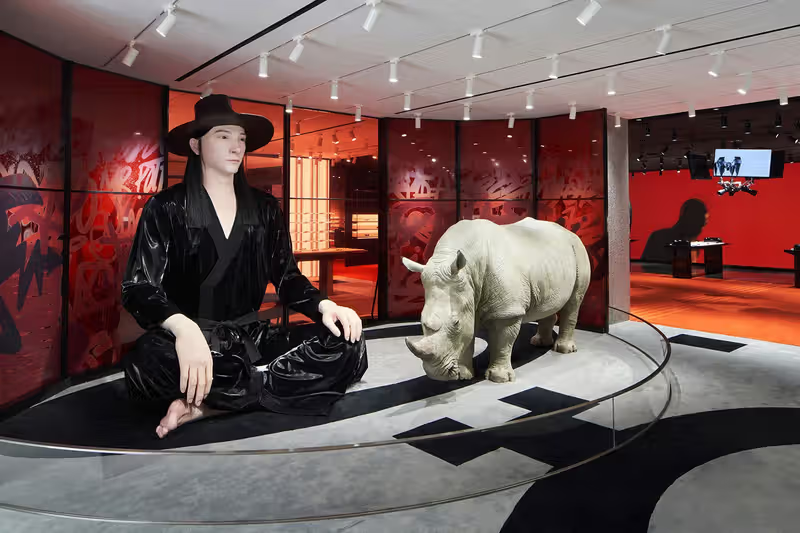
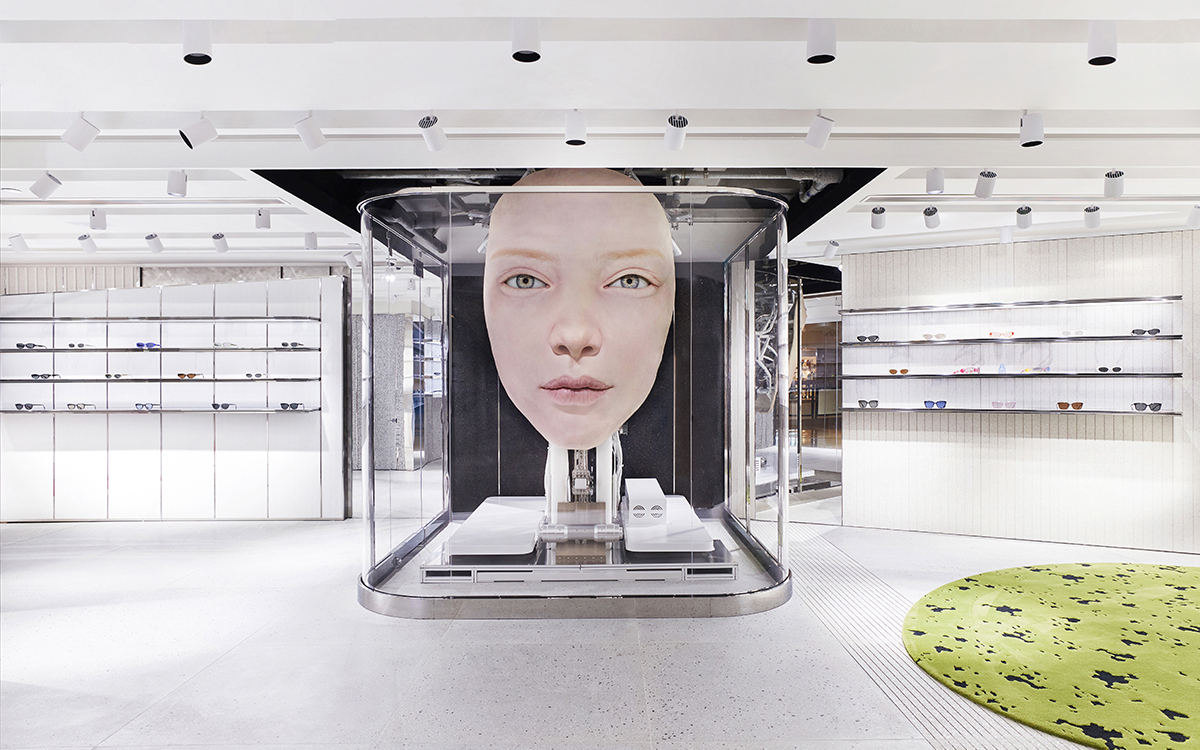
What sets Gentle Monster apart from traditional eyewear retailers is its highly curated and often theatrical store environments. Each flagship is conceived as a one-of-a-kind space, blending conceptual art, kinetic sculpture, and interactive technology to create an immersive, sensory-rich experience.
Examples from around the world include robotic installations in London, hyper-realistic bison in New Jersey, and meditative waterfalls on simulated Martian terrain in Tokyo. These locations are not just stores; they’re destinations. In Canada, Yorkdale’s flagship is expected to follow suit, delivering an elevated experience that merges fashion with art and storytelling.
Photo: Gentle Monster
Global Retail Strategy Anchored in Flagships
Gentle Monster currently operates 78 flagship stores across 13 countries, along with over 200 retail partner locations globally. In the U.S., the brand has a presence in New York, Los Angeles, Houston, and at South Coast Plaza in Costa Mesa, among others. Each flagship is custom-built with a distinct theme, allowing every store to feel like a new encounter with the brand.
Recent global expansions include the opening of a full-line boutique at Chadstone Shopping Centre in Melbourne, Australia, in late 2024, following shop-in-shops in Sydney and Hong Kong. The brand’s retail strategy centres on immersive storytelling and design, reinforcing Gentle Monster’s position at the intersection of luxury, technology, and contemporary art.
Photo: Gentle Monster
Yorkdale: Canada’s Launchpad for Global Luxury Brands
The arrival of Gentle Monster is the latest in a long line of exclusive brand debuts at the Yorkdale Shopping Centre. The mall has steadily built a reputation as the premier destination for first-to-Canada openings, particularly within the luxury and upscale fashion segments.
Yorkdale now hosts the largest collection of luxury retailers in the country, a distinction driven by multi-phase expansions and deliberate efforts to attract global flagships. Over the past decade, the centre has carved out several distinct luxury corridors, each offering a curated experience for high-end shoppers. Gentle Monster’s new location will join one of these wings, adding to a carefully cultivated environment that includes international labels, designer boutiques, and bespoke services.
Two frontline Amazon employees in Calgary were recently recognized by the company for successfully proposing safety ideas using Dragonfly, a tool that Amazon has made available at on-site kiosks and on employees’ devices, enabling them to make real-time safety suggestions stemming from their everyday work experiences.
In 2024, over 130,000 Amazon employees globally used Dragonfly to provide suggestions, with recommendations including changes like repositioning a package scanner so it isn’t accidentally knocked over, while others involve more complex safety measures like adding laser motion sensors to alert forklift drivers when people are nearby.
Photo: Amazon
Preventing Slips and Falls
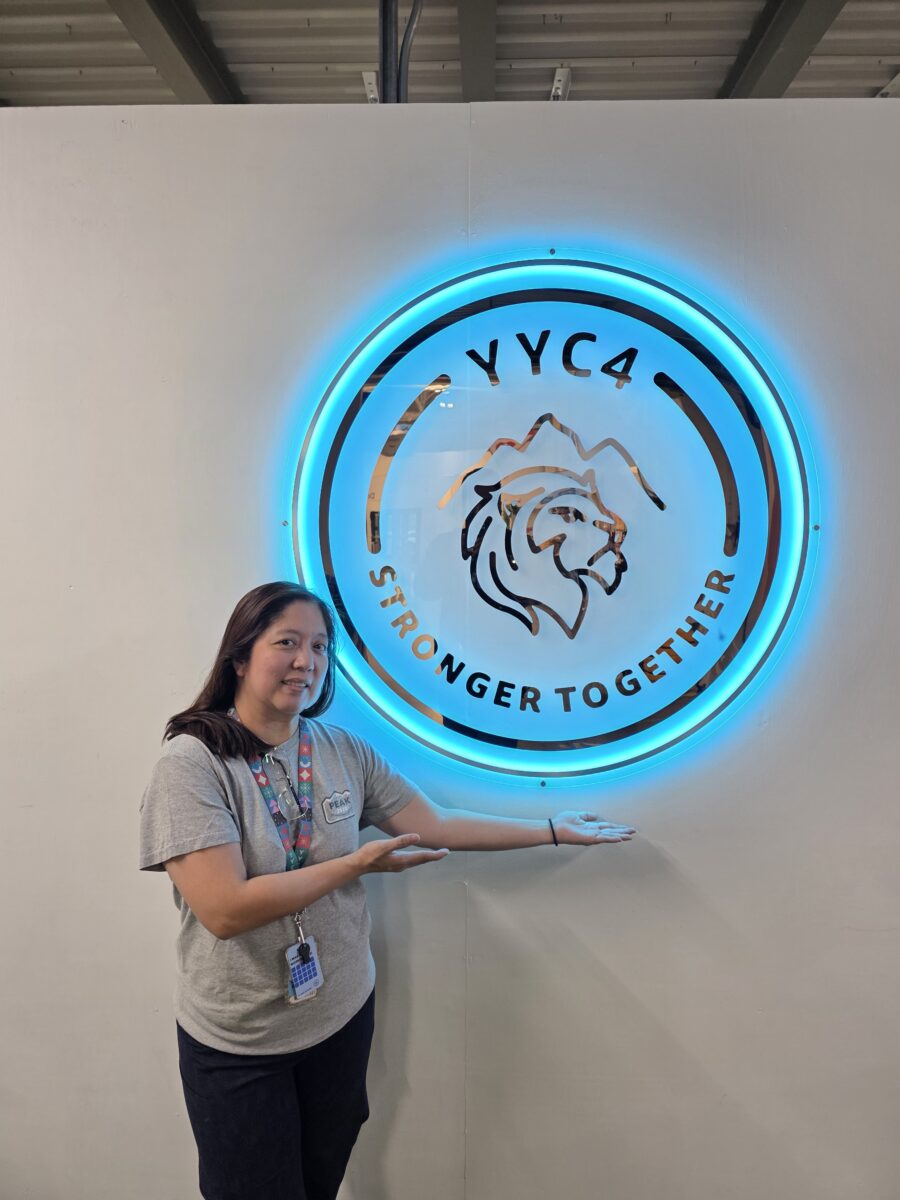
Jennifer E., who works in the inbound department at Amazon’s YYC4 robotics fulfilment centre in Calgary, was recently presented with a certificate recognizing her contributions to preventing workplace slips and falls.
Jennifer’s Dragonfly submission stemmed from Calgary’s harsh winter climate. Her role at YYC4 involves handling the arrival and processing of products into the fulfilment centre. During the winter months, when products are transported hundreds of miles in tractor trailers in snowy subzero weather conditions, some shipments can arrive at the site frozen, or covered in snow. After thawing, these shipments had the potential to leave puddles of water causing slip hazards at the inbound dock, explained Amazon.
Jennifer E.
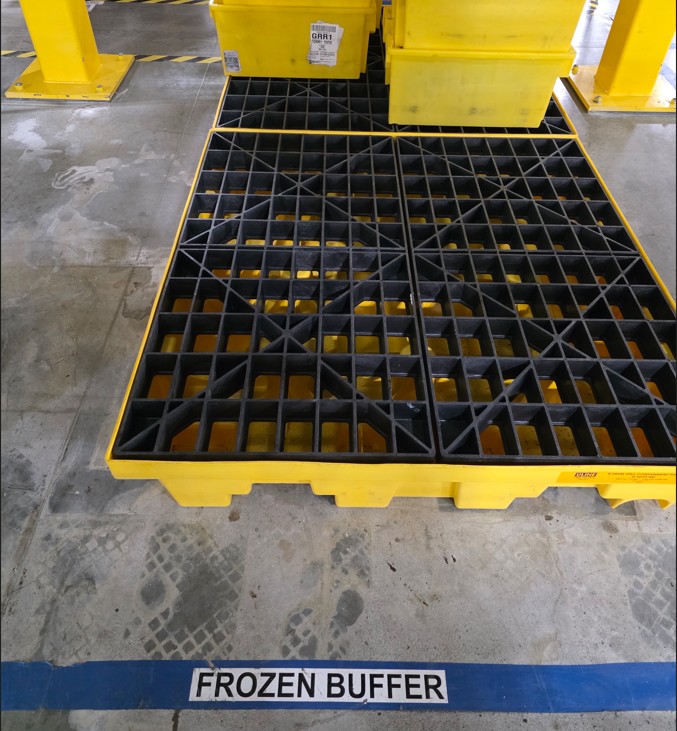
Jennifer recognized the potential slip hazard, and reported it via Dragonfly. After reviewing Jennifer’s submission, the site’s leadership team worked to implement a dedicated storage location for frozen or snow-covered products received through the inbound dock, located away from employee traffic. In addition to designated storage areas, specialized spillage pallets are now used to collect dripping water from thawing shipments, preventing puddles from forming on the floor, said the company.
“I am so happy to see the positive impact that my idea is having on the safety of my colleagues. It was motivating to see my Dragonfly submission actioned by my manager, and I am now encouraging my colleagues to submit their own ideas,” said Jennifer.
Photo: Amazon
Enhancing Pedestrian Safety
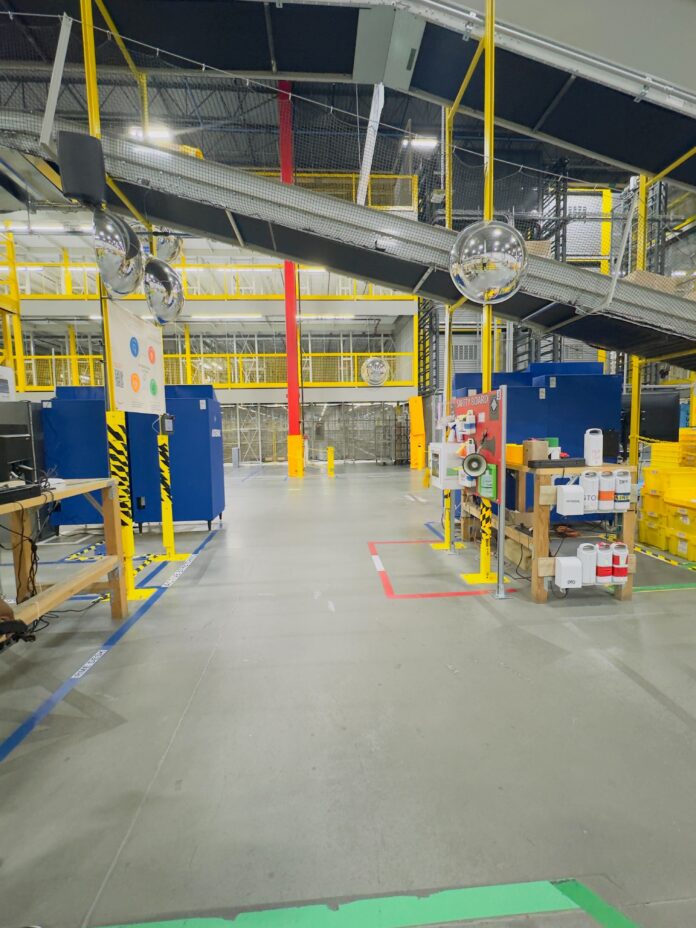
Alyssa M., a frontline employee at Amazon’s YYC1 fulfilment centre in Balzac, made a Dragonfly submission related to pedestrian safety at the 600,000 square foot site, where a high volume of employees move carts from the area where customer orders are fulfilled to the shipping dock. During a routine inspection of the site, Alyssa identified blind spots where employees moving carts might not see inbound pedestrian traffic, creating a potential collision hazard, said Amazon.
Alyssa M.
Alyssa submitted her observation in Dragonfly, and within a few short weeks, the site’s leadership had installed a number of spherical mirrors in low-visibility locations identified by the Workplace Health and Safety and Reliability and Maintenance Engineering teams. Thanks to these new mirrors, employees pushing carts are better able to spot incoming traffic, avoiding potential collisions, noted the company.
Alyssa’s contributions were recognized by senior Amazon leadership and celebrated internally at YYC1, where a growing number of employees are now taking advantage of Dragonfly to improve workplace safety from the ground up.
RCVRI, a luxury wellness and recovery studio, officially opened its doors on July 1 in the heart of downtown Toronto.
Located on Mercer Street, the 2,300-square-foot space introduces a curated collection of science-backed health and recovery therapies — a first-of-its-kind concept for North America.
The studio is situated between King Street and Blue Jays Way, placing it among some of the city’s most iconic destinations.
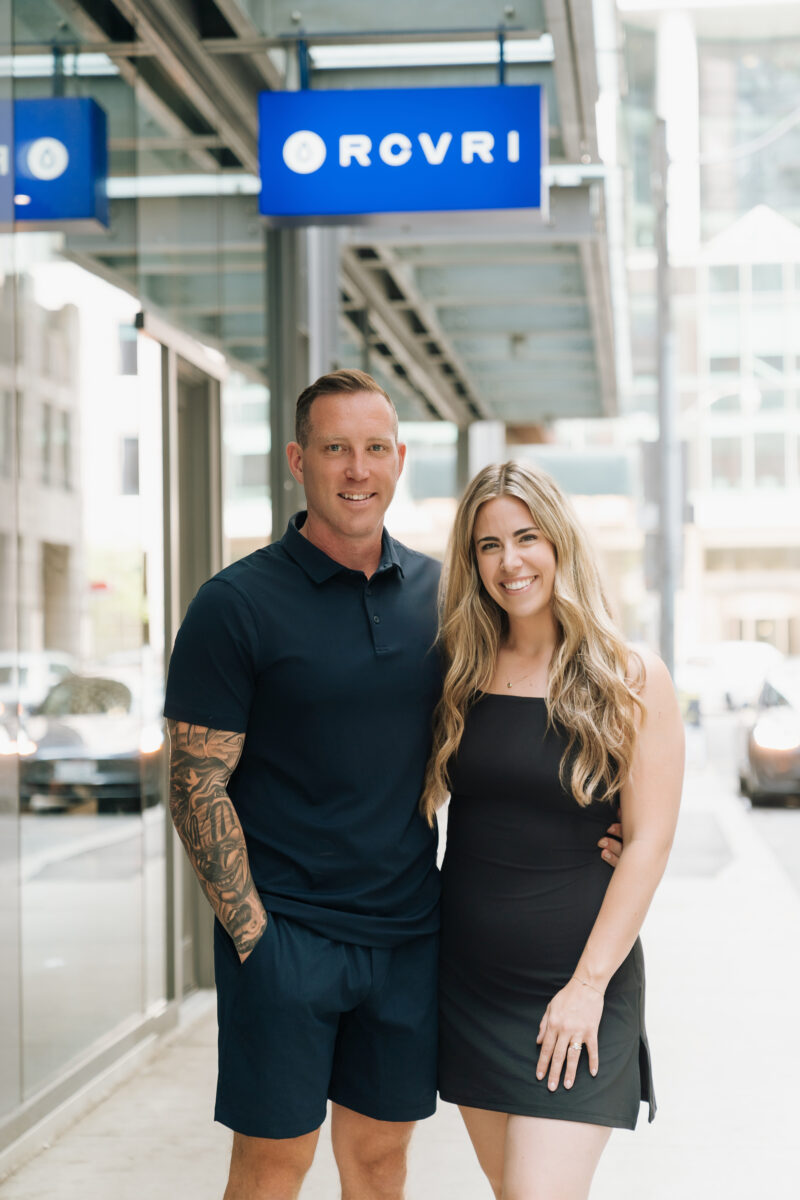
Managing Partners Colin Hubley and Ashley HaraburdaEvoto
“We’re right between King Street and Blue Jays Way, so close to TIFF Bell Lightbox, and before you get to the stadium,” said Ashley Haraburda, Managing Partner of RCVRI. “Right across from us is the new Nobu Hotel, and then our neighbours are the St. Germain and the Bisha Hotel. So we’re located in a destination area.”
RCVRI, which stands for “recovery,” was designed with both locals and visitors in mind. “When we were looking at different areas, we wanted to find somewhere that was walkable and easily accessible. But also, since we are a recovery and wellness destination, we wanted to serve both the local Toronto population and those coming in and out of the city,” she added.
“Everything is designed to help people feel their best and optimize both their physical and mental health,” she said. “So we carry a wide range of different recovery solutions, all that are going to harness the latest innovations but most importantly all backed by science and research.”
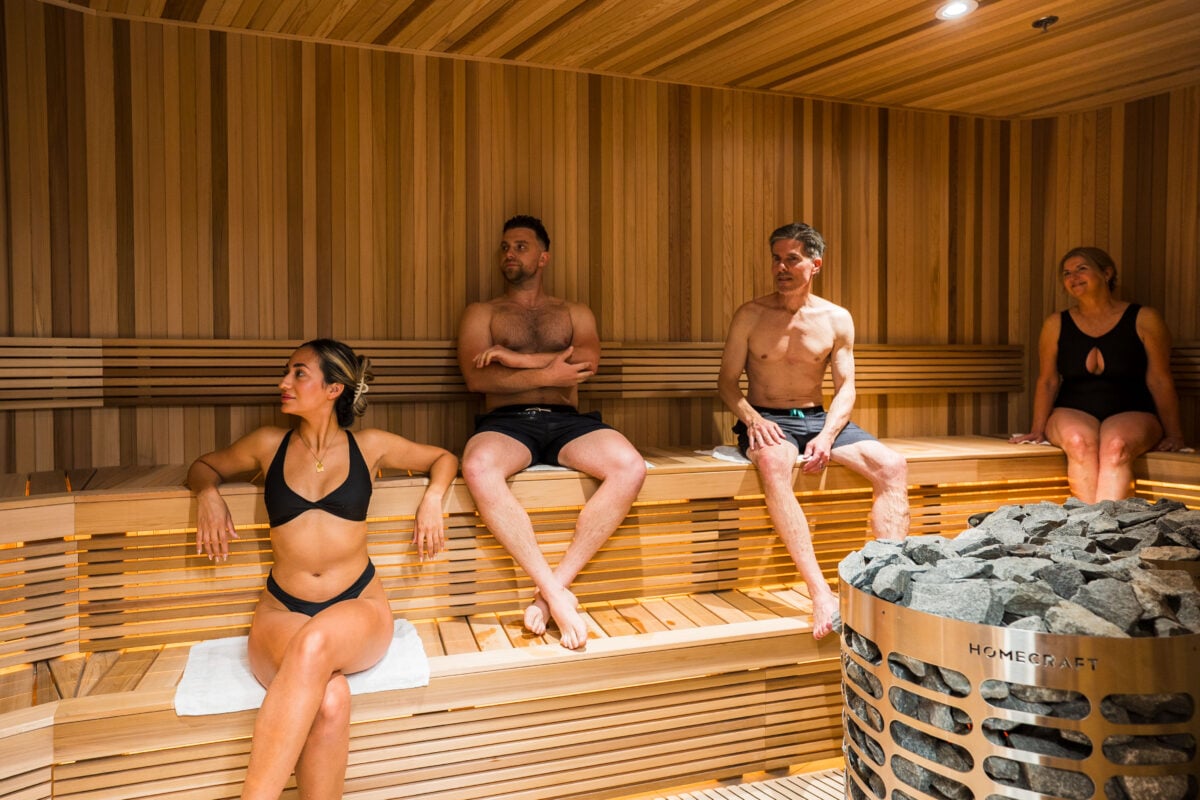
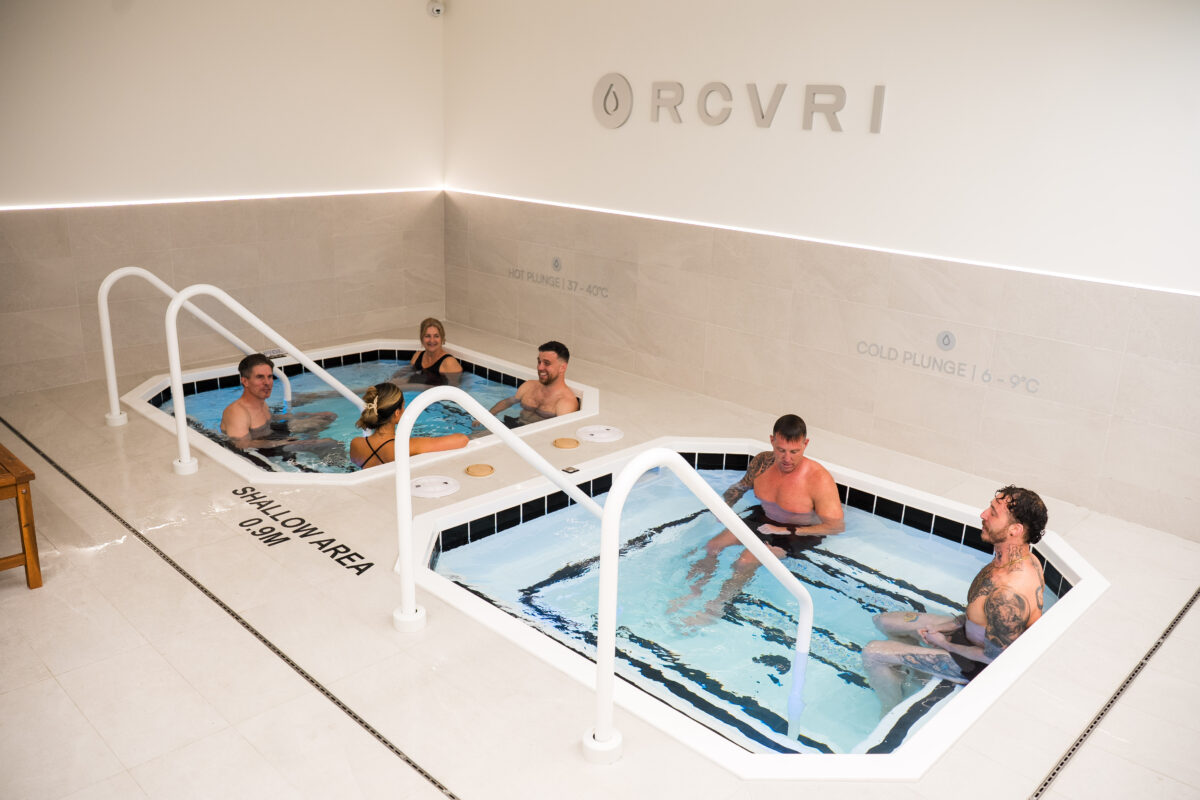
The studio features a wet and dry zone, offering a comprehensive menu of advanced wellness technologies. “In the dry area, we have compression therapy, we have red light therapy bed, we have PEMF machine therapy. And then we will be adding more modalities within that dry area as we open,” explained Haraburda.
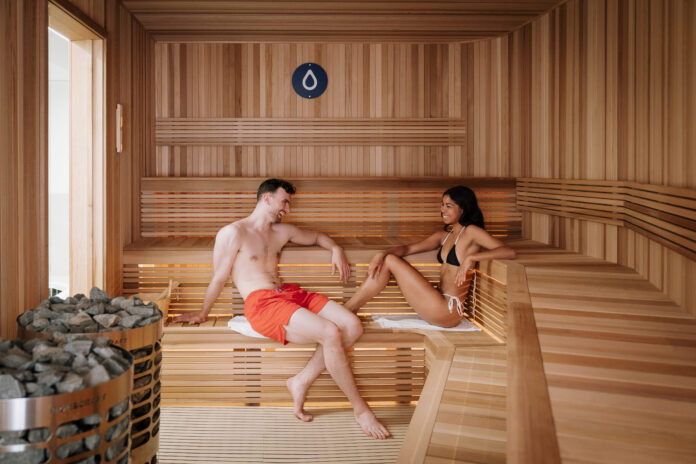
The wet area includes a hot and cold plunge setup and a sauna. “We also have what we’re referring to as our Superior Suite,” she said. “So it’s a private suite that has a private cold plunge as well as a private sauna. And that space is bookable for about four people at a time — a private space separate.”
RCVRI’s arrival is timely, coinciding with the global rise in interest around longevity, wellness, and biohacking. As more fitness studios begin to incorporate recovery into their offerings, Haraburda believes the demand for dedicated wellness spaces is stronger than ever.
“I think in general right now, there’s so much interest in — I’m sure you’ve heard terms such as longevity and biohacking,” she said. “Speaking to longevity, I think that we’re just at a time where a lot of people are wanting to live longer, healthier. They’re more aware of understanding that if we take care of our body now, we’ll stay strong and more energized for years to come.”
She emphasized RCVRI’s mission to be a science-driven alternative in the growing wellness space. “There’s all these ways now that people are finding ways to hack or upgrade our body and mind, but that gets into where we’re more centered — of using science-backed tools to feel better and be able to perform at our best,” she said.
Photo: RCVRI
RCVRI’s launch in Toronto marks the brand’s North American debut, with future plans for growth. “RCVRI is a brand that actually started in Australia. We’ve partnered with the team there. Currently in Australia there’s four locations. Ours is the first here in North America,” said Haraburda. “And then there’s expansion plans for both the US and Canada on a wider scale as well.”
As a nod to its new Canadian home, RCVRI is incorporating local touches into the experience. “Just in terms of speaking to the Canadian aspect of it — the sauna, everything is completely Canadian made. We used a Canadian sauna company based out of Quebec,” Haraburda noted. “All the names of the suites we’re giving a nod to Canada and using the Great Lakes. So we’re finding really fun and creative ways to also give a nod to the Canadian ties and really highlighting that here in Canada.”
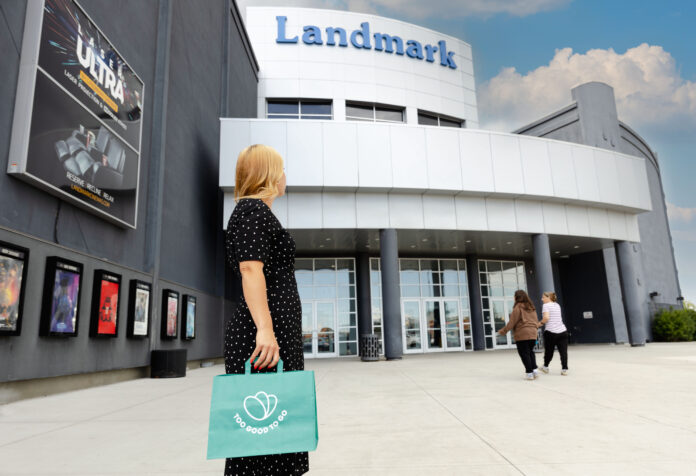
Landmark Cinemas and the social impact company,Too Good To Go, has announced a major partnership, offering Canadian movie goers and food enthusiasts alike a way to save money at Landmark Cinemas, while helping to fight food waste.
Several Landmark locations across Alberta, British Columbia, Manitoba, Saskatchewan and Ontario are live on the Too Good to Go app.
It marks the first cinema partnership for Too Good To Go in Canada and marks a milestone in the company’s growth across the country, embodying the company’s mission to combat food waste everywhere, according to a news release.
Since launching in Canada in 2021 Too Good To Go, and its 16,000 partners have saved more than 10 million meals, across the country. The company has expanded operations to all provinces and continues to welcome businesses of any size to save food and recoup revenue from waste, it said.
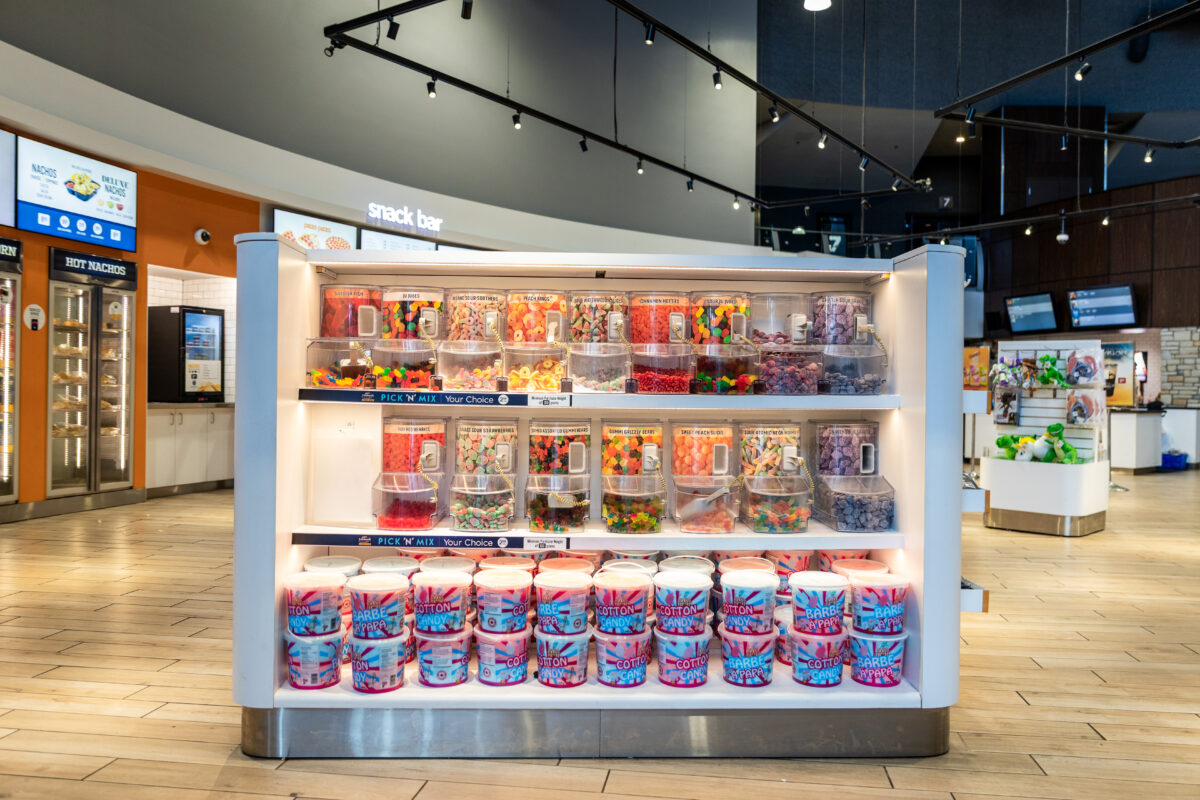
Customers saving food via Too Good To Go at participating Landmark locations will have the choice to select from two Surprise Bags, which include surplus food, perfectly good to eat. For $7.99 consumers will receive $24 worth of food that could include nachos, popcorn, cookie bites and hot dogs. The larger bag will sell on the app for $10.99, representing a $33 retail value, and in addition to the movie snacks in the smaller bag will also include pizza and pretzels.
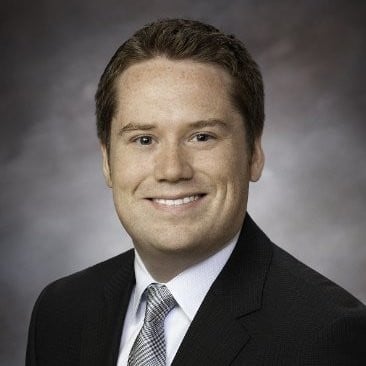
David Cohen
“As a company committed to delivering unforgettable movie experiences, we also recognize our responsibility to reduce our environmental impact. Partnering with Too Good To Go allows us to turn surplus concessions into an opportunity to fight food waste and take another meaningful step toward sustainability. We’re proud to be the first cinema chain in Canada to bring this innovative solution to our guests,” said Landmark’s President, Dave Cohen.
Chris MacAulay
“This partnership with Landmark Cinemas brings our mission to more Canadians in a whole new way,” said Chris MacAulay, Too Good To Go, VP North America. “By saving surplus snacks and treats from going to waste, we’re not only helping the planet-we’re also making sustainability accessible and fun. This partnership shows that even the simple joy of going to the movies can be part of a larger movement toward a more waste-conscious, affordable future.”
“We are an app-based service in North America—that’s how everyone would interact with us. In Europe, we have a number of other platforms, but currently, what you see here is the app,” she said.
Sarah Soteroff
“So, you would download it in the Google Play or Apple App Store, and we connect businesses who have any type of food that didn’t sell throughout the course of business—and would otherwise have to throw that away—directly to consumers, to purchase at a pretty steep discount.
“For example, I’ll take the Landmark example. We launched with them (recently) across the country, and they would have a ton of popcorn left over at the end of the night—probably some hot dogs, hamburgers, even candy that has a best-before date. That can’t be sold past that date and would otherwise typically get thrown out. All of that can now go into a Too Good To Go Surprise Bag.
“The Surprise Bag mimics the unpredictability of food waste. If I’m a bagel shop owner, I won’t know exactly how many bagels I’ll sell in a day—because if I did, I wouldn’t make extras. There’s always some margin for error and a bit of buffer. This allows those businesses to do something with that food rather than throw it away or heavily discount it in-store.
“This way, they can put it onto the app, sell it, and recoup what would otherwise be lost revenue. The consumer gets great deals, and there’s a bit of fun too because you get to see what’s in your bag only after you purchase it. So you’re kind of going into it a little blind, which people tend to love.”
The company was founded in 2016 in Copenhagen, Denmark, but came to Canada in July 2021.
“We are now national—we operate in every province across the country. (Recently), we crossed the 10 million meals saved milestone, which is huge. So, “meal saved” is our metric—it means bags purchased on the app. So we’ve sold 10 million bags of food that would have otherwise gone to waste. That food would’ve ended up in a landfill had it not been sold,” explained Soteroff.
“We work with partners across the country—everything from grocery stores, every Tim Hortons across the country, every Metro across Ontario, every Food Basics. We also work with partners that range from independent stores with one or two locations to large multi-location brands. We’re at around 16,000 partners nationally across Canada and have around 4 million users in Canada.
“Globally, we have over 175,000 partners, around 125 million users, and we’ve saved over 450 million meals from waste—that’s across 19 countries.”
Landmark is its first theatre partner across Canada. There are some theatre partners in Europe, but in North America, this is the first.
“The reason we partnered with Landmark is that when you go to the movies, you want fresh popcorn. You don’t want popcorn that’s been sitting there all day. So because of that, they’re constantly making fresh popcorn—but if it’s not sold, it becomes waste. That food would otherwise go into a landfill,” said Soteroff.
“And the environmental cost of sending that food to landfill contributes hugely to climate change. Our ultimate goal is to reduce the impact of food waste on the environment. At the same time, we help businesses recoup some money and help consumers get great food at lower prices.”
She said the concept is always launching with new businesses and adding new categories all the time. Two new launches are coming with FreshCo across Ontario and with Cora restaurants nationally.
“We’re always looking for more partners, and we encourage people to join the app. There’s always unpredictability with food waste, so the app looks different every day. We encourage everyone to check back often, see what’s in their area, and see how much food is actually being saved every day. It’s a great way to make an impact,” added Soteroff.
Retail Insider is streamlining its Canadian retail news from around the web to include a handful of top news stories that can be viewed quickly during the day. Here are the top stories from the past several days.
In addition to the acquisition, Recipe has entered into a comprehensive development agreement with Darden to significantly expand the Olive Garden brand across Canada, it said.
“The acquisition of the existing Canadian Olive Garden locations, situated in key markets across British Columbia, Alberta, Saskatchewan, and Manitoba, marks a strategic move for Recipe to integrate a highly popular and well-established casual dining concept into its extensive portfolio,” explained the company.
“Furthermore, the development agreement with Darden Restaurants grants Recipe the exclusive rights to develop and operate new Olive Garden restaurants throughout Canada. This partnership underscores Recipe’s commitment to growth and diversification, bringing Olive Garden’s beloved Italian-inspired cuisine and family-friendly dining experience to more communities nationwide.”
“Olive Garden is a brand with a strong legacy of success and a loyal following, and we see immense potential for growth across Canada. This acquisition and subsequent development agreement align perfectly with our strategy to expand our presence in the casual dining segment with leading brands that resonate with Canadian consumers.”
The acquisition of the existing restaurants is effective immediately, and Recipe said it will begin integrating these operations into its robust infrastructure. Recipe added that it will leverage its extensive operational expertise, supply chain efficiencies, and strong marketing capabilities to further enhance the Olive Garden experience in Canada.
Brad Smith
“Our partnership with Recipe marks the beginning of an exciting new chapter for Olive Garden in Canada,” said Brad Smith, president of Darden International & Franchising.“Their proven track record in operating beloved restaurants throughout the country will help us better serve our Canadian guests and team members, while unlocking new opportunities for growth.”
More information on the timing of new locations will be announced in due course as development plans take shape, noted Recipe.
Photo: Olive Garden
Recipe Unlimited is Canada’s largest full-service restaurant company. Home to leading casual dining, quick service, and fast casual brands, Recipe has more than 1,200 restaurants located across Canada, and an international presence in the United States and the Middle East. The company’s portfolio of brands includes Swiss Chalet, The Keg, St-Hubert, Harvey’s, Montana’s, New York Fries, Kelseys, East Side Mario’s, Original Joe’s, State & Main, Anejo, The Burger’s Priest, The Landing Group, Elephant & Castle, Fresh Kitchen + Juice Bar, The Pickle Barrel, Blanco Cantina, and now Olive Garden.
Darden’s family of restaurants features some of the most recognizable and successful brands in full-service dining — Olive Garden, LongHorn Steakhouse, Yard House, Ruth’s Chris Steak House, Cheddar’s Scratch Kitchen, The Capital Grille, Chuy’s, Seasons 52, Eddie V’s and Bahama Breeze.
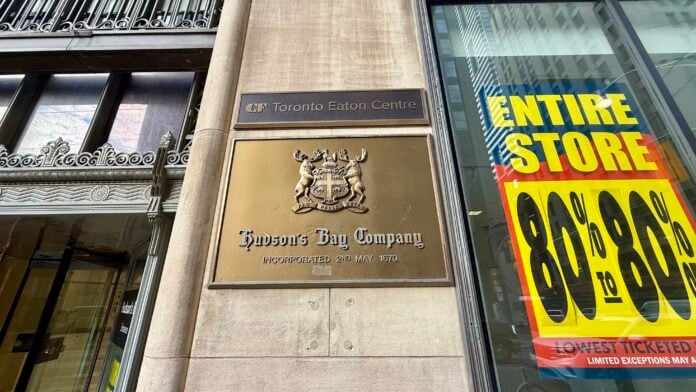
Signage outside the former Hudson's Bay flagship store in downtown Toronto, May 2025. Photo: Craig Patterson
The Hudson’s Bay Company is forcefully rejecting calls from a key lender to expand court oversight of its operations, arguing in new court documents that many of the problems cited by the lender were in fact caused by the lender itself.
In an affidavit filed Sunday with the Ontario Superior Court of Justice, Michael Culhane, chief financial officer and chief operating officer of the defunct retailer, accused Hilco Global of “intentional inaccuracies and mischaracterizations” in its push to have Alvarez & Marsal’s court-appointed oversight powers enhanced. He described the criticisms as an effort to deflect blame for the very liquidation failures Hilco helped engineer.
“It is neither fair nor credible for Hilco to criticize the retailer for matters that were foreseeable, inevitable and/or, in many instances, driven by or contributed to by Hilco’s own conduct and commercial decisions,” Culhane said.
The dispute has become the central battle in the Hudson’s Bay liquidation dispute, one that may shape the outcome of the company’s restructuring under Canada’s Companies’ Creditors Arrangement Act. Hilco, through its affiliate Restore Capital, is a major lender and also owns Hilco Merchant, the lead liquidator in charge of shutting down Hudson’s Bay’s remaining department stores.
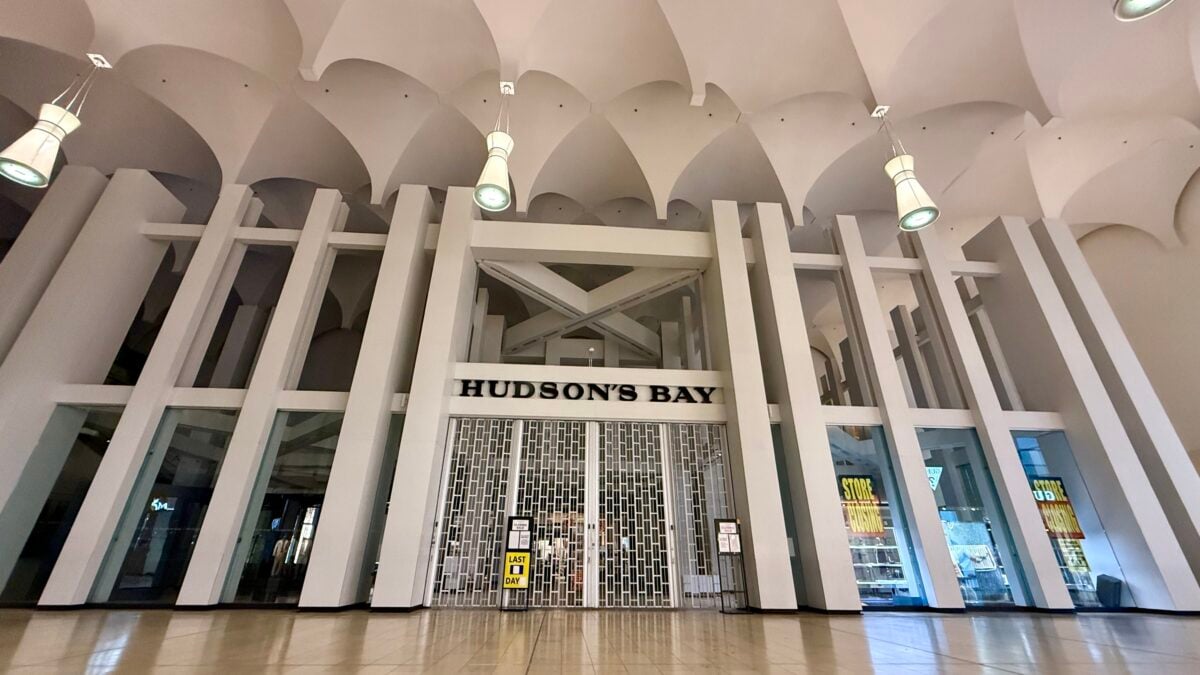
Shuttered Hudson’s Bay store at Toronto’s Yorkdale Shopping Centre on the evening of June 1, 2025. The Yorkdale store is part of the RioCan JV. Photo: Craig Patterson
Restore Capital and its co-lenders advanced $151.4 million to Hudson’s Bay in December. They now argue that the retailer has wasted that money through poor decisions, including a contentious deal to sell 25 leases to B.C.-based billionaire Ruby Liu. Restore is seeking a court order to terminate the sale and install either a more powerful monitor or a third-party receiver to oversee what remains of the business.
But Culhane contends that the liquidation sale was run directly by a syndicate of five firms, with Hilco in the lead. That group included Gordon Brothers, Tiger, the GA Group and SB360 Capital. According to Culhane, Hilco controlled pricing and timing decisions and had supervisory staff in every store.
Hilco’s own projections anticipated roughly $17 million in sales from furniture, fixtures and equipment (FF&E). Instead, only $10.7 million was recovered, a shortfall Culhane attributed to missteps made by the liquidators, including delayed start times, poor discounting, and failure to secure bulk buyers.
“These were matters Hilco knew or should have known could occur when it agreed to and participated in the various processes that it now criticizes,” Culhane wrote in his affidavit.
The retailer now faces accusations that the FF&E abandonment is costing millions in removal fees. Yet Culhane insists that Hilco chose to vacate all stores by June 7 and left behind unsold items, despite Hudson’s Bay’s warnings. He argues it is disingenuous for the company’s lender and liquidation partner to now seek greater control over the wind-down.
Weihong (Ruby) Liu in front of the Court House at 330 University Avenue in Toronto on June 23, 2025. Photo: Craig Patterson
At the centre of the broader Hudson’s Bay liquidation dispute is the proposed sale of 25 store leases to Ruby Liu, a mall owner who plans to relaunch the department store model under her own name. Liu has already acquired three leases for $6 million and made a $9.4 million deposit toward the remaining 25, suggesting a purchase price of approximately $94 million.
Restore Capital calls the Liu deal “illusory” and a “misadventure,” citing landlord resistance and a lack of a convincing business plan. In a filing over the weekend, the lender warned that the transaction’s delay is costing lenders millions in ongoing rent and legal fees. “If the transaction fails, no proceeds will be realized and the astounding costs incurred, and to be incurred, in its pursuit, will never be recouped,” Restore stated.
Culhane defended the lease sale, saying it represents the best chance to realize value for creditors. He also revealed the company intends to seek court approval for an additional lease sale later this month and plans to auction off its corporate art collection to raise further funds. Hudson’s Bay is also pursuing a claim for access to a pension surplus, which Culhane says could allow lenders to be repaid in full.
Rendering of a Ruby Liu store. Image: Ruby Liu/Central Walk
In seeking to block Restore’s push for expanded oversight, Culhane warned that appointing a “super monitor” or outside receiver would introduce unnecessary costs and delays. He emphasized that Alvarez & Marsal, the current monitor, has not raised concerns about cash flow or mismanagement and continues to support the company’s conduct in the proceedings.
Hudson’s Bay, once Canada’s oldest retailer and a cultural institution, filed for creditor protection in March after years of declining sales, neglect, and mounting debt. As the liquidation winds down, tensions between lenders and management have intensified, with the fate of the Liu transaction likely to be a deciding factor in what, if anything, remains for creditors.
The court is set to hear arguments Tuesday on whether to terminate the Liu deal or let it proceed. The outcome will mark a pivotal moment in the Hudson’s Bay liquidation dispute, as stakeholders await a ruling that could determine the future of the company’s remaining assets.
Lauren Bentley pop-up at Yorkville Village. Image: Yorkville Village
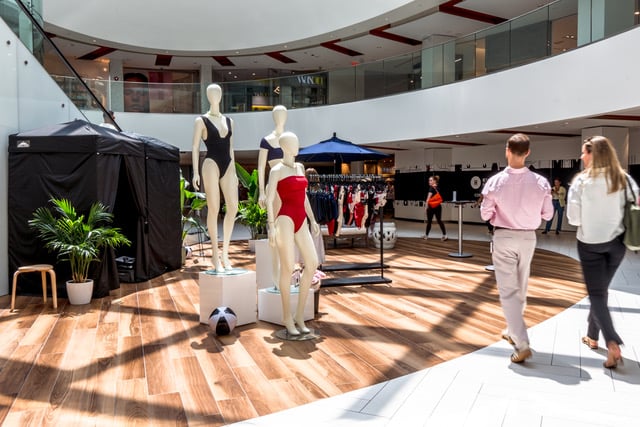
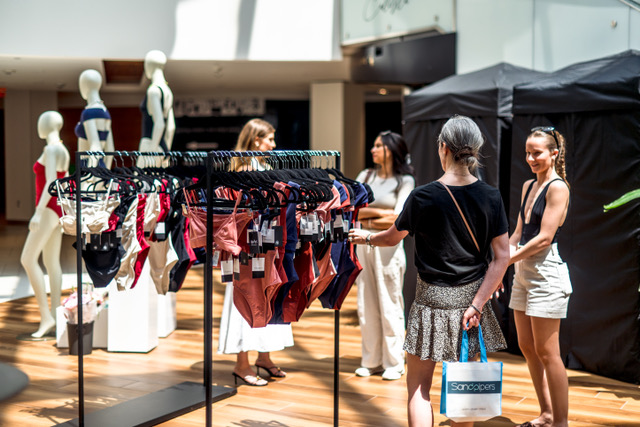
Canadian luxury swimwear label Lauren Bentley Swimwear is gaining momentum as one of the country’s most promising emerging fashion brands. Known for its refined aesthetic and strong focus on craftsmanship and sustainability, the brand has officially opened a new pop-up retail experience at Yorkville Village in Toronto, July 9-25. The boutique-style location brings founder and CEO Lauren Bentley’s vision of elevated, timeless swimwear directly to consumers in a bright, resort-inspired setting.
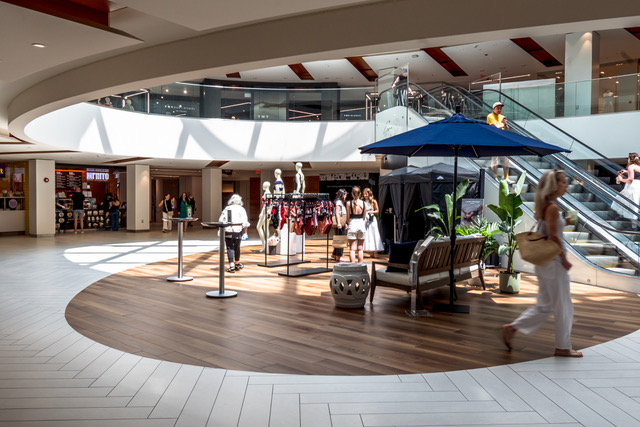
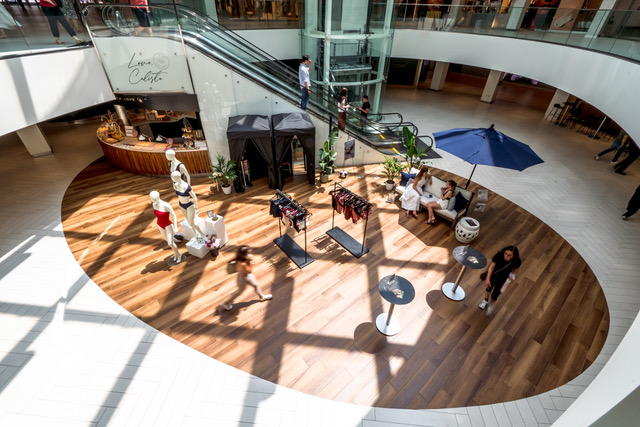
Located in the high-traffic Oval space under a dramatic skylight, the new store is described by Bentley as a “poolside escape minus the pool”, a retail experience that goes beyond product and into lifestyle. “We’re bringing in all the fixtures, our vision coming to life,” said Bentley in an exclusive interview. “This one is all us. It’s been a lot of planning, but that makes it exciting. I’ve always loved creating experiences, and I see this as an extension of that.”
Lauren Bentley
Creating a Swimwear Moment in Canada
Now open for the summer, the Yorkville Village pop-up has been designed to reflect the brand’s sophisticated yet approachable identity. Inspired by warm-weather leisure, the space includes loungers, social seating, and elegant product displays that nod to Mediterranean luxury.
“We felt like having that sunlight coming in through the skylight is going to be really helpful,” Bentley said. “Selling bathing suits in Canada, especially outside of summer, can be tricky. Our customers often need to see the sun, or have a trip booked, before they even consider buying swimwear.”
The brand is also collaborating with other Yorkville Village tenants for cross-promotional initiatives and product integrations. “There’s a strong community feel here,” Bentley added. “Everyone’s been incredibly supportive. It’s the right place for us to engage customers directly.”
Lauren Bentley pop-up at Yorkville Village. Image: Yorkville Village
From Nova Scotia to Toronto Luxury
Bentley’s journey to founding her namesake brand began in Nova Scotia, where a childhood by the ocean inspired her passion for swimwear. After studying Fashion Business Management at Seneca College, she entered the fashion wholesale industry, eventually becoming swimwear brand director at Jaytex Group.
“One day I got a call that I was flying to Miami Swim Week the next day,” she recalled. “It was my dream come true. I had to learn fast and sell swimwear to North American buyers in a weekend.”
Bentley spent several years refining her concept before launching Lauren Bentley Swimwear in October 2023 under the parent company LSEB Creative Corp. “This brand was years in the making,” she said. “And now it feels like it’s unfolding exactly the way it was meant to.”
Lauren Bentley pop-up at Yorkville Village. Image: Yorkville Village
A Brand Rooted in Craftsmanship and Intention
At the core of Lauren Bentley Swimwear is a design philosophy that favours timelessness over trends. Each piece is carefully created to be both elegant and enduring.
“Our trims and fabrics are sourced individually, and with great care,” Bentley explained. “We consider every detail to ensure each component meets our high standards and ultimately, our customer’s expectations.”
Most trims and materials are sourced from Europe, while all production is done in Portugal, a country with a storied tradition of textile excellence. “Portugal is one of the strongest textile regions in Europe,” she said. “Their level of craftsmanship aligns beautifully with our values.”
This dedication is visible in the brand’s elevated silhouettes, which are inspired by Mediterranean swimwear and designed to flatter and last. “We want our pieces to feel refined, effortless, and above all, made to endure,” she said.
Image: Lauren Bentley Swimwear
Responsibility at the Core
From day one, environmental and social responsibility has been embedded into every facet of the brand. “We view sustainability as a necessity when building a brand in today’s world,” said Bentley. “We still have a long way to go, but our commitment is serious and ongoing.”
The company has aligned with manufacturers who carry respected certifications, including the Global Organic Textile Standard (GOTS), Global Recycled Standard (GRS), and Recycled Claim Standard (RCS). Bentley emphasized that ethical partnerships are non-negotiable. “We only work with those who share our values,” she said.
This ethos also drives the brand’s design direction: creating garments that last both in quality and style. “We don’t want to contribute to throwaway fashion,” she explained. “Every product is meant to be timeless and durable.”
Climate Commitment Built In
In addition to responsible manufacturing, Lauren Bentley Swimwear also takes direct action to address its shipping footprint. “For every order we ship, we calculate estimated emissions and allocate a portion of our revenue to verified carbon removal projects,” Bentley noted.
Those projects are selected based on scientific vetting by experts at Carbon Direct. “We believe in supporting climate innovation while offsetting our own impact,” she said. “It’s not perfect, but it’s purposeful.”
This transparency and forward-thinking approach are part of what sets the brand apart in a competitive luxury space. “Fashion isn’t always clean,” Bentley added. “But we can hold ourselves accountable and always strive to do better.”
Image: Lauren Bentley Swimwear
A Strong Start in Luxury Hospitality
Despite being under two years old, Lauren Bentley Swimwear has already secured premium partnerships that reflect its upscale positioning. The brand is stocked at Four Seasons Hotels in Toronto, Nashville, and New Orleans.
“I love the luxury hospitality world,” said Bentley. “It’s where our clients are already comfortable, relaxed, and open to discovering something beautiful. These partnerships are such a natural fit.”
The brand also completed a successful trunk show with Holt Renfrew’s Bloor Street flagship, giving it a strong introduction to Toronto’s luxury retail audience.
“That event gave us credibility and visibility,” she said. “Holt Renfrew has a phenomenal team—we’re hoping to work with them again in the future.”
Building a Beachwear Lifestyle Brand
While swimwear remains the foundation, the long-term vision for Lauren Bentley Swimwear includes product expansion into beachwear, accessories, and even resort-inspired lifestyle categories.
“We’re starting with men’s and women’s swimwear, but the next step is beachwear cover-ups, then daywear, then accessories,” Bentley explained. “Eventually, I’d love to get into homewares and even lingerie.”
Permanent flagship stores could also be in the future, ideally in destinations where swimwear shopping is relevant year-round. “It has to be intentional,” she said. “We’re not interested in quick wins — only thoughtful, long-term growth.”
She’s also open to shop-in-shop concepts and further wholesale partnerships, provided they align with the brand’s ethos. “Every relationship we pursue has to reflect our core values,” she added.
Lauren Bentley pop-up at Yorkville Village. Image: Yorkville Village
A Brand With Purpose
Ultimately, Bentley sees her namesake brand not just as a business, but a long-term platform to build something meaningful, both creatively and ethically.
“This is my baby and my name is on it for a reason,” she said. “I want to be around for decades, not just a few seasons. I’m building something with integrity.”
The new Yorkville Village pop-up marks an important step in that journey: a chance to meet customers face-to-face, share the brand’s story, and build community.
“We’ve built something beautiful,” Bentley said. “Now we get to invite people into the experience.”
In a shifting media landscape amid policy changes and platform-specific risks, brands are reconsidering where to allocate and diversify their ad spend. New research from Pinterest and MAGNA reveals there’s one thing that many businesses have been overlooking to drive real impact: positive ad environments.
Pinterest commissioned MAGNA for research to help understand which ad environment attributes can impact a brand’s performance goals. The research reveals a clear takeaway for brands: It pays to be positive.
Because when people experience a positive environment, marketers see positive results – from increasing audience engagement to boosting sales.
According to Pinterest, the top findings for marketers include:
People are more engaged when they’re in a positive space. The study found that people were 20% more emotionally engaged with content they saw on platforms they perceived as positive. They were more leaned in as well, spending an average of 15% more time looking at the ads.
Ads in positive environments work harder. When the same exact ad was shown on different platforms, users responded that an ad seen on a platform they viewed as positive is perceived as twice as trustworthy, twice as interesting and 1.5x more likeable. Put another way: Your customer’s experiences are crucial, and can make the same piece of creative work harder.
People are more likely to take action in positive ad environments. Positive environments don’t just help brands improve perception, they also make people more likely to act. Compared to non-positive spaces, positively viewed platforms can be up to 94% more impactful in driving purchase intent.
Brands see better results when they account for viewability and positivity in their media buying strategy. In the MMM simulations, the same creative and same finite budget generated up to 24% more sales when brands incorporated viewability and positivity in their media buying strategy.
Soniya Monga
“In partnership with MAGNA, this research shows that safe and positive platforms aren’t just preferred by users, they perform for advertisers,” said Soniya Monga, VP of Global Agency Sales. “We were able to quantify the impact on metrics like engagement, trustworthiness, intent and even results to demonstrate that brands don’t have to choose between positivity and performance.”
Pinterest said it is continuing to build a more positive internet—one that brings out the best in humanity and supports advertisers in reaching audiences with intent.
Pinterest is ranked the #1 social media platform for instilling feelings of self-worth and purpose, as measured by a global wellbeing metric.
Kara Manatt
“We understand advertisers are all seeking a competitive edge in today’s marketplace, and we believe this research represents a fresh opportunity for where to find it,” said Kara Manatt, EVP, Intelligence Solutions, MAGNA. “This ambitious study shows what audiences experience whenever they log on to social media, how that impacts brands, and why prioritizing this could benefit both.”
Following two consecutive interest rate pauses, the MNP Consumer Debt Index – conducted quarterly by Ipsos – is holding steady at 88 points this quarter.
Still, nearly two-thirds of Canadians say they desperately need interest rates to go down, relatively consistent since last quarter (64%, +1pt). Despite the Index stabilizing, ongoing economic uncertainty and the cost of living continue to weigh on households. More than one-third (36%) of Canadians report feeling anxious or stressed about their financial situation, while one-quarter say they feel like they’re having to put their life on hold (26%) or are constantly putting out financial fires, facing one unexpected cost after another (24%), said the report.
Grant Bazian
“Canadians have not witnessed such economic uncertainty since the pandemic. We see some stability in financial perception, but many households feel like their lives are on hold, stuck in a financial holding pattern as they wait for the proverbial dust to settle,” said Grant Bazian, president of MNP LTD, the country’s largest insolvency firm.
“Given the persistent economic pressures and a backdrop of global volatility, many are hesitant to make major financial or life decisions, unsure of what lies ahead.
“Even after two interest rate pauses, those making careful choices and delaying major decisions may be struggling to get ahead amid the current uncertainty around costs and income. For many vulnerable households–particularly younger adults and lower-income Canadians–it may feel like they’re constantly putting out financial fires.”
Younger adults and lower-income households are consistently among the most likely to report financial strain and feeling stalled. One-third (33%) of Canadians aged 18-34 say they feel stalled–having to put their lives on hold–while those with household incomes under $40K (30%) are also the most likely to feel stalled. Young Canadians aged 18-34 (45%) and those with household incomes less than $40K (44%) are the most likely to report feeling anxious or stressed about their financial situation. One-third (32%) of Canadians feel stuck living paycheque to paycheque, with those aged 18-34 (37%) and 35-54 (39%), and those earning less than $40K (45%), being the most likely to feel this way. However, younger Canadians aged 18-34 (32%) are also the least likely to say they are feeling cautious with how they manage their money due to current financial pressures, compared to 37% of Canadians overall, said MNP.
“In response to current financial pressures, two in five Canadians (41%) have reduced discretionary spending, one-third (33%) are increasing savings or building emergency funds, and more than one-quarter (27%) are prioritizing debt repayment. Nearly one-quarter (23%) of Canadians are putting important life goals–such as buying a home, starting a family or changing careers–on hold. Younger Canadians aged 18-34 are the most likely to delay these types of milestones (33%),” said the MNP report.
Despite interest rates holding steady twice this year, more Canadians this quarter say they are concerned rising interest rates could drive them toward bankruptcy (41%, +3pts). Furthermore, even if rates were to decline, a significant proportion of Canadians (45%, +2pts) remains concerned about their ability to repay debt, said MNP.
“There are some persistent fears around interest rates,” added Bazian. “For some households, the damage has already been done. After years of rising costs, high interest rates, and depleted savings, there may be some deep anxieties about what could still be to come.”
As Canadians look to the future, one-third (33%, +3pts) expect their debt situation to improve one year from now, and a larger proportion (40%, +1pt) believe it will improve in five years. However, 13% say they expect their debt to worsen over both horizons. Fewer this quarter believe they will be able to cover all living expenses in the next year without needing more debt (54%, -4pts), explained MNP.
Millions Remain Close to Insolvency
While some households are managing to set a little more aside, a significant proportion of Canadians remain on precarious financial footing.
“About 14 million Canadians say they are close to financial insolvency, with little to no room to absorb an unexpected expense or income disruption,” said Bazian.
“Two in five Canadians (42%, -1pt) report they are $200 or less away from financial insolvency each month. That includes more than a quarter (27%, +1pt) who say they already don’t make enough to cover their bills and debt payments,” noted the report.