For the quarter, the company recorded net earnings of $173 million ($0.74 per share) compared to $149 million ($0.61 per share) last year. For the quarter, the company recorded adjusted net earnings of $173 million ($0.74 per share) compared to $154 million ($0.63 per share) last year, an increase of 12.3% (or 17.5% per share).
Empire is a Canadian company headquartered in Stellarton, Nova Scotia. Empire’s key businesses are food retailing, through wholly-owned subsidiary Sobeys Inc., and related real estate. With approximately $31 billion in annual sales and $17 billion in assets, Empire and its subsidiaries, franchisees and affiliates employ approximately 129,000 people.
Michael Medline, president and CEO, Empire Company Limited (CNW Group/Empire Company Limited)
“This was a very strong quarter for Empire and I am pleased with the way our team finished the year, delivering positive results across all major financial measures,” said Michael Medline, President & CEO, Empire.
“Our momentum continued to build throughout fiscal 2025 resulting in fourth quarter market share gains and our adjusted EPS growth of 8.8% was within our financial framework.”
The Company declared a quarterly dividend of $0.22 per share on both Non-Voting Class A shares and Class B common shares, that will be payable on July 31, 2025 to shareholders of record on July 15, 2025.
“This reflects an increase in the annualized dividend rate of 10.0%. These dividends are eligible dividends as defined for the purposes of the Income Tax Act (Canada) and applicable provincial legislation,” said Empire.
Key financial results
Earnings per share (“EPS”) and adjusted EPSof $0.74
Prior year EPS and adjusted EPS of $0.61 and $0.63, respectively
Delivered adjusted EPS growth of 8.8% in fiscal 2025; within the financial framework
Sales of $7,637 million, an increase of 3.0%
Same-store sales – food increased by 3.8%
Repurchased $400 million of shares in fiscal 2025
Capital allocation outlook for fiscal 2026:
Declared a dividend increase of 10.0%; 30th consecutive year of dividend increase
Renewed NCIB with the intention to repurchase up to $400 million of shares
Capital investment program expected to be approximately $850 million
“Over recent years, the Company has accelerated investments in renovations, conversions, and new stores along with store processes, communications, training, technology and tools. Investing in the store network will remain a priority, demonstrated by a sustained emphasis on renovations and continued new store expansion. The Own Brands program enhancement will remain a priority through increased distribution, product innovation and supporting Canadian suppliers,” explained Empire.
“The Company intends to invest capital in its store network and is on track with its plan to renovate approximately 20% to 25% of the network between fiscal 2024 and fiscal 2026. This capital investment includes important sustainability initiatives such as refrigeration system upgrades and other energy efficiency initiatives.”
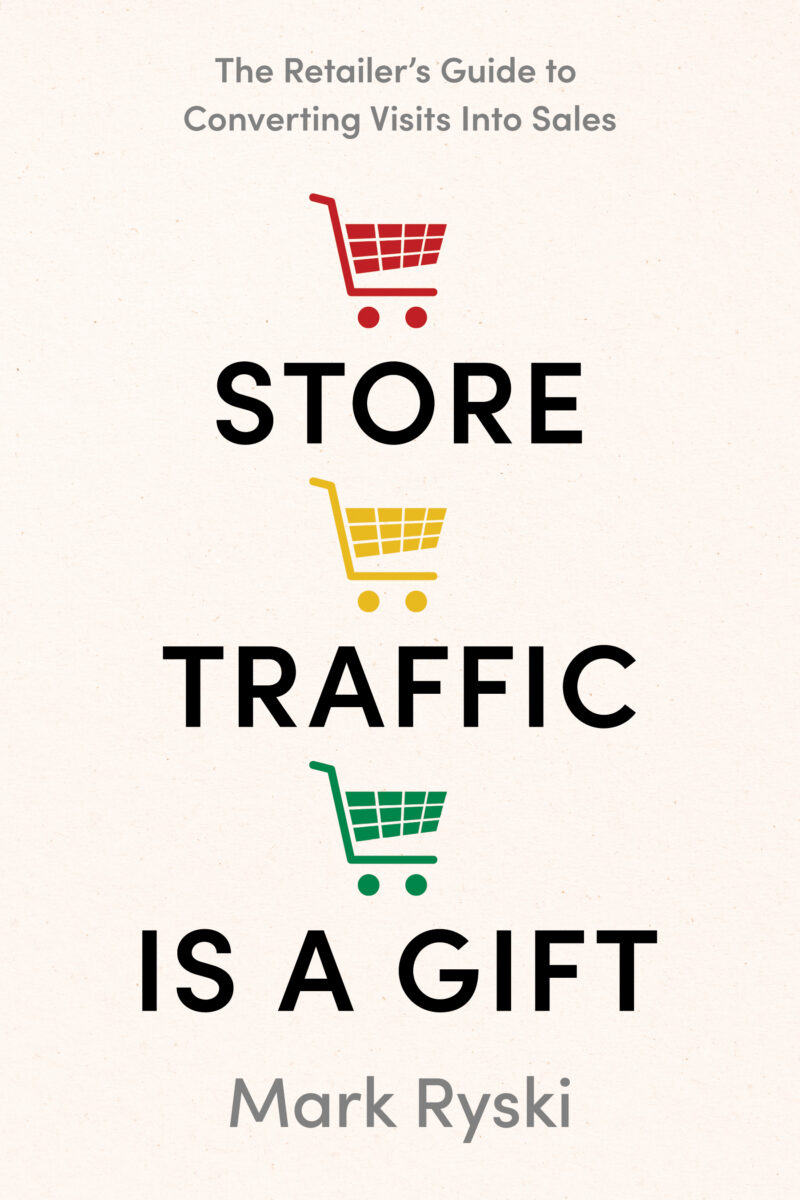
“This is my third book, and the other two were on the same topic,” Ryski said in an interview. “I wrote the first one, When Retail Customers Count, in 2005, and at that time it was the first book ever written on the subject.
Mark Ryski
The second one, Conversion: The Last Great Retail Metric, followed in 2011. But retail changed a lot during and after the pandemic. I felt it was time to update these ideas for a new era.”
A Post-Pandemic Wake-Up Call
In the aftermath of COVID-19, retailers were hyper-focused on traffic. “Every retailer was obsessed with traffic during the pandemic,” Ryski said. “But now, five years later, we’ve drifted. There’s this idea that if you just drive more traffic into stores, things will improve—but it’s not that simple. Traffic is a gift. You need to know how to use it.”
Ryski’s central thesis is that store traffic, when accurately measured and analyzed, can illuminate virtually every operational decision a retailer makes. “Whether it’s staff planning, marketing ROI, or testing a new sales approach—everything shows up in the traffic and conversion metrics,” he explained.
Unlocking the Secrets of Super Converting Stores
One of the book’s standout ideas is the concept of “super converting stores”—locations in a retail chain that consistently convert foot traffic into sales at above-average rates. “Retailers might not even realize they have them,” said Ryski. “These stores can hold the key to unlocking conversion potential across the entire chain.”
But identifying them requires more than intuition. “You need to map where all your stores sit in terms of traffic and conversion. Only then can you isolate the outliers and start teasing out why some perform better,” he added. Sometimes it’s inherent—like being the only office supply store in Fort McMurray, Alberta. But often, the answer is replicable, especially when it comes to staffing and operational strategy.
Labor Misallocation and the Vicious Cycle of Decline
Ryski is adamant that many retailers are failing at one of their most basic tasks: allocating labour effectively. “This is the bane of my existence,” he said with a laugh. “Retailers still allocate labour based on sales. But if a store gets lots of traffic and doesn’t have the staff to convert it, sales look weak. That store gets even less labour next time, and eventually that traffic gives up.”
To break the cycle, he argues for a radical shift: compensating store teams based on sales per visitor, not total sales volume. “It’s a fairer and more precise measure of performance. Store teams can’t control how many people walk in, but they can control what happens once someone’s there.”
Book cover, image supplied
Making Store-Level Data Actionable
If there’s one refrain throughout the book, it’s that data is only useful if it’s understood and applied. “You’ll never convert a shopper from head office,” Ryski said. “The magic happens in the store. That’s why store managers and frontline teams need access to traffic insights they can actually use.”
Ryski describes a scenario where retailers invest in training or merchandising changes and then assess effectiveness solely through sales numbers. “But what if traffic was down that month?” he asked. “If conversion and ticket values went up, it may have been a success—even if sales didn’t. You’ll never know unless you’re measuring traffic.”
From Two Stores to Twenty Thousand
Despite his deep experience working with major retail chains, Ryski insists his message is just as important for small businesses. “Data and analytics aren’t just for big companies,” he said. “I discovered this stuff while working at a single-location computer store. It made a huge difference.”
One of the book’s most eye-opening chapters tackles the widely accepted—yet potentially misleading—“busyness charts” from Google. “I wrote a chapter called How Does Google Know My Store Traffic?,” Ryski explained. “What I found is that while geolocation data from companies like Placer.ai and others can be accurate at a national level, it breaks down fast when you zoom in.”
In one example, a provider’s state-level data was off by as much as 50% compared to actual store data. “It’s not operationally useful,” he said. “It might tell you that noon is a busy time in a general sense, but you can’t staff or plan around that.”
Shopping Centres: The Original Traffic Business
Ryski also speaks directly to shopping mall operators, calling them “in the traffic business.” He was candid: “I get dismayed when I walk into a mall and don’t see traffic counters. It’s like selling electricity without a meter.”
While some landlords have dabbled in trying to impact in-store conversion, Ryski believes malls need to go back to basics. “They should be tracking and sharing traffic data regularly with their tenants. That’s part of the value proposition.”
Retail Marketing Reboot
Marketers are another audience Ryski hopes to reach with Store Traffic is a Gift. “If you can precision target digital ads to drive store visits, why wouldn’t you focus on the stores with the best conversion rates?” he asked. “Instead of just driving traffic, drive traffic to where it counts the most.”
He sees an opportunity for marketers to measure their efforts more effectively by looking at traffic and conversion together. “If you’re investing in a local campaign, use that traffic data to assess ROI—not just sales numbers.”
Conversion Rate Optimization for the Physical World
While conversion rate optimization is a well-known concept in e-commerce, Ryski devotes an entire chapter to applying the concept in physical stores. “It’s harder, because every store is different. You’ve got 20 stores? That’s like optimizing 20 different websites,” he said.
But with a process of benchmarking, identifying high-performing locations, and replicating best practices, he says the potential gains are significant. “In one chain of 800 stores I studied, conversion rates ranged from 30% to 75%. That’s a massive gap. And it’s not random—it’s actionable.”
A Wake-Up Call to the C-Suite
Perhaps the most startling anecdote in the book involves a data science executive at a major U.S. retailer who told Ryski that store traffic and conversion data was “not on the radar” at the C-suite level. “They had counters in every store,” Ryski recalled. “But no one at the top cared. That’s a missed opportunity.”
This disconnect is precisely why Ryski wrote Store Traffic is a Gift. “I want to help retailers—from store managers to CEOs—see that this is foundational data. You wouldn’t run a website without analytics. Why would you run a store without knowing how many people come in?”
Practical and Accessible
Ryski made a point of writing the book in accessible language. “It’s not for data scientists,” he said. “A store associate could pick this up and understand it. That was by design. Frontline workers are still the heroes of retail, and they deserve tools that make sense.”
With 288 pages of insight and clear examples, Store Traffic is a Gift is positioned as both a guidebook and a call to action. It’s available for pre-order now through Amazon, Barnes & Noble, Porchlight, and other major retailers. Distribution will expand further upon its September 30 release via Greenleaf Book Group Press.
The Bottom Line: Start Measuring
Ryski’s parting advice to retailers is simple: just start. “If you’re not collecting store traffic data, you’re operating blind. This isn’t a luxury—it’s a necessity,” he said. “And if you are collecting it, but not using it to drive better outcomes, then it’s time to ask why.”
As the book’s title makes clear, store traffic isn’t just a metric—it’s a gift. But only if you know how to unwrap it.
After nearly a quarter century of transformative leadership, Briar de Lange will retire as Executive Director of the Bloor-Yorkville Business Improvement Area (BIA) on June 25. Her departure marks the end of an era for the BIA, which itself celebrates its 40th anniversary in July. Under de Lange’s stewardship, Bloor-Yorkville evolved into one of Canada’s most vibrant and sophisticated urban neighbourhoods.
De Lange joined the Bloor-Yorkville BIA in the early 2000s following more than 13 years in retail leasing and property management. She brought with her an in-depth knowledge of the area and the retail community that shaped it.
“For almost 25 years, Briar de Lange has been the Executive Director of the Bloor-Yorkville BIA,” reads an official message from the BIA. “She joined with over 13 years of experience in retail leasing and property management and brought with her a sound knowledge of the Bloor-Yorkville area and the people who make it such a vibrant community.”
Her leadership encompassed milestone projects like the Bloor Street Transformation, the redesign of Yorkville Avenue, and the implementation of beautification initiatives that helped elevate the public realm, including crown lighting on trees, the urban campfire benches, and enhancements to the Village of Yorkville Park.
Briar de Lange, photo: Bloor-Yorkville BIA
Reflections from Briar de Lange
In a farewell letter shared with the community, de Lange offered reflections on her time in the district and the journey that led to her role at the BIA. She recalled starting her first “real job” in 1990 as part of the management team at 2 Bloor Street West and Cumberland Terrace.
“Being in my mid-20s, a few favourite after-work haunts were Noodles Wine Bar/Acrobat (currently Planta), the Bellair Café (currently Sassafraz), Hemingway’s and The Pilot – both of which still remain to this day,” she wrote.
She recounted how Cumberland Terrace was slated for redevelopment as early as 1993—a plan that, as of 2025, has still not come to fruition. “Our ongoing commentary amongst BIA committee members is what will come first? – the Eglinton LRT, the redevelopment of Cumberland Terrace or the Leafs winning the Stanley Cup! (credit Alex Stuart),” she quipped.
De Lange’s letter expresses deep gratitude for the community and collaborators she worked alongside, noting that “this community has meant so much to me during the course of my career.” She thanked staff, volunteers, and business members for their commitment, describing the BIA’s accomplishments as “a great ride.”
Leadership Through Stability and Change
One of the notable strengths of de Lange’s leadership has been the stability of the BIA’s core team. The current staff has a combined tenure of 67 years—a testament to the collaborative and inclusive environment she fostered.
“We’ll miss her leadership, her vast knowledge of the Bloor-Yorkville area and its history, and the sense of humour she brought to the team,” the BIA said in its tribute.
De Lange also credited her career evolution to early volunteer involvement in the organization’s predecessor, the Yonge Bloor Bay Association (YBB). “The goal of creating an attractive and inviting community was a definite draw for me,” she wrote, explaining how her initial volunteer work sparked a lasting connection to the district.
Bloor-Yorkville BIA Turns 40
The timing of de Lange’s retirement aligns with a significant milestone for the Bloor-Yorkville BIA. Established on July 22, 1985, the BIA was created to promote and maintain one of Toronto’s most prominent commercial districts. Today, the organization includes nearly 1,400 member businesses and continues to spearhead events, infrastructure improvements, and marketing initiatives that shape the identity of the neighbourhood.
Yorkville, the heart of the BIA, has undergone multiple transformations—from its 19th-century roots as a village of Victorian homes and brickmakers, to the counterculture hub of the 1960s, and ultimately into a premier destination for luxury shopping, fine dining, and cultural events.
The district’s success can be attributed in no small part to the BIA’s active engagement with the city, local businesses, and the community. Under de Lange’s leadership, the BIA implemented impactful beautification projects, improved traffic flow, created marketing campaigns, and championed events such as Icefest and Holiday Magic that have drawn thousands to the area year after year.
Operations and Governance
The Bloor-Yorkville BIA is overseen by a voluntary Board of Directors, supported by staff and committees focused on marketing, urban design, mobility, and safety. The Executive Director, as the organization’s Chief Operating Officer, manages day-to-day operations and liaises with city departments and member businesses to ensure the BIA’s goals are achieved.
Much of the funding for the BIA’s initiatives comes from a special levy collected from member businesses. This financial model allows for substantial reinvestment into the neighbourhood through programming, beautification, maintenance, and public art.
A District Shaped by Collaboration
Over the years, the Bloor-Yorkville BIA has worked in partnership with city staff, developers, cultural institutions, and business owners to foster a unique balance between historic charm and modern sophistication.
Projects such as the transformation of Yorkville Avenue—with granite sidewalks, planters, and benches—have reshaped the pedestrian experience. Seasonal gardens, crown lighting, and well-maintained street furnishings help create an atmosphere that is both welcoming and upscale.
In her letter, de Lange expressed pride in these accomplishments: “From completing major milestone projects… to the amazing crown lights on the Bloor Street trees… each accomplishment brings a sense of pride and gratitude for all that this BIA has accomplished with its staff and volunteers.”
Looking Ahead
As the BIA prepares to celebrate its 40th anniversary, the organization faces a new chapter—one that will be defined by both opportunity and transition. While no successor to de Lange has been formally announced as of publication, the organization is expected to build on the strong foundation she helped establish.
Bloor-Yorkville continues to evolve with new developments, retail expansions, and an ongoing commitment to maintaining its position as Toronto’s most distinguished commercial district. De Lange’s departure will be felt across the business and civic community, but her legacy will remain visible in the streetscapes, events, and spirit of the neighbourhood.
“I will be watching, as a piece of my heart will be left here,” she wrote in closing. “Because this community has meant so much to me, during the course of my career.”
The long-term optimism index gained 7.1 points, reaching 47.3 in June. While it’s been steadily increasing for the past three months, it remains below the breakeven point of 50, it said.
Average price plans remained unchanged at 2.9%, and similarly wage plans were almost the same at 2.2%. Weak consumer demand, while easing, remains the top limitation for over half (51%) of small firms, added the CFIB.
Simon Gaudreault
“Early signs point to small businesses getting used to tariffs and finding alternatives, but many are not out of the woods just yet. While most indicators stayed the same or slightly improved, businesses are still feeling the impacts of the lingering inflation, tariffs, counter-tariffs and overall economic uncertainty,” said Simon Gaudreault, CFIB’s chief economist and vice-president of research.
Summer season off to a bumpy start for tourism firms
CFIB said its special release on tourism shows that long-term optimism among tourism businesses sits at pandemic-era levels (40.8 index points),which is among the lowest levels recorded in the last 16 years. Although summer is tourism’s busiest season, only 14% of businesses in the industry are planning to hire in the next few months, while record-low consumer demand continues plaguing 57% of tourism firms.
Andreea Bourgeois
“Recent trade tensions, uncertainty and lack of consumer demand are hitting the tourism sector hard. It’s also concerning that in the past 11 months their hiring plans have been in the red,” said Andreea Bourgeois, CFIB director of economics. “We urgently need governments to reduce taxes, promote buying local, and ease the costs of doing business if we want to improve Canada’s economic state and help businesses make the most out of this critical time of year.”
After a lengthy period of redevelopment, Eau Claire in downtown Calgary is finally showing signs of life again — and the first to emerge from behind the hoarding is something new, yet familiar.
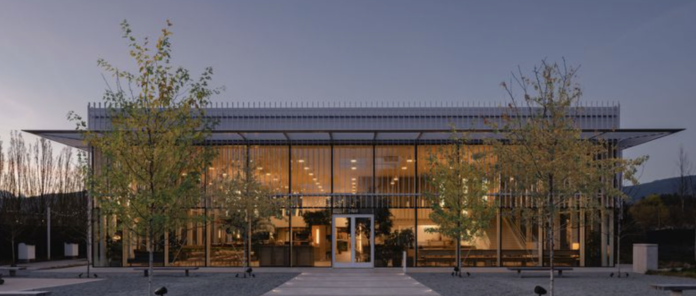
Set to open this month in the heart of the neighbourhood, the Eau Claire Athletic Club (ECAC) will mark the first major project to come to life since the district’s ambitious redevelopment began. The Club is set within the former Eau Claire YMCA — a landmark that holds personal significance for many Calgarians, from early morning swimmers to pick-up basketball regulars. In its new form, it promises to offer something rare in the downtown core: a members-only club that blends fitness, wellness, and social connection under one roof, said the Club.
Alix Williams
“There’s a certain nostalgia woven into this building and its location,” said Alix Williams, Chief Operating Officer of ECAC. “With ECAC, we’re honouring that legacy while ushering in a bold new chapter—one defined by purpose, care, and an unparalleled range of fitness, wellbeing, and social club amenities unlike anything Calgary has seen before.”
“Projects like the ECAC raise the bar for recreation, wellness, and lifestyle in downtown Calgary. It’s the kind of space that inspires pride — not just from its members, but from the entire downtown community as a new hub of urban vitality in Calgary. It also demonstrates the confidence in the future of downtown Calgary and the investments being made to make to core a great place to live, work, play, learn and shop,” said Mark Garner, Executive Director, Calgary Downtown Association.
Peg Oneil
“Eau Claire residents are excited to have the Eau Claire Athletic Club opening soon. As part of the broader re-opening of the Plaza, the Promenade and the Jaipur Bridge, the ECAC is going to be part of a revitalized Eau Claire, ready to welcome everyone to our great neighbourhood,” said Peg Oneil, President of the Eau Claire Community Association.
The new venture is on property owned by Telsec Property Corporation, a Calgary-based real estate development and property management company.
Kris Van Grieken
“The Eau Claire Athletic Club marks a thoughtful new chapter for downtown Calgary—not just by creating a social and athletic club, but by preserving a meaningful piece of the city’s history. Rather than tearing the building down, we chose to breathe new life into it—transforming it into a welcoming destination where wellness, community, and good design feel both aspirational and attainable,” said Kris Van Grieken, Founder ECAC, and President of Telsec Property Corporation.
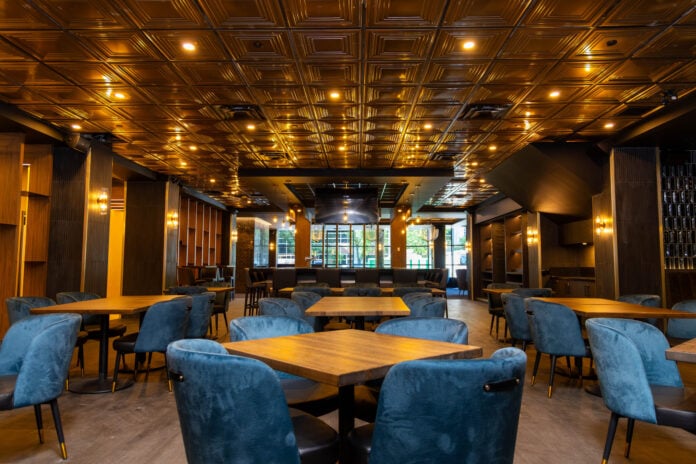
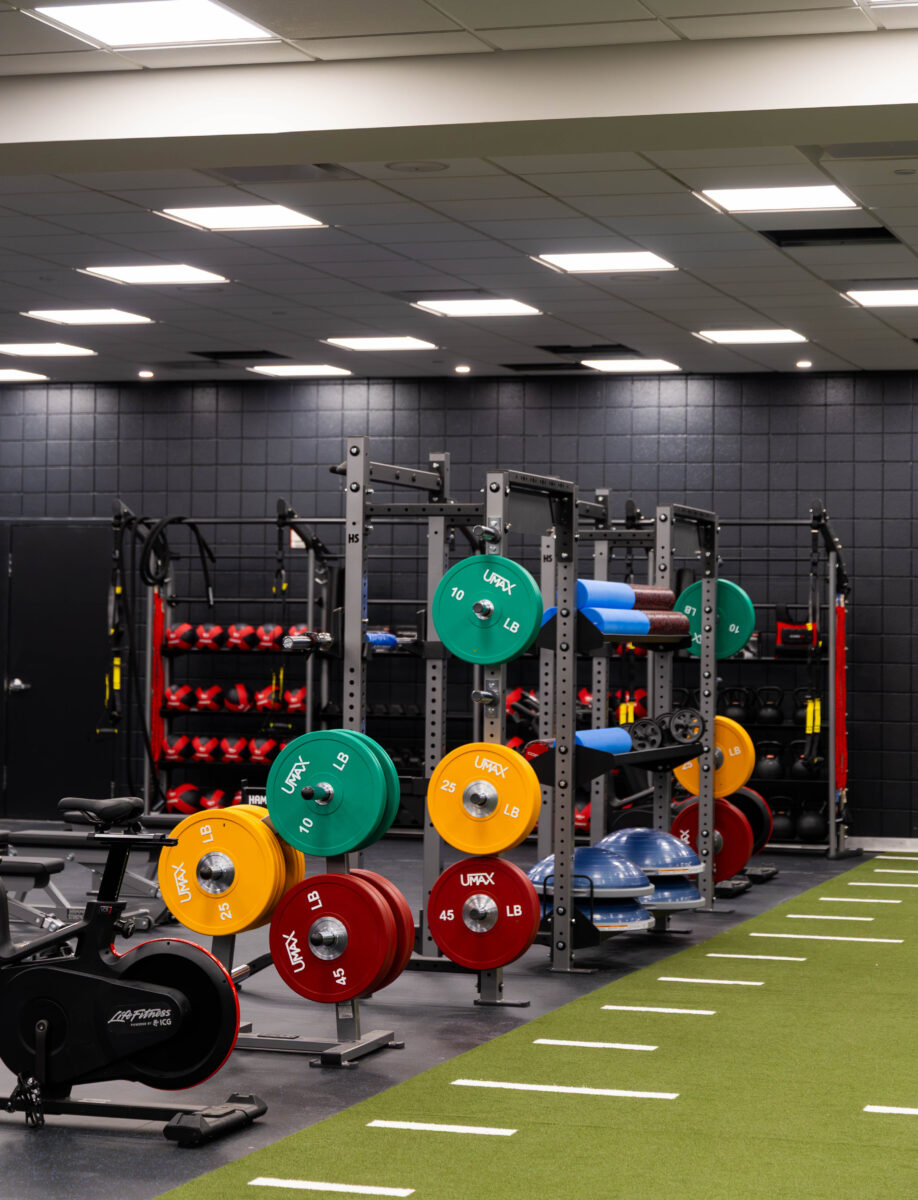
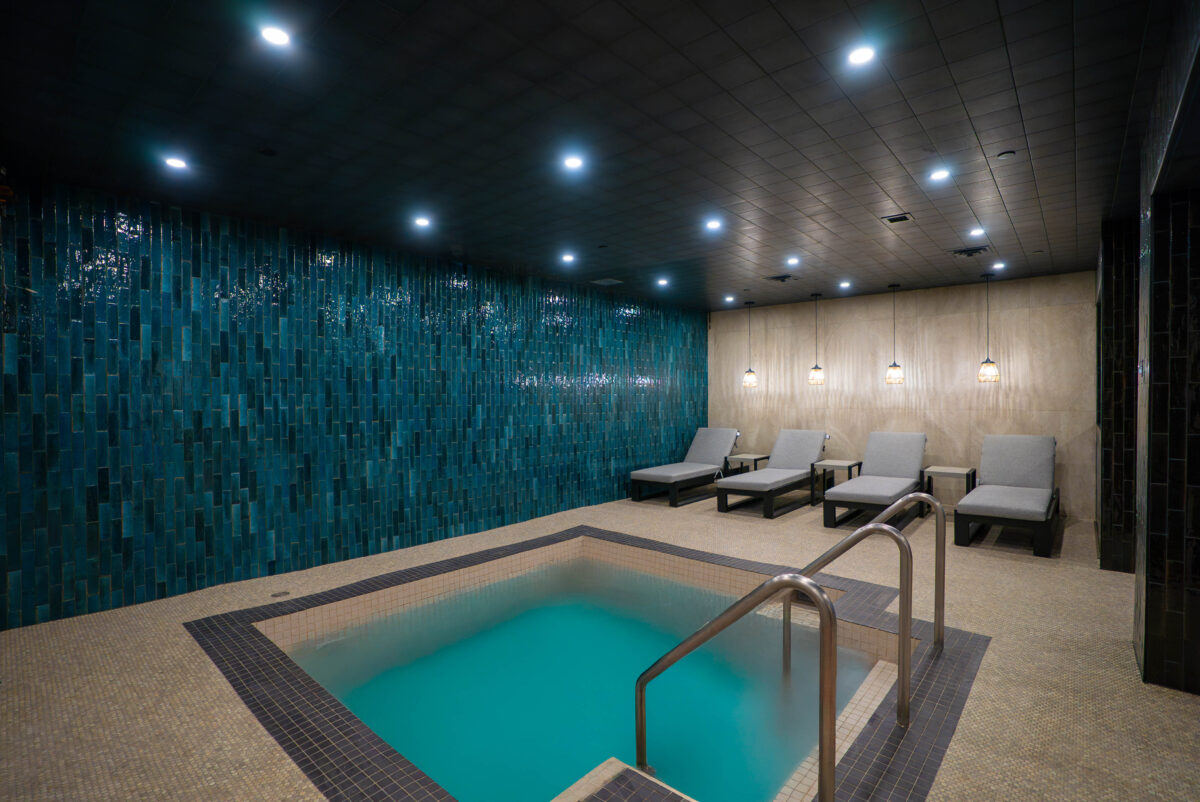
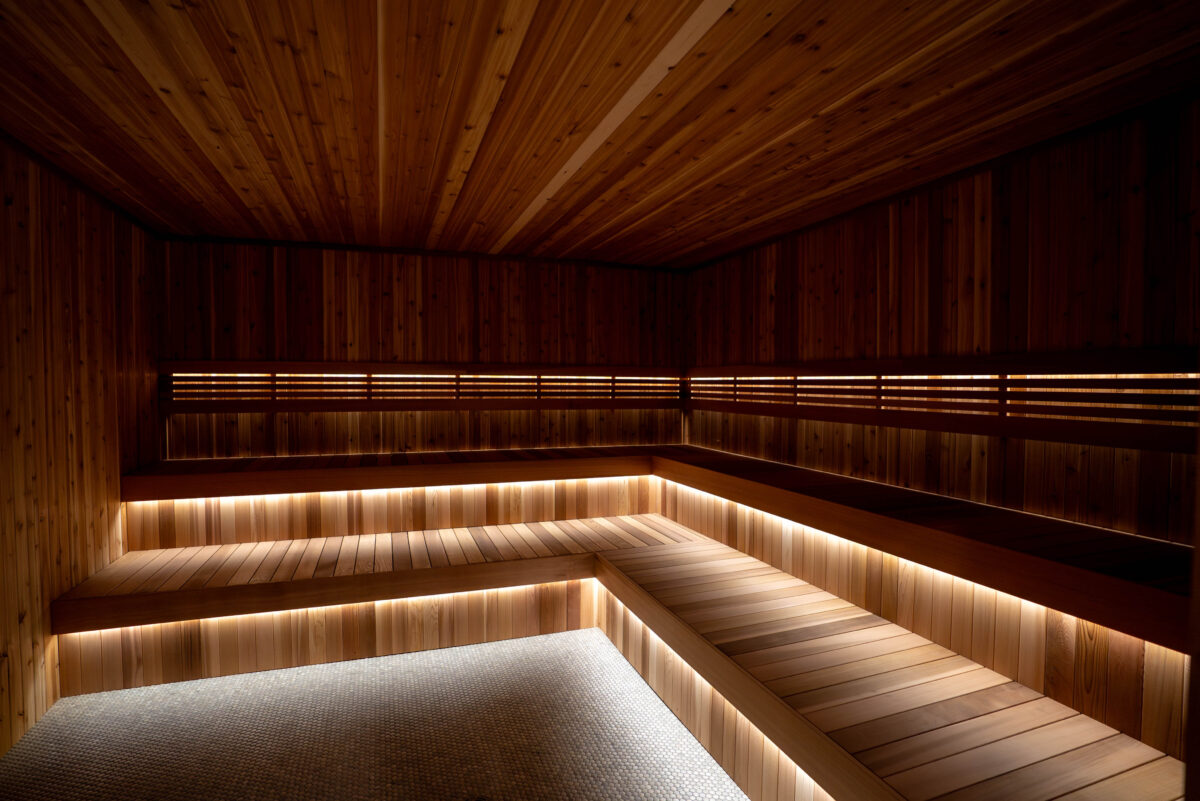
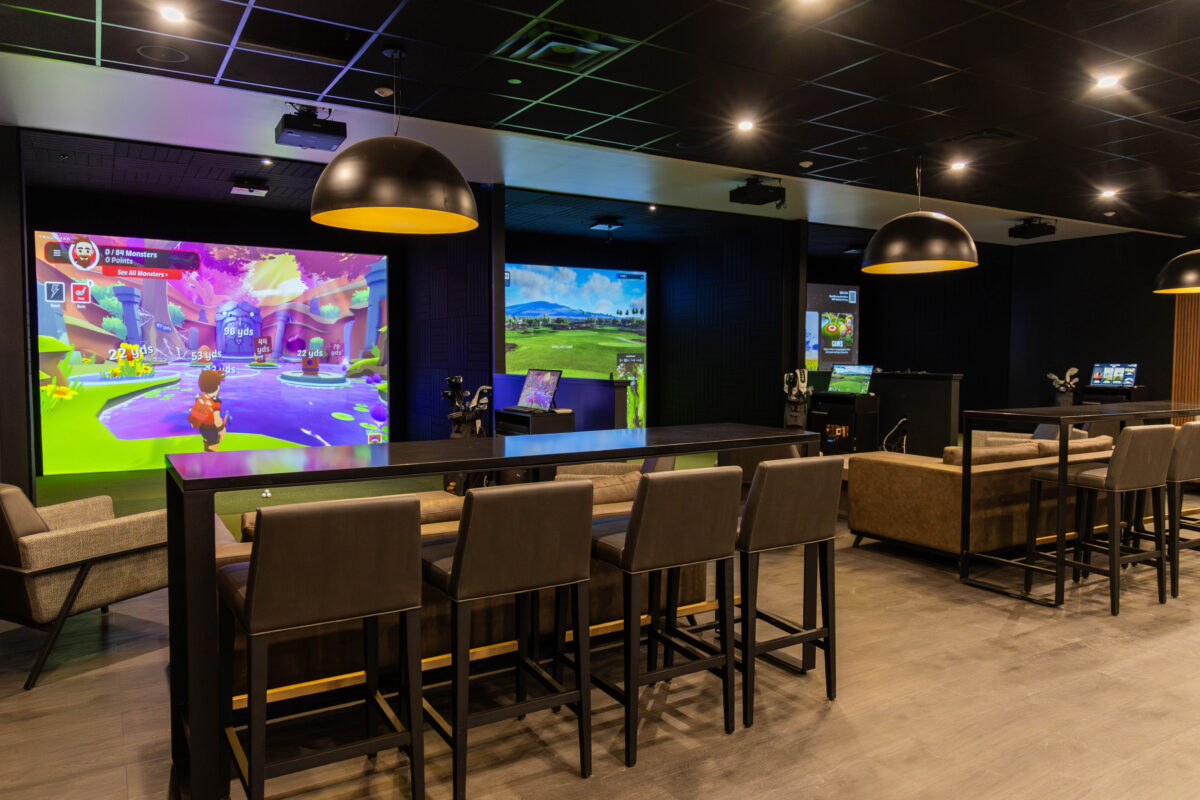
The Club said the original building has been thoughtfully transformed, preserving beloved features like the lap pool, squash courts, and running track, while introducing reimagined spaces that elevate both design and experience. Dynamic new additions include four golf simulators (with golf club storage), two high-performance racing simulators, and a variety of adult arcade activities for year-round enjoyment. The expansive Nordic Spa offers a serene retreat with saunas, hot and cold pools, light therapy, and a dry float experience for total relaxation. Fitness facilities have been expanded to include a state-of-the-art spin studio, dedicated yoga, Pilates, and reformer studios, indoor pickleball courts with daily access, and a full schedule of drop-in fitness programming, alongside optional specialty classes and daily children’s programming and childminding services.
Photo: Eau Claire Athletic Club
“We wanted to create a place where wellness isn’t just about working out — it’s about how people connect, recharge, and feel at home in the city,” said Williams. “It’s not a gym. It’s a club, and there’s a difference.
“Though still early in our journey, the Club has already attracted a vibrant and growing membership united by a shared ethos—one that values community, well-being, and a balanced, active lifestyle. From urban professionals to young families, our members are seeking more than amenities; they’re looking for meaningful spaces to connect, recharge, and thrive.”
To ensure the long-term vitality of ECAC, the Club said it has adopted a tiered membership model that includes both Non-Equity and Equity memberships, both of which have an initiation component. The initiation fee serves as a foundational investment—one that allows the Club to maintain excellence today and expand its impact for years to come. Equity members are not just participants; they are owners who play a direct role in shaping the Club’s future. The long-term commitment to sustainability and shared stewardship also enables strategic reinvestment in facilities and programs. Non-equity membership provides a streamlined way to enjoy ECAC’s exceptional amenities and dynamic culture, with the option to grow into ownership. Unsurprisingly, early interest has been strong in a city where demand for premium lifestyle and recreation facilities continues to exceed supply.
ECAC said it will feature a diverse portfolio of member-led social clubs—offering something for everyone, from book discussions to running groups to dog-walking meetups. It also offers an elevated social dining experience with two unique dining venues: Brooklynn’s Café, a casual café focused on nourishing, seasonal fare; and The Exchange, a vibrant, casual dining and bar experience designed for socializing and unwinding. Menus will feature a thoughtful mix of creative, seasonal dishes and elevated club staples—think inventive takes on classic favourites, fresh local ingredients, and a few unexpected twists that spark conversation. Whether you’re grabbing a quick bite or settling in for a long lunch, the menu is designed to surprise, satisfy, and evolve with member tastes. At the helm of the Club’s culinary program are Food and Beverage Manager Robert Jewell and Executive Chef Eric Um, whose impressive résumé spans over a decade at some of Calgary’s most celebrated restaurants, including River Café, Foreign Concept, and Primary Colours.
The community-first concept introduces the Tri-Cities’ first-ever locations of two celebrated Vancouver hospitality brands: Nemesis and Gigi’s. Nemesis will soft open on June 14, with Gigi’s by Ask for Luigi to follow on June 24.
Nic Paolella
“TriCity Pavilion is designed to reflect the energy of the future TriCity Central community we’re building – a living expression of what’s to come,” explains Nic Paolella, Executive Vice President at Marcon. “We’re excited to officially open our doors. Nemesis and Kitchen Table Group are two of Vancouver’s most forward-thinking culinary brands, and their partnership helps set the stage for the vibrant, community-focused future we envision for the Tri-Cities.”
TriCity Pavilion is the third of its kind following Port Moody and Surrey, which together have already welcomed more than 250,000 guests. Spanning 12,000 square feet, the Pavilion acts as a living preview of the future TriCity Central development, bringing people together through innovative design, cultural programming, and culinary talents.
Nemesis. Photo: Conrad Brown
Nemesis said it is bringing its signature hospitality-driven coffee culture to the Tri-Cities for the first time. This new location continues the brand’s mission of “coffee creating culture” and will feature curated music, excellent coffee, elevated brunch, and pastries by its bakery division, Dope Bakehouse. Guests will find favourites, such as the Cornflake Cookie, Pistachio Swirl, and the Mortadella Supreme on the menu, as well as Bodega Sando (brioche bun, avo or bacon, fried egg, Swiss cheese, cajun aioli), Avocado Toast (pea smash, frisee, radish, burnt leek herb oil), and a BLT (smoked garlic aioli, maple glazed bacon, frisee, ciabatta). There will be seasonal summer features to come, in addition to a forthcoming cocktail program.
The 2,300-square-foot space includes seating for 50 inside and select patio seating outside. The interior was collectively designed by Nemesis’s creative team and Marcon’s in-house Design Studio: light-filled with greenery, large speaker and vinyl record accents, and complementary seating, all anchored by a large central bar, creating fluidity between baristas, bakers, chefs, and coffee lovers, it said.
Jess Reno (Community | 102+Park by Marcon)
“Nemesis TriCity has been years in the making – it’s been amazing to see the space come to life,” says Jess Reno, Founder and CEO, Nemesis. “We can’t wait to open what will be our fifth Nemesis, but our first location in the Tri-Cities.”
Nemesis TriCity will be open Monday to Friday, from 8 a.m. to 7 p.m. and Saturday to Sunday, from 9 a.m. to 7 p.m.
Gigi’s is the newest concept from the award-winning Kitchen Table Group. A sibling to the MICHELIN Guide-recommended Ask for Luigi, Gigi’s is a love letter to sun-soaked summers in Italy – where grandfather Luigi (affectionately known as Gigi) brought family and friends together on the farm, slicing prosciutto in the cantina, pouring wine, and hosting long evening dinners filled with homemade pasta, grilled meats, and stories shared between bites and bursts of laughter.
Gigi. Photo: Conrad Brown
The menu, by Top Chef Canada winner and Culinary Director Chanthy Yen, alongside Head Chef Lloyd Taganahan, is very much an everyday Italian dining experience. Highlights include a burrata bar, housemade pasta, and Italian-style pizza, said the company.
At 4,800 square feet, Gigi’s features 133 seats, including its central island bar and outdoor patio. Living plants and flora surround the dining room, alongside family photos, giving the space a true living room feel. An Italian bar on the second level, named Bar Lucia, is forthcoming. The space was designed by Marcon’s internal Design Studio, taking TriCity Pavilion’s larger architectural language by internationally-acclaimed landscape architect Paul Sangha into consideration, added the company.
“Gigi’s is about the deep connections food can create,” said Jennifer Rossi, Co-Founder of Kitchen Table Group. “Every detail in the restaurant was thoughtfully considered – from the photos on the wall, banquet seating, to the hand-stitched signage at the check-in desk. As with each and every Kitchen Table Group location, Gigi’s is unique on its own, and we’re thrilled to be opening our first location in the Tri-Cities.”
TriCity Central is a future mixed-use community development by Marcon and QuadReal. Adjacent to Coquitlam’s major mobility hub – including the Millennium Line, West Coast Express, and regional bus loop – TriCity Central will feature more than 4,000 homes, parks, retail, office space, and cultural programming that cultivates shared experiences.
“TriCity Pavilion is a purpose-built destination and a tangible expression of what’s to come at TriCity Central,” added Paolella. “In partnership with QuadReal Property Group, we hope to bring a new era of downtown living to the Tri-Cities.”
Retail Insider is streamlining its Canadian retail news from around the web to include a handful of top news stories that can be viewed quickly during the day. Here are the top stories from the past 24 hours.
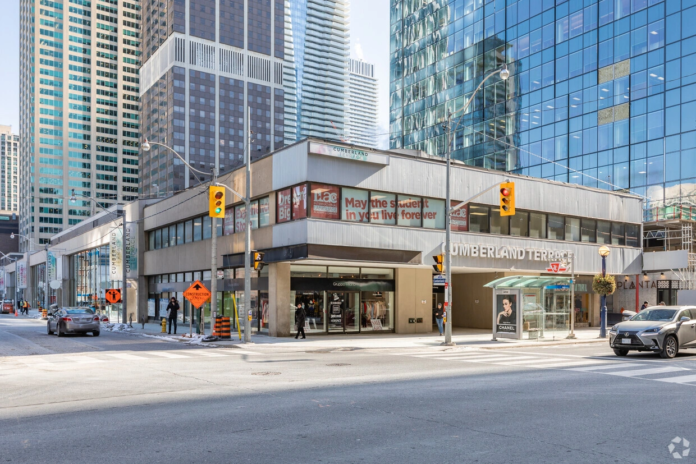
Cumberland Terrace in Toronto (Bay Street entrance). Photo: Triovest
A piece of Toronto’s retail past is preparing for its final goodbye. Cumberland Terrace, the 50+ year-old shopping centre in Toronto’s Bloor-Yorkville neighbourhood, will officially shut its doors by the end of June. As tenants move out and interior corridors are boarded up, a farewell tour hosted by Liminal Assembly on Saturday, June 21, will offer the public one last opportunity to walk its aging halls and reflect on its unique place in the city’s urban fabric.
“We’re expecting hundreds of people to come and have one last busy day at Cumberland Terrace,” said Aryeh Bookbinder, founder of Liminal Assembly, in an interview with Retail Insider. “It was one of the first revolutionary stroll malls. You could go there on a date, take a walk, or bring the family. It was upscale in its day, and more recently, beloved by the local community, students at Jesse Ketchum, and office workers for its food court.”
A Living Memory of 1980s Toronto
The event, which Bookbinder describes as a re-creation of a 1980s mall day, will feature packed hallways, emotional reunions with longtime tenants, and the opportunity to buy from small businesses facing their final days.
Aryeh Bookbinder
“Let’s fill it with shoulder-to-shoulder traffic. Let’s get lineups outside of some of our favourite stores and see smiles on these vendors’ faces during such an emotional time,” Bookbinder said.
Over the decades, Cumberland Terrace became an unassuming but cherished part of downtown Toronto. While it may not have carried the prestige of nearby luxury retailers, the mall was a daily destination for thousands. Its lower level was especially known for its eclectic food offerings—mostly independent, family-run restaurants.
“People still remember spots like Roasty Jack, Metropolis Café, and Salad Days,” Bookbinder said. “They weren’t chains, and they were deeply rooted in the community. That kind of character is hard to find today.”
Asian Arts store at Cumberland Terrace in Toronto. Photo provided by Liminal Assembly
Tenants Face Retirement, Relocation
With just weeks left before vacating, tenants are rushing to either wind down or find new spaces. According to Bookbinder, some are planning to retire altogether.
“The owner of Asian Arts and the gentleman who runs BM Framing are both retiring,” he said. “The tailor on the first floor is also likely to retire.”
Others, like 360 Law, are searching for office space. Meanwhile, Bead Dazzled—a beloved boutique that has operated in the mall for years—is debating its future.
“They’re hoping someone will come in on the 21st and buy the entire inventory,” said Bookbinder. “If not, they’ll need to find a space quickly. But with so much small inventory—beads, materials—it’s going to be a challenge.”
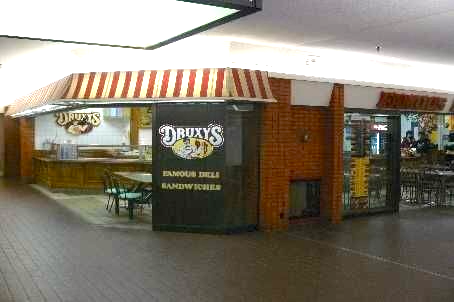
Former Druxy’s at Cumberland Terrace. Historical photo provided by Liminal Assembly
A Nostalgic Send-Off With Purpose
Liminal Assembly, known for its immersive events in so-called “liminal spaces,” is encouraging attendees not just to reminisce but to support the mall’s remaining tenants.
“I want to redirect people’s desire to ‘take home a piece of Cumberland Terrace’ away from vandalism like chipping off tiles,” Bookbinder explained. “Buy from the stores. Support the business owners. Help them retire with dignity.”
To commemorate the event and support its organization, Liminal Assembly will sell a limited-edition poster and tote bag. The poster is a detailed homage to the mall’s history, featuring rare and often unseen archival photographs, including a shot of Druxy’s Famous Deli and vintage mall renderings.
“It includes the different stages of the mall, how it evolved, and what’s coming next. Some of the images haven’t been seen by the public before,” said Bookbinder. “It’s our way of letting people take home a piece of history, without harming the space.”
The commemorative items can be purchased via Eventbrite with an RSVP to the event.
Opened in 1974, Cumberland Terrace was once a modern marvel of midtown Toronto retail, nestled between the Mink Mile and the Bay-Bloor corridor. It offered underground access to the subway, a protected pedestrian experience, and a convenient location. But over the past two decades, it declined into what urbanists have termed a “dead mall”—a retail complex in slow decay despite its central location.
Redevelopment has long been in the works. As early as 2001, a 34-storey residential proposal was awarded and praised but ultimately shelved. “They said they were going to sit on it,” Bookbinder recalled. “It was mostly townhouses then, and it looked like they were making use of the existing structure.”
Today, new plans appear to be advancing. Walls are going up inside the shopping centre to create construction corridors. Although not all tenants have been publicly informed of final plans, sources indicate that redevelopment will likely include residential towers, street-facing retail, and potentially a public plaza.
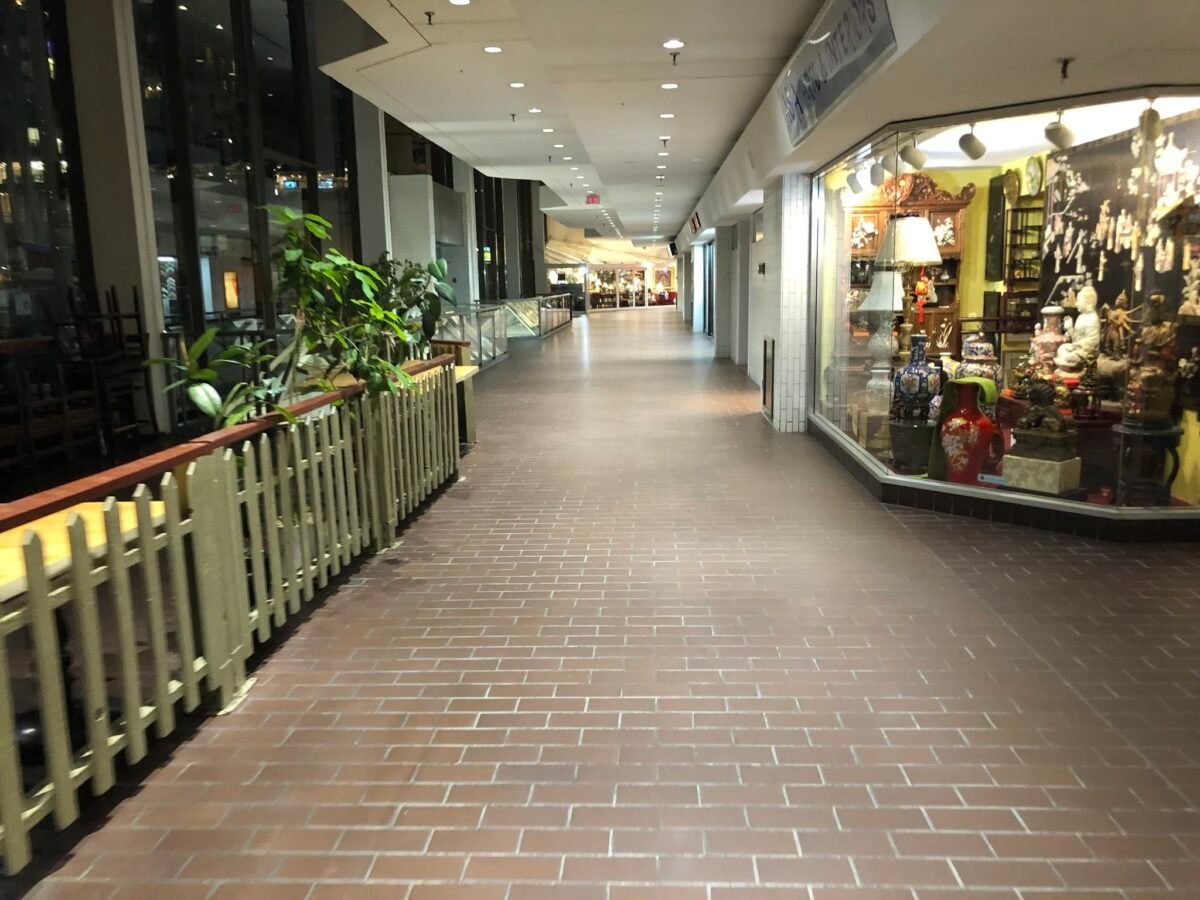
In more vibrant times, Cumberland Terrace had white picket fences in the shopping centre. Image provided by Liminal Assembly
Liminal Assembly’s Mission: Honouring What’s Lost
Liminal Assembly has become a powerful force in Toronto’s cultural scene, offering walking and bus tours of what Bookbinder describes as “spaces between what was and what’s next.” Past tours have included PATH corridors, suburban plazas, and other transitional environments, often evoking nostalgia, eeriness, and emotion.
“We don’t visit landmarks,” said Bookbinder. “We visit places that you wouldn’t normally think of as destinations—corridors, walkways, buildings that are fading into memory.”
Their first event at Cumberland Terrace took place in March 2025 and sold out quickly. It brought renewed attention to the mall’s dwindling presence and prompted many to share memories and photos online.
1970s ad for Cumberland Terrace. Image provided by Liminal Assembly
A Moment to Remember—and Let Go
As June 21 approaches, Bookbinder hopes the community will come out not only to remember but to be part of a moment of transition. “It’s not just a mall that’s closing. It’s a space that holds decades of stories—first jobs, lunch breaks, family outings,” he said.
“I hope people will see this as an opportunity to say goodbye in a meaningful way. It’s easy to forget places like Cumberland Terrace when they’re gone, but for so many, it was part of everyday life.”
He then added, “And if you’re going to take anything home, let it be something from a local store. Or one of our posters. That way you’re helping preserve the memory while supporting the people who made the space what it was.”
Kevito said co-founders Kenton Chan and Thomas Wong will continue to lead new business development and strategic growth initiatives, advancing their vision of introducing innovative culinary experiences to the Canadian market.
“Recognized as industry pioneers, Chan and Wong brought Chatime to Canada in 2011, launching the country’s first global bubble tea chain. Under their leadership, Chatime has expanded to over 100 locations nationwide, becoming one of Canada’s largest and fastest-growing bubble tea franchises,” said the brand in a news release.
“With more than 25 years of senior leadership experience at iconic Canadian brands including Tim Hortons, Loblaws, Sobeys and Harry Rosen, Tham has earned a reputation for building high‐performance teams and delivering breakthrough consumer experiences. Her appointment signals Kevito Group’s commitment to accelerating menu innovation, strengthening its national franchise system and elevating the customer journey across all touchpoints.
Kenton Chan
“Trinh is a results-driven leader with a clear vision for the future of Chatime and Bake Code,” said Chan. “Her deep experience in brand building, operational excellence, and digital transformation – combined with an unwavering focus on innovation and franchisee success – makes her the right person to lead us into this next phase of growth. We’re excited for what’s ahead.”
Under Tham’s leadership, Kevito Group said it will continue its category-defining product innovation programs, responsible for fan favourites such as Chatime’s Brown Sugar Pearl Crema Milk Tea and Bake Code’s Molten Salted Egg Croissant, to bring even more seasonal beverages and globally inspired flavours to market at an accelerated pace. This includes sourcing high-quality ingredients, such as premium-grade matcha from various regions across Japan, to ensure every product meets the brand’s uncompromising standards for taste and consistency.
Tham will also lead efforts to enhance support for franchise partners, focusing on training, marketing tools, and operational guidance that align with Kevito Group’s standards and growth ambitions, it said.
Recognizing that today’s guests crave both convenience and connection, Kevito Group said it plans to evolve its customer engagement strategy by improving service consistency, enhancing its newly re-launched loyalty program to deliver more value back to customers, and refining store design and branding to reflect its Asian roots and relevance to Canadian communities.
“Chatime has helped expand Asian food culture through bubble tea in Canada, and I believe we’re just getting started,” said Tham. “There’s an exciting opportunity to continue redefining what modern Asian beverage and food experiences can look like. I’m thrilled to work alongside our passionate team and entrepreneurial franchise partners to create memorable, modern experiences that reflect the richness of our brand and the communities we serve.”
Founded in 2011, Kevito Group is a Toronto-based leader in the Canadian quick-serve restaurant (QSR) industry. The company operates a diverse portfolio of brands including Chatime Canada, Bake Code Bakery & Cafe, and Atealier by Chatime, with a combined footprint of 100 locations nationwide.
Link CentralWalk in Shenzhen, China. Ruby Liu sold the shopping centre to a Hong Kong REIT in 2019 for $1.25 billion USD. Photo: Link CentralWalk
As Canada’s retail sector navigates uncertainty and reinvention, a bold new voice has entered the conversation with an ambitious vision for its future. Ruby Liu, Chairwoman of Central Walk and the entrepreneur behind a proposed new department store chain that bears her name, is preparing to reshape Canadian retail by rethinking what a store can be — merging retail, entertainment, food, and culture into one dynamic destination.
In an exclusive interview with Retail Insider conducted in Mandarin and translated by Linda Qin, CEO of Central Walk, Liu shared her philosophy on retail, the importance of experiential shopping, and her belief that Canada must draw from successful Asian retail models to reinvigorate its outdated shopping environments.
From Mall Operator to Visionary Retailer
Liu’s influence in Canadian retail has already taken root. Central Walk currently owns and operates three major shopping centres in British Columbia — Mayfair Shopping Centre in Victoria, Woodgrove Centre in Nanaimo, and Tsawwassen Mills near Vancouver. Under her direction, these centres have experienced revitalization, especially Tsawwassen Mills, which has undergone a transformation through the introduction of innovative entertainment and community engagement programming.
Weihong (Ruby) Liu at Toronto’s Yorkdale Shopping Centre on June 16, 2025. Photo: Craig Patterson
“Tsawwassen Mills is located in a town with just 30,000 residents, and even with a wider surrounding area, we’re talking about a population of roughly 110,000,” Liu explained. “It’s not an easy place to succeed. But we’ve brought in entertainment, new ideas, and created reasons for people from an hour away to visit. That’s how we know this model works.”
This track record forms the foundation for Liu’s next major undertaking — the launch of a department store chain named Ruby Liu. She has submitted a bid to acquire 28 former Hudson’s Bay store locations, with final court and landlord approvals pending. While the specifics of the stores cannot yet be disclosed, Liu was eager to outline her broader vision for the Canadian retail landscape.
A New Retail Model for a New Generation
“Canadian consumers have been exhausted,” Liu said. “They go to different shopping malls, and everything looks the same. There are no unique experiences, no meaningful marketing promotions or events. The whole system lacks creativity.”
Liu believes that the next generation of Canadian retail must break from convention and follow more innovative international examples — particularly those found in Japan. “Japanese department stores are leading the way in attracting people back to physical retail,” she said. “They have events, educational sections, pop-up stores, and endless fresh ideas that draw people in.”
In contrast, Liu views the Chinese market as having gone too far into the digital realm. “China has pushed e-commerce very hard. It’s a powerful system, but it removes the human connection,” she explained. “Japan has found the balance, and that’s what we want to replicate and improve upon.”
Isetan department store in Tokyo’s Shinjuku district. The single store sells over USD $2 billion annually. Photo: Japan Shopping Now
Challenging the Doubters
Some landlords and industry observers have questioned Liu’s qualifications, particularly as she lacks a traditional retail background. But she dismisses those doubts with conviction.
“Success doesn’t always come from formal training,” she said. “Look at people like Elon Musk — they succeeded by understanding people and thinking differently. I know consumer behaviour inside and out. I know what works.”
She continued, “If we can transform a place like Tsawwassen Mills, imagine what we can do in prime city centre locations. All of the former Hudson’s Bay locations we’re looking at are in major urban areas. If we made it work in a small town, we can absolutely thrive in these markets.”
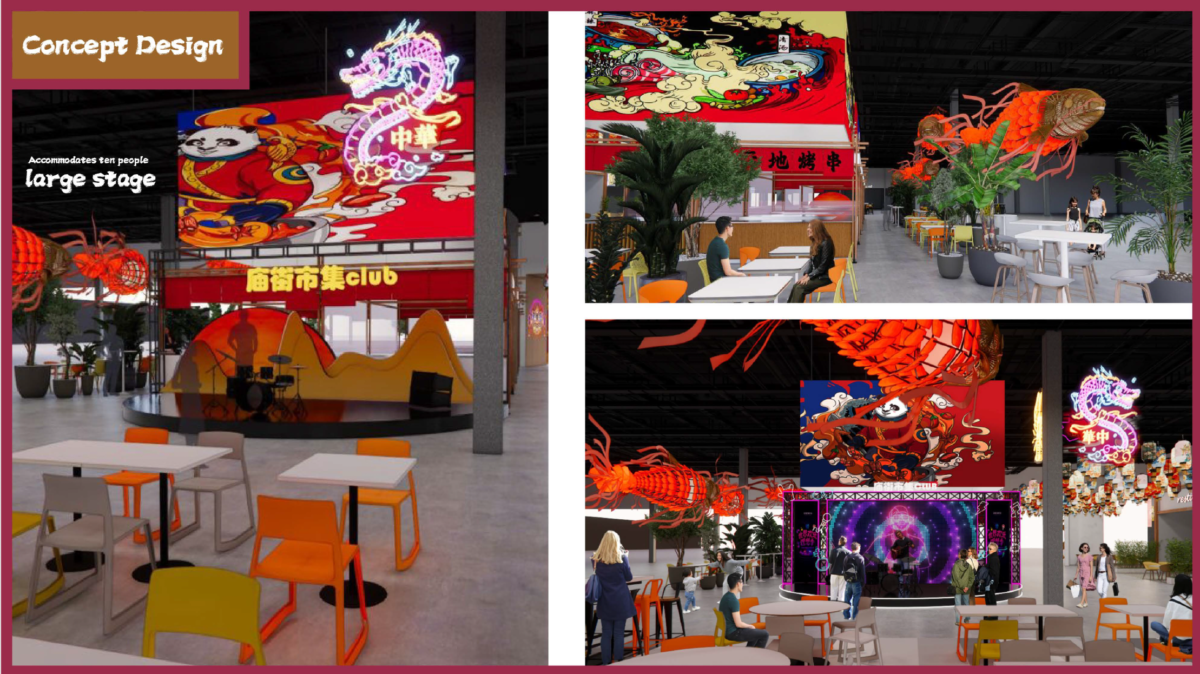
Renderings of TM Wonder, a new multicultural food hall that will be opening at Tsawwassen Mills. Image: Central Walk
Engaging the Z Generation
Liu is particularly focused on connecting with Gen Z consumers, who she feels have been overlooked by traditional Canadian retailers.
“Younger consumers aren’t interested in luxury finishes or expensive-looking stores. They want excitement, creativity, events, and experiences that matter to them,” she said. “They’re interested in things like cosplay, pop-ups, robotics, and technology.”
She cited examples seen abroad, such as retail spaces where young people can climb walls, interact with robotic arms, or engage in short-term flash installations. “Once the event ends, the crowd disappears,” Liu noted. “So we need continuous programming that keeps people coming back.”
She envisions central stages in department stores where year-round events and performances could take place — from youth art exhibitions to dance showcases and seasonal celebrations. “We’ll work with young talent, with community partners, and even with local governments to make it happen,” she said. “This isn’t just retail — it’s culture and community building.”
Labubu dolls, image: Pop Mart
Inspirations: Pop Mart, Labubu, and Emotional Shopping
Liu also praised contemporary Asian brands like Pop Mart and Labubu, which have gained cult-like followings for their emotionally engaging collectibles and characters.
“Even though young people spend a lot of time online, they still need emotional support,” Liu said. “You can’t just hold your phone 365 days a year. Toys and dolls can offer comfort, help release stress, and give people a sense of companionship.”
Retail, she believes, needs to embrace that emotional connection. “It’s not just about what people buy — it’s how the experience makes them feel.”
The Evolution of Kids’ Play
Entertainment for children is another major pillar of Liu’s vision. “We’re developing version 2.0 of kids’ areas,” she said. “It’s not just about fun anymore — it’s also about education.”
Drawing inspiration from global concepts like KidZania, Liu aims to integrate immersive play environments where children can learn real-world skills by role-playing as doctors, firefighters, bankers, or pilots. “It’s a platform for kids to discover their passions and gain confidence. It’s something that can bring parents, educators, and governments on board.”
A Press Conference on the Horizon
While Liu cannot yet share final plans for her new stores, she intends to host an intimate press conference in Toronto on the afternoon of June 23 — the day of court proceedings related to the acquisition of the former Hudson’s Bay locations.
The event will provide an opportunity to further discuss her retail philosophy and field questions from Canadian media.
“On that day, we’ll speak more about how to get younger generations out of their rooms, off their phones, and into the real world,” Liu said. “Our mission is to build something that excites and inspires people to come together again.”
Rendering of a Ruby Liu store at Coquitlam Centre. Image: Ruby Liu
The Path Forward
Liu expects that once her court bid is approved, her stores could begin opening within three to six months, depending on the condition of each space.
While she remains cautious not to divulge specific store concepts until official approval is granted, Liu is confident that her approach — grounded in entertainment, education, and emotional connection — will offer a fresh alternative in Canada’s retail landscape.
“We don’t need to look backward,” she said. “We need to look forward — to build something that belongs to this new generation.”