Retail Insider is streamlining its Canadian retail news from around the web to include a handful of top news stories that can be viewed quickly during the day. Here are the top stories from the past several days.
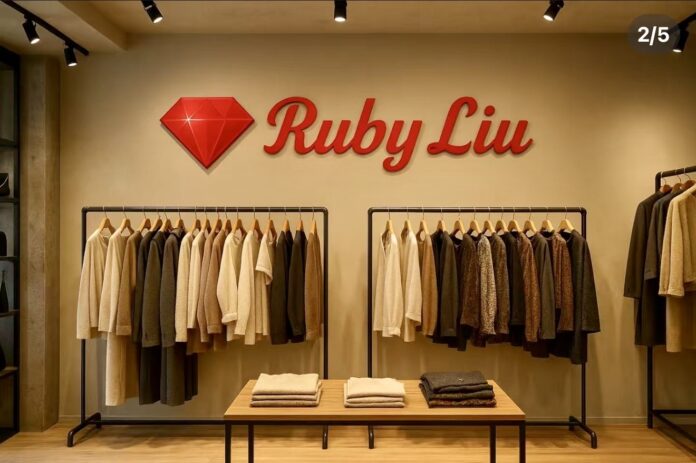
Rendering of a fashion area in the new Ruby Liu department store. Image: Ruby Liu
Entrepreneur and real estate investor Ruby Liu says she’s not giving up — even after a major setback involving her plan to acquire dozens of Hudson’s Bay stores across Canada. A court-appointed monitor has confirmed that landlords representing 23 of 25 store leases have opposed her company’s proposed lease assignments, placing the future of the broader acquisition effort in jeopardy. Despite the rejection, Liu remains firm in her belief that she can help reinvent Canada’s struggling department store sector.
According to the Fifth Report of the Monitor, Alvarez & Marsal Canada Inc., landlords for the majority of the leases included in an Asset Purchase Agreement signed by Ruby Liu Commercial Investment Corp. in May have declined to consent to the lease transfers. These leases span key shopping centres in Ontario, Alberta, and British Columbia and were positioned to form the backbone of Liu’s new department store concept.
Following landlord meetings during the week of June 2, legal representatives for 23 properties wrote to the Monitor or to Hudson’s Bay counsel expressing opposition to the assignments. While the Liu team is continuing to provide further disclosures in hopes of turning the tide, the Monitor noted that the landlords have signaled clear resistance, at least for now.
A Vision That Extends Beyond Profit
Despite the rejections, Liu released a powerful personal statement through her company’s social media channels, defending her decision and doubling down on her long-term vision.
Weihong (Ruby) Liu
“I’m nearing sixty, and once again, I’ve chosen the road few dare to take,” Liu wrote. “Many have questioned my decision. Some say it’s reckless… But I don’t see this as a gamble.”
Liu described her plan not as a commercial play, but as a mission to revitalize Canada’s retail environment — one she views as increasingly disconnected from the communities it once served.
“This isn’t just about capital or profit. It’s about building something meaningful — something vibrant, fresh, and full of life. A place where young people can step out of the digital haze and rediscover genuine human connection.”
Her statement underscores a broader critique of Canadian shopping centres, which she argues have become stale and uninspired. She envisions multi-purpose destinations combining shopping, dining, and cultural experiences — environments that invite people back into physical spaces at a time when much of life has moved online.
Ruby Liu’s Bid for HBC Leases
The transaction at the centre of the current dispute involves 25 Hudson’s Bay store leases that Liu hoped to acquire through a court-approved lease monetization process. While the identities of the specific properties have not been publicly disclosed, the Asset Purchase Agreement was signed in tandem with a separate, more advanced agreement covering three Hudson’s Bay locations in British Columbia: Tsawwassen Mills, Mayfair Shopping Centre in Victoria, and Woodgrove Centre in Nanaimo. Those three leases are already owned by Central Walk — the property group chaired by Liu — and are expected to proceed, with court approval sought on June 23.
The Monitor confirmed that Liu’s $6 million offer for the three BC leases represented the highest value among all bids submitted through the formal lease solicitation process.
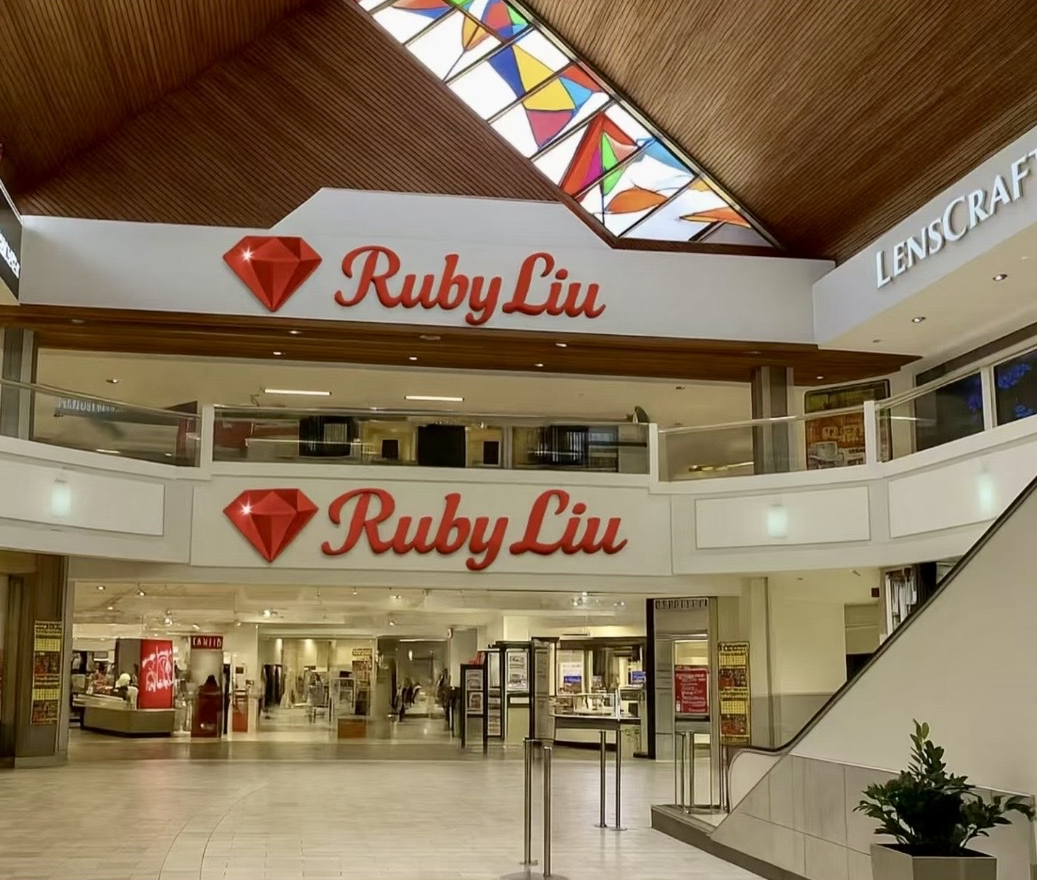
Rendering of a Ruby Liu store. Image: Ruby Liu
Limited Bidding and Widespread Lease Disclaimers
The broader Lease Monetization Process, overseen by brokerage firm Oberfeld Snowcap, failed to attract widespread interest. Of 96 Hudson’s Bay and Saks-affiliated stores nationwide, only 12 parties submitted qualified bids covering 39 locations. A full 62 leases received no offers.
To date, 59 leases have been disclaimed, with store closures and property turnover continuing through late June. The Monitor’s filings suggest that, aside from Liu’s three approved leases and one or two additional transactions under negotiation, most of the Hudson’s Bay retail footprint will be relinquished to landlords.
Liquidation Generates Strong Returns, Employees Receive Support at Court Appoints Counsel
The company’s store liquidation, completed on June 1, generated over $509.9 million in gross receipts. This included $349.3 million in owned merchandise sales, $104 million in consignment sales, $43.9 million in additional goods, and $12.7 million in FF&E sales. While merchandise performance exceeded expectations, FF&E returns fell short, and cleanout work remains ongoing in several locations.
The Court has formally appointed Ursel Phillips Fellows Hopkinson LLP as Employee Representative Counsel, with over 14,500 active and former workers now represented. Only 68 opted out. The Court has also issued a WEPPA Declaration Order, clearing the way for unpaid wage and severance claims to be filed with Service Canada.
A seven-member employee committee has also been constituted to provide input and direction to counsel as the restructuring proceeds.
Corporate Name Change on the Horizon Following Canadian Tire Deal
The Court previously approved the sale of Hudson’s Bay’s intellectual property to Canadian Tire Corporation, with a closing date expected on June 24, 2025. As part of the agreement, Hudson’s Bay entities will be required to formally change their corporate names to avoid brand confusion. Articles of amendment will be filed following transaction completion.
Cash Flow Stronger Than Forecast
From May 3 to June 13, the company reported net positive cash flow of $54.8 million, with a closing balance of $131.9 million, far exceeding the forecasted $82.5 million. This was attributed to higher liquidation sales and delayed disbursements. The company also made significant payments to its ABL and FILO lenders during the period.
Liu’s Resolve: “What I Fear Most Is Never Having Tried”
Liu’s statement ends not with defiance, but with a quiet confidence rooted in resilience. She reflects on her immigrant journey, her contributions to Canada, and her belief in creating a new future rather than waiting for permission to join the old one.
“My life has always been a battle. I’m not afraid to lose. What I fear most is never having tried,” she wrote. “So I choose to keep going. To stay bold. To keep moving forward with conviction.”
Liu acknowledges that she may never be accepted by what she calls the “mainstream,” but she sees that as an invitation to create a new one — one that reflects the diversity, courage, and creativity of modern Canada.
“I’m not here to defeat anyone. I’m here to build something better.”
With court hearings scheduled for June 23, the next chapter of Ruby Liu’s retail endeavour will soon unfold. For now, her words — and her refusal to walk away — offer a clear message: this fight is far from over.
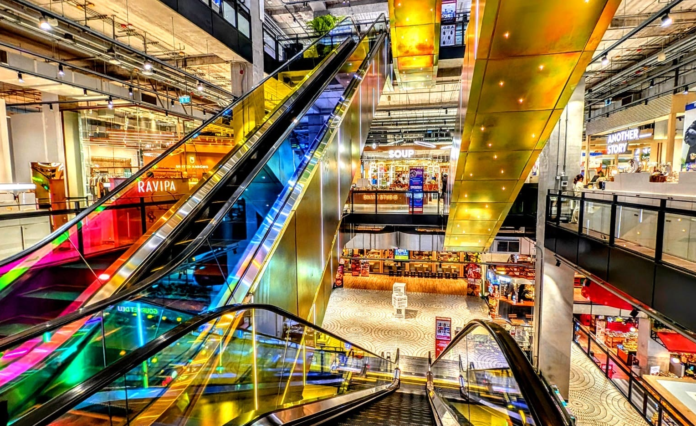
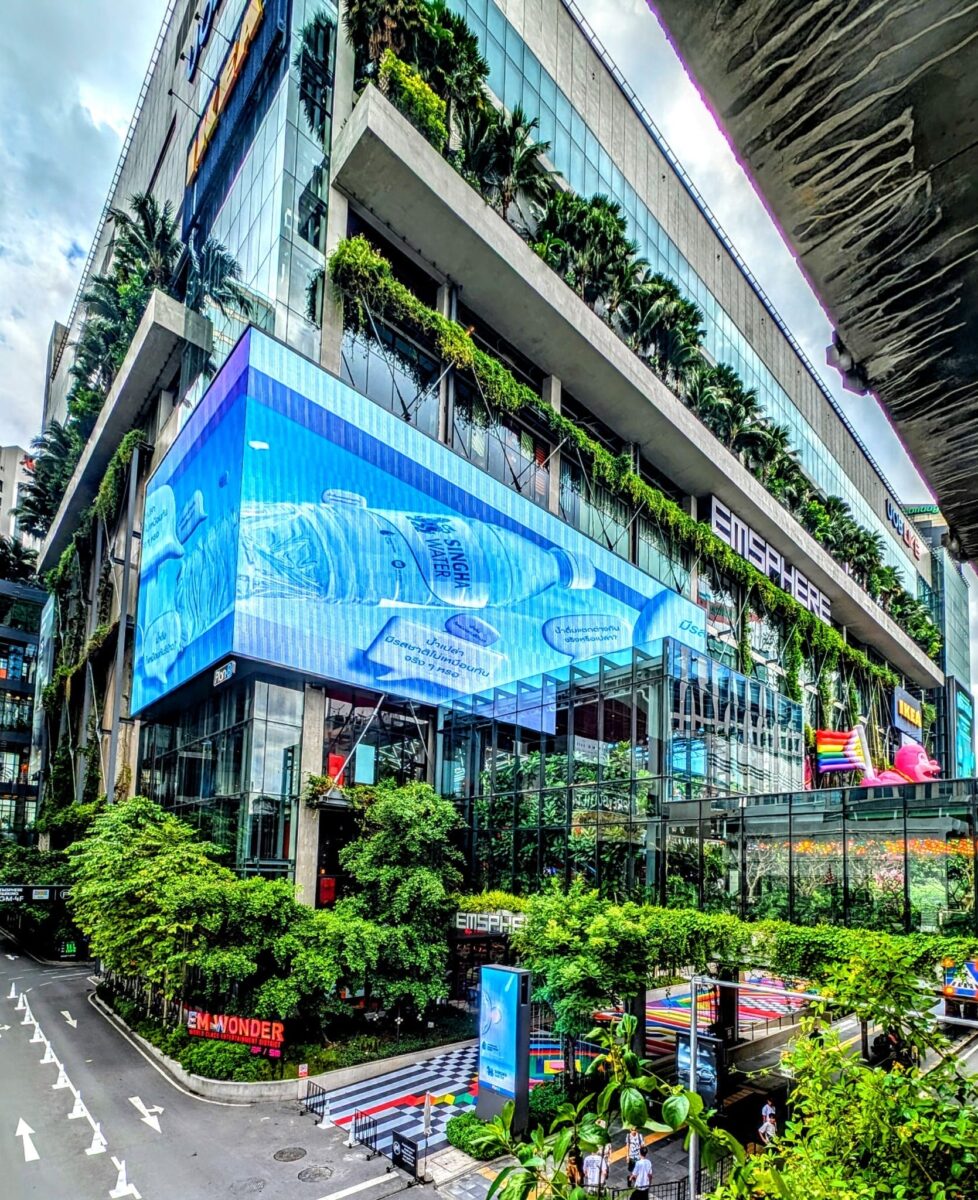
Emsphere in Bangkok, Thailand, June 2025. Photo: Carl Boutet
Weihong (Ruby) Liu, the billionaire real estate investor and owner of Central Walk, is poised to become one of the most influential figures in Canadian retail with her bold plan to launch a new department store chain—potentially the first time in modern retail history that a single entrepreneur has launched such a concept at scale, from the ground up.
As the Hudson’s Bay Company (HBC) exits the traditional department store market, Liu has stepped in with offers to acquire leases at up to 28 locations across Ontario, Alberta, and British Columbia.
Among them are three properties she already owns—Woodgrove Centre in Nanaimo, Mayfair Shopping Centre in Victoria, and Tsawwassen Mills, where she placed a $6 million bid for the leases.
The new concept will bear her own name: Ruby Liu. “This is not about saving an old brand,” Liu told Retail Insider in a recent interview in Mandarin. “It’s about creating something completely new—something exciting, inclusive, and alive.”
Redefining the Department Store
Retail strategist Carl Boutet, who has closely followed Liu’s movements and visited cutting-edge malls in Asia that have inspired her, says Liu’s concept represents a seismic shift in how we think about department stores.
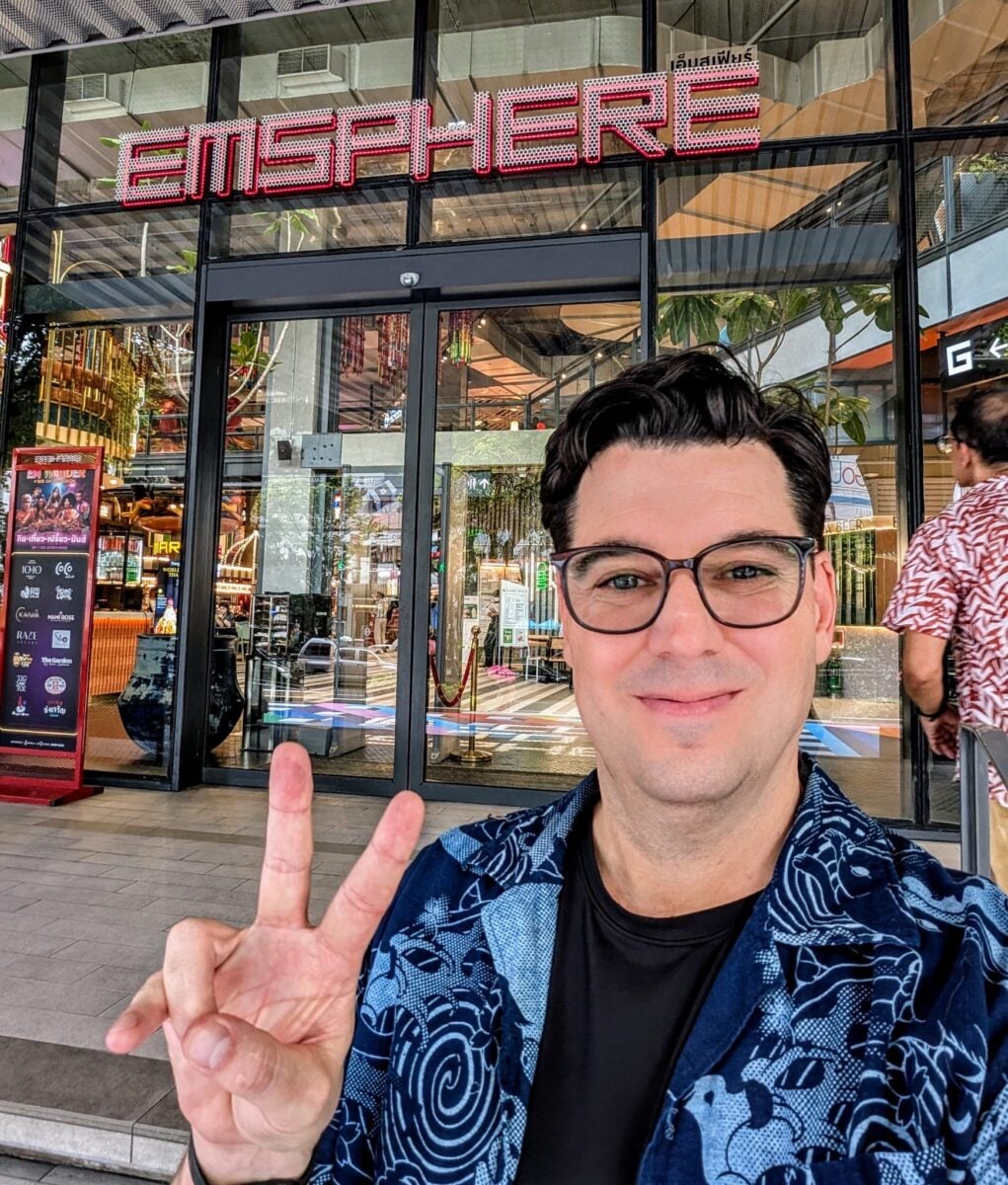
Carl Boutet at Emsphere in Bangkok, Thailand, June 2025. Photo: Carl Boutet
“We need to reset our minds on what the term ‘department store’ even means,” said Boutet in an interview. “It’s no longer about a sea of product. It’s about a sea of experiences, with retail as part of a broader, curated lifestyle offering.”
Boutet says Liu’s stores will offer much more than merchandise. “Think children’s play zones, Asian supermarkets, buzzing food courts, live performances, pet grooming, jewellery repair—you name it. She’s curating energy, not just selling stuff.”
From HBC’s Collapse, a New Vision Emerges
Hudson’s Bay filed for creditor protection in March 2025, setting off a race among landlords, investors, and competitors to scoop up valuable real estate. While Canadian Tire Corporation purchased the HBC brand and IP for $30 million, Liu quietly pursued the physical leases, focusing on malls she believed had untapped potential.
In May, Liu submitted a formal bid for 28 leases, including her three Central Walk properties. She committed $6 million on her owned properties and made a further $9.4 million in deposits for the others.
Court approval is expected on June 23, at which point Liu will take possession of the three HBC-owned stores at her malls. Renovations are set to cost around $30 million for Mayfair and Woodgrove alone, with her broader renovation budget still evolving as negotiations continue.
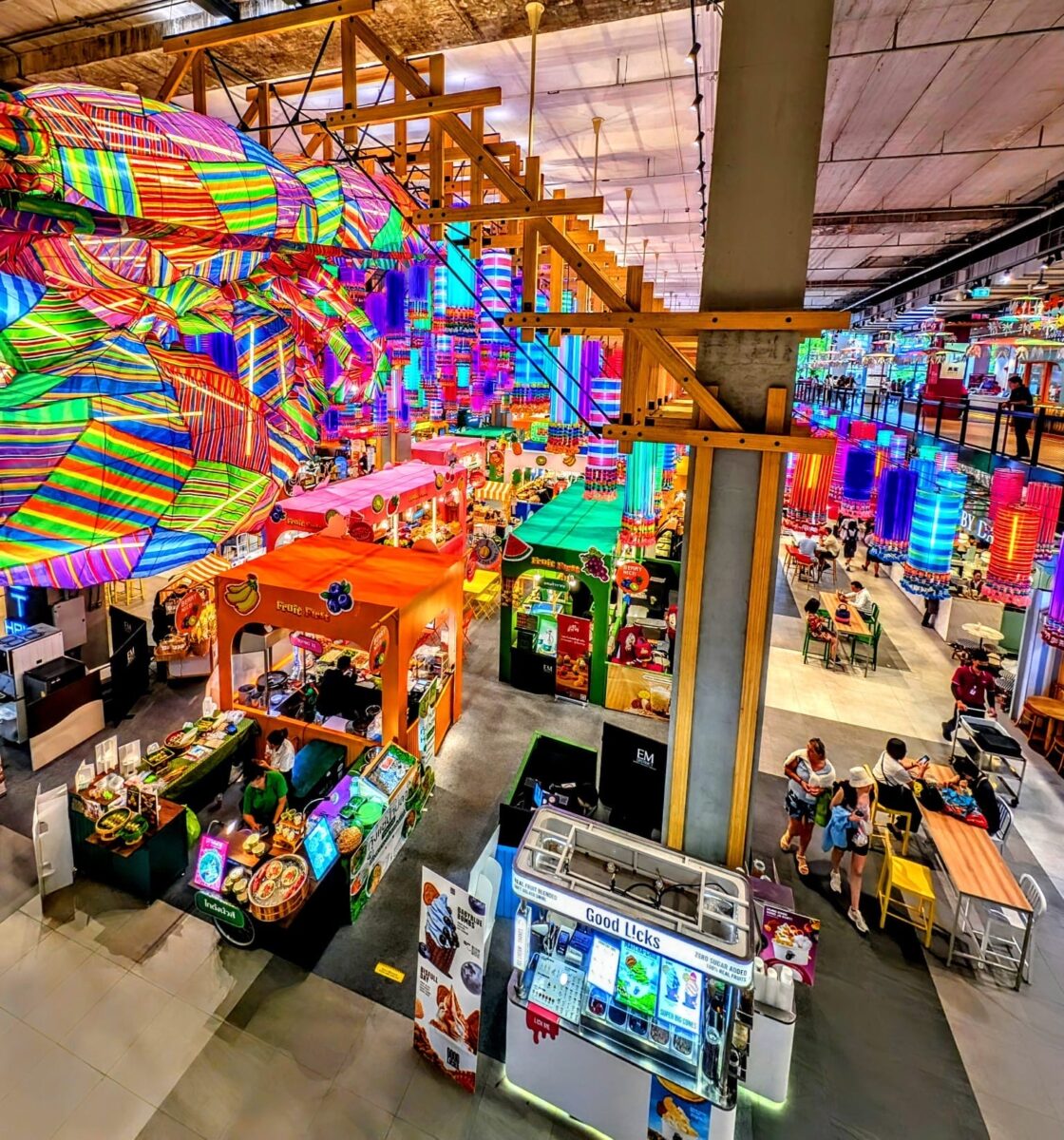
Emsphere in Bangkok, Thailand, June 2025. Photo: Carl Boutet
Fast Track to Opening
Liu’s team is working toward opening the first Ruby Liu stores by early November, a remarkably tight timeline. Boutet believes this “minimum viable product” strategy will allow Liu to test concepts and build excitement before fully rolling out her flagship experiences.
“She’s likely treating this as an A-B store strategy,” said Boutet. “The ‘A’ locations—like the ones in Central Walk malls—will be heavily invested in and fully built out over time. The ‘B’ stores may open faster with lighter touch renovations, allowing the brand to quickly gain visibility and attract shoppers.”
Inspiration from Asia’s Most Dynamic Malls
While Liu hasn’t revealed every detail of her plan, much of it appears to draw from Asian retail environments, especially high-concept malls in Bangkok, Seoul, and Shenzhen that integrate food, fashion, entertainment, and digital experiences under one roof.
Weihong (Ruby) Liu. Photo: Craig Patterson
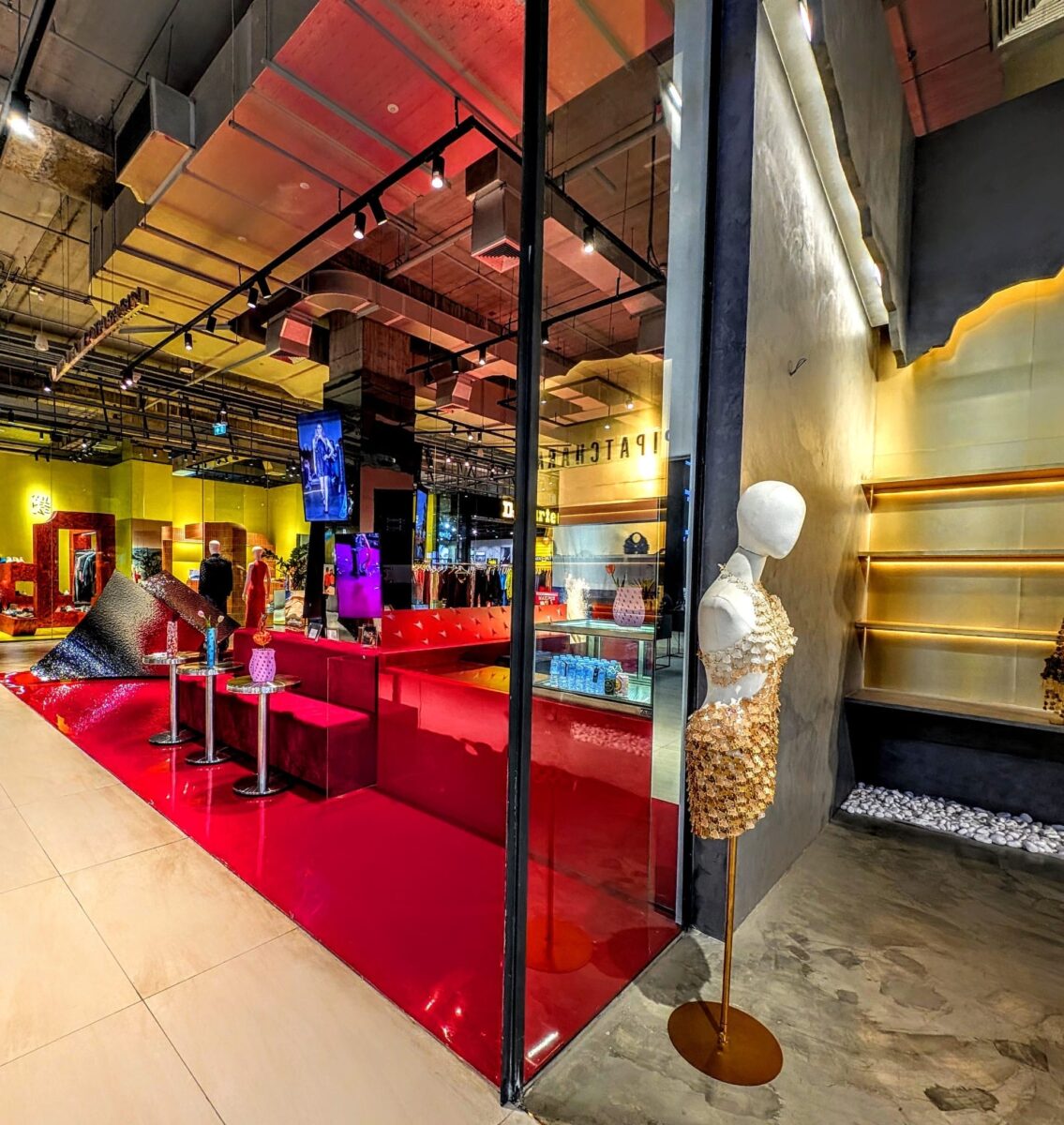
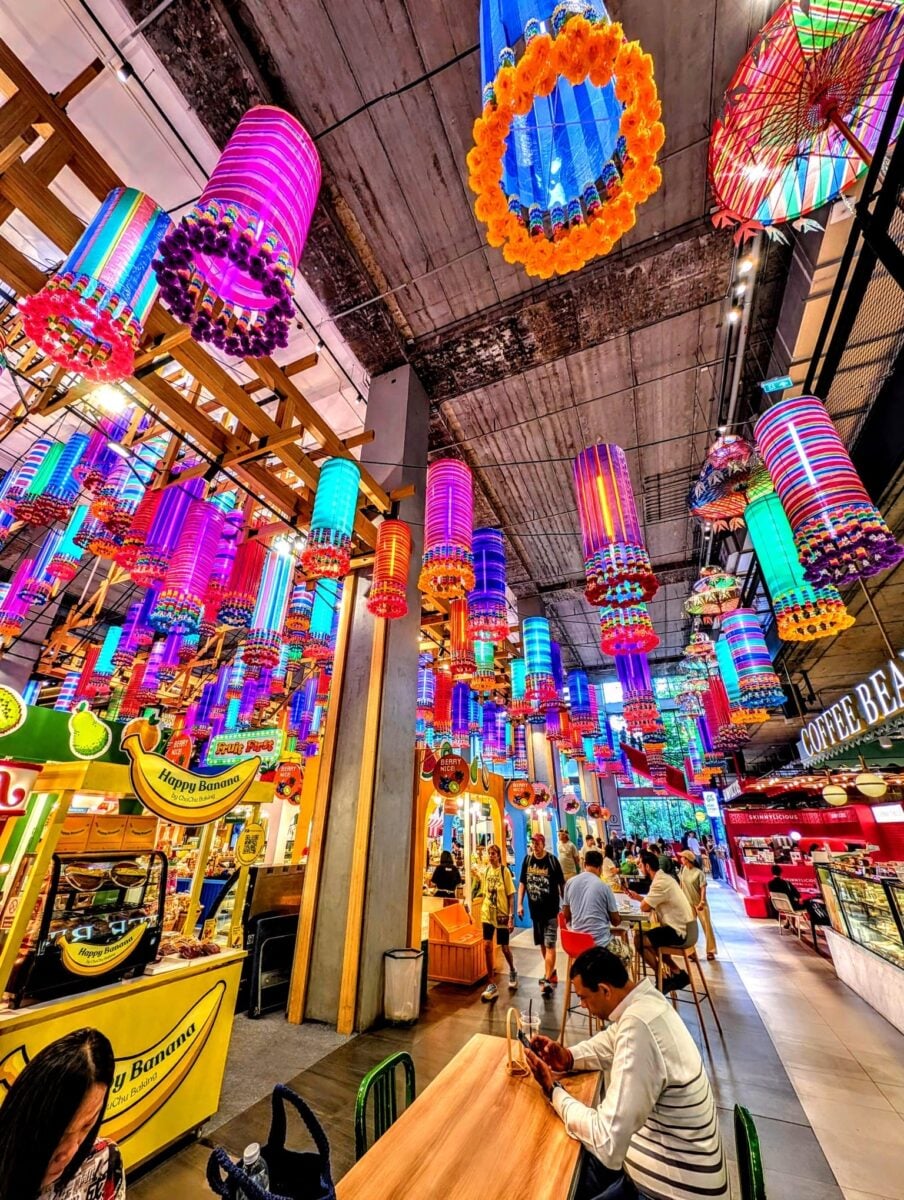
Boutet, who recently visited one such mall—Bangkok’s Emsphere—at the request of Liu’s team, said it offered insight into her vision.
“Emsphere has everything: immersive food courts, limited-edition collectibles, automotive showrooms, pop-up art, and even a 6,000-seat concert venue,” said Boutet. “It’s like a retail theme park, and it feels like every floor has a new surprise.”
While the Ruby Liu stores in Canada will be smaller—typically 150,000 square feet—the emphasis on energy, variety, and community engagement is central to her strategy.
Meeting Shoppers Where They Are
Liu has been clear that her stores will be experiential and multicultural. “Hudson’s Bay failed because it didn’t value young people,” she recently told Retail Insider. “It didn’t create spaces for them to gather, and it didn’t invest in the future.”
To counter that, Liu plans to incorporate features like live stages, dynamic food halls, kids’ play areas, and possibly even VR gaming or drone retail zones.
“She’s not building retail boxes. She’s building destinations,” said Boutet. “There’s an entrepreneurial flair to this that you don’t usually see from someone stepping into a retail role for the first time.”
Emsphere in Bangkok, Thailand, June 2025. Photo: Carl Boutet
Landlords: A Mixed Reception
Despite the scale and vision of Liu’s plans, some landlords remain skeptical. Court documents show that several mall owners submitted letters to Hudson’s Bay expressing concern about her bids. Liu herself has said that in at least one meeting, a landlord gave her only five minutes before walking out.
“She’s unconventional,” Boutet said. “She’s not using the traditional playbook. She’s using Gmail accounts for hiring, she’s moving fast, and she’s operating with instinct and agility. That scares some people.”
However, landlords with harder-to-fill locations—or those looking to revitalize tired properties—are showing more enthusiasm.
“Some understand the vision and want to ride the wave,” said Boutet. “Others are more conservative. But the ones who say yes early will benefit most.”
Emsphere in Bangkok, Thailand, June 2025. Photo: Carl Boutet
More Than Just a Storefront
The Ruby Liu model is about building community as much as commerce. Liu has promised to prioritize former Hudson’s Bay employees for hiring and to include HBC suppliers where possible.
“She’s trying to preserve part of Canada’s retail heritage, but in her own way,” said Boutet. “She’s not bringing back The Bay. She’s creating something new.”
While some features—like play zones—may not be profit centres themselves, Boutet argues that they drive the kind of foot traffic that fuels overall sales.
“Retail isn’t just transactional anymore,” he said. “The most successful malls and stores in Asia operate like cultural centres. Ruby’s tapping into that.”
Emsphere in Bangkok, Thailand, June 2025. Photo: Carl Boutet
The Branding Challenge
The name “Ruby Liu” for a department store has raised eyebrows, but Boutet says it may be one of Liu’s smartest moves.
“Branding it with her own name conveys personality and ownership,” he said. Consumers connect with people more than corporations.”
Still, he believes the visual identity will need refinement. “The font, the logo, the brand story—it’s all 1.0 right now,” he added. “There’s room to polish. But the bones are there.”
Liu’s direct engagement with customers—including handing out money at events and meeting shoppers in line—has helped humanize the brand even before stores open.
Rendering of a Ruby Liu store at Coquitlam Centre. Image: Ruby Liu
A National Experiment in Real Time
The success of the Ruby Liu department store chain will depend not just on Liu’s vision, but on collaboration. That includes leasing partners, municipalities, suppliers, and brand operators willing to take a chance.
“Everybody has to take a risk,” said Boutet. “This isn’t a sure thing. But it’s bold. It’s imaginative. And frankly, it’s exciting.”
At a time when many are lamenting the decline of traditional retail, Liu’s plans offer a radical counterpoint—a vision built not on nostalgia, but on reinvention.
“She didn’t have to do this,” Boutet said. “She could have stuck with her three malls and gone golfing at her course. But she sees something here. She believes in it. And she’s putting real money on the table.”
Betting on Ruby
With court approval expected within days and plans already in motion for store launches this fall, the Ruby Liu department store experiment is no longer hypothetical—it’s happening.
If successful, it could mark a turning point in how Canadians shop, socialize, and experience retail. If it fails, it will still be remembered as one of the boldest gambits in Canadian retail history.
“She’s swinging for the fences,” said Boutet. “And win or lose, we need people like her in this industry.”
Retail sales increased 0.3% to $70.1 billion in April. Sales were up in six of nine subsectors and were led by increases at motor vehicle and parts dealers. Core retail sales, which exclude gasoline stations and fuel vendors and motor vehicle and parts dealers, were up 0.1% in April, reported Statistics Canada on Friday.
In volume terms, retail sales increased 0.5% in April.
“Feedback from respondents for April highlighted the effects of trade tensions between Canada and the United States on Canadian retail businesses. According to answers to supplementary questions, 36% of retail businesses were impacted by the trade tensions in April. The most common impacts were price increases, change in demand for product and supply chain disruptions. Despite six of nine subsectors posting monthly gains in retail sales, all nine subsectors saw a negative impact on sales,” said the federal agency.
Photo:
Andrea Piacquadio
The largest increase in retail sales in April was observed at motor vehicle and parts dealers (+1.9%), up for a second consecutive month. The increase was led by higher sales at new car dealers (+2.9%) and used car dealers (+2.1%). The largest decrease in the motor vehicle and parts dealers subsector was in automotive parts, accessories and tire retailers (-4.7%), explained Statistics Canada, adding that sales at gasoline stations and fuel vendors (-2.7%) decreased in April for a second consecutive month. In volume terms, sales at gasoline stations and fuel vendors increased 0.4%.
“Core retail sales edged up 0.1% in April, posting their third consecutive monthly increase. The gain was led by higher sales at sporting goods, hobby, musical instrument, book, and miscellaneous retailers (+1.0%) and furniture, home furnishings, electronics and appliances retailers (+0.8%),” noted Statistics Canada.
“Higher sales were also recorded at food and beverage retailers (+0.2%) in April. The increase in this subsector was led by gains at supermarkets and other grocery retailers (+0.4%).
“The largest decrease to core retail sales in April came from clothing, clothing accessories, shoes, jewelry, luggage and leather goods retailers (-2.2%).”
Photo: RDNE Stock project
On a seasonally adjusted basis, retail e-commerce sales increased 3.6% to $4.4 billion in April, accounting for 6.2% of total retail trade, compared with 6.0% in March, said Statistics Canada.
“Statistics Canada is providing an advance estimate of retail sales, which suggests that sales decreased 1.1% in May. Owing to its early nature, this figure will be revised. This unofficial estimate was calculated based on responses received from 53.8% of companies surveyed. The average final response rate for the survey over the previous 12 months was 90.8%,” it said.
Maria Solovieva
Maria Solovieva, Economist, TD Economics, said as expected, consumers continued front-load vehicle purchases in anticipation of price increases that are likely to come due to tariffs.
“However, core sales may be an early signal of broader consumer hesitancy in the face of trade policy headwinds. According to a supplementary by Statistics Canada survey, 36% of retail businesses reported being affected by trade tensions in April. The most commonly cited impact included price increases, change in demand, and supply chain disruptions,” she said.
“The advance estimate sets a somber tone for the second quarter. In addition, our internal credit and debit card spending data shows a meaningful softening in spending through May, suggesting that consumers tightened their purse strings. As a result, we expect real personal consumption expenditures to be flat this quarter, with consumer spending likely to contract in Q3 if U.S. tariffs continues to weigh on sentiment and job prospects.”
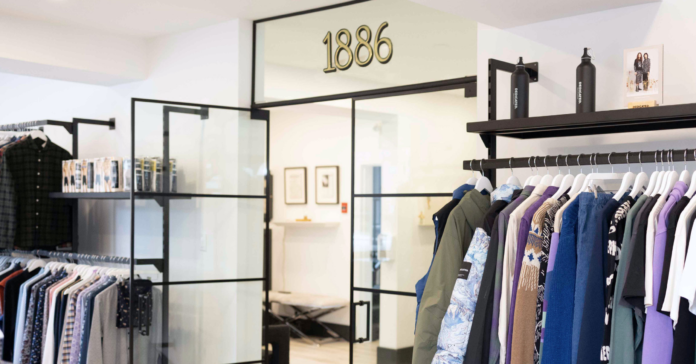
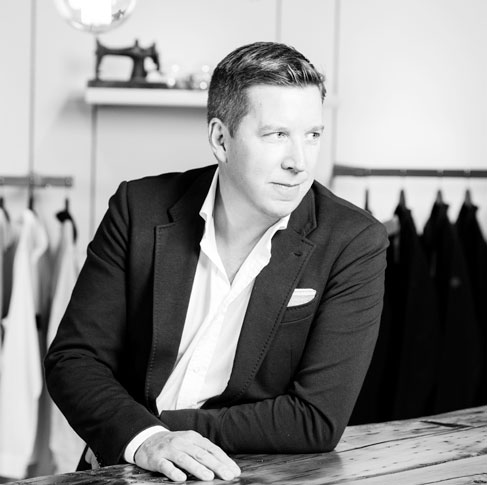
With roots dating back to 1886, Caulfeild Apparel Group has weathered more than a century of fashion trends, retail transformations, and market disruptions. Headquartered in Oakville, Ontario, the family-owned business is today one of Canada’s oldest apparel companies. CEO Mike Purkis, who acquired the company in 2003, is now steering Caulfeild into its next era, guided by a blend of heritage and innovation.
“We’ve been Toronto-based for 140 years,” said Purkis in a recent interview. “Started as a retailer, ended up importing British goods. In the seventies and eighties, we actually had one of the largest sewing machine plants in Toronto. We manufactured Caulfeild robes. Then we got into licensing—Gant, Izod, Calvin Klein, Cutter & Buck.”
Today, Caulfeild focuses on both licensing and brand ownership. “We own Joe Boxer for Canada entirely, Modern English, Benson, and we license Robert Graham for loungewear and Stacey Adams for multiple categories including dress shirts, sportswear, and underwear.”
Filling the Void Left by Hudson’s Bay
For decades, Hudson’s Bay was a critical retail partner. Caulfeild Apparel Group’s brands held significant floor space within the department store chain. The recent collapse of Hudson’s Bay as a multi-brand department store in Canada, however, has forced a significant industry reckoning.
Mike Purkis
“Hudson’s Bay at peak was doing $550 million in men’s sportswear alone,” said Purkis. “In their last year, that number dropped to around $300 to $350 million. That’s a huge hole in the market right now.”
Purkis expressed skepticism about recent attempts to revive the Hudson’s Bay footprint. “Canadian Tire bought the rights to the name, and I don’t know if that’s a great story. I don’t think they’re going to open multi-brand stores. Then you have Ruby Liu in Vancouver talking about opening over 25 doors—but she can’t even use the Hudson’s Bay name.”
The exit of Hudson’s Bay from the department store space has had widespread consequences. “You’ve got a billion-dollar gap in the market, and frankly, I don’t know who’s going to fill it.”
Strategic Brand Shifts and Distribution Expansion
In anticipation of industry shifts, Caulfeild had already begun pivoting. The company’s partnership with Costco has become increasingly central.
“They’ve been a great partner to us,” said Purkis. “They don’t hurt your market elsewhere, and they prove you can sell a hundred thousand of an item in six weeks.”
The company is also expanding into the U.S. market, launching Robert Graham underwear and Benson in select U.S. locations. “We’re focusing on North American distribution. Canada’s 40 million people—it’s a great market, but to grow you need to think more globally.”
Photo Caulfeild Apparel Group
Supply Chain Disruptions and Tariff Pressures
Caulfeild, like many other Canadian distributors, has had to navigate an increasingly complex trade environment. In particular, shifting U.S.-China tariff policies disrupted business in early 2025.
“The way the tariffs were launched, they came in so fast and unpredictably that even lawyers didn’t know how they’d be applied to goods in a bonded warehouse,” said Purkis. “At one point, the tariffs were 152%. It froze our shipping for 8 to 10 weeks.”
Purkis said the company has since diversified sourcing away from China to mitigate future risk. “The China-U.S. trade war isn’t going away anytime soon. We’re looking at other countries and sustainable production models.”
A Meaningful Commitment to Sustainability
Caulfeild’s approach to sustainability is more than a marketing message—it’s built into the business model. The company’s investment in Outland Denim, a socially responsible brand manufacturing in Cambodia, exemplifies that ethos.
“We built a factory in Cambodia that employs women rescued from human trafficking, trains them, and gives them healthcare,” said Purkis. “We buy only organic cotton, use renewable vegetable dyes, and ensure no child or slave labour.”
But for Purkis, sustainability is holistic. “If you buy organic cotton but don’t pay your employees a living wage, are you really sustainable? Sustainability means repeatable cycles—people, planet, resources.”
He also warns that meaningful sustainability comes at a cost. “To make things properly is going to cost more, and the consumer has to pay more. Otherwise, sustainability will suffer.”
Modern English brand, developed in-house. Photo Caulfeild Apparel Group
The Future of Canadian Apparel Retail
With traditional department stores gone or weakened, Canadian apparel brands and distributors must rethink their retail strategies. Purkis believes this shake-up could create new opportunities.
“Outlets are doing great, and luxury seems to be okay, but there’s a big gap for moderate-priced multi-brand retail,” he said. “Moores and Tip Top are still around, but they don’t offer the experience today’s consumers want.”
He sees potential in independent boutiques, particularly those with curated assortments and strong service. “In towns like Oakville and Halifax, stores like Burrows and Dugger’s are doing well, but they’re selling $250+ shirts. That’s not accessible for most Canadians.”
He also noted that retailers like Simons, while strong, can’t absorb the full market share left by Hudson’s Bay. “Simons does an awesome job, but they’re 70% private label, and they have only 13 doors. They’ll pick up some of the business, but not all.”
Joe Boxer, one of several brands distributed exclusively in Canada by Caulfeild. Photo Caulfeild Apparel Group
Considering Standalone Retail and Brand Acquisition
Purkis isn’t ruling out a shift into standalone retail for Caulfeild’s brands.
“We’ve never done retail ourselves, but I think going direct-to-consumer is important,” he said. “Online isn’t the only way to do that. Vertical brand stores are possibly on the map.”
The company is also actively exploring acquisitions. “We’ve built three brands and we’re looking to buy more. Sadly, there are going to be some companies that don’t make it. That might open the door for us.”
While he’s not planning to take on dozens of leases like others in the market, he’s watching closely. “If someone else opens a new department store model, we’ll be ready to engage—but I don’t believe anyone can open by Q4 2025.”
A Challenging Transition Ahead
With brands once heavily reliant on Hudson’s Bay now left scrambling, the short-term reality is stark.
“We’ve had calls from people who had container loads of product they can’t land,” said Purkis. “They’re calling Costco and TJ Maxx. But TJ Maxx knows there’s a glut, and they’re offering lower prices.”
Others, he said, may simply sit on product until Spring 2026 and repackage it. “Next spring, the theme will be retro 2025—because that’s what’s sitting in storage.”
While Caulfeild saw the writing on the wall early and reduced spring orders, many others weren’t so lucky. “I had partners in the U.S. with goods parked in Shanghai they didn’t want to bring in,” said Purkis. “The ripple effects will last for several seasons.”
A Resilient Legacy and a Watchful Eye on What’s Next
Despite the industry chaos, Purkis remains optimistic.
“Fashion’s about trends. You lose some, you win some. We’ve lasted 140 years by adapting,” he said. “We’ll continue doing that.”
Still, he’s acutely aware of the magnitude of change. “Some brands lost 80–100% of their Canadian distribution overnight when Hudson’s Bay closed. For many, there’s nowhere else to go.”
For now, Caulfeild Apparel Group will continue to lead with strategy, values, and adaptability—principles that have carried it through decades of disruption, and that will no doubt guide its next chapter.
S&S Activewear, a leading technology-enabled distributor of apparel and accessories in North America, is expanding its product availability across Canada, with a particular focus on strengthening inventory depth at its Vancouver distribution centre.
The initiative ensures cross-country Canadian customers maintain consistent access to their preferred styles and brands with faster delivery times and reduced freight costs, explained the company.
“Our customers depend on us for consistent product availability and this enhanced inventory strategy in Vancouver demonstrates our commitment to meeting that expectation,” said Craig Ryan, VP of commercial Canada at S&S Activewear. “We’re providing the reliability and faster shipping that decorators and promotional product distributors need to serve their own customers effectively.
“When our customers need it, we have it locally. That’s the S&S advantage in action.”
Source: S&S Activewear
S&S Activewear’s Vancouver facility serves as a critical distribution hub for western Canada, complementing the company’s Toronto operations to provide comprehensive coverage across the Canadian market. The facility will now stock popular owned brands and various private label collections favored by promotional product decorators and screen printers—including Team 365, CORE365, Harriton, Devon & Jones and North End—with delivery times dropping dramatically to western Canadian customers, said the company.
“The announcement comes as part of S&S Activewear’s broader commitment to adding more brands and inventory to its western distribution centers in 2025. The company’s proactive inventory management approach includes strategic transfers between distribution centers and careful demand forecasting to minimize disruptions, reduce delivery times and decrease freight costs,” it said.
Founded in 1988 and headquartered in Bolingbrook, Illinois, S&S Activewear is a leading technology-enabled distributor of apparel and accessories in the United States and Canada. S&S offers more than 100 brands, including basic garments to fashion-forward styles, with over 6 million square feet of warehouse space across North America. S&S services a broad range of customers through its nationwide network, including retail brands, e-commerce companies, garment decorators, promotional products distributors, entertainment merchandisers, lifestyle brands and web-based platforms for apparel customization.
Customer service is the backbone of any successful business – after all, a happy customer is a loyal customer. Yet many companies are falling short of expectations. Rather than support and resolutions, dealing with support can feel like more hassle than it’s worth – long wait times, a lack of care, and no guarantee of a resolution.
Gradient Labs conducted a customer support survey to evaluate consumer sentiment towards customer service processes, the issues they commonly face, and how they deal with them – with the results showing that customer satisfaction is far from guaranteed.
In a survey of 1,500 adults, conducted by Gradient Labs, consumers were asked to share sentiment towards customer service processes, the issues they commonly face, and how they deal with them.
Key research insights:
Some 75% of consumers rank long waiting times as a major customer service frustration, with 52% believing companies intentionally complicate the process.
Only 11% of consumers say all of their customer service inquiries are resolved, while 13% report that their problems are rarely or never addressed effectively.
Frustrated by a lack of resolution, 51% of consumers say they have taken their complaints further, with 19% visiting a company’s physical location, 17% threatening legal action, and 13% filing a government complaint.
After wasting time on inefficient and ineffective support processes, 71% of consumers believe businesses should financially reimburse customers for poor customer service interactions.
“Despite all the new-age customer service touchpoints available, most consumers still prefer to do it the old-fashioned way. Promising immediate support, 78% prefer to pick up the phone rather than wait for a reply to their email, tweet, or message,” said the report.
“But even a phone call doesn’t guarantee a quick resolution. Too often, a simple query or concern can turn into hours spent on hold and days of back and forth with no answer or resolution in sight. Just 11% of consumers say their issues are always resolved by customer support agents, while 13% insist their problems are rarely or never adequately addressed.
“Seeking help can be frustrating, but few experiences are as exasperating as reaching out to customer support only to be told to “Google it” – a scenario encountered by 10% of consumers – as if you hadn’t already tried before wasting your time on hold.”
TG Appliance Group, owner of two of Ontario’s premier high-end appliance destinations, Tasco and Goemans, has chosen LEAFIO Shelf Efficiency to modernize its approach to showroom merchandising and floor planning across its 13-store network.
With a legacy spanning over 70 years, TG said it is now setting a new standard in how large-format retail spaces are managed.
“While most retailers rely on traditional shelf space to drive sales, TG’s showrooms present a unique visual merchandising challenge. The company specializes in showcasing large appliances—refrigerators, washers, dryers, and ranges—on open floors rather than on shelves. While there are shelving units along the store perimeters for accessories, the primary revenue drivers occupy the middle of the store, where visual impact and layout play a crucial role in the customer journey,” it said.
“Until recently, TG’s merchandising and floor plan management were handled manually—a process that was time-consuming, labour-intensive, and challenging to scale. With no software in place, teams across various departments collaborated to maintain showroom layouts.
“Our stores operate more like experience centers than conventional retail outlets,” said Jenea Dent-Ali, the project’s lead stakeholder. “We needed a solution that could help us manage and analyze the effectiveness of our showroom layouts without relying on manual updates and guesswork. LEAFIO Shelf Efficiency checked every box.”
The implementation will provide TG Appliance Group with the tools to: ● Digitally create and adjust showroom floor plans ● Centralize merchandising operations for better team collaboration ● Track and analyze product positioning and its influence on sales ● Reduce the manual effort and time required to execute layout changes
Andrew Max
“We’re thrilled to partner with TG Appliance Group, not just because they’re a well- respected brand in Canada, but because this collaboration expands the scope of what’s possible with our solution,” said Andrew Max, CCO of LEAFIO AI.
“Their floor-plan-driven model is the perfect canvas for data-driven merchandising.”
While many retailers invest in planogram automation for shelves, TG’s use case is unique—placing a powerful analytical tool at the heart of floor-based merchandising. The implementation represents a new frontier for LEAFIO Shelf Efficiency, showcasing its flexibility beyond traditional fast-moving consumer goods (FMCG) or grocery environments, said officials.
LEAFIO AI is a retail technology company that develops innovative solutions to optimize key retail processes such as inventory management, shelf space planning, assortment performance, and promotion execution. With over 15 years of experience in retail optimization and a presence in more than 20 countries, LEAFIO AI empowers retailers around the world to improve operational efficiency, increase shelf productivity, and drive sustainable growth across thousands of store locations.
TG Appliance Group was founded when Tasco Appliances and Goemans Appliances merged more than 10 years ago. Tasco was founded in 1954 and Goemans in 1978. There are 13 locations in Ontario.
A crisis is unfolding behind closed doors across Canada. It is marked by financial secrecy, emotional strain, and a lack of accessible support. Increasing personal debt.
A new survey conducted by Harris & Partners highlights just how widespread this issue has become.
Among 1,332 Canadian adults surveyed in February, 56.6% admitted to hiding their financial struggles from a partner, friend, or family member.
“There is still an enormous stigma around money problems,” said Harris. “People fear judgment, conflict, or simply being seen as a failure, so they say nothing, even as their situation worsens.”
The survey also found that:
52.6% of Canadians have less than $200 left each month after covering bills and debt payments;
45.1% have taken on additional work, such as side jobs or overtime, just to meet regular expenses.
Harris said the emotional impact of financial secrecy can be profound, contributing to anxiety, depression, and isolation.
“We tend to focus on dollars and cents, but the psychological weight of debt is just as damaging,” he said. “It erodes relationships, undermines self-worth, and prevents people from taking the steps they need to move forward.”
He believes these findings point to a broader issue. Conversations about debt, whether at the kitchen table or the policy level, remain taboo.
“Until we break that silence, many Canadians will continue to suffer needlessly,” said Harris.
“Financial instability isn’t just a problem for developing nations. Millions of Canadians are living paycheque to paycheque, taking on hidden debt to stay afloat. That’s a national issue, and one that deserves just as much urgency.”
“There’s no shame in struggling. What matters is taking action, even if it’s one small step at a time.”
Licensed Insolvency Trustees, he notes, are not just for those at the brink of bankruptcy. They can also offer guidance on budgeting, debt management, and long-term recovery plans.
“The earlier someone reaches out, the more options they have,” said Harris. “And the more hopeful the outcome tends to be.”
Harris & Partners Inc. is a bankruptcy trustee firm with roots in Southern Ontario dating back to 1964.
Harris & Partners Inc. has offices in 9 of the 10 provinces.
Plan and order points are one of the many ways IKEA Canada has been transforming its business to deliver a seamless retail experience wherever, whenever, and however customers choose to shop with the renowned home furnishing retailer. Outside the IKEA Kitchener Plan and order point (CNW Group/IKEA Canada Limited Partnership)
IKEA Canada has announced a new Plan and order point in Abbotsford, BC – the first such location in the province and the 11th in Canada.
“Plan and order points offer customers one-on-one planning services with IKEA experts to design and purchase home furnishing solutions for any room in the home such as kitchen renovations or bedroom storage systems. Once orders have been placed, they can be delivered to their homes or collected from the pick-up location at the Plan and order point,” said the company.
“For those looking to instantly refresh their spaces, visitors to the Abbotsford Plan and order point will be able to shop up to 100 products from the IKEA range (excluding food – sorry, no meatballs) for immediate purchase and takeaway.”
Located in the West Oaks Mall at 32700 South Fraser Way, Unit 80, the Abbotsford Plan and order point is expected to open in late Fall 2025, adding to a growing network of Plan and order points across Canada, said the retailer.
Plan and order points are one of the many ways the retailer has been transforming its business to deliver a seamless retail experience wherever, whenever, and however customers choose to shop with the renowned home furnishing retailer. Insights show that Plan and order points help to reduce the distances that customers must travel to visit a store, which has affordability, accessibility, and sustainability benefits, said the company.
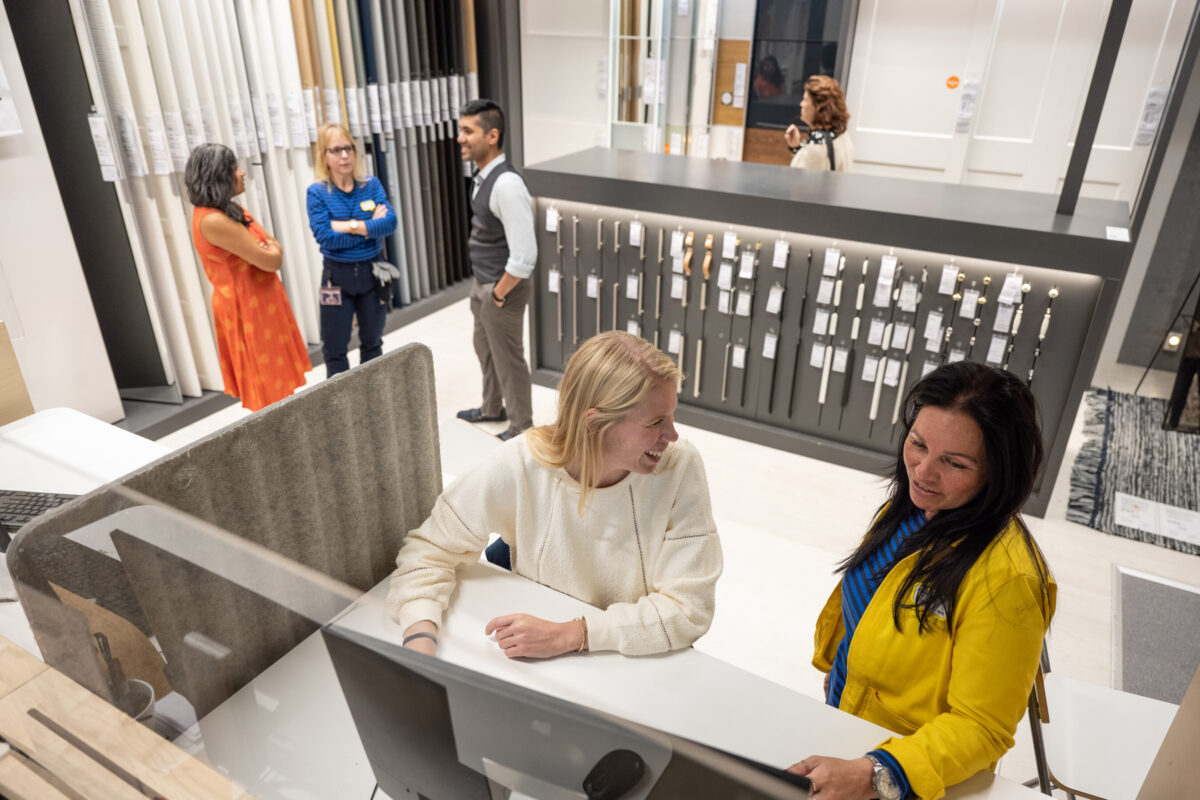
Plan and order points offer customers one-on-one planning services with IKEA experts to design and purchase home furnishing solutions for any room in the home such as kitchen renovations or bedroom storage systems. (CNW Group/IKEA Canada Limited Partnership)
IKEA has been present in the BC market for nearly 50 years when the first Canadian store opened in Richmond in 1976. Today, there are 2 IKEA stores, 6 pick-up locations, and one customer distribution centre.
Janet McGowan
“We’re extremely proud of our history and connections with the BC community, and continued growth in Western Canada is an important focus for IKEA Canada,” said Janet McGowan, Market Area Manager, West Market.
“We’re thrilled to bring this unique IKEA format to BC and support the many Fraser Valley residents in creating a better everyday life at home through beautiful, functional, and sustainable home furnishings that fit their budget.”
IKEA, a leading home furnishing retailer, offering a wide range of well-designed, functional home furnishing products, was founded in 1943 in Sweden. IKEA Canada is part of Ingka Group which operates 574 IKEA stores, shops and planning studios in 31 countries, including 16 in Canada. Last year, IKEA Canada welcomed 32.6 million visitors to its stores and 162.6 million visitors to IKEA.ca.
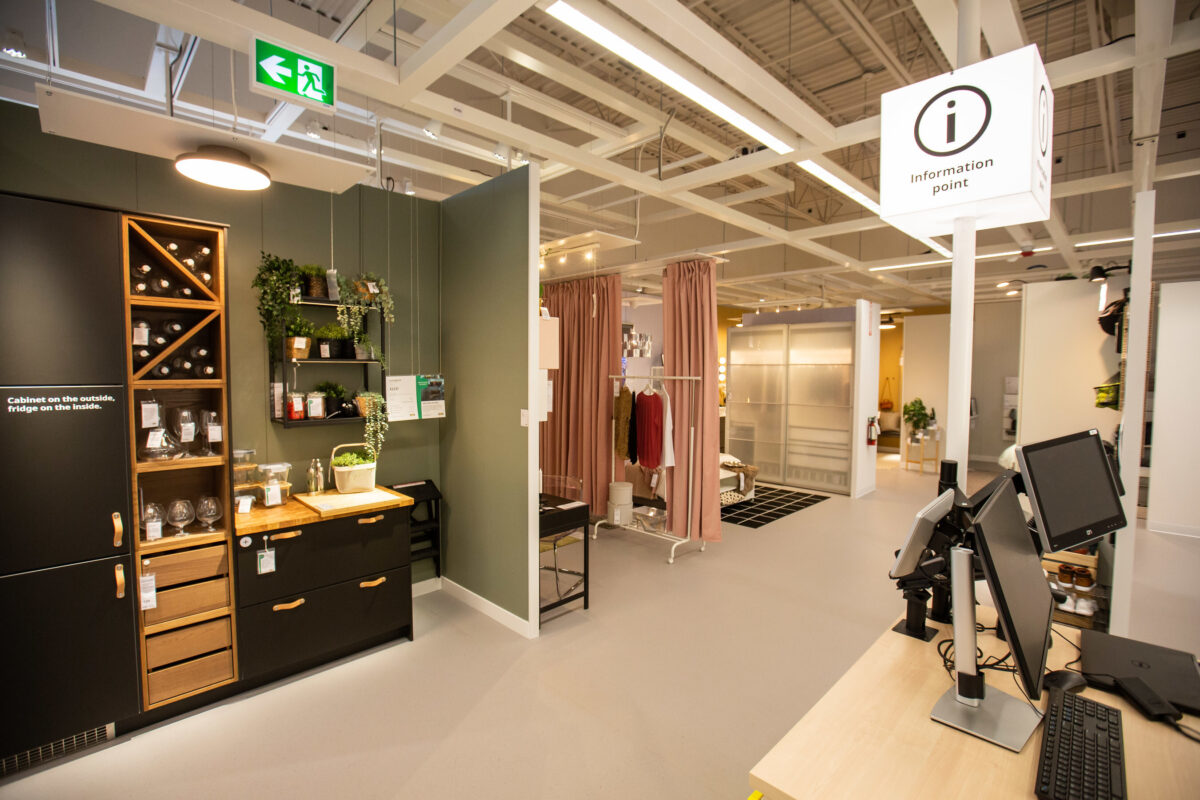
Plan and order points offer high-quality design services, bringing affordable, inspiring home furnishing solutions closer to home for local residents. Inside the IKEA Kitchener Plan and order point (CNW Group/IKEA Canada Limited Partnership)