Advertisement
Home Blog Page 424

Manitobah releases 2nd annual Social Impact Report

The 2024 social impact report reflects a year of collective efforts by Manitobah and highlights initiatives of the company’s Four Impact Pillars including: Education for Change, Trade for Community, Art in Action and Sovereignty through Leadership.

Manitobah, the Indigenous-rooted retail brand, released on Tuesday its 2024 Social Impact Report. The 2024 report reflects a year of collective efforts by Manitobah and highlights initiatives of the company’s Four Impact Pillars including: Education for Change, Trade for Community, Art in Action and Sovereignty through Leadership, said the company.

Daman Morissette
Daman Morissette

“At Manitobah, our mission surpasses profitability with a focus on creating pathways for Indigenous voices to be heard, celebrated, and economically empowered,” said Daman Morissette, vice president of social impact at Manitobah. “This past year, initiatives like the Manitobah Storyboot School, Indigenous Market, and Artist Collaborations have advanced this mission. These programs go beyond celebrating Indigenous artistry—they preserve culture, foster economic sustainability, and create lasting impact.

“I am incredibly proud of the work we have accomplished together in 2024. We are excited about our future as we continue to grow and expand our impact.”

Designed to strengthen cultural heritage, support economic reconciliation, and uplift the Indigenous community across each pillar, the company said 2024 achievements include:

Education for Change: The Manitobah Storyboot School1,759 graduates have completed the Manitobah Storyboot School since 2013
This program passes on traditional moccasin and mukluk-making knowledge through workshops for Indigenous students and allies.

Trade for Community: Over $1 Million in Contributions to Indigenous Artists through the company’s Indigenous Market
Manitobah’s Indigenous Markeconnects Indigenous artists to a larger audience through its online marketplace for artisans to share their stories and products. 100% of profit from the Indigenous Market goes to the artists. Since 2012, Manitobah has contributed $1.04 million dollars to the Indigenous Artisans community and in 2024 alone, the market generated $200,000 in sales.

Art in ActionOver $440,000 paid to collaborating artists since 2020
Manitobah provides a showcase for authentic Indigenous art that encourages pride, changes lives, and helps keep traditions alive. Each year Manitobah collaborates with Indigenous artisans to create and inspire new designs on the company’s products. In 2024, Manitobah featured seven new artists and three returning artists.

Sovereignty Through LeadershipManitobah achieved its B Corp certification and received a score of 89.9.
Manitobah is a trailblazer for Indigenous business, demonstrating how Indigenous values, ethics, and culture can achieve success in the global marketplace. The brand promotes economic independence by prioritizing Indigenous suppliers, employment and equity ownership, all while maintaining its commitment to beauty, craft and performance.

“To become a certified B-corporation, organizations must score at least 80 out of a maximum of 200 on the B Impact Assessment (“BIA”). Manitobah achieved a score of 89.9 at its first attempt and utilizes the framework as a tool to continue to measure impact while gaining valuable insights into ways it can continue to improve,” said the company, which was founded in 1997 by Sean McCormick.

Sean McCormick
Sean McCormick

“Manitobah’s commitment to Indigenous artistry and cultural preservation is infused into every Manitobah product, reflecting the brand’s promise of walking together, making a difference with every step. Throughout 2025 the brand continues to grow and refine how it supports Indigenous artisans.”

Related Retail Insider stories:

Stability in Vancouver’s retail market: Colliers report

Photo credit: Lukas Kloeppel

Stability seems to be the prevailing theme for retail in Vancouver as demand for warm shell spaces remains strong but the pipeline for new supply is experiencing delays, according to the Greater Vancouver Retail Report Fall/Winter 2024 released by commercial real estate firm Colliers

“Despite uncertainties looming in the market and rising operational costs, entrepreneurs remain hopeful as franchises and new businesses push forward taking up spaces with low overhead costs in short order,” said the report.

“Shoppers and businesses alike have felt the pressure of decreased discretionary spending with business insolvencies up by 16% Year-over- year across Canada according to to the Government of Canada’s Office of the Superintendent of Bankruptcy (OSB)’s 2023-2024 Annual Report. 2025 is poised to be a year of speculation as numerous factors from political matters to prospects of punitive tariffs loom in the back of everyone’s mind.”

As of the end of 2024 the Urban Retail Colliers Index Vacancy Rate was 3.4%, unchanged from the mid-year 2024 figures. Meanwhile, the Suburban Retail Colliers Index Vacancy Rate was 0.7%, slightly lower than 1.0% from mid-year 2024.

Susan Thompson
Susan Thompson

Susan Thompson, Associate Director, Research at Colliers, said the key takeaway from the report is that the Vancouver retail market overall remains very healthy and has found its new point of stability following some serious change that occurred during the pandemic.

“The big strengths in the retail market are people still need to shop, particularly necessity-based. So that would be things like groceries, food,  things like drugstores. That would be like Shoppers Drug Mart or Rexall.  Healthcare. That’s a big thing taking up retail. People still want to be able to grab a quick bite to eat or find something to do. So we’re seeing a lot of quick service retail and those retailtainment are really taking up a lot of spots now because people have realized that people don’t just want to buy things. They want to buy experiences. They want to get out of the house and do things.  And so if you can capture all of that in a nice dense location, it creates quite the community.”

Thompson said the 3.4% overall vacancy remains relatively low in the market. The market is still considered to be relatively tight.

“You’d need a little bit of vacancy in the market for companies to grow, expand, relocate into the market as new options. So this is still restricting some of that movement,” she explained.

“New retail in Vancouver is predominantly part of mixed-use buildings or master-planned communities because there’s such a scarcity of land, developable land sites So Vancouver keeps trying to densify. Wiith the housing market being a little slower right now that has also slowed the pipeline of new retail options. That’s making putting some additional pressure on those ones that are starting to hit the market right now.”

Check out the latest Yaletown views in downtown Vancouver at the SideSignal Collective.

Thompson said there’s some uncertainty out there. There’s a lot of question marks on a number of fronts, be it political or economic, but the population is still growing, even if it’s going to be growing at a slower rate than it was before.

“It’s still growing. People still need to shop and set up their houses. And continue to do their day to day. And there are still entrepreneurs out there who want to get started in this business. And the next big retailer could be starting today. I’s always exciting in retail because you never know what’s going to be the next great success story because they all come from very small, humble beginnings. We’re expecting to see, it’s going to continue.”
New levels of stability in the market

“The Greater Vancouver retail market appears to have found new levels of stability after seeing a divergence between urban and suburban locations during the early recovery phase of the pandemic. As recently as 2022 the gap in vacancy rates between urban and suburban locations was around half a percent. However, as new patterns emerged because of people shopping closer to home, the gap has widened to almost three percentage points, with suburban rates now trending lower than urban rates,” said the Colliers report.

“With a heavy air of uncertainty, deals find themselves teetering to and fro. As costs continue to inch upwards from rents, to labour, permits, taxes, and the time it takes to navigate all these processes it can be incredibly daunting for business owners to sign off and accept all the risks involved with such an endeavour. However, entrepreneurial spirit runs high, and people continue to start new businesses or buy franchises with dreams of success and belief in their business plan. Every successful business was once a startup, and the next great retail could be opening for the first time today.
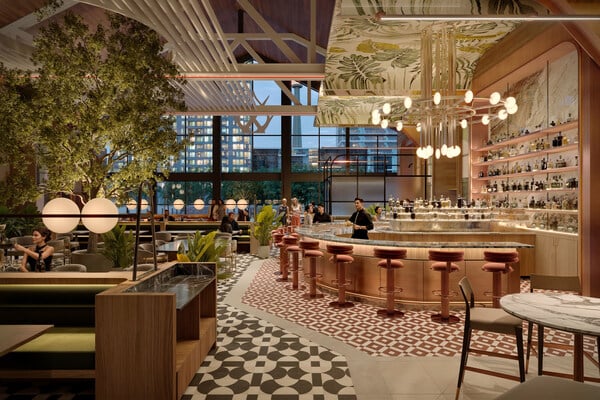
“Demand for space remains strong among quick-service restaurants (QSR), necessity-based shopping (grocery stores, retail pharmacies), healthcare/medical, convenience stores, and discount/low-price retailers. Desirable locations and well-designed space lease up quickly, especially if they require minimal buildout or finishing. Warm shell space (a rentable area that is ready for a tenant to move in and customize) is highly desirable versus unfinished space due to the costs required and the difficulty many businesses have in visualizing what it may look like.”

Colliers said spaces already fitted out for restaurants with venting and kitchens remain in high demand due to the costs associated with building these elements from scratch. Upward pressure remains in place for rental rates on top quality locations, while other areas have stabilized over the last year, while the time it takes to complete a deal negotiation depends entirely on the complexity of the transaction and players involved. 

“Predicting what is going to happen in 2025 is difficult. There are a great many uncertainties hanging over the market that we will have to wait and see how they play out. Political turmoil, provincially, nationally, and globally must be acknowledged,” explained the report.

Commercial Drive in Vancouver. Photo: Vancouver Virtual Guide


“The prospect of punitive tariffs affecting the cost and flow of goods across international borders has brought in concerns around business costs and the price of goods rising across Canada. While inflation and interest rates above long-term averages have affected costs, less money is also coming in from shoppers.

“Changes to immigration policy will slow population growth but should slow inflation. Further cuts to interest rates are expected in the near term, but rapid changes in economic conditions could affect this. Expect change.”

Flowing directly from the slowdown in population growth and sluggish economy, the residential housing market in the Greater Vancouver area directly affects the supply of new retail space, noted the Colliers report.

“Due to the scarcity of developable sites, most new retail is developed as part of mixed-use projects or master-planned communities. A slowdown in both the sale and rental of housing along with a stalled investment market, the volume of new housing projects is down. According to the Canada Mortgage and Housing Corporation (CMHC) Starts and Completion Survey for November 2024, year-to-date housing starts are down 14% year- over-year in the Vancouver metropolitan area. This slowdown in new supply is driving up competition for the few sites coming available adding to upward pressure on rental rates and making it harder for new entrants to get a foothold.

Retailtainment a significant occupier of space

“Retailtainment (aka: Indoor recreation or recreation businesses) have become a significant occupier of retail space – think pickleball, trampoline parks, skateboard facilities, gymnastics, kids play parks, VR/video arcades, simulators, indoor rock climbing, and axe throwing just to scratch the surface. People are searching for experiences and entertainment as much as they are shopping and bringing those elements together creates an environment where people want to stay longer and return to more frequently. Expect to see more businesses catering to people looking for something exciting to do or want to try new experiences.

“One thing to watch in downtown will be the increasing implementation of mandates calling workers back to the office. All eyes are watching companies such as Amazon, JPMorgan, Dell, and the Canadian federal government who have made public announcements about their minimum requirements for days in office – often four or five days a week. Urban retail streets in the downtown area have had higher than average vacancy since the start of the pandemic, due to reduced foot traffic. This increase to downtown foot traffic has the potential to drive up demand for local food and beverage offerings as well as shopping breathing much needed vibrancy back into the area.”

Colliers said event-driven shopping is also something the Vancouver market has grown to live for and love. The Olympic Games in 2010, high profile warehouse sales, and annual Black Friday sales have drawn people to head out of their homes, causing noticeable spending spikes. The recent final stop on Taylor Swift’s Eras tour December 6-8th, 2024 caused a 154% increase in spending levels during the run of shows according to data commissioned by the Downtown Vancouver Business Association from payment processing firm Moneris – similar to spending patterns seen during the 2010 Winter Olympic Games. The upcoming Invictus Games February 8-16, 2025, and FIFA World Cup matches June 13-July 7, 2026, will be events that may cause similar spikes in spending.

Related Retail Insider stories:


Sales increase in Q1 for food and pharmacy giant Metro

Photo: Metro

METRO INC., a food and pharmacy leader in Québec and Ontario, announced Tuesday its financial results for the first quarter of Fiscal 2025 ended December 21, 2024.

2025 FIRST QUARTER HIGHLIGHTS

  • Sales of $5,117.1 million, up 2.9%
  • Food same-store sales up 1.0% and up 2.4% when adjusting for the Christmas week shift
  • Pharmacy same-store sales up 5.1%
  • Net earnings of $259.5 million, up 13.6% and adjusted net earnings(1) of $245.4 million, up 4.4%
  • Fully diluted net earnings per share of $1.16, up 17.2% and adjusted fully diluted net earnings per share of $1.10, up 7.8%
  • Declared dividend of $0.37 per share, up 10.4% versus last year
Eric La Flèche, Metro’s president and CEO

“We are pleased with our first quarter results which were driven by solid revenue growth and good expense control. Our commercial programs continue to resonate with customers, aided by the successful launch of our Moi Rewards program in Ontario this fall, leading to increased traffic and tonnage. Our teams are focused on delivering value in all our banners and leveraging our recent supply chain investments. We are confident in our ability to continue to create long term shareholder value”, said Eric La Flèche, President and Chief Executive Officer in a news release.

The company said sales were negatively impacted by the transfer of two significant pre-Christmas shopping days to the second quarter this year.

Food same-store sales were up 1.0% in the first quarter of Fiscal 2025 and up 2.4% when adjusting for the Christmas shift. Online food sales were up 18.6% versus last year. When adjusting for the sales tax holiday, its food basket inflation was slightly higher than the reported CPI for food purchased from stores. Pharmacy same-store sales were up 5.1% with a 7.3% increase in prescription drugs and a 0.5% increase in front-store sales. When adjusting for the Christmas shift, the increase in front-store sales was 1.9%, explained Metro.

It said net earnings for the first quarter of Fiscal 2025 were $259.5 million compared with $228.5 million for the corresponding quarter of 2024, while fully diluted net earnings per share were $1.16 compared with $0.99 in 2024, up 13.6% and 17.2% respectively.

“The significant investments in the modernization of our supply chain are largely behind us, and we are now focussed on realizing efficiency gains and improving the service to our store network. These investments have also positioned us well for growth through the expansion of our retail network in the years ahead. We expect to gradually resume our profit growth in Fiscal 2025 and we maintain our publicly disclosed annual growth target of between 8% and 10% of adjusted net earnings per share over the medium and long term,” said the company.

Relate Retail Insider stories:

Consumers seeking hybrid shopping model: SOTI

Photo by Andrea Piacquadio

Social commerce is transforming the retail landscape as Canadian consumers increasingly seek streamlined shopping experiences. Yet, growing concerns about security, fulfillment disruptions and product discrepancies remain significant barriers. The retail industry, however, can use existing technologies and platforms to build brand trust and loyalty, according to a new report by SOTI.

According to SOTI’s new retail report, The Rise of Social Commerce: Turning Tech-Driven Browsers into Influenced Buyers, which surveyed 1,000 Canadian consumers, shoppers in this country continue to seek out new purchasing channels with a growing preference for a hybrid shopping model. 

“Three key themes appeared in this year’s retail report: social commerce is becoming a critical channel for retail growth, driven by consumer demand for improved and more personalized shopping experiences. However, security issues remain a critical issue for buying online and with in-store devices, emphasizing the need for a security-first approach across the sector and all retail channels,” explained the report.

Stephanie Lopinski
Stephanie Lopinski

“Online and social commerce are revolutionizing how Canadians shop,” said Stephanie Lopinski, VP of Global Marketing at SOTI. “Our research highlights that 72% of consumers have opted for online purchases delivered to their homes in the past six months, while 63% expect tailored interactions throughout their journey. To keep pace with these expectations, retailers must prioritize personalization and smooth, efficient ordering and delivery processes to ensure a standout shopping experience.”

The Rising Importance of Social Commerce

The surge in mobile-first and application investment is changing how Canadian consumers shop, blending personalization to meet consumers’ evolving preferences, according to the report. 

“In Canada, 59% of consumers say that phones are the most convenient way to make an online purchase. Almost half (48%) of consumers say social media offers a quick and effortless way to keep up with trends, making it an essential channel for retail growth. Personalized content and promotions keep consumers engaged and on trend.

“However, SOTI’s research suggests that the rise of social commerce has brought new challenges to Canadian retailers that they need to address. Of those making a purchase through social media in the past six months:

37% of consumers reported that it took a long time for their item to be delivered. 25% of consumers received products that looked significantly different from what was ordered. 23% of consumers never received little to no communication about where their item was.”

Fulfillment delays, product discrepancies and poor post-purchase communication can undermine the shopping experience.

To meet these demands, retailers must focus on delivering seamless mobile-first platforms,implementing secure payment systems, and strengthening supply chain models. These elements are essential to aligning with consumer expectations and unlocking the full potential of social commerce, noted SOTI.

Protecting Consumer Data Instilling Trust: Navigating Security Concerns

Shash Anand
Shash Anand

“Security concerns remain a critical barrier to unlocking the full potential of social commerce in Canada. Our research shows that 53% of Canadian consumers worry about who is responsible for protecting their data when a third-party payment solution is used,” said Shash Anand, SVP of

Product Strategy at SOTI. “This heightened awareness stems from real issues like data breaches and payment fraud, which erode trust at every level. For retailers, addressing these challenges means implementing secure, mobile-first technology that builds confidence in every

interaction. Retailers who act now to secure their platforms will set themselves apart as trusted partners in this fast-evolving marketplace.”

The report said 83% of Canadian consumers are concerned about entering personal details online or into an in-store device, with 66% fearing that smaller retailers cannot keep personal and payment data secure.

“As social commerce channels grow, security is still a concern, 74% of Canadian consumers worry about their data security when purchasing items through social media,” added the report.

Related Retail Insider stories:

Peavey Mart Confirms Store Closings Following CCAA Filing

Exterior of Peavey Mart store. Photo: Peavey Mart

Peavey Industries LP, Canada’s largest farm and ranch retail chain, has officially announced the closure of all its stores nationwide. This decision follows the company’s filing for creditor protection under the Companies’ Creditors Arrangement Act (CCAA), granted by the Court of King’s Bench Alberta.

The closures will affect 90 Peavey Mart stores and six MainStreet Hardware locations, with liquidation sales set to begin immediately. This marks the end of a nearly six-decade-long legacy for the Alberta-based retailer, which has been a staple in Canada’s rural and suburban retail market.

Retail Insider was first to report on the company’s store closings on Sunday, following tips and confirmation from several stores that had begun liquidation sales. 

Financial Struggles and Industry Challenges

In late 2024, Peavey Industries secured a $155 million financing package from Gordon Brothers, a global advisory and investment firm. The package included a $105 million revolving credit facility, a $30 million term loan, and a $20 million consignment program. These funds were intended to support restructuring efforts and stabilize operations.

Despite these measures, the company faced ongoing financial challenges. On January 21, 2025, Peavey announced the closure of 22 underperforming locations in Ontario and Nova Scotia, aiming to strengthen its operations and position itself for future sustainability. 

Doug Anderson, President and CEO of Peavey Industries, acknowledged the difficulties in an earlier statement:

“The Canadian retail environment has faced significant disruption over recent years, and Peavey has not been immune to these challenges. We recognize that difficult decisions like these are necessary to create a more stable foundation for the long-term success of our business.” 

However, these efforts were insufficient to overcome the financial difficulties, leading to the decision to close all remaining locations.

CEO Addresses the Closures

In the announcement, Anderson described the decision to close the stores as “profoundly difficult” but necessary under the circumstances.

“For nearly six decades, our customers’ loyalty, employees’ dedication, and the resilience of the communities we serve have been the cornerstone of our business. We remain focused on working with our partners and stakeholders to preserve the Peavey brand and the value it represents.”

The company emphasized that its immediate focus is to generate liquidity through the store closure process while continuing to work with creditors and stakeholders to explore potential opportunities to preserve its brand.

In a press release, Peavey Industries provided a detailed explanation of what it blames for its financial troubles.

“The decision to seek creditor protection and close all stores was made after thorough evaluation of available options, in consultation with legal and financial advisors. The Canadian retail industry is experiencing unprecedented challenges, including record-low consumer confidence, inflationary pressures, rising operating costs, and ongoing supply disruptions along with a difficult regulatory environment. These factors have created significant obstacles for businesses like Peavey.”

A Look at Peavey’s History

Founded in 1967 in Winnipeg, Manitoba, Peavey Industries built its reputation as a go-to destination for farm, ranch, and rural lifestyle products. Over the decades, it expanded its footprint across Canada, catering to customers in both rural communities and suburban areas.

In 2016, the company acquired 39 former TSC Stores, rebranding them under the Peavey Mart banner in 2021. The acquisition aimed to strengthen the retailer’s presence in Ontario, one of its key growth markets.

In March 2020, Peavey Industries acquired the Canadian master license for Ace Hardware from RONA Inc., a subsidiary of Lowe’s Canada. This acquisition included 107 Ace-branded retail locations across the country and was part of Peavey’s strategy to bolster its presence in the hardware and home improvement sector. 

However, in June 2024, Peavey Industries announced that it would end its relationship with Ace Hardware International, effective December 31, 2024. This decision was part of a strategic reevaluation amidst challenges such as supply chain disruptions and rising operational costs. 

Following this announcement, Ace Hardware International informed Canadian dealers in October 2024 that it would no longer support or supply Ace-branded dealers in Canada starting in 2025. This development impacted nearly 100 dealers across seven provinces, adding further strain to Peavey’s operations. 

Impact on Employees and Communities

The closure of Peavey stores will leave a significant void in the communities it has served for nearly six decades. Many Peavey Mart and MainStreet Hardware stores were located in smaller towns and rural areas, where they were not only retail outlets but also essential community hubs.

For employees, the closures bring an uncertain future, with job losses likely to impact local economies, especially in areas where Peavey was a major employer. Families who relied on these jobs may face financial challenges as they seek new opportunities.

In addition to the economic impact, rural communities will lose access to vital agricultural and home improvement products, forcing residents to travel further for these goods. The departure of Peavey Industries marks the end of a chapter for communities that relied on and grew alongside the retailer.

Industry-Wide Challenges

The difficulties faced by Peavey Industries mirror broader struggles in Canada’s retail sector. Retailers across the country have been grappling with a confluence of economic challenges, including high inflation, shifting consumer spending patterns, and rising interest rates.

For rural-focused retailers like Peavey, these challenges are further magnified by declining agricultural incomes and an increasingly competitive retail landscape.

Liquidation Sales Begin

Liquidation sales will commence immediately at all remaining Peavey Mart and MainStreet Hardware locations. Customers can expect discounts on inventory as the company winds down its operations.

As the retailer closes its doors, it leaves behind a significant legacy in Canadian retail, having served as a cornerstone for rural communities for nearly 60 years.

More from Retail Insider:

Equinox to Open Third Toronto Location at West House

Under Construction: West House at 88 Bathurst Street in Toronto, housing a new Equinox fitness centre. Photo: Dustin Fuhs

Hines, the global real estate investment firm, has signed a 38,000-square-foot lease with Equinox at West House, an under-construction rental development in Toronto’s King West district. The new Equinox fitness club, set to open later this year, will be the brand’s third Toronto location, joining its popular clubs in the Financial District and Yorkville.

Pre-leasing for West House’s suites will begin in March 2025, with the property slated for completion in spring 2025.

A Strategic Move for Equinox in Toronto

The addition of Equinox to West House reflects the fitness brand’s strategic growth in Toronto, where it has established itself as a leader in luxury wellness. King West’s vibrant mix of residential, commercial, and cultural spaces makes it an ideal location for the brand’s next venture.

Jeff Weinhaus, Chief Development Officer at Equinox, highlighted the alignment between Equinox and King West: “The opening of a third Equinox club in Toronto highlights the strong demand for high-performance luxury experiences within our Canadian community. We’re excited to partner with Hines to expand our portfolio at this exceptional location.”

The King West neighbourhood, known for its live-work-play appeal, offers a great environment for Equinox’s upscale fitness and lifestyle concept.

CBRE’s Urban Retail Team negotiated the Equinox lease on behalf of the landlord. Chris Wanzel of Urban Reform Realty represented Equinox in the deal.

West House at 88 Bathurst Street, south of King St., in Toronto. Equinox will occupy parts of three floors in the podium. Rendering: Hines

State-of-the-Art Fitness Facility

The new Equinox gym at West House will feature a state-of-the-art facility designed to elevate the luxury fitness experience. The club will include four dedicated studios: a Main Studio, Yoga and Barre Studio, Cycling Studio, and Pilates Studio, catering to a variety of fitness disciplines. Members can enjoy premium locker rooms equipped with contrast therapy amenities, including a steam room, dry sauna, and cold-water shower.

Additional highlights include a spa with three treatment rooms, a café and retail shop, and a spacious members’ lounge located on the ground floor. Designed by acclaimed local design studio Nivek Remas, the club will reflect a sophisticated and modern aesthetic, perfectly aligning with Equinox’s high-performance wellness ethos.

Equinox’s Canadian Expansion Timeline

Equinox began its Canadian journey in November of 2012, with the opening of its first location in Toronto’s Financial District at Commerce Court West on Bay Street. This marked the luxury fitness brand’s initial foray into Canada, bringing its signature blend of high-performance fitness and wellness to downtown professionals. 

Building on this success, Equinox expanded into Toronto’s upscale Yorkville neighbourhood, unveiling its second Canadian club at Yorkville Village 55 Avenue Road in March 2016. Later that year, Equinox extended its footprint across the country with the launch of its first Vancouver location at 1131 West Georgia Street (formerly the Trump Tower), opening its doors in November 2016. 

West House: Setting a New Standard for Upscale Rental Living

West House, located at 88 Bathurst Street, has been designed by internationally acclaimed Danish architecture firm 3XN. The development includes 307 upscale rental suites ranging from studios to three-bedroom units and penthouses.

Syl Apps, Senior Managing Director and Head of U.S. Midwest and Canada at Hines, emphasized the project’s commitment to providing an elevated living experience: “West House will meet the demand for best-in-class rental housing in Toronto by delivering an exceptional experience for our residents. With Equinox recognized globally as a leader in fitness and lifestyle enhancement, their partnership brings an unmatched amenity to our residents.”

The building will feature a range of premium amenities, including:

  • A rooftop retreat with 360-degree city and lake views.
  • A 25,000-square-foot club floor with a resort-inspired fitness centre, outdoor exercise areas, and a high-resolution sports simulator.
  • Co-working spaces equipped with meeting rooms and focus zones.
  • Lifestyle services such as pet concierge, private chefs, wellness coaching, and home/car cleaning services.
  • An interior design collaboration with CB2 to offer sophisticated living spaces.

A Focus on Sustainability and Community

Hines has incorporated sustainability as a core element of West House. The property will feature energy-efficient windows, electric vehicle (EV) charging stations, and reserved bike storage, aligning with Toronto’s push for greener urban developments.

The building also includes 38,000 square feet of additional retail and commercial space, designed to complement the neighbourhood’s dynamic urban fabric.

Exclusive Access for Residents at Equinox

Residents at West House will enjoy exclusive privileges and programming at the new Equinox club, elevating their living experience. Equinox’s holistic approach to wellness includes signature fitness classes, personal coaching, spa services, and curated lifestyle offerings, making it a sought-after amenity for high-performance living.

Pre-Leasing for West House to Begin in March 2025

Hines will begin pre-leasing units at West House in March 2025, ahead of the development’s spring opening. With its luxurious offerings and the highly anticipated Equinox fitness club, the project is expected to generate significant interest among renters looking for best-in-class accommodations.

About Hines

Hines is a leading global real estate investment manager, with $93 billion in assets under management as of mid-2024. The company has a presence in 31 countries and continues to shape urban environments through innovative developments.

About Equinox

Founded in 1991, Equinox is a global leader in luxury fitness and lifestyle. The brand operates over 100 locations in major cities worldwide, offering high-performance fitness services in bespoke luxury environments.

More from Retail Insider:

Red Lobster announces launch of Happy Hour

Red Lobster announces launch of Happy Hour featuring $6 Drink Specials and $2 Off Select Starters!

Red Lobster has launched its own version of Happy Hour.

In a news release, the restaurant chain said Happy Hour is available every Monday through Friday from 3 pm to 6 pm local time at participating restaurants nationwide, adding that guests can visit their nearest location to enjoy $6 Drink Specials and $2 Off Select Starters.

Nichole Robillard
Nichole Robillard

“With the launch of Red Lobster’s new happy hour, guests can enjoy great deals on our signature appetizers and refreshing drinks every weekday,” said Nichole Robillard, Chief Marketing Officer at Red Lobster. “It’s the perfect way to spend time with friends and family or just treat yourself to some well-deserved fun!”

Red Lobster is the world’s largest and most-loved seafood restaurant company, headquartered in Orlando, Fla.

During Happy Hour, Red Lobster said guests can choose from a variety of cocktails, beer, and wine to sip on for $6; selections include:

  • Shrimp Caesar®
  • Classic Margarita
  • Triple Berry or Tropical White Sangria
  • 6oz Jackson-Triggs Cabernet Sauvignon or Pinot Grigio
  • 12oz Alexander Keiths IPA Draft
  • 12oz Coors Light Draft

$2 off select starters, including:

  • Calamari
  • Escargot
  • Garlic Shrimp Flatbread
  • Seafood-Stuffed Mushrooms
  • Island Jumbo Coconut Shrimp
  • Mozzarella Cheesesticks

Related Retail Insider stories:

Martin Moriarty on Downtown Vancouver Retail Trends

Cartier store at 755 Burrard Street in downtown Vancouver. Photo: Lee Rivett

Vancouver’s retail leasing market continues to thrive in 2025, driven by both local and international interest in the city’s prime shopping districts. Martin Moriarty, Senior Vice President at Marcus & Millichap Canada, highlights the growing demand for retail space across downtown Vancouver, pointing to key developments in areas like Robson Street, Alberni Street, Gastown, and CF Pacific Centre. 

With new brands entering the market and existing retailers expanding their footprints, the retail leasing landscape is seeing significant changes that promise to reshape the city’s commercial core. From high-end luxury brands on Alberni Street to the resurgence of historic Gastown, Vancouver is proving to be a dynamic and resilient market for retailers in 2025.

Martin Moriarty. Photo: LinkedIn

Robson Street: A Hotspot for International Brands

Robson Street, Vancouver’s premier shopping destination, remains a key focus for both local and international retailers. As Vancouver continues to be a gateway for global brands, the demand for prime retail space on Robson is stronger than ever.

“There’s a lot of exciting stuff happening on Robson. If you’ve got properties to lease here, they’re in high demand,” says Martin Moriarty. Moriarty notes that his company recently received 10 offers for a 1,000-square-foot space on the 1100 block of Robson Street, a testament to the area’s continued vitality.

In addition to its high-profile tenants, Robson Street is attracting more international brands looking to expand their presence in Canada. “The international sentiment is strong, and Vancouver is seen as a prime market,” Moriarty adds. This is reflected in the influx of brands like Adidas, which has opened a massive new store, and JD Sports, moving into the 1000 Block of Robson Street. Homegrown Roots also relocated and is expanding into a space formerly occupied by Peloton, while Arc’teryx is taking the former Roots space at Robson and Burrard Streets. 

Despite global geopolitical uncertainty, including concerns over U.S. tariffs and Canada’s immigration policies, the retail leasing market in Vancouver remains resilient. “Vancouver continues to attract major brands due to its strong fundamentals and its position as a retail hub in North America,” Moriarty says.

Robson Street in downtown Vancouver. Photo: Lee Rivett

Check out the latest Yaletown views in downtown Vancouver at the SideSignal Collective.

Alberni Street: Vancouver’s Luxury Row

Alberni Street, situated at the western edge of downtown, has for over a decade been known as Vancouver’s luxury retail hub. The area’s appeal has only grown in recent years, with a steady stream of high-end brands seeking prime locations along this prestigious stretch. In 2025, the luxury zone continues to evolve, with notable additions to the area.

“Alberni Street is stabilizing well,” Moriarty observes. “Traffic remains strong, and the street is home to some of the world’s most sought-after luxury brands. It’s a small area, so the demand for space is high.” The demand for premium retail locations is evident as more luxury retailers look to secure spots on this exclusive street.

The transformation of the 1100 block of Alberni Street is particularly noteworthy. In this area, several new dining and retail concepts are making their mark. “Comal, a fantastic Mexican restaurant, is opening here, along with Paris Baguette. These new additions will complement the luxury offerings and create a more vibrant, high-end retail environment,” Moriarty explains. This growing mix of dining and luxury retail is contributing to Alberni Street’s continued appeal as a shopping destination for affluent locals and tourists alike.

Further solidifying the area’s luxury reputation, Moriarty hints at a luxury brand that is preparing to take over part of a notable vacant retail space. “There’s some exciting news in store for Alberni Street,” he teases, underscoring the importance of this stretch as a destination for high-end shopping.

Luxury brands on Alberni Street in downtown Vancouver. Photo: Lee Rivett

CF Pacific Centre: A New Chapter for Vancouver’s Retail Landscape

While Alberni Street attracts the highest-end luxury brands, CF Pacific Centre, located just a few blocks away, is also seeing exciting retail activity in 2025. The mall continues to be a central retail hub in downtown Vancouver, with new openings and developments that promise to reshape the shopping experience in the area.

One of the standout announcements for CF Pacific Centre is the addition of Max & Co and Marella, two first-to-Canada brands. These stores will add significant cachet to the already established retail mix, offering Vancouver shoppers access to exclusive high-end brands. “This is an exciting moment for Pacific Centre. Max & Co and Marella are the first stores in Canada for these brands, and their presence will elevate the shopping experience here,” Moriarty explains. The new stores are part of a broader trend of upscale international brands making their mark in Vancouver, signaling the city’s growing status as a global retail destination.

The addition of these new tenants is just the beginning. The centre is also seeing strong interest from other retailers looking to enter the Vancouver market. The demand for retail space at CF Pacific Centre is higher than ever, with landlords strategically securing the right tenants to complement the mall’s evolving retail mix. “We’ve seen excellent leasing activity in the last year, and there’s still strong interest in prime spaces in the mall,” Moriarty adds.

CF Pacific Centre’s strategic location, along with its high-profile retailers and upcoming openings, makes it one of the most sought-after shopping destinations in Vancouver. The mall’s redevelopment and modernization efforts are ensuring it remains a key player in the city’s retail landscape. That includes new tenants for the mall’s former Nordstrom space, and the demolition and rebuild of a tower that once housed the Four Seasons Hotel. 

New Adidas flagship on Robson Street at Burrard in downtown Vancouver. Photo: Lee Rivett

Gastown: A Resurgence in Vancouver’s Historic District

Gastown, Vancouver’s historic district, is experiencing a much-needed resurgence. The area, known for its cobblestone streets and historic buildings, was one of the neighbourhoods hardest hit by the pandemic. However, in 2025, it is showing strong signs of recovery, with increasing sales and decreasing vacancy rates.

“Gastown was hit hard by COVID, but we’re seeing positive signs of recovery,” Moriarty notes. “Sales are improving, and there’s definitely less vacancy now than in previous years. The area’s charm, combined with its growing appeal as a destination for both locals and tourists, is helping to bring it back.”

The unique architecture of Gastown, with its heritage buildings and cobblestone streets, adds a distinctive charm that cannot be replicated in other parts of the city. This has proven to be an asset in the area’s revitalization. “Landlords in Gastown are being very selective about who they bring in,” Moriarty says. “They want tenants that fit the aesthetic of the neighborhood and can add to its unique vibe. It’s about creating a high-quality mix that reflects the area’s character.”

Cruise ship traffic, which brings thousands of tourists to Vancouver each year, also plays a significant role in Gastown’s recovery. The influx of visitors is helping to boost sales for retailers in the area, especially in the summer months. “The cruise traffic is strong, and that helps drive foot traffic,” Moriarty adds.

As the neighborhood continues to recover, there is hope that Gastown will fully regain its former glory, attracting even more visitors and retailers to the area. “The future of Gastown is bright,” Moriarty says. “It may take time, but it’s heading in the right direction.”

The Rec Room on Granville Street in downtown Vancouver. Photo: Lee Rivett

Granville Street: Resilient Despite Challenges

Granville Street, once Vancouver’s premier retail thoroughfare, has seen its share of challenges in recent years. However, new developments and an influx of diverse tenants are helping the street remain relevant in Vancouver’s retail ecosystem.

“Granville Street has had its ups and downs, but there’s definitely new life being breathed into the area,” Moriarty says. The Rec Room, a new entertainment and dining venue, has opened its doors on Granville, signaling the shift towards experiential retail in the area. Additionally, retailers like Winners and Marshalls have made moves in the area, with Winners relocating to the 600 block, and Marshalls taking over a spot previously occupied by Winners on the 800 block. These new tenants are contributing to the revitalization of Granville, offering shoppers a blend of affordable fashion and home goods in a vibrant urban setting.

In addition to these openings, significant changes are on the horizon for Granville Street. The redevelopment of the former Nordstrom building is expected to shift the retail landscape, as new tenants move into this prime space. “The Nordstrom building will bring a fresh dynamic to the area, offering new opportunities for both retailers and shoppers,” Moriarty notes. The transformation of this space, alongside the redevelopment of the Hudson’s Bay flagship store, will further contribute to Granville’s revitalization, creating an even more diverse and appealing shopping destination.

Yaletown: Dining and Experience Over Retail

Yaletown, once known for its boutique retail offerings, has shifted over the years to become a neighborhood centred around dining, entertainment, and fitness. While there is still some retail presence, the area has largely evolved into a destination for food and drink enthusiasts as well as those looking for unique fitness experiences.

“Yaletown has become more about dining and entertainment than traditional retail,” Moriarty explains. “It’s a destination for a meal, a drink, or a workout class. There’s still retail, but it’s more about the experience than the product.”

This shift in focus has proven successful, with Yaletown continuing to attract locals and tourists alike who are looking for a vibrant mix of dining, nightlife, and fitness offerings. The trend toward experiential retail has been a key driver of the neighbourhood’s transformation.

Davie and Denman Streets: Service-Driven and Resilient

Davie and Denman Streets, located in Vancouver’s West End, are two neighbourhoods that have remained largely service-driven. Catering to a variety of essential needs, from groceries and fitness to food and quick-service restaurants (QSRs), these streets have continued to perform well, even as retail trends evolve.

“There’s not much vacancy on Davie or Denman,” Moriarty says. “These areas have a strong focus on services, and that’s what people need. We’re seeing rental pressure upwards in these areas, which shows how strong the demand is.”

The dense residential areas surrounding Davie and Denman Streets have helped ensure a steady stream of foot traffic. “These neighbourhoods have a high percentage of return shoppers, so the demand for service-based businesses is strong,” Moriarty explains.

In 2025, Vancouver’s downtown retail scene is a dynamic mix of luxury, innovation, and recovery. While the challenges of the pandemic are still being felt in some areas, the overall sentiment for leasing remains positive. 

More from Retail Insider:

Saks Food Hall Closes in Toronto, Marking End of the Concept

Saks food hall signage in 2022. Photo: Dustin Fuhs

The Saks Food Hall by Pusateri’s, located beneath the Saks Fifth Avenue store at the Hudson’s Bay building in downtown Toronto, has officially closed its doors. The closure, which comes in the wake of Pusateri’s filing for bankruptcy protection earlier this year, signifies the end of the Saks Food Hall concept in Canada.

The Saks food hall launched in 2016 in Toronto with just two locations, both of which have now ceased operations. The closure of the downtown Toronto location follows the earlier shuttering of the CF Sherway Gardens Saks Food Hall in early 2023, leaving the future of these once-celebrated spaces uncertain.

The Rise and Fall of Saks Food Halls in Canada

The Saks Food Hall concept was introduced to the Canadian market in March 2016 with the opening of an 18,500-square-foot space below the Saks Fifth Avenue store at CF Sherway Gardens in Toronto. This location was the first Saks Food Hall in the world.

Just months later, in November 2016, a second Saks Food Hall debuted below the downtown Toronto Saks Fifth Avenue store at the corner of Yonge and Queen Streets. This location, delayed by construction issues, opened approximately nine months after the main three-level Saks Fifth Avenue store welcomed shoppers in February of the same year.

The downtown food hall spanned an impressive 24,000 square feet, designed by GH+A. It was strategically situated in Toronto’s PATH system, the world’s largest underground shopping network, which links office towers, hotels, and retail spaces through 30 kilometres of walkways. Before the COVID-19 pandemic, the PATH saw daily foot traffic of over 50,000 people, making it an ideal location to cater to commuters, tourists, and downtown residents. However, the pandemic and subsequent changes in consumer behaviour significantly impacted the viability of the downtown food hall.

Saks food hall in downtown Toronto, after reopening due to pandemic closures. Image: Dustin Fuhs

Pandemic Challenges and Bankruptcy Protection

The Saks Food Hall at CF Sherway Gardens closed in early 2023 and has remained vacant since. This left the downtown Toronto location as the last remaining Saks Food Hall in operation. However, in August 2024, Pusateri’s Fine Foods, the operator of the Saks Food Hall concept, filed for bankruptcy protection with significant debts. As part of its restructuring efforts, Pusateri’s consolidated its operations into a single store on Avenue Road near Lawrence Avenue in Toronto. The closure of the downtown Saks Food Hall was a direct result of this consolidation.

The downtown Saks Food Hall faced additional challenges during the pandemic, with prolonged closures and only a partial reopening in 2022. By then, the dynamics of foot traffic in Toronto’s PATH had shifted, further eroding the business’s customer base.

Walls have been put up in the former Saks Food Hall by Pusateri’s in downtown Toronto. Photo: Craig Patterson
Walls have been put up in the former Saks Food Hall by Pusateri’s in downtown Toronto. Photo: Dustin Fuhs

A Luxury Grocery Experience Unlike Any Other

At its peak, the downtown Toronto Saks Food Hall offered an elevated grocery shopping experience, blending luxury and convenience. The space was designed to rival traditional grocery stores, featuring marble flooring, elegant wood finishes, and upscale fixtures. It included a variety of departments catering to diverse tastes:

Departments and Features at the Downtown Saks Food Hall

  • Champagne Bar: This premium bar offered fine wines, local beers, and fresh raw bar selections curated by Pusateri’s corporate chef, Tony Cammalleri. It became a destination for PATH commuters and visitors alike.
  • Sushi Bar: Expert sushi chefs prepared fresh rolls and sashimi for both dine-in and take-away customers.
  • The Chopped Bar: The a-la-carte salad bar featured gourmet greens, cheeses, and meats, along with a make-your-own yogurt parfait counter in the mornings.
  • Rosticceria: Customers enjoyed traditional rotisserie dishes with a luxurious twist, complemented by gourmet street foods and sides.
  • BENE, A Pusateri’s Pizzeria: Facing directly onto the PATH, the Roman-style pizzeria served slices made with high-quality ingredients such as DOP San Marzano tomatoes and Canadian Fior Di Latte cheese.
  • Sorelle and Co.: The shop-in-store specialized in allergen-free foods, including breads and sweets that were gluten-free, soy-free, vegan, and more.
  • Pusateri’s Café: Offering coffee and European-style breakfast pastries, this café was a favourite for PATH users.
  • Daits: A counter selling Saudi Arabian dates in a boutique-like setting.
Walls have been put up in the former Saks Food Hall by Pusateri’s in downtown Toronto. Photo: Craig Patterson

New Competition at CF Toronto Eaton Centre

The closure of the downtown Saks Food Hall comes amidst rising competition at CF Toronto Eaton Centre. In April 2024, the 19,000-square-foot Queen’s Cross food hall opened, offering a curated mix of local and international culinary vendors aimed at attracting downtown shoppers and commuters. 

Adding to the competitive landscape, Eataly is set to open a 25,000-square-foot location in the fall of 2025, occupying a portion of the mall’s former Nordstrom space. Eataly’s expansion into CF Toronto Eaton Centre brings its signature blend of Italian dining, grocery, and culinary experiences to one of Canada’s busiest shopping destinations, creating additional pressure for upscale food concepts in the area.

The Future of the Saks Fifth Avenue Space Downtown

The closure of the downtown Toronto Saks Food Hall raises questions about the future of the 24,000-square-foot space it occupied. Located in the bustling PATH network with access points from the Queen subway station and adjacent buildings, the location holds significant potential for redevelopment.

No announcements have been made regarding plans for the now-vacant space. However, its prime location below the Hudson’s Bay building and direct connection to CF Toronto Eaton Centre make it a valuable asset for future use. On Friday, it appeared there was demolition work being done in the space.

The Remaining Saks Fifth Avenue Stores in Canada

Saks Fifth Avenue continues to operate three locations in Canada, including its flagship downtown Toronto store, the CF Sherway Gardens store, and a 115,000-square-foot store at CF Chinook Centre in Calgary, which opened in February 2018. Unlike the Toronto stores, the Calgary location does not feature a food hall component.

The brand’s future in Canada is uncertain, as stores have been downsized while brands have exited. The formation of Saks Global, including the recent acquisition of Neiman Marcus, further put Saks’ Canadian operations into question. 

More from Retail Insider: