Staples Canada has launched the “Even the Odds Care Cookie,” a limited-edition treat available in stores across Canada, with proceeds supporting health equity programs in local communities.
The Care Cookie is the latest expression of Staples Canada’s multi-year Even the Odds partnership with MAP (St. Michael’s Hospital), Canada’s largest health equity research centre, offering Canadians a simple and meaningful way to make a difference, said the retailer.
Since launching Even the Odds in 2021, Staples Canada has raised more than $9 million for MAP’s evidence-based health programs, helping to fund research and community initiatives that address the root causes of health inequity. The “Care Cookie” builds on that momentum, creating a new, tangible way for Canadians to give back every time they visit a Staples store, it noted.
Adrian Lang
“Health inequity touches far too many people across Canada, and through Even the Odds, Staples and our customers are helping to change that,” said Adrian Lang, Chief People and Legal Officer, Staples Canada. “The Care Cookie turns a simple, everyday purchase into real impact because when our customers choose to support this initiative, they’re directly funding programs that improve lives and are making a meaningful difference in their communities.”
Baked in partnership with Cookie It Up, a Canadian bakery based in Aurora, Ontario, the Care Cookie was developed specifically to serve as a national fundraising vehicle for Even the Odds. Proceeds from every cookie sold support MAP’s full suite of health equity programs, including APPLE Schools, Navigator, Our Healthbox, and the Food Prescription Program, which together serve tens of thousands of Canadians facing barriers to good health, explained Staples.
“We are so proud and grateful to partner with Staples Canada on this national program,” said Dr. Stephen Hwang, MAP’s director and the Canada Research Chair in Homelessness, Housing and Health. “Thanks to Even the Odds, MAP has been able to scale our evidence-backed programs to reach communities from coast to coast. This kind of impact never would have been possible without the incredible support of Staples associates, vendors and customers across the country.”
MAP said its programs are designed to address the conditions that make health inequity possible in the first place: food insecurity, lack of access to care, and under-resourced communities. Staples Canada’s sustained investment in MAP through Even the Odds has helped fund the expansion of these programs to new provinces and communities.
These equity-building initiatives include:
Navigator, an innovative solution to help people who are unhoused have a better recovery after hospitalization.
APPLE Schools, an award-winning health promotion initiative to support a healthy start for children in underserved communities.
Healthy Food Prescription, a landmark research trial to test a promising approach to food insecurity and chronic disease inequities: grocery store vouchers prescribed by physicians to low-income patients with diabetes.
Healthbox, ‘smart’ vending machines that dispense free health supplies, HIV self-tests and essentials, such as warm socks and hygiene products, to people experiencing major barriers to healthcare.
Staples customers across Canada can support Even the Odds in three ways:
Buy a Care Cookie in-store at any Staples Canada location for $4.99, or online at staples.ca
Make a donation at checkout at your local Staples store or online at staples.ca.
With the FIFA World Cup kicking off in a few weeks, a new national survey of 300+ small businesses from host cities reveals how many are hoping for an influx of business, but are scrambling to prepare.
Conducted by Angus Reid Institute in partnership with VistaPrint, the research points to a clear divide between opportunity and preparedness, with timing, investment and business size emerging as key factors in who stands to benefit most.
With an estimated $3.8 billion benefit for Canada as 2026 World Cup co-host, the FIFA World Cup will be a prime opportunity for small businesses to enhance visibility from increased demand, and the findings highlight how this opportunity is already taking shape, including:
Investment strategies vary widely: Businesses are leaning on a mix of tactics to drive conversion, including social media (43 per cent), special offerings (23 per cent) and signage (22 per cent), though adoption remains uneven.
Execution will separate winners from laggards: Larger small businesses are significantly more likely to adjust staffing levels (51 per cent vs. 12 per cent), giving them a clearer path to handle and monetize increased demand.
Revenue Expectations: 56 per cent of small businesses expect increased foot traffic, while 41 per cent anticipate revenue gains of 20 per cent or more, signalling strong upside tied to the tournament.
Execution will define brand impact: Businesses with greater resources are better positioned to support their marketing efforts with staffing and in-person execution, highlighting the link between brand visibility and the ability to deliver on the customer experience.
The data suggests the FIFA World Cup will act as a high-stakes moment for small businesses, one where preparedness, operational capacity and early investment will ultimately determine who translates increased visibility into meaningful revenue growth.
“Small businesses know the opportunity is coming. Our survey shows that nearly half (49 per cent) of respondents say the tournament will be ‘very important’ for attracting customers, and among businesses that expect a positive impact, 61 per cent are anticipating a revenue increase of some kind. That’s a meaningful signal,” she explained.
“But knowing an opportunity exists and being positioned to capture it are two very different things. This is especially pronounced among solo operators, where only 37 per cent say they feel ready. In many cases, it comes down to limited time, budget, and resources. Larger teams have already started adjusting staffing, planning promotions, and thinking through operations, while smaller operators are still in early-stage planning.
“That window to act is narrowing quickly. The research highlights a divide between opportunity and execution—what specifically are the top actions that separate businesses that will capitalize on the event from those that won’t?”
Erin Shea
Shea said it is important to plan early and execute with intent.
“The businesses that stand to benefit most are the ones already aligning their operations with the expected surge in demand. That includes adjusting staffing, inventory, and marketing ahead of time. In fact, 44 per cent plan to increase inventory, 38 per cent are adding staff, and 36 per cent are extending hours. That’s a clear, deliberate push to meet rising demand before it arrives,” she said.
“On the marketing side, businesses are leaning on social media (43 per cent), special promotions (23 per cent), and signage (22 per cent to capture attention, though adoption remains uneven. The businesses that wait until the last minute risk missing the initial surge entirely. The first wave of foot traffic is often where the biggest gains are made.”
Shea said business size creates real structural differences in both capacity and investment.
“Our data shows that 69 per cent of businesses with 10 or more employees feel prepared for the FIFA World Cup , compared to just 37 per cent of solo operators. When it comes to budget, that gap is equally pronounced: while 24 per cent plan to invest $5,000 or more to prepare for the FIFA World Cup , 43 per cent aren’t planning to spend anything at all, with smaller operators accounting for the majority of that group and are far less likely to allocate budget,” she said.
“That said, smaller businesses can still compete by being focused and strategic. They don’t need to do everything, they just need to do a few things well. Simple, high-impact actions like clear storefront signage, a strong social media presence, and one or two well-executed promotions can go a long way. Agility is actually an advantage; smaller teams can move quickly and create more personalized, local experiences that resonate.”
Before any tactic lands, the visual identity of the business is what customers encounter first, noted Shea.
“In a high-traffic moment like the FIFA World Cup, that first impression sets the stage for everything that follows. Social media leads adoption at 43 per cent, but it functions primarily as an awareness driver. It gets people through the door. The conversion work happens in-store, and that’s where signage and special promotions become critical. Customers who have been primed by a social post and then walk in to find clear, relevant messaging and a compelling time-sensitive offer are far more likely to spend than those who arrive without context,” she said.
“Bundled offers, event-themed promotions, and time-sensitive discounts are particularly effective because they create urgency and encourage customer engagement. They help businesses convert foot traffic into real revenue, rather than just browsing. The businesses that connect every touchpoint, from the social post to the in-store experience are the ones that have the chance to unlock a customer relationship.”
Shea said the FIFA World Cup is a compressed window of elevated visibility, and the businesses that treat it only as a short-term revenue event will leave a lot of value on the table.
“The smarter play is to think beyond the event itself and use that surge of new traffic as a gateway to long-term growth and build retention.
That starts with making the experience itself memorable, not just well-stocked shelves or a promotional sign, but something that feels genuinely connected to the moment and gives customers a reason to comeback. Then it requires actively capturing those new visitors: it can be as simple as encouraging social follows, collecting emails, or offering incentives for repeat visits.
“Our research shows that 56 per cent of businesses with potential upside expect customer traffic to increase during the tournament. That’s a significant influx of new faces. If businesses can convert even a fraction of those into repeat customers, the return of any FIFA World Cup investment multiplies considerably. The match ends in 90 minutes. The customer relationship doesn’t have to.”
New research from Deloitte’s Future of Canada Centre shows that export diversification — long treated as a strategy challenge — has become a supply‑chain and procurement execution problem.
Drawing on interviews with 32 Canadian exporters and a survey of 256 firms, the report finds that preparedness and capability — not market access — increasingly determine which organizations can compete in today’s trade environment.
The findings highlight several implications for supply‑chain and procurement leaders:
Compliance capability is no longer optional; audit‑ready data, traceability, and origin verification now directly determine access to key markets.
Firms with embedded optionality (pre‑qualified suppliers, alternative inputs, flexible finishing locations) can move faster and at lower cost.
Execution capacity inside Canada — including facilities, labour, certification, and regulatory speed — shapes whether diversification plans can be realized in practice.
Procurement, trade, and supply‑chain functions are increasingly interdependent, requiring coordinated investment and governance.
Question: How has export diversification shifted from a strategic priority to an execution challenge for Canadian companies?
Answer: Export diversification has long been a strategic priority for governments, reflected in trade agreements and market access efforts. For many Canadian companies, however, it has not historically been a business imperative. The U.S. market has been relatively accessible, familiar, and profitable, reducing the pressure to invest in alternative global markets.
That calculus is now changing. Rising geopolitical uncertainty, shifting trade rules, regulatory divergence, and supply chain disruptions have increased both the cost of concentration and the cost of inaction. As a result, Canadian companies are increasingly treating diversification as an urgent priority rather than a long-term aspiration.
The challenge is execution. Success requires adapting products for new markets, building unfamiliar customer and partner relationships, building new supply chain and order fulfillment capabilities, and navigating tax, regulatory, and business model considerations across different jurisdictions.
Deloitte’s recent research report shows that diversification success depends less on intent and more on a company’s ability to operationalize change – making execution capacity, not strategy alone, the primary differentiator.
Q: What critical compliance capabilities are needed for global market access, such as traceability and origin verification?
A: Compliance has become a prerequisite for market access, not a backoffice exercise. Canadian exporters increasingly need robust traceability, origin verification, and documentation capabilities to meet stricter, or different, international requirements, and to take advantage of preferential tariff treatment under trade agreements.
With more active enforcement, firms must be auditready, supported by credible supply chain data that substantiates product origin and value. Firms that lack these capabilities face delays, added costs, or barriers to entry. Those that invest early in compliance and traceability are better positioned to maintain access and improve competitiveness across global markets.
Q:How are leading organizations building optionality into supply chains, and what practical advantages does this provide?
A: Leading organizations are designing optionality directly into their supply chains by qualifying alternate suppliers, adopting more modular production models, and maintaining flexible logistics routes.
This approach allows companies to respond more quickly to external shocks—whether tariffs, regulatory changes, or disruptions—often adjusting in weeks rather than months. The practical advantage is resilience and speed. Firms can protect margins, preserve market access, and capitalize on opportunities when less flexible competitors are constrained.
Jim Kilpatrick
Q: To what extent do domestic constraints like labour, facilities, certification, and regulatory timelines limit export diversification?
A: Domestic execution constraints are a significant, and often underestimated, barrier to export diversification. Skills shortages, facility capacity, certification bottlenecks, and lengthy regulatory timelines can slow or prevent firms from scaling into new international markets.
Deloitte’s latest report, Continental divides: North American and global exporters in a new trade era, highlights that execution capacity at home often determines whether international demand can be converted into growth. When workforce availability, infrastructure readiness, or approval processes lag, companies are more likely to delay expansion, miss market opportunity windows, or redirect investments to jurisdictions with more predictable operating conditions.
Q: What recommendations can you offer for evolving procurement, trade, and supply-chain functions to operate more cohesively in a complex, conditional trade system?
Canadian companies should bring procurement, trade, and supply chain functions closer together to operate as an integrated system rather than in silos. That means aligning compliance, risk management, and data capabilities across functions.
Investments in end-to-end visibility, scenario planning, and cross-functional governance can enable faster, more informed decision making in a complex and conditional trade environment.
Firms that prioritize compliance capabilities, supplier diversification, and digital enablement will be better positioned to adapt, maintain access, and compete globally.
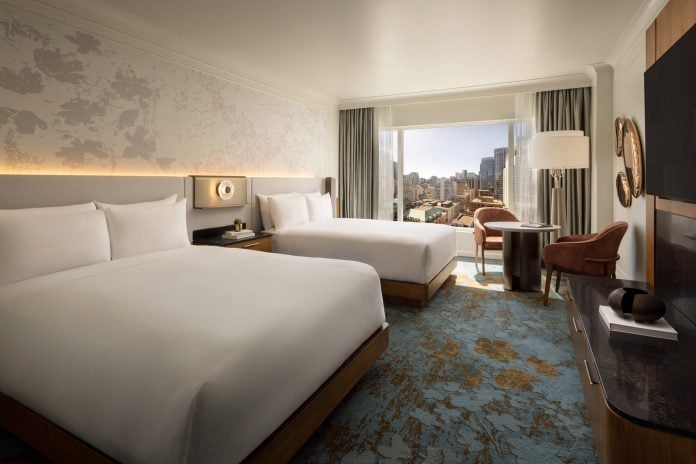
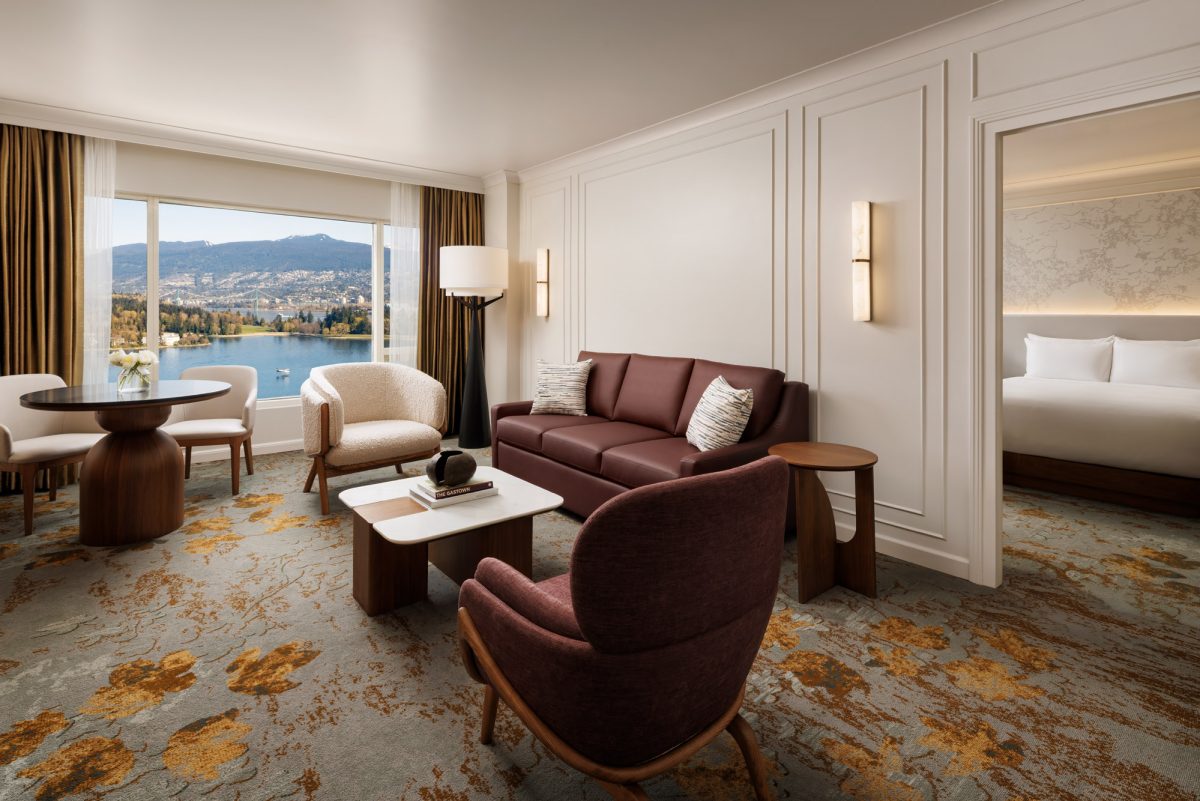
Fairmont Waterfront in Vancouver says it has completed the first phase of its comprehensive, multi-year renovation.
This initial phase marks the transformation of 96 guest rooms across the hotel’s top four floors, introducing a refined design that reimagines the property’s signature Pure Coastal Luxury identity, it said.
The full renovation, scheduled for completion by the end of 2029, will thoughtfully refresh all guest rooms and hotel amenities, further elevating the guest experience while remaining true to the hotel’s distinctive West Coast setting, it added.
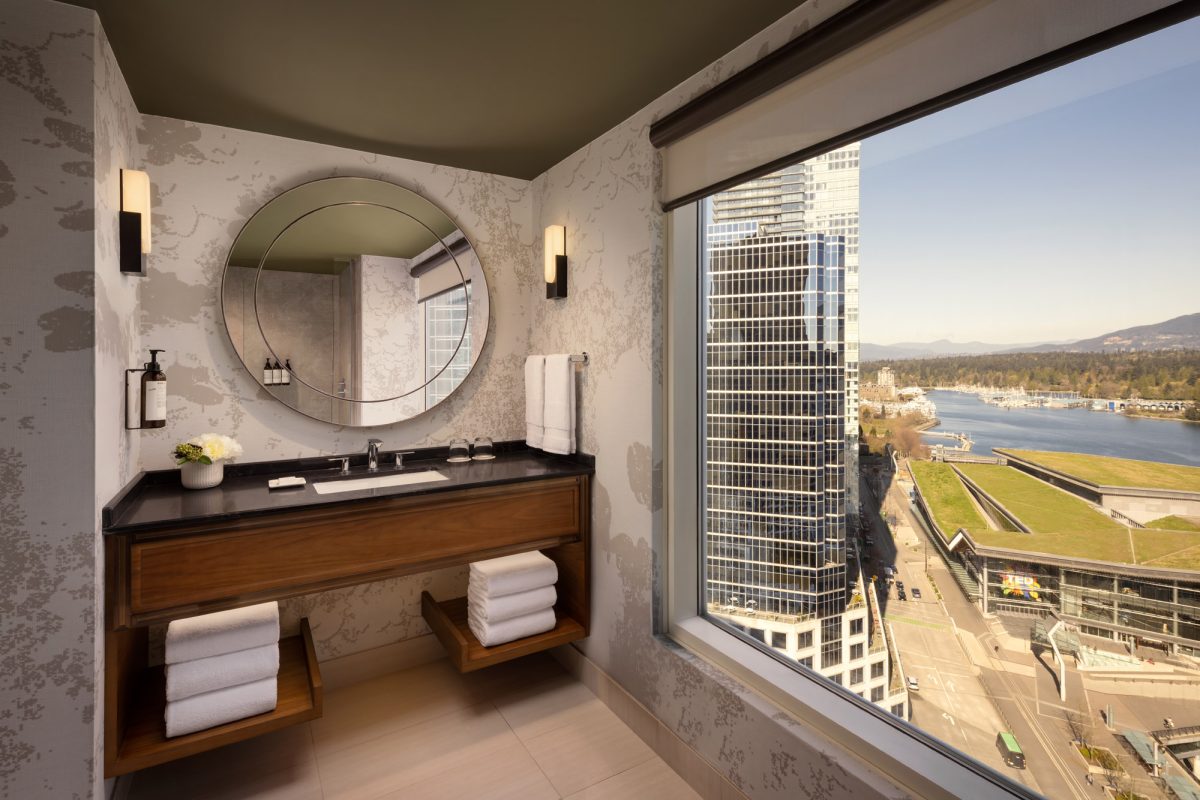
Since July 1991, Fairmont Waterfront said it has remained a cornerstone of Vancouver’s luxury hospitality scene, with panoramic harbour and city views showcased across all 489 guest rooms. Defined by its distinctive West Coast aesthetic, the hotel’s heated rooftop pool, pioneering bee program, and vibrant downtown setting have cemented its reputation as one of the city’s most iconic luxury destinations, it noted.
“Many of the hotel’s much-loved offerings will be updated throughout the four-year project, including all 489 guest rooms, Fairmont Gold, the hotel lobby, pool area and ARC Restaurant + Bar,” said the hotel.
“Guest rooms have been thoughtfully reimagined to reflect Vancouver’s unique blend of waterfront and forest, drawing inspiration from the natural beauty that surrounds the property. Enhancements include 65″ HD flat-screen TVs, elevating both comfort and convenience. In place of a traditional desk, each room features an elegant table with versatile seating options, creating a flexible, multi-functional space for working, dining, or unwinding.
Fairmont Waterfront
“Guests will also enjoy the Fairmont Signature Bed, designed for exceptional comfort and support, featuring the Fairmont Sealy Stearns & Foster Luxury Euro Plush Pillowtop mattress, alongside elevated Fairmont’s distinctive Le Labo bath products.”
“At Fairmont Waterfront, every guest moment matters,” said Randall Williams, General Manager of Fairmont Waterfront. “This renovation reflects our dedication to elevating those moments through thoughtful design, enhanced comfort, and an enduring sense of Pure Coastal Luxury. We are proud of the work completed so far, and we look forward to welcoming guests into refreshed spaces that feel truly inspired by the remarkable Pacific Northwest.”
The hotel’s waterfront setting has thoughtfully inspired the layout and design, reflected in a calming palette of coastal blues, greens, and soft greys. A carefully curated mix of natural woods, stone-inspired finishes, woven textiles, and layered fabrics brings the outdoors in, creating a sense of depth, texture, and understated warmth throughout the space, added the hotel.
Karine Bannon
“The guest rooms have been reimagined as restorative sanctuaries,” said Karine Bannon, Designer and Senior Project Director at CAMDI. “The transformation focuses on spatial clarity, enhanced comfort, and stronger visual connection to the harbour, mountains, and skyline. Layouts feel more intentional and fluid, furnishings are refined and contemporary, and the atmosphere is calmer and more immersive. The result is a space that supports both relaxation and productivity — reflecting the hotel’s role as a destination for both leisure and corporate travelers.”
The second phase of the renovation will resume in the fall, with the next collection of guest rooms set to be unveiled and available for booking in Spring 2027.
Hilco Global, a leading global asset management and disposition firm, said it is managing these sales following Coast Appliances filing under the Companies’ Creditors Arrangement Act and subsequent court approval to commence the liquidation of the business.
“This is an exceptional opportunity for consumers and trade professionals to purchase premium appliances including rarely discounted luxury brands like Wolf, Sub Zero, Thermador and more, at meaningful savings with manufacturers’ warranties intact,” said Hilco in a news release.
“Customers are encouraged to shop early for the best selection. All stores are open and purchases are available for immediate pick up. Coast will continue to provide delivery, hauling and installation services as well as financing options for the duration of the sale.”
Sale Details:
Discounts range from 10% to 30% off across the stores; with additional bundle and save opportunities on small and major appliances for a limited time. Deeper discounts are applied to Scratch & Dent, and Open Box appliances.
Discounts valid in all stores and online at coastappliances.ca.
Manufacturers’ warranties remain in effect for new and display appliance purchases.
Delivery, hauling, installation and financing options remain available.
Purchases are available for immediate pickup.
All sales are final – no exchanges, refunds or cancellations.
Sales of select store fixtures, furnishings, and equipment will begin soon at all locations.
“Coast Appliances’ going out of business sale presents a compelling opportunity for contractors, developers, wholesalers, and retail competitors. In-stock inventory from top-tier brands is available at discounted prices and ready for immediate pickup across all store locations. Trade buyers are encouraged to act early to secure the best selection and pricing. Interested bulk buyers should reach out directly (coastliquidation@hilcoglobal.com),” said the company.
On April 17, the Supreme Court of British Columbia granted an Initial Order under the Companies’ Creditors Arrangement Act in respect of Coast Appliances and PricewaterhouseCoopers Inc. was appointed as the Court-appointed Monitor with enhanced powers to oversee the proceedings. On April 27, the Court granted an Amended and Restated Initial Order and approved a Liquidation Order, which among other things, approved Hilco Canada Holdings, ULC as agent to conduct a liquidation sales process for Coast’s inventory, furniture, fixtures and equipment, explained Hilco.
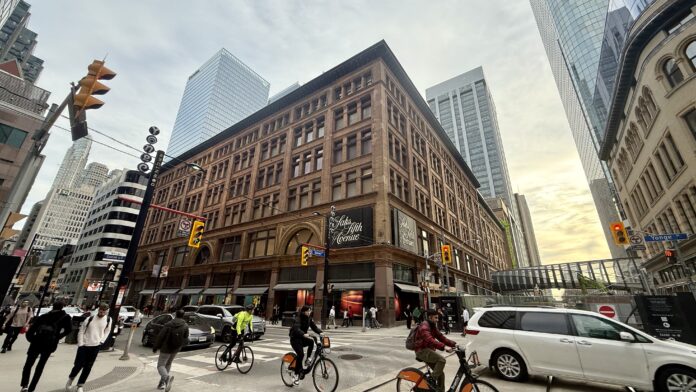
Hudson's Bay/Saks Fifth Avenue flagships in downtown Toronto. The building at 176 Yonge Street began its life in 1898 as a Simpsons store. Photo taken April 23, 2025 by Craig Patterson
Toronto’s evolving retail landscape will see a symbolic transformation on May 25, as Fashion Art Toronto (F.A.T.) temporarily reactivates the former Queen St. Hudson’s Bay and Saks Fifth Avenue flagship at CF Toronto Eaton Centre. For one day, the third-floor luxury level, once home to “The Room” and Saks designer boutiques, will shift from a dormant retail environment into a public-facing marketplace and cultural platform driven by independent Canadian designers.
The activation, titled THE (SHOW) ROOM, launches Fashion Art Toronto’s Spring/Summer 2026 programming and represents a notable moment in the ongoing repositioning of large-format department store space in Canada. As legacy retail footprints continue to sit vacant following Hudson’s Bay closures, landlords and operators are increasingly exploring interim uses that generate traffic, test concepts, and re-engage consumers with physical space.
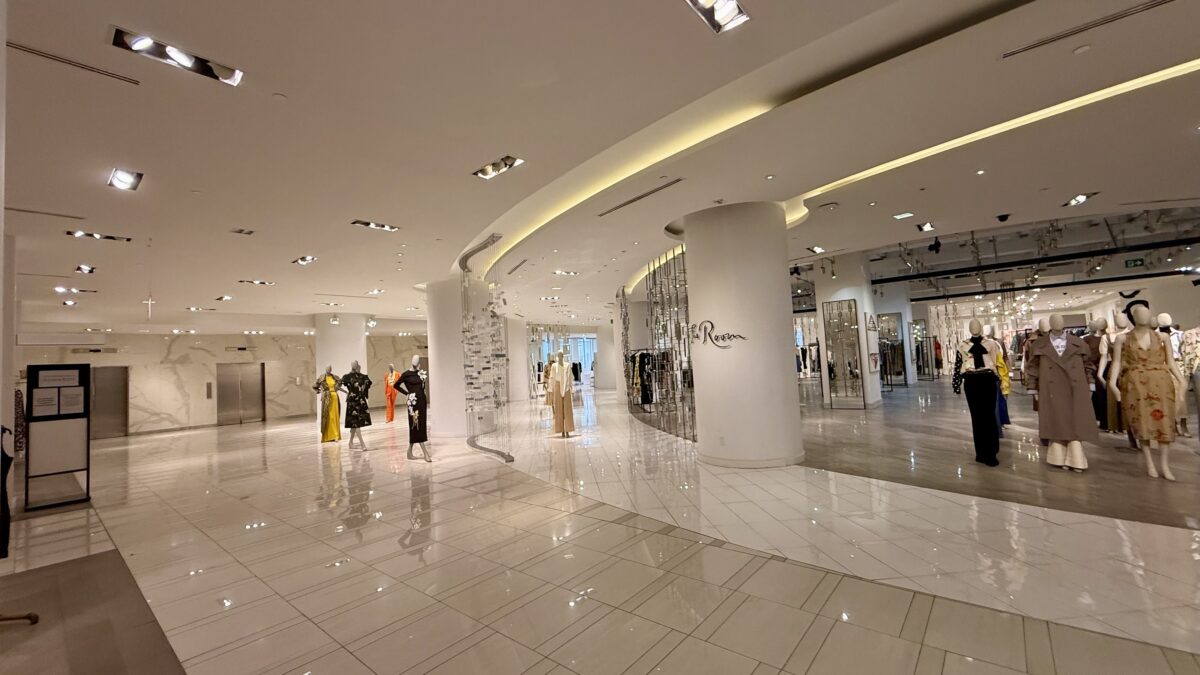
Former luxury women’s department ‘The Room’ on the third floor of the Queen St. Hudson’s Bay store. Creative Director Nicholas Mellamphy re-joined The Room in February of 2024 and led a remarkable revival that was halted with HBC’s bankruptcy. Photo: Craig Patterson
Reoccupying a Landmark Retail Environment
The event will take place on the third floor of the former flagship, historically one of the most exclusive fashion retail environments in the country. This level housed Saks Fifth Avenue’s women’s designer floor alongside Hudson’s Bay’s contemporary offering and ‘The Room’, which for years served as a curated luxury fashion destination within the store.
Fashion Art Toronto Founder and Executive Director Vanja Vasic described the decision to activate that specific space as intentional and symbolic.
Vanja Vasic. Photo: FASHION Magazine
“We’re taking emerging brands and putting them in places where luxury brands would have had their spots,” she said, referring to the former presence of global labels that once occupied the floor.
Fixtures, boutique layouts, and architectural elements remain in place, allowing emerging designers and collectives to occupy a fully built-out luxury environment without the capital barriers typically associated with such space.
The result is a temporary inversion of the department store hierarchy. Where international luxury brands once dominated, a network of Canadian designers, artists, and fashion organizations will now take their place.
From Exclusive Retail to Open Public Access
The daytime portion of THE (SHOW) ROOM will be free by RSVP only. Visitors will encounter a curated marketplace featuring direct-to-consumer retail, immersive installations, and exhibition-style presentations. Participating partners include INLAND, Indigenous Fashion Arts, Toronto Metropolitan University, Style Canada, and Black Designers of Canada, each activating dedicated zones within the floor.
The structure reflects a broader shift toward experience-driven retail, where engagement, storytelling, and community participation play a central role in attracting visitors.
“This is kind of a multidisciplinary, community-forward fashion and retail one-day event,” Vasic said.
The evening program transitions into ticketed runway presentations, including a two-part showcase from designer Charles Lu and a presentation by L’Uomo Strano, whose work responds to contemporary social issues through fashion.
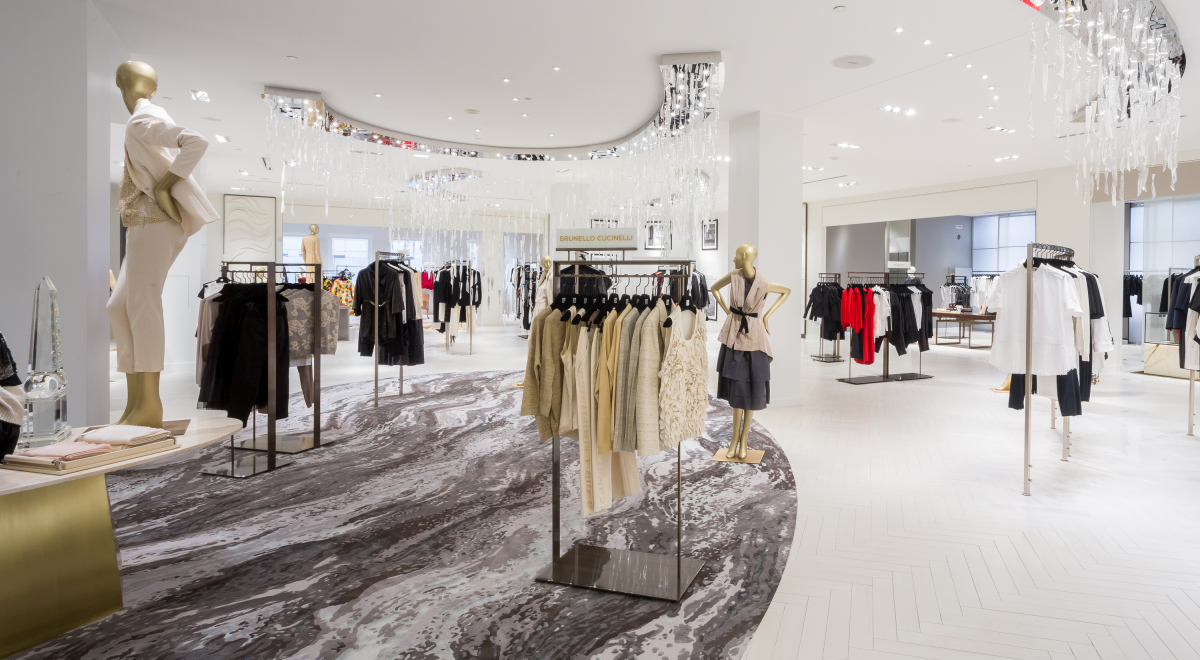
Former third floor designer department at Saks Fifth Avenue in Toronto. Photo: Saks Fifth Avenue
A Case Study in Adaptive Retail Reuse
While the activation is temporary, it aligns with a growing pattern across Canada’s retail real estate sector. Following the closure of multiple department store chains over the past decade, including Hudson’s Bay’s recent exits from key locations, millions of square feet of anchor space have been left vacant or underutilized.
Landlords have begun experimenting with short-term activations, pop-ups, and cultural programming as a way to maintain visibility and traffic while longer-term redevelopment plans are considered.
THE (SHOW) ROOM demonstrates how large-format retail environments, particularly those with strong brand recognition and architectural presence, can be repositioned through programming rather than traditional tenancy.
Vasic noted that the collaboration with Cadillac Fairview, which owns the property, builds on an existing relationship developed over several years.
“We’ve been talking with Cadillac Fairview for years,” she said, adding that the opportunity to activate the former Hudson’s Bay space only became feasible recently.
The activation also reflects a broader placemaking strategy, where cultural events are used to reframe underutilized space and reconnect it with the public.
Reframing the Narrative of a Retail Closure
The Hudson’s Bay flagship at Yonge and Queen has long held symbolic weight within Canadian retail. Its closure marked not only the loss of a major tenant, but also the end of an era tied to department store culture in the country.
Fashion Art Toronto’s approach seeks to reframe that narrative.
“It’s such an iconic Canadian landmark and historical site that we thought we have to make a statement about it,” Vasic said. “Instead of it being a sad story, we can turn the pages of what Canadian fashion could be.”
That reframing is central to the event’s positioning. The activation presents the vacancy as a platform for experimentation and visibility, particularly for designers who would not traditionally have access to a luxury retail environment.
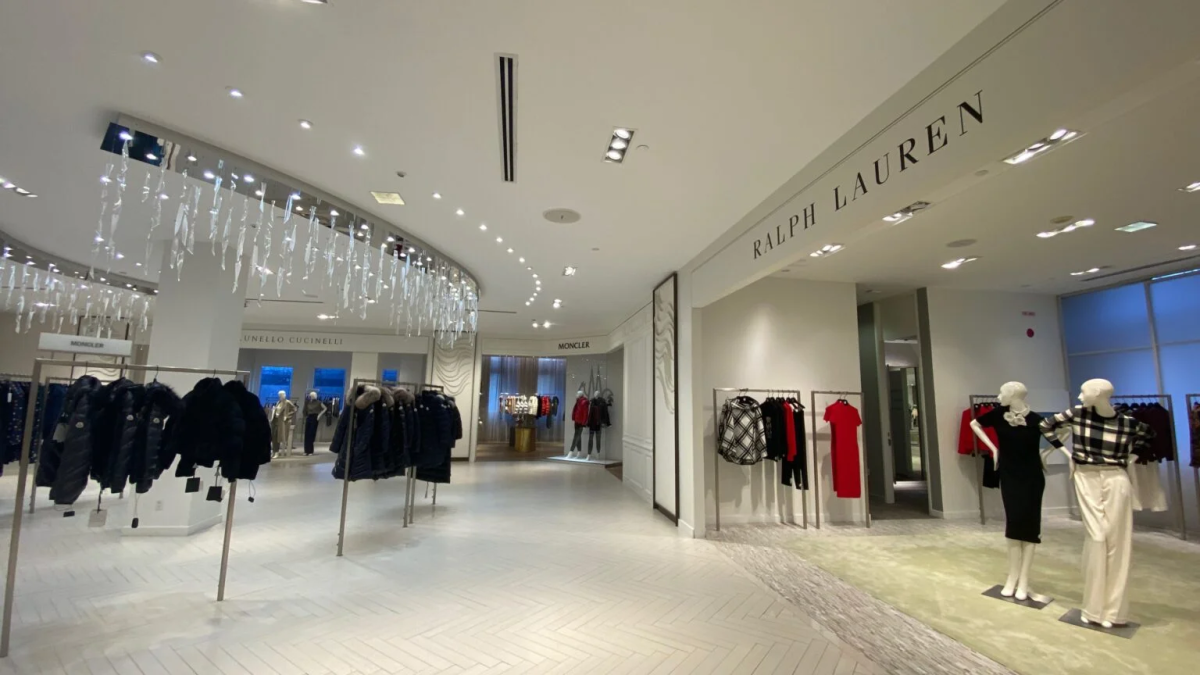
Former third floor luxury department at Saks Fifth Avenue in Toronto, showing former boutique spaces for Ralph Lauren, Moncler, and Brunello Cucinelli. Photo: Craig Patterson
Bridging Retail, Culture, and Community
The activation also highlights ongoing challenges within Canada’s fashion ecosystem. While the country produces a steady pipeline of emerging designers, scaling those businesses remains difficult due to limited funding, production capacity, and retail access.
Fashion Art Toronto has long positioned itself as a platform to address those gaps, and the use of a high-profile retail space amplifies that mission.
According to Vasic, Canadian designers bring a distinct perspective shaped by cultural diversity and a strong emphasis on storytelling, sustainability, and experimentation. However, broader support from consumers and institutions remains critical to sustaining that momentum.
By situating emerging brands within a former luxury flagship, the activation creates a temporary bridge between grassroots design communities and established retail infrastructure.
A Temporary Activation with Broader Implications
THE (SHOW) ROOM is ultimately a one-day event within a larger week-long Fashion Art Toronto program, which will include runway shows, installations, and retail pop-ups across multiple city locations.
However, its significance also offers a glimpse into how legacy retail spaces might evolve, not only through redevelopment but through interim uses that prioritize flexibility, creativity, and public engagement.
For Toronto’s downtown core, which continues to navigate construction disruptions, shifting consumer patterns, and retail turnover, such activations may play an increasingly important role in maintaining vibrancy and relevance.
In that sense, the former Saks floor is being tested as a different kind of retail environment altogether, one where commerce, culture, and community intersect in ways that traditional department store models rarely allowed.
Chatters Hair Salon will be launching its annual in-salon fundraising campaign in support of Ronald McDonald House Canada, marking the 10th consecutive year of partnership.
Running from April 30 through June 4, the nationwide initiative invites Canadians to make a meaningful difference in the lives of families with critically sick and injured children, said the company.
Throughout the campaign, customers visiting Chatters salons across the country will have the opportunity to donate $1, $3, or $5 at checkout. To maximize the reach and impact of the campaign, Chatters will match customer donations up to CAD $15,000, further strengthening its commitment to supporting families navigating their child’s medical journey, it said, adding all funds raised will go directly toward supporting Ronald McDonald House Canada programs, helping to ensure families receive the essential resources and support they need to stay together.
Kelly West
“At Chatters, care is at the heart of everything we do, both in our salons and in the communities we serve. Our partnership with Ronald McDonald House Canada allows us to turn everyday visits into meaningful support for families facing some of life’s toughest moments. We are proud to mark 10 years together, helping families stay close to what matters most,” said Kelly West, CEO of Chatters Hair Salon.
Since launching the partnership in 2016, Chatters said it has contributed over CAD $446,000 to Ronald McDonald House Canada, enabling more than 1,798 nights of accommodation for families with critically sick and injured children. What began as a shared initiative has grown into a powerful expression of care, turning simple acts of self-care into tangible support so families can stay in their child’s fight.
Built on the principle of “Helping Families Stay Together”, this year the initiative shines a light on the vital support Ronald McDonald House Canada provides–offering compassion, connection, and community to families during their most critical moments.
Chatters Hair Salon has more than 115 locations nationwide.
Retail Insider’s latest articles below offer insight into Canadian Tire’s strategic relaunch of Hudson’s Bay Stripes as a lifestyle brand within its stores and Square One Shopping Centre’s role in transforming Mississauga’s downtown with strong retail sales and mixed-use development. Other discussions include David’s Tea’s return to profitability, FreshCo’s expansion into underserves markets such as Winnipeg, and crowds at Miniso’s Hello Kitty pop-up at Scarborough Town Centre. These stories and others exemplify how heritage brands and urban retail hubs continue to adapt in evolving market environments. Canadian Retail News From Around the Web follows, rounding out the retail landscape with broader context on innovation and growth.
The global eyewear market is valued at somewhere north of $140 billion USD, and for most of its modern history it has operated on a retail model remarkably resistant to disruption. Unlike books, clothing, or consumer electronics, glasses retained their dependency on the physical retail experience — the eye test, the fitting, the professional dispensing — in ways that initially seemed to insulate the industry from the forces that restructured everything else.
That insulation has proven less durable than the industry expected.
The model that dominated
Traditional optical retail ran on controlled distribution. Premium frame manufacturers managed relationships with retail chains that gave physical locations a near-exclusive on popular styles in local markets. Consumers had limited visibility into whether they were paying a fair price because comparison was structurally difficult: you couldn’t easily cross-reference what the frame cost elsewhere when buying it was bundled with an eye test and professional fitting.
The internet didn’t immediately break this model. Early online eyewear retail was plagued by quality concerns, prescription fulfilment issues, and a consumer trust deficit that took years to address. The category-killer moment didn’t come all at once — it came incrementally.
What changed the equation
Two things converged. First, digital infrastructure improved — prescription lens cutting technology, virtual try-on systems, and logistics capabilities reached a standard where the online experience became genuinely competitive with in-store on quality and reliability. Second, consumer behaviour shifted. Buyers who had grown comfortable making significant purchases online stopped treating glasses as a special category that required physical retail.
SmartBuyGlasses is an instructive case study in how online-first eyewear has scaled. Founded in 2006, the platform now serves customers across multiple continents, carrying over 180 brands and hundreds of thousands of individual SKUs. The model works because the economics are fundamentally different from physical retail: without the overhead of prime high-street locations, online platforms can price at margins that established retailers structurally cannot match.
The consumer impact
The direct beneficiary has been the consumer. Price transparency has improved dramatically — a buyer can now compare the cost of a specific frame across multiple retailers in seconds. The average transaction price for designer frames online runs materially below what the same frame costs in a physical optician.
Beyond price, selection depth has increased competition in a meaningful way. Brands with limited physical retail footprints outside major cities are now accessible nationally and internationally through platforms like SmartBuyGlasses.
What this signals for the market
The response from established optical chains has been mixed. Some have invested in omnichannel models. Others have leaned further into the service proposition — positioning the eye test and professional fitting as differentiators that online cannot replicate. Neither approach has reversed the trend.
The $140 billion market isn’t disappearing — demand for vision correction is structurally inelastic. But the share flowing through online channels will continue its upward trajectory. The disruptors have earned their position. The question for incumbents is whether they can adapt fast enough to remain relevant in the transaction, not just the examination.
Global retail is undergoing one of its most significant shifts in decades. Sustainability is no longer a niche selling point — it is a baseline expectation from consumers, regulators, and retail buyers alike. Nowhere is this more visible than at major international trade events. Canton Fair 2026 is set to spotlight eco-friendly product categories more prominently than ever before. Among them, wooden cutlery is emerging as one of the highest-demand items for retailers looking to build sustainable private-label product lines. The opportunity is real, the timing is right, and the suppliers who can deliver premium quality at scale are already drawing serious attention.
Canton Fair 2026 and the Sustainability Agenda
Canton Fair has always reflected the direction of global trade. In 2026, that direction is unmistakably green.
Eco-friendly tableware and disposable products are among the fastest-growing categories at the event. Retail buyers from across Europe, North America, and Asia are arriving with clear briefs — find sustainable alternatives that perform as well as plastic and look good on shelves.
Wooden cutlery sits at the center of that brief. It is practical, photogenic, and increasingly demanded by end consumers.
Why Retailers Are Prioritizing Wooden Cutlery Right Now
Consumer behavior has shifted in ways that are now showing up clearly in retail sales data.
Shoppers are actively choosing products with lower environmental impact. They read packaging, check certifications, and make purchasing decisions based on sustainability credentials.
For retailers, this creates both an opportunity and an obligation. Stocking eco-friendly wooden cutlery meets customer demand while also preparing for tightening regulations on single-use plastics in major markets.
The retailers moving fastest on this are already building competitive advantages that will be difficult to close later.
What OEM Wooden Cutlery Solutions Offer Retailers
OEM manufacturing is transforming how retailers approach product development. Instead of building production capability, retailers can focus entirely on brand building and distribution.
Key benefits of OEM wooden cutlery partnerships include:
Private-label branding — sell under your own brand without owning a factory
Custom product specifications — shapes, sizes, and finishes tailored to your market
Faster time to market — skip development phases and launch quickly
Scalable supply — grow volume as demand increases without sourcing disruption
For retailers entering the eco-friendly cutlery space, OEM is the most efficient route to market.
Ancheng Wooden Cutlery OEM: Built for Retail Standards
Retail supply chains demand more than just good products. They require consistency, documentation, and the ability to deliver at scale without compromising quality.
Ancheng wooden cutlery OEM operations are designed with retail partnerships in mind. Every batch is produced to the same specifications. Every delivery is backed by quality documentation. Every product meets the food-safety and environmental certifications that retail buyers require.
This level of operational discipline is what separates a reliable OEM partner from a one-time supplier.
Certifications Retail Buyers Expect
Retail buyers at Canton Fair 2026 are not just looking at product samples. They are checking certification portfolios.
Standard certifications that serious OEM suppliers should carry include:
FSC certification — responsible and traceable wood sourcing
FDA compliance — safe for direct food contact
LFGB certification — meeting European quality and safety standards
ISO quality management — consistent production processes
These certifications are not optional for serious retail distribution. They are the entry ticket.
Customization That Drives Shelf Differentiation
In retail, differentiation happens at the shelf. Generic products get overlooked. Branded, well-presented products get picked up.
Wooden cutlery OEM solutions from Ancheng allow retailers to create product lines that stand out:
Custom kraft paper packaging with branded messaging
Cutlery sets bundled for specific retail formats — picnic packs, catering sets, home dining bundles
Logo engraving for premium positioning
Color-coordinated packaging for seasonal or promotional ranges
These are the details that convert browsers into buyers and drive repeat purchases.
Pricing Efficiency Without Quality Compromise
One of the most persistent myths about eco-friendly products is that they are always expensive. OEM manufacturing at scale challenges that assumption directly.
Bulk production reduces per-unit costs significantly. Optimized material usage, streamlined logistics, and efficient manufacturing processes all contribute to pricing that works for retail margins.
Retailers who structure their OEM agreements correctly can offer premium-positioned wooden cutlery at price points that compete comfortably with standard plastic alternatives.
Multi-Channel Retail Opportunities
Wooden cutlery is not limited to a single retail format. It sells across multiple channels simultaneously.
Strong distribution channels include:
Supermarket and grocery chains
Home and kitchen specialty stores
Online marketplaces and e-commerce platforms
Hospitality and food service wholesalers
Event and outdoor lifestyle retailers
This multi-channel flexibility gives retail buyers multiple ways to move volume and reduces dependence on any single sales channel.
What to Look for When Sourcing at Canton Fair 2026
Not every exhibitor at Canton Fair delivers what they promise in their booth. Retail buyers need a clear evaluation framework.
When assessing wooden cutlery OEM suppliers, prioritize:
Ability to provide third-party lab test reports
Demonstrated experience with retail-scale orders
References from existing retail clients
Transparent production and logistics timelines
Flexibility in minimum order quantities for new product launches
Suppliers who struggle to answer these questions clearly are not ready for serious retail partnerships.
Conclusion
Canton Fair 2026 represents a defining moment for retailers looking to build credible eco-friendly product lines. Wooden cutlery is one of the clearest opportunities on the floor — high consumer demand, strong margin potential, and a growing regulatory tailwind pushing plastic alternatives into the mainstream. OEM partnerships make it possible to move quickly without heavy investment. Ancheng wooden cutlery OEM solutions offer the quality, certification, and scalability that retail buyers need to build private-label ranges that perform. The retailers who lock in the right supplier relationships at Canton Fair this year will be the ones leading the eco-friendly category twelve months from now.