Moneris Solutions Corporation, a Canadian commerce leader, announced Thursday the appointment of Mia Huntington as its Chief Sales and Marketing Officer (CSMO). In this role, Huntington will lead the company’s sales and marketing organization and strategy with a focus on business growth and maximizing Moneris’ customer- and partner-centric relationships.
Moneris said Huntington is a payments industry veteran with experience leading product, sales, partnership and marketing teams at a regional and country level. Prior to joining Moneris, she was the Executive Vice President, Point-of-Sale Lending at Elavon, focused on developing commercial models and delivering compelling customer offerings including buy now, pay later solutions. She has held various senior executive positions, including General Manager of Elavon Canada, during her more than two decades in global payments and commerce. She is recognized as a leader that consistently delivers transformative results.
James Hicks
“We’re delighted to welcome Mia to the Moneris leadership team as our Sales and Marketing leader. Her deep payments and commerce expertise, strategic vision, and proven ability to deliver strong business results will help accelerate our ambition to empower all Canadian businesses with the innovative solutions they need to succeed,” said James Hicks, President and CEO, Moneris.
“A strong, knowledgeable leader, Mia understands the commerce needs of businesses large and small, and I know she will help us deliver differentiated, value-driven approaches to our clients and partners that will further Moneris’ leadership position.”
Throughout her career, Huntington has established herself as a dynamic, motivating, results-oriented leader that thrives in collaborative, fast-paced environments. In addition to her experience at Elavon, Huntington has held management roles in sales and marketing at InternetSecure, ICONIX and Unisys Canada, said Moneris.
Mia Huntington
“I’m honoured to join Moneris to take on this exciting role, leading the sales and marketing teams at Canada’s leading commerce company,” said Huntington.
“The organization has a strong track record as a brand Canadian businesses trust with their commerce solution needs. I’m eager to dive in with the teams, as we work to drive exceptional growth and deliver outstanding experiences to our clients and partners.”
Huntington was recently an Advisory Board Member with Women in Payments Canadaand previously a Board Member at ACT Canada.
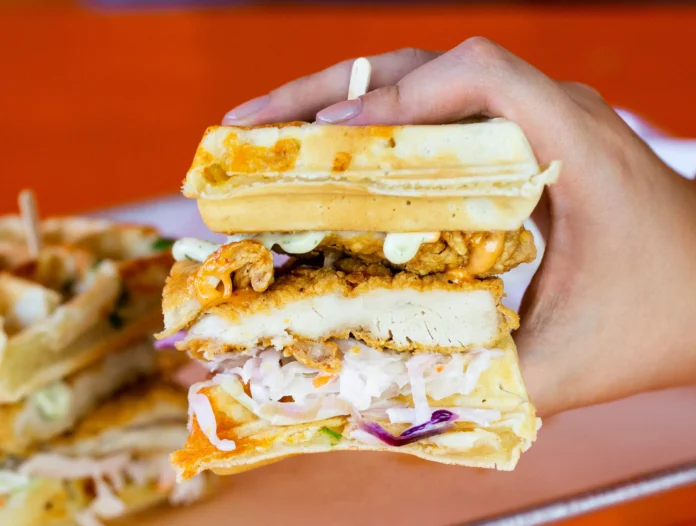
Cluck Clucks, the celebrated Canadian restaurant chain known for its crispy, fried chicken and fluffy golden waffles, recently made its highly anticipated U.S. debut in Sugar Land, Texas, marking a major milestone for the Toronto-based brand as it continues its rapid expansion across North America.
The company said it has earned a cult following in Canada, where it currently operates six locations across the Greater Toronto Area. The brand, which has been featured on numerous Toronto publications, such Blogto, Toronto Life, Taste Toronto, has another three locations set to open in Canada over the next six months and has signed an Area Development for Quebec. The brand said it is well-positioned to capture the growing demand for bold, flavourfull comfort food.
It will alao expand westward with its first Calgary location set to open in the first half of 2025.
“The new Sugar Land location will serve as Cluck Clucks’ flagship in the United States, introducing local diners and prospective partners to its unique twist on chicken and waffles. The brand prides itself on using bold, fresh and innovative flavours, to create a crave-worthy menu that caters to diverse tastes,” it said.
Raza Hashim
“We’re thrilled to bring Cluck Clucks to the U.S. and share our passion for bold flavors and exceptional quality with new audiences,” said Raza Hashim, CEO and President of Cluck Clucks. “The Sugar Land opening is just the beginning of our ambitious North American growth strategy.”
The company is seeking multi-unit franchise operators, first-time franchisees, and seasoned restaurateurs to join its expansion. With a proven track record in Canada, a strong brand identity, and a scalable business model, the brand said it offers an ideal opportunity for entrepreneurs and investors in the thriving food and beverage industry. Partnerships with commercial landlords in prime locations are also key to bringing this innovative concept to new markets.
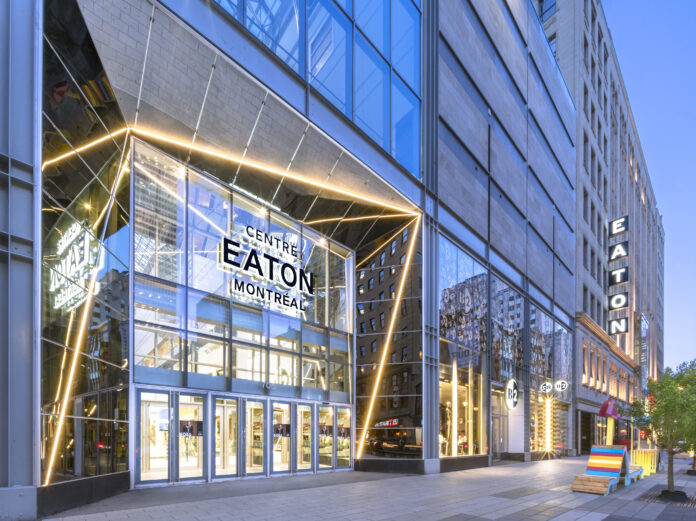
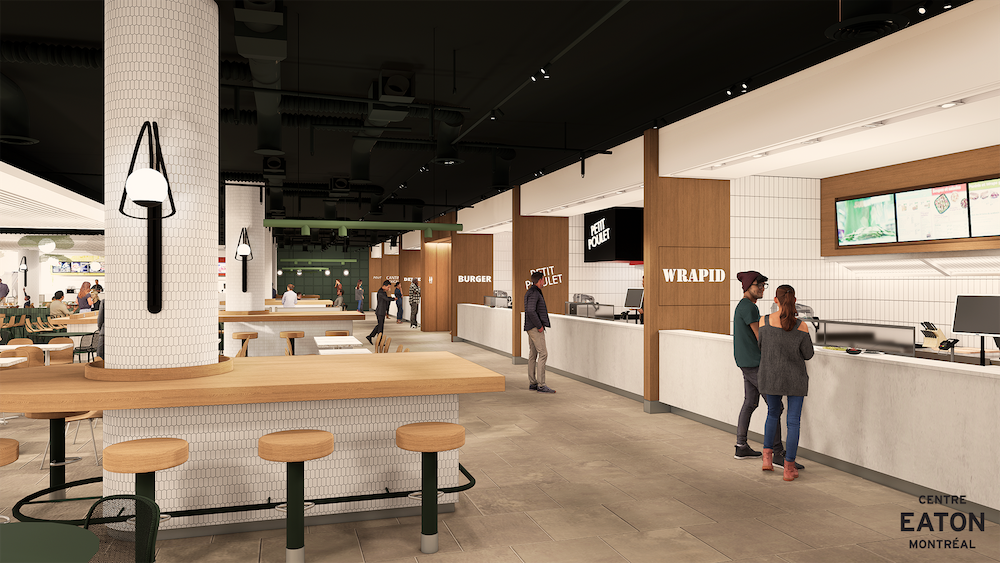
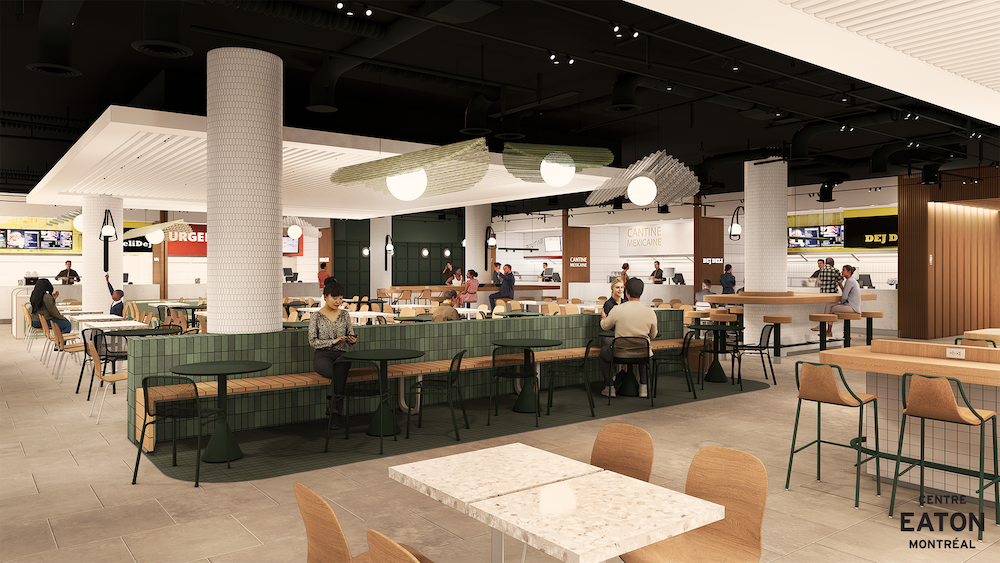
The Montreal Eaton Centre, owned by Ivanhoé Cambridge and centrally located in downtown Montréal, has announced an exciting project to revitalize its food court. This transformation will further enhance the shopping centre’s culinary offerings, complementing its existing gems, such as the Time Out Market and Le Restaurant du 9e. Scheduled for unveiling in Fall 2026, the project reflects Ivanhoé Cambridge’s commitment to innovation and customer experience at its flagship Québec property.
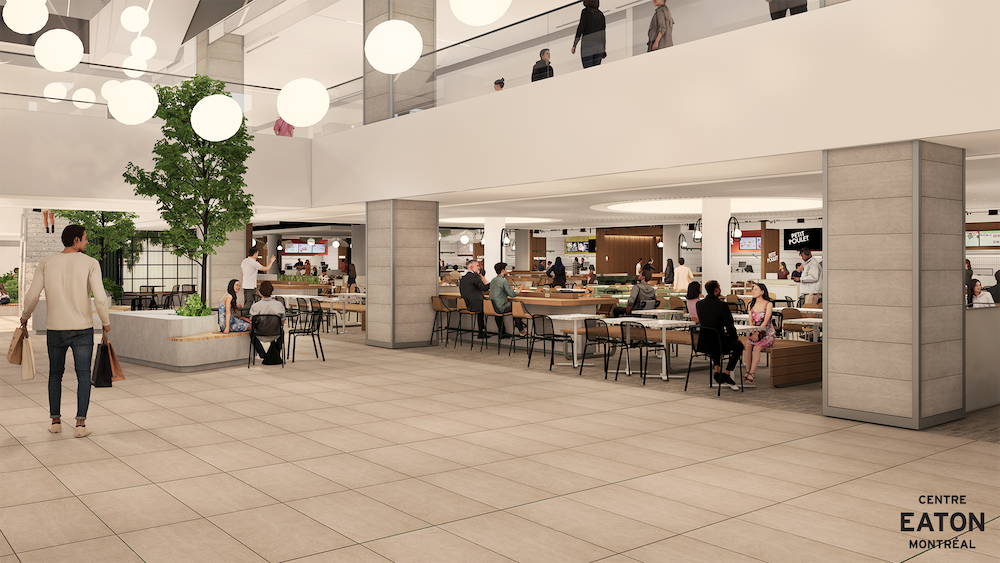
Located on the concourse level of the Centre, the revamped food court will become a focal point for food enthusiasts, offering a curated selection of diverse cuisines. Combining new-to-Canada dining concepts with established favourites, this space is designed to attract visitors from Montréal and beyond, solidifying the Centre Eaton de Montréal as a premier destination for fast casual dining.
Rendering of the mezzanine of the renovated food court at the Montreal Eaton Centre. Image supplied
Elevating the Dining Experience
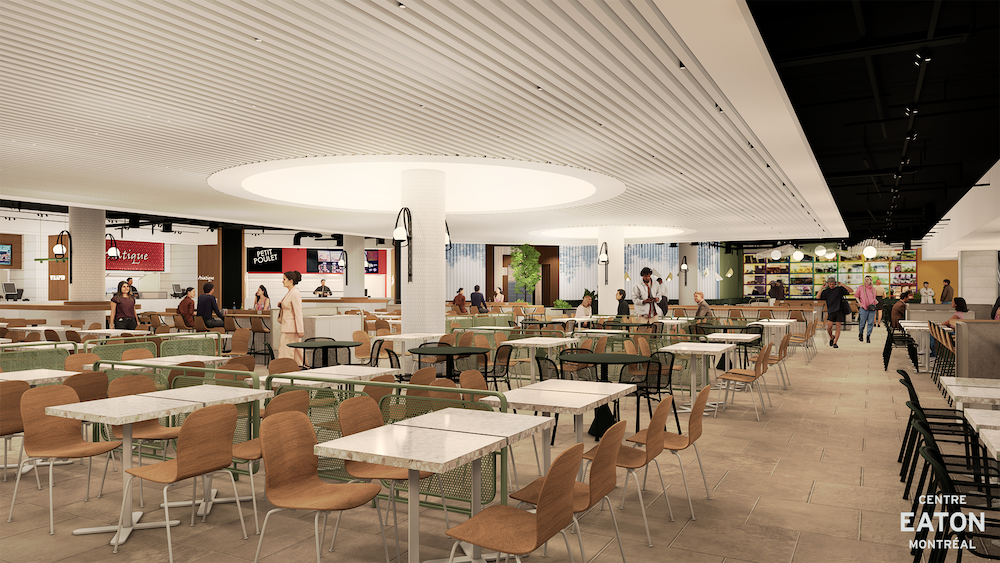
The new food court will be a welcoming space designed to accommodate various dining preferences. Whether visitors seek a quick meal during a shopping break or a place to gather with friends and family, the revamped space will cater to all needs.
“This revitalization is about more than just design—it’s about enhancing the customer journey and reinforcing the Centre Eaton de Montréal’s role as a vibrant hub in the city’s commercial and cultural landscape,” said Annie Houle, Managing Director, Real Estate – Canada at CDPQ/Ivanhoé Cambridge. “Our investment in this project underscores our commitment to creating memorable urban experiences while supporting local and international retailers.”
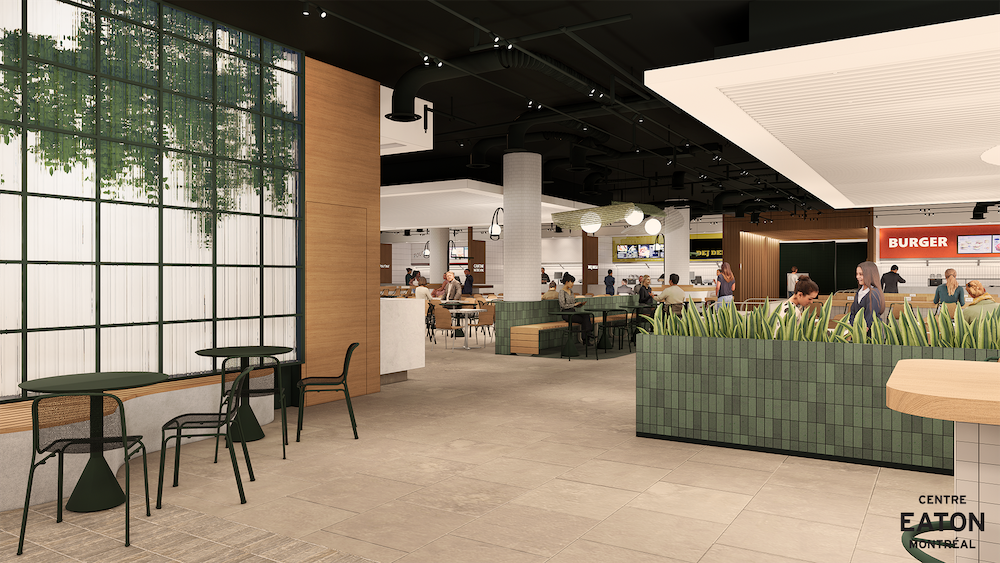
The project promises a blend of innovative and sustainable design. By incorporating elements that reflect Montréal’s unique urban and cultural identity, the food court will set a new standard for dining in commercial centres. From furniture and layout to lighting and decor, every detail is being considered to create an inspiring and comfortable environment.
Rendering of the entrance to the renovated food court at the Montreal Eaton Centre. Image supplied
Sustainable and Inclusive Design
Sustainability is a key focus of the revitalization. From energy-efficient lighting to eco-friendly materials, the design aims to minimize environmental impact while creating a modern and vibrant aesthetic.
Additionally, the layout will encourage social interaction, offering ample seating areas that invite diners to linger and enjoy their surroundings.
The three-phase project rollout ensures minimal disruption to current food court operations. Existing retailers will remain open during renovations, maintaining an uninterrupted experience for visitors while preparing them for the upgraded space’s grand debut.
Rendering of the renovated food court at the Montreal Eaton Centre. Image supplied
JLL’s Role in the Transformation
JLL, a global leader in commercial real estate and investment management, is managing the food court revitalization. The company’s expertise in retail property management and large-scale commercial projects is instrumental in bringing the ambitious vision to life.
“The revitalization of the Centre Eaton de Montréal food court represents a significant step in redefining excellence within downtown Montréal’s commercial real estate landscape,” said Johanne Marcotte, Executive Vice President, Portfolio Management, Retail at JLL. “Our team is proud to play a key role in this transformative project, ensuring its success while maintaining the Centre Eaton de Montréal’s reputation as a premier shopping and dining destination.”
Rendering of the renovated food court at the Montreal Eaton Centre. Image supplied
A Gateway to Montréal’s Underground City
The Centre Eaton de Montréal is also a gateway to the city’s iconic underground network, which connects various buildings and metro stations across downtown. With direct access to McGill station, the Centre draws nearly 30 million visitors annually, making it one of the busiest commercial spaces in Canada.
In addition to its retail offerings, the Centre hosts some of the city’s most sought-after tenants, including Canada’s only Time Out Market, Montréal’s first Uniqlo, and Décathlon. Other major retailers such as Sephora, Nike, and Aritzia contribute to its diverse mix of nearly 125 shops and restaurants, solidifying its status as a key destination for locals and tourists alike.
Rendering of the renovated food court at the Montreal Eaton Centre. Image supplied
Ivanhoé Cambridge’s Continued Investments in Montréal
As part of Ivanhoé Cambridge’s broader strategy to enhance its flagship properties in Québec, the Centre Eaton de Montréal food court revitalization represents a significant investment in the city’s downtown core. This project follows several other initiatives aimed at improving urban spaces, including developments that blend commercial, cultural, and community-oriented features.
The real estate portfolio managed by Ivanhoé Cambridge spans across multiple asset types, including logistics, residential, office, and retail. Backed by CDPQ, the company’s commitment to creating sustainable and innovative spaces reflects its leadership in shaping the future of real estate.
Retail sales were relatively unchanged in November. Sales were down in six out of nine subsectors, led by lower sales at food and beverage retailers (-1.6%). Higher sales at motor vehicle and parts dealers (+2.0%) and gasoline stations and fuel vendors (+0.7%) largely offset declines in the remaining subsectors, reported Statistics Canada on Thursday.
Core retail sales—which exclude gasoline stations and fuel vendors and motor vehicle and parts dealers—were down 1.0% in November, said the federal agency, adding that in volume terms, retail sales fell 0.4% in November.
“Core retail sales—which exclude gasoline stations and fuel vendors and motor vehicle and parts dealers—were down 1.0% in November, said the federal agency, adding that in volume terms, retail sales fell 0.4% in November,” it said.
“Core retail sales decreased 1.0% in November, posting their largest decline in six months. The decrease was led by lower sales at food and beverage retailers (-1.6%), with supermarkets and other grocery retailers (except convenience retailers) (-1.5%) contributing the most to the decline. Lower receipts were also recorded at beer, wine, and liquor retailers (-2.9%), which fell for a second consecutive month.
“Sales were also down at general merchandise retailers (-1.0%) and building material and garden equipment and supplies dealers (-2.1%) in November.”
StatsCan said the largest increase in retail sales in November was observed at motor vehicle and parts dealers (+2.0%), with all four store types within this subsector posting gains. New car dealers (+2.4%) led the increase, with sales rising for the fourth time in five months. Automotive parts, accessories and tire retailers (+0.9%) and other motor vehicle dealers (+0.8%) were also up in November.
Sales at gasoline stations and fuel vendors increased 0.7% in November following six consecutive monthly declines. In volume terms, sales at gasoline stations and fuel vendors decreased 0.8%, added the report.
Statistics Canada said sales decreased in seven provinces in November. The largest provincial decrease in dollar terms was observed in Alberta (-1.1%), followed by New Brunswick (-2.0%).
The largest provincial increase in retail sales in November was observed in Ontario (+0.5%) on higher sales at motor vehicle and parts dealers. In the census metropolitan area of Toronto, retail sales were up 1.1% in the month, it added.
“Retail e-commerce sales in Canada: On a seasonally adjusted basis, retail e-commerce declined 1.2% to $4.1 billion in November, accounting for 6.1% of total retail trade compared with 6.2% in October,” explained the report.
“Statistics Canada is providing an advance estimate of retail sales, which suggests that sales increased 1.6% in December.”
The latest food inflation data, released this week, was nothing short of startling. From November to December, Canada’s food inflation rate plummeted from 2.8% to 0.6% — an unprecedented monthly decline. This marks a historical record, surpassing the previous drop of 1.9% in March 2012. What makes December’s numbers even more surprising is that the food industry typically sees inflationary pressures peak during the winter months, especially in November, December, February, and March. For the busiest month of the year, a decline of -2.2% is highly unusual and largely attributed to the GST Holiday, which began on December 14.
The Impact of the GST Holiday on Inflation
The GST Holiday has, without question, delivered relief for consumers. However, it also highlights the complex relationship between tax policy and inflation metrics. According to Statistics Canada, the Consumer Price Index (CPI) reflects the final prices paid by consumers, including GST, PST, or HST, as well as environmental, liquor, and tobacco taxes where applicable. When taxes like GST are reduced, it directly impacts the CPI. This is exactly what we saw in December, and similar trends are expected in January and February.
The data from Statistics Canada reveals a strong correlation between lower food inflation rates at restaurants and the extent of tax relief provided during the GST Holiday. Provinces offering the most significant reductions, such as Nova Scotia, Newfoundland and Labrador, and Prince Edward Island—where GST was cut by 15%—experienced the steepest declines in restaurant inflation at -3.9%, -4.0%, and -3.0%, respectively. Ontario, with a tax reduction of 13%, also saw a notable drop at -3.0%. These numbers are remarkable.
Limited Impacts in Provinces with Lower GST Reductions
In contrast, provinces like Alberta, Saskatchewan, and Manitoba, where GST was only reduced by 5%, experienced negligible impacts. Alberta’s restaurant inflation decline was a mere -0.2%. This disparity underscores the direct influence of tax reductions on inflation data. However, it also exposes how these policies can artificially suppress inflation metrics, masking underlying cost dynamics. Base menu prices likely remained unchanged or subtly increased, even as tax-inclusive prices dropped. This “tax illusion” gives the impression of reduced costs without reflecting the actual market conditions.
Statistics Canada’s report is clear: Canadians paid less for food in December. Month-over-month inflation rates fell by -0.3% in retail and -4.5% in restaurants. But this does not mean food became genuinely cheaper. Quite the opposite. The GST Holiday’s impact has created a temporary distortion, masking the true cost trajectory of food and leaving room for “opportunity pricing.”
Business Pricing Strategies During the GST Holiday
Some grocers and restaurant operators may have leveraged the tax break to increase their base prices, confident that consumers would focus on lower final bills rather than subtle price hikes. This phenomenon highlights a key concern with temporary fiscal measures: they can obscure real price dynamics and inadvertently encourage strategic pricing adjustments that offset intended benefits.
What December’s data truly reflects is not a straightforward pass-through of tax relief but a complex interplay between reduced taxes and business pricing strategies. This serves as a cautionary tale about the unintended consequences of short-term fiscal policies. While the GST Holiday may have offered consumers some relief, it also underscores the risks of relying on temporary measures to address long-term affordability challenges in the food sector. Real solutions require structural, sustainable approaches that address both inflationary pressures and market dynamics comprehensively.
Spring Food Price Hikes Expected
Looking ahead, consumers should brace themselves for major price hikes in the spring and beyond, as predicted in our annual Canada’s Food Price Report 2025. These increases are expected to reflect ongoing inflationary pressures, supply chain challenges, and market adjustments following the expiration of temporary measures like the GST Holiday.
Hospitality-driven speciality coffee company Nemesis is taking its pursuit of ‘coffee creating culture’ to the city of Surrey, with the highly anticipated opening of its fourth location. Debuting this February at the new Surrey Pavilion, in the heart of City Centre, Nemesis Pavilion will feature all the signature hallmarks of its brand — inviting space, dynamic music, excellent coffee, pastries, and elevated brunch, said the company in a news release.
Jess Reno
“Surrey is one of the country’s fastest growing cities and City Centre is at the core of its growth — a community surrounded by families, campuses, sports facilities, parks, public art, and more,” said Jess Reno, who opened his first Nemesis in Vancouver’s Gastown in 2017. “Similar to our other locations, we wanted to place our next Nemesis in a neighbourhood where arts, culture, and education are celebrated. We’re beyond excited to open our doors at the Surrey Pavilion next month and work with Marcon to create this new cultural hub.
“We collaborated with the Marcon interior design team to create a space that is both thoughtful and refined. Inspired by modern architecture, the interior emphasizes subtle details — highlighting the warmth of wood, steel, and glass — while intentional use of light and sound creates a seamless harmony with our style of service and hospitality.
“By design, Nemesis Pavilion will be equipped with a full pastry kitchen. This will allow us to create fresh pastries throughout the day, including donuts, which will be exclusive to this new location initially.”
The 2,600 square foot space will feature 50 seats, with an expansive patio expected to open during the warmer months. As with each Nemesis location, Nemesis Pavilion’s design is distinct and unique, said the brand.
“The service team, led by senior operations manager Albert Tang, includes operations manager Karl Broadway and director of coffee Nathaniel Fried. Guests will continue to enjoy directly-traded, thought-provoking coffees from Nemesis’s partners at origin — from drips to pour overs,” it said.
“The kitchen team features executive chef Mielye Mitchell and executive sous chef Lina Serrano — two talented individuals who have been leading the culinary program at Nemesis since the launch of their GNW location. While Nemesis Pavilion will serve a similar brunch and Dope Bakehouse menu as its sister locations, it will also introduce something new – donuts – focused on nostalgic flavours and re-interpreting the classics.”
Cognizant, in collaboration with Oxford Economics, has unveiled new insights into how artificial intelligence (AI) is set to revolutionize the consumer purchasing journey by 2030 and drive significant economic impact.
The study, New Minds, New Markets shows that as income and purchasing power increases among 18 to 44-year-old AI enthusiasts, this demographic will command an estimated $4.4 trillion of AI-influenced consumer spending in the U.S. by 2030. In the U.K., this spending projection is estimated at $690 billion, in Australia it’s at $669 billion, and in Germany it’s at $539 billion.
The study also predicts that U.S. consumers who embrace AI could drive nearly half (46%) of spending by 2030. In Australia, this projection rises to 55% over the same period. In Germany it’s estimated at 46% and in the U.K., it’s at 39%.
Ravi Kumar S.
“As AI-influenced buying evolves, businesses must navigate mixed consumer attitudes towards AI,” said Ravi Kumar S. CEO of Cognizant. “Enterprises are balancing the demand for convenience with the need for control and trust. Understanding these attitudes is crucial for developing AI solutions that not only enhance convenience but build confidence in the full potential of how AI can reimagine the customer experience and unlock tremendous value.”
Key findings from the study:
Consumers are most comfortable using AI in the discovery phase of making a purchase decision (the Learn phase.) Across all consumer age groups, 47% cite they are comfortable using AI to help choose products and services. In this phase, AI-powered search tools, personalized recommendations and virtual assistants can be essential tools in the discovery and evaluation stages of consumer journeys. Technology companies are already building these capabilities into their consumer-facing toolsets, making it easier for consumers to use AI to gather information and shortlist options.
During the decision-making phase (the Buy phase), consumers harbor more hesitation. In this phase, consumers share concerns around security and trust when it comes to using. The study showed 75% of consumers are unlikely to allow AI to automatically reorder or pay for high value items without their direct authorization. Additionally, only 16% of those who are 55 years and older are comfortable using AI during this phase (and only 33% are comfortable among the 18–44-year-old group.)
Comfort levels begin to rebound in the post-sale engagement phase (the Use phase.) In this phase, consumers benefit from AI’s ability to help them tap into time savings and targeted services that add value to their after-purchase experience. Across all consumers, nearly a third (28%) said they are comfortable with AI reordering low-priced items. For example, smart HVAC systems could intelligently reorder air filters from the manufacturer directly, reducing the onus on consumers to identify the need for replacements themselves or reliance on local retailers to deliver supplies in a timely manner.
Leon’s Furniture Limited has announced the opening of the brand-new corporate headquarters for The Brick along with a leading-edge Shared Services Distribution Centre that has a combined total footprint of 500,000 square feet in Edmonton.
This represents one of the more significant single property investments in the company’s 100-year history and sets a solid foundation for continued growth and improved service levels for the next generation. The building will also serve as the new head office for Trans Global Insurance. The combined facility will employ more than 400 Team Members in Edmonton, said the company in a news release.
“Our new shared services Distribution Centre represents another important milestone in our ongoing efforts to generate significant efficiencies throughout our network” said Mike Walsh, President and Chief Executive Officer of the LFL Group. “The new DC will enhance product availability and shipping times, throughout the Prairies and Territories.
“Our new Corporate Headquarters for both The Brick and Trans Global Insurance provides a modern and innovative space to promote excellence.”
Darci Walker
“This new building marks a monumental step forward for The Brick as it demonstrates our commitment to growth. As we embark on this new chapter, we’re excited to create an inspiring environment that supports our team’s dedication to delivering exceptional products and services to our valued customers.” said Darci Walker, President of The Brick.
The combined facility was built under a 50/50 joint venture partnership with Qualico Properties, a leading real estate developer and was built on 28 acres of purchased land in the NW quadrant of Edmonton.
The Brick has been in business since 1971.
Leon’s Furniture Limited is the largest retailer of furniture, appliances, and electronics in Canada. Its retail banners include Leon’s, The Brick, The Brick Mattress Store, and The Brick Outlet. The addition of The Brick’s Midnorthern Appliance banner, alongside Leon’s Appliance Canada banner, makes the company the country’s largest commercial retailer of appliances to builders, developers, hotels, and property management companies. LFL has over 300 retail stores from coast to coast.
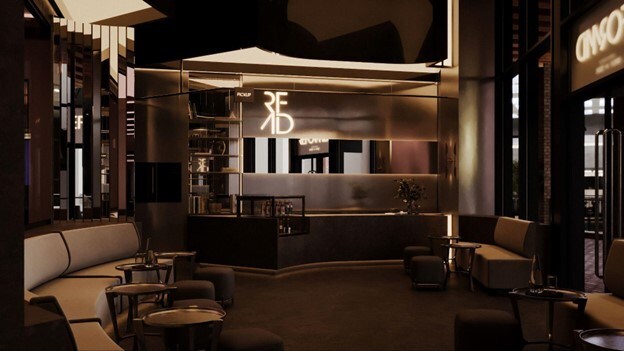
REFORMD Rendering by Ste Marie Studio (CNW Group/Sweat and Tonic)
Sweat and Tonic, a Toronto boutique fitness and wellness destination, has announced the launch of REFORMD — what it calls a groundbreaking new brand and concept studio set to open in spring 2025.
Nestled within The Well and located just steps away from Sweat and Tonic’s second location that opened in December 2023, REFORMD is set to make history as the world’s highest-capacity Lagree method studio, said the company in a news release.
“This announcement comes less than a year after announcing plans to open their third location in Toronto’s prestigious Yorkville neighbourhood. Renowned for their state-of-the-art, immersive yoga, Pilates, HIIT and indoor cycling classes, and 360-degree wellness and recovery hub, Sweat and Tonic’s REFORMD will specialize in Lagree Method workout classes delivered by world-class Lagree-certified instructors, all carefully crafted and delivered through their signature high-energy experience and expert programming,” it said.
“We have the privilege of welcoming over 3,000 guests in attendance per day, in 475 classes weekly across our two locations and Tonic Spa, and we’re so grateful for the overwhelming support since opening our second location at The Well,” said David Ingram, Founder of Sweat and Tonic.
“Every day, we see first-hand what’s important to our guests – highest quality fitness classes, comprehensive wellness and recovery options, elevated amenities, connecting with a strong and dedicated community, and friction-free access to it all. With the demand we’ve seen since opening at The Well, there was an opportunity to further elevate our offerings and support our guests in their wellness journeys. REFORMD is the next exciting step in our mission to bring the best of boutique fitness and wellness to the community. Not only are we adding the Lagree Method – one of the best strength-building workouts in the world – to our offerings, we’re pushing the boundaries and elevating the guest experience above and beyond what you’ll find anywhere else in this city.”
REFORMD Rendering by Ste Marie Studio (CNW Group/Sweat and Tonic)
The company said its 6,000 square-foot location will be equipped with 30 Mega Pro Megaformer machines, featuring immersive custom-programmed chromatherapy lighting and AV, floor-to-ceiling mirrors, and an elevated instructor Megaformer platform providing a clear line of sight to optimize the workout experience. The space will also include a welcome lounge, education room with two Megaformer machines, a grab and go fridge and Tonic Bar ordering kiosks for pre- and post-class fuel, private changerooms and showers, as well as heated flooring throughout the changeroom and Megaformer studio.
“Lagree is not Pilates, and the Megaformer is not a reformer. Since its inception over 25 years ago, the Lagree Method stands in a category of its own and has continuously evolved, earning its reputation as one of the world’s most effective and transformative workouts,” it said.
“Founded on five components of physical fitness – endurance, cardiovascular fitness, body composition, flexibility, and strength – Lagree is a patented high-intensity, low-impact exercise method that tightens, tones, and deeply activates slow-twitch muscle fibers. The method integrates body-building principles and focuses on slow, controlled movements and progressive load to build strength. The Mega Pro is the 8th and the newest of the evolving Megaformer machine series, featuring a moving carriage and adaptive platform lift to activate muscles and allow for easier stabilization of joints to ensure less impact and inflammation in connective tissues during and post workout.”
REFORMD Rendering by Ste Marie Studio (CNW Group/Sweat and Tonic)
“Lagree Fitness has always pushed the limits of the fitness industry,” said Sebastien Lagree, inventor and Founder of Lagree Fitness. “With over 180 patents and 600 Lagree Method studios worldwide, evolution and innovation has always driven my vision for the brand. At our core, it’s always been our mission to help others reach new heights in their health and fitness, and we do that by pushing the industry out of their comfort zone. Knowing that Sweat and Tonic, a bold brand with innovation and technology at their forefront, is bringing the largest-capacity Lagree Studio in the world and continuing to raise the bar for the fitness and wellness industry in Toronto and beyond, is very energizing. Experimenting, pushing, and evolving – this is what the future of fitness is all about.”
Retail Insider is streamlining its Canadian retail news from around the web to include a handful of top news stories that can be viewed quickly during the day. Here are the top stories from the past 48 hours.