Home Blog Page 444

Costco Opens New Rimouski Location, Boosting Local Economy

Costco Rimouski. Image: Costco

Costco Wholesale opened its newest Quebec location on Tuesday, bringing the popular members-only retailer to Rimouski. The new warehouse, located at 425 Boulevard Arthur-Buies Est at the intersection of Montée Industrielle et Commerciale, marks Costco’s 24th store in the province.

The opening represents a major milestone for the region, providing residents with a closer option for bulk shopping and exclusive offers. Previously, many local shoppers travelled to Lévis to visit the nearest Costco. The launch also brings significant economic benefits, creating more than 200 permanent jobs and driving increased retail activity in the area.

“With the opening of this new warehouse, we can serve all of our members in the Rimouski and surrounding area, many of whom previously travelled to Lévis, Quebec, to shop,” said Gino Dorico, Senior Vice-President and Country Manager, Costco Wholesale Canada. “We are very proud to share this new location with our valued existing and new members and business members in the local community and throughout the area.”

Rimouski Mayor Guy Caron noted that the opening has been highly anticipated by local residents. “The people of Rimouski have been incredibly excited about the new, full-service Costco in Rimouski,” he said. “The new warehouse has created valuable employment opportunities for the region and will strengthen the local economy by offering a wider selection of goods and services and the ultimate in convenience for our residents and visitors.”

Costco Rimouski. Image: Costco

Inside the New Rimouski Warehouse

The new facility spans more than 150,000 square feet and has been designed to provide a comprehensive shopping experience for members. It features an on-site bakery, a fresh meat department, an expansive produce section and a rotisserie chicken counter. Additional services include an optical centre and a tire centre with five service bays. Shoppers will also find a large food court, a gas station with 18 fueling stations and a propane refill service.

To accommodate demand, the warehouse includes 16 checkout registers, more than 1,000 shopping carts and over 700 parking spaces. Like all Costco locations, the Rimouski warehouse carries a curated selection of more than 3,800 products, with a focus on quality and value for both individual shoppers and local businesses.

Costco is celebrating the opening with special offers on popular products. Deals include a discount of $400 on an LG 86-inch 4K UHD television, $100 off the Shark Flexstyle multi-styler and hairdryer, $50 off a Foodsaver vacuum sealer kit and $7 off Plaisirs Gastronomiques confit duck legs. In addition to these promotions, the Rimouski location, like other Quebec warehouses, offers a full range of alcoholic beverages, including beer, wine, champagne and ready-to-drink cocktails.
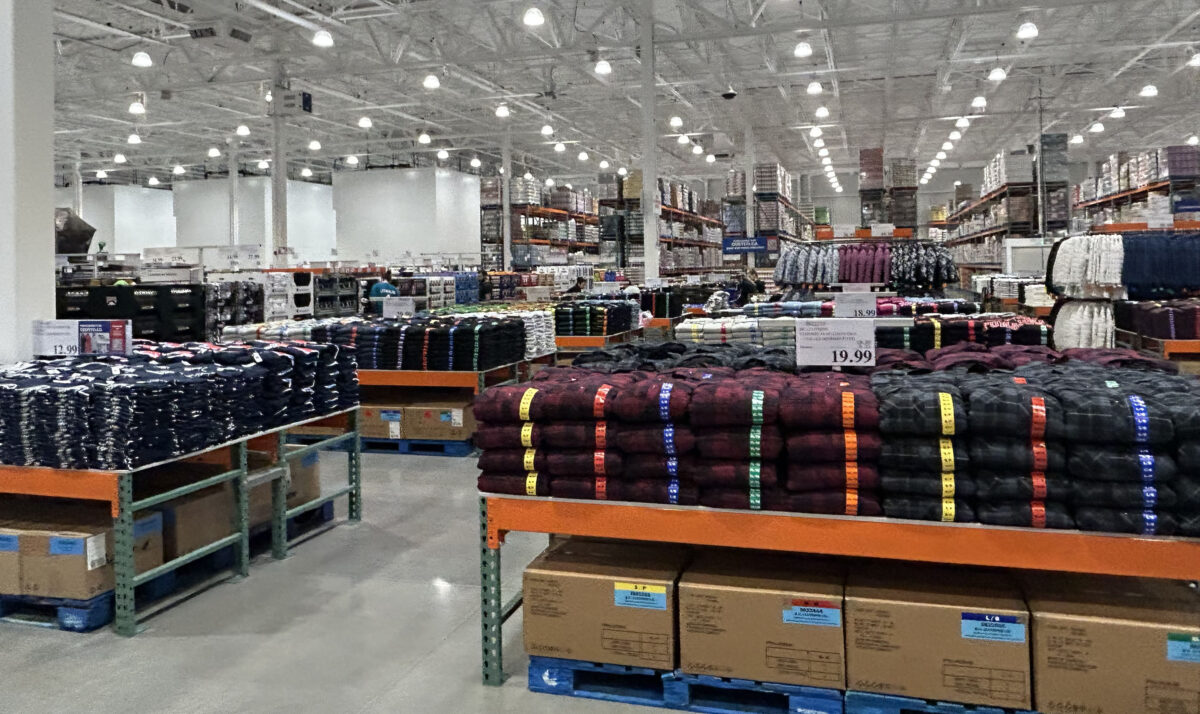
Costco Rimouski. Image: Costco

Membership and Benefits

The Rimouski warehouse operates on Costco’s membership model. The Gold Star Membership costs $65 per year and includes a free household card, providing access to all Costco locations worldwide. For those looking for additional perks, the Executive Membership is available at $130 per year. This option includes a 2% annual reward on qualifying purchases, up to $1,250, and provides exclusive offers as well as discounts on services such as travel and insurance.

Canadian Costco members also have access to the retailer’s e-commerce platform at Costco.ca, which offers thousands of additional products and same-day grocery delivery in many markets.

Costco Rimouski. Image: Costco

Costco’s Strong Presence in Quebec

The new Rimouski store further solidifies Costco’s expansion in Quebec and across Canada. The company now operates 110 warehouses nationwide, including 24 in Quebec. Costco first entered the Canadian market in 1985 with a store in Burnaby, British Columbia, followed by its first Quebec location in Saint-Laurent in 1986.

Today, Costco employs over 49,000 people in Canada, with nearly 10,000 of those positions based in Quebec. The company’s Canadian head office is located in Ottawa. Globally, Costco operates 909 warehouses and reported revenue of USD$249.6 billion for the fiscal year ending September 3, 2024.


More from Retail Insider:

Canadian Retail News From Around The Web For August 5, 2025

Canadian Retail News From Around The Web

News at a Glance

Retail Insider is streamlining its Canadian retail news from around the web to include a handful of top news stories that can be viewed quickly during the day. Here are the top stories from the past several days.

Hilary Weston, former fashion business leader and Ontario lieutenant-governor, dead at 83 (CBC)

Canada Goose’s summer apparel helps shift company from winter-brand perception (CBC)

Canadian hockey brand pulls product line that faced criticism for demeaning women (Globe & Mail)

Beef costs more than ever, but Canadians won’t let that ruin barbecue season (CBC)

What could be in store for Edmonton’s vacant Hudson’s Bay spaces (CTV)

Smaller alcohol producers, retailers urge Doug Ford to say no to store-brand booze sales (CBC)

New Adonis Mediterranean Market set to open in London, Ont. on August 14 (Grocery Business)

5 homegrown fashion designers to celebrate on B.C. Day (Vancouver Sun)

How these Toronto bike shop owners tracked down their stolen bicycles (MSN/CBC)

Toronto shop known for bad reviews closes after over 30 years in St. Lawrence Market (BlogTO)

Crime gang? Arrest warrants issued for trio wanted in Windsor retail theft spree (MSN)

Hudson’s Bay fires back at lender seeking termination of Ruby Liu deal: court docs (CBC)

‘Keep your money in Canada’: Duty-free shop owner urges travellers to buy local (CTV)

Trump tariffs live updates: Canada struck with 35% tariffs, Trump floats higher blanket rates (Yahoo)

Aritzia Q1 revenue climbs 33% (Fashion Network)

Edmonton City Centre Mall ordered into receivership (MSN)

Loblaw opens 4 discount stores across 3 provinces (Fresh Plaza)

CHARLEBOIS: Everyone’s suddenly a supply management expert but few understand it (Yahoo)

New Maxi store opens in downtown Montreal (Grocery Business)

‘Not an easy decision’: The Beer Store is closing 10 more stores in Ontario, including 5 in the GTA (CP24)

ARI opens new Spectrum boutique at Québec City Jean Lesage International Airport (Global Travel Retail)

Toronto BIA warns business owners of ‘point of sale’ scam after thousands of dollars in thefts (CBC)

B.C.’s Meiga Supermarket to close its doors this summer (Canadian Grocer)

‘It’s getting out of hand!’ Jewellery store owners speak out after a rash of recent break-ins (CityNews Toronto)

Roadwork is costing Montague businesses some customers, store owners say (CBC)

Newmarket Costco set to open in August (Grocery Business)

Apple Reports Record $94 Billion in Q3 2025 Revenue, Driven by iPhone, Mac, and Services Growth

iPadOS 26 takes a huge leap forward and pushes the unique capabilities and versatility of iPad even further. Photo: Apple.

Apple, the American technology giant behind the global Apple Store network, reported fiscal 2025 third-quarter results that topped Wall Street expectations, delivering record June-quarter revenue. The company posted revenue of $94.0 billion for the three months ended June 28, 2025, up 10% year-over-year, with diluted earnings per share increasing 12% to $1.57.

Strong Growth Across Product Lines

CEO Tim Cook credited the results to strong momentum across Apple’s flagship product categories. “Today Apple is proud to report a June quarter revenue record with double-digit growth in iPhone, Mac and Services and growth around the world, in every geographic segment,” Cook said.

By product category, iPhone revenue climbed to $44.6 billion (up from $39.3 billion in Q3 2024), Mac revenue rose to $8.0 billion (up from $7.0 billion), and Services surged to $27.4 billion (up from $24.2 billion). iPad sales moderated slightly at $6.6 billion, down from $7.2 billion a year earlier.

Regional Performance

Sales grew across all geographic segments:

  • Americas: $41.2 billion (up from $37.7 billion)
  • Europe: $24.0 billion (up from $21.9 billion)
  • Greater China: $15.4 billion (up from $14.7 billion)
  • Japan: $5.8 billion (up from $5.1 billion)
  • Rest of Asia Pacific: $7.7 billion (up from $6.4 billion)

This global expansion reflects Apple’s ability to maintain strong demand across mature and emerging markets.

Profitability and Margins

Apple reported net income of $23.4 billion, up from $21.4 billion in the prior-year quarter. Gross margin rose to $43.7 billion, compared to $39.7 billion in Q3 2024. Operating income was $28.2 billion, up from $25.4 billion.

CFO Kevan Parekh highlighted the financial discipline underpinning results: “We are very pleased with our record business performance for the June quarter, which generated EPS growth of 12 percent. Our installed base of active devices also reached a new all-time high across all product categories and geographic segments, thanks to our very high levels of customer satisfaction and loyalty.”

Dividend Declaration

Apple’s board of directors declared a cash dividend of $0.26 per share, payable on August 14, 2025 to shareholders of record as of August 11, 2025.

Looking Ahead

At WWDC25, Apple unveiled a redesigned software experience across its platforms and introduced expanded Apple Intelligence features, which are expected to further integrate AI into its product ecosystem.

Lisa Gozlan Opens 5th Store at Toronto’s Yorkdale

Lisa Gozlan store at Toronto's Yorkdale Shopping Centre. Image supplied

Toronto-based Lisa Gozlan Jewellery has officially unveiled its newest location at the Yorkdale Shopping Centre, marking an important milestone for the rapidly growing Canadian brand. The 435-square-foot boutique, strategically positioned among luxury and lifestyle retailers, offers customers the opportunity to experience Lisa Gozlan’s full range of stylish jewelry pieces firsthand.

Yorkdale was a natural choice for Lisa Gozlan Jewellery, renowned for its high productivity and curated collection of luxury brands. Lisa Gozlan noted the strategic importance of the location: “Yorkdale has always been a dream location for us. As Canada’s premier shopping destination, it brings together the best in fashion, luxury, and lifestyle all under one roof. Opening at Yorkdale allows us to be part of that world-class retail experience.”

The new store aligns with the brand’s ambitious growth strategy, elevating its visual identity and positioning Lisa Gozlan as more than a playful jewelry label. “This store represents a significant step forward in our brand evolution,” Gozlan added. “While we’re known for our iconic brass bracelets, we’re also showcasing elevated offerings in 10k and 14k gold and sterling silver.”

Lisa Gozlan store at Toronto’s Yorkdale Shopping Centre. Image supplied

Modern Store Concept and Elegant Design

Lisa Gozlan collaborated again with acclaimed designer Clarisa Llaneza, known for her previous work on the brand’s Square One store in Mississauga. The Yorkdale store blends modern elegance with interactive elements. “We incorporated layers of textures, from natural marbles to soft plaster finishes, to reflect my personal aesthetic and the brand’s identity,” Gozlan explained. Modular plinth displays and a signature brick exterior add unique character to the boutique.

A standout feature is the Barrisol lighting, transformed into an impressive chandelier made possible by Yorkdale’s soaring ceilings. “We took full advantage of the height to make the lighting a true focal point,” Gozlan said, highlighting the distinctive appeal of this flagship location.

Lisa and Ryan Gozlan

Visitors to the Yorkdale store will find Lisa Gozlan’s full collection, from the viral brass Happy Face bracelets that propelled the brand to popularity during the pandemic, to premium jewelry crafted in gold vermeil, sterling silver, and solid gold. “Our goal is to keep the experience inclusive and accessible, no matter the location,” Gozlan affirmed.

The brand remains committed to innovation, regularly releasing fresh designs that reflect current market trends and customer preferences. Gozlan notes an emerging shift towards bold, sculptural jewelry pieces, personalized items, and mixed-metal designs, all of which influence their evolving product lines.

Lisa Gozlan’s ideal customer mirrors the sophisticated, fashion-conscious visitors Yorkdale attracts. “Our customer is fashion-forward, playful, and expressive—someone who loves styling jewelry as part of their everyday look,” Gozlan said. The synergy between the brand’s clientele and Yorkdale’s demographic ensures a perfect alignment, strengthening customer engagement and brand loyalty.

Lisa Gozlan store at Toronto’s Yorkdale Shopping Centre. Image supplied

Growth and International Ambitions

Lisa Gozlan’s expansion to Yorkdale is part of a broader strategy to deepen its Canadian presence. The brand’s retail journey began in 2021 with its first physical store at 87 Cumberland Street in Toronto’s Yorkville neighbourhood. Expansion continued with a location in Vancouver’s stylish Kitsilano neighbourhood, opened in late November 2024 at 2194 W 4th Avenue, followed shortly after by a store at Square One Shopping Centre in Mississauga in December 2024. Lisa Gozlan also maintains an international presence with a store in Palm Beach, Florida, opened in 2022.

Looking ahead, Lisa Gozlan plans further international expansion, including confirmed pop-ups in major U.S. cities and an ongoing presence at Selfridges in London.

“We’re always thinking about where our customer is and how we can meet them there,” Gozlan shared. “Right now, our focus is on deepening our connection with the Canadian market. But we’re absolutely broadening our horizons internationally.”

Founded in 2019 by Lisa and Ryan Gozlan, Lisa Gozlan Jewellery blends contemporary style with accessible luxury. Lisa’s background in fashion and Ryan’s fifth-generation jewelry expertise have shaped a brand celebrated for its playful designs and high-quality craftsmanship. 

More from Retail Insider:

Canada’s Agri-Food Sector Hit by 35% U.S. Tariff After Ottawa Stalls

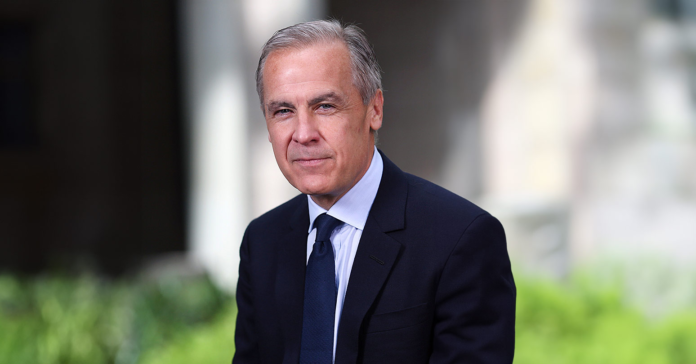
Mark Carney. Image: Ivey School of Business

As August 1 quietly slipped by, so did Canada’s last, best chance to avoid a sharp escalation in trade tensions with its most important economic partner. Unlike Mexico, which secured a temporary reprieve, Canada is now fully exposed to a 35% tariff imposed by the United States on a range of non-USMCA-covered goods. For the Canadian agri-food sector—and for consumers from coast to coast—this is less a policy adjustment and more a gut punch.

Prime Minister Mark Carney—the seasoned economist who campaigned on his negotiating acumen and international gravitas, is failing. Instead of delivering results, Parliament was sent home for the summer, and Ottawa’s silence echoed through what is arguably Canada’s most consequential trade dispute in a generation.

To be clear, not all food exports are affected. Products covered under USMCA quotas—dairy, poultry, and some meat—remain exempt. But for producers of grains, oilseeds, processed foods, and niche value-added products, this 35% tariff is a major blow.

Margins in agri-food are notoriously thin. For many exporters, the choice is binary: absorb the cost, or exit the U.S. market. Either path reduces revenues, heightens the risk of layoffs, and weakens Canada’s competitive position. With the U.S. absorbing over half of our agri-food exports annually, this is no minor hiccup—it’s a strategic failure.

And this is not an isolated case. Canadian farmers are already facing stiff tariffs in other key markets. India continues to impose duties on Canadian lentils and pulses, while China maintains restrictions and tariffs on pork, canola, and lobster. For a trading nation, these accumulating barriers are suffocating—yet Ottawa seems content to manage the damage rather than prevent it.

There may be isolated benefits. As seen in the cocoa and chocolate supply chain, tariffs can shift some production northward, potentially boosting domestic processing. But these are exceptions. The broader story is one of uncertainty, rising input costs, and declining production volumes.

And even for goods that never cross the border, Canadian consumers are unlikely to be spared. Processors losing export markets may attempt to recover margins domestically, pushing prices higher—particularly in small markets or for export-facing SKUs like baking products, specialty grains, and packaged goods.

Tariffs also wreak havoc upstream. Input sourcing, contract logistics, and production planning are all disrupted. Expect more volatility in prices, sporadic availability of staple ingredients, and even stockouts for certain SKUs.

Compounding this are retaliatory tariffs and ripple effects through global supply chains. Many Canadian food manufacturers depend on imported inputs—machinery, additives, packaging—that are themselves caught in the crossfire. Inflationary pressures will persist, even if headline food inflation slows.

What’s most alarming isn’t the tariff itself—but the absence of a coordinated Canadian response. Washington gave plenty of notice. And yet, no contingency plan emerged, no strategy was communicated, and most telling of all, no serious negotiation took place.

Supporters of Bill C-202 may take solace in the temporary shielding of supply-managed sectors. But that’s little comfort for the rest of the agri-food economy—and let’s not pretend supply management is immune to geopolitical pushback. It is, at best, a partial solution in an increasingly complex trade environment.

Canada once led on global trade diplomacy. Today, we are reactive, overly reliant on past frameworks, and slow to acknowledge that trade has become a geopolitical chessboard, not a rules-based playground.

The agri-food sector—which accounts for nearly 1 in 9 jobs and close to 7% of Canada’s GDP—deserves more than summer recesses and bureaucratic platitudes. It requires decisive leadership, policy agility, and a proactive strategy to preserve market access and stabilize domestic food systems.

If Prime Minister Carney hopes to reset the narrative this fall, he’ll need to do far more than issue statements. Targeted tariff relief, short-term support for exposed sectors, and a clear diplomatic pathway with Washington must be top priorities. Without this, more markets will close, more family farms will shutter, and more grocery bills will climb.

More from Retail Insider:

Hike in U.S. tariffs will harm small businesses in Canada

US President Donald Trump. Photo: Slate.com

The hike in U.S. tariffs to 35% will harm small businesses on both sides of the border and the fentanyl rationale is even more ridiculous than the decision itself, says the Canadian Federation of Independent Business (CFIB).

“While it is good news that most Canadian exports will remain tariff free due to the CUSMA/USMCA exemption, the uncertainty alone will continue to take a toll on Canada’s small businesses,” said Dan Kelly, President of the CFIB.

Dan Kelly

“CFIB supports the view that no deal is better than a bad deal, but the lack of resolution means small firms will not be able to plan for the future or continue to put off difficult choices. Many businesses have been holding off layoffs or downsizing, hoping for a deal to be reached. Without immediate support, many small businesses will be forced to scale back operations.

“CFIB is calling on government to release the billions that have been collected by Canada’s retaliatory tariffs, as promised by the Prime Minister during the election campaign. We’ve suggested several options to do so, including setting the small business tax rate temporarily at zero or a tariff rebate designed on earlier models.

“The worst outcome for Canada is a bad deal. But the second worst outcome is ongoing uncertainty over Canada-U.S. trade. This is what small business owners now face.”

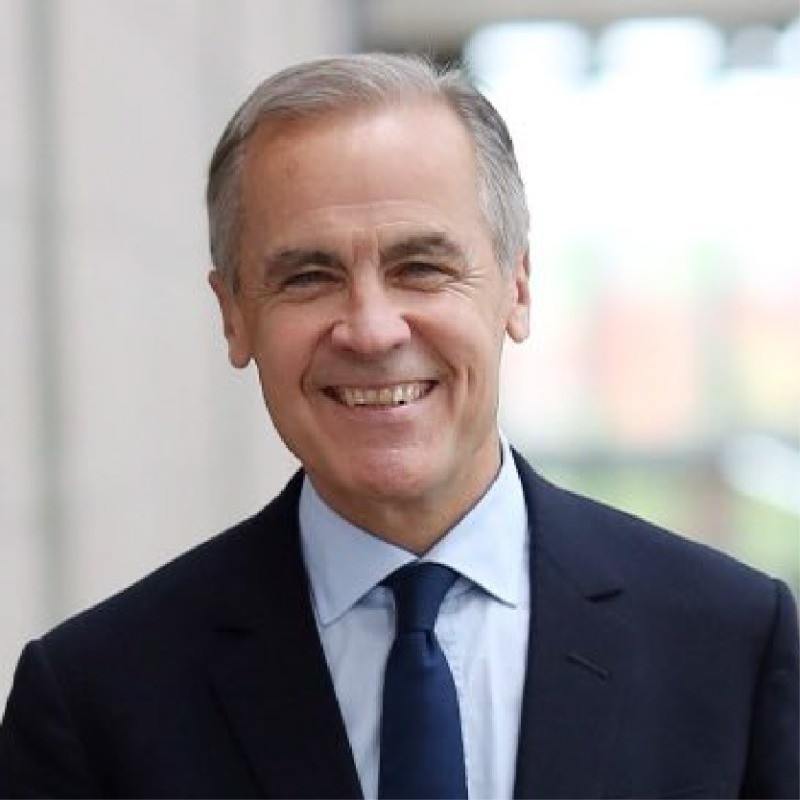
Mark Carney
Mark Carney

In a statement released Friday, Canadian Prime Minister Mark Carney said: “President Trump has announced that the United States will increase its tariffs to 35% on those Canadian exports that are not covered under the Canada-United States-Mexico Agreement, or CUSMA. While the Canadian government is disappointed by this action, we remain committed to CUSMA, which is the world’s second-largest free trade agreement by trading volume.

“The U.S. application of CUSMA means that the U.S. average tariff rate on Canadian goods remains one of its lowest for all of its trading partners. Other sectors of our economy – including lumber, steel, aluminum, and automobiles – are, however, heavily impacted by U.S. duties and tariffs. For such sectors, the Canadian government will act to protect Canadian jobs, invest in our industrial competitiveness, buy Canadian, and diversify our export markets.

“The United States has justified its most recent trade action on the basis of the cross-border flow of fentanyl, despite the fact that Canada accounts for only 1% of U.S. fentanyl imports and has been working intensively to further reduce these volumes. Canada’s government is making historic investments in border security to arrest drug traffickers, take down transnational gangs, and end migrant smuggling. These include thousands of new law enforcement and border security officers, aerial surveillance, intelligence and security operations, and the strongest border legislation in our history. We will continue working with the United States to stop the scourge of fentanyl and save lives in both our countries.

“While we will continue to negotiate with the United States on our trading relationship, the Canadian government is laser focused on what we can control: building Canada strong. The federal government, provinces, and territories are working together to cut down trade barriers to build one Canadian economy. We are developing a series of major nation-building projects with provincial, territorial, and Indigenous partners. Together, these initiatives have the potential to catalyse over half a trillion dollars of new investments in Canada.

“Canadians will be our own best customer, creating more well-paying careers at home, as we strengthen and diversify our trading partnerships throughout the world. We can give ourselves more than any foreign government can ever take away by building with Canadian workers and by using Canadian resources to benefit all Canadians.”

Candace Laing
Candace Laing

Candace Laing, President and CEO, Canadian Chamber of Commerce said: “The White House fact sheet should be called a fact-less sheet when it comes to basing trade decisions about Canada on the fentanyl emergency. More fact-less tariff turbulence does not advance North American economic security. Businesses — in Canada and the U.S. — urgently need certainty.

“The Carney government is right to prioritize a strong, future-focused deal over a rushed one. A little more time now can deliver lasting benefits for an integrated North American economy — and that’s well worth the wait.

“In the meantime, we have CUSMA, which, at present, is still being honoured, leaving much of our cross-border trade tariff-free. However, not all Canadian businesses have this advantage and the jump to 35% tariffs on non-CUSMA compliant products places an additional load on them.”

In a LinkedIn post, Alberta Premier Danielle Smith said: “We are pleased to see that CUSMA compliant goods remain tariff free, including the vast majority of goods Alberta sells to the US such as all oil and gas and agricultural products.

“That said, it’s also disappointing to see tariffs on other Canadian goods increase to 35%. These tariffs hurt both Canadian and American businesses and workers, and they weaken one of the most important trade and security alliances in the world.

Danielle Smith
Danielle Smith

“In recent months, I’ve met with dozens of governors, senators, members of Congress, and allies of the current administration. I remain convinced that the path to a positive resolution with our U.S. partners lies in strong, consistent diplomacy and a commitment to working in good faith toward shared priorities.

“One thing is abundantly clear: Canada must become economically stronger. The federal government must immediately repeal the Trudeau-era laws that restrict resource development and are holding our economy back, and diversify and grow our export markets. This new Liberal government has yet to do so, and it is costing Canada tens of millions in lost economic activity every single day.

“I urge the federal government to continue negotiating to resolve these tariff issues and restore a free and fair trade agreement with the United States, while diversifying and strengthening the Canadian economy by unleashing our world class natural resource sector.”

Related Retail Insider news:

Läderach expands with Cadillac Fairview shopping centres and Bloor Street chocolateries

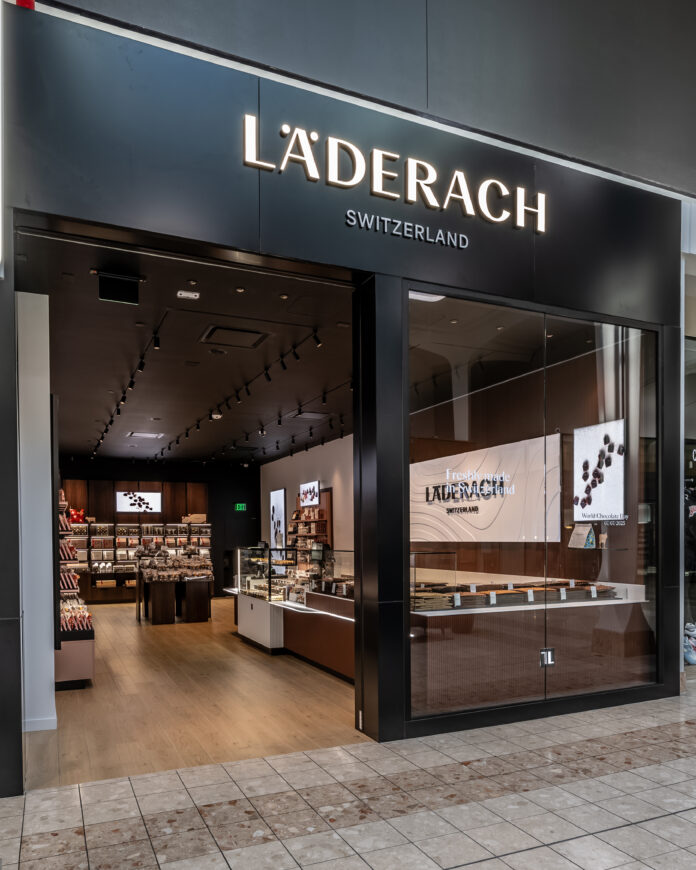
Photo: Läderach
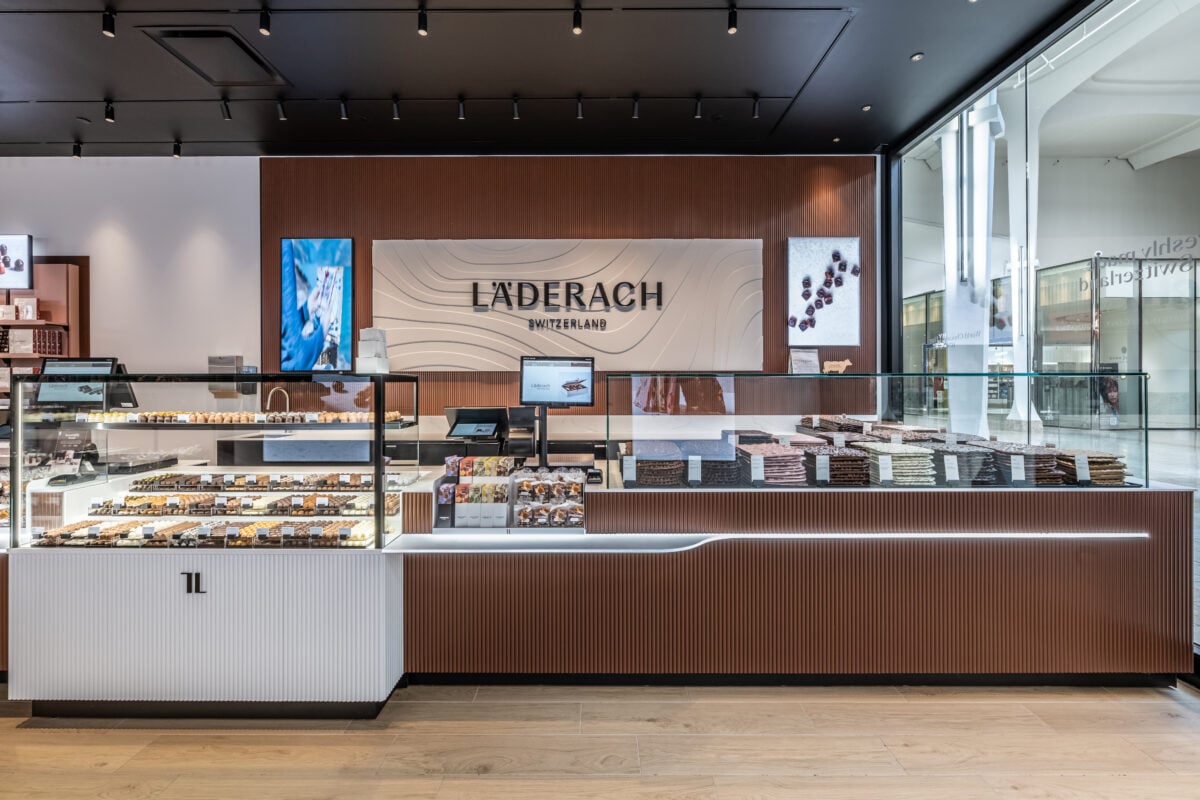
Photo: Läderach

Swiss premium chocolatier, Läderach, is set to continue its expansion across North America with the opening of three new stores Canada.

In August, Läderach will open a location at CF Sherway Gardens in West Toronto and its first British Columbia store at CF Richmond Centre. Later this year, the company’s first street store location in Canada will open on at 110 Bloor Street West.

These openings follow a string of successful launches across North America, including the flagship store on 5th Avenue in New York City and the recent debut of our first Caribbean location in San Juan, Puerto Rico. Each reinforcing Läderach’s position as a leader in premium, fresh chocolate, said the company.

“Building on the momentum from its store openings in Plaza Las Americas earlier this year, Läderach is now gearing up for further growth. The new Richmond Centre location will be the company’s first location in British Columbia, reinforcing its commitment to making its fresh, artisan Swiss chocolate more accessible to chocolate lovers across the country,” it said.

Warren Dunkelberger
Warren Dunkelberger


“We are delighted to expand our presence of premium Swiss chocolate in Canada in these iconic
shopping destinations,” said Warren Dunkelberger, President of Läderach North America. “These
new stores reflect our growing customer base and our confidence in the North American market.With 10 additional locations planned in the coming year, we remain focused on bringing handcrafted chocolate experiences to even more communities.”

Läderach’s said its handcrafted chocolates are known for their uncompromising quality, using the finest ingredients sourced directly from Swiss suppliers and a dedication to freshness. Signature products, including its iconic FrischSchoggi (fresh chocolate), pralines, and truffles, have established the brand as a favorite for chocolate connoisseurs worldwide.

“All three chocolateries will showcase Läderach’s full assortment of handcrafted chocolates within a refined, immersive retail setting. At the heart of the experience is the signature FrischSchoggi™ counter. Featuring artisanal slabs of fresh chocolate, from which customers may select their favorite combinations as our chocolatiers expertly break off pieces to be purchased by weight,” said the company.

“Additional offerings include single-origin tablet bars, chocolate popcorn, seasonal assortments, and a rotation of exclusive new creations. All crafted in Switzerland to the highest standards of quality and freshness.

Photo: Läderach
Photo: Läderach

“With a growing North America customer base and a global reputation for excellence, Läderach is poised for further growth in the market, with the new stores another milestone in Läderach’s mission to deliver high-quality, fresh Swiss chocolate and bring joy to everyday moments in life. Operating since 1962 and with the reigning World Chocolate Master at its helm, Läderach is the largest chocolate retailer in Switzerland with 200 chocolatiers across 21 countries worldwide and online. Renowned for creating some of the freshest, high quality artisanal chocolates in the world.

Läderach said its responsibly sourced chocolate comes directly from Switzerland and is made bean-to-bar in-house, finished by hand, and brought directly to its stores worldwide.

Related Retail Insider stories:

Photo: Läderach
Photo: Läderach
Photo: Läderach
Photo: Läderach

Cascadia Collection Opens at YVR with 1st Airport Listening Room

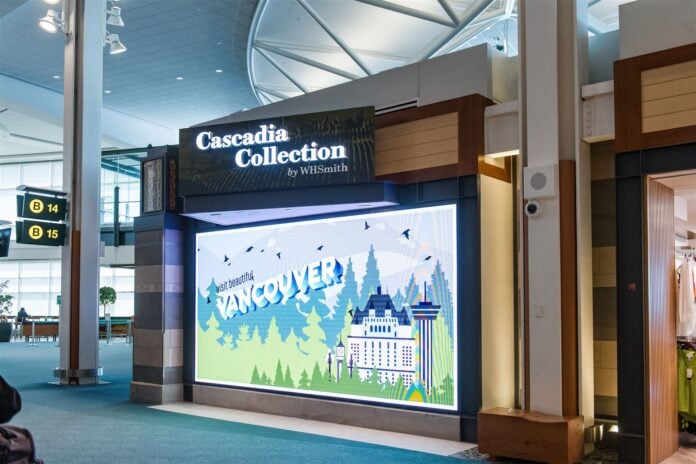
Cascadia Collection by WHSmith North America at Vancouver International Airport (YVR). Image supplied

WHSmith North America has launched its latest retail concept, Cascadia Collection, at Vancouver International Airport (YVR). The concept store, located inside the A/B domestic gates where WestJet operates, brings together travel convenience and premium experiences with a distinctly local touch.

The opening reinforces WHSmith North America’s strategy of creating immersive retail environments in high-traffic locations. With this new concept, the company introduces not only a marketplace-style approach but also an innovative experiential feature designed to elevate the shopping experience.

Designed as a curated marketplace, Cascadia Collection offers travelers a one-stop shopping destination that reflects the spirit of British Columbia. Guests entering the store are welcomed by an interior inspired by the region’s lush natural landscapes, featuring warm tones and green accents that evoke the coastal forests surrounding Vancouver.

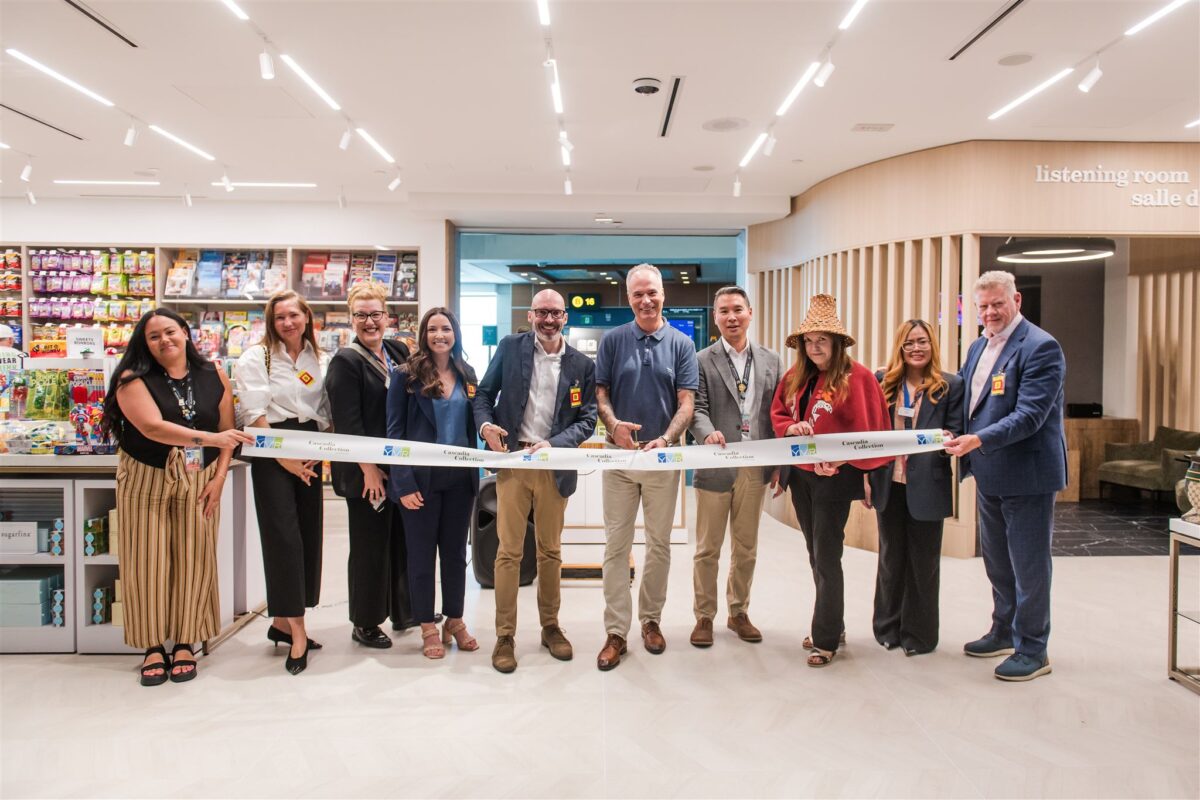
Grand opening of the Cascadia Collection by WHSmith North America at Vancouver International Airport (YVR). Image supplied

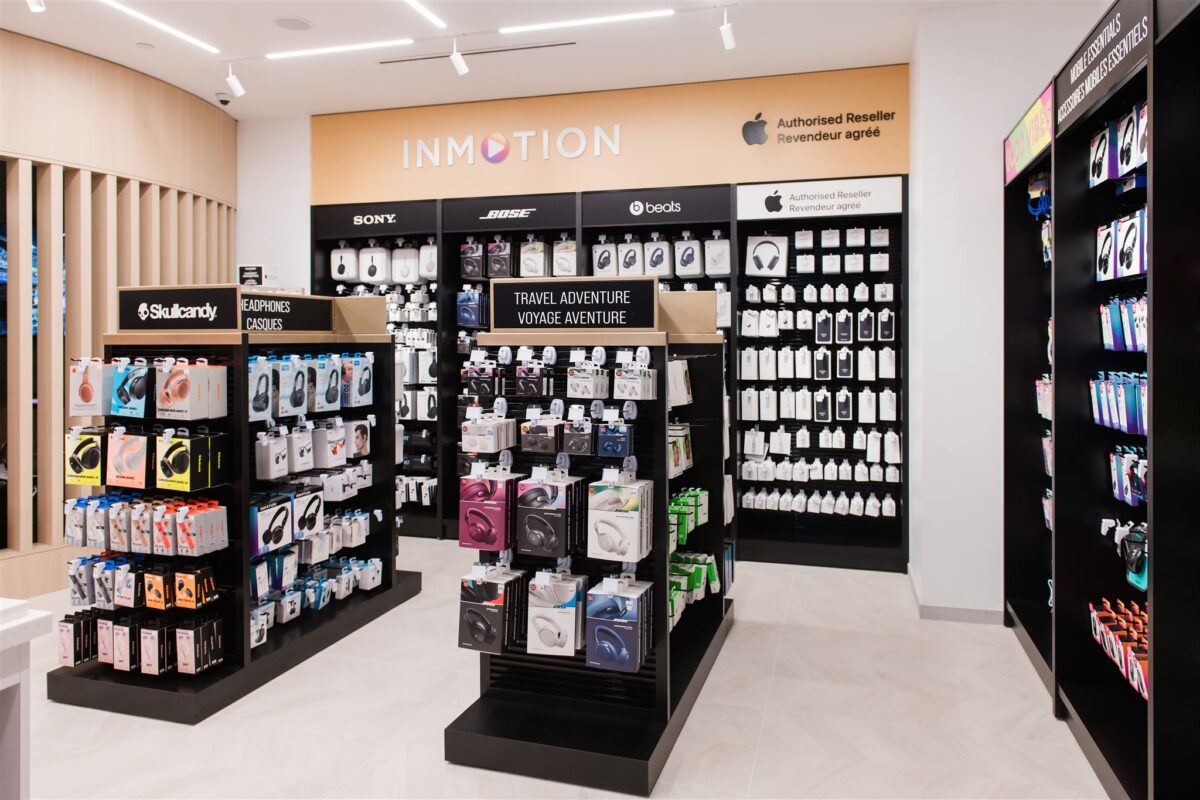
The assortment includes travel essentials such as snacks, health and beauty products, and technology accessories, alongside a selection of souvenirs and locally sourced goods. For travelers seeking something more indulgent, Cascadia Collection features premium apparel, sunglasses, scarves, and jewelry. A standout offering is its curated collection of re-loved luxury bags from heritage brands including Louis Vuitton, Chanel, Dior, and Gucci, catering to the growing demand for sustainable luxury.

Huw Crwys-Williams, CEO of WHSmith North America, described the concept as an authentic expression of the city. “Cascadia Collection is our love letter to Vancouver,” he said. “We are excited to highlight the local businesses that make the city and region so great. The opening of our new concept not only marks an important milestone within the company but also introduces a historic feature with the first-of-its-kind Listening Room. We are incredibly thankful for the support of our partners at YVR and look forward to welcoming travelers into our marketplace.”

Cascadia Collection by WHSmith North America at Vancouver International Airport (YVR). Image supplied

First-of-its-Kind Listening Room in a North American Airport

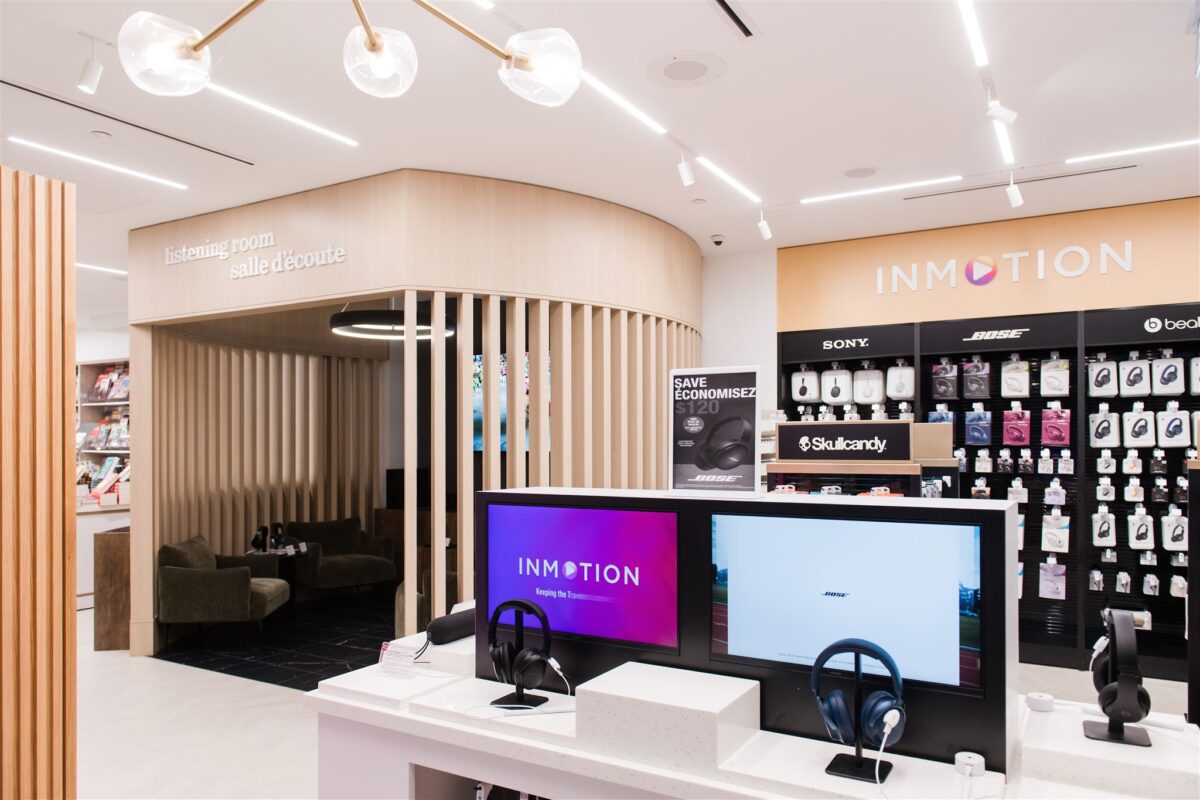
One of Cascadia Collection’s most distinctive features is its dedicated Listening Room, an industry-first for North American airports. The experiential space is designed for travelers to test premium headphones and audio products before purchase, transforming a simple retail interaction into an engaging experience.

This addition underscores what WHSmith says is its commitment to enhancing the traveler journey by blending convenience with discovery. The Listening Room also aligns with the rising importance of experience-driven retail, particularly in airport environments where travelers seek engaging ways to pass time during layovers.

Listening Room in Cascadia Collection by WHSmith North America at Vancouver International Airport (YVR). Image supplied

YVR’s Focus on Local Identity and Elevated Shopping

Vancouver International Airport has long prioritized creating an environment that reflects British Columbia’s culture and values. Tamara Vrooman, President and CEO of YVR, said the new concept strengthens this commitment. “The new Cascadia Collection brings together a strong sense of place with a wide variety of unique offerings—from memorable B.C. products to luxury resale—in one retail concept. We’re proud to work with WHSmith and continue to elevate the shopping experience at YVR.”

As Canada’s second-busiest airport, YVR welcomed 26.2 million passengers in 2024 and is consistently recognized for service excellence, earning SkyTrax’s Best Airport in North America award multiple times. Retail plays a crucial role in this success. YVR features an extensive mix of global luxury brands, Canadian retailers, and locally themed concepts. Each retail partner is carefully selected to reflect the airport’s mission of providing travelers with a distinctive experience while supporting the regional economy.

Every purchase at YVR contributes to the airport’s not-for-profit model, with profits reinvested into infrastructure, sustainability programs, and community initiatives. Retail revenues also generate significant economic impact, supporting thousands of jobs and funding future improvements.

Cascadia Collection by WHSmith North America at Vancouver International Airport (YVR). Image supplied

WHSmith’s Strategic Expansion in North America

The launch of Cascadia Collection is part of WHSmith North America’s broader growth strategy in the airport retail sector. The company operates more than 340 stores across North America under various banners, including travel convenience formats, technology retailer InMotion, and specialty concepts developed through its Marshall Retail Group division.

WHSmith’s roots date back to 1792 in the United Kingdom, where it pioneered innovations such as newsstands at railway stations. After entering Canada in the mid-20th century, the company eventually exited the market before re-establishing a presence through acquisitions in recent years. In 2018, WHSmith acquired InMotion, North America’s largest airport-based electronics retailer, followed by Marshall Retail Group in 2019. These acquisitions positioned WHSmith as a dominant force in airport and resort retailing, particularly in the United States and Canada.

North America remains WHSmith’s largest international growth opportunity, representing over half of the company’s global store footprint outside the United Kingdom. Its North American division, headquartered in Las Vegas, continues to invest in new concepts designed to meet evolving traveler expectations.

Cascadia Collection by WHSmith North America at Vancouver International Airport (YVR). Image supplied

More from Retail Insider:

Canadian Retail News From Around The Web For August 1, 2025

Canadian Retail News From Around The Web

News at a Glance

Retail Insider is streamlining its Canadian retail news from around the web to include a handful of top news stories that can be viewed quickly during the day. Here are the top stories from the past 48 hours.

Best Buy Canada’s new president maps growth reboot from Vancouver HQ (BIV)

Hudson’s Bay gets permission to sell leases, extend creditor protection (The Canadian Press)

Canada Goose’s retail push, designer tie-up power sales as costs surge (Reuters)

‘I won’t back down’: How and why Canadians are boycotting the U.S. (CBC)

Trump increases tariff on Canada to 35%, White House says (Reuters)

Golf Town brings best-in-class retail experience to the Rogers Charity Classic – offering exclusive gear and pro-level shopping to spectators (Press release)

Doug Ford reiterates call to ‘buy Canadian’ and criticizes Campbell’s Soup for misleading labelling (Durham Radio)

CLOSURE: Here are the 41 Beer Stores closing in August and September in Ontario (InSauga)

Stalls, stories and small businesses: How farmers’ markets are boosting local economies in B.C. (BC Business)

Parker: BMO building on 17th Avenue S.W. to be new home to Lululemon (Calgary Herald)

Shein opens three-story pop-up in Montreal (Fashion Network)

‘We’re getting everything ready’: How the Army and Navy building is preparing to re-open (CTV Edmonton)

The Salvation Army Thrift Store Opens Its Second Location in Langley (Newswire)

Toronto corner store that almost closed over anonymous complaint is in limbo again (BlogTO)

Hudson’s Bay fires back at lender seeking termination of Ruby Liu deal: court docs (CBC)

‘Keep your money in Canada’: Duty-free shop owner urges travellers to buy local (CTV)

Trump tariffs live updates: Canada struck with 35% tariffs, Trump floats higher blanket rates (Yahoo)

Aritzia Q1 revenue climbs 33% (Fashion Network)

Edmonton City Centre Mall ordered into receivership (MSN)

Loblaw opens 4 discount stores across 3 provinces (Fresh Plaza)

CHARLEBOIS: Everyone’s suddenly a supply management expert but few understand it (Yahoo)

New Maxi store opens in downtown Montreal (Grocery Business)

‘Not an easy decision’: The Beer Store is closing 10 more stores in Ontario, including 5 in the GTA (CP24)

ARI opens new Spectrum boutique at Québec City Jean Lesage International Airport (Global Travel Retail)

Toronto BIA warns business owners of ‘point of sale’ scam after thousands of dollars in thefts (CBC)

B.C.’s Meiga Supermarket to close its doors this summer (Canadian Grocer)

‘It’s getting out of hand!’ Jewellery store owners speak out after a rash of recent break-ins (CityNews Toronto)

Roadwork is costing Montague businesses some customers, store owners say (CBC)

Newmarket Costco set to open in August (Grocery Business)

Canadian Holiday 2025 Retail Outlook: Deals, AI, and Value-Driven Shoppers

Holiday shopping in Canada. Image: savvymom.ca

Canadian consumers are heading into the 2025 holiday season with tighter budgets, high expectations for deals, and growing reliance on artificial intelligence for personalized shopping experiences. According to Salesforce insights, Cyber Week will be the pivotal period for retailers to capture attention, while loyalty programs and targeted discounts will play critical roles in driving sales.

Retail Insider spoke with Caila Schwartz, Director of Consumer Strategy & Insights at Salesforce, to explore how Canadian shoppers are planning for the holiday season, what categories are likely to shine, and how AI is changing the way people discover and purchase products.

Caila Schwartz
Caila Schwartz

The global consumer has faced economic challenges in recent years, but Canadian shoppers appear more cautious than their international counterparts. “The Canadian consumer does not feel as much optimism in spite of these economic hardships as other regions,” Schwartz explained.

This lack of optimism is translating into more disciplined shopping habits. Consumers are planning purchases carefully, budgeting with precision, and timing buys around major discount events. “Where I see the Canadian consumer in 2025 is very similar to where I saw the global and U.S. consumer last year—being very conscious on spend and waiting for those deal events,” Schwartz said.

Cyber Week, which includes Black Friday and Cyber Monday, remains the most critical period for both retailers and shoppers. Salesforce expects Canadian consumers to use this window not only for holiday gift buying but also to splurge on big-ticket purchases they have postponed.

Cyber Week: The Prime Opportunity for Retailers

“Cyber Week is the best time of the year to get the Canadian shopper’s attention,” Schwartz said. Beyond gifting, shoppers are expected to prioritize higher-ticket items such as appliances, luxury apparel, handbags, and furniture. These categories performed strongly during Cyber Week last year, reversing weaker sales in the months leading up to the holidays.

Promotional strategies will be crucial, though retailers face a new reality: the traditional sitewide discount may be on the decline. “One of our predictions is about promotionality,” Schwartz noted. “The rate of orders transacting at checkout with a promotion code is decreasing. We’ll probably see fewer sitewide deals and more intentional discounting, such as codes applied to specific categories or one-time personalized offers.”

Rising tariffs and supply chain costs are putting pressure on margins, making precise discounting essential. “Retailers will need to be strategic. We anticipate personalized promotions becoming a bigger play,” she added.

Value Drivers: Price, Free Delivery, and Loyalty Programs

When it comes to deciding where to shop, Canadian consumers remain value-driven. Free delivery ranks as the number-one factor influencing purchase decisions, followed by lower prices. Interestingly, while global shoppers prioritize product quality in the third spot, Canadians place loyalty programs there instead.

“A loyalty program is another play on value,” Schwartz explained. “Being able to stack points, get special access to sales, or exclusive discount codes through loyalty programs is a major motivator for Canadian consumers.”

This trend is fueling increased consolidation of purchases across fewer retailers. “Shoppers are trying to stack discounts and loyalty benefits,” said Schwartz. “If I can get all of my household shopping done from one vendor and earn points, that’s better value for me than spreading it across multiple retailers.”

Salesforce data shows that the rate of repeat buyers has grown year-over-year, reinforcing this shift toward loyalty-driven consolidation.

AI Is Transforming Holiday Shopping Behaviour

Artificial intelligence is becoming a game-changer for retail, influencing both e-commerce and in-store experiences. Salesforce predicts that AI-powered tools, including popular large language models (LLMs) like ChatGPT and Perplexity, will impact $260 billion in global digital sales and $1.6 trillion in global in-store sales in 2025.

Consumers are using AI in innovative ways, sometimes even while standing in a store aisle. “We’re seeing shoppers upload shelf photos into ChatGPT and ask questions,” Schwartz said. “Younger shoppers, particularly Gen Z and millennials, are leading this trend.”

The implications for retailers are significant. “The number one question I hear from brands is: how do I show up in those searches?” Schwartz said. Content and social media strategies are critical, as AI tools draw from diverse sources, including TikTok videos and consumer sentiment analysis, when generating recommendations.

Personalization is a key driver of AI adoption. “Consumers say these tools give them the best personalized recommendations,” Schwartz explained. “They’re uploading information about themselves and asking for tailored suggestions they can’t get anywhere else, not even from a store associate.”

Holiday Forecast and Key Dates

Although Salesforce will release official holiday forecasts for Canada later this summer, Schwartz expects the three-week period spanning the week before Cyber Week and the week after to be the most critical. “Once those deals ended last year, activity fell off a cliff,” she said. “Consumers plan for this time frame. If you’re not in front of them when they’re ready to buy, you may miss the sale entirely.”

Retailers are encouraged to launch promotions early and maintain momentum through the shipping cutoff window. Beyond pricing and promotions, optimizing delivery options and leveraging loyalty programs will be essential to capturing consumer attention during the compressed shopping period.

The rise of AI is shaping the future of retail beyond the holidays, creating a new battleground for consumer attention. As Schwartz put it, “It’s probably the fastest adoption of a new technology in commerce we’ve ever seen.” 

More from Retail Insider: