Home Blog Page 445

Fraud Cases Drop in Canada, but Risks Persist: Moneris Report

Retail Fraud. Image: Retail Insight Network

Moneris has released new data indicating a 15% decrease in reported fraud cases across Canada in 2024 compared to the previous year. While this decline is an encouraging sign, experts caution that businesses must remain vigilant, as unreported fraud and evolving tactics continue to pose significant risks.

Moneris’ latest report suggests that improved fraud prevention measures and heightened awareness have contributed to the overall drop in fraud cases. However, Yale Holder, Vice President of Customer Experience at Moneris, warns that the numbers may not tell the full story.

Yale Holder, Vice President of Customer Experience at Moneris

“Seeing a significant drop in reported fraud cases, down almost 15 per cent, is encouraging but is a result we’re cautiously optimistic about. Often cases go unreported, and actual fraudulent activity is almost always higher than the data indicates,” said Holder.

The company’s findings highlight key fraud trends that businesses need to monitor, ensuring that they remain proactive in mitigating risks.

MOTO Fraud: The Most Prevalent Threat

Mail Order/Telephone Order (MOTO) fraud remains the leading fraud type in Canada, accounting for 62% of all reported cases in 2024. Despite a 12% decrease from 2023, this method continues to be a major concern.

MOTO fraud occurs when fraudsters provide card details over the phone or through mail, bypassing the need for card-present verification. This method is particularly susceptible to chargeback fraud, where a fraudulent transaction is later disputed by the legitimate cardholder.

To combat MOTO fraud, businesses are encouraged to adopt secure online payment gateways like Moneris Checkout, which integrates fraud prevention tools such as 3D Secure 2.0. This technology shifts chargeback liability to the card issuer, reducing financial exposure for merchants.

Rise in Refund Fraud and Terminal Theft

Another alarming trend in 2024 is the increase in fraud cases related to refund abuse. According to Moneris, refund fraud now accounts for nearly 30% of reported fraud cases, representing a 9% year-over-year increase. This category includes refunds processed on stolen devices, employee-led refund fraud, and abuse of return policies.

Refund fraud has become the second most common fraud type in several provinces, including Ontario, Quebec, and Manitoba. Businesses can protect themselves by implementing stricter administrative controls, such as requiring passwords for refund transactions and limiting access to refund approvals.

Meanwhile, terminal theft remains a growing issue, with refunds processed on stolen payment devices increasing by 3% year-over-year. Now accounting for 16% of all reported fraud cases, stolen terminals enable criminals to process unauthorized refunds or transactions.

To mitigate terminal theft, Moneris advises businesses to:

  • Never leave payment terminals unattended
  • Conduct regular security checks on devices
  • Store terminals out of sight when not in use
  • Ensure transactions take place in view of security systems
  • Immediately report stolen devices to their payment processor

Fraud trends vary by region, with MOTO fraud remaining the top concern nationwide. However, refund fraud on stolen devices ranks as the second most common fraud type in most provinces.

Regional Breakdown:

  • Ontario (39% of cases): MOTO fraud remains the most common, followed by refund fraud on stolen devices.
  • Quebec (29% of cases): MOTO fraud leads, with refund fraud on stolen devices as the second most reported.
  • Alberta (13% of cases): MOTO fraud is the leading fraud type, while account takeover and stolen identity cases have increased.
  • British Columbia (8% of cases): MOTO fraud is the most common, with an increase in card-present fraud cases.

The Future of Fraud Prevention

Fraud prevention strategies continue to evolve alongside emerging threats. Moneris emphasizes the importance of staying informed about fraud trends and implementing best practices to mitigate risks.

“Fraud is often a crime of opportunity. Ensuring you have applied passwords to your terminals and using administrative restrictions that are limited to only authorized employees can help to significantly reduce your risk of experiencing this fraud type,” said Holder.

Businesses are encouraged to take proactive measures, such as adopting advanced fraud detection tools, conducting employee training, and maintaining strong internal controls. As fraudsters develop new tactics, staying ahead requires ongoing vigilance and a commitment to security.

More from Retail Insider:

McArthurGlen Vancouver Expands with New Brands & Phase Three

McArthurGlen Designer Outlets in Vancouver. Image supplied

McArthurGlen Designer Outlet Vancouver Airport continues to strengthen its position as one of Canada’s most successful outlet destinations with the addition of new tenants and plans for a long-anticipated third phase of development. Opened in 2015 as a joint venture between McArthurGlen and Vancouver Airport Authority, the open-air shopping centre has become a go-to destination for both locals and international travelers seeking premium and luxury brands at discounted prices. 

Officially known as McArthurGlen Designer Outlet Vancouver Airport, the centre operates as a collaboration between McArthurGlen Group and Vancouver International Airport Authority, making it a unique retail destination with strong connectivity to international visitors.

New Additions to the McArthurGlen Brand Lineup

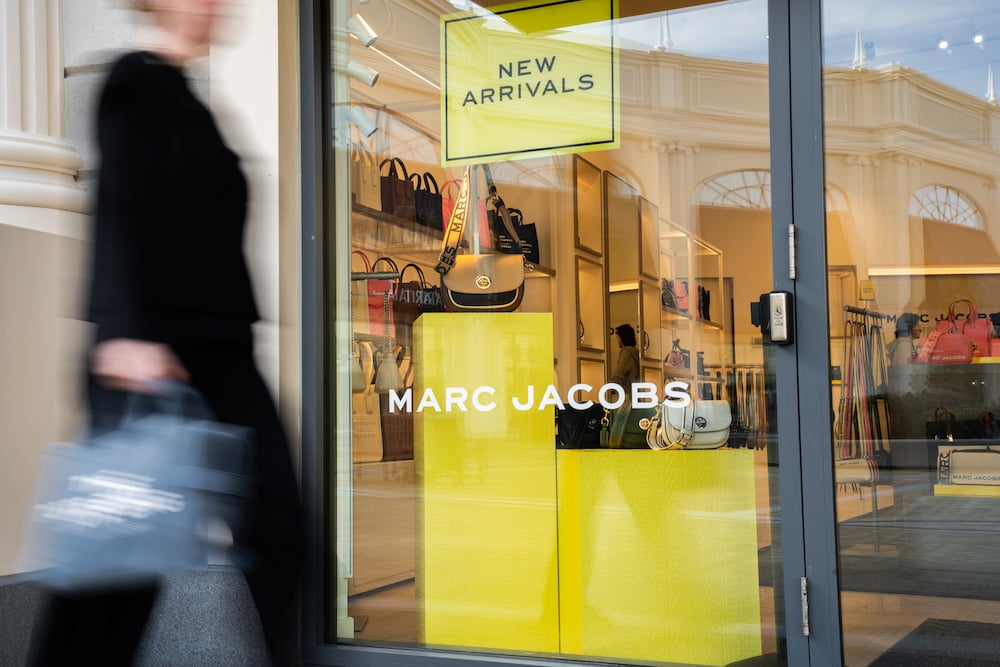
The retail mix at McArthurGlen Vancouver is evolving with the addition of new brands, including Marc Jacobs, which has opened its third Canadian location—and the only one on the West Coast. The store initially launched with accessories, including its well-known tote bags, wallets, and other leather goods, with ready-to-wear fashion expected to arrive at a later date.

Robert Thurlow, General Manager of McArthurGlen Designer Outlet Vancouver Airport

“We continue to add to our premium and luxury mix, and Marc Jacobs is a fantastic addition,” said Robert Thurlow, General Manager of McArthurGlen Designer Outlet Vancouver Airport. “Their bags are incredibly popular, and we’re excited to have them here.”

In addition to fashion retailers, McArthurGlen is also enhancing its food and beverage options with the upcoming opening of Kinton Ramen. The new ramen shop, set to open in late summer, will add to the diverse dining selection already available at the centre, which includes Mexican, Italian, Chinese, Japanese, American, and Canadian cuisine.

“We’ve seen the growing popularity of ramen in Vancouver, and we’re thrilled to introduce Kinton Ramen to our centre,” said Thurlow. “There are some fantastic ramen spots downtown that consistently have lineups out the door. This addition will give our shoppers another great option.”

Marc Jacobs store at McArthurGlen Designer Outlet Vancouver Airport. Image supplied

McArthurGlen’s Shopper Demographics: A Mix of Locals and Tourists

McArthurGlen Vancouver has long been a favourite among local shoppers and international visitors alike. Thurlow revealed that approximately 70% of the centre’s visitors are locals living within a 90-minute radius, while the remaining 30% are international tourists.

“Our local shoppers are the real bread and butter of our business,” Thurlow said. “But we also see a significant number of international visitors, particularly from markets like the UK, Germany, Mexico, and parts of Southeast Asia. The increase in direct flights to Vancouver, including from Singapore and the Philippines, has helped sustain international foot traffic.”

While visitor numbers from mainland China have not yet returned to pre-pandemic levels, Thurlow noted that other international markets have compensated for the gap.

A model with a Marc Jacobs handbag at the McArthurGlen Designer Outlet Vancouver Airport. Image supplied.

Expansion Plans: A Long-Awaited Phase Three

McArthurGlen’s success has created strong demand for additional retail space, leading to ongoing discussions about a third phase of expansion. The centre, which originally opened in 2015, expanded once already with the completion of its second phase in August 2019.

“We are currently 99% leased and trading, which is an enviable position to be in,” said Thurlow. “However, we don’t have the 5,000 square feet that some brands are looking for, which makes a potential phase three development incredibly important.”

The proposed third phase would be located in the northeast corner of the property. Though an official timeline has not been announced, Thurlow suggested that news could be coming soon.

“I can’t share a date just yet, but I hope to be able to provide more details imminently,” he said. “Given our high occupancy levels and continued demand from brands looking to enter the centre, we see this as a natural next step.”

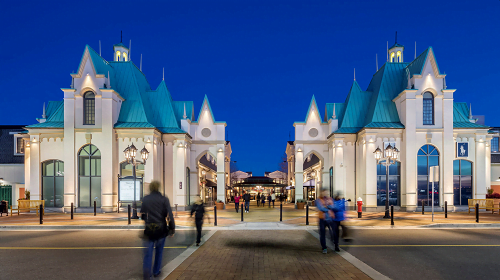
McArthurGlen Designer Outlet Vancouver
Image: McArthurGlen Designer Outlet Vancouver

McArthurGlen Vancouver: One of Canada’s Top-Performing Outlet Centres

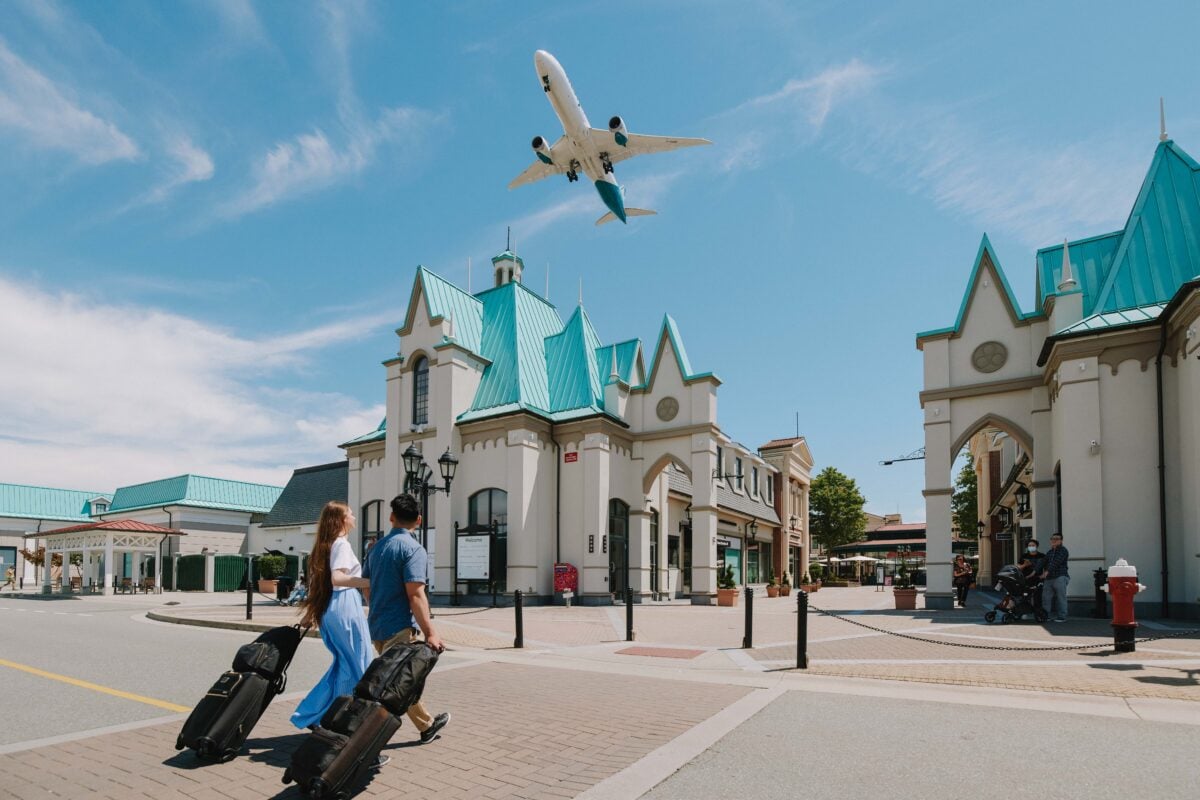
Since its opening, McArthurGlen Vancouver has consistently ranked among Canada’s best-performing outlet malls. The open-air design, inspired by a European village, has made it a unique retail destination in Metro Vancouver.

“We have gone from strength to strength and are now among the top five centres in Canada in terms of sales per square foot,” Thurlow stated. “One of the keys to our success has been offering aspirational brands at discounted prices, which attracts a broad demographic of shoppers.”

Unlike Toronto Premium Outlets, which features a heavy luxury presence, McArthurGlen Vancouver takes a more balanced approach, incorporating a mix of mid-range and premium brands to appeal to a wider customer base.

“Vancouver is a different market than Toronto,” said Thurlow. “We want to maintain an assortment that appeals to a broader audience while still catering to those looking for premium and luxury brands.”

McArthurGlen Designer Outlet in July 2023. Photo: Lee Rivett.

A Bright Future for McArthurGlen Vancouver

With strong demand from retailers, a solid mix of local and international shoppers, and a third phase of expansion on the horizon, McArthurGlen Vancouver remains one of the most successful retail outlets in Canada.

“I think people love the experience here—not just the shopping but the atmosphere,” said Thurlow. “You can grab a bubble tea, soon a bowl of ramen, and watch flights take off from Vancouver International Airport. It’s a unique and enjoyable setting.”

More from Retail Insider: 

e.l.f. Cosmetics celebrates women in sports

Source: e.l.f. Cosmetics

e.l.f. Cosmetics recently hit the ice this 2024/2025 season with EYES.LEAFS.FACE. – a first-of-its-kind beauty sponsorship of the NHL’s Toronto Maple Leafs. 

The company is celebrating women in sports – from athletes to fans – by bringing beauty to hockey lovers in a way that only e.l.f. Cosmetics can.  

Patrick O’Keefe, Chief Integrated Marketing Officer of e.l.f. Beauty said: “At e.l.f. Cosmetics, we’re all about breaking boundaries and making the best of beauty accessible for every eye, lip, and face. In Canada, we’ve built a strong and growing presence through major retailers like Shoppers Drug Mart and Walmart, as well as our online channels at elfcosmetics.com and amazon.ca. We’re committed to meeting our Canadian community wherever they choose to shop—whether that’s in-store, online, or in the grocery aisle—so everyone can experience our high-quality, innovative products at an extraordinary value.”

O’Keefe said supporting women in sports is core to who the brand is.

“At e.l.f., we challenge the status quo and drive cultural change by showing up in places you might not expect a beauty brand—like Indy 500, the Billie Jean King Cup, the National Women’s Soccer League, the Wonder Women of Wrestling Tournament, and the Professional Women’s Hockey League, where we’re gearing up for year two of our partnership this month,” he said.

“Beyond the arena, we’re a founding partner of iHeartMedia’s new iHeart Women’s Sports Audio Network—the first audio platform dedicated exclusively to women’s sports—amplifying both prominent and emerging female athletes.

“We believe that sports and beauty share a powerful ability to spark passion, self-expression, and fandom, so we’re constantly looking to empower legendary female athletes and fans—on the field, in the rink, and everywhere in between.”

He said Toronto is a vibrant hub for sports culture, and the Toronto Maple Leafs are one of the most iconic hockey franchises in the world. 

“With nearly half of Leafs fans identifying as women, the partnership perfectly aligns with our commitment to inclusivity and empowerment. By joining forces with the Leafs, we can create meaningful, tailored experiences for a community that’s often overlooked in pro sports marketing—and that’s exactly what e.l.f. is all about.

“We introduced our EYES.LEAFS.FACE. campaign during the 2024-25 regular season to celebrate the intersection of beauty and hockey. This multi-faceted campaign spans pop-up sampling at select Leafs home games, in-arena advertising that connects our fans to the e.l.f. world, and interactive social media activations that bring Leafs Nation along for the ride. 

“Our ultimate goal is to foster creativity, promote inclusivity, and energize the hockey community.”

Genevieve with Power Grip Setting Spray (84759)

O’Keefe said more similar partnerships could be in the works.

“Our commitment to women in sports—from hockey to wrestling to racing—remains steadfast. We’ve been fortunate to collaborate with trailblazers like the Billie Jean King Foundation, and we’re always exploring new ways to amplify the voices and stories of female athletes and fans. 

“Canada is a key market for us, so you can definitely look forward to seeing e.l.f. extend our values of inclusivity, positivity and accessibility throughout the sports world here, including continued involvement with the Professional Women’s Hockey League (PWHL) and other groundbreaking opportunities on the horizon.”

Recently, e.l.f. announced a partnership with the National Women’s Soccer League, LLC. as the Official Makeup and Skin Care Partner of the NWSL in the U.S.

Ariel with Power Grip Setting Spray (84759)

“Of the few women who make it to C-Suite, 94% of them played sports. Access to sports provides leadership and life lessons needed later in life. The next generation can only dream bigger and reach higher if they have a firm starting point. Our partnership with the National Women’s Soccer League (NWSL) is that gateway to opportunities,” said Kory Marchisotto, Chief Marketing Officer, e.l.f. Beauty. 

“Soccer’s global momentum is unstoppable. In the U.S. specifically, soccer attracts the youngest, most inclusive and diverse fanbase, with 54% under age 45 and 40% fans of color. By breaking barriers and connecting communities with the NWSL, e.l.f. furthers its mission to democratize access for every eye, lip and face. We help level the playing field so everyone wins.”

Din Tai Fung preparing for Canadian debut

Source: Din Tai Fung

Din Tai Fung is set to make its long-awaited debut in Canada. 

Opening at 1132 Alberni Street in downtown Vancouver, this iconic restaurant chain will bring its globally acclaimed cuisine to local diners, while contributing meaningfully to the city’s economy.

Jessica Chao
Jessica Chao

Jessica Chao, Vice President of Brand Marketing, Din Tai Fung North America, said the brand’s journey began in 1958 in Taiwan, when Bing-Yi Yang and his wife, Pen-Mei Lai opened a cooking oil shop.

“In 1972, they transformed it into a dumpling and noodle restaurant, unknowingly setting the stage for what would become a world-renowned culinary icon known for its Xiao Long Bao (soup dumplings),” she said. 

“Now, there are over 165 locations in 14 countries, including Canada. What

has made Din Tai Fung stand the test of time is really its commitment to quality in ingredients and service, as well as precision and consistency in its culinary craft. The standard the brand has set for Asian dining has earned Michelin stars and guest love from all over the world.

“In 2000, our founder’s son Frank Yang opened the first U.S. location in Arcadia, California, now home to our North America headquarters. Today, Din Tai Fung North America remains family owned and operated to this day, under the third generation leadership of Co-CEOs Aaron and Albert Yang. We have restaurants across California, Washington, Oregon, Nevada, and New York, with new openings in Santa Monica, CA, and Vancouver, Canada, bringing the total to 17 locations to-date.

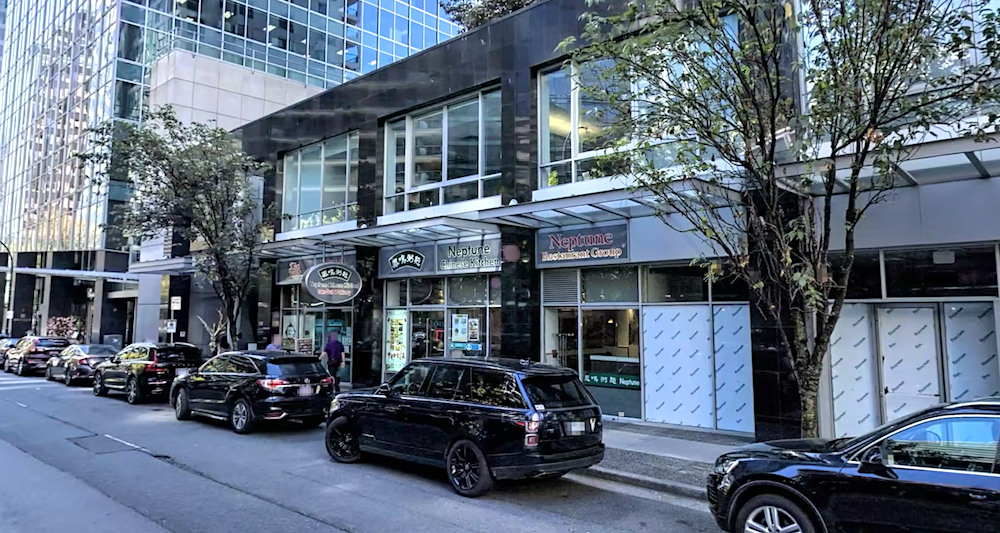
1132 Alberni Street in Vancouver. Image: Apple Maps

What makes Din Tai Fung a standout is its meticulous craftsmanship, precision, and ability to create an experience that feels both elevated and welcoming, added Chao.

“The combination of time-honoured recipes executed consistently each time, ambiance rooted in modern comfort, and inviting service from each team member is what keeps our guests coming back. At the heart of our brand is the iconic Xiao Long Bao, with each dumpling meticulously hand-folded with 18 precise folds and weighing 21 grams to achieve the perfect balance of delicate wrapper, rich broth, and flavourful filling.

“This is known as the ‘Golden Ratio,’ and this technique has defined the artistry of Din Tai Fung in many ways. Din Tai Fung is much more than just a restaurant. In a way, we offer a cultural experience, bringing authentic Taiwanese flavours and traditions to the world. We see our restaurants as a gathering place– a haven of sorts– where family and friends can take a pause from their busy day to connect over delicious, quality food. The ambiance is upscale yet always approachable and comfortable. At the end of the day, it’s always about great conversations and great food for us.”

Source: Din Tai Fung

Chao said the Vancouver location will open this spring.

“It will be more than just a restaurant; it will be an immersive cultural experience, staying true to the brand’s high standards for design and hospitality. Information on the overall space will be revealed as the restaurant launches, but one thing’s certain—this location will be designed to accommodate Vancouver’s culinary expectations,” she added.

“Choosing Vancouver for Din Tai Fung’s Canadian debut wasn’t a coincidence. Known as a city that celebrates multiculturalism and world-class food, Vancouver is a natural fit for Din Tai Fung. Its strong food culture, large Asian population, and appreciation for high-quality dining experiences all played a role in the decision,” explained Chao.

“Not only does Din Tai Fung bring a globally renowned brand to the city, but its opening is also set to make a significant impact on Vancouver’s dining landscape by creating 300 new jobs for the industry. We’ve seen how Vancouverites celebrate food and culture in ways that align perfectly with our values at Din Tai Fung. It felt like the perfect place to introduce what we offer to Canada.”

The restaurant is hiring for a diverse range of positions, from operational staff to skilled Dumpling Chefs. 

“We believe that our biggest asset is our team members, and our philosophy is that the care we reflect in, reflects out to our valued guests and communities. When we take care of our team members’ physical, financial and career well-being, they, in turn, will take care of our guests and restaurants,” she said.

“Our people-first culture aims to create long-term success for team members with top compensation and benefits, progressive learning & development program, and harmonious work life integration.”

Applicants interested in working at Din Tai Fung can head to www.dtf.com/careers to submit their resumes.

“There’s so much potential in the Canadian market! For now, we’re focused on making our milestone opening in Vancouver deliver on the best guest experience that our brand is known for,” she noted.

Mario Negris and Martin Moriarty of Marcus & Millichap negotiated the lease deal for the Alberni Street location.

Chick-fil-A launching Mac & Cheese on Canadian menu

Source: Chick-fil-A
Source: Chick-fil-A

Cheese lovers rejoice. Chick-fil-A Mac & Cheese is officially joining the Canadian menu as the second permanent addition since the brand’s first restaurant opened in 2019.  

Starting March 17, Mac & Cheese will be available to be enjoyed on its own or as a side option
with any entrée, Kid’s Meal or catering order at all Chick-fil-A locations in Canada.

“Baked in-restaurant throughout the day, Chick-fil-A Mac & Cheese is a creamy classic including a
blend of cheeses – Grana Padano, Parmigiano Reggiano, Asiago, Pecorino Romano and Cheddar – mixed with macaroni noodles and other ingredients. Topped with a crispy, toasted crust of baked Monterey Jack and Cheddar cheese – it’s a perfect combination of flavour and texture the whole family is sure to love,” said the restaurant chain.

Gaana Nagaraj
Gaana Nagaraj

“As the most requested menu item since we opened our first Chick-fil-A restaurant in Canada, we’re pleased to introduce this classic, comfort item to our guests,” said Gaana Nagaraj, Culinary Lead for International Restaurant Experience. “We’ve taken classic Mac & Cheese flavours and crafted a special recipe for the Canadian market that is sure to delight our guests.”

Starting March 17, Chick-fil-A Mac & Cheese will be available to be enjoyed on its own (in small, medium and large size) or as a side option with any entrée, Kid’s Meal or catering order at all locations in Canada.   

The brand is also helping guests escape to the tropics and look forward to spring with new Pineapple Dragonfruit seasonal beverages, available starting on March 17, for a limited time.  

Additionally, three new restaurants will open in Alberta by this spring, continuing the brand’s plan to open 20 restaurants across the province by 2030. The three restaurants will create approximately 330 jobs combined and will offer dine-in, take-out, and drive-thru service.   

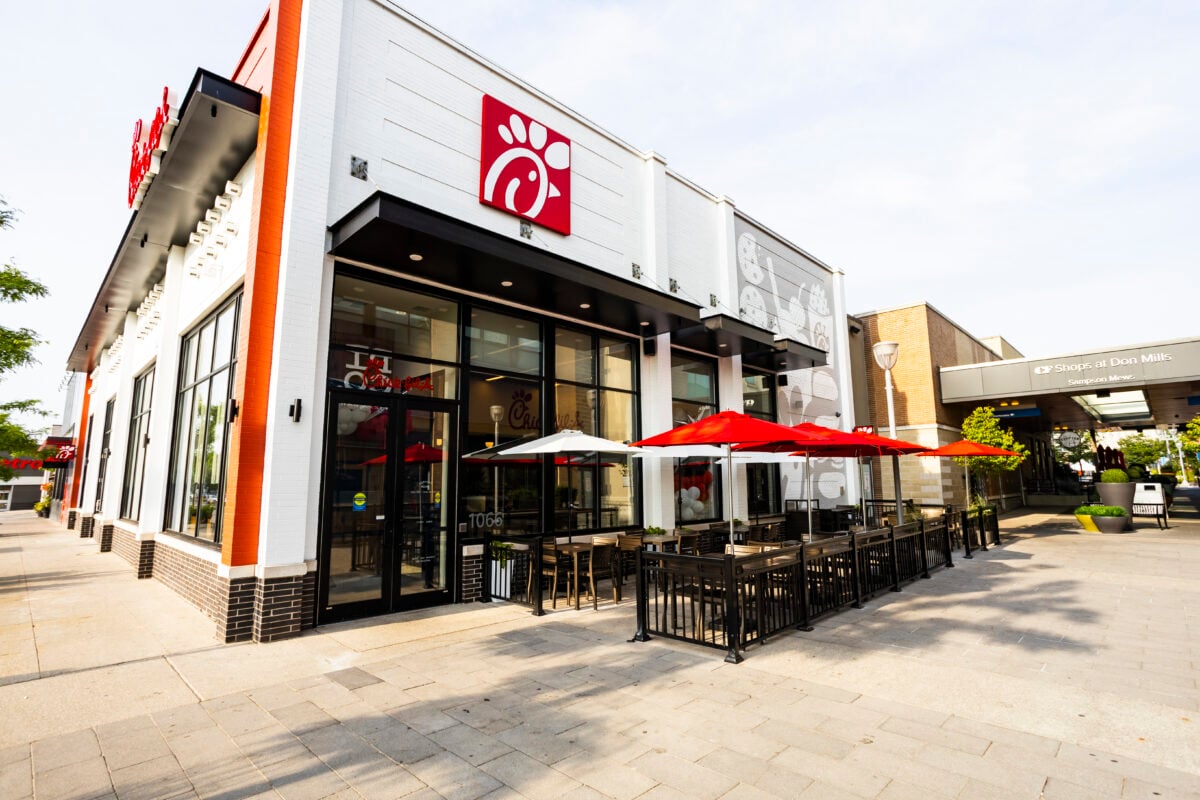
Chick-fil-A at CF Shops at Don Mills (Image: Chick-fil-A)
  • Chick-fil-A Sunwapta West, located at 10175-186 St. NW. in Edmonton, AB., will be opening on Thursday, March 20. Locally owned and operated by Mayur Raj, the restaurant will be open from 10:00 a.m. to 10:00 p.m., Monday through Saturday. 
  • Chick-fil-A The Meadows, located at 2040 38th Ave. NW. in Edmonton, AB., will be opening later this spring. Locally owned and operated by Jag Dhanju, the restaurant will be open from 10:30 a.m. to 10:00 p.m. with the drive-thru open until 11:00 p.m. Monday through Saturday.
  • Chick-fil-A East Hills, located at 75 East Hills Boulevard SE. in Calgary, AB., will be opening later this spring. Locally owned and operated by Paul Bustard, the restaurant will be open from 10:00 a.m. to 10:00 p.m. with the drive-thru open until 11:00 p.m. Monday through Saturday. 

All three restaurants will be participating in the Chick-fil-A Shared Table program, an initiative that redirects surplus food from the restaurant to local soup kitchens, shelters, food banks and non-profits in need. To date, more than 35 million meals have been created using Chick-fil-A Shared Table donations from 2,300 Chick-fil-A restaurants throughout Canada and the U.S. 

Chick-fil-A will donate about C$34,000 (US$25,000) for each new restaurant opening to a local non-profit organization through Second Harvest, one of Canada’s largest food rescue organizations. Since 2020, Chick-fil-A has donated about C$2 million (US$1.46 million) to local hunger-relief organizations through Second Harvest. 

Breathe Outdoors to Shut Down After 62 Years in Alberta

Photo: Breathe Outdoors

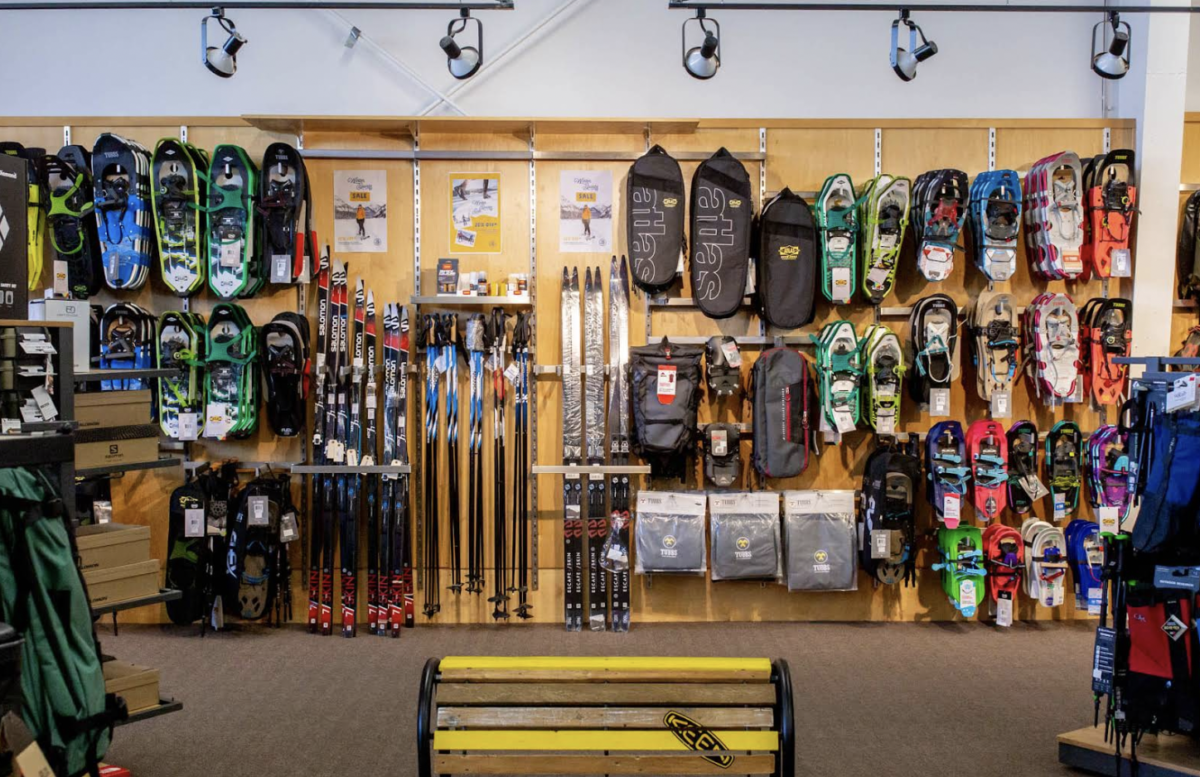
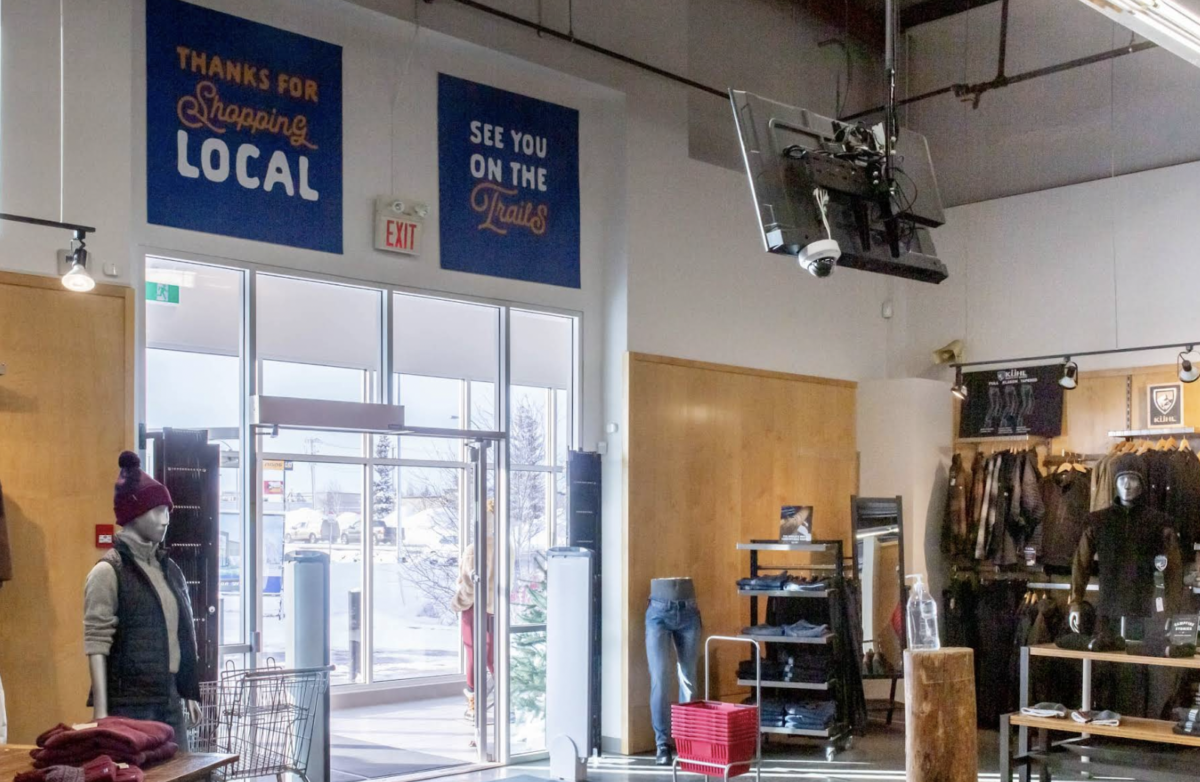
After more than six decades of serving Alberta’s outdoor enthusiasts, locally owned retailer Breathe Outdoors (formerly Campers Village) has announced it will be closing all three of its stores in Alberta over the next six months. The company cited economic challenges and shifting retail landscapes as key reasons for the decision.

“This decision is in no way a reflection of the dedication, talent, and hard work of the Breathe Outdoors team,” read a statement from General Manager Doug Dea and company owners Ron and Terry Bryant. “It is clear that with the downturn in the economy, with the challenges faced by the retail industry and the outdoor industry specifically, it is unsustainable for Breathe Outdoors to continue operations.”

A Gradual Wind-Down, Not a Liquidation

The closures will happen gradually rather than as a rapid liquidation, allowing customers time to shop and use gift cards before operations cease. The planned store closures are as follows:

  • April 30, 2025 – South Edmonton location (Gateway Boulevard)
  • June 30, 2025 – West Edmonton location (170th Street)
  • June 30, 2025 – Website sales to cease
  • September 30, 2025 – Calgary location closes

All dates are subject to change based on available inventory. Breathe Outdoors has reassured customers that its online store will remain operational until June 30, and that physical locations will continue regular operations until their respective closure dates.

Photo: Breathe Outdoors

A Legacy of Outdoor Retail in Alberta

Breathe Outdoors traces its roots back to 1963, when it was founded in Edmonton as Campers Village, an offshoot of Northwest Tent & Awning. The parent company had been manufacturing tents and outdoor gear since 1921 to serve settlers in Alberta. Over time, as recreational camping gained popularity, the company evolved to provide high-quality gear for adventurers. In 2021, Campers Village rebranded as Breathe Outdoors, emphasizing the benefits of outdoor exploration.

Despite its deep roots and long-standing community presence, the economic downturn and changing retail environment have made continued operations unsustainable.

Impact on Staff and Customers

The closure will affect 73 employees across the three locations. The company acknowledged the dedication of its staff, stating: “We are incredibly proud of our employees, who have put their hearts into making this business what it is today.”

Breathe Outdoors also addressed customer concerns regarding outstanding purchases and gift cards:

  • Gift cards will be accepted until each store’s closing date.
  • Returns will be accepted under the 30-day policy until June 1 for Edmonton locations and until August 1 for Calgary.
  • Camper’s Club loyalty program will cease operations on March 31, and customers are encouraged to use any remaining perks before that date.
  • Warranty claims will need to be handled directly through product manufacturers after store closures.
Photo: Breathe Outdoors

Final Sales and Inventory Plans

While the company will not conduct major liquidation sales, it will continue selling inventory as usual. Breathe Outdoors confirmed it will still bring in new stock for the upcoming spring/summer outdoor season. However, once current stock is depleted, no additional orders will be placed.

The retailer will also hold one final “Friends & Family Sale” in April, along with smaller promotions throughout the summer months.

A Thank You to the Community

The closure of Breathe Outdoors marks the end of an era for Alberta’s outdoor retail scene. The company expressed deep appreciation for the community that has supported it for decades, both through purchases and involvement in charitable initiatives. One of its most notable contributions was through the Twoonies for Tents program, which raised over $120,000 for Easter Seals Camp Horizon, providing outdoor experiences for individuals with disabilities.

“Being part of Alberta’s outdoor community has been one of the most rewarding experiences of my life,” said General Manager Doug Dea. “We’ve swapped adventure stories, shared gear recommendations, and celebrated the great outdoors together at events and in our stores. This is more than just a business—it’s a community, and I will always cherish the connections we’ve built.”

More from Retail Insider:

Canadian Retail News From Around The Web For March 14, 2025

Canadian Retail News From Around The Web

News at a Glance

Retail Insider is streamlining its Canadian retail news from around the web to include a handful of top news stories that can be viewed quickly during the day. Here are the top stories from the past 24 hours.

Hudson’s Bay focused more on real estate than retail, expert says (CTV)

Court documents reveal Hudson’s Bay owes $950 million to landlords, fashion brands, banks and government (Toronto Star)

Hudson’s Bay anchors London’s two major malls. Can the stores survive? (London Free Press)

Winnipeg shoppers ‘heartbroken’ as future uncertain for Hudson’s Bay Co. (CBC)

Hudson’s Bay Cape Breton location open after one-day closure (PNI News)

Here’s the full and updated list of U.S. products Canada is placing a tariff on (CTV)

Could supporting Canadian at the grocery store come at a price? (CTV)

After pleas from Manitoba, Walmart decides to pull machetes from website, stores across Canada (CBC)

Swan song: After 57 years, Canada’s largest music store, Cosmo Music, is shutting down (Village Report)

Longo’s creates a culinary innovation centre (Grocery Business)

Legal practice preventing competition near existing Manitoba grocery stores might come to an end (CBC)

Deachman: ‘We’ve had a really good run’ — ByWard Fruit Market to close this spring (Ottawa Citizen)

‘A 10 cent premium on a can of beer:’ Toronto brewery says it expects to raise prices as a result of tariffs (CTV)

Empire Company Posts Strong Q3 Earnings with 3.1% Growth

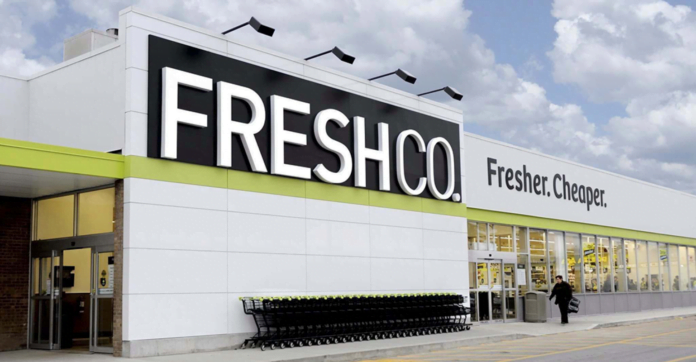
Exterior of FreshCo grocery store. Photo: Supermarket News

Empire Company Limited, the parent company of Sobeys, has announced strong third-quarter results for fiscal 2025, marking a 3.1% increase in total sales and improved same-store food sales growth. The company reported net earnings of $146.1 million ($0.62 per share), an 8.9% increase from the previous year, despite ongoing economic pressures and shifts in consumer spending.

The continued expansion of its discount banner FreshCo, increased focus on digital transformation, and cost efficiency initiatives have contributed to the company’s stable financial performance.

“We are pleased to see our strong execution continue in Q3, highlighted by improving same-store sales and our ongoing discipline in managing margins,” said Michael Medline, President & CEO of Empire Company Limited.

Empire’s Q3 sales totaled $7.73 billion, up from $7.49 billion in the same period last year. Same-store food sales grew 2.6%, while fuel sales saw a modest 0.8% increase. The company attributed the rise in food sales to its investments in store renovations, technology upgrades, and supply chain efficiencies.

Gross profit increased 4.8% year-over-year, reaching $2.08 billion, with a gross margin improvement to 27.0% from 26.5%. This was primarily driven by operational discipline aimed at reducing shrink, business expansion (including FreshCo and Farm Boy), and the continued rollout of private-label brands under its Own Brands program.

However, adjusted net earnings saw a slight decline, coming in at $146.1 million compared to $153.1 million in Q3 2024. The company attributed this to strategic investments in e-commerce, technology, and loyalty programs, including its growing Scene+ initiative.

Investments in Store Network and Sustainability

Empire continues to prioritize investments in its store network, with a goal to renovate 20% to 25% of its locations between fiscal 2024 and 2026. This includes capital allocated to store enhancements, refrigeration system upgrades, and other sustainability initiatives aimed at improving energy efficiency.

“Our investment in store renovations and sustainability initiatives will ensure we continue meeting evolving customer expectations,” said Medline. “By modernizing our stores and improving operational efficiencies, we are building a more resilient retail network.”

Additionally, the company remains committed to expanding its discount segment, with FreshCo now operating 48 locations in Western Canada, reinforcing its market presence in price-sensitive regions.

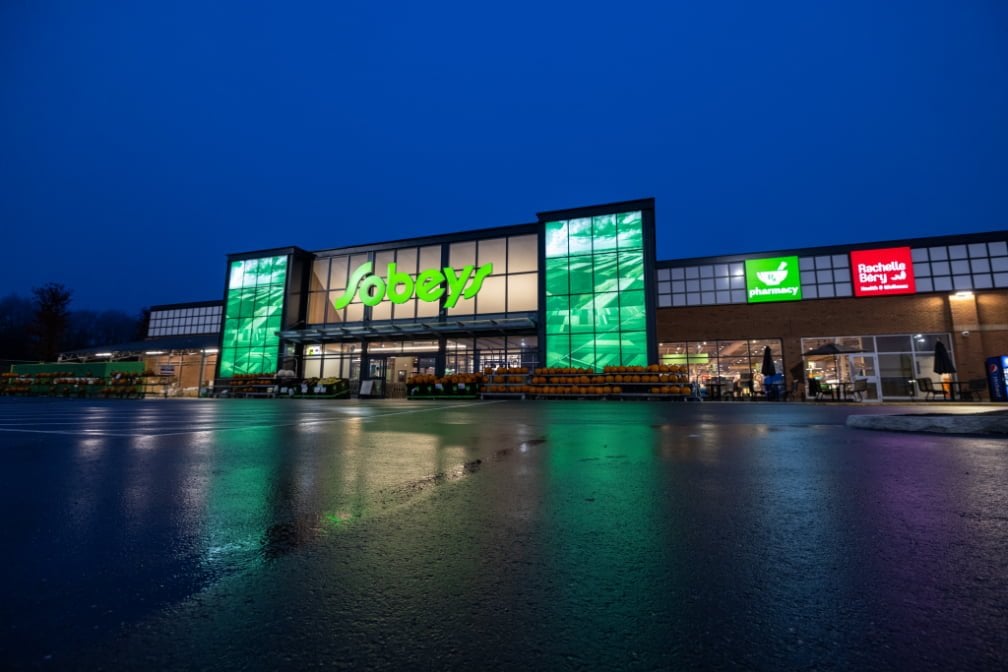
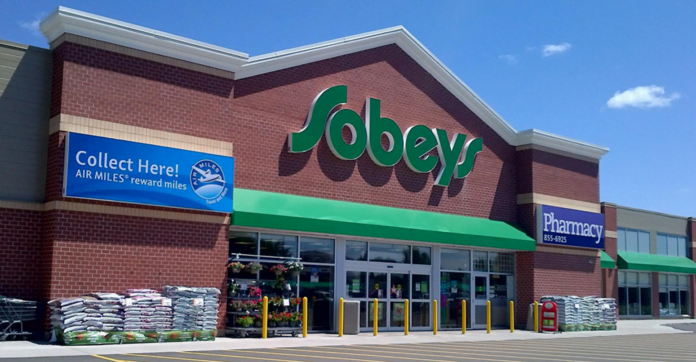
Image: Sobeys Orangeville

E-Commerce and Digital Expansion Fuel Growth

Empire’s digital strategy and e-commerce investments have started to pay off, with online sales increasing by 71.9% compared to last year.

While the company initially planned to open a fourth Customer Fulfillment Centre (CFC) in Vancouver, it has paused construction to focus on optimizing existing facilities in Toronto, Montreal, and Calgary. In a strategic shift, Empire ended its exclusive partnership with Ocado, allowing greater flexibility in its e-commerce expansion.

The company also expanded partnerships with Instacart and Uber Eats, completing a national rollout that enables same-day grocery delivery across its key banners, including Sobeys, Farm Boy, Longo’s, FreshCo, IGA, and Foodland.

“Our e-commerce strategy has been adjusted to ensure long-term profitability,” said Medline. “With a more flexible approach, we can better align our digital offerings with customer demand and the realities of the Canadian grocery market.”

Scene+ Loyalty Program Sees Major Growth

Empire’s co-ownership of the Scene+ loyalty program, alongside Scotiabank and Cineplex, has proven to be a key driver of customer engagement. Membership has grown from 10 million to over 15 million members since its launch, enhancing Empire’s ability to offer targeted promotions and personalized offers.

The company is leveraging machine learning and AI-driven analytics to tailor promotions, ensuring customers receive relevant deals based on their shopping habits. This data-driven approach is expected to further improve customer retention and spending.

Financial Stability and Share Repurchases

Empire maintained a stable financial position, with total assets of $16.75 billion. Free cash flow for the quarter, however, declined to $147.7 million from $349.0 million in the previous year, largely due to increased capital investments and lower operating cash flow.

In line with its commitment to returning value to shareholders, Empire repurchased 6.71 million Class A shares as part of its ongoing Normal Course Issuer Bid (NCIB) program.

The Board of Directors also declared a quarterly dividend of $0.20 per share, payable on April 30, 2025.

Outlook: Inflation, Tariffs, and Market Challenges

Looking ahead, Empire remains cautiously optimistic about its performance despite external economic challenges. The company anticipates that recent tariffs imposed by the U.S. and retaliatory tariffs from Canada could increase costs for imported goods, potentially contributing to higher inflation.

As a result, Empire is shifting focus toward increasing its Canadian-sourced products and securing alternative supply chains to mitigate cost increases.

Additionally, the company expects total capital expenditures to reach $700 million for fiscal 2025, with investments directed toward store renovations, e-commerce expansion, and logistics improvements.

“Despite the uncertain economic environment, we are confident in our ability to drive long-term growth through continued investment in our retail network, digital capabilities, and operational efficiencies,” Medline concluded.

Empire’s ability to adapt to changing consumer trends, optimize its supply chain, and enhance its digital presence positions it well for long-term resilience in the Canadian grocery market. As the company progresses through fiscal 2025, its strategic priorities remain focused on expansion, efficiency, and customer engagement.

More from Retail Insider:

Canadian Shoppers Shift to Domestic Goods at Sobeys/Empire

EXTERIOR OF SOBEYS GROCERY STORE. PHOTO: SUPERMARKET NEWS

The escalating trade dispute between Canada and the United States is having a significant impact on consumer purchasing habits, as sales of American products in Canadian grocery stores continue to decline. The shift comes as shoppers grow increasingly mindful of the origins of their food, according to Empire Company Ltd., the parent company of Sobeys.

“We have heard loud and clear from our customers that they want Canadian products,” said Empire CEO Michael Medline during a conference call discussing the company’s third-quarter earnings. “Sales of U.S. products as a percentage of total sales are rapidly dropping.”

The decline in American product sales comes in response to ongoing tariff disputes between the two countries. Last week, U.S. President Donald Trump imposed a 25% tariff on all Canadian imports, excluding energy and critical minerals. However, this was later revised to exempt goods that comply with the United States-Mexico-Canada Agreement (USMCA) until April 2. In retaliation, Canada has maintained countertariffs on approximately $30 billion worth of U.S. imports.

Michael Medline
Michael Medline

Further exacerbating the situation, U.S. tariffs on Canadian steel and aluminum took effect this week, prompting Canada to implement additional retaliatory tariffs on American steel and other goods. These measures are expected to drive up prices for U.S.-sourced products on Canadian shelves, forcing retailers and suppliers to reevaluate their sourcing strategies.

Retailers and Suppliers Adapt to Avoid Price Increases

Empire, which operates grocery chains such as Sobeys, Safeway, FreshCo, and IGA, currently sources about 12% of its products from the U.S. Medline emphasized that the company has already identified alternative suppliers in nearly every product category. Additionally, Empire is pressuring suppliers to ensure that unnecessary price increases do not burden consumers.

Some suppliers are also taking steps to maintain their competitiveness in the Canadian market. Swiss chocolatier Lindt & Sprüngli, for example, has historically imported about half of its Canadian inventory from U.S. plants. In response to the tariffs, the company has decided to shift its Canadian supply chain to source products directly from Europe, bypassing American production facilities altogether.

Canadian-Made Products See Boost in Sales

Retailers have been proactive in guiding consumer behaviour by introducing store signage that highlights Canadian-made products. Grocery giant Loblaw Cos. Ltd., for instance, has rolled out a new “T” symbol on store signage to indicate which products have been affected by tariffs. This approach has contributed to the increasing preference for domestic goods, leading to a decline in sales of U.S. imports.

Empire has also reported a noticeable uptick in demand for Canadian-made products, a trend that Medline attributes to both the trade conflict and the company’s efforts to showcase local brands. “Customers are making a conscious effort to support Canadian businesses,” he said.

Loblaw ‘T’ label in stores, marking tariff-impacted goods. Image: Loblaw Companies

Potential Risks to Consumer Confidence

While the immediate effects of the trade war appear to be benefiting Canadian producers, Medline cautioned that the larger concern lies in the potential economic impact and consumer confidence. “The uncalled-for tariffs and retaliatory measures pose a real threat to the Canadian economy,” he warned. “While we have a strong plan to deal with the direct impacts, we can’t ignore the broader risks.”

At present, Empire has not observed a significant shift in consumer spending behaviour beyond product sourcing preferences. However, continued economic uncertainty could lead to cautious consumer spending, which may affect overall retail performance in the long run.

Strong Financial Performance Despite Market Uncertainty

Despite the challenges posed by the trade war, Empire has reported strong financial results for the third quarter. The company posted a net profit of $146.1 million, or 62 cents per diluted share, in the 13 weeks ending February 1, compared to $134.2 million, or 54 cents per share, in the previous year.

Same-store sales, which track revenue growth excluding new store openings, rose by 2.6% (excluding fuel sales), while total revenue increased by 3.2% to reach $7.7 billion for the quarter.

Adapting to a Changing Trade Environment

As the trade dispute continues to unfold, Canadian grocery retailers and suppliers are positioning themselves to mitigate its effects. With a growing preference for local products, retailers are working to solidify their supply chains and support Canadian businesses. However, the uncertainty surrounding future trade negotiations means that businesses must remain agile and prepared for potential market disruptions.

“We are adapting quickly and working to ensure that reactionary or unnecessary costs do not reach our customers,” Medline concluded. “Our focus remains on delivering quality products at fair prices, regardless of the challenges we face.”

More from Retail Insider:

Fashion Retailer Fights Back Against Rising Retail Crime

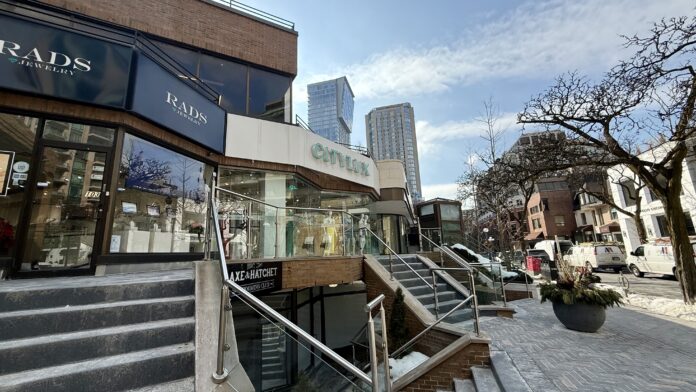
101 Yorkville Avenue in Toronto, including CityLux Boutique. Photo: Craig Patterson

Retail crime is reaching crisis levels in Canadian cities, with retailers struggling to protect their businesses against increasingly brazen thefts. While mainstream media has reported on some high-profile incidents, the true extent of retail crime remains largely unspoken—many retailers opt not to report incidents, either due to lack of faith in the police response or concerns about escalating the situation. The growing problem is putting immense pressure on independent business owners, who are often left to fend for themselves.

One retailer taking a stand is Sunan Spriggs, owner of CityLux Boutique, a women’s fashion retailer with locations in Toronto’s upscale Yorkville area at 101 Yorkville Avenue and in downtown Vancouver at 1015 Howe Street. Frustrated with the rising tide of thefts at her stores and the lack of meaningful action from law enforcement, Spriggs has begun posting photos of shoplifters online in an attempt to deter crime and recover stolen goods.

Sunan Spriggs

Retail Crime: A Growing but Underreported Crisis

According to Spriggs, theft has become a daily occurrence at both of her locations, but the nature of retail crime varies between the two cities. In Toronto, her store is frequently targeted by well-organized shoplifting rings that scout items in advance and then send in highly skilled thieves to execute the theft. “These people are professionals,” she explains. “They come in, they stand around talking, looking like regular shoppers. They wait for the perfect moment and, within seconds, an item is gone without a trace.”

In Vancouver, she faces a different challenge. “There, it’s more of an issue with addicts and street crime,” she says. “It’s harder to deal with because you don’t know what they’re capable of. You don’t know if they have a weapon or if they’re going to become aggressive.”

Spriggs is not alone in her concerns. In Toronto’s Bloor-Yorkville area, retailers have formed a private WhatsApp group to share information on crime in real time. Members post descriptions and images of shoplifters to alert others about individuals targeting stores. “Every single day, someone in the group is reporting another theft,” Spriggs says. “We’re doing what we can, but the police aren’t helping.”

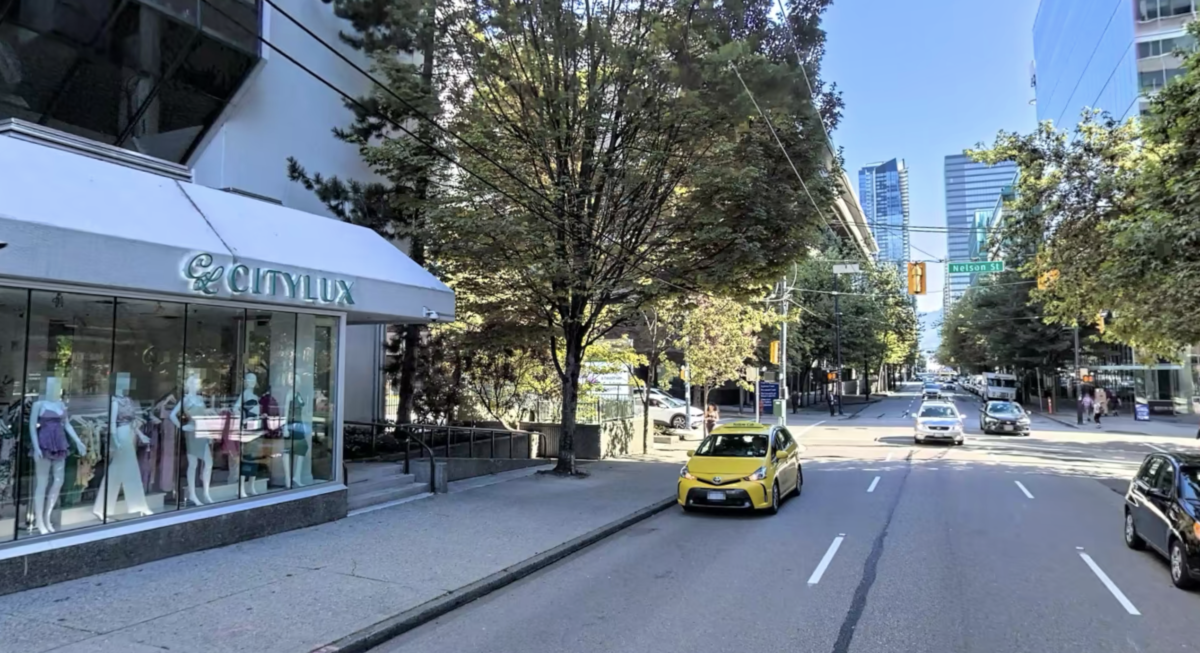
CityLux at 1015 Howe St. in Vancouver. Image: Apple Maps

Lack of Police Response and Government Roadblocks

Despite the surge in retail crime, Spriggs says police have offered little assistance. “I’ve filed reports, sent in video evidence, and at the end of the day, nothing happens,” she says. “The police have even told me directly that they don’t have time for retail theft.”

The situation is even more frustrating in British Columbia, where the provincial government is considering whether posting images of shoplifters could constitute a breach of privacy. “Instead of cracking down on crime, they’re talking about protecting criminals’ privacy,” Spriggs says. “It’s outrageous. Where’s the protection for us business owners?”

As small retailers struggle with theft and security costs, they face additional barriers that large corporations do not. Many small businesses lack the budget for professional security, and with high insurance deductibles, it often doesn’t make financial sense to file claims for stolen goods. “Our hands are tied,” Spriggs says. “We can’t chase them, we can’t detain them, we can’t post their pictures. So what are we supposed to do—just let them steal?”

Video posted by CityLux Boutique of thefts

Retailers Fighting Back

With few other options, Spriggs has taken matters into her own hands by posting surveillance footage and images of shoplifters on social media. “It works,” she says. “In Vancouver, I had $3,000 worth of merchandise returned after posting photos online. Sometimes they don’t come back, but someone recognizes them and reaches out. In some cases, we’ve even gotten the money back after they sold the product.”

The approach has sparked debate, with some arguing that it could lead to potential lawsuits. “Legally, it’s a grey area,” Spriggs admits. “Some say it could be considered a privacy violation, others say it could be seen as extortion. But I’d love to see anyone try to argue in court that a retailer should be sued for exposing a thief.”

Yorkville Avenue in Toronto. Photo: Craig Patterson

Escalating Crime and the Economic Impact

The financial impact of retail crime is devastating. Many small businesses already operate on thin margins, and the additional costs of theft—along with vandalism and security measures—are becoming unsustainable. “People don’t realize that losing a few thousand dollars in merchandise can be the difference between making payroll and having to let someone go,” Spriggs says. “And when small businesses shut down, the whole community suffers.”

Retail crime also contributes to rising prices, as stores increase costs to offset losses. Meanwhile, consumers who prioritize finding the cheapest deals online—often from overseas companies—further strain local businesses. “If people keep chasing the lowest price from giant retailers or international brands, they’re going to wake up one day and realize that all the small businesses in their community are gone,” Spriggs warns.

Calls for Reform

Retailers like Spriggs are calling for legislative changes to hold repeat offenders accountable. “Right now, if you steal under $5,000, you’re basically given a slap on the wrist,” she says. “That has to change. There need to be real consequences, or people will just keep stealing.”

She also believes the government should step in to support small businesses in combating retail crime. “If they won’t change the laws, at least give us some kind of financial relief,” she says. “Subsidies for security, tax breaks, something. Because right now, we’re on our own.”

More from Retail Insider: