Circana, LLC, has unveiled new research, “Emerging Trends: Daypart Disruptions Impacting Consumer Behavior,” during the 2025 Growth Summit in Orlando, Florida. The study reveals the evolving dynamics of daily eating patterns, the rise of snack foods in traditional meals, and the influence of life stages and workplace changes on consumer habits.
David Portalatin
“Our research showcases how disruptions in traditional mealtimes are creating opportunities for businesses to rethink their strategies,” saidDavid Portalatin, senior vice president and food industry advisor for Circana. “By addressing these shifts, companies can stay relevant and connected to their audiences while tapping into new moments for growth.”
The report highlights pivotal shifts in consumer behaviour, including:
Transformations in Daily Eating Patterns: Early breakfasts are becoming more prominent, with 39% of consumers eating before 8 a.m., an increase of 5 points in 2024 compared to 2020. Lunchtime is losing favour as more consumers turn to convenient, on-the-go solutions, while dinner is increasingly shaped by heat-and-eat or ready-to-eat options.
Snack Foods Redefining Meals: Snacks are no longer just between-meal indulgences but are frequently integrated into lunches and dinners, with snackable items like chips, crackers, and nuts gaining popularity. In 2024, 37% of consumers were looking for quick bites instead of larger meals, compared to 36% in 2023, and 29% in 2010.
Influence of Work Trends: The shift to hybrid work models has markedly changed away-from-home meal consumption patterns for morning and lunch occasions. Initially, the increase in hybrid and remote schedules posed headwinds for the foodservice industry. However, office occupancy rates have been trending upward, as many companies have strengthened their return-to-office policies. This shift presents a valuable opportunity for the foodservice industry to boost demand for morning commute and lunch occasions. Notably, in January and February, white-collar workers increased their on-premises foodservice morning and lunch visits by 8% compared to a year ago.
“Recognizing these emerging consumption moments will help restaurants and retailers to reimagine opportunities across dayparts and tailor offerings to fit evolving consumer preferences for portion size, portability and price points,” added Portalatin.
Circana is a leader in providing technology, AI, and data to fast-moving consumer packaged goods companies, durables manufacturers, and retailers seeking to optimize their businesses.
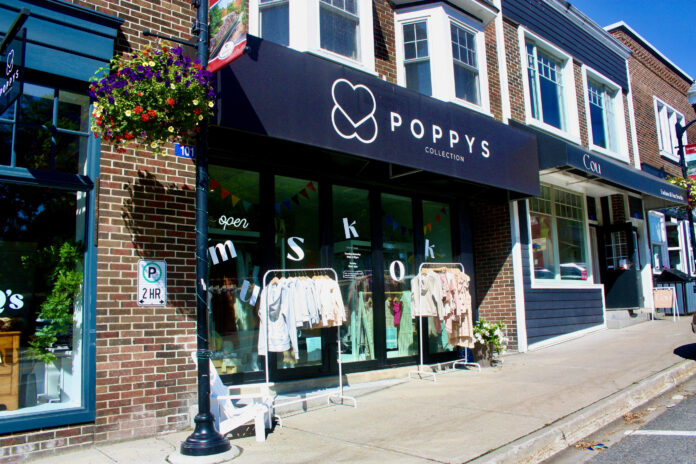
Port Carling’s cherished boutique retailer, Poppys Collection, is once again preparing for an influx of shoppers as the Muskoka summer season approaches. Located at 101 Maple Street, the store is a mainstay in the lakeside town, offering timeless, high-quality apparel for infants, children, and women. While the region is best known for its summertime hustle, Poppys has grown into a year-round destination for locals and seasonal visitors alike.
“I’m kind of on part-time maternity leave at the moment, so we balance time between Muskoka and where my husband works,” explains Kathryn McNally, founder of the boutique. “We stay open Fridays and Saturdays during the off-season and ramp up to seven days a week after the May long weekend.”
Kathryn McNally, founder of Poppys Collection
As McNally notes, the flow of shoppers typically surges from late spring through early fall, when thousands of cottage-goers descend on Muskoka. “We usually phase in our seven days a week, starting with five days a week in May and then fully open in the summer,” she says.
Filling a Niche in Muskoka’s Retail Scene
Founded nearly a decade ago, Poppys Collection was inspired by McNally’s own experience and a desire to bring quality children’s clothing to Canadian families. “My mom had a hard time finding nice clothes for my nephew, and that’s when I started looking at European brands,” she recalls. “I wanted timeless pieces that wouldn’t feel dated after just one season.”
The concept behind Poppys is simple: high-quality, durable clothing with a design sensibility that avoids the trend treadmill. “A lot of the brands I work with are woman-owned and mom-run. They focus on timeless quality—pieces you can pass down from one child to the next,” she says. “You don’t want something that screams 2020 or 1995.”
The store’s selections range from elegant children’s wear to tasteful women’s accessories, reflecting a curation process grounded in international travel and personal connection. “I shop around the world and bring back what I fall in love with,” McNally adds.
Inside Poppys Collection, image supplied
Unique in the Region
While Muskoka is known for its charming independent shops, Poppys Collection occupies a unique niche.
“There’s one other children’s store in Bracebridge, but we’re a bit different,” McNally says. “We’re really the only thing like this in Muskoka, which is exciting.”
Port Carling itself has become a haven for female-led businesses, a fact McNally celebrates. “It’s a pretty amazing little pocket. So many of the shops here are woman-owned and operated,” she says. “There’s a lot of camaraderie.”
Serving a Diverse and Affluent Clientele
Poppys Collection caters to a broad mix of customers, from year-round residents to affluent cottagers. “Muskoka definitely has a local community, but we also see many families who come up in the summer and have cottages here,” says McNally. “They’re usually here between June and September.”
The clientele includes both Canadian and international visitors, with American tourism playing a critical role.
“American tourism is important to any business in Muskoka,” she says. “We all do the majority of our revenue in about 10 to 12 weeks, so all tourism is crucial.”
And yes, Muskoka has its share of celebrity visitors. “Cindy Crawford has a cottage, and Lisa Rinna’s husband has one as well,” she notes. “There are rumours about other celebrities too, but I’m not sure how true they are!”
Maple Street in Port Carling, Ontario. Image: Apple Maps
Navigating Economic Uncertainty and Tariff Pressures
As with many independent retailers, Poppys faces uncertainty due to evolving international trade dynamics—particularly discussions surrounding tariffs.
“It’s hard for a small business. You have to plan your buying a year in advance,” McNally explains. “When I placed orders for Spring/Summer 2025, I didn’t know what would happen politically or economically a year later. So you’re taking a risk.”
McNally notes that she was fortunate to anticipate potential tariff increases late last year. “With the talk happening in December, I was able to move up my orders and make sure everything came in before tariffs might go into effect,” she says. “But it’s hard to plan when things change so fast.”
That level of unpredictability makes long-term planning difficult. “Every time I pick up my phone, it feels like there’s a new headline,” she says. “It’s exhausting.”
A Vision for the Future, Rooted in Community
Despite the economic volatility, McNally remains committed to growing Poppys Collection as a fixture in the Port Carling business community.
“Over the next few years, I want to continue being a meaningful part of the retail landscape here,” she says. “We’re providing great employment and are part of a really special network of small businesses.”
The community aspect is deeply woven into Poppys’ operations. From in-store story times for kids to manicures for moms, McNally has prioritized a family-friendly atmosphere that goes beyond typical retail experiences. The store even gathers customer input through local focus groups to fine-tune its assortment.
In addition, Poppys maintains an active online store, extending the brand’s reach well beyond cottage country.
“We have loyal customers across Canada who shop online, and that’s helped us stay resilient year-round,” says McNally.
A Muskoka Favourite Poised for Another Busy Summer
With May long weekend approaching and tourism expected to rebound, McNally is optimistic about the summer ahead.
“We’re looking forward to seeing new and familiar faces,” she says. “It’s a special time in Muskoka, and we’re excited to be part of it again.”
Although exact population numbers in Port Carling fluctuate dramatically from winter to summer, McNally emphasizes that the community support remains consistent. “In December, you might go an hour without seeing anyone,” she laughs. “But by July, you’ll see hundreds of people walking the streets. It’s a dramatic but beautiful shift.”
For McNally, it all comes back to the joy of offering something meaningful to families. “I created Poppys because I wanted to build something lasting,” she says. “It’s not just about fashion—it’s about creating special moments.”
Lush, “the handmade cosmetics company with a campaigning heart”, announced during Autism Acceptance Month a partnership with KultureCity, the world’s leading non-profit on sensory accessibility and acceptance.
With the aim to create a more inclusive shopping environment for individuals with sensory disabilities or those who experience sensory overload; or even those who simply prefer it, the partnership will launch with a pilot program at 25 Lush shops across the United States and Canada, it said.
“Lush remains dedicated to Diversity, Equity and Inclusion. This work has come to life through its Community Network Program, which strives to create protected spaces for Lush staff representing historically underserved and underrepresented communities. This includes the CINDers (Chronically Ill, Neurodiverse, and Disabled) Community Network, whose members elevated the need for sensory inclusive shopping in Lush retail shops,” said the retailer.
Source – Lush
“At Lush, we pride ourselves on offering tailored customer experiences that are led by curiosity. While many love and seek out Lush’s in-store experience for its bright colors, buffet of smells, and bountiful opportunities to try products for themselves, there is room to create more pathways for customers with sensory needs to enjoy it all in a way that works for them,” said Amanda Lee Sipenock Fisher, Diversity, Equity, Inclusion, and Belonging Program Lead at Lush.
The topic hits close to home for many of Lush’s team members, with 55% of staff who completed its fourth Global Demographic Survey in May 2024 sharing they were disabled, neurodiverse, and/or living with chronic illness. Of that group, 51% shared that one or more of their conditions were non-visible, it said.
“At the 25 Lush shops that will launch the pilot program, staff received training and certification empowering them to meet the needs of customers with sensory disabilities. Additionally, sensory bags will be available for customers with items including noise cancelling headphones, fidget tools, strobe-reducing glasses, and an emotions-cue card when the ability to communicate non-verbally is helpful. Shops also have masks available to assist in any smell related sensory avoidance. Through mindful modifications like trained staff and Sensory Bags, accessibility and inclusion are possible all of the time, not just during certain hours,” it added.
From left to right, Céline Roy, Gaëtanne Côté, Ginette Perron, Pierre Mallais, Mona Savoie, Michelle Dubé, General Manager, Coopérative de Saint-Quentin, Vanessa Bourgoin, Gilles Lamarche, Jean-Michel Roy, Yanick Marin, and Yanick Hamel, Business Development, RONA inc.
RONA Inc., one of Canada’s leading home improvement retailers, operating and servicing some 425 corporate and affiliated dealer stores, has announced the Coopérative de Saint-Quentin hardware store, located in New Brunswick, is now part of its network of affiliated dealers.
The store, which has been operating under the Home Hardware banner until now, will display the distinctive colours of RONA’s affiliated dealers this spring. According to the store’s owners, one of the main reasons for this change of banner was their desire to improve their assortment of products and services for local construction and home improvement professionals, said the retailer.
“La Coopérative de Saint-Quentin has been part of the community for over 85 years. With a hardware store and a grocery store under the same roof, our goal is to offer the best services in the region. We saw that there was a demand, so we banded together to meet that demand,” said Michelle Dubé, General Manager of La Coopérative de Saint-Quentin. “Today, in the hopes of better serving our community and its growing needs for building and renovation services, we have decided to join the RONA network and enhance our offering to local entrepreneurs and DIYers.”
An updated selection for pro customers
With an area covering 12,000 square feet, a vast indoor yard for lumber and building materials, and a large outdoor lumberyard, the store already has many features that cater to the region’s pro customers. However, in the weeks to come, their experience will prove to be even better thanks to an upgraded selection of lumber, building materials, paint and seasonal products to meet the needs of Saint-Quentin’s entrepreneurs. In addition, a new PRO desk will be added in the spring, said the company.
Alain Ménard
“The team at La Coopérative de Saint-Quentin truly cares about its community and is aligned with RONA’s mission, which is to help communities build homes and dreams. We are thrilled to welcome them to RONA’s network of affiliated dealers and to support them in their future projects, aiming to ensure the growth and longevity of this historic place,” added Alain Ménard, Senior Vice-President, RONA Affiliated Dealers, RONA inc.
RONA is headquartered in Boucherville, Québec. and its network operates and services some 425 corporate and affiliated dealer stores under the RONA+, RONA, and Dick’s Lumber banners.
Chick-fil-A, Inc. announced it awarded more than US$27 million in scholarships to restaurant Team Members and community leaders in 2025.
This marks a record-breaking annual investment in the company’s scholarship giving and underscores its commitment to supporting the educational and career aspirations of both Team Members and community leaders, said the company.
Key Highlights for 2025:
In Canada, 61 Restaurant Team Members received scholarships of about C$1,400 (US$1,000) or about C$3,500 (US$2,500) each, totalling about C$145,000 (US$101,500) in scholarships awarded in 2025.
US$27 million awarded in scholarships to Chick-fil-A restaurant Team Members.
Over 15,000 Team Members across Canada, the U.S. and Puerto Rico received scholarships of up to US$2,500.
The company exceeded its corporate social responsibility goal to impact more than 50,000 Team Member lives through education opportunities between 2020-2025, impacting 69,000 since 2020.
Investing in Restaurant Team Members and Community Leaders
Andrew T. Cathy
“Chick-fil-A is deeply committed to investing in the remarkable futures of both Chick-fil-A Team Members and community leaders,” said Andrew T. Cathy, CEO. “The growth of scholarship giving at Chick-fil-A reflects our belief in the power of education to transform lives. We are honoured to support these exceptional students as they pursue their educational aspirations and look forward to seeing how they make a positive impact in their communities.”
According to a 2024 survey of restaurant Team Member Scholarship recipients, 21.3% said they were first-generation college students.
Applications for the 2026 Remarkable Futures scholarships and the Community Scholars program will be available in August.
About the Scholarships
Scholarships funded by Chick-fil-A, Inc. can be beneficial for recipients for many reasons, including, said the company:
Up-front award: Chick-fil-A scholarships are awarded to recipients up front and can be directly applied to qualified tuition and related expenses, including fees, books and supplies.
Applicable at any qualifying school, college or university: Scholarships can be applied in any area of study at any accredited institution of the recipient’s choice, including two- or four-year colleges and universities, online programs, or vocational-technical schools.
No employment tenure requirements (for restaurant Team Members): There is no requirement of hours worked or length of service required to apply. Team Members just have to be a full- or part-time restaurant employee at a franchised, company-owned and/or affiliated restaurant (including S. Truett Cathy Brand Restaurants) in Canada, the United States, or Puerto Rico to apply for or receive a Chick-fil-A Remarkable Futures™ Scholarship.
Chick-fil-A, Inc. is the third largest quick-service restaurant company in the United States, known for its freshly-prepared food, signature hospitality and unique franchise model. More than 200,000 Team Members are employed by local Owner-Operators in more than 3,100 restaurants across Canada, the United States, Puerto Rico and the United Kingdom.
US President Donald Trump holds up a sign that lists all of the countries around the world he has imposed new tariffs on as of April 2. (Image credit: Chip Somodevilla/Getty Images)
By Eric Linxwiler. The Trump administration has revived tariffs as a core instrument of U.S. trade policy, imposing sweeping new duties on imports from Canada, Mexico, and the European Union, a 10% baseline tariff on nearly all U.S. imports, and sharply elevated rates—up to 145%—on Chinese goods.
These actions and the threat of even greater tariffs to come have triggered a rapid escalation in trade tensions, with U.S. trading partners announcing retaliatory tariffs of their own.
Eric Linxwiler
For retailers, the result has been a surge in sourcing costs, mounting supply chain complexity, and growing uncertainty in pricing and planning. Some companies have responded by front-loading inventory or passing on costs to consumers, but those reactive approaches alone are insufficient for what is increasingly looking like a structural shift in global trade. The new normal will require long-term strategic adaptation.
A new report from TradeBeyond, Managing Tariff Turbulence in Supply Chains, highlights eight strategies that brands and retailers are using to build resilience and mitigate the risks posed by tariffs this year and beyond, including diversifying supplier bases, employing real-time scenario planning, and exploring tariff engineering.
Diversifying Suppliers and Sourcing
While diversification has long been a foundational sourcing principle, 2025 has exposed just how fragile even moderately diversified supply chains can be. The recent tariff escalation caught many companies off guard—particularly in high-risk categories like apparel and consumer electronics—despite efforts to broaden their supplier base.
What’s different now is the speed and scale of tariff changes, which are forcing brands to reassess not only their country exposure but also their supplier readiness. Many are moving beyond basic diversification, building out multiple pre-vetted alternatives in each major category and negotiating capacity-sharing agreements that enable production to shift on short notice.
To reduce exposure, sourcing teams are now identifying new suppliers in lower-tariff regions and adjusting their logistics networks accordingly. Some maintain a preferred vendor list within a centralized sourcing platform, ensuring two or three vetted alternatives in each major product category. Others are negotiating capacity-sharing agreements that allow production to shift quickly without the need for renegotiated factory approvals.
Mapping out a complete alternate supply chain on short notice is difficult and time-consuming, which is why leading companies are turning to digital platforms that centralize supplier profiles, certifications, and performance data. Real-time visibility into supplier capabilities and compliance metrics is critical for managing the volatility of today’s new global trade order.
Operationalizing What-If Planning and Scenario Modeling
Uncertainty around tariffs has made scenario planning essential. Retailers need to be equipped to model different sourcing, pricing, and inventory outcomes quickly—at any point in the planning cycle. Scenario planning enables teams to ask “what if” questions: What if tariffs rise another 10%? What if a preferred supplier is suddenly targeted by new duties? What if rerouting or reshoring could reduce total landed cost?
The most resilient organizations are enabling cross-functional teams—not just finance—to run these simulations in real time. That requires a multi-enterprise platform that centralizes landed cost inputs and supports granular, SKU-level modeling based on shifting trade policies. The goal is to move from reactive cost-cutting to proactive decision-making.
To enable this, businesses are adopting open costing systems that incorporate full cost breakdowns beyond just FOB pricing—factoring in freight, duty, insurance, and compliance costs. When combined with real-time HTS classification data, these tools ensure accurate duty calculations and allow for rapid response to new tariff conditions. This is no longer a theoretical exercise; it’s a core competency for companies navigating today’s sourcing challenges.
Exploring Tariff Engineering
Some companies are taking a more technical approach by exploring tariff engineering— modifying product design or classification to qualify for lower tariff rates. For example, an apparel manufacturer might adjust the fiber composition of a shirt to reduce its applicable tariff.
Others are auditing high-risk SKUs to identify reclassification opportunities or substitute inputs that maintain quality while reducing costs.
Accurate tariff classification is the foundation of this strategy. Companies must ensure that every product has an HTS code assigned at the item level based on material composition, construction, and intended use. Misclassification can lead to overpayment or regulatory penalties, which makes regular auditing and staff training essential.
Businesses are also revisiting duty drawback programs, which allow companies to reclaim tariffs paid on goods that are eventually exported. Additionally, some are leveraging foreign trade zones (FTZs) to defer or eliminate tariffs on goods processed or stored within those areas. While these strategies may seem niche, they can offer meaningful savings—especially when margins are tight and tariffs are high.
These and other strategies are covered in greater depth in TradeBeyond’s new Managing Tariff Turbulence in Supply Chains report. As the trade landscape continues to shift, companies that invest in flexibility, transparency, and cross-functional coordination will be best positioned to thrive. Tariffs may be unpredictable, but with the right strategies in place, retailers can protect profitability and maintain supply continuity.
(Eric Linxwiler is Senior Vice President of TradeBeyond. He has over 30 years of experience in enterprise software and cloud-based platform companies with a specialty in supply chain optimization and workflow management. Contact him at eric.linxwiler@tradebeyond.com.?
Rogers Place at the ICE District in Edmonton. Image: DIALOG
With the NHL playoffs officially underway, Canadian hockey fans have more reason than ever to rally behind their teams—and their wallets might be getting in on the action too.
This year’s postseason comes with renewed excitement. The Winnipeg Jets, who clinched the President’s Trophy, are viewed as strong contenders for the Stanley Cup. Toronto secured its division just last night, setting the stage for a possible “Battle of Ontario” against rival Ottawa—making its first playoff appearance since 2017.
Meanwhile, Edmonton’s playoff momentum remains strong after last year’s impressive run, and anticipation continues to build around Montreal potentially clinching a spot. If so, this would be the first time since 2017 that five Canadian teams have entered the playoffs.
Beyond the on-ice drama, Canadian businesses—particularly those near major arenas—stand to benefit significantly from the wave of fan engagement. According to Moneris, Canada’s leading payment processing provider, playoff hockey isn’t just a cultural moment; it’s also a proven economic catalyst.
Playoff Season Drives Major Spending Increases
Sean McCormick, Vice President of Business Development and Data Services at Moneris
“Canadian hockey teams making the playoffs doesn’t just lift spirits—it boosts sales,” said Sean McCormick, Director of Business Development – Data Services and LAKA Sales Leadership at Moneris. “During last year’s finals, even with the Oilers on the road, spending near the Edmonton arena jumped over 200 per cent. Similarly, Montreal’s 2021 playoff run saw spending near the Bell Centre nearly triple.”
That trend has continued over recent playoff seasons. For instance, game seven of the 2024 Stanley Cup Finals saw a massive 214% spike in spending near Edmonton’s ICE District—even though the Oilers were playing out of town. Across Edmonton as a whole, spending rose 78%, with increases of 33% in Alberta and 16% nationwide.
The pattern holds true across the country. When the Canadiens won an overtime game during the 2021 Stanley Cup Finals, fans near Montreal’s Bell Centre surged into local bars and restaurants. Moneris data showed a 160% spike in spending near the arena at 11:30 p.m., along with a 245% increase across the city and a 137% jump in Quebec.
Home or Away, Fans Fuel Local Commerce
Whether teams are on home ice or winning on the road, the energy translates into tangible results for businesses. During the 2024 playoffs, every Oilers home game resulted in over a 50% increase in local spending near Rogers Place in the ICE District. Even away wins created momentum. In round two against Vancouver, Edmonton saw a 20% jump in spending near the arena and a 24% increase across the city for a road game.
Moneris tracked increases across multiple categories, including bars, restaurants, and fast-food establishments. The data shows that even when teams lose, game days still lift sales. For example, Toronto’s playoff performance in 2023 showed mixed on-ice results, but bars and restaurants saw double- and triple-digit spending spikes during key games.
Bell Centre in downtown Montreal. Image: Wikipedia
The Power of Elimination Games
“When the pressure’s on, Canadians don’t just show up for the game—they show up in a big way for businesses,” said McCormick. “Elimination games consistently drive some of the highest spikes in spending.”
That was clearly evident in Toronto’s 2023 playoff run. In game four of the second round, with the Leafs facing elimination on the road, restaurant spending near the Scotiabank Arena surged 126%. Across the city, spending rose 113%.
Rivalries Amplify Economic Impact
Perhaps nothing energizes hockey fans—and local economies—like a heated playoff rivalry. Moneris’ data from the 2022 “Battle of Alberta” shows just how impactful this can be.
During game three in Edmonton, spending near Rogers Place skyrocketed by 233%. In Calgary, even though the Flames were on the road, transaction volume still rose 75% near the arena. “Nothing sparks fan excitement like a good rivalry,” said McCormick. “If the Battle of Ontario returns this year, local business should be ready for the surge.”
Local Businesses Poised to Win Big
The playoffs represent a significant opportunity for food and beverage operators, particularly those located in close proximity to arenas. When the Canadiens reached the finals in 2021, Moneris recorded explosive growth in bars and restaurants during key moments of the games, especially in the later hours. In one standout case, spending at 11:00 p.m. spiked 222% near the Bell Centre.
In Edmonton, game day comparisons from 2024 show consistent double- and triple-digit gains for bars and restaurants, both near the arena and across the city. Notably, games three and six of the Stanley Cup Finals generated the highest increases, with near-arena spend up 135% and 151%, respectively.
A Stanley Cup Would Mean More Than Just Bragging Rights
No Canadian team has won the Stanley Cup since 1993—a drought now more than 30 years long. But as excitement builds around multiple Canadian teams this year, the economic benefits could be felt nationwide.
“With Canadian patriotism on the rise and several teams in the playoffs, there’s a real buzz across the country,” said McCormick. “Over the years, Moneris’ data has shown that when Canadian teams hit the ice, local businesses feel the momentum too—especially those near the arena.”
With Moneris continuing to monitor spending trends throughout the playoffs, Canadian businesses, particularly those in the hospitality sector, are well-positioned to score big.
Conclusion
From Toronto’s Maple Leaf Square to Edmonton’s ICE District, Canadian hockey fans are creating more than just memorable playoff moments. Their celebrations, whether fuelled by hope or heartbreak, are driving substantial economic activity. And if this year marks the end of Canada’s Stanley Cup drought, the ripple effects could go far beyond the rink.
Moneris says it will continue to release spending data throughout the 2024 playoffs, offering a unique window into how national pride and playoff hockey can fuel Canadian businesses.
Danish jewellery and eyewear brand Pilgrim is further solidifying its presence in the Canadian market through a new partnership with BC Ferries, one of the world’s largest ferry operators. Launching this month, Pilgrim’s 2025 travel retail jewellery collection will debut onboard five of BC Ferries’ major vessels, adding a new layer of retail appeal for millions of domestic and international travellers.
The collection, featuring handcrafted pieces priced between CAD $20 and $120, is being prominently displayed within the fashion departments of the onboard stores. Each floor unit—optimized using planograms and visual merchandising strategies—will showcase about 300 items per square metre, creating a bold retail footprint at sea.
High-Traffic Exposure for a Fast-Growing Brand
BC Ferries operates 25 routes along the Pacific West Coast of British Columbia, including services to Victoria, the provincial capital, and other key tourist destinations on Vancouver Island and surrounding coastal regions. With over 22 million passengers annually, the ferry operator provides a significant platform for brands looking to engage a diverse and mobile audience.
“Pilgrim brings its unique Scandinavian beauty to our ships, and its accessible price point will attract many shoppers to purchase,” said Ruth Fox, Assistant Manager – Retail (Buying Manager) at BC Ferries.
Louise Rohde, Head of Travel Retail for Pilgrim, expressed enthusiasm about the launch: “We are delighted to begin this voyage with BC Ferries and to introduce Pilgrim to their customers. We look forward to our collaboration and extending our presence in Canada at sea, as well as on land.”
Pilgrim’s Growth in Canada
Outside of Scandinavia, Canada is Pilgrim’s largest market, underscoring the brand’s successful North American expansion. The company’s Canadian operations are headquartered in Montreal and run independently under the leadership of Robert Hayes, while still staying closely connected to its Danish roots.
Pilgrim has already established a strong retail network in Canada, with bespoke stores in key cities including Toronto, Montréal, Laval, Brossard, and Québec City. The brand is also featured at several major airports across the country, including Québec City Jean Lesage, Montréal-Pierre Elliott Trudeau, and Edmonton International Airport, through its partnership with Aer Rianta International.
In June 2023, Pilgrim opened a flagship store at CF Toronto Eaton Centre, introducing a new concept that includes an in-store piercing studio, enhancing the customer experience and offering more interactive retail engagement.
Pilgrim at CF Carrefour Laval (Image: Pilgrim)
Expanding Travel Retail Presence
The collaboration with BC Ferries marks Pilgrim’s continued expansion in the travel retail sector, which complements its presence in airports and boosts brand visibility among both Canadians and international visitors.
Travel retail has become a key strategy for Pilgrim, offering exposure to high volumes of travellers who are increasingly looking for affordable, well-designed souvenirs or self-treats while in transit.
A Brand Rooted in Craft and Sustainability
Founded in 1983 by Annemette Markvad and Thomas Adamsen in Skanderborg, Denmark, Pilgrim began as a small operation selling handmade jewellery at music festivals. The brand’s origin reflects a deep connection to art, music, and people, and that spirit remains central to its identity.
Today, Pilgrim is known for its handcrafted jewellery and sunglasses, all designed in Denmark and crafted “by hand, heart and mind.” Over 70% of Pilgrim’s jewellery is now made from a minimum of 75% recycled materials, as part of its growing commitment to sustainability.
Inclusivity and identity are also key brand pillars. Pilgrim’s collections are designed to appeal to a wide range of styles, personalities, and gender identities, positioning the company as both contemporary and conscious.
Image: Pilgrim
Canadian Retail and Wholesale Growth
Beyond its branded stores and airport presence, Pilgrim Canada has developed a significant wholesale network, partnering with over 260 independent retailers and being available in more than 550 retail locations across the country. The brand’s e-commerce platform further complements this, providing national reach for customers looking to browse and buy online.
By aligning Danish design sensibilities with the entrepreneurial energy of Canadian retail, Pilgrim has built a loyal and growing following. Its sustainable, accessible offerings appeal particularly to younger demographics seeking quality jewellery with a story behind it.
Retail Insider is streamlining its Canadian retail news from around the web to include a handful of top news stories that can be viewed quickly during the day. Here are the top stories from the past several days.
As part of Retail Insider’s ongoing review of the Canadian retail industry by vertical, this article provides insights into the current state of the Pet Retail sector in Canada. The objective is to offer retail leadership valuable insights into market dynamics, trends, and industry opinions. This summary will be revisited annually, supplemented by additional articles that expand on key developments and expert perspectives.
Pet Retail Industry in Canada Market Landscape
The pet retail industry in Canada has evolved rapidly in response to growing pet ownership and the humanization of pets. Consumers are spending more on premium products, wellness services, and personalized items that reflect a deep emotional connection to their pets. As a result, the industry spans a variety of retail formats, including national chains, regional franchise networks, and independent boutiques. It also extends across physical storefronts and e-commerce platforms, with subscription services and delivery models becoming increasingly popular. In parallel, urban pet services and hospitality innovations are emerging in response to densification and lifestyle changes.
Photo: Pet Planet
National Chains
Pet Valu: The largest specialty pet retailer in Canada with 800+ stores. Focuses on premium offerings and exclusive brands like Performatrin.
PetSmart Canada: A dominant nationwide chain offering food, accessories, grooming, and adoption services.
Mondou: A leading Quebec-based pet retailer with over 80 stores, known for its strong brand identity and emphasis on natural and Canadian-made products.
Franchise-Based Retailers
Global Pet Foods: One of Canada’s largest pet store franchises, emphasizing natural and holistic products.
Ren’s Pets: Rapidly expanding in Ontario and Eastern Canada, known for its strong omnichannel experience.
Pet Planet: Alberta-based franchise with 43+ locations and a health-oriented product focus.
PetParker: A newer model offering app-based secure hospitality lockers for pets, expanding in grocery and urban nodes.
Independent & Boutique Retailers
Fit Factory Pets: A lifestyle extension of the boutique fitness brand, positioning pets within health-forward consumer habits.
NYSE in New York. AP Photo: Seth Wenig.
Notable Financial Trends for Pet Retail in Canada
Among Canada’s publicly traded pet retailers, Pet Valu remains the dominant force. In 2025, the company forecasted annual revenues between $1.17 and $1.20 billion, with adjusted EBITDA projected at $254 to $260 million. These figures highlight strong year-over-year performance and a continued focus on growth through store expansion and exclusive product lines.
While other major players like PetSmart operate under private ownership in Canada, industry-wide trends suggest strong profitability across the board. Despite a broader consumer spending pullback in Canada, 76% of pet owners surveyed planned to increase spending on food and accessories—the highest rate seen in eight consecutive quarterly studies.
Overall, the financial health of pet retail in Canada has remained resilient, with consumer prioritization of pet well-being insulating the sector from broader inflationary and economic pressures.
Image: Ren’s Pets
Trends for “Pet Retail” Industry in Canada
Humanization of Pets: Pet owners treat pets as family, driving demand for lifestyle and wellness products.
Premium Health & Nutrition: Demand for high-quality, Canadian-made, and functional foods continues to rise.
Eco-Conscious Consumption: Products with biodegradable packaging and sustainably sourced materials are trending.
Digital Expansion: Online sales, mobile app ordering, and subscription models are growing.
Smart Technology: Consumers are adopting health-tracking devices, smart feeders, and AI-based pet services.
Omnichannel Experience: Physical store traffic is up, especially for trusted service and local product guidance.
Loyalty to Local: Canadian consumers are increasingly supporting homegrown brands and retailers.
Industry Opinions
Richard Maltsbarger, CEO, Pet Valu: “We’ve seen a significant shift in consumer behavior, with pet owners increasingly seeking premium, health-focused products for their pets.”
Bruce Winder, Retail Analyst: “The pet retail sector in Canada is experiencing robust growth, driven by the humanization of pets and the increasing willingness of consumers to spend on high-quality pet products and services.”
George Minakakis, CEO, Inception Retail Group: “The integration of technology in pet retail, from online shopping platforms to smart pet devices, is transforming the industry. Retailers embracing these innovations are not only enhancing customer experience but also driving sales growth.”
Industry Associations’ Perspectives
Industry associations provide a broader perspective on the fitness studio retail sector, highlighting ongoing trends and key challenges.
Pets Canada (Pet Industry Joint Advisory Council) has noted a sustained increase in pet ownership across Canada. The organization credits this growth to emotional wellness trends, shifting family dynamics, and the integration of pets into daily life and routines.
Pet Industry Distributors Association (PIDA) emphasizes the need for agility in product development and retail strategies, recommending that Canadian retailers double down on personalization, transparency, and category expansion to remain competitive.
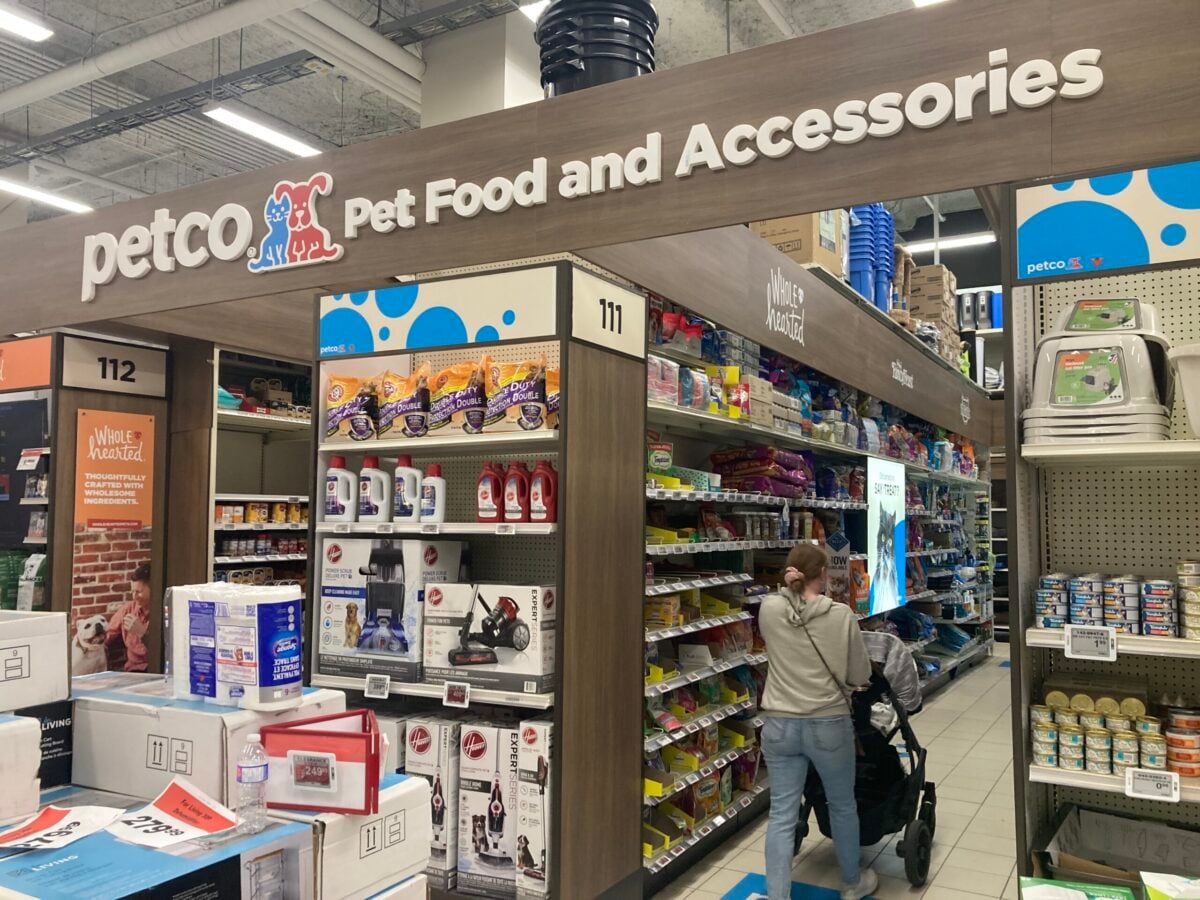
Canadian Tire and Petco Shop-in-Shop (Image: Canadian Tire)
Reports, Studies and White Papers
Leger (2025): Ranked Ren’s Pets and Global Pet Foods among the top in-store experiences across Canadian retail, citing high levels of consumer satisfaction and localized service.
Pet Valu Financial Report (2025): Pet Valu’s 2024 performance was labeled a “dynamic year,” with robust growth in both earnings and category penetration.
PIJAC Canada Consumer Insights Report (2024): The report identified post-pandemic growth in pet ownership and noted increased consumer expectations around pet nutrition, service accessibility, and sustainability.
Euromonitor International – Pet Care in Canada (2024): The report forecasted continued growth in Canadian pet care spending through 2027, driven by premiumization, innovation, and aging pet populations.
CMHC Urban Pet Ownership Study (2023): Canada Mortgage and Housing Corporation identified in their Fall 2024 Rental Market Report that pet ownership as a rising factor in urban rental preferences, impacting building design and retail amenities.
Retail Insider’s Opinion
Retail Insider believes that Pet Retail in Canada is positioned for long-term growth and category expansion. While inflationary pressure and economic uncertainty may impact discretionary spend in other areas, pets remain a high-priority focus for Canadian households. Emerging opportunities in digital retail, sustainability, and health-driven innovation continue to reshape the industry’s future.
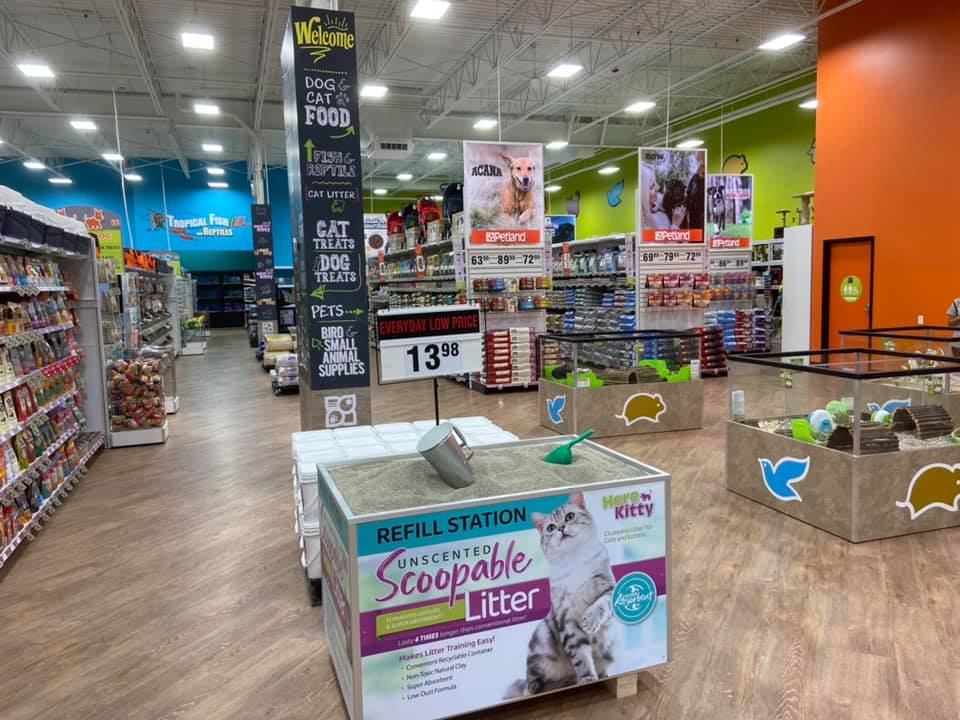
Petland Polo Park in Winnipeg (Image: Petland Canada)
The Impact on Canada
Pet retail influences a wide range of Canadian economic sectors—from agriculture and supply chain logistics to technology and health services. It’s becoming a defining category for neighborhood retail, especially in urban communities where foot traffic and community services are converging. Continued innovation and alignment with wellness, sustainability, and emotional value will ensure its growth trajectory well into the future.
Emotional Resilience: Pet retail spending remains one of the most emotionally anchored forms of discretionary spending in Canada. Regardless of income level, Canadians are inclined to prioritize pet care, often placing pet needs on par with family necessities.
Socioeconomic Inclusivity: Unlike luxury goods, pet retail crosses all income brackets. Essential categories like food, grooming, and basic health are consistent across demographics, making the industry broadly impactful.
Retail Differentiation: Pet retail is becoming a point of differentiation for grocery, pharmacy, and lifestyle retailers seeking to increase traffic and loyalty by appealing to emotionally engaged consumers.
Urban Integration: As more Canadians live in multi-family dwellings, demand is growing for urban-format pet services, micro-retail, and pet hospitality innovations, helping shape the evolution of convenience retail in cities.
The Pet Retail segment is at a pivotal moment, and its continued success will depend on how well retailers respond to evolving consumer values while delivering value through innovation, personalization, and community connection.