Home Blog Page 465

Happy Belly Food Group announces 10th consecutive record quarter

Photo: Happy Belly Food Group

Happy Belly Food Group Inc., a leading consolidator of emerging food brands announced Thursday its interim financial results and corporate update for the quarter ended September 30.

“I am happy to see the progress that our management team, alongside our brand partners and franchisees achieved in Q3. Our third quarter results demonstrate the strength of our brands and the power in creating what is quickly becoming the leading consolidator of emerging brands in Canada,” said Sean Black, Chief Executive Officer of Happy Belly

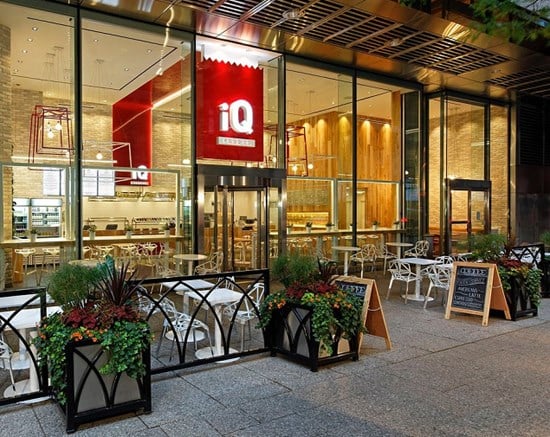
“With our 10th consecutive record setting quarter in total revenues, you can see our commitment to creating value for our shareholders as we continue to execute our strategy. We are delivering organic and inorganic growth across the company’s operations meanwhile staying financially disciplined. Our accretive M&A strategy included the acquisition of IQ Foods in September 2024, which included four restaurants located in the downtown core of Toronto, Ontario.

“In Q3 2024, we once again achieved record revenues and positive EBITDA for BOTH our QSR and CPG segments. Each quarter has resulted in significant QoQ momentum while continuing to accelerate our growth, improve operations within our businesses and deliver strong and consistent results for our shareholders. We are very focused on delivering more organic growth in Q4 2024 and throughout 2025.”

Its brands include Holy Crap Cereal, Heal Wellness, Lumberheads, Lettuce Love Cafe, Joey Turks Island Grill, PIRHO, Rosie’s Burgers, Yolks, Via Cibo. It also has IQ Foods and Salus Fresh Foods.

“We’ve been active and very happy with where we’re at,” said Black. “It’s been a few years we’ve been working towards this. Now we’re finally at a point where we’re getting more known. So it’s a little easier with landlords, a little easier with M&A (mergers and acquisitions) as you build a bit of a track record in the industry.”

Happy Belly continues to grow its portfolio

By the end of the year, Black said the company anticipates having about 50 restaurants open. It has about 40 stores open currently.

“We have 421 contractually committed deals with our brands. When someone says what’s the potential. That’s the key here for us to continue to deliver on that growth,” he said. “It’s a maximum 10-year timeline.

“The first one that’s probably going to be 50 stores will be Heal Wellness . . . I’m trying to build a diversified portfolio for real estate access . . . We’re looking for brands that are emerging. We’re going to open net new units in every single brand in our portfolio this year. That’s key. Everyone of them is experiencing growth. Different levels of growth. We’re seeing significant same store sales across the board.

Black said the company will have 10 to 15 brands in the near future.

“We have an appetite for M&A.”

Financial Highlights

  • System sales across QSR brands increased 488% in Q3 2024 to $8.52M versus $1.45M in Q3 2023 and increased 13% versus $7.55M in the prior quarter. The increase is attributed to the organic growth with baseline restaurants and the increase in restaurant count from 10 in Q3 2023 to 35 opened as at Q3 2024;
  • Total revenues increased 69% in Q3 2024 to $2.54M versus $1.51M in Q3 2023. Furthermore, quarter over quarter total revenues increased by 10.4%. The significant growth was primarily driven by organic product sales growth in both the Quick Service Restaurants (QSR) and Consumer Product Goods (CPG) segments of the business, combined with new franchise fees and royalties collected on franchised restaurants;
  • Total product sales from both the QSR and CPG segments increased 26% to $1.87M in Q3 2024 as compared to $1.48M in Q3 2023. Both segments continued to be profitable once again this quarter. QSR EBITDA reached $0.68M versus $0.28M in 2023, representing an increase of 36%. CPG EBITDA reached $0.11M versus $0.05M in 2023, representing an increase of 120%;
  • Normalized adjusted EBITDA increased 265% during the quarter to reach $198,219, as compared to a normalized adjusted EBITDA loss of ($119,820) in Q3 2023. Furthermore, Q3 2024 resulted in a net comprehensive gain of $39,391 (adjusted for non cash expenses) versus a net comprehensive loss ($320,218) in Q3 2023 and a net comprehensive loss ($311,721) in the prior quarter. It is also the first quarter in Company’s history to achieve a net comprehensive gain from cash operating activities;
  • The Company continues to maintain a healthy net working capital position of 3.59M in Q3 2024 as compared to $0.80M in Q4 2023 and $1.80M in Q3 2023. Total cash and cash equivalents were $3.64M in Q3 2024 driven by two non-brokered private placements completed in 2024 ($3M combined) through the issuance of convertible debentures. The closing of the private placements strengthens our balance sheet and provides us the ability to accelerate our growth strategy and executing material M&A opportunities with strong positive cash flow, when the opportunity presents itself;
  • 4 net new restaurant openings during Q3 2024 and 4 via acquisition (IQ Foods Co.). The Heal Lifestyle brand opened three locations in Sherwood Park, AB (July 20, 2024), West Abbotsford, BC (August 9, 2024) and Toronto, ON (September 3, 2024). The Joey Turks Island Grill brand opened one location in Scarborough, ON (August 15, 2024).

Related Retail Insider articles:
Levi’s continues to expand its Canadian footprint (Interview)

Photo: Levi's

The Levi Strauss & Co. has been busy expanding its across Canada.

Three new stores opened in early November, all in regions where e-commerce sales and consumer demand have been particularly strong, said the company.

The latest store openings mark the first new permanent locations in Canada in two years, bringing the total number of Levi’s stores in the country to over 50. Earlier this year, two other Levi’s stores were relocated in the Yorkdale Shopping Centre and Vaughan Mills shopping mall in Toronto to prioritize premium and larger mall locations as the brand strengthens its presence across Canada, added the retailer.

The company said new locations in Kelowna and Toronto will help expand the brand’s presence in British Columbia and Ontario, while a third store in the Midtown shopping centre in Saskatoon is the first owned and operated location in the province. These new stores added to the recent opening of an important location at the DIX30 shopping centre in Montreal this summer, an important new location in Quebec, it added.

Vicky Skelton
Vicky Skelton

“What’s special about these stores is that they showcase the most premium Levi’s experience for our fans,” said Vicky Skelton, managing director for LS&Co. Canada. “If you want to be inspired and are in search of the perfect denim lifestyle outfit, swing by a Levi’s store, and one of our experienced stylists will be more than happy to help you out.

“The brand has resonated really well with the Canadian consumer for decades. As I’m exploring the Canadian market, I know that many of us have a Levi’s story. Many people globally do.

“So it’s really important to us to make sure to our brand to the consumer where they like to shop. As the Canadian market has evolved, as malls have evolved in this market, there’s definitely an opportunity, or we’ve identified an opportunity, for us to show up in those malls and take the brand to consumers in the most elevated way in our premium store environment.”

The retailer said it has been in the Canadian market for decades and it has created longstanding, mutually beneficial partnerships throughout the region — and there’s still so much potential to continue to grow in the country. 

Skelton said the retailer has looked at its market data to determine where the Canadian consumer wants to see the brand have a physical presence.

“British Columbia and Ontario will remain key regions for Levi’s in 2025,” said the company, adding that new store openings in Canada are expected to continue at a similar pace next year.

“Meanwhile, momentum keeps building in the direct-to-consumer (DTC) and women’s businesses in the country, two key strategy areas for LS&Co. globally. Overall, Canada holds great potential for LS&Co. over the next few years,” it said.

“Denim lifestyle categories like denim dresses, skirts, jackets and shirts will be ongoing priorities to keep the women’s business strong in the year ahead. The team is particularly excited about the denim on denim (on denim) style for both him and her, a look at the heart of our brand expression. And as we continue into the fall and winter months, Levi’s will lean more into outerwear and sweaters, bringing functional, warm, fashion-leading options to the Canadian consumers as they plan for the colder months.”

“The goal is to bring the full outfit to our consumer — not just the jeans,” explained Skelton. 

Maintaining a holistic channel strategy

The retailer said it is maintaining a holistic channel strategy. Its DTC-first strategy does not mean DTC only — and this mindset applies to every region in which it operates, it said.

“In tandem to expanding the Levi’s store fleet, the team has also focused on enhancing the Levi’s presence and experience across a number of partner stores, including our most recent example at the Mark’s Queensway location,” added the company.

“Wholesale remains a key part of our business and plays an integral role in our overall growth ambition,” said Skelton. “Our focus continues to be on the partnerships with key wholesalers that share and support our strategic priorities, and to deepen existing partnerships as we further our reach and accessibility to our fans across the region.

“Canada is such a vast geography with a relatively small yet diverse population. We’re always looking at ways to innovate around that and reach even more fans.

“We have a strong focus on DTC globally. We’re DTC first from a strategic perspective and so that means the imperative is on us to look at our DTC opportunities and really bring to them life and that leads us to the three new store openings that you’ve seen in the last few weeks.

“It’s important to us to get the right location to meet the consumer where they are today and delight them. Certainly it will remain a big focus for us in Canada as we go into 2025.”

She said a holistic brand strategy is really important in this market.

“This is a very large geographical market. We have a large land mass here. And we’re not going to open a store in every single location. So it’s really important that we have partners that can help bring Levi’s to the consumer in those locations where we might not choose to open a store,” explained Skelton. “Having that diversity across our channels remains extremely important to the overall growth plans in Canada.”

Skelton said consumers receive not only an elevated retail experience in the stores but “our stylists are so knowledgeable about what the right fit might be for you, what the right denim lifestyle outfit might be for you. So you get that customer service as well as the overall assortment and the experience of Levi’s.”

That will lead to customer loyalty, she added.

Recently, Levi’s launched a campaign with global icon Beyoncé.

Related Retail Insider articles:
Midtown welcomes first Levi’s owned and operated store in Saskatchewan

Medical-Retail mash-up transforming healthcare delivery

Photo- Max Mishin
Photo- Max Mishin

Anyone who’s visited a hospital knows it can often be a stressful and time-consuming experience. Provincial governments are trying new partnerships and delivery models to improve access to healthcare and the retail sector is benefitting from the shift.

According to CBRE’s latest Canada Retail Rent Survey, the medical service, or retail health, sector is seeing increased market penetration. Improved government funding and the entry of international medical and pharmaceutical companies are moving healthcare delivery beyond the hospital.

Kate Camenzuli
Kate Camenzuli

“There is an immediate need for more healthcare support across Canada,” says CBRE’s Toronto-based retail broker Kate Camenzuli, who works with medical service providers looking for commercial spaces. “Retail is built in proximity to the population, often with transit in mind. It can provide convenient solutions for medical practitioners and support better healthcare delivery.”

Finding the Right Fit

While your local coffee shop can slot in just about anywhere, medical services have specialized requirements for where they can operate.

MRI clinics, for example, can’t be located near subways to ensure vibrations don’t interfere with imaging. Some medical tenants need locations near hospital systems, while others need extra storage space for equipment and pharmaceuticals.

“Medical services can take many different shapes – retail space, offices or even flex-industrial facilities,” Camenzuli says. “The most critical factor is having the right zoning and understanding how each space can support a client’s operations.”

Creating Partnerships

Public-private partnerships have played a vital role in the growth of the medical service sector across Canada.

In British Columbia, the partnership healthcare model encourages the collaboration of health authorities, service providers and vendors to support better healthcare delivery. For instance, some audiology clinics and surgical suites have partnered with hospitals to handle overflow.

CBRE’s Vancouver-based broker Adrian Beruschi says this has led to the expansion of medical service providers into new retail and mixed-use developments. “Medical service providers in B.C. have had an insatiable appetite to acquire retail properties in new developments in mature and emerging neighbourhoods. Medical and dental users, both chains and startups, are the primary candidates for purchasing retail strata units in new developments.”

It’s a similar story in Ontario, where medical retail groups and private practices affiliate themselves with hospitals to handle high demand. Hearing, optical and cosmetic surgery clinics have been opening new locations to offer private or public services, and some doctors have partnered with other medical professionals to provide a variety of services under one roof.

“These new models can help bridge the gap between public healthcare needs and private sector capabilities,” Camenzuli says. “Retail real estate is helping the medical sector progress and is supporting the evolution of how patients access healthcare in Canada.”

Canada’s Global Appeal

Canada can be attractive to international health service companies, with the public healthcare system offering different collaboration and funding opportunities.

Camenzuli recently assisted a partnership between an international pharmaceutical company and a domestic organization to open five plasma centres across Ontario. She is also working with MRI providers and audiology clinics expanding their services in the province.

“Companies that understand the nuances of the Canadian healthcare sector and that find the right partners have the potential to make a large impact,” says Camenzuli. “This collaborative approach will help create new spaces for healthcare delivery and support economies of scale.”

Just the Beginning

Camenzuli is confident that Canada’s medical service sector will continue growing as the population expands and ages. “We’re living longer than ever, so the demand for medical services is increasing rapidly,” she says. “We need to look at traditional real estate uses with fresh eyes to support the innovation of healthcare delivery.”

She expects greater integration of medical services within the community as private and public groups partner on long-term care, outpatient services and specialized treatment centres for dementia, addiction, mental health and fertility. She also predicts further consolidation of dentist offices and small medical practices with limited succession planning, as well as growth in the radiology space to address backlogs in hospitals.

“Promising innovation and talent are coming into this space,” says Camenzuli. “It’s exciting to support this shift and be more than just real estate; we’re helping improve the wellbeing of Canadians.”

(Submitted content from CBRE)

Related articles:

Restaurants Canada applauds relief on GST

Photo: Mario Toneguzzi

Restaurants Canada said it is pleased by today’s announcement from the federal government of a two-month GST holiday on restaurant meals, among other products.

This is a big win for the restaurant industry and comes after months of relentless advocacy from Restaurants Canada for meaningful cost relief for our sector and for Canadians, it said in a news release.

Kelly Higginson
Kelly Higginson

“The restaurant industry is doing worse today than at any time in recent history, including the pandemic. More than half (53%) of restaurant companies are operating at a loss or just breaking even, up from 12% pre-pandemic. They are seeing fewer guests and smaller cheques as a result of Canadians reducing their discretionary spending during the affordability crisis. At the same time, restaurants are still carrying heavy debt loads and all their operating costs have gone up by 20% or more,” said Kelly Higginson, President and CEO, Restaurants Canada, in a statement.

“The recent drop in foot traffic has been deeply discouraging for our operators as they head into the challenging winter season. Today’s announcement restores some much-needed hope to our industry and we are optimistic it will translate to increased spending at local restaurants across the country.”

When GST was introduced in 1991, it led to an immediate reduction in meals consumed at restaurants, especially as other food products sold at grocery stores were exempt. The foodservice industry suffered an 11% decline in real sales, 7% of which was attributed to GST. Based on Restaurants Canada’s econometric model, today’s announcement could result in a 5% increase in sales for the average restaurant. For a restaurant with $1.5 million in sales, this would result in an additional $5,700 in sales per month, said the national organization.

More Canadians will be able to celebrate with loved ones at a restaurant

“Today’s announcement by the Prime Minister means that more Canadians will be able to celebrate with loved ones at a restaurant, have lunch with colleagues or treat themselves to a morning pastry on their way to work. We also appreciate that the relief will be extended over January, which is typically the lowest time of the year for our industry, and right through to Valentine’s Day,” added Higginson.

“We congratulate Prime Minister Trudeau and Deputy Prime Minister Freeland on this significant announcement and encourage them to look at other ways they can support Canadians through this difficult time. Restaurants Canada has been urging the government to reduce EI payroll tax by 2% to put more money back in workers’ pockets and help employers invest in hiring and wages.”

Restaurants Canada is a national, not-for-profit association advancing Canada’s diverse and dynamic foodservice industry. Restaurants are a $120 billion industry employing nearly 1.2 million Canadians and is the number one source of first-time jobs in Canada.

The Canadian Federation of Independent Business (CFIB) said it welcomes any tax cutting measure, but adds that narrow, temporary sales tax holidays can add confusion and administrative complexity for small business owners. 

Dan Kelly
Dan Kelly

“The lack of consumer demand is currently the top limitation on sales growth for small firms, cited by 53% of CFIB members. While a temporary sales tax cut will help boost demand in some sectors, like restaurants, in the slow post-holiday period, Canadians and Canadian businesses really need permanent tax relief,” said Dan Kelly, the CFIB’s President.

“The temporary sales tax holiday will be reasonably straight forward and welcome in some sectors like restaurants and food service businesses but may add confusion and complexity for general retailers with both taxable and new exempt items. It will require retailers to reprogram point of sale systems twice in a two-month window. In addition, some small manufacturers and retailers will undoubtedly question why they are excluded from the exemption. It is hard to explain to a small producer of spirits why their products are taxed while other alcoholic beverages are not.

“It is good news that government and political parties are shifting their focus on reducing taxes rather than just increasing them. But Canadians need permanent, not temporary tax relief. Reducing the small business corporate tax rate or payroll taxes like Employment Insurance and CPP premiums are among the top priorities for small business owners.”

The CFIB also said that six weeks after the sales tax holiday ends in mid-February, government plans to hike the carbon tax by 19% on April 1 while cutting the carbon rebate to small firms by nearly half. Freezing, then scrapping the carbon tax, is an even bigger priority – supported by 83% of small business owners.

The Retail Council of Canada (RCC) said it welcomes today’s sales tax relief announcement from the federal government. The removal of GST and HST on a sizeable list of goods will create major tax savings for Canadians, along with economic stimulus for our industry, both in the holiday season and in the first six weeks of the new year, which is typically the slowest period of the year for retail.

Matt Poirier
Matt Poirier

“While we would have preferred to see a broader range of goods included in the tax relief measures, having more money overall in consumers’ wallets should also benefit sellers of other goods not captured in today’s announcement,” said Matt Poirier, VP Federal Government Relations, RCC.

“RCC understands that federal-provincial discussions have taken place with the non-harmonized provinces with their own provincial sales taxes (British Columbia, Saskatchewan, Manitoba and Quebec).  Retailers are asking that these provinces follow suit with today’s announcement so that full tax relief on these goods can benefit Canadians nationwide.

“And if we have one further ask on our “Santa’s List”, it is that the parties come to a swift settlement in the Canada Post strike, so that purchases incentivized by this new measure can be delivered on time and Canada-wide ensuring a smooth and efficient holiday season both for retailers and consumers.”

The Canadian Taxpayers Federation is calling on the federal government to make its temporary GST cut permanent and provide further tax relief.

Franco Terrazzano
Franco Terrazzano

“It’s good to see Canadians are finally getting some relief from this government’s high-tax burden,” said Franco Terrazzano, CTF Federal Director. “This tax cut will save Canadians money during an expensive time.

“But Prime Minister Justin Trudeau needs to make this relief permanent, because if he re-imposes sales taxes on diapers and rotisserie chickens after the holidays, it will be unacceptable to taxpayers.”

Today, the federal government announced it will remove the GST from children’s clothes, toys, diapers and car seats, as well as Christmas trees, beer, wine and cider, restaurant meals and prepared groceries, among other items, said the Federation.

The GST cut will save taxpayers an estimated $1.6 billion over two months, according to the government. 

Ottawa plans to end the GST holiday on Feb. 15 and re-impose the GST on all these items, including car seats and prepared groceries.

“The tax relief is helpful now, but do politicians really think taxpayers will be able to afford to pay more for all of these essentials on Feb. 16?” Terrazzano said. “Ottawa made life more unaffordable by hiking carbon taxes, payroll taxes, alcohol taxes and capital gains taxes, so the government needs to go beyond a temporary tax cut to undo the damage it has done.

“After raising taxes on everything all the time, temporary relief won’t cut it.”

Related Retail Insider articles:

What Is a Hybrid Retail Store? A Beginners Guide

(Image source: Maclocks)

With studies showing that 56% of adult consumers prefer to shop both online and in person at physical stores, the retail landscape is continuing to evolve at a rapid rate. In fact, the hybrid retail journey has quickly become the primary buying method for 27% of consumers.

In this guide, we explore what makes a hybrid retail store and why it has its benefits to both retailers and consumers.

Understanding Hybrid Retail Stores

A hybrid retail store combines the elements of a physical store and a digital shopping experience. By blending the best of both worlds, it creates a shopping experience that is convenient, engaging, and tailored to various needs.

For many of us, there are benefits to both online and in-store shopping. Although it can be great to feel the quality of goods, try on clothing, or browse new collections in store, the option to order to our homes without having to find time to hit the shops maximizes convenience.

The below graph shows that both types of shopping are incredibly popular across all age groups, and with 89% of Americans surveyed confirming that they shop in a hybrid format at least some of the time, it’s a no-brainer for businesses that hybrid shopping is the way forward.

A graph titled Percentage share of consumers in the United States that shopped in-store and online on a daily or weekly basis in 2021, by generation

(Image source: Tidio)

How Does a Hybrid Retail Store Work?

There are key characteristics of hybrid retail stores which are designed to suit the modern shopper. 

A strong omnichannel strategy is necessary to seamlessly combine online and in-store shopping, allowing customers to interact with a brand through various avenues. Utilizing mobile is key in today’s age, ensuring content is optimized for mobile and implementing QR codes in any offline marketing.

Digital kiosks are another great feature of hybrid stores. Whether they allow store visitors to place orders for home delivery, access more information about a product, or even help a shopper visualize a larger product in their home using augmented reality, the advanced technology capabilities are endless. 

Nike has utilized kiosks in certain showrooms, allowing visitors to order the products they can see displayed in front of them. This enables them to maintain a chic and clean aesthetic without compromising on sales.

On the reverse, hybrid shopping can also offer the option for online shoppers to pick up their purchases at the physical store–great for customers who want to avoid shipping fees or don’t want to wait around for their order to arrive. Walmart is a good example of this, introducing curbside pickup so customers can order groceries online and have them brought directly to their cars.

grocery-pickup-drive-thru-canopy.jpg

(Image source: Supermarket News)

The Benefits Of Hybrid Retail Stores

By combining online and offline sales channels, hybrid retail expands the reach of a business. Allowing customers to make purchases either in a physical store or through the website means convenience is high and sales can be made to a wider audience.

If a customer is visiting a store and finds that the product they want has either sold out or is not available in their size/color, the opportunity for them to be able to get it ordered either to the store or to their home means the retailer doesn’t miss out on the sale.

As businesses provide various touchpoints with which consumers can interact, they are able to build stronger relationships by creating personalized experiences. Targeted email marketing campaigns are a great tactic, either using sales data to promote products of interest, or sending discounts that encourage store visits since they can only be used in the local store.

By combining data from both online and offline sales using a retail POS system, a retailer is able to gain insights that tailor their strategy. From being able to identify any best-sellers and areas of demand, they are able to manage their inventory more effectively moving forward. Utilizing these data insights means the likelihood of over or under-ordering is minimized as sales patterns can be monitored.

The Future Of Hybrid Retail

Rebecca Barnatt-Smith

As buyer behaviour continues to evolve, the hybrid retail model is expected to keep on growing in both popularity and capabilities.

By delivering on convenience, flexibility, and personalization, the needs of the modern shopper are met and a retailer is able to grow their customer base.

With new technologies forever emerging, the future of the industry is expected to keep on growing as retailers find innovative new ways to enhance the shopping experience. This could include further advancements in payment methods, improved data analytics, and even more overlap when it comes to online and offline platforms.

(Content submitted by Rebecca Barnatt-Smith, Content Marketing Manager at Solvid Digital)

Related articles:

Metro Expands Discount Stores After $1B Supply Chain Overhaul

Photo: Metro

Metro Inc., one of Canada’s leading grocery and pharmacy retailers, is charting a path for growth in 2025, with plans to open 12 discount stores and expand its loyalty and digital offerings. This comes after a six-year, $1 billion supply chain modernization project was successfully completed.

The Montreal-based retailer, which operates Metro grocery stores and Jean Coutu pharmacies, has finalized its multi-year supply chain overhaul. The project included the establishment of automated fresh and frozen food distribution centres in Quebec and Ontario. The recent completion of the Ontario fresh food facility marks the final phase of the initiative, enhancing capacity and operational efficiency.

“This transformation will provide capacity for future growth and efficiency while strengthening our market position,” said Eric La Flèche, Metro’s president and CEO, during the company’s fourth-quarter earnings call.

Eric La Flèche, Metro’s president and CEO

The investments are expected to streamline operations across Metro’s network of over 950 grocery and pharmacy locations in Ontario and Quebec, improving service levels and lowering costs.

Earnings and Revenue Performance

Metro’s fourth-quarter results reflected resilience amid economic headwinds. The company reported earnings of $219.9 million, slightly below last year’s $222.2 million due to the shorter quarter and the impacts of a labour strike earlier in the fiscal year. Adjusted profit per diluted share rose to $1.02, compared to $0.99 in the same quarter last year.

Same-store sales, a key retail performance metric, increased by 2.2% for groceries and 5.7% for pharmacies. Pharmacy gains were driven by a 6.8% rise in prescription drug sales and a 3.3% increase in front-store sales, which include health and beauty products and over-the-counter medications.

Expanding Discount and Pharmacy Networks

Metro plans to open 12 new discount stores in 2025, including conversions of existing full-service locations to banners like Super C in Quebec and Food Basics in Ontario. This follows nine new grocery store openings in 2024, including three Super C conversions.

The company also invested heavily in its pharmacy network, completing 28 renovations in the past fiscal year. Plans for 2025 include 30 additional pharmacy projects, comprising 12 expansions and 18 renovations.

Discount banners continued to outperform other segments during the quarter as inflation-conscious shoppers sought lower-priced options. “We see opportunities to expand our discount network in both Ontario and Quebec,” La Flèche said.

MOI Loyalty Program Drives Engagement

Metro launched its MOI Rewards program in Ontario in October, quickly attracting over one million members within four weeks. The program replaces Metro’s previous partnership with Air Miles, allowing the company to focus on building customer loyalty through its in-house platform.

“Promotional penetration was up again this quarter compared to last year, and private-label sales continue to outpace national brands,” La Flèche noted, reflecting a shift toward value-driven shopping habits.

Metro reported a 27.6% increase in online grocery sales year-over-year, supported by third-party partnerships for same-day delivery and the expansion of its click-and-collect services to discount banners like Super C in Quebec. Plans are underway to introduce similar services to Food Basics in Ontario in 2025.

Inflation and Competitive Pressures

Canadian grocery retailers continue to face challenges from inflation and increased competition. Statistics Canada reported a 2.7% year-over-year rise in grocery prices in October, exceeding the overall inflation rate of 2%. Metro’s internal food basket inflation metric, based on frequently purchased goods, was also higher than the Consumer Price Index for the quarter.

Rival Loblaw is aggressively expanding its discount banner, Maxi, by converting full-service Provigo locations in Quebec. Metro’s focus on discount and private-label offerings positions it well to compete in this segment. Loblaw also launched a No Name grocery concept in Ontario and is expanding its No Frills banner, including several new stores in downtown Toronto.

Positioned for Long-Term Growth

With its supply chain transformation complete and plans to expand both discount stores and pharmacy operations, Metro expects to return to profit growth in fiscal 2025. The company reaffirmed its medium- and long-term target of 8% to 10% annual growth in adjusted earnings per share.

Grape Witches uncorks new bottle shop and wine bar at Waterworks Food Hall (Photos)

Photo: Grape Witches

Grape Witches has opened a new bottle shop at Waterworks Food Hall, Toronto’s recently-opened culinary destination in the heart of King West. 

The wine shop and bar complements the Food Hall’s dynamic offerings, with an exciting and ever-evolving selection of over 250 organic, biodynamic, and natural wines as well as non-alcoholic options in a lively, community-oriented space.

Nicole Campbell
Nicole Campbell

“Wine can traditionally be so stuffy, but there’s so much joy in the creativity, voices, and places that go into it behind the scenes. Our goal has always been to share that joy as widely as possible (without the attitude) and bring folks together over dynamic flavour with a story to tell,” said Co-Founder & GW director Nicole Campbell

The Waterworks location, she added, is more than just a shop; it’s an immersive hub for learning, tasting, and gathering.

 “We’re taking all the things we’ve learned from our community over the years and truly opening the space of our dreams.”

Eve Lewis
Eve Lewis

“We’re thrilled to welcome Grape Witches as a vibrant addition to the Waterworks Food Hall and a community hub where everyone, from seasoned wine enthusiasts to curious newcomers, can explore the world of wine,” said Eve Lewis, CEO of Woodcliffe Landmark Properties. “Our goal is to create a welcoming and inclusive space where people can

learn, connect, and discover new favourites. With educational events and a focus on building community, we expect Grape Witches at Waterworks will become a beloved destination for wine lovers.”

Located in a meticulously restored and repurposed heritage building, the Waterworks Food Hall is home to 15 cuisines, three bars, 12,000 square feet of event space and three outdoor patios. The former City of Toronto machine shop was redeveloped by Woodcliffe Landmark Properties and MOD Developments and meticulously restored by a deep bench of architectural and design talent, including Diamond Schmitt, ERA Architects, Steven Fong Architect, DesignAgency, Cecconi Simone and Futurestudio.

Photo: Grape Witches

Woodcliffe Landmark Properties is a boutique residential and commercial real estate development company passionate about preserving architectural heritage and creating intelligent, innovative, and considered designs. They have an award-winning portfolio of notable landmarks in Toronto, such as the North Toronto Station, King James Place, The Shops of Summerhill, and the Flatiron Building.

Grape Witches was founded in 2015 by industry veterans on a mission. What began as a series of parties and educational events to share and demystify the world of organic, biodynamic, and natural wines has evolved into Toronto’s go-to wine authority, with two bottle shop and wine bar locations, an import agency, Ontario’s most unique Wine Club, and more.

The company said the new location marks a pivotal step for it as the Toronto-grown business expands beyond its existing shop at Dundas and Ossington to make natural wine producers and hard-to-find bottles more accessible to a broader audience.

Concept began as a series of parties and educational events

Founded in 2015, Grape Witches said the concept began as a series of parties and educational events pouring the rare and delicious organic, biodynamics, and natural wines its team loves. Since then, the brand has expanded to become Toronto’s go-to authority on all things wine, with undertakings including a bottle shop and wine bar, an import agency, and an event hub and wine club. 

Designed by Toronto powerhouse Futurestudio, the bottle shop reflects the community-driven ethos shared by Grape Witches and Waterworks, incorporating custom furnishings and art installations by local makers and artists including Paul Georgio, Katie Kohls, Susan for Susan, and Laura Dawe, it said.

“The result is a warm space, complete with a cozy rail bar that seats eight, and bespoke shelving and displays for over 250 wines. The shop also has a patio for sipping wine flights and recommendations in the sunshine. Grape Witches’ knowledgeable, passionate staff will host programming including education hours and events to bring people into the world of natural wines.”

Related Retail Insider articles:

Photo: Grape Witches

Versace Opens New Boutique at Yorkdale in Toronto

New Versace store at Toronto's Yorkdale Shopping Centre. Photo: Craig Patterson

Italian luxury brand Versace has unveiled its newest boutique at Toronto’s Yorkdale Shopping Centre, marking an expansion and relocation within one of Canada’s most prominent luxury shopping destinations. 

Situated in Yorkdale’s newly developed luxury wing, the 3,783 square foot store aims to elevate the brand’s presence by offering an immersive and high-end shopping experience that reflects its iconic aesthetic. Versace moved from another location in the mall where it had operated for about a decade. 

Inside the new Versace store at Toronto’s Yorkdale Shopping Centre. Photo: Craig Patterson

A Design Masterpiece: Inside the New Yorkdale Versace Boutique

The boutique is designed as a journey through multiple rooms, each highlighting a different aspect of Versace’s offerings. Men’s and women’s ready-to-wear collections are housed in their respective rooms, providing a curated and intimate environment. Meanwhile, a dedicated women’s footwear room allows customers to explore Versace’s chic and bold shoe collections, including a range of sneakers, in a gallery-like setting that emphasizes luxury craftsmanship.

The interior features light pink and white tiles arranged in a geometric pattern, enhancing the sense of modern sophistication while echoing Versace’s penchant for bold and playful design elements. The carefully arranged displays, plush seating areas, and bespoke lighting add to the boutique’s exclusive atmosphere.

Inside the new Versace store at Toronto’s Yorkdale Shopping Centre. Photo: Craig Patterson
Men’s fashions inside the new Versace store at Toronto’s Yorkdale Shopping Centre. Photo: Craig Patterson

Yorkdale’s Role as a Luxury Shopping Destination

Yorkdale Shopping Centre’s new luxury wing is part of an effort to solidify the mall as a leading destination for high-end retail, featuring 65,000-square-feet of space that accommodates a range of renowned luxury brands. Other brands in the wing include recently opened locations for Loewe, Jimmy Choo, Brunello Cucinelli, and Loro Piana, with other high-end names such as Rimowa on the way. 

The opening of the new Yorkdale boutique follows the closure of Versace’s flagship location on Yorkville Avenue last month. Opened in 2019, the Yorkville store was a standout with its two-level layout and design by Gwenael Nicolas. Its closure, however, was part of a plan to expand an adjacent retailer into the space. 

Inside the new Versace store at Toronto’s Yorkdale Shopping Centre. Photo: Craig Patterson

Expansion Beyond Toronto: Upcoming Stores in Montreal and Vancouver

Versace’s Canadian expansion is continuing under the direction of parent company Capri Holdings. That includes its first standalone boutique in Montreal, opening at the new Royalmount development this month. 

Additionally, in 2025, Versace will open a boutique at Oakridge Park in Vancouver, further cementing its West Coast presence. Versace operated a standalone store in downtown Vancouver from 2015 until 2020 — the space on Thurlow Street is now occupied by Thom Browne. A Versace boutique also operated inside luxury multi brand retailer Leone from 1987 until its closure in 2020. 

Women’s footwear salon inside the new Versace store at Toronto’s Yorkdale Shopping Centre. Photo: Craig Patterson

In Canada, Versace also operates outlet stores at the Toronto Premium Outlets near Toronto, and at the McArthurGlen outlets near Vancouver. 

David Wedemire and Stan Vyriotes of DWSV Realty represented Versace in the transaction with the mall’s landlord Oxford Properties. DWSV negotiated Versace’s other leases as well, and also negotiated serval other details for the luxury wing including a recently opened Jimmy Choo store.

Gianni Versace S.p.A. is one of the leading global fashion design houses. Under the Artistic Direction of Donatella Versace since 1997, the brand designs, manufactures and distributes fashion and lifestyle products including haute couture, women’s and men’s ready-to-wear, jewelry, watches, accessories, fragrances and home collection. The brand was founded by the late Gianni Versace in 1978. 

Gianni Versace S.r.l. is part of Capri Holdings Ltd. global fashion luxury group, formerly Michael Kors Ltd., which also owns UK luxury footwear brand Jimmy Choo. Capri Holdings (then ‘Michael Kors’) acquired Versace for US $2.12 billion in September of 2018.

More from Retail Insider:

Progress Retail, Fleet Feet Partner to Transform Retail Ops

Progress Retail has entered into a multi-year partnership with Fleet Feet, the largest U.S.-based franchisor of specialty running stores. The strategic collaboration is set to enhance in-store operations and customer engagement across Fleet Feet’s 275 locations through Progress Retail’s comprehensive platform, which integrates training, task management, and employee communications solutions.

“Fleet Feet has a storied reputation for delivering deep customer service,” said Ray Riley, CEO of Progress Retail. “We’re excited to partner with their team and support them in streamlining store operations and empowering their Outfitters to continue doing what they do best.”

Elevating Training and Employee Development

Ray Riley

Fleet Feet, known for its focus on creating community hubs and personalized shopping experiences, will benefit from Progress Retail’s single application for retail operations and learning. The platform delivers dynamic, trackable training content with easy authoring capabilities meeting the needs of global retailers. This approach ensures Outfitters, as Fleet Feet refers to its associates, remain up-to-date with evolving customer needs and deep product knowledge.

“Fleet Feet’s dedication to training aligns well with our platform’s capabilities and training and development focus,” Riley explained. “They do a fantastic job of providing vital skills development to their workforce , and we’re honoured to support them in continuing to deliver top-tier service.”

“Fleet Feet is excited to partner with Progress Retail to further elevate our in-store operations and employee engagement across our network of stores,” said Matt Werder, Vice President of Retail Operations for Fleet Feet. “We’re confident that Progress Retail’s platform will empower our store teams with the support and resources they need to provide the best experience for our customers while remaining deeply connected to the communities we serve.”

Improving Efficiency with Smart Task Management

In addition to its training capabilities, Progress Retail’s task management tools simplify daily store operations. Routine processes such as opening and closing checklists, but also more contextual visual merchandising tasks, and other operational duties are automated and digitized, reducing administrative burden and allowing staff to prioritize customer interactions.

“By automating and simplifying operational workflows, we’re giving store teams more time to engage with customers,” Riley noted. “The result is more meaningful interactions and a stronger connection between retail associates and their customers.”

Riley went on to say, “For any retailer – especially today – consistency and efficiency is crucial. Our platform enables the development of high standards at every store, ensuring customers always receive the service they expect.”

Looking Ahead with Industry-Specific Technology

As part of the broader industry trend toward tailored retail solutions, Progress Retail’s technology is designed specifically for multi-location retailers. Riley highlighted the importance of this approach. “Retailers are moving away from point-solutions and generic software that doesn’t accommodate the complexity and nuances of multi-location retail,” he said. “Progress Retail is purpose-built to address the unique challenges of multi-location retail, from labor management to in-store operations.”

Progress Retail plans to continue evolving its offerings, focusing on areas like multi-site management and data-driven store visits. “We’re committed to working closely with our clients to develop solutions that drive real value,” Riley stated.

More from Retail Insider: