Welcome to the Daily Synopsis by Retail Insider. We hope you enjoy the 11 articles we published covering key developments in Canadian retail. Here are a couple highlights with a full list of the day’s articles thereafter.
Aritzia plans to nearly double retail square footage as it expands its U.S. boutique network while slightly reducing its Canadian store footprint. The company is focusing on larger, better-positioned boutiques that leverage physical stores to boost digital sales. In parallel, LEGO has grown its Canadian footprint by 25% with a new 2,637-square-foot store at CF Toronto Eaton Centre, marking its third Greater Toronto Area opening this fall. Both brands are recalibrating their retail networks in key urban markets across North America.
Jollibee celebrates a decade in Canada with limited-time promotions, holiday events, and exclusive merchandise while preparing for significant expansion through franchising over the next five years. Canada’s restaurant industry faces ongoing financial challenges despite projected 5.1% sales growth in 2026, with 67% of operators reporting declining profitability driven by rising food and labor costs and limited pricing power. Strong demand for grocery-anchored and neighbourhood retail plazas in Greater Vancouver has pushed suburban vacancy rates below 1%, driven by necessity-based and service-oriented tenants seeking smaller spaces.
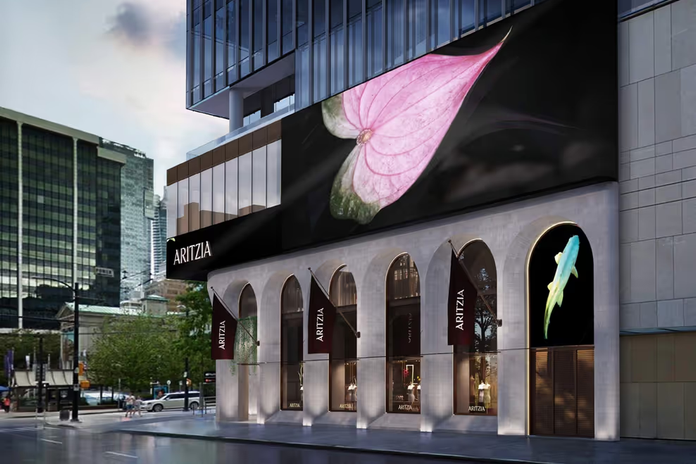
Future 41,800 square foot Aritzia store at CF Pacific Centre in Vancouver. Image: Aritzia
Canadian fashion retailer Aritzia has unveiled a five-year growth plan targeting annual revenue of between $9.5 billion and $10.5 billion by fiscal 2032, with a major expansion of its U.S. boutique network and a more selective approach to its established Canadian stores.
During its October 27 Investor Day presentation, the Vancouver-founded company outlined plans to approximately double its retail square footage while investing $2 billion in capital expenditures over five years. The United States is expected to generate just over 85% of incremental revenue growth, while Canada will contribute approximately 5% and international markets just under 10%.
The geographic split reflects Aritzia’s different stages of development in the two markets. Management considers Canada a mature market where the priority is improving existing boutiques and concentrating demand in stronger locations, while the United States offers considerably greater opportunities for new store openings.
Aritzia Expects Slight Decline in Canadian Store Count
Karen Janes, Aritzia’s Executive Vice President of Real Estate, told investors that the company intends to build on its established Canadian presence by directing investment toward locations with the strongest potential.
“In Canada, where our presence is well-established, the focus is on optimizing the portfolio and concentrating demand behind our strongest Aritzia boutiques,” Janes said.
During the question-and-answer session, Janes confirmed that the company’s Canadian boutique count is expected to decline slightly under the plan. She explained that Aritzia still operates legacy stores under its Wilfred, Tna and Babaton banners, which affect the overall location count.
“Our goal, we should be looking at it as net of that, so like around 50 odd stores, and we are going to keep that cadence and invest in the stores that we have and just make sure they are right-sized in that market,” Janes said.
The comments suggest that Aritzia intends to maintain a relatively stable network of approximately 50 principal Aritzia boutiques in Canada, while the number of separately branded locations may decline. Management did not identify individual stores slated for closure or provide a schedule for those changes.
For Canadian shopping centre landlords, the strategy could create opportunities to work with Aritzia on existing store configurations, particularly where additional space, a better position within a property or a consolidated assortment could improve performance.
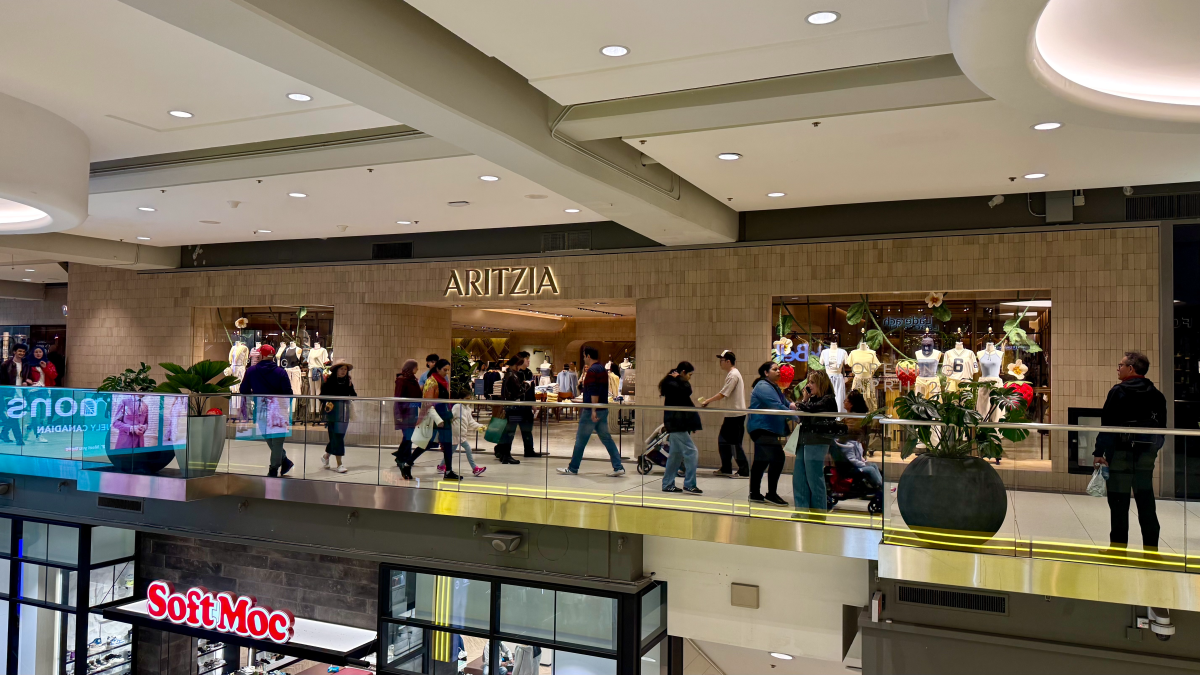
A recent example of this approach is the company’s expanded flagship at CF Toronto Eaton Centre, which opened in April 2026. As Retail Insider previously reported, the approximately 18,000-square-foot location brought together merchandise previously sold through separate Wilfred, Babaton and Tna storefronts within the shopping centre.
Aritzia flagship at CF Toronto Eaton Centre, April 26, 2026. Photo: Craig Patterson
Larger Boutiques and Repositionings Drive Growth
Aritzia’s real estate strategy increasingly emphasizes larger boutiques and improvements to established locations alongside new store openings.
Over the past four years, its total boutique count grew at a compound annual rate of approximately 7%, while total retail square footage increased at an annualized rate of 14%. The difference reflects the company’s investment in larger stores and repositionings, which can increase selling capacity without a corresponding increase in the number of locations.
Janes said Aritzia plans to reposition five to seven boutiques annually over the next five years. Projects can involve relocating stores to more desirable positions, improving layouts or expanding capacity in markets where the company already has an established customer base.
“We are taking that established demand and giving it better real estate,” Janes said.
Aritzia expects total retail square footage to increase at a mid-teens annual rate through fiscal 2032, approximately doubling its physical footprint. Most of that growth will occur in the United States, although the company is also investing in selected major Canadian locations.
In downtown Vancouver, Aritzia is developing a four-level flagship of approximately 41,800 square feet at CF Pacific Centre, occupying part of the former Nordstrom premises. The project, previously examined by Retail Insider, shows the company’s willingness to make substantial investments in prominent Canadian retail properties.
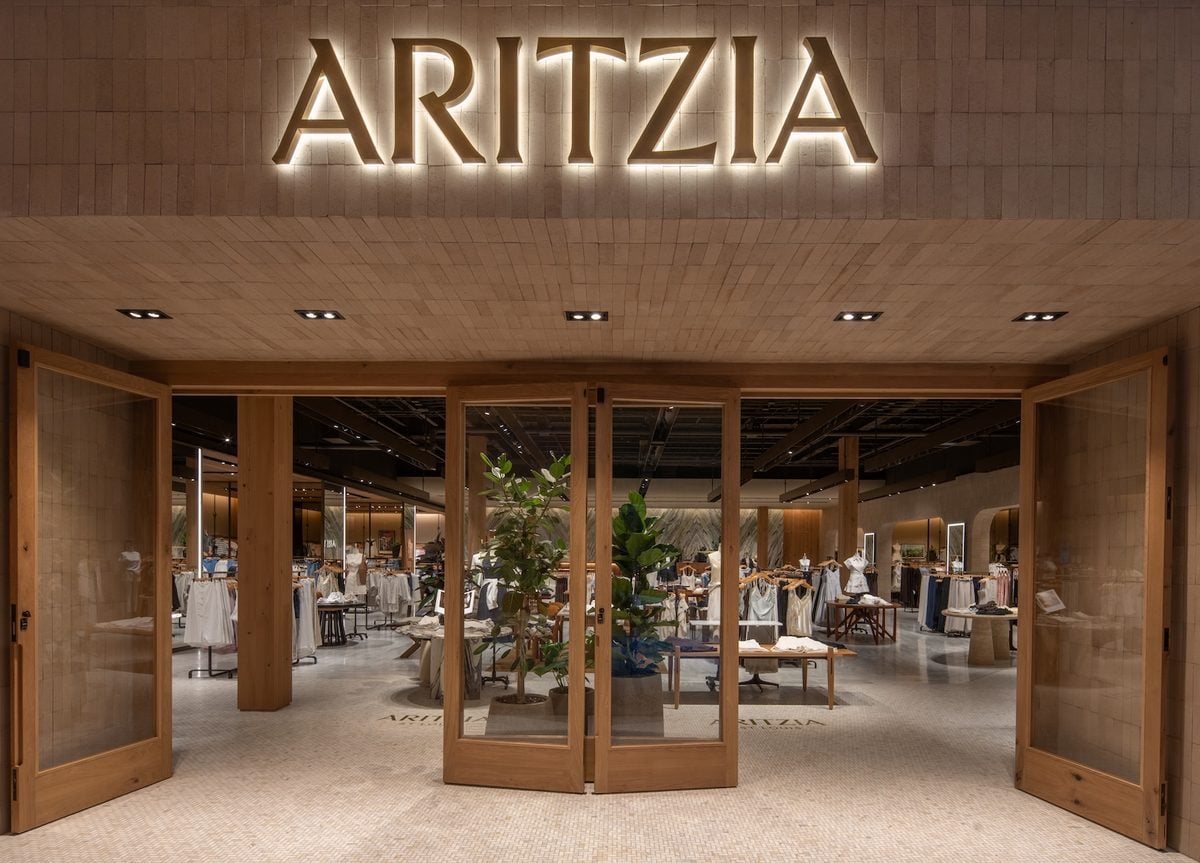
Aritzia store at Plaza Frontenac in St. Louis. Image: Aritzia
U.S. Boutique Network Expected to Reach 160 Stores
Aritzia plans to open 12 to 14 new boutiques annually across the United States, expanding its American network from a projected 87 locations at the end of fiscal 2027 to 160 by fiscal 2032.
The company also intends to enter 15 to 18 additional U.S. markets during the five-year period while expanding its presence in established cities. Its strategy combines new market entries with investments in existing locations, including repositionings and selected larger-format boutiques.
Aritzia’s U.S. revenue grew at a compound annual rate of approximately 31% over the preceding four years, according to management. The country is expected to account for roughly two-thirds of total company revenue in fiscal 2027, with the American business projected to continue growing at a high-teens annual rate under the new plan.
The scale of the opportunity helps explain the company’s geographic priorities. While its Canadian store network is well established, Aritzia continues to see substantial room to increase its physical presence in American markets where the brand has already attracted customers through digital sales and marketing.
Boutique Economics Support Continued Investment
Aritzia provided additional detail about the economics supporting its physical retail expansion, including the relationship between boutique openings and digital sales.
Management reported that newly opened boutiques are currently achieving investment payback in less than 12 months. The company’s five-year financial plan assumes a more conservative payback period of 12 to 18 months, providing a benchmark for future store investments.
Janes also said that when Aritzia opens a boutique in a new market, the company sees an average increase of approximately 65% in digital sales within that market. The company-reported figure suggests that physical stores help introduce the brand to new customers and generate additional online business beyond purchases made inside the boutique.
Aritzia’s digital leadership described a similar relationship in the opposite direction. Approximately half of boutique transactions are influenced by a digital interaction immediately before the purchase, while customers acquired through digital channels are twice as likely to shop across physical and online channels.
These relationships help explain why Aritzia continues investing heavily in stores while pursuing significant digital growth. A boutique can generate revenue through its own sales while supporting customer acquisition, brand recognition and additional online purchases in the surrounding market.
Management expects digital revenue to grow approximately 20% annually over the next five years. Physical retail and digital channels are each expected to contribute roughly half of incremental North American revenue growth.
Aritzia store Lakeside Centre in New Orleans. Image: Aritzia
$2 Billion in Capital Spending Planned
Aritzia expects to invest approximately $2 billion in capital expenditures over the five years leading to fiscal 2032, supporting its retail expansion and the infrastructure required for a substantially larger business.
Approximately $1.1 billion will be directed toward retail square footage expansion, including new boutiques and improvements to existing locations. Another $500 million is allocated to increasing U.S. distribution capacity by approximately two million square feet, while roughly $400 million will support technology, digital initiatives, office expansion and capital maintenance.
The distribution investments reflect the company’s geographic priorities. Management said Aritzia has established approximately 1.2 million square feet of distribution capacity in Canada, with its next major phase of logistics investment focused on the United States.
Aritzia expects its adjusted EBITDA margin to reach approximately 21% by fiscal 2032, compared with approximately 20% anticipated for fiscal 2027. Its financial plan assumes low- to mid-single-digit comparable retail sales growth, alongside continued boutique expansion, digital growth and improvements in merchandise productivity.
Product expansion is expected to contribute approximately $1.5 billion in incremental annual revenue by fiscal 2032. The company sees opportunities to increase sales through additional merchandise categories, supporting productivity within both new and existing boutiques.
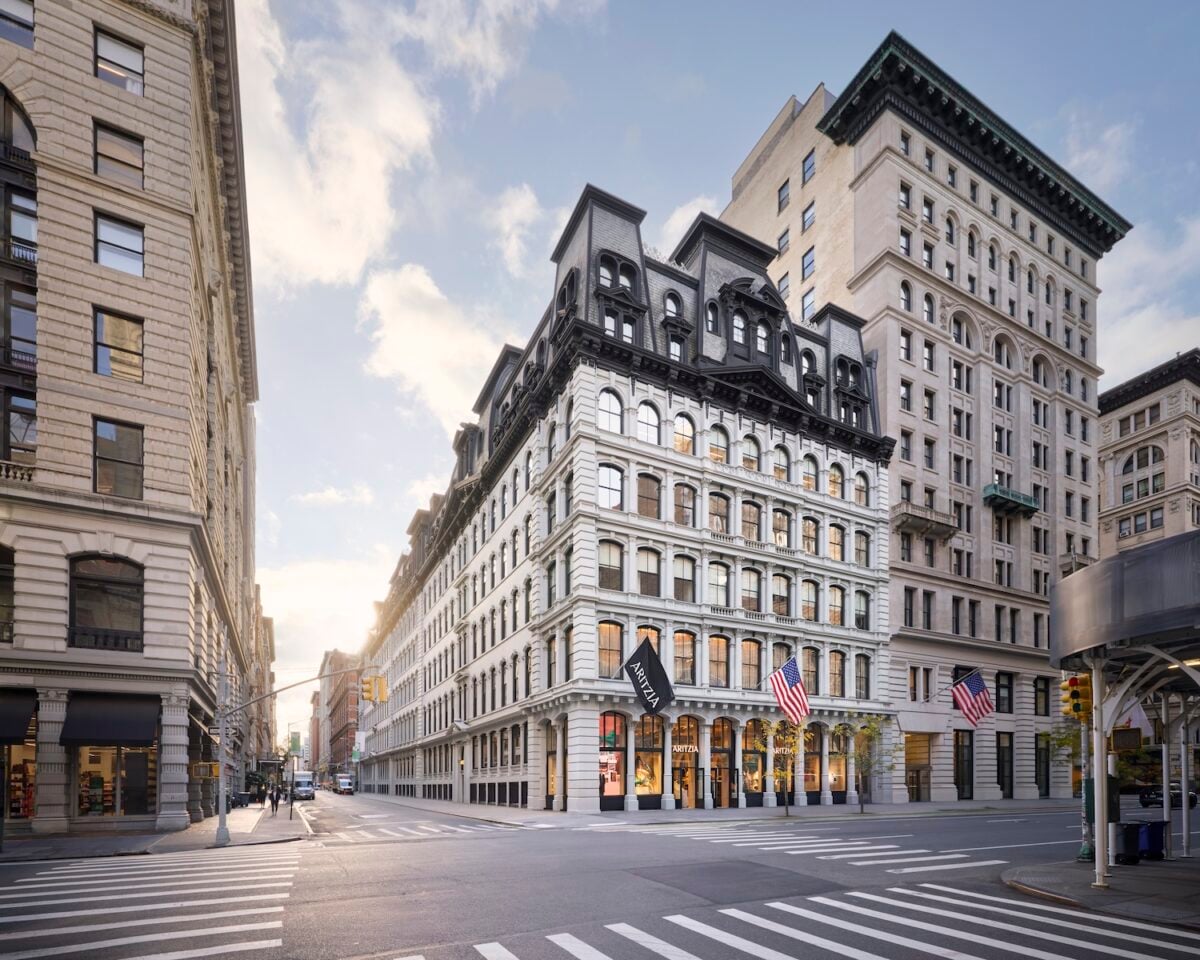
Aritzia flagship store in the Flatiron District in New York City. Image: Aritzia
Vancouver Retailer Expands Its International Reach
Aritzia’s new growth targets mark another stage in the development of a company founded in Vancouver in 1984. Management said annual revenue was approximately $550 million when the retailer went public a decade ago, compared with expected fiscal 2027 revenue of between $4.78 billion and $4.88 billion.
The company now expects revenue to grow at a compound annual rate of 15% to 17% through fiscal 2032. International markets beyond North America are expected to generate approximately $500 million in annual revenue by that point, supported by digital growth and the opening of Aritzia’s first boutiques outside North America.
The company’s expanding American operations are also reflected in its corporate infrastructure. Vancouver remains its largest support-office location, while New York has become its second-largest, bringing management and operational teams closer to the company’s most important growth market.
Aritzia’s new targets follow expectations discussed in Retail Insider’s October 20 report examining Stifel analyst Martin Landry’s outlook. That earlier analysis considered the possibility of Aritzia targeting approximately $10 billion in annual revenue, while the Investor Day presentation has now provided details about the real estate and operating investments intended to support the plan.
The next five years will involve significant changes to Aritzia’s physical retail network, with the company targeting 160 U.S. boutiques and approximately twice its current total retail square footage by fiscal 2032. In Canada, management’s focus on legacy branded boutiques and strengthening established Aritzia locations will make the configuration and productivity of existing stores an important part of the company’s real estate strategy.
Retail Insider has released Q3 2026 Marketing & Customer Experience: Marketing Moves Closer to Commerce, authored by Retail Insider founder and publisher Craig Patterson. The report examines how campaigns, loyalty, retail media and physical experiences are creating more direct connections between attention and shopping.
The report covers Canadian retail marketing, advertising, branding, customer acquisition, loyalty, digital media, social commerce, public relations and consumer engagement. It draws on Retail Insider coverage, company disclosures and industry research, keeping campaign objectives separate from demonstrated results and identifying the limits of Canadian and cross-border surveys.
Retail Insider Reports provide executive-level analysis of the sectors and business issues shaping Canadian retail. The Retail Insider Report Hub brings the quarterly collection together, connecting developments at individual companies with the broader evidence behind changes in retail strategy.
General Themes
Commerce connections are strengthening: Campaigns increasingly give customers a defined next step toward products, stores or purchases.
Retailer audiences have commercial value: Loyalty and transaction relationships support new advertising capabilities.
Physical experiences serve multiple purposes: Visits, sampling, social content and sales require different measures of success.
AI adoption is ahead of confidence: More content does not necessarily mean greater trust, differentiation or return.
Measurement must match intent: Reach, participation, linked accounts, purchases and retention answer different business questions.
Retail Insider Coverage
Reitmans connected its fall collection, national ambassadors Lilly Singh and Katherine Levac, and Toronto Tempo partnership across content, e-commerce and stores. A Shop the Look experience created a route from campaign styling to products customers could buy. Its measurement plan covered reach, consideration, acquisition, conversion and sales, but those remained objectives rather than demonstrated campaign outcomes at the time of the interview.
Loblaw Advance expanded advertiser access by naming Criteo a preferred demand partner for email display placements across Shoppers Drug Mart, PC Optimum and PC Express newsletters. Loblaw described an ecosystem with more than 18 million active PC Optimum members and roughly 25 million opted-in emails deployed weekly. The opportunity rests on established customer relationships, not simply on adding another advertising surface.
Walmart Connect introduced a Canadian self-serve onsite display platform combining bidding, targeting, forecasting and reporting. Depending on campaign and format, reporting can include conversion, return on ad spend and new-to-brand customers alongside impressions and clicks. Walmart did not disclose platform adoption or advertiser-return figures at launch. The capability to measure a result is not itself evidence that the result has improved.
Triangle Rewards and Tims Rewards linked their programs in September, allowing members to earn Canadian Tire Money on eligible Tim Hortons purchases while still collecting Tims Rewards points. The separate currencies and payment-dependent earning rates matter to the offer. The partnership gives Triangle access to a more frequent purchase routine, although neither company disclosed incremental spending attributable to it. Membership totals cannot be added together to establish a unique combined audience.
Cadillac Fairview’s It’s Better in Real Life platform used events, tenant activations and local programming to create additional reasons to visit shopping centres. Its research found that 31 per cent of property visits were socially motivated, while a CF Carrefour Laval activation attracted approximately 5,300 participants. Those findings describe motivations and participation, not equivalent increases in incremental traffic or tenant sales. The appropriate measure depends on whether the activity aims to generate discovery, visits or purchases.
Oatly’s Toronto Matcha-tality Suite and an Amazon creator-event example illustrated how temporary installations can reach a second audience through photography, video and social content. Product settings, sampling and creator links can connect experience with shopping. These events also require design, logistics, staffing and installation, and neither example supplied a measured sales return. Their wider media reach should therefore be distinguished from demonstrated commercial payback.
eBay used its Toronto International Film Festival partnership to extend Canadian livestream shopping into vintage fashion and luxury resale. Live demonstrations and seller questions can help buyers assess condition, rarity and provenance while bidding or purchasing. eBay did not disclose Canadian transaction volumes or conversion results from the partnership. The initiative establishes category development rather than mass-market adoption of livestream commerce.
Measurement is becoming more detailed in some channels and less visible in others. Retail media, linked rewards and livestream platforms can observe defined shopping actions, while research inside AI conversations may occur before a retailer sees any website visit. Conventional referrals can therefore reveal only the later stage of a purchase journey. More observable transactions do not mean the entire discovery process is easier to understand.
Broader Industry Coverage
A Stone-Olafson and ZGM Modern Marketing Partners study of more than 300 Canadian marketing professionals found that 81 per cent used AI, but only 3 per cent fully trusted its outputs. Another 43 per cent did not know whether it improved marketing ROI. Separately, Cashew found differentiation concerns among 65 per cent of 206 senior North American marketers. The findings point to different questions about adoption, reliability and distinctive ideas, not a single measure of AI effectiveness.
Cashew’s separate survey of 2,149 consumers in Canada and the United States found that 87 per cent believed brand content was at least partly AI-generated. Only 13 per cent were very confident they could distinguish it, but these are stated attitudes from a combined-market sample, not Canadian purchasing results. Vistar Media also reported stronger stated trust in out-of-home advertising than digital alternatives. Its role in that industry is relevant context for interpreting the research.
Faster content production makes accurate commercial information more important. Neato’s discussion of AI-assisted creative highlighted the risk of polished assets showing incorrect package sizes, unavailable merchandise or outdated offers. Product, pricing and inventory information need to remain current as output increases. Employee and creator content adds questions about permission, compensation and repeatability that a successful individual post cannot settle.
The 2026 Canadian Sponsorship Landscape Study estimated sponsorship spending at $4.7 billion, while its share of marketing communications budgets declined from 25 per cent to 21 per cent over five years. The study included 188 participating brands, properties and agencies. Its estimate covers the broader Canadian sponsorship industry, not retail-only or Q3 spending. Greater attention to effectiveness reflects competition for budgets across a growing range of channels.
Editor’s Take
The report’s outlook starts with defining the job before choosing the metric. A brand campaign can legitimately seek consideration, a shopping-centre event can target visits, and a loyalty partnership can aim to strengthen purchase frequency. None should be judged by a convenient measure that implies a different result. An impression is not a sale, and an account link is not proof of incremental spending.
Marketing moved closer to commerce during the quarter, but measurement still requires judgment. Distinctive ideas, relevant experiences, accurate product information and established customer relationships give content substance as AI makes production easier. The useful test is whether an investment changed the behaviour it was intended to influence, with evidence proportionate to the claim.
Conclusion
Read the full Q3 2026 Marketing & Customer Experience report for the analysis of campaigns, retail media, loyalty, experiences and AI. It separates the availability of new marketing capabilities from evidence that they are producing commercial results.
The report and the wider quarterly collection are available through the Retail Insider Report Hub. The collection connects Canadian retail strategy with company reporting, industry research and the practical questions facing decision-makers.
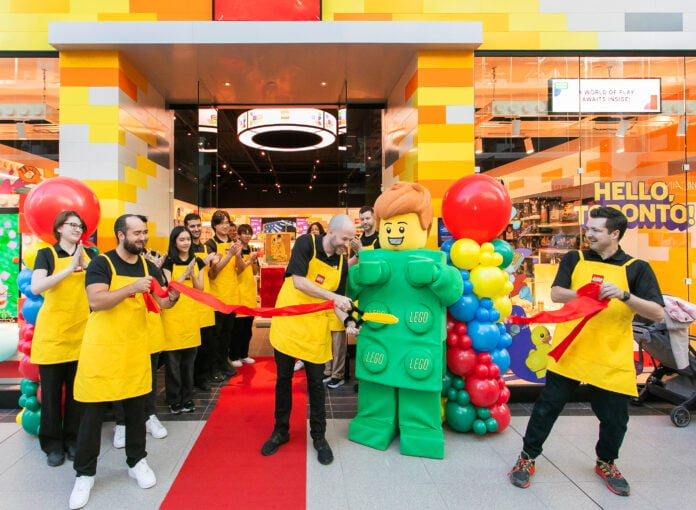
CF Toronto Eaton Centre LEGO Store. Image: daily,monicahealyphoto@gmail.com
The LEGO Group has opened a new store at CF Toronto Eaton Centre, bringing its interactive retail concept to the heart of downtown Toronto. The store opened Friday, October 23, with grand-opening celebrations continuing through October 25.
The opening is part of LEGO’s largest Canadian retail expansion in more than five years, with three new Greater Toronto Area locations launching this fall. Together, the additions will increase the company’s Canadian store network from 12 to 15 locations, representing a 25 per cent increase in its number of dedicated stores.
Inside the New Downtown LEGO Store
The store is located on Level 3 of CF Toronto Eaton Centre, near Harry Rosen and the shopping centre’s Queen Street entrance. It brings LEGO’s range of building sets together with interactive experiences and personalized customer service in one of Canada’s busiest downtown shopping destinations.
Among its features are a Pick & Build Wall, where customers can select individual LEGO bricks, a Build a Minifigure station and a LEGO DUPLO play table for younger children. The location also participates in the LEGO Insiders loyalty program, with staff known as Brick Specialists available to assist customers.
Marina Edwards, Senior Vice President of LEGO Retail for the Americas, discussed the company’s approach to physical retail in a September interview with Retail Insider. She explained how the company’s stores complement its online business by giving customers opportunities to engage directly with LEGO products.
“Our physical and digital channels play distinct and complementary roles. LEGO.com offers our widest assortment of products, while our stores bring the brand to life through hands-on experiences and storytelling,” Edwards said.
CF Toronto Eaton Centre LEGO Store
Former Rodd & Gunn and Ted Baker Space
The new LEGO store occupies just over 3,800 square feet on the shopping centre’s third level, in a space previously occupied by New Zealand menswear retailer Rodd & Gunn and, before that, British fashion brand Ted Baker. Ted Baker’s Canadian stores closed in 2024 following financial difficulties, as previously reported by Retail Insider.
The arrival of LEGO brings a dedicated toy retailer to a space formerly occupied by fashion brands, adding another dimension to the shopping centre’s retail mix. Its downtown location also provides access to residents, office workers, students, commuters and tourists who may not regularly visit LEGO’s other Greater Toronto Area stores.
Edwards said the company considers consumer accessibility and the characteristics of surrounding communities when selecting new retail locations. Downtown Toronto was one of three GTA markets chosen for the latest expansion.
“Location is about more than finding a retail space. We look for places that bring us closer to consumers and feel relevant to the communities we serve. Markham, downtown Toronto and Mississauga give us the opportunity to make LEGO play more accessible and part of everyday moments,” she told Retail Insider.
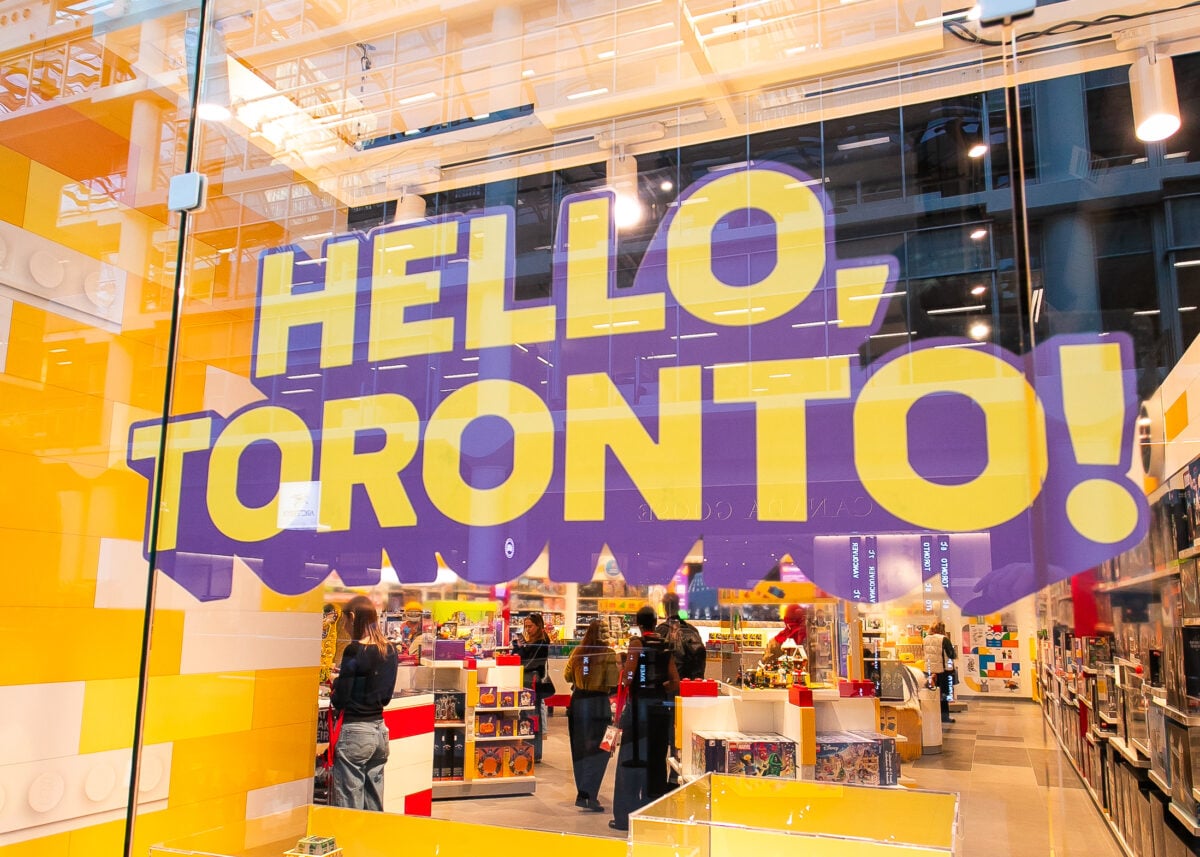
CF Toronto Eaton Centre LEGO Store. Image: daily,monicahealyphoto@gmail.com
Odyssey Retail Canada Handles LEGO Leasing
The CF Toronto Eaton Centre leasing transaction was handled by Ryan McCarthy, Executive Vice President at Odyssey Retail Canada, who represents LEGO on its Canadian retail real estate requirements. McCarthy has extensive experience in Canadian retail leasing, having previously worked at Northwest Atlantic and JLL before joining Odyssey.
Northwest Atlantic was acquired by JLL in 2018, and McCarthy subsequently served as Senior Vice President at JLL. Retail Insider previously reported on Odyssey Retail Advisors’ expansion into Canada, including the firm’s recruitment of experienced retail real estate professionals.
The three new LEGO locations are situated in established regional shopping centres serving different parts of the Greater Toronto Area. Two of the openings are at Cadillac Fairview properties, while the third will be at Square One Shopping Centre in Mississauga.
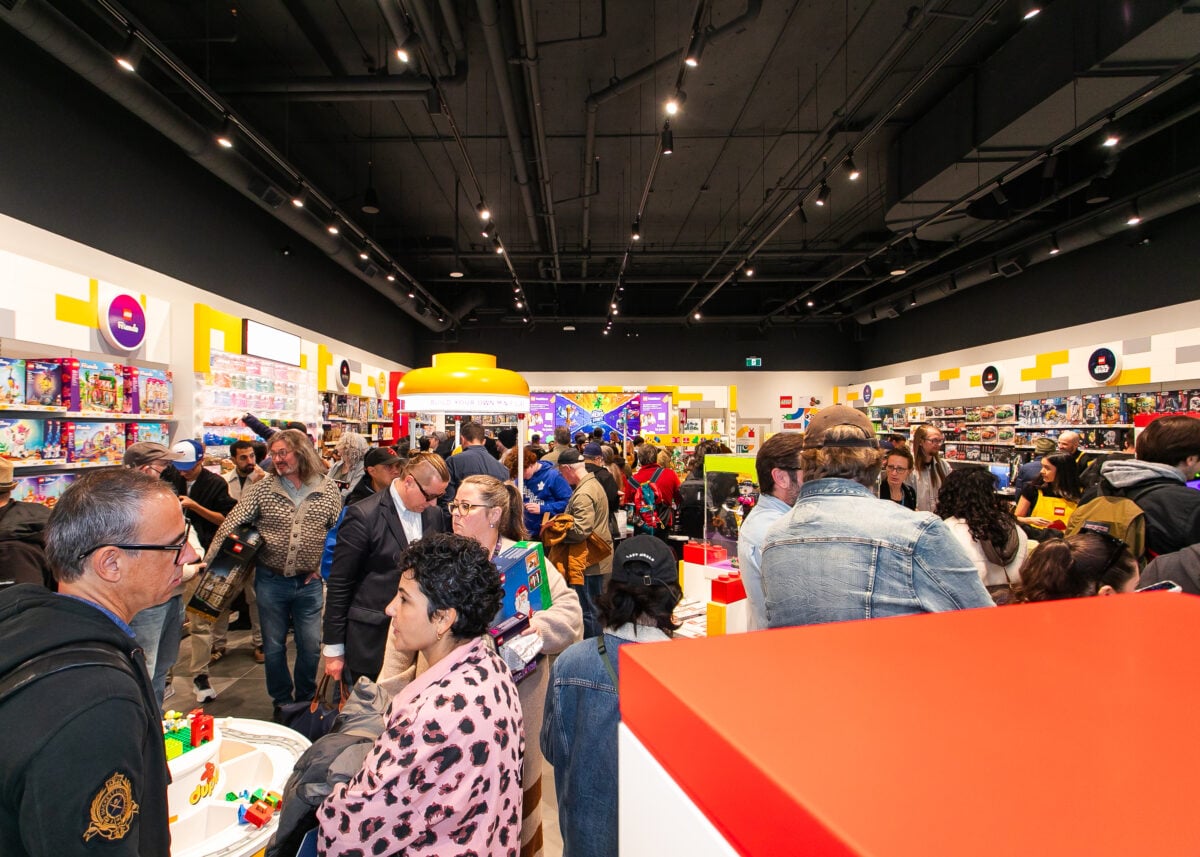
CF Toronto Eaton Centre LEGO Store. Image: daily,monicahealyphoto@gmail.com
LEGO Expands Canadian Store Network
LEGO opened its CF Markville store in Markham on September 11, occupying about 4,200 square feet. The CF Toronto Eaton Centre location followed on October 23, with a third store scheduled to open Friday, November 6, at Square One Shopping Centre in Mississauga.
The Square One store will occupy about 4,300 square feet, combining spaces formerly occupied by Vans and Canadian denim retailer DUER. It will be the largest of the three new GTA locations and will introduce LEGO’s dedicated retail concept to one of the country’s largest shopping centres.
Once all three stores are operating, LEGO will have 15 locations across Canada, including seven in Ontario. Its existing Greater Toronto Area stores include Yorkdale Shopping Centre, CF Fairview Mall and CF Sherway Gardens, with the new locations extending its reach into Markham, downtown Toronto and Mississauga.
The expansion builds on LEGO’s strategy of operating dedicated brand stores alongside its e-commerce business and wholesale distribution through major retailers. Retail Insider previously examined LEGO’s Canadian growth strategy, including the company’s approach to physical retail and its decision to add three stores in the same metropolitan market.
Edwards emphasized that LEGO’s company-operated stores complement rather than replace its retail partners. The stores are designed to offer experiences that go beyond the availability of individual building sets.
“Our retail partners are an important part of our strategy, helping make LEGO products widely accessible across Canada. LEGO Retail stores operate as our brand lighthouse, offering an immersive experience through hands-on activities, LEGO Insiders benefits and our knowledgeable Brick Specialists,” she said.
Holiday Workshop Planned at Eaton Centre
LEGO will extend its downtown Toronto presence during the holiday shopping season with a separate LEGO Holiday Workshop, scheduled for November 21 to 29 on the shopping centre’s Level 3 Sephora Bridge. The temporary activation will provide additional building activities for visitors following the opening of the permanent store.
The Square One opening on November 6 will complete LEGO’s three-store GTA expansion announced earlier this year. The company has not announced additional Canadian store openings beyond these locations, with Edwards previously indicating that its immediate priority is establishing the new stores and serving their surrounding communities.
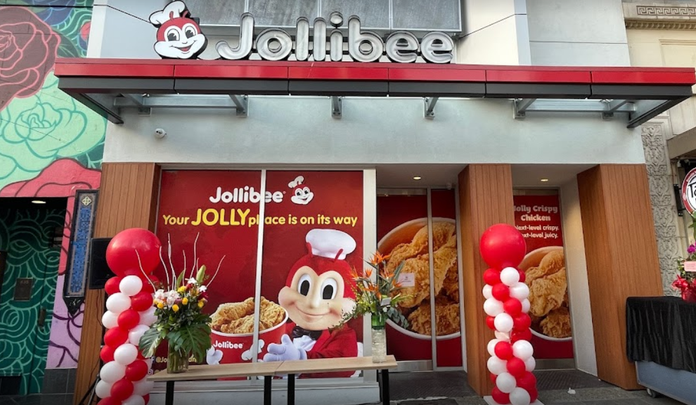
Jollibee on Granville St. in Vancouver. Photo: Jollibee
Jollibee is marking its 10th anniversary in Canada with limited-time menu promotions, exclusive merchandise and holiday events across the country as the restaurant chain prepares to expand its Canadian footprint through franchising over the next five years.
The Filipino fast-food chain, which opened its first Canadian restaurant in Winnipeg in December 2016, now operates 28 corporate-owned locations across five provinces. Its anniversary celebrations include holiday lighting events at four restaurants, a donation presentation for Make-A-Wish Canada and promotional offers for loyalty program members.
Jollibee image
Promotions target customers, loyalty members
The company is concluding its 10-week anniversary campaign with several promotions running from late October through November, including discounts on chicken meals and a buy-one-get-one offer on its chicken sandwiches.
From Oct. 26 to Nov. 8, Jollibee Rewards members can spend $30 and receive $10 off with the purchase of a Honey Garlic menu item, subject to the promotion’s terms. The offer is exclusive to Canadian members of the loyalty program.
On Nov. 9, the company will offer Rewards members a buy-one-get-one deal on its Original and Spicy Chicken Sandwiches. Existing members will have the offer automatically loaded into their accounts, while new members who sign up that day will gain access to it immediately. The promotion is available in restaurants and through the Jollibee Canada app nationwide.
Jollibee is also planning a 10-piece Jolly Crispy Chicken bucket promotion for $35. The chicken bucket deal will run from November 23–27.
The company will launch a limited-edition Canadian anniversary merchandise collection on Nov. 2 through its online Jolly Merch Shop. The collection includes apparel and other everyday items featuring anniversary designs, as well as a limited-edition plush Jollibee mascot bag charm. Orders will ship from within Canada.
Jollibee image
Holiday events planned in four provinces
Jollibee will install holiday lighting displays at four restaurants from Nov. 20, 2026, through Jan. 8, 2027. The participating locations are in Scarborough, Ont.; Winnipeg; Edmonton; and Vancouver.
Public holiday countdown events are scheduled for the evening of Nov. 20 at the Winnipeg, Edmonton and Vancouver locations, featuring Christmas caroling, lighting ceremonies and anniversary giveaways for the first 100 customers.
At the Scarborough restaurant, the company will hold a ceremonial cheque presentation to Make-A-Wish Canada during a private lighting event. The presentation will recognize the nationwide impact of its Buckets of Wishes campaign.
“Reaching 10 years in Canada is a monumental milestone, and this final stretch of our countdown reflects our overwhelming gratitude to the guests who have made Jollibee part of their family traditions,” said Beth Dela Cruz, president of Jollibee North America. “From transforming our restaurants with festive holiday lights to unveiling our Canada-exclusive merch capsule, this grand finale is all about celebrating community. Presenting our donation to Make-A-Wish® Canada during the lighting ceremony is the ultimate expression of our mission to spread joy, bringing warm holiday spirit and hope to families across the country.”
The anniversary activities will also extend to Toronto’s Original Santa Claus Parade on Nov. 22. Jollibee plans to participate with a holiday float featuring its mascot and operate activation booths at Christie Pits Park and Sankofa Square, where visitors can access food samples, loyalty giveaways, prizes and coupons.
Jollibee image
Franchising to drive Canadian growth
The anniversary comes as Jollibee plans to accelerate its Canadian expansion over the next five years through its franchising program. The company says it intends to bring its menu, which includes fried chicken, chicken sandwiches and peach mango pie, to dozens of new Canadian neighbourhoods.
Jollibee’s existing Canadian network consists of 28 corporate-owned restaurants in five provinces, according to the release. The company did not provide specific targets for new restaurant openings, investment amounts or a breakdown of planned expansion by province.
The Canadian business is part of Jollibee Foods Corp., which operates a portfolio of 20 brands with more than 10,700 stores and cafés across 33 countries, according to the company.
Jollibee Foods Corp. said the brand was recently included in TIME’s 2026 list of the 100 most influential companies and ranked among the magazine’s top 10 industry leaders in food and drink.
The company is directing customers to its Canadian website and app for details on the anniversary promotions, merchandise collection and loyalty program.
Sales growth may be stronger than expected but Canada’s restaurant industry continues to face significant financial pressures as 67% of restaurants report lower profitability compared to a year ago and 44% express pessimism about 2027, according to Restaurants Canada in its latest Quarterly report.
Commercial foodservice sales are projected to grow by 5.1% in 2026.
“Stronger sales don’t necessarily mean healthier restaurants,” said Chris Elliott, Chief Economist and Vice-President of Research at Restaurants Canada. “While industry sales have exceeded expectations, rising food and labour costs, softer guest traffic and limited room to increase menu prices are putting significant pressure on restaurant profitability. That disconnect is shaping operators’ expectations for 2027.”
While 44% of restaurant operators say they are pessimistic about 2027, there are 30% who are optimistic. Also, 38% expect profitability to decline next year, while just 21% anticipate an improvement. Employment expectations are also restrained, with 29% of operators expecting to employ fewer workers and only 9% anticipating an increase, said the report.
Chris ElliottKelly Higginson
“Restaurants are being squeezed between rising operating costs and consumers who simply can’t afford higher prices,” said Kelly Higginson, President and CEO of Restaurants Canada. “When restaurants can no longer make the economics work, Canada loses far more than places to eat – Canadians lose jobs, farmers and food producers lose customers, and communities across the country lose essential economic activity that keeps them vibrant.
“Canada needs a strong, competitive restaurant industry. That means giving operators the confidence to invest in their businesses, support their employees and serve their communities,” added Higginson. “We’ll be looking at next week’s federal budget for concrete measures that improve affordability and restore business confidence, including steps toward a comprehensive review of Canada’s tax system to reduce the burden on businesses and support long-term growth.”
The organization said restaurants, a $129 billion industry, are the fourth largest private sector employer in Canada, with 1.2 million workers, and serve 24 million customer visits every day.
Restaurants Canada said it will continue working with the federal and provincial governments to identify policy and regulatory measures that will reduce operating costs, strengthen restaurant competitiveness and restore business confidence. The federal government’s recent Productivity Mega Deduction is an example of positive steps that governments can take to help restaurant businesses thrive and grow, supporting jobs and communities across the country.
More than six in 10 Canadians encountered fraudulent messages or online content in the past year, while many continue to reuse passwords and lack other online security measures, according to a new survey by Equifax Canada.
The survey, conducted for Cybersecurity Awareness Month, found that 83 per cent of respondents were confident they could distinguish legitimate communications from scams, but only 22 per cent described themselves as very confident. The findings point to gaps between consumers’ confidence in recognizing fraud and the steps they take to protect their personal information.
Password reuse and authentication gaps
The survey found that 58 per cent of respondents use multi-factor authentication on many of their financial and social media accounts, while half use unique passwords for important accounts. More than one in five respondents, or 22 per cent, said they reuse the same two or three passwords across multiple accounts.
Reusing passwords can leave multiple accounts vulnerable if one website experiences a data breach, as hackers may use automated tools to try compromised credentials on other services.
“While it’s encouraging that consumers feel confident identifying suspicious messages, awareness alone isn’t enough. Strong passwords, multi-factor authentication and knowing how to respond when something goes wrong are important parts of protecting personal information.”
Octavia HowellChristina Morillo photo
Bank impersonation among common scams
Fraudulent emails and text messages impersonating Canadian banks or government agencies were among the most frequently reported forms of scam exposure, cited by 37 per cent of respondents.
Another 36 per cent said they had encountered fake notifications claiming someone had accessed or attempted to access their banking or social media accounts. Fraudulent investment opportunities and fake social media messages or videos impersonating trusted brands or public figures were each reported by 26 per cent of respondents, while 16 per cent encountered fraudulent job offers.
The prevalence of reported scam exposure varied by region. In British Columbia, 75 per cent of respondents said they had encountered at least one type of fraudulent message or online content in the previous 12 months, compared with 53 per cent in Quebec.
Some consumers would delay responding to data breaches
The survey also found differences in how Canadians say they would respond to notifications that their personal information had been compromised.
One in five respondents aged 18 to 34, or 20 per cent, said they would ignore a data breach notification unless they noticed suspicious activity. That compared with 11 per cent of respondents aged 55 and older. Nationally, 14 per cent said they would take the same wait-and-see approach.
Tima Miroshnichenko photo
While 66 per cent of respondents said they would contact their bank or financial institution after receiving a breach notification, fewer than half, or 44 per cent, said they would immediately change the password on the affected account. Just 24 per cent said they would contact a credit bureau to place a fraud alert.
“One of the biggest mistakes consumers make is assuming that nothing needs to be done until suspicious activity appears,” Howell said.
“If your personal information has been exposed, it’s important to take the notification seriously, secure affected accounts and watch for unusual activity. Taking a few preventive steps can help reduce the risk of identity theft and financial fraud.”
Equifax Canada recommends that consumers regularly review their credit reports, use unique passwords and multi-factor authentication, and independently verify unexpected communications before sharing personal or financial information.
Nextdoor’s annual Halloween Treat Map has returned to Canada, with new survey findings showing that 88 per cent of Canadians expect to spend less than $100 on Halloween this year as households manage the cost of living.
The neighbourhood network’s map, available in Canada, is designed to help residents find local Halloween events, attractions and participating homes, while giving community businesses and event organizers a way to reach nearby residents.
Map adds new features for Halloween
The Treat Map is available until Oct. 31 and allows residents to add pins for their homes or local destinations, including Halloween events and nearby attractions. For the first time, users can select the type of pin they want to add and apply tags describing what visitors can expect, such as decorations, Halloween events or local businesses.
Nextdoor has also introduced suggested wording templates for home pins, replacing the previous process of starting with a blank post. The map can now be filtered by tags, allowing users to find homes offering non-food treats or pet treats, as well as those opening their doors earlier in the evening.
Adding a pin is optional, and residents decide what information they share. Nextdoor said the map does not collect location data beyond what users choose to include in their pins. Information provided through the pins is not verified by the company.
“Halloween costs more than it used to, and a lot of Canadian families are planning around that. Some of the best parts of the night are free, like the street that goes all out or the farm with the corn maze. The Treat Map makes them easier to find,” said Kelsey Grady, executive vice-president of communications at Nextdoor.
Kelsey GradyMaya Kosoff
Survey points to tighter Halloween budgets
The company surveyed Canadians ahead of Halloween to examine how living costs are affecting plans and spending. The findings indicate that most respondents expect to limit their overall spending, while many also consider supporting local businesses a priority.
Nearly two-thirds (65 per cent) of Canadians expect to spend between $0 and $49 on Halloween this year, while another nine per cent anticipate spending between $100 and $149. Overall, 88 per cent expect their total spending to remain below $100.
The survey also found that 59 per cent of respondents consider supporting local or Canadian businesses a priority when shopping for or celebrating Halloween. Examples include buying pumpkins from nearby farms, costumes from neighbourhood shops and treats from local bakeries.
The proportion was higher in Atlantic Canada, where 69 per cent of respondents identified supporting local businesses as a priority. The figure was 68 per cent in Saskatchewan and Manitoba and 62 per cent in Ontario.
Awareness and affordability affect local events
The findings suggest that the cost of attending events and awareness of activities in the community may influence participation in local Halloween celebrations.
About 24 per cent of Canadians said free or low-cost community events, including haunted houses, mazes and organized trick-or-treating groups, would make them more likely to support local businesses. Another 27 per cent said greater awareness of activities such as haunted houses, orchards and trick-or-treating villages would make them more likely to attend local events or support local vendors before Halloween.
In Ontario, 28 per cent of respondents identified awareness as the biggest barrier to participating in community events, followed by cost at 24 per cent. Nationally, 19 per cent said lower prices or deals would make them more likely to shop locally.
The Treat Map allows residents and businesses to add local events and destinations, with tags such as “Farm & Orchard” and “Haunted Attraction” intended to help users identify activities that interest them.
Nextdoor said the map is intended to make community events easier to find during the weeks leading up to Halloween, a busy period for farms and community festivals.
Residents can access the Treat Map through the Nextdoor app or at nextdoor.ca/treat_map.
In an interview with Retail Insider, Maya Kosoff, Senior Communications Manager at Nextdoor talked about the survey results.
Charles Parker photo
How does this year’s survey compare with previous years’ findings on Halloween spending, and have you observed any notable shifts in how Canadians are balancing holiday traditions with household budgets?
We don’t have year-over-year data on Halloween spending from Nextdoor, but other Canadian research gives us some useful context. A 2025 Leger survey found that 70% of Canadians planned to spend the same amount on Halloween as the year before, suggesting people were looking to maintain their traditions without necessarily increasing their budgets.
This year, our survey found that 65% of Canadians expect to spend $49 or less on Halloween, while one in four don’t plan to shop for the holiday at all. It shows that keeping costs down is a priority for many households.
On Nextdoor, we’re seeing how neighbours are finding ways to celebrate Halloween without stretching their budgets, from sharing recommendations for free community events to decorating their homes and finding creative costume ideas. It shows that while spending may be more limited, people are still looking for ways to keep traditions alive and connect with their communities.
With 88 per cent of respondents expecting to spend less than $100 on Halloween and 65 per cent anticipating spending no more than $49, what are Canadians telling you about how cost-of-living pressures are changing their holiday spending priorities?
What we hear on Nextdoor is that families are becoming more intentional about where their money goes, but that doesn’t mean they want to give up the traditions that make Halloween special. The good news is that trick-or-treating itself is largely free, so that tradition can continue to live on.
Where parents often feel the pressure is in the expectation to go above and beyond, whether that’s elaborate costumes, school events or over-the-top decorations.
We want to help families find ways to enjoy Halloween without feeling they have to spend more to make it special. That could mean discovering free local Halloween events, reusing costumes or getting creative with DIY decorations. On Nextdoor, neighbours share ideas and step-by-step guides for all kinds of projects, so if you want to build your own Halloween graveyard, chances are someone nearby has tips to help you do it. It’s about making it easier for families to enjoy the holiday and connect with their neighbours, whatever their budget.
Nearly six in 10 Canadians say supporting local or Canadian businesses is a priority this Halloween. What opportunities does this create for small businesses, local retailers, farms and community event operators, and how can they use Nextdoor to reach potential customers?
Halloween gives local businesses a natural opportunity to become part of their community’s celebrations. That could mean a farm promoting pumpkin picking, a bakery offering seasonal treats or an independent retailer hosting a family-friendly activity.
For businesses, the key is making it easy for nearby residents to discover what they offer.
Nextdoor gives them a way to connect with people in their surrounding neighbourhoods, and for the first time ever, businesses can now pin their locations on the Treat Map. This makes it easier for families to discover local businesses and find affordable Halloween attractions and activities close to home. It’s a great opportunity for small businesses to reach nearby residents who are actively looking for ways to celebrate, while encouraging people to support the businesses in their communities.
Charles Parker photo
The survey found that greater awareness of local events could encourage more Canadians to attend community activities or support local vendors. What are the biggest barriers preventing residents from discovering these events, and how is the Treat Map designed to address them?
One of the interesting findings from our survey is that 27% of Canadians say better awareness of what’s happening locally would make them more likely to attend community events and support local vendors. It can be surprisingly difficult to find out what’s happening in your own neighbourhood, even when events and activities are taking place just around the corner.
That’s where Nextdoor’s hyperlocal technology comes in. The Treat Map helps residents discover Halloween events, attractions and local businesses in their own neighbourhoods, bringing nearby opportunities to their attention that they might otherwise miss.
There’s also a community-building element to this. When people feel connected to their neighbours, they’re often more inclined to organize events because they know their community will show up. We find that people are often looking for a sense of community as much as they’re looking for something to do. By making it easier to discover what’s happening locally and connect with the people around them, Nextdoor can help bring neighbours together.
The Treat Map is returning for its seventh year in Canada with new business listings, event tags and search filters. How will Nextdoor measure the initiative’s success this year, and are there plans to expand its local business features or introduce similar tools to help Canadian businesses connect with neighbourhood customers?
This year’s updates are about making the Treat Map more useful to neighbours and giving local businesses and event organizers more ways to participate. We’ll be looking at map engagement to understand how people are using the expanded experience and whether it’s helping them discover local activities.
Looking forward, we’re always exploring ways to make it easier for neighbours to connect with their communities and for local businesses to reach the people around them. We’ll continue to listen to our community and use those insights to inform how we evolve the Nextdoor experience over time.
A new report shows 37% of shoppers’ No. 1 influence when holiday shopping is promotions over brand reputation at 25%.
For consumers, the deal is becoming more important than the brand, but that doesn’t mean retailers should discount everything. Holiday spending is expected to reach $1 trillion this year, but shoppers aren’t necessarily buying more, they’re spending smarter. 79% of consumers say discounts will influence when and where they shop this holiday season, and eight in 10 plan to use a budgeting strategy.
Shoppers looking for value
Blaine Nielsen, President of Retailers at Rithum, said shoppers are heading into the holidays looking for value and are increasingly willing to shop around to find it.
“That puts pressure on retailers to be competitive on price, but they also need to think beyond the discount. They need to consider how promotions show up across marketplaces, their websites and other channels. If shoppers see better promotions for the same product on a marketplace than on a brand or retailer’s website, that can influence where the shopper buys,” he said.
“Retailers need a consistent view of pricing, promotions and demand across channels so they can meet shoppers’ expectations without discounting products that would have sold anyway. The goal this holiday season is to offer the right deal, in the right channel, at the right time, and not just the most deals.”
Blaine Nielsen
Understanding what influences purchases
Retailers need to understand what is influencing purchases. They need to know what is selling, but also why it is, where and how quickly, said Nielsen.
“That starts with having accurate product, inventory and purchase data across each of their channels. If a product is getting a lot of attention but shoppers consistently abandon it before checking out, a promotion could get them across the finish line. But if a product is already selling quickly and inventory is limited, discounting it is giving up margin on purchases that already would have happened,” he said.
“Retailers should also look at how those patterns change across channels, because a product might need a promotion on one marketplace might not need it somewhere else. The more accurate and connected that data is, the better retailers can use discounts to sway shopper behavior instead of just lowering prices in the hopes that they do.”
What signals to look out for
Retailers should look at signals like search activity, product views, cart abandonment, conversion rates, inventory levels together and what channels these signals are coming from, added Nielsen.
“A product might suddenly gain traction on TikTok, start appearing in AI-driven recommendations or see increased demand on a marketplace before that behavior reaches a retailer’s own website. Those shifts can help retailers determine not only when a promotion could influence a purchase, but where it will have the most impact,” he noted.
“As shoppers increasingly move between social platforms, AI tools, marketplaces and retailer websites, retailers need a connected view of demand across channels so they can respond to changes quickly without automatically discounting everywhere.”
cottonbro studio photo
Looking for a deal
Nielsen said the best deal is about more than the number on the price tag.
“Shoppers are weighing the entire purchase experience, from whether the exact product they want is in stock to how quickly they can get it and how easy it will be to return if it doesn’t work out. Assortment matters too,” he said.
“Having more sizes, colors or comparable products available can keep a shopper from going somewhere else, even if another retailer is offering a deeper discount. This becomes especially important later in the holiday season, when delivery dates and inventory availability can carry as much weight as price. A 20% discount loses some of its value if the product won’t arrive in time. Convenience and certainty are a part of the value retailers are offering that can create a better deal over the lowest price out there.”
Emphasis on value and discounts
Shoppers are comparing retailers based on the overall deal more and more and AI is making it even easier to weigh price, availability, shipping and other factors before deciding where to buy, explained Nielsen.
“That means loyalty will increasingly depend on the value of the entire experience rather than the brand name alone. That doesn’t mean retailers will need to keep prices permanently low, but it means they’ll need to get better at knowing when they can and can’t win the purchase without a discount,” he said.
“Sometimes a promotion will be enough, but in other situations having a product in stock, offering faster delivery and making the returns process easier could close a sale. Over time, I think we’ll see retailers become more targeted with promotions rather than relying on blanket discounts to drive demand. The retailers that can deliver value without training shoppers to always wait for a sale will be in a much better position to build loyalty beyond the holiday season.”
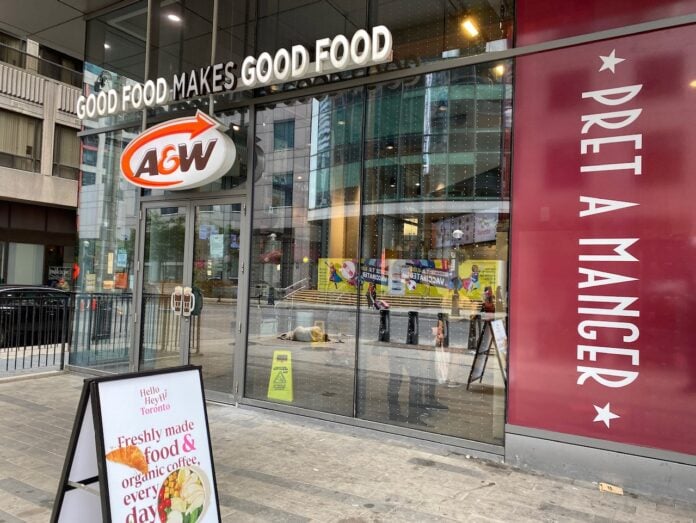
Pret a Manger at A&W Canada on John Street in Toronto (Image: Dustin Fuhs)
A&W recently launched its newest recipe, an all-new limited-time offer Teen Burger featuring a unique Hot Honey BBQ sauce developed in partnership with BULL’S-EYE, called the HotHoney BBQ Teen Burger.
While hot honey has dominated other QSR menus with the likes of pizza and fried chicken, A&W saw an untapped opportunity to bring it to the beef burger space—predicting that hot honey is transitioning from a trend into a permanent staple, much like salted caramel did years ago.
Karan Suri, A&W Canada’s Senior Director of Innovation, who previously led culinary teams for top luxury hotels worldwide and possesses a wealth of knowledge on food trends, spoke with Retail Insider about trends in the industry.
How does A&W Canada identify emerging food and flavour trends, and what research or consumer insights led the company to introduce hot honey in the Teen Burger rather than in other menu categories?
Our recipe development process focuses on identifying flavours that resonate with Canadians and finding a unique A&W way to deliver them. While hot honey is currently trending, it is almost exclusively paired with pizza or fried chicken. We saw an opportunity to disrupt that pattern. The juiciness of our grass-fed beef perfectly complements sweet and spicy flavours. This created the perfect opportunity to collaborate with BULL’S-EYE to create a custom, hot-honey-infused BBQ sauce to complement our beef burgers.
Karan SuriA&W imageA&W image
What criteria do you use to determine whether a flavour is a short-lived trend or has the potential to become a long-term menu staple, and how does A&W assess the commercial potential before launching a limited-time offer?
Determining if a flavour profile is a short-lived fad or has the potential to become a staple is usually driven by our market research. We keep a close eye on how it’s being received online and track adoption patterns to gauge a flavour’s true longevity. Once we decide to put our own A&W spin on it, we test the recipe in select restaurants first. This gives us a chance to listen to feedback, make tweaks and fine-tune the kitchen operations so we’re confident that all our guests will love it.
How did A&W work with BULL’S-EYE to develop the Hot Honey BBQ sauce, including the research and product development involved in balancing sweetness, heat and the flavour profile of the Teen Burger?
Our collaboration with BULL’S-EYE brought together the appeal of hot honey and the bold, smoky flavour of BBQ in a way that complements the Teen Burger. The goal was to achieve a balance of sweetness, heat, and savoury depth that enhances the classic ingredients of a Teen Burger. It was essential that the sauce bring something new to the experience while remaining a natural fit for our Teen Burger recipe. I am thrilled that this collaboration delivers an exciting, fresh experience built on a familiar A&W classic.
What business considerations go into deciding whether to introduce a new flavour through a limited-time offer, including ingredient costs, operational complexity, customer demand and the potential for a permanent menu addition?
At A&W, we always start with our guests and focus on what excites them! While managing supply chains, costs, and operations ensures we are delivering consistent quality and taste our guests expect, what appeals to Canadians always leads our decision making.
Limited-time offers give us an opportunity to introduce something new, see how guests respond and continue exploring ways to bring fresh experiences to our menu.
Looking ahead to 2027, which emerging flavour trends do you expect to influence Canada’s quick-service restaurant sector, and how is A&W evaluating new ingredients, flavour combinations and menu concepts to respond to changing consumer preferences?
Looking ahead to 2027, Canadians are seeking unique culinary experiences without compromising on quality. We see a growing interest in elevated comfort foods that feature inventive, globally inspired elements like hot honey, smoky pepper profiles, and vibrant citrus heat. When evaluating these emerging concepts, our focus is always on how an A&W twist can enhance our core menu, whether by pairing distinct seasonings with our grass-fed beef or creating unexpected flavour pairings for our chicken or vegetarian offerings.
When evaluating what to introduce to our menu, we always keep in mind what will ultimately delight and appeal to our guests. We saw a growing demand a while back for alternative protein among our multicultural guests, which is why we introduced options like the Masala Veggie Burger to our permanent menu.
At the same time, guests are looking for greater customization and mindful choices that still deliver on taste. This inspires us to explore simple, high-quality ingredients while expanding possibilities in other menu areas, particularly handcrafted beverages where guests can personalize their flavour profiles. By blending these innovative ideas with our commitment to great-tasting, thoughtfully sourced ingredients, we continue to offer Canadians exciting new ways to enjoy their visits to A&W.