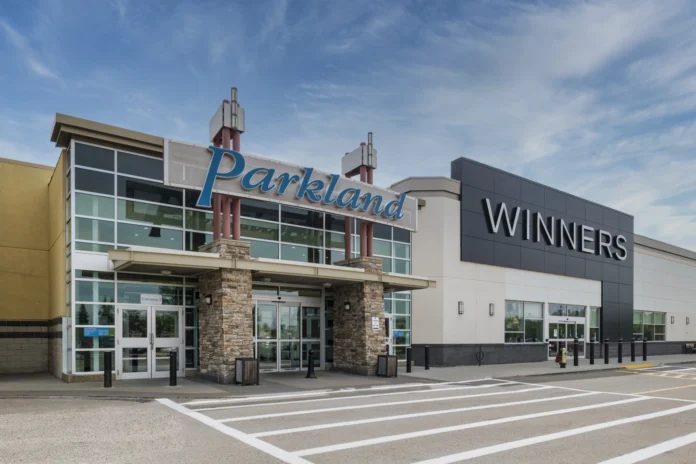
In a news release on Wednesday, the REIT said net operating income for the year for enclosed regional centres was up by 3.1% to $44.9 million while it fell by 5.1% to $22 million for community strip centres.
Morguard said revenue for enclosed regional centres rose by 2.7% from the previous year to $105.3 million while it fell by 4.5% to $35.6 million for community strip centres.
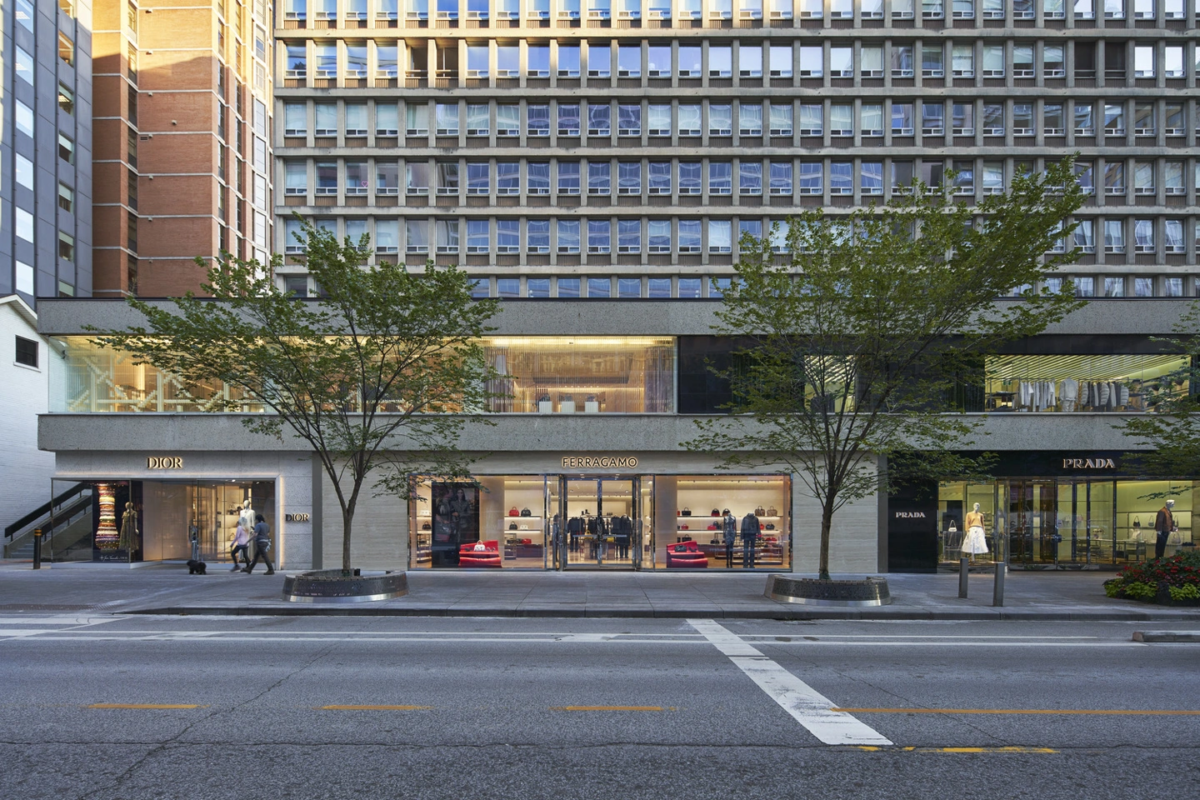
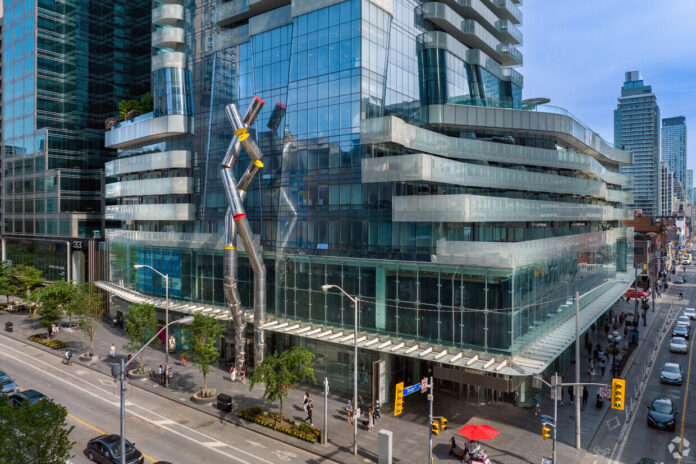
The Colonnade on Bloor Street in Toronto. Image: Morguard
“The increase in enclosed regional centres net operating income for the year ended December 31, 2024, is due to increases in basic rent of $3.1 million, increases in percentage rent of $0.4 million, and decreased vacancy costs of $0.9 million. These increases were partially offset by a one-time prior year property tax refund recorded in 2023 on an enclosed regional centre in the amount of $2.8 million, primarily for vacant space and space previously occupied by bankrupt or otherwise failed tenants,” it said.
“The decrease in community strip centres net operating income for the year ended December 31, 2024, is due to the sale of Heritage Towne Centre during the second quarter of 2024.
“The increase in industrial net operating income for the year ended December 31, 2024, is due to increased basic rent at one of the Trust’s industrial properties, as well as increased occupancy.
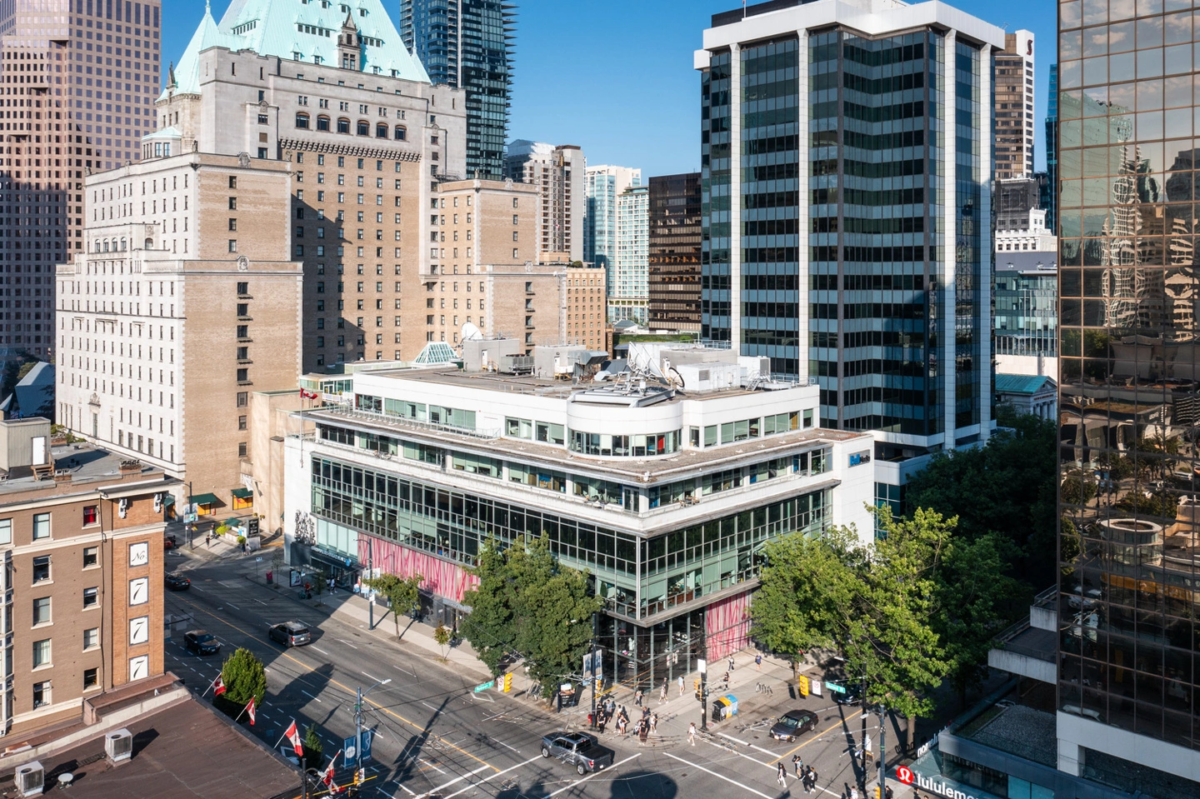
Robson Central in Vancouver, now occupied by an adidas flagship store. Image: Morguard
“Revenue from real estate properties includes contracted rent from tenants along with recoveries of property expenses (including property taxes).”
The Trust is a closed-end real estate investment trust, which owns a diversified portfolio of 45 retail, office and industrial income producing properties in Canada with a book value of $2.2 billion and approximately 8.1 million square feet of leasable space.
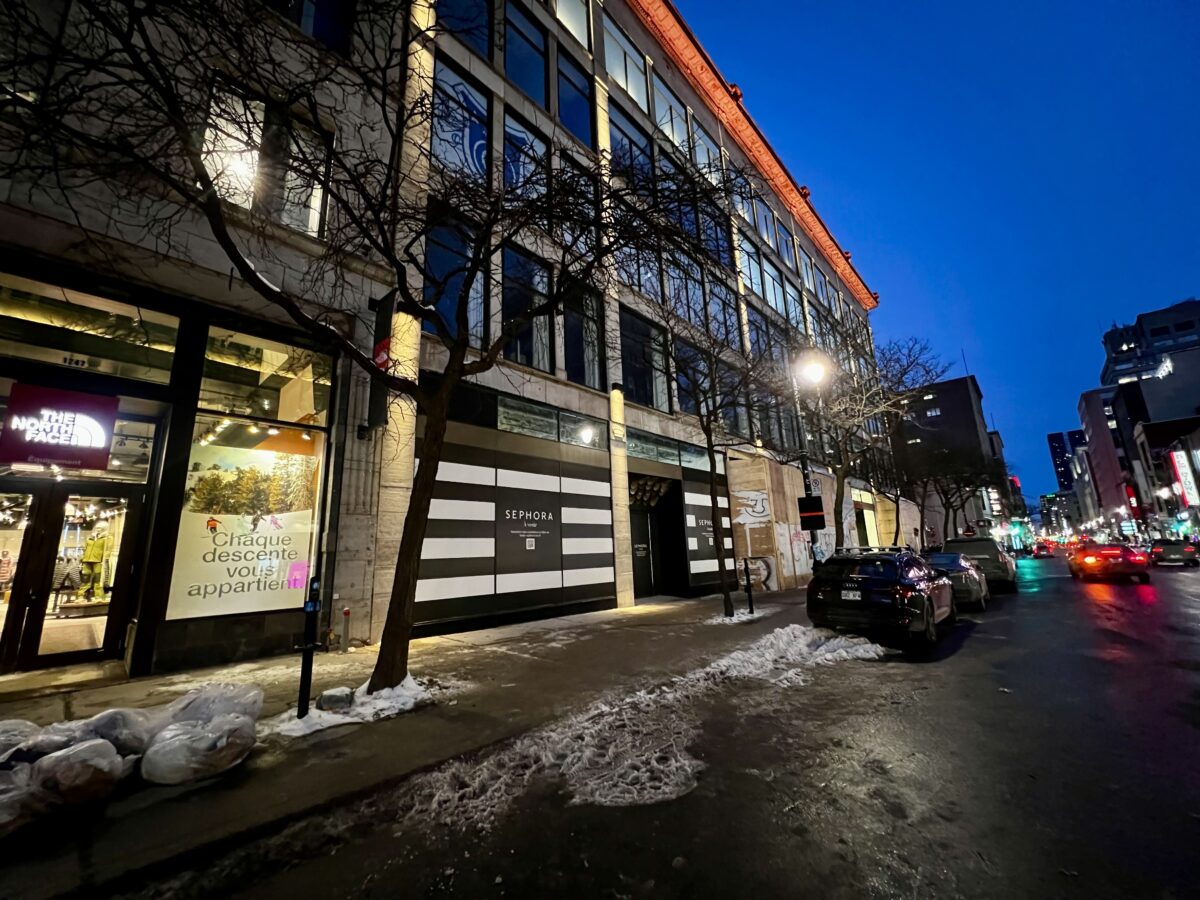
Future Sephora store at 1241 Ste-Catherine St. W. in Montreal. Photo: Maxime Frechette
Global beauty giant Sephora is set to open its second location in downtown Montreal at 1241 Ste-Catherine Street West, replacing a long-standing Armani Exchange store. The move signals confidence in the downtown retail market, even as the recently launched Royalmount shopping centre seeks to draw consumer traffic away from the city core.
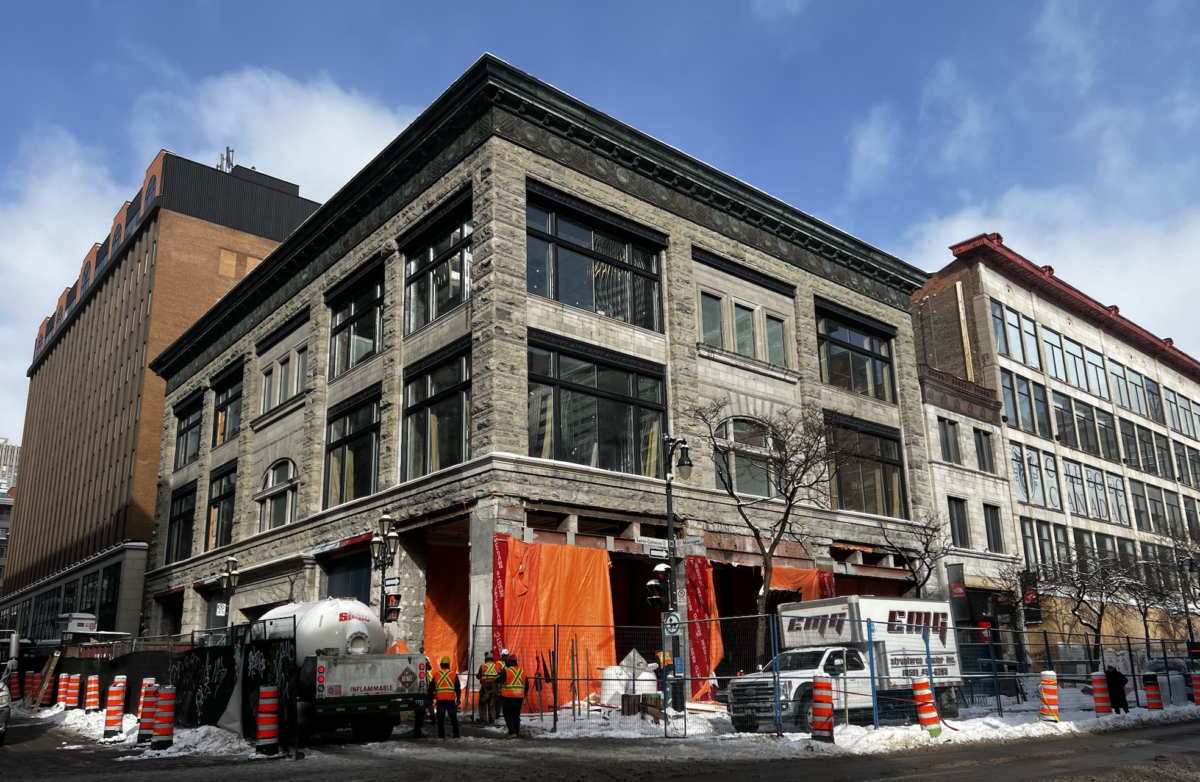
The new 4,130 square foot Sephora store will be positioned between The North Face and a recently opened New Balance location, further enhancing the area’s retail mix. Across the street, Alo Yoga recently set up shop at the bustling intersection of Ste-Catherine Street and Rue de la Montagne. Additionally, an Apple flagship store is under construction nearby, across from the prestigious Holt Renfrew Ogilvy, which serves as a key luxury anchor for the district.
Sephora’s Growing Footprint in Montreal
Sephora first entered downtown Montreal in June 2012, opening a store in what was then called Complexe Les Ailes at 677 Ste-Catherine Street West. Following a substantial renovation and expansion, the store was integrated into the newly overhauled Montreal Eaton Centre and reopened in September 2019 as a 12,500-square-foot location, one of the largest in the country.
The decision to open a second downtown store reinforces the brand’s confidence in Montreal’s retail strength. The area around Ste-Catherine and Rue de la Montagne has seen a surge in leasing activity, with new retailers clustering near Holt Renfrew Ogilvy, strengthening the district’s appeal as a shopping destination.
This expansion also positions Sephora as a competitor to Holt Renfrew Ogilvy’s 25,000-square-foot beauty hall, which has been a key player in Montreal’s luxury cosmetics market since its opening in April 2019.
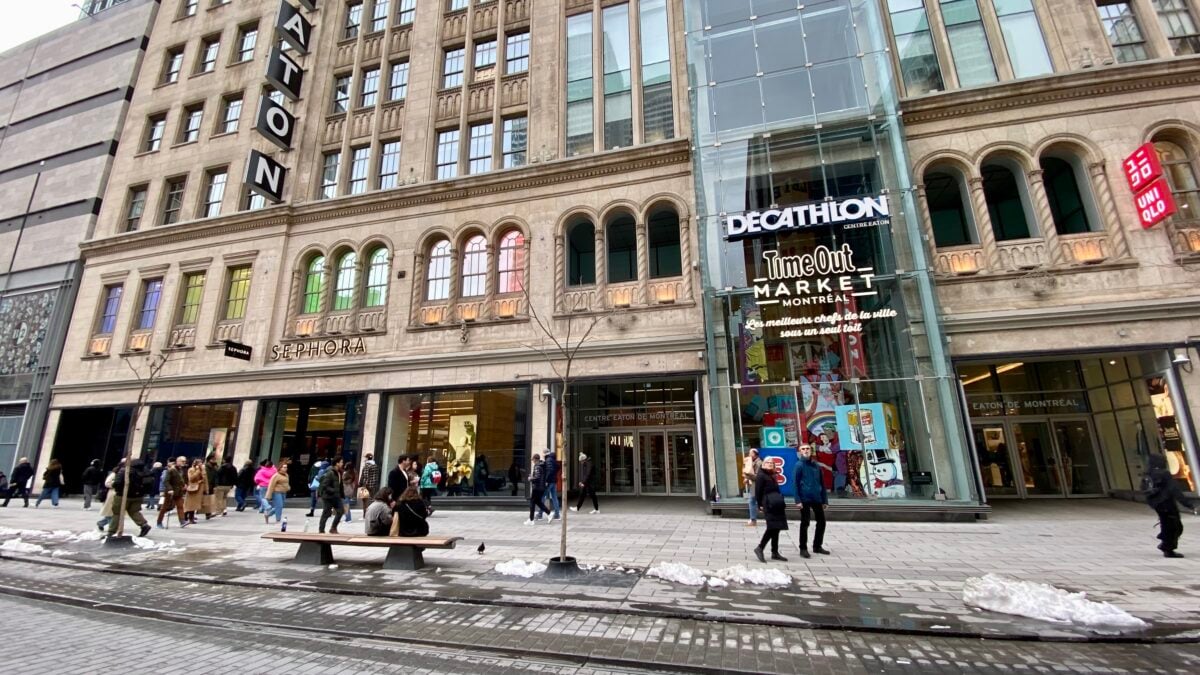
The Ste-Catherine Street-facing exterior of Sephora’s store at the Montreal Eaton Centre, March 2024. Photo: Craig Patterson
Sephora’s Expansion Across Canada
Sephora’s growth in Canada has been steady since it first entered the country in 2004, opening its inaugural store at CF Toronto Eaton Centre. Since then, the retailer has aggressively expanded, operating 129 locations nationwide with more to come. Sephora is expected to have over 160 stores in Canada by next Spring.
In November 2021, Sephora announced an ambitious plan to open approximately 50 additional stores in Canada. Since then, it has targeted smaller cities and regional malls, increasing accessibility for customers outside of major metropolitan areas.
Jeff Berkowitz of Aurora Realty Consultants acts as broker for Sephora’s real estate selection and lease negotiations across Canada, helping guide the brand’s strategic growth. Berkowitz has been working with Sephora on its Canadian expansion since 2004 then the retailer entered the country.
Sephora will join other new retailers near the Ste-Catherine and Montagne intersection in downtown Montreal, including New Balance, Alo Yoga and soon, Apple. Photo: Maxime Frechette
The company’s continued expansion comes amid speculation that Ulta Beauty, its major U.S.-based competitor, is considering another attempt to enter the Canadian market. Ulta previously explored expansion into Canada before putting its plans on hold.
The Strength of Sephora in Canada
Sephora has become one of Canada’s dominant beauty retailers, not just through its store network but also through strategic community initiatives and digital innovation.
Community Engagement and Partnerships
Sephora Canada has actively engaged with local communities. In June 2021, the company launched its first-ever National Indigenous History Month Campaign, collaborating with Indigenous artists and creators. This initiative highlighted Sephora Canada’s ongoing commitment to diversity and inclusion.
Additionally, in January 2025, Sephora Canada became the first founding partner and official beauty partner of the Toronto Tempo, Canada’s first WNBA team. This move solidifies the company’s support for women’s sports and empowerment initiatives.
Apple is building a flagship store at the northeast corner of Ste-Catherine Street and Rue de la Montagne. Sephora will be located to the right where wood hoarding is seen — this photo was taken a day before signage for Sephora went up. Photo: Maxime Frechette
Digital and Omnichannel Strength
Sephora’s e-commerce platform remains a key pillar of its Canadian success. The brand has embraced digital transformation through services such as:
Buy Online, Pick-Up In-Store (BOPIS), seamlessly linking its online and physical retail experiences.
The Sephora App, offering personalized recommendations, exclusive products, and interactive shopping experiences.
Sephora’s Industry-Leading Loyalty Program
Sephora’s Beauty Insider loyalty program, launched in 2007, has amassed millions of Canadian members. The program is structured into three tiers:
Beauty Insider (entry-level)
VIB (Very Important Beauty Insider)
Rouge (premium tier)
Members enjoy exclusive benefits such as early access to sales, free shipping, and luxury gifts, fostering strong brand loyalty in the competitive beauty industry.
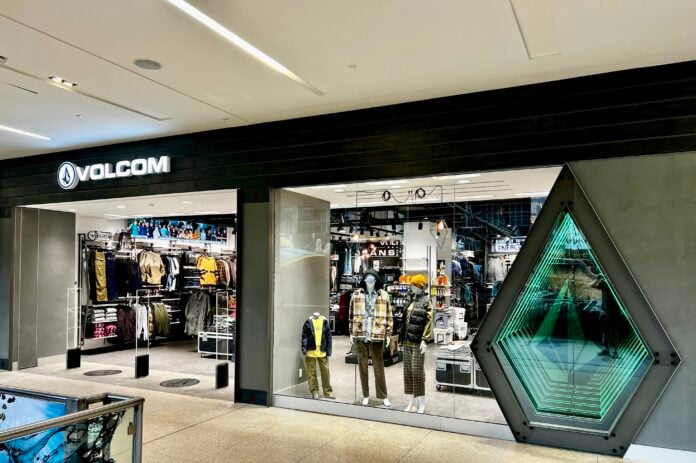
Volcom store at West Edmonton Mall in Edmonton. Photo: Volcom
Volcom will continue operating its seven Canadian stores despite former U.S. operator, Liberated Brands, filing for Chapter 11 bankruptcy. While all Volcom stores in the United States are set to close, the Canadian locations will remain open and unaffected by the restructuring other than the end of a loyalty program.
Authentic Brands Group (Authentic) has shifted the licence of Volcom, along with RVCA and Billabong, which were previously operated by Liberated Brands. In the U.S. market, new partners will continue to distribute these brands through wholesale channels.
The seven Volcom stores to stay open in Canada are all located in Alberta, Saskatchewan and British Columbia, with specific locations including:
Edmonton: West Edmonton Mall, Kingsway Mall
Calgary: CF Chinook Centre, CF Market Mall
Fort McMurray: Peter Pond Mall
Kelowna: Orchard Park Mall
Saskatoon: Midtown Plaza
These stores operate under VLCM Fasions Inc, a separate company from Liberated Brands, which allows them to continue business as usual.
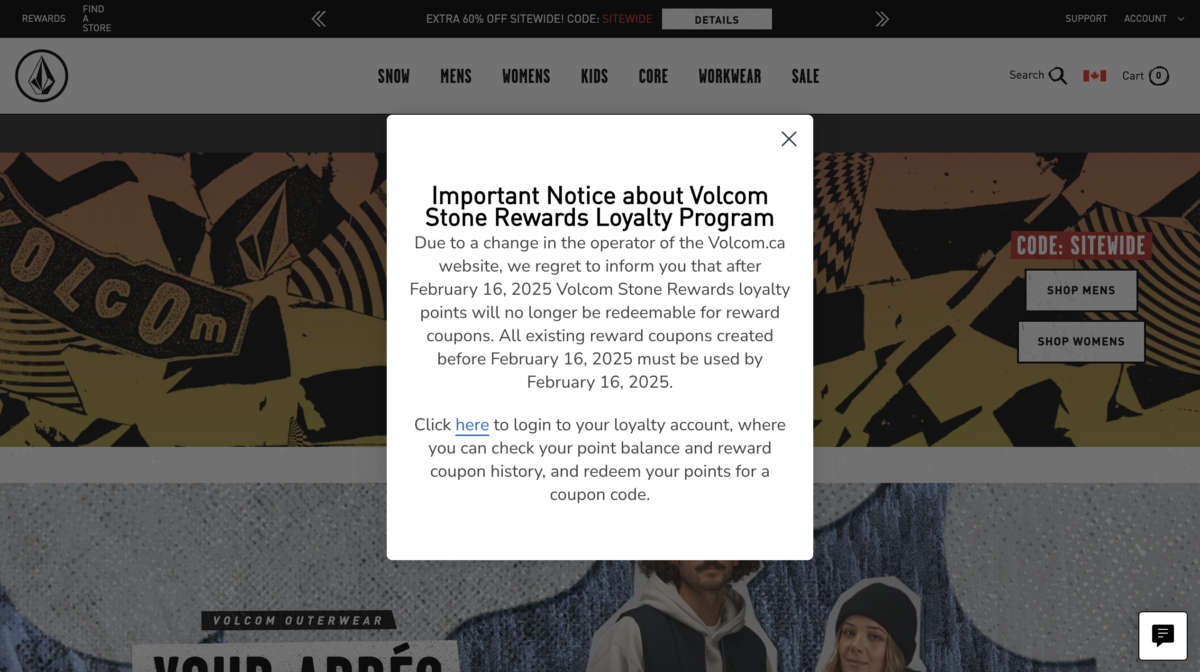
While the Canadian stores will continue operations, there will be a change to the Volcom Stone Rewards Loyalty Program. According to a notice on Volcom’s Canadian website, the loyalty program will no longer be redeemable for reward coupons after February 16, 2025. Existing reward coupons must be used by this date, after which the program will be discontinued due to changes in the operator of Volcom.ca.
Notice on Volcom’s Canadian website.
U.S. Store Closures and the Impact of Liberated Brands’ Bankruptcy
Liberated Brands’ Chapter 11 bankruptcy filing has led to the closure of more than 120 retail stores across North America and the layoff of approximately 1,400 employees. The restructuring will see the company winding down its North American retail operations and selling off its international business units.
The closures affect major retail banners including Volcom, Billabong, and Quiksilver in the United States. However, in Canada, Billabong and Quiksilver will continue to be available through existing wholesale distribution, as well as a Billabong store operated by VLCM Fashions Inc. in Whistler, BC. The distribution for these brands will now be managed by other licensee groups such as The Levy Group and O5 Group which recently acquired them.
David Brooks, Executive Vice President, Action and Outdoor Sports, Lifestyle at Authentic, said, “Our industry is more competitive than ever, and throughout this process, we’ve remained focused on the wellbeing of our partners, providing support to our licensee, Liberated Brands as they evaluate their opportunity to reorganize their business and regain profitability.”
Brooks went on to say, “At Authentic, our primary responsibility is to our beloved brands and to their loyal fans and customers. On the rare occasion that a partner is not able to fulfill its commitments, Authentic will transition the license. This approach is a proven strategy where we consistently see them thrive. To that end, we’ve been working closely with Liberated Brands to thoughtfully transition key licenses to trusted operators within our network.”
“Liberated’s U.S. store fleet was overinflated, burdened with outdated and underperforming locations. As a result, physical U.S. based stores will likely be rationalized, allowing the brands to create more value and strengthen their presence across specialty retailers, department stores, and e-commerce—ensuring a more agile and resilient future.”
Interview with Alex Payne, President of VLCM Fashions Inc.
To clarify the situation for Canadian consumers, Alex Payne, President of VLCM Fashions Inc., confirmed in an interview that Volcom stores in Canada remain unaffected by the bankruptcy of Liberated Brands. VLCM Fashions Inc., which operates the seven Volcom stores in Canada as well as a Billabong store in Whistler, is a separate entity and not tied to the restructuring process in the United States.
“The news has incorrectly reported the effect of the bankruptcy,” Payne stated. “Their stores in the United States had ownership of the product, and they’ve now moved to other licensees, but the brand remains strong.”
Payne said there are no plans for more Volcom or Billabong stores in Canada at this time. That is mainly due to the economy and recent tariff threats from the US government.
Cool Climate Club™ has announced its launch at the Toronto Stock Exchange, beginning its mission to make climate action impactful, accessible and undeniably cool. Together with younger generations and forward-thinking retail brands, Cool Climate Club is transforming the status quo of climate action in retail, it said in a news release.
The new brand said it offers turnkey tools that track the planting and preservation of trees while monitoring a forest’s impact with a customized dashboard powered by Canada’s Forest Trust Corporation (CFTC).
“Point of sale technology solutions are supported by innovative Cool Climate Club co-branding opportunities to amplify retailers’ nature and sustainability efforts amongst younger generations, including Gen Alpha, Gen Z, and millennials. At a time when climate change is undeniable, nearly 75% of Gen Z’s will support brands that take bold climate action and 78% of millennials expect retailers to become more sustainable (Deloitte Sustainability, 2024). As a result, brands are facing increasing pressure from consumers and employees to take climate action and Cool Climate Club provides a solution with measurable impact,” it said.
Lauren Adey
“Cool Climate Club offers a disruptive opportunity to retail brands with a dynamic way to reach younger customers while making a measurable difference on climate and nature. It’s a win-win-win,” said Lauren Adey, VP, Marketing and Retail, Cool Climate Club. “We’re thrilled to announce this brand as part of our growth strategy at Canada’s Forest Trust Corporation, building on our history of offering turnkey solutions to help our customers and partners reach their sustainability goals.”
With this announcement, the Cool Climate Club is sharing its Advisory Board, bringing expertise in consumer goods, hospitality, real estate, retail, sustainability, finance and public policy.
Members of the Cool Climate Club Advisory Board include:
Veronica Bailey, Global Director, Partnerships, Fairmont; Formerly Nordstrom
Vanessa Bump, Former Head of Social Impact and Philanthropy, Nordstrom; Formerly Adidas
Tim Sanderson, Former Executive Vice President, JLL, Co-founder of Northwest Atlantic
Gary Zed, Founder & CEO, Canada’s Forest Trust Corporation; Former National Partner, EY and Deloitte, Tax Lawyer, Family Office Advisor
Aishwarya Puttur
“The time is now to address the irreversible impacts of climate change. We need individuals, businesses and governments to come together to create a livable present and future. Collective action can mitigate the natural disasters we see on the news or experience every day. Here, every action matters. Every tree matters,” said Aishwarya Puttur, Advisor, Cool Climate Club. “Youth have shown leadership in climate action, and businesses must also be at the forefront of this collective effort. The Cool Climate Club is accelerating retailers to invest in nature-based solutions and I’m honoured to be a part of this history.”
Cool Climate Club said it is committed to making a positive impact in a challenging global environment. Like the youth it represents, this announcement shows a determined response and relentless action in the face of climate change.
Restaurant Brands International Inc., one of the world’s largest quick service restaurant companies with nearly $45 billion in annual system-wide sales and over 30,000 restaurants in more than 120 countries and territories, reported 2.3% comparable sales growth in 2024 compared to the previous year.
In reporting its financial results on Wednesday, the company said total revenue of $8.4 billion for the year rose from just over $7 billion in 2023. But net income fell from $1.718 billion in 2023 to $1.445 billion in 2024.
RBI owns four of the world’s most prominent and iconic quick service restaurant brands – TIM HORTONS®, BURGER KING®, POPEYES®, and FIREHOUSE SUBS®.
Josh Kobza
Josh Kobza, Chief Executive Officer of RBI, said: “I am proud of our performance this year, reflecting the strong foundations we’re building across our businesses and the dedication of our teams and franchisees who are executing the fundamentals of quality, service, and convenience with excellence.
“As we look ahead, we remain focused on thoughtful marketing, operational improvements, and modern image to enhance the guest experience, drive franchisee profitability, and deliver long-term growth for our brands and shareholders.”
The company said it completed the acquisitions of Carrols Restaurant Group Inc. and Popeyes China on May 16, 2024 and June 28, 2024, respectively. Its consolidated results include Carrols and PLK China revenues, expenses and segment income from their acquisition dates.
“Following the Carrols and PLK China Acquisitions, RBI established a new operating and reportable segment, Restaurant Holdings (RH), which includes results from the Carrols Burger King restaurants and the PLK China restaurants. RBI reports results under six operating and reportable segments consisting of the following: Tim Hortons (TH), Burger King (BK), Popeyes Louisiana Kitchen (PLK), Firehouse Subs (FHS), International (INTL) and RH,” it said.
“RBI plans to maintain the franchisor dynamics in its TH, BK, PLK, FHS and INTL segments (“five franchisor segments”) to report results consistent with how the business will be managed long-term given RBI’s plans to refranchise the vast majority of the Carrols Burger King restaurants and to find a new partner for PLK China in the future. RH results include Company Restaurant Sales and expenses, including expenses associated with royalties, rent, and advertising. These expenses are recognized, as applicable, as revenues in the respective franchisor segments (BK and INTL) and eliminated upon consolidation.”
Collage of different images containing 1 promotional poster of White Spot burgers, 2 images of White Spot burgers, and 2 images of kids that benefit from the help of Variety - the Children's Charity. (CNW Group/White Spot Hospitality)
White Spot, BC’s iconic restaurant chain, is turning burgers into a catalyst for change with its latest fundraising initiative in support of Variety – the Children’s Charity.
From February 18 to 21, $2 from every burger sold – whether for dine-in, or takeout – will go directly toward helping children and youth in BC with disabilities and complex medical needs, said the brand in a news release.
“This initiative gives families the opportunity to enjoy White Spot’s famous burgers while making a meaningful impact. Every bite supports children and families who rely on Variety for essential programs, services and more that they may not otherwise have access to,” it said.
“White Spot has been a proud supporter of Variety since 1966, raising more than $2 million through various fundraising efforts. This year’s campaign leads into Variety’s Show of Hearts Telethon airing on Global BC, Sunday, February 23 – an event White Spot has championed since its inception. Beyond fundraising, White Spot team members also volunteer their time to provide meals to the event crew.”
“At White Spot, giving back to the community isn’t just something we do – it’s part of who we are,” said Trent Carroll, president of White Spot. “We’re honoured to support Variety’s mission and provide our guests with the opportunity to make a real difference, all while enjoying great burgers together.”
Variety plays a crucial role in the lives of BC families, stepping in where healthcare systems may not, to ensure children have access to life-changing support, said the brand.
Andrea Tang
“We are incredibly grateful for our longstanding partnership with White Spot,” said Andrea Tang, CEO of Variety the Children’s Charity. “With deep roots in the BC community, White Spot shares our commitment to making a life-changing impact for children and families. Right now, too many kids are waiting for the critical supports they need to thrive. Thanks to White Spot’s generosity, we can reach more families and provide the essential therapies, resources, and equipment kids need—when they need it most. Together, we are changing lives.”
Headquartered in Vancouver, White Spot is Canada’s longest-running restaurant chain. Founded in 1928, when Nat Bailey launched Canada’s first drive-in restaurant at Granville and 67th, the 97 year-young chain serves more than 17 million guests annually at 132 White Spot and Triple O’s (their premium quick-service restaurants) located throughout B.C., Alberta, Ontario and Asia.
Retail Insider is streamlining its Canadian retail news from around the web to include a handful of top news stories that can be viewed quickly during the day. Here are the top stories from the past 24 hours.
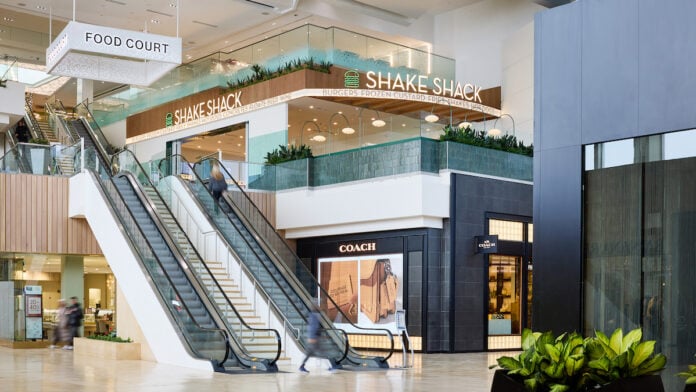
Shake Shack at Toronto's Yorkdale Shopping Centre. Photo: Shake Shack
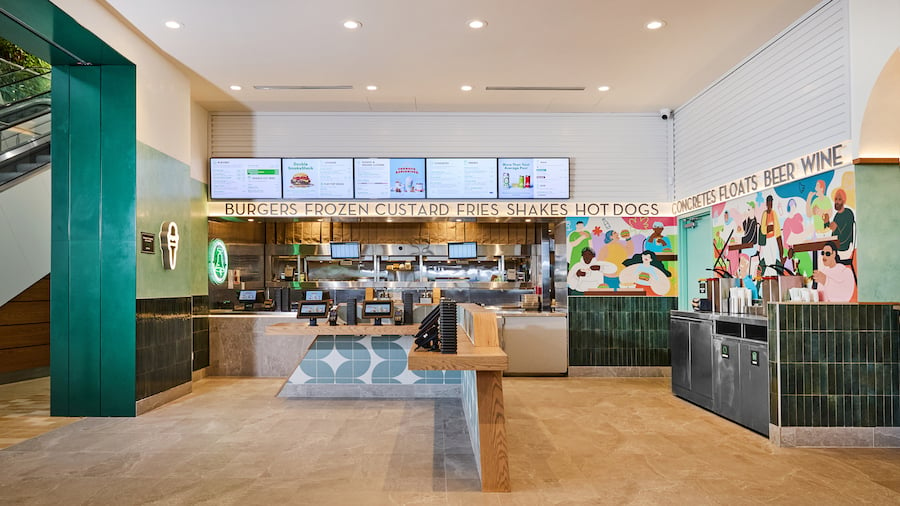
US-based fast-casual restaurant Shake Shack officially opens its third Toronto location at the Yorkdale Shopping Centre on the morning of February 12. The highly anticipated launch marks the brand’s third location in Canada, following successful openings at Yonge-Dundas Square and Union Station in Toronto. The Yorkdale outpost introduces Shake Shack’s signature ShackBurgers, crinkle-cut fries, and hand-spun shakes to one of the country’s busiest and most upscale shopping destinations.
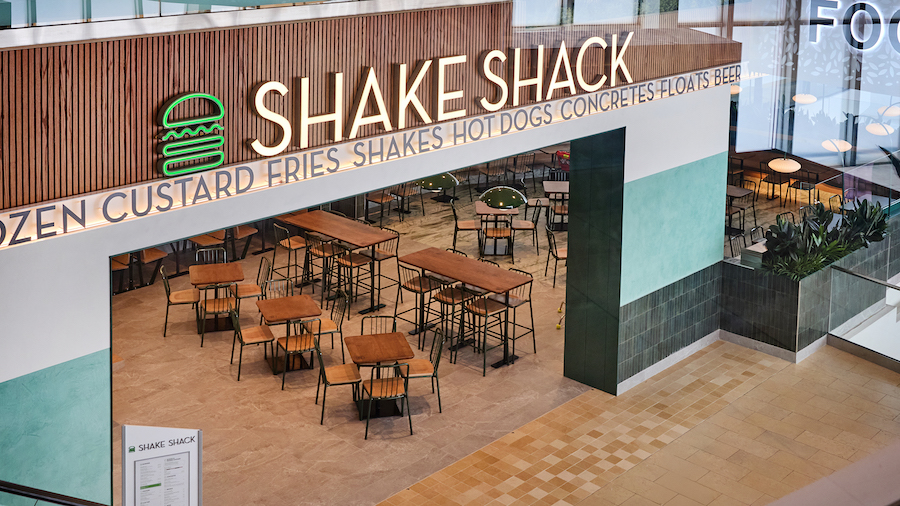
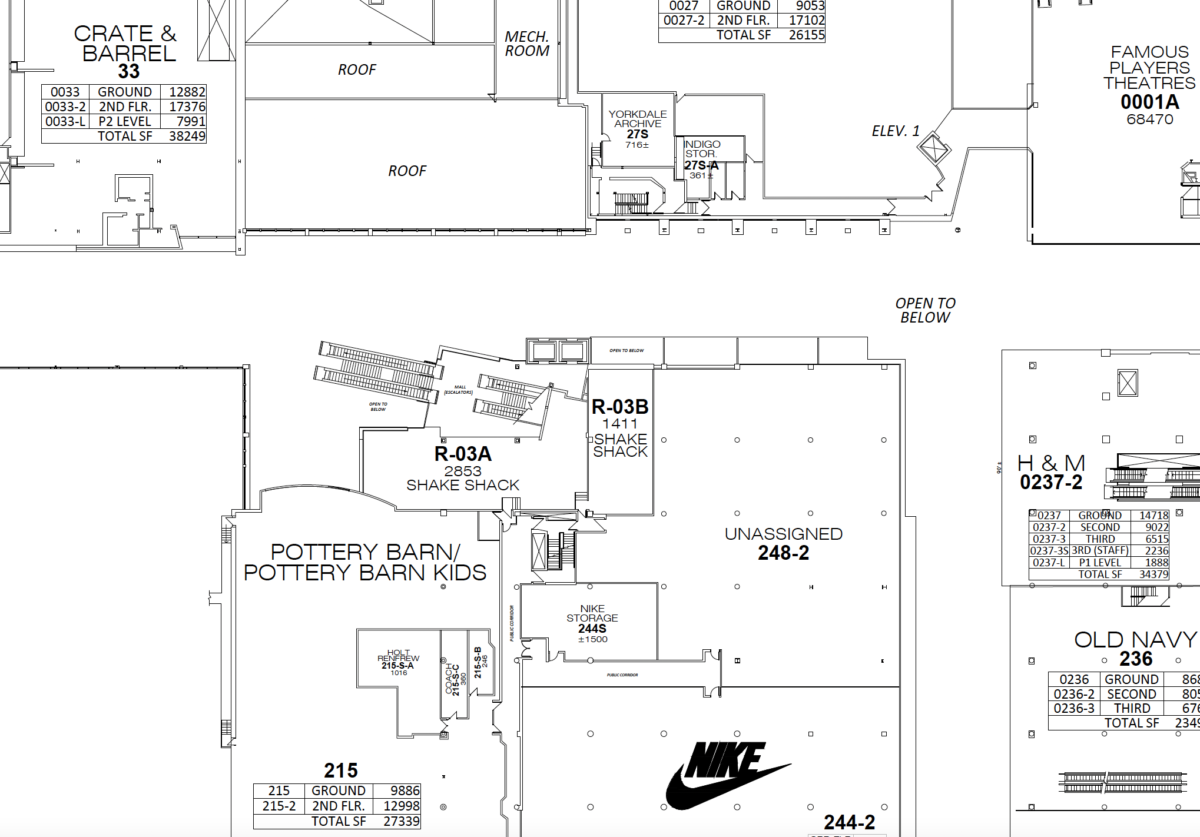
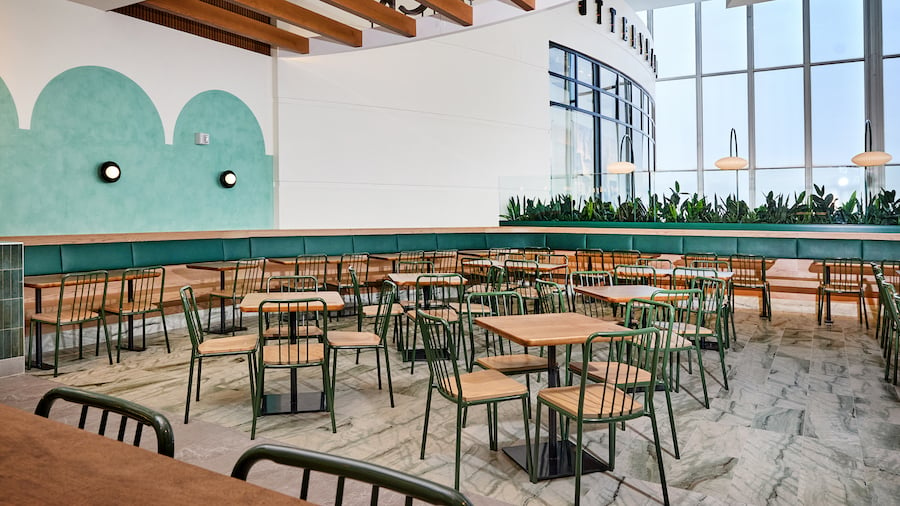
Yorkdale Shopping Centre, known for housing Canada’s highest concentration of luxury retailers, continues to expand its foodservice offerings with the addition of Shake Shack. Positioned on a mezzanine level near the mall’s food court, the restaurant occupies a space formerly used by Illy Café, alongside an area that was once part of the historic Eaton’s department store. This elevated location offers diners a spacious indoor patio overlooking the shopping centre, creating a unique dining experience.
Shake Shack at Toronto’s Yorkdale Shopping Centre. Photo taken from food court escalators. Photo: Shake ShackPositioning of Shake Shack at Yorkdale in Toronto. Lease plan via Oxford Properties
A Local Artistic Touch
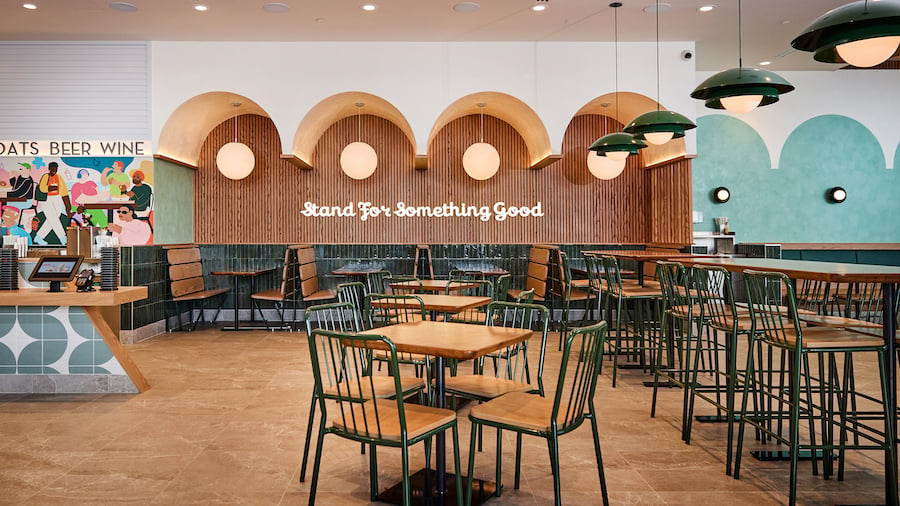
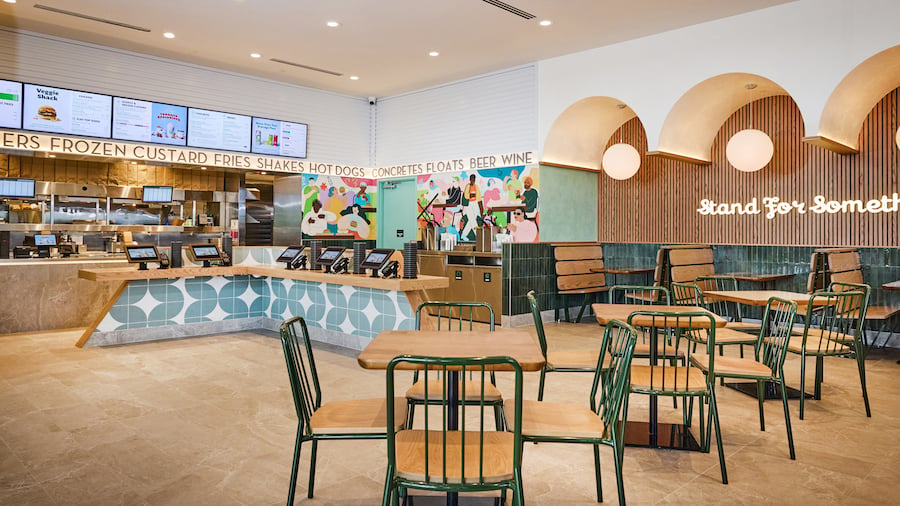
As part of its commitment to community engagement, Shake Shack has collaborated with Toronto-based queer Mestizx/Latinx illustrator Vivian Rosas to bring an artistic element to the Yorkdale location. Known for her bold, inclusive, and empowering illustrations, Rosas’ artwork enhances the space while reinforcing Shake Shack’s values of inclusivity and representation.
Menu Highlights and Signature Offerings
Shake Shack has built its reputation on high-quality ingredients and carefully crafted menu items. Guests at the Yorkdale location can enjoy:
100% Canadian Angus beef burgers with no antibiotics or added hormones
Crispy chicken sandwiches made with responsibly raised chicken
Golden crinkle-cut fries, a signature fan favourite
Hand-spun frozen custard, crafted with Canadian dairy, real cane sugar, and cage-free eggs
Shake Shack at Toronto’s Yorkdale Shopping Centre. Photo: Shake ShackShake Shack at Toronto’s Yorkdale Shopping Centre. Photo: Shake Shack
Shake Shack’s Expansion in Canada
The launch of Shake Shack at Yorkdale is part of a broader growth strategy in Canada. Shake Shack Canada, a partnership between Toronto-based investment firms Osmington Inc. and Harlo Entertainment Inc., has ambitious plans to open 35 locations across the country by 2035. Beauleigh Retail Consultants negotiates Shake Shack’s leases.
Shake Shack first entered the Canadian market in June 2024 with a flagship location at Yonge-Dundas Square. A second restaurant opened in Union Station in December 2024, quickly becoming a popular stop for commuters and downtown shoppers. With Yorkdale now added to its portfolio, the brand is expected to continue its rollout in major cities across the country in the coming years.
Globally, Shake Shack has grown from its origins in New York City’s Madison Square Park in 2004 to more than 500 locations in cities such as London, Hong Kong, Tokyo, and Mexico City.
Shake Shack at Toronto’s Yorkdale Shopping Centre. Photo: Shake ShackShake Shack at Toronto’s Yorkdale Shopping Centre. Photo: Shake Shack
Yorkdale Shopping Centre’s Continued Growth
Yorkdale Shopping Centre remains one of Canada’s most dynamic retail destinations, consistently attracting top-tier brands and premium dining options. The addition of Shake Shack aligns with the mall’s strategy of expanding its food and beverage offerings to complement its retail mix.
Yorkdale is home to several full-service restaurants that continue to attract shoppers and diners, including The Cheesecake Factory, Earls, and Joey. These establishments provide visitors with diverse dining choices, contributing to the centre’s reputation as a premier shopping and lifestyle destination.
Meanwhile, Yorkdale is also experiencing notable retailer movements:
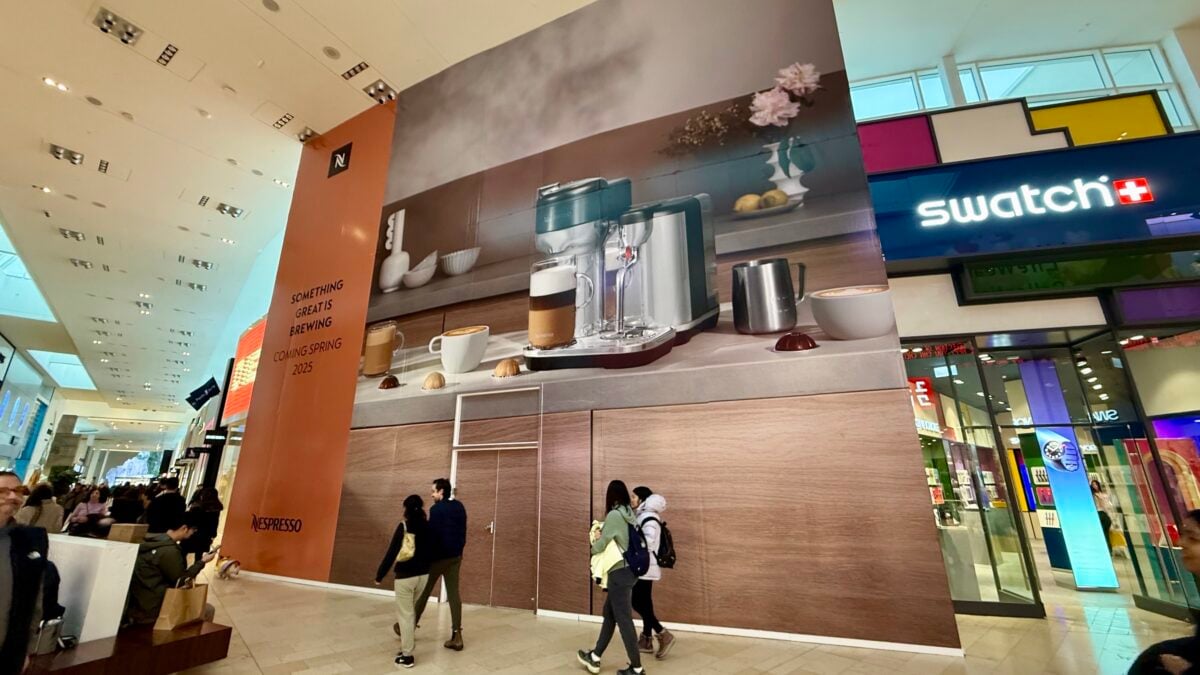
Nespresso is relocating to a new space formerly occupied by Allbirds, directly across from Uniqlo.
Massimo Dutti is introducing a new concept store within the mall, following the debut of its redesigned format at Royalmount in Montreal last fall.
Luxury expansion continues with Oxford Properties redeveloping a new luxury wing in the centre of the mall. Several luxury retailers have already opened in the new space, including Loewe, Brunello Cucinelli, Loro Piana, Versace, and Jimmy Choo. Upcoming openings include Maison Margiela, Rimowa, Saint Laurent, and Dior, with construction currently underway.
La Maison Simons is set to open a two-level store in the fall of 2025 within the former Nordstrom location, adding a significant new fashion anchor to the mall.
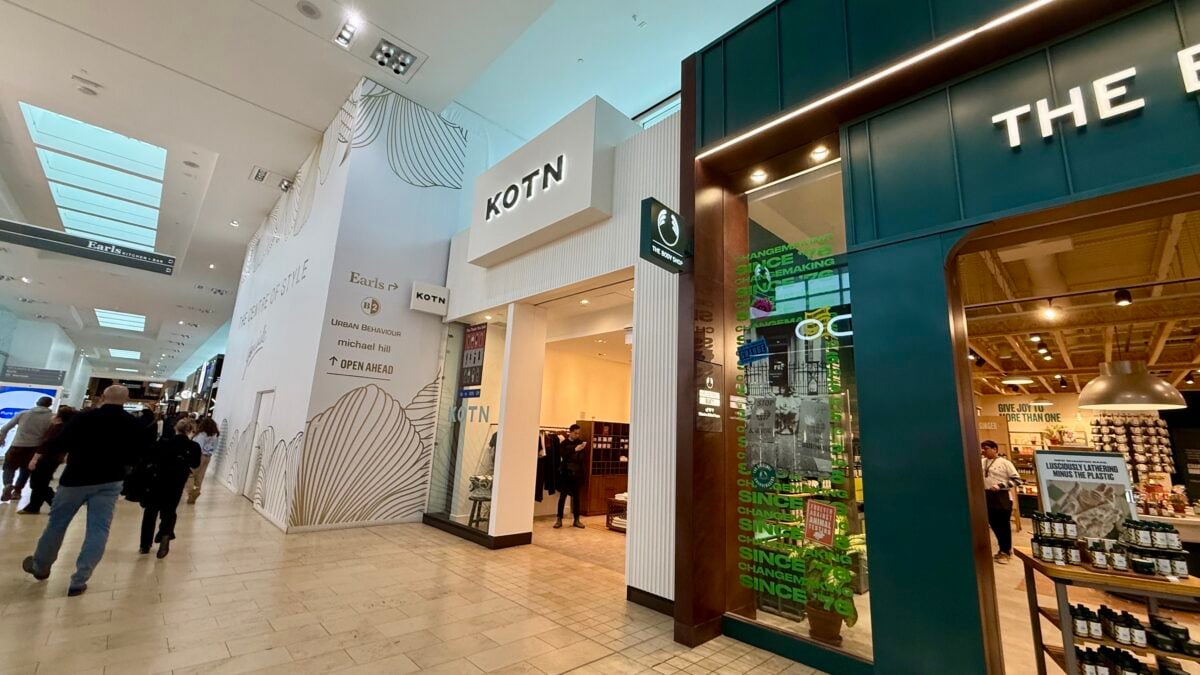
Nespresso relocation to the former Allbirds space at Toronto’s Yorkdale Shopping Centre. Photo: Craig PattersonToronto-based apparel brand Kotn recently opened a pop-up at Yorkdale. Photo: Craig Patterson
First Capital owns, operates and develops grocery-anchored, open-air centres in neighbourhoods with the strongest demographics in Canada.
KEY HIGHLIGHTS FROM THE FOURTH QUARTER:
Same Property NOI growth of 3.4%, excluding bad debt expense (recovery) and lease termination fees
Strong leasing activity, including lease renewal spreads of 12.7%
Total portfolio occupancy of 96.8%, representing an increase of 60 basis points year-over-year
Announced a 3% increase to monthly distributions on December 16, 2024, effective January 2025
Adam Paul
“Early in 2024, we outlined our strategic plan to investors. I am pleased to say that we are tracking well against the metrics we presented and remain well positioned to achieve our three-year objectives,” said Adam Paul, President and CEO.
“Touching specifically on two key metrics, FCR delivered 2024 normalized OFFO per unit growth of nearly 6% (15% reported) in 2024 versus the plan’s annual average target of at least 3%.
“Turning to the balance sheet, debt to EBITDA also improved significantly throughout 2024 and is similarly tracking well against our plan.”
Here’s some of the highlights of the financial results, according to the REIT.
FOURTH QUARTER OPERATIONAL AND FINANCIAL HIGHLIGHTS
Same Property NOI Growth: Total Same Property NOI increased 2.7% over the prior year period. Same Property NOI excluding bad debt expense (recovery) and lease termination fees increased 3.4%. The growth was primarily due to higher base rent.
Portfolio Occupancy: On a quarter-over-quarter basis, total portfolio occupancy increased 0.3% to 96.8% at December 31, 2024, from 96.5% at September 30, 2024.
Lease Renewal Rate Increase: Net rental rates increased 12.7% on a volume of 749,000 square feet of lease renewals, when comparing the rental rate in the first year of the renewal term to the rental rate in the last year of the expiring term. Net rental rates on leases renewed in the quarter increased 18.5% when comparing the average rental rate over the renewal term to the rental rate in the last year of the expiring term owing to higher contractual growth rates negotiated for the renewed lease terms.
Average Net Rental Rate: The portfolio average net rental rate increased by 0.6% or $0.15 per square foot over the prior quarter to a record $24.00 per square foot, primarily due to renewal lifts and rent escalations.
Property Investments: First Capital invested approximately $57 million into its properties during the fourth quarter, primarily through development and redevelopment.
Property Dispositions: During the fourth quarter, First Capital continued to execute on its strategy, with $105 million of dispositions completed or under firm agreement, including (i) 1629-1633 The Queensway, Etobicoke (ii) its 50% interest in 200 West Esplanade, North Vancouver and (iii) Sheridan Plaza, Toronto which is an all cash transaction and scheduled to close by the end of the first quarter of 2025.
Balance Sheet and Liquidity: First Capital’s December 31, 2024 net debt to Adjusted EBITDA multiple was 8.7x, an improvement from 9.9x at December 31, 2023. First Capital’s December 31, 2024 liquidity position was approximately $0.9 billion, including $698 million of availability on revolving credit facilities and $159 million of cash on a proportionate basis.
Operating FFO per Diluted Unit of $0.32: Operating Funds from Operations of $67.7 million, or $0.32 per unit, remained consistent with prior year. On a year-over-year basis, NOI increased $5.1 million, or $0.02 per unit, primarily driven by higher base rent, largely offset by higher interest expense and corporate G&A for a total of $4.8 million, or $0.02 per unit.
FFO per Diluted Unit of $0.31: Funds From Operations of $67.5 million increased $9.4 million, or $0.04 per unit, over prior year. The increase was primarily driven by a year-over-year increase in other gains (losses) and (expenses) of $9.5 million. These other gains (losses) and (expenses) are comprised primarily of mark-to-market (non-cash) gains and losses related to derivative financial instruments employed by First Capital to reduce its borrowing costs and fix the rate of interest on certain variable-rate term loans. Over the life of each loan, the cumulative gain or loss on the related derivative instruments is expected to net to $Nil.
Announced 3% Distribution Increase: On December 16, 2024, the REIT’s Board of Trustees approved a 3.0% distribution increase to a monthly rate of $0.074167 per unit from $0.072 formerly. Equating to an annualized rate of $0.89 per unit, the increase was effective for the January distribution to unitholders of record as of January 31, 2025, and will be paid on February 18, 2025.
Net Income (Loss) Attributable to Unitholders: For the three months ended December 31, 2024, First Capital recognized net income (loss) attributable to Unitholders of $32.1 million or $0.15 per diluted unit compared to $173.8 million or $0.81 per diluted unit for the prior year period. The decrease in net income over prior year was primarily due to a $167.6 million increase in the fair value of investment property in the fourth quarter of 2023 versus a $3.6 million increase in fair value recognized in the fourth quarter of 2024, on a proportionate basis.
ANNUAL OPERATIONAL AND FINANCIAL HIGHLIGHTS
Same Property NOI Growth: Total Same Property NOI increased 4.4% over prior year, inclusive of a $5.5 million settlement with Nordstrom with respect to the early termination of its lease at One Bloor East in June 2023. Same Property NOI excluding bad debt expense (recovery) and lease termination fees increased 3.3%, primarily due to higher base rent in 2024 relative to 2023.
Portfolio Occupancy: On a year-over-year basis, total portfolio occupancy increased by 0.6%, to 96.8% at December 31, 2024, from 96.2% at December 31, 2023.
Lease Renewal Rate Increase: Net rental rates increased 12.5% on 2,372,000 square feet of lease renewals when comparing the rental rate in the first year of the renewal term to the rental rate in the last year of the expiring term. Net rental rates on leases renewed during 2024 increased 17.3% when comparing the average rental rate over the renewal term to the rental rate in the last year of the expiring term primarily owing to higher contractual growth rates negotiated for the renewed lease terms.
Growth in Average Net Rental Rate: The portfolio average net rental rate increased $0.66 to a record $24.00 per square foot representing year over year growth of 2.8%. The strong growth was primarily due to rent escalations, renewal lifts, acquisitions and dispositions.
Property Investments: First Capital invested approximately $223 million into its properties during 2024, primarily through development, redevelopment and the acquisition of the remaining 50% interest in Seton Gateway.
Property Dispositions: During 2024, First Capital completed or entered into firm agreements for $317 million of property disposition and related transactions. Reflecting FCR’s disciplined approach to asset sales, the collective transaction values equated to an in-place yield that is less than 3% and an average premium to IFRS carrying value of more than 50%. FCR remains on track to meet the key objectives of its three-year business plan, where the ongoing disposition of development sites and select low-yielding income properties will be an important contributor. As at December 31, 2024, the Trust classified $197 million of investment properties as held for sale.
Advancing ESG initiatives: First Capital continued to demonstrate leadership in Environmental, Social and Governance (“ESG”) matters throughout 2024, which included the following highlights:
Recognized by the Globe and Mail as one of “Greater Toronto’s Top Employers” for 2024
Named one of “Canada’s Top Small and Medium Employers” for 2024
Included in the Globe and Mail’s “2024 Report on Business Women Lead Here” list
Selected for inclusion in “The Career Directory” for 2024 as one of Canada’s Best Employers for recent graduates
Highest ranked public REIT in the Globe and Mail’s comprehensive ranking of Canada’s corporate boards for 2024
Awarded “Gold 2024 Green Lease Leader Recognition” by the Institute for Market Transformation (IMT) and the U.S. Department of Energy’s Better Building Alliance
Only REIT listed as a top 30 Canadian company in Sustainalytics ‘Road to Net Zero’ Ranking for our strong low carbon transition rating management score
Achieved a 19% reduction in Scope 1 & 2 absolute GHG emissions since 2019 base year (2019 to 2023)
Hosted our second Collaboration for Climate Action Forum in November 2024, bringing together major retail tenants and peer landlords for a solutions focused discussion around the decarbonization of retail buildings in Canada
Unveiled a new public art installation at Centre Wilderton in Montreal titled “JASPER” by Michel Archambault as part of FCR’s long running Art Program which now stands at 33 public art installations across the portfolio
Raised more than $400,000 for Community Food Centres Canada through FCR’s Thriving Neighbourhoods Foundation in 2024
Operating FFO per Diluted Unit of $1.36: Operating Funds from Operations of $291.0 million increased $37.7 million , or $0.18 per unit, over prior year. The increase was primarily due to higher NOI of $23.1 million driven by base rent, straight-line rent and lease termination fees, partially offset by higher interest expense of $11.4 million due to the increased activity of debenture issuances in 2024 and higher interest rates. Additionally, interest and other income increased $21.9 million owing to the recognition of a $9.5 million assignment fee related to a small development parcel located in Montreal as well as a density bonus payment of $11.3 million in connection with a previously sold property, recognized in the first and third quarters of 2024, respectively.
FFO per Diluted Unit of $1.35: Funds from Operations of $289.7 million increased $45.7 million, or $0.21 per unit, over the prior year. The increase was primarily driven by higher Operating FFO of $37.7 million and a year-over-year increase in other gains (losses) and (expenses) of $8.0 million.
Net Income (Loss) Attributable to Unitholders: For the year ended December 31, 2024, First Capital recognized net income (loss) attributable to Unitholders of $204.9 million or $0.96 per diluted unit compared to ($134.1) million or ($0.63) per diluted unit for the prior year. The increase in net income was primarily due to a $376.4 million decrease in the fair value of investment property for the year ended 2023 versus a $49.6 million decrease in fair value recognized during the year ended 2024, on a proportionate basis.
With the announcement (and subsequent delay) of the 25% tariffs announced by the Trump administration and the retaliatory tariffs placed on a list of US imports by the Canadian government, Canadians are going through a range of emotions and many Canadians are looking to control what they can by “voting with their wallets” and choosing to buy more products that are Made In Canada, says Field Agent Canada.
“This could have significant impacts on the Retail and CPG industries as many of the items on the counter tariff list were Consumer Packaged Goods that seemed to target the powerful US CPG companies that might be able to bend the ear of the Trump administration,” said the company on a blog on its website.
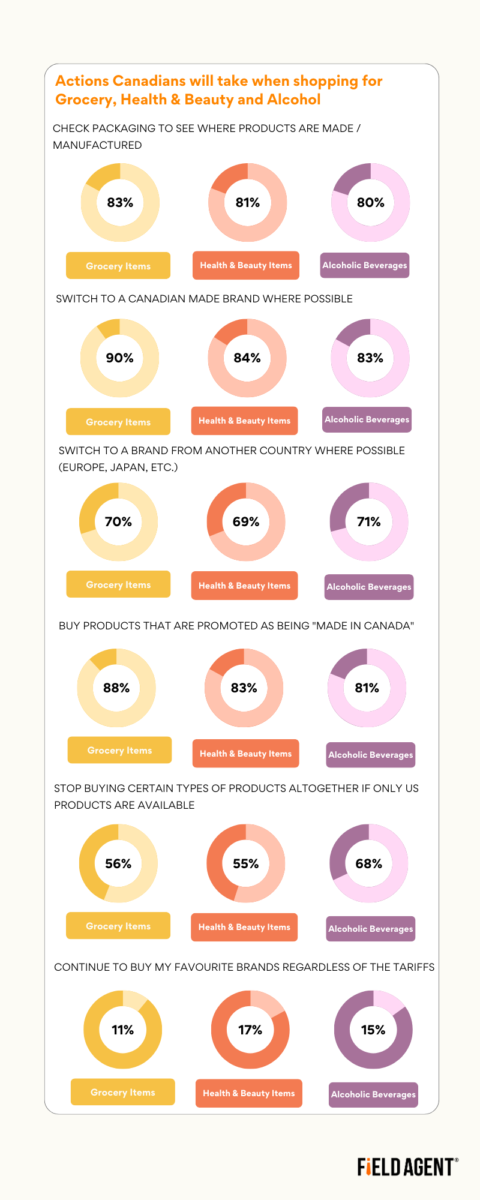
Field Agent Canada said it wanted to get a read on the potential impacts for Retail and CPG. Between February 2 and 4, it surveyed 1083 Canadians about how the tariff threat would impact their shopping for Grocery, HABA and Alcoholic Beverage items.
“The numbers are quite remarkable with 80% or more saying that they would start checking labels to see where items were made and significant numbers saying they would be much more purposeful about buying Canadian products or alternative products produced in other countries other than the US (think buying French wine instead of California wine),” said Field Agent.
Source: Field Agent Canada
“In fact, only about 15% of respondents told us that they would continue to buy their favourite brands regardless of the tariffs – that’s very bad news for companies selling US manufactured or grown products.
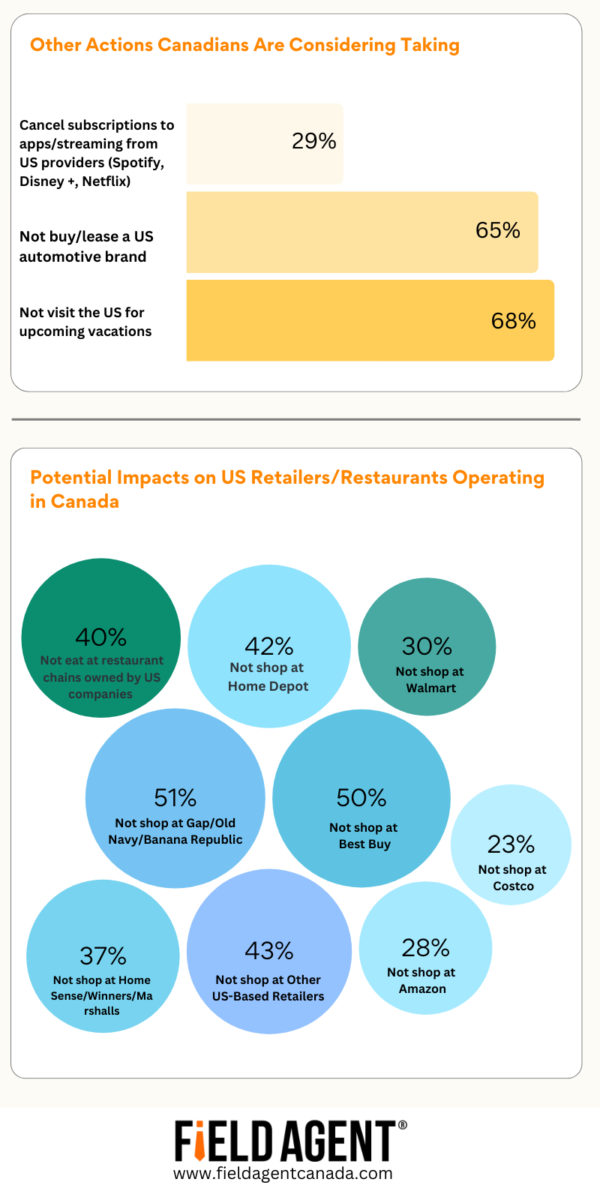
“Other non-retail actions that Canadians are considering include 29% saying they would cancel US streaming services such as Netflix; 65% saying they would only consider non-US brands of automobiles; and 68% saying that they would not even visit the United States for upcoming vacations.
“There is also potential blowback for US retailers and foodservice chains with significant proportions of respondents indicating that they would not shop at specific US retailers and / or restaurants. For example, 28% said they would no longer shop at Amazon and 40% said they would not eat at US-based restaurant chains.”
Source: Field Agent Canada
Field Agent said the potential for upheaval in our industry is significant. Supply chains will need to adjust as velocities on US products slow and Canadian products pick up speed. US retailers will need to communicate to Canadians how they support Canadian manufacturing and suppliers and support Canadians through hundreds of thousands of jobs. Brands that are not clearly communicating on-pack where their products are made will likely be assumed by consumers to be American, whether that is true or not.
“Canadians are rallying in ways that they have not done in literally generations. Standing up for what is right is as Canadian as beavers and maple syrup and this may be something that unites us all in a way that many of us have never seen,” it said.
“However, we need to find a balance – an “all or nothing” approach to US products will have impacts on the hundreds of thousands of Canadians that rely on US companies to support their families. There is no clear “right” or “wrong”, but it will be fascinating to see how this inflexion point affects the Canadian retail, packaged goods and foodservice industries in the weeks and months to come.”