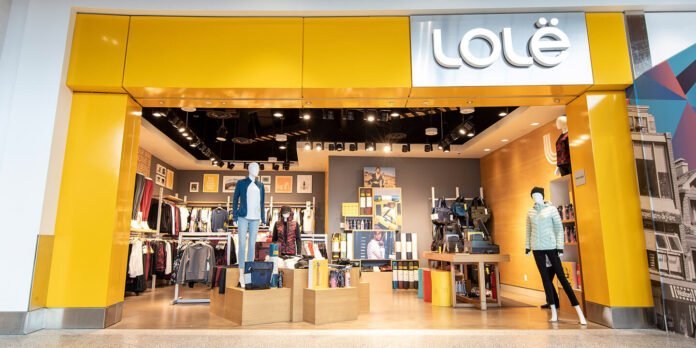
Lolë, a global clothing brand producing premium athletic wear and outerwear, announced Friday its acquisition of Louis Garneau Sports, a renowned company in the field of cycling and sports equipment with three brands: Garneau, Sugoi and Sombrio.
This strategic acquisition marks an important step in Lolë’s expansion and strengthens its position in the global sportswear market, said the company in a news release.
Todd Steele
“This is an exciting opportunity to partner with a beloved brand that brings its unique perspective to our team. The acquisition will allow us to diversify our product offering and strengthen our commitment to innovation, quality, and performance, providing our customers with an even broader range of sports clothing and equipment,” said Todd Steele, CEO of Lolë.
Louis Garneau Sports was founded in 1983 by Louis Garneau and his wife Monique Arsenault, starting out in his parents’ garage.
The news release said the Quebec company is widely recognized for its expertise in the design of cycling clothing and sports equipment.
“Thanks to this acquisition, Lolë will benefit from the experience and know-how of Louis Garneau Sports to develop new innovative collections and meet the growing needs of sports and outdoor enthusiasts,” it said.
Jean-Marc Jahoo
“We are proud to join a dynamic and well-respected brand like Lolë,” said Jean-Marc Jahoo, CEO of Louis Garneau Sports. “Together, we will continue to innovate and offer high-quality products to athletes and sports enthusiasts around the world.”
The release said no comments will be provided by both parties and the acquisition will be effective immediately. Financial details of the deal were not disclosed.
Lolë is a global brand producing elevated active, athleisure and outerwear versatile and stylish enough to transition from the studio to the street, and everywhere in between. The Canadian-born collection is thoughtfully designed in Montreal with smart consumption in mind, using high-quality materials to last (and look good) season after season. Lolë clothing is available at more than 1,500 retail outlets around the world, in Lolë Ateliers and online at lolelife.com it said.
Louis Garneau Sports describes itself as a leader in the cycling and sports equipment industry. Founded in 1983, the company is recognized for its innovative products, exceptional quality and commitment to performance. Learn more at louisgarneau.com, sugoi.com and sombriocartel.com.
Behind Parmi Lifewear is the duo of visionary female leaders Michèle and Véronik Bastien.
They launched the brand in 2022 based in Mont-Tremblant, Quebec.
“We founded the company with a mission to break the alarming cycle of overconsumption and we wanted to reinvent today’s market which is a market that companies were presenting their products as being specific for one usage,” says Véronik.
Veronik Bastien. Photo courtesy of Parmi Lifewear
“So bike shorts to go riding. Specific T-shirts for running and another type of shirt for hiking. We wanted to simplify this outdoor industry with a selection of premium technical lifewear where people would wear it as much as possible.
“We wanted to make sure we have a positive and sustainable impact in our consumers’ daily lives.”
Most of its products are sold online but it also works with a couple of retailers that distribute their products.
The sisters were born in Montreal and raise in Mont-Tremblant where their company is based, close to the outdoor life.
“This is where we really wanted to make sure that the values of the company really relates to the market in which we were based,” says Véronik.
Michele Bastien. Photo courtesy of Parmi Lifewear
Michèle did her Bachelor’s degree in finance and then a Master’s in communications and marketing as well as having a certification in entrepreneurship from HEC Montreal, a business school.
“I’ve been more in business than in marketing and communications and when I finished university I started to work with a communications agency but more on the strategic team and Véronik and myself we started another company in 2015 which was a women’s cyclewear company and we sold the brand in 2020. It was our first experience in retail. Then we launched Parmi,” says Michèle Bastien, Founder | Strategy & Operations.
“When I went to university, honestly, I had no clue what I was going to do. Véronik for sure was going in marketing. We’re twins. I knew I was going in business but I didn’t know exactly which specification. I finally decided to go into finance because it was more like an overview of the business not specific or related to communication and marketing. Really I had no clue. When I finished university, I passed a few interviews in finance jobs but I knew it wasn’t for me. My eyes were open. I didn’t know exactly what I was going to do.
“But for sure we knew quickly that we were really good to work with each other. We can work really closely but we have separate expertise and being very close to each other, connected 24/7, is a huge advantage.”
Véronik also studied at HEC Montreal specializing in communication and marketing with a Masters degree followed by the entrepreneurship certification. It was the space she wanted to be.
“I saw myself probably working in brands because this is really where I find myself really involved – everything related to brand strategy, building a brand, good foundation, knowing the consumer, knowing how to speak to the consumer. This is really what I loved to do,” says Véronik Bastien, Founder | Brand & Consumer Strategy.
The Bastien Sisters. Photo courtesy of Parmi Lifewear
“When I saw the opportunity for us to launch a company, I knew at first we had no expertise in producing clothing but one thing we knew for sure our objective was to build a strong brand that would last and have a positive impact on our consumer and this is exactly what we’ve done.”
Michèle says when they both initially started working at a communications agency after four or five years in the business she saw that business connection between them and how they could work together.
“Because we’re so close to each other, we trust each other, we can work together 24/7. She can do something, I trust her. I can do something, she trusts me. But we can always look back at the other doing. We have different expertise. For us it was important to be surrounded by other expertise. We like to be together but at the same time it’s always good to have other people with other expertise around us.
“It was not obvious at the beginning but right now of course it’s really great to work together.”
Véronik says the sisters since they were young were always very active. Weekends and summers were spent at Mont-Tremblant. Riding a bike, playing golf, skiing, hiking.
“Everything you can mention here in Mont-Tremblant we’ve done it. That was part of our life. So this is something that is part of us since we were young.”
The Bastien Sisters. Photo courtesy of Parmi Lifewear
Michèle says she likes to focus on strategic growth.
“I like to be surrounded by other people by other talents. For me, opportunity could always be interesting but we need to have best strategic plans I like to follow and to make sure if we’re going that way it’s because there’s a reason and I know there’s a B at the end. Having that vision and make sure that we always go back to that vision to make sure that we reach our objective,” she says.
Véronik says in terms of strategic thinking the twins represent each side of the brain.
“While she’s more focused on numbers and on efficiency, I would describe myself more of an approachable, transparent, honest person more related to the people around us and making sure everybody feels really welcome on the team and I believe the brand image is something that’s pretty important. So making sure that we as leaders our actions and decision are aligned with the business values of the company.”
Outside of work and running a business, Michèle and Véronik both have two girls. It keeps them busy.
They still enjoy the outdoors and it’s important to them to have the balance between running the business and making sure they have free time for their personal lives.
The Bastien Sisters. Photo courtesy of Parmi Lifewear
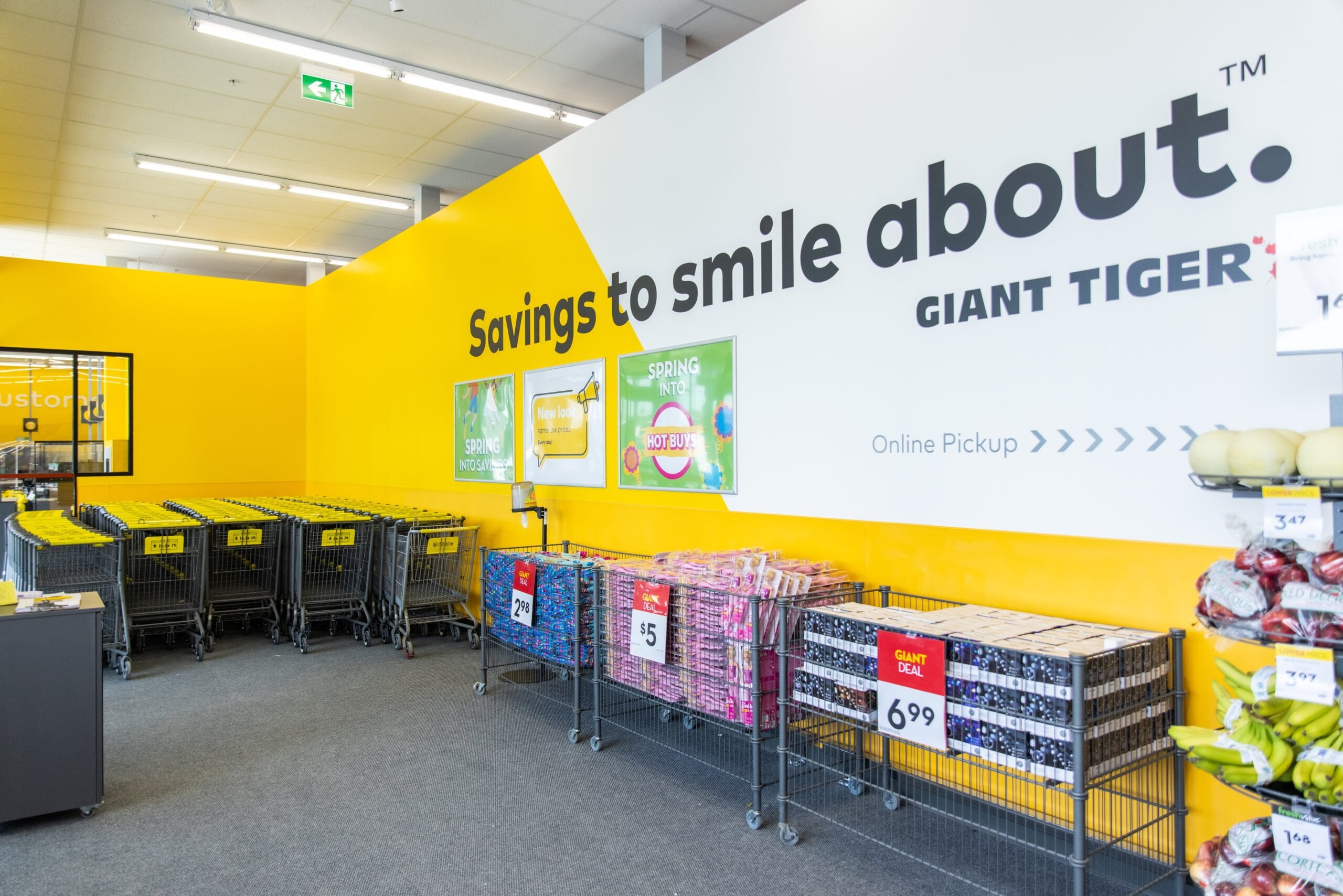
Giant Tiger Store in Camrose, Alta. (CNW Group/Giant Tiger Stores Limited)
Giant Tiger is set to inaugurate its newest location in Camrose, Alberta, on September 21. The retailer continues to announce new stores in Canada, having grown to over 260 locations across the country.
Strategic Growth Amid Changing Retail Landscape
The new 15,600-square-foot store, situated at 7005 48th Avenue, represents Giant Tiger’s latest effort to penetrate smaller markets often overlooked by larger big-box retailers. Joan Guiriba, the store’s manager, emphasized the company’s commitment to offering affordable merchandise tailored to local needs.
“Our goal is to provide Camrose residents with competitively priced fashion items and household essentials,” Ms. Guiriba stated. “We’re adapting our inventory to meet the specific demands of this community.”
The store’s grand opening, scheduled to commence at 7:30 a.m. with an official ribbon-cutting ceremony, will feature various customer engagement initiatives. These include gift card distributions to early arrivals and family-oriented activities, reflecting Giant Tiger’s community-centric approach to retail.
Camrose, Alberta. Photo: Wikipedia Commons
Community Engagement as a Business Model
In line with its corporate ethos, Giant Tiger has made a $1,000 donation to the Camrose Food Bank via Neighbour Aid, a local non-profit organization. The gesture underscores the company’s strategy of integrating into the fabric of the communities it serves.
The retailer’s expansion model relies heavily on locally operated franchises, a system that allows for greater adaptability to regional market conditions. Store managers are granted significant autonomy in inventory decisions, enabling them to optimize their limited retail space for maximum efficiency.
Interior of new Giant Tiger store on Walkley Road in Ottawa. Photo: Giant Tiger
Evolution of a Canadian Retail Institution
Founded in 1961 by Gordon Reid with an initial investment of $15,000, Giant Tiger has evolved from a single Ottawa store to a national chain with over 260 locations. The company’s growth trajectory, while initially slow, gained momentum with the introduction of its franchise system in 1968.
Mr. Reid’s vision, inspired by American discount stores and the success of Woolworth’s, was to create a Canada-wide network of affordable retail outlets. This ambition has materialized over six decades, with Giant Tiger now employing more than 10,000 individuals across the country.
The company’s ability to thrive in smaller retail spaces has been a key differentiator in its expansion strategy. A sophisticated distribution system, allowing for daily restocking, has enabled Giant Tiger to maintain high inventory turnover rates and respond swiftly to localized consumer demands.
The opening of the Camrose location is indicative of Giant Tiger’s broader strategy to solidify its position in the Canadian discount retail sector. By offering a mix of national brands and private-label products, the company aims to cater to price-conscious consumers in both urban and rural markets across Canada.
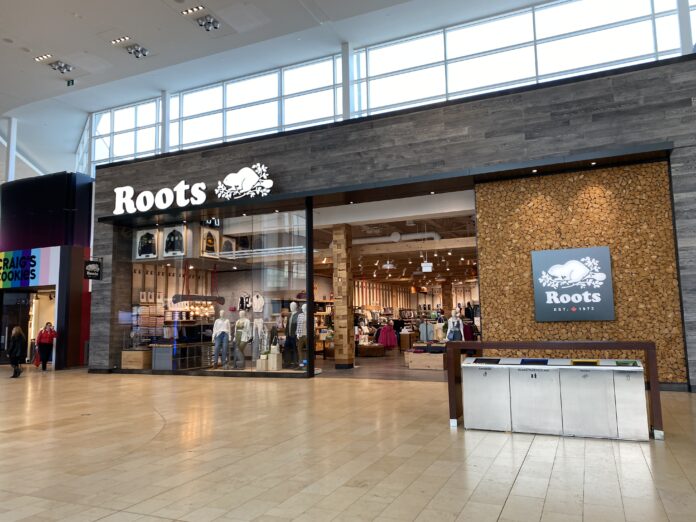
Roots at Yorkdale Shopping Centre (Image: Dustin Fuhs)
Roots has released its financial results for the second quarter of fiscal 2024, ended August 3. The report shows challenges and opportunities, with a particular bright spot in the company’s expanding activewear segment.
Despite a challenging consumer environment, Roots CEO Meghan Roach emphasized the company’s strategic pivot towards activewear. “Our second-quarter results demonstrate stable comparable sales and an improvement compared to Q1 2024, alongside growth in product margins and net income,” Roach stated in the earnings call.
Meghan Roach, CEO of Roots. Image Provided by Meghan Roach
The activewear category, which includes leggings, tracksuits, sports bras, and bike shorts, has seen sustained double-digit growth. The success has prompted Roots to position activewear as a core part of its brand identity and future growth strategy.
Financial Performance: A Detailed Look at Q2 2024
Roots reported total sales of $47.7 million for Q2 2024, representing a 3.4% decrease from $49.4 million in the same quarter last year. Despite this overall decline, there were several positive indicators in the financial results.
In the Direct-to-Consumer (DTC) segment, which includes corporate retail stores and e-commerce, sales reached $36.4 million in Q2 2024, down 1.8% from $37.1 million in Q2 2023. However, the comparable sales decline was only 0.2%, showing resilience in Roots’ core markets and representing a significant improvement from the 8.2% decline seen in Q1 2024.
The Partners and Others (P&O) sales, which include wholesale, licensing, and custom products, amounted to $11.3 million in Q2 2024, down from $12.3 million in Q2 2023. This decrease was primarily due to lower sales to Roots’ international operating partner in Taiwan, partially offset by increased royalties from licensing partnerships.
Gross profit for the quarter stood at $26.9 million, slightly down from $27.4 million in the same period last year. However, the gross margin improved to 56.4% in Q2 2024, up from 55.5% in Q2 2023. This 90 basis point improvement in gross margin is a positive sign, indicating better profitability despite lower sales.
Looking specifically at the DTC gross margin, it decreased to 61.7% in Q2 2024 from 62.7% in Q2 2023. While this represents a 100 basis point decrease year-over-year, it’s worth noting that product margin expanded by 230 basis points due to improved product costing and lower discounting.
Net income for the quarter showed a slight improvement, with a loss of $5.2 million or $0.13 per share in Q2 2024, compared to a loss of $5.3 million or $0.13 per share in Q2 2023. The minimal change in net loss, despite lower sales, suggests that cost management efforts are having a positive impact.
Adjusted EBITDA for Q2 2024 was negative $3.1 million, compared to negative $3.0 million in Q2 2023. The minimal change in Adjusted EBITDA indicates that Roots is maintaining operational efficiency despite challenging market conditions.
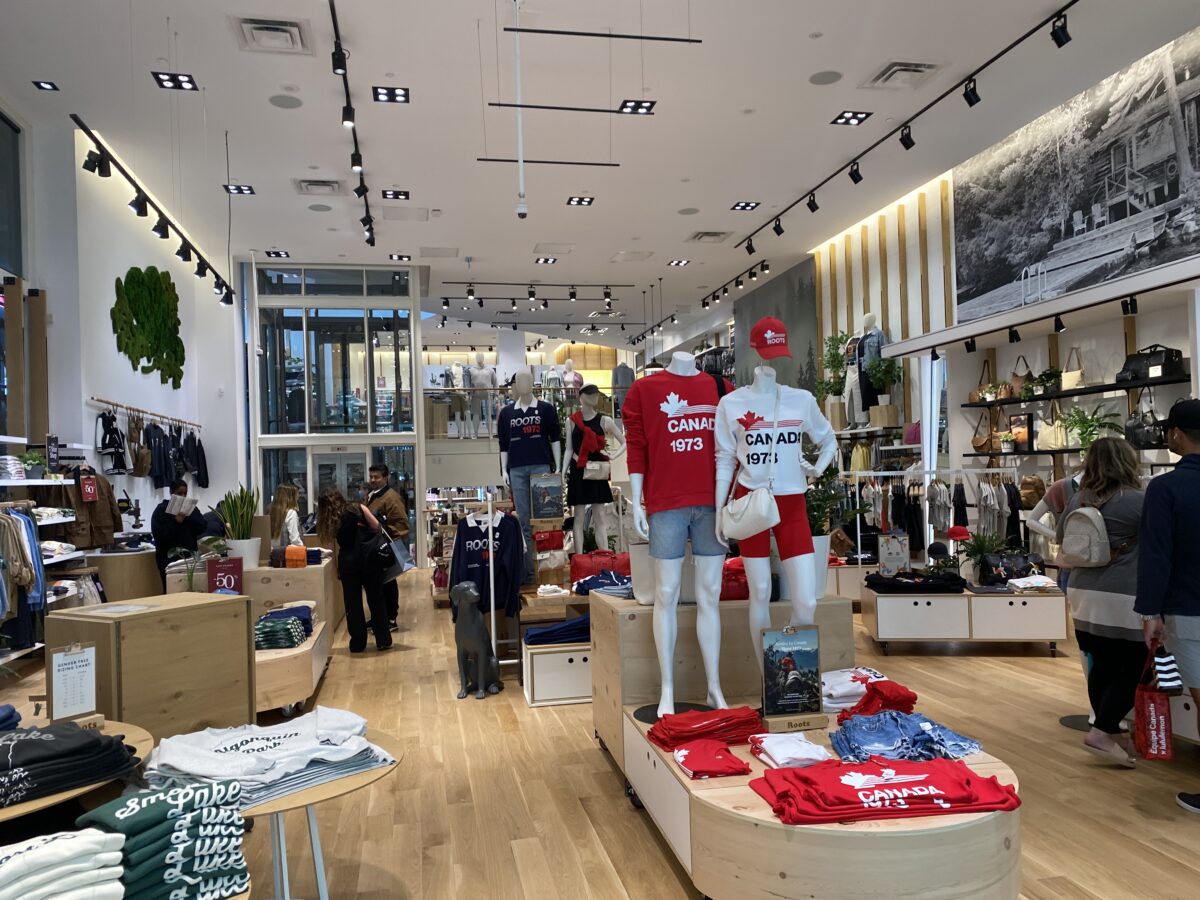
Roots at CF Toronto Eaton Centre (Image: Dustin Fuhs)
Roots Canada Activewear Expansion: A Strategic Response to Market Trends
The focus on activewear comes at a crucial time for Roots. As consumers increasingly prioritize comfort and versatility, the line between casual wear and athletic apparel continues to blur. Roots’ expansion in this category allows the company to leverage its heritage of comfort while tapping into growing market demand.
Roach elaborated on the appeal of Roots’ activewear: “Our product really resonates with shoppers because you can wear it through multiple different use cases and occasions.” The versatility has led to strong customer loyalty, with shoppers returning repeatedly for core activewear products according to her.
Roach said in a statement, “Our second-quarter results demonstrate stable comparable sales and an improvement compared to Q1 2024, alongside growth in product margins and net income, despite the challenging consumer environment.”
“We were also pleased to see growth during the “back-to-school” period, underscoring the strength of our product portfolio and the effectiveness of our ongoing initiatives in branding, marketing, and enhancing the in-store experience; however, it is early in the quarter.”
Roots at CF Toronto Eaton Centre (Image: Dustin Fuhs)
Operational Challenges and Solutions
While the activewear segment shows promise, Roots faced several operational challenges in Q2 2024. Inventory management was a key focus, with the company reporting inventory levels of $44.0 million at the end of Q2 2024, down 21.3% from $55.9 million in Q2 2023. The significant reduction in inventory levels reflects improved inventory health and more efficient management. However, the company continued to grapple with inventory challenges in its Cooper fleece line.
To address these issues, Roots says it has implemented new technologies, including artificial intelligence for daily inventory replenishments. New AI-powered allocation tools are set to launch in the next quarter, further enhancing the company’s inventory management capabilities.
In addition to inventory management, Roots has been optimizing its store network. The company has been closing select, less profitable stores as part of its ongoing fleet optimization initiative. The strategy aims to consolidate operations and drive same-store sales growth.
Roots is also undergoing changes in its design team. Following the departure of Chief Product Officer Karuna Scheinfeld, the company plans to hire senior-level design talent with international experience in outdoor and activewear sectors. This move aligns with the company’s increased focus on activewear and its ambition to compete more effectively in this growing market segment.
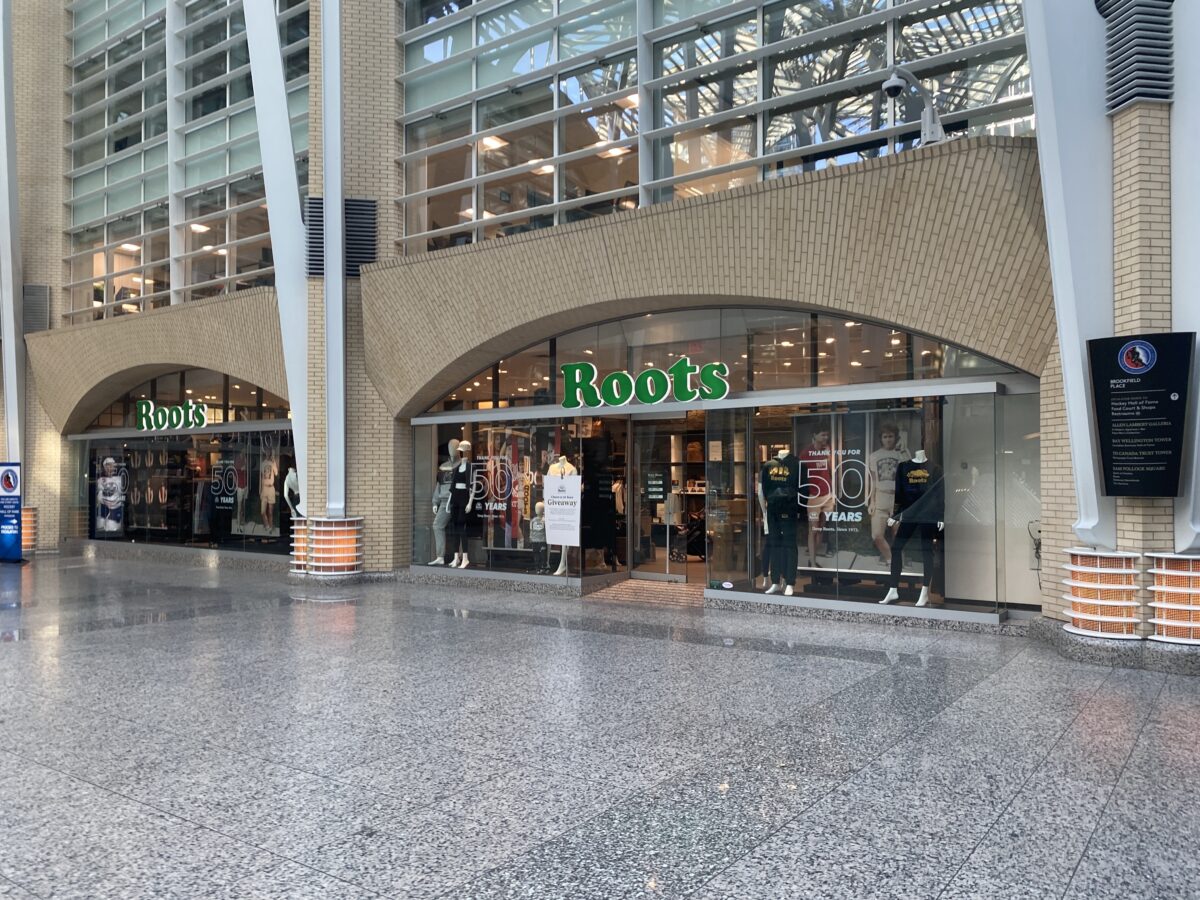
Roots at Brookfield Place in Toronto (Image: Dustin Fuhs)
Financial Position and Liquidity
Roots’ financial position at the end of Q2 2024 showed some improvements. The company’s net debt stood at $40.8 million, a 19.9% improvement from $50.9 million in Q2 2023. The leverage ratio, defined as total net debt to trailing 12-months Adjusted EBITDA, was 2.3x.
In terms of credit facilities, Roots had $44.5 million outstanding, with total liquidity of $62.4 million, including net cash and available borrowing capacity. This liquidity position provides the company with some flexibility as it navigates its strategic shift and the challenging retail environment.
Randy Harris, President and Founder of Trendex North America, said, “The good news for Roots was its results for its Q2 2024 direct-to-consumer segment were better than its disastrous Q1 2024 results. Nevertheless It needs to be noted that its direct-to-consumer sales declined for the eighth quarter in a row.
“Roots needs to determine its optimum inventory level and than consistently maintain it. In addition, it needs to redirect monies allocated for stock buybacks to greater marketing initiatives,” Harris went on to say.
Looking Ahead: Challenges and Opportunities
As Roots navigates the strategic shift towards activewear, it faces several challenges. The activewear market is intensely competitive, with established players like Nike and Adidas, as well as specialized retailers such as Lululemon Athletica Inc., Alo Yoga, and Vuori. The challenging consumer environment may continue to pressure sales and margins, making it crucial for Roots to continue improving operational efficiency, particularly in inventory management and store performance.
However, opportunities also abound. The sustained growth in the activewear category presents significant potential for Roots. The company can leverage its strong Canadian identity and reputation for comfort to differentiate its activewear offerings. With over 100 corporate retail stores in Canada, an e-commerce platform, and international partnerships, Roots has multiple channels to grow its activewear business.
As CFO Leon Wu noted, “We are pleased with the improving sales trends, while also growing product margins and remaining disciplined on costs, resulting in the continued strengthening of our balance sheet.”
“Our customers and clients are family, and taking care of them through quality, attention to detail, and impeccable service is the foundation on which my grandfather grew his namesake brand into a Canadian household name. With this in mind, our 70th anniversary is not just a celebration of the past, but a gateway to our exciting future.”
Rosen said there isn’t one recipe for the success of any business for that period of time. He said only 12 per cent of family-owned businesses reach a third generation and his goal is to reach the fourth generation.
Image provided by Ian Rosen
“The common denominator is you have to evolve as a business. You have to be changing. The business that you’re looking back on can have components and philosophies and values that you’re building on but it can’t be the same fundamental and foundational business,” added Rosen. “That’s something that over the past 70 years we had so many chapters in what we’re selling, where we’re selling, how we’re selling and each one of those evolved on a pretty regular basis, especially over the last five to seven years it has been the most profound change in our business probably in that 70 years.”
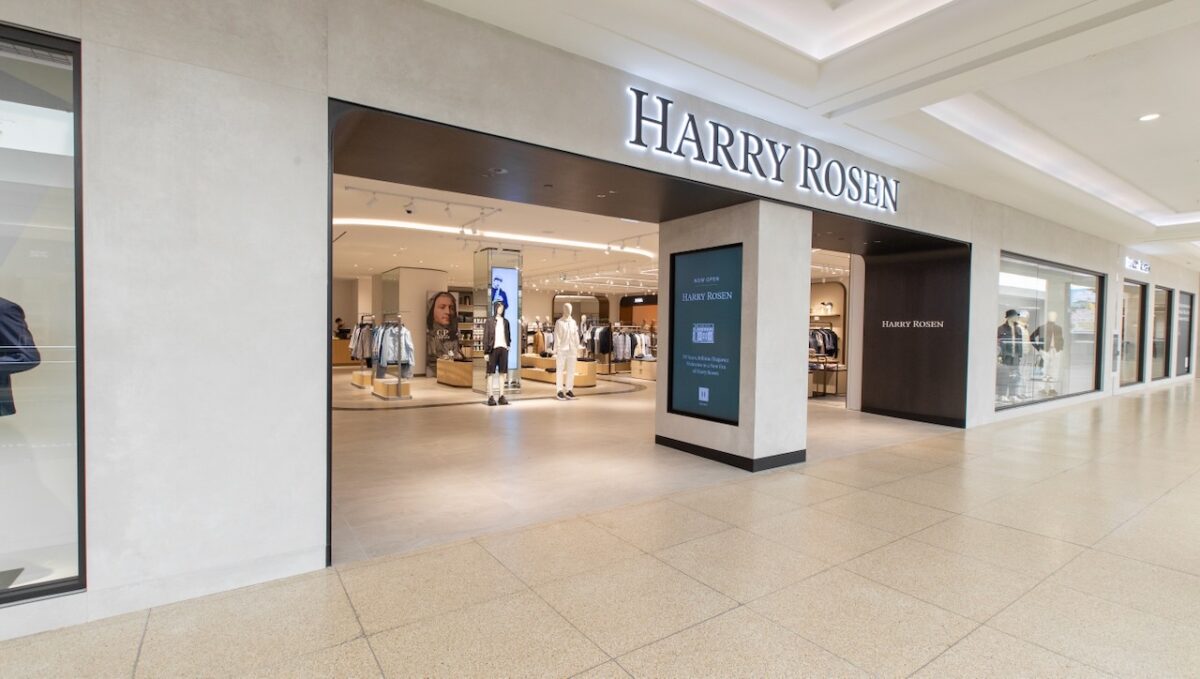
In celebration of Harry Rosen’s 70th anniversary year, the brand has rolled out a series of innovative strategies and features, including a nationwide $50 millioin retail overhaul based on modern customer needs, the announcement of a new Toronto flagship store, the evolution of its style and brand portfolio, and more, all while staying true to its legacy of quality and service.
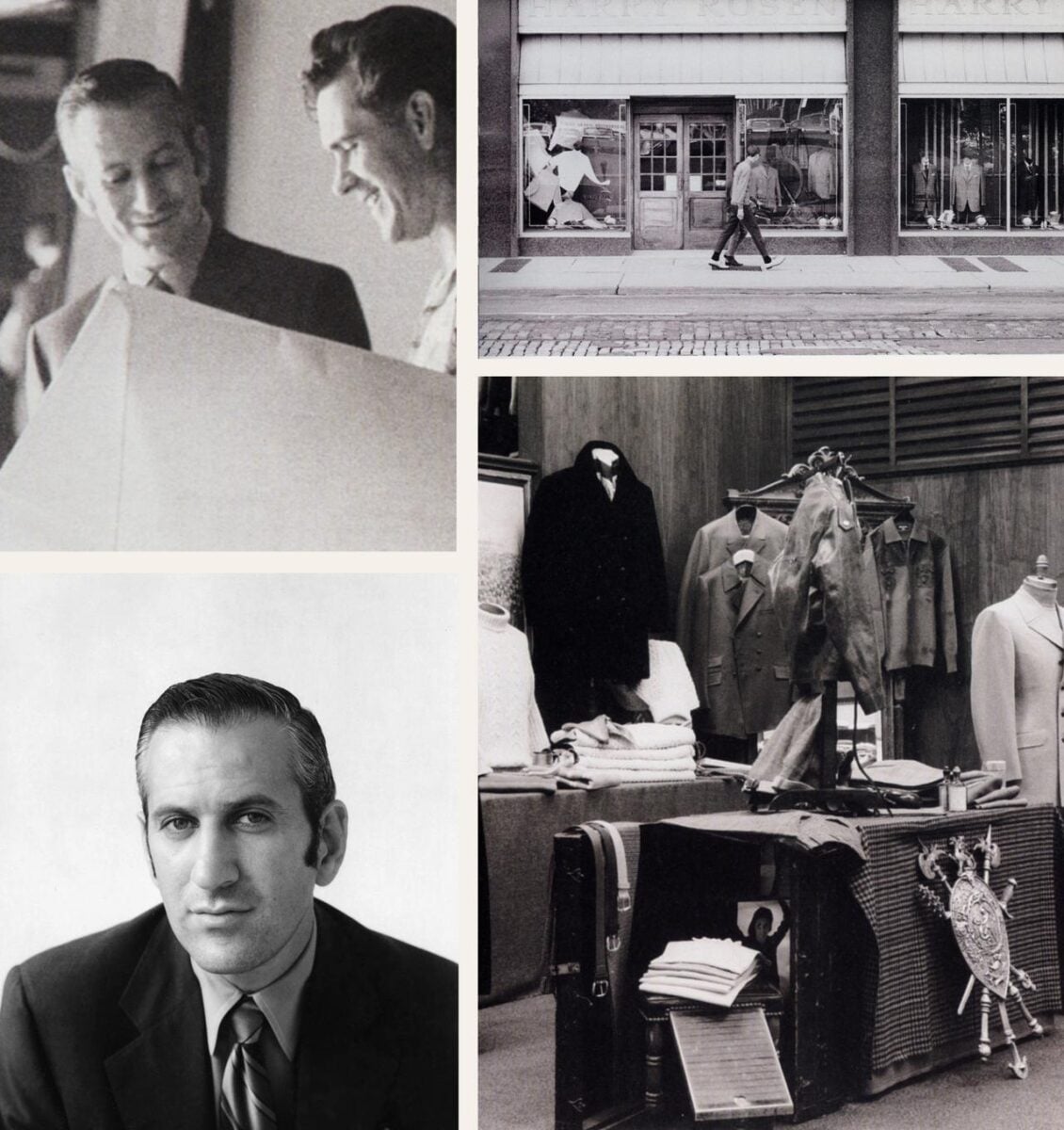
‘The early years’ of Harry Rosen. Photos: Harry Rosen
In celebration of the 70th anniversary, some of Harry Rosen’s most long standing brand partners—including Emporio Armani, Patrick Assaraf, Eton, HAROLD, Polo Ralph Lauren, Santoni, Tateossian, and Varsity Headwear—have also designed limited-edition product capsules and exclusives, incorporating elements of Harry Rosen’s iconic style. These items are now available in store and online.
During the 70th anniversary celebration, Harry Rosen will be offering exclusive, exciting perks to CLUB HARRY members both in-store and online. This commitment to a customer-first approach is an integral part of the brand’s ethos.
Over those 70 years, Harry Rosen has navigated some challenging waters in the retail industry with periods of recession and the recent pandemic. Ian Rosen said having long-time team members on the same page has been important.
Left-to-right: Harry Rosen, Ian Rosen, Larry Rosen. Photo supplied by Harry Rosen
“We’ve seen radical shifts in our business in the 70 years and we’ll get through it. Let’s not lose sight of the core business we’re trying to operate and let’s keep eyes on the longer term vision,” he said.
Harry Rosen has also announced a new brand statement: “For a Life Well Dressed”, which inspires men to live their most confident and fulfilling lives by dressing well for any occasion.
“We have this steadfast belief that an outfit that fills you with confidence can allow you to be more present in a world full of distractions,” said Rosen. “This applies to all of life’s moments, whether it’s standing tall as your partner walks down the aisle to you, showing up big for that important presentation at work, or simply wearing a smile for a stroll down the block to the coffee shop.”
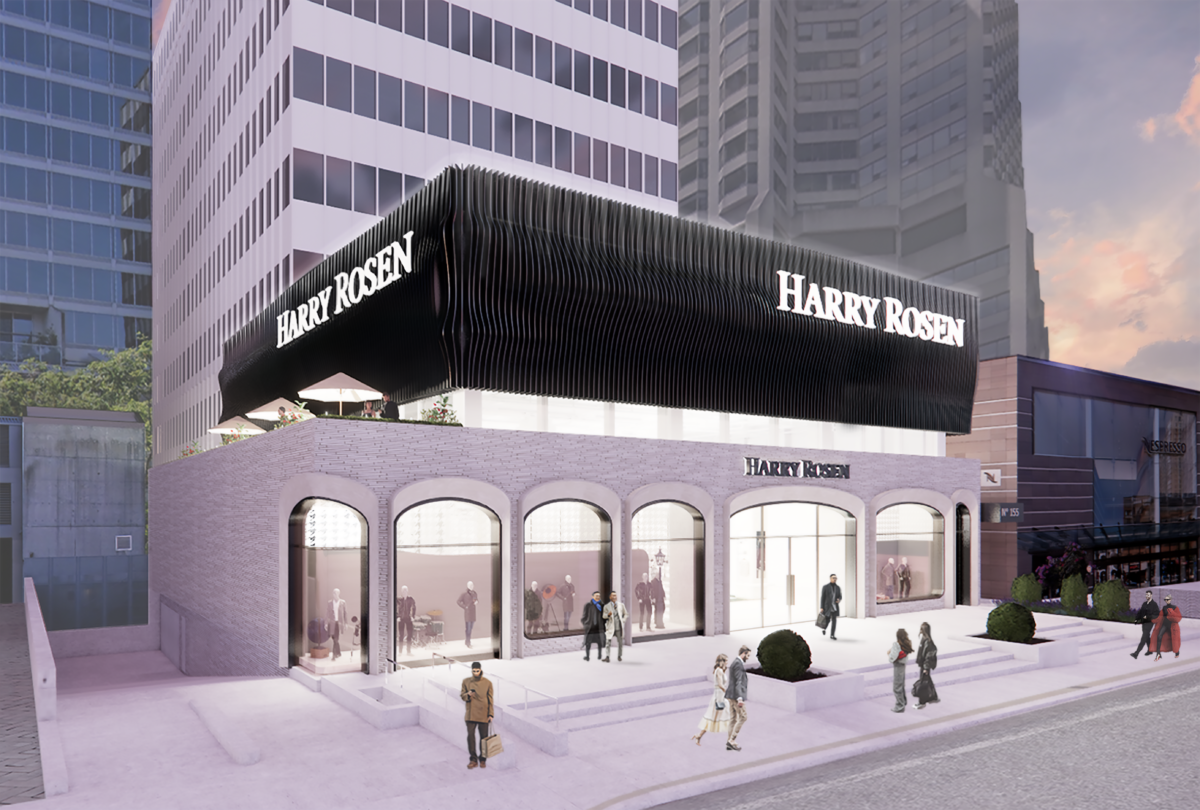
Rendering of the new Harry Rosen flagship store at 153 Cumberland Street, opening in the spring of 2026. (Rendering: dkstudio architects inc)
The new brand statement will be rolled out in September with a cross-channel marketing campaign and national consumer activations, which will pop up in Vancouver, Edmonton, Calgary, Toronto, Ottawa, and Montreal this fall. A keystone event and exclusive fashion presentation will also be hosted on October 9 at the Bloor flagship store and streamed on digital channels.
Rosen said the customer has evolved in two profound ways over the years.
“The expectations of service have changed. It’s not only about knowing their preferences and getting their fit right at the store and delivering a great product and being very service-oriented in our stores. Service is also making sure that the customer knows what’s in the store by looking at the website before they visit. Being able to digitally communicate with their style advisor. It’s being inspired by what they purchased in the past with what’s come in and it’s also being able to shop at Bloor Street on Saturday but then at First Canadian Place on Wednesday and have that same expectation of each person they interact with,” he said.
Harry Rosen Flagship at 82 Bloor Street West in Toronto (Image: Dustin Fuhs)
“And service has also become, can you ship this to me in two days in major markets? That’s a service level that we’ve been investing to be able to uphold because that’s what the customer defines as good service and Harry Rosen wants to stand for service. We have to invest in these modern ways of doing things.
“And from a customer preference standpoint, they’re more educated than ever. They do a ton of research before purchasing and if we’re going to be the product experts we have to train our team that much more so when a customer comes in yes they might know about this brand and where it comes from but how is the product constructed, what’s special about this unique colour that’s come in. We make sure our team is one step ahead and that’s really key. In this day and age when the customer is fighting things like inflation and mounting costs elsewhere they really do see investing in clothing as the conversation not purchasing clothing.”
The late Harry Rosen, left, with grandson Ian Rosen. Image provided by Ian Rosen
Harry Rosen, who passed away in December 2023 at age 92, established the brand with a simple vision in mind: what if you combined insatiable passion for quality men’s fashion with an uncompromising focus on personalized service? Over seven decades, this vision has underscored every aspect of the business, from the fashionability, craftsmanship, and attention to detail of Harry Rosen garments, to the elevated in-store shopping experience.
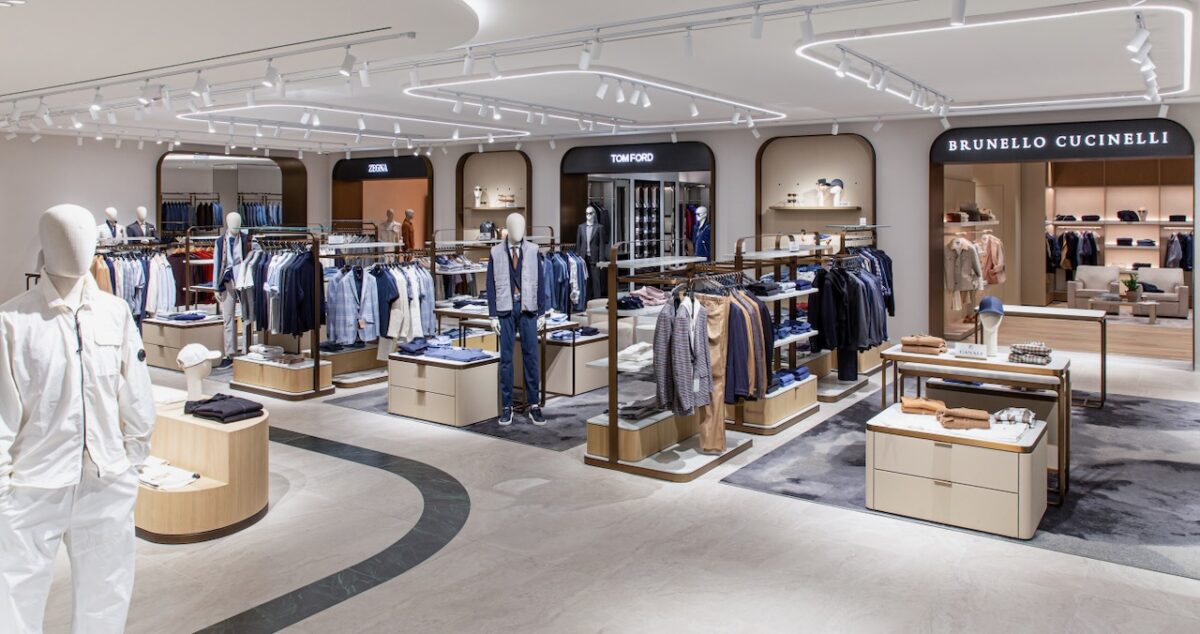
The future of retail is not just about shopping; it’s about creating unique and memorable experiences. That’s why Harry Rosen has announced a $50 million investment over the next five years to re-imagine its store concepts across Canada. This program will include the relocation of Harry Rosen’s flagship store to a 38,000-square-foot footprint to create an extraordinary new luxury customer experience in the heart of Yorkville, as well as a transformation of its existing retail concepts. The new store design, which was recently unveiled in the West Edmonton Mall, reflects a commitment to modernizing while preserving its trusted heritage, and includes significant investments in Store Technology to help clients shop seamlessly online.
Harry Rosen at West Edmonton Mall (Image: Nick Hirschmann / Harry Rosen)Harry Rosen at West Edmonton Mall (Image: Nick Hirschmann / Harry Rosen)
Harry Rosen also recently unveiled CLUB HARRY, a sophisticated new loyalty program designed to enhance the customer experience and provide a multitude of benefits for its loyal patrons.
“We’re celebrating all Fall,” explained Ian Rosen. “We’re really taking this 70th anniversary as an opportunity, especially in the wake of Harry’s passing, to look back, to really understand how that’s shaping where we’re going. The other thing that we’re doing is relaunching our brand platform, making sure that people know that Harry Rosen stands for what we call living a life well-dressed because that’s what you come to Harry Rosen for. It’s about presenting yourself in the most competent way, going out and conquering what’s in front of you and feeling really confident. We like to say a life well lived is a life well-dressed and it’s not really a campaign we’re launching. It’s more of a statement we’re going to orient the brand around for seasons and seasons to come.
“We just opened our new concept store in West Edmonton Mall which is showing incredible benefits to the customer experience. And we open in Oakridge Park next hopefully August or September and then we have our flagship reinvention on Cumberland Street happening which will open May 2026 and there might be a few other projects that be a few other projects that we sneak in at that time frame. Nothing formal to announce. But we’re definitely still committed to investing in each one of our stores over the next five years.”
Over the past year, Harry Rosen has added new designer brands, including Kenzo, Balmain, Jil Sander, Marni, MM6, Maison Margiela, and Rhude, alongside new contemporary designers like CP Company, APC, and Represent to its collection.
Walmart worker outside of company warehouse holding a sign that reads 'Unifor defends your rights at work'. (CNW Group/Unifor)
Workers at Walmart‘s Mississauga warehouse have voted to join Unifor, Canada’s largest private sector union.
It is Walmart’s first warehouse to unionize in Canada, said the union on Friday.
“This victory is the result of uniting around a belief in workplace democracy and better working conditions,” said Unifor National President Lana Payne in a news release. “Walmart workers in Mississauga stood up for their rights, and we are excited to get to work on their first collective agreement.”
In a statement, Walmart Canada said: “A vote occurred at one of our distribution centres in Mississauga. The Ontario Labour Relations Board shared that the majority of those who voted did so in favor of the union. We are reviewing next steps in this process. We’ve always believed that the best person to speak for our associates is the associate. Our culture is founded on an environment of transparency, honesty, and direct dialogue with our associates, without involving individuals outside of our organization who don’t know our culture or our business.”
The union said more than 40 per cent of the workers at the facility signed a union card this summer and the Ontario Labour Board awarded the workers a vote, which was held September 10–12.
It said the “notoriously anti-union company” did their best to “spread falsehoods about the protections of a union, but workers saw through the thinly veiled intimidation and chose unity over fear and division.”
“Unions are the most effective way to have a say in your conditions at work,” said Unifor Ontario Regional Director Samia Hashi. “These Walmart workers are showing warehouse workers across Canada what’s possible when we stand together.”
Unifor’s campaign at Walmart’s facility began in December 2023.
Unifor is Canada’s largest union in the private sector, representing 315,000 workers in every major area of the economy.
Canada’s leading business organizations are expressing deep concern with the looming possibility of a strike by the Air Line Pilots Association (ALPA) at Air Canada.
In a letter to Steven MacKinnon, federal Minister of Labour and Seniors, the organizations said the potential for a labour disruption is alarming, given the wide-reaching implications it would have on Canadians, the nation’s economy, supply chains, and our global reputation.
“Air Canada provides a crucial service, carrying up to 150,000 passengers each day. Be it a business trip, seeking medical treatment, visiting family and friends, or a long-awaited vacation, reliable long-range transportation is non-negotiable for Canadian travellers,” it said.
Steven MacKinnon
“However, the impact of a strike would extend far beyond passenger travel for both urban and rural Canadians—it would significantly disrupt Canada’s supply chain. Air Canada’s cargo network is important for the import and export of critical, time-sensitive goods such as vaccines and medical supplies, agriculture and perishable food products, and parts and machinery for small and medium sized Canadian manufacturers. For example, radioactive isotopes, which are crucial for cancer treatments, are shipped via Air Canada Cargo domestically and internationally due to their 48-hour lifespan. A disruption in this service, however short, would be devastating, as no other means of transport can meet the stringent time requirements for these products.”
“The timing of this potential strike could not be worse. The dust has not yet settled on the labour disputes that paralyzed Canada’s two major rail networks, causing yet untold damage to not only our national economy, but also our global reputation. It was another example of a disturbing trend—labour disputes, and threat of them, have disrupted operations at the ports of Montréal and British Columbia, the St. Lawrence Seaway, as well as at WestJet and the Canadian Border Services Agency this past year alone. If Canadian businesses are unable to deliver our goods to market on time, our international partners will begin to seek permanent alternatives.”
The organizations said the federal government needs to take decisive action. The impacts of a labour disruption at Air Canada will ripple throughout the economy, affecting Canadian consumers, employees, and businesses. A work stoppage will lead to thousands of temporary layoffs for airline employees, which will negatively impact the air transportation ecosystem across the country. It will reinforce a growing perception that Canada is not a reliable trading partner.
Outside the Edmonton International Airport. Photo: Edmonton International Airport
Beyond passenger services, air cargo is a vital component of Canada’s export economy, ensuring the timely delivery of goods, including medical supplies, agricultural products, and critical parts for manufacturers. A labour disruption would be catastrophic for industries reliant on just-in-time delivery systems, said the organizations.
“Canada cannot afford another major disruption to its transportation network. A labour disruption at Air Canada would ripple through our economy, from tourism to critical supply chains. The federal government must be prepared to intervene if necessary,” said Goldy Hyder, President and CEO of the Business Council of Canada.
“Canadians and businesses nationwide are going to suffer the consequences of labour disruption in the air travel industry. They are not at the negotiating table and are powerless to control the outcomes. We need proactive, decisive action from all actors and from the federal government to ensure we can avoid more damaging consequences for everyone,” said Candace Laing, President and CEO of the Canadian Chamber of Commerce.
“Quebec companies risk being hit with another labour disruption they cannot afford. A labour disruption at Air Canada would have severe consequences for our businesses across Quebec, particularly in sectors such as manufacturing, tourism, and exports. We depend on reliable air transportation to move goods, materials, and people. Even a short disruption would lead to costly delays and further strain our supply chains. The federal government must intervene to ensure Quebec businesses can continue to thrive and remain competitive in both domestic and international markets,” said Karl Blackburn, President and CEO of Conseil du patronat du Québec.
Pearson Airport in Toronto. Photo: Pearson Airport
“The economy is already fragile after recent disruptions in our transportation networks. Another labour dispute would further damage Canada’s standing as a reliable global trading partner. The government must act promptly to help protect small businesses across the country,” said Dan Kelly, President and CEO of the Canadian Federation of Independent Businesses.
“Thousands of Canadians are relying on flights for critical business, healthcare, and personal reasons. Even a brief suspension will leave many stranded and further strain an already stressed tourism industry,” said Andrew Siegwart, President and CEO of the Tourism Industry Association of Ontario. “We need the federal government to show leadership and intervene before it’s too late. Another disruption in the transportation sector will reverberate across the country and hurt businesses, employees, and travellers alike.”
Gary Newbury, a retail supply chain and last mile expert, a Rethink Retail’s Top 100 Retail Influencer and CITT’s Innovator Award 2020, said the threat of yet another strike within our domestic transportation and supply chain infrastructure is a major concern in a number of areas.
“If you are an international shipper looking to support the Canadian market (including businesses shipping from the US), you are doubting the resilience of Canadian supply chains (with the recent rail strike disruption last month, amongst others). If you are a shipper to the significant US market east coast ports, and desperately seeking help from Halifax and Montreal (to avoid labour disruptions which looks highly likely on 30th September), there’s both a capacity constraint (due to be resolved by the end of 2024) and ongoing challenges with labour relations at PoM, and now, even if you are within the Canadian market, you are likely to have headaches trying to find Air Transportation alternatives with the main couriers such as UPS, Purolator and Fedex,” he said.
Gary Newbury
If it’s not ports, it’s rail, if not rail, it looks like air transportation. We can rule out trucking as we discovered as recently as two to three weeks ago, our surge capacity is very limited.
“Our reputation as a market that has high risk of labour disruption affecting business accessing urban to remote territories, transportation is starting to look very weak indeed.
“In terms of this particular threat (Air Canada pilots), some pharma companies I have spoken to recently have already been switching modes from air to sea. With alternatives like the major integrators (DHL, Fedex and UPS), many B2B shippers will have been exploring options in this area or using whatever trucking capacity they can find. Spot rates are set to rise sharply.
“This leaves the impact on passenger transportation. Although much progress was made during the restrictions of doing business over video conferencing, there are still many areas which require face to face activities, moving vital organs, patients and medical supplies around the country, as well as movement within Canada by consumers and between Canada and other countries which is now at serious risk. The tourism and hospitality industries here are set for what could be a significant short term disruption.”
Will the government apply the same approach as they did with rail and avoid labour disruption by forcing any unresolved negotiations into binding arbitration?, he wondered.
“It seems fairly certain this “tool” will be used once again to make an intervention between a commercial organization and its workforce. With the cooperation agreement dissolved, the federal government will be free to force workers back to work. This tool will continue to be used to quell labour disruption, until it is successfully challenged by the rail union as an impingement to their right to freely negotiate. If that legal challenge is successful, it will likely determine the ultimate commercial risk classification of Canada.
“Unfortunately, we are in the hands of both Air Canada and its union leaders to continue to negotiate in good faith and avoid a major supply chain disruption. What we are likely to see, much as we saw with CN/CPKC, is the withdrawal of capacity by Air Canada to avoid their equipment, passengers and crew being “out of position” immediately ahead of the strike, so they can resume scheduled services once any strike action has been resolved. So we are set for a challenging week, or more.”
Retail Insider is streamlining its Canadian retail news from around the web to include a handful of top news stories that can be viewed quickly during the day. Here are the top stories from the past 24 hours.
McDonald’s, the world’s largest burger chain, is taking a significant step towards a cashier-less future. The fast-food giant is introducing a new store format in the United States, featuring advanced digital ordering stations capable of handling cash transactions.
Digital Kiosks Revolutionize McDonald’s Ordering Process
The new digital kiosks represent a major shift in McDonald’s operations. While many locations already feature self-service screens, the updated versions can now accept cash payments and provide change. The innovation allows most customers to complete their entire transaction without interacting with a human cashier.
Despite this technological advancement, McDonald’s emphasizes that human workers will remain an essential part of their operations. The new format aims to redeploy cashiers to other crucial tasks, such as delivering food to customers opting for table service or curbside pickup.
McDonald’s Adapts to Changing Customer Preferences
In response to growing consumer demand for digital options, McDonald’s is reimagining its in-store experience. The traditional menu screens behind the counter will now showcase select items and encourage customers to use kiosks or the mobile app for ordering. The company assures that customers they can still order at the counter if they prefer, with full printed menus available upon request.
The shift reflects the broader trend of mobile ordering reshaping the fast-food landscape. During the third quarter of last year, digital orders accounted for over 40% of McDonald’s sales in its top markets. The surge in app-based, delivery, and kiosk orders has been particularly notable since the onset of the pandemic.
Impact on McDonald’s Workforce and Customer Experience
The move towards digital ordering is transforming the nature of jobs at McDonald’s. While traditional cashier roles may decrease, new positions are emerging. Some franchisees have introduced “guest experience leads” to assist customers with the new technology, mirroring similar roles in retail giants like Walmart and Target.
McDonald’s CEO Chris Kempczinski emphasized the company’s commitment to digital growth, stating, “Digital is going to continue to grow for us. We’re going to get more and more customers on our digital platform.”
Retail Insider will be watching for when this technology comes into the Canadian market.
Provigo grocery store in downtown Montreal. Image via Broccolini
Quebec may have taken a notable step this week that warrants attention from other provinces. By introducing Bill 72, Quebec Justice Minister Simon Jolin-Barrette has moved toward increased pricing transparency in both grocery stores and restaurants—an initiative that’s long overdue.
Impact at the grocery store
The bill’s impact on grocery stores is significant. If passed, it will require taxable food items to be clearly identified at the point of sale. Currently, the average Canadian grocery store has more than 4,600 taxable products, but most consumers are unaware of which items are taxed, as few scrutinize their receipts closely.
In Quebec, where sales taxes can add over 15% to the cost of taxable goods, this oversight has notable consequences. To contextualize, this tax increase is equivalent to four to five years’ worth of inflation in one shot. The rise of shrinkflation—where products become smaller—further complicates matters, as many items that were previously non-taxable, such as snacks, now fall into taxable categories. As a result, products like ice cream and granola bars, which were tax-exempt last year, are now subject to tax.
Provigo store in downtown Montreal. Photo: Provigo
While the ethical debate on taxing food remains outside the scope of this discussion, Quebec’s effort to enforce clearer price disclosure is commendable. In addition to requiring clarity on taxable items, grocers will need to differentiate between member and non-member pricing, a response to the increasingly complex loyalty programs offered by retailers. The bill also introduces standardized unit pricing based on quantities like 100ml or 100g, across all food categories. This uniform approach will streamline price comparisons, benefiting both consumers and enhancing market efficiency.
Another important reform targets price accuracy. The Retail Council of Canada’s Scanner Price Accuracy Code, implemented decades ago, protects consumers from pricing errors at checkout. If an item scans at a higher price than listed, the customer is entitled to a price adjustment. For items under $10, the product is given for free, while for items over $10, customers receive a $10 discount. However, inflation has pushed a growing percentage of grocery items well beyond the $10 threshold, with estimates suggesting that 15% to 25% of items now exceed this price point. To address this, Bill 72 raises the threshold to $15, better aligning with current price levels and ensuring continued consumer protection.
Crucially, these reforms do not impose additional costs on grocers and can be implemented swiftly. From an operational standpoint, the changes are minimal, requiring only procedural adjustments. Extending these measures across Canada would yield widespread consumer benefits with little disruption to retailers.
Le Fou Fou food hall at Royalmount in Montreal. Photo: Le Fou Fou
Tipping in Quebec restaurants
Bill 72 also seeks to reform tipping practices, an area that has seen growing discontent among consumers. The increasing prevalence of tipping prompts in payment terminals has led to what is often referred to as “tipping fatigue,” where consumers feel pressured to tip without fully understanding how much they are adding. The bill aims to simplify the process by requiring tips to be calculated on pre-tax amounts, rather than including provincial and federal sales taxes. This change, if passed, would bring clarity to tipping and provide relief to consumers.
The food service industry’s silence on the tipping issue has been notable. For years, despite rising consumer dissatisfaction, the industry has failed to lead on this issue. With Bill 72, the Quebec government is stepping in, and it wouldn’t be surprising if other provinces follow suit.
Overall, the regulatory costs of implementing these changes are minimal, and most of the reforms are principle-based, necessitating only slight operational shifts. Quebec’s leadership on this front sets a valuable precedent, and it is time for other provinces to take note. These reforms are not only beneficial but essential for maintaining consumer trust and promoting fairness in the marketplace.