Home Blog Page 555

adidas to Open North America’s 1st ‘Home of Sport’ Flagship Concept in Downtown Vancouver [Exclusive Interview/ Renderings]

Vancouver adidas at 969 Robson Street (Rendering: Provided)

Earlier this year, adidas announced through a Retail Insider exclusive that the German athletic brand will be opening a massive concept store at the northeast corner of Robson and Burrard Streets in downtown Vancouver. 

With the construction hoarding going up earlier this month, we’re able to share what the sportswear giant has been strategically planning behind the scenes for the last three years in preparation for the 35,000 square foot, two level store that will open at the former Victoria’s Secret location at the Robson Central building. 

Lesley Hawkins

“Vancouver is a very international market, one of the most diverse cities in North America and a true gateway to the Pacific region, so a strong presence in the city just makes sense,” shared Lesley Hawkins, VP of Retail for adidas. “With regards to the building, Robson Central has a long and very meaningful cultural history, from its initial function as the central library, to its time as home to iconic brands/institutions such as Virgin (Canada’s first Megastore), Planet Hollywood, HMV and still to this day Bell Media (CTV). 

“The vision behind the project was to strip the heritage building down to its core and let the beauty of the award-winning architectural design shine, exposing the high ceilings and utilizing the natural light. An intent that aligns very well with our Home of Sport concept, rooted in functional simplicity. With elements like the Running Lab and modular fixturing which will allow for community events in the space, we look to bring back the cultural relevance of the building.”

Vancouver adidas at 969 Robson Street (Rendering: Provided)

This move shows adidas’s strong belief in downtown Vancouver, especially after recently expanding and reopening its adidas Originals store on Granville Street.

“The Robson store is the first iteration of the Home of Sport concept in Canada and the US. This concept is rooted in sport and amplified through culture. It represents everything that sport was, is, and could be,” said Hawkins. “Customers can expect to experience the Run Lab, which uses an advanced biometric running analysis to help consumers find the right fit for them. We are also launching the new Made For You customization space on the main level. In addition, an exclusive Made For You VIP room will provide adiClub members further customization and experiential opportunities, as well as a space for local activations.”

Looking ahead, adidas plans to make additional moves in the Canadian market, through partnerships, in-store experiences, further solidifying its presence and innovation in the retail market. 

“We continue to evolve our retail footprint with concept upgrades, introduce new experiences, drive community activations, deliver localized products, and drive trends in the marketplace with our performance and lifestyle assortments,” Hawkins explained.

Vancouver adidas (Rendering: Provided)

In recent months, adidas has opened and expanded several new stores, including a stunning halo store at CF Toronto Eaton Centre and the originals flagship at The Well in downtown Toronto. These stores not only showcase the latest in adidas designs but also offer immersive shopping experiences that reflect the brand’s commitment to innovation and bringing its fans into the middle of the action.

“There were, and to some extent still are, countless learnings from both of those projects. One of the biggest takeaways is the value of our retail spaces serving a purpose to the consumer within the community beyond just a place to purchase products,” said Hawkins. “For instance, the seasonal fashion shows at CF Toronto Eaton Centre, celebrations of key cultural moments at The Well, and our involvement at the Toronto Waterfront Marathon and the Vancouver Sun Run.”

“The new adidas concept store on Robson Street is set to be a game-changer for Vancouver’s retail scene,” Hawkins continued. “Its prime location and impressive size show adidas’s confidence and investment in the city, promising an exciting and dynamic shopping space for everyone. We’ve concentrated our design efforts around experiences that add value to the consumer who enters our doors. We want to capture the imagination of our consumers through the accomplishments they will make while wearing our product and this applies to our athletes as much as our lifestyle consumers. Through our Maker Lab, consumers will have the opportunity to customize a breadth of product with locally inspired graphics.”

Mario Negris and Martin Moriarty of Marcus & Millichap negotiated the lease deal on behalf of adidas. Morguard is the landlord of the building at 969 Robson Street where adidas will be located.

Robson and Burrard Street in downtown Vancouver. Photo: Lee Rivett.

“The move of adidas to the former Victoria’s Secret location on Robson Street is significant,” said Craig Patterson, Founder and Publisher of Retail Insider. “As a journalist I covered the opening of the Victoria’s Secret store in that building over a decade ago when Retail Insider was a young publication, and it was a pleasure earlier this year to announce the new adidas flagship store that will replace it.

Craig Patterson

“The adidas store will act as a key anchor and traffic generator for the area,” Patterson went on to say. “Given the vast size, product and experiences that will be provided, I predict that the store will be a draw for residents of the Lower Mainland and beyond. I also think it will be a strong co-tenant to Lululemon across the street, as well as the new Arc’teryx store that will be replacing Roots at the northwest corner of Robson and Burrard, and other sporting goods retailers that will be opening nearby including Peak Performance and JD Sports”.

Patterson said that adidas’ choosing downtown Vancouver for such a concept store spelled confidence in downtown Vancouver retailing, which includes new tenants for retail spaces along Robson Street and nearby commercial arteries.

“The redevelopment of the former Nordstrom store nearby at CF Pacific Centre will further invigorate Vancouver’s downtown core, which is seeing a lot of foot traffic right now. Vancouver is one of the few commercially successful downtowns left in North America in terms of retail spending, and it also has a large residential population to support it, which is rare”, Patterson went on to say.

Vancouver adidas at 969 Robson Street (Rendering: Provided)

This new downtown Vancouver adidas store will leverage community events to bring together lifelong fans and new customers. It will provide opportunities for the adidas team to utilize skills not traditionally seen in brick-and-mortar retail, such as social media and after-hours events. “The flexibility of the space and fixtures allows it to be very versatile – hosting events, special guests, running clubs, community partners, and celebrating local cultural moments. We will have a full-time Consumer Experience Manager who will be tasked with utilizing the space and tools provided to drive that community engagement,” Hawkins elaborated.

The new adidas concept store on Robson Street is poised to become a significant landmark in Vancouver’s retail landscape. Its strategic location and impressive scale highlight the brand’s confidence and investment in the city, promising a dynamic and engaging space for shoppers.

Adidas will have a number of employment positions available for the Opening Team, including Visual Merchandising, Back of House, and Part Time & Full Time Retail Sales Associates. Interested applicants can visit Careers.Adidas-Group.com for more information.

Mediterranean Fusion Cuisine Concept ‘Tahini’s’ Expanding Rapidly in Canada [Interview]
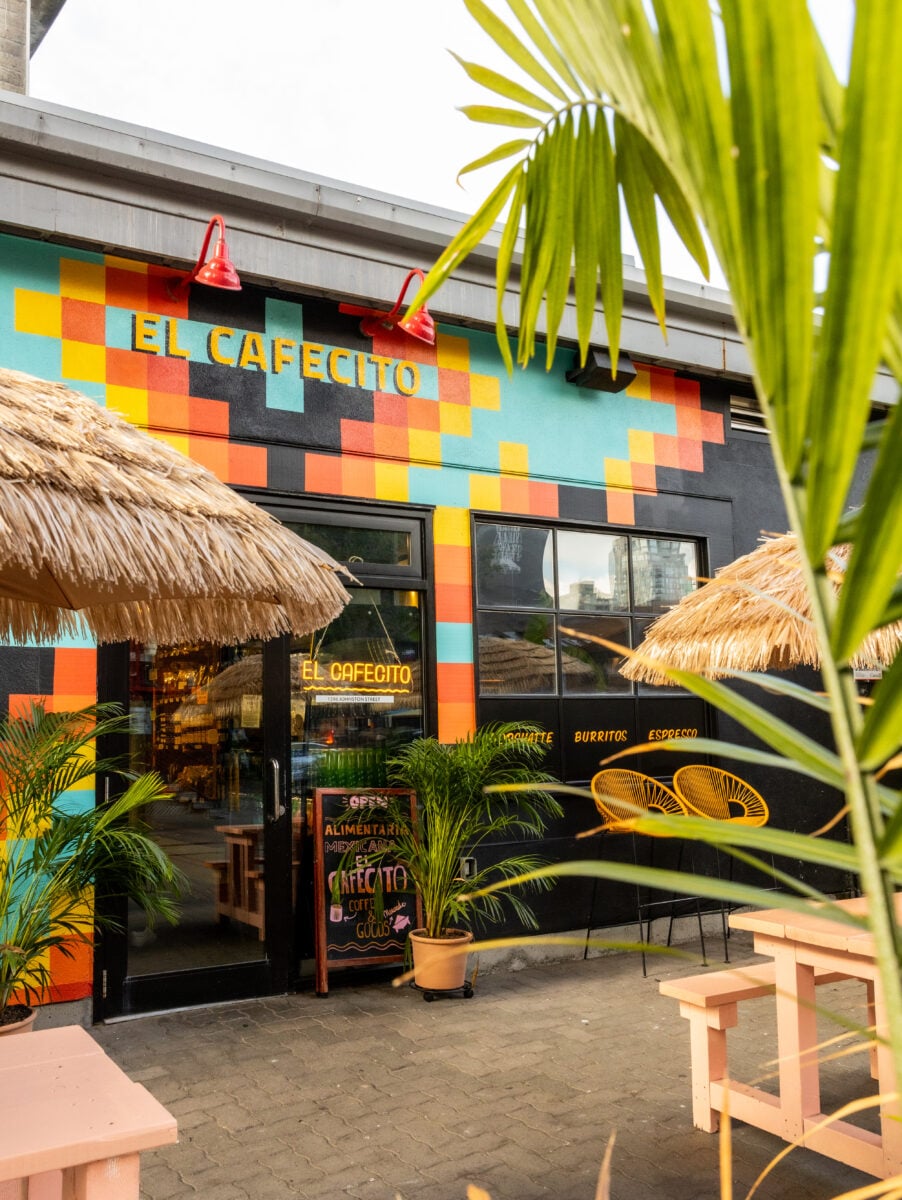
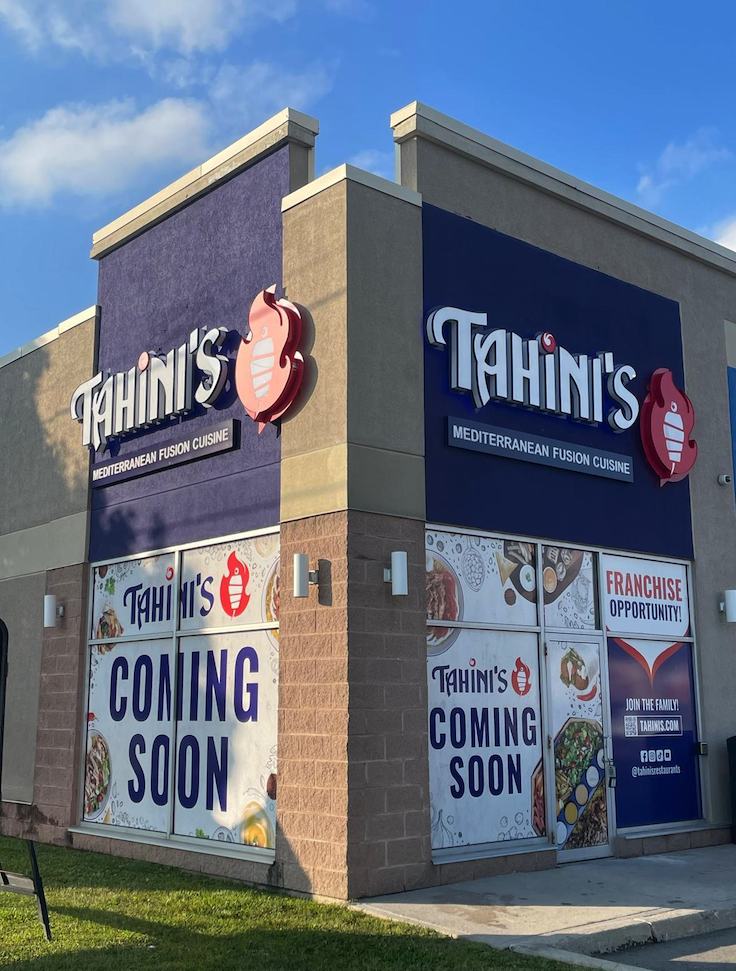
Future Tahini's at 175 Bloor Street E (Image: Craig Patterson)

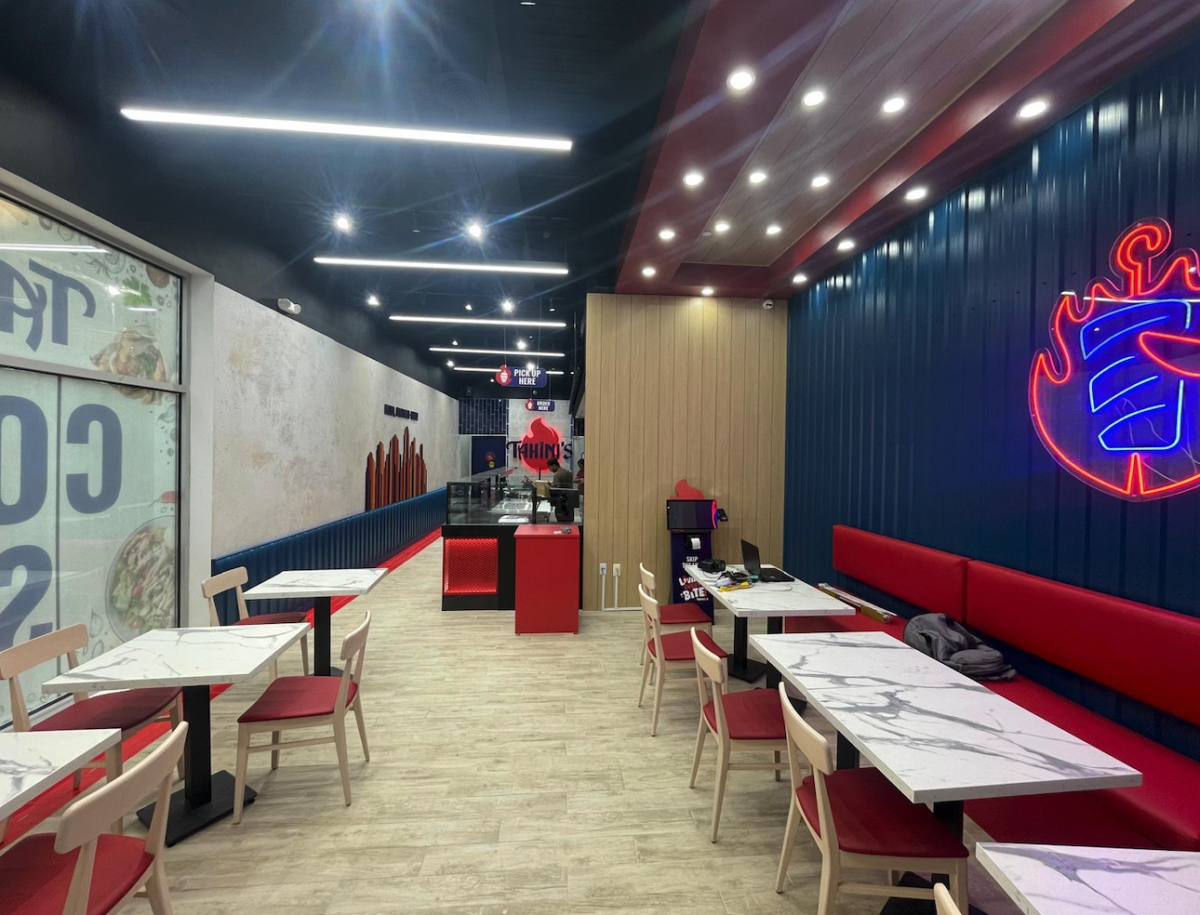
Tahini’s Restaurants, renowned for Mediterranean Fusion Cuisine, has successfully transitioned from a single standalone eatery in London, Ontario, to becoming an industry leader in the culinary scene across Canada, accomplished strategically through its franchising initiatives.

“Our journey has always been about more than just food; It’s about creating an experience that people remember and want to come back to,” said Omar Hamam, Founder and CEO at Tahini’s Restaurants. 

“We are thrilled to expand our footprint and assemble a network of dedicated entrepreneurs who are committed to maintaining the experience and quality of Tahini’s.”

The first location opened in 2018 and today it has 45 locations, three of them corporately owned. The latest opening was in Kelowna, B.C.

Image: Tahini’s

The total number of corporate and franchise locations is projected to exceed 60 storefronts by year end.

“We’re going for about 40 to 50 stores a year. That’s the numbers we’ll be doing in the next year or two in Canada,” said Hamam. “And within the next 12 months I think we’re opening six locations in the States.

“In Canada we’ve identified 230 locations. But we might not open all of them. So I’d say around 200 locations. The States is a monster. There’s no limit. The States could take like 3,000 locations easy. It’s a completely different animal.”

Youtube video

Hamam said the brand is looking for AAA locations, trying to be in busy plazas, busy intersections, neighbourhoods that are thriving, more high income than low income areas.

In 2018, he was operating another restaurant under a different name for about seven years. He started reading about franchising. It was interesting for him. So we wondered what he could do with that. But he didn’t think the restaurant he had was franchisable. The idea for Tahini’s was born and he opened his first location in the north end of London. It was tough at the beginning because it was a new brand name. The first six months were slow but then business started picking up. That led to a decision to expand and he hasn’t looked back. After he opened his second location, a franchisee wanted to open in Whitby.

He built a commissary under a different name, Alex Food Services, for the products for the restaurants and as a wholesaler. By then, he had opened five Tahini’s locations.  

Future Tahini’s Restaurants

Hamam was approached by Sobeys who wanted him to take some of their commercial kitchens at FreshCo. The first FreshCo location opened in Edmonton and then two more in Calgary.

He said the brand opened 25 locations last year and this year they have opened 26 locations already. In 2025, it will expand by 40 to 50 locations.

“We’re very different from the average. What we do is Mediterranean fusion. It’s not your typical shawarma store. We have a fusion between the Middle East and all other cultures, just like Canada is. Canada is a huge mix of different people. And the way we’ve designed our menu is to be something like that.”

In August 2020, Tahini’s became one of the first restaurant chains to invest 100 per cent of its cash reserves into cryptocurrency. 

“This bold move into Bitcoin has been instrumental in aiding our expansion, especially in the face of the COVID-19 pandemic and soaring inflation prices,” said Hamam. 

“All companies have some cash reserves. We decided to invest it in Bitcoin. Inflation was at all-time high and especially during COVID, it’s a problem when inflation is this high, your money is actually losing value so we decided to put all our cash reserves in Bitcoin. It’s been great. Bitcoin has skyrocketed.”

Custom Sectional Furniture is Close to Becoming a Leader in Furniture Sales

Sectional sellers are businesses or retailers which specialize in selling sectional sofas. These are large pieces of furniture that are composed of multiple sections, or modules, which can be arranged in a variety of configurations to suit different room layouts and customer requirements. It has long been a trend for furniture buyers to purchase sectional sofas from big name stores like Wayfair and Home Depot.

The trend now appears to be towards the ordering and purchasing of customized sectional sofas from a new type of business that has entered the market like DreamSofa. As a result, the big name stores are losing business.

Furniture Sales Statistics

Wayfair, a popular online home goods concern, revealed a net revenue of $2.7 billion in the first quarter of the year, but this was a drop of 1.6% year-over-year. The only way it could recover from this loss was by reducing its workforce by 13 percent.  Similarly, Home Depot also highlighted a 2.3 percent drop in net sales to $36.4 billion for the first quarter of the year.

This is not all that is happening in the sofa furniture market.

There is another trend in sales that’s emerging and that’s the demand for customized sectional sofas like these. This is being led by DreamSofa, a company whose sales are growing at a fast pace. This is a good time for a business to enter the customized sectional sofa market as revenue gained in this industry in the country is projected to reach US$263.20bn this year, with an expected yearly growth rate of 3.82% between 2024 and 2029. The furniture market is also experiencing a flood in demand for the use of sustainable and eco-friendly materials which reflects a growth in consumer preferences today.

Living Room Furniture, is forecast to reach a revenue of US$73.08bn in 2024. On a global scale, the United States makes the most revenue from the furniture market, with US$263.20bn in 2024. This adds up to be US$769.90 per person in 2024.

Why Customers Seek Customized Sectional Sofas

The consumer increasingly seeks furniture that reflects their own personal taste and fits perfectly into their living space. Companies like DreamSofa offer customized sectional sofas so that the customer can choose their preferred materials, colors, designs, and any other features that match their home décor preferences. Sectional sofas have established a reputation for their versatility and functionality so that the customer can request customization for a sofa which meets their specific needs.

The growth in e-commerce has made it simpler for a consumer to customize and order sectional sofas online, as retailers provide online tools and virtual room planners that assist the customer to visualize their customized sofa in their home before they go ahead and make a purchase.

With the growing trend of urban living and a smaller living space the consumer is looking for furniture like a customized sectional sofa that maximizes space and can be tailored to fit an exact room dimension and its layouts.  An eco-conscious consumer is driving more demand for ethically-made sustainable furniture, so companies which offer customized sectional sofas and other furniture are now focusing on the use of sustainable materials as well.

DreamSofa is a successful furniture business that specializes in custom-made sofas, which includes sectional sofas. They offer several customization options which allow the customer to select what suits their requirements. DreamSofa endeavors to provide high-quality, personalized furniture that meets the specific requirements and preferences of their customers.

Key features of DreamSofa include the following:

  • Quality materials are offered by DreamSofa to ensure a customized sectional sofa is both durable and comfortable. This typically includes the use of hard wearing frames, the finest fabrics and comfortable cushions.
  • A customizationservice so that the customer is given the opportunity of designing their sofa by choosing from various options that create a piece that suits their home and lifestyle perfectly. This includes selecting the fabric, color, cushion density, and its configuration such as L- or U-shape.
  • It provides online tools which allow every customer the opportunity to visualize their customized sofa and decide if it’s right for them.
  • It often emphasizes its focus on its customer service as it provides support throughout the design and buying process so customer satisfaction is assured.
  • Each customized sectional sofa is made-to-order and the design is based on the customer’s specifications so that a unique and personalized product is created
  • DreamSofa prides itself on providing a fast delivery service and may provide an assembly option which ensures convenience for the customer. 

DreamSofa has received a significant amount of favorable feedback from customers across various locations in the U.S. Customers praise the company for its exceptional customer service, great quality products, and the ease of customization available for their sofas. Many reviews highlight how helpful the staff is and the overall pleasant shopping experience, which makes DreamSofa a favored choice for many seeking new furniture.​

Anatomy of a Leader: Matt McGowan, General Manager, Canada at Snapchat

Anatomy of a Leader: Matt McGowan, General Manager, Canada at Snapchat

A born and bred New Yorker turned Torontonian who has lived on three continents, Matt McGowan has worked alongside founders, executives, venture capitalists, private equity professionals and others representing some of the world’s best known and hundreds of lesser known companies.

McGowan, General Manager, Canada at Snapchat, was born and raised in New York City. He went to school there and high school in the Bronx and college in rural Pennsylvania.

“I grew up in about 900 square feet with two brothers and two parents, a dog and a cat. So room was at a premium you might say. Didn’t spend alot of time at home. At home everyone was fighting for who could get the extra inch,” said McGowan.

“So we were out and about a lot. Education took place in the playgrounds, the parks, the school. I’d come home to shower and go to bed. Growing up on the streets of New York City is like a whole other level of education. It’s hard to explain. Especially in the 70s and the 80s.”

London England 2006 (Image: Matt McGowan)
Image: Matt McGowan

What did he learn on those streets that helped him in his career?

“A few things. I think the big one is that no decision is a decision. Indecision is a decision. If you take what you’re given, you deserve what you get,” he said. “Excuses don’t matter. You’ve got to go for it in life.

“New York is a crowded place. If I didn’t go in to play basketball like in the park someone else would and I wouldn’t have gotten the opportunity. If I didn’t like raise my hand, agree to participate, someone else would. There were so many people. You had to figure out how to know what you need. Assertive for sure. Definitely.

“Also open minded. I think that was the biggest thing. We used to call New York the melting pot of the world. And I think it’s a lot like Toronto is today to be fair. But New York was a lot of different people from a lot of different places all put in a really tight place and you had to learn how to negotiate, how to work with individuals. You were never alone. I was never alone growing up.”

Search Engine Strategies Conference and Expo 2010 (Image: Matt McGowan)

He went to Lafayette College in Easton, Pennsylvania. It was known for its engineering background and he was an engineer early on. The college also had a strong hockey team where McGowan played.

“I didn’t apply early to colleges. I didn’t know where I wanted to go. I couldn’t make a decision which ended up becoming a decision. The Director of Admissions at Lafayette College met with me which I thought was cool. I met with the woman responsible for admissions. And as I’m walking out of her office she said ‘let me leave you with one thing’. And I’ll never forget it to this day. ‘You can go to a university anytime. You can only go to a small college once because colleges don’t have graduate programs’,” said McGowan.

“When I was deciding between Lafayette and some larger universities like Purdue I chose Lafayette because this is a once a lifetime opportunity. If I don’t go now I’ll never go back.”

Adestra Oxford UK Office 2017 (Image: Matt McGowan)

At the time, math and sciences were always his strength. He thought he would become a chemical engineer. When he wanted to go abroad, he switched to business economics and he thought he was going to end up going to Wall Street, which he eventually did and worked for a few  years.

“It wasn’t for me,” he said. “I think what always attracted me to engineering was building something and on Wall Street I found that I was trading other people’s kind of hard work. For me, I really wanted to build something. I got transferred to the San Francisco desk in 1998. San Francisco was going through a renaissance you might say at the time with all these tech opportunities. I quickly gave up a very well paying Wall Street job and rolled up my sleeves and tried to build something on my own.”

Today, McGowan is the General Manager of Snap Inc. in Canada, the technology company and augmented reality (AR) leader behind Bitmoji, Snapchat and Spectacles. He is also a Partner in an early stage venture capital firm, C2 Ventures, sits on several Boards, and volunteers his time as a mentor at both Techstars and Elevate. 

Previously, he served as President and a member of the Board of Directors at Adestra, an enterprise Marketing Automation Platform which was acquired by Upland Software in Dec 2018. Prior to Adestra, McGowan focused on expanding Google and YouTube’s leadership in the advertising and marketing space. He has also held leadership positions at Incisive Media (acquired), PropertyRoom.com, Headland Digital Media (acquired), and Charles Schwab Inc.

He also has a Master’s from the University of Oxford. 

Snap Canada makes Matt McGowan country manager – 2019 (Image: Snap Inc)

How does a Wall Street professional end up where he is today?

“It has all to do with San Francisco in the late 90s. I was in the minority there as a Wall Street guy and everyone else was building on this thing they called the internet,” he said, adding he had a background in computers and during college he had a business building websites for offline businesses.

“It just all kind of fit together. I spent a lifetime until about the age of 22 figuring out things I didn’t want to do . . . I was peeling back layers of the onion so to speak for a few years saying I don’t want to be on Wall Street.  I don’t want to be an engineer. I don’t want to be this. And then boom I saw my peers building these really kind of innovative future looking businesses on this thing called the internet. And I said that’s what I want to do.

“I built a career since then – over half my life – working with founders building digital products and digital businesses.”

Snap Canada Partner Summit in Toronto 2023 (Image: Snap Inc.)

McGowan described himself as a “transparent servant leader”. 

“By servant leader, I mean I like to flip the org chart upside down. When I started out on Wall Street the head of the trading floor told me it was our job to make him look good,” he said. “In order to make him look good we had to do all these things and that was how we dressed, how we showed up. What I learned quickly, I’m an older brother of two younger brothers, all in the same room and I found that leadership came natural to me. They always looked up to me because I was older and had gone through whatever it was with my parents or with the teachers, the community, neighbours, whatever,” he said. 

“I quickly found that I don’t want my team to make me look good. I think the best leaders help make their team look good. So we flipped the org chart upside down. It’s my job as a leader to make sure that everyone in this office knows what’s expected of them and when. And that they have the freedom to get that job done and that I’m open-minded enough to realize that they may have a better way.

“I get enjoyment out of watching our business grow and watching those who are growing our business grow in their roles and into new roles. I get enjoyment out of watching (my) kids grow and learning how to do things themselves . . . Those things all add enjoyment to my life and give me a sense of accomplishment that allows me to feel like I’m doing something of value.”

Canada’s Coffee Boom: Rapid Import Growth and Expanding Culture Fuels Industry [Interview]
Dispatch Coffee on Bay Street (Image: Dustin Fuhs)

According to the Coffee Association of Canada (CAC), the country has enjoyed the fastest coffee importing growth among leading traditional world markets with over 30 developing countries exporting coffee to Canada.

Robert Carter

The impact of the industry in the country is massive – 160,000 jobs, $6.2 billion in total sales. 

“Overall, coffee consumption remains quite robust. In fact, it is the number one consumed beverage in the Canadian marketplace. More so than tap water. Canadians love their coffee,” said Robert Carter, President of the Coffee Association of Canada.

“In terms of per capita consumption, Canada is number two or number three on a global standpoint. The consumption of coffee has always been a staple for the Canadian population but continues to rise in popularity.”

Arabica Whistler (Image: Arabica)

Carter said Canadians have grown up in a coffee culture. In the last decade, there’s been a lot of innovation in the industry. There’s more coffee products and drinks expanding beyond the typical brewed coffee.

“The Coffee Association of Canada is a non-profit organization that’s been in existence for over 40 years and the primary goal is to represent our members and the coffee industry at large, the $6 billion coffee industry in the Canadian market,” said Carter.

“So our pillars of focus are on education, awareness and advocacy. And that means understanding consumers’ coffee preferences and purchase behaviour through our proprietary research as well as our GR (government relations) focus in working with the government on any legislation or supply chain or any labeling issues for coffee. And connecting and supporting the industry through understanding issues such as sustainability, diversity and inclusion and making sure that the coffee industry has a stable future in Canada.”

Image: Nemesis Coffee

Carter said the fastest growing area in the coffee market in Canada is the cold brews and espresso style beverages.

“This innovation is bringing in younger consumers. Consumers that may not have traditionally been in the coffee category. So it’s really expanding the scope of who is actually consuming coffee,” he said. 

“We’re seeing the coffee portfolio expand beyond your traditional coffee houses. Pretty much a number of different environments you can go into from a convenience gas station store to a workplace to hotel environments.

“It’s moving from a commodity based product offering to more of a value add.”

Jimmy’s Coffee on Ossington (Image: Dustin Fuhs)
Youtube video
White Buffalo Coffee Company

Carter said there is a very robust coffee culture that is emerging, particularly in regions like Alberta where you’re seeing many micro roasters and independent gourmet coffee houses, Indigenous supported and focused businesses, in the market.

“There’s this whole subculture of consumers, particularly with the Gen Z, who are just so motivated by coffee, understanding coffee. In generations past it would be more like alcohol stuff that they might be interested in. Now with the technology on home brewing systems, the transparency on countries of origin, the high quality, this whole culture of cafe or coffee culture has become trendy and mainstream and it’s helping drive the growth through these independent coffee roasters and coffee shops. It’s becoming the cool factor of the coffee industry and consumers are supporting it,” he said. 

“They’re looking for these diverse, different offerings. So it’s a really good news story.”

Metro Front Street Coffee Section (Image: Dustin Fuhs)
Coffee Section at Farm Boy (Image: Dustin Fuhs)

Carter said grocers are also realizing that coffee is moving beyond just a commodity. The days of having just some standard brands in a small section of a grocery aisle is expanding.

“And they’re recognizing that there is a demand for greater diversity and variety so they’re expanding their offerings which consumers are responding to,” said Carter. “The older consumers continue to be part of the category. We don’t see older consumers moving out of the category as we see younger consumers coming into the category.

“So the overall distribution and consumption is now the largest we’ve ever seen in terms of touching multiple age groups and demographics overall.”

Everyday Gourmet at the St. Lawrence Market (Image: Dustin Fuhs)

Recently CAC announced that Canadian business icon Arlene Dickinson will be the keynote speaker for its annual conference in November in Toronto with the theme Coffee Unites. 

“Coffee brings people together over shared moments,” said Dickinson, who is also a dragon on the popular CBC television series Dragons’ Den. “It is a beloved beverage that serves as a powerful catalyst in uniting people worldwide. I look forward to delving into the power of relationships and how strong connections can empower us all.”

Costco Membership Fees to Rise in Canada, and Most Canadians won’t Protest [Op-Ed]

Image: Costco Canada

Costco is raising its membership fees for the first time since 2017. After months of speculation, the wholesale giant has confirmed the increase. Effective September 1, the cost for “Gold Star” and business memberships will rise by $5 to $65. Executive members will see their fees increase from $120 to $130. Announced this week, these increases represent about an 8.5% hike, with no further rises anticipated for several years.

In addition to membership fee hikes, Costco is also raising its starting salaries by $1.00 per hour this fall. Salaries and benefits at Costco are considered among the best in the industry, reflecting the company’s commitment to its workforce.

Canada boasts over 5 million Costco members. Millions of Canadians willingly pay for the privilege of shopping at Costco, a testament to the chain’s appeal. The first Canadian Costco opened in Burnaby in 1983, and now there are 109 stores nationwide, with more expected to open in the coming years.

Membership fees are crucial to Costco’s financial health. In the last fiscal year, Costco’s net profits were approximately $7.1 billion USD, with a significant portion coming from membership fees. While Costco does earn profits from merchandise sales, the bulk of its profits stem from these fees. Only members can shop at Costco, except for its in-store pharmacy. As a result, Costco shares, currently valued at around $890, may see a boost in the coming weeks.

Costco at The Shops at Buffalo Run (Image: Taza)

As a food retailer, Costco has significantly improved its offerings in recent years. The company now processes more food onsite, including meat cuts, salads, seafood, and pasta-based dishes, enhancing freshness. Many bakery items are also baked onsite. The Kirkland brand, introduced in 1995, has become a cornerstone of Costco’s success, offering high-quality private-label products. Despite its restrictive SKU model, which limits selection compared to other grocers, Costco has made it easier to find local products in the fresh food section.

Costco is renowned for its best deals, including the $1.50 hot dog-soda combo and the $7.99 rotisserie chicken, both of which have achieved legendary status. The company’s approach is understated and methodical; it simply implements new initiatives without fanfare. This includes ventures into home delivery and the expansion of the Kirkland brand, all executed without an advertising budget.

Unlike other grocers, Costco operates as a wholesaler, carrying about 4,000 different products at any given time. This focused selection allows Costco to rigorously screen each product for quality and price, ensuring members receive the best value and helping consumers avoid choice paralysis.

Coupled with Canada’s car-focused economy, Costco’s success in adapting and offering what consumers and small businesses need is undeniable. As a food retailer and wholesaler, Costco now sells almost as much food as Walmart and Metro in Canada—a remarkable achievement since its Canadian debut over 40 years ago. And remember, both Walmart Canada and Metro operate over 400 stores each, in contrast to Costco’s 109 locations. Bulk is king for many.

While membership fees are increasing for the first time in seven years, most members are unlikely to mind, and Costco knows this well.

Various Hudson’s Bay Department Stores Across Canada Close Temporarily due to HVAC Issues

Outside the temporarily shuttered Hudson's Bay store in downtown Vancouver, July 2024. Photo: Lee Rivett

Various Hudson’s Bay department stores in Canada are closed this week due to HVAC issues, coinciding with a heatwave that made temperatures in some stores unbearable. Hudson’s Bay has not been forthcoming on why stores have been closing temporarily over the past several months, following other issues in stores such as non-functioning escalators and a lack of centralized music. 

For at least a couple of months, readers have been emailing Retail Insider about Hudson’s Bay stores being shut temporarily due to systems issues in stores, and a search on Reddit shows that the issue has persisted at least since May of this year. This week there have been various news reports about Bay stores being closed due to a lack of air conditioning. 

Some readers have been so concerned as to ask if Hudson’s Bay will be going out of business as a result — the retailer has also had issues with its shipping and deliveries, including the fact that Hudson’s Bay currently does not deliver orders to the Northwest Territories, for example. Visitors to Hudson’s Bay stores that are actually open this week could find a lack of operational escalators, elevators and music depending on the location, and consumers are noticing. 

Sign on the door of the flagship Hudson’s Bay store at 674 Granville St. in downtown Vancouver. Photo: Lee Rivett
Shuttered doors of the flagship Hudson’s Bay store at 674 Granville St. in downtown Vancouver. Photo: Lee Rivett

Retail Insider reached out by phone to Hudson’s Bay to learn why these issues have persisted for months, and the retailer’s head of corporate communications, Tiffany Bourré, sent back a canned statement that was also sent to other news publications this week. 

Tiffany Bourré, VP of Communications, Hudson’s Bay

“The current heatwave has caused strain on HVAC systems in certain Hudson’s Bay locations. We are working to address as quickly as possible. The comfort and wellbeing of customers and associates remains our top priority.” – Tiffany Bourré

Various Hudson’s Bay stores have been closed in Canada this week, including stores in downtown Victoria, downtown Vancouver, Park Royal in West Vancouver, Coquitlam Centre, Abbotsford, Prince George, Red Deer, and Windsor Ontario. Over the past few weeks Bay stores at Square One in Mississauga have been closed due to HVAC issues, along with Woodbine Mall in Toronto and in Newmarket, Ontario, among others. 

The closure of multiple Bay locations due to HVAC issues is a significant topic of discussion across Canada as a result, and it’s speculated that Hudson’s Bay may have not paid for maintenance of its cooling systems which are now failing. Various vendors owed money by Hudson’s Bay have reached out to Retail Insider with information for months as well, indicating a pattern of delinquent payments at a time when the Hudson’s Bay Company is announcing its acquisition of US-based luxury retailer Neiman Marcus. 

As part of the Neiman Marcus acquisition, the Hudson’s Bay Company stated in a press release that the Canadian Hudson’s Bay department stores and Canadian business would become separate from Saks Global upon closing of the transaction. With that, there would be “significantly reduced leverage and enhanced liquidity” for Canada’s Hudson’s Bay. The release went on to say that the Canadian business “will be well positioned to support future growth,” without providing further details. 

Shuttered Hudson’s Bay store in Banff, AB. Photo: Avison Young

Sources have said that only about a quarter of Hudson’s Bay’s roughly 80 remaining Canadian stores are profitable, leading to a question about the future of some locations. The announced “new liquidity” means that Hudson’s Bay could have money to fix outdated technology, repair HVAC, escalators and other fixtures, and otherwise update stores — although one questions if there will be a return on such an investment, particularly as Canadians increasingly are turned off shopping at Hudson’s Bay locations which in many cases are in need of upgrading to create a positive customer experience. 

Vendor relationships will also have to be fixed, following a pattern of late payments which will likely impact the retailer following any new cash injection from its parent company after the formation of Saks Global. 


A Reddit user claiming to be a Bay store employee discusses their interpretation of the situation, followed by a comment from another Reddit user. Click image for full Reddit thread.

The future of Hudson’s Bay’s Canadian stores is uncertain and there’s a possibility that the chain could be sold post-Saks Global — various Bay stores have closed in recent years, including three downtown locations (Winnipeg, Edmonton, Toronto Bloor Street) along with other units in Montreal at Les Jardins Dorval, in Burnaby BC at the Lougheed Town Centre, and on Banff Avenue in downtown Banff, Alberta. We know that in 2025 Hudson’s Bay will close stores in Burlington Ontario and in downtown Regina, Saskatchewan. The cost to renovate the remaining Hudson’s Bay stores to an acceptable standard could be cost prohibitive.

Expanded 28,000 sf Zellers shop on the lower level of Hudson’s Bay Vancouver. Photo: Brahm Kornbluth

Reddit comment regarding the condition of Hudson’s Bay stores — Reddit is full of similar comments from people across Canada. Click image to read full Reddit thread.


Hudson’s Bay also began expanding its Zellers 2.0 concept stores within Hudson’s Bay last year, which insiders have said has generally been unsuccessful beyond some initial hype around the relaunch and some food trucks. One small bright spot is in downtown Vancouver, where the Zellers shop-in-store was recently expanded to 28,000 square feet making it the largest Zellers in existence by far — shoppers will be able to visit it again when the downtown Vancouver Hudson’s Bay flagship store reopens, whenever that will be. 


Reddit post, indicating issues around Hudson’s Bay’s e-commerce — and there are many posts similar. Click image for full Reddit thread.


Hudson’s Bay will ultimately have an uphill battle in the coming years to gain consumer traffic as Millennials and GenZ shift spending from department stores to speciality retailers including online — the overall relevance of Hudson’s Bay is less so with so many shopping options in Canada. Retail Insider will continue to report on Hudson’s Bay and what’s happening as the Saks Global partnership solidifies in the US. 

Qwelli Gelato Plans Significant Growth and Franchise Partnerships [Interview]
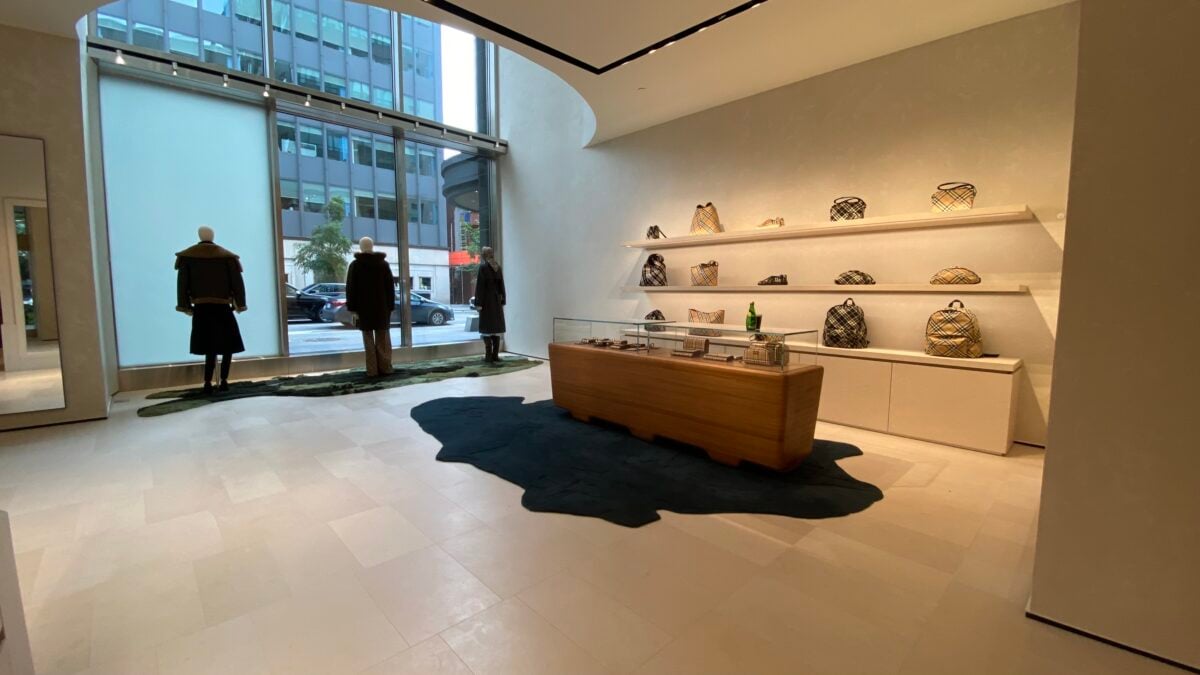
Qwelli at Montreal Eaton Centre (Image: Adrien Williams)

The Montreal-based gelato brand Qwelli has its roots going back to 1987 with the acquisition of an ice cream shop in Chomedey.

Today, the company has 11 locations and is poised for growth, looking to expand by several stores in the next few years and partnering with franchise owners.

Jean-Francois Beetz, Chairman and CEO of Qwelli, said the family-owned business was started by his parents.

“My sisters and I and my cousin grew up in the business,” said Beetz. “It’s been a lifelong project we’ve been working on.”

Qwelli at Montreal Eaton Centre (Image: Adrien Williams)
Qwelli (Image: Caroline Reumont)

After its inception, the company manufactured gelato in 2003 for the first time. In 2010, it opened its first factory and in 2012 the transfer of ownership took place to a new generation. 

“My sisters and I worked on finding ways to improve the business, improve the concept . . . The main thing that happened in the last few years is that my sister and I, the second generation, took over, although my dad is still working with us, and we quickly realized in the early 2000s that gelato was the king of desserts, the high end in the frozen dessert industry,” said Beetz.

“So we moved from ice cream to gelato almost 25 years ago . . . There’s a lot of differences between ice cream and gelato. We mastered it over the years. We’re artists. So we took it to another level. We’re experts in gelato but we’re really artists of gelato. We took the brand that used to be called Paysanne Gelato at the time and we’ve tried to evolve the brand, the products, the business model.”

In 2021, it became Qwelli.

In its expansion, the brand is working with Oakmont Real Estate Services Canada Inc.

“It’s been truly a pleasure working alongside the Beetz family and having been privy to their continued evolution and growth. When it comes to authentic gelato, they are best in class and this next step milestone in their development will allow more Canadians to discover what we’ve already known,” said Roula Bchara, Managing Partner, Business Development of Oakmount.

“We are currently looking for open-air locations ranging from 800-1,200 square feet. These locations must have the ability to house outdoor seating and should be located near commercial arteries with residential housing nearby and with neighbouring food and entertainment.

“We are actively looking for opportunities within the greater Montreal region and have identified specific regions and zones. We invite everyone to reach out to us for further information or to add themselves to our mailing list to receive our flyers.”

Qwelli Fairview Pointe-Claire (Image: Qwelli)

Beetz said the company opened its new production facility in 2020 and with the rebrand it makes Qwelli ready to move on to the next step which is the expansion.

Currently there are 10 stores open. The 11th store will open in mid-August in Royalmount in Montreal. All the stores are in Quebec.

“But we’re looking into the Ontario market and maybe more,” said Beetz. 

“We’re really not trying to fix a number . . . Within the next two to three years we definitely want to go up to 25, 30 maybe. But it’s always going to depend on the quality of the location. Right now everything is corporate owned but we’re opening the market for franchisee partners to join with us. It’s going to help us grow but we’re still going to be looking at quality locations and this is mostly going to be the trigger for the growth, the speed at which we’re going to grow.

“We’re already negotiating right now with many locations so we’re confident that we’re going to be able to reach these numbers within the next two to three years.”