Home Blog Page 59

Moving Canadian Grand Prix to May boosts Montréal tourism, hotel demand, Tourisme Montréal says

Canadian Grand Prix photo

Moving the Canadian Grand Prix to May helped drive stronger hotel demand and tourism activity in Montréal while allowing June to maintain its performance without the Formula One race, according to Tourisme Montréal.

The tourism organization said hotel demand in May increased 12.9 per cent compared with June 2025, when the Canadian Grand Prix was still held that month. It said the increase was also supported by the Montréal Canadiens’ playoff run, which drew additional visitors to restaurants, hotels and retailers across the city.

The figures suggest the calendar shift created a stronger start to the tourism season while leaving room for other major events in June, according to the organization.

“The results show that we made the right decision in supporting the move of the Grand Prix to May. This change in the calendar allows us to attract more visitors at the very start of the season, while also freeing up space in June to host major conventions and other large-scale events. It’s a win-win for Montréal, for our members, and for the entire tourism industry,” said Yves Lalumière, President and CEO of Tourisme Montréal.

The organization said the Grand Prix continued to generate strong demand for hotels across the Montréal region during race weekend.

It reported hotel occupancy reached 94.8 per cent across Montréal, with demand increasing in both the downtown core and the airport area.


Dominique Villeneuve
Yves Lalumière
Yves Lalumière

“The results recorded during the Grand Prix confirm how strategically important this event is for our industry. With a hotel occupancy rate of 94.8% across the island of Montréal and significant demand growth both downtown and near the airport, hotels enjoyed an exceptional level of activity,” added Dominique Villeneuve, President and CEO of the Greater Montréal Hotel Association (AHGM).

Tourisme Montréal said the economic benefits extended beyond the city itself.

Hotel demand in Laval increased 10 per cent during the 2026 race weekend compared with the same period a year earlier, while demand on Montréal’s South Shore rose five per cent.

The organization also pointed to the international exposure generated during the race weekend through Formula One drivers’ social media accounts.

Tourisme Montréal photo

It said several drivers shared content featuring Montréal, with their combined social media following approaching 200 million people worldwide. According to Tourisme Montréal, posts highlighting the city generated more than 10 million views. Among the most widely viewed was a post showing Charles Leclerc walking through Mount Royal and visiting several of Montréal’s landmarks.

Despite moving one of the city’s largest annual tourism events into May, Tourisme Montréal said June has maintained comparable hotel demand to the previous year.

It said hotel demand for June 2026 is tracking at the same level as June 2025, when the Grand Prix remained on the month’s calendar.

The organization said Montréal’s summer events calendar will continue following Les Francos de Montréal with the Festival International de Jazz de Montréal, Festival International Nuits d’Afrique de Montréal, Just for Laughs and other cultural, culinary and sporting events scheduled throughout the season.

More from Retail Insider:

Canadian venture capital downturn hits early-stage startups, RBCx data shows

Thirdman photo
Thirdman photo

Canada’s early-stage startup ecosystem is under increasing strain, with fewer companies raising venture capital and total funding falling sharply year-over-year in the first quarter of 2026, according to new data from RBCx.

The findings show both the number of early-stage companies securing venture capital and the total capital raised declined 40 per cent compared with the same period in 2025, even as average seed round sizes remained steady. RBCx says the trend points to fewer founders accessing capital rather than reduced funding requirements among startups.

The data arrives alongside RBCx’s Capital Under Pressure report, which highlights increasing concentration in Canada’s venture capital market and a growing gap in financing available to early-stage companies compared with historical norms.

The findings point to a tightening financing environment at the earliest stages of company formation, with implications for founders seeking seed capital and for the venture ecosystem that traditionally supports high-risk, early innovation.

RBCx tracked fundraising activity among more than 700 pre-seed and seed-stage Canadian companies over a two-year period. It found the number of companies raising capital has steadily declined since early 2025, including a 31 per cent drop from the fourth quarter of 2025 to the first quarter of 2026, and a 40 per cent decline from the first quarter of 2025.

Despite fewer companies raising money, RBCx reported that average seed round sizes held at about $3 million across 2025 and into the first quarter of 2026. The bank’s innovation arm said this suggests funding needs remain consistent, even as fewer startups are successfully securing investment.

Tony Barkett
Tony Barkett

“Venture capital plays an important role in the early stage, especially for businesses in cleantech and life science with heavy upfront costs in research and development. Without funds available, the innovation pipeline narrows,” said Tony Barkett, Head of Banking.

“RBCx remains committed to early-stage companies. Our team, many of them former founders themselves, offer tailored financial products and direct connections to VCs, helping founders unlock growth at every stage, especially when the fundraising environment is tough.”

The report also highlights pressure on emerging venture capital managers, which RBCx describes as a key source of funding for early-stage companies.

MART PRODUCTION photo

Emerging managers raised about $2.8 billion, roughly 36 per cent below expected levels based on historical patterns, according to the analysis.

RBCx’s data shows a significant shift in how venture capital is distributed in Canada. In 2025, five of the largest venture capital funds accounted for nearly 80 per cent of total capital raised, compared with 46 per cent in 2023 and 67 per cent in 2024.

Matt Roberts
Matt Roberts

The report also indicates that while fundraising among the largest funds has declined since 2021, the drop has been far more pronounced among other market participants. RBCx said the top five funds saw fundraising fall from $3.5 billion in 2021 to $1.7 billion in 2025, a decline of about 50 per cent, while all other funds combined fell from $4.5 billion to $444 million over the same period, a drop of nearly 90 per cent.

“Emerging managers are the engine of early-stage innovation in Canada. They’re willing to take on the riskier bets by backing first-time founders solving problems the market hasn’t fully recognized yet,” said Matt Roberts, Managing Director, Venture Coverage.

“That diversity of risk appetite is what keeps a healthy ecosystem moving. When emerging managers are underfunded, it’s not just a financing gap – it’s an innovation gap.”

More from Retail Insider:

Recipe opens first Ontario Olive Garden as part of national expansion plan

Olive Garden photo
Olive Garden photo

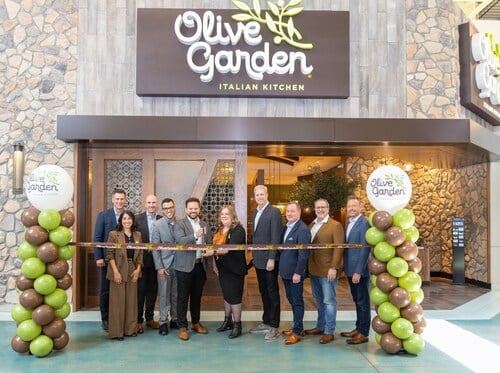
Recipe Restaurant Group has opened a new Olive Garden restaurant at Vaughan Mills, marking the first new location in Eastern Canada under the company’s national development agreement with Darden Restaurants Inc.

The opening also represents the first restaurant in Ontario and follows Recipe’s acquisition earlier this year of the existing Western Canadian restaurants.

The Vaughan Mills location is the first of several Ontario restaurants planned as Recipe expands the brand across Canada under its long-term growth strategy. The company said additional locations in Ottawa and Ajax are currently in development.

Recipe said the restaurant is located at Vaughan Mills and will serve Olive Garden’s menu of Italian-inspired dishes, soups, salads and breadsticks.

“The opening of the first Olive Garden restaurant in Ontario is a significant milestone for Recipe,” said Frank Hennessey, chief executive officer of Recipe Restaurant Group. “The response from the community to the opening has been incredible. Receiving over 6,000 applications allowed us to build an outstanding team of more than 250 members, representing a fantastic economic opportunity for the region. We’re proud to bring Olive Garden’s quality food, warm hospitality and exceptional value to Ontarians, and we can’t wait to welcome guests to experience everything that makes the brand so special.”

Frank Hennessey
Frank Hennessey

Bradley Smith, president of Darden Franchising, said the opening marks the brand’s expansion into Eastern Canada through its relationship with Recipe.

“We are very excited to expand Olive Garden into Eastern Canada and open our first Toronto-area restaurant at Vaughan Mills,” said Smith. “Recipe’s deep experience in the Canadian restaurant industry will help us successfully deliver Olive Garden’s signature Italian generosity to our guests.”

Olive Garden photo
Executives from Darden Restaurants and Recipe Restaurant Group, along with Olive Garden Canada leadership, celebrate the opening of the first Olive Garden restaurant in Ontario at Vaughan Mills. Attendees include Rick Cardenas, Chief Executive Officer of Darden Restaurants, and Frank Hennessey, Chief Executive Officer of Recipe Restaurant Group, along with senior executives from Darden Restaurants and Olive Garden Canada operations, brand, marketing, and restaurant teams. (CNW Group/Recipe Restaurant Group)

Recipe said the Vaughan Mills restaurant is part of its broader plan to expand the Olive Garden brand nationally following its agreement with Darden Restaurants.

Olive Garden operates more than 920 restaurants and employs more than 96,000 people. The brand is a division of Darden Restaurants.

Recipe Restaurant Group said it operates nearly 1,100 restaurants across Canada and also has operations in the United States and the Middle East through a portfolio of casual dining, quick-service and fast-casual restaurant brands.

More from Retail Insider:

Federal government announces $5.6 million for Black entrepreneurs in Alberta

Gustavo Fring photo
Gustavo Fring photo

The federal government is investing $5.6 million in three Alberta-based projects aimed at helping Black entrepreneurs start, grow and expand their businesses through training, mentorship and business development services.

The funding will support organizations delivering programming intended to address barriers facing Black business owners and entrepreneurs across the province.

The investment is being provided through the federal Black Entrepreneurship Program and will fund initiatives led by the Council for the Advancement of African Canadians (Africa Centre), the BIPOC Foundation and Black Canadian Women in Action Society.

The largest share of the funding, $2.6 million, will go to the Council for the Advancement of African Canadians, also known as Africa Centre, along with co-recipients Canadian Imperial Advantage and The Nod Foundation.

The organizations will deliver a provincewide initiative called ACT, which is designed to support aspiring entrepreneurs, early-stage businesses and companies preparing to scale. The program will provide business advisory services, capital readiness assessments, tailored incubation, one-on-one coaching, digital technology adoption training, market access preparation and commercialization support.

The BIPOC Foundation will receive $1.5 million to expand its Founders Hub, which provides provincewide programming including business planning, financial forecasting, mentorship, investor readiness and market access training for Black entrepreneurs.

A further $1.5 million will be provided to Black Canadian Women in Action Society to expand services for Black women entrepreneurs through business development initiatives, advisory services and skills training intended to support business creation, growth and long-term sustainability.

Mikhail Nilov photo
Mikhail Nilov photo

According to Prairies Economic Development Canada, the three projects are expected to create 280 jobs, serve 950 businesses, train 720 participants and support the creation, maintenance or expansion of 302 businesses.

Eleanor Olszewski
Eleanor Olszewski

The funding is part of the Black Entrepreneurship Program’s Ecosystem Fund, which supports Black-led, not-for-profit organizations that provide services such as mentorship, financial planning, networking and business training. In Alberta, Saskatchewan and Manitoba, the program is administered by Prairies Economic Development Canada.

“Black entrepreneurs and businesses are leaders in Alberta’s economy. Their innovation and determination create jobs, drive growth, and strengthen communities across the province. The Government of Canada is proud to work with the organizations receiving funding today to help remove barriers to success and ensure more Black entrepreneurs have the tools, networks, and opportunities they need to start, grow, and scale their businesses. When Black entrepreneurs succeed, Alberta’s economy grows stronger, more competitive, and more resilient,” said Eleanor Olszewski, Minister of Emergency Management and Community Resilience and minister responsible for Prairies Economic Development Canada.

The federal government said the projects are intended to increase access to business supports for Black entrepreneurs, including training, advisory services and mentorship.

Rechie Valdez
Rechie Valdez

“Black businesses and entrepreneurs play a vital role in building a strong and inclusive Canada. Canada and Alberta are stronger when entrepreneurs have the tools they need to succeed. The Government of Canada is committed to ensuring Black entrepreneurs, including Black women entrepreneurs, have the support they need to grow, succeed, and create good jobs here in Alberta,” said Rechie Valdez, Minister of Women and Gender Equality and Secretary of State (Small Business and Tourism).

Prairies Economic Development Canada said applications for the current intake of the Black Entrepreneurship Program’s Ecosystem Fund have closed and all approved projects must be completed by March 31, 2030.

More from Retail Insider:

Daily Synopsis: Jun 30, 2026

Welcome to the Daily Synopsis by Retail Insider. We published 12 articles on Tuesday covering key developments in Canadian retail.

Walmart Canada will open a Supercentre in the former Hudson’s Bay space at Place d’Orléans in Ottawa, illustrating how property managers like Primaris REIT are repurposing large department store locations. Primaris is also exploring unlocking up to $375 million by selling excess mall lands for various developments, leveraging eased restrictions on such properties.

RW&CO launched a reimagined flagship store at CF Toronto Eaton Centre with immersive retail experiences, while Eggslut plans to open its first Vancouver restaurant in a luxury retail district. Canadian consumer caution towards AI-powered shopping and major event-driven retail traffic growth also featured in today’s updates.

🗞️ The Day’s Retail Insider Article List

🌐 Canadian Retail News From Around the Web

Trade Uncertainty Is Becoming Canada’s Biggest Economic Risk

By any measure, Canada has become one of the world’s most trade-dependent economies. Nowhere is that more evident than in agri-food, where millions of jobs and billions of dollars in investment depend on stable access to foreign markets.

That is why this Canada Day carries unusual significance.

July 1 marks the formal review of the Canada-United States-Mexico Agreement (CUSMA), the single most important trade agreement for Canada’s food economy. Yet instead of celebrating a stable North American partnership, Canada enters the review facing uncertainty on virtually every front.

To the south, the United States has openly questioned the future of CUSMA. President Donald Trump has indicated that the agreement no longer serves American interests and has initiated the process that could ultimately lead to a U.S. withdrawal. Whether this is negotiating strategy or genuine policy is almost beside the point. Businesses invest based on certainty, not political theatre.

What is perhaps more concerning is that Mexico appears to be further ahead in formal negotiations with Washington than Canada. Ottawa insists discussions continue with American officials, but the perception matters. If our largest trading partner is prioritizing another North American partner while Canada remains largely outside formal negotiations, investors notice.

At precisely the same time, Canada’s diversification strategy is facing its own test.

Only hours before the CUSMA review began, China announced preliminary duties of 73.5 per cent on Canadian pea starch. In dollar terms, the trade affected is relatively modest—roughly $100 million annually, representing only about one per cent of Canada’s agri-food exports to China. But focusing solely on the value misses the point entirely.

Pea starch is not a raw commodity. It is a value-added ingredient produced in Canadian processing plants after significant investments in technology, manufacturing capacity and skilled labour. It embodies precisely the kind of economic activity successive governments have encouraged: processing Canadian crops at home instead of exporting them abroad with little additional value. When China targets products like pea starch, it is not just restricting a niche export. It is undermining the business case for investing in Canada’s food processing sector, where the greatest economic returns—and the highest-paying jobs—are created.

None of this means Canada’s effort to rebuild commercial ties with China has failed. Diplomatic relations and trade disputes often move on separate tracks. Anti-dumping investigations follow legal processes that can continue regardless of political goodwill.

But it does remind us of something many policymakers would rather ignore: diversification is not simply about finding another large customer. It is about finding reliable markets.

Trade policy is ultimately about confidence.

For the past several months, Canadians have been told that reducing dependence on the United States is both necessary and achievable. That objective remains sensible. No country should rely excessively on a single export destination.

The challenge is that replacing one dominant market with another equally unpredictable one does not reduce risk. It merely redistributes it.

Canada now finds itself in an uncomfortable position. Our relationship with China remains vulnerable to abrupt trade actions. Our relationship with the United States—the destination for roughly three-quarters of our merchandise exports—is entering its most uncertain period in years. Meanwhile, Mexico appears to be positioning itself advantageously within North America.

For food manufacturers, processors, farmers and investors, uncertainty is becoming the defining feature of Canada’s trade environment.

This should prompt some honest reflection.

Over the past decade, Canada has excelled at announcing ambitious trade strategies. We have signed agreements around the world, promoted Indo-Pacific engagement, reopened dialogue with China, and defended CUSMA. Yet success in trade is measured less by the number of agreements signed than by the confidence businesses have to invest.

Confidence comes from predictability.

On this Canada Day, the country’s greatest economic challenge may not be choosing between Washington and Beijing. It is restoring Canada’s reputation as a country where long-term investment decisions can be made with confidence.

Our agri-food sector does not need slogans about sovereignty or diversification.

It needs dependable trading relationships, coherent policy, and governments capable of turning diplomatic ambition into commercial certainty.

More from Retail Insider:

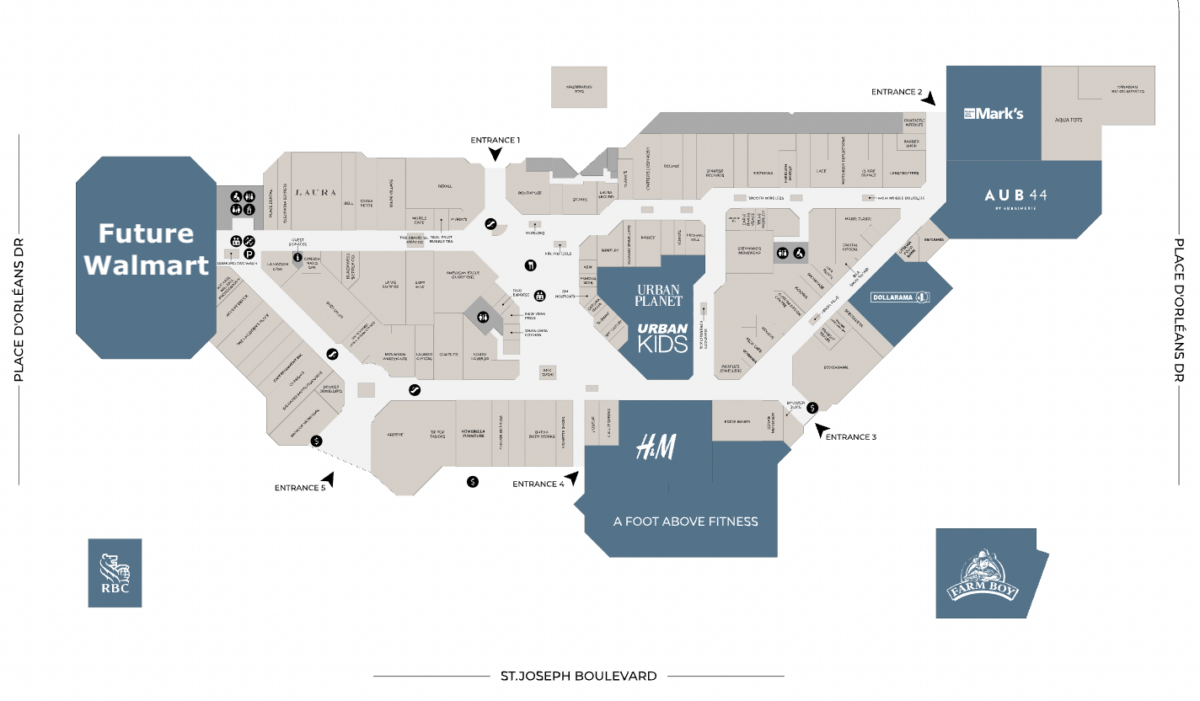
Walmart Takes Former Hudson’s Bay Space at Place d’Orléans

Future Walmart at Place d'Orleans in Ottawa. Image supplied

Walmart Canada is returning to Place d’Orléans more than two decades after leaving the Ottawa shopping centre, announcing plans for a new 115,500-square-foot, two-level Supercentre in the former Hudson’s Bay space.

The store is expected to open in 2027 and will include a full grocery offering, pharmacy, pickup and delivery services, and general merchandise. Walmart said its existing store on nearby Innes Road will remain open, giving Ottawa’s east end two Walmart Supercentres.

The announcement is significant beyond the store opening itself. It provides one of the first major examples of a former Hudson’s Bay department store being backfilled by a national large-format retailer following the chain’s liquidation and closure in 2025. It also gives Primaris REIT, owner of Place d’Orléans, a visible example of the post-Hudson’s Bay redevelopment strategy it has been outlining to investors and the retail industry.

Walmart Returns to Place d’Orléans

Walmart’s history with Place d’Orléans dates back more than 30 years.

The retailer first arrived at the shopping centre in 1994 following its acquisition of Woolco’s Canadian operations. Walmart later relocated to a larger freestanding store on nearby Innes Road in 2005, during a period when some major retailers were increasingly favouring power centres and standalone suburban locations.

Its return to Place d’Orléans is something of a full-circle moment for the retailer in Ottawa’s east end. The decision to operate both the existing Innes Road store and the new Place d’Orléans Supercentre also reflects Walmart’s confidence in the long-term prospects of the Orléans market, which has continued to grow as one of Ottawa’s largest suburban communities.

The new store will also benefit from the mall’s location beside Place d’Orléans Station, a major transit hub connected to Highway 174 and expected to become increasingly important as Ottawa’s light rail network expands eastward.

A Major New Anchor for Place d’Orléans

Place d’Orléans is one of Ottawa’s largest enclosed shopping centres, encompassing approximately 700,000 square feet and housing more than 140 stores and services. The centre serves a trade area of more than 368,000 people and occupies a strategic position in Ottawa’s east end.

The addition of Walmart is expected to significantly strengthen the mall’s traffic profile. Unlike traditional department stores, Walmart generates frequent visits through its grocery offering, pharmacy and everyday essentials business, creating consistent customer traffic throughout the week.

For Place d’Orléans, the transaction replaces a former department store anchor with one of Canada’s highest-traffic retailers.

That is an important shift for the property at a time when landlords across the country are working through the future of large department store spaces left vacant by Hudson’s Bay.

An Early Example of Post-Hudson’s Bay Redevelopment

The Place d’Orléans transaction may provide one of the clearest indications yet of how some former Hudson’s Bay spaces could be repositioned across Canada.

For much of the past year, landlords, retailers and investors have been assessing the future of millions of square feet of department store space vacated by Hudson’s Bay. Solutions have ranged from subdivision plans and entertainment concepts to grocery stores, fitness operators and new large-format retail tenants.

At Place d’Orléans, the answer is Walmart. The announcement also closely aligns with the strategy that Primaris REIT has been communicating in recent months. Earlier this year, the REIT said it had regained control of several former Hudson’s Bay locations and was in discussions with “strong covenant, high-quality national retailers, including large format tenants” regarding the future of those spaces.

Executives at the Toronto-based real estate investment trust have repeatedly described the departure of Hudson’s Bay as an opportunity to replace underperforming department store anchors with more productive uses capable of generating stronger traffic and significantly higher rental income. The Walmart deal appears to fit directly within that strategy.

Primaris has also said that most of its former Hudson’s Bay space is either leased or in advanced negotiations and has projected substantially higher rental income from redeveloped former Bay locations than the department store chain had previously generated.

Part of Walmart Canada’s Broader Expansion

The Place d’Orléans store also forms part of Walmart Canada’s previously announced $6.5 billion investment program, one of the largest capital commitments in the company’s Canadian history.

The investment includes new stores, supply chain infrastructure and store modernizations across the country as Walmart continues to expand its grocery and general merchandise business in an increasingly competitive retail environment.

While Walmart has confirmed the size and timing of the Place d’Orléans project, further details regarding the redevelopment required to convert the former Hudson’s Bay store into a two-level Supercentre have not yet been released.

No site plans, renderings or municipal planning documents related to the conversion had been publicly released as of Tuesday afternoon.

More from Retail Insider:

Maison Territo Introduces Moooi’s Distinctive Design World to Montréal

Few contemporary design brands have cultivated a world quite like Moooi. Since its founding in 2001, the Dutch company has become known for furniture, lighting, and accessories that combine imagination, craftsmanship, and a sense of surprise, creating pieces that are as memorable as they are functional.

Now, clients in Montréal can discover and order Moooi collections through Maison Territo, providing access to one of the most recognizable and innovative names in contemporary design.

A Brand Built on Originality

Founded by designer Marcel Wanders and entrepreneur Casper Vissers, Moooi was created with the ambition of becoming a legendary design brand. More than two decades later, the company continues to captivate architects, interior designers, and design enthusiasts around the world through collections that challenge convention while remaining timeless.

The company’s name reflects this philosophy. The extra “O” in Moooi represents an added layer of beauty and uniqueness, qualities that continue to shape the brand’s identity today. Across its collections, Moooi embraces originality, encouraging designers to pursue bold ideas and unexpected forms that stand apart from conventional furniture and lighting.

Moooi Knitty lounge chair

Rather than directing designers toward commercial trends, the brand provides creative freedom, resulting in a collection that blends emerging talent with internationally recognized designers. The outcome is a portfolio rich in character, storytelling, and artistic expression.

Design Without Boundaries

One of the qualities that has distinguished Moooi since its founding is its willingness to challenge expectations. The brand’s collections often blur the boundaries between art and design, creating pieces that feel expressive and imaginative while remaining highly functional.

Whether through sculptural lighting, statement furniture, or distinctive accessories, Moooi approaches design with a sense of curiosity and exploration. Its creations often become focal points within a space, bringing personality, creativity, and visual interest to residential, hospitality, and commercial interiors.

Moooi Haybale lounge chair

This philosophy has helped establish Moooi as a favourite among designers seeking pieces that feel distinctive and memorable without being tied to short-lived trends.

Discovering Moooi Through Maison Territo

Located at Royalmount, Maison Territo has established itself as a destination for internationally recognized design brands and luxury interiors. The 11,000-square-foot showroom presents a carefully curated portfolio that includes Fendi Casa, Versace Home, Dolce & Gabbana Casa, Bentley Home, and other leading names in global design.

The addition of Moooi expands that offering with a brand known for its creativity, innovation, and unique perspective on contemporary living. Clients can now explore Moooi’s collections through Maison Territo and place pre-orders for selected designs, gaining access to some of the brand’s most celebrated creations.

For architects, interior designers, and private clients, the partnership creates a new opportunity to incorporate Moooi’s distinctive design language into projects ranging from private residences to hospitality and commercial spaces.

A New Chapter for Contemporary Design in Montréal

The arrival of Moooi at Maison Territo reinforces the showroom’s commitment to bringing globally recognized design brands to Montréal while offering clients access to collections that push creative boundaries.

For those seeking furniture, lighting, and accessories that combine craftsmanship with imagination, Moooi represents a design world unlike any other — one that can now be discovered through Maison Territo.

Visit Maison Territo to learn more about Moooi and its collections.

Maison Territo is located at 5050 Côte de Liesse #1050, Mont-Royal, QC H4P 0C9, Canada.
For more information, call 514-800-0102.

Accenture Study: Canadians More Cautious Than Global Consumers About AI-Powered Shopping

Nataliya Vaitkevich photo

With consumer confidence under pressure, new research from Accenture suggests Canadian shoppers are taking a notably more cautious, deliberate approach to AI-powered commerce compared to global peers.

Accenture’s 2026 Consumer Pulse Research, which surveyed 25,000+ consumers across 16 countries, including Canada, found:

  • Only 60% of Canadians are open to an AI agent completing commerce tasks on their behalf, such as negotiating deals, resolving complaints, or renewing subscriptions, compared to 74% globally.
  • Just 21% would allow an agent to make a final purchasing decision within defined parameters, versus 32% globally.
  • Only 51% expect AI to influence more than half their spending in the next 12 months, compared to 71% globally.

At a time when households are becoming more selective with their spending, the findings point to a broader dynamic: Canadians are slower to outsource decisions they perceive as carrying financial risk.

The data highlights a clear path forward for brands. 31% of Canadians say a successful low-risk AI purchase would move them toward trusting agents with more, matching the global average.

Canadians want proof before they delegate. They aren’t resistant, they’re deliberate.

In an interview with Retail Insider, Suzana Colic, Managing Director, Retail Strategy & Consulting, Accenture Canada, discusses the report’s findings.

Suzana Colic
Suzana Colic

Question: What factors are driving Canadians’ relatively lower trust in AI-powered commerce compared to global consumers?

Answer: Our research does not identify specific Canada-only drivers, so we would be cautious about drawing firm conclusions. The more important finding is that trust remains relatively strong.

Nearly three in five Canadian respondents say they would trust a personal AI agent more than their best friend to make a purchase on their behalf. Canadians may be somewhat more deliberate than some global peers, but they are generally open to AI-powered commerce when they have transparency, control, and confidence in the safeguards.

Q: How much of this caution is tied to broader economic pressures versus concerns specific to AI technology itself?

A: The research suggests consumers increasingly see AI agents as a tool to help them make smarter purchasing decisions. Globally, 43% prioritize budget and value when instructing AI agents, while 63% want agents to support goals such as staying on budget or making more intentional purchases. That points to a pragmatic mindset, where AI is viewed less as a novelty and more as a way to navigate everyday spending decisions.

Q: What kinds of “low-risk” AI use cases are most effective in building consumer trust and encouraging adoption?

A: Consumers are most comfortable giving AI greater autonomy in tasks that save time and effort while carrying relatively low emotional or financial risk. Before a purchase, that includes comparing products, finding deals, or negotiating prices. After a purchase, consumers are open to AI handling tasks such as order follow-ups, returns, or customer service interactions. These practical, lower-risk experiences help build familiarity and trust over time.

Vitaly Gariev photo
Vitaly Gariev photo

Q: How should retailers and brands adjust their AI strategies to better align with Canadian consumers’ more deliberate decision-making style?

A: Brands should focus on three priorities.

First, build a deeper understanding of customers by connecting first-party data, purchase history, and service interactions to better anticipate needs and friction points.

Second, deliver the right balance of human and AI experiences. Brands should invest in human touchpoints that build trust while ensuring digital experiences are seamless and easy for AI agents to navigate.

Finally, recognize that as routine decisions become automated, the moments when consumers actively choose a brand will become more important. That makes consumer intelligence, relevance, and trust critical to winning those high-value interactions.

Q: Do you expect Canadian consumers to eventually match global adoption levels, or is this caution likely to persist as a defining market characteristic?

A: While it is difficult to predict adoption rates, the data points to a positive trajectory. Nearly one in three Canadians who have used AI agents for low-cost, low-risk purchases say those experiences make them more comfortable with greater autonomy. This is consistent with the global average.

However, adoption will likely depend on trust. Consumers are willing to embrace AI-powered commerce when strong safeguards are in place, including data protection, clear permission settings, the ability to override decisions, and straightforward recourse if something goes wrong.

More from Retail Insider:
RW&CO Brings Reimagined Store Concept to CF Toronto Eaton Centre

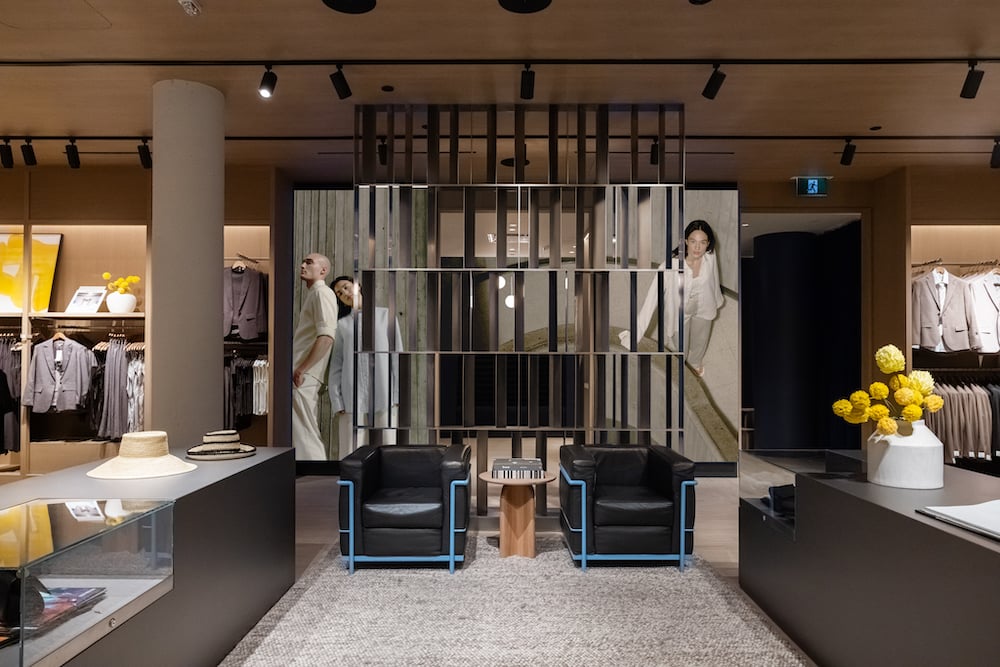
RW&CO at CF Toronto Eaton Centre. Photo supplied

Canadian fashion retailer RW&CO has opened a new flagship-style store at CF Toronto Eaton Centre, bringing its reimagined retail concept to Toronto as the company selectively expands a design strategy first introduced at a flagship near Montreal.

The new store spans more than 9,800 square feet, according to Cadillac Fairview lease plans, and represents a relocation within the downtown Toronto shopping centre. RW&CO had been operating from a temporary location in a former Banana Republic space while construction on the new store was underway.

The opening marks another milestone for the Montreal-founded retailer, which launched in 1999 and has grown into a national chain with more than 85 stores across Canada and an e-commerce business serving customers nationwide. The brand is part of Montreal-based parent company Reitmans (Canada) Limited, one of the country’s largest apparel retailers, whose roots date back to 1926. Today, the company operates the Reitmans, RW&CO and PENN. Penningtons banners across Canada.

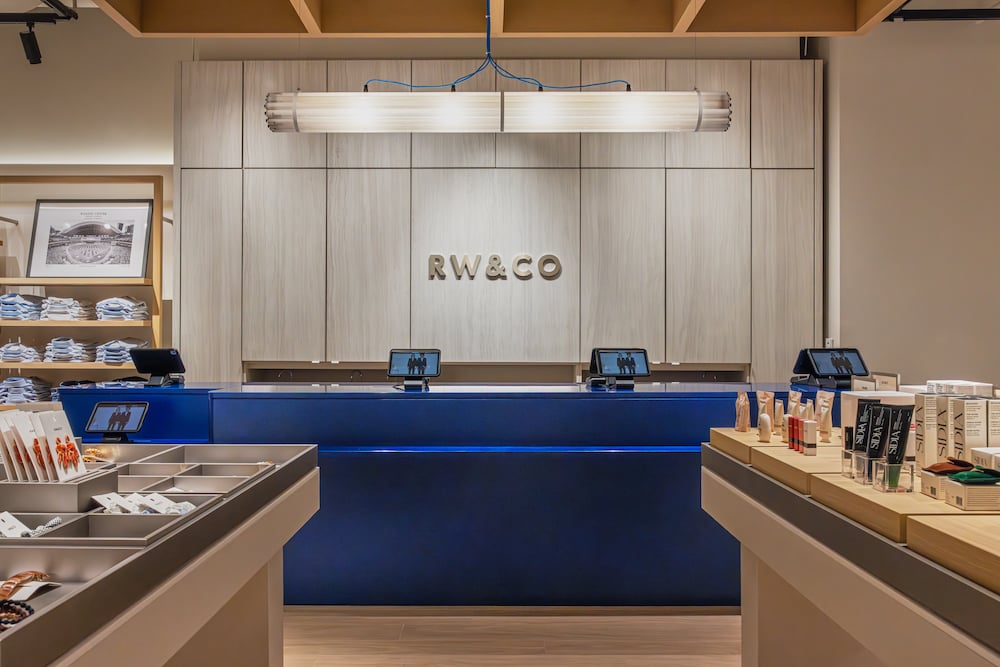
RW&CO at CF Toronto Eaton Centre. Photo supplied

A New Chapter for RW&CO

The CF Toronto Eaton Centre store builds on a broader transformation that RW&CO unveiled last year, including a refreshed brand identity and a renewed emphasis on service, inspiration and elevated store experiences.

Developed in partnership with global strategy and design studio Dalziel & Pow, the concept first debuted at the retailer’s flagship at CF Promenades St-Bruno in Quebec, which subsequently earned a Silver honour at the 2026 FRAME Awards for Retail Design.

The concept is built around what the retailer calls “The Lifestyle Collective,” an approach intended to create a more expressive and service-oriented shopping experience.

Among the store’s features is an “Essentials Wardrobe,” where signature pieces are displayed through double-height merchandising inspired by traditional haberdashery. An “Occasion Destination” offers dedicated styling suites and services for formalwear and special events, while “Living Lookbooks” use mannequins, tables and digital touchpoints to showcase complete outfits and encourage cross-category shopping.

At the centre of the store is a blue service hub that functions as more than a traditional checkout area, offering customers access to personal shopping appointments and styling advice.

RW&CO has indicated that the concept will be rolled out selectively across its store network, although the company has not disclosed additional locations or timelines.

RW&CO at CF Toronto Eaton Centre. Photo supplied

Why Eaton Centre Matters

The decision to bring the concept to CF Toronto Eaton Centre is notable given the property’s importance within Canadian retail.

Opened in 1977 and owned and managed by Cadillac Fairview, the downtown Toronto complex is widely regarded as North America’s busiest shopping centre, attracting more than 50 million visitors annually and serving as a showcase location for both domestic and international brands. The property’s downtown location, direct transit connections and substantial tourist traffic have made it one of the country’s most productive and visible retail destinations.

For retailers, securing a prominent presence at Eaton Centre often serves as both a branding exercise and a testing ground for new concepts, given the mall’s exceptionally broad customer base and high pedestrian traffic.

RW&CO’s investment also comes at a time when many apparel retailers are reassessing the role of physical stores. Across the industry, retailers are increasingly focusing on experiential elements, elevated service and environments that encourage customers to spend more time engaging with brands.

For RW&CO, the new Eaton Centre store represents the next phase of a broader transformation that seeks to reinforce the brand’s position in Canadian fashion while underscoring the continuing importance of physical retail in building customer relationships and showcasing evolving brand identities.

RW&CO at CF Toronto Eaton Centre. Photo supplied

More from Retail Insider: