Retail Insider is streamlining its Canadian retail news from around the web to include a handful of top news stories that can be viewed quickly during the day. Here are the top stories from the past 24 hours.
Future COBS Bread at Front Street and Sherbourne in Toronto (Image: Dustin Fuhs)
COBS Bread bakery is celebrating its 20th anniversary and has plans to expand up to 350 stores within the next five years.
COBS Bread started in Australia as Baker’s Delight in 1980 as a small family business and expanded into Canada in 2003 with its first location in North Vancouver. 20 years later, COBS Bread has 160 locations in Canada and is aggressively growing.
“We are growing faster than ever before and we are excited to celebrate our 20th anniversary. It has been a great 20 years and we look forward to another 20 more in Canada. We will be celebrating by offering up a specialty birthday scone and there will be some other treats consumers can take advantage of during our 20th anniversary in July,” says Aaron Gillespie, President of COBS Bread.
Looking Back
Image: COBS Bread London Northwest
Gillespie says the most important lesson they have learned throughout the last 20 years is that it is all about the customer, having the right products, and finding the right franchisees. While the brand sticks to its traditional roots, Gillespie says they have learned to bring new items to the menu to meet consumer needs.
“In the early days, we did a lot of product development when we came to Canada. For example, at the start we didn’t sell cinnamon buns, but now they are our best-selling products. We have also since developed a range of very successful scones to meet the needs of the Canadian consumer and a range of other products. So, while we are still staying true to our brand values, it is really important to us to meet the needs of local tastes and meet what the people want,” says Gillespie.
Gillespie said at the start they tried to make COBS Bread a corporate owned model, but then realized it would not work well for them and instead invested into franchises who “live and run the community bakery,” Gillespie said.
Aaron Gillespie
“They are able to develop a team and deliver our great product, great customer service, give back to the community, and be connected to their community in a way that you know nobody else can. So, the level of experience that we want to deliver is best done by an invested partner, so that has to be one of the biggest lessons we have learned,” says Gillespie.
Gillespie said each franchise gives back to the community by donating products that don’t sell by the end of the day to charities or community organizations, through its End of Day Giving program. Gillespie said over 560 million dollars worth of products has been donated across Canada.
Consumers can find a variety of products at COBS Bread such as sandwich bread, artisan bread, fresh baked treats, savoury products, and more and can count on all products to be fresh and all products are baked fresh from scratch daily.
Aggressive Expansion Plans
COBS Bread Bakery at 171 E Liberty St (Image: Dustin Fuhs)
Currently, COBS Bread has 160 locations in Canada and is planning to add 200 stores within the next five years.
“There is no reason why we can’t. In Australia we have over 500 bakeries and Australia is a slightly smaller country than Canada and that is what we hope to do and think we can. So, we have mapped out up to 500 locations we would like to go, without including Quebec, and I think once we get to 350, we will feel we are starting to reach a good level of presence,” says Gillespie.
Elizabeth Cosulich
Elizabeth Cosulich, the Senior Real Estate Manager for COBS Bread, says the next location to open will be in Toronto at Front St E. and Sherbourne St., and will be the first downtown Toronto location.
“It is an exciting time for us to be in the bustling St. Lawrence Market District and the bakery will be open in the next month,” says Cosulich.
In addition to the downtown Toronto location, Cosulich said there will also be openings in Milton and Sault Ste. Marie in the next few weeks. Other locations that are in the works include Brooklin (Whitby) and Ottawa, Abbotsford, Calgary, and more in the Greater Toronto Area. Dates and locations are not confirmed.
Upcoming 2023 bakery openings include:
Canada
Highstreet (Abbotsford, BC) –End of June
Cambie & 8th – Vancouver, BC – Early Aug
Milton Mall, South Milton, ON – Mid June
Brooklin (Whitby), ON – End of July
Churchill Plaza (Sault Ste. Marie) – ON – August
Stafford Centre (Ottawa, ON) – late August
Brookdale Plaza (Peterborough, ON)
Yorkson (Langley, BC)
Bolton (Bolton, ON)
US
Compo Acres – CT
Merrick – NY
Oceanside – NY
Eastchester – NY
Greenvale – NY
Lake Grove – NY
Carle Place – NY
Plainview – NY
The next province COBS Bread would like to enter in would be New Brunswick.
“We would love to be in New Brunswick, we are already in Nova Scotia and New Brunswick would be the next place for us in the Maritimes. We would also love to expand more into Saskatchewan and Manitoba. We currently have two bakeries in Winnipeg and four bakeries across Saskatoon and Regina, so we would love to see more in those provinces,” says Gillespie.
Locations usually range from around 1,200 square feet to 1,500 square feet and Gillespie said they look for locations in neighbourhoods, supermarkets, and with independent retailers.
COBS Bread is also looking to expand further internationally. Currently, Gillespie said they have two locations already open in Connecticut, United States and the goal would be to open between 25 to 30 stores within the next three years and hopefully 300 locations within 10 years. Although Gillespie said they are currently focused on expanding more in Canada and in the United States, he would like to expand into other continents such as Asia, but there are no immediate plans.
Eco Dhalla, owner of the company, said the brand had a great, loyal downtown customer prior to COVID as it had five retail stores in southern Ontario at big shopping centres. But those were downsized to just one, at Vaughan Mills, during the pandemic.
“I suppose they want us back and we want to be back. We love the downtown, the excitement, the energy. It’s a great tourist spot. I think the core of the city is opening up a little bit more. Companies are coming back more,” said Dhalla.
Haight & Ashbury in CF Toronto Eaton Centre (Image: Dustin Fuhs)Haight & Ashbury in CF Toronto Eaton Centre (Image: Dustin Fuhs)
“I think commuting wise and office wise they are about 65 per cent back to traffic. I see in the next year to two years hopefully the banking sector and the larger companies will have all their employees back and not working at home so much. So it just made sense to go back downtown.
“We are also pursuing any pop up opportunities in the GTA. That’s where we’re based. We would love to get into Yorkdale and open a pop up there. We want to go back to Square One as well. Anything we can get exposed somehow, to get these opportunities we would jump on them right away. We’ve had great success with them.”
Haight & Ashbury in CF Toronto Eaton Centre (Image: Dustin Fuhs)Haight & Ashbury in CF Toronto Eaton Centre (Image: Dustin Fuhs)
The inception of the brand started in 2010 and it hit the market in 2012. It was more on a wholesale capacity and did a lot of trade shows in Canada and the U.S.
“It was a small collection that was a hobby that grew into probably one of the largest menswear collections I’ve done. It just keeps growing,” said Dhalla.
“Conceptually, my influence came from living in the UK. I grew up in England and the fashion sense started then but I also lived in California and worked for a company and had the opportunity to work in California and travel to San Francisco where I noticed (the) Haight-Ashbury (neighbourhood) when I lived there was just a cool place to hang out.
“Then eventually much later in my career I found out that the historical reference was a bit more meaningful to me where the United Nations was actually formed there. Things like that kind of resonated and stayed in my mind and in my heart. That whole make love not war movement forced the American government to more peaceful methods during that time in the late 60’s.
“Things like that hit a nerve emotionally for me. I enjoyed the peaceful sort of message that came and resonated out of Haight-Ashbury always. And that’s why when I came up with the logo it actually is a peace sign but it’s an H and A put together. It’s into a peace symbol which is really what these hippies of the late 60’s, early 70’s were always after. Sure they loved their marijuana and tattoos and whatever but the main message was really just to be peaceful. I just blended that with a name that I liked with a bit of fashion that I grew up in the UK studying. Haight & Ashbury was born.”
Haight & Ashbury in CF Toronto Eaton Centre (Image: Dustin Fuhs)Haight & Ashbury in CF Toronto Eaton Centre (Image: Dustin Fuhs)
Dhalla said one of the key ingredients of the company’s success is that it doesn’t sell complete suits. It sells blazers, pants and vests separately.
Most of the production is out of Turkey with a lot of Italian fabrication.
“Our target market would be 20 to 50, maybe even more. Fashionable guys,” added Dhalla. “Price point wise we’re positioned somewhere more in the middle than we are anywhere else. We’re definitely not low price point. We’re positioned somewhere in the middle.”
After establishing itself as a wholesale company, it moved into having five retail stores in southern Ontario at big shopping centres.
“Of course after COVID we downsized everything. We kept our Vaughan Mills location which is the flagship. It’s about 30,000 square feet and switched the entire model to pop up. We’ve been at Vaughan Mills for so long we started pop ups maybe seven years ago and never looked back,” said Dhalla. “We’ve just been doing pop ups everywhere and Vaughan Mills is the longest pop up we’ve done.”
Retail Insider’s Craig Patterson talks about his recent trip to see retail in Montreal. The conversation with Lee includes a discussion on what’s being seen downtown including vacancies on Ste-Catherine Street as well as the city’s amazing food halls. Craig also visited the Royalmount project which is set to open next year, and toured other areas including the city’s Gay Village.
The Weekly podcast by Retail Insider Canada is available on Apple Podcasts, Stitcher, TuneIn, Google Play, or through our dedicated RSS feed for Overcast and other podcast players. Also check out ourThe Interview Seriespodcast where Craig interviews guests from across the Canadian retail landscape as part of theThe Retail Insider Podcast Network.
Announcer 0:00 This is a Retail Insider PodCast. You’re listening to “The Weekly”.
Lee Rivett 0:08 Welcome to this week’s episode of “The Weekly” by Retail Insider. I’m Lee Rivett and I’m joined with the owner and publisher of Retail Insider Media, Craig Patterson, to discuss this week’s most read articles on retail-insider.com. So thanks for joining me, Craig!
Craig Patterson 0:22 Hello, everyone.
Lee Rivett 0:23 Now Craig and I were both traveling over the last couple of weeks. I was in third world countries without a lot of retail – so that’s not as relevant for this conversation. But Craig sashayed off to Montreal and was able to visit a number of retail locations there that we wanted to cover during this podcast. So Craig, where would you like to start?
Craig Patterson 0:41 Yes, yes. So hello, everyone. I had a great little trip to Montreal. I was there. I was there for a few days. And it was definitely mixed. I was really impressed with some of the stuff that I saw, I got to tour Ste. Catherine Street, I got to take a tour with executives from Carbonleo of the Royalmount project. And I got to look at a few neighborhoods in the area as well. So we can do a quick little run through some of the observations in Montreal, which was a wonderful time because the weather was great as well.
Lee Rivett 1:06 Perfect. Well, let’s start out with Ste. Catherine Street. And just for our listeners information, we do have a couple of photo tours of Ste. Catherine Street in Montreal about a year ago. So if you want a little bit of like photo reference, or maps of the area that we’re going to be talking about, I’ll include it in the show notes. But, Craig, tell us about where you stayed and what you thought posting Catherine Street?
Craig Patterson 1:27 Yeah, yeah, I stayed actually at a really interesting residence just near Holt Renfrew Ogilvy, which is on the west side of the main commercial strip of Ste. Catherine Street. So I got to walk up and down Ste. Catherine Street a few times (this would be Ste. Catherine Street West technically), one of those things actually off the bat that was a little bit concerning, whereas the number of retail vacancies on the street. I was got to do a bit of a tour with Maxine for shad, who’s wonderful Montreal correspondent with Retail Insider, he was pointing out some of the retailers that had shut down quite recently, including I think, an Aldo store that had shut down the day before we were going for that walk. So kind of a little bit concerning. I mean, this is obviously an opportunity for new retailers to be able to come into Ste. Catherine Street. But at the same time, I were called Eva Freed actually formally at the Montreal Gazette on social media also pointing out that there was a particular block nearby near the Holt Renfrew Ogilvy, which I think only had one business on it and the rest had shut down. So yeah, definitely, there’s going to need to be some new tenants put into various parts of Ste. Catherine Street. Part of the reason for that could be construction as it continues to progress along, there is a multi year upgrading of the street, which will include a new public realm. What we’re seeing so far is quite good in terms of the plans and what’s already been finished. But this is going to be disruptive to the street.
Lee Rivett 2:43 And there’s quite a bit of construction going on there. Is it going as expected or is there issues with the construction as well?
Craig Patterson 2:50 Construction isn’t quite as what was expected initially where they were going to have heated sidewalks and they were going to have garbage that would be sucked down into the ground, it would be done through technology. I guess the city for budget reasons ended up not making that full investment, which is I think, really too bad because this is the future of Montreal we’re dealing with here. But unfortunately, economics have to come into play and money isn’t unlimited.
Lee Rivett 3:13 Fair enough. And what about Peel Street? You went there too, right?
Craig Patterson 3:16 Yeah, I got to meet with the team from the Marine group. Wonderful people there. We were looking at Peel Street and what’s happening there. So they’ve got a retail space for lease which was most recently occupied by an American Eagle store.
Lee Rivett 3:27 When isn’t other things happening as far as activities on Peel Street as well?
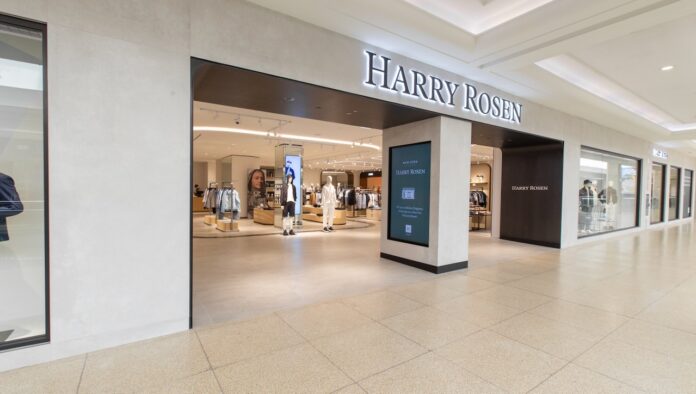
Craig Patterson 3:31 Peel Street, it’s going to be great. The Grand Prix is coming in a few weeks and that’s going to be shut down. They’re already starting to set up for things. So really, Peel Street becomes a place that sits quite vibrant jewelry store, Mejuri, recently opened on Peel Street, which is encouraging. It’s across from the Harry Rosen store. And I believe I was talking to Sheldon Mintzberg of Marine Group who was explaining how eventually the there’s some construction that’s going to be happening on Peel Street and a bit of a boulevard put in in terms of trees and upgraded landscaping. It sounds like it’s going to be quite lovely. So I’m excited for the public realm. I really do think Montreal does a better job than Toronto with its public realm. And same thing with Vancouver is does a better job overall. Peel Street is coming to its own as well.
Lee Rivett 4:15 Awesome. And I think you went to a couple of food halls as well if I’m not mistaken.
Craig Patterson 4:20 I had an opportunity with Maxime to check out some food halls. We went to the “Time Out” food hall which is located at the Montreal Eaton Center. It had techno music playing it was really busy and vibrant. Lots of people were there. We had some really great food. I had this Portuguese chicken caesar salad and he had some Portuguese chicken poutine anyways, it was terrific. I forget the name of the place we went to. But we also got to check out (I was full at that point. I couldn’t eat any more) the food experience at Place Ville Marie, which also had a like a big almost techno party happening because it was a Thursday night and this is something that happens weekly, I guess at least when the weather is better. So that was quite neat to see also the C2 conference was on so there’s lots of people in Montreal this week. And we checked out the food hall called Le Central which is a bit more authentic. The stalls are not quite as uniform I guess you would say is that the other two food halls but it’s restaurants from the city that have set up and anyways, I everything just looked fabulous. I really enjoyed the vibrancy of downtown Montreal in its food halls.
Lee Rivett 5:20 Sounds yummy. Is there any other updates from the luxury retailer perspective that you had as well?
Craig Patterson 5:26 So closer to Holt Renfrew Ogilvy. I checked out some of the retail there Rue de la Montagne has is become a bit of an upscale Street. It’s got a Chateau d’Ivoire jewelry store. Construction is almost finished it was as was a new build. It looks almost like an ivory house or palace wherever you want to call it which will be the translation into English. I didn’t go inside but it looks like a very lovely store. It’s the it’s one of the most prestigious jewelry retailers in Canada. I think I noticed some stores like All Saints had closed on the stretch. Montblanc, the expensive pens and jewelry is still there. Tiffany has a store at the Ritz hotel right at the corner of mountain and Sherbrooke Street. Now my understanding is that Tiffany will be closing right around the time into next year when the royal mount project opens because royal mount has confirmed about a 5000 square foot Tiffany store and I wrote about that a few months ago. So it’s looking like there won’t really have a will any luxury retail actually on Sherbrooke street eventually, when that Tiffany store closes and also in the Ritz. There was a pop up for Christian Louboutin shoe store, which is interesting because there’s also a Christian Louboutin down at Holt Renfrew Ogilvy. There separate shops for men and women on the respective men and men’s and women’s floors within that store, but nevertheless, the Ritz is is quite a prestigious address in Montreal and on Sherbrooke street. So you know, we’ve got some prestige there and then I took a little walk around Sherbrooke Street in the 1980s and even into the 1990s there were luxury retailers on the south side of that street. And most of them are gone. Unfortunately the the former Cartier store that was in Montreal in the 80s the stairs have been destroyed in front of it it was this bowed facade kind of curved facade with this marble, almost like a little jewel box but over the years there’s been really no retail tenants there and the building has fallen into disrepair and it was quite sad to see the stairs broken and chopped down into nothing because last time I’d had to look up there and 2019 the stairs were intact but I remember they were cracked and I have some photos of it as well. So you know wear and tear during the pandemic or whenever that situation took place.
Lee Rivett 7:46 So sorry to hear about like history disappearing there. But did you get into any of the department stores while you’re there as well?
Craig Patterson 7:53 Had a chance to go further down Ste. Catherine Street and check out Lamaze on Simon’s I bought lots of stuff there. I gotta tell you the selection of things like shorts, T shirts and tank tops and that are quite fashionable and underwear for men (I’m just speaking for menswear) is tremendous. At Simon’s the store itself could use a renovation, I would say it’s just not up to the standard – of in terms of the interior – of the newer stores that you would see such as you know, Park Royal and West Vancouver, downtown Calgary, Londonderry and Edmonton. You know, those stories are a little more architecturally interesting because they’re newer and they were designed by amazing architects and built by great builders. So at some point, I’m sure that downtown Montreal store hopefully we’ll be getting a few updates just to make it a bit more dramatic. Because, again, the store is actually great in terms of its product. It’s just, you know, it doesn’t quite look the same as the other ones, but I can’t fault Simon’s at the same time, it’s an expensive thing to do for renovation. The store is probably among the top three in the chain. If not maybe the top one in sales. I’m not sure I don’t have insight into that recently.
La Maison Simons, 977 Saint-Catherine St W, Montreal (Image: Dustin Fuhs)
Lee Rivett 8:53 It is great that Simon’s busy there. But for Ste. Catharines generally, is it busy or is it more of a ghost town like some of the other retail streets have turned into unfortunately after COVID?
Craig Patterson 9:05 Ste. Catherine Street generally was really busy. The weather was beautiful one day this there on I think Sunday it was 30 degrees but just packed with people It felt busier than Toronto actually. So that shocked me. I went to the Montreal Eaton center. Quite a few vacancies on the upper level there but at some point there’ll be built in as well. So it’s the center was redeveloped and emerged into one larger shopping center. And there’ll be a big Nike store opening there. Uniqlo opened a couple of years ago its biggest store in Canada and Browns has a B2 store in there which is absolutely gorgeous. To Decathalon is in there. There’s a Lululemon pop up store in there which I don’t think a sticking around for at least it’s probably closing next year but so yeah, very, very interesting tour of the Eaton center as well.
Lee Rivett 9:57 When I know that with Hudson Bay, it had downsize a little bit. Did you have a chance to go take a look at how the new right size downsized Hudson Bay looks at this point?
Craig Patterson 10:06 What is that 685 Just by my memory says Ste. Catherine Street West. It’s about a 655,000 square foot department store. Eventually, the plans are anyways to put an office tower at the back of it and redevelop and maintain the heritage facade but to build about a 300,000 square foot Hudson’s Bay store whether it’s currently 655,000 and adding in a big terrace on the roof anyways, it’s this big redevelopment that we’ve reported on Retail Insider. So I had an opportunity with Maxine, we snuck upstairs to some of the shuttered floors. So we were at level six and seven, we got to see an old restaurant and an old buffet and the kitchen and an old furniture floor. And it was neat just to wander around and check out these areas of Hudson’s Bay which had shut, it’s really kind of disheartening to see a big flagship store like this, which ones had a really big restaurant in it, I’d never been up there before. It must have been, I don’t know, 20,000 square feet or more like this huge food experience. And that was actually what we remember from those department stores back in the day when they were really a place for people to come into a draw. And clearly this Hudson’s Bay store, which had been a Morgans store before that until I think 1972 was an experiential store. So it was interesting to see some of the history and what the store looked like in the past, recognizing that department stores in North America have definitely lost their way including Hudson’s Bay, and are no longer those same experiences in terms of food and beverage that they were before. So I got to really enjoy seeing that if anyone wants to look at my Instagram, I’ve got a section of Instagram archive stories that includes one on Montreal, and I take a tour in there. So have a peek if you are so inclined, because the public is not allowed up there. So you’re not gonna be able to see it yourself unless you have a friend who is able to get up there for you. So check it out there.
Lee Rivett 11:56 Well, let’s hop into Royalmount because I know that was a very exciting project for you. We reported on it in the past, we can have that in our show notes as well. But to refresh my memory were in Montreal is Royalmont?
Craig Patterson 12:10 Kind of in the middle of Montreal Island, technically, the land is Town of Mount Royal, this is going to be a really exciting project, I think it’s scheduled to open around August of 2024. So a bit over a year from now, you know all things working out with construction. So cross fingers, because I really want to go to this opening. I’m so excited, I had to look at some of the more tenants that are becoming and I’m not going to announce them publicly out of respect for Carbonleo, the landlord or this building it. But there’s more confirmed tenants in there. But the ones we can talk about because it’s been reported and announced is the new Rinnai Beauty Hall. I think I pronounced that right, hopefully, really interesting beauty experience that’s going to be brought in there but about 36,000 square feet. I don’t think there’s anything like it in a shopping center in North America currently. So that I found to be quite interesting. They are bringing in an aquarium, the freeing in all kinds of restaurants, food and beverage where you’re big and small, there’s going to be a food hall. Lots of outdoor patio opportunities they’re going to have in this outdoor plaza. Then the indoor area of royal mount, say where the luxury retailers are and other retailers area is going to have these massively dramatic glass ceilings, which I think are really exciting. So it’s just going to look beautiful. I’m very, very excited. I cannot wait to see this project when it is done. It is one of the most exciting retail projects, I think in Canadian history. And yeah, he also Best of luck to everyone at Carbonleo. Anyone doing construction everyone there? People doing leasing? I cannot wait to see this to be done. And the impact on downtown, of course, could be a little bit profound. I mean, we’ve talked about this before, I don’t have to go into details. But in terms of the high end retailers we’re seeing at Royalmount, I think there could be a bit of an impact downtown Montreal. And specifically, I think Holt Renfrew Ogilvy, because some of the luxury tenants that I saw on the floor plan, and some that haven’t already been announced are also at Holt Renfrew Ogilvy. So there’ll be a bit of a battle of the downtown versus Royalmount, kind of like what we see with Bloor-Yorkville and Yorkdale in Toronto, so I’ll leave it at that. But I’m just so excited for this Royalmount project after my tour, I gotta say thank you to Michael and the team there for taking me around. And it was definitely one of the highlights of my trip, as well as the spring so far.
Lee Rivett 14:22 To round out the podcast here, can you talk a little bit about your neighborhood retail that you were able to kind of wander through and see? We talked about the mega projects and neighborhoods but what about the small neighborhood ones?
Craig Patterson 14:34 Montreal is such a wonderful city. It’s got these high density neighborhoods with these, you know, triplex or kind of apartment buildings, but they all have these entrances. Sometimes they have these winding stairs. I climbed up some of these staircases and Dear God, they can be precarious, so I’m surprised we don’t hear more deaths. Perhaps people falling down the stairs. I’m sure it happens. But the commercial around these neighborhoods is just terrific. There’s lots of local retailers. Again, Montreal just has this wonderful urban experience that you don’t really see in Western Canada, I find in the cities because because there are newer and see these older eastern cities, I think just have this amazing urban fabric that you don’t see in the West. And I just love it, I had a chance to I stayed with a friend for the last two days near the Gay Village in Montreal, and which is it’s probably maybe the best one in North America. Honestly, I can’t say I haven’t been to all of them. But I’ve traveled around over the years. But it’s got to be close to being the best. It’s quite long. Lots of interesting businesses and restaurants. But also there’s an issue with homelessness and drug use, which is quite unfortunate. And part of that is because social services have been moved to the neighborhood. I think that could include a safe injection site, I was speaking to some people, but my french isn’t the best and no accents. But definitely social services are partly being blamed for that. And I can even say I live in Bloor Yorkville in Toronto. And we’ve got a respite center and another things and that’s led to an increase in crime in the area. And, and I say that as someone quite knowledgeable with this, I used to work at Covenant House and I know Covenant House definitely had an impact on the crime rate in the areas in Vancouver where the shelters are. So it is what it is. And I’ll call it out and stand by what I say because that is the situation and that is unfortunate for the village there is that this this could pose a bit of a longer term problem for the area just given the vagrancy that we’re seeing in the area around drug use and you know, other issues that we have with mental illness which unfortunately is part of our society so but nevertheless it’s still an incredible place to visit for those that are so inclined check out the Montreal Gay Village and pride should be coming up I don’t actually know when it is but it’s it’s all in the summer as it is with every city pretty much so and that’s pretty much what I’ll do to wrap up my little tour of Montreal. I absolutely loved it. I can’t wait to go back.
Lee Rivett 16:43 Nice. Thank you for just going through your trip. It wasn’t necessarily an article that was very popular, but we wanted to highlight it for this podcast. So thanks Craig for chatting going through it with me and hopefully chat with you next week.
Craig Patterson 16:55 Thank you so much everyone for listening here today. And thank you Lee for chatting. Take care and bye for now.
Subscribe, Rate, and Review our Retail Insider Podcast!
Drop us a line at Craig@Retail-Insider.com. You can also rate us in Apple Podcasts or recommend us in Overcast to help more people discover the show!
Background Music Credit: Hard Boiled Kevin MacLeod (incompetech.com). Licensed under Creative Commons: By Attribution 3.0 License. http://creativecommons.org/licenses/by/3.0/
Retail Insider is streamlining its Canadian retail news from around the web to include a handful of top news stories that can be viewed quickly during the day. Here are the top stories from the past several days.
Former
Hudson’s Bay Store Building
125 Banff Avenue, Banff (Image: Avison Young)
A deadline is being imposed for the submission of bids for the sale of the historic former Hudson’s Bay Store Building along the iconic Banff Avenue in Alberta’s world-famous tourist resort.
The deadline for bids, on the property listed by commercial real estate firm Avison Young, is 1:30 p.m. MDT on Wednesday June 7.
The property is described as “12,398 sf of prime street-front retail exposure along the coveted Banff Avenue entertainment corridor situated in one of Canada’s busiest tourist destinations.”
Former Hudson’s Bay Store Building 125 Banff Avenue, Banff (Image: Avison Young)
Investment highlights by Avison Young include:
Opportunity for global retail brands to establish a storefront retail presence along Banff Avenue side by side with other nationally and internationally recognized retailers;
Major barriers to entry, with a relatively small and finite inventory of retail space, in a town that is federally-prohibited from expanding its land base;
Arguably one of the most premiere retail storefront locations that exists in Banff.
Avison Young would not comment on the listing and HBC could not be reached for comment.
In February, HBC announced it was shutting its doors in August at the Banff location. The Bay opened in 1935 in Banff in a different location and moved to its current site in 1947.
National retail expert Michael Kehoe, Broker of Record at Fairfield Commercial Real Estate Inc. in Calgary, said the Hudson Bay Company store on Banff Avenue dates back to the reign of Queen Victoria and is the story of the main street itself.
Michael Kehoe
“Banff Avenue grew up around The Bay store and many small market western Canadian Hudson’s Bay stores descended from fur trade outposts,” he said.
“Often, the small market western Canadian Bay stores were the most important commercial building in the market second only to the train station in railway towns. The Banff store was the only source of department store type merchandise in the Bow Valley for many years. The store fell into a sort of ‘retail purgatory’ of mediocrity and neglect as it seemed to be an afterthought at the big Company. The prime Banff Avenue display windows often featured a canoe and Hudson’s Bay blankets, a sort of homage to the firm’s colonial past that is out of step with current tastes and trends that drive contemporary all-season resort retailing.
Former Hudson’s Bay Store Building 125 Banff Avenue, Banff (Image: Avison Young)
Floor Plans for Former Hudson’s Bay Store Building 125 Banff Avenue, Banff (Image: Avison Young)
“The Banff economy is 90 per cent based on tourism according to the local authorities. The tourism sector, which includes retail, accommodation and food services, transportation and arts, entertainment and recreation are big business in the Bow Valley. The Banff economy is firing on all cylinders and 2023 is expected to be another banner year for tourism and retail and food and beverage sales.”
He said Banff National Park is a world-famous United Nations Heritage Site encompassing hundreds of square kilometres of mountains, glaciers, forests, alpine meadows, lakes and rivers – in a spectacular Rocky Mountain setting on the Alberta-British Columbia border. Banff is a major destination for the vast majority of the over four million tourists who enter the National Park gates each year. A long-time magnet for foreign visitors, Banff is a big draw for Canadians who arrive with money to spend on everything from hotels, recreation activities, fine art to family and fine dining.
To refer to the Banff Hudson’s Bay store as a landmark is an understatement, added Kehoe.
“Situated mid-block on the sunny side of the street along the coveted 100 block of the main street, this location is a prime redevelopment site. Expectations are high for a new owner of this building to attract impactful Canadian, world-class experiential retail and food service tenants to Canada’s first National Park.”
Image: Avison YoungPhoto: Can Pac Swire via Flickr
The first Hudson’s Bay department store in Banff opened at 202 Banff Avenue in 1935 according to the Crag & Canyon, and the building is still standing to this day and is named ‘Caribou Corner’. In 1947 Hudson’s Bay relocated to its current 125 Banff Avenue location which was expanded by annexing a restaurant space in 1979.
A previous Retail Insider story explained: “Over the years the 125 Banff Avenue Hudson’s Bay store has sold a wide variety of merchandise including fashions, handbags, accessories and cosmetics, as well as the iconic HBC stripe merchandise that has proven popular with tourists. Fur coats and accessories were also part of the mix in decades past as the Hudson’s Bay Company was a seller of fur garments, having begun in the fur trade in 1670.
“The configuration of the current Banff Avenue Hudson’s Bay store is rather awkward, with each level spanning just under 10,000 square feet. That includes a street level and a basement level that features remarkably low ceiling heights. Given the low ceiling heights in the basement and the single-level above ground, the Banff Hudson’s Bay store could be ripe for redevelopment. That could include demising the street level into multiple retail units, or demolishing the building entirely for something new. The store boasts 75 feet of frontage on Banff Avenue and a lot depth of more than 130 feet. Hudson’s Bay owns half the building at 123-125 Banff Avenue, and another company owns the other side according to a report in RMO Today.”
Apples at Shoppers Drug Mart on King Street in Toronto (Image: Dustin Fuhs)
Many Canadians are wondering why food prices are not dropping at the same rate as agricultural commodity prices right now. Last year, the devastating invasion of Ukraine by Russia pushed prices to astronomical levels. One year later, the agricultural commodity landscape looks incredibly different.
Prices for such commodities have dropped significantly in the last 12 months. Wheat prices have dropped by a whopping 47% since last year. Corn is down 22%. Soy is close to corn, down 23%, while oats are down 31%. Other commodities are also down: coffee by 21%. canola by 42%, sunflower oil by 60%, and pork by 31%. Chicken, a very popular animal protein globally, is down 16% while eggs are down 56%. As for dairy, cheese is down by 30% from last year, along with milk by 36%. And the list goes on and on.
It is indeed tempting to think that these prices should in turn have a bearing on grocery prices. Input costs do impact prices, but not in the ways you might think.
Our research group, along with the University of Guelph, the University of Saskatchewan, and the University of British Columbia, concluded many years ago while working on Canada’s Food Price Report that commodity prices have little to do with retail prices in the industrial world, including in Canada. The reality is that the correlation between commodity prices and retail prices is, for the most part, weak. They can affect retail, given time, but the effects are still minimal.
The reason is simply this: a number of factors will increase prices at retail. These include labour challenges and wages, along with measures like carbon pricing and currency fluctuations. There is also the issue of food geopolitics, which includes trade restrictions and embargoes. Not to mention packaging costs and adjustments to changing regulations, food safety measures, and the list goes on. Supply chain economics are impacted by many factors, especially in advanced economies, where the effect of numerous transactional costs outweighs how inputs impact retail prices.

We also need to remind ourselves that food companies will have contractual arrangements, which may or may not help them keep costs down. These contracts will commit companies to paying similar prices for several weeks, sometimes months, at a time. So it’s quite challenging to gauge how fluctuating commodity prices will impact food prices over time. But if they do impact prices, expect some lag, except with categories like fresh produce, since there is little or no processing involved. Produce is by far the most volatile food category out there, for that very reason.
Policies also play a role. Canada has supply-managed commodities like chicken, eggs, and milk. Global price fluctuations don’t mean much to us, since the intent of the supply management regime is to stabilize prices and assure Canadians have a steady supply of such commodities. Comparing Canadian dairy, poultry, and egg prices to those in the rest of the world is like comparing, well, apples to oranges.
But the other culprit rarely talked about is public spending. Over the last few years, since the start of the pandemic, many governments including Canada’s have spent a significant amount on providing socioeconomic safety nets for those in need. Companies have also received funding to cope with economic uncertainties. The “grocery rebate” 11 million Canadians will receive on July 5 won’t help our inflation problem one bit. Coupled with many provinces sending more money to voters as they politicize food inflation, this extra $2.5 billion program could push food prices higher, hurting more people along the way.
That is mainly why governments don’t mind the attacks aimed at grocers and the food industry. They make for a convenient distraction, getting consumers to avoid focusing on how governments have really made food inflation an unmanageable problem for many. Call it policy pivoting, if you will. It’s much easier to point the finger at the likes of Galen Weston than explain to the populace how monetary policies actually work and how they can work against consumers over time.
At least Canada is not implementing measures like those in the U.K. British supermarkets are facing pressure to cap food prices on select foods, with a voluntary approach allowing retailers to pick which items to offer at lower rates. This type of measure can only lead to chaos, higher food prices, and more shortages over time.
In the end, supply chain economics are hard to understand, even for farmers. They have always been frustrated by how retail prices rarely reflect the prices they see on the farm. Their piece of the action seldom grows with food inflation. It’s not supposed to, unless farmers are vertically integrated, and few are. Price-taking entanglements are just different.
The idea for furniture brand Cozey came to Frédéric Aubé when he was a student at McGill University in Montreal studying finance and economics.
Frédéric Aubé
The idea began in 2019 and the brand was launched initially online in June 2020.
“The idea for Cozey at first was just to create one simple sofa, elegant, easy to move, in boxes that could be assembled tool free, shipped to your door in a few days at a really attractive price point,” said Aubé.
“It was a test to see if other people had the same problem as me of moving sofas around in a move or assembling sofas that take four tools and 12 bolts. And if so, can I sell those sofas on the internet.
“It was one sofa, four colours, really simple. And that’s how it started.”
Cozey at Stackt Market (Image: Cozey)Cozey at Stackt Market (Image: Cozey)
The concept was purely digital until recently when it opened a pop-up location at Stackt Market in Toronto. It is opening up its first store in Toronto on Queen St and Ossington Avenue in September in 3,600 square feet of space.
“It was the perfect timing to launch a sofa brand on the internet. We were in the midst of the pandemic where all the stores were closed. Everybody was looking for furniture and we had furniture in stock because of our model we hold the stock in and ship out directly to the customers’ homes. The business model was perfect because we had stocked and because we were able to serve customers,” said Aubé.
“So the reception was above and beyond all of my expectations and it’s been like that since the beginning.”
Image: Cozey
Aubé said Toronto is the company’s biggest market as the most populated city in Canada and one of the most populated cities in North America.
“I always say win Toronto, win Canada and for us it was important to be close to our best customers, close to our biggest market and really offer the seven-star experience that we want to offer and close the loop with the store,” he said. “A lot of people are coming every day and saying is there a place where they can try out the sofas.
“So we decided we’re going to test that with one store and if we’re going to do it we’re going to do it in our biggest market. It’s a perfect sofa for a city like Toronto with tight spaces, smaller apartments, being fully modular, ship in boxes, it fits through any door, it’s delivered quick, it’s just an easy experience perfect for the Toronto market.
“Lots of companies have gone too quick in trying to open up new stores. And not really getting the recipe right. And that’s really what we want to do. Get the recipe right. Learn. And then once we figure out if the store and the retail locations make sense, then to scale across Canada and across the U.S. But we want to take it slowly until we find the right recipe.”
Cozey at Stackt Market (Image: Dustin Fuhs)Future Cozey on Queen at Ossington (Image: Dustin Fuhs)
He said Cozey was never meant to be for students because of the price point.
“But I really wanted it to be the perfect sofa for any type of room whether it’s your first living room sofa, your basement sofa, and just trying to bring the best quality at the best price point possible. It started with my own experience of moving things around,” he said.
“I think the sofa is the toughest item in the house to ship. So once we figured that out let’s go onto other furniture.
“One thing startups have in common is that they try to make the world a better place, by simplifying our lives. That’s what I want. A faster, easier, and effortless experience.”
Retail Insider is streamlining its Canadian retail news from around the web to include a handful of top news stories that can be viewed quickly during the day. Here are the top stories from the past 24 hours.
Ste Catherine at Peel St in Montreal (Image: Craig Patterson)
As remote work increases in popularity, you might wonder how this new trend is affecting retailers – especially downtown cores in Canada. Retail experts Rocco Mateo, Tim Kocur, and Lisa Hutcheson discuss the impact remote work has on retailers and what can be done to minimize the hit.
“In the long-term I think a lot of retailers are going to suffer as more people work remotely, especially in the downtown cores and landlords will also find it very difficult to fill up their spaces. From a work-family balance, I think working at home has done a lot of good; however, there will be a retail impact coming out of this for sure and retailers need to reinvent themselves,” says Rocco Mateo, a Retail Executive in Montreal.

Rocco Matteo
As working remotely has become the new normal, companies have been trying to find a new work balance and it has become a difficult debate throughout the country. Although working remotely has its benefits, it could also impact retailers in cities. Recently in Halifax, Nova Scotia, the Halifax Chamber of Commerce announced it wants municipal employees to return to the office for at least four days a week to bring back traffic to the downtown core. The Chamber is hoping this will bring back vibrancy and increase spending downtown, but is this the right direction?
“I think Halifax is at the forefront of what a lot of organizations will do right now, but it is not viable for the long-term. I think a lot of retailers will suffer, especially in the downtown core and office spaces. So I would suspect that some announcements will be made from major employers to get people back into the office. Maybe not on a full-time basis, but definitely at a minimum of three days a week at the office for sure and I think it is very important for the viability of our economic situation,” says Mateo.

Ste Catherine, Montreal (Image: Craig Patterson)
Mateo says in Montreal, more than half of people are working from home at least three to four days a week and has seen it impacting downtown. Before Covid, Mateo says most people worked five days a week in the office and went out for lunch but now, those lunch spots for example are suffering because they are not having the same amount of traffic and same goes for retail shops.
To help with this transformation, Mateo suggests retailers need to be placing more effort into their e-commerce platforms as until people return back to office, more people are purchasing online.
“We definitely have been seeing more retailers work a lot harder on their e-commerce platforms because their customers were no longer going into the store since they were working remotely. And retailers also need to create a wow factor and go above and beyond with customers and step up in the game and work hard to keep their customers loyal,” says Mateo.
No Time for Shopping
CF Toronto Eaton Centre on Wednesday, May 31st (Image: Dustin Fuhs)
People who do spend two to three days in the office already do not have the same amount of time they used to compared to full-time in office, shared Lisa Hutcheson, the Managing Partner of J.C. Williams Group. Hutcheson says the Toronto downtown core has “really seen the brunt of remote work on retail” and also has noticed employers are not socializing or shopping as much as before Covid as much as they used to.
Lisa Hutcheson
“When employees come into the office today, they are staying focused because if they are commuting – they are not doing it for shopping, they are doing it to put their time in the office,” says Hutcheson. “Before, there would be some spillover and more socialization, but people have gotten out of the habit of that social element at work because they are only there for a shorter period of time. Now, employees want to make sure they are being productive and they are not going out shopping like they used to.”
To survive the new work lifestyle, Hutcheson suggests retailers need to start understanding what their customers want from a shopping experience while they are in the office and start looking at new ways they can pivot their business to meet what the new working consumer wants.
“Although companies keep wanting to mandate people to come back full-time, I think we have created a workforce that has identified that people can work hybridly. And the retailers that are winning and the properties that are winning, are really working hard adjusting on how they serve the customers,” says Hutcheson.
Adjusting to the new consumer base could be looking at extending or shortening retail hours, accessing consumers more through emails and social media platforms, having special events, or promotions. Understanding when people are working in the city is also important as Hutcheson says some people are not even in the office for the full day, but leave at around two “as they don’t stick around anymore after a meeting – they are gone, so how will retailers address this?”
Union Station in Toronto at 145pm on Monday, May 29th, 2023 (Image: Dustin Fuhs)
Tim Kocur, the Executive Director of the Waterfront BIA, also says understanding the new work environment is crucial for retailers. Currently, Kocur says the city looks different depending on the day as mid-week has significantly more traffic compared to Mondays and Fridays. He has found that mid week is almost back to normal with sixty percent of people working in office; however, on Fridays the number goes down to twenty-seven percent.
Tim Kocur
“If people are coming in fewer days they are more likely to miss Monday and Friday especially, so retailers need to adjust to that and in some cases, food courts in the office buildings on Tuesdays, Wednesdays, and Thursdays have been busier than ever before because people are excited to go to the nice coffee shop now that they are in the office two to three days a week, but Mondays and Fridays are where it is nowhere close to the percentage of pre pandemic average,” says Kocur.
Due to the changes on different days, to adjust to the new remote culture, retailers should make changes to their hours of operation. For example, Hutcheson suggested on busier days to be open longer and maybe on Mondays and Fridays, to shorten them. Each city has different working vibes and retailers need to be aligned with what works best for their city.
Kocur says the problem goes beyond retail experience, as even if people worked remotely full-time, the city and retailers should create experiences to attract consumers back to shopping downtown. Mateo in Montreal says that the city is creating more experiences to draw people downtown including a lot of festivals lined up for the summer, “which will push people to downtown Montreal,” says Mateo – and other cities should do the same.
Queens Quay on the Waterfront (Image: Dustin Fuhs)
“A key concern over the next few years was to make sure that retail fills in with a vibrant and inviting retail experience. For example, coming down to see the new amenities, new restaurants along the waterfront, new patios for the summer, and creating events that encourage people to come downtown outside of work,” said Kocur.
As the debate of remote work versus in office continues, Kocur, Hutcheson, and Mateo agree that there needs to be a balance between the two. However, either way retailers need to make changes because as employees get used to working at home, it is unlikely people will want to return to the office on a full-time basis and retailers are going to have to find new alternatives to reach consumers throughout Canada.