The intersection of rising food costs and consumer health safety is emerging as a critical issue in today’s economy. Recent research from Dalhousie University’s Agri-Food Analytics Lab, in partnership with Caddle, provides alarming insights into how financial pressures are influencing food safety behaviours among Canadians, with significant public health impacts.
The study surveyed 9,109 Canadians, revealing that 58% of respondents are more inclined to eat food near or beyond its “best before” date due to economic pressures from rising food prices. This trend is not marginal but indicative of a broad shift in consumer behaviour driven by financial necessity. Alarmingly, 23.1% of these individuals consistently consume such foods, and an additional 38.6% do so frequently.
This risky behaviour has direct health consequences: 20% of those surveyed reported sickness related to consuming food products past their “best before” date. The data becomes even more concerning among Millennials, where 41% have experienced foodborne illnesses under similar circumstances. This demographic detail not only underscores the vulnerability of younger consumers but also highlights a generational divide in risk exposure and financial stability. Despite these results being self-reported, the figures are alarmingly high.
Approximately 50.1% of Canadians acknowledge that inflation has forced them to compromise on food safety, adopting strategies like freezing perishables or extending the usability of leftovers beyond typical safety margins. While these practices are resourceful, they can potentially lead to an increase in foodborne diseases, a concern substantiated by the reported incidences of illness.
The implications of these findings extend beyond individual households, suggesting a systemic issue that intertwines economic policies with public health outcomes. Although food spending at the grocery store has decreased compared to 2018 and 2019, possibly indicating that Canadians are wasting less food at home, this may also imply that they are taking greater risks with their health. As Canadians adjust their eating habits to cope with financial pressures, the need for enhanced risk communication policies and informing the public about how to manage risks at home is more critical than ever. The Canadian Food Inspection Agency suggests that about 4 million Canadians contract a foodborne illness each year, a number that this report suggests may rise as food inflation becomes a widespread issue.
Food in Canada is generally safer compared to other nations. However, the consumer remains the most critical risk manager within the entire supply chain. While expiry dates are non-negotiable, “best before” dates do not mean “bad after.” Nevertheless, consumers must carefully assess whether a product is safe to eat, considering their ability to cope with potential risks. Making the wrong decision could result in missing work and incurring additional costs. Perhaps someday, consumers will have access to home technology that can detect the safety level of the food they are about to eat in real time.
This research from Dalhousie University highlights an urgent need for policies that address the interplay between economic pressures and public health, emphasizing the necessity of robust consumer education on food safety in times of economic strain.
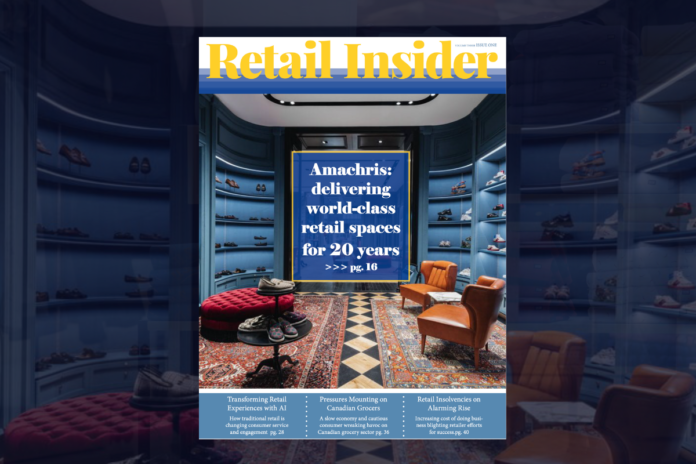
The retail industry is used to facing a constant raft of challenges, from shifting economic conditions that impact operations, to evolving consumer tastes and behaviours that are often reflected in sales and performance. However, it could definitely be argued that the multitude of issues that retailers are dealing with today, and their potential significance, is unlike anytghing businesses have ever seen before. With this in mind, Retail Insider the magazine, with the help of our stable of industry experts, set out to explore some of the current challenges, as well as some of the opportunities, that lie ahead for those that are prepared to continue working toward growth and success in the midst of adversity.
20 incredible years
Alessia Rose Pignotti. Photo: LinkedIn
Franco Pignotti. Photo: LinkedIn
Our cover story features a company that has seen just about everything throughout the course of its history. Amachris, retail construction specialist and one of the retail industry’s most trusted partners, has been in successful business for more than 20 years. We celebrate this incredible milestone by sitting down with the company’s Founder and President, Franco Pignotti, to discuss Amachris’ humble beginnings, rise to the top, and current trajectory that is solidifying its legacy as one of the top luxury retail builders operating. We also take the opportunity to speak with Alessia Pignotti, Amachris’ Marketing and Business Development Manager about the stunning Sephora build at Union Station in Toronto – a build that continues to turn heads nearly two years following its completion.
A connected ecosystem
Stephen O’Keefe. Photo: LinkedIn
Industry expert and President of consultancy Bottom Line Matters, Stephen O’Keefe, contributes a dynamic read that delves into the scourge of retail crime, and the need for more effective solutions to help keep the people and assets of retail organizations safe and secure. By creating a connected loss prevention ecosystem, he suggests that processes can be made more efficient and that outcomes for loss preventers everywhere have the potential to improve dramatically.
The power of AI
Michelle Grant. Photo: LinkedIn
We speak with Michelle Grant, Director, Strategy and Insights, Retail and Consumer Goods at Salesforce Canada, about the digitization of the world around us, and how the smart use of artificial intelligence can help retailers transform the traditional retail experience. However, she explains how its use, particularly with respect to data collection, necessitates brands to do everything they can to maintain consumers’ privacy.
Mounting pressure on grocers
Sylvain Charlebois. Photo: LinkedIn
To get a beat on the canadian grocery sector, we catch up with food and grocery guru Sylvain Charlebois who paints a rather bleak picture of the current landscape. He says that a slow economy and a cautious consumer cannot be ignored as contributors to the mounting pressures being faced by grocery industry players operating across the country. Despite the challenges they face, however, Charlebois says that Canadian grocers are well-versed when it comes to adversity, suggesting that there’s still opportunity for the savviest to capture a consumer that’s currently trading down to maintain their budget.
Going under
From adversity to insolvency, we take a look at the alarming rise inbankruptcies currently happening across the country. Lingering pressures from the pandemic, combined with inflation and the rising costs of doing business, have had a devastating impact on a number of Canadian companies. We dive into the concerning statistics.
Online retail
David Nagy. Photo: LinkedIn
And, we chat with online expert and President of Ecommerce Canada, David Nagy, about the current state of digital sales and performance in the country. He shares his perspectives concerning some of the trends impacting online retail, the range of challenges facing the e-commerce efforts of brands, and how differentiation from competitors is perhaps more critical today than it ever has been before.
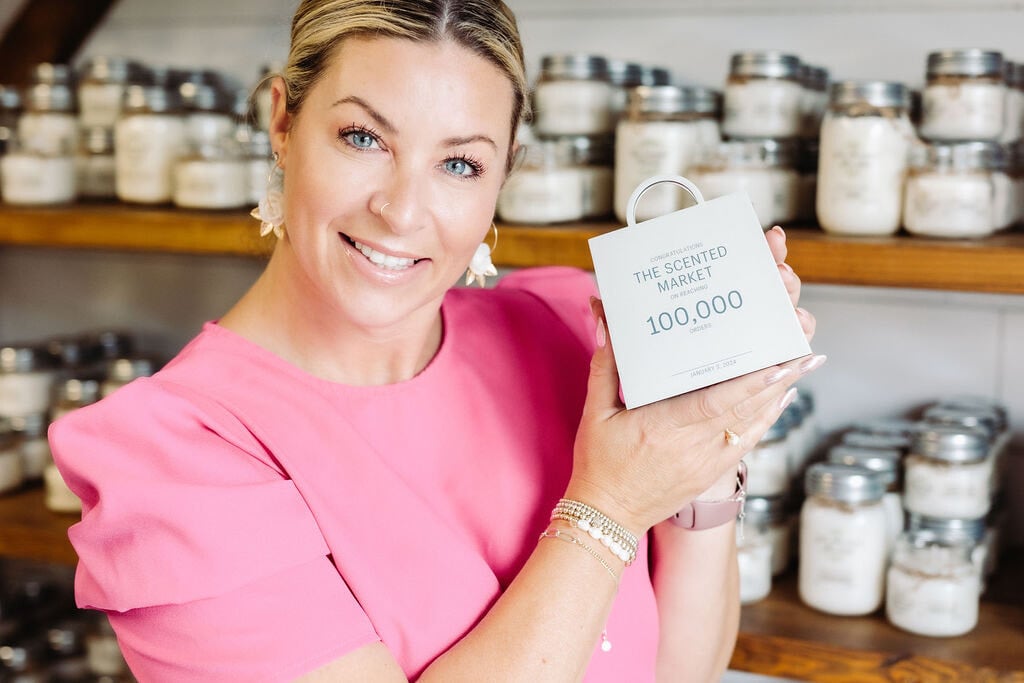
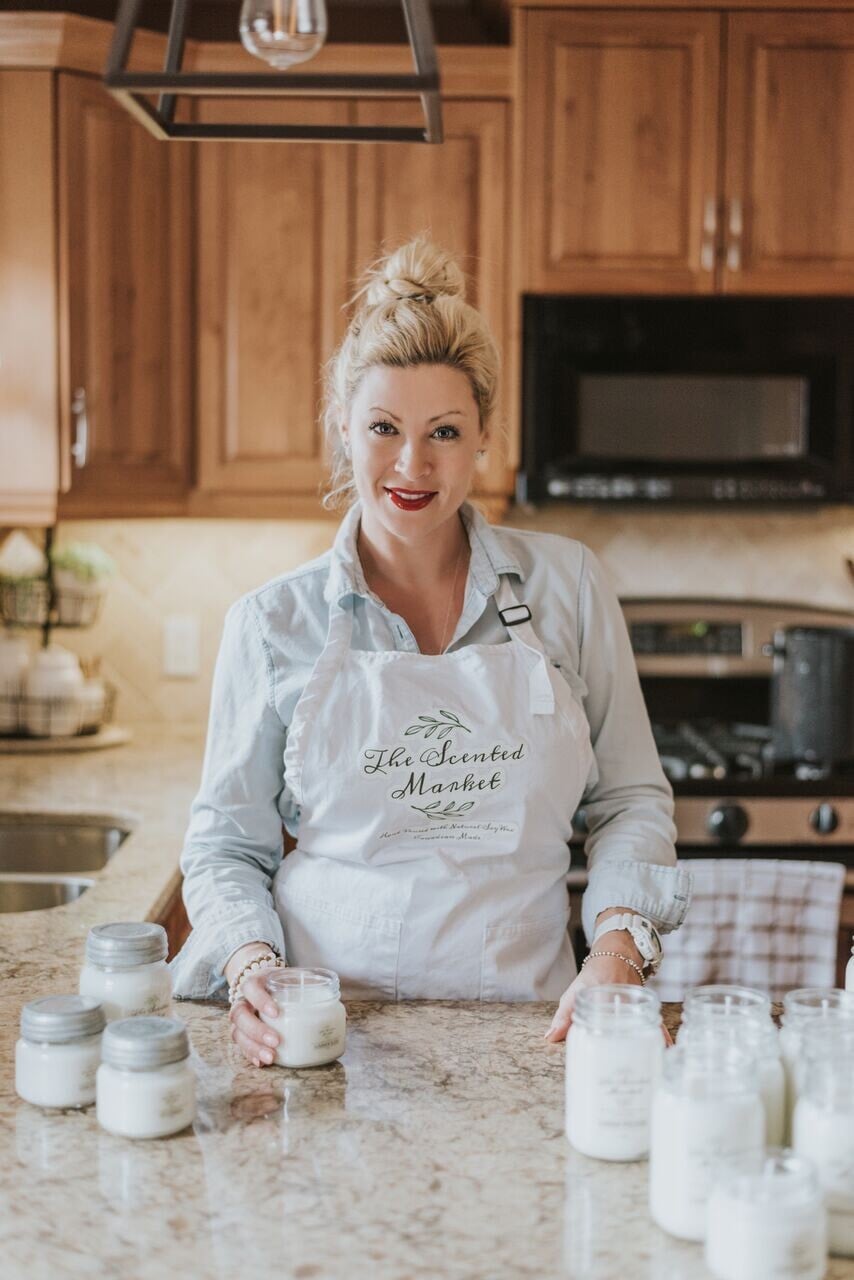
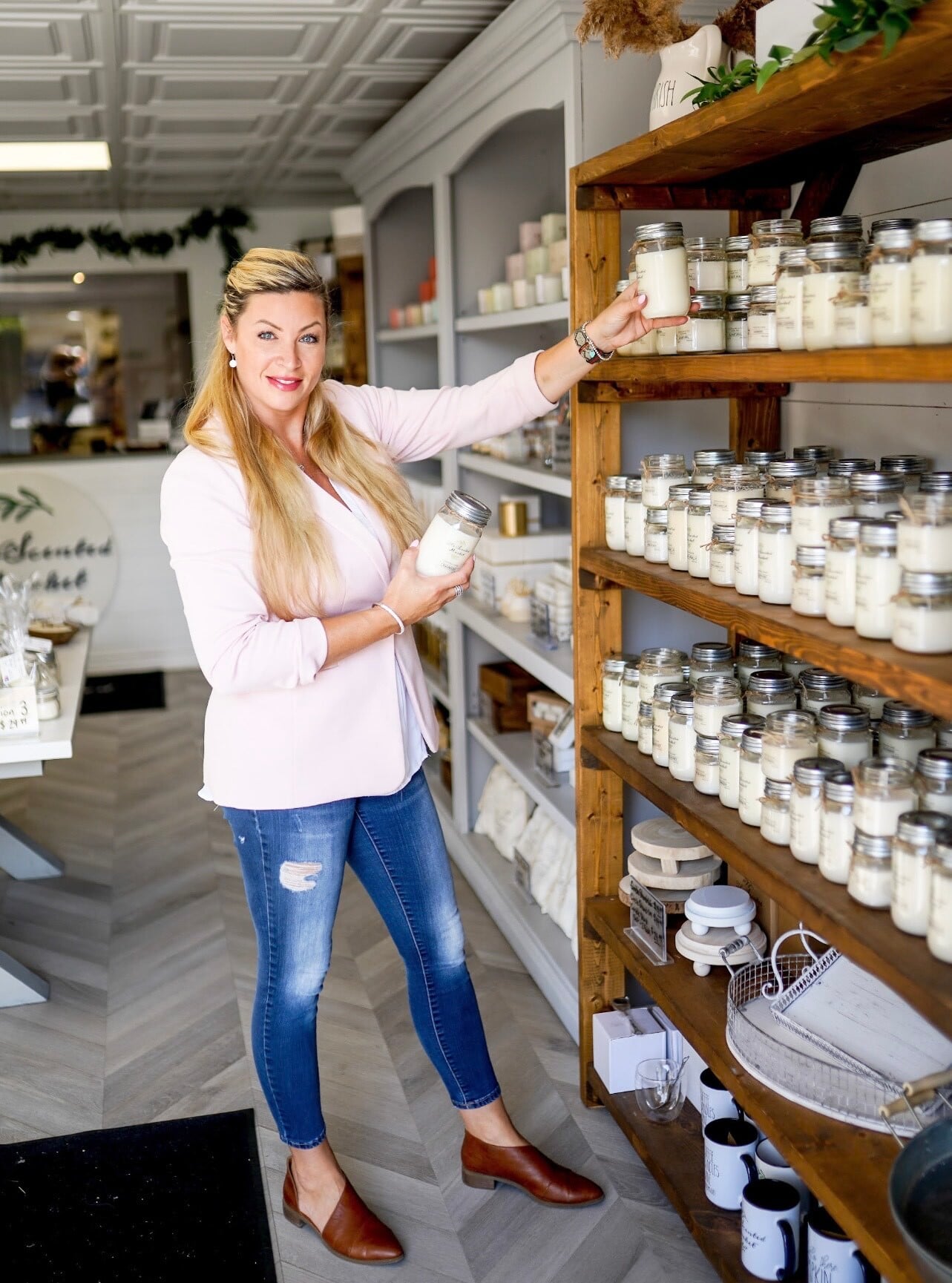
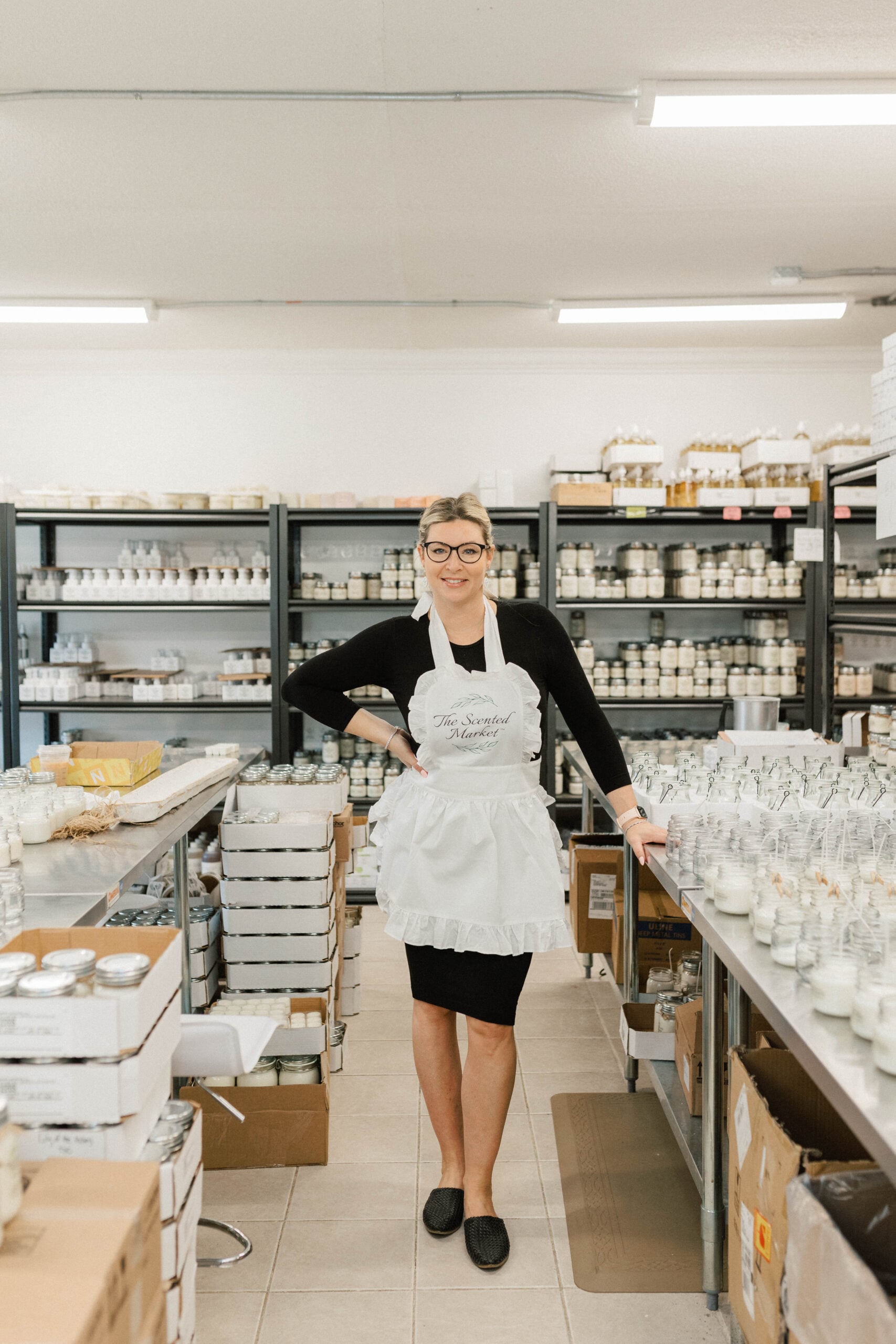
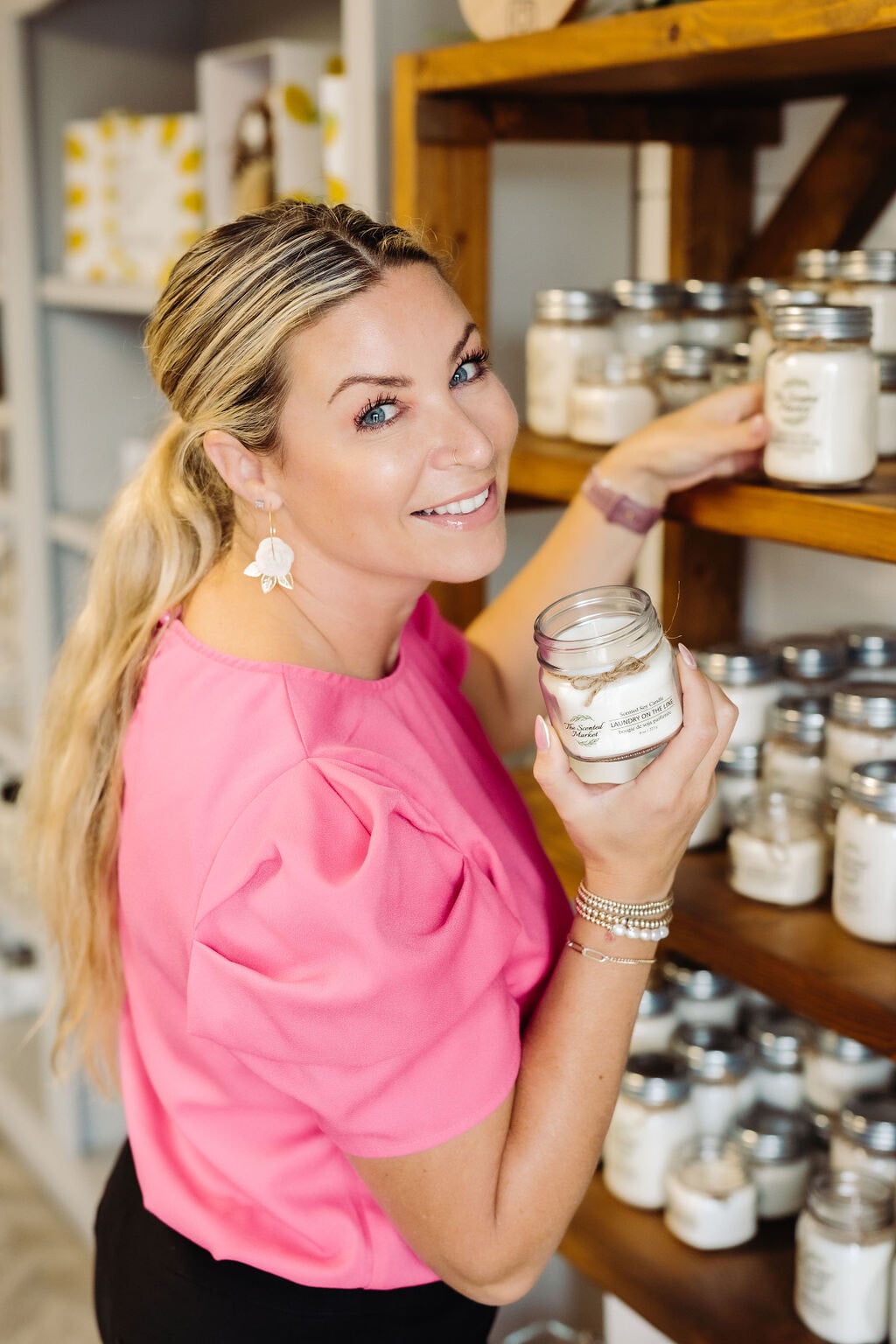
Kristy Miller’s entrepreneurial journey began a few years ago out of her kitchen in Guelph, Ontario.
Little did she know then how her simple fascination for scents and her eco-friendly candles would take off in popularity.
And from that simple idea, Miller has created a growing retail empire with some fascinating exposure along the way. In November 2022, Miller was on the hit CBC television show Dragon’s Den where she received offers from six of the dragons before accepting a deal with well-known entrepreneurs Arlene Dickson and Michele Romanow.
“I got out of the shower one day and I looked up at my ceiling and I saw black soot all over it and I was thinking what are we breathing in, what kind of chemicals am I burning (with candles), are they safe and healthy around my young kids,” said Miller.
“So I really went into a rabbit hole of looking at what ingredients were in candles and then creating a candle I thought was great for myself and my home and some that was aesthetically pleasing in my home because I’m a woman who loves to decorate homes. I take pride in my home and I love to gift.
“I couldn’t really find anything on the market that I really loved the scent of and really loved the style of. So I started making candles on my kitchen stove in 2018 and then my friends and family started buying them and people were asking me for more. I thought maybe I have a little side hustle here that could be interesting. It very very quickly rolled from side hustle to oh my God I have my hands full as I was juggling two businesses.”
The other business she had was driving a coffee/food truck, showing up at places like factories where she would honk her horn on arrival and workers would come out to buy coffees. That business began in 2001.
Photo: The Scented Market
Photo: The Scented Market
Photo: The Scented Market
“I very quickly purchased my own truck. It was just me and one truck driving. My husband, who was my boyfriend at the time, that truck would break down and he would fix it every night for me. And I would go to work in tears and did whatever I had to do but I grew that into a fleet of seven trucks. All women driven. It was called Dashing Diner,” said Miller.
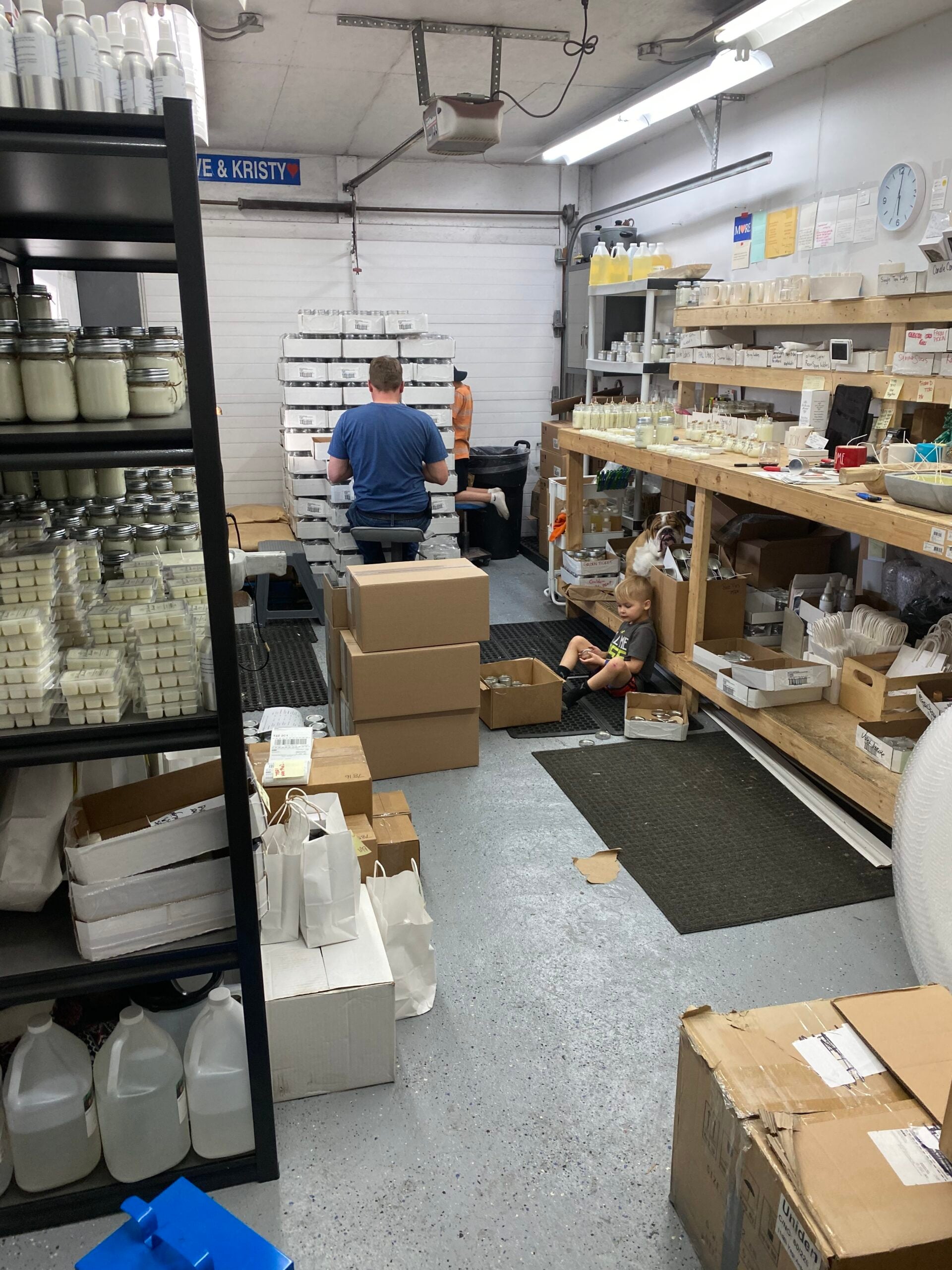
“The Scented Market started growing so quickly that I had to take a handle on it. My son who was 14 at the time said he took a Shopify class at high school and I needed a Facebook page and Instagram. So I started going really hard on social media from the beginning and I just showed up every single day no matter what. For me, it was about building the community around the candle. So it wasn’t necessarily selling a product directly every day on social media but I was building the trust of my community. I was showing them how to decorate their homes. I was bringing them into my home life and showing them what life was like being an entrepreneur mom with kids and a busy life.
“In 2021, I ended up selling my first business – the entire corporation – and negotiated a successful exit so I could move full-time into The Scented Market.”
The Scented Market is a fast-growing Canadian business known for its self-care mission and soy wax candles, home decor, and body products.
There are four corporate stores today with hundreds of wholesalers across Canada with a huge push this year into the United States. The flagship store is in Guelph with a grand opening September 2020 during the pandemic. Another store was opened downtown Niagara on the Lake, followed by Fergus, Ontario, and then the most recent store last year in Blue Mountain, Ontario.
Photo: The Scented Market
Photo: The Scented Market
When she appeared on Dragon’s Den, during COVID, 75 per cent of the company’s sales were online and only 25 per cent were in-store. She was asked why she would want to shift away from that into a more physical presence in retail.
“I think the shift came because of the product. It was a product that needs to be touched and smelled,” said Miller. “The future of brick and mortar, although I’m not sure where it is now, we definitely are focusing more back online because that’s where we’re seeing the greatest growth still to this day. Online.
“I feel like brick and mortar has always been a location thing for me. If the right location pops up then I would definitely consider it but I won’t do anything less than the best location.”
For Miller, the Dragon’s Den experience was incredible. It forced her to sit down and look at her numbers. It forced her to make good decisions and hard decisions.
Photo: The Scented Market
“It really set me up for a place of success moving the company forward into the future,” she said. “You know at that point, I still had been a small business and through the food truck business I hadn’t necessarily had CEO leadership skills. But it’s something I’m very proud to say I’m working on every single day and I’m really enjoying CEO life and the ups and downs that comes with it. That whole experience definitely set us up to go from a $2 million to a $10 million company.”
Miller said as leader she has surrounded herself with amazing people and with people who share the same values personally and professionally. She recognizes her strengths and in areas where she is not as strong she fills in the gaps with people who have strong skills in those areas. Miller loves to empower her team to make decisions and be creative and have strong team collaboration within the company.
Family and health are core values for her.
“I also really believe in creating a really positive atmosphere and creating a really great attitude in the office. I lead with a positive attitude every single day so I think that just leading by example goes a long way,” she said.
“I also think that maybe I differ a little bit because although negative things happen to me I don’t let them into my space until I flip it to a positive.
“I get underestimated every single day, especially by men unfortunately. So I’ve walked away from a lot of really good deals for The Scented Market because I was underestimated specifically by a man. So I think my superpower is letting people underestimate me and then showing them what I can do.”
Photo: The Scented Market
Photo: The Scented Market
Miller was born and raised in Guelph.
“I’m from the university of self-taught. After I graduated high school, my nonna (Italian grandmother) was a nurse. I completed my first year of university in the RN program at Conestoga College when it was still a university degree. At the end of that year I just really took a look at is this making me happy and honestly at the end of the day the answer was my heart was broken time after time through the nursing career. I was getting too attached to patients. I wasn’t coping with the side of career which had to be the emotionless side of the career.
“Interestingly enough, 20 years ago entrepreneurship was not cool. When I told my family I was dropping out of university I was frowned upon. I was like the black sheep of the family. I was told all kinds of things of negative things because it was looked down upon and how dare I leave this structured career with a university degree to be an entrepreneur. Surely I was going to fail that.
“I really used that negative tone as a fire in my belly to prove everybody wrong.”
She went right into the coffee/food truck business.
Photo: The Scented Market
Photo: The Scented Market
In a recent LinkedIn post, Miller talked about the invaluable lessons that have guided her professional growth and shaped her into the entrepreneur she is today. Miller said each of these lessons has been a stepping stone in her career journey, contributing to her development as a leader and a professional.
Here are three pivotal insights she’s gathered along the way, according to her post:
“1. Asking for Help is a Strength, Not a Weakness: Early in my career, I believed that seeking help would be seen as a sign of incompetence. However, I quickly learned that asking for help is a strategic advantage. It has allowed me to tap into the expertise of others, accelerate my learning curve, and foster collaborative relationships that have been instrumental in achieving my goals.
“2. Embrace Change for Continuous Growth: Change can be daunting, and the comfort of familiarity often holds us back. Yet, some of my most significant career advancements came when I embraced uncertainty and stepped out of my comfort zone. Change is not only inevitable but necessary for growth. Adapting to new challenges has been crucial in staying relevant and innovative in my field.
“3. Challenge Yourself Regularly: The moment you stop challenging yourself is the moment you stop growing. I’ve made it a practice to set increasingly ambitious goals, continuously pushing the boundaries of what I thought was possible. This habit has not only advanced my career but has also kept my daily work engaging and exciting.”
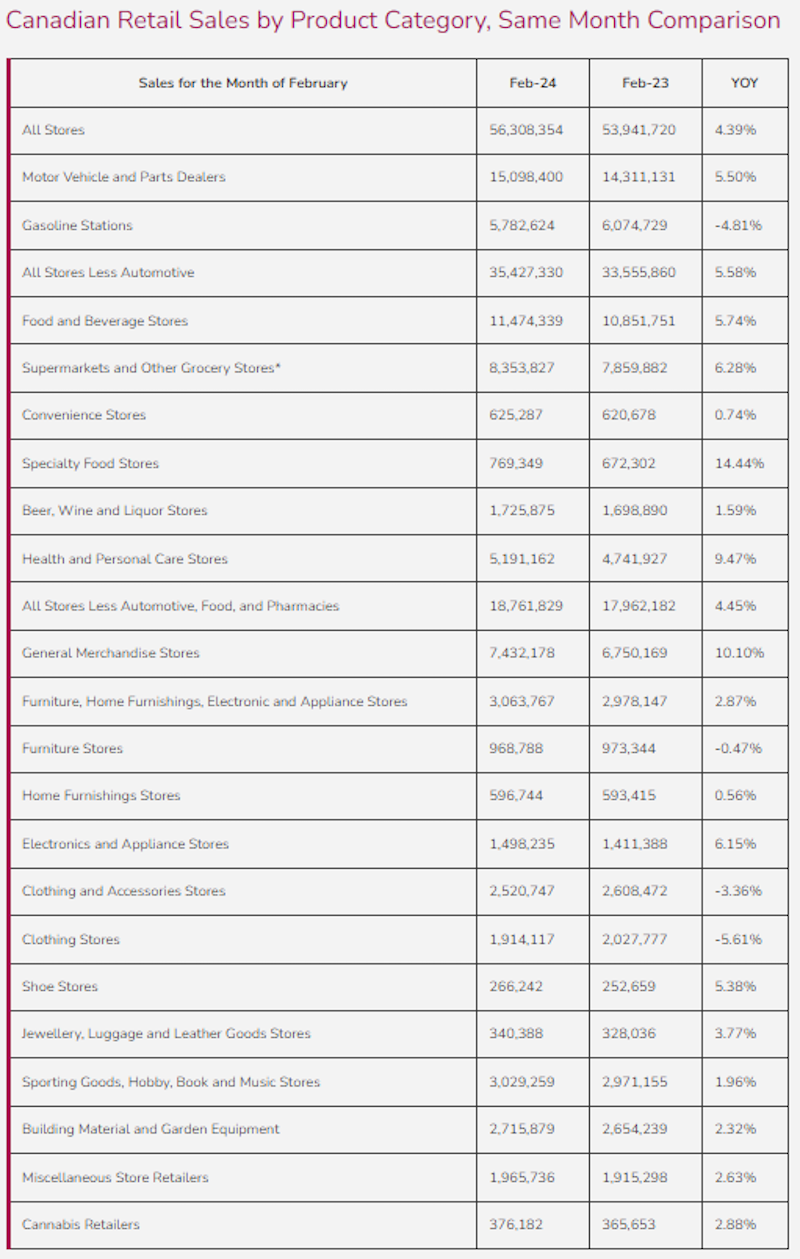
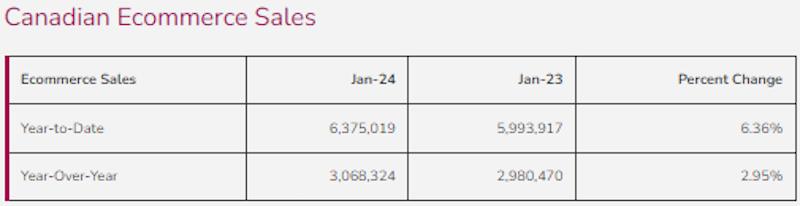
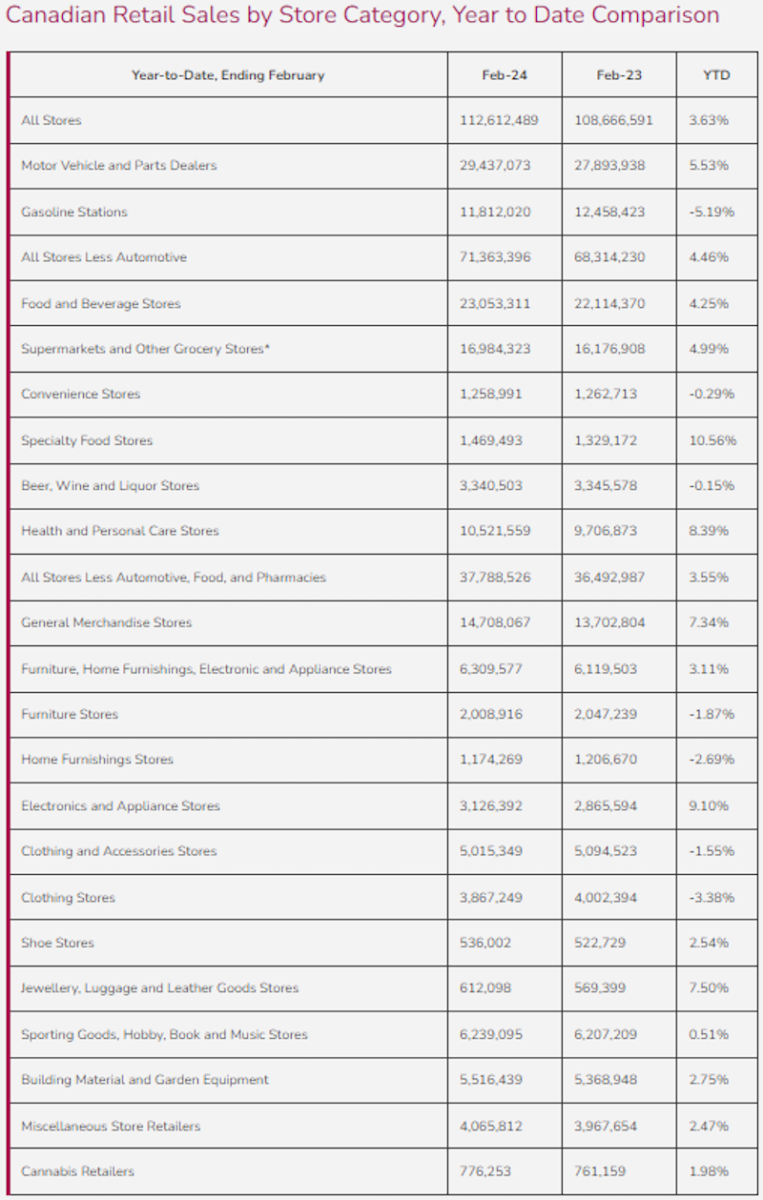
February retail sales continued on a path of growth in Canada with All Stores growing 4.4% YOY. Discretionary spend grew to a similar extent with All Stores Less Automotive, Food, and Pharmacies up 4.5% YOY in February.
2024’s Valentine’s Day, as with previous years, has an impact on February’s retail sales. However, with continuous inflation in 2024, it was likely that sales would be impacted. RCC performed a study for 2024 Valentine’s Day, with some notable results for those taking part in the occasion:
49.1% planned to spend $50 or less, with the rest expecting to spend more than $51.
25% expected to go to a restaurant and 22% expected to purchase/receive gifts.
58% expected to purchase products related to food/beverages/alcohol.
27% found inspiration in-store for Valentine’s Day, the highest compared to other channels.
78% plan to purchase products in-store rather than online/other for the occasion.
These predictions from the report were reflected in various categories in February’s retail sales, namely:
Specialty Food Stores continued to grow in February 2024, up 14.4% YOY, as with in January (6.6% YOY). As mentioned last month, this is likely due in part to the frustration with larger grocery chains. However, this impressive growth in February can also be attributed to consumers looking to spend on food/beverage (58%). Rather than looking at restaurants, consumers may have opted to spend on higher-end food and cook rather than pay increasing restaurant prices.
Beer, Wine, and Liquor Stores were up 1.6% YOY in February. This category has been on a slow, but steady, decline recently. While still down -0.2% YTD, this increase in sales is likely thanks to Valentine’s Day. Wine, cocktails, etc. are popular beverages for the occasion, and it seems consumers were not ready to part with this tradition. In contrast, Cannabis Stores sales were up a mere 2.9% YOY in February, much lower than is normal.
Jewellery, Luggage, and Leather Goods Stores grew 3.8% YOY in February. This category is very popular for Valentine’s Day, but it seems to not be as strong as consumers’ budgets get tighter and tighter. Growth is growth, so consumers clearly were still spending on this category, and more than in 2023, but it may be that Valentine’s Day is slowly becoming more experience than product-focused.
For the first time lately, Home Furnishings Stores grew by 0.6% YOY. A category that has been struggling due to its inherently higher ticket items, as well as difficulties in the housing market, this is a welcome change. The Bank of Canada continues to hold interest rates, while there are no immediate signs of housing prices decreasing in the short term. Therefore, consumers may now be opting to simply buy a home if they have been waiting, or stay put/furnish/upgrade if they have purchased and expect the value to be in flux. Regardless, the Furniture Stores category is still down for February, -0.5% YOY, but this category may start to grow again for the same reasons.
As April is coming to an end (at the time of writing), the JCWG team is looking forward to summer retail trends.
With consumers getting more and more used to increasing costs, will they budget larger ticket items throughout the summer or will they continue to save for the uncertain future?
Where will the majority of tourists to Canada be coming from this year? Will Americans start to return more with favourable exchange rates?
What products will be the most popular in summer 2024? Will summer wardrobe changes lead to increases in clothing sales (down -5.6% YOY in February 2024)?
How are YOU preparing for tourists in summer 2024?
Retail Insider is streamlining its Canadian retail news from around the web to include a handful of top news stories that can be viewed quickly during the day. Here are the top stories from the past 24 hours.
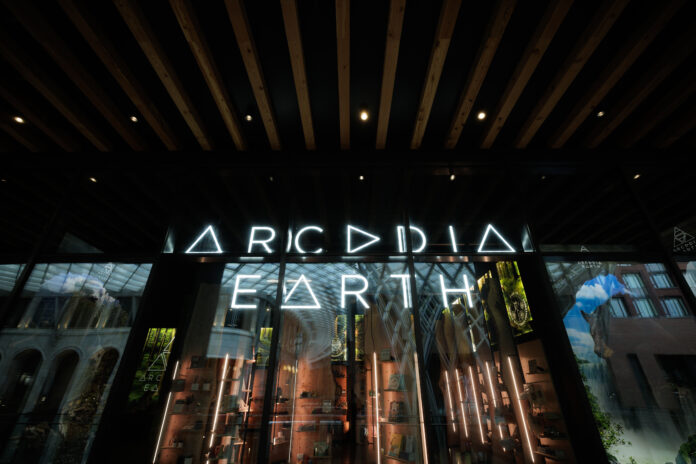
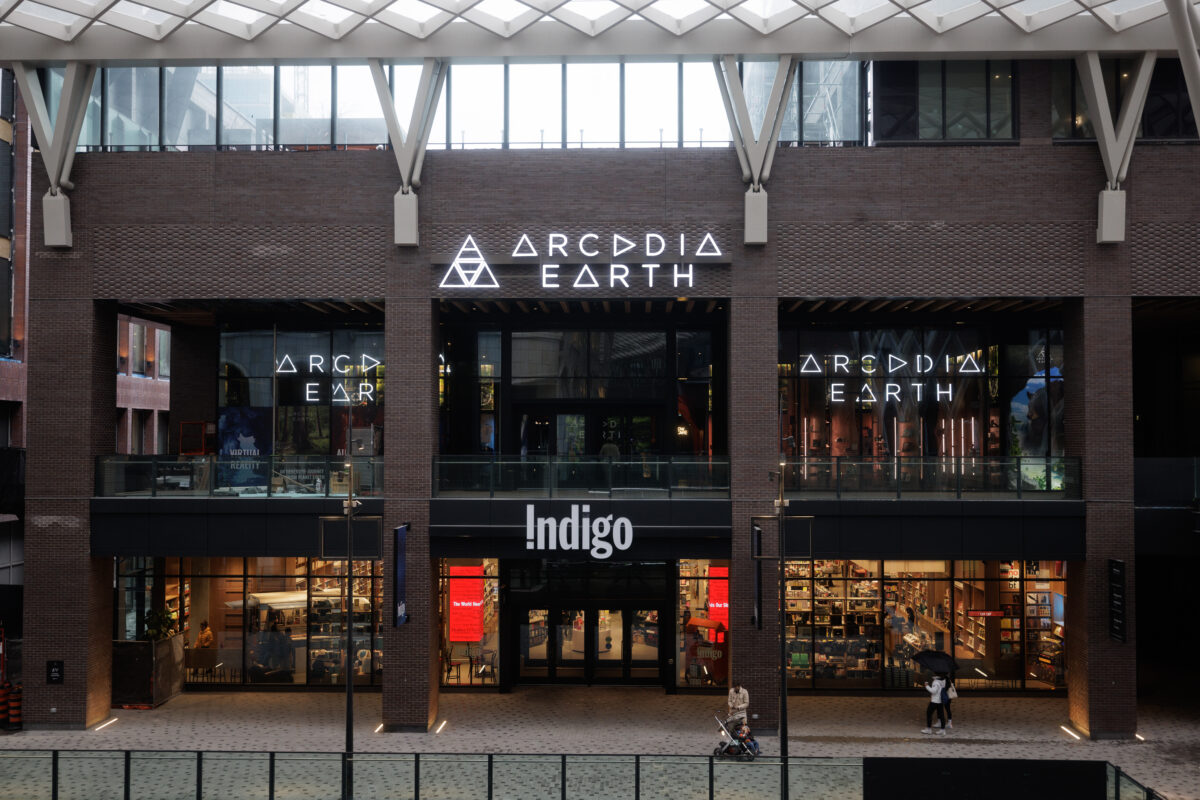
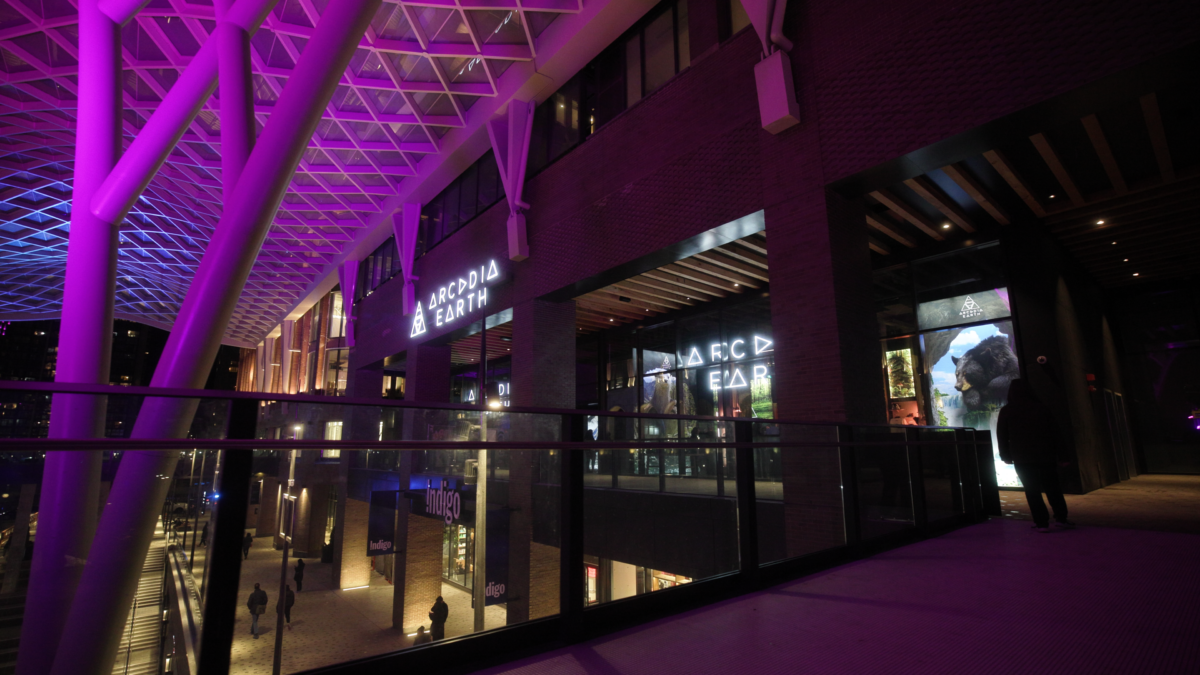
As tourism season is approaching, Arcadia Earth in Toronto is preparing by extending opening hours, adding activities, and is looking at hiring additional staff for the anticipated higher visitor numbers. To inspire people across Canada, the brand is also looking at introducing a travel format so more people can enjoy its exhibit and learn about sustainability.
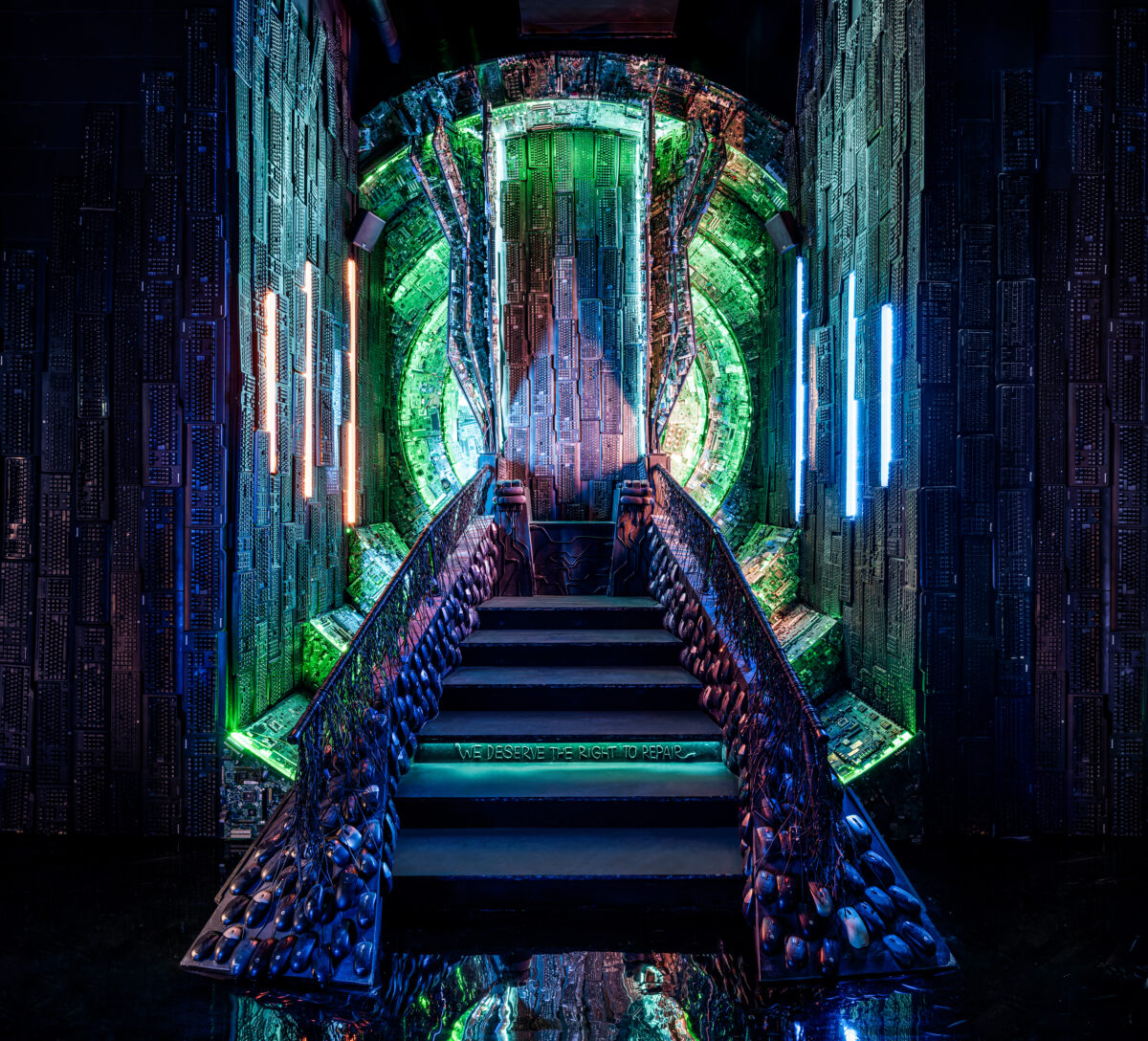
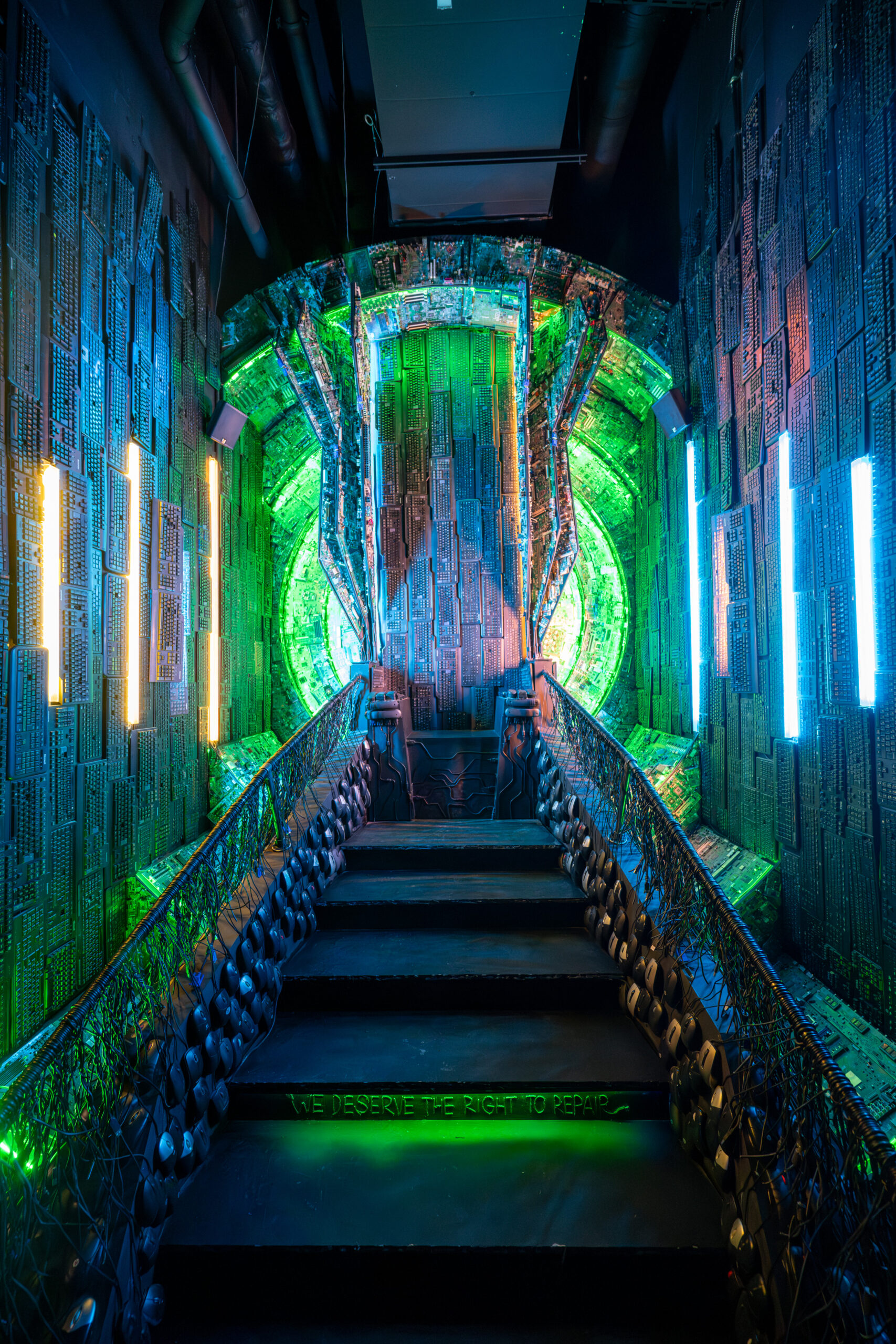
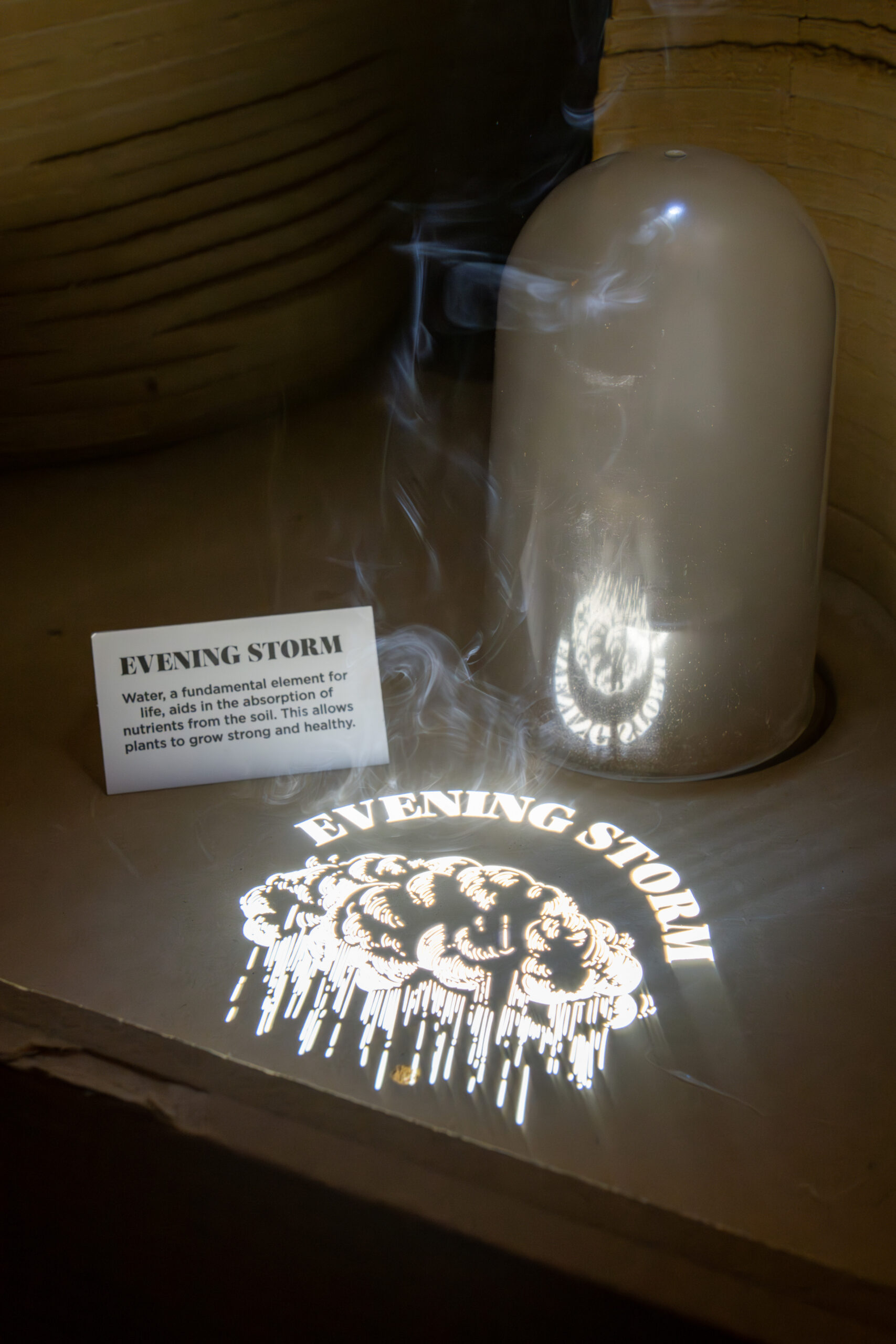
Arcadia Earth is a multi-sensory interactive experience concept that combines creative art installations and exciting technology to inspire visitors to take action towards a more sustainable future. It recently opened at The Well in Toronto.
Photo: Arcadia EarthPhoto: Arcadia Earth
“We are just planning what we need to be able to accommodate a full house almost every day. We are planning on potentially opening at least six days a week instead of five, potentially even seven days a week. But I am kind of in learning mode right now of what the potential tourism season is in downtown Toronto for us. We are anticipating almost every day it will be like a Friday or Saturday, which we are super excited about and just about ready,” says Craig Perlmutter, president of Arcadia Earth.
To add more to the exhibit, Arcadia Earth is also looking at adding new activities, such as arts and crafts and adult-friendly nights.
With already hitting 40,000 visitors, Arcadia Earth will be expecting more during tourism season.
Photo: Arcadia Earth
Photo: Arcadia Earth
Photo: Arcadia Earth
Photo: Arcadia Earth
Full-day experiences
As The Well continues to open, it extends awareness and people’s time at Arcadia Earth.
One big section retailers at The Well are waiting for, is the food hall, which is anticipated to open before the summer. The food hall, called the Wellington Market, will be about 70,000 square feet and will be offering higher-end options.
“The Wellington Market will attract traffic, so we have been currently bringing our own traffic to the exhibit – but a lot more people will walk up during the summer once that opens. A lot of the questions we get when people leave is about where they can go to eat and to have this food offering, no one is ever going to ask us that question anymore. It is going to look incredible and I think it is going to be great.”
In addition to the food hall, The Well has other offerings that will bring traffic to Arcadia Earth such as light shows, entertainment, and food tastings: “I think they are going to be doing a lot more of that through June, July, and August to attract more people and make sure people come, stay, and hang out. I am super excited to see what they have in store for us.”
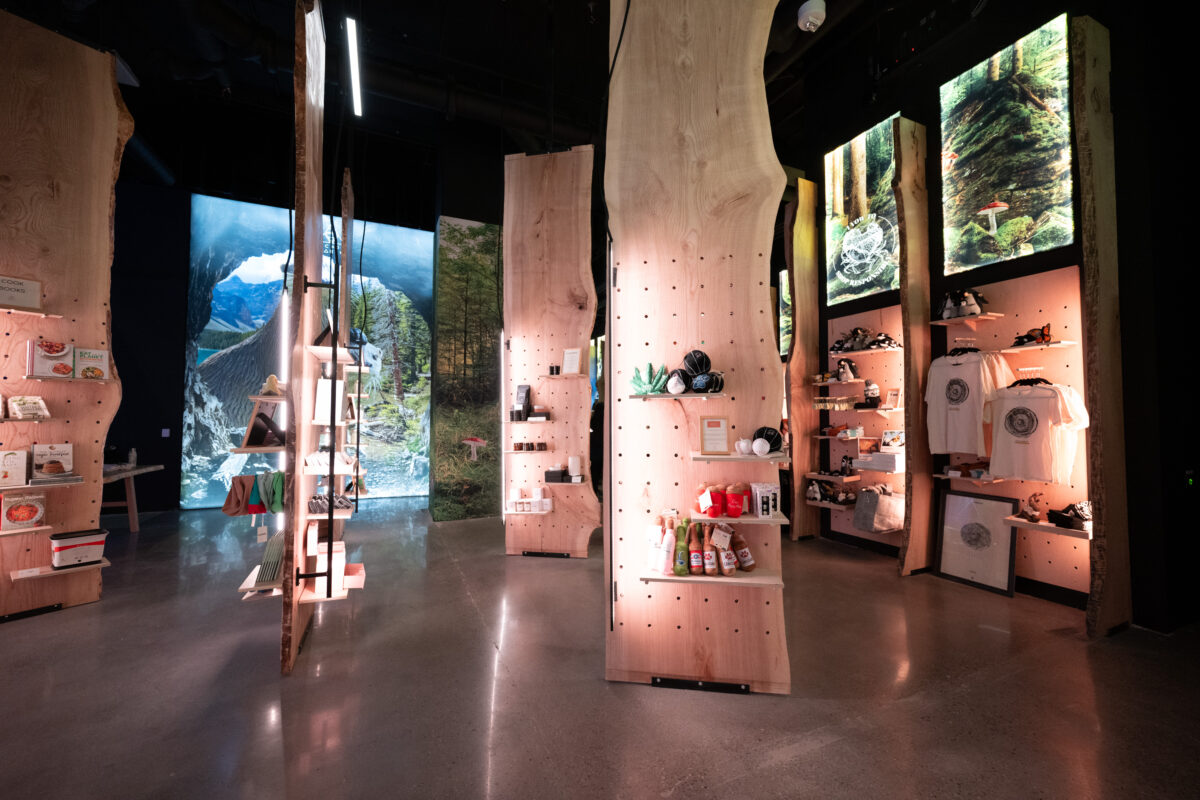
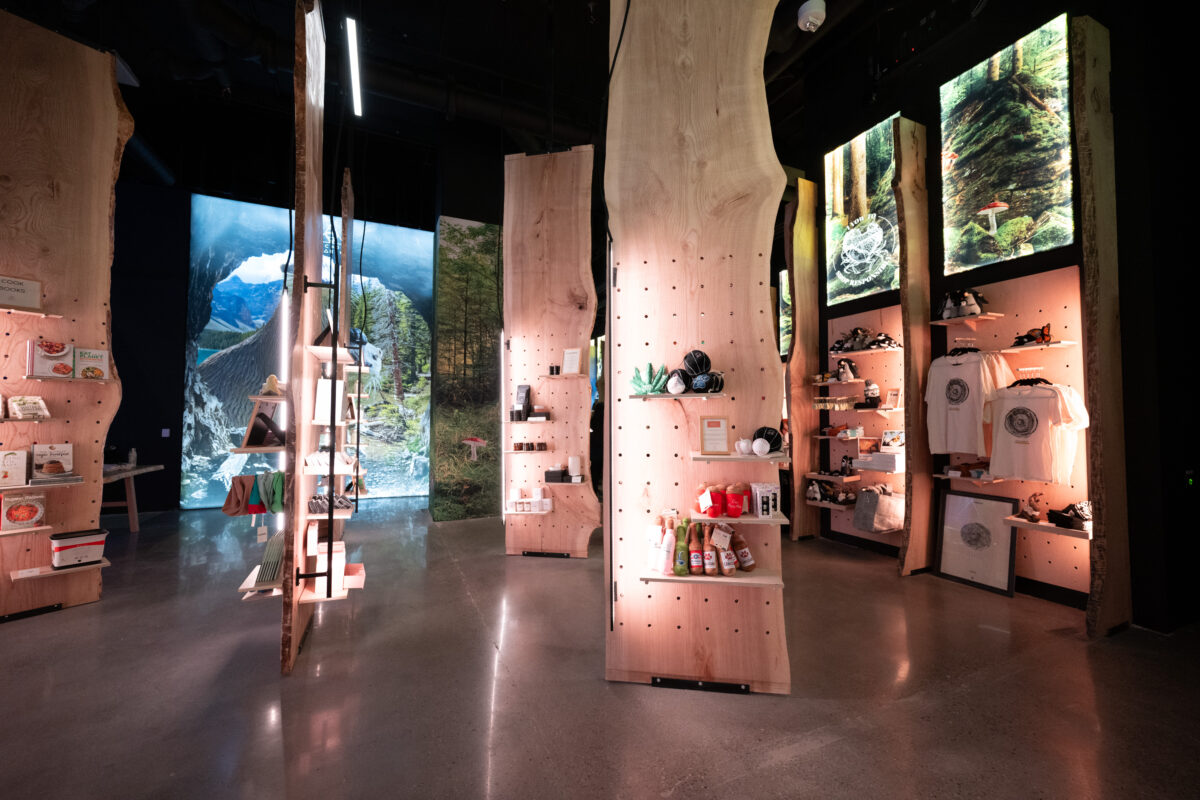
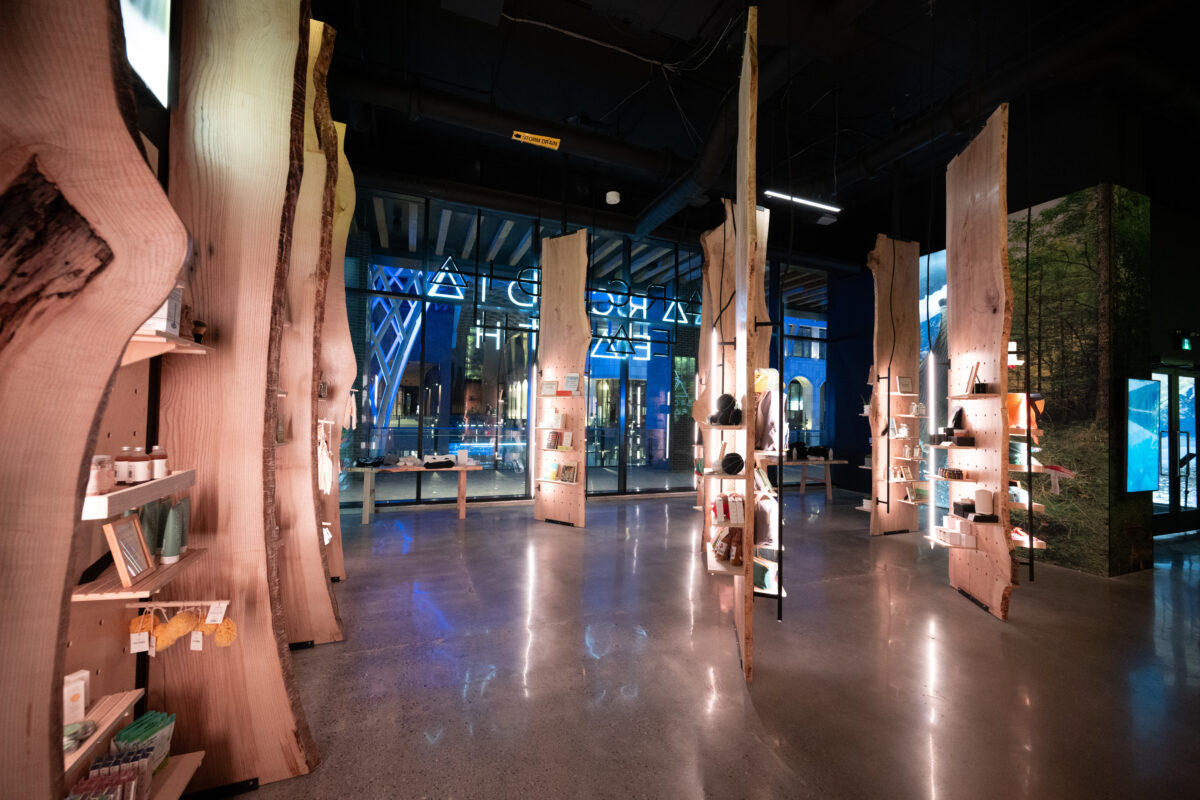
Guests can also shop at the exhibit in its marketplace, where “greener, eco-friendly, and healthier” products are available.
“At our marketplace, we are trying to highlight products and entrepreneurs that are truly trying to make a difference. Our hope is that if people are inspired about one or two things within the different rooms of the exhibit – they will come out into the marketplace and see a few different connections back to some of those rooms.”
Most of the brands showcasing at Arcadia Earth are Canadian and Perlmutter says a lot are female owned. The exhibit is always looking for new brands to include and has a steady stream of applications.
Photo: Arcadia EarthPhoto: Arcadia Earth
Adult friendly nights
Arcadia Earth is working on bringing more adult-friendly nights, extending the immersive experience into the evening.
These events will feature a unique atmosphere with a bar setup, where adults can explore the space with an alcoholic drink – blending leisure and education where adults can engage with environmental consciousness in a relaxed setting.
“We are really excited about launching our adult-friendly nights. It is a chance for us to offer a different kind of experience – one where adults can unwind with a drink in hand, yet still engage deeply with the themes of sustainability and environmental awareness that Arcadia Earth stands for. We believe that combining leisure with education in this way can foster a unique connection and deeper conversation about the pressing environmental issues we aim to highlight.”
Perlmutter says the adult-friendly evenings will likely be held once a week during the summer.
Photo: Arcadia Earth
Photo: Arcadia Earth
Photo: Arcadia Earth
Drawings coming to life
Arcadia Earth has been working on a new piece to its augmented reality. Guests are invited to show their drawing skills on a piece of paper which will display either a fish, turtle, or a manta ray and watch it come to life on their phone.
“They scan it using their phone and that newly painted version of the species ends up swimming around the room on their phone in front of them, which I think will be really cool and neat. This is something that can be done either in our event space or even just out in the marketplace area where we can set up some tables and some coloured pencils – it just kind of extends people’s time here.”
The concept will also provide the opportunity for parents to shop in the marketplace as their kids colour.
Scent Room. Photo: Arcadia Earth
On the road
Arcadia Earth is looking beyond its roots in Toronto with a potential travel concept, bringing the immersive exhibit to those across Canada.
The travel version of the exhibit aims to showcase the essence of Arcadia Earth’s mission in a portable concept, offering interactive installations, augmented reality features, and educational content.
Purlmutter says he is working on this project and will be looking into malls where it could have two to three exhibit rooms for a period of two to six months at a time.
“Our goal with this traveling concept is to transform shopping malls into gateways of environmental awareness, creating spaces where art, technology, and education coverage inspire action. This represents a bold step forwards to making our interactive installations and augmented reality features accessible to a wider audience, providing that meaningful environmental education that can thrive in any setting.”
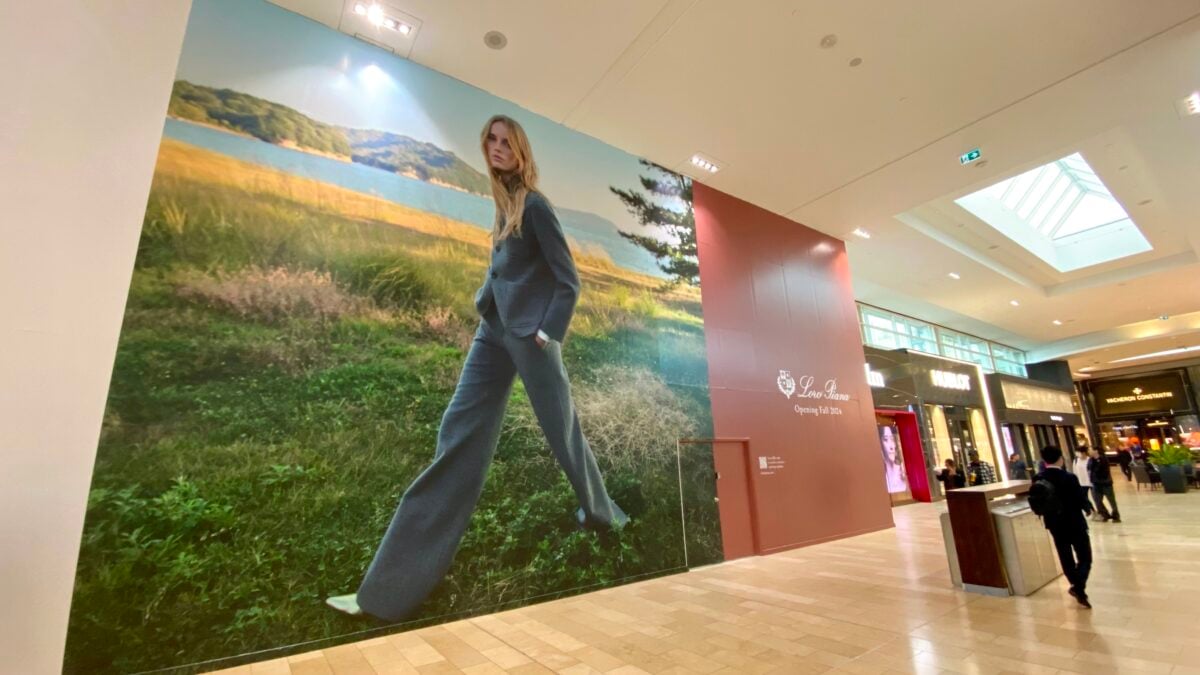
Loro Piana flagship store under construction at 111 Bloor St. W. in Toronto. Photo: Craig Patterson
LVMH-owned Italian luxury brand Loro Piana will be opening its first two standalone stores in Canada this year in Toronto. Construction is now underway on Bloor Street for a flagship, as well as at the Yorkdale Shopping Centre for a second Toronto location.
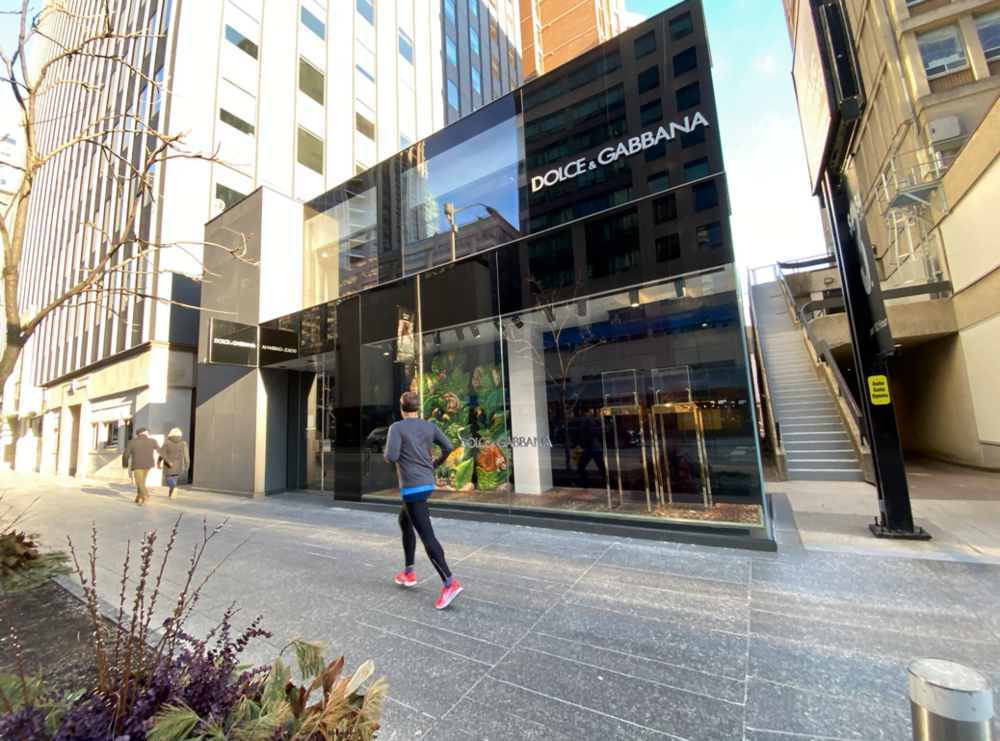
The Bloor Street Loro Piana flagship replaces a Dolce & Gabbana store, in a building spanning about 10,000 square feet over three levels at 111 Bloor Street West. A second Loro Piana store is under construction at Yorkdale, spanning more than 3,800 square feet in the mall’s new centre-run luxury wing that is currently in development.
David Wedemire and Stan Vyriotes of DWSV Realty negotiated the lease deal for Loro Piana and Tom Balkos of P3 Global Realty Advisors, along with Alex Edmison and Brett Taggart of CBRE represented the landlord.
Future Loro Piana store in the new luxury wing at Toronto’s Yorkdale Shopping Centre. Photo: Craig Patterson
Loro Piana has had a retail presence in Canada for several years at Holt Renfrew, and the brand continues to operate concessions at Holts stores in Vancouver and Calgary. Prior to the pandemic, Loro Piana also had concessions at Holt Renfrew’s Toronto stores including at the Yorkdale Shopping Centre and downtown at 50 Bloor Street West.
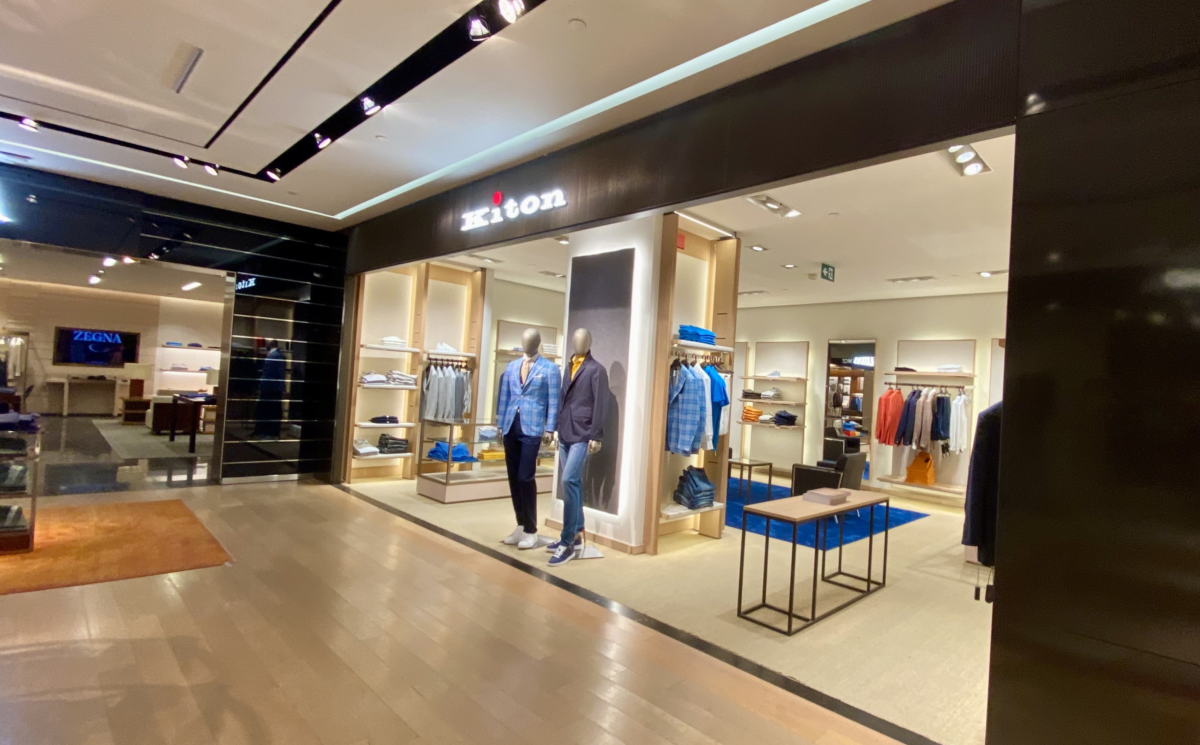
Until recently, the brand’s men’s clothing and other items were carried at Harry Rosen on Bloor Street in Toronto. Rosen operated a Loro Piana hard shop on the second floor of the store which was recently converted to a space for pricey Italian brand Kiton (Rosen’s flagship will be relocating in 2026 to Cumberland Street).
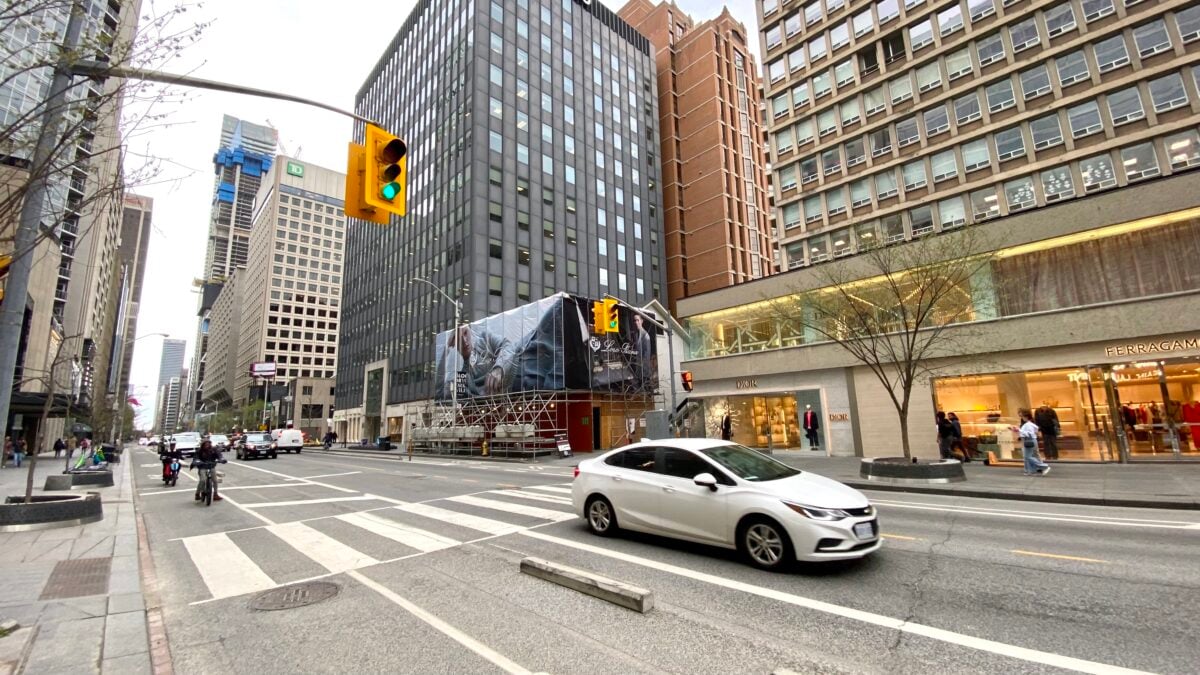
The former Loro Piana boutique space at Harry Rosen on Bloor Street was recently converted to a Kiton shop-in-store. Photo: Craig Patterson Bloor Street West in Toronto, showing the location of the new Loro Piana flagship store. Photo: Craig Patterson
It’s not known if Loro Piana will open more Canadian stores — in Vancouver, the clustering of luxury brands at Oakridge Park, set to open in the spring of 2025, could be attractive to Loro Piana. There is no confirmation at this time, however, that the brand is expanding further in the Vancouver market beyond its ‘world of’ concession at the downtown Holt Renfrew, which is sizeable with a range of Loro Piana men’s and women’s ready-to-wear, bags, accessories, footwear and other categories.
Loro Piana’s expansion into Canada spells confidence in the high-end market. Luxury brands Retail Insider has spoken with are indicating that there is a local population that is buying luxury goods, including affluent households that are immune to economic challenges. The segment of the luxury market driven by brand-driven middle-class shoppers has been hit hard with inflation at the same time. Tourism has bounced back in Canada, though Chinese visitor numbers are down substantially when compared to before the pandemic. Luxury brands have also built-out an impressive retail offering in China, meaning that places like Canada are a less attractive shopping destination unless there’s a currency fluctuation.
Loro Piana is known particularly for its cashmere goods, with prices well into the thousands of dollars depending on the item. The brand was founded in 1924 and is the world’s largest cashmere manufacturer. French conglomerate LVMH acquired a controlling stake in Loro Piana in 2013 and now owns 85%, with the founding family owning the remaining 15%. The brand has stores in major markets globally as well as a network of concessions and wholesale accounts.
Former Dolce & Gabbana on Bloor Street West in Toronto in 2020. Photo: Dustin FuhsBloor Street West in Toronto, showing the location of the new Loro Piana flagship store. Photo: Craig Patterson
One of Loro Piana’s biggest competitors in the cashmere space, Brunello Cucinelli, has also been expanding in the Canadian market. That includes having opened its largest location in North America in early 2019 on Yorkville Avenue in Toronto and before that, a store on Thurlow Street in Vancouver in the fall of 2015. Brunello Cucinelli will open a standalone 3,250 square foot store at Toronto’s Yorkdale Shopping Centre in its new luxury wing, replacing a ‘world of’ concession in Holt Renfrew that closed several months ago. A second Vancouver location for Brunello Cucinelli is confirmed to be opening at Oakridge Park in 2025. In Montreal, Carbonleo was said to be in talks for a store at Royalmount and we haven’t received confirmation of a store.
The luxury run of Bloor Street West is transforming into a row of flagship-sized luxury stores. It’s one of only a handful of such streets in North America, housing global luxury stores such as Louis Vuitton, Dior, Tiffany, Gucci, Prada, Saint Laurent and many others (and more to come). Yorkdale is also expanding its luxury offering by about 60,000 square feet by repurposing a central corridor into a new luxury run. Several luxury brands are confirmed to be opening, including Loewe (now open), Brunello Cucinelli and Loro Piana. Several other brands will be announced, including two standalone stores that currently operate as concessions at Holt Renfrew in the mall.
We’ll follow up on this story as we learn more about Loro Piana’s Canadian store expansion.
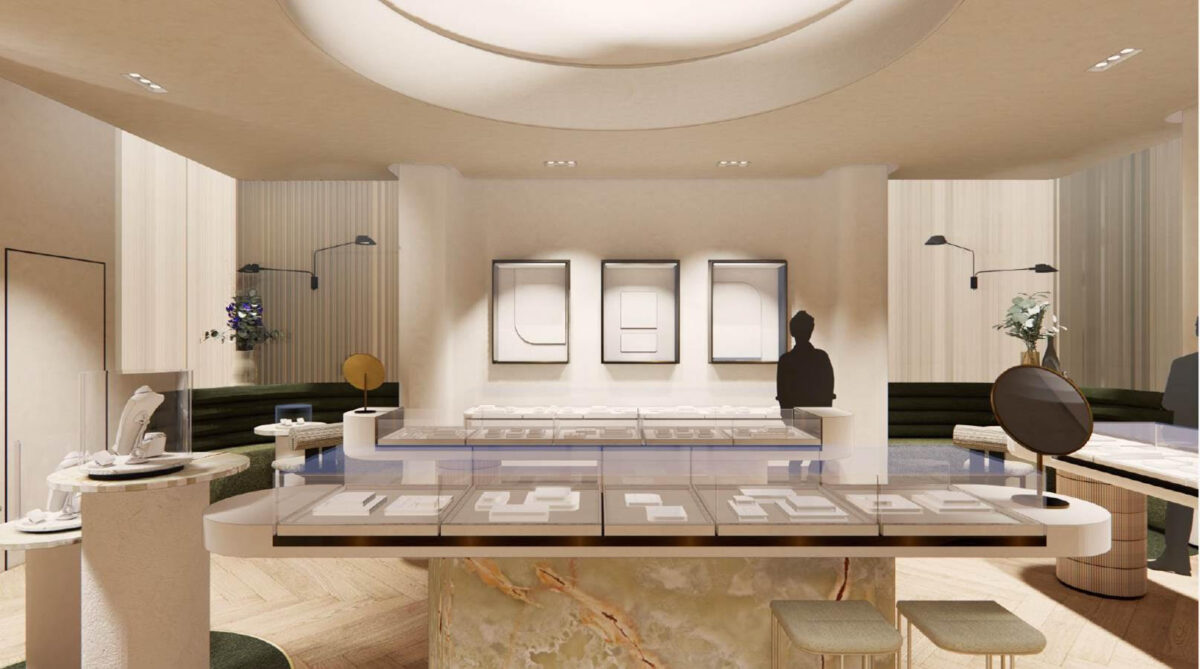
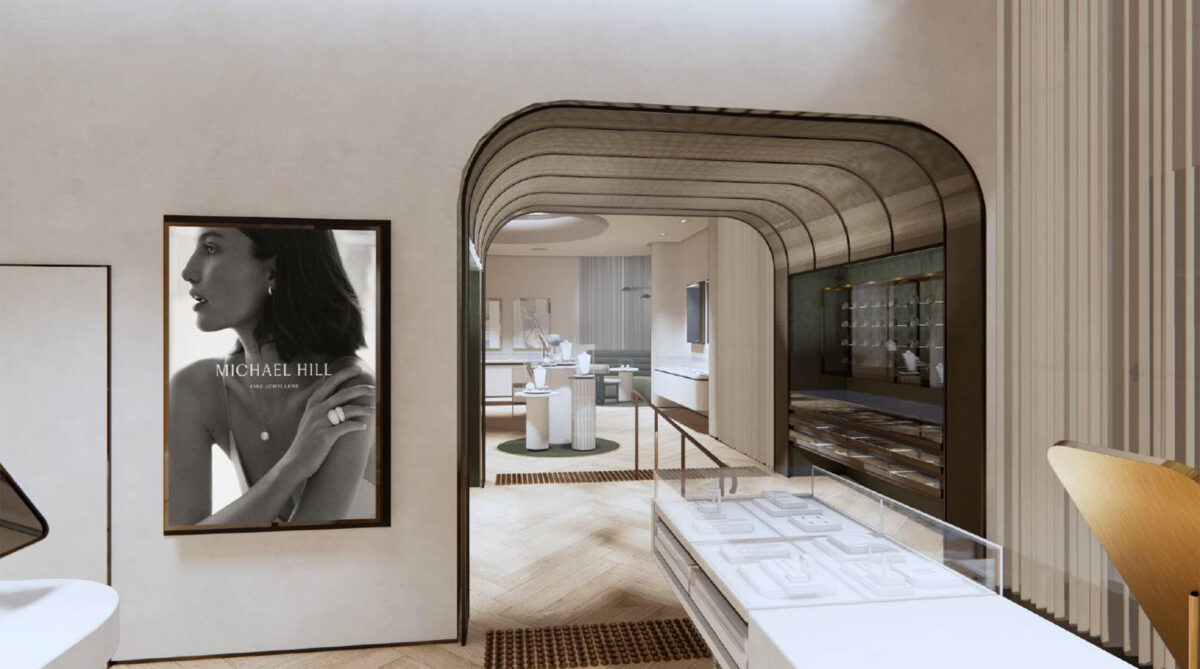
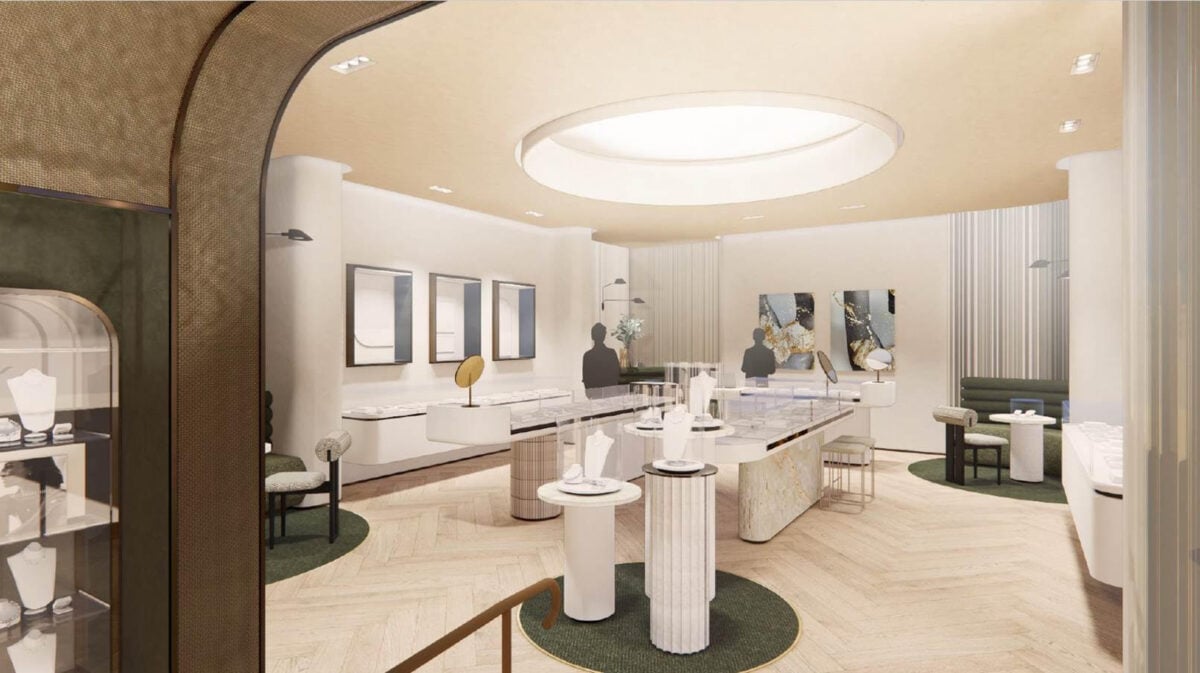
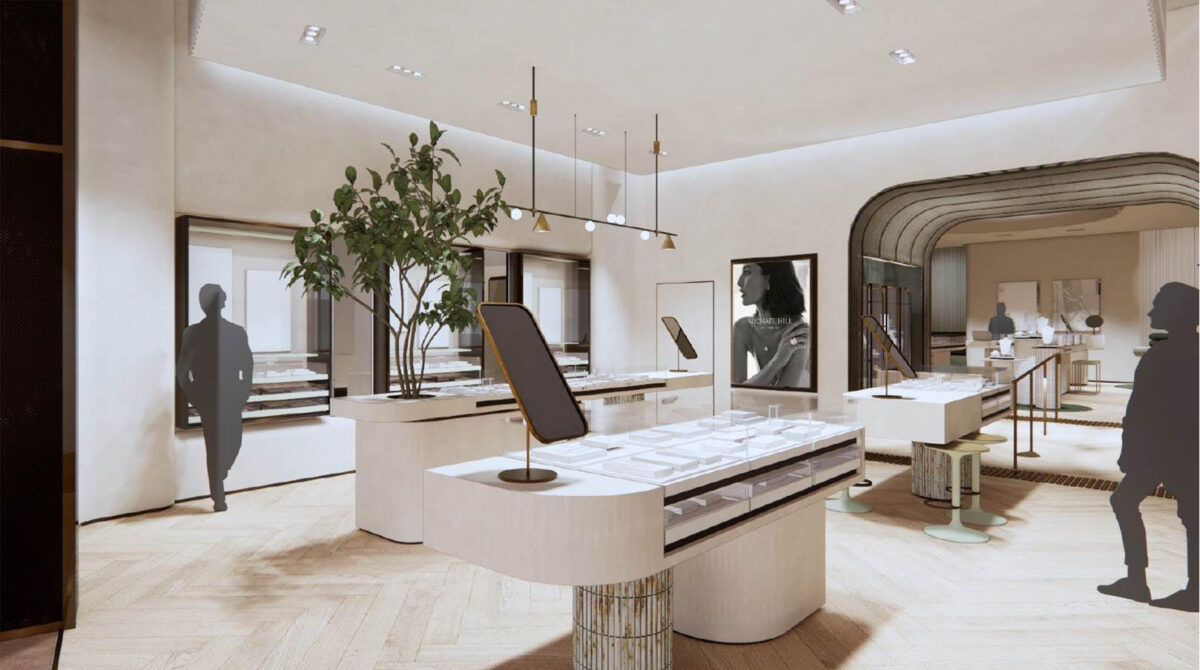
New Michael Hill 'New Era' store design concept. Renderings provided by Michael Hill International
Australian jewellery brand Michael Hill has launched a brand refresh with a focus on sustainability, digital engagement, and craftsmanship. The transformation, nearly two years in the making, officially launched on April 15th, featuring Miranda Kerr as the brand’s new ambassador. The refresh also includes plans to open the company’s first flagship location in Canada with a new store design that is showcased in this article.
“As we embark on this new era, it was important that we selected someone who not only embodies our brand values, but someone who is close to our antipodean roots and is the epitome of timeless elegance and sophistication. Miranda Kerr, perfectly aligns with the sustainable business practices that Michael Hill is aspiring towards, to become one of the most sustainable jewellery brands in the world by 2030,” says Daniel Bracken, CEO of Michael Hill.
New Michael Hill store design concept. Renderings provided by Michael Hill International New Michael Hill store design concept. Renderings provided by Michael Hill International
Digital refresh
With the digital landscape playing an increasingly important role in brand engagement, the refresh of Michael Hill includes a new digital strategy, focusing on its website and social media platforms such as Instagram.
The revamped website features user enhancements, creating a seamless consumer journey while also changing the brand’s look and feel. Social media platforms have also been improved, with a completely new strategy and design to increase engagement with followers.
“One of those most critical parts of our brand refresh was our digital platforms. We did a holistic review of our entire ecosystem, and our website was one of the core parts of our omni experience we needed to focus on first. The website is often the first touch point of the brand, particularly important in the jewellery category where customers come to explore and search before heading into the store. The website refresh included a design and UX enhancements to ensure a seamless customer experience, while elevating the overall look and feel to a more sophisticated and elegant visual environment … We overhauled our social strategy, our approach, and our aesthetics – completely revamping the way it comes to life for our followers,” says Jo Feeney, the Chief Marketing Officer at Michael Hill.
New Michael Hill store design concept. Renderings provided by Michael Hill International
“Fully sustainable, responsible, and circular product line by 2030”
Sustainability and ethical responsibility is a key focus on Michael Hill’s vision. The company’s recently launched Re:cycle program allows customers to recycle their gold products in exchange for Michael Hill gift vouchers.
After the success of the Re:cycle program in Australia, Michael Hill expanded it to Canada and New Zealand. The program is a part of Michael Hill’s environmental, social, and governance goals, focusing on creating a circular product line by 2030.
“Following the overwhelming response in Australia, we made the conscious decision to roll out the program to Canada and New Zealand to further expand our impact and help us achieve a fully sustainable, responsible, and circular product line by 2030,” says Feeney.
Michael Hill will ensure all pieces are sourced ethically and responsibly to have a sustainable future – creating a sustainable future for the jewellery industry.
“We are working towards a net zero impact on the planet, focusing on fair labour practices, and supporting community development. As a member of the Responsible Jewellery Council that aligns with UN goals, we are driving global change and adhering to ESG standards,” says Feeney.
To further its sustainability goals, Feeney says the company also launched the Michael Hill foundation where it plans to not only “give back to the planet through our nature restoration program,” but to also “empower women across the markets” the company operates. This new foundation launched this past February,
New Michael Hill store design concept. Renderings provided by Michael Hill International
Engaging employees and feedback
To connect existing employees with the brand refresh, Feeney says sharing the why is important. The company has also been involving its employees with the rebrand journey by sharing details and actively engaging them in the transition process.
“We share the ‘why’ importantly so that it makes sense as to our purpose and goals. All our store teams have new rebranded accessories to wear to feel connected to this change. We produced video interviews with our founder Sir. Michael Hill and myself, sharing insights on the rebrand and what it means for the future – it is always so inspiring for our teams.”
Michael Hill will also track feedback coming in from customers and stakeholders for necessary improvements, if any. Feeney says the company will be revving social media, purchases, and will have surveys.
“We will look to understand uplift in our sales and average transactions. We also have active social listening and NPS surveys in place. From an internal perspective, we hold regular review sessions with the team, engagement surveys, internal feedback forums, and an internal steerco group to support various teams and initiatives across the business.”
New product offers and a Canadian flagship store
The goal Feeney says is for Michael Hill to have a “fully sustainable and circular product line by 2030.”
The company is also looking to continue to evolve its product offers and will be opening its first Canadian flagship store.
“Michael Hill will continue to elevate the product offerings, having launched its first ever High Jewellery collection – including bespoke, one-off uniquely designed pieces. As well as launching further new production innovation with our Signature Lock collection. We also look to bring our first Canadian flagship store to market in 2025, as well as store refreshers when the opportunities arise.”
Retail Insider is streamlining its Canadian retail news from around the web to include a handful of top news stories that can be viewed quickly during the day. Here are the top stories from the past 24 hours.
Harvey’s celebrated its 65th anniversary last month and is continually making adjustments to improve its restaurants by enhancing customer experience, improving technology, and new menu innovations. Michael Nault, chief operating officer at Harvey’s, discusses Harvey’s past 65 years in Canada and what consumers can expect going forward, including the ultimate goal of potentially hundreds of more locations within the next five to ten years.
“Over the past 65 years, there is a lot that has changed, but our focus on customization and taking care of our guests has always been at the core of what we do. Looking forward, we are not just about growing our number of locations; we are about enhancing the whole Harvey’s experience. From digital advancements that streamline the ordering process to innovative menu additions that delight our customers, we are committed to evolving while maintaining the essence of what has made Harvey’s a beloved brand in Canada,” says Michael Nault.
The past 65 years
Harvey’s (Image: Larry Fisher)
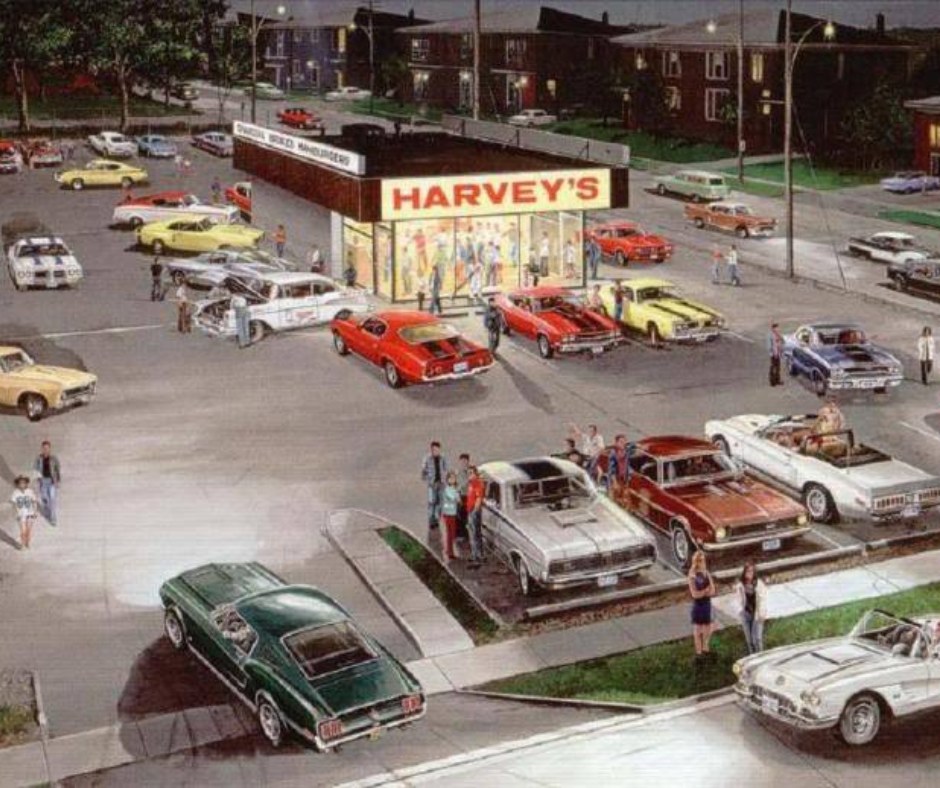
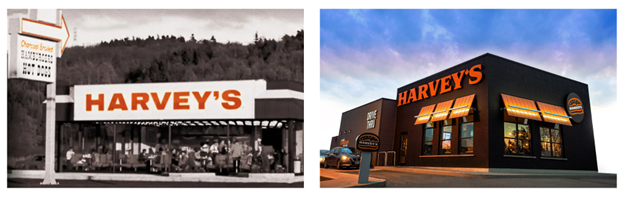
Over the past 65 years, Harvey’s has evolved from a simple burger restaurant into a larger fast-food chain in Canada, adapting to the changes in customer preferences and technology. The first location opened in 1959 in Richmond Hill, north of Toronto.
Nault says Harvey’s has broadened its menu innovations, embraced digital transformation through its app and digital menu boards, and has committed to sustainability by maintaining eco-friendly practices such as partnering with Tree Canada.
“Looking back over the past 65 years, Harvey’s has not just adapted but thrived by embracing change all while staying true to our roots in customization and quality. Our journey has been more about than just serving meals – it is about creating a community around our brand, one burger at a time.”
Harvey’s continued focus on customization, quality, and community engagement reflects its dedication to maintain its values while continuing to expand throughout Canada. The success of Harvey’s is pinpointed to its power to adapt and listen to consumer needs.
“Authenticity has been a big pillar on how we have been able to succeed for the past 65 years, along with customization. The second piece I would really have to attribute to is our associates and our franchisees. We have a great collaboration with a number of our franchises across the system and we work with them very closely on programs that we put into our restaurants and how we do things.”
Burger hunt across Canada
Image: Harvey’s
To celebrate the occasion, Harvey’s planted burger cards around the country, including around Harvey’s locations and iconic landmarks in Canada. The hunt started on March 26th and is still on-going as not all cards have been found.
Harvey’s planted 1,650 free burger cards which included four VIP ‘Harvey’s for a year’ cards – one of which is yet to be found in Montreal.
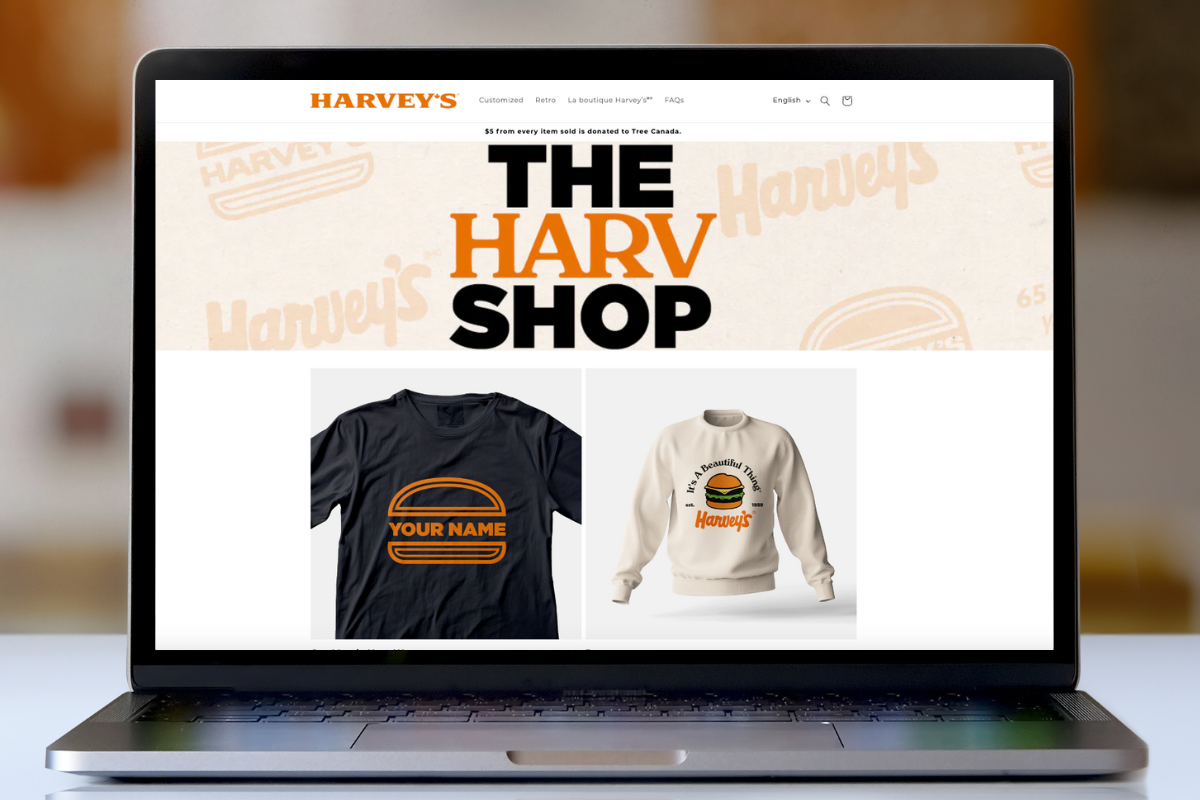
“We kicked off the great Canadian burger find on March 26th, hiding 1,650 burger cards across the country. This includes four VIP cards for ‘Harvey’s for a year,’ with one still waiting to be discovered in Montreal. And to make the celebration even more special, we introduced limited edition merchandise, offering our loyal customers the chance to customize their own Harvey’s shirt, celebrating our years in a truly personal way.”
Going forward – expansion plans
Image: Harvey’s
With 300 chain restaurants, Nault says they are always looking to grow and expand across Canada.
“We have a good presence in Ontario, so we are continuing to look at different footprints for Ontario and in Quebec there are lots of opportunities for us to expand. We opened up a few restaurants recently in Ontario, which have been great success and now we have sites in the West and East and are looking forward to opening them and they are all different footprints. Whether it is a gas station, a mall, or just our traditional footprints, we will continue to look for those opportunities across the board.”
Nault says Harvey’s is planning on opening around ten locations in 2024 with key areas being Montreal, around the GTA, London, Ontario, Alberta, and some locations in Calgary.
“Harvey’s has set out a target of 500 locations over the next five to ten years, and I’d say that we are continuing to work towards that target and build opportunities. We are on pace and still working towards that as our target – so we are going to place Harvey’s in the hands of more people across the country.”
Harvey’s renovation program & innovations
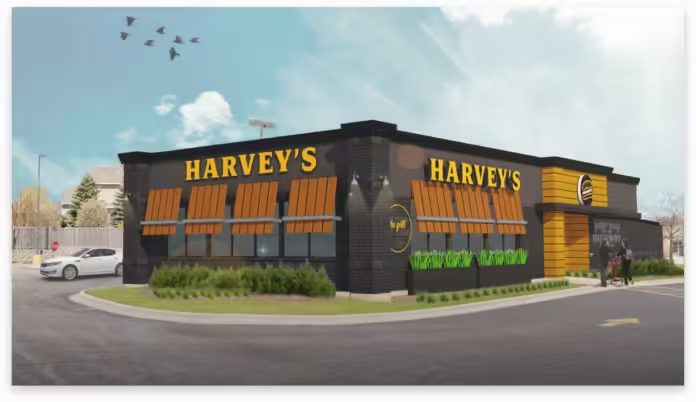
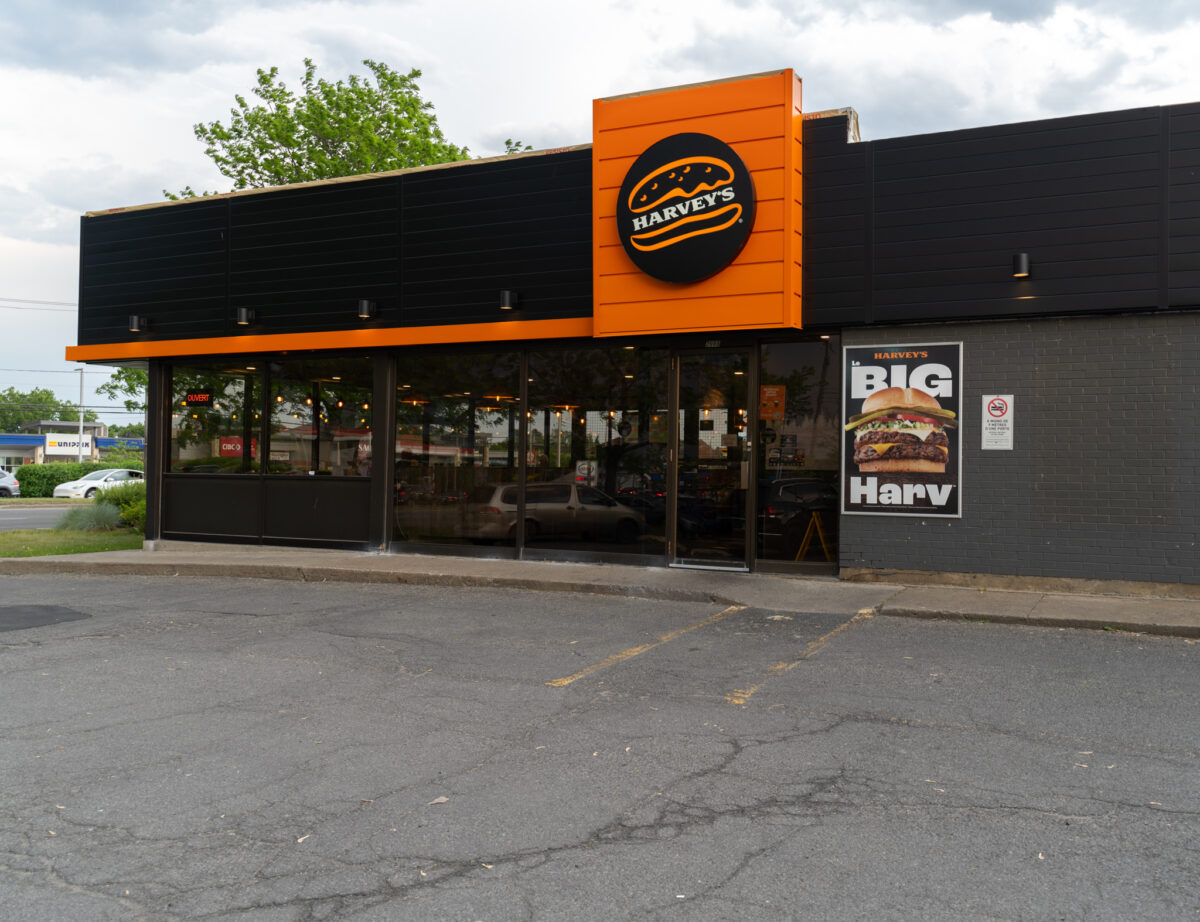
Harvey’s at 2986, boul. Saint-Charles, Kirkland, Quebec (Image: Harvey’s)
Nault says around 85 per cent of Harvey’s restaurants have been renovated and they are continuing to complete the rest of the locations.
“One of the things for us is creating an experience within the four walls, so making sure it is bright, vibrant, and energetic. This is something we are exploring, and it is really just keeping the look and feel of the restaurants and keeping the atmosphere vibrant.”
As far as new innovations in restaurants, Nault says for years Harvey’s has had digital menu boards and an app for consumers to order from, but is looking to take it further to include kiosks.
“Is there also an option for us to continue down this path and have guests place their own orders within the restaurant, on a kiosk rather than just having the opportunity on a mobile app? That is something we are exploring.”
Evolving the menu
Image: Harvey’sImage: Harvey’s
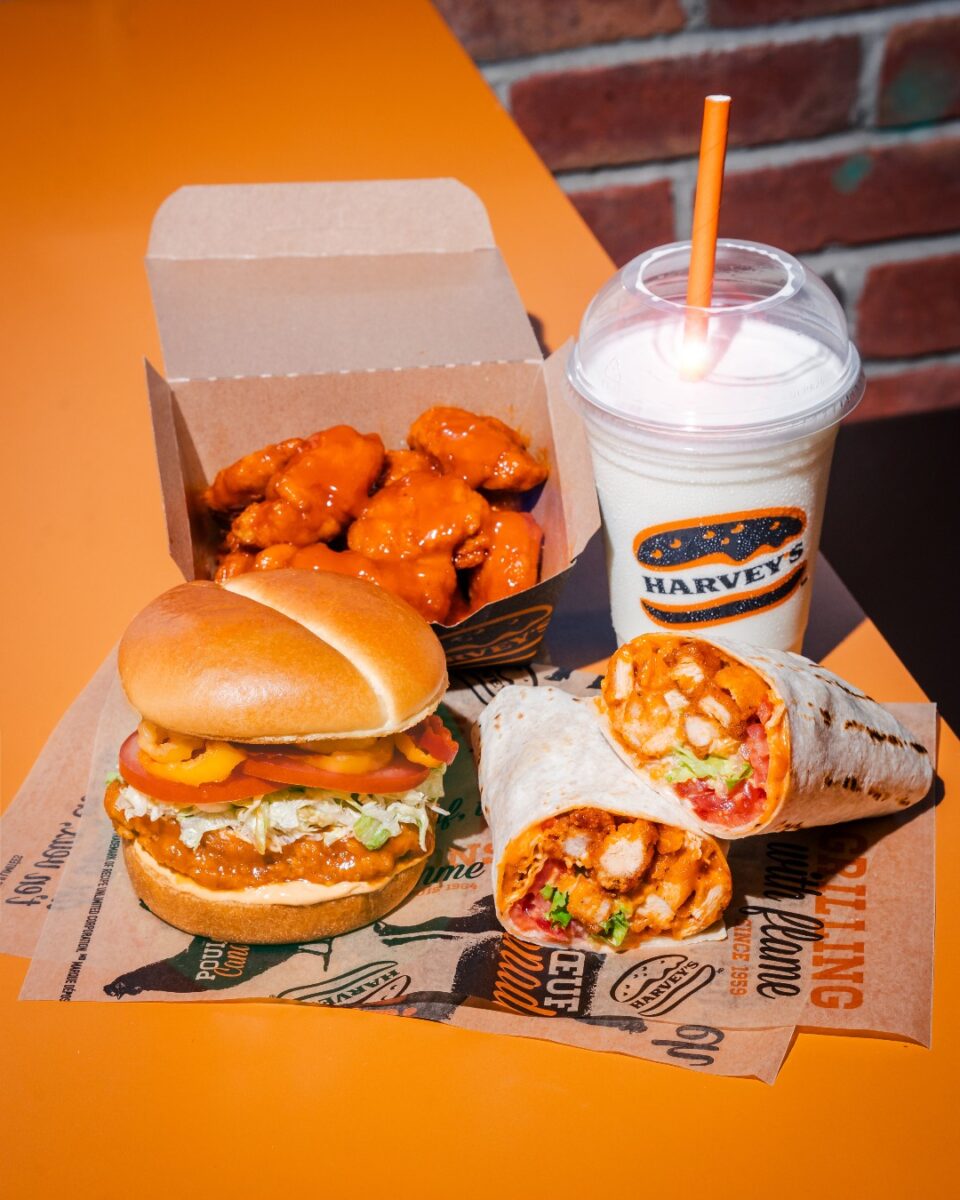
In the past, Harvey’s has continually developed its menu options to evolve with consumer’s needs. While the company started with just burgers and hot dogs, it has evolved by expanding its offerings. Last year, Harvey’s introduced the pickle poutine and is constantly looking for new ways to innovate its menu.
Nault says some of its ideas come from consumers themselves through social media.
“Social media shows how our guests are being creative, such as dipping donuts in milkshakes, and it is a fun way to connect with them. This also leads to innovations like the pickle poutine – a menu hack inspired by media that turned into a limited-time offer. It is how we discover fun ideas that could become the next big thing.”