Bernard Leblanc, President and Chief Executive Officer at La Maison Simons. Photo: Simons
Craig Patterson and Bernard Leblanc, President and Chief Executive Officer at La Maison Simons, discuss the opening of Simons’ new store in Halifax, marking the Quebec City-based retailer’s first venture into the Atlantic provinces. Leblanc shares insights into the $20 million investment and the store’s design, which pays homage to Halifax’s maritime heritage and the Simon family’s roots, with architectural elements inspired by the Bluenose and sails referencing Simons family history. The store expansion reflects Simon’s ambition to bring its brand coast to coast, offering a unique shopping experience that blends local heritage with the retailer’s distinguished architectural style.
The conversation shifts to the rationale behind selecting Halifax for Simon’s 17th store. Leblanc highlights Halifax’s status as a dynamic and rapidly growing city with a diverse clientele, including a significant student population and visitors from neighbouring provinces. The strategic location within a major shopping centre aims to cater to the broader Atlantic region, further cementing Simon’s presence in the Canadian retail landscape.
Patterson and Leblanc finally delve into Simon’s broader retail strategy, discussing the significant portion of sales now coming from e-commerce, while also acknowledging the strong return to physical store shopping post-pandemic. Leblanc emphasizes a unified commerce approach, prioritizing seamless customer experiences across all platforms. The discussion concludes with future prospects for expansion and the potential for more Simon’s stores in major Canadian cities, underlining the company’s patient yet ambitious growth strategy and its commitment to serving diverse customer needs across the country.
Episode Sponsor:
Salesforce – Turn today’s shopping trends into tomorrow’s retail success. Visit Salesforce to see the global insights from Salesforce to boost your bottom line.
Featured during this interview:
Bernard Leblanc, President and Chief Executive Officer at La Maison Simons
If you prefer to listen to the audio version, it is available below:
The Interview Series audio podcasts by Retail Insider Canada are available on Apple Podcasts, Stitcher, TuneIn, Google Play, or through our dedicated RSS feed for Overcast and other podcast players. Also check out our The Weekly audio podcast where Craig and Lee discuss popular content published on Retail Insider which is part of the The Retail Insider Podcast Network.
Subscribe, Rate, and Review our Retail Insider Podcast!
Drop us a line at Craig@Retail-Insider.com. You can also rate us in Apple Podcasts or recommend us in Overcast to help more people discover the show!
Background Music Credit: Hard Boiled Kevin MacLeod (incompetech.com). Licensed under Creative Commons: By Attribution 3.0 License. http://creativecommons.org/licenses/by/3.0/
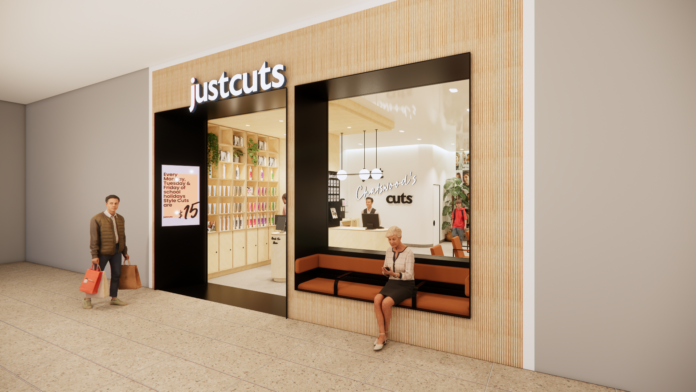
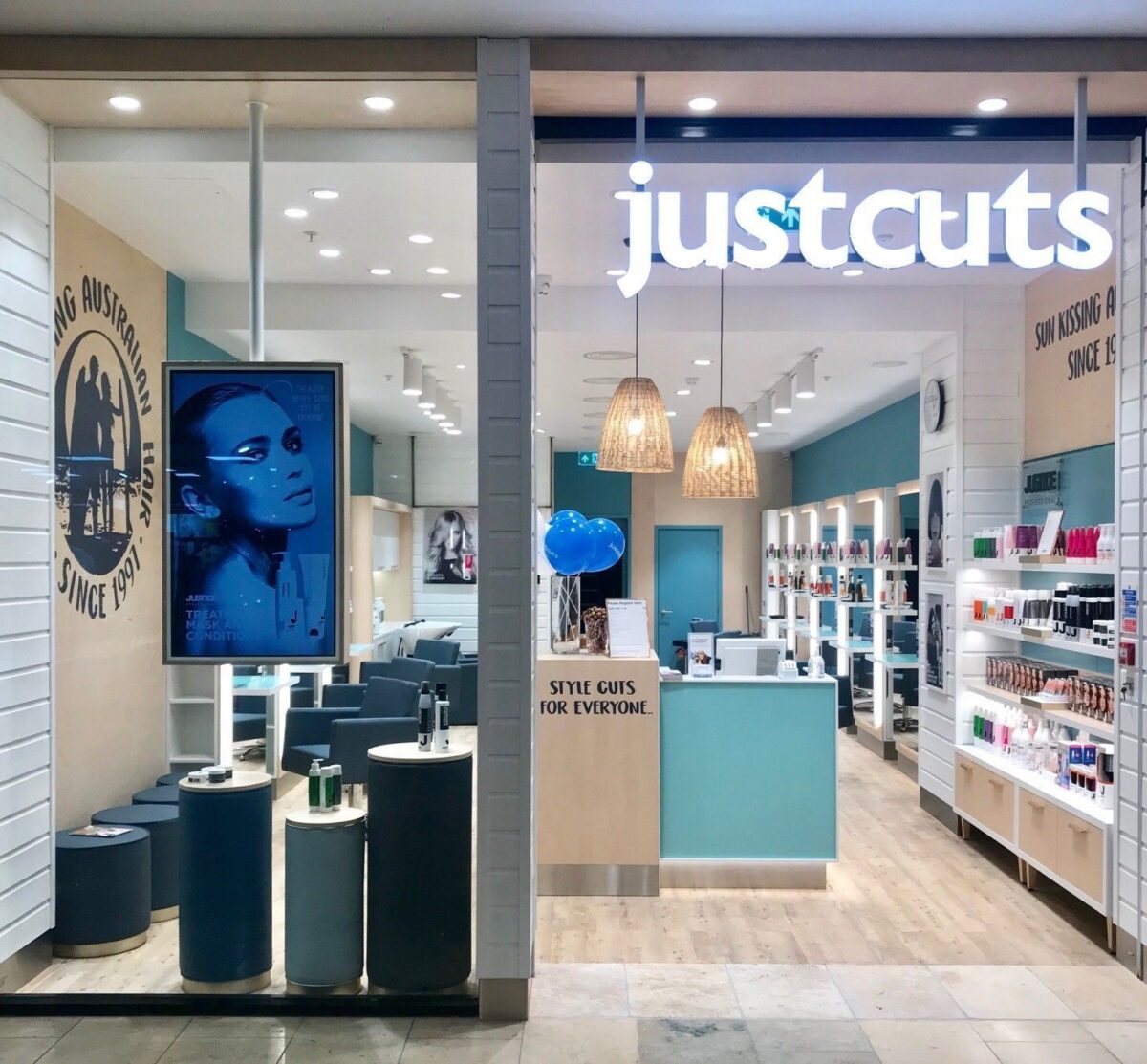
Australian-based Just Cuts is set to launch its first of many Canadian salons in the near future as the brand looks to expand to the Canadian market.
Just Cuts was founded by Denis McFadden on one simple idea – that people want quality style haircuts from a qualified Stylist, at an affordable price. This notion changed the hairdressing industry forever and still remains the purpose of Just Cuts today, 30 years on, says the company.
The company, which began in 1982, is based in Sydney, Australia. It started franchising in 1990.
Rendering: Just Cuts
Denis Mcfadden
When McFadden started the business with six dollar haircuts and no appointments, he had a line up out the door.
“He said I’m onto something here,” said Amber Manning, CEO.
She said one day one of his hairdressers told him that she wanted to start her own business but she wanted to do it exactly how McFadden was doing it. She asked McFadden to speak with her father about it.
Amber Manning
McFadden, Manning’s step father, went to speak with the hairdresser’s father who asked about a franchise agreement.
“He said ‘I’ll get you that’. He didn’t know what a franchise agreement was. Looked up in the Yellow Pages the Australian Franchise Association and contacted them and asked for a franchise agreement. That’s how the first franchise salon in 1990 took off,” said Manning.
“It was interesting. She was obviously a hairdresser but what had happened she was actually pregnant and had a baby the time the salon was opening. And that was when he realized the business could run itself and you don’t have to be a hairdresser to run Just Cuts. So that’s why we do have a combination of franchisees where we have some owners who are actually hairdressers in the business but a lot of our owners are investors or multi-unit owners. Sixty five per cent of our salons are multi-unit owners meaning they own more than two stores.”
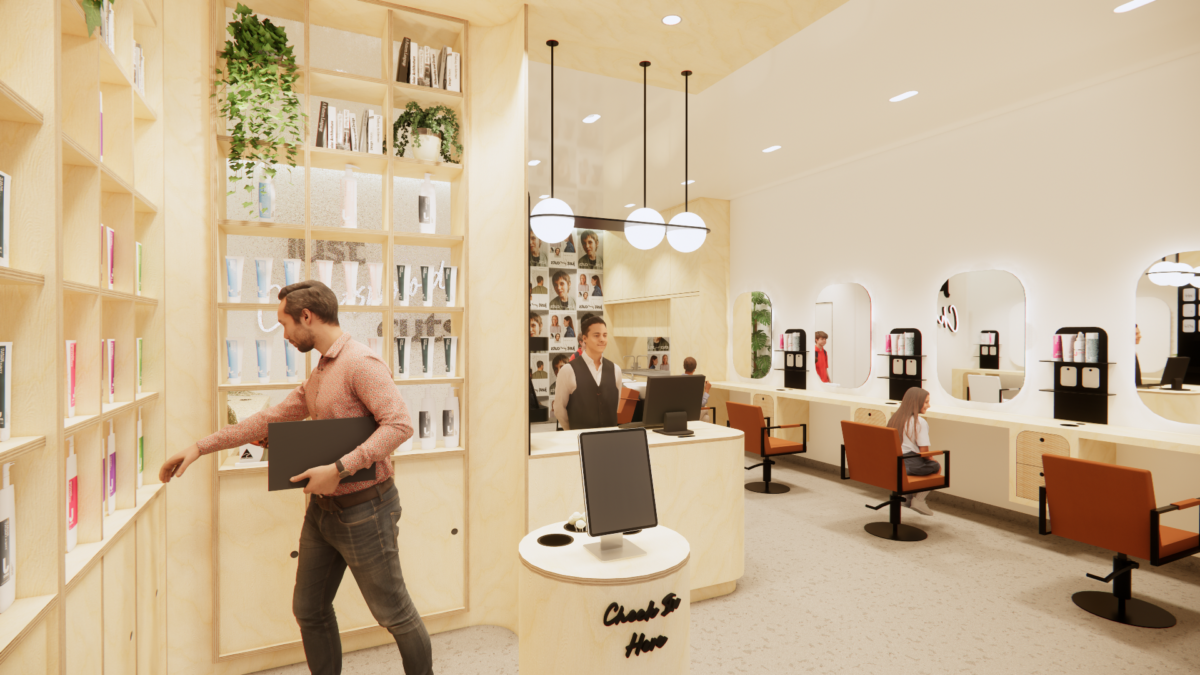
Rendering: Just Cuts
Currently the brand has 235 salons. They operate in Australia, New Zealand, UK and Taiwan.
“We’re looking to open (in Canada) between July and September. We’ve got three deals in Calgary. Our focus areas are looking at the Toronto, Calgary, Ontario areas to begin with and then we’ll look to expand from there,” said Manning.
The brand is set to open this year locations in Calgary, Edmonton and Mississauga.
In addition to their Canadian launch, Just Cuts is also offering its line of affordable hair products, JUSTICE, in-store and online.
“This year we’re aiming for five (in Canada) and then 10 in the second year,” added Manning.
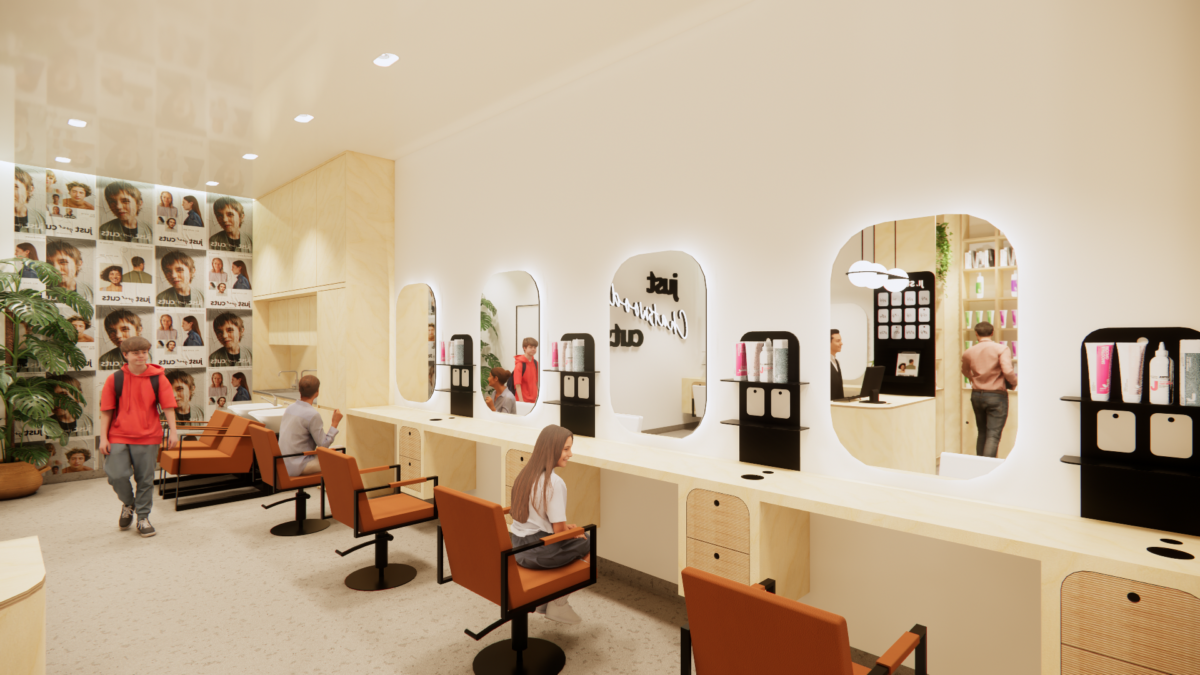
Image: Just Cuts
She said salons are about 800 to 1,000 square feet.
“We’re predominantly in shopping centres. Because we’re a no appointment, no request, salon, people are out shopping, getting their groceries, they’re just hoping to get a haircut. We’re not an appointment destination salon. It’s a convenience. So people come to Just Cuts for value and for convenience. They know they can pop in, get their haircut, pop out,” said Manning.
“I guess the great thing with our technology is they can check in for their haircut on the app and they will receive an SMS when they’re next on the queue. So they actually can continue shopping until they’re ready to get their haircut.”
Manning said the Canadian market is similar to Australia in terms of culture as well as government and policy.
“We really feel the culture of franchising in Canada is a really good one,” she said.
“We’re just seeing a gap in the market. When we’ve done our research in shopping centres it’s quite expensive to get your haircut. Sometimes it can be upwards of $60 to $100 to just get a haircut in a shopping centre. So we know that we’re a value-based brand. We’re very much in that middle market and we want to be affordable for everybody but obviously we want to be in locations where it’s high foot traffic. So our price point is around that $35 to $40.
“There are no surprises. Whether you have short hair, long hair, male or female, we don’t discriminate. Everyone is charged the same price.”
Retail Insider is streamlining its Canadian retail news from around the web to include a handful of top news stories that can be viewed quickly during the day. Here are the top stories from the past three days.
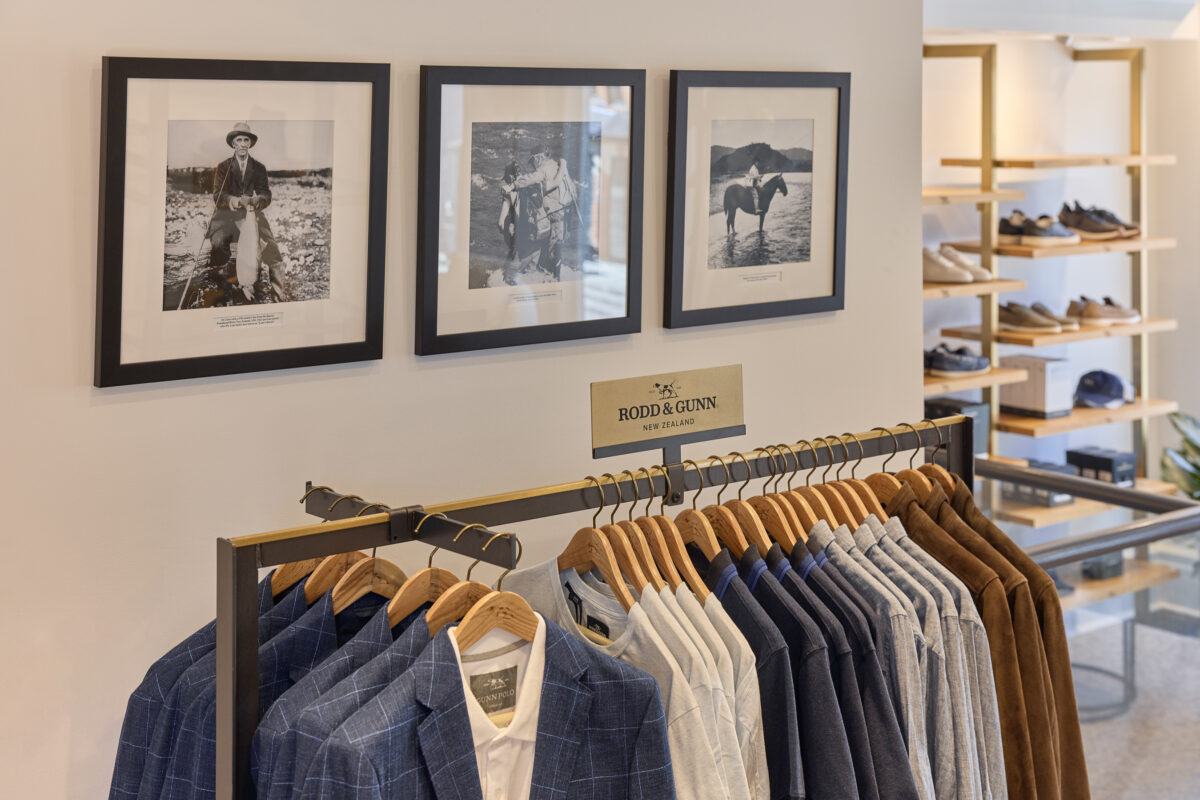
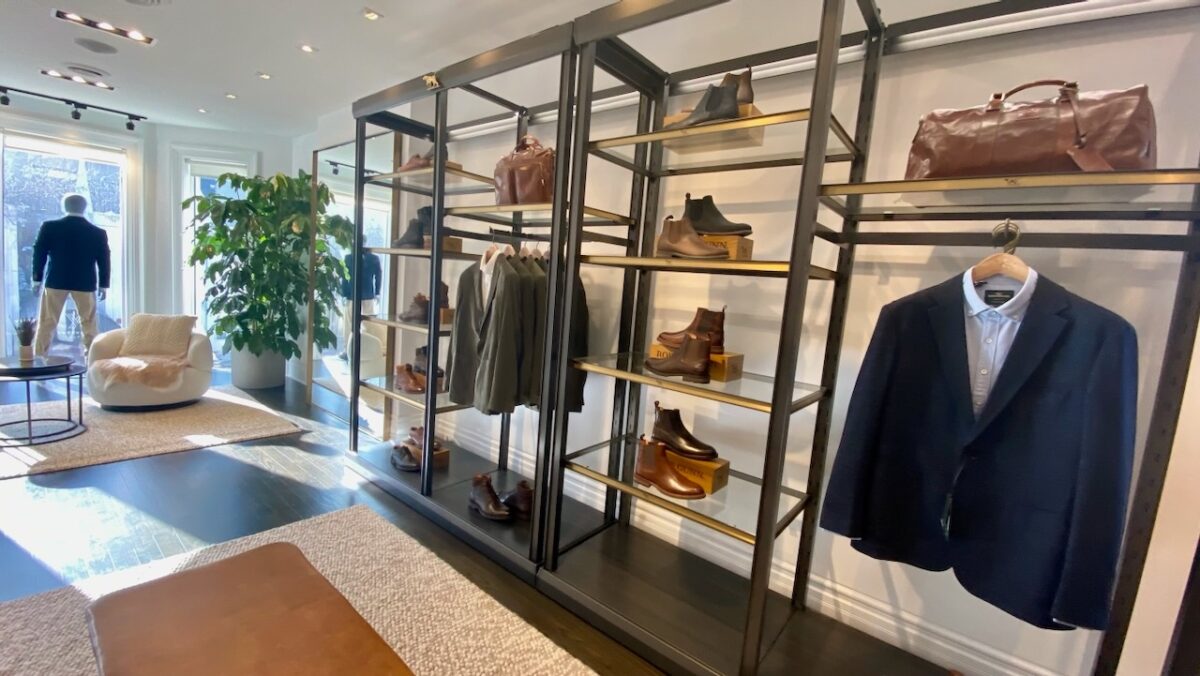
New Zealand-based menswear brand Rodd & Gunn has opened its first Canadian store at 21 Hazelton Avenue in Toronto’s Bloor-Yorkville area. More stores are planned as Rodd & Gunn establishes itself in the Canadian market.
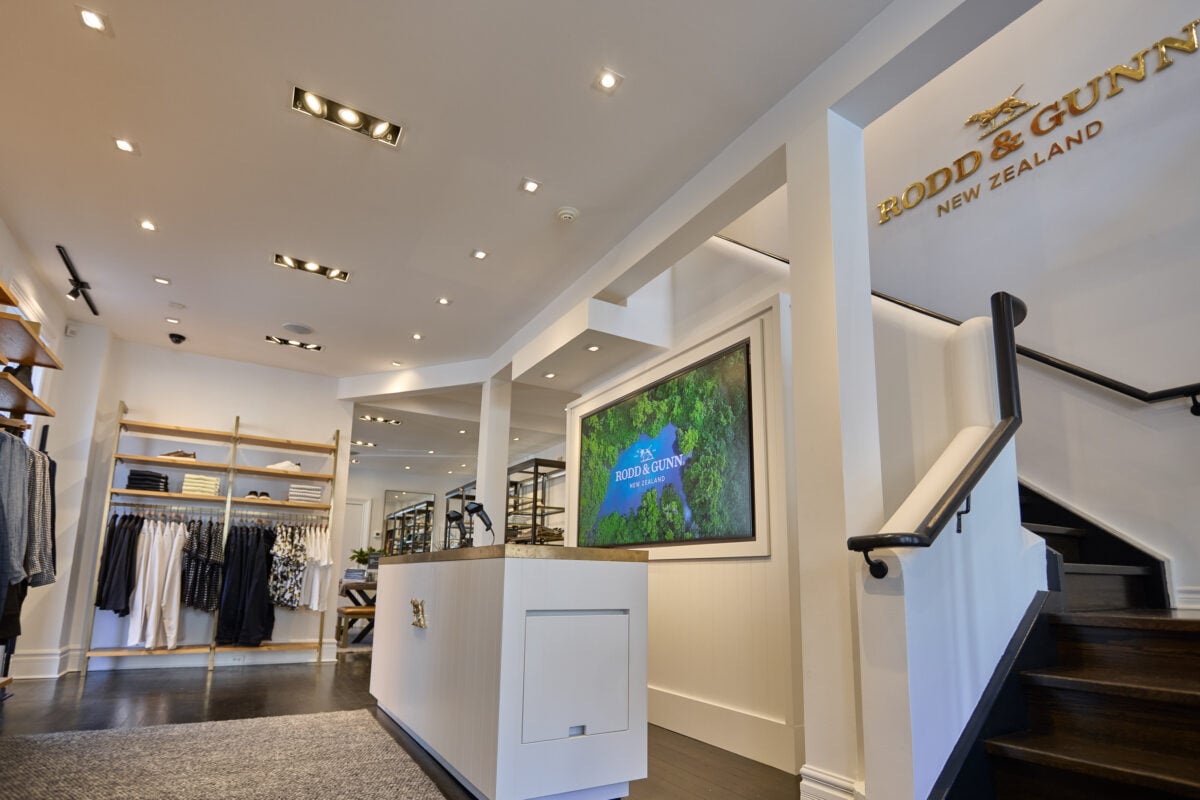
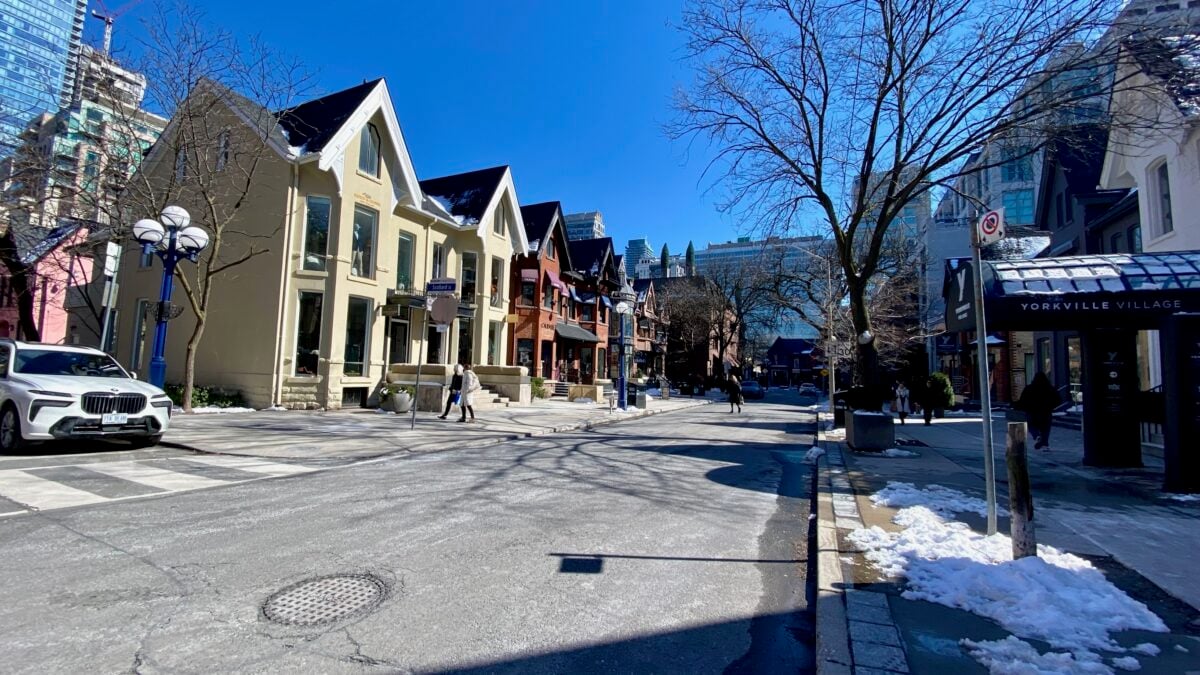
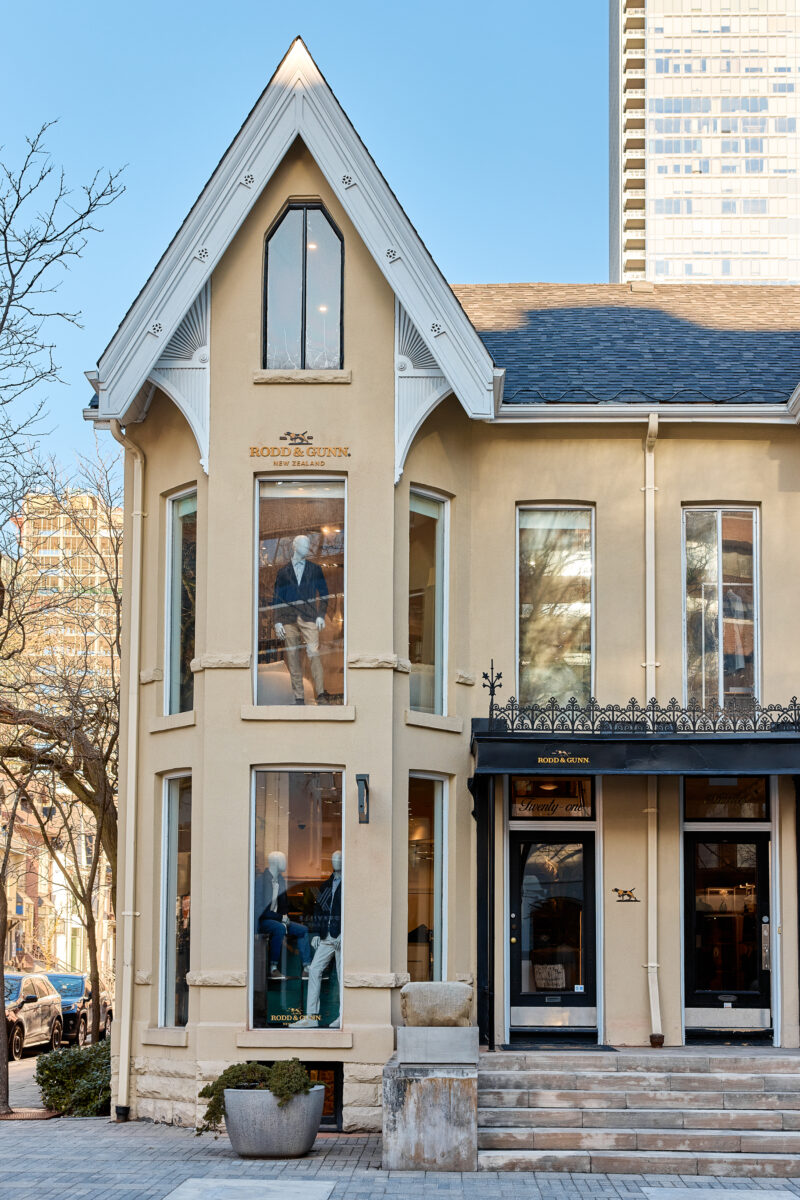
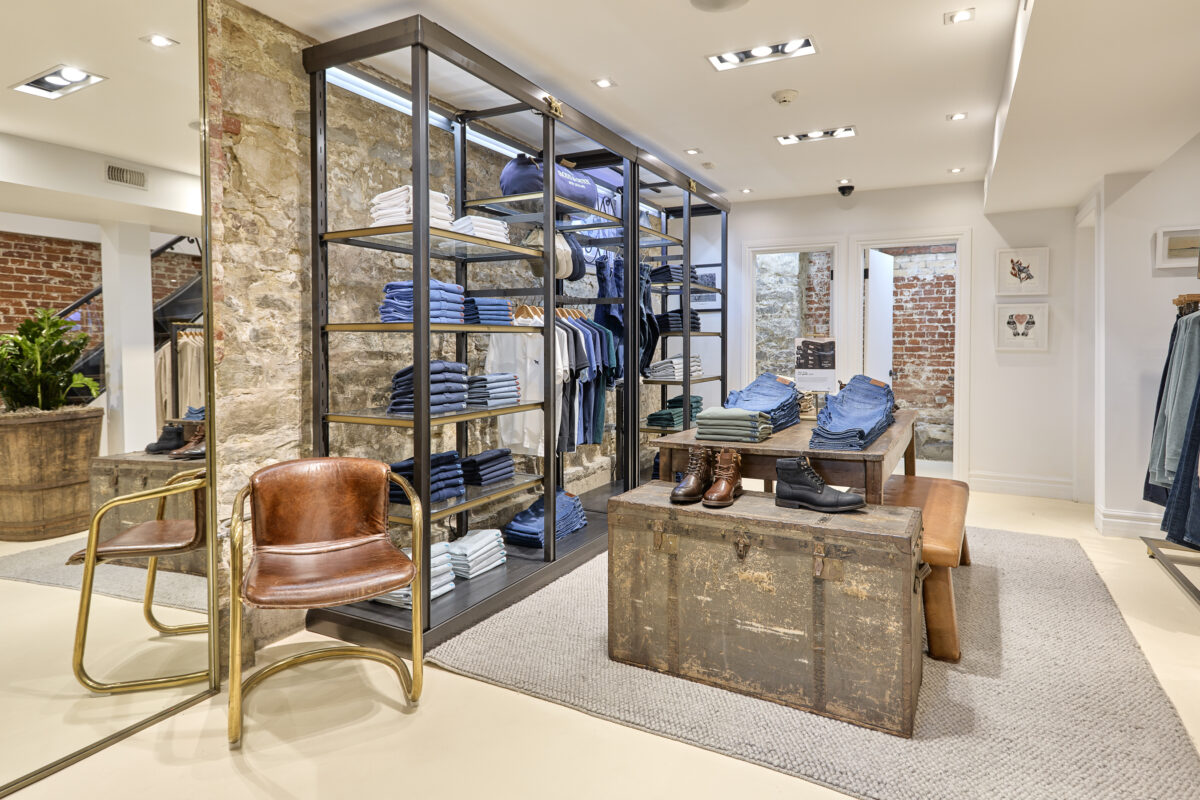
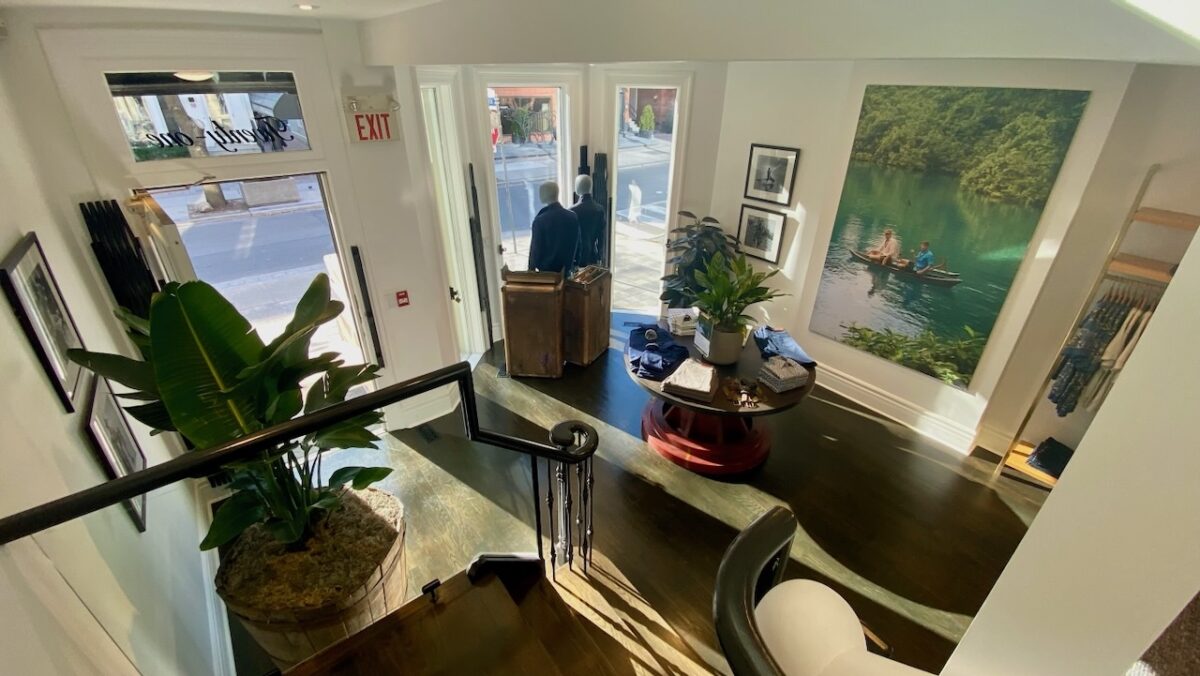
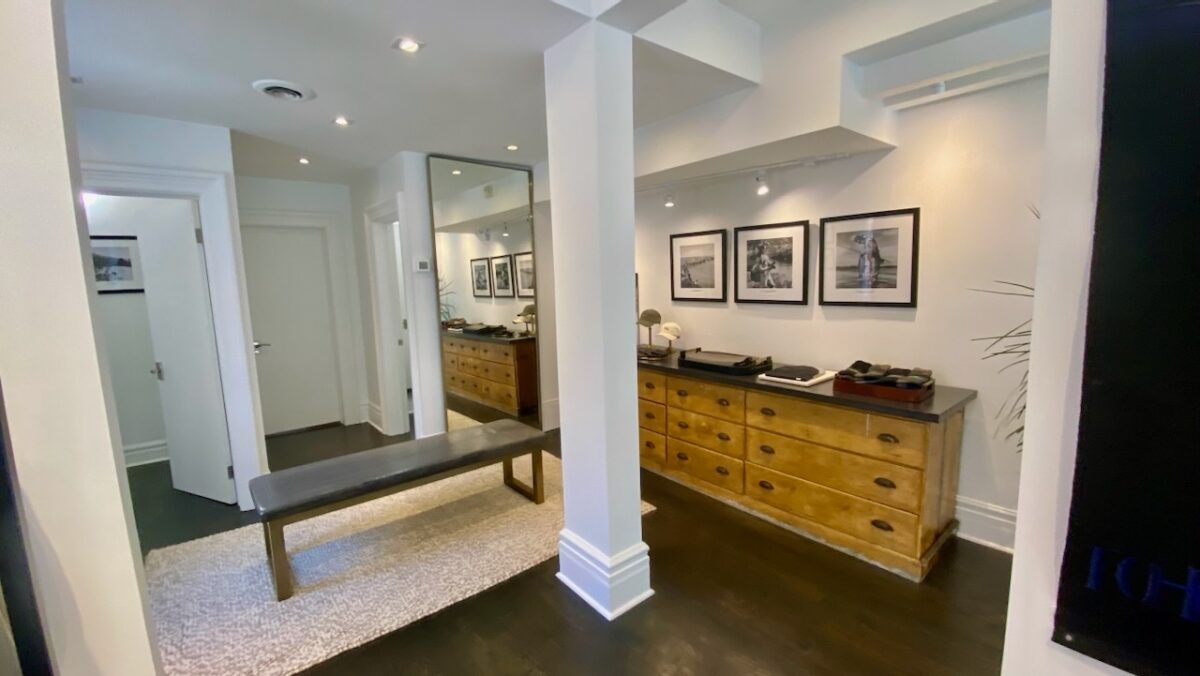
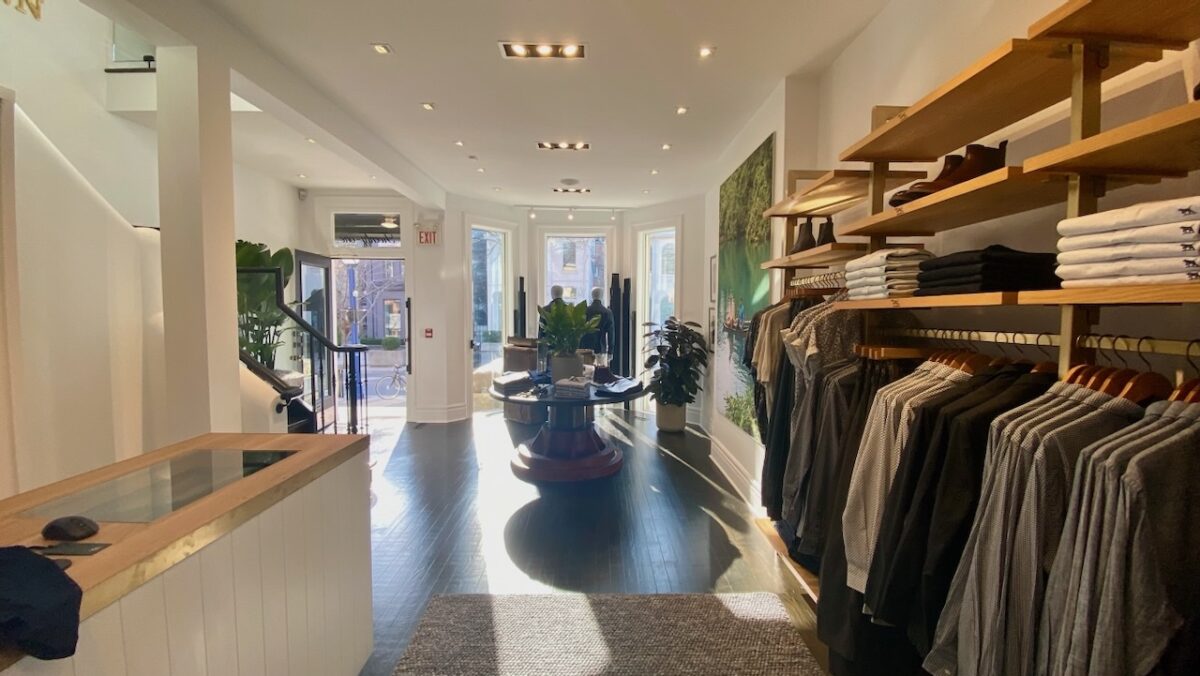
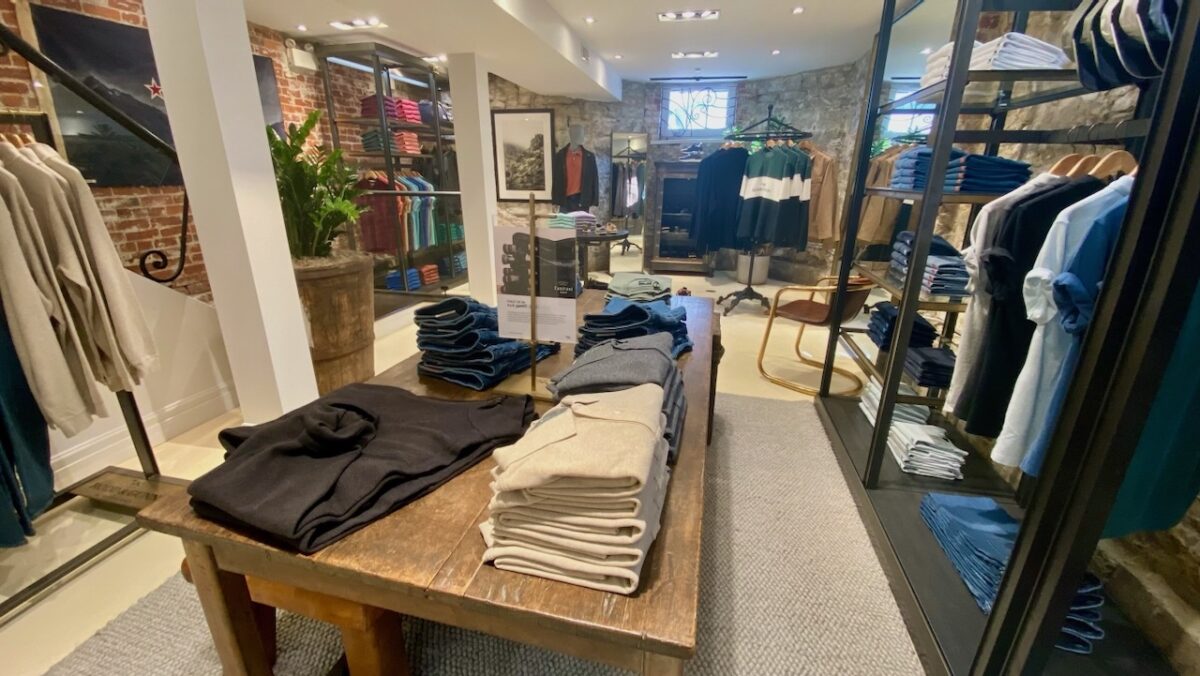
The new Yorkville Rodd & Gunn store occupies all three levels of a building at the corner of Hazelton and Scollard Streets. Included is a basement level with exposed brick that showcases the character of the 124 year-old building that was once a residence.
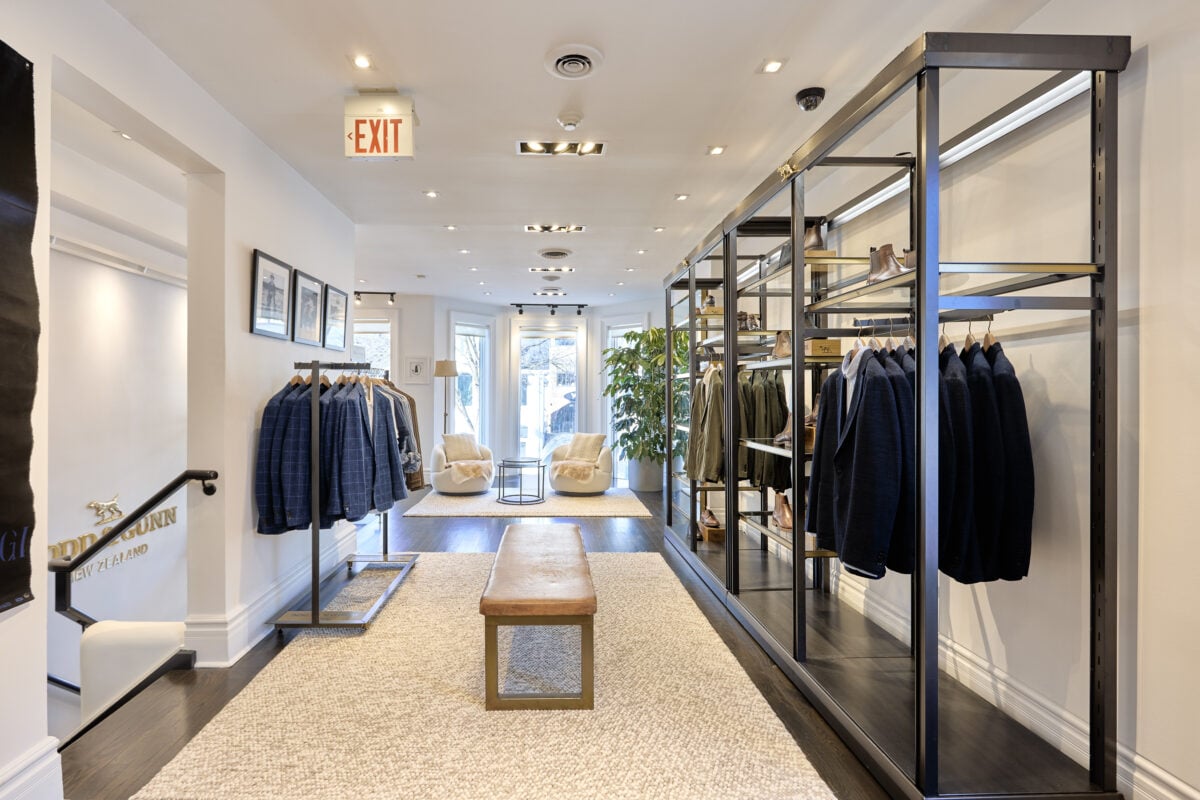
Rodd & Gunn’s full range of men’s fashions are on display in the new store, from casual styles to suiting options, along with accessories, footwear and other items. The store spans about 3,300 square feet across its three levels — the ground floor, accessed from stairs on Hazelton Avenue, spans just over 1,000 square feet. The second floor, accessed from a stairway featuring brass Rodd & Gunn branding, spans 934 square feet. The basement level has been made bright and welcoming, with plenty of stock in a space spanning more than 1,330 square feet.
Rodd & Gunn Yorkville (Image: David Pike)Rodd & Gunn Yorkville (Image: David Pike)Rodd & Gunn Yorkville (Image: Craig Patterson)
Jordan Karp of Savills Canada coordinated the lease deal for the new store — he listed the space and he also has the mandate to represent Rodd & Gunn in Canada as the brand expands and opens more stores. Hanard Investments owns the building at 19-21 Hazelton Avenue which is managed by Greenwin. The building was constructed in 1900 as two houses, and was renovated in 2006 after decades as a commercial property.
The Rodd & Gunn retail space at 21 Hazelton had been occupied by upscale multi-brand women’s retailer George C. until last year, when the retailer’s owner retired. In the fall of 2022, Dutch men’s suit maker Atelier Munro opened its first Canadian location in the adjacent retail space at 19 Hazelton Avenue, featuring a mix of off-the-rack and custom men’s clothing.
The Hazelton Avenue store is the first of several locations for Rodd & Gunn in Canada. Karp said that the brand is seeking street-front retail space with ‘character’ in nodes featuring premium brands and premium multi-brand retailers, as well as locations in top enclosed malls. The ideal retail space for a Rodd & Gunn store is in the 2,000-3,000 square foot range, and can be larger.
The ‘premium brand’ node mentioned above describes Yorkville perfectly — the area is home to various retailers, restaurants, beauty and other businesses, including a clustering of luxury brand stores. The historic area also features a large high-density residential population including an affluent demographic.
Rodd & Gunn Yorkville (Image: David Pike)Rodd & Gunn Yorkville (Image: David Pike)
When speaking to Rodd & Gunn’s choice of street-front stores, Scott Braini, General Manager of Real Estate at Rodd & Gunn, said, “Our premises selection almost always starts with a building that exudes character or a notable point of difference that we can lean into as a brand and showcase our unique rich heritage & personality.”
He went on to say, “Preferred locations are vibrant retail nodes that provide a village energy and showcase a diverse and eclectic retail mix from progressive designers, premium lifestyle offers, classic sophisticated staples and market leading cafes and restaurants.”
“We are driven by opportunities that excite and engage with our passion for retail. Rodd & Gunn is extremely dynamic in its approach to property, and will readily pivot our strategy to achieve unique and authentic experiences for our customers,” said Braini.
Rodd & Gunn Yorkville (Image: David Pike)
Jordan Karp of Savills said that Rodd & Gunn is targeting between three and five standalone stores for the Toronto market, as well as a national expansion that will eventually see stores in Montreal and Vancouver. This all follows Rodd & Gunn’s initial entry into Canada in 2022 when the company opened more than 30 concessions within Hudson’s Bay stores across the country. Braini said that concessions will continue to be an important part of Rodd & Gunn’s Canadian market penetration strategy while several standalone stores are also built to showcase the Rodd & Gunn ethos in a dedicated environment.
One highly anticipated ‘environment’ is the Rodd & Gunn Lodge Bar flagship concept, which has proven to be very popular in New Zealand and Australia. Karp said that Rodd & Gunn is expected to open at least one of these Rodd & Gunn Lodge Bar flagships in Canada, with Toronto being the most likely city for a first location. The flagships feature retail as well as a significant licensed food and beverage component, creating a social space that further builds the brand. A Canadian location would ideally be in the 7,000-12,000+ square foot range, Karp said.
Braini said that there is currently not a timeline in terms of when a flagship store would open in Canada, which means there’s time to find just the right space to make the entire concept work. “These stores are an immersive brand experience that encapsulates Rodd & Gunn’s vision and values across lifestyle mediums of food and fashion. The catalyst for these locations starts with a location that captures our hearts and imaginations,” Braini said.
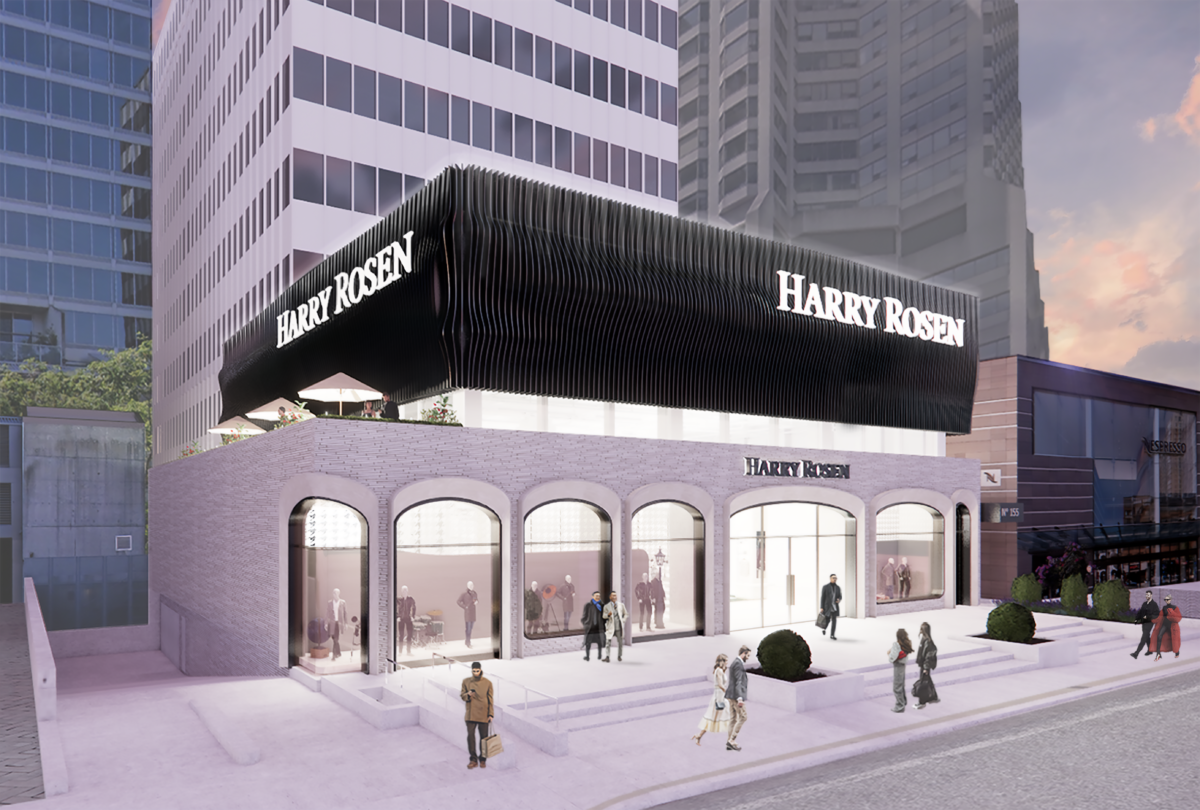
Rodd & Gunn Yorkville (Image: David Pike)Rendering of the new Harry Rosen flagship store at 153 Cumberland Street, opening in the spring of 2026. (Rendering: dkstudio architects inc)
Bloor-Yorkville is seeing a flurry of construction activity and store openings which is transforming the area. Last week, Harry Rosen announced that it will be relocating its flagship from Bloor Street to a 38,000 square foot building on Cumberland Street in 2026, signalling a further shift of retail to the Village of Yorkville area. Over the past seven years, luxury brands have moved into the immediate area, including Chanel, Christian Louboutin, Versace, Brunello Cucinelli, Isaia and others. This spring, luxury retailer V Hazelton (Located at 5 Hazelton Avenue) is expanding into an adjacent building on Yorkville Avenue with a dedicated Kiton boutique.
Canadian grocers are taking different approaches with their discount offerings than American grocers, according to commercial real estate firm JLL’s Grocery Report on the North American market.
“Loblaw is focusing on expanding its discount banners – Maxi and No Frills – but Empire is opting to focus on its current portfolio of stores without pursuing further significant expansion in the discount sector,” said the report.
“The demand for discount banners, deals, and private-label products remains strong, as grocers aim to meet the value expectations of Canadian consumers amid higher inflation and economic uncertainty. Companies have witnessed strong performance from their discount banners and products, leading to increased same-store sales, footfall, loyalty membership, and market share,” it said.
Provigo Boucherville (Image: Divco)Loblaw Carlton Street (Image: Dustin Fuhs)
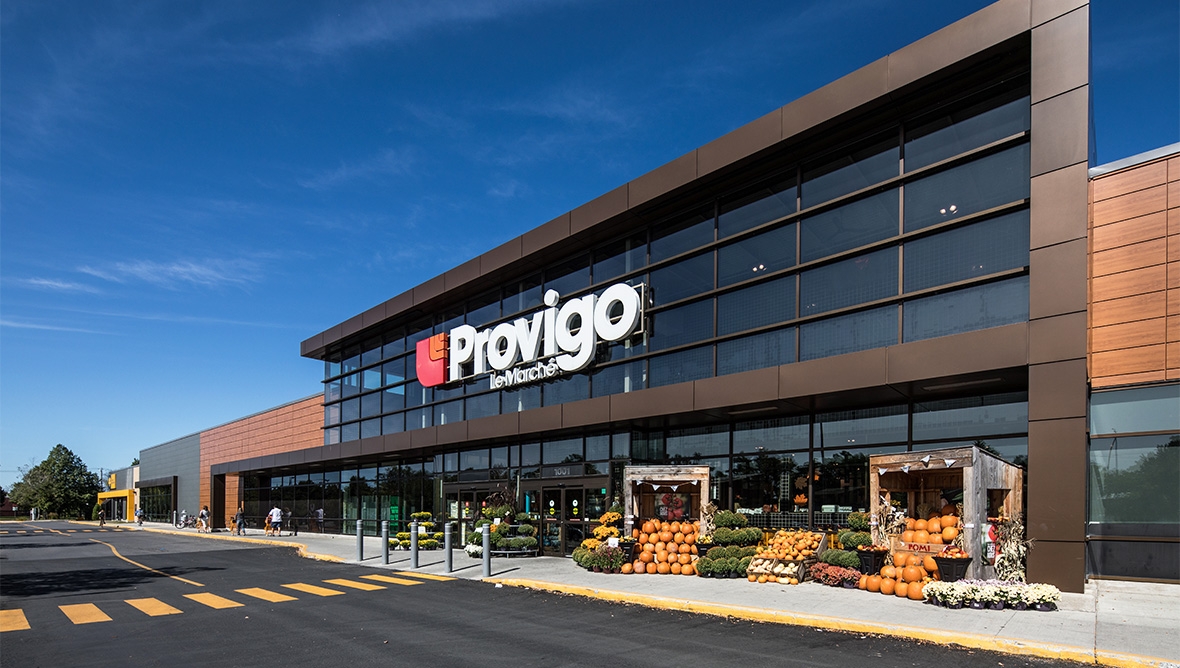
“Loblaw is embarking on an ambitious conversion of its full-service Provigo banner to its discount Maxi banner across Quebec. In 2023, the company opened more than twenty new Maxi stores and plans to convert up to thirty more this year.
“On the other hand, Empire believes that focusing on full-service stores will position it favorably in the future. The grocer argues that customers shop at both full-service and discount stores, providing an opportunity to deliver value within their existing locations. While Empire does not foresee significant expansion in the discount sector, the company plans to strategically convert some stores in Western Canada. The company has already converted Safeway and Sobeys stores to FreshCo in the region.
“By maintaining its full-service approach, Empire is banking on a period of decreasing inflation and interest rates, when customers might prioritize the shopping experience over steep discounts.”
FreshCo Parliament & Dundas (Image: Dustin Fuhs)
Nick Aspros
Nick Aspros, Senior Vice President, Retail at JLL in Canada, said there is a major push for discount stores, as the consumer is seeking value. “Consumers are completing multiple grocery store shops to satisfy their needs – top line banners for certain items and discount stores for all the regular products that are priced lower,” he said.
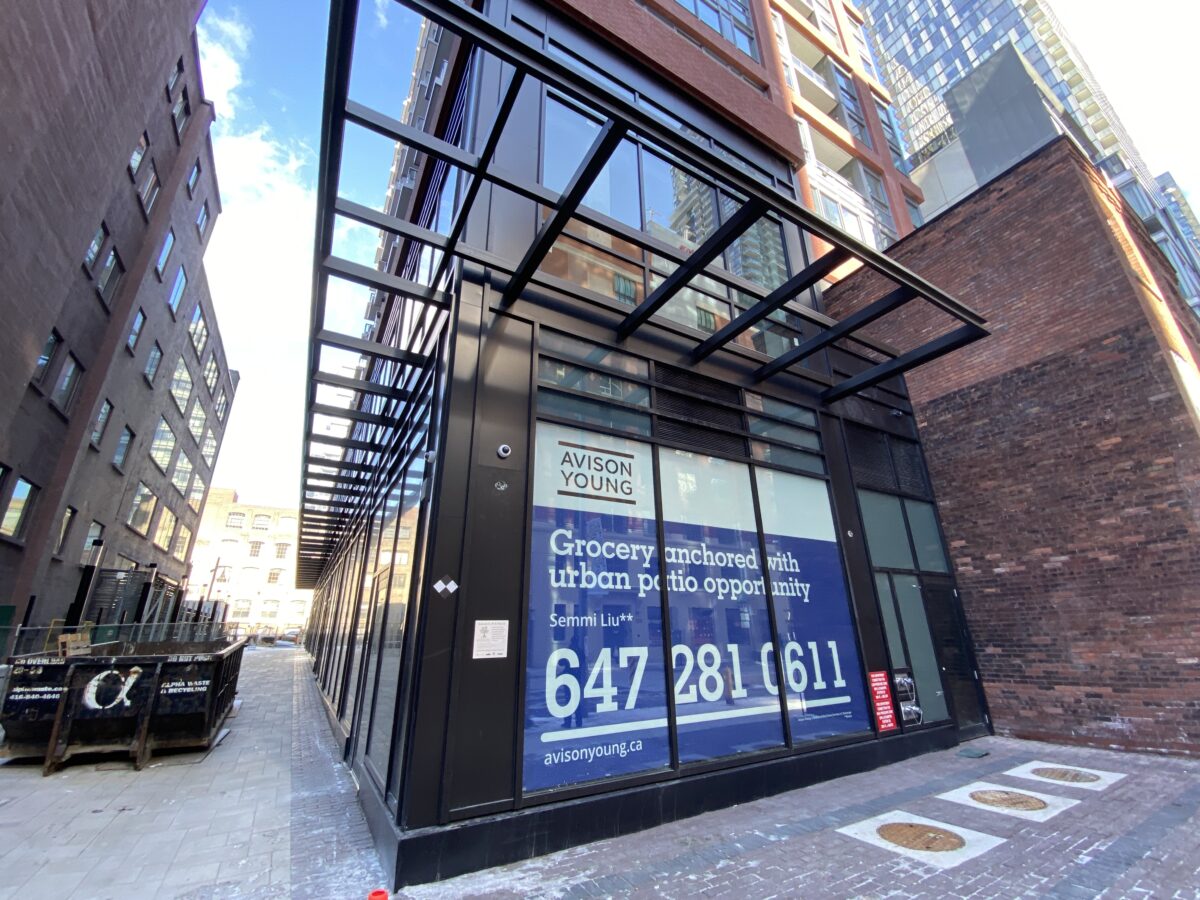
“I can tell you that deal making in the urban environment is challenging. Many of the opportunities being presented are for second floor space and most of the time these locations do not work. Second floor grocery stores need to be located in high foot traffic nodes – be a part of the office lunch crowd, in close proximity to much residential density and on public transit routes (preferably above a subway station).
“The discount stores have been performing extremely well and thus the push to open more discount stores. But not every Landlord/Developer is keen on having a discount store in their project. When dealmaking, grocers have the ability to be any banner within their portfolio.”
Soon-to-open Marche Leos in Canary District at 475 Front St E (Image: Dustin Fuhs)
Aspros said the condo slowdown is also making it increasingly difficult for grocers to keep the deal pipeline flowing as in the years to come there will be a shortage of new large format space as projects are not being delivered.
“A number of mixed use developers have also built projects where the retail component has been an afterthought. While the grocer may really like the location, the retail offering is compromised and not enticing. Poor loading, odd floor plan configurations, poor underground parking and residential elevator shafts in the middle of the retail space do not make for a successful store,” he said.
“Construction costs are also quite high and in order for these deals to pencil, developers are asking for higher rental rates. At a certain rental rate the grocers need to take a pass on the opportunity.
“The Grocery industry believes that the development community needs to treat their use as an amenity to the project and not just a block of space that commands high rents. Developers are building urban communities and having a grocer as part of the project animates and brings the project to life. A grocery store is most likely the best large format retail use to have and in essence it becomes the leasing platform for the balance of the project as it will attract Banks, Pharma and Alcohol.”
Future Grocery Store at Adelaide/Peter Street (Image: Dustin Fuhs)The new’ fresh and frozen food distribution centre in Terrebonne (Image: Metro Inc.)
The JLL Grocery Report found that the return to in-store shopping and increased competition from restaurants has furthered steady growth for grocery e-commerce, despite new partnerships with third-party players for on-demand grocery delivery services.
Despite ongoing challenges, the grocery industry continues to adapt. For example, grocers expanded their budget-cost private-label brand offerings and established in-house retail media networks.
“Looking ahead, grocers who aim to stay relevant and remain competitive will be those who effectively establish personal connections with consumers and continue to innovate in response to changing consumer preferences,” said the JLL report.
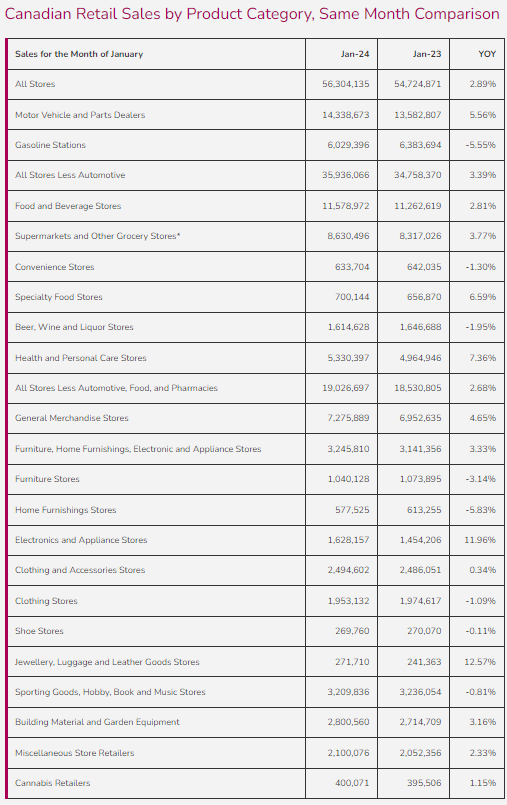
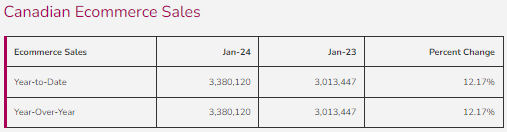
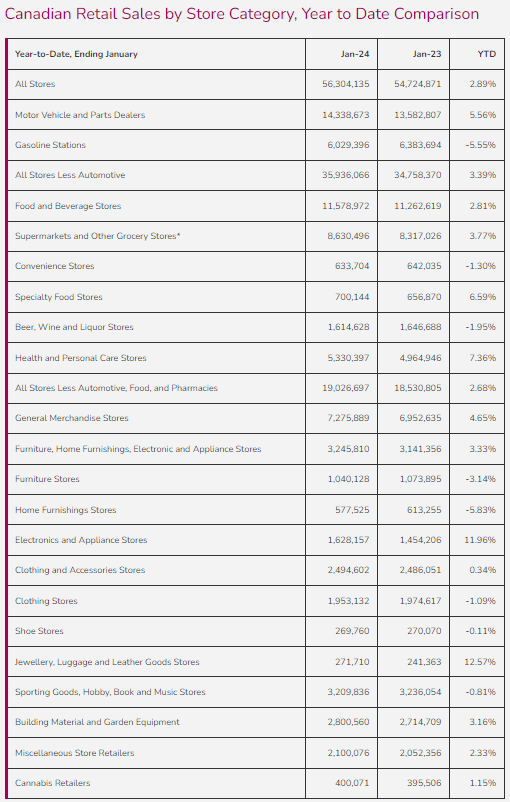
January kicked off with stronger growth than December for Canadian retail sales, growing 2.9% YOY for All Stores. Discretionary spending grew to a similar degree, increasing 2.7% YOY for All Stores Less Automotive, Food, and Pharmacies. The year-to-date sales grew in 2023 over 2022 to 2.1% and 0.4% respectively.
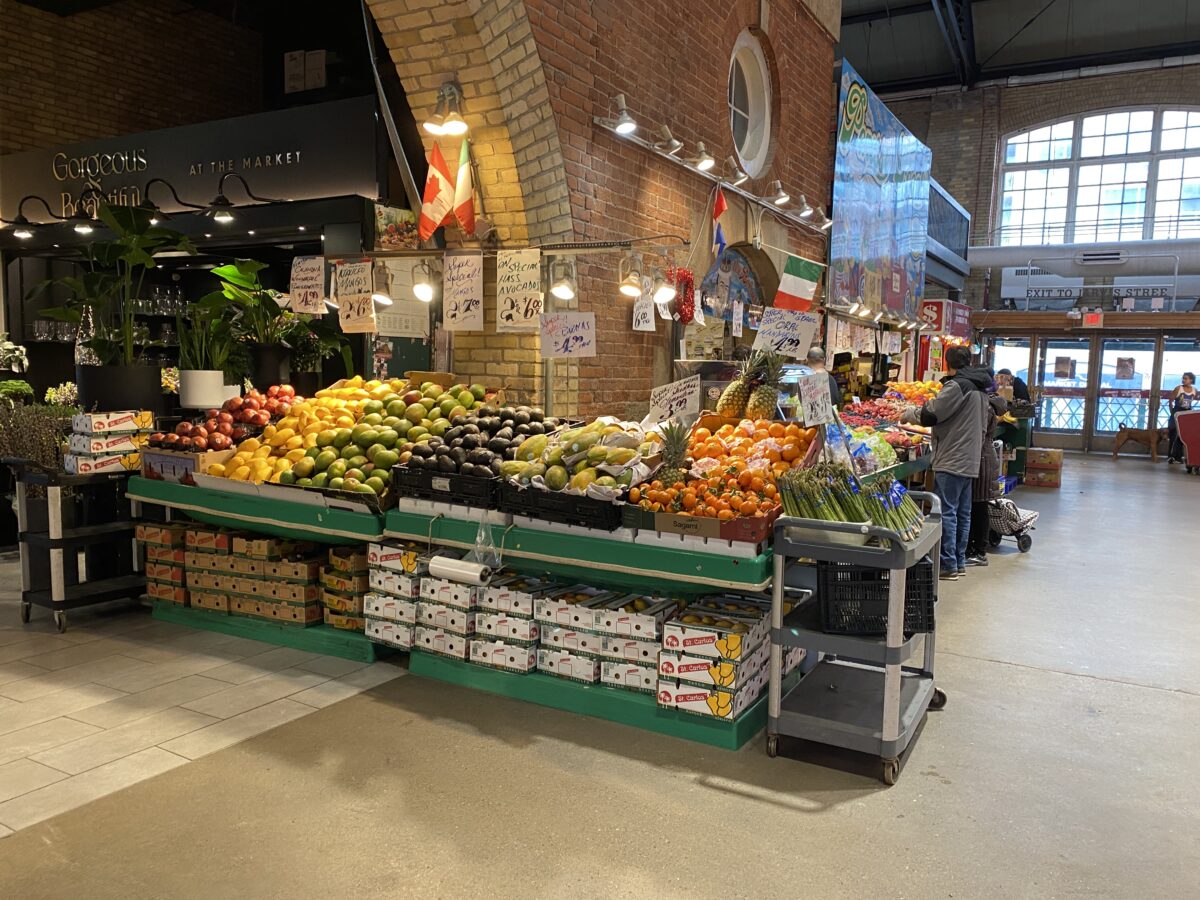
Food and Beverage Stores experienced growth around the rate of inflation (3.4%), with sales increasing only 2.8% YOY. There was, however, some noticeable polarity within the category, specifically:
Convenience Stores fell -1.3% YOY in January. Notably, Couche Tard reported negative results for the first quarter of the 2024 calendar year in line with trend. There are numerous factors mentioned including convenience stores tied to slowing gas sales and lower-income consumers continuing to be strained. Couche notes that they are currently looking at expanding their private label and improving their loyalty program.
Specialty Food Stores grew an impressive 6.6% YOY. This could be a result of the continued frustration of consumers with Canadian grocery giants. There has also been a trend in consumers increasing the number of shopping trips and lowering basket size, which bodes well for smaller, local grocers. In addition, RBC cardholder data indicated that consumers were cutting back on restaurant spending in January, which may be being redistributed towards Specialty Food Stores.
Beer, Wine, and Liquor Stores continue to struggle in January, with sales decreasing -2.0% YOY. Many people cut back on drinking in the new year, but this is seemingly more widespread as 2023 experienced lower sales throughout the year.
St. Lawrence Market in Toronto (Image: Dustin Fuhs)
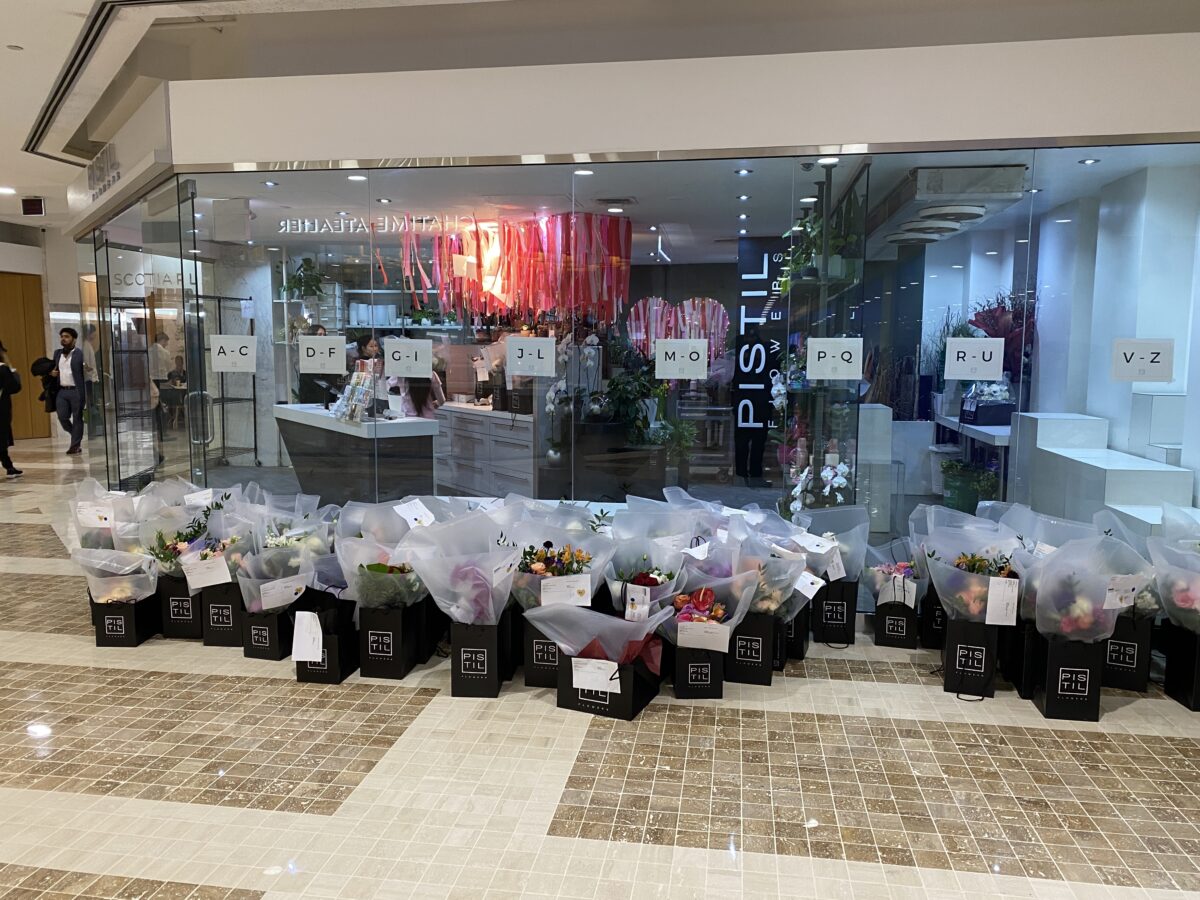
Consumers increased their spending on Jewellery, Luggage, and Leather Goods Stores in January with sales growing 12.6% YOY. This can likely be attributed to two main factors: Valentine’s Day and impending travel.
Valentine’s Day obviously has a large effect on the jewellery category, but travel may be affected now as well. As younger generations tend to prefer experiences over products, it is possible that they are deciding to take a small trip together rather than purchase jewellery.
The RBC report indicated that there was a significant increase in online travel bookings, indicating that consumers are planning more travel in 2024. In Ontario, there has been limited snow, so people are opting to travel to other regions to take part in 2024’s ski season.
Valentine’s Day at Pistil Flowers in First Canadian Place (Image: Dustin Fuhs)
Looking forward to the rest of 2024, there are numerous trends to watch. According to recent RCC studies, consumers are expecting to maintain or increase their 2024 budgets which could be good or bad for business depending on its 2023 performance. For example, March will be interesting to watch as 84% of consumers expect to spend the same or more than 2023 during March Break, and 83% for Valentine’s Day. This is a promising statistic for travel, experiences, and jewellery, but can be a negative statistics for categories less associated with these time periods. There is not necessarily much more discretionary spending for Canadian consumers this year, but they may be planning to spend it much differently. In addition to this, as mentioned last month, Canadian Tire experienced poor performance in Q4 2023, and expressed that this is a foreshadowing of what’s to come. As we continue through 2024, JCWG is thinking about:
Canada has been closely following the US retail sales trends recently. With that, will Canada experience a successful “leap year” February as the US did?
Did consumers spend on experiences or products for 2024’s Valentine’s Day with their continued limited discretionary budget?
With travel bookings increasing, where will we see the biggest increases in spend in Canada? Are consumers actually flocking to the mountains (BC, Alberta) or are they writing off the whole season and spending their money in the Caribbean?
How have YOU changed your business’ budget for 2024 with all the changes that lay ahead?
Retail Insider is streamlining its Canadian retail news from around the web to include a handful of top news stories that can be viewed quickly during the day. Here are the top stories from the past 24 hours.
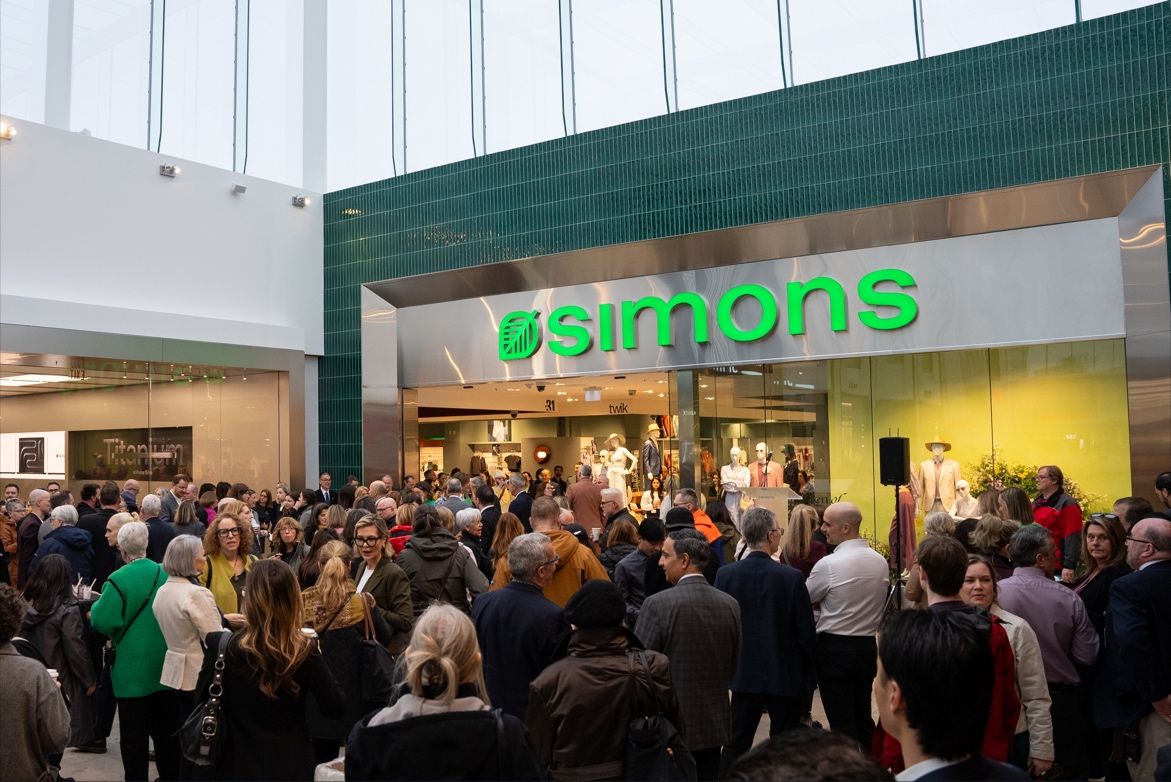
Quebec City-based large format fashion retailer La Maison Simons has opened its 17th store in Canada in Halifax. The location marks a milestone in the family-owned business which expanded for the first time outside of Quebec in 2012, and now has stores from BC to the Maritimes.
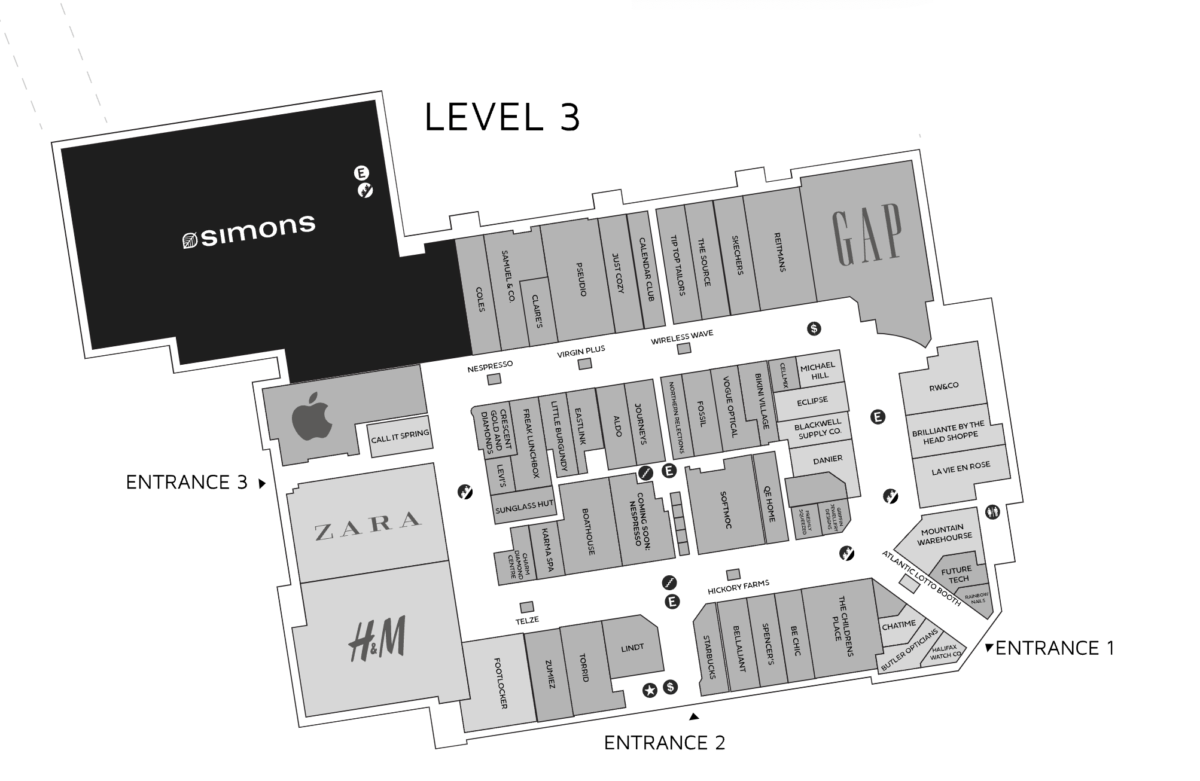
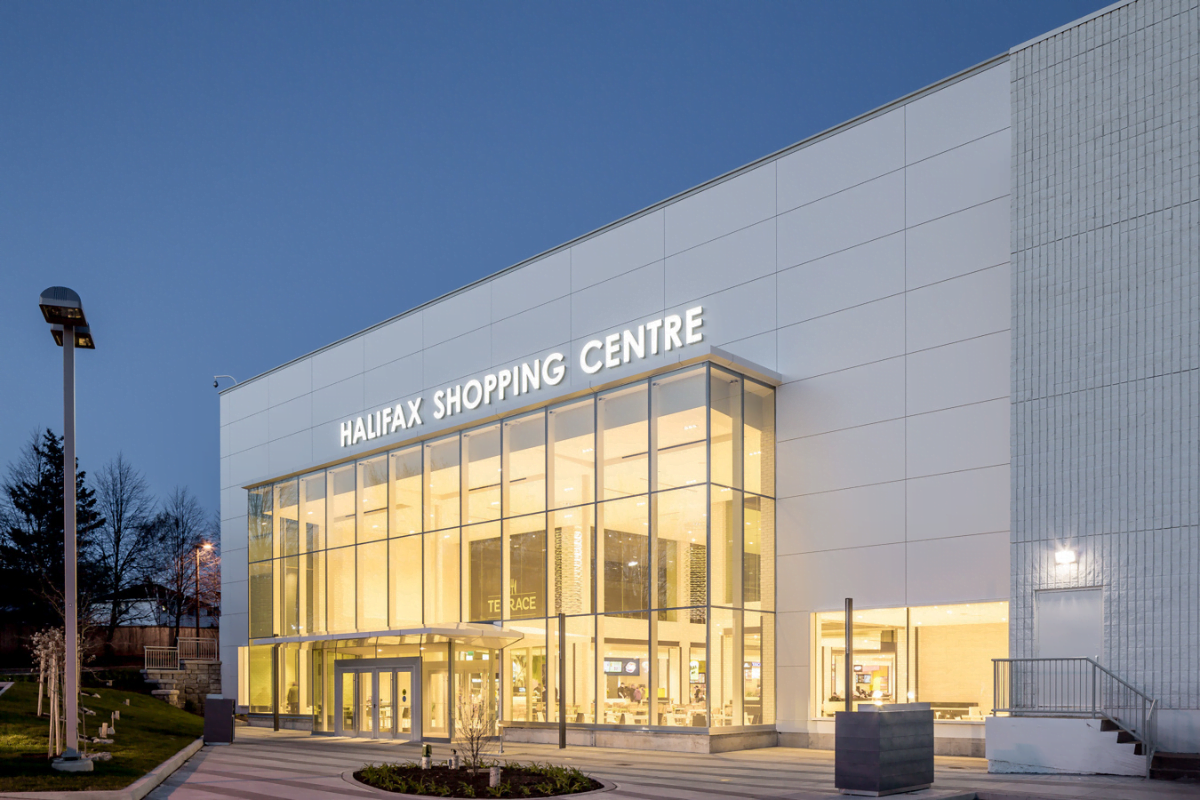
The Halifax store is located at the Halifax Shopping Centre, and spans 56,200 square feet on one level. The store occupies the top floor of a former Sears store that operated in the mall until 2018.
Bernard Leblanc, President and CEO of Simons, said in an interview that the Halifax store cost more than $20 million to build, and has about 150 employees. The unique store, architecturally conceptualized by Lemay Michaud with interior design by McKinley Studios, features a design reflecting Nova Scotia’s rich maritime and naval history. Leblanc, who is the first non-family member to lead the Simons chain, noted that Simons’ founder, John Simons, frequently crossed the Atlantic to source merchandise from England and the European continent. It is said that he would have completed over 70 such journeys while at the helm of Simons, with the store’s design referencing the history.
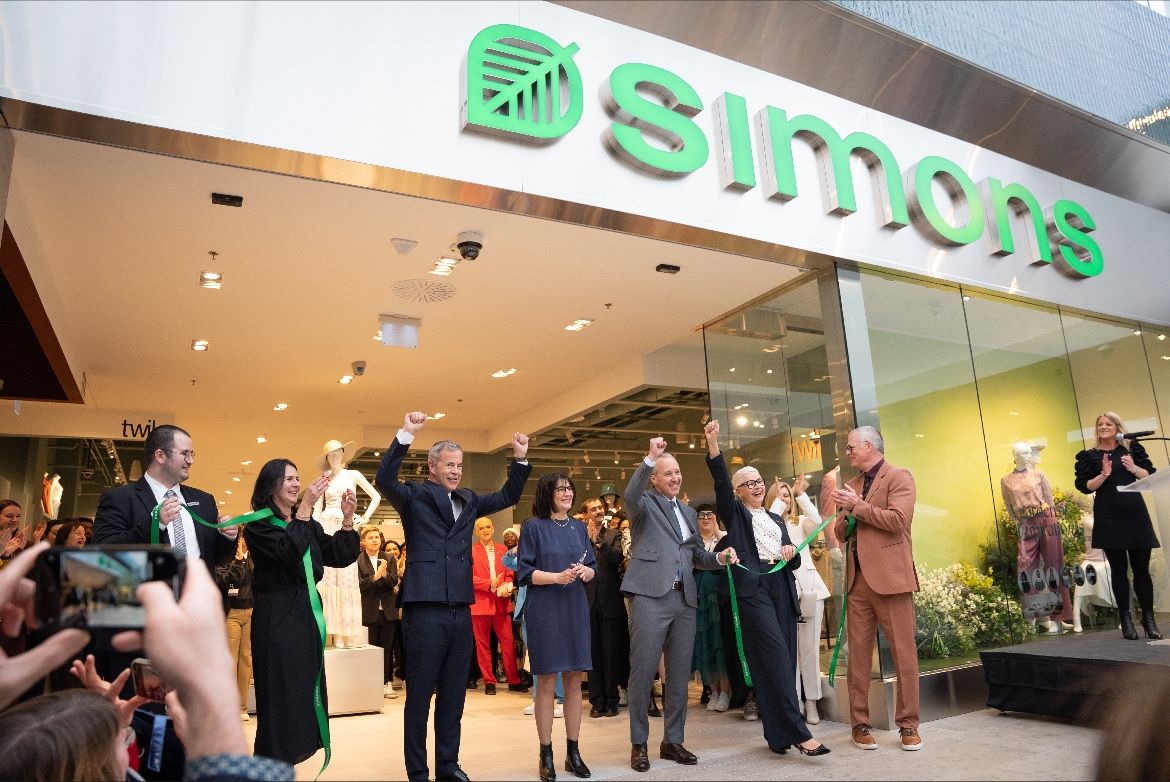
Grand opening of La Maison Simons at the Halifax Shopping Centre on March 21, 2024 (Image: Nic Takushi / David Sobey Retailing Centre)Bernard Leblanc, President and CEO of La Maison Simons (Image: Simons)
The store’s exterior facade references the sails of the famous Nova Scotian schooner The Bluenose — it’s a tribute to the region as well as to family member Peter Simons who was a sailmaker in the early 1800s in Quebec City.
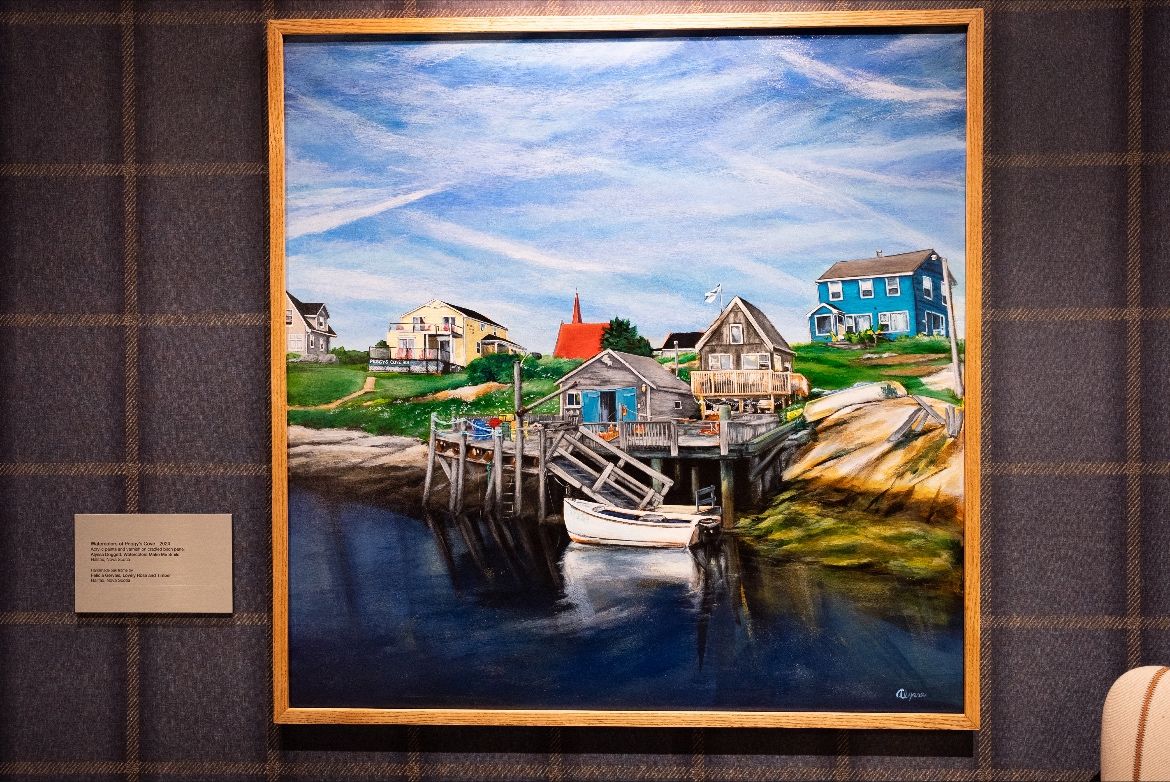
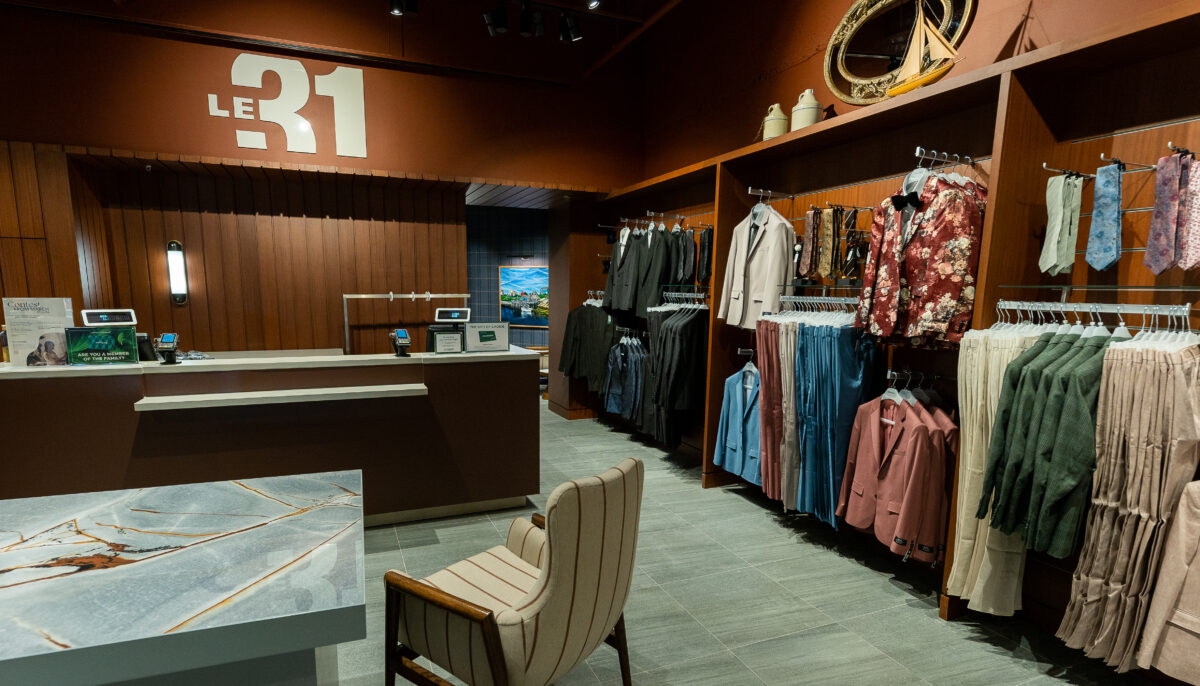
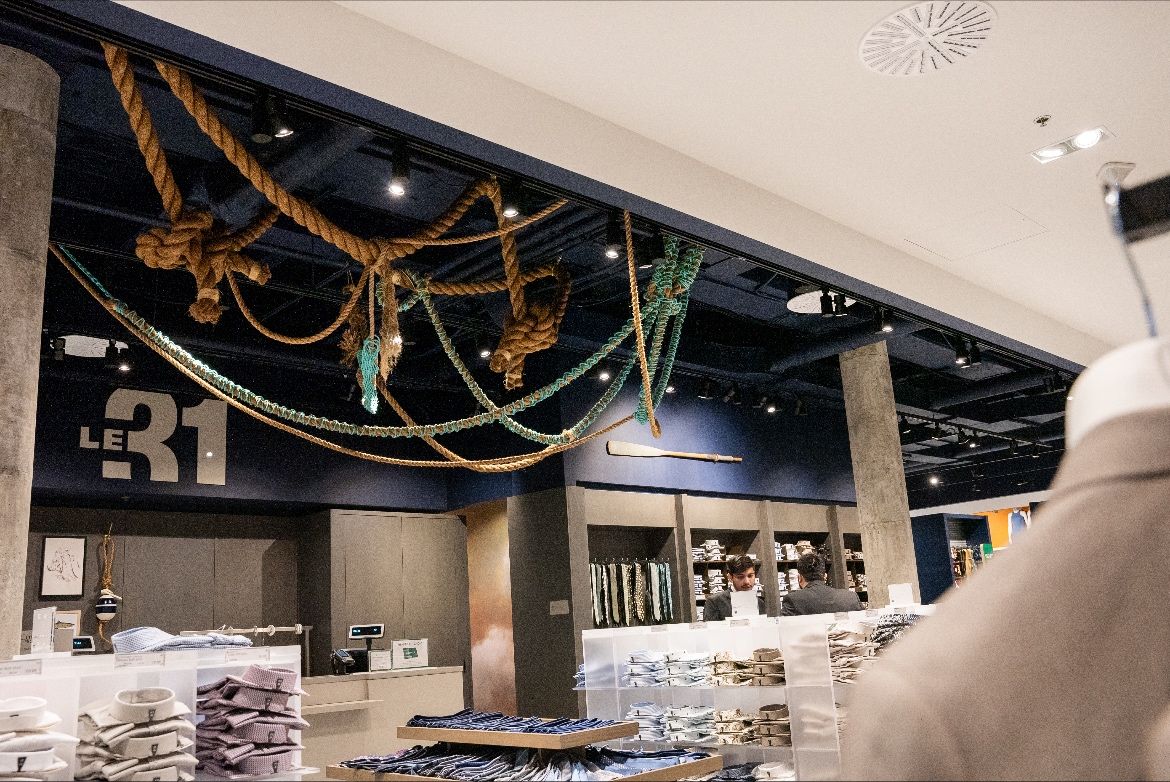
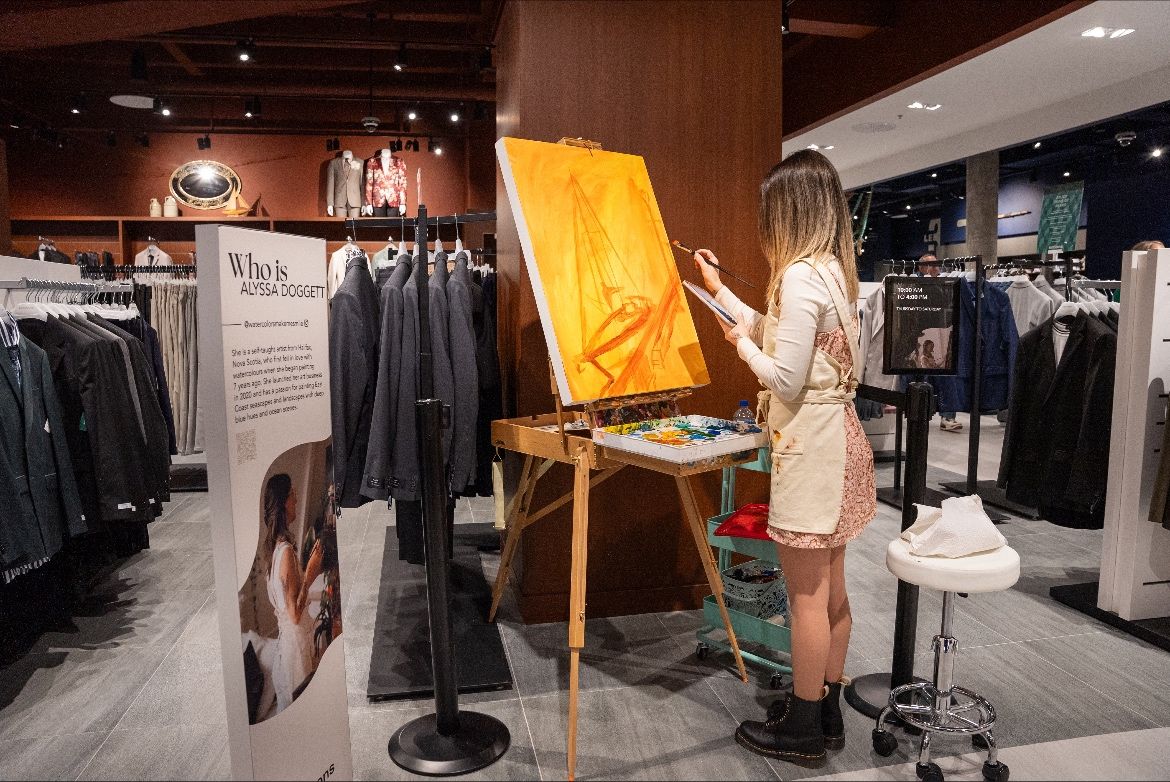
As with other Simons stores, art work is given a prominent place in the Halifax location, including local artists. In the ‘Le 31’ Men’s department, a painting of Peggy’s Cove by Nova Scotian artist Alyssa Doggett (Watercolours Make Me Smile) takes its place in a wooden frame crafted by another local artist, Felicia Gervais (Lovely Rose & Timber). Suspended from the ceiling, a composition of marine cordage by Melanie Colosimo embodies the journeys of members of a maritime community intrinsically linked by diverse connections.
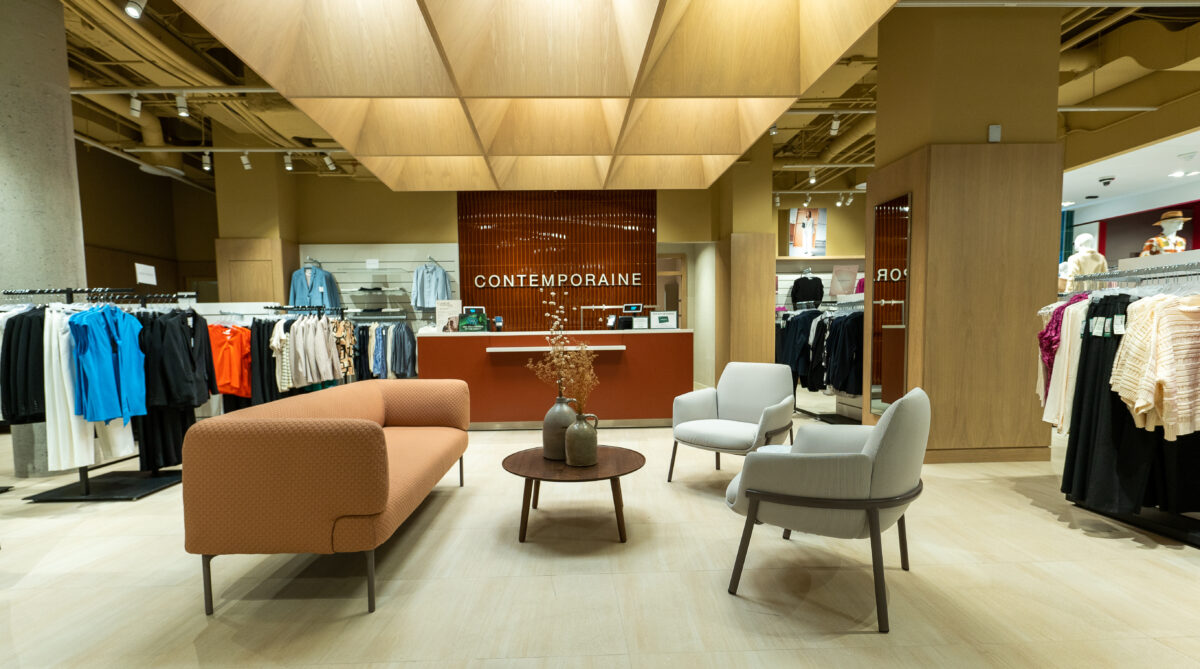
In the Women’s Contemporaine department, three quilts by Andrea Tsang Jackson depicting the Prairies are part of the design. The Nova Scotian textile artist is also part of the online platform Fabrique 1840 by Simons with her 3rd Story Workshop.
Simons Halifax Shopping Centre (Image: Simons)Simons Halifax Shopping Centre (Image: Simons)
The store’s interior references the country, with each department having been conceptualized to represent a Canadian city or region. The Pacific Coast, the Okanagan Valley, the Rockies, the Prairies, the Arctic, the Great Lakes, Downtown Toronto, Old Montreal and the Maritimes all serve as design inspiration. Each department is intended to be a ‘discovery zone’, delineated by architectural spinoffs, where each space reveals its identity through colours and aesthetics. The interior facades are covered in green ceramics to highlight Simons’ emblematic green.
Vancouver artist Douglas Coupland’s National Portrait is also showcased in the Halifax store, made up of dozens of 3D-printed busts of Simons customers from across the country. This imposing portrait of the Canadian people of the 21st century is said to demonstrate the advances of technology while experimenting with proportions, colours and perspectives.
Douglas Coupland’s National Portrait at Simons Halifax Shopping Centre (Image: Nic Takushi / David Sobey Retailing Centre)A painting of Peggy’s Cove by Nova Scotian artist Alyssa Doggett at La Maison Simons, Halifax Shopping Centre (Image: Nic Takushi / David Sobey Retailing Centre)
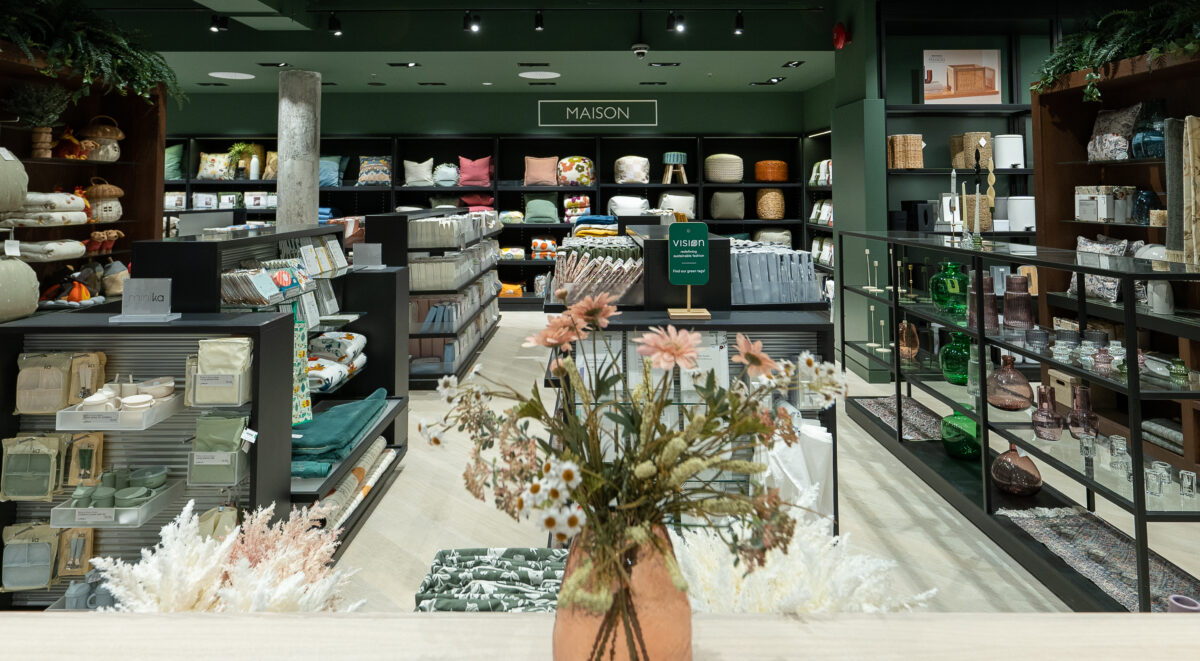
The Halifax store features Simons’ collections and national and international brands — though Leblanc noted that the designer department Edito, known for luxury brands such as Balmain and Jil Sander, will not be part of the Halifax offering. Various in-house departments and brands will be featured however, including Twik, young women’s emerging and creative fashion, Icône, bold feminine fashion, Contemporaine, edited modern women’s fashion, Miiyu, women’s evolved lingerie and sleepwear, Le 31, avant-garde and timeless menswear, Djab, edgy and authentic streetwear for men, I.Fiv5, on-trend activewear, as well as Simons Maison, distinctive home fashion.
Leblanc said that Simons’ private brands make up about 2/3 of the offerings in-store, while designer brands make up about a third. Chain-wide, e-commerce now represents about 35% of sales for Simons, made possible with a new state-of-the-art distribution centre built during the pandemic.
Men’s ‘Le 31’ department at Simons Halifax Shopping Centre (Image: Simons)
The Halifax Shopping Centre is a super-regional centre that was acquired by Primaris on November 30, 2023
Patrick Sullivan
“We are very pleased to announce the opening of Simons, a Quebec-based fashion retailer, as part of the $52 million redevelopment at the Halifax Shopping Centre,” said Patrick Sullivan, President and Chief Operating Officer of mall landlord PrimarisREIT. “Simons is an excellent addition to our merchandise mix and brings a unique offering to the Halifax market.”
In addition to the 56,200 square foot Simons, the $52 million redevelopment of the former Sears space at the Halifax Shopping Centre includes a 38,500 square foot Winners and a 15,000 square foot Pet Smart, which are now open. A 13,000 square foot Dollarama is expected to open by the end of this month. The redevelopment provides shoppers with an additional entrance to the site, incorporating a modern aesthetic including a three-level glazed atrium, providing additional natural light.
The Halifax Shopping Centre is comprised of 562,000 square feet with a committed occupancy of 96.2%. Other large format tenants include Sport Chek and Zara, with unique to market commercial retail unit tenants including Apple, Aritzia, Michael Kors, Victoria’s Secret, Browns Shoes, and Nespresso, and other notable tenants include Sephora and Lululemon.
Halifax Shopping Centre
La Maison Simons was founded by John Simons in Quebec City in 1840 and in 2012, opened its first store outside of the province of Quebec at West Edmonton Mall in Edmonton. The company has since expanded across Canada, opening stores in markets including West Vancouver, Edmonton (Londonderry Mall being a second store), downtown Calgary, Mississauga, Ottawa and now Halifax. The Halifax Shopping Centre location is the 17th for Simons in Canada.
Simons CEO Bernard Leblanc didn’t have any new stores to announce, though he noted in an interview that the Vancouver and Toronto markets are under-served by Simons stores. Rumours in the industry have it that Simons could occupy part of more than one Nordstrom store in Canada that shut last year with the US chain’s Canadian exit — a TikTok journalist claimed that Simons would open at CF Pacific Centre in Vancouver, and Leblanc said that was an unsubstantiated rumour. Nordstrom’s other large Canadian stores were in Toronto (CF Toronto Eaton Centre, Yorkdale, CF Sherway Gardens) as well as at CF Rideau Centre in Ottawa and CF Chinook Centre in Calgary. The CF Rideau Centre is already home to a beautiful Simons store, so a deal for a replacement location is likely off the table, at least for that particular mall property.
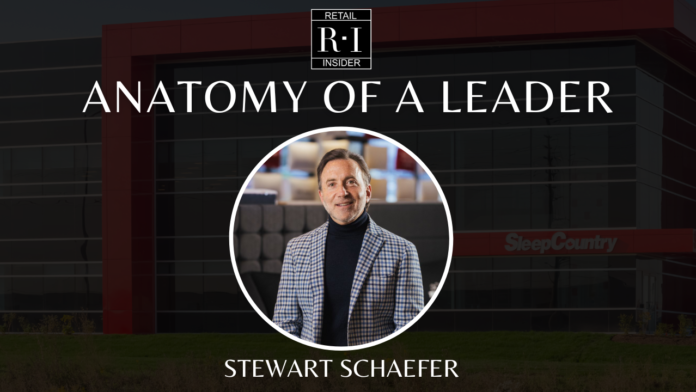
Anatomy of a Leader: Stewart Schaefer, President and CEO of Sleep Country Canada
Stewart Schaefer has been a leader in the sleep industry for almost three decades.
But his journey to a successful career in the retail industry began after he initially worked in the financial industry – more specifically the commodity markets. Lessons learned in financial world are still being utilized today as President and CEO of Sleep Country Canada and Dormez-vous.
He was born and raised in Montreal and majored in marketing and minored in finance at Concordia University in Montreal.
“I thought I was going to end up being a stockbroker which is where my world originally began,” he said.
“In the last year of university I was managing a tennis club because I love tennis. It’s my number one passion and I had a little bit of extra time on my plate so I went knocking on all the doors of the brokerage houses downtown in Montreal, because I just wanted someone to let me in to polish their shoes or get their lunches.
“And actually finally one firm let me through the door and let me get their lunches, polish their shoes. This was like 35 years ago and eventually one of the brokers brought me into his office and started to let me work on some charts and some analysis with him – like his little helper. And by the end of the summer they offered me a job. It was a company called Dean Witter which is now Morgan Stanley. They offered me a job to go out to Chicago and they would train me to be a commodity broker and trade in the pits in the Chicago Board of Trade and the Chicago Mercantile Exchange.”
Image Provided by Stewart Schaefer
To his parents’ chagrin, he packed up and went to Chicago for about two years. He was transferred to New York and was there for about another year and a half. The company then opened up a commodity department in their office in Montreal. Schaefer then moved back home trading commodities from when he was 20 years old for about six or seven years.
“One of my largest accounts was this Taiwanese gentleman who lived in Taiwan and went back and forth from Canada and Taiwan with the Presidents of the Taiwanese associations in Canada. He became very close with me and he was a big trader in commodities but he also, and this is the rub, manufactured brass and wrought iron headboards and footboards in China,” said Schaefer.
“I became very, very close within the Taiwanese community. I learned how to speak Mandarin. I would play mahjong with them on the weekend and one day he asked me to leave my commodity business and help him develop his headboard and footboard business in the United States.
“So once again to my parents’ chagrin the Wall Street boy left the commodity business and I ripped out the backseats of my car and developed a company called Heritage Classic Beds. I drove all along I95 in the U.S. from upper state New York down to Florida and knocking on the doors of furniture stores and mattress stores.”
Image Provided by Stewart Schaefer
Schaefer started to build Heritage Classic Beds. The company had a warehouse in Champlain, New York, which is about 30 minutes away from New York.
“One day when I was back in my warehouse I noticed I had a lot of damaged headboards and footboards that I needed to liquidate. So I decided I was going to open a store in Montreal to get rid of my damaged headboards and footboards. I came up with the name for a company called Dormez-vous, which is ‘are you sleeping’,” he said.
“When I went to go set up my first store which is literally going to be 30 years April 1 -my 30-year anniversary is April Fool’s Day – when I went to go set up the headboards and footboards they kept on falling down so I ordered a bunch of mattresses just to hold them up. The next thing I knew when people were coming in to buy my damaged headboards and footboards they were asking about the mattresses also. And the rest is history.”
Image Provided by Stewart Schaefer
Six months later, October 1, 1994, Sleep Country opened their first four stores in Vancouver and Schaefer’s brother was attending the University of British Columbia at the time.
“He said to me ‘hey you stupid brother of mine, who quit the Wall Street world to sell mattresses for a living, there’s someone else crazy like you that just opened up here in Vancouver’,” he said.
“So he started taking pictures of Sleep Country – the old Polaroid pictures. I even still have them. They’re in my safety deposit box. It’s like a little memory for myself. And he would send them to me and I would try and emulate everything they were doing because in my mind I used to joke and say if they ever come across the country and come to Montreal, they’ll have to buy me because I’m already Sleep Country.
“Fast forward 10 years later, six stores, I get a knock on the door from Christine Magee (co-founder) and Steve Gunn, CEO and the President, and after a six-hour lunch that we had together that was just fabulous culturally wise, ambition wise, idea wise, I knew this is the place I wanted to be and they bought my business in December of 2005.”
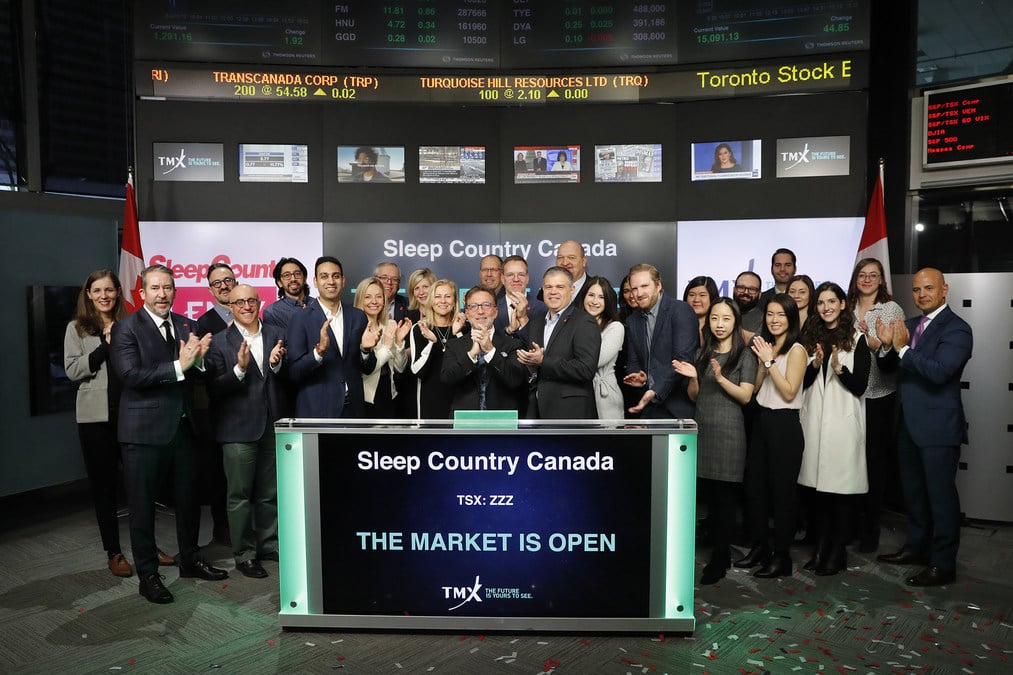
Sleep Country Canada Inc. Opens the Market (CNW Group/TMX Group Limited)Image Provided by Stewart Schaefer
Schaefer, who was the President of Dormez-vous, said the brand went from six stores to 60 stores. He was then asked to take on the merchandising for the entire country and the real estate for Sleep Country. Then the marketing for the entire country. He then introduced ecommerce and then was in charge of mergers and acquisitions.
Over the years, his title changed to Chief Business Development Officer in 2014. A few years later he became the President and CEO of both Sleep Country and Dormez-vous.
“Along that journey, another exciting part of the business was the change of ecommerce which I was the guy not only bringing ecommerce to Sleep Country because we were only a brick and mortar tactile business, I met the folks from Endy in 2015. It took me until 2018 to buy them because nobody thought ecommerce would grow in our industry. So I eventually bought Endy in December 2018,” said Schaefer.
“Then I ended up buying Hush and then last year I bought Silk and Snow and then I bought Casper, who was my number one competitor, in April 2023. We went from $6 million in sales to now close to $1 billion in sales. It’s been a wild ride.”
Image Provided by Stewart Schaefer
Schaefer said his experience in the financial world helped him navigate risk and reward in his business.
“It gives me a very strong intuition into the consumer . . . I watch a lot of things people don’t watch. Besides that, I watch spreads on interest rates and currencies, because it’s second nature to me based on the fact of being in that business, but the import/export business I was doing it 30 years ago from China when nobody was actually doing it. And I was intimate in terms of the channels, the actual shipping lines and the channels, and how they move from then until now,” he said.
“And I had the foresight luckily enough based on some of the things I was hearing and seeing and on top of it my brother living in China I knew something was going on with the supply chain and this was before COVID that we needed to adjust and change some things as it related to our business. I follow consumer confidence which is very much related to the stock market all the time.”
Future Sweat & Tonic at 11 Yorkville (Rendering: Provided)
Fitness and wellness concept Sweat and Tonic will be opening its third location in Toronto’s Yorkville area. It’s the latest fitness business to move into the high-density, rapidly growing neighbourhood which is also home to a considerable number of high-income households.
Sweat and Tonic’s Yorkville location will be at 11 Yorkville Avenue, at the base of a mixed-use building that will include a substantial residential tower. Sweat and Tonic will occupy about 18,000 square feet on the second floor of the building which is currently under construction and will be called 11YV. Developers of the project include RioCan, Metropia and Capital Developments.
11YV is a 62-storey development by Metropia, Capital Developments, and RioCan Living (Image: 11YV)11 Yorkville Avenue (Image: Craig Patterson)
The Yorkville Sweat and Tonic will feature over 200 classes led weekly by top trainers. There will be social spaces that will “allow community connection, the sharing of ideas, and a place to see and be seen,” according to the company.
“Drawing from the distinct characteristics and history of the Yorkville neighbourhood, the design will be classically inspired with modern, energizing, and playful reflections throughout, offering a curated, luxury aesthetic with guest experience at the forefront,” said Morgan Thomas, Chief Brand Officer of Sweat and Tonic, in a statement.
Morgan Thomas
“As we plan the design of our spaces in collaboration with exceptional partners, we’re finding opportunities to elevate the guest experience at every turn. The space speaks to the distinction and prestige of the neighbourhood, while keeping community, technology, innovation, and hospitality top-of-mind. From our top-of-the-line fitness equipment, AV, and lighting systems, to our complimentary amenities including yoga mats, towels, cycling shoes, and fully-stocked change-rooms, to our flexible access options that are price-protected and free from annual contracts, we want the guest journey to be uncomplicated. The moment you step through our doors, we want you to feel cared for, and we’ve removed all of the traditional industry friction so you can come and sweat it out just as you are.”
Sweat and Tonic at The Well (Image: Sweat & Tonic) Sweat and Tonic at The Well (Image: Sweat & Tonic)
The boutique fitness and wellness hub offers the widest collection of group fitness classes in Canada, according to Sweat and Tonic. The local, curated fitness experience includes spa facilities, cafe and bar offerings, including Tonic House, the multi-functional lounge, workspace and event venue that Sweat and Tonic says inspires collaboration and innovation. Locations also carry retail products from top brands including Lululemon, AZUR, and Consonant Skin+Care.
David Ingram
“Sweat and Tonic was conceptualized in 2017 to bring the highest quality of group fitness to Canada with Yorkville as the preferred location. We have looked at many spaces over the ensuing years as we maintained a discipline to be selective, and so it’s with great pride we can finally announce another partnership with RioCan to make 11 Yorkville our third home in Toronto,” said David Ingram, Founder of Sweat and Tonic in a statement.
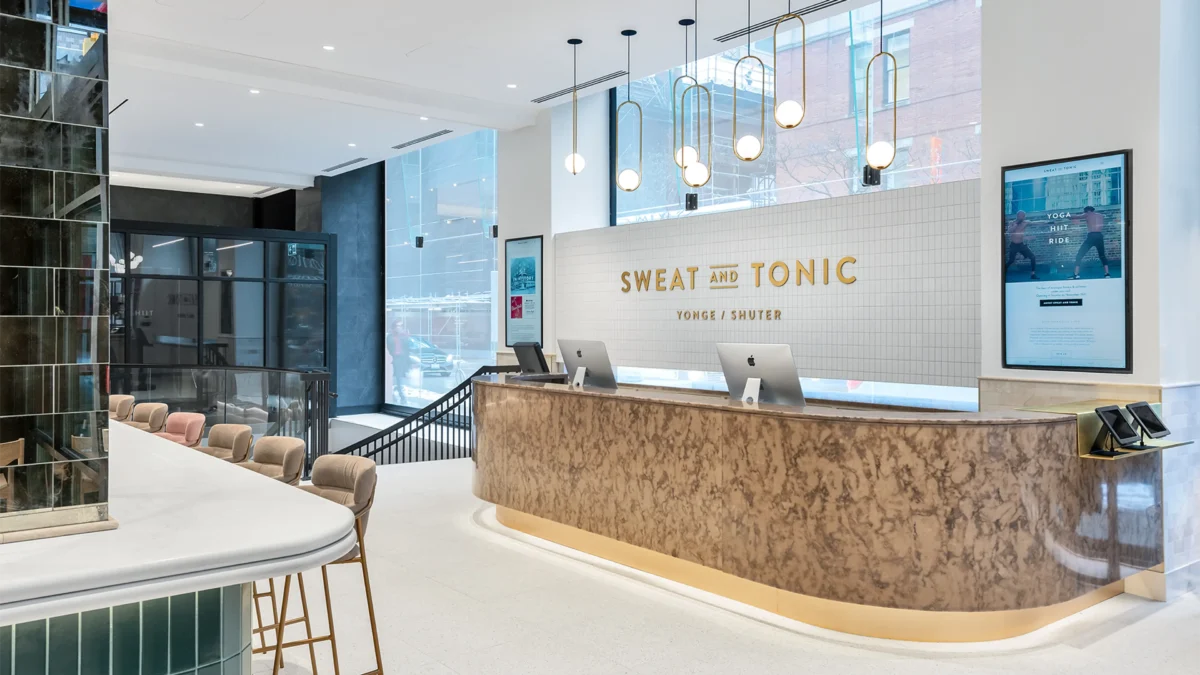
Sweat & Tonic Shuter Street (Image: Sweat & Tonic)Sweat and Tonic Shutter Street (Image: Dustin Fuhs)
Yorkville is the third location for Sweat and Tonic, which was founded in Toronto shortly before the Covid-19 pandemic.
“Our first location at Yonge and Shuter St opened in November 2019 and, despite the impact of COVID-19, it has surpassed all expectations. Our second location at The Well has already exceeded record attendance rates. We are truly grateful to both communities for their overwhelming support and remain optimistic and excited for this next phase of our evolution in one of the city’s most iconic neighbourhoods,” said Ingram.
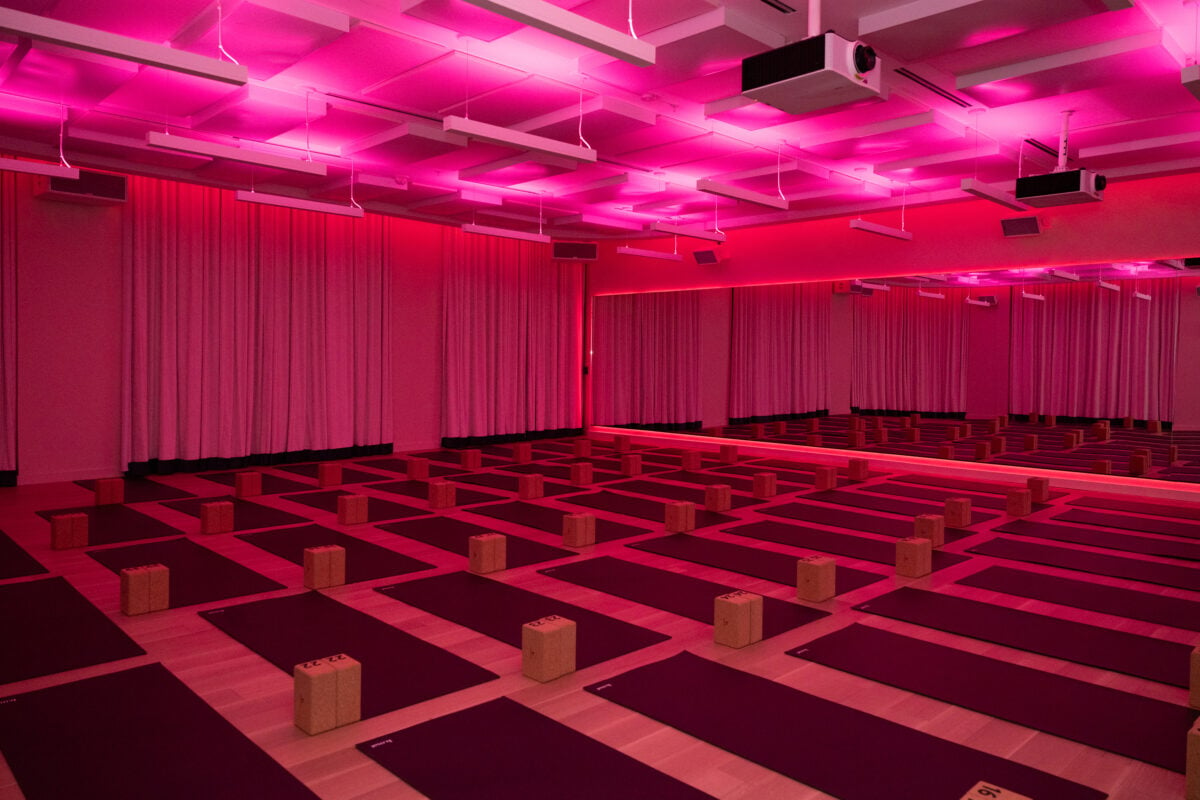
The location at The Well opened about three months ago, and spans about 25,000 square feet. It includes the largest indoor cycling studio in Canada, immersive environment Yoga and cycling classes, a state-of-the-art High-Intensity-Interval-Training (HIIT) Studio, personal training services, a member’s only lounge and co-working space, event space, cafe, bar, patio, and an innovative new wellness and recovery hub opening this spring. The wellness and recovery hub will feature biohacking, high-touch, and aqua therapy treatments to support guests’ fitness, wellness and lifestyle goals, according to the company.
Sweat & Tonic at The Well (Image: Dustin Fuhs)
RioCan is also a landlord of The Well, which opened several months ago and in May will see the opening of a new 70,000 square foot food market. Sweat and Tonic is a key tenant at The Well, occupying a second-level space in a unique purpose-built building at the centre of the project.
Oliver Harrison
“RioCan is thrilled to expand our partnership with Sweat and Tonic by introducing their second location within our portfolio at 11YV. Following their successful launch at The Well in 2023, we are eager to extend Toronto’s premium boutique fitness and wellness experience to one of Canada’s most exclusive shopping and dining districts,” said Oliver Harrison, Senior Vice President, Leasing and Tenant Experience at RioCan.
David Wedemire and Stan Vyriotes of DWSV Realty represented Sweat and Tonic in the Yorkville lease deal.
The 11YV tower will rise 65 floors above Yorkville Avenue and will have about 600 condominium apartment units. The building will have about 24,000 square feet of retail space, 18,000 of which will be for Sweat and Tonic’s new fitness facility.
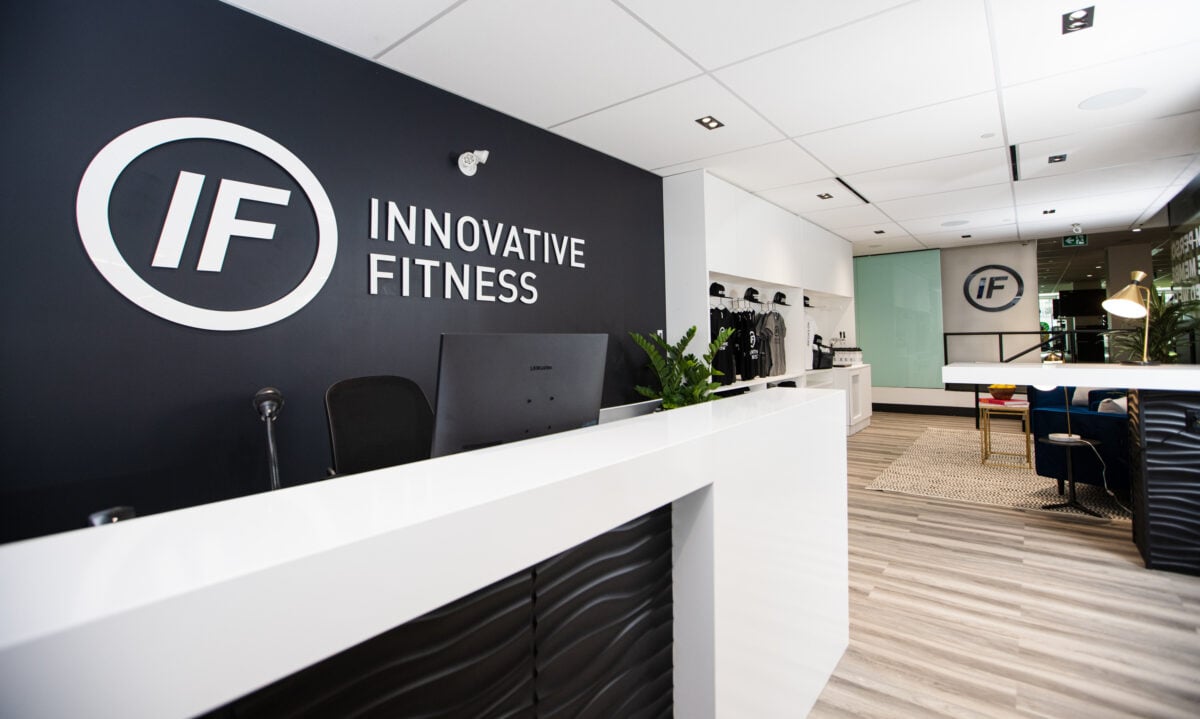
Sweat and Tonic will be the latest upscale fitness facility to move into Toronto’s Bloor-Yorkville area, which already boasts a high number of fitness facilities. This week we reported on Innovative Fitness, which recently opened its Canadian flagship location at 33 Bloor Street East. The concept focuses on personal training in a 6,500 square foot facility.
11 Yorkville Ave Leasing Map (Image: JLL)Innovative Fitness Bloor, Toronto, ON (Image: Nick Lachance)
Next year it will be joined by AVANT by Altea Active, a luxury concept gym that will open on the second floor of the former Nordstrom Rack store at 1 Bloor Street East. A source told Retail Insider that memberships would be about $700 a month in terms of pricing.
Future Altea Active at One Bloor East (Image: Craig Patterson)
The Bloor-Yorkville area is home to three GoodLife Fitness gyms, which have a membership rate at about a tenth of that to be offered by AVANT — and Equinox, which is an upscale US-based fitness concept, has a large facility at the Yorkville Village shopping centre. The area is also home to various smaller boutique fitness concepts such as Barry’s Bootcamp at the back of 100 Bloor Street West, and F45 at 110 Bloor Street West, among others. Sweat and Tonic will bring another offering to the area that will include a mix of fitness and social.
The next five years will be a transformational time for Bloor-Yorkville as thousands of new residents move into the area, which is seeing new residential construction in the form of condominium apartment towers. Some units are small and will be housed by students at institutions such as the University of Toronto. And some buildings will have units priced well into the millions of dollars each — Yorkville is seeing an unprecedented amount of wealth moving into the area with a considerable number of condo units expected to sell for in excess of $10 million. The expanded wealth in the area is expected to expand the market for upscale fitness facilities in the coming years.
We’ll follow up on this story when Sweat and Tonic opens its new Yorkville Avenue facility.