Like many other Canadian shopping centres, over the past few years Southcentre Mall in Calgary has been leasing out the massive former Sears space which became vacant when the giant retailer closed its doors.
Now that space is about to be completely filled.
Jason Bos, general manager of Southcentre Mall, which is part of the Oxford Properties Group, said the total Sears space was about 240,000 square feet over three floors.
Jason Bos
“The third level of Sears we have secured an entertainment use that will essentially take the entire third floor. So about 80,000 square feet of entertainment, food and beverage. That’s really exciting. Hopefully open by the end of this year,” he said.
“We will have more news to come as we progress the conversation but it is finalized that is happening.”
Southcentre Mall is just over one million square feet with about 190 stores.
In the past year or so, Bos said Winners, Dollarama, Decathlon were the main tenants that opened during COVID “and have really given us a shot in the arm in terms of traffic and really revitalizing the shopping centre.”
“In this coming year, we’ve got quite a bit more leasing to come,” he added.
Bos said the lululemon store will be doubling in size with a scheduled opening this spring. Earls Restaurant will be relocating its nearby Willow Park location into the shopping centre, opening in old Sears space in the fall of this year.
“And we have several other retailers that we’re not quite able to announce yet but we’re really excited. All in all we’re looking at about 125,000 square feet of new leasing that’s firm for this coming year,” said Bos.
“The entire Sears space will be 100 per cent leased and the shopping centre in general will be over 90 per cent, closer to 93 per cent, leased on the whole.”
Future lululemon (Image: Southcentre Mall)Bath & Body Works (Image: Southcentre Mall)
Tenants for the Sears space include Dollarama, PetSmart, Winners on the first level. On the second level, there’s Earl’s and Decathlon which opened in November 2021. The third level will be the entertainment use.
“We have recently finished the Centre Court kiosk re-merchandising. So what used to be fountains and a lot of open space, we decided to put some food kiosks in as well as some seating. It’s really livened up that Centre Court area because we do have a large Centre Court space,” said Bos.
“The activation of that space with food has really drawn some crowds which is great for us because it’s helping the leasing team which has done a really great job with the building to work on the re-merchandising of the second level which part of that will be the lululemon expansion and the rest of that are some deals that we’ll be able to announce in a couple of months that will really solidify the re-merchandising of Centre Court. The other big one at Centre Court would be the expanded Ardene. Ardene went from about 3,000 square feet to just over 10,000 square feet right on the corner of Centre Court, which is really helping round out our offering in terms of attracting younger families and a younger demographic to the shopping centre, which has really helped drive traffic and sales, which are currently exceeding 2019 levels.”
Bos said the densification of the shopping centre is something that is being explored.
“It’s definitely something that Oxford is committed to. It’s something that Oxford believes in. The three big properties that Oxford manages and owns in the GTA – Square One, Yorkdale and STC (Scarborough Town Centre) – all currently have densification projects ongoing,” he said.
“So it’s definitely something that we will look at in the future.”
Bos said the mood in the retail sector in Calgary is optimistic, particularly for Southcentre Mall.
“COVID was pretty tough and we feel that we were probably at the bottom in terms of retail when COVID did hit. The good thing about being at the bottom is there’s nowhere to go but up and we really do feel that that’s the direction we’re headed right now,” he said.
“The numbers speak for themselves. Traffic is up, sales are up. We’re really happy. We’re exceeding pre-COVID numbers in both traffic and sales both in terms of productivity as well as just gross sales. We’re really happy with the way things are going. It’s kudos to the leasing team. We actually got stronger during COVID with the openings of the Sears box with Winners and some of those other tenants. I think we’re very well positioned to be a community hub particularly we are the furthest south shopping centre in the city, enclosed shopping centre.
“With the expanding demographics in Calgary and the growth in the population I think we’re really well positioned and I think that Calgary in general I’m very optimistic and bullish on the future. We’re on the upswing right now and it’s a really great feeling and great to be part of.”
Roots at CF Toronto Eaton Centre (Image: Dustin Fuhs)
As it celebrates its 50th year in business Canadian retailer Roots has been busy recently with a number of announcements to grow its business.
Roots has partnered with Stadium Live, a leading platform for Gen Z sports, culture and entertainment fans, to deliver a collection of unique digital branded experiences for users.
The retailer has also partnered with NewStore, a modular, mobile-first omnichannel cloud platform for retail brands worldwide, launching the Omnichannel Platform across its digital properties and network of more than 100 retail stores throughout Canada and the U.S.
Roots at 80 Bloor St W (Image: Dustin Fuhs)Roots at 80 Bloor St W (Image: Dustin Fuhs)
And the global apparel lifestyle brand has appointed Joey Gollish as a Creative Director in Residence for a period expected to extend through 2025. This appointment represents the first time in Roots’ almost 50-year history that it has welcomed an outside creative to the brand.
Meghan Roach
“As we strive to continue expanding our brand, we understand the importance of connecting with digital audiences. With Stadium Live, we can integrate the physical and digital realms to engage more effectively with the crucial Gen Z demographic,” said Meghan Roach, President & CEO of Roots. “We are excited to provide our customers with an immersive experience that allows them to fully engage with our brand and products on a deeper level.”
Roach said the partnership with Stadium Live is a way for the brand to connect with a different type of consumer including Gen Z. She said Roots has always been a brand heavily associated with sports.
“So for us it made a lot of sense to partner with a group like Stadium Live who is doing something in the virtual and digital landscape,” she said.
“This is the first brand partnership that Stadium Live has done.”
Stadium Live
Stadium Live users will have access to exclusive Roots branded activations throughout the platform. The partnership will debut a digital apparel and accessories collection launching in the Stadium Live Roots store, as well as physical apparel – inspired by the digital-first collection.
The first-of-its-kind partnership between the two brands aims to provide Gen Z users with a unique and differentiated way to interact and engage with the Roots brand. Stadium Live’s platform ensures a seamless experience from physical to digital, allowing Roots to extend their brand exposure beyond the physical and explore new ways of engaging with digital customers in a virtual setting.
Stadium Live’s innovative digital platform has attracted over 750,000 registered Gen Z users across North America. Users participate in sports-focused gameplay and live streams, collect unique items and prizes, chat and make friends with other fans, and customize their in-game avatar.
Kevin Kim, CEO and Co-Founder of Stadium Live, said the activation provides an authentic medium for Roots to drive brand awareness and revenue through next-gen sports fans.
“Our platform offers the perfect opportunity for brands to connect with our audience in a way that feels native to them through digital gamified experiences,” he said.
Roots at Yorkdale Shopping Centre (Image: Dustin Fuhs)
Roots has 121 stores operating across Canada as permanent locations and popups. Roach said the retailer opened seven stores, including popups in 2022 and closed four stores in 2022.
“It’s our 50th year in August and we continue to evolve. We’re continuing to grow the brand and we’re trying to make sure that people continue to think Roots is an iconic brand for the next 50 years and to do that you’ve got to keep changing and thinking about what’s happening in the landscape,” she said.
Roach said the retailer has discovered in the past couple of years opportunities in the marketplace for space being left behind by other retailers who were leaving. This has given the brand an opportunity to open popups where it can expand its footprint as well as promote the kids’ brand. In some locations, a regular Roots store is paired with a kids’ popup.
“What we found in those locations is those stores, the combination, are doing more than just a single store,” said Roach.
“We will continue to focus on the popup strategy.”
Image: RootsRoots at 80 Bloor St W (Image: Dustin Fuhs)
Roots is now using the NewStore order management and store fulfillment solutions to reduce shipping times, improve inventory accuracy, and maximize inventory sell-through across the enterprise.
The company said the NewStore order management and store fulfillment solutions use proprietary routing logic to allocate order requests across Roots’ brick-and-mortar locations and distribution centers according to the brand’s desired prioritization criteria. This allows Roots to improve customer service levels and manage shipping costs by directing orders to the appropriate store or distribution center. NewStore is also supporting omnichannel capabilities like buy online return in-store (BORIS), further improving the customer experience while driving foot traffic.
Roach said the platform was implemented in the Roots’ stores initially to help the brand with fulfillment.
“Roots is a brand where we are significantly integrated from an omnichannel perspective,” she said. “We look at our online and instore platforms really together. We have one inventory and we use all of our stores as performance hubs.
“NewStore is a technology that allows us to further fine tune that and in the longer term helps us serve the customer in these ways.”
“As an iconic Canadian brand, Roots is held to a higher standard by its fiercely loyal customers. With NewStore, Roots’ store associates now have the tools they need to create amazing shopping experiences anytime, anywhere,” said Stephan Schambach, Founder and CEO, NewStore. “They are one of the many great Canadian brands leading the way for omnichannel retailers everywhere, and their decision to partner with NewStore is a reflection of the activity we are continuing to see in that market.”
Joey Gollish joins Roots Canada as New Creative Director in Residence.
The appointment of Joey Gollish, Founder and Creative Director of fashion label Mr. Saturday, as Roots’ Creative Director in Residence is a way for the brand to stay innovative and forward-looking in today’s ever-changing market, said Roach.
“Through our collaboration with Mr. Saturday in December 2022, we found that Joey had a deep love for the Roots brand and a unique perspective that will support our long-term objective of increasing the brand’s global appeal,” she said. “We look forward to the exciting opportunities this additional creative influence will bring to Roots.”
Mr. Saturday and Roots have worked closely together on a range of collaborations over the past two years, including the best-selling capsule collection “Roots Saturday Airlines,” released at the end of last year. Gollish has also worked in collaboration with Roots on leather outerwear, travel bags, and accessories for Mr. Saturday’s Fall/Winter 2023 runway show in Paris and will once again integrate Roots into Mr. Saturday’s Spring/Summer 2024 for Paris Fashion Week. The creative synergies Roots and Mr. Saturday experienced working on these projects led to the vision for this unique partnership, said the company.
“I think for me because we’ve been working together nationally for so long, working hand in hand with the Roots’ team to create products not only for my own collection but collaboratively with them for the past couple of years, getting to know the brand and the entire team and really learning more about the heritage and the future vision for the brand, it just felt like the opportunity of a lifetime. I couldn’t think of a reason not to do it,” said Gollish.
At just 29 years old, Gollish is one of the most celebrated and exciting designers coming out of Canada right now, said Roots. Recently named Canada’s 2022 Menswear Designer of The Year by Canadian Arts & Fashion Awards, Gollish was also featured as one of the “New Names to Know” by Vogue and “1 of 20 Canadians Shaping the Next 20 Years of Culture” by Complex.
He is also the winner of 4 Cannes Lions awards and a member of the inaugural cohort of HXOUSE – Toronto’s next generation creative incubator and accelerator founded by the Weeknd, La Mar Taylor, and Ahmed Ismael.
Craig and Brian discuss how Clip Money works and who’s using it, as retailers get on board with this innovative new deposit solution. Craig and Chris discuss how Pepper Palace has seen benefits from using Clip.
The Interview Series podcast by Retail Insider Canada is available on Apple Podcasts, Stitcher, TuneIn, Google Play, or through our dedicated RSS feed for Overcast and other podcast players. Also check out our The Weekly podcast where Craig and Lee discuss popular content published on Retail Insider which is part of the The Retail Insider Podcast Network.
Drop us a line at Craig@Retail-Insider.com. You can also rate us in Apple Podcasts or recommend us in Overcast to help more people discover the show!
Background Music Credit: Hard Boiled Kevin MacLeod (incompetech.com). Licensed under Creative Commons: By Attribution 3.0 License. http://creativecommons.org/licenses/by/3.0/
Daily Blends at GO Union Station Bus Terminal (Image: Dustin Fuhs)
Daily Blends, an Artificial Intelligence tech company offering fresh and healthy food through smart vending machines, has closed a $2 million funding round and inked a deal with the Metrolinx network to roll out its innovative initiative to numerous sites.
“The combination of powerful data insights and plug-and-play smart vending machines, further combined with an omnichannel experience, helps us address new-age, evolving consumer needs while keeping our model agile and removing the heavy capital and labor costs associated with traditional retail formats,” said Shriya Gupta, CEO and co-founder of Daily Blends, based in Toronto. “We’re excited to bring affordable, healthy options to Toronto commuters and we look forward to expanding our reach with our additional funding.”
The company has closed a $2 million funding round led by San Francisco-based Hustle Fund with participation from New York-based 2048 Ventures, and other investors.
Daily Blends at GO Station Metrolinx (Image: Daily Blends)
Gupta said the financing will accelerate Daily Blends’ plan to deploy its AI-powered smart vending machines at many locations across the Metrolinx network, starting with Union Station. These vending machines will offer high-quality, fresh food to millions of commuters in the Greater Toronto/Hamilton area.
“We are developing AI technology for making vending machines super intelligent,” she said.
“It’s an exciting phase for this company.”
Gupta said the goal is to make high quality, fresh and affordable food accessible to people.
Purva Gupta and Shriya Gupta
The company was founded by sisters Shriya Gupta and Purva Gupta in 2020.
Currently the company has about 10 or so vending machines spread across busy train and bus stations and universities in Toronto. Gupta said the brand is on track to deploy 80 vending machines by the end of this year. The brand will then move across the country and into the U.S.
Gupta said that in the next few months the vending machines will be available at every possible high traffic location. The mission is to feed people with healthy food through this technology.
“Daily Blends is unique and is reimagining the convenience of healthy food for on-the-go consumers,” said Elizabeth Yin, general partner of Hustle Fund, in a statement. “Their strong back-end technology tied to third-party-vending machines makes them asset-light and highly scalable. We are thrilled to support the company and look forward to their growth and further success.”
“We’re excited to work with Daily Blends to bring high quality, convenient and healthier food options to our customers,“ said Mark Childs, Chief Marketing Officer, Metrolinx, in a statement. “This partnership will help enhance the customer experience, with on-the-go food and beverage choices to help make their journey on GO Transit and UP Express even more enjoyable.”
Daily Blends is powering smart vending machines at the largest university in Canada, University of Toronto, at hospitals and factories and plans to expand aggressively in the U.S. later in 2023.
Daily Blends at GO Union Station Bus Terminal (Image: Dustin Fuhs)
The company said its software analyzes real-time sales, inventory, and user data from each vending machine, generating multi-level user, location and network insights and powering a highly optimized end-to-end supply chain achieving high product availability and minimal food waste.
Daily Blends added that its in-house technology and algorithms generate insights on accurate demand forecasts, most optimum assortments, share of shelf, promotions, product recommendations, fueling high customer retention, while optimizing delivery schedules and minimizing out of stocks.
“In the last three to four years, there have been drastic shifts in customer behaviour and also retail,” said Gupta. “There is a rise in demand for healthy yet affordable food, available in grab and go formats using mobile ordering and technology, and increased convenience.”
That has combined with a time that costs have risen. The solution is the smart vending machines, said Gupta, because they can be literally placed anywhere, offering customers a customized experience by analyzing the data on consumer preferences.
Typically, a machine has eight to 10 food options for an average price of $6. At some locations, the demand is so high that the machines are restocked each day. And the food is available 24/7.
Hustle Fund is a pre-seed/seed-stage fund based in San Francisco and Singapore founded in 2017 by Elizabeth Yin, Shiyan Koh, and Eric Bahn.
Retail Insider is streamlining its Canadian retail news from around the web to include a handful of top news stories that can be viewed quickly during the day. Here are the top stories from the past 24 hours.
Retail giant the Sporting Life Group is launching a new national banner, Team Town Sports, with three stores opening this spring in Canada and a goal of 25 locations coast-to-coast.
“By making it a place where all customers can access the equipment they need to play and train for the team sports they love, Team Town Sports represents the reinvention of the sports retail experience,” said Chad McKinnon, President, Sporting Life Group. “Our goal is to meet the needs of a diverse Canadian population with a model that feels welcoming and inclusive. Our latest concept will feature all team sports under one roof, allowing us to connect with our customers through a shared passion for sports.
Chad McKinnon
“It’s really about a couple of things. One is the white space in the market today. There’s a real opening for a premium sports offering to all Canadian athletes across team sports. Lots of good independents do things for sports individually but nobody’s really rolled it up under one roof, under one big box for everything for team sports. And we want to be good, better, best in our assortment. We’ve been very welcoming and inviting to Canadians. Super inclusive since day one. So we’ve had a very strong female component to what we’re doing and it also complements what we’re building strategically with the Sporting Life Group in terms of our village.
“It complements Golf Town. It complements Sporting Life. Because there’s very little crossover between the assortment. So super complementary to what we’re already doing very well today.”
The first Team Town Sports locations will open in May:
CF Market Mall, Calgary, (opening May 11th) – 3412 49th St. NW, and about 26,000 square feet;
Heritage Mall, Calgary, (opening May 24th) – 33 Heritage Gate SE, and about 34,000 square feet;
Meadowvale Town Centre, Mississauga, (opening July 24th) – 3135 Argentia Rd, and about 30,000 square feet.
teamtownsports.com/
McKinnon said the rollout will be from coast to coast with a short-term focus on the Ontario market.
“A big start in Calgary for us because we have two pieces of great real estate and we just couldn’t turn it down. We signed two deals in Calgary and we’re super happy with that. We will be coast to coast. You’ll have access to us anywhere,” he said.
“Only 25, so you’re going to see large drive radiuses, very similar to what IKEA or Bass Pro Shops would have or even our Golf Town model is highly successful for us. People driving long distances to come visit us.”
Sporting Life Mapleview (Image: Sporting Life)
In a news release, the Sporting Life Group said Team Town Sports will offer all Canadians an inclusive and elevated sports retail experience to service their team sports needs.
“From hockey, basketball, soccer, and baseball, and all sports in between, Team Town Sports joins the Sporting Life and Golf Town banners, marking an epic introduction to the underserved team sports arena within the Canadian consumer landscape. Set to open locations across key Canadian markets in spring 2023, the store openings will be complemented with a best-in-class e-commerce platform, representing the latest step in the Sporting Life Group’s journey to elevating the ordinary and delivering an impactful retail experience to Canadians nationwide,” said the retailer.
“Following its launch of three initial locations, Team Town Sports is poised to continue its expansion across Canada. The banner’s introduction reflects the next stage of growth and opportunity for the Sporting Life Group and the communities in which these locations serve. Planned expansion for Team Town Sports will result in an estimated 25 locations coast-to-coast, creating between 2,000 and 2,200 new jobs for all Canadians.”
McKinnon said individual sports exploded during COVID.
“We had record years in Golf Town. Even beat our numbers from when we had 60 plus stores. We’re only at 47 today . . . People found things to do that were safe with COVID so we benefited from that,” said McKinnon.
“Now I think there’s a full return to team sports and a lot of young kids were denied playing sports. Lots of pent-up demand and Canada is a sports nation. I think it continues. COVID really slowed team sports down. It’s ready to come back now so our timing is good.”
Golf Town at Park Place Barrie
The Sporting Life Group operates three Canadian retail banners, Golf Town Ltd., Sporting Life Inc. and Team Town Sports. There are 47 Golf Town locations in Canada and 14 Sporting Life locations.
“Contemporary and inviting design meets a high-service model that embodies the principle of full, end-to-end service. The ethos of inclusivity will run deep at Team Town Sports and will be best reflected in the staff that bring product expertise and passion for sports to consumers, as well as the categories of products available to them. Shoppers will find the ultimate product assortment across all team sports, genders, and ages, including Kids’ Kingdom, a dedicated section of each store that will cater to the youth sports segment, providing a memorable experience as they begin their team sports journey. Team Town Sports will also offer the widest and most prominent product assortment for female athletes, a historically underserved customer base in the Canadian sports retailing market, with a wide range of the best equipment for all team sports,” said the retailer.
“Enthusiasts and professionals across a wealth of sports including hockey, soccer, baseball/softball, basketball, volleyball, cricket, curling, lacrosse, football, rugby, and ringette will be able to find everything they need for all team sports under one roof. Team Town Sports is proud to offer the latest in simulation technology, deep service expertise, and custom fitting for equipment, making it the premier destination for Canadians at all levels of sport and skill level.”
Bruce Winder, author of RETAIL Before, During & After COVID-19 and President, Bruce Winder Retail, said it is interesting and unusual for a chain to launch a new banner just before a potential recession.
Bruce Winder
He said the concept sounds exciting based on the perceived experiential store imagery that the retailer is describing.
“The Canadian sporting goods market is crowded with Canadian Tire and its many banners (Sportchek, Sports Experts, Canadian Tire, Pro Hockey Life & Trio Hockey) along with new entrants such as Decathlon and strong independents. However, there could be an open niche within the team sports segment of the business at the high end that is underserved – especially outside of hockey,” he said.
“I find it odd that two of the three initial stores are in Calgary. Why not test in the greater Vancouver area as well? Either way, increased competition is always good and is something we desperately need in Canada across many industries. Can’t wait to learn more.”
Boutique clothing store Grit & Grace has its sights set on expansion with two new stores scheduled to open over the next six months in Toronto, bringing the brand’s presence to four physical locations.
The store currently is open on a seasonal basis from May to October in Sauble Beach with a permanent location in Guelph.
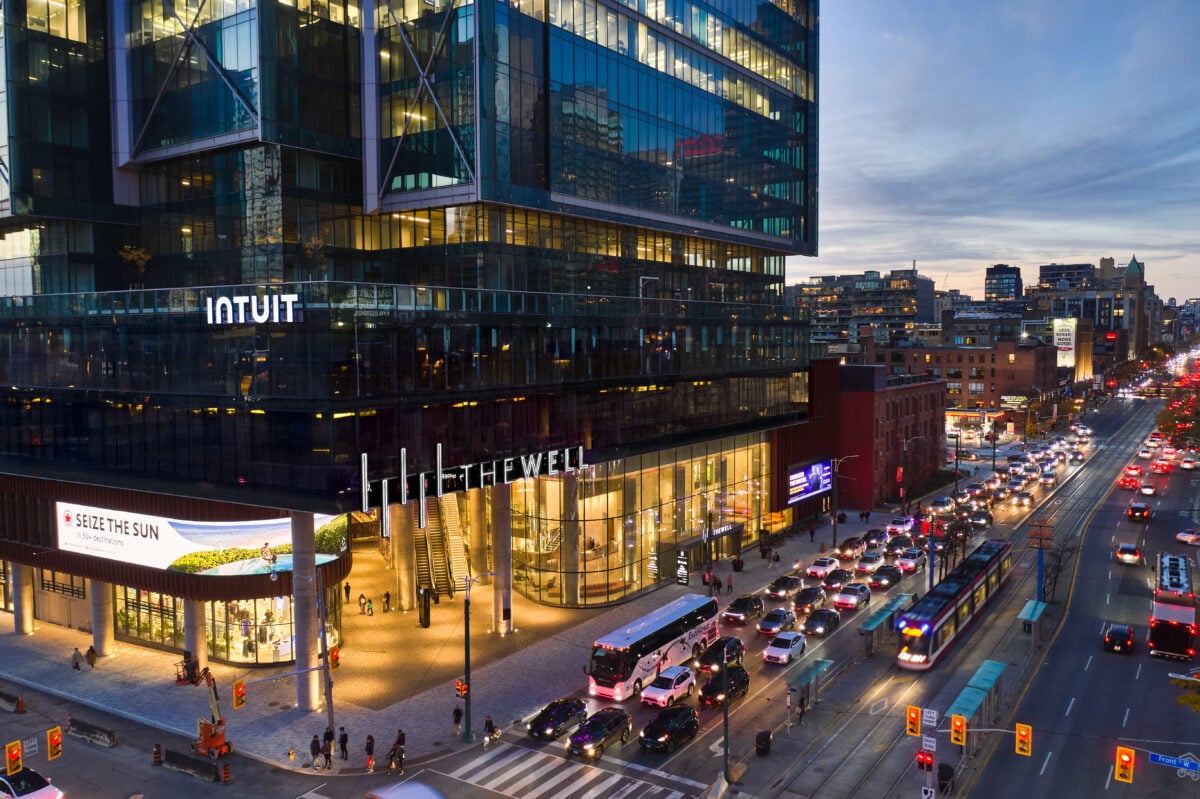
It will be expanding with locations at the mixed-use massive project The Well in Toronto, as well as to one of the city’s trendiest streets, Ossington.
Image: Grit & Grace
“Sometimes life throws us a curveball; the only thing in your control is how you react to it. It’s how you find out that you can do hard things. I did a hard thing,” said Penny Light, Founder of Grit & Grace.
“When the world went into lockdown, I did the most challenging, counterintuitive thing I’ve ever done. I opened a physical store. Nobody thought it was a smart move.
“But I was confronted with three problems: I lost my business, no friends or a sense of community in Canada, and no Canadian-appropriate clothes.
The solution to all three problems was how my new business, Grit & Grace, was born. After six years of living in Costa Rica and building my adventure travel business and marketing consultancy there, the world shut down, and my company shuttered. I moved back to Canada, but after living abroad for so long, I had no real sense of community here.”
Penny Light, Founder of Grit & Grace at Future Ossington Location Image: Grit & Gracegritandgraceclothing.com
All she owned were bathing suits and flip-flops. Not very Canadian weather appropriate.
“But while shopping for a new wardrobe as a, then, 46-year-old woman, I became very disappointed in the selection and very frustrated by the shopping experience. It sucked. So when I launched Grit & Grace, I wanted to create a gathering space for women of all ages who enjoy what I do – yoga, books, travel, poetry, fabulous fashion, music, meaningful conversation and learning new things. And also wine. I wanted to design a place where they’d feel welcome and confident in their skin. And with clothing that appeals to women like me – curated with high-quality, timeless, simple and comfortable pieces,” she said.
“It’s a big reason my stores have a cozy, living-room-style seating area for hanging out. You feel like you’re in your best friend’s living room. If I wasn’t going to be able to run adventures through travelling abroad anymore, I figured I’d help women live more adventurously in their everyday lives by assisting them in finding their confidence. My counterintuitive bet paid off. I opened two stores in less than two years, the first in Sauble Beach (summer of 2020) and the second in (downtown) Guelph (November 2020). I have two more stores opening this year, one in Ossington (March) and one in The Well in September.
“I’m proof that anyone – I had absolutely no retail or fashion experience – could build something great if they lean into what they want to see in the world.”
The Well in Downtown Toronto on Thursday, March 2nd, 2023 (Image: Dustin Fuhs)Touring The Well with Penny Light, Founder of Grit & Grace (Image: Dustin Fuhs)Penny Light, Founder of Grit & Grace at The Well Image: Grit & Grace
Light described the women’s retail fashion store as Boho Chic, a little bit more high end.
“We had the concept kind of sketched on a back of a napkin in February of 2020. In fact we were in LA buying product when there were musings of this pending potential pandemic happening,” she said. “After we gathered more information, we made the decision to purchase a lot of inventory thinking that probably the world was going to come to some sort of halt or shipping was going to come to some sort of halt. So we stocked up.
“That March everything came to a grinding halt and lasted way longer than we anticipated. The next several months were trying to figure out how to pivot, or what to do. At one point the idea of liquidating the inventory was on the table. The decision to open finally came when the government announced that retail could open with restrictions in June 2020. It was go time. In 10 days we renovated, knocked down walls, built change rooms, and painted until 3am the night before opening the store.
“With the obvious exception of the last few years, a store a year is the growth plan. I’d like to get to 10 stores across Canada and maybe even re-introduce and tie some adventure travel offerings to the Grit & Grace guest.”
Retail Insider is streamlining its Canadian retail news from around the web to include a handful of top news stories that can be viewed quickly during the day. Here are the top stories from the past 24 hours.
Retail Insider asked a number of Canadian and international retail experts for their thoughts on Nordstrom and why so many American retailers have failed in Canada.
1. First, what are your thoughts on Nordstrom’s departure? Is it a surprise? What happened?
Nordstrom at CF Pacific Centre (Image: Lee Rivett)
Doug Stephens, Founder, Retail Prophet: “There was always a degree of speculation around Nordtrom’s entry into Canada. Specifically, many wondered if there were enough high net worth shoppers in Canada for Nordstrom to capitalize on. Many believed the true luxury consumer in Canada was the kind of shopper that would either prefer to shop at Holt Renfrew or even get on a plane and travel to London to shop at Selfridges, but they would look right past Nordstrom because it simply wasn’t high-end enough. Based on the (recent) announcement, it appears clear that Nordstrom wasn’t able to capture enough of the high-end to make it work.”
George Minakakis, Principal of Inception Retail Group: “The announcement is disappointing and it couldn’t come at a more difficult time for employees as well given the economy. And I am a Nordstrom customer!
With respect to Nordstrom’s departure I have always known that the Canadian retail space could only handle so many department stores and fewer at the higher end. When it comes to premium and luxury sales Canada ranks one of the lowest in spending within the Western world. Nowhere near the US and China who rank number one and two.
We need to also keep in mind that very few Canadians wear luxury as a status symbol as they do in other countries.
“I have attended many high-end events in Canada and very few wear large gold Chanel belt buckles. In addition, Nordstrom’s presentation and service was not the same as what I had experienced in the US. Also, Nordstrom Rack in my opinion was the wrong fit for Canada, when I heard about that introduction I believed they would be dividing their customer base. Nordstrom was built on legendary service standards and customer experience. In fact, they were the gold standard for many of us who grew up in high touch retail service environments.
“For example, the first customer story that was shared with us as young executives took place in the US, where a customer returned tires to Nordstrom and the store took the return giving the customer a refund.
The interesting part was that Nordstrom didn’t sell tires! This was a legendary service era that is no longer possible unless consumers are willing to pay a very high price. While we can say that Nordstrom failed in Canada, I believe Canada is just simply a different retail animal. When foreign retailers ask me about Canada I tell them to visit Canadian Tire.
It’s not the kind of brand that would not dominate in the US but it is our brand.”
Nordstrom Rack location at Willowbrook Mall. Photo: Lee Rivett.
Gary Newbury, a retail supply chain and last mile expert and Rethink Retail’s Top 100 Retail Influencer in 2021 & 2022: “Fundamentally, Nordstrom, who declared at a court hearing no profit has been generated since arriving in Canada in 2014, shows a poor grasp of the basics of any retail business; if you have high overheads, which a fleet of 200,000 square feet high service large format stores will have, the business has to generate significant gross margin or go bust. This could be seen as a simple financial accounting 101 mistake in their execution. One cannot dispute the retail concept approach – high service, high premium, beautiful experience, selection of the best brands – well executed throughout their Canadian network, however the price pointing did not drive volumes required to show black, rather than serial red ink at the end of each fiscal. The first couple of years of operating losses might have been acceptable as the brand needed to establish itself in the minds of their target consumers and leadership’s attempts to drive traffic from a standing start, however seven years on (four to five years pre-pandemic), this underlined the lack of understanding a pricing adjustment needed to be addressed, which clearly wasn’t. The deployment of Rack stores did not address this, rather, I felt it was a distraction and perhaps something, created out of desperation south of the border, that was copied and pasted here to little positive effect.
“It also failed to recognize the move of its younger demographic to the resale market. Was the pricing strategy a US policy decision ladening the Canadian team? Canada is a different market to the US with vastly different geo-demographics and household wealth distribution. Or was this a disconnect at the top of the Canadian business? The latter appears unlikely as there didn’t appear to be any strong motivation for creating a standalone Canadian Headquarters to drive local decisions on branding.
“Overall, when we consider the department store format which has not weathered well in the last 20 years, Nordstrom’s entry to Canada seems very mistimed. Their lack of ongoing profitability and now their ultimate departure could be argued as entirely predictable. There simply is not enough of high-end consumers to support the network as it expanded.
In my mind it falls foul of the aphorism “Are you over stored or under storied” (a quote from Steve Dennis’s Remarkable Retail). The former seems to be the case, given the details of the financial model that was unlikely to work in Canada.”
CF Rideau Centre. Photo: Dustin Fuhs.
Liza Amlani, Principal and Founder of the Retail Strategy Group: “This departure was not surprising as the retailer scaled in an unknown market too quickly and with too many stores concentrated in Toronto. Nordstrom should have opened up the Canadian market with a Vancouver and a Toronto location. The retailer should have taken its time to understand what the Canadian customer wanted across major cities. They should have pushed luxury to compete with what little Canada had to offer. The luxury consumer is changing and wants more choices.
They don’t want to shop at Holt Renfrew because the assortment has lost its relevance and the customer shopping experience is sub-par. The luxury and aspirational luxury customer also doesn’t want to shop at SSENSE where the assortment is catered to the ultra high fashion. The market is prime for a new player and Nordstrom did not take advantage of this. They didn’t know the market and what the Canadian customer was looking for, let alone understand the nuances between the different regions within Canada.
Also, Nordstrom should have left the off-price market to TJX. The Winners and Homesense customer is brand loyal and treasure hunts in these stores weekly, with many locations across rural and urban centers. We have also had a history of failed retail off-price attempts. Holt’s HR2, Designer Depot, Saks Off Fifth have all failed or are struggling. The assortment must be relevant and the ‘outlet’ model does not work in an off-price store. The excess inventory that Nordstrom Rack carried was dated and looked like merchandise that the full-price shopper did not want.
Lastly, I am a Nordstrom customer. I loved shopping in the stores and found the brand ambassadors and service spectacular.
Nordstrom Rack at Vaughan Mills (Image: Nordstrom)
Michael Kehoe, Broker of Record, Fairfield Commercial Real Estate: “The Nordstrom store closure announcement was a bombshell in Canadian retailing circles and to say the least, the most significant event on the national retail landscape in recent memory. The sales numbers tell the tale according to Nordstrom officials that the situation was not sustainable, and the Canadian stores have to be closed. Many Canadians will miss their ‘best in class’ customer service and this will be a blow to downtowns in the cities where the stores were situated.”
David Ian Gray, Founder/Strategist with DIG360 Consulting: “In terms of this sudden, all-or-nothing, decision, I am shocked. That said, I have had concerns about the longer-run viability of Nordstrom, and department stores in general, across North America. Already facing disruptive forces shared across the retail sector, Nordstrom and other retailers of fashion were absolutely slammed by the pandemic and then by the ongoing full and hybrid work-from-home models. Our recent research has confirmed people changed their shopping habits and are slow to filling and shuffling their wardrobes at the same depth and pace of the past. Combined with inventory volatility, Nordstrom has taken a serious financial hit the past three years.
“The need to invest in modernization is hampered by limited access to funds in the current economic climate and now there is threat to family control from an activist shareholder. Rather than building a future, it seems the focus is on tightening the business. However, the notion that Canada is the main problem is ridiculous. They will have poor performing stores Stateside worth closing. Yes, they continued to be over-stored here. I believe Cadillac Fairview negotiated well to pass along to Nordstrom Ottawa, Calgary, and extra Toronto flagship locations. Chicago is roughly the same size as Toronto, and it has one flagship. Toronto has three. However, Vancouver performs well amongst the network and has long been considered the gem in the chain.
“Nordstrom Rack is problematic both sides of the border. Off-price was a hot subsector a decade ago. Now, much of the fashion world has become ‘value-priced’ in an era of a glut of product. Off-price is no longer special. I do think Nordstrom resonated with Canadian shoppers. I like Nordstrom. I think they brought excitement back to fashion in the markets they entered in Canada, and upped the game of those incumbents around them. Ian Rosen said as much in a recent post.
“Canada is collateral damage. Nordstrom is culling Canada to focus on their domestic base. Consider this: how would Canada’s performance compare with the bottom 13 US stores? A store-by-store financial breakdown would be interesting. The $35 million Canadian loss is likely skewed to certain locations and a strategy of closing those was an option. Save for some exceptional global cities with dense populations, I think the traditional department store concept is a relic of a bygone retail era. Yes, they still move lots of product in North America, but at a declining proportion of overall units. It seems that the ongoing challenge of the past 20+ years is in “preservation” rather than a blue-sky opportunity to seize. If the concept did not exist, would an entrepreneur invent a multi-floor, 200,000-square-foot “department” store today? What problem would it solve?
“Nordstrom in particular needs store traffic to showcase its culture of personal customer care. While stores still matter, the step change to greater online shopping has taken a bite. More importantly, more and more of its brands are selling direct to consumers, online and in their own stores. Labour, inventory and space costs have been rising and are a new normal. I am unsure it will be around as we know it in 2030. I might give it better odds than Hudson Bay. Simons’ shift to smaller stores might buy it some time.”
2. Why have we seen so many American brands fail in Canada in recent years?
PHOTO: TARGET CANADA
Stephens: “A few reasons I think. Some, like Target, have simply fallen flat on their faces. Target should have succeeded here but they were the masters of their own failure with operational missteps and PR disasters. Others, like Nordstrom perhaps, have simply overestimated the power of the Canadian consumer market. Over 70 per cent of US GDP is generated by consumer spending. I think many retailers assume the Canadian market is very similar. It is not at all the same as the U.S. We have less retail here but it’s not because we want or need more retail. It’s because we simply don’t spend as much as U.S. consumers.
“I also believe that Canada, as a market, requires a higher level of profitability in order to make sense. We require dual language offices and service, we come with separate taxation and legal issues, and, at the end of the day, we’re a market with a population that’s smaller than the state of California. If you have to close stores in a market, Canada is going to be at the top of your list.”
Minakakis: “First let’s start with the expectations Canadian consumers have of a US brand. It is based on their real world experience in the US. Second, Canada is not the US and I am a firm believer that if you don’t conduct thorough due diligence you just end up with another Target Retail Saga. My international experience and leading successful American brands in Canada has taught me that you have to strike the right balance between a brand’s heritage and host country’s culture.
“In Nordstrom’s case if they couldn’t get the brand product and price mix correct, they should have excelled at service. I didn’t see that, although it was better than other department stores. Today we talk about customer experience but it really is a shadow of what it was in retailing 20 to 30years ago. I believe this hurts brands like Nordstrom entering markets like Canada anticipating the service they offer in the US.”
Newbury: “This is an interesting one. Tony Chapman recently suggested during the Great Recession when the Canadian Dollar achieved parity, this allowed some US retailers to consider the Canadian market more positively. I am sure this is a factor that attracted, and latterly, had to be managed as we slipped back to around 1.33:1.00. Things simply got significantly more expensive for US brands operating here sourcing product outside of Canada. Putting this to one side, if we look at US brands expanding into Canada and then currently closing or sold to financial institutions, there have been several high-profile cases, and some quite raw ones on the list over the last decade: Toys’R’Us, Sears, Target, Lowe’s, Bed Bath and Beyond, and now Nordstrom. Saks 5th Avenue might follow who adopt a similar format. However, we should not forget the Canadian apparel retailers that sourced locally that have come and gone (e.g. Le Chateau), or at least had to submit themselves to CCAA arrangements during the pandemic. Canada is a tough market for those outside oligopolistic categories (e.g. telecoms, grocery).”
Bed Bath and Beyond Closing at the Aura – Photo by Dustin Fuhs
Amlani: “Many brands and retailers that have entered Canada have failed because they do not immerse themselves in the Canadian market. Hiring a Canadian team doesn’t cut it. Studying the market, shopping the market and getting to the know the nuances between major cities is crucial. We are all different and you can ask any Canadian across the country, we pride ourselves on being diverse. This is the beauty of Canada.
The customer in Vancouver is very different compared to the customer in Calgary, Toronto, or Ottawa. Thoroughly understanding the new market before scaling is the only way to enter a new market.”
Kehoe: “Target, Lowes, Bed Bath & Beyond among other high-profile retailers have failed in Canada due to a variety of reasons. Other American retail brands will come and go in the future as the Canadian retail scene is always evolving and changing. Although there is a negative perception related to the Nordstroms store closures, I see this as part of a continuous evolution of the retail industry to serve consumers with relevant merchandise offerings as shopping patterns continue to change across the country.”
Gray: “Three reasons: first, there are lots of American brands in Canada, so there is a probabilities effect during this disruptive era in the industry. Second, many come here without truly doing their homework to understand differences in our market – both the consumer and the operating conditions to serve them. As James Connell mentioned to me, there is a tendency to make decisions based on how to increase stores to boost a scale of business, rather than picking market opportunities to win. Third, and this is big for me, we often perform better than the US operations (Toys R Us is one example) but a US head office will prioritize preservation of its domestic business when distressed. Closing us is a fiscal means to that end.”
3. What do American brands need to do to be successful when they expand into Canada?
Nordstrom Rack at One Bloor (Image: Dustin Fuhs)
Stephens: “I think we can look at Walmart for a great example. They entered Canada with exceptional operational skill. They delivered on their primary competitive point of difference, that being low price. And most importantly, they came in for the long haul. It wasn’t simply an opportunistic move. Nordstrom and Target on the other hand came to Canada in the wake of the financial crisis – a time when Canada might have looked like a good place to be relative to the US economy which experienced a very slow recovery.”
Minakakis: “American and other international retailers need to understand the Canadian landscape. BC is not Alberta and Toronto is not Montreal. Fashion and service means something different all across this country.
Just because we share a common language with the US for the most part, except for Quebec, that’s where similarities begin and end. Everyone’s lesson should start with McDonald’s or Starbucks who conduct business globally. Why are they successful? Because they are “Glocal” Global and Local with their brands. If you understand countries as they do you could start doing a better job with international expansion. The same applies to marketing strategies, for example live streaming which is popular in China did not transfer well in Canada nor the US.”
Newbury: “On the positive side there are some great success stories too coming from Walmart, Costco, Home Depot. All have scale, operational discipline, appeal directly to their target consumers, are developing convenient omnichannel propositions and price pointed to drive volume, even in a market that Amazon continues to grow within. I suspect the success factors for US brands in Canada can be drawn from those three retailers. Also establishing a semi-autonomous and accountable Canadian Head Office that takes action locally, within a global context, giving the local team the opportunity to implement local initiatives in the marketing mix that make sense, drive margins and loyalty from bonding within the local communities to which they excel in serving.”
Amlani: “Brands from any region need to start small. Getting to know the customer and what gap you are filling in the market is critical. If it’s luxury, shop at Holt’s and define your strategy on what is lacking. If it’s contemporary, take a walk through any HBC and you are sure to find ways to retail better. Talk to the customers – what do they want to buy from you. If your brand carries cachée like Nordstrom, ask the Canadian loyalty customer what they want to buy that they can’t get in Canada and why they come to the US to shop from you.
The same thing happened with Target. Most customers who love Target and shop the retailer in the US were very excited with Target expanding to Canada. But. they scaled too quickly and didn’t realize the Target loving customer was concentrated to the ones that travelled across the border. They should have kept it tight and scaled once they better understood the differences between customers wants and needs across the country. Taking over empty Zellers flagship locations was not the answer. Additionally, the stores were too big and they should have started off testing with a small assortment instead of bulldozing themselves into Canada.”
Kehoe: “International retail brands need to cater to regional Canadian markets and avoid the ‘one size fits all’ approach that works in larger markets like the U.S.”
Gray: “Homework, homework, homework. Understand this market. Then commit to introducing themselves and winning us over. Establish a Canadian HQ with Canadian leaders. We are not simply a sales channel to push out what works – or increasingly does not work – in the home market.”
4. Do you see more American brands exiting the Canadian market? Any in particular come to mind?
Bed Bath & Beyond in Mississauga (Image: Google)
Stephens: “If you’d asked me this question pre-pandemic I might have said Michaels, but they’ve benefited from the explosion in crafting which has grown during the pandemic. There are no other obvious U.S. candidates for closure but that could change depending on how the U.S. and Canadian economies fare throughout this year and into next.”
Minakakis: “I do see more of them leaving. I am reluctant to put names on the table. However, there are those that have diluted their brands substantially by way of overall operations, brand extensions coupled with equally weak, confusing or splintered ecommerce strategies. Then there are those under pressure to improve margins to appease the equities market.”
Newbury: “The Pandemic restrictions served no one well in the “non-essential” merchandising arena. Here, US store networks may have been at a disadvantage to domestic retailers, as their US leadership teams will have had to be focused on what’s happening south of the border and any distractions in the Canadian market (i.e. a lack of profitability) might have been seen as a reason to rationalize or withdraw from our market.
We have already seen some challenges with Lowe’s US and the Bed, Bath and Beyond, perhaps for different reasons, but the first territory that is likely to be put under the spotlight is Canada which can represent a challenging demographic and seriously different cost profiles due to the size of the country and transportation costs, inbound “country pricing” and limited scale for smaller players who may have to make significant changes to their proposition to create branding that is relevant.
“If there is no local head office, this is unlikely to go well. Frankly, no one is going to be shedding tears south of the border when they hear about the demise of the Canadian network, compared to a withdrawal from say, the Midwest which would hit the US headlines for days. All US store networks operating in Canada who have limited scale and a lack of local relevancy are figuratively in the doctor’s office, awaiting a diagnosis, and I am sure we will see two to three more major brands disengaged from US operations, sold to financial institutions, severely rationalized or just plain closed.
“This will create a rebalancing of the market as family budgets continue to be squeezed. Domestic retailers may indeed benefit from, often, prime locations as they expand to fill the gaps left behind. 2023 is a time for courageous Canadian retailers to really adopt the maxim of “thinking big, being bold and winning”, challenging though this might seem right now.”
Amlani: “Saks may be owned by HBC but will be next in line to exit. The retailer is lost within the context of The Bay and even though Saks is owned by Canadian HBC, this American retailer will be next to exit.”
Kehoe: “The Nordstrom spaces will be recycled and repurposed over time with other retailers, entertainment and other non-retail uses. Cadillac Fairview is an innovative and successful retail landlord and I have no doubt that interesting new shopping and dining destinations will be in the future at their Canadian properties.”
Gray: “The ripple effects of the pandemic and subsequent aftershocks will continue. Not just American chains, but the mix of European, Asian and our own will look different in five years. The definition of a “modern retailer” is still being created, but many that seem headed in the right direction on the surface are really just duct-taped together. There is heavy lifting still needed not only in terms of business models and systems, but in cultural change in the organizations to matrices, fostering greater adaptability. With many retreating, there will be openings for fresh concepts to emerge.”
Loblaw at 301 Moore Avenue in Toronto (Image: Loblaw)
Let’s get one thing out of the way. Having CEOs of major grocery chains showing up in Ottawa on March 8 to testify before the Standing Parliamentary Committee on Agriculture is nothing more than political theatre. Not much will be accomplished. Still, for the sake of Canadians, CEOs needed to show their faces.
Hardly anyone will know the names of the two other CEOs, Michael Medline and Eric La Flèche; the real face of the entire industry, not just for Loblaws, is Galen Weston, who will likely be testifying in Ottawa for the first time. He is the face, which most Canadians see daily on television and hear on the radio, has become the lightning rod of consumer frustration at the grocery checkout. It didn’t matter if other grocers have raised prices to the same extent as Loblaws, or even that Canada’s food inflation remains the third lowest amongst G7 countries, including the EU. The blame was mostly and unfairly directed at one company, one man. It’s been a little silly.
Global phenomenon
Food inflation is inherently a global phenomenon, mainly affected by supply chain woes, energy costs, higher commodity prices and climate change. The United Kingdom, the sixth richest country in the world, is experiencing food shortages in many parts of the country. In comparison, Canada’s situation is not all that bad.
Furthermore, when looking at balance sheets, the evidence of “greedflation” is weak at best. Operating margins for all grocers in Canada have remained overall within the realm of acceptability, between 4.3 and 6.1 percent. Métro has the highest at 6.16 percent. Loblaws’ food sales last quarter increased by 8.4%, which is below our nation’s food inflation rate. What’s driving sales and profits higher are most non-food categories like cosmetics, prescription drugs, and clothing. The morality of high profits on clothing or lipstick is far different than when food is involved. It needs to be underscored.
But most Canadians, or politicians, don’t bother looking at balance sheets or at any data for that matter. Food inflation has been incredibly politicized, and skepticism has only grown as a result, especially in the last 12 months or so.
Canadians should be concerned
Still, the Canadian public has every right to be cynical about the grocery business. The bread price-fixing scheme became the symbol of corporate arrogance in the sector. After breaking the law for 14 years, Loblaws and executives were granted immunity by a branch of the federal government, the Competition Bureau, and the investigation is still ongoing after almost 8 years. Some have speculated that other food categories may have been influenced by collusion or price-fixing, like meat packaging and salmon; still, nothing has been investigated. Some abuse may exist in the food industry, but getting any conclusive evidence has been close to impossible. Canadians feel unprotected due to lingering unfinished inquiries.
Beyond the political artifice, for the session with CEOs to be worthwhile, the right questions need to be asked. For one, CEOs need to be clear as to how much profit is generated specifically from food sales. Some questions in relation to the “blackout” period are also warranted. From November to February, grocers have historically not accepted price increases from vendors. Some have argued vendors will routinely boost prices before and after the blackout period, which to some degree could open the field up to some price-fixing in the industry. Hard to see how consumers can win with these industry-wide practices going on.
The other issue is our food distribution competitive landscape. We have lost plenty of independent grocers over the years in Canada. Even though operating margins have remained stable in the grocery business in Canada, they are double those in the United States (The operating margin measures how much profit a company makes on a dollar of sales after paying for variable costs of production, such as wages and raw materials, but before paying interest or tax). Kroger’s and Albertson’s are barely at 2 percent. How to make our food retail industry more competitive should be top of mind for members of the committee. Grocers are experiencing a so-called “detente” period. It’s been cozy for them, let’s be honest.
As a result, many believe the newly introduced grocer code of conduct will help the industry become more competitive. The idea of the code is to countervail the immense power some grocers have and bring more bargaining fairness for independent grocers and food manufacturers. The government-coordinated, industry-led code is being implemented right now. CEOs need to be clear on whether they support the initiative or not. Canadians would undoubtedly gain from a forceful, authoritative code.
Canada not an attractive market
The harsh reality in Canada is this: for years, Canadians have had an apprehensive relationship with the concept of competition. We loathe monopolies and oligopolies, even if many of them are policy-induced. We want more control, that is, until retail prices become an issue. Many sectors have been impacted by this: banking, telecoms, airlines, the list goes on. But for food retailing, the margin of error is nil. We need to get it right.
Canadian grocers are just one part of a much larger picture. Canada is not all that attractive for external investors, unless you’re Walmart or Target, and we know what happened with Target in 2015. Its exit was brutal. Higher labour costs, a lower productivity rate, higher taxes, lopsided regulations between provinces, interprovincial trade barriers, and our country’s geographical vastness just adds more underappreciated complexity to the issue of competitiveness. Both Lidl and Aldi, major discount grocers, have flirted with the idea of investing in Canada for years, but the economics of food distribution barely make sense for an expansion northwards, at least for now.
For months, Canadians have criticized, even attacked grocers, blaming them for their misfortunes at the grocery store. As unpopular as it may be right now, that line of reasoning is as linear as it is unsophisticated. The “greedflation” nonsense is simply not helping. Grocers will show up in Ottawa before the committee. The least we can do now is to calm down and listen to what they have to say.