Advertisement
Home Blog Page 665

Lessons from a Frivolous Picture of Overpriced Chicken Breasts at Loblaws [Op-Ed]

Photo: Siobhan Morris via Twitter

It all started with one reporter taking a simple, trivial picture of an overpriced pack of five boneless, skinless chicken breasts. It was $26.87 a kilo, a world-class sticker shocker. It’s at least double what one would expect to pay for chicken breasts. Within hours, the picture became the lightning rod for frustrated consumers on social media. Loblaw and Galen Weston—the company’s Chairman, President, and well-known public persona of the company’ brand—became public enemy number one. Attacks were instant, and mostly vicious.

On the surface, the collective uproar against Loblaw lacked any rational thinking. The chicken breasts in the picture were skinless, boneless, and free from hormones and antibiotics which would make them premium products. Albeit the untrained eye couldn’t see the “PC FF” on the label, which meant “Free From”, but it was there. Other retailers in the Greater Toronto Area were even selling similar products at similar price points. Furthermore, for months now the poultry industry, including egg producers, have been challenged by an avian flu outbreak, affecting almost 300 farms across the country. Many of them are in Ontario. Almost 5 million birds were culled in the last year, preventing millions in inventory to reach the market. Supply-side pressures have been significant for a while. As such, prices for chicken, turkey, and eggs have all been impacted by the outbreak.

What also needs to be underscored is that chicken production is supply-managed in Canada. With our quota system, we essentially produce what we need and consume very little imported poultry products. The average net worth of a poultry and egg farmer in Canada is well over $6 million, according to Statistics Canada. Farmgate prices are set by boards which in turn are heavily influenced by production costs. Most years, farm prices will go up and the rest of the supply chain will cope with supply chain economics. That’s how supply management works. Poultry and egg prices have historically been more expensive in Canada than elsewhere in the Western world. Nonetheless, supply management has offered Canadians stable prices. In fact, chicken has been the more stable component of the meat trifecta, which also includes pork and beef. But since early 2020, the meat counter has increasingly become expensive, no matter what protein you are after. Many of these factors are far beyond Loblaw’s control.

Still, call it “chickengate” if you will, but instant public outcries like the one we witnessed with the picture of overpriced chicken breasts do happen for a reason. The last time Canada’s food inflation rate was below our nation’s general inflation rate was in October 2021. While everything in our lives got more expensive, it got significantly worse at the grocery store. Consumers are actively looking for a scapegoat, one they can relate to. Most consumers barely appreciate how farming, logistics, or even food processing works, but most of us have been to a grocery store several times in our lives. It’s a familiar environment for most of us. Grocery stores are portals to a very complex food system we can barely see and understand, so promptly blaming grocers for overpriced products is instinctive.

Like in many Western countries, higher food prices have been politicized in Canada leading to a parliamentary investigation in Ottawa, and broad-based inflationary support payments in provinces like Quebec and Prince Edward Island. These payments will likely make things worse, but it doesn’t matter.

Canada has one of the lowest food inflation rates in the Western world. Amongst G7 countries, only Japan has a lower food inflation rate right now. Higher food prices is a global phenomenon, full stop. Even if it makes little sense to blame one grocer, or even one man for our ills at the grocery store, Canadians have every right to be upset. Context is everything, and consumers are on edge and will second-guess anything and everything and have every reason to do so.

The bread price fixing scandal, which lasted fourteen years, the hero-pay debacle during the pandemic, almost forcing consumers to use self-checkout counters, all adds up to many Canadians feeling incredibly vulnerable and unprotected. In December, our Parliamentary Standing Committee in Agriculture and Agri-Food called top grocers to testify in Ottawa as part of an investigation of food inflation. None of the CEOs showed up, including Galen Weston himself. All of them opted to send their CFOs instead. They should have had the decency to show up and oblige our House of Commons, which represents the Canadian people.

The chicken breast incident points to how incredibly delicate things are right now. The food industry, and particularly grocers, are facing a crisis of confidence, no less. Consumers have become hyper-sensitive to any potential evidence suggesting abuse of market power and grocers will need to navigate the coming months with extreme caution. Showing more public empathy would be a good start.

In the meantime, consumers should know their prices even before they show up at the grocery store, stay calm, and read labels. If a price is beyond what was expected, just walk away. A more affordable substitute in the same exact store is likely within reach. Consumers have more power than they believe.
H&M Closing 2nd Store in Downtown Toronto in Two Months

H&M at 13-15 Bloor Street West. Photo: Craig Patterson

Swedish fast-fashion retailer H&M will be shutting its second store in downtown Toronto in two months, leaving just a flagship location remaining in a major shopping centre. 

Last month on December 11, H&M shut its standalone store at 429 Queen Street West, and now we’ve learned that a standalone store at 13-15 Bloor Street West will be shutting on January 22nd. That will leave one large H&M flagship store in downtown Toronto at CF Toronto Eaton Centre, representing a significant downsizing for the retailer in the area in a short period of time. 

A sales associate at the Bloor Street store said that the location was closing due to low sales and high rents, with foot traffic said to be minimal particularly in the winter months. Shopping centre locations for H&M are performing better and the flagship store at CF Toronto Eaton Centre, spanning 48,600 square feet over three floors, remains profitable. 

The Bloor Street H&M building is currently being offered for lease by JLL, and it will be interesting to see what will replace it. The dramatic three-level space is located just off the iconic corner of Yonge and Bloor streets and is next to The ONE which next year will tentatively be home to an Apple flagship store

Men’s lower level at H&M on Bloor. Photo: Craig Patterson
Main floor of H&M Bloor, housing women’s fashions. Photo: Craig Patterson
Second level women’s fashions at H&M Bloor. Photo: Craig Patterson

A 50-foot frontage gives 13-15 Bloor Street West a prominence in the area. The building spans 19,800 square feet with each of the three floor plates spanning about 5,000 square feet. Ceiling heights of about 13 feet create a sense of volume in the space. Currently the main floor and second level house H&M’s women’s collections and the basement level has been home to menswear. 

The Bloor Street store was one of the first in Canada for H&M when it opened in 2004. The recently shuttered Queen Street location opened in August of 2007 as part of a multi-store expansion for H&M in Canada at the time. 

The Bloor Street H&M store had been quietly for lease for several years, and prior to the pandemic was said to be a target for US cannabis retailer MedMen. Brokers have said that numerous retailers have been shown the space since then though none have leased the spot as of press time. 

To the left of the Bloor Street H&M store is an under construction Apple flagship store at The ONE. A Scotiabank is located on the other side. Photo: Craig Patterson
Former H&M on Queen Street (Image: Dustin Fuhs)

H&M has about 90 stores in Canada with nearly 40 of those being in Ontario. Besides the CF Toronto Eaton Centre store, H&M has locations in several Toronto malls as well as in the Greater Toronto Area. The company’s first Canadian store opened in 2004 at CF Fairview Mall in Toronto. 

Last year H&M said that it would close over 240 stores and it appears that some of the closures are continuing into 2023. It’s not yet known if any more locations will be closing in Canada, and we’ll update this story when we learn more. H&M notes that consumers have shifted some spending online since the pandemic, resulting in the need for less physical stores. 

Podcast: Retail Insider’s Top 2022 Most-Read Stories

Podcast: Retail Insider’s Top 2022 Most-Read Stories

Craig and Lee reflect on the articles that were popular for Retail Insider in 2022. Last year was a pivotal year for the Canadian retail industry that included some prominent store openings and closures, as well as some future announcements.

The Weekly podcast by Retail Insider Canada is available on Apple Podcasts, Stitcher, TuneIn, Google Play, or through our dedicated RSS feed for Overcast and other podcast players. Also check out our The Interview Series podcast where Craig interviews guests from across the Canadian retail landscape as part of the The Retail Insider Podcast Network.

Retail Insider content discussed this episode:

Subscribe, Rate, and Review our Retail Insider Podcast!

Follow Craig:

Follow Retail Insider:

Listen & Subscribe:

Share your thoughts!

Drop us a line at Craig@Retail-Insider.com. You can also rate us in Apple Podcasts or recommend us in Overcast to help more people discover the show!

Background Music Credit: Hard Boiled Kevin MacLeod (incompetech.com). Licensed under Creative Commons: By Attribution 3.0 License. http://creativecommons.org/licenses/by/3.0/

Video Interview: How Retailers in Canada Can Navigate Through These Challenging Times

Video Interview: How Retailers in Canada Can Navigate Through These Challenging Times

Liza Amlani, Principal/Founder, Retail Strategy Group, and Co-Founder, The Merchant Life, discusses what retailers have to do today to survive and thrive.

Amlani talks about the biggest mistakes retailers are making today, their biggest challenges, trends in the industry, impact of supply chain issues and how rising costs will impact consumers.

The Video Interview Series by Retail Insider is available on YouTube.

Connect with Mario Toneguzzi, a veteran of the media industry for more than 40 years and named in 2021 a Top Ten Business Journalist in the world and the only Canadian – to learn how you can tell your story, share your message and amplify it to a wide audience. He is Senior News Editor with Retail Insider and owner of Mario Toneguzzi Communications Inc. and can be reached at mdtoneguzzi@gmail.com.

Interviewed this episode:

Like, Share and Subscribe to Mario Toneguzzi on YouTube!

Follow Mario:

Also check out the other series offered by Retail Insider, including The Weekly podcast and The Interview Series, which are both available on Apple Podcasts, Stitcher, TuneIn, Google Podcasts, or through our dedicated RSS feed for Simplecast and other podcast players.

Follow Retail Insider:

Share your thoughts!

Eddie Bauer to Shutter Multiple Stores in Toronto Area

Eddie Bauer at CF Toronto Eaton Centre (Image: Dustin Fuhs)

Outdoor apparel retailer Eddie Bauer will be closing locations at CF Toronto Eaton Centre and CF Fairview Mall in Toronto, following reports of additional store closures in the US.

The CF Toronto Eaton Centre storefront is in a high-traffic location on the first floor, directly beside the entrance escalators to the Urban Eatery food court.

The Eddie Bauer at CF Fairview Mall is on Level One, across from GAP and next to Calvin Klein.

Closures have been confirmed through staff announcements and signage at the locations.

Eddie Bauer at CF Toronto Eaton Centre on January 9th, 2023 (Image: Dustin Fuhs)

The soon-to-close locations have been sources of speculation within the Canadian retail industry, as a new format store has debuted in shopping centres like CF Rideau Centre in Ottawa, leaving the storefronts in the Toronto market with an outdated store design.

There was an Eddie Bauer location at Yorkdale Shopping Centre in the 2000’s which was shuttered to make way for Michael Kors. This store had a similar layout and design to the closing Eaton Centre and Fairview locations.

Eddie Bauer at CF Toronto Eaton Centre on January 9th, 2023 (Image: Dustin Fuhs)

Outdoorsman and guide Eddie Bauer started his brand in a small Seattle store, where he sold and strung tennis rackets inside a gun shop. A year later, Ed opened the doors on his own space, called “Bauer’s Sport Shop”, according to its website.

The CF Toronto Eaton Centre and Fairview Mall location closures could be a sign of things to come for the outdoor brand, which was purchased in 2021 by SPARC Group LLC, a joint venture of private equity backed Authentic Brands Group LLC (ABG) and mall operator Simon Property Group Inc. With this deal, Eddie Bauer joined SPARC’s portfolio, which also includes Brooks Brothers, Forever 21 and Lucky Brand.

In May 2022, Damien Huang stepped down as CEO of Eddie Bauer after holding that role since 2018, and being with the retailer since 2010. Veteran retail executive Tim Bantle was appointed as CEO in September 2022, with a history of leadership positions at The North Face, Patagonia and Black Diamond Equipment.

We’ll continue to update this article, as this is a developing story.

Photos from Monday January 9th, 2023

Eddie Bauer at CF Toronto Eaton Centre on January 9th, 2023 (Image: Dustin Fuhs)

Photos from Tuesday, January 10th, 2023

Eddie Bauer at CF Toronto Eaton Centre on Tuesday, January 10th, 2023 (Image: Dustin Fuhs)

The Bay President and CEO Iain Nairn to Retire, Replacement Announced

Iain Nairn, photo supplied

Retail veteran Iain Nairn will be retiring this month as President and CEO of The Bay according to a press release issued on Wednesday. Sophia Hwang-Judiesch, who in September was appointed President of Hudson’s Bay stores, will expand her role to also lead online division The Bay. 

As part of the move, Hwang-Judiesch will head-up efforts to improve both the digital and in-store performance of Hudson’s Bay as a whole — in 2021 the Hudson’s Bay Company spun off its online division into The Bay while maintaining a separate division for physical Hudson’s Bay department stores. The Bay division is responsible for shared functions including brand direction, marketing, buying, planning and technology for both businesses.

Nairn was appointed president of Hudson Bay’s before the separation of the physical and online businesses in January 2020. He’s had a 46-year career in the industry, having led such retailers as David Jones in Australia in the past. Since joining The Bay, he oversaw a digital transformation of the business including the launch of Marketplace, which brought more than 900 new sellers to TheBay.com. 

Sophia Hwang-Judiesch, photo supplied

“It has been an honour leading The Bay and I am incredibly grateful to the associates that are the engine of The Bay organization. We have achieved some monumental wins together and I know there are many great things yet to come for this iconic retailer,” Nairn said in a statement. 

Richard Baker, Governor and Executive Chairman of HBC, said “We thank Iain for his tremendous contributions to The Bay as we continue to deliver exciting and relevant experiences for the Canadian customer. As Sophia takes the reins, I’m confident her strategic and operational leadership will help drive performance, grow market share and elevate the customer journey even further.” 

Hwang-Judiesch was appointed President of Hudson’s Bay in September of 2022 to lead the Hudson’s Bay store organization, including the execution of the company’s in-store digital selling transformation, customer experience and store optimization strategy. Her September appointment followed the retirement of retail veteran Wayne Drummond. Prior to joining Hudson’s Bay, she was a leader at US-based beauty retailer Ulta Beauty. 

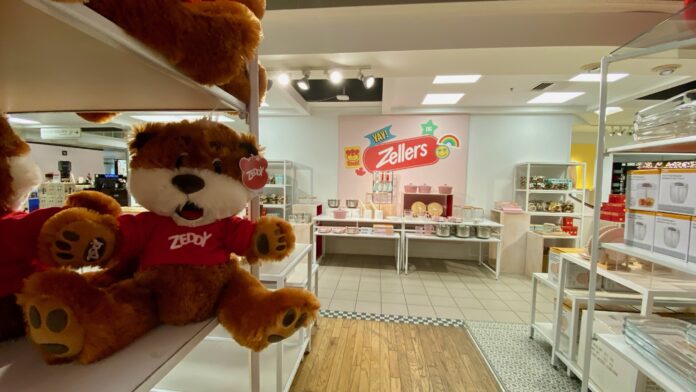
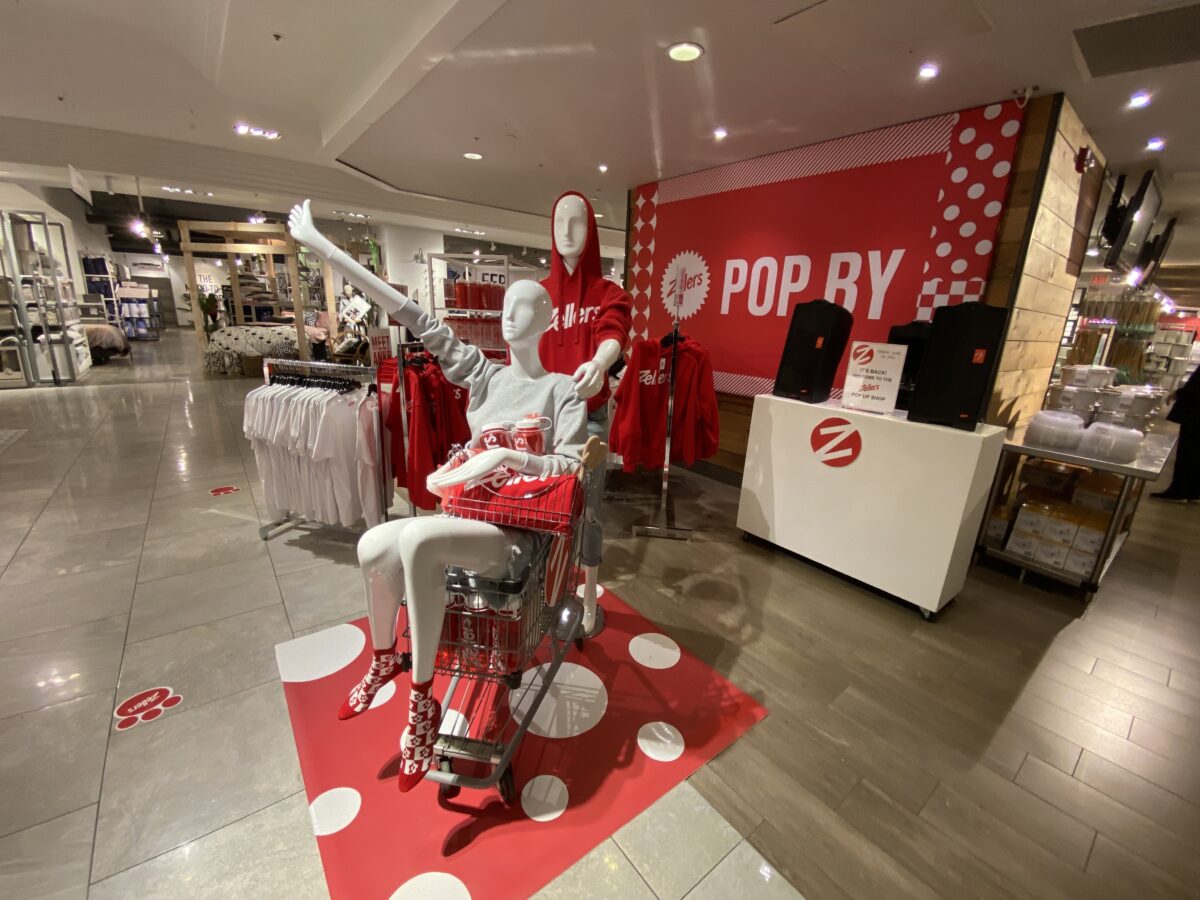
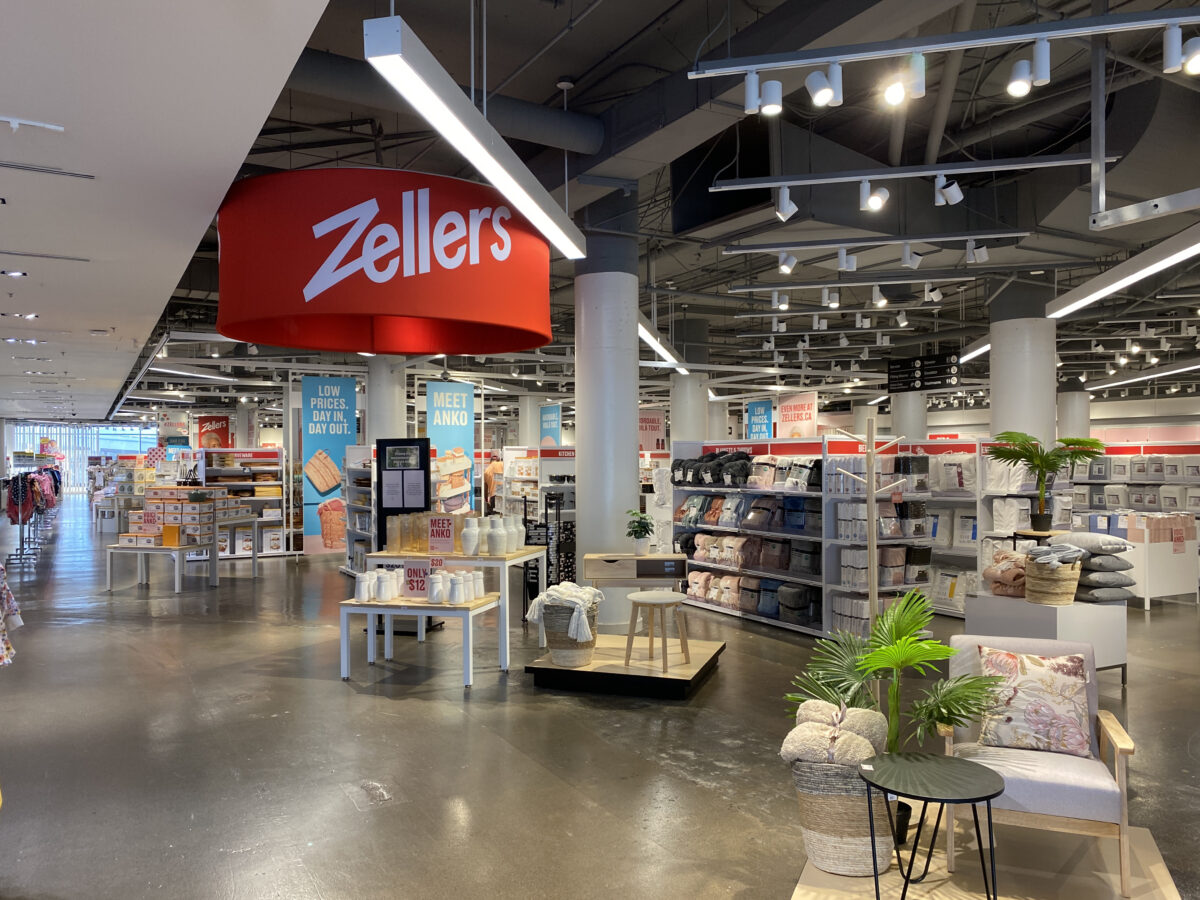
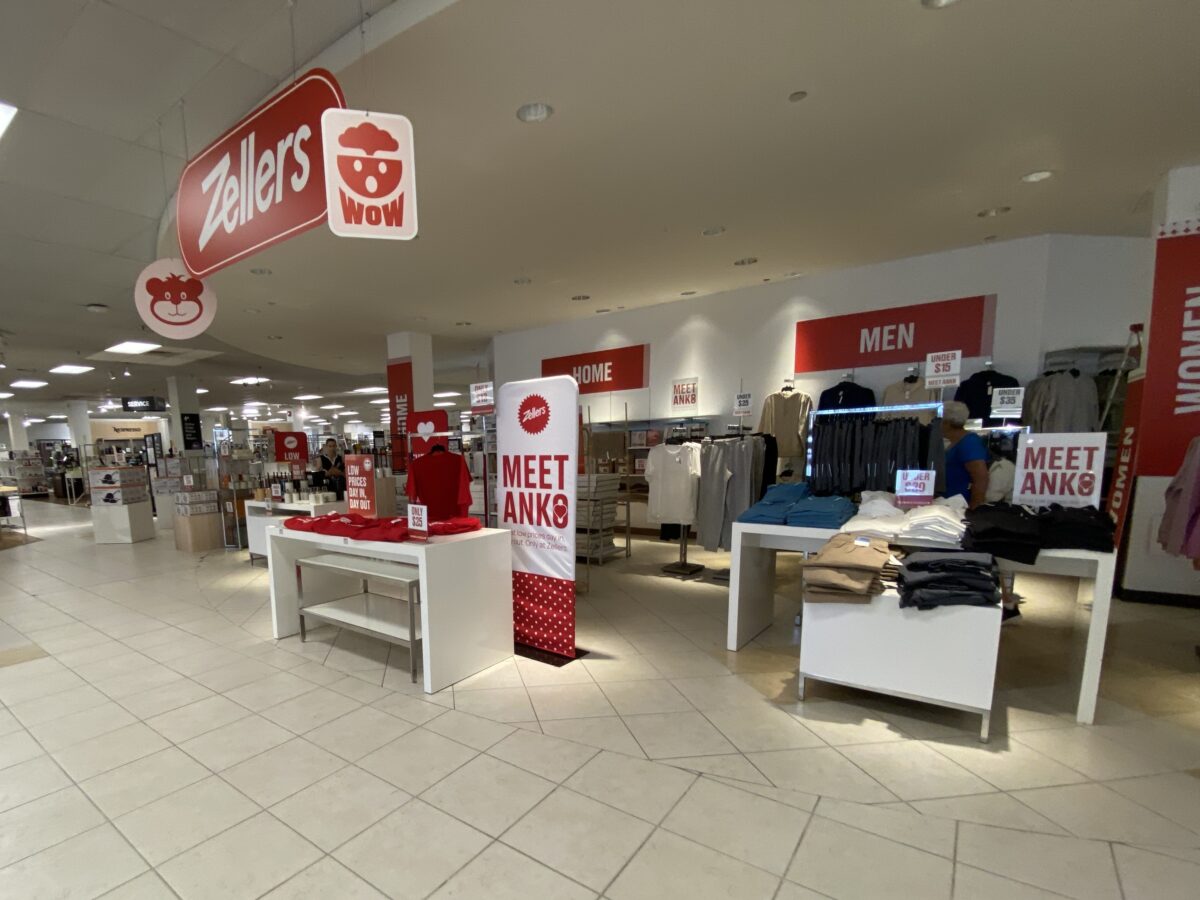
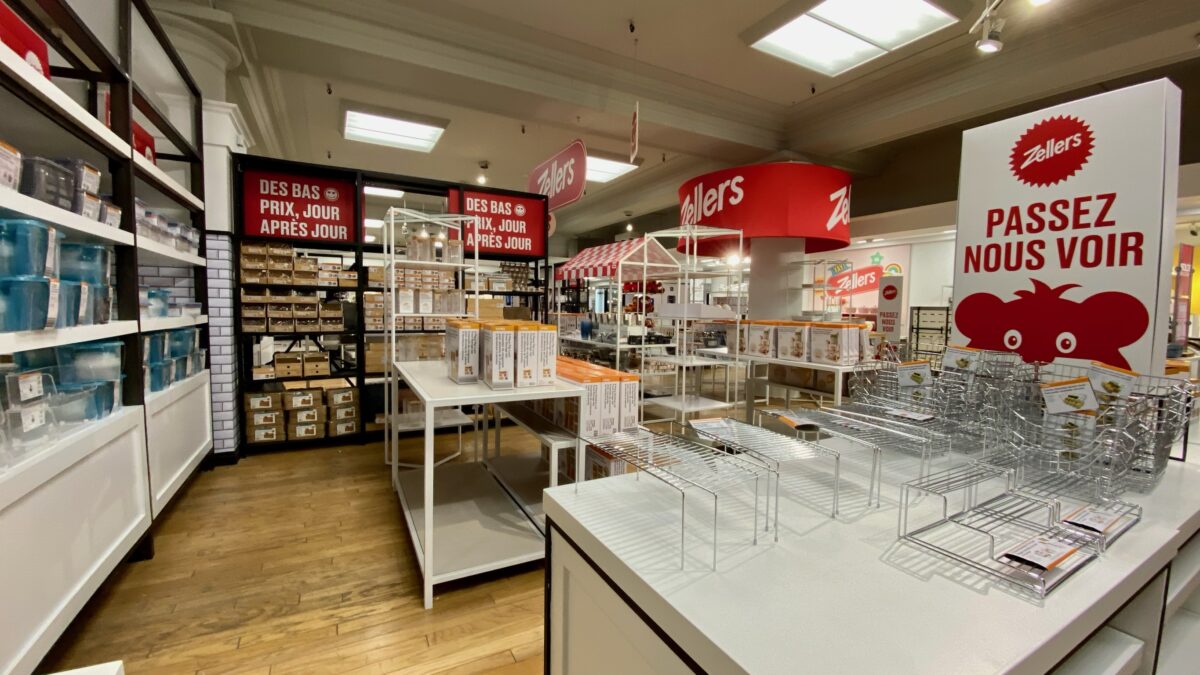
This year is expected to be a big one for Hudson’s Bay as parent company the Hudson’s Bay Company strategizes reviving the Zellers brand with shop-in-stores within existing Hudson’s Bay stores. We’ll be reporting more on the company this year as some big announcements are expected for its multiple banners.

Related Retail Insider articles

Large Food Hall to Open at South End of CF Toronto Eaton Centre [Photos]

Future Queen's Cross Food Hall at CF Toronto Eaton Centre (Image: Dustin Fuhs)

A large food hall will be opening this year at the south end of CF Toronto Eaton Centre in downtown Toronto. Construction hoarding went up this week on Level One of the shopping centre in a space formerly occupied by a Richtree Market. 

Oliver & Bonacini will be operating the food hall which, according to mall lease plans, will span nearly 18,000 square feet on one level. The location is strategic given that it is steps away from the Queen Street subway station that leads into CF Toronto Eaton Centre. 

Future Queen’s Cross Food Hall at CF Toronto Eaton Centre on January 11, 2023 (Image: Dustin Fuhs)
Lease plan via Cadillac Fairview showing the new Queen’s Cross Food Hall location and its proximity to the Saks Food Hall.
TTC Subway Entrance to CF Toronto Eaton Centre (Image: Dustin Fuhs)

The name of the new space will be the Queen’s Cross Food Hall, and signs indicate that it will open towards the end of the summer this year. Ten foodservice concepts announced on construction hoarding includes Le Petit Cornichon, Captain Neon Sushi + Bowls, Curryosity, Gil’s Fish & Chipperie, Red Sauce, Swanky Burger, Lala’s Cantina, Underground Sandwich, Beauty’s Fried Chicken, and Cross Bar. Solid Design Creative is designing the new food hall. 

Future Queen’s Cross Food Hall at CF Toronto Eaton Centre (Image: Dustin Fuhs)

These new foodservice operators will compete with a food court towards the north end of CF Toronto Eaton Centre. The Queen’s Cross Food Hall will also compete with the existing Pusateri’s-run Saks Food Hall located steps away in an underground passage linking CF Toronto Eaton Centre to the Cadillac Fairview-owned Hudson’s Bay building across the street. Nearby at 111 Richmond Street West is another food hall, Assembly Chef’s Hall, which opened in 2018. 

Richtree Market was a restaurant concept in CF Toronto Eaton Centre that shut abruptly in March of 2020. Richtree had operated at that space in the mall since 2013 — prior to that, a food court had been located at that location. At its peak in 2014, Richtree operated 11 locations in Eastern Canada. 

Future Queen’s Cross Food Hall at CF Toronto Eaton Centre (Image: Dustin Fuhs)


Oliver & Bonacini will also be opening a new restaurant concept within the CF Toronto Eaton Centre complex where a branded Duke of Richmond pub operated until recently. The new restaurant will be called Constance Taverne. Oliver & Bonacini owns several restaurant concepts in the Toronto area and will be opening several more this year including at The Well in downtown Toronto. 

Foodservice will continue to play a key role at CF Toronto Eaton Centre, though one potential exiting tenant won’t be happening at least for now. BlogTO reported this week that a deal to replace the mall’s Hendriks restaurant with Brazilian steak house concept Fogo de Chao fell through late last year. 

Additional Photos from the Future Food Hall

Past Flooring Exposed During Construction at CF Toronto Eaton Centre (Image: Dustin Fuhs)
CF Toronto Eaton Centre (Image: Dustin Fuhs)
Future Queen’s Cross Food Hall at CF Toronto Eaton Centre (Image: Dustin Fuhs)

Why Tip Fatigue May be Setting in for North Americans [Op-Ed]

Tipping has long been an established and widely accepted social norm in North America. Although it is not required, many Canadians feel pressured to tip — even in situations when we are dissatisfied with food or service quality.

For many, deciding exactly how much to tip in a given situation can be uncomfortable. Two recent phenomena are exacerbating this and increasing tensions around the practice of tipping.

The first is an increase in tipping percentage, known as tip inflation or “tipflation.” The second is tip creeping, which refers to the increase in services that now expect a tip from customers. Both tipflation and tip creep are reigniting the conversation about tipping in Canada and drawing attention to how entrenched tipping is in North American culture.

Tip inflation

Before the COVID-19 pandemic, the standard tip percentage in Canada was between 15 and 18 per cent. Now, we are seeing tip prompts of 30 per cent and higher.

There is evidence that Canadians have started tipping more since the pandemic, as well. What is less clear is whether consumers are being pushed to tip more, or whether they are choosing to do so on their own.

Given the size of most restaurant transactions, the majority of them occur using a debit or credit card. The concern over the transmission of COVID-19 or other infections has increased the appeal of contactless or minimum contact payment. This provides businesses with an opportunity to prompt customers with an “acceptable” tipping amount through payment terminals.

These nudges are a way for businesses to frame choices to get a desired outcome. The payment terminals provide suggestions as to the amount to tip and make it easy to choose that amount. Choosing a different amount requires more effort and is, therefore, less likely to happen.

Card payments provide businesses with chances to prompt customers with pre-set tipping amounts through payment terminals and credit card readers. (AP Photo/Gerald Herbert)

Nudging works, but it can backfire. A Harvard study found that higher default options led to higher average tips, but when the defaults were too high, a whiplash effect led to lower tips and negative feelings about the restaurant. Businesses need to be careful not to alienate their customers when doing this.

Nudges make tipping requests explicit, meaning customers are pressured into tipping, suggesting an expectation to tip, rather than a choice. This has the potential to induce feelings of guilt in customers.

Tipflation is also compounded by regular inflation. Restaurant prices increased by 7.7 per cent in Canada in 2022, meaning tips in the food industry are increasing substantially.

In the past, tipping percentages have been applied to the pre-tax amount. When you calculate a percentage yourself, you calculate the tip based on the pre-tax amount, but when using terminals, tips are calculated after tax. All of these factors are contributing to tip inflation.

Tip creep

At the same time as tip percentages are increasing, the types of businesses explicitly suggesting tips are expanding. Historically, tipping in North America has been reserved for restaurant serving staff, taxi drivers and hairstylists. Before point of sale terminals, you would occasionally see a tip jar on the counter at coffee shops, as well.

But now, other industries like fast food, retail outlets and even mechanics are offering tipping options on sales terminals to encourage — or pressure — customers into tipping.

Many auto industry insider blogs are also promoting tipping in an effort to normalize the practice in industries that have not historically been part of the tipping norm. Tip creeping can create both confusion and resentment in consumers.

The nudge towards tipping is not just happening on payment terminals, either. The freelance service platform Fiverr suggests a tip after delivery — work is paid for when it is requested. This creates uncertainty for customers.

Tip fatigue

Many Canadians are feeling tip fatigue from being bombarded with tipping requests more frequently. At the very least, tip fatigue means customers are leaving interactions that involve tipping with negative feelings. But at the worst, tip fatigue could cause customers to tip less or stop altogether. Those pushing to increase tipping risk alienating consumers who find the amounts and the range of services expecting tips too much.

As consumers, we should remember that we are in control. We choose when, where and how much to tip. While tipping is a social norm, no one should feel pressured to tip more than the standard percentage, if at all. If a business is prompting you with a tip percentage higher than you are comfortable with, you can always enter a custom amount that you feel is appropriate instead.

We can send a message that we won’t be pushed or guilted into tipping. We could even push for a model where customers only pay what the service is worth and businesses are required to pay their workers a reasonable wage, rather than forcing them to rely on tips to make a decent living.

By Michael von Massow, Associate Professor, Food Economics, University of Guelph

This article is republished from The Conversation under a Creative Commons license. Read the original article.

The Conversation

Downtown Yonge Street in Toronto Sees Foot Traffic Exceed Pre-Pandemic Levels [Interview]

Yonge-Dundas Square (Image: Dustin Fuhs)

Pedestrian traffic in the Downtown Yonge neighbourhood in Toronto continues to be on the upswing with some impressive numbers from the holiday shopping season.

“I’ve spoken to a number of our retailers, shopping centres and commercial spaces and I think the general feeling is that recovery has been pretty solid over the holiday period,” said Pauline Larsen, Executive Director of the Downtown Yonge Business Improvement Area.

“Economic recovery is not a linear thing but we’re definitely getting positive feedback.”

Yonge Street (Image: Dustin Fuhs)

She said from December 23 to January 2 foot traffic was up 11 per cent versus pre-pandemic in 2019.

Pauline Larsen

“We were very pleased to see that,” said Larsen, adding there was a snowstorm on December 23.

“We were wondering if that would have a big impact but it looks like we were overall up even on pre-pandemic levels.”

She said that on Boxing Day the neighbourhood experienced a 19 per cent increase in foot traffic compared to 2019. There was more than 160,000 people on that day that were counted on the BIA’s stretch of Yonge Street. 

CF Toronto Eaton Centre on Saturday, November 26, 2022 (Image: Dustin Fuhs)

And on December 31, there was a 23 per cent increase in foot traffic compared to 2019.

“Overall, pretty pleased with that. Strong foot traffic. Pre-pandemic levels. We’ve seen a strong showing for food services, we’ve seen a strong showing for retail, and services have definitely been the third category in what we’ve seen with the numbers,” said Larsen.

“I think this is the first holiday season that we’ve had for several years where people have been able to get out, walk around the neighbourhood, do their shopping in person and I think there’s an enormous appetite for that – to be out and about, if I can put it that way.

“One of the most successful things we did over the late November, December period is we do a holiday map of all the holiday lights in the neighbourhood. That was well used and downloaded and well supported. We saw an appetite for people to be out in the neighbourhood doing interesting things.

“The CF Toronto Eaton Centre had snowfalls in the mall. They actually had snow falling in the mall over the holiday shopping season and it seems that was very, very well received and popular.

“I guess the way I would put it is that people were just happy to be part of hustle and bustle again.”

Also, theatre was strong during the holiday period.

Larsen said the BIA’s latest audit of retail space in the neighbourhood saw vacancy drop to about 12 per cent, which is a 1.5 per cent decrease from the previous quarter.

“That for us is very positive and strong as well,” she said.

Yonge Street, South of Gerrard (Image: Dustin Fuhs)

The Downtown Yonge Business Improvement Area is a catalyst for creating vibrant urban experiences and events in the heart of downtown Toronto. Representing more than 2,000 businesses and their employees, as well as the broader community of residents, students and visitors, the DYBIA champions attractive public spaces, popular events, safety and cleanliness. It plays an active role both at street level and in boardrooms, advocating for a thriving and diverse community of retailers, restaurants and services.

The Downtown Yonge BIA’s Q4 2022 Economic Newsletter, indicated that neighbourhood spend steadily increased over the first eight months of 2022, signaling a positive return of visitors, shoppers, employees and students. 

“The three largest sectors in Downtown Yonge (Retail, Services & Foodservice) all saw significant gains when compared to the beginning of the year. Downtown Yonge also saw pedestrian volumes surpass 2019 levels for the first time since 2020, a strong indicator of where recovery is headed. Throughout the COVID-19 pandemic and into early recovery, commercial retail has stayed relatively stable in Downtown Yonge, with a slight improvement in the overall vacancy rate observed in the Fall. The return to work for many offices is in full swing, with occupancy in some downtown Toronto office towers peaking at 60 per cent during the mid-week. However, overall, the office occupancy remains 36 per cent as of November 2022,” said the report.

“The Downtown Yonge BIA saw nearly $200 million in transactions using debit and credit through Moneris payment portals between January and August 2022 across all sectors. The Foodservice industry saw a 160 per cent increase in number of transactions in August compared to January 2022, while Retail saw a 300 per cent increase in number of transactions for the same comparison periods.

“Pedestrian traffic has been steadily improving in 2022, with pedestrian flows surpassing 2019 levels for the first time since the pandemic began. September 2022 saw many encouraging changes, including the full return of in-person classes at Toronto Metropolitan University, which lead to the 32 per cent increase in pedestrian flows in September 2022 compared to August 2022. October 2022 saw the first time the pedestrian flows surpassed 2019 levels since March 2020, reaching just below five million people.”