Advertisement
Advertisement
Home Blog Page 688

Marc Cain Launches Canadian E-commerce Site as it Relocates West Edmonton Mall Storefront

Former West Edmonton Mall store. Image: Marc Cain

Upscale German women’s fashion brand Marc Cain has launched a Canadian e-commerce website as part of its expansion in the country, and the retailer is also relocating its physical storefront at West Edmonton Mall. 

The new Canadian e-commerce site uses geo-tagging to direct local shoppers to the Canadian website according to Stephen Belfer, Managing Director for Marc Cain in North America. The website includes Canadian pricing and content, and product orders are fulfilled from a Canadian distribution centre. Belfer noted that items on the website are currently in stock and that new product is regularly updated on the website. 

At press time, the Marc Cain website featured a buzzy red theme with female models of a range of ages and backgrounds. Tabs on the website include ‘New Arrivals’ and ‘Shop’ where consumers can find the latest styles from the brand. The tab marked ‘Inspiration’ includes a range of specials as well as a celebration of diversity and a ‘Premium Knit’ capsule collection. There’s also a Marc Cain magazine with content celebrating women as part of a push for the brand. The website is in both English and French. 

Screen shot from Marc Cain website

The website comes at a time when consumers are increasingly shopping online. At the same time, following pandemic lockdowns, consumers are also shopping in physical stores similar to what was seen prior to the pandemic. With that, Marc Cain operates a network of standalone stores in Canada while also maintaining wholesale accounts at several dozen multi-brand retailers. 

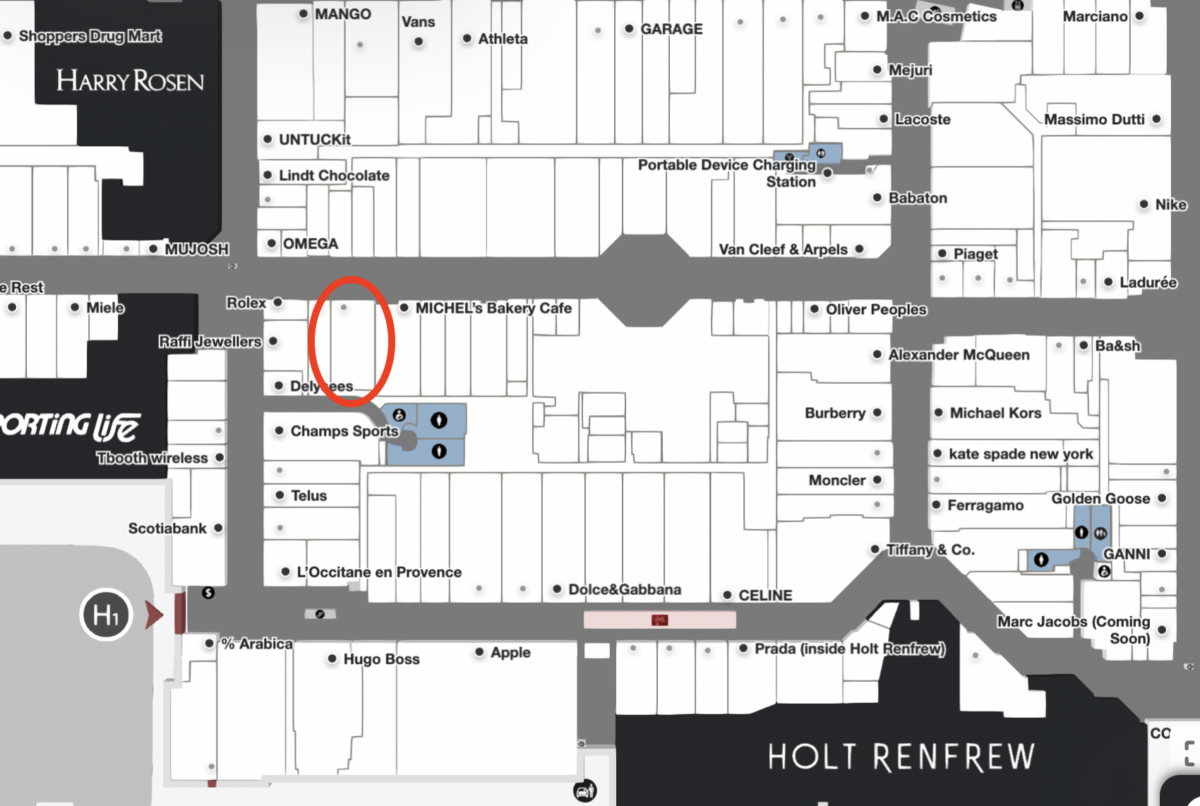
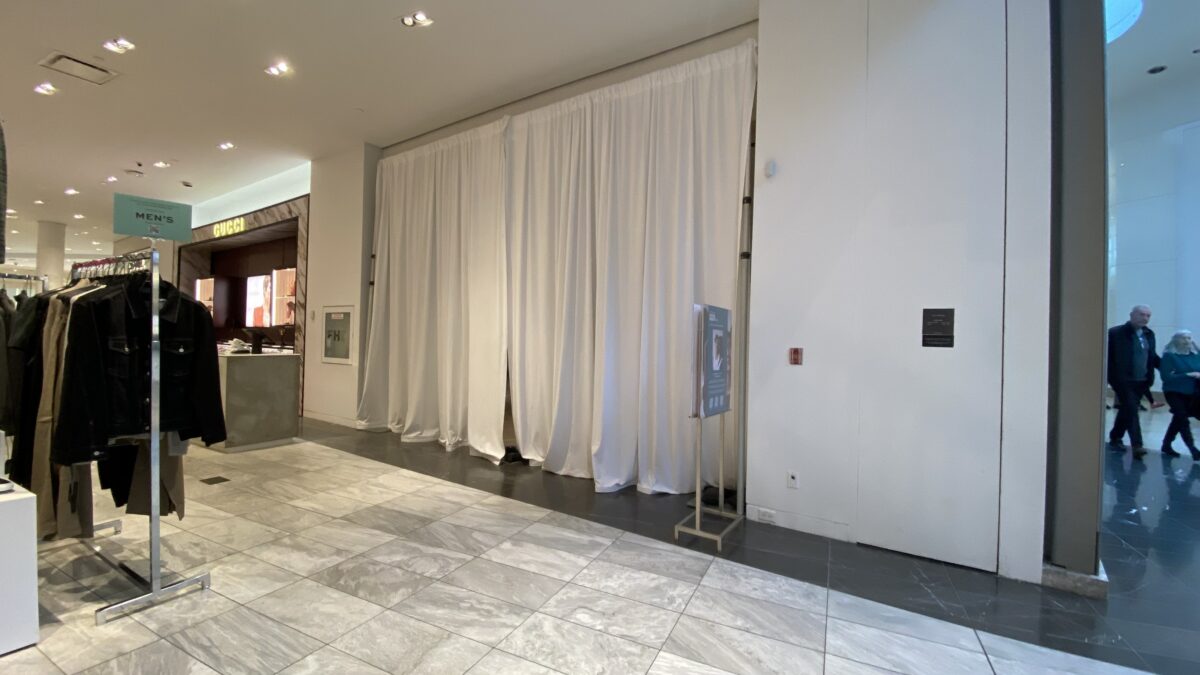
One of Marc Cain’s Canadian stores is at West Edmonton Mall — until recently the store was housed in a space near Tiffany & Co. across from H&M. The store will be relocating near Harry Rosen in Phase I of the mall according to Belfer with an opening date set for early next month. 

Marc Cain’s first Canadian corporate stores opened in October of 2015. That included locations at CF Carrefour Laval near Montreal, Place Ste-Foy in Quebec City and CF Chinook Center in Calgary. In 2016 locations in Toronto opened at CF Toronto Eaton Centre and at Square One in Mississauga. Stores subsequently opened at CF Pacific Centre in Vancouver and at CF Rideau Centre in Ottawa. 

Luc Lavigne of Oberfeld Snowcap handles real estate for Marc Cain in Canada and negotiates leases/renewals on behalf of the retailer. 

Former West Edmonton Mall store, image via Marc Cain

Belfer said that future Marc Cain stores could open in two highly anticipated developments in Canada if leases are negotiated. One potential location is Royalmount in Montreal although nothing is confirmed as of yet. And in 2017, Marc Cain opened a successful store at Oakridge Centre in Vancouver and it could return following the centre’s complete redevelopment that will be completed in 2024. 

In the United States, Belfer noted that Marc Cain recently opened two stores in New Jersey, including in Cherry Hills and Short Hills. The brand also has a store at The Westchester in affluent White Plains, north of New York City. 

Vancouver-Based Smash + Tess Expands Brick and Mortar Concept to Muskoka with Pop-up

Smash + Tess Muskoka Pop-Up (Image: Smash + Tess)

Vancouver-based fashion retailer Smash + Tess has debuted a colourful and fun pop-up in the popular vacation region of Ontario known as Muskoka.

The shop features Smash + Tess’ iconic Romper collection with a curated selection for the brand’s first ever brick & mortar store in Ontario.

“We are excited to bring the Smash + Tess brand experience to life in Ontario for the very first time,” shared Ashley Freeborn, Co-Founder and CEO, Smash + Tess. “Muskoka is a gorgeous spot and it’s been great to see the community come together – in the middle of the woods no less – for a unique shopping experience. Lakeside lounging, market hopping, and outdoor summer soirees are the perfect match for our feel-good Rompers, dresses, and summertime staples.” 

Smash + Tess Muskoka Pop-Up (Image: Smash + Tess)

The Smash + Tes Coquitlam Centre pop-up, which Retail Insider featured in November 2021, was the recipient of a gold award from ICSC Global. After seeing the success of a brick & mortar location, the e-commerce brand took the opportunity of a pop-up in Muskoka to showcase its “cheeky and inclusive” reputation.

The Muskoka space features bubblegum pink painted exterior walls, an “Every Body is a Summer Body” photo moment and an interactive element for customers to write and mail “From Muskoka with Love” postcards.

Smash + Tess pop-up is located at WDW Marina, Minnet, 1112 Juddhaven Road and is open until September 5th, 2022.

Additional Photos from the Muskoka Pop-Up

Smash + Tess Muskoka Pop-Up (Image: Smash + Tess)

Cactus Club Announces New Calgary Location

Cactus Club Cafe Crowfoot - Rendering

Premium-casual restaurant chain Cactus Club Cafe has announced a new 10,000 square foot location for Calgary.

Located at 112 Crowfoot Terrace NW, construction is now underway on the single-level location with a dining space split between a main dining room, lounge and enclosed patio. There is no opening date confirmed, but those interested in applying to work at the new restaurants can visit cactusclubcafe.com/hiring.

Andrew Latchford

“We’re thrilled to be bringing a fourth location to Calgary, and look forward to becoming a part of the surrounding Crowfoot community,” said Andrew Latchford, President of Cactus Club Cafe. “Cactus has proudly been in Calgary for the past three decades, and we are proud to continue expanding our hospitality offerings throughout the city.”

Founded in 1988, the chain was fully-acquired by The Fuller Family, owners of the Earls chain, in February 2022.

Cactus Club Cafe has expansion plans, which includes new locations in BC and Alberta, which will bring the total locations through 2022 to 34 across Canada.

Retail Insider will continue to work with the brand throughout its expansion to provide up-to-date information.

JD Group’s ‘size?’ Opens Second Canadian Flagship

Exterior Storefront of size? Vancouver. Photo: Lee Rivett

UK-based JD Group has opened it’s second ‘size?’ sneaker and apparel store in Canada in downtown Vancouver. Size? is known to do collaborations and release limited-edition product ‘drops’ which means that one may expect to see lineups periodically, something Toronto has become known for since its size? store opening last year.

Located at 833 Bute Street, the new Vancouver flagship size? location is just off of the retail-rich mecca of Robson Street and is accessible to foot traffic within the Bute-Robson Plaza.

Retail Insider’s Co-Editor-in-Chief Craig Patterson covered the initial announcement back in March, with an in-depth article on the positioning of the brand in Canada with expansion plans. That included Canada’s first size? storefront at 1000 Queen Street West at Ossington.

size? Vancouver. Photo: Martin Moriarty (LinkedIn)

Jordan Karp of brokerage Savills Canada represents the brand in Canada and he negotiated the downtown Vancouver lease deal on behalf of the retailer. Martin Moriarty, Mario NegrisJosh CochraneJustin Ergas and the Marcus & Millichap team acted on behalf of the landlord.

Size? was founded in 2000 and is known for stocking limited-edition sneakers, fashions, and accessories that are primarily classified as ‘streetwear’, with some product launches classed as global exclusives. The retail concept was initially launched by JD Group to trial edgier product collections before introducing them to the mass market through the JD fascia. Size? currently has stores in the UK, Ireland, Belgium, Denmark, France, Germany, Italy, the Netherlands, and Spain.

The entry of size? into the Canadian market speaks to the confidence brands have in brick-and-mortar retail. Size? also has robust social media and launched a Canadian website at size.ca in 2021.

size? Vancouver. Photo: Martin Moriarty (LinkedIn)

Clik2Pay Launches Flexible and Scheduled Payments for Canadian Businesses Requesting Payments from Customers [Interview]

Payment service provider Clik2pay has launched flexible and scheduled payment options, offering Canadian businesses more options when requesting payments from their customers. 

The two new features make it easier to request direct-from-account payments – making Clik2pay more usable for billers who are looking to collect funds from their customers. 

“Getting paid is a fundamental part of any business, so why not make it easy?” said Mike Bradley, Founder and CEO of Clik2pay, which is based in Toronto but with staff across the country. “We are giving businesses what they need to provide their customers with the best payment experience possible – hassle-free, direct-from-account payments.

Mike Bradley

“Businesses are looking for easier, more convenient and lower cost ways to collect funds from their customers. Credit cards have been around for many, many years of course. They work well for many consumers but not all. We know that over 40 per cent of Canadians would prefer to pay from their chequing or savings account and often these customers are unserved by businesses, particularly online.

“So you think of people who are new to Canada or maybe are credit challenged or just prefer the immediacy of being able to make a payment from their bank account and not having to get a bill 20 days later, an unpleasant surprise with that bill. For all those reasons, nearly half of Canadians would prefer to pay from their bank account or don’t have an option for a credit card. And when you think of online payments specifically, it’s typically credit card or nothing. For retailers that means you’re missing out on a big portion of your potential customers. We often say that retailers who aren’t taking payments from bank accounts are abandoning their customers.”

The company launched just over a year ago at the Payments Canada conference.

“We make Interac e-transfer, we built it for businesses, to enable businesses to be able to receive payments seamlessly via e-transfer. Lower cost. Available to all Canadians who have a deposit account, which of course is almost all Canadians,” said Bradley.

“I’ve been in payments for nearly 30 years, worked with major banks and VISA and Interac directly, but have always kind of wanted to continue to improve the options that Canadian businesses and consumers have to complete payments. And paying from an account has never been as easy as paying by card and we set out to change that with Clik2pay.

“These direct from account payment methods are emerging not just in Canada but around the world. Every Canadian knows how to use Interac e-transfer. It’s very familiar for people. It uses bank grade security which is a real positive but it hasn’t been built in a way that made payments easy for businesses and for consumers to pay businesses. What we did is we set up a whole series of interfaces, timeout buttons, QR codes,messaging, and all of the services and features that back it up and make e-transfer a way that any Canadian can easily pay a business.”

Bradley said Clik2pay is a much lower cost than credit cards which typically can cost two to three per cent of sales or sometimes even more. Clik2pay comes in at about half that cost, he added.

With Clik2pay Flexible Payments, a business may embed a direct-from-account payment link in a communication to its customer, such as a bill or collection notice. The customer can pay the amount of the bill, or edit the payment amount within a custom range (minimum and/or maximum) chosen by the business. This feature can be used where the business is willing to accept only part of the total amount due. 

“Think for example a $200 bill that a biller may decide or a Clik2pay customer could decide that it is willing to accept any payment over just for example $50 and allow the customer to be able to choose how much they want to pay of the bill. I’m sure we’ve all had times where we get a credit card bill but you’re only able to make the minimum payment or able to pay half of it. This flexible amount really allows the business to offer that as an option to their customer,” said Bradley.  

With Clik2pay Scheduled Payments, a business may set up a payment request for a specific future date, or set up a series of recurring payment requests. This feature can be used for payment plans where amounts are set in installments, or to plan payment requests for recurring bills, such as a monthly utility bill or rent collection. 

“An example would be a collection agreement with a customer. You’ve got a couple of hundred dollars owing and you don’t get paid until next Thursday. Rather than having to call back next Thursday to initiate the payment, the business can just schedule a payment for pay day. It just makes it more convenient,” explained Bradley.

“Another way a business might use this is a landlord or some sort of recurring payment application where there’s 12 payments of a fixed amount over the next year they can just schedule all those payments at the same time.”

The Rise and Fall of Ecommerce in Canada Since 2020 Shows Brick-and-Mortar Retail Still Dominant for Consumers: Trendex Report

Bloor Street (Image: Dustin Fuhs)

One of the major effects of the pandemic during 2020 was the increase in e-commerce sales, which was a direct result of store/mall closures and other shopping restrictions, said a new report by Trendex North America, a marketing research and consulting firm.

In Canada, the net effect was that during 2020 Canadian total e-commerce sales increased 70.5 per cent and accounted for 6.1 per cent of retail sales.

E-commerce growth in Canada slowed in 2021 as stores/malls continued to reopen after March 2021 and consumers resumed their normal shopping behaviour. The net result was that Canadian total e-commerce growth last year slowed to only 14.2 per cent, according to the report.

CF Toronto Eaton Centre (Image: Dustin Fuhs)

Randy Harris, president and owner of Trendex North America, said last year was a bit of a wakeup call for all those pundits who had been forecasting a bright future for apparel e-commerce in Canada.

“I want to say that e-commerce in groceries that’s a bright prospect. There’s no doubt that that will continue to grow,” he said.

Randy Harris

Harris said a growth, especially in 2020, was attributable to the closing of stores and malls and other restrictions that were pandemic-related to shopping.

“But what we’re seeing this year is that the consumer is returning to the malls, is returning to brick and mortar stores,” he explained. 

“In the end, consumers are cutting back on their e-commerce purchasing. This in a sense is bad news for some retailers who bet their farm on e-commerce sales growth. What we’ve got here is a situation where we have e-commerce retailers, or people engaging in that, providing now free shipping in most cases with a minimum order. They’re getting a high rate of return and also the cost of building and maintaining an infrastructure to support their e-commerce operation. What that means if you put it all together e-commerce will only end up being profitable for a certain segment of the apparel industry.

Prada at Yorkdale Shopping Centre (Image: Dustin Fuhs)

“I think retailers are going to come to grips with this in a while because I think in some cases now they’re actually losing money on their e-commerce operation. And I know nobody else is saying those things but you look at the data from Statistics Canada that’s coming out on e-commerce actually going down so far this year in total. It’s down by about 21 per cent, total e-commerce sales in Canada, through the first four months of the year.

“People have got to look at these numbers and even retailers like Aritizia, which I think is a standout e-commerce company, only reported growth of 15.5 per cent in its first quarter of the year in their e-commerce sales. And the numbers for Canada Goose were not that much better. Again, all of the signs are pointing to a slowdown in e-commerce sales and certainly the growth projections that came out two years ago by industry pundits make absolutely no sense in retrospect at the moment.”

The Trendex report said the pandemic also had an effect on the way in which Canadians purchased apparel. After increasing 13.5 per cent in 2019, apparel e-commerce sales increased 108.1 per cent in 2020. 

“However, during 2021 when consumers were not forced to make the choice of buying no apparel or buying online, retail apparel sales became dominated by consumers choosing brick-and-mortar over e-commerce. Determining the magnitude of the resulting decrease in apparel e-commerce sales is a challenge for two reasons: Very few Canadian apparel retailers publish their e-commerce sales and those that do are not reflective of the performance of all Canadian apparel retailers,” said the report. 

“However, two of those that do report Canada Goose and lululemon noted that the growth in their e-commerce sales during 2021 fell from 54 per cent to 8.2 per cent and 100.8 per cent to 21.6 per cent respectively. Not surprisingly, Aritzia was the exception as its e-commerce sales increased 87.6 per cent in 2020 and 88.0 per cent in 2021.”

Image: Canada Goose at West Edmonton Mall

The report said Ingram Micro Commerce and Services estimated that Canadian apparel e-commerce sales fell 7.3 per cent in 2021, while Statistica reported an 8.1 per cent decrease in apparel e-commerce sales. 

“Trendex has an even more depressing estimate, as it reported that apparel e-commerce sales fell 10.7 per cent in 2021. The decrease was primarily attributable to a 26 per cent decrease in apparel specialty store e-commerce sales,” said the report.

“When it comes to forecasting the growth for Canadian apparel e-commerce sales, Trendex is taking a contrarian position as we maintain that a segment of consumers going forward will become increasingly disillusioned with purchasing apparel online and will return to both malls that are being reconfigured as lifestyle centres and to stores which are being upgraded with new retail technologies. Bottom line, apparel e-commerce sales from 2021-2026 will increase only marginally more than total apparel sales growth.”

Video Interview: What Can Be Done About The Labour Shortage In Retail in Canada?

Video Interview: What Can Be Done About The Labour Shortage In Retail in Canada?

Suzanne Sears, President, Best Retail Careers International, discusses the labour shortages retailers are facing these days.

Sears talks about how retailers can find and retain staff, what created this situation, how bad it is, can wages fix it, is it just a wage issue, can retail be a career choice for young people, is it going to get better or worse and the recent news of layoffs at Shopify.

The Video Interview Series by Retail Insider is available on YouTube.

Connect with Mario Toneguzzi, a veteran of the media industry for more than 40 years and named in 2021 a Top Ten Business Journalist in the world and the only Canadian – to learn how you can tell your story, share your message and amplify it to a wide audience. He is Senior National Business Journalist with Retail Insider and owner of Mario Toneguzzi Communications Inc. and can be reached at mdtoneguzzi@gmail.com.

Interviewed this episode:

Like, Share and Subscribe to Mario Toneguzzi on YouTube!

Follow Mario:

Also check out the other series offered by Retail Insider, including The Weekly podcast and The Interview Series, which are both available on Apple Podcasts, Stitcher, TuneIn, Google Podcasts, or through our dedicated RSS feed for Simplecast and other podcast players.

Follow Retail Insider:

Share your thoughts!

Sweet Success: Chocolate Retailer ‘Those Girls at the Market’ Expands Operations Including Downtown Saskatoon Storefront and Wholesale Operations [Feature]

Image: Those Girls at the Market

Those Girls at the Market, an organic chocolate store in Saskatoon Saskatchewan, has recently moved to its new location downtown as it needed more space to meet customer demand. 

The store produces handmade organic chocolate and has become popular in Saskatoon and throughout Canada. Its first store opened in 2019 and moved to its new location at 3332 20th street West in Saskatoon in January. Customers can find a variety of chocolates such as classic, coffee, cranberry and sea salt, mint, sugar free, and it also has sugar free options. Its first store was 240 square feet, and the new store is 2050 square feet and has expanded to include a local farmers market section. 

Julianna Tan

The store owners, Julianna Tan and Ying Tan, are health focused sisters who wanted to start a business together, and they did. After finding out the health benefits of raw chocolate, Juliana and Ying got inspired and wanted to start chocolate making.  In 2014 the chocolate making began, and in 2019 they went to chocolatier school. 

“It was a very random thing. My sister and I knew we wanted to do something together. But, when we got into chocolate making, we realized it was way more complicated than we ever imagined as it has a lot of science and chemistry. We spent 3-4 weeks in the beginning of our summer when we were opening in our little booth and self teaching ourselves everything about making chocolate,” says Julianna. 

Selling Out Fast 

Image: Those Girls at the Market

Those Girls at the Market originally started selling at the local farmers market in 2014 and to their surprise, the chocolate sold out. 

“The first day we had our booth opened we actually ended up selling out of everything we made, and we were super happy but then we realized we had to stay up all night long to be back the next day and we sold out again on Sunday and it continued which was pretty exciting for us since we went in with no expectations,” says Julianna. “By the end of the summer we had hundreds of regular customers and we couldn’t just stop and go back to regular life.” 

After graduating from her Kinesiology degree from Dalhousie University, Julianna started her career as a chocolatier and bought, along with her sister, their first retail shop which was 240 square feet. As the original store also was connected to the store The Little Market Box, a farmers market retail store Julianna co-owns with Shawnda Blacklock, the store quickly got cramped and it had to move to a new location. 

The Little Market Box 

Image: Those Girls at the Market

The Little Market Box, owned by Julianna and Blacklock, opened its doors right beside Those Girls at The Market. It was inspired to bring locally fresh food to the downtown core, something that was missing since the farmers market moved locations from downtown to an industrial area making it inaccessible. The concept of the Little Market Box is to operate as a farmers’ market, but more as a retail store. Within six months the store had over 60 local produces and now it has over 130 – something they did not expect. 

“We had no idea what to expect with our farmers market shop, we had a vision of maybe 10 producers joining us and in the long term our goal was to have 30 producers join us, but within 6 months of operating we had over 60 local producers. So, we knew this was going to be a lot bigger than what we imagined. And we quickly ran out of space, so we had to find a new and bigger location and we just moved into our new location in January of this year, so just over 6 months ago,” says Julianna. 
The new location has combined Those Girls at The Market and The Little Market Box. Products can include chocolate, bison, chicken, flowers, and anything you can think of. 

The Demand for Chocolate – Hundreds of Customers Every Week 

Image: Those Girls at the Market

Juliana said the store has several of hundreds of regular customers and during the colder months, starting in the Fall, they ship throughout Canada. 

The chocolate, which is all organic and handmade by Julianna, can take up to 48 hours to make – just for one batch. 

“When it comes to chocolate making, it depends on a few factors. What the temperature is that day, the humidity, and how much I am making. So, if I am making a small batch, I can get it done within 4-5 hours; however, for larger batches it can be up to 10 hours in the kitchen,” says Julianna. 

As for speciality products, like its Avocado Chocolate bar, it could take up to 48 hours. The store is constantly adding new special features, including a maple fudge toffee bean bark bar which will come out by the end of the summer. 

Future plans 

Juliana said the one big plan they have currently, is collaborating with other restaurants in the community on how to reduce food waste. 

“A big piece of what we are working on right now is food waste deduction, so when it comes to food it is incredible with how much food goes to waste. We are really working on how to reduce waste and as we grow, we want to really collaborate with restaurants and other producers on how to transform the food and how to preserve it,” says Julianna. 

Other plans include possibly selling their chocolate wholesale if the store does it will be within the next year or two. “As we go in time, wholesale is something we will start considering for this year or for next,” says Julianna. 

Julianna says they also enjoy connecting with their regular customers daily. 

“There is something very special about selling directly to the customer and that is a big piece of our business, is that we know a lot of our customers and they bring a lot of their friends and their family to visit us. So that personal connection to our customers is important to us,” says Julianna. 

Related Retail Insider Articles

Retail Marketing’s Latest, Most Effective, Nuanced Strategies to Meaningfully Connect Consumers and Brands

As consumers, and the brands that seek to build relationships with them, face both competitive and cost pressures, how do retail marketers win hearts and wallets? What are the most powerful tools to grow relevance, loyalty, and drive sales?  

Retail Council of Canada’s Retail Marketing Conference, hosted in person this year on September 8, 2022, at the Delta Hotel in downtown Toronto, is an exceptional full day conference for retail marketers across Canada to share how they are overcoming today’s challenges, actively connecting with consumers, and responsibly growing their brands and businesses.  

Conference Topics

Digital behaviours that were once feared, such as showrooming or price comparisons, are now being leveraged to help build early connections with consumers, especially gen-z. This shift in retail strategy is reflected in many of the featured sessions on the main stage.

  • Also shifting is the focus on how marketers are contextualizing “making life better” for customers. Eva Salem, Senior Vice President, Marketing and Brand with Canadian Tire Corporation shares how their 100th Anniversary has both refreshed the brand and appropriately highlighted the unique emotional motivators that connect Canadians from coast-to-coast to the Canadian Tire brand.
  • Meta Canada’s Head of Agency, Nish Shah, looks at how brands can add depth to their storytelling and build unforgettable experiences. Nish shares how platforms can be leveraged to increase visibility and maximize audience engagement. 
  • Lindsay Carter, Direct to Consumer Retail, Google Canada, shares research on the latest shopper insights and marketing innovations that will help Canadian retailers of all sizes both stay agile and improve their bottom-line. Lindsay also shares a sneak peak of what is in the Google pipeline for retail marketers.
  • Personalization and relevance also extend to positioning and timing of unique product assortments. As Canada’s consumer landscape evolves, the idea of a “holiday season” is also changing. Howard Lichtman, Partner and Co-Founder of Ethnicity Matters, unpacks the growth opportunities in cultural holidays, including Diwali, Eid, Dragonboat Festival, Holi, and Singles Day, amongst others. Howard shares how to strategically consider these occasions and market them with confidence so that consumers can appreciate a how a brand prioritizes its connection to it consumers over the sale itself.
  • RCC’s Retail Marketing Conference would not be complete without the critical conversations on flyer marketing. Caddle’s Chief Revenue Officer Colleen Martin shares the very latest information on consumer behavior as impacted by the economy and what this means for the future of flyers. reebee’s Mark Smith joins the conversation, sharing unique insights on the evolving flyer ecosystem. 

This year Retail Council of Canada is offering its Retail Members the best prices with a new duo conference pass. Register with a colleague to save $50, or, register your team of 5 or more for 20% off. Early bird rates for associate members and non-members ends August 8, 2022.

View the agenda and register today. 

*Partner content. To work with Retail Insider, email: craig@retail-insider.com