A fresh new concept—positioned to become “the Whole Foods of convenience stores”—is ready to make its market entry and tap into a new generation of on-the-go shoppers.
KaleMart24 is being spearheaded by Oussama (Sam) Saoudi, who is the founder and CEO of Montreal-based Toro Beverages, which revolutionized the energy drink industry by introducing Canada’s first matcha-powered energy drink. Toro Matcha is made in Canada with Japanese Uji matcha and only good-for-you ingredients, it’s 100 per cent natural, sugar-free, gluten-free and vegan.
Sam Saoudi
“I am a millennial and a busy entrepreneur, time is scarce for me, and convenience stores (c-stores) play an important role in saving me time. I belong to an on-the-go generation that is driving the trend for increased visits to c-stores. We make frequent trips to smaller stores just to grab a quick and fresh lunch/snack in time to make it back to the office or to class,” said Saoudi.
“Our generation is becoming more conscious about health, however, natural food and beverage options in current c-stores are very limited or non-existent.
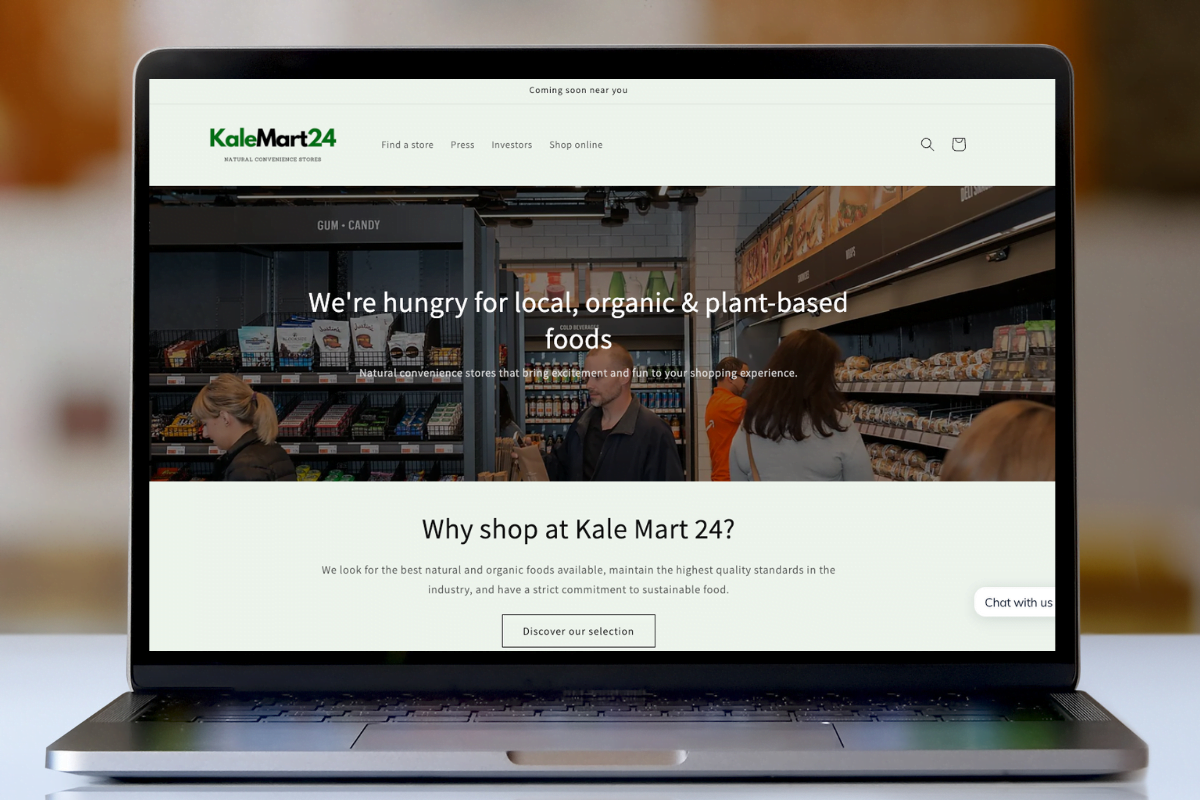
Image: KaleMart24.com
“KaleMart24 is breaking through the mold of c-stores being associated with junk food by offering healthier choices that cater to a mobile savvy younger generation.”
He described KaleMart24 as the “Whole Foods Market” of convenience stores. KaleMart24 is a sustainable c-store chain that makes shopping for organic and healthy foods incredibly fun, with the homey feel of a market, yet the modern elegance of an upscale c-store.
“Curating specialty brands and products, KaleMart24 includes all the usual sections of a c-store, along with a small personal care section, and a small organic pet section,” he said. “We are fostering connections between people, food and the neighbourhood. We are conscious about our customers’ health and believe that we contribute to a healthier diet than conventional stores.
“We are also leveraging tech by offering self-checkout, contactless and mobile payments to encourage shoppers to shop easily and buy often. We’re located close-to-home or on the way to work to take advantage of the important food on-the-go category.
“After the COVID-19 pandemic, younger generations are more conscious about their health, but are looking for quick and accessible healthy foods. They are increasing their visits to c-stores, but healthy options are lacking. Thus, KaleMart24 is necessary at this point in time.”
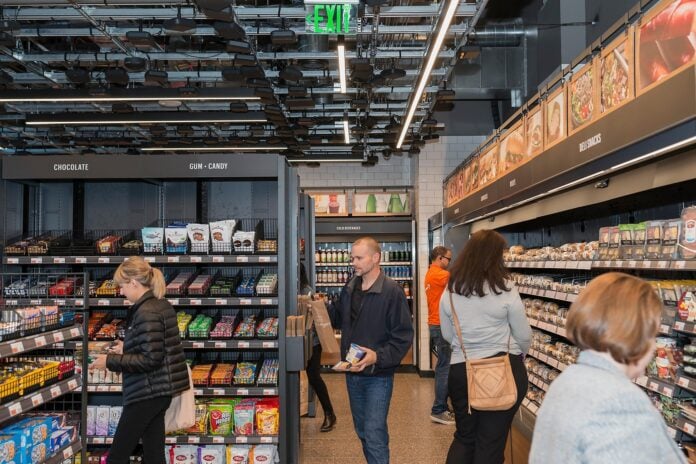
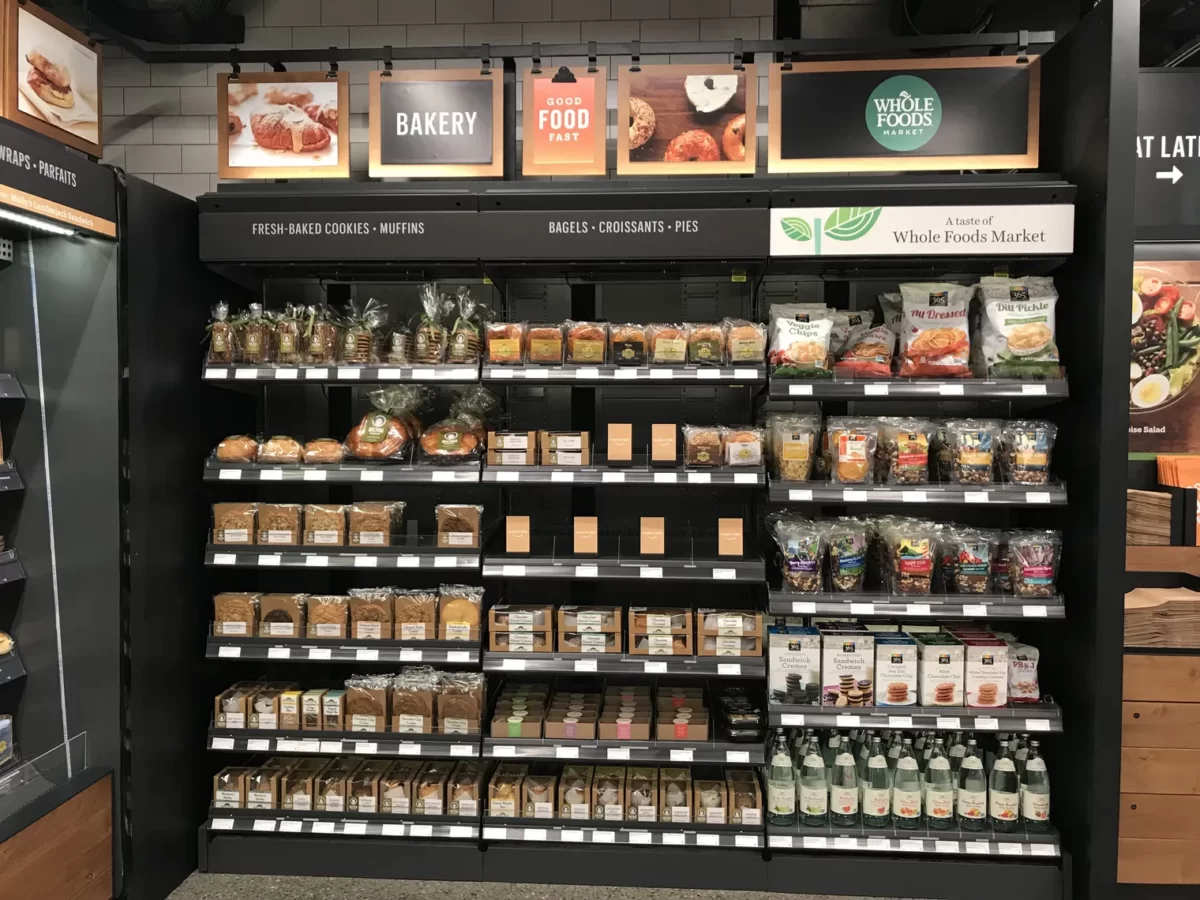
Example of Convenience Grocery Store Concepts (Image: AmazonGo)
Saoudi said the company is planning to open several locations in major Canadian cities before expanding internationally to major cities in the USA, UAE, Europe and Asia. He sees this brand as an international brand that will dominate the better-for-you convenience food market.
Tony Flanz, CEO of Montreal-based Think Retail is helping the brand launch the concept. The ideal store size is about 1,500 square feet in high-traffic areas and near universities.
Tony Flanz
“Stores have a modern, upscale look, while still maintaining an earthy, homey market-like atmosphere. Expect all the usual categories, but with specialty brands and products that include not only food and beverages, but also personal care items and even organic pet food,” says Think Retail on its website.
“Stores will leverage technology with a strong loyalty program, as well as self-checkout, contactless and mobile payments options that encourage shoppers to shop easily and buy often 24/7.”
It says the concept will have wide-appeal for time-strapped health-conscious consumers, but zeroes in on Millennials, who desire a high-quality food experience, with a unique narrative and global flavours.
“This demographic is looking to save time and they’re always on the go, which makes them the ideal c-store shopper. Now, KaleMart24 is filling the gap for BFY (better for you) convenience products that shoppers can grab easily close to home or on their way to and from work or school,” says Think Retail.
Even during an unpredictable time with economic challenges, Canadians were out spending this holiday season.
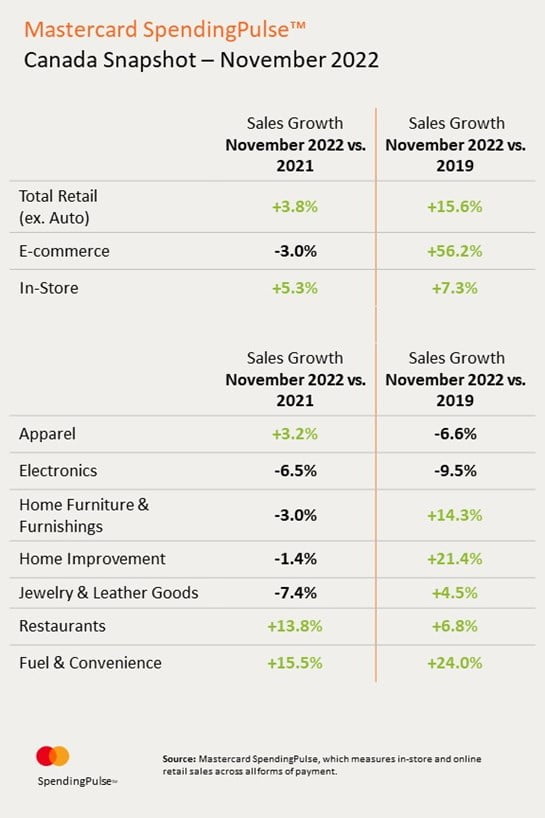
According to Mastercard SpendingPulse, which measures in-store and online retail sales across all forms of payment, Canadian retail sales, excluding automotive, increased 3.8 per cent year over year (+15.6 per cent year over three years) in November. While e-commerce sales were down three per cent year over year, growth remained strong since pre-pandemic at 56.2 per cent from three years ago. In-store sales in November were up 5.3 per cent year over year (+7.3 per cent YO3Y).
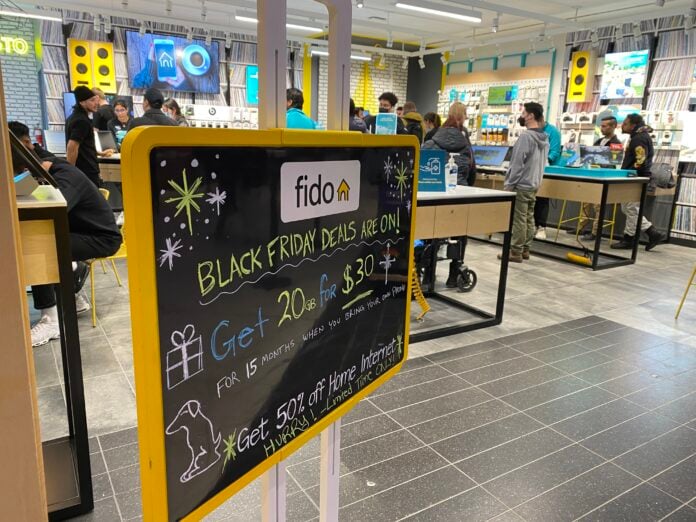
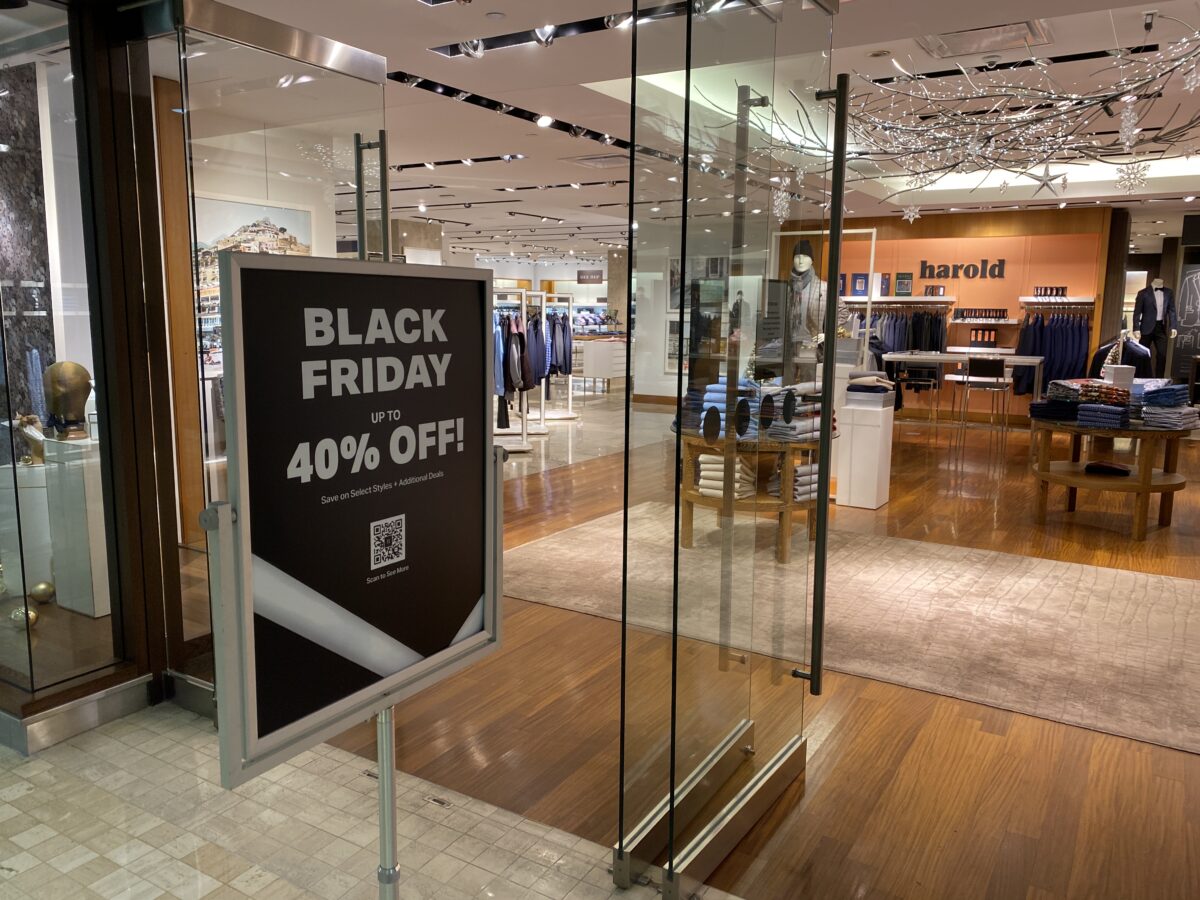
Canadian retail sales on Black Friday (November 25) were up 5.6 per cent year over year, with Apparel (6.6 per cent) and Electronics (5.8 per cent) among the sectors showing sales growth. In-Store sales saw an increase in spend at 7.5 per cent on Black Friday, indicating a strong return to in-person shopping this holiday season.
CF Toronto Eaton Centre on Black Friday 2022 (Image: Dustin Fuhs)
The Canadian numbers for December aren’t in yet but November was a good sign of what retailers in the country could expect for the holiday season.
“What we’re seeing is a Canadian consumer that is shopping but they’re being careful so that there are certain categories that are performing better than others,” said Steve Sadove, senior advisor for Mastercard and former CEO and Chairman of Saks Incorporated. “Experiences are driving behaviour. I believe value, given inflation and all the pressures on people, is (also driving behaviour).
“Categories that performed well early in the pandemic are slowing. So you see this reversion to the norm. The winners as we look at November, people are still going back to the stores. So you saw 5.3 per cent growth in stores. The overall growth at 3.8 per cent is a slowing growth. There’s no question it’s not at the pace of growth that we had seen earlier in the year. That is inflation is driven.
“And e-commerce is not growing as quickly as it was. You saw this massive spurt in e-commerce during the pandemic increasing more than 50 per cent. But now you’re not seeing as rapid a growth. It’s still an elevated level but it’s not at an accelerating growth level. I think the most interesting data through November is really the role that experiences are playing. Restaurants are growing at 14 per cent. So people want to get out again. Fuel is growing. Part of that is the rise in fuel prices but it’s also people getting out again and traveling.
“It’s a combination of the experiential and then you contrast with everything home related which is declining . . . Those are categories that fared very well earlier in the pandemic when you’re stuck at home. What do you do? You go buy a new television set or you’re fixing up your home with home improvements. That has passed and now you’re in this phase of the experiential.”
Mastercard SpendingPulse Canada (November 2022)
Sadove said it’s also the pattern being seen in the U.S. as well.
According to Mastercard SpendingPulse, U.S. retail sales excluding automotive increased 7.6 per cent year-over-year this holiday season, running from November 1 through December 24. Canadian data will be coming out in the near future.
“This holiday retail season looked different than years past,” said Sadove about the U.S. market. “Retailers discounted heavily but consumers diversified their holiday spending to accommodate rising prices and an appetite for experiences and festive gatherings post-pandemic.”
Black Friday Deal at Harry Rosen (Image: Dustin Fuhs)
Sadove said the amount of sales during the holiday season in Canada is in some ways a back to normal environment.
“Last year you didn’t have enough inventory in the system. You had supply chain issues. The brands and the retailers ordered a lot more product this year. The supply chains loosened up. They also ordered more product in the categories that they thought were going to continue to grow but didn’t. So you see these declines in electronics, in home, in jewelry. They ordered too much of it even in certain areas. Apparel is not all the same. They ordered too much of athleisure, at-home, type products but not enough of the going out to the weddings and the social occasion apparel,” he said.
“So I think you’ve got too much product in the system that had to be cleared out. Fashion inventory is a wasting asset so it doesn’t get more valuable over time. I think the retailers decided they needed to clear out the system. So you saw accelerated discounts. I would call it earlier and deeper because of that and I would expect you’re going to see deep discounts right now Boxing Week to clear out the excess inventory.
“I’m guessing as you go into 2023 once a lot of this inventory clears there’s a lot more predictability, even though there’s a lot of uncertainty, I would anticipate that the retailers would be much more cautious as they’re buying 2023 so it will right size itself over time. But you’re still in this period right now of the retailers learning, and the brands learning, the changes in the consumer behaviour and the inventory is a result of that.”
Retail Insider is streamlining its Canadian retail news from around the web to include a handful of top news stories that can be viewed quickly during the day. Here are the top stories from the past 24 hours.
The work of 18 Canadian fashion brands will be elevated by a digital showcase with worldwide exposure to retailers, changing the way business is conducted.
Susan Langdon
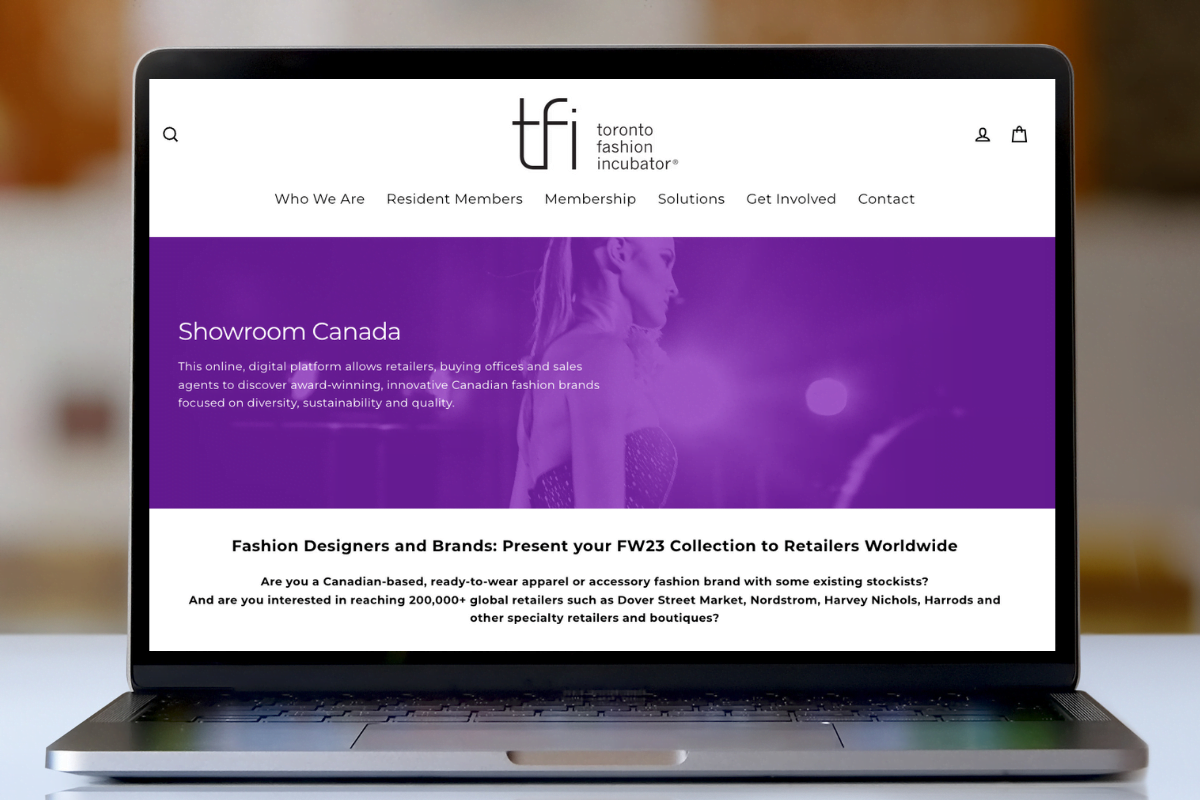
Showroom Canada is a virtual space for designers to expose their fall-winter ’23 collections to more than 200,000 global stockists.
“Some of these retailers include Dover Street Market, Harrod’s, Nordstrom, and Harvey Nichols.”
The B2B digital wholesale platform is being built on Joor.
Many brands haven’t done an online showroom before and “we’re providing educational webinars with the Joor people,” said Langdon.
Image: Toronto Fashion Incubator
TFI is an award-winning non-profit that helps educate and mentor fashion entrepreneurs in all things business-related. It launched in 1987 and bills itself as the world’s first fashion incubator. Its“groundbreaking incubator model has been replicated in major fashion meccas such as New York, Paris and London,” according to its website.
Alumni and members include Christopher Paunil, David Dixon, Shelli Oh, Foxy Originals, Garrison Bespoke, JUMA, Lesley Hampton, Line Knitwear, Miriam Baker, Sentaler, Smythe, S.P. Badu, and Todd Lynn.
For Showroom Canada, TFI will be covering everything from digital assets needed to using line sheet templates to pricing for international markets.
It’s similar to factoring, said Langdon.
When designers get an order from retailers around the world, they can opt into Joor Pay to help with cash flow.
“The designer will get paid in full within six days. And then Joor collects the payment from the retailer within 60 days, so that’s pretty amazing.”
That takes away a lot of fear from designers – some of whom are wholesale newbies, while others are “venturing into a digital B2B wholesale concept for the first time.”
Image: Claudette Floyd
Image: ESPE
A mentoring system is in place for TFI members, who can spend two hours with volunteers “who have a lot of retail experience.”
That includes a former buyer from Holt Renfrew, and Franco Mirabelli, “who had his own chain store but also did sell to stockists, so he can give real life examples.”
Being able to offer wisdom and say “‘this would happen to me, this is how I broke into stores,’” is helpful.
TFI also has a designer who had her own small boutique and was the shoe buyer for the Shoe Company.
“A lot of our members are not just apparel designers, but they’re also accessory designers,” said Langdon.
Her career began in fashion, too.
“As a designer, I sold across Canada, the U.S., a little bit into the U.K., and I meet exclusively with our resident members,” she said. “These are the people who rent studios within our facility and I can share my experiences … particularly with international markets and how to approach retailers, how to follow up with them.”
Image: Toronto Fashion Incubator
Getting Canadian designers’ lines into stores isn’t easy, “especially when you’re breaking into the market,” said Langdon. “Once you’ve made a name for your brand, and it’s proven to have a good sell-through rate, often, stores will set aside a budget for you.”
Langdon said she recently found out Nordstrom has a 10 per cent ‘open to buy’ every season.
It means the retailer is looking for new brands to bring in to “create some excitement and curiosity for shoppers.”
For those having difficulty breaking into the Canadian market, “which a lot of designers are finding, you can be discoverable by American buyers or buyers from Europe.”
When Showroom Canada ran in 2021, the greatest response rate was from American buyers, she said. “‘They’re a lot more willing to take a chance on a Canadian brand, which I think is great.”
Image: Helene Clarkson
Image: Hania Kuzbari Jewelry Designs
It’s been running for two years and is a grant-reliant program.
Showroom Canada launched in late 2020, when brands were having difficulties with wholesale orders and buying appointments with retailers.
Langdon conceptualized an online tradeshow and it did well. “We ran it for six weeks [in 2021] and the brands who participated, together they generated almost a million dollars in wholesale sales,” she said, adding “that’s pretty good.”
Fashion designers don’t have to leave Canada to find success, said Langon.
While brands such as Erdem, DSquared2, and Mark Fast have found “great success” elsewhere, the pandemic has forced business online.
“Look at some of these great brands like Greta Constantine, Jenny Bird, and Sid Neigum, who were all members of TFI, who will remain in Canada, you know, and they’re doing extremely well, selling all over the world … I definitely would encourage brands to stay in Canada because we have an excellent support system here like TFI that you’re not going to find elsewhere.”
Video Interview: Top 5 Digital Marketing Trends For 2023
Steve Buors, CEO & CO-Founder of Reshift Media, discusses the Top 5 Digital Marketing Trends in 2023.
Buors talks about:
Localization as a differentiator: According to Shopify, 49% of North Americans are more likely to purchase from a brand due to its local presence, and CFIB reports that 66% of consumers say they make efforts to buy from small businesses.
Improved performance through machine learning & AI: As marketers look to increase the efficiency and effectiveness of their advertising in 2023, the continued increase in the use of AI and machine learning will allow marketing professionals to analyze real-time data and dynamically generate personalized content and ads based on a combination of user characteristics and business objectives.
Explosion of short-form video: Online video consumption continues to grow, with video accounting for 82% of all online traffic.
Increased competition for new franchisees: According to Google Trends, search volume for terms such as “start a franchise,” “buy a business,” and “buy a franchise,” are up 30% on average compared to the same month in 2021. In fact, several months saw search volume increase more than 100% over the prior year.
Creating competitive advantage with first-party data: With third-party cookies set to be obsolete by 2024, first-party data collection will be essential in 2023 for marketers.
The Video Interview Series by Retail Insider is available on YouTube.
Connect with Mario Toneguzzi, a veteran of the media industry for more than 40 years and named in 2021 a Top Ten Business Journalist in the world and the only Canadian – to learn how you can tell your story, share your message and amplify it to a wide audience. He is Senior News Editor with Retail Insider and owner of Mario Toneguzzi Communications Inc. and can be reached at mdtoneguzzi@gmail.com.
Also check out the other series offered by Retail Insider, including The Weekly podcast and The Interview Series, which are both available on Apple Podcasts, Stitcher, TuneIn, Google Podcasts, or through our dedicated RSS feed for Simplecast and other podcast players.
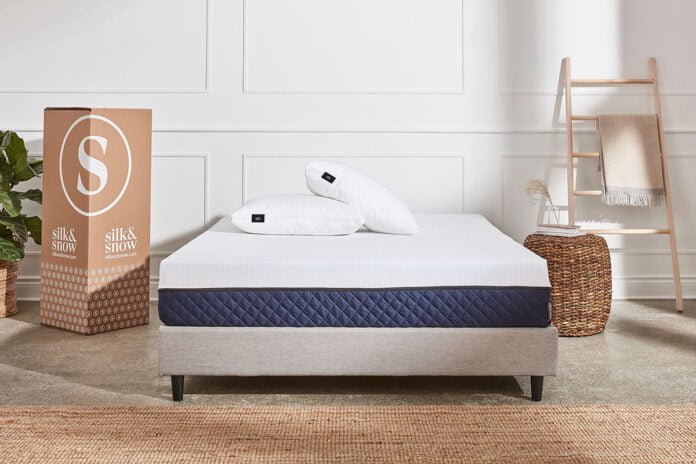
Sleep Country Canada is continuing to grow its presence across the nation and into the U.S. with the acquisition of Silk & Snow, one of Canada’s fastest growing direct-to-consumer sleep brands specializing in high-quality sleep and lifestyle products that have been thoughtfully curated.
Silk & Snow began with a Kickstarter campaign in 2017, launching its e-commerce site www.silkandsnow.com with its made-in-Canada single memory foam mattress.
In 2020, Silk & Snow made Canadian Business’ Top 10 start-up list ranking of Canada’s Fastest Growing Companies and in 2021 and 2022 was ranked one of Canada’s top growing companies by the Globe & Mail. Silk & Snow has also made inroads into the U.S. market which accounts for about 25 per cent of sales in the most recent fiscal year.
“We are delighted to welcome Silk & Snow to our growing family of powerful sleep brands as we continue to build our sleep ecosystem with investments in people, product and channel innovation to provide customers with seamless access to the world’s leading assortment of sleep essentials,” said Stewart Schaefer, President and CEO, Sleep Country Canada.
Stewart Schaefer
“Albert, Kenneth, and the Silk & Snow team have thoughtfully procured a full array of affordable luxury items that have helped turn their brand into a high-growth business with an impressive following in both Canada and the United States. Their purpose-driven approach to product design, manufacturing, and digital marketing aligns beautifully with our strategic road map and expansion of sustainable products, and into new markets. We look forward to supporting Silk & Snow as the brand aims to continue its incredible growth trajectory.”
Sleep Country has 289 corporate-owned stores and 20 warehouses across Canada and operates under retail banners: “Sleep Country Canada”, with omnichannel operations in Canada excluding Québec; “Dormez-vous” with omnichannel operations in Québec; “Endy”, Canada’s leading direct-to-consumer online sleep solutions retailer; and recently acquired “Hush”, one of Canada’s fastest-growing digital retailers.
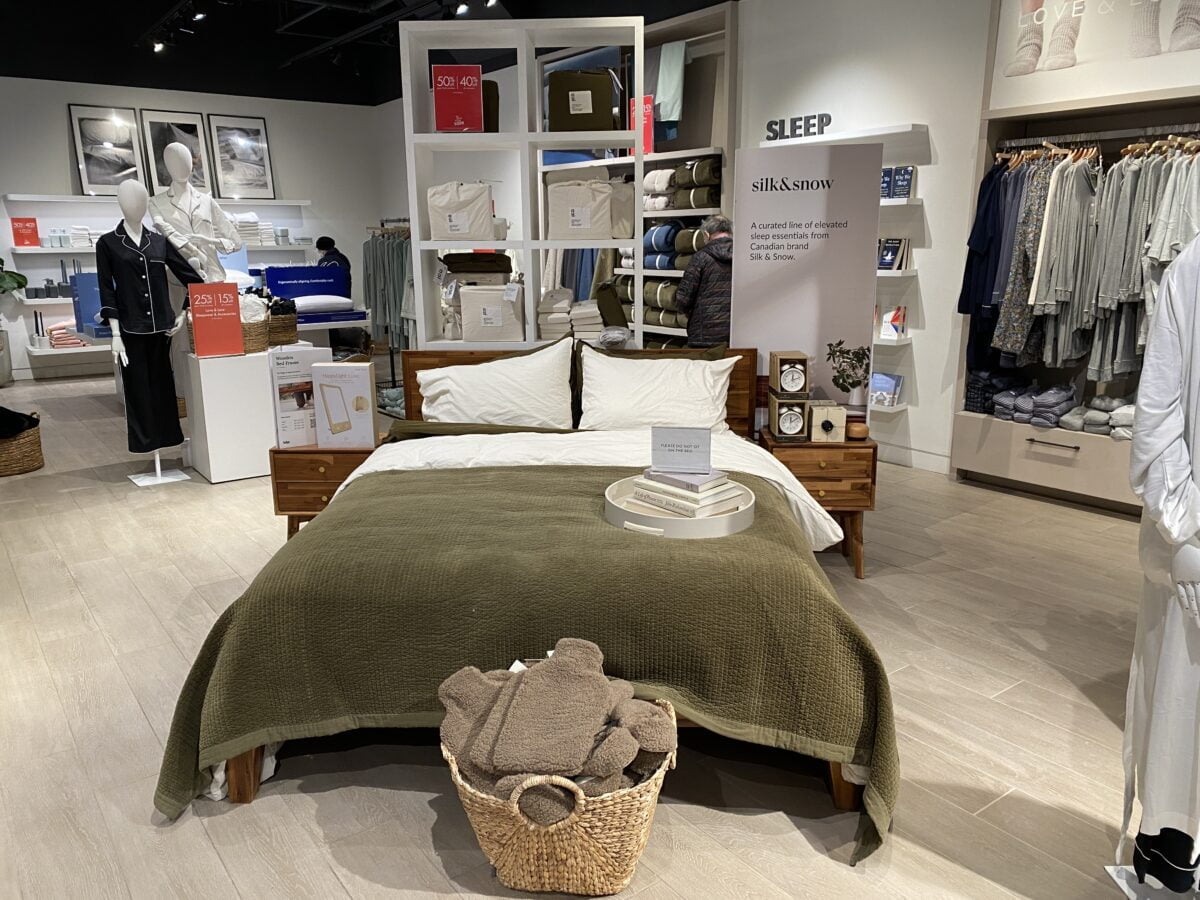
Silk & Snow at Indigo Manulife Centre (Image: Dustin Fuhs)
Schaefer said the acquisition of Silk & Snow, which has a wholesale and e-commerce business, gives Sleep Country an affordable, luxury brand with a “nice” sustainability story.
“That’s an area and focus for us as we move forward on some of the products. They were already down that path. Also, about 25 per cent of their business is in the United States. So that was quite intriguing to us because for us we are very prominent in the Canadian market but the United States it’s interesting to be able to enter into that market under a brand, maybe not under the Sleep Country name but under a name like Silk & Snow,” he said.
“And the last part, which is the same reason we did the Endy deal and the Hush deal, was the people. Albert and his partner Kenneth are both really dynamic, really entrepreneurial thinking and between my three brands now Endy, Hush and Silk & Snow, Endy is the apple pie, the all-Canadian apple pie type of feel. Hush is a little bit edgier and Silk & Snow is a mid to higher end affordable luxury.
“My team jokes with me because years ago I named these three companies and I said if we could get it it’s the trifecta and now four years later between Endy, Hush and Silk & Snow, we’re excited. Like a little trifecta.”
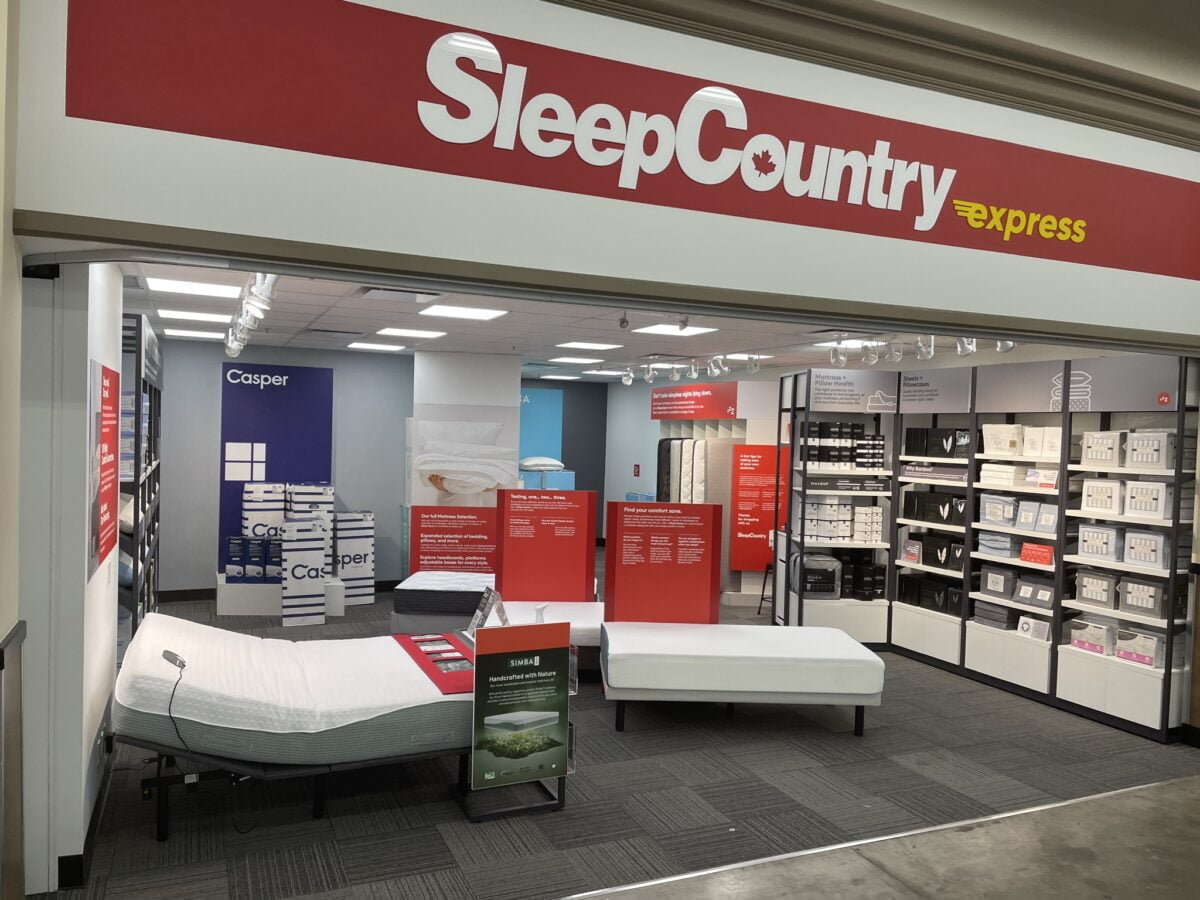
Sleep Country Express at Walmart Canada (Image: Sleep Country)
Schaefer said the plan is to develop a Silk & Snow line of sleep accessories that are different than the ones being sold currently to other wholesale stores and being launched in Sleep Country stores.
Chow, CEO of Silk & Snow, said the company started with the intention of providing high-quality products that allow its customers to love their homes.
“Five years later, with quality as a top priority, we’ve delivered on our promise of building a brand that offers thoughtfully made sleep products,” he said.
Albert Chow and Kenneth Mo
Mo, COO of Silk & Snow, said it’s important for the company to find a partner with Canadian roots.
“We’re looking forward to partnering with Sleep Country, Canada’s leading sleep retailer, as it allows us to lean on their incredible expertise. This will help us to continue to expand our well-loved range of mattresses, bedding, furniture and bath products, while bringing even more value to our customers,” he said.
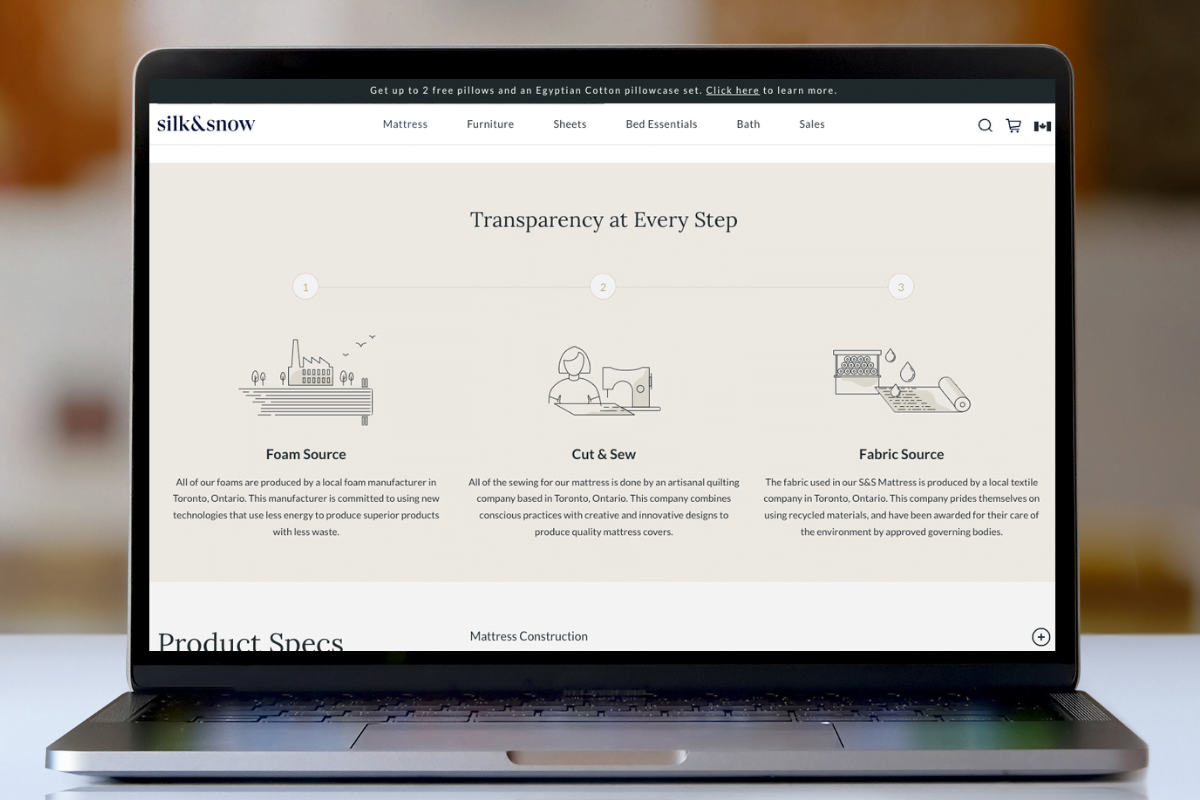
Image: SilkandSnow.com
Silk & Snow will operate as an independent entity within Sleep Country, led by Chow as CEO and Mo as COO who both will join the Sleep Country’s senior leadership team.
Silk & Snow offers high-quality sleep and lifestyle products crafted from traceable raw materials and sustainable manufacturing practices. Their curated line includes bed sheets, mattresses, bed frames, weighted blankets, and other home essentials alongside its bath line-up of bath towels and robes.
PHOTO: ENDY BLOG (STACKT MARKET)
Sleep Country acquired Endy in December 2018.
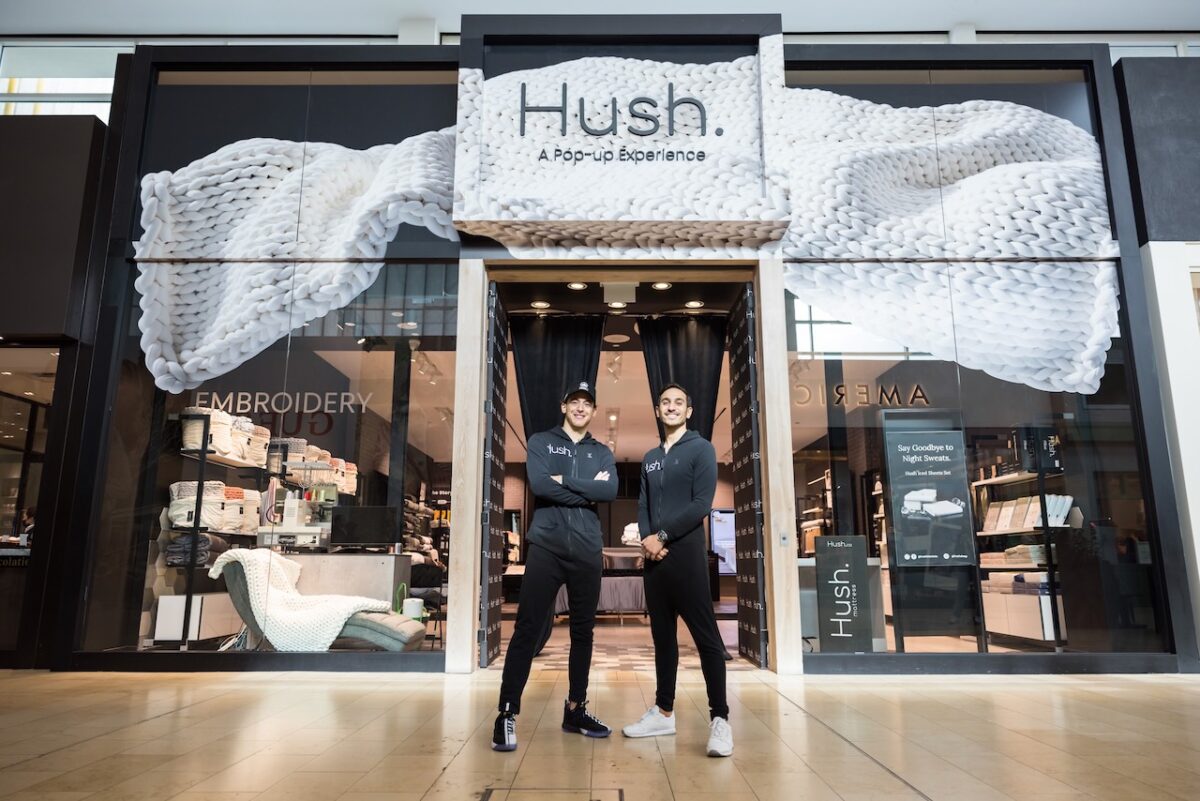
Sleep Country acquired the direct-to-consumer brand Hush in October 2021, and opened its first-ever pop-up store this holiday shopping season at the Yorkdale Shopping Centre.
“It’s been a huge success,” said Schaefer. “We’re very excited about that. It is not only a test for Hush but it’s a question of will we now do it for Endy and Silk & Snow and I’ll tell you I definitely want to try something because of the reaction that we had.”
Aaron Spivak and Lior Ohayon, Co-Founders, Hush Blankets at Yorkdale Pop-up (Image: Hush)
Hush is a Canadian-based sleep improvement brand that was started in 2018 by Aaron Spivak and Lior Ohayon. Hush started with a product now considered to be Canada’s Most Popular (and Reviewed) weighted blanket – designed to help those with sleep, anxiety, insomnia, ADHD, and more. Within its first 24 months, Hush has grown to an eight-figure brand. The company launched a successful Kickstarter campaign that raised $1.5 million plus in 30 days – making it the Top 10 most raised Canadian Campaign ever. In 2019, Hush also appeared on Canadian hit TV show Dragons’ Den and earned “Most Epic Pitch” of the season securing a bidding war between all six dragons. The company has since expanded their product line to include mattresses and sleep accessories.
Hush sells on the wholesale and e-commerce levels and also has a presence in the U.S.
Schaefer said Sleep Country is expected to open six new stores in 2023 with the possibility of another four stores as well.
Retail Insider is streamlining its Canadian retail news from around the web to include a handful of top news stories that can be viewed quickly during the day. Here are the top stories from the past three days.
Noodlebox started as a food cart in Victoria, BC’s Chinatown in 2001.
Its unique style of Southeast Asian street food was so popular that people waited hours to get their fill.
More than 20 years and a million boxes later, the brand continues its journey of bringing bold flavours of Southeast Asian street food to all of Canada.
It has just opened its first location in Ontario at Winona in Stoney Creek / Hamilton with four units in construction to open next year including Corporate Campus Centre in Waterloo, Cornwall Road Oakville, Park Place in Barrie and in the new development at Woodbine Casino.
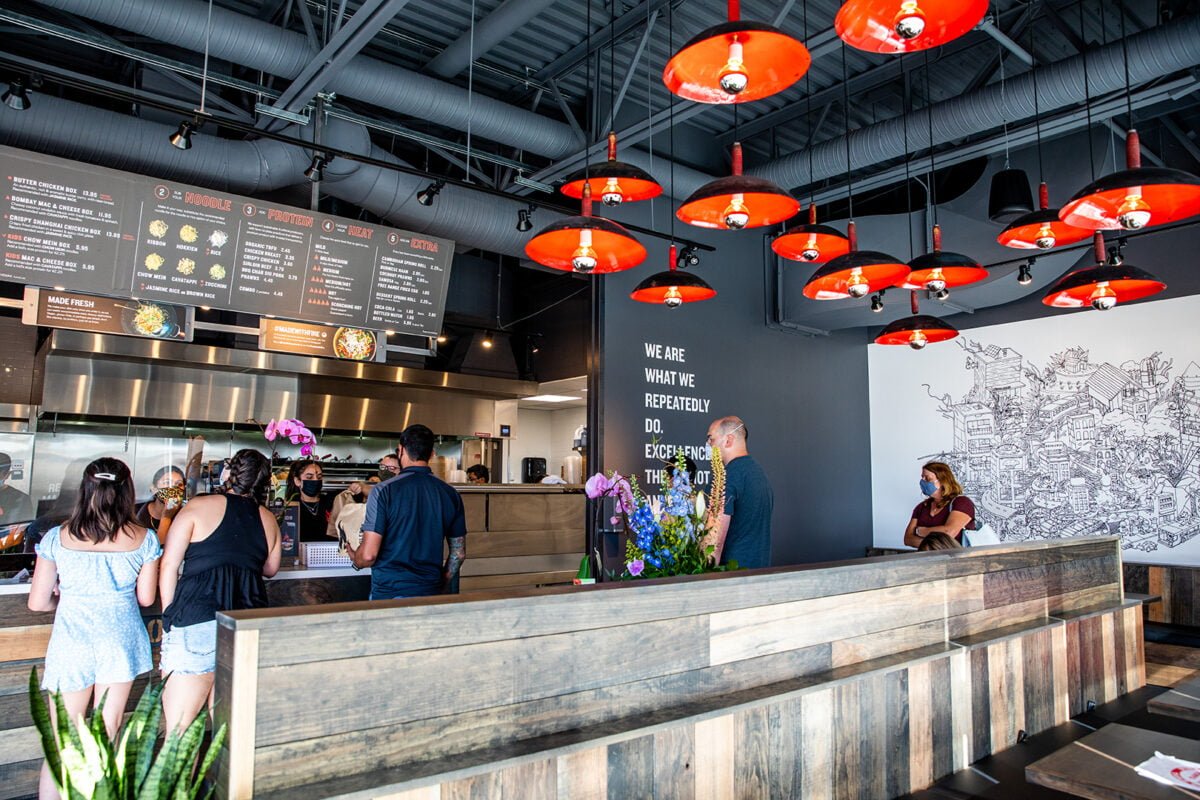
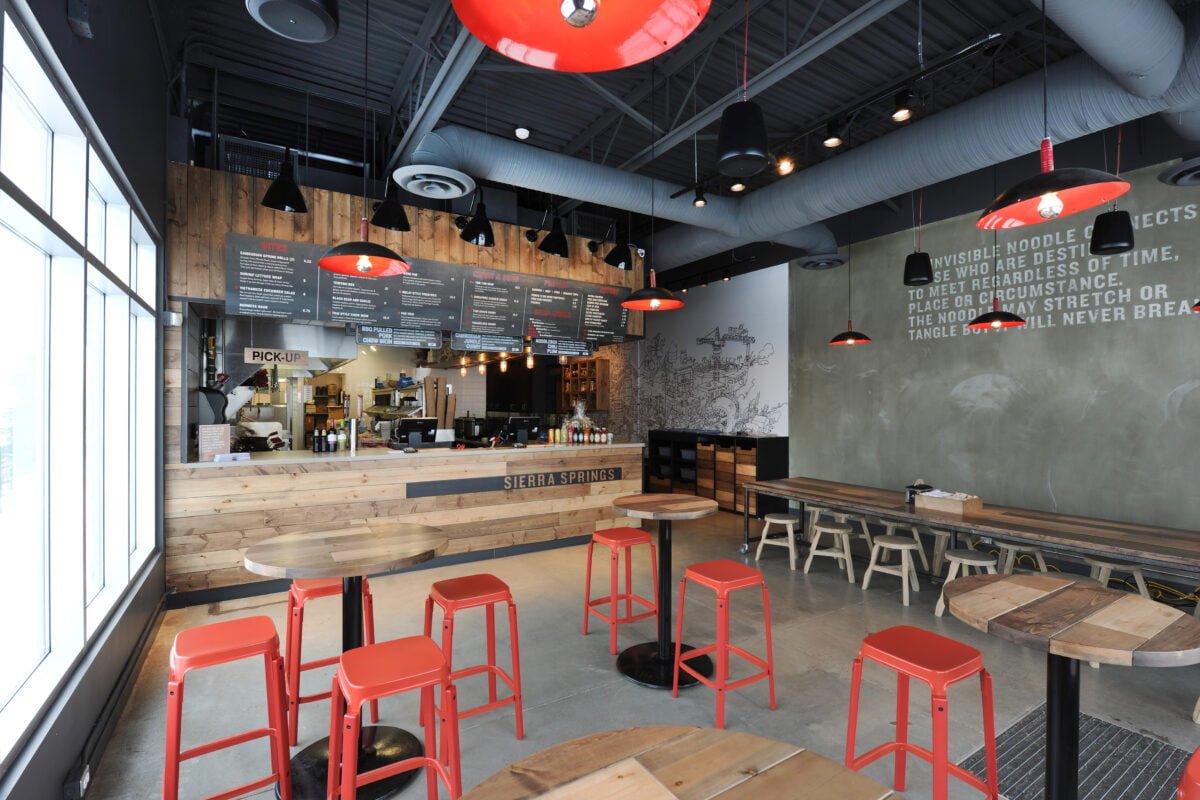
Image: Noodebox Langley City
Noodlebox has 31 locations open today with a further 52 secured locations in development.
Dustin May
“We plan to open 26 new locations in 2023 and in the long term see potential for over 200 locations across Canada,” said Dustin May, CEO/President and an owner with the Fox and Crane Restaurant Group, based in Abbotsford, BC, which operates Noodlebox as well as other brands Meat and Bread and Good Taco.
Meat and Bread has six locations – four in Vancouver, one in Calgary and one in Austin, Texas. Good Taco has six locations all in the BC lower mainland.
“Noodlebox is a real growth driver for us,” said May.
“We’re a wok-based noodle business, kind of Southeast Asian street food which is really popular. We really live around the mantra and really embrace the concept of real food made fresh with fire,” said May.
“Every dish is actually made to order. So it’s not like it’s stuff sitting in warmers and you’re picking stuff. Everything is actually made to order in a wok which allows us to be highly customizable and allows for a lot of new creations from our guests that they can actually spin a dish their own way. It allows us to deliver on a lot of food preferences.”
Image: Noodebox Langley City
Image: Noodebox
The name of the restaurant group itself also has an interesting history.
“An Aesop fable tells the story of Fox and Crane. Fox invited Crane to supper and prepared soup, which was poured into a very shallow flat dish. The soup fell out of the long bill of the Crane at every mouthful, and his frustration at not being able to eat afforded the Fox much amusement. The Crane, in his turn, asked the Fox to dine with him, and set before her a very appetizing meal, served in a tall jar with a very narrow neck. The Crane could easily insert his neck and enjoy its contents. The Fox, unable even to taste it, met with a fitting retribution, in the fashion of her own hospitality,” says the company on its website.
“This fable is sadly how too many organizations approach franchising. Looking out for themselves and not supporting their franchise partners. At Fox & Crane we believe that together we will always achieve the greatest results. We remember this story to ensure we don’t act this way.”
Peace By Chocolate, a well known chocolate company in Canada, has opened its second store in Nova Scotia, has expanded its factory, and is looking to continually expand throughout Canada.
The company started in 2016 when the founder, Tareq Hadhad, fled Syria because of the war leaving everything behind including his family’s chocolate company which started in 1986. When Hadhad arrived in Canada, he successfully restarted the company again in Antigonish Nova Scotia and has since been able to open two stores and expand its factory. Products from Peace By Chocolate are also available throughout Canada.
“The company was the second largest chocolate manufacturer in the region in Syria, so when the war started we lost the factory, our house, we lost everything and we became refugees. After three years of living as refugees in Lebanon, our family was invited to come to Canada to a small town in Antigonish in Nova Scotia and we got the opportunity to restart the game and this time we wanted to infuse a value that connects to peace because you cannot do anything without peace,” says Hadhad.
New Storefront
Image: Peace by Chocolate
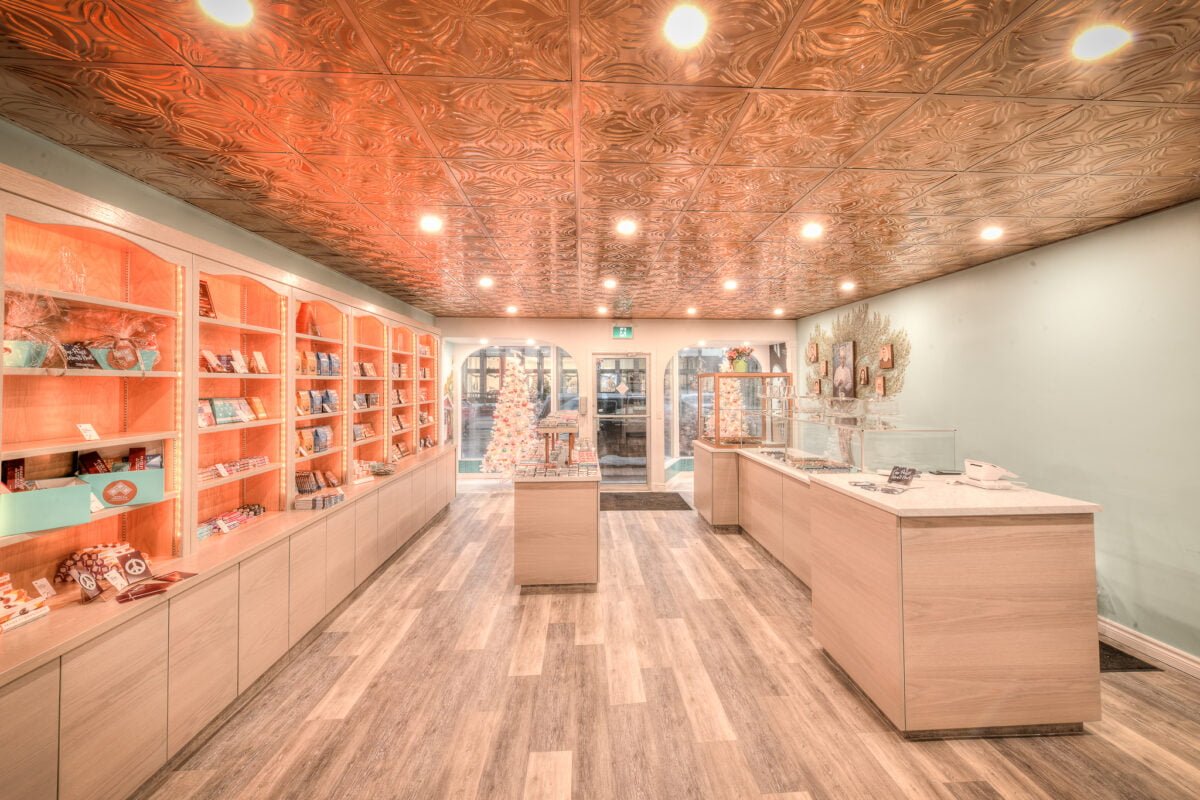
The new location on Main Street in Antigonish and finally opened after working on the store since May 2022. Before this location, Peace By Chocolate had a location on Bay Street; however, it moved to a more commercial area.
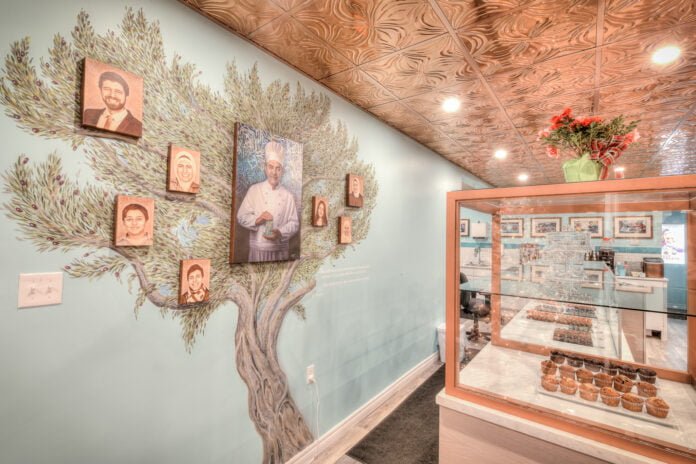
“We started building our new store in May of 2022, and it took really long to finish the construction, but we are so happy to see the final product and we are happy about how the design turned out. We wanted the location to be a storytelling destination. We wanted to tell our customers who we are, what we stand for, our values, our story, our family tree, and there are so many incredible milestones and awards that we have won that we wanted to tell the story off to our customers.”
Milestones Hadhad mentioned included the moment his product ended up in space at the International Space Station, to where the factory opened, and the moment his family got their Canadian citizenship in 2021.
New Products
Image: Peace by Chocolate
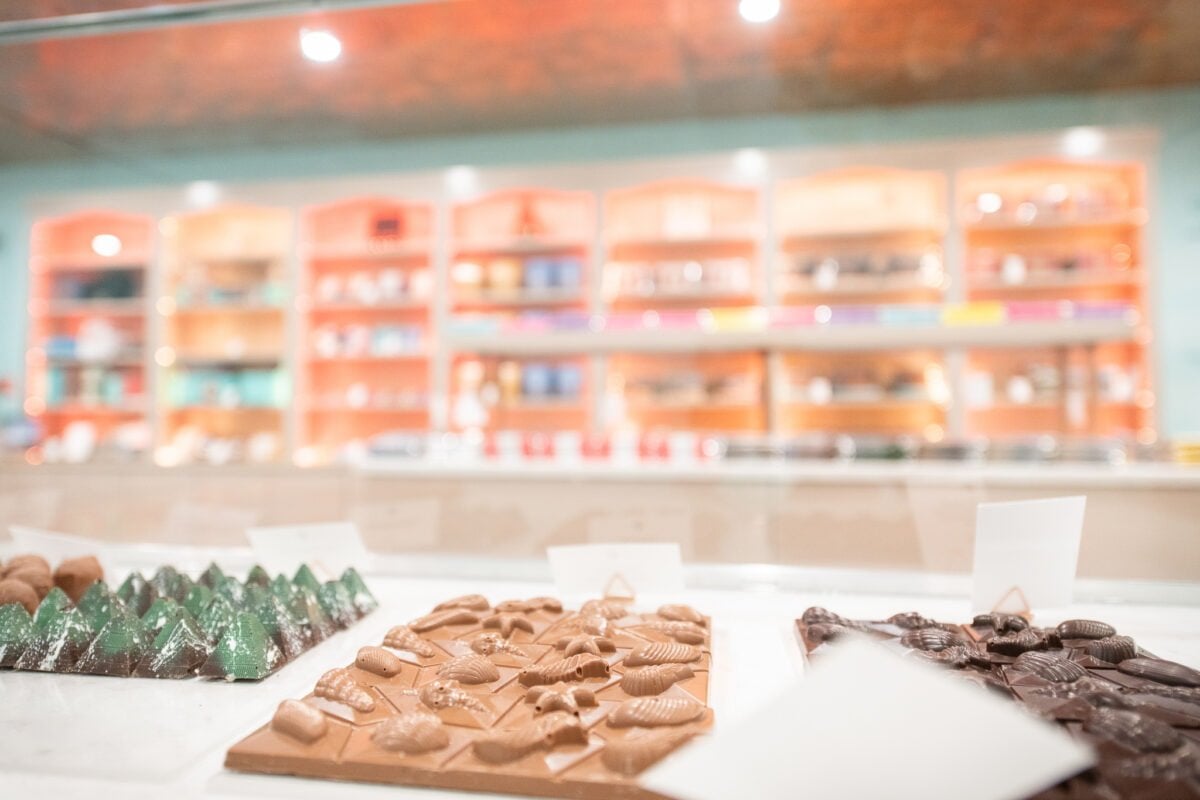
All products are the same at both locations and consist of its Peace bars, Welcome to Canada, and more. Peace By Chocolate has also introduced new items, all being handmade, including desserts, a new line of drinks such as its signature hot chocolate with different flavours for the holiday, and gluten free options – and will be adding more in 2023. New items don’t just stop at chocolates – Peace By Chocolate has also added merchandise to its stores including clothing, touques, water bottles, and peace pins people can wear proudly.
“Customers can expect the absolute highest quality of chocolate product they will probably taste than anywhere else. Both of our stores translate the overall feeling of peace into an opportunity for people to come together and celebrate. Customers can expect their purchase to go to a cause that is near to our hearts from fighting climate change, supporting Indigenous communities, peace building projects, and to help refugees that are just arriving to the country, such as Afganistan, Ukrainian, and Syrian refugees. We want to help them find another chance, help them settle, and to give them the same opportunity for success that we got.”
Peace By Chocolate has expanded its product offerings from five products by the end of 2018 to 250 products by the end of 2022. With these new products, will also come new labels as Hadhad said they are creating a massive change in their labels. Right now they have offerings for celebrations such as Mothers Day and Easter and are looking to bring in more products for Halloween and introduce different concepts for holidays in 2023.
People can find Peace By Chocolates not only in stores and online, but also at Loblaws, Sobeys, Atlantic Superstore, Hudson Bay, and more. It is also in major Canadian airports and Hadhad said he is looking to expand further into the major tourism areas such as the CN Tower.
“A lot of the locations across the country that carry our products are very community oriented and hold the same values as we do. They just want to spread a good Canadian story, and I think our product does exactly that.”
“Expanding Our Footprint Across the Country”
Image: Peace by Chocolate
Hadhad said the goal would be to expand across the country and listen to customers to see where they are wanted. But for now, the Peace By Chocolate factory was just recently reconstructed to double its size which allows the company to make more chocolate and to experiment with new ideas.
“The plan for expansion right now is to have more stores across the country. We do not have a timeline yet for each expansion, but we are finalizing our strategy plans within the company. The new factory is really allowing us to produce millions of chocolate pieces and bars a year and gives us the opportunity to expand our business in our wholesale network, e-commerce, and within the supply of our own retail stores.”
In addition to expanding the business, Hadhad makes sure to contribute to organizations such as the Red Cross, mental health associations, refugee hubs, and many others. So far, Hadhad said the company has raised over $200,000 for those causes and has just launched its new Peace for Ukraine campaign, which raised over $100,000 in support of the relief efforts and there will be many more in the future.
“We want to make sure our connection with people is through human values that everyone appreciates – like kindness. Kindness is the reason why we ended up on the East Coast in Canada, is the reason why we had a second chance to restart our company, and is the reason why our company believes in giving back and paying it forward.”
Describing the retail sector in Canada in 2022 isn’t an easy task as so many factors played into the evolution of the industry in another tumultuous year.
Michael Kehoe
“The Canadian retail sector in 2022 was a page out of Charles Dickens where we had the best of times with new retail brands entering the Canadian market, sales surges in the lux sector along with travel-related and experiential retailing strong, but the worst of times with retailers facing labour shortages, wages and salaries increasing, a mild fall in some parts of the country and for many, underwhelming and lacklustre sales performance,” said Michael Kehoe, broker of record with Fairfield Commercial Real Estate.
He said sales were up in some sectors but disappointing in others.
“I was surprised that the anticipated post-pandemic sales surge did not materialize and for many, any momentum had stalled over a disappointing back to school period,” he said.
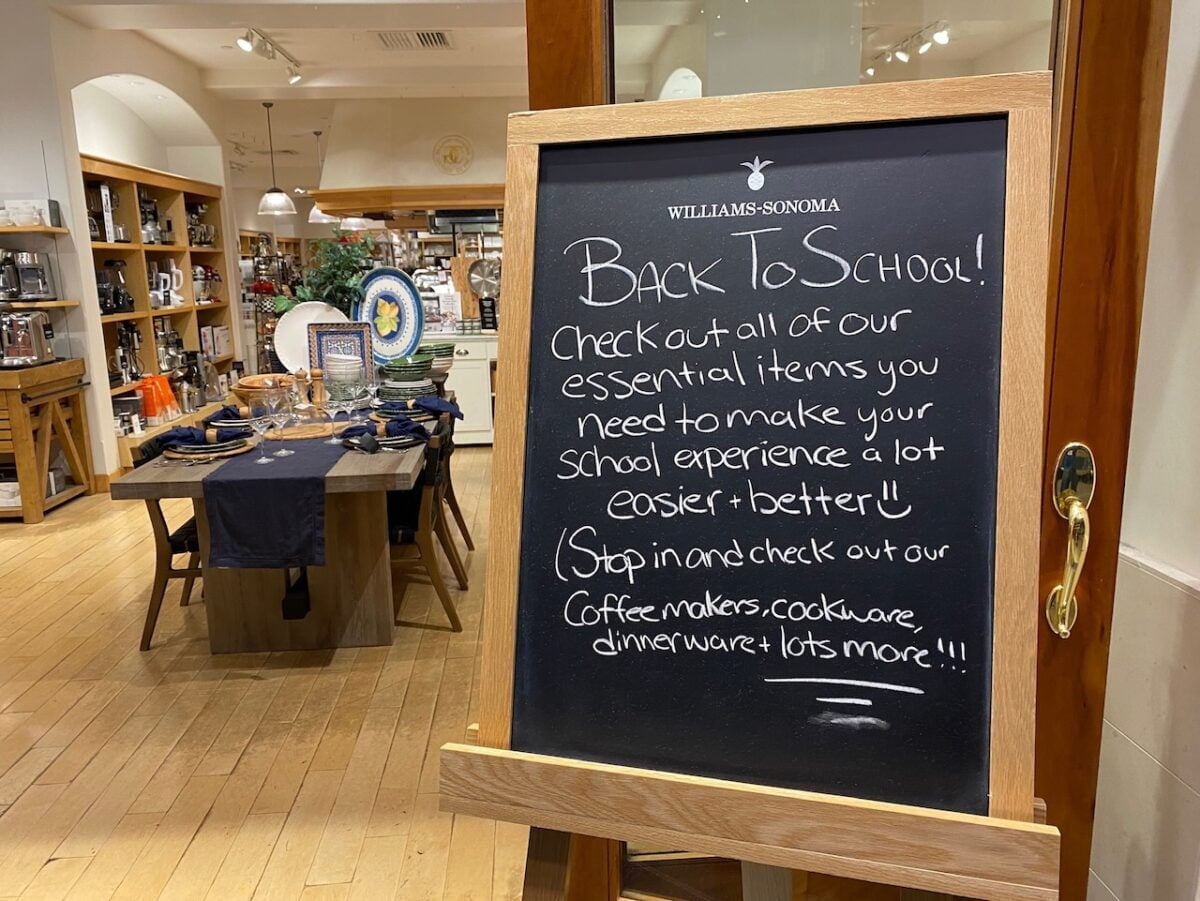
Back to School at Williams-Sonoma in CF Toronto Eaton Centre (Image: Dustin Fuhs)
“Overall, I think we all expected 2022 to be a breakout year as the pandemic was finally under control and Canadians had money to spend but as numerous challenges developed, our dreams of prosperity became nightmares to many,” he said.
“I think the initial freedom from the pandemic helped sales in some categories as consumers celebrated the re-opening but as inflation became more widespread it ratcheted up retail prices which drove retail sales dollars as customers paid more for the same items year over year.”
Shoppers Drug Mart, Winnipeg, Manitoba (Image: Field Agent Canada)
“Retailing in 2022 started with both hope and hype and then shifted to price shock and chaos for both consumers and retailers. The challenges went from not getting inventory on time to now pushing back on inventory.
We also have the household impact. We know that food shot up by 11 per cent, on top of managing shelter, transportation and servicing debt. Shocks and chaos as retailers scrambled globally to respond, some did not fast enough,” he said.
Minakakis said he is not surprised that sales have been up this year. They have increased about 2.2 per cent between January and September 2022 versus 2021, with year-to-date inflation at 6.85 per cent for this year.
“On top of 3.4 per cent in 2021, therefore, consumers are paying over 10 per cent more than they did two years ago. That’s not good news for retailers. That tells me that either retail transactions are down or the average sale is down. I will go with transactions. In the third quarter in 2022 (July-September) retail sales were down by one per cent with a 7.2 per cent inflation rate. This has been a shock to consumers and difficult for retailers to avoid passing down higher costs and trying to squeeze a profit,” he added.
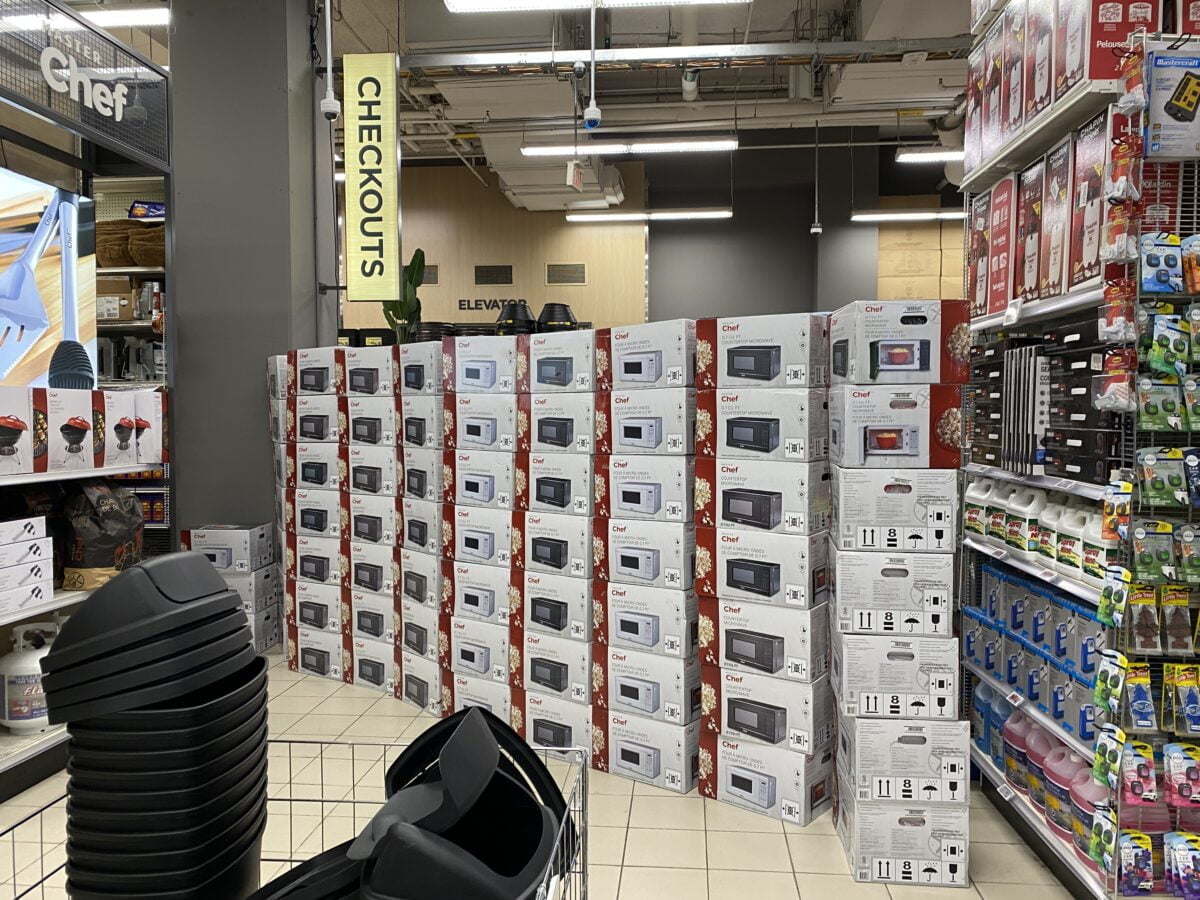
Household Appliances at Canadian Tire (Image: Dustin Fuhs)
David Ian Gray, Founder/Strategist with DIG360 Consulting, said a level of chaos still exists in the retail industry.
David Ian Gray
“The destabilization of the pandemic means high susceptibility to ripple effects or aftershocks. Actions and reactions are continuing to take a toll on the retail ecosystem. Chaos is not universally bad; there are many stronger retailers emerging intact in 2022 – the big are getting bigger (e.g., Loblaw, Lululemon, Best Buy). Retail leaders are learning to lead in a non-linear world.”
Any nominal sales gains across retail categories are largely negated by price inflation. Units sold and real sales growth was flat, added Gray.
“However, prices did not rise equally across all categories – some electronics are actually cheaper this year. What surprised me was that it could have been worse. I think the return to in-store shopping played a very important role. Wary consumers facing economic uncertainty and constant media negativity did not completely turtle. Let’s say I’m being “glass half full.”
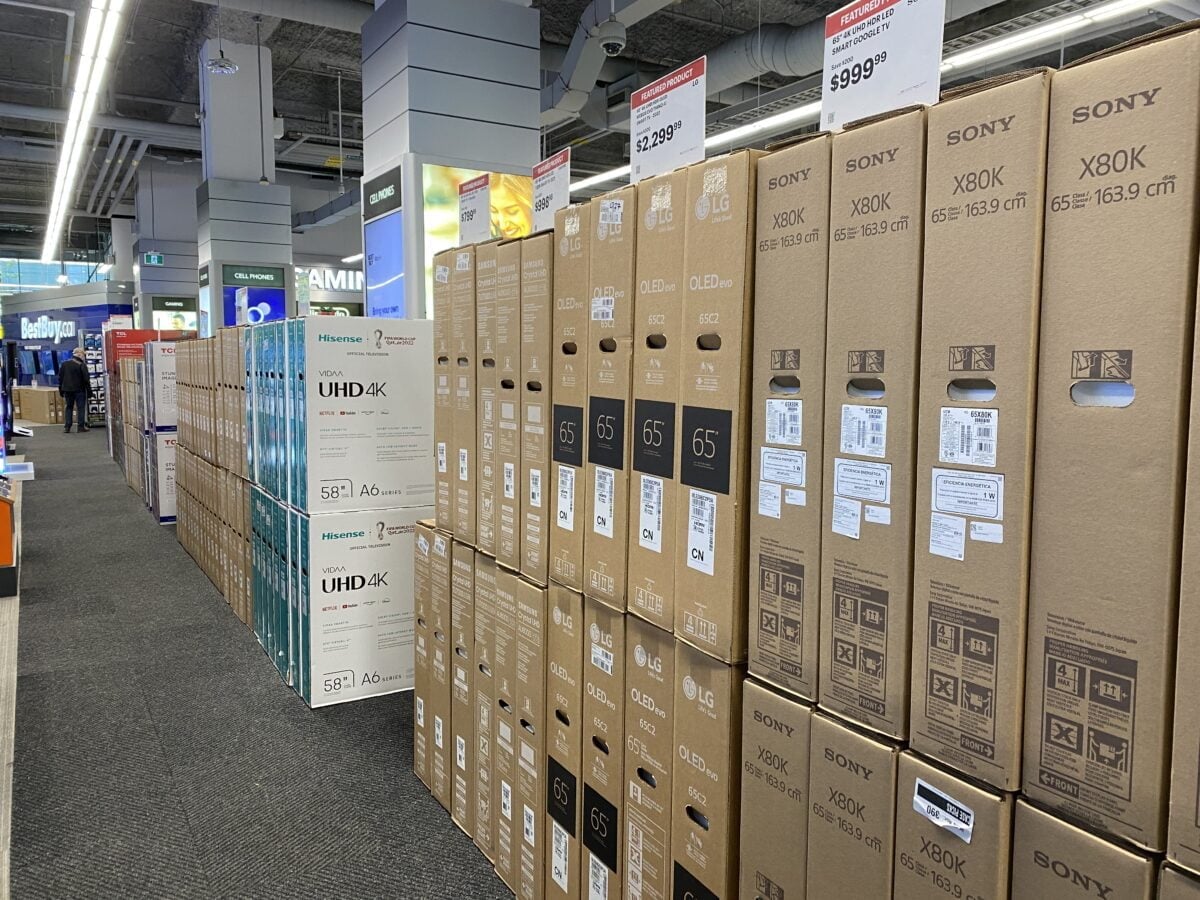
TVs at Best Buy Canada on Black Friday 2022 (Image: Dustin Fuhs)
Kehoe said many retailers were challenged with controlling their overhead, particularly the cost of wages, rents and now rising theft and shrinkage in 2022.
Overall, this was a tough year for the retail sector, explained Winder.
“Having finally passed through the worst of the pandemic, several headwinds developed in 2022 including: inflation not seen in 40 years, unpredictable consumer demand shifts that retailers could not prepare for, labour shortages, excess inventory and interest rate increases, the war in Ukraine and with it energy increases and supply chain disruptions, job losses in the tech sector, deflation of stock markets and real estate markets, higher consumer debt levels and the wind down of government business supports. With these challenges it is no wonder we are seeing a softening fourth quarter for the sector and a very challenging retail operating environment,” he said.
Minakakis said this was supposed to be the big retail recovery year. Bank governors were telling us in 2021 that inflation was transitory not to worry about it.
“Retailers were contending with supply chains and now we seem to have a decline in demand. China’s tough stand on COVID right up to the beginning of this month impacted the flow of supplies and manufacturing. We also had environmental issues related to produce. Increased prices on grain and fertilizer along with inflation and higher interest rates have all made it a challenge. Retailers went from demand shock to margin and price shocks,” he said.
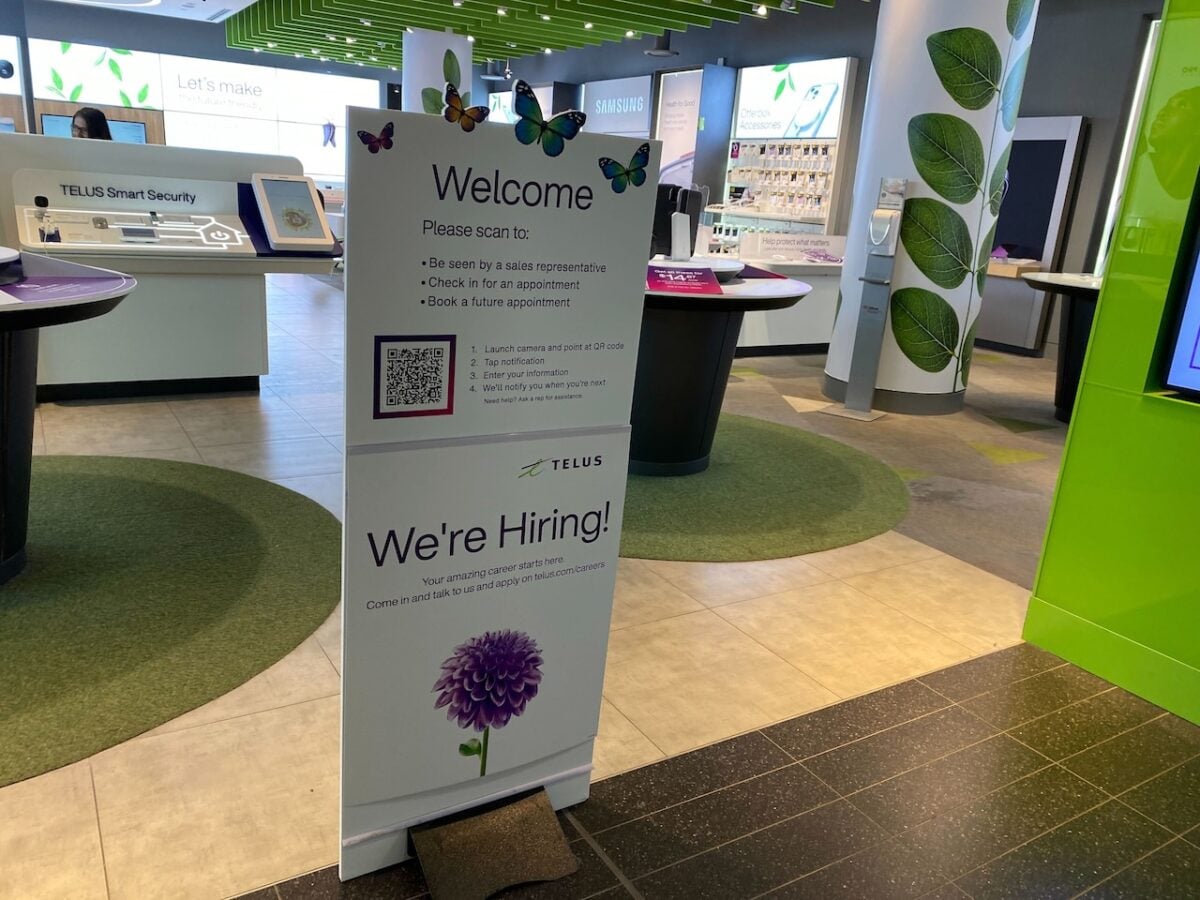
Hiring Signage at Telus in CF Toronto Eaton Centre (Image: Dustin Fuhs)
Gray said the accelerated pressure on executives to create adaptive, resilient cultures and new ways of strategic planning was hindered by the WFH (work from home) movement.
“Worker shortages continued to be a big concern in 2022. Supply chain also continued to be a challenge. For many, heavy triage efforts on filling shortfalls in late 2021 led to overstock situations in 2022. Monetary inflation was added to the price inflation that began in Q4 2021. This impacted retailers in their buying, but also in their costs of transportation of goods,” he said.
“As important was the hit to consumer confidence and buying power. 2022 shone a light on the high level of product returns, especially given online shopping hit a new plateau. For some scaling bigger, particularly online brands, access to capital dried up and there are shortages of good, affordable physical space, as the landlord and developer subsector deals with its own disruption. Specific categories had their own challenges; for example, big grocers faced exceptional scrutiny in the public eye around their pricing practices.”
Loblaws (Image: Dustin Fuhs)
Kehoe said the Canadian retail sector is in a critical period where everyone is competing for a ‘share of wallet’ in these inflationary times that include the possibility of a mild recession.
“The market could experience a period of store closures in the new year, and I am not anticipating a lot of new store openings over the next 12 -18 months,” he said.
“The major challenge in 2023 will be catching the consumers’ attention amid the noise of doom and gloom recessionary talk in the media. Consumer confidence is critical. This, combined with retailers controlling overhead and the quest for affordable rents that will be paramount.”
Winder said 2023 will be another tough year for retail. Many of the challenges we faced in the back half of 2022 will continue on into 2023.
“The rapid interest rate increases that the Bank of Canada implemented in 2022 will be felt mostly through 2023 as inflation decreases but with it, economic growth drops off and we officially enter a recession. Sadly, I think several small to medium sized retailers will shut down in 2023 due to the combination of headwinds . . . There will be some consolidation in the industry as bigger, well capitalized retailers pick up distressed companies at a discount. The thrift market will expand as over-leveraged consumers buy more used products to stretch dollars,” he said.
“Some of the challenges for 2023 will include continued softening of the economy . . . as well as increased shrink/theft and the tightening of return policies for e-commerce. Also, as inflation slows while economic growth stalls, retailers will be challenged to comp retail sales dollars as inflation helped 2022 top line numbers. Many retailers will spend the first half of 2023 drawing down inventory which will impact gross margins negatively. I think we will start to see better days in late 2024. The key will be to make it through until then.”
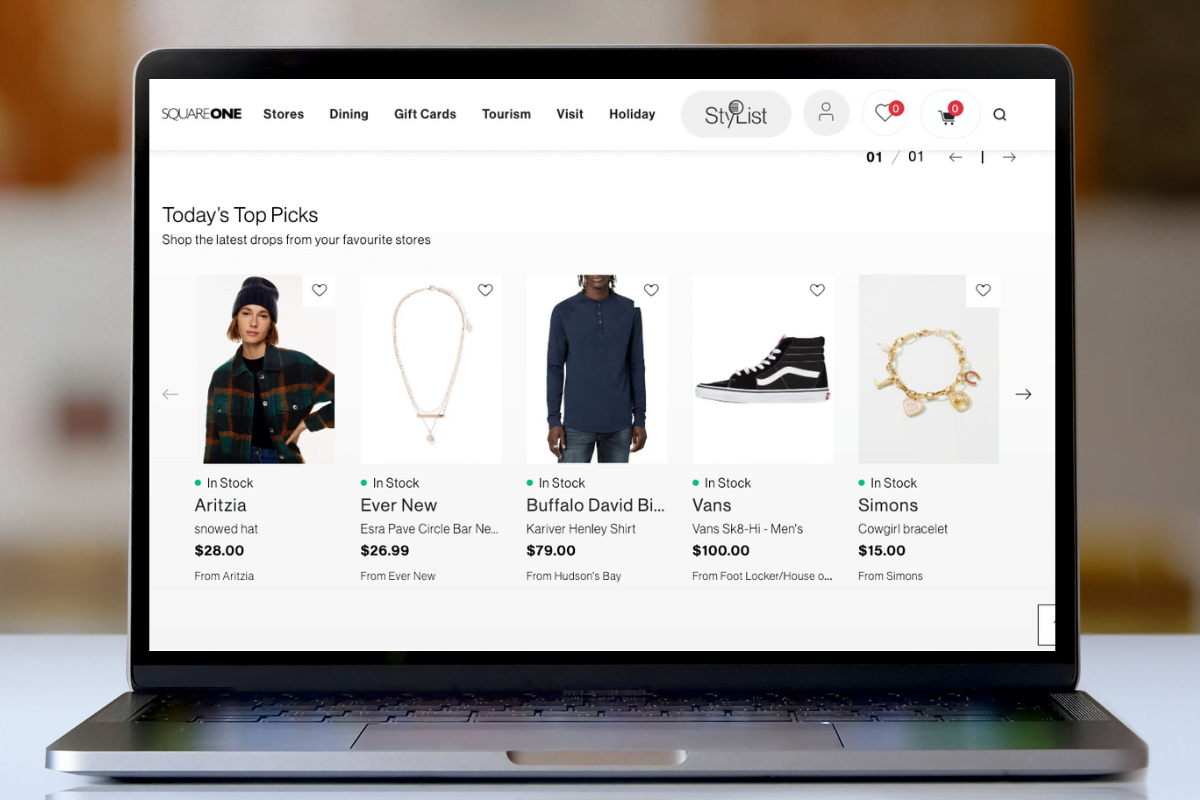
Image: StyList on shopsquareone.com
Minakakis said retailers need to have their digital houses in order and that means leveraging talent and data to capture share.
“I expect a tough first half to 2023. Consumers will be looking for ways to save as are higher end consumers as well. Expect a very robust competitive landscape in 2023. Relevance with consumers means the right price value equation. Retailers need to leverage all strategies to close sales including BNPL (buy now pay later ) options. More retailers will develop their own programs. I expect e-commerce to continue to grow. Product, price and convenience are key,” he said.
“Retailers with stores need to make some tough calls on how they operate their businesses operationally and from a marketing perspective. Experienced retailers also know that service and customer experience are two different animals to create and effectively deliver them as one. Now would be the time for malls to transform, four walls with stores is not a long-term strategy for success.
“If we’ve learned anything over the last three years, we must dismiss nothing. The biggest challenge for retailers will be “What is our stay in business strategy?” With a recession. All brands have their own complexities, cut and paste strategies don’t work. I believe that the consumer has been in a psychological recession for the last six months.
The Bank of Canada is not done, if they go too far it can be damaging to consumers and retailers. Even with a drop in inflation next year, prices will still be too high for a consumer recovery putting downward pressure on demand. Therefore, overseas suppliers could struggle and slow down production creating delivery lag times and even higher prices. China and Russia are still wildcards in my book; their geopolitical policies can impact on supply chains and natural resources creating more shocks.”
Gray also said inflation will continue, and the effects will become more real for consumers in 2023.
“We are starting to see an uptick in mortgage defaults, for example. This will impact demand, down for discretionary items and up for lower quality goods and second hand stores and platforms. It will also drive upward pressure on wages so they can keep pace.” he said.
“The Gods of Disruption will be seen as false. The online players who created new platforms have lost their investor support. They will now have to compete just like traditional retailers on old fashioned business math: net profit matters. Wayfair would be an example.
“Geopolitics will continue to colour local impacts. While consumers will continue to grab cheap stuff from China, there is a growing dissonance in doing so. Brands with the price ability to move sourcing to other countries, even if domestic production is elusive, will start to see wins.”
Within retail organizations, there are several things we are looking for in 2023, starting a focus on turning pandemic innovations, which were substantive, into ongoing improvements. There will be a theme of “cut the crap” – literally in terms of waste elimination but also in terms of beliefs with poor foundations, he said.
“For example, the promise of online shopping, fueled by a pursuit of unfettered customer acquisition is now shown to be very incomplete, with errors and omissions becoming more pronounced at scale. 2023 will focus on fixes and improvements with more focus on retention and reducing unprofitable behaviours such as buying three sizes of shoe to send two back,” said Gray.
“Like shoppers, business leaders will be discerning about their spending, as cash position is critical to managing uncertainty. Two related areas are in technology and in data. The ROI (return on investment) in both is already drawing attention in 2022, but will be more pronounced next year. The metaverse can be left for those with deep pockets and play money.”
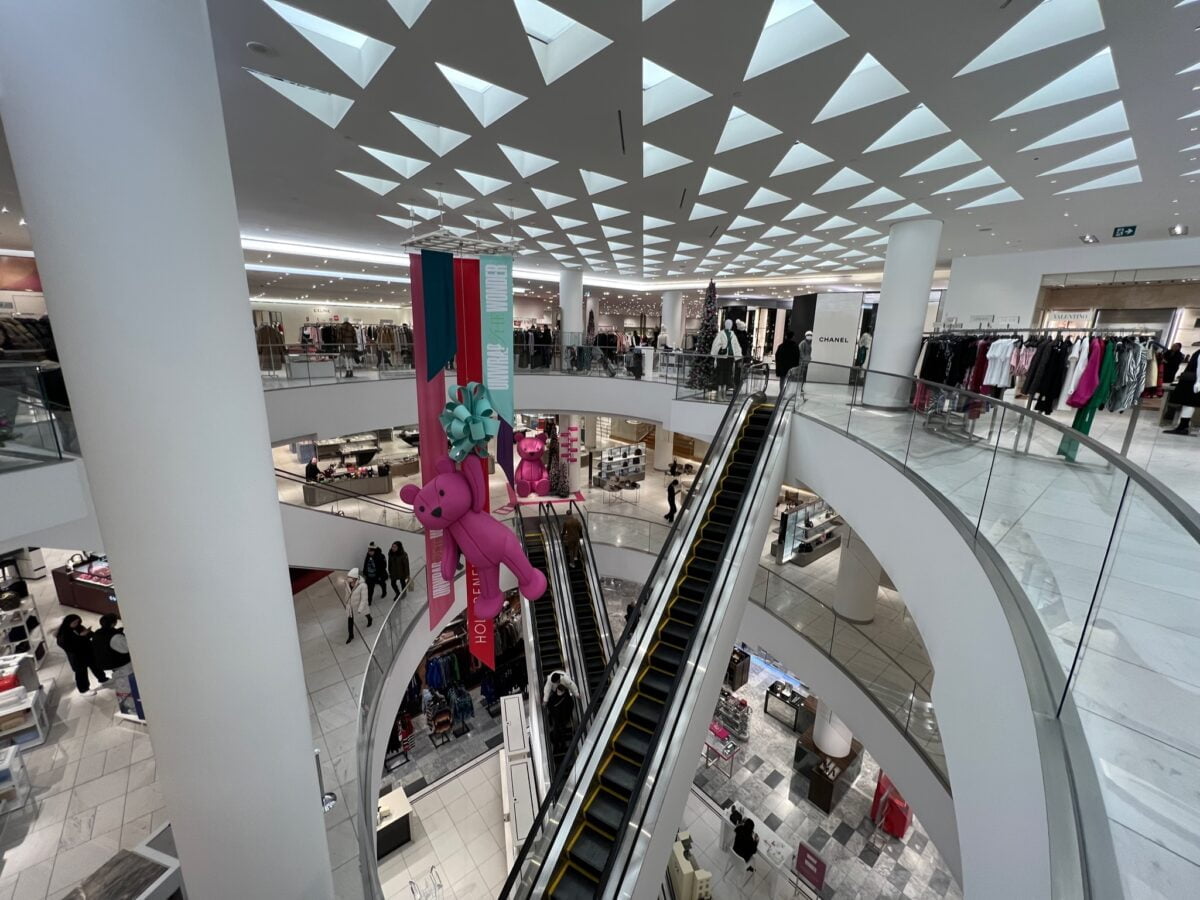
Atrium at Holt Renfrew in CF Pacific Centre in downtown Vancouver on December 19, 2022. Photo: Lee Rivett
Gray said data is interesting to him, as “data led” has become more a wishful slogan than a value proposition. Tools are not the root issue; rather, how they are improperly used. We will see more stories of new decision processes and improved data literacy. By the way, data should inform, not lead, he added.
“Saying that the supply chain issue is over is likewise wrong . . . Cuts in 2022 to consumer and B2B service support will become big issues in 2023. A great example is the friction created by tech support moving to frustrating chatbots or automated call centre scripts. While automation makes 80 per cent of our activities cheaper and faster, the ability to handle exceptions is at an all time low, in my opinion.
“A corollary to this is that the assumed demise of independent stores will turn into an opportunity to local energetic, imaginative problem solvers and story-telling entrepreneurs.”
Adeptly dealing with the next unpredictable jolt is the one predictable for 2023, added Gray.
“There is one thing I will focus on. The need to admit (finally) that the customer is not King. Passengers in air travel know all too well they are units of production in a model, not customers to be served. Retail plays in various shades further back from this. I call BS when I hear leaders say “we put the customer at the centre”.
“Of course, they are important, but so are investors, especially now. And workers. How many times have you seen restaurants closed early because of staffing issues? Customers are part of a triumvirate of masters. Resetting respectful expectations will be a must but one that will be hard for leaders to take on,” he said.