Advertisement
Home Blog Page 707

Clik2pay Making Online Payments Easier for Retailers and their Customers [Feature]

The retail industry is a unique one comprised of an array of players, operating in a multitude of categories and verticals, that are required to pivot and shift in response to an ever-changing market and evolving consumer behaviour and preferences. Today, merchants across the country not only need to contend with these changes and evolutions, they’ve got to adjust to them while also addressing impacts to their businesses related to inflated costs and a digitization of the retail environment that’s threatening to alter the landscape forever. Fortunately for Canadian retailers, they are all challenges that can be alleviated by Clik2pay – the leading direct-from-accounts payments provider. In fact, according to Mike Bradley, the payments innovator’s Founder and CEO, helping to overcome these obstacles is exactly why Clik2pay was founded.

“First and foremost, we want to make sure that retailers are able to take care of their customers’ needs,” says Bradley. “We know that Canadians want payment options at checkout when they shop online, and that includes the ability to pay for product and services directly from their own bank accounts. Currently, however, most merchants across the country don’t accept debit payments to complete online purchases. What results is a disjointed, unfulfilled and incomplete experience for the customer, and lost sales for the retailer. By enabling debit card transactions online, retailers are not only providing enhanced options that the customer’s seeking, they’re positioning their businesses in the best possible way for further growth and customer acquisition.”

Preferred method

Image: Clik2pay.com

In fact, the desire of Canadian consumers to pay for their online goods and service with their debit cards is so prevalent that the opportunities around making the choice available to them seem limitless. According to Clik2pay research, there were in excess of 5 billion Interac® debit card transactions that occurred in-store across the country in 2020. Further, 57 per cent of Canadians use their debit card at least once a week. And, when it comes to preferred method of payment, more than 40 per cent of the country’s consumers would choose to pay direct from their bank accounts, if the option was available, with 72 per cent of Millennials and Gen Z overwhelmingly preferring to do the same. It’s a trend that Bradley says merchants should start to take advantage of, adding that it only makes sense to enable online debit purchases lest they leave customer’s stranded within the experience.

“Considering the fact that Canadians prefer to pay for their purchases using their debit cards, merchants are really prohibiting their own growth by not making the option available online,” he asserts. “And, when you think of all of the Canadians who, for one reason or another, don’t have access to credit cards, merchants are essentially leaving them in the middle of the shopping journey with no way of completing their desired transaction. What results is a lot of abandoned carts, and disappointed customers that have not received the experience that they were looking for. Making debit available for online transactions helps to solve for these issues, and more.”

Ease of use

Bradley goes on to explain that not only does Clik2pay’s payment solution enable customers to pay for their purchases directly from their own bank accounts, allowing merchants to meet their needs, it’s also incredibly easy for customers to use.

“We leverage Interac e-Transfer – a service that reaches nearly every financial institution in Canada,” he asserts. “And, paying for purchases through Clik2pay couldn’t be easier. Customers simply click or tap the Clik2pay button from any device, scan a QR code and pay for their items, choosing the financial institution that they’d like to draw funds from to complete the transaction. It’s a service that provides customers with ease and choice, embedded seamlessly within the retail shopping experience.”

Simple integration

In addition, because Clik2pay’s digital solution is powered by API technology, implementation into existing retail systems is just as seamless and easy as the experience it helps enable for customers. Whether a retailer is using Shopify, Adobe Magento, Salesforce Commerce Cloud, Woo Commerce, or any other platform in order to help power their online store, Clik2pay’s integration allows for a simple plug-in and very little technical investment required on the part of the merchant. It’s a feature of the technology and solution that Bradley says is a differentiator for the company, and one that many businesses, particularly those of the small- and medium-sized variety, are finding either levels the playing field with their competitors, or outright provides them with a leg up.

“Retailers can be up and running, using Clik2pay and offering their customers the payments options their craving, in no time at all,” he says. “And, because implementation is so painless and easy, there’s no time wasted or attention drawn away from operating the business and servicing the customer. There’s no reason why debit can’t be the most used method of payment online. It just hasn’t been available until now. From that perspective, think of all of the ecommerce sales that retailers have simply walked away from because they haven’t been providing the right breadth of payment options to their customers. Clik2pay can really help bolster a retailers’ online sales.”

Reducing merchants’ costs

What’s more, by using Clik2pay, merchants everywhere will significantly reduce their costs as well. Bradley points to the $10 billion a year, or thereabouts, that merchants across the country pay every year in credit card fees as one of the biggest barriers to their growth and success. By removing a portion of that financial burden helps to also loosen the strain felt by those operating within the industry as a result of inflated costs.

“Clik2pay helps retailers become much more competitive immediately by helping to reduce payment fees by nearly 50 per cent,” he says. “Those are costs that can then, once eliminated, be reallocated to help the business grow. It can be invested in technology, staff, merchandise, or anything else that might enhance the store’s operations and the service that it provides to customers. It can be a really powerful tool to lower costs while attracting and retaining more online customers than could be imagined.”

Facilitating growth

A simple solution that integrates easily, it seems the opportunities that arise from leveraging Clik2pay’s service are innumerable. It’s something that’s recognized by Bradley. He sees, too, the incredible potential that this presents to he and his team with respect to the company’s success. However, he says that Clik2pay will remain focused on its goal – to make real-time payments easy for businesses and their customers.

“The retail industry in Canada has been facing a number of different challenges over the course of the past two-and-a-half years or so. We’d like to alleviate some of the pressure that’s been building up on merchants’ shoulders, unburdening them of unnecessary credit card fees and helping them open up their business to a whole new category of customers. And, in doing so, we hope to also enable further growth of the industry and facilitate the profitability of merchants in every province and territory across the country.”

For more information about Clik2pay and how it can help retailers reduce the cost associated with online ecommerce transactions, visit https://clik2pay.com/

Distillery District in Toronto Marks 190 Years with Eye to the Future [Interview]

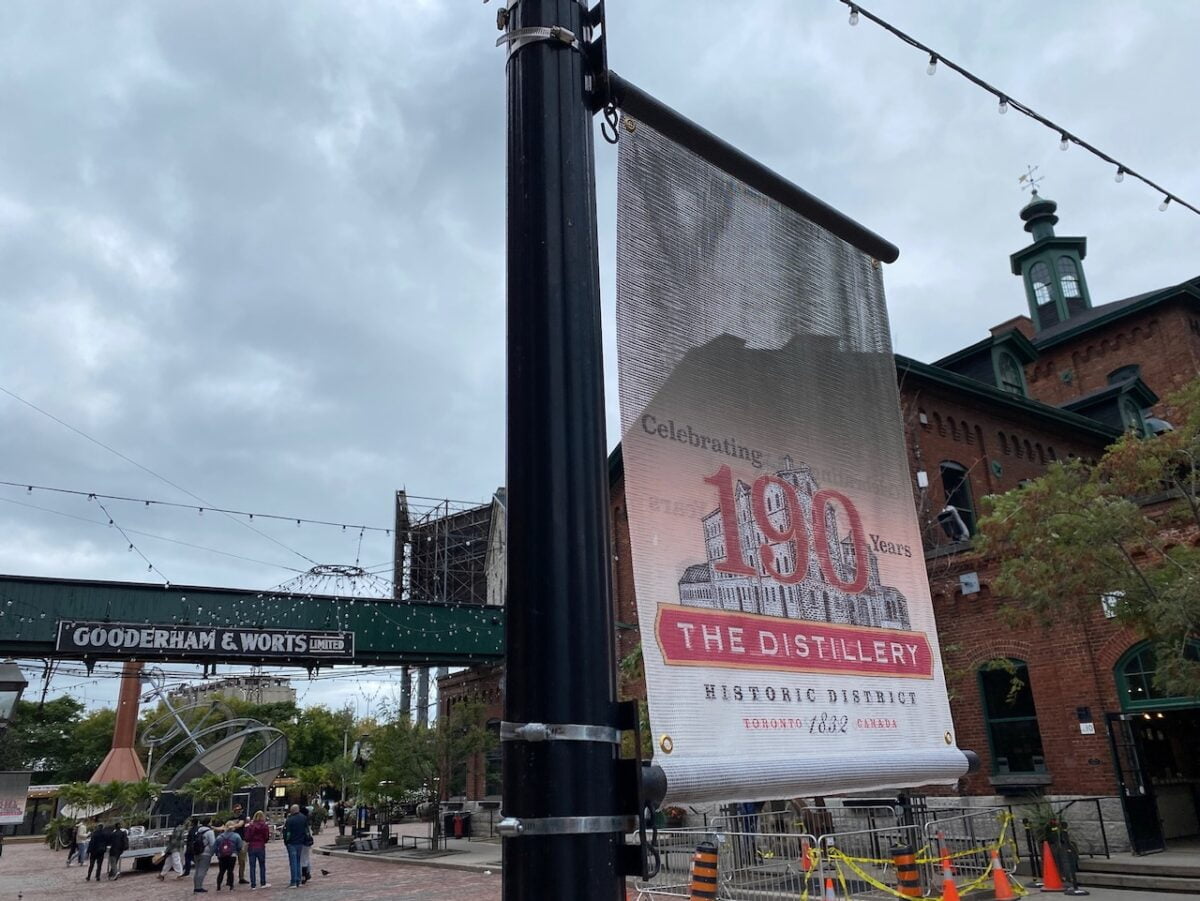
Distillery 190: Across the Ages

Celebrations for The Distillery Historic District’s 190th anniversary kick off Thursday September 29 and run for a month and a half, celebrating the stories, people and iconic architecture behind one of Canada’s most beloved destinations.

“When we submitted our proposal to purchase the venue to the City of Toronto back in 2001, we made a promise,” said John Berman, one of the partners in the development. “Our vision was that The Distillery Historic District would be a centre for arts, culture, dining and entertainment; a space for independent business owners to be supported and succeed. We committed to building community over profit. Twenty years later, we are very proud to say, we’ve kept that promise.”

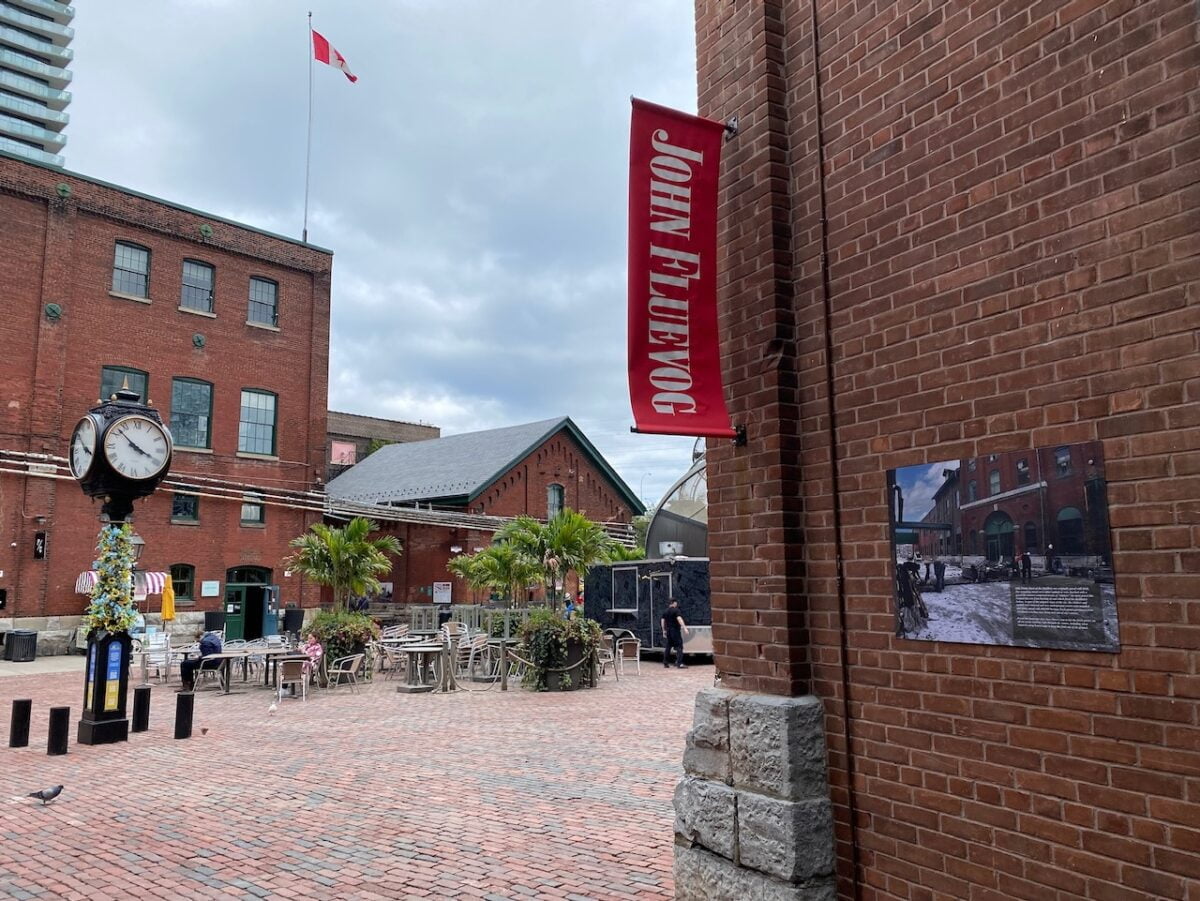
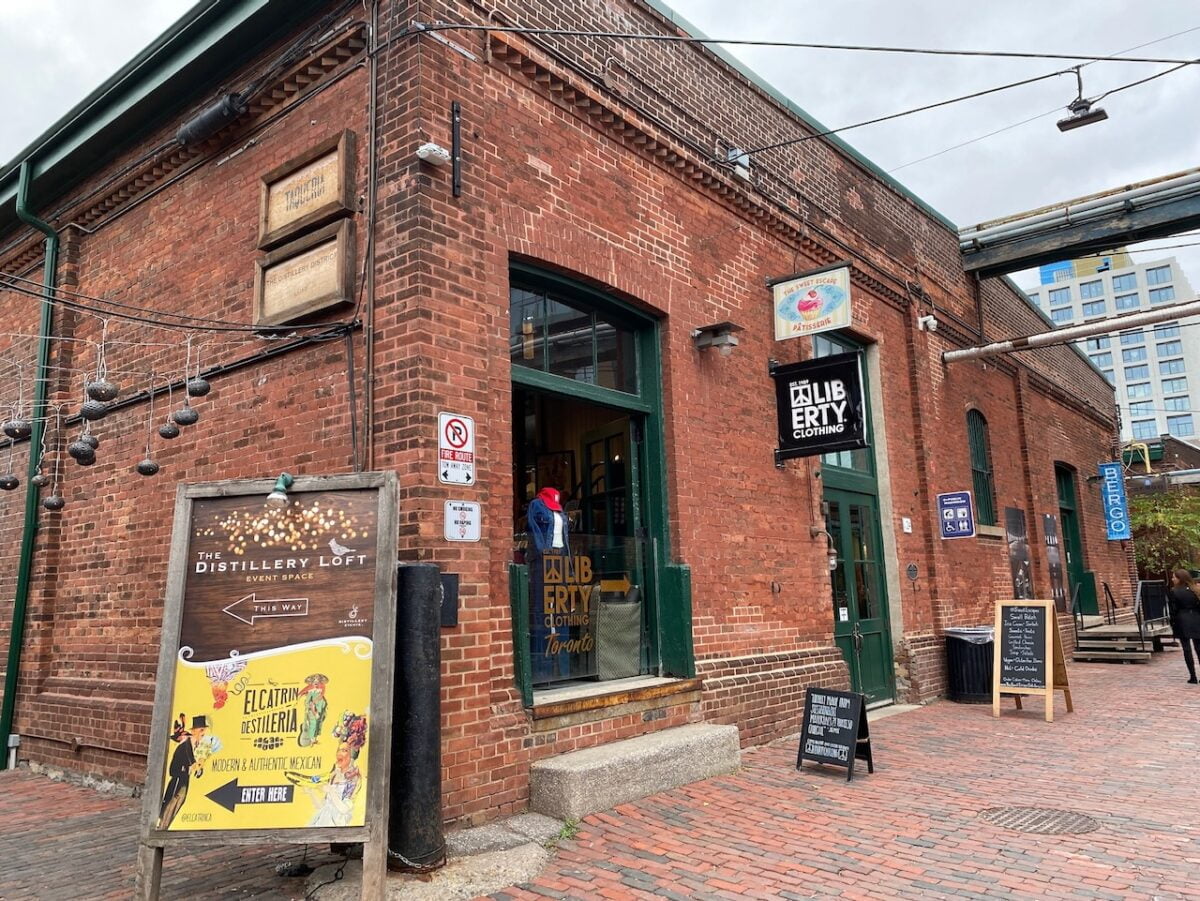
The Distillery Historic District opened in 2003 and is today widely regarded as Canada’s premier arts, culture and entertainment destination. It’s a national historic site, originally founded in 1832, brimming with creativity and creative people that can inspire dreams and help them come true. The 13-acre walking district is a dramatic fusion of old and new. An inspired blend of the largest collection of Victorian Industrial architecture in North America and stunning 21st century design and creativity. The result is an internationally acclaimed village of one-of-a-kind stores, shops, galleries, studios, restaurants, cafes, theatres and more, which was named one of The Coolest Shopping Districts Around the World by The Guardian, according to the District.

Visit www.thedistillerydistrict.com for more Information.

The Distillery Historic District (Image: Dustin Fuhs)

The District is owned by DREAM and Cityscape. Berman is a partner and owner of Cityscape. Cityscape purchased the Distillery in December 2001 and DREAM purchased half of the Distillery in October 2004.

“The area was a completely dilapidated site. It had never really been updated since the days of the liquor company and even then the buildings were more or less the same shape that they were in the late 1800’s. It had no services to the buildings to speak of,” explained Berman.

“It had a completely antiquated sprinkler system that was run originally through one of the old buildings on site. There was no sewage on site. The first toilet when we flushed it emptied onto one of the streets. The streets were muddy. There weren’t bricks on the street as people think . . .  The buildings weren’t up to code and they were completely run down. But they had the beauty to them. They had never really been touched.”

The Distillery Historic District (Image: Dustin Fuhs)

At the time, Cityscape, which was in the film business, was told by an old film scout that the company should take a look at the site which is now the Distillery District. Berman had lived in Toronto his whole life but really knew nothing about that area. 

“It was gated off with wire at the top of the gate so you couldn’t get into it. And it was a rough area at the time,” he recalls. “There was nothing around it. There were needles on the ground. It was not an area you would want to walk in at night, put it that way. And as we walked through we were amazed.

“We had done a lot of heritage development at the time and that really was our expertise. We walked through and we found 47 heritage buildings one after the other – just gorgeous, gorgeous buildings. We saw all the potential. We walked one to another and my partners and I said wow can you imagine this as an art gallery, next one, can you imagine this as a restaurant. And we kept on saying that over and over again.

“It was really at the end of the tour that we came up with the vision for what’s now the Distillery District. We just thought this gives us the opportunity to build a whole centre for arts, culture and entertainment. Something completely unique for Toronto. Something that Toronto didn’t have and still doesn’t have – any walking areas. It was large enough to allow us to have that. It was large enough to allow us to have an entertainment area where we could have events outside and shows inside and animate the streets. We looked and we saw that restaurants could bleed onto the streets and animate the area. We saw galleries where you could have huge exhibitions and installations.”

The Distillery Historic District (Image: Dustin Fuhs)

The idea was an immediate hit with tenants who came aboard. There was a huge momentum and public spirit to work with the group to make the vision become a reality. 

“When we first purchased it we said we were going to create the centre for arts, culture and entertainment. We’re going to have boutique owned stores, we’re going to have unique restaurants, we’re going to have galleries, we’re going to have entertainment spaces,” said Berman.

“That is what we have today . . . Looking back when we first undertook this work, we had no idea at all what a big undertaking it would be, we had no idea of the challenges, we had no idea of the issues we would run into and all the hidden costs and all of the other issues, we were almost fortunate in that we didn’t understand how big a challenge it was.

The Distillery Historic District (Image: Dustin Fuhs)

“Cityscape is relatively a small development group. The reason that the large, large development groups shied away from the Distillery, and weren’t interested in taking it on, was because it was a massive task but it’s something we really approached with enthusiasm. Virtually every tenant on site is a tenant that we found. That I literally cold called tenants saying we really want to bring you down. We would never let a tenant come down and see just the one space we wanted to show them. Every tenant we would make take a mini hour tour with us, seeing every building and understanding the whole vision – because they weren’t just renting the space, they were becoming part of the community. It was that community spirit that really started the Distillery going.”

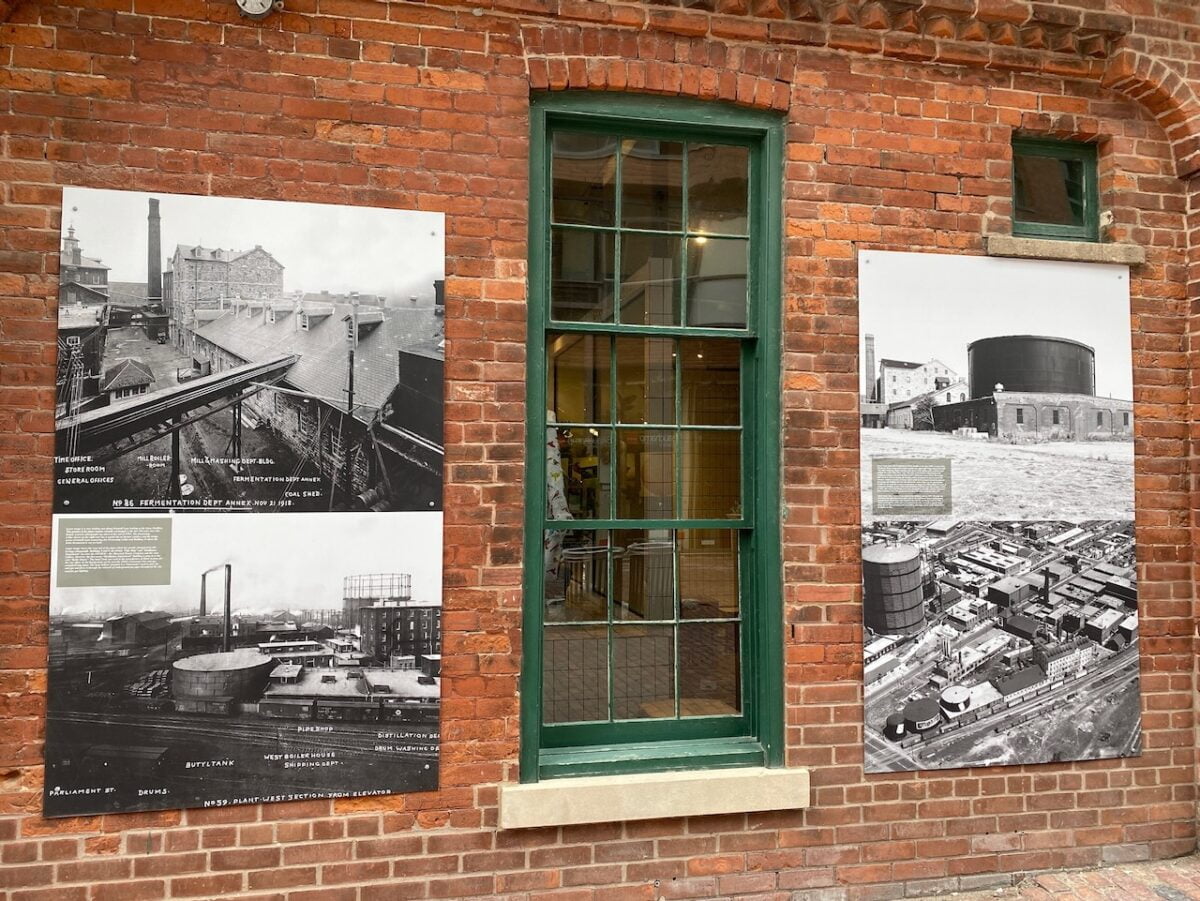
To commemorate the anniversary, The Distillery Historic District is launching Distillery 190: Across the Ages, including a larger than life birthday bash outside under the canopy lights along Trinity Street and a new, curated, outdoor archival photo exhibit.

Follow The Distillery Historic District on social media for live updates on all celebratory activities: @DistilleryTO, #distilleryTO, #distillery190.

The Distillery Historic District (Image: Dustin Fuhs)

“As much as this we’re marking a milestone, more importantly, Distillery 190 is our way of saying thank you to the people of Toronto,” said Rik Ocvirk, Director of Experiences and Events.

According to the District, in 1832, James Worts and his brother-in-law William Gooderham emigrated to Upper Canada from the United Kingdom to establish a flour milling business on the shore of Toronto Bay. Their 70-foot tall windmill became a symbol of the new City of Toronto and their business grew to become an economic powerhouse and the largest distillery in the world. 

It is one of Canada’s most recognizable tourist destinations, with 65 one-of-a-kind shops and award winning restaurants and cafes, and home to a vibrant art community.

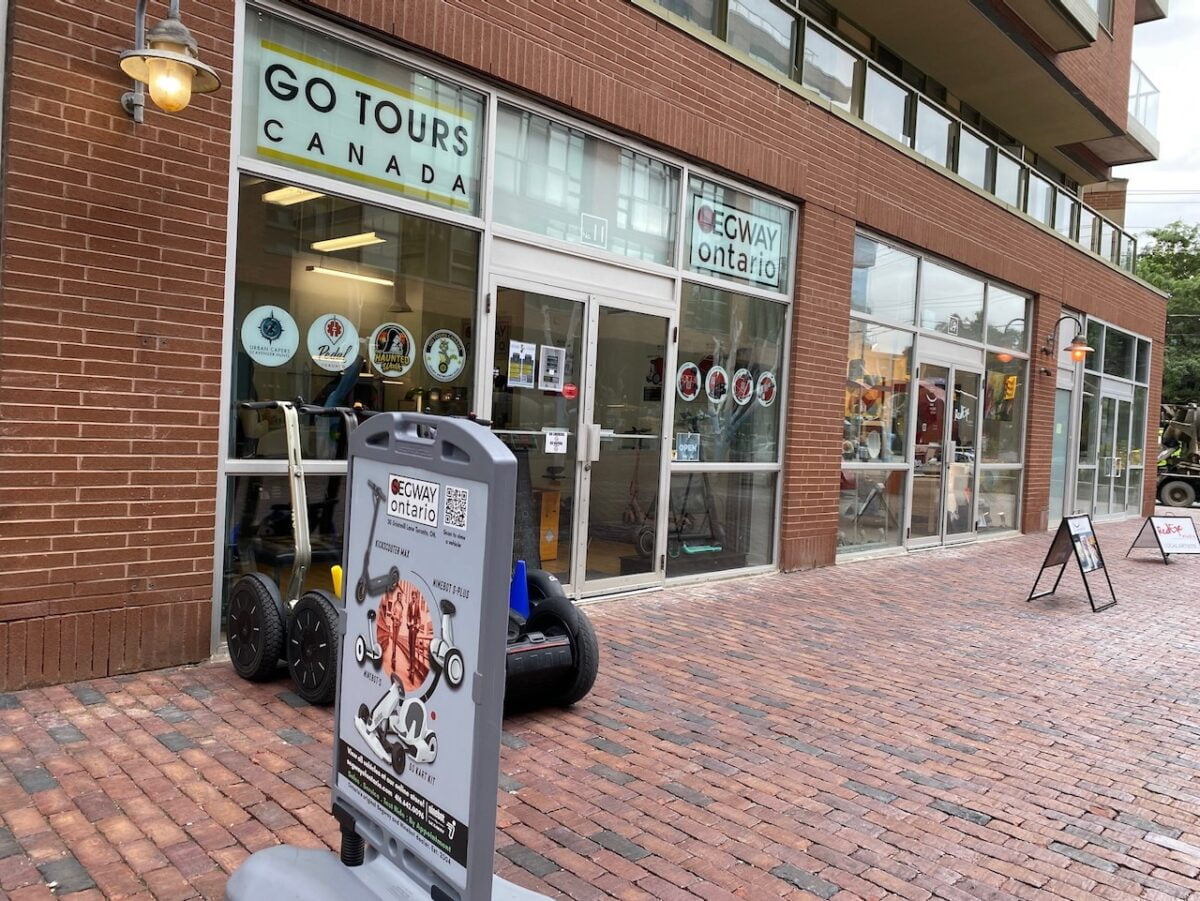
Go Tours at The Distillery District (Image: Dustin Fuhs)

EVENT GUIDE: How Canadians can join in celebrating The Distillery Historic District’s 190th anniversary: 

  • Distillery 190: A Photo Exhibit Across the Ages: To celebrate 190 years of the National Historic Site known as The Distillery Historic District, the founders have curated 25 sets of archival photographs to visually tell the story of this 13-acre collection of Victorian-era industrial buildings. From the architecture, to the businesses, to the fascinating people who worked here and roamed the streets, journey back in time and see the incredible transformation this space has undergone since it was founded in 1832 by distilling company Gooderham and Worts.

To book a 30-minute guided tour of the exhibit with GO TOURS visit.  www.gotourscanada.com/distillery-district-190th-anniversary

Tours available: September 29 – November 16, 2022

Tours start at 5:30 PM on weekdays and 2:30 PM on weekends

Price: $12+ HST per person.

Free tours to the first 190 people to sign-up, using code ATA22. Or, you can visit the online gallery of images and tour the exhibit at your own pace – available September 29. The exhibit launches Thursday, September 29 and runs until November 16.

Cartier Renovating and Relocating Stores in Canada with Major Richemont Investment

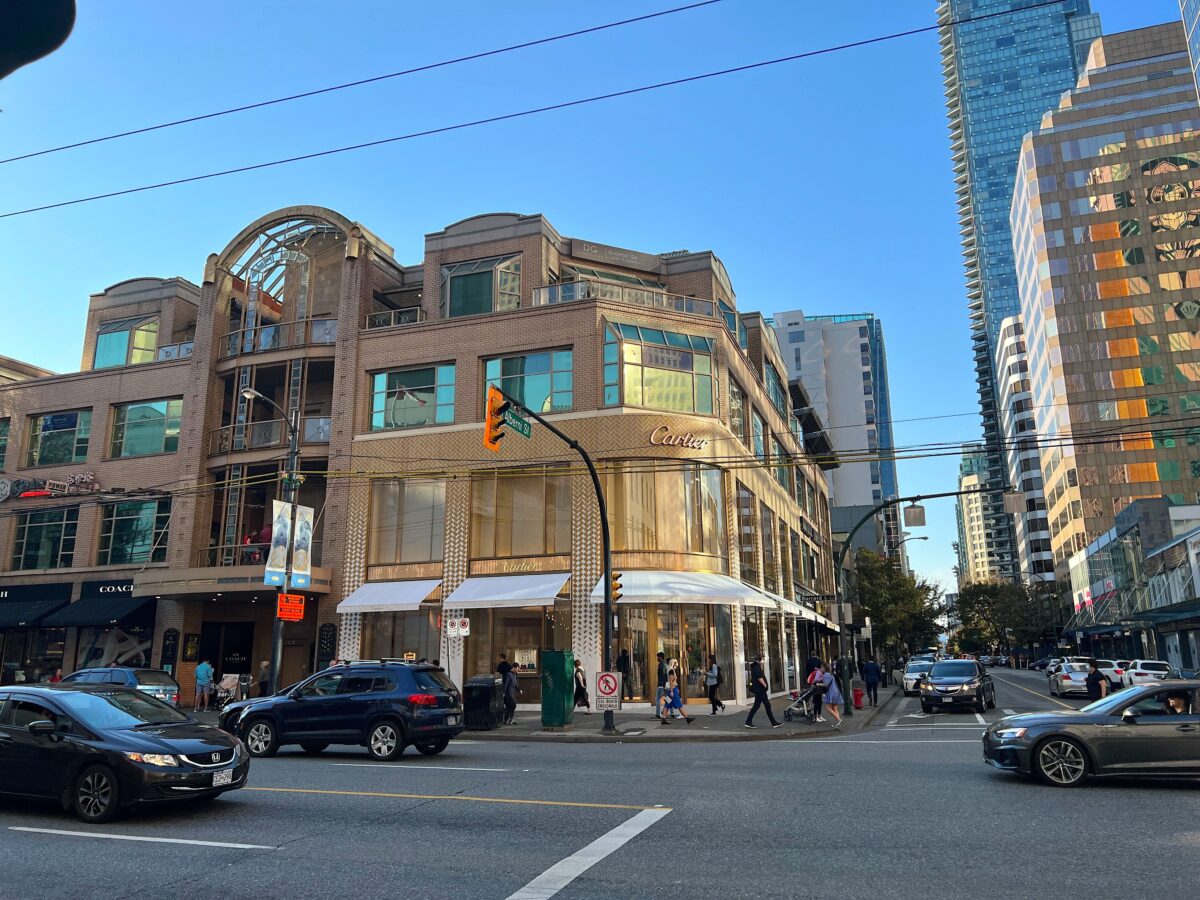
Vancouver store at 755 Burrard Street. Photo: Lee Rivett

Richemont-owned luxury French jewellery brand Cartier is upgrading its Canadian operations with store renovations, expansions and a relocation. The move signals confidence in the Canadian market following challenges relating to pandemic lockdowns. 

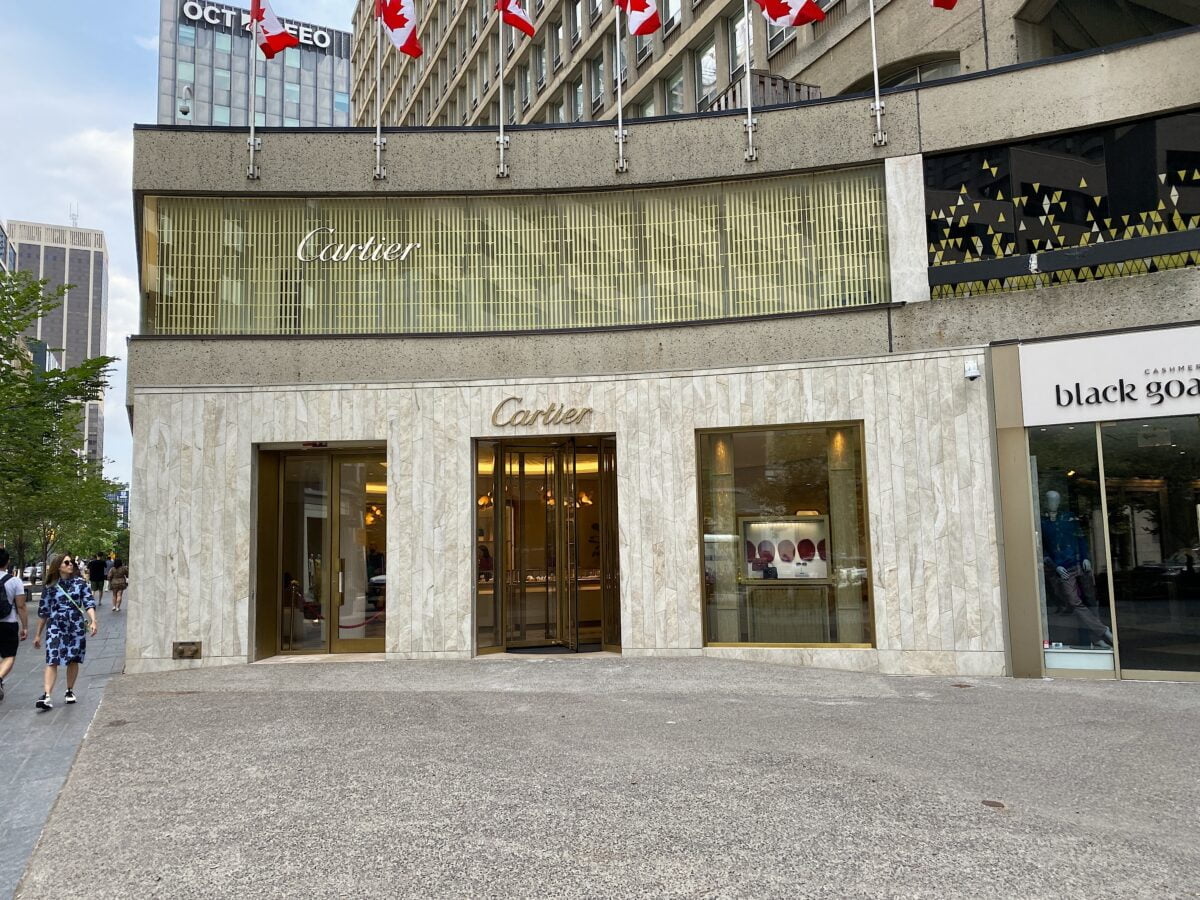
The 4,300 square foot downtown Toronto Cartier store in The Colonnade at 131 Bloor Street West saw a full renovation several months ago, bringing it in line with other global stores as part of Cartier’s new design aesthetic. Cartier for decades has had a presence on Bloor Street beginning with the Manulife Centre in the 1980s. 

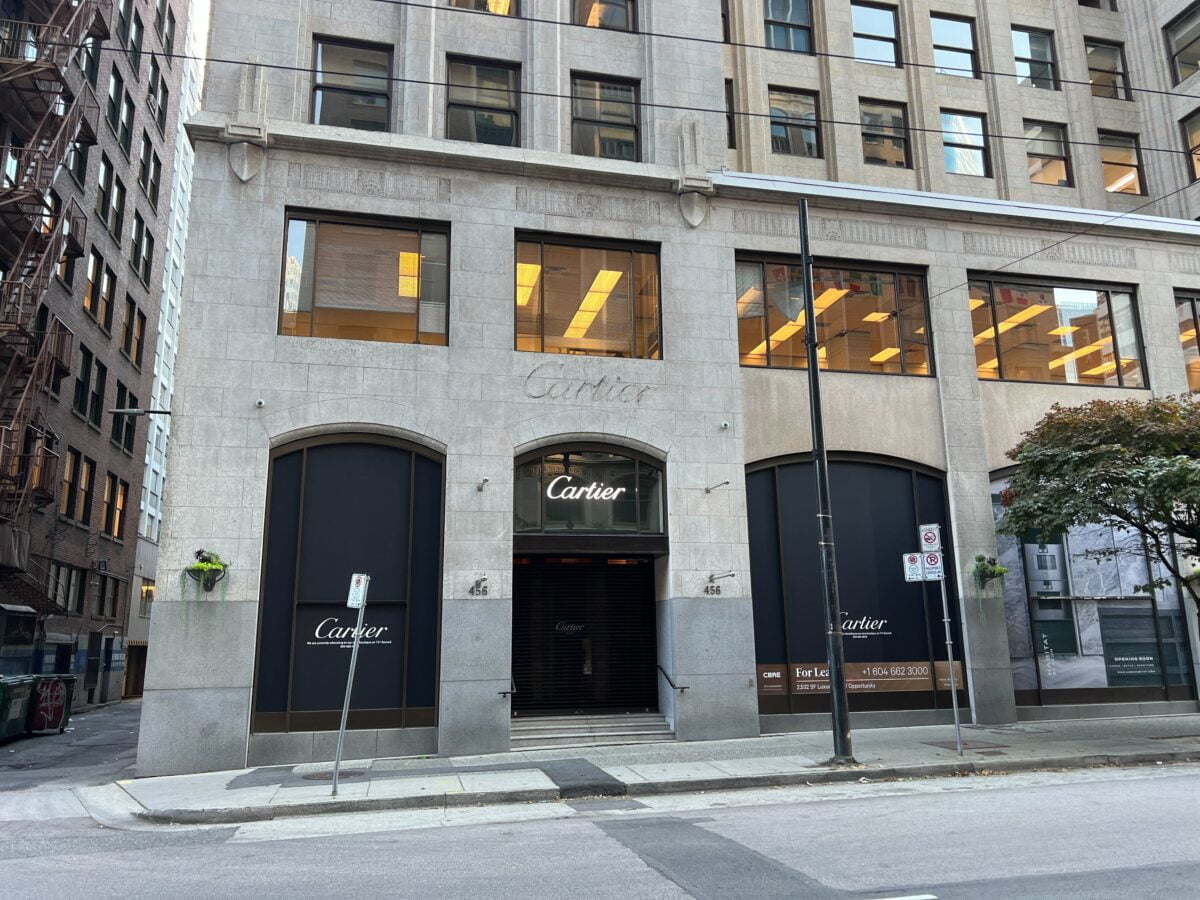
In Vancouver, Cartier recently relocated its storefront to the city’s Luxury Zone within the 755 Burrard Street building. Included is a new facade where a Hermes store operated for years — in 2019 Hermes relocated nearby. Prior to opening on Burrard, Cartier operated a licensed location at 456 Howe Street between Hastings and Pender Streets. 

View of the Vancouver store on Burrard Street and Alberni — photo by Lee Rivett
New Vancouver store, photo: Lee Rivett
Former Cartier location at 456 Howe Street in Vancouver. Photo: Lee Rivett

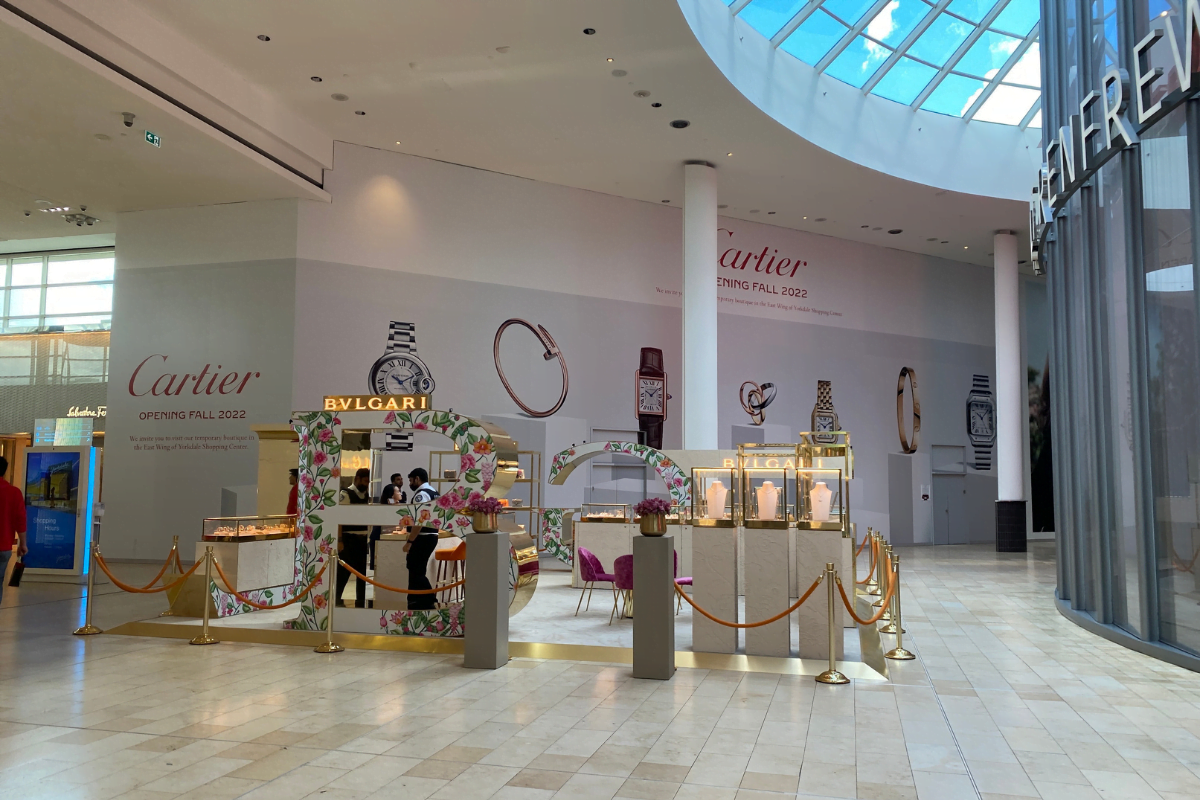
Next up is a renovation and expansion to the Yorkdale Cartier storefront in Toronto. The 3,500 square foot location will expand by annexing part of an adjacent space formerly occupied by Mulberry which exited Canada during the pandemic. Bulgari will occupy the remainder of the former Mulberry space and Bulgari is also seeing a full renovation at Yorkdale as well. 

Cartier also has distribution in upscale multi-brand retailers in Canada including Birks, where the brand has several shop-in-stores. 

In Canada, Cartier has had stores for decades in major markets. Montreal was once home to a Les Must de Cartier boutique at 1498 Sherbrooke Street West which shut years ago. Bloor Street in Toronto has been home to several Cartier storefronts over the years until it moved into its current location in 2012. 

Cartier had a small Les Must boutique on the 700 block of Robson Street in the early 1980s which relocated inside of the Pacific Centre mall in 1985 — in 1994 it moved to a small corner location at Hastings and Howe Streets prior to relocating to 456 Howe Street in the early 2000s. From the late 1990s into the mid 2000s there was a push to put luxury brands on West Hastings Street between Hornby Street and Granville Street and over the years, almost all have vacated. 

Renovated Toronto location at 131 Bloor St. W., photo by Dustin Fuhs
131 Bloor St. W., photo: Cartier
Former Les Must de Cartier location on Sherbrooke St. W. in Montreal in the summer of 2019. Photo: Craig Patterson
Vancouver Sun, Nov 7 1985
Vancouver Sun, September 24, 1994
Cartier Construction Hoarding at Yorkdale Shopping Centre (Image: Dustin Fuhs)

We’ll follow up on this article when Cartier completes the renovation and expansion to its Yorkdale store in Toronto. It’s not known if Cartier will open more standalone stores in Canada in the future, though new suburban luxury nodes in Vancouver (Oakridge Centre or The Amazing Brentwood) and Montreal (Royalmount) have potential. 

Richemont has been investing heavily in the Canadian market over the past decade. That includes opening standalone storefronts for its jewellery brands including Piaget, IWC, Panerai, Vacheron Constantin, Montblanc and Jaeger LeCoultre. These brand stores are all located in the Toronto and Vancouver markets though Piaget has yet to open a store in Vancouver. Chloé, known for its women’s ready-to-wear and bags, operates a flagship at Toronto’s Yorkdale Shopping Centre. Richemont also owns pricey Belgian luxury brand Delvaux which currently has concession boutique spaces at Nordstrom in downtown Vancouver and at Nordstrom’s Yorkdale Shopping Centre store in Toronto. 

Montreal-Based Outerwear Brand ‘KANUK’ Plans ‘Very Surgical’ Store Expansion in Canada [Interview]

Image: KANUK

Montreal-based retailer KANUK is poised for growth after 52 years in business.

The brand, with three current locations in Montreal and one in New York City, is looking to expand its growth to several key markets.

“KANUK is an outerwear company and we specialize in mostly urban outerwear. So everything designed for city living,” said Richard Laniel, President of KANUK.

“We design our garments with the highest technical components we can put in them but also we conceive them to be as warm as possible for a city climate.”

KANUK (Image: Oakmont Retail Services)

The company’s Montreal locations are in the downtown, on the North Shore and on the South Shore.

The first store opened in downtown Montreal in the early 1970s.

Richard Laniel jr.

“We’re currently expanding our digital presence and our brick and mortar presence as well as growing our distribution channels through wholesale. So a combination of three channels,” said Laniel.

“Although we’ve been operating a store for over 50-some years, we’ve only really started operating our own stores outside of the island of Montreal as of last year. This is new. We’ve added three more stores since the Fall of 2021. The first one was New York and the next two south and north of the island in Montreal.

“It’s obviously a pretty interesting category worldwide. I think we know that Canadian outerwear has really positioned itself kind of like Belgium chocolate, Swiss watches, something like that if you want to use a comparison. And we have an opportunity to bring this craftsmanship outside of the island and really bring some warmth into the urban outerwear market. We see an opportunity to open some brick and mortar stores so that we could really bring more of a full lifestyle component of our collection to the customers.”

Kanuk New York (Image: Kanuk)

Laniel described expansion plans as “very surgical.”

“We don’t want to overexpose ourselves at this point as it’s a fairly new venture,” he said. “The next market for us would most likely be Toronto for sure and then we’d be looking probably at the West Coast, somewhere around Vancouver. We’re also thinking about New England, maybe Boston could be interesting. This is kind of where we’re looking at right now. 

“We’re typically targeting markets where the demographic and the consumer habits resemble the most of Montreal habits. It’s basically the demographic of age, academic background, household income. All these factors are things we’re looking at where they come similar to Montreal and where there’s an interest for kind of luxury garments. We can combine those and go into those markets. We feel we can be successful much sooner than other markets.”

Ben Labrecque

Ben Labrecque, Managing Partner with Oakmont Real Estate Services Canada, which is spearheading the retailer’s expansion plans, said the strategy is not a shot-gun approach.

It will be a very disciplined and strategic rollout consisting of a mix of “AAA” shopping centres and high streets,” he said.

“We’re looking between 1,500 to 1,800 square feet in major markets with a emphasis on higher end co-tenancies. The brand again while remaining disciplined, will focus on Toronto for the 2023 fall season, this could be in the form of a permanent deal or a temp ‘try before you buy’ model, following Toronto the focus will be redirected to the West Coast.” 

“We’re basically going to go where consumers want us to be,” added Laniel.

Laniel said he was not sure how many locations the brand will expand to in the near future.

“My philosophy is more or less that brick and mortar will support what I consider the biggest store which is the ecomm presence, contrary to maybe 15-20 years ago, we built ecomm to support stores, I’m looking at our stores to support our ecomm, so that our consumers can have a point of presence. Physical presence helps digital growth and digital growth helps physical presence,” he explained.

“It’s going to be surgical. I don’t think we’re going to overbox. I think we’re going to most likely end up with a few flagships in a few important cities across North America and that would be it. I don’t have a number.”

Consumers Abandon Brands that are Slow to Innovate [Report]

A new global survey finds that customer loyalty actually drops when brands are slow to innovate, with millennials and Gen Z leading the migration away from those retailers.

The 2022 Commerce Innovation Report, from commercetools, also found that lack of commerce innovation negatively impacts customer experience and sales, and close to three-quarters of business decision-makers recognize that failure to adopt emerging commerce solutions will hurt their business.

Jen Jones

“With endless options and the power of the internet at their fingertips, consumers are continuously redefining what the ideal customer experience looks like. The brands with longevity are the ones that are taking this shift into account from both a technological and cultural perspective, and are evolving to meet customer demands,” said Jen Jones, Chief Marketing Officer of commercetools, in a news release. 

“Change is constant in the modern commerce ecosystem. Brands need to be nimble and meet customers where they are. This means having a finger on the pulse of their customers’ shopping behaviors and adopting the commerce experiences that resonate the best among them. Anyone who thinks they can sit still and not evolve amid changing demands will be out of business shortly.”

Key highlights from the report, which surveyed 300 global retail leaders, include: 

  • 73 per cent of shoppers will take their business elsewhere if a brand’s commerce experience does not meet their expectations, and over half prefer modern commerce experiences, defined by evolving customer preferences, payment options, and digital devices;
  • 45 per cent of respondents say they only dedicate a minimum amount of their budget to improving or expanding commerce capabilities;
  • 74 per cent recognize that failure to adopt emerging commerce solutions will negatively impact areas of the business;
  • 40 per cent of respondents say their company’s current commerce solutions hinder the sale of their products or services, and 49 per cent of this group feel this issue has existed for over a year;
  • Over one-third of businesses are struggling with the ramifications of an outdated commerce solution, signifying the impact a lack of innovation has on customer experience, sales, and brand loyalty;
  • 52 per cent said they’ve decided not to implement a new commerce capability due to budgetary constraints.
Image: commercetools

The inventor of headless commerce, commercetools describes itself as an innovative technology disruptor that has established itself as an industry-leading e-commerce software provider. It is based in Munich, Germany with offices in Europe, Asia, and the United States.

“Businesses are beginning to understand that if they do not jump on trends and adopt the technology that enables them to provide these next-generation experiences at every touchpoint, then it will be impossible to remain competitive in today’s market,” said the company.

The report also found:

  • 70 per cent said they’re most concerned about millennials, a cohort with over $2.5 trillion in spending power, taking their business elsewhere, followed by Gen Z (54 per cent) and Gen X (48 per cent); 
  • Only 25 per cent of respondent organizations offer next-day shipping, and even less offer loyalty programs (21 per cent);
  • Despite customers expressing interest in a variety of payment options, less than half offer multiple payment methods, and less than 20 per cent of respondents offer one-click checkout (18 per cent), and even fewer (16 per cent) offer Buy Now Pay Later and cashback (14 per cent.)
Union Station Sephora (Image: Arash Moallemi / Sephora Canada)

“Sephora pioneered prestige omni-retail, and we know that continued investment in commerce innovation is key to our sustained growth,” said Sree Sreedhararaj, Chief Technology Officer at Sephora, in a statement. 

The report said companies’ adoption of modern commerce features and digital purchase options lags behind what’s possible, and also what’s hoped for.

“Some decision-makers are excited to test new capabilities like purchasing in the metaverse or jumping on trends like NFTs. But Naysayers clearly exist among us — a vocal minority who don’t think their companies need to expand digital purchasing options or commerce features at all. We know they’re there, as loud and skeptical as ever. Whether you feel up to speed or behind the times, there’s no room in your organization for technologies that hold back your team and business,” it said.

Canadian Consumer Spending Sees Boost in August as Retailers Prepare for Fall/Winter [Study/Interview]

Old Navy at CF Toronto Eaton Center (Image: Dustin Fuhs)

Canadian spending, excluding automotive, increased by seven per cent year over year in August and was up 18.8 per cent from three years ago, according to the Mastercard SpendingPulse, which measures in-store and online retail sales across all forms of payment.

The report indicates spending has well surpassed pre-pandemic levels.

“As Canadians rounded out their summer with last-minute vacation plans and families preparing for the back-to-school season, it’s not surprising to see both an increase in retail sales and in-store spending,” said Steve Sadove, senior advisor for Mastercard and former CEO and Chairman of Saks Incorporated.

“You have very similar patterns going on in Canada and the US where you have a consumer that’s still spending . . . But when you look at inflation, at roughly seven or eight per cent, you’re essentially seeing very little unit growth and the consumer’s treading water relative to the real increase in spending.

“It’s not terrible. It’s a pretty healthy number. You continue to see the slowdown in ecommerce and people getting back into stores and getting back out and experiencing. So the trend we talked about last month, experiences win, people are wanting to get out. I think apparel continues to be very strong and that to me is about the freshness, the getting out of their sweat clothes and into parties and weddings. That to me is a trend that is continuing.”

Image: Mastercard SpendingPulse

Sadove said with food inflation so high fewer people are eating out these days.

The report found: 

  • In-store sales increased (7.8 per cent YOY) with a significant surge in Apparel (37.4 per cent YOY) ahead of back-to-school season and it was up 18.8 per cent from three years ago;
  • Fuel and Convenience also saw an increase (18.5 per cent YOY), as consumers took their final summer road trips;
  • Home Furniture and Furnishings continued to see growth with sales up 12.8 per cent YOY (+30.8 per cent YO3Y) with Home Improvement sales up 11.7 per cent YOY (+24.9% YO3Y), a consistent trend since the start of the pandemic; and
  • With summer coming to an end and gas prices softening, last-minute road trip plans remained top of mind for Canadians with Fuel and Convenience spending up 18.5 per cent YOY (+32.8 per cent YO3Y).

The Mastercard SpendingPulse reports on national retail sales across all payment types in select markets around the world. The findings are based on aggregate sales activity in the Mastercard payments network, coupled with survey-based estimates for certain other payment forms, such as cash and check. The Mastercard SpendingPulse defines “Canadian retail sales” as sales at retailers of all sizes, excluding automobiles. Sales activity within the services sector (for example, travel services such as airlines and lodging) are not included.

Sadove said electronic sales were weaker because people bought everything they needed during the pandemic.

“But they’re still fixing up their homes,” he said.

“It’s really fascinating. If you look at 2022 and 2019, and you focus on what’s happened . . . and what you see is overall retail up about 19 per cent in the three-year period . . . Over three years, the consumer is more back to normal in terms of their consumption that they had longer termed trended on.

“Internet has grown. It’s about 12 to 18 per cent of commerce. So internet has gotten a lot bigger.”

Sadove said there has been a reversion to the mean and the trends that were taking place pre-pandemic are what people are experiencing now.

“You’re getting back to a more normalized environment and that’s where a lot of retailers messed up because they bought inventory, they assumed the world was going to continue the way it was and it didn’t. And it went back to more normal so they’re sitting on a lot of inventory of the wrong inventory,” he added.

Sadove said the consumer will continue to spend during the holiday season. They’re going to be under pressure. Inflation is hurting the lower part of the income levels. Many companies still have too much inventory so there will be plenty of promotions. 

“My guess is the holidays will start earlier than ever because people will be clearing out some of those inventories. And if there’s freshness, new apparel, new items, new fashion, that will sell. People are still going to be out there buying their holiday gifts but they’re going to have to be making choices and they’ll be shopping carefully focusing on value,” he said.

“I’m concerned. You look at the numbers whether it’s the stock market or any of the markets, how the consumer is behaving, there’s a skittishness out there. And people are a little bit concerned so I think value is going to be an important word, promotions early, but continued spending. And omnichannel. Ecommerce even at four per cent growth doesn’t matter, it’s still 50 per cent, 60 per cent bigger than what it was.”

Offline by Aerie Launches in Canada with 2 Stores

West Edmonton Mall - Photo by Retail Insider

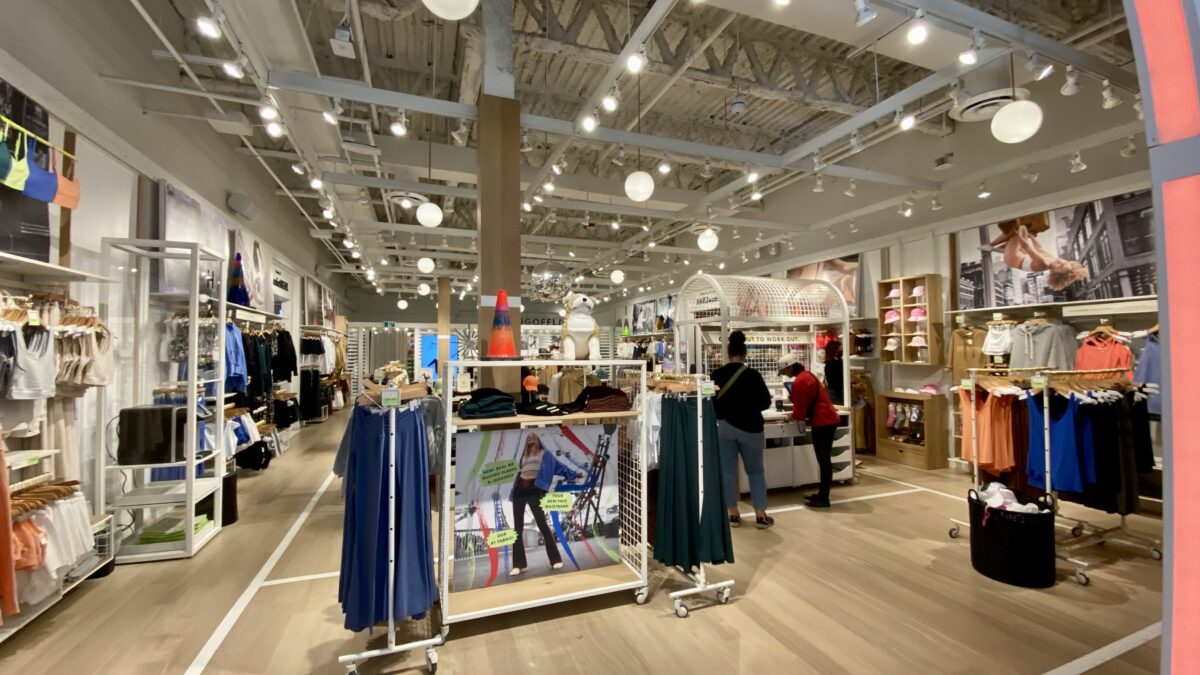
US-based fashion brand Aerie has launched its Offline by Aerie concept stores in Canada in Edmonton and Toronto. The brand focuses on athleisure and comfort clothing and will compete with retailers already in the market. 

Offline launched in the US in 2020. The name is unique — according to its website, Offline references taking a break and “going offline” from such things as work, school and social media. 

The female focused brand sells on a range of products including leggings, sports bras, tops, workout dresses, skirts, hats, bags, water bottles, headbands, socks and some footwear. Fabrics used in designs are said to be soft as well as sustainable. 

Offline’s clothing is geared to those working out, going outside or even relaxing at home. Moving one’s body is encouraged as part of the marketing messaging, as is relaxation. 

West Edmonton Mall – photo by Retail Insider

A range of colours and prints are available, including “feminine details that you won’t see from other brands,” according to the company’s website. Thoughtfulness went into Offline’s product designs, from thumbholes to pockets. 

Offline’s first Canadian store opened at West Edmonton Mall in Edmonton last month and a second location was recently unveiled at Toronto’s Yorkdale Shopping Centre. The company would not provide Retail Insider an interview so we’re unsure what future locations are on the way — a sales associate at the Yorkdale store said she wasn’t sure either. 

In the United States, Offline has more than two dozen stores in various markets and appears to be in expansion mode there as well. We’ll follow up as we continue to learn more about this new retail entrant into Canada. 

Foot Locker Launches Canada-Only Collection in Local Partnership [Interview/Photos]

Le Cartel at Foot Locker on Yonge Street in Toronto (Image: Dustin Fuhs)

Le Cartel, a Montreal streetwear brand, has partnered with Foot Locker to showcase its newest designs created by local artists.

The brand opened in 2015 in Montreal and since then has grown to include over 50 collections, three of which will be now available in 17 Foot Locker locations throughout Toronto, Vancouver, Montreal, and will also be available online. Foot Locker will be displaying Le Cartel under its Home Grown platform where Foot Locker showcases local designers in the US and Canada.

Behind the Brand

Le Cartel at Foot Locker (Image: Kevin Millet / Le Cartel)

The founder of Le Cartel, Pierre Sauvage, moved to Montreal from Europe and wanted to create a brand combining Europe with North America, something Sauvage said he has not seen before in Europe.

“I arrived in Montreal in 2013 and I was really impressed by this mix of Montreal. Montreal has a lot of festivals, vivid artists, and has a vibrant scene, so the idea was to mix these with fashion, and it was the first idea I had back in the days. The brand is about being someone from Europe arriving to Montreal and expressing the new city which is a mix between Europe and North America, a mix between French and English, and a mix of city vibes,” says Sauvage.

Le Cartel brings original fashion and collaborating with artists is the DNA of the brand as it has been using local artists since the beginning. When a customer purchases a product from Le Cartel, 10 percent of the proceeds go directly to the artist. The products from Le Cartel are all locally designed, and 50 percent of the products are made in Canada. It includes a variety of collections for men, women, and kids. Le Cartel’s price ranges are between 40 to 100 dollars.

New Partnership

Le Cartel at Foot Locker on Yonge Street in Toronto (Image: Dustin Fuhs)
Image: Le Cartel / Foot Locker Canada

The Hall of Fame collection launched on September 16th. Customers can find the collection online at Footlocker.ca and in 17 Foot Locker locations throughout Toronto, Vancouver, and in Montreal.

“We have been working on this collaboration for 14 months, so it has been a big milestone for us to live. For the next couple of weeks and months we are focused on this and being stronger. We are already speaking with the Foot Locket team to see what will happen next year with the partnership.”

Customers can find a variety of clothing including hoodies, t-shirts, and hats. The collection will showcase three Montreal artists: Petiton, Epithumia Rose, and Farah Allegue.

Le Cartel at Foot Locker (Image: Kevin Millet / Le Cartel)

“The idea behind the collaboration between Foot Locker and Cartel was that we tried to go with three artists that were familiar and so we decide to go with Montreal artists Petitom, Epithumia Rose, and Farah Allegue. Those three artists are really connected to the brand, we really have a strong relationship with them, and we wanted to promote them.”

Along with the new partnership with Foot Locker, Sauvage said it is also busy at expanding Le Cartel. Sauvage said Le Cartel has also opened a new store location in July and will be launching a new collection within the next couple of weeks, it is unknown if this new collection will be included with its other collections at Foot Locker but will be available inside Le Cartel stores.

“We have been through two rough years with covid and now 2022 is the year for growth and we are opening a new shop in Montreal and there are a lot of cool projects coming next so we are really happy and thankful for all the people involved because it is a dream coming true as Foot Locker is a big milestone for us and we are excited about what is to come next for Le Cartel.”

Related Retail Insider Articles