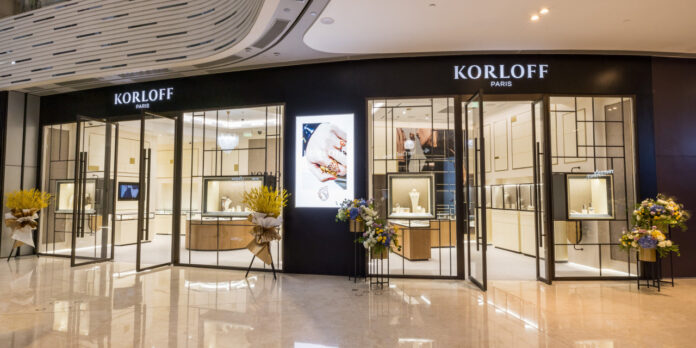
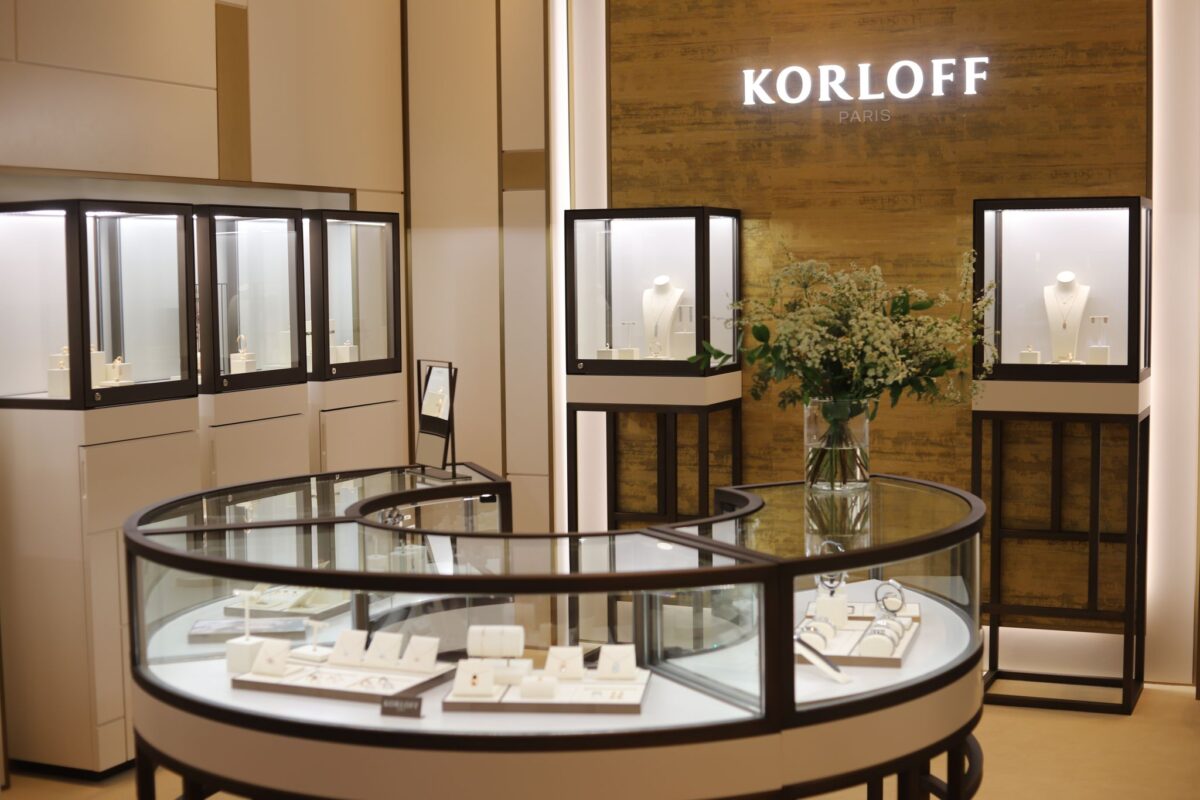
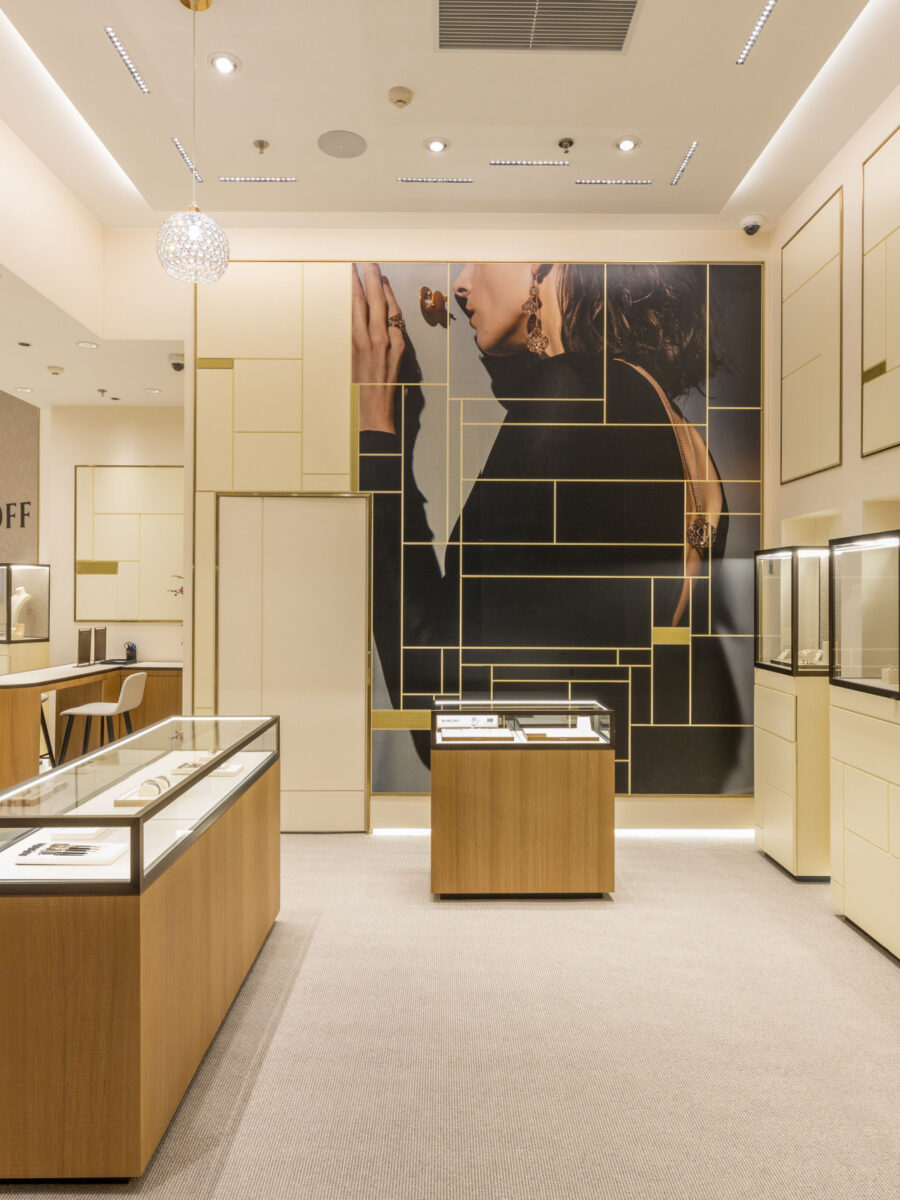
KORLOFF BOUTIQUE IN SHANGHAI AVENUE MALL (Image: KORLOFF)
Renowned international jewelry brand KORLOFF is looking for an exclusive partner in Canada to open either a standalone boutique or a shop-in-shop model.
The Behar Group Realty Inc., a real estate brokerage based in Toronto, has been mandated by KORLOFF to find a Canadian partner.
The Paris-based KORLOFF’s story begins with the world’s most mysterious diamond, a unique 200-carat rough black diamond cut into an 88-carat brilliant jewel.
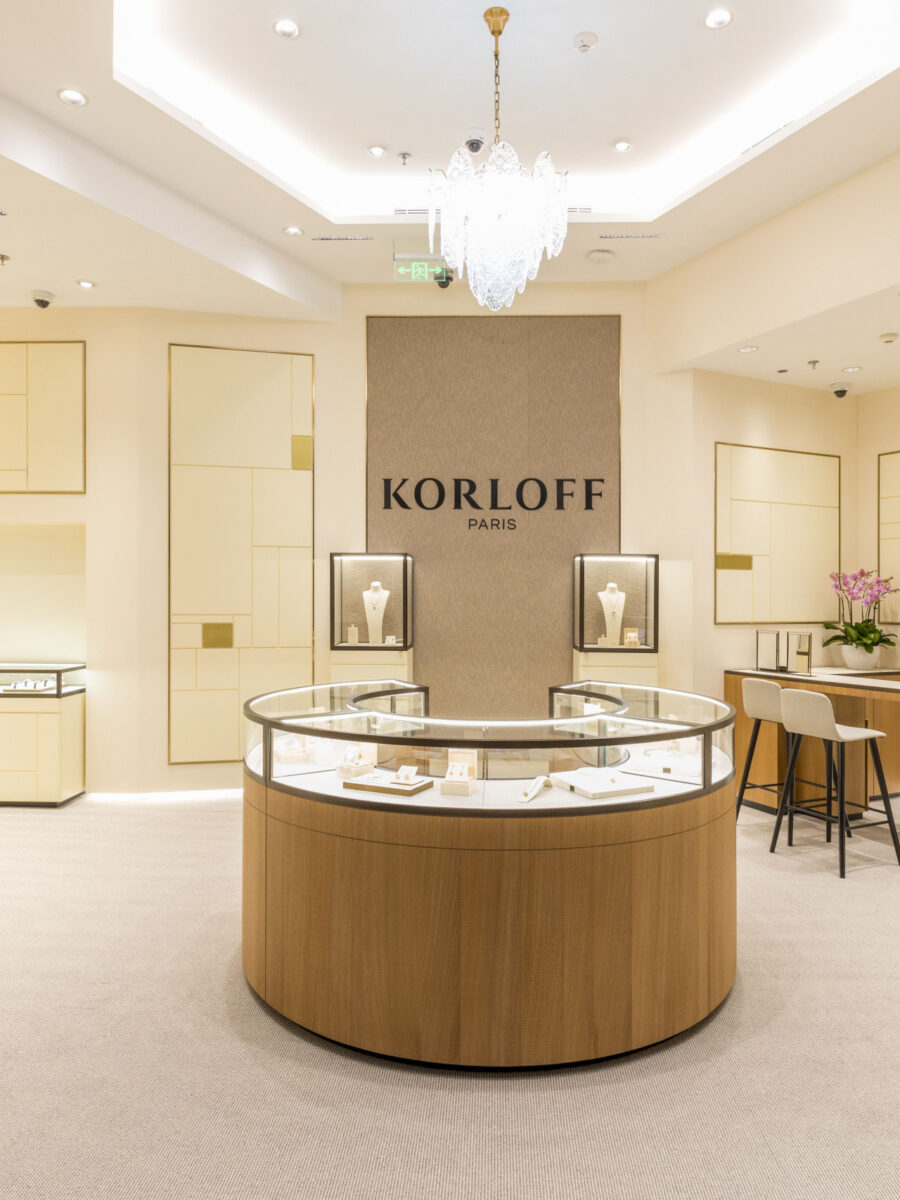
KORLOFF boutique in Hyundai Department Store Pangyo 1F in Seoul (Image: KORLOFF)
In 1978, Maison KORLOFF was founded. Today it has a presence in about 55 countries and has about 40 flagship boutiques around the world, primarily in Asia, the Middle East and Europe.
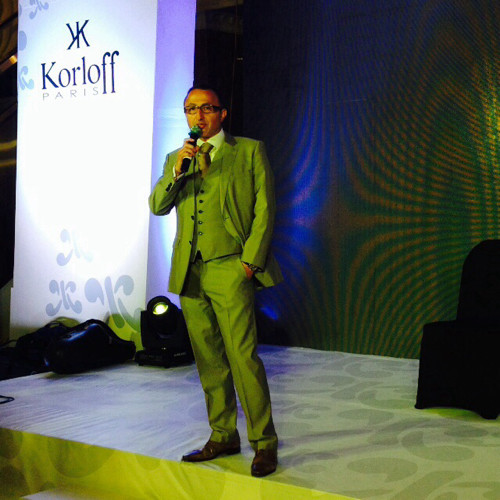
Bassam Azakir
Bassam Azakir, Chief Executive Officer of Korloff, said the brand has two options knocking on its door for Canada.
“We have assigned the team at The Behar Group to look at these opportunities. We are looking today more and more to penetrate the market through the networking of Behar,” said Azakir.
Avi Behar, Chairman & Chief Executive Officer of The Behar Group Realty, said “in the spirit of a cosmic theme, the stars would need to properly align in order for us to find the right platform for KORLOFF to penetrate into Canada.”
Avi Behar
“And part of what I mean by that is we’re not just chasing real estate. We’re looking for the right type of partnership – somebody who knows and believes in the brand, and who might have space where we can arrange a store within a store or some alternative joint venture structure,” said Behar.
“And even when we do find that partner, we’re not looking to roll out 10 or 20 stores in Canada. Canada might support two locations, maybe three.
“Our primary focus is to find the right partner, rather than focusing on a real estate search. The most likely partnership will already be in the luxury goods sector, possibly a luxury jewelry business or some other retail application. Ideally, we want one solid partnership that would see the vision and roll with it in Canada.”
KORLOFF BOUTIQUE IN SHANGHAI AVENUE MALL (Image: KORLOFF)KORLOFF BOUTIQUE IN SHANGHAI AVENUE MALL (Image: KORLOFF)
Azakir said to penetrate a market from scratch “you need lots of time, passion, and energy and capital.”
“The maximum that we’re looking at is two or three locations in Canada,” he said.
“Why it’s an interesting project is we are one of the very few affordable luxury businesses.”
According to the brand, the story of Maison KORLOFF is inextricably linked to its eponymous black diamond, made of matter formed in the explosion of a supernova nearly four billion years ago.
“Thrown to earth and expelled from its core in a volcanic eruption, the huge 200-carat nugget was acquired by the Korloff-Sapojnikoff family, members of the Russian nobility. Mysterious and fascinating, endowed with a powerful magnetism, the gem has been passed down like a talisman through the generations,” says the company.
The Black Diamond (Image: KORLOFF)
“With the revolution that took down the tsarist regime, the family sought refuge in Europe, where its members escaped the horrors taking place in their country of origin.
“The black diamond became synonymous with renewed luck and happiness. Subsequently owned by the famous Krochmal & Lieber – the upper class of diamond traders – the black diamond then cast its spell on French diamond dealer Daniel Paillasseur, who acquired it.”
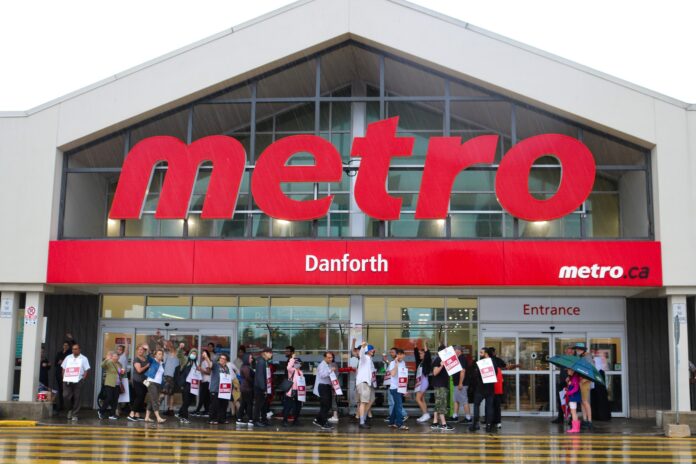
Amidst the summer heat, a cold front has descended upon the Greater Toronto Area. However, this frigid front has nothing to do with the weather and everything to do with a growing chasm between grocery giant Metro and its 3,700 striking workers. As Metro files a labour complaint and picketing workers gather at two critical distribution warehouses, the consequences of this clash extend far beyond the picket lines, threatening to reshape the entire grocery industry in Canada.
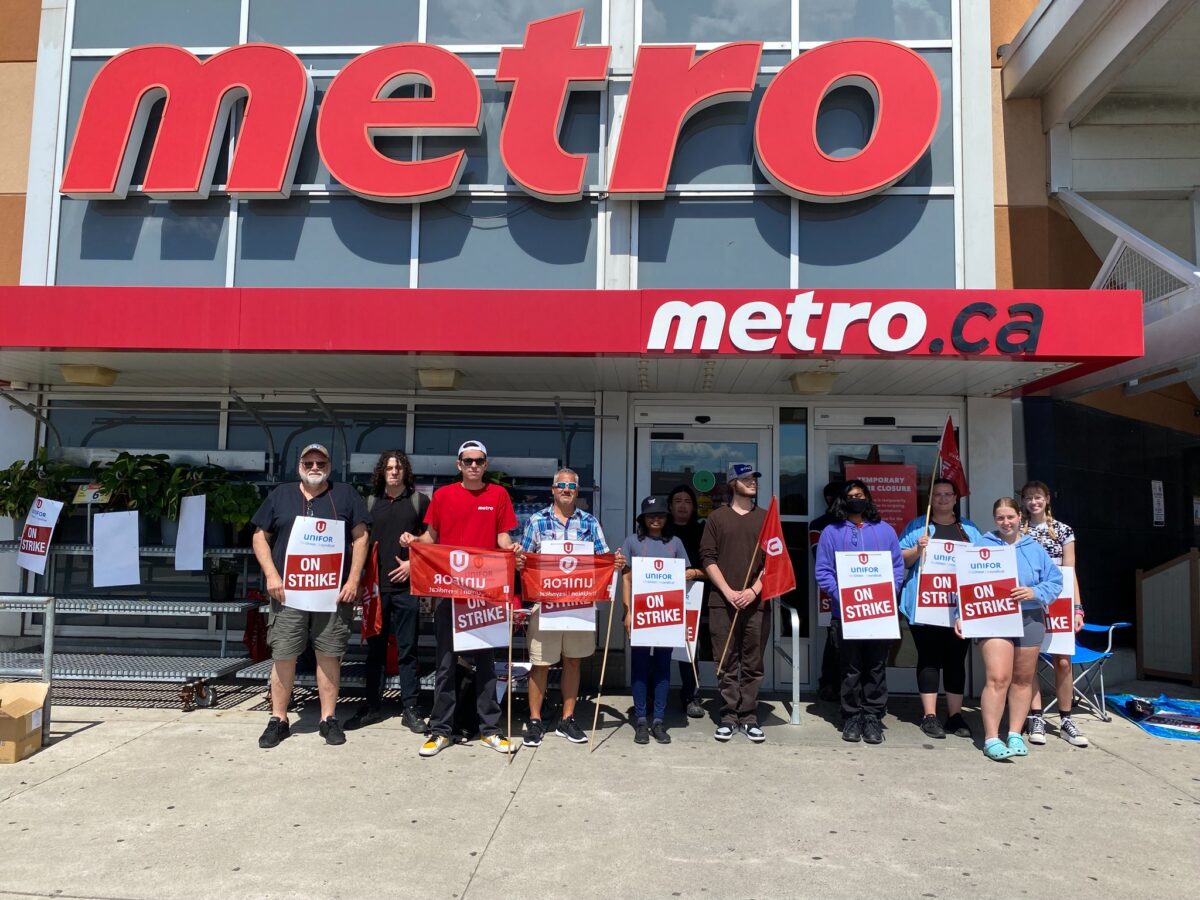
The strike, which started on July 29, has thrown 27 Metro stores across the GTA into disarray. Workers walked off the job after rejecting a tentative agreement recommended by their own bargaining committee – a move that sent shockwaves throughout the industry. Until this week, the strike impacted only these 27 stores, but its effects are steadily rippling outward. Most Metro consumers in Ontario will likely witness the consequences of this labour dispute through empty spaces in various sections of their grocery stores. Halting trucks departing from distribution centers, which are vital links in the cold chain, could sadly result in more food waste, as discarding food may be necessary if the cargo is no longer safe to consume. A bold move indeed by the striking workers.
Metro Strike (Image: UniforCanada)
But make no mistake; this strike is a litmus test for the public’s moral compass, and so far, the workers have garnered substantial support. Despite the potential for a settlement favouring workers to push food prices even higher, the public’s response has been surprisingly muted.
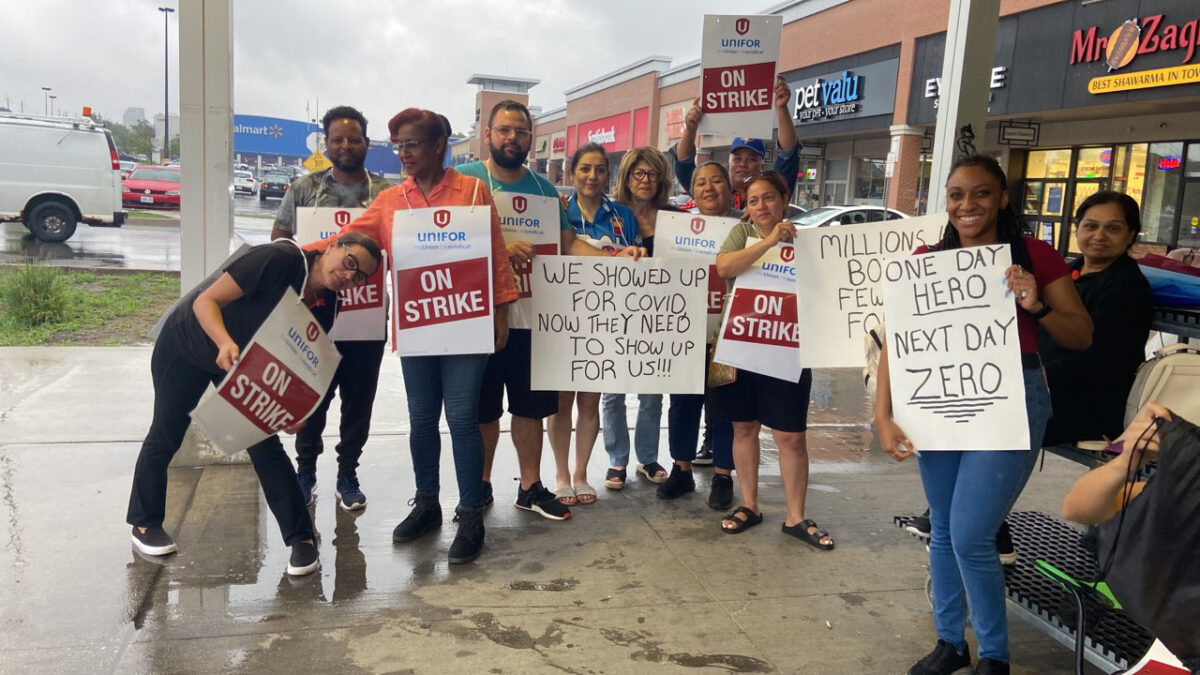
When the “Hero Pay” program was introduced during the pandemic, it revolved around work hazards and the risks associated with the virus. The public sympathized. However, with higher food prices now at the forefront, the context has shifted. This is about making the grocery industry an attractive career option, but more importantly, it’s about ensuring dignified work. While Metro allocated millions in bonuses to a handful of executives, employees received a gift card of up to $300, exclusively redeemable at Metro-owned stores – a rather perplexing situation. It’s no wonder Metro finds itself embroiled in a strike.
Nonetheless, while this dispute undoubtedly centers on wages and benefits, it signifies a larger battle – one that pits traditional Labour practices against the inexorable march of automation and artificial intelligence. The workers on the picket lines are not simply pursuing personal gains; they are essentially championing the cause of every grocery store employee in Canada. Their strike symbolizes a broader struggle against a business model that relies on top-heavy organizations while prioritizing low margins and meager wages.
Image: UniforCanada
Conversely, grocers across Canada are watching closely. If the workers succeed in their demands, it could set a precedent that resonates far beyond the picket lines. The prospect of fair wages and improved working conditions may become the new normal, but it could also usher in a seismic shift in how groceries are delivered to our shelves.
Automation and AI are knocking on the doors of the grocery industry, promising efficiency and cost savings. If workers secure concessions through this strike, grocers might be encouraged to explore alternative avenues, such as increased utilization of AI and automation. The traditional model of hiring around 80 full-time employees to operate a store could give way to hiring fewer than 50 workers with higher wages and an entirely different skill set, focused on managing and maintaining automated systems. The public should prepare for this potential transformation as well.
As the strike continues, it is likely to intensify with each passing week. The longer it endures, the deeper the scars it will leave on both sides. We must acknowledge that the grocery industry, like many others, stands at a crossroads. How it navigates this strike, and its aftermath will establish a precedent for the entire Canadian labour landscape. If Metro’s workers succeed in their fight for fair compensation and humane working conditions, the way grocery stores operate in Canada could undergo a profound transformation. The substantial influx of self-checkouts, as irritating as it may have been to many Canadians, could only mark the beginning of this evolution.
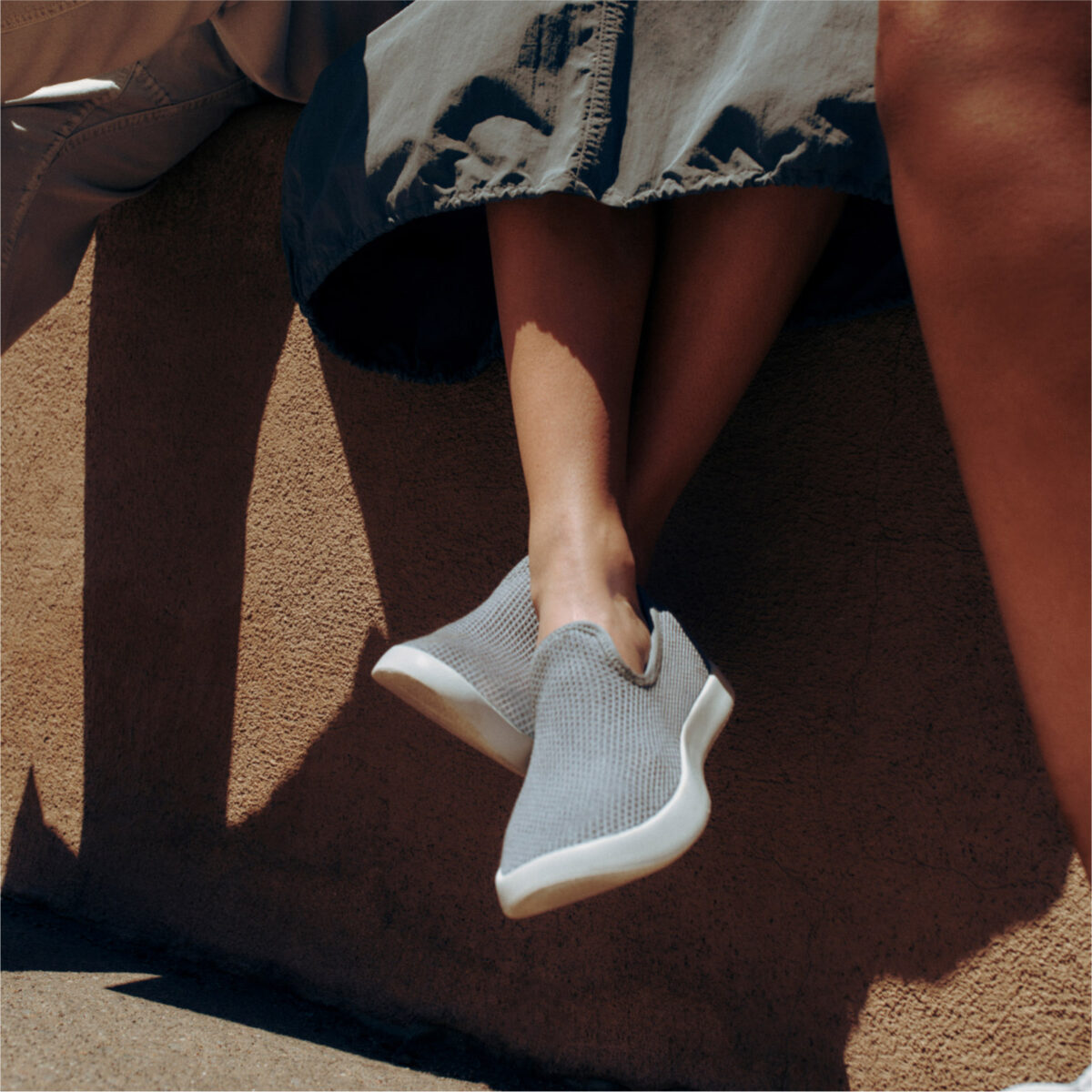
In-Sport Fashions, a well-established Canadian distributor of specialized lifestyle, athletic and outdoor products, is announcing its exclusive partnership with the globally renowned sustainable footwear brand Allbirds. Starting September 15th, 2023, In-Sport Fashions will become the distributor for Allbirds products in all Canadian channels of operations that includes retail locations, allbirds.ca, as well as opening up distribution to wholesale partners.
Known for its sustainable and pioneering footwear designs, Allbirds has garnered international recognition for its consistent commitment to eco-friendly practices and choice of material, comfort, and distinctive design philosophy. Such principles also resonate deeply with In-Sport Fashions, according to the company.
Under this new distribution agreement, In-Sport Fashions will leverage its expansive network of retailers and distribution avenues to make Allbirds’ product line accessible to customers across Canada. This move not only solidifies Allbirds’s standing in the Canadian landscape, but also underscores In-Sport Fashions’ dedication to providing consumers with premium products.
Karine Laforest and Andrew Nelson, Co-Owners of In-Sport Fashions, shared their enthusiasm: “It is a pleasure to collaborate with Allbirds, becoming their exclusive partner in Canada. The brand’s unwavering focus on sustainability, combined with its knack for blending comfort with style, mirrors our own company ethos. We are eager to set forth on this collective journey, aiming to create a significant positive ecological footprint.”
Travis Boyce, VP of Business Development at Allbirds, said: “We are excited to partner with the team at In-Sport to further grow the Allbirds brand across Canada. The In-Sport track record with other brands speaks for itself, and we are looking forward to building on all the success the brand has had in the country already.”
The timing of this partnership aligns with the shift in consumerism towards sustainable and ethically produced goods. The eco-friendly materials utilized by Allbirds, like their signature Merino Wool, resonate with the rapidly expanding community of eco-conscious consumers.
For a deeper insight into Allbirds’ Canadian offerings and to stay updated with recent news, visit www.allbirds.ca.
About In-Sport Fashions:
Having carved a niche in the Canadian landscape for distributing lifestyle, athletic and outdoor products, In-Sport Fashions stands tall with over three decades of industry presence. Its staunch belief in quality, style, and green practices makes it a preferred distributor for Canada’s elite lifestyle, athletic and outdoor brands.
About Allbirds, Inc.:
Dreamed up in New Zealand, Allbirds launched in San Francisco in 2016 with the ethos of using natural materials to create the world’s most comfortable shoes. With carbon reduction as its north star, Allbirds is paving the way for a more sustainable approach to business through product innovation, industry collaboration (like open sourcing its footprint calculator) and being the first footwear brand to carbon label all of its products.
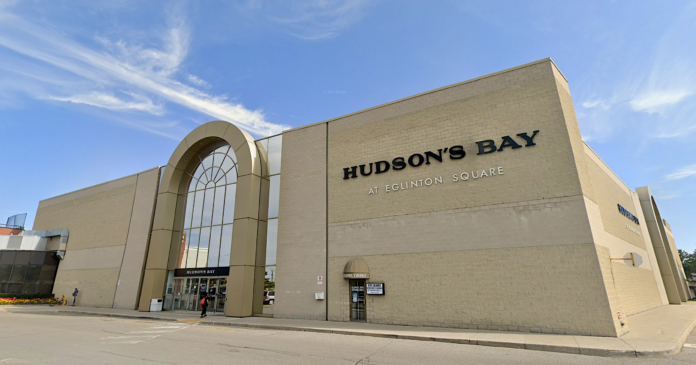
Hudson's Bay at Eglinton Square in Toronto, 2019. Photo via Google Street View
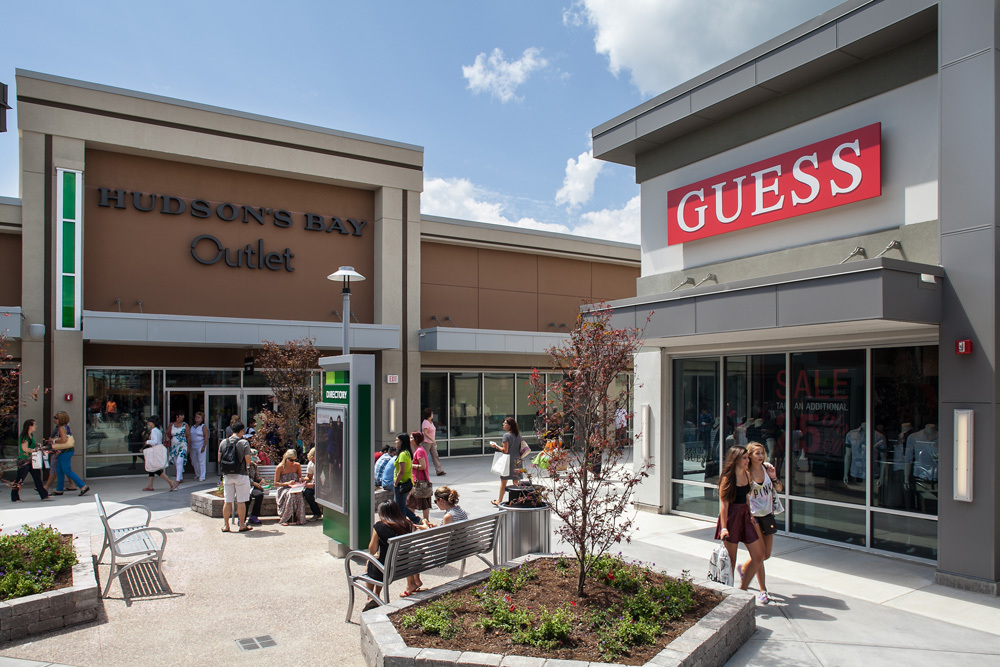
Department store retailer Hudson’s Bay has launched a Hudson’s Bay Outlet division with a storefront in Toronto. An existing Hudson’s Bay location in Edmonton will also be modified to offer outlet pricing as part of a store downsizing.
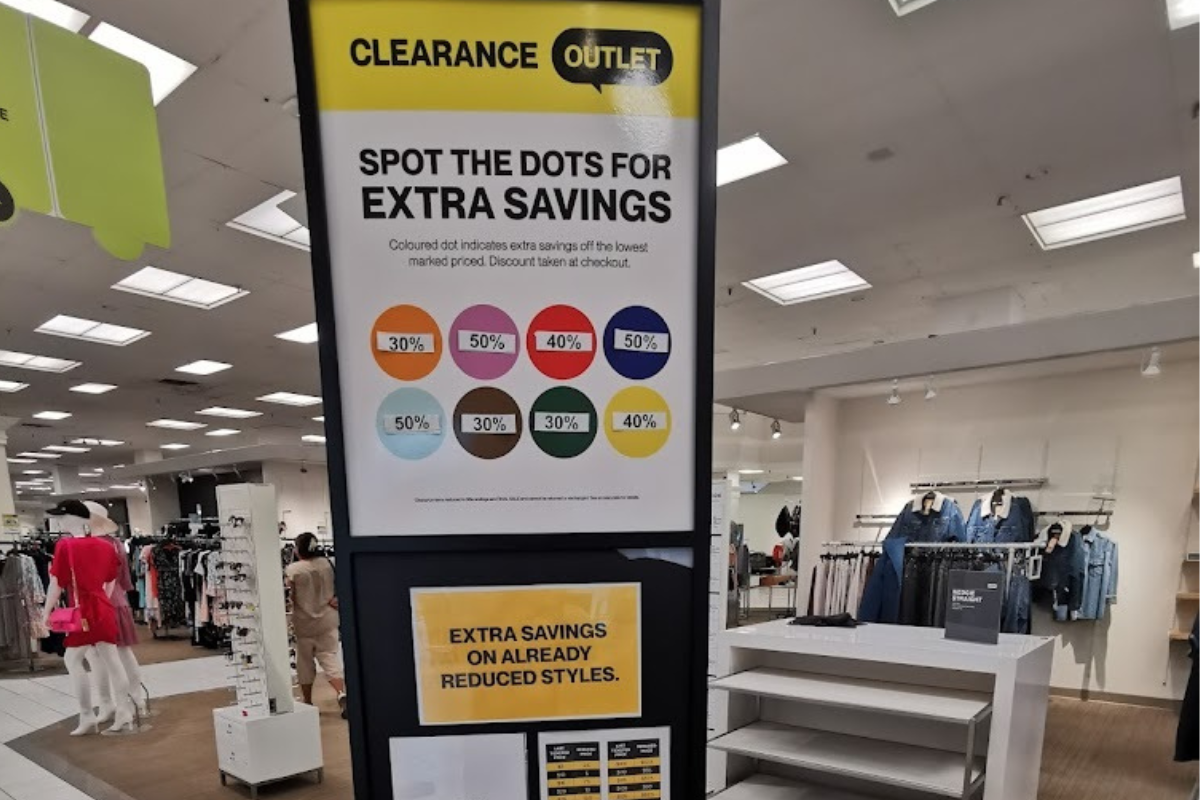
Recently the 115,000 square foot Hudson’s Bay store at Eglinton Square in Toronto was restocked with clearance merchandise from Hudson’s Bay stores including apparel, accessories, intimates and footwear — home furnishings are also being offered in a space in the store that until recently housed a beauty department.
Kosi Sivasankaran, Chief Stores Officer at Hudson’s Bay, said in a statement, “Transforming our Eglinton Square location into an outlet store for customers creates a fun and unique shopping destination, distinct from the Hudson’s Bay full-line experience.” Pricing and product is meant to “surprise and delight”, according to Sivasankaran, which includes something of a “thrill of the hunt” element.
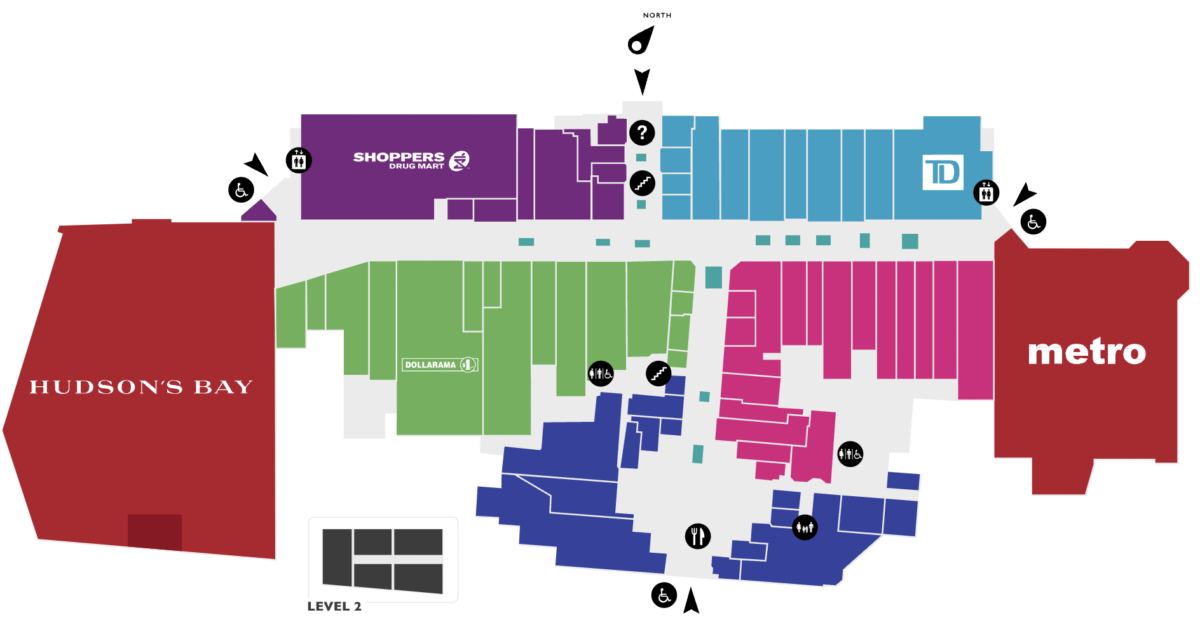
Eglinton Square floor plan, click image for interactive versionInside the new Hudson’s Bay Outlet at Eglinton Square. Photo: Google Images
New product will be shipped to the Hudson’s Bay Outlet store every two weeks from the retailer’s full-priced stores. Customers can earn Hudson’s Bay Rewards points on all purchases made at the outlet location.
Tiffany Bourré, spokesperson at Hudson’s Bay, said that no other Hudson’s Bay Outlet store locations are in the works at this time.
Hudson’s Bay’s Londonderry Mall store in Edmonton is also being downsized to one floor as reported recently in Retail Insider, with that location offering outlet pricing — renovations will be completed next month. The smaller Hudson’s Bay store will span about 60,000 square feet, half the size of the current two-level full-priced department store. Earlier this year, Hudson’s Bay had announced that the Londonderry store would be closing, and we’ve since been informed that it’s no longer the case.
This isn’t the first time that Hudson’s Bay has had an outlet division. In August of 2014, the retailer launched its Hudson’s Bay Outlet concept with a 25,000 square foot storefront at the Toronto Premium Outlets. A Hudson’s Bay Outlet subsequently opened at the Montreal Premium Outlets in the fall of 2014 in a 27,000 square foot space.
Former Hudson’s Bay Outlet at Toronto Premium Outlets. Photo: Toronto Premium Outlets via Facebook
The Toronto Premium Outlets location was converted to HBC-owned Saks OFF 5TH in March of 2016, and the Montreal Hudson’s Bay Outlet was shut in the spring of 2021. Unlike in Toronto, the Montreal location was not converted to the Saks OFF 5TH banner, which is said to now be struggling in Canada with some locations having closed.
The timing could be right for Hudson’s Bay to relaunch its outlet division. Several months ago, Nordstrom Rack shut its seven Canadian outlet stores to coincide with the company’s exit from the Canadian market.
Hudson’s Bay Outlet will also compete with TJX’s Canadian retail brands Winners, Marshalls and HomeSense given the categories carried.
Department stores have been beefing up off-price offerings in the United States as well, with Macy’s expanding its Backstage concept. US-based Target was spawned from Minneapolis-based Dayton’s which once operated upscale full-priced department stores in the Midwest. It’s not yet known if the Hudson’s Bay Company will look to introduce outlet departments to its full-priced department stores as Macy’s has done.
Future redevelopment plans for Eglinton Square. Image via Urban Toronto
It’s also not known for how long the Toronto Hudson’s Bay Outlet will remain open, given massive mixed-use redevelopment plans for Eglinton Square that include thousands of condominium units in towers. No major redevelopment plans are known to be in the works for Londonderry Mall in Edmonton.
Entrepreneur Marco Revah has plans to revive the once-iconic Consumers Distributing brand. Closed for over a quarter-century, Consumers Distributing was known for its pioneering retail model. Revah, a seasoned retail veteran, aims to breathe new life into the brand with an updated concept, Consumers Distributing 2.0, designed to cater to modern consumers and their changing shopping preferences.
Revah sits down with Retail Insider’s Craig Patterson to discuss the plans in the video below this article, which also includes a transcript.
Founded in 1957, the original Consumers Distributing quickly became a staple in Canadian shopping culture. The retailer’s unique approach allowed customers to browse products in-store or order from catalogs, with goods not already in-store being delivered to their doorstep. This innovative concept was revolutionary for its time, offering a wide array of products including electronics, furniture, appliances, and toys. However, the original brand faced challenges due to its limited product availability over time, which Revah says that he aims to tackle with his ambitious project.
Revah, a seasoned entrepreneur with a rich history in the retail industry in Canada and the US, has acquired the rights to the Consumers Distributing name. With a fresh approach, Consumers Distributing 2.0 will reimagine the retail experience by collaborating closely with third-party distributors to ensure products are readily available and directly shipped to customers. This move is a strategic response to the current dominance of e-commerce giants like Amazon and Alibaba.
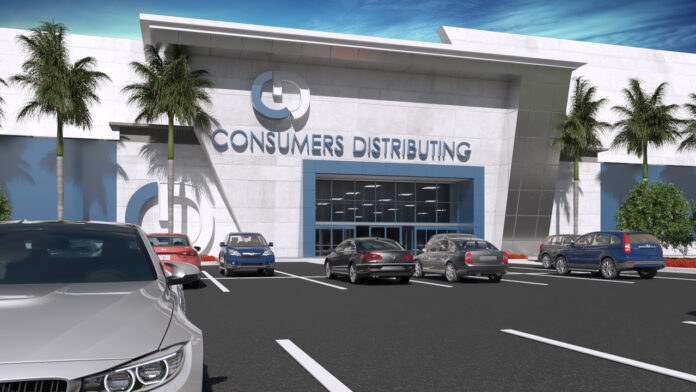
Image: Consumers Distributing
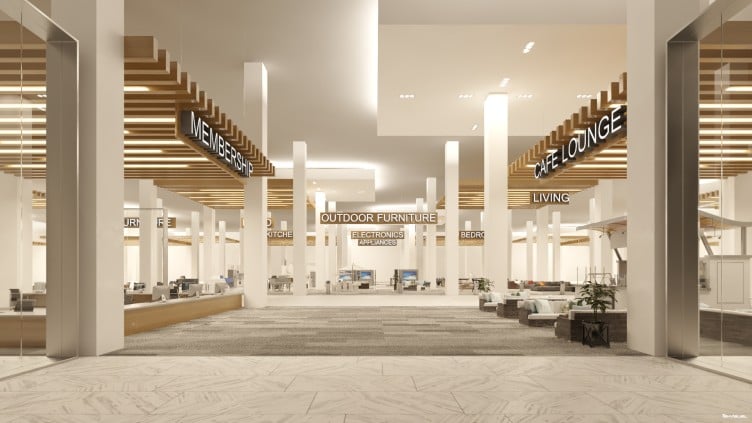
The heart of Consumers Distributing 2.0 lies in its blend of the digital and physical. Revah envisions large “big box” showrooms of up to 300,000 square feet that provide customers the opportunity to interact with products before making a purchase. These showrooms, housed in former retail spaces such as Nordstrom stores in Canada, will serve as touch-points for customers seeking a tactile shopping experience. Additionally, the brand will offer an online platform where distributors can showcase their products, creating a comprehensive shopping ecosystem.
For physical stores, Revah says he’s interested in speaking to landlords Cadillac Fairview and Oxford Properties about occupying former Nordstrom spaces. He’s also interested in former JC Penney and Macy’s locations in the US for Consumers Distributing.
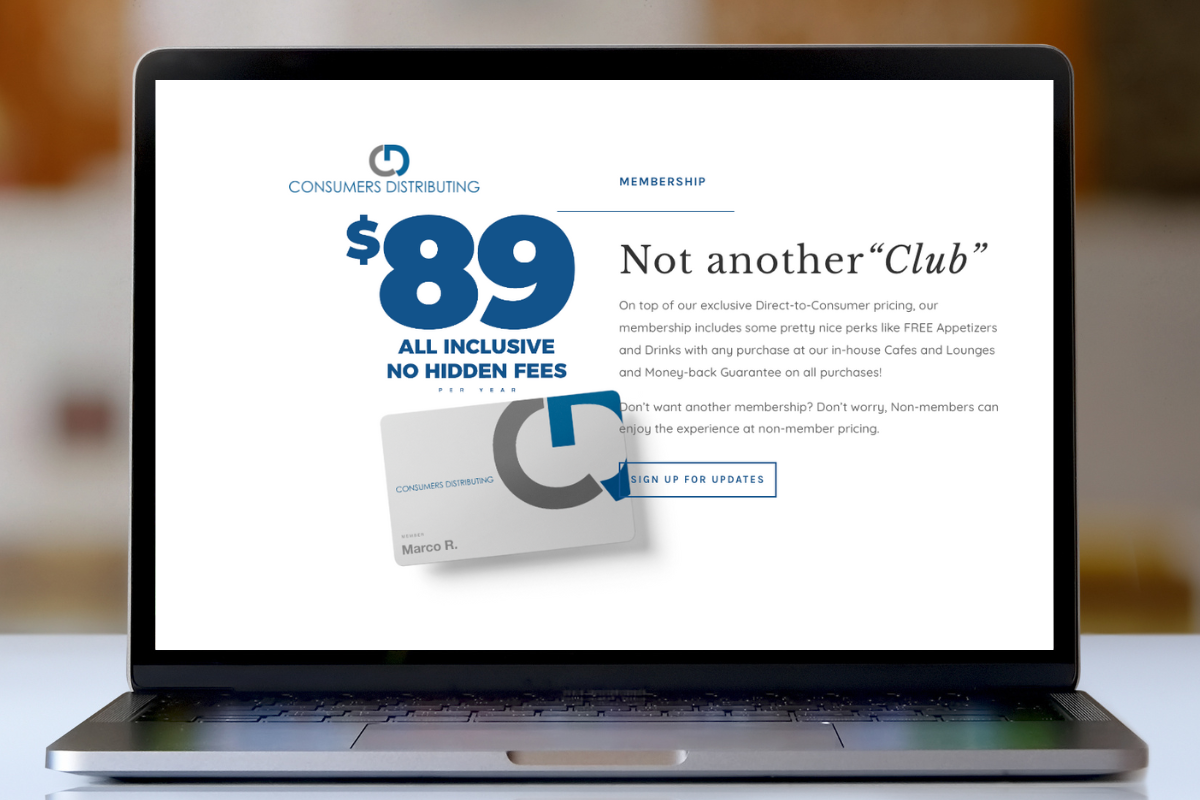
Revah’s innovative approach extends to the membership model he plans to introduce. For a one-time fee of $89, members will gain access to a range of benefits, including a 5% discount on purchases and complimentary refreshments while shopping. In a departure from traditional warehouse clubs, Consumers Distributing 2.0 will welcome all customers without membership checks at the entrance, ensuring inclusivity.
While Consumers Distributing 2.0 is gearing up for its revival, Revah’s expansion strategy targets major Canadian cities like Montreal, Toronto, Calgary, Edmonton, and Vancouver. The aim is to establish these cities as launchpads for Consumers Distributing showrooms, leveraging existing retail spaces for optimal impact. As the venture gains momentum, Revah remains open to considering purpose-built buildings for future expansion.
If you prefer to listen to the audio version, it is available below:
The Interview Series audio podcasts by Retail Insider Canada are available on Apple Podcasts, Stitcher, TuneIn, Google Play, or through our dedicated RSS feed for Overcast and other podcast players. Also check out our The Weekly audio podcast where Craig and Lee discuss popular content published on Retail Insider which is part of the The Retail Insider Podcast Network.
Craig Patterson 0:03 Welcome to the Retail Insider Video Interview series. I’m your host today, Craig Patterson, and we’re joined here today with a special guest. This is Marco Revah and we’re going to be talking a bit about the revival of Consumers Distributing in Canada and perhaps even beyond. Welcome, Marco.
Marco Revah 0:20 Oh, thank you very much. Great, very nice to meet you.
Craig Patterson 0:23 Now, we’re going to talk a bit about Consumers Distributing. It was a retailer that I think had shut down 27 years ago. Now, I think it’s been in Canada, very well known in terms of having had stores around the country. Basically, either order things, and it would be in the store or you’d have it shipped to you. How did you get the rights the Consumers Distributing name?
Marco Revah 0:45 I’m 61 right now. But when I was a kid, I’ve, I’ve shopped there. I’ve experienced the Consumer Distributing concept. I’ve been a retailer pretty much my whole life since the age of 16. I saw that there was an availability at the trademark offices in the United States and in Canada for the rights and the name of the brand of Consumers Distributing. So I purchased them. I’m looking to launch them, hopefully within the United States and Canada.
Craig Patterson 1:21 And tell me about the concept that you’re conceptualizing for this Consumers Distributing 2.0?
Marco Revah 1:29 Basically, knowing about the company – I think their downfall was that the products were not readily available. And I think by what’s happening today in our world (with the Amazons and Alibabas of the world), basically we are launching it in a different format. What we’re doing is we’re working with the distributors to hopefully ship directly to the consumers. A consumers and distributors website as well is something that we required. On our online platform, we will have the actual distributors load their products that are available within the actual website. And then we’re looking for a big boxes, that we would also be able to generate our type of showroom stores. So basically, our suppliers will ship samples to our stores and also upload on our site. Our big boxes, we’re looking to take over some of Nordstrom or Macy’s or JC Penney’s – some stores that have closed down. We’re looking for to 200,000 to 300,000 square foot where we’re able to show product. Basically have the consumer walk in and see like if they were going to a trade show, and go into each category with each brand.
Marco Revah 3:02 Nobody will be able to walk out with anything, but basically they can buy the product and get it shipped from the distributor to the consumer. If there’s a return, then the consumer will ship it back to the distributor, and so on and so forth. So we won’t have a lack of merchandise or we won’t have a problem with unavailable products. And I think that will be hopefully our success. When I was reading about a lot of advertising or I would say a lot of ads of what the original concept was about – the biggest problem was merchandising and getting the merchandise that was allocated to the consumer. So now, I think that we’ve cured this problem and looking forward to opening pretty soon, getting our big boxes together, opening up our market site on online. And that’s how this this hopefully this new Consumers Distributing format stores or concept will hopefully be launched.
Image: consumersdistributing.com
Craig Patterson 4:12 Very interesting. Now, what sort of product categories have you thought of that would be part of these new Consumers Distributing stores (both the physical stores – which are acting as showrooms – as well as online)?
Marco Revah 4:23 We’re thinking only going for ‘hard goods’. We’re not going for ‘soft goods’: meaning we’re not doing any clothing. We’re not doing any shoes or jewelry or or apparel. We’re going into beddings of furnitures and fixtures and equipments and instruments. Basically, we’re going from air conditionings to ovens and refrigerators and TVs and stereos and, and everything that’s pretty much ‘hard goods’ that people don’t normally walk out of stores with.
Craig Patterson 4:50 And these would be in terms of the physical showrooms quite large. You’re saying two to 300,000 square feet. Let’s talk about Canada a bit more. You’re looking for some larger retail spaces to do this, right?
Marco Revah 5:03 Yes. So because I’ve actually had a conversation with Oxford, I’ve seen that, you know, there’s a Nordstrom that has shut down in Yorkdale, I think, and in other locations in Vancouver, etc. So we’re looking to either take over those types of big box stores and convert them into Consumers Distributing stores.
Craig Patterson 5:22 Right. And you said the United States as well with JC Penney, which is I think closing some stores Sears – I don’t even know if it exists in the states anymore – or Kmart or even Macy’s, right?
Marco Revah 5:32 Yes. So well, Sears, we were looking into Coral Gables. There’s a Simon project where there’s also we’re looking at JC Penney’s here in New York. And these are stores that have been closed down for a little bit. One of them for a couple of years. So we’re looking to redevelop these big boxes into these Consumers Distributing big box stores. Yeah,
Craig Patterson 5:53 And so the online and in store would be, I guess, connected in terms of you’d have third party distributors that would be part of this retail concept, they would be showcasing their product in the physical stores, but also would have a very robust e commerce presence as well as part of this ConsumersDistributing.com.
Marco Revah 6:12 Yes, ConsumersDistributing.com, will be set up as a marketplace. It’ll be like an Alibaba and Amazon where the actual distributor, or the actual supplier, will load up the products within our site. People will be able to shop online, and at the same time, they’ll be able to visit a store if they would like to see the actual goods. So they’re going to work both in conjunction with each other, yes, then that’d be our concept.
Craig Patterson 6:45 And you were looking at sort of a warehouse club concept with a membership. Tell me a little bit more about how that might work.
Marco Revah 6:51 We’re actually offering an $89 membership. The $89, it’ll be a one time membership. We are not looking to charge it annually, like most of the people do. It’ll be a one time membership, where you’ll get a 5% discount. But at the same time, we didn’t want to limit the consumer or the customer coming through the front door. We would not stand there like a Costco who would actually sit there and say, “Show me your card before you go in”. We’re going to let them all in. At the same time when you buy I don’t know, sofas, bedroom, TVs, etc. And you’re looking at spending $1000s, you’ll save an automatic 5% on all the goods being a member of Consumers Distributing. And hopefully, people will see a lot of savings. Because don’t forget that we’re trying to get a distributing price to the consumer. And that’s why we’re called Consumers Distributing. That’s, we match the name, the name says it all. And I love that.
Craig Patterson 7:54 it makes sense. That makes sense. And I guess for this $89 One time charge, he probably the consumer would save that if they’re buying a sofa, they’re probably in that 5% discount.
Marco Revah 8:07 Yeah, it’ll be, it’ll be fantastic. And not only will they be getting that 5% discount, they’ll also they’ll also be getting all the amenities that we’ll be offering within the store as free. So basically, we’ll have stations within the stores giving drinks and coffees. Coffee cost $7 now. We’re going to have a few little departments within the departments where we’ll be catering to members. And we’ll be servicing free coffees, free drinks, free appetizers, etc, we want to make it really feel, you know, beautiful within the store and feel the customers will welcome to sit down. And actually one member would be able to bring any family member with him. So we’re not going to attach it just to one person, we’ll be attaching it to the the to wherever he comes in with really very, I think it’ll be very warm and welcoming to the to the consumer.
Craig Patterson 9:06 And so this will be an experiential physical concept, I guess to drive people into look at the product. Obviously people can shop online for various things. There will be a Consumers Distributing website with product on it, but you’re also looking at creating this physical experience for consumers to I guess, experience the product and to engage with the retailer not just online.
Marco Revah 9:26 Yeah, you know, the I’ve done trade shows my whole life. So it would be like going to the electronics shows or the furniture shows where you have different suppliers we’ll have hopefully Samsung will have Yamaha will have will have a whole bunch of beautiful brands that will showcase their actual products. Hopefully we’ll do some some of the companies will hopefully do some type of trunk shows within our concept. That you know they’ll have the representatives there actually describing the product. It’ll We’ll be getting to know the product more, more details more feeling touched on the product before you purchase it – if that was an option and if that you if you wanted to do that. That’s what I think will be more than a little better to the consumer than just buying online and not getting all the details. Hopefully we’ll be able to offer that ‘touch and feel’ environment when you’re buying something either at the store or online. And that’s what we believe will be successful on both ends of what we’re doing here.
Craig Patterson 10:36 Right now. Let’s talk about Canada again. These are going to be large stores as you’ve conceptualized them. Would you see one large store per major city, like in Edmonton, Calgary, Winnipeg, Vancouver? Or do you have any would you see interesting physical retail expansion?
Marco Revah 10:54 I would think that I’d like to go into the major areas, I would like to go into Quebec, which would be Montreal. From there, I’d love to go into Toronto. And then Calgary-Edmonton would be really good. And going into Vancouver. I think that our secondary market would be the Saskatchewan, the Winnipeg, the Manitoba – I think we would want to not go there at the very, very beginning. But eventually branch out there if we see that our volume would be there – if there’s the population or that we have the demographics that would be strong enough to to take a big box store like that. But we’ll also you know, we’ll we’ll be supplying online. So hopefully if someone could make a trip to Calgary from Saskatoon. But at the very, very beginning, we want to hit the big cities.
Craig Patterson 11:49 Yeah. And looking for existing real estate. Do you think a purpose built building could happen? I mean, that’s going to be a bit more money, I think to to build, right?
Marco Revah 11:57 Yes, you know, Nordstrom cost like $65 million to build the Nordstrom stores. To build these type of big box stores, we’re talking about $50 million. I’ve heard some stores you can go up to I heard one in San Francisco went up to $150 million in cost to build out. So some developers are looking to redevelop some of their territory, the buildings into you know, residential into some landlords are looking to bring those stores within the shopping centers, really divide them within the mall, and make it like a pass through. But we were trying to offer a cure into trying to keep those stores alive, and hopefully generating enough volume to be beneficial for the landlord. For us to keep the building the way it is to modify it for our use. And then to hopefully branch out and build our own, eventually.
Craig Patterson 12:59 This is exciting stuff will will continue watching what’s going to happen with Consumers Distributing. Can you tell us a bit about yourself? You’ve got an extensive background in the retail industry you mentioned you’ve been kind of at it since you were 16. And you you’re over 60 now. Tell us a bit about how things got started with you and what you’re up to right now. Because you’ve got Lindbergh, tell us a bit more about all of this here.
Marco Revah 13:21 My life started in the retail industry where I was 16 years old. I moved into the United States and Luciano Benetton and then we created this concept called Play life. And at the time, it was Benetton sports system. They own Rollerblade, Nordica, etc. and we merge these things. And actually, I did Lululemon type of athletic wear before Lululemon even came out. I was probably ahead of my game – I was maybe 10 or 15 years ahead of them. So having said that, once I did Benetton – after that I turned around and I did some Charles David and the guest voice with the Maurice Marciano and Charlie Malka. I developed the Charles David Shoes and opened up some stores across Canada and also in the United States. And from there I, you know, I always look for what’s new. What’s next. I developed also a lot of stores for BCBG with Max Azria. And then I got into these good people up in Denmark, called the PWT group. And they’re the largest Scandinavian menswear group. They were 66% owned by Lego. And some financial banks and companies were really good. I’m actually still with them today. Basically, they’re been in business, I think, since 1910 from father to son. They have hundreds of stores all over all over the world and in Europe. And so from there, I continue to venture out because I always like to see what’s new and what’s next. I turned around and met the people from YoYoSo went to China met the family, actually lovely people, they turned around and expanded 1200 stores all over the world. I took a licensing and distribution agreement for the United States, we started to expand here in the United States for that. And having said that, at the same time on the sideline created CandleTime, which is a candle concept store. And like I said, you know, I’m always looking for what’s new, what’s next. And here I am today with the YoYoSo banners, the Lindbergh banner, the CandleTime banner, and Acutus Eyewear as well. I’ve teamed up with Mrs. Amal Yosuf, which is a very, very fine doctor. Within she’s in the Vegas market. I have many stores in Vegas. So that’s where I met her. And when I started Acutus, I worked with her as a matter of fact, we opened the first acritas eyewear over here at American Dream today, which is a 3000 footer. This is where I’m talking to you from New York City. And we opened up above these four banners here at American dream with the with the Ghermezians. And there’s we’re looking to, we’re looking to expand also within the United States. All those brands, and I ventured out into the Windwood area down into Miami. YoYoSo, we’ll open up a 15,000 footer with introducing the YoYoSo Cafe, which also hasn’t done in any of its stores. But because the the footprint was almost 12,000 feet, that there was room for 2000 foot cafe that we’re going to launch out at the same time. So again, I don’t know when I’ll stop, but I’m always looking for what’s new, what’s next, I’m always looking to add something.
Marco Revah 18:19 I haven’t stayed in only one industry, which is the menswear, where I’ve actually started in. So I’m a Sagittarius. So I don’t know I get I get bored real fast. And I looking for what’s new. And what’s next. And like I said, here I am today. I think my my latest one is what we’re talking about today, Consumers Distributing. And that’s what I hope will will be the billion dollar mark for me. Because I’m thinking that those stores will average between $2-300 million in sales. I won’t hit the the IKEA border where they’re doing three 400 million in sales. I don’t think I’ll be at the Walmart level who are was doing $590 million this year, or Target is doing $190 billion. But I think the Walmart is at $590 billion, Target is at $190 billion. I’m hoping to do just a few and I’m hoping that this is the concept where I’ll be over the billion dollar mark in no time. I’m thinking four department stores and a few memberships. I should be at the billion dollar mark. And then from there, I hope to go on an IPO and expand the brand aggressively. And I have the people for that, my son also does mergers and acquisitions with his law firm. And that’s where I’m hopefully headed.
Craig Patterson 19:47 This is a very exciting stuff. We’ll be following up a bit more of the story here for sure as things progressed. So thank you so much for joining us today. This is Marco Revah. He’s an entrepreneur and retail veteran who’s reviving Consumers Distributing here in Canada and the United States. Thank you so much for joining us here, Marco.
Marco Revah 20:06 Thank you very much. It was wonderful talking to you.
Craig Patterson 20:09 Thank you so much. Thank you so much, everyone. Whether or not you’re watching this today, or listening to this or one of our podcast channels. This is Retail Insider – The Video Interview series. I’m your host, Craig Patterson. I’m the founder and publisher and CEO of Retail Insider Media. Thank you so much. Again, be sure to subscribe and whatever platform you’re on here or want to be on take care and bye for now.
Subscribe, Rate, and Review our Retail Insider Podcast!
Drop us a line at Craig@Retail-Insider.com. You can also rate us in Apple Podcasts or recommend us in Overcast to help more people discover the show!
Background Music Credit: Hard Boiled Kevin MacLeod (incompetech.com). Licensed under Creative Commons: By Attribution 3.0 License. http://creativecommons.org/licenses/by/3.0/
Retail Insider is streamlining its Canadian retail news from around the web to include a handful of top news stories that can be viewed quickly during the day. Here are the top stories from the past 2 days.
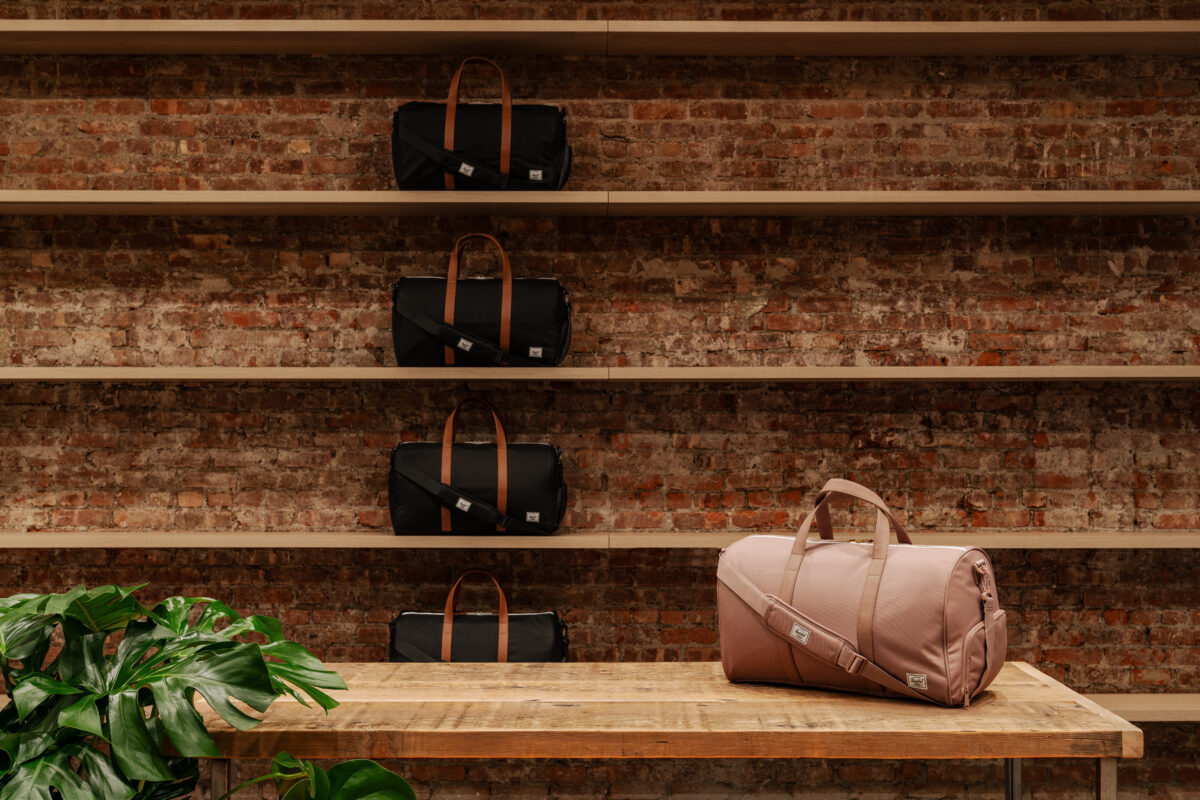
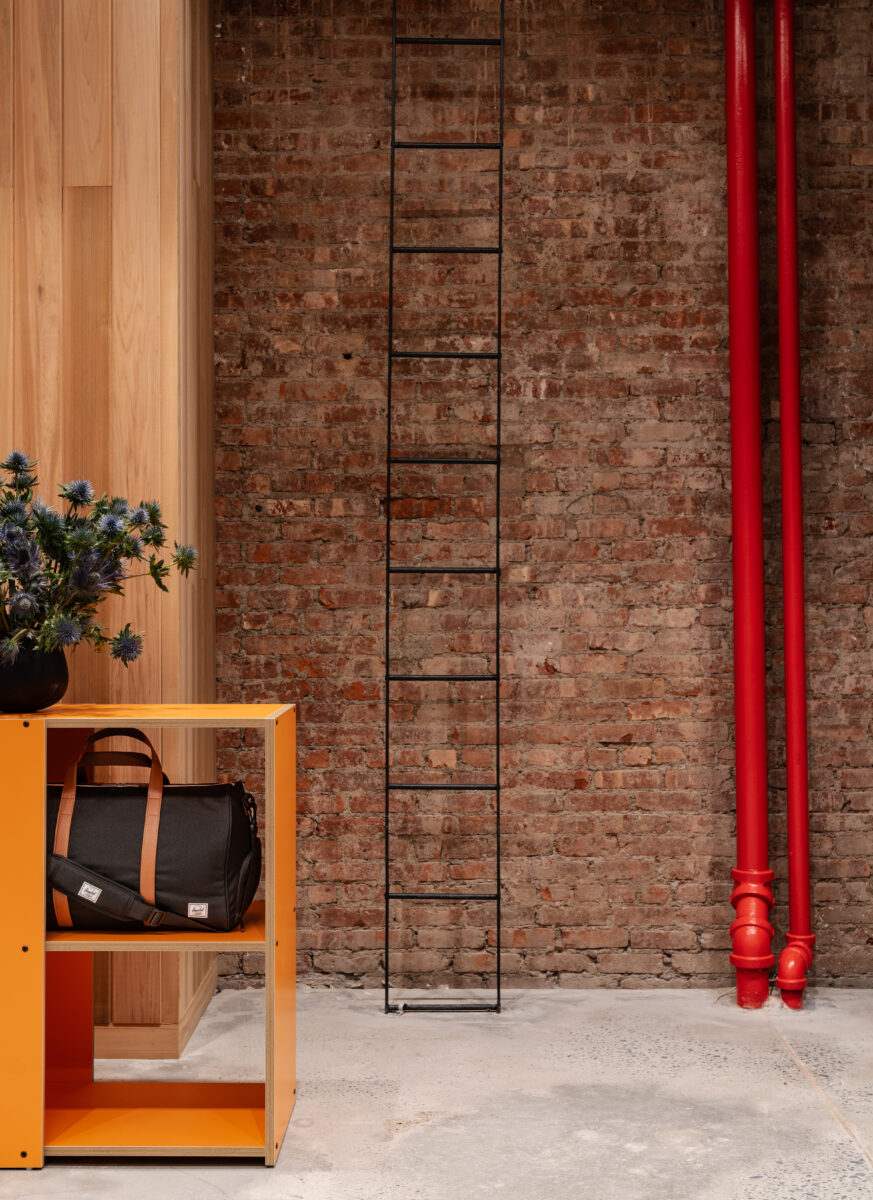
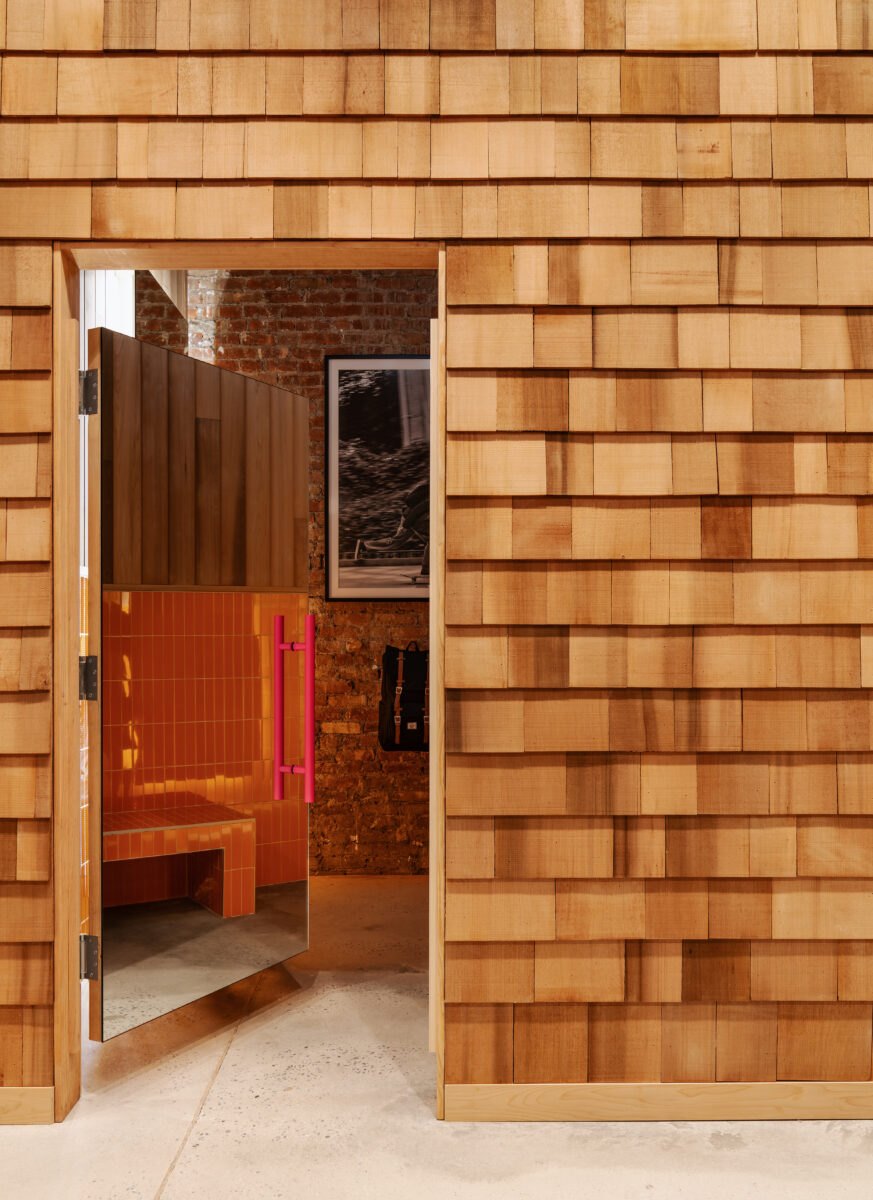
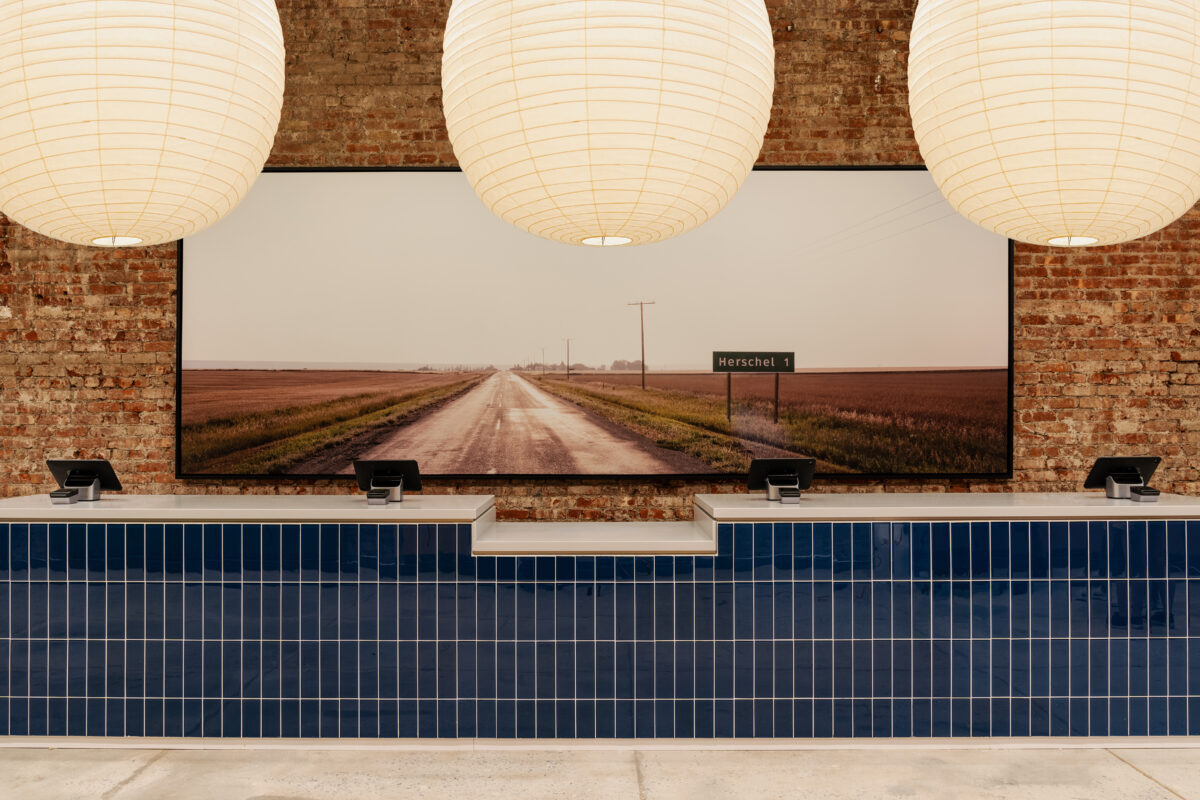
Herschel Supply Co Soho at 543 Broadway in NYC (Image: Herschel Supply Co)
Vancouver-based Herschel Supply Co., the renowned lifestyle and travel accessories brand, has opened two new stores in the US – in SoHo in New York City and Santa Monica, California – bringing the retailer’s total footprint to 13 stores in North America.
Eight of the 13 stores are in Canada – four in British Columbia, two in Alberta and two in Ontario.
Lyndon Cormack
“Opening a store in SoHo is a testament to Herschel’s growth and our commitment to sharing our vision with the world. It’s an achievement that stands tall in our brand’s timeline,” said Lyndon Cormack, Co-Founder & Managing Director of Herschel Supply.
“It’s always been definitely a dream of ours to have a store in SoHo which is arguably the number one fashion destination in North America if not, some would argue, the world. It’s a real milestone for the brand to be able to plant our flag on a very, very important district on an important street with what we deem as a very epic location.
“New York since day one has always been our number one spot for e-commerce, our biggest area for sales. As much as we have opened a lot of stores in our own backyard in Canada, New York’s obviously been a very, very important one for us as a brand since inception.”
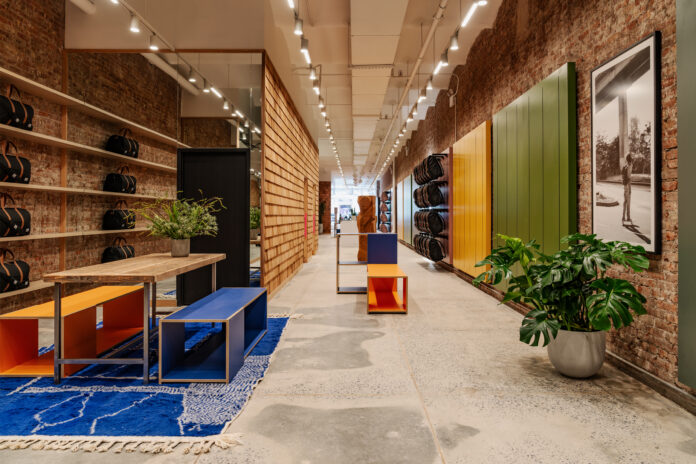
Herschel Supply Co Soho at 543 Broadway in NYC (Image: Herschel Supply Co)Herschel Supply Co Soho at 543 Broadway in NYC (Image: Herschel Supply Co)
The company’s first store was in 2018 in Gastown in Vancouver.
The new SoHo flagship store is at 543 Broadway in New York City. The dual-entrance store stretches from Broadway through to Mercer Street, offering customers an immersive shopping experience that brings together the best of Herschel Supply’s classic products and its exclusive Studio Collection.
“Since launching in 2009, Herschel Supply has solidified itself as a leader in the bag category and has continued to build upon its success through unique storytelling, category expansions and one-of-a-kind collaborations. The new store marks the continuation of their ambitious retail expansion plans for 2023, following recent store openings in Santa Monica and NYC’s Flatiron district,” said the retailer.
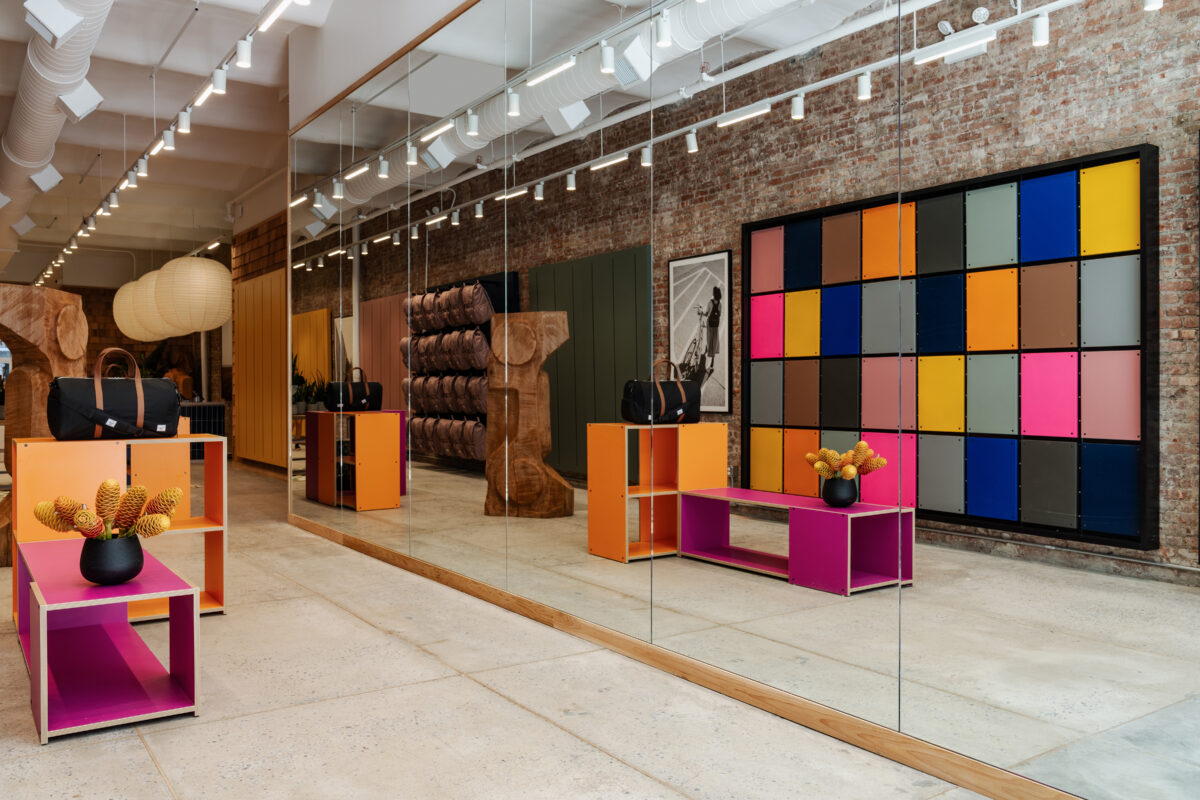
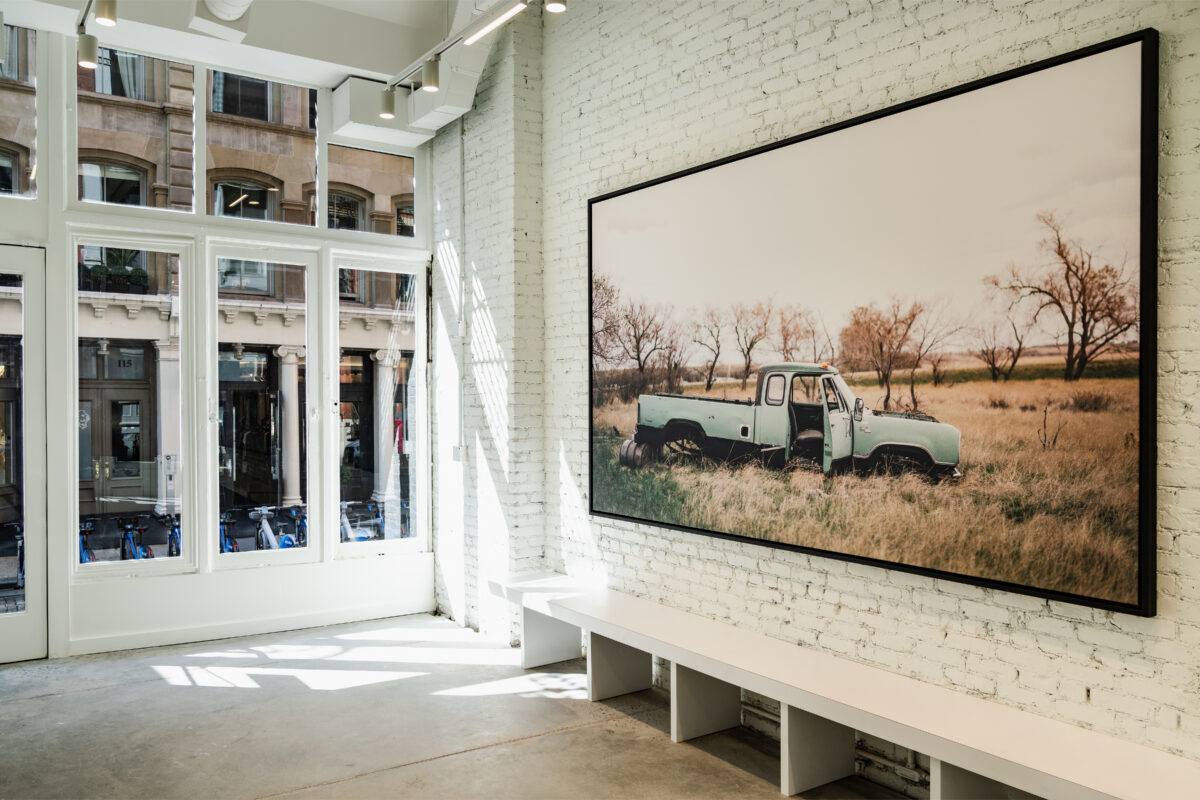
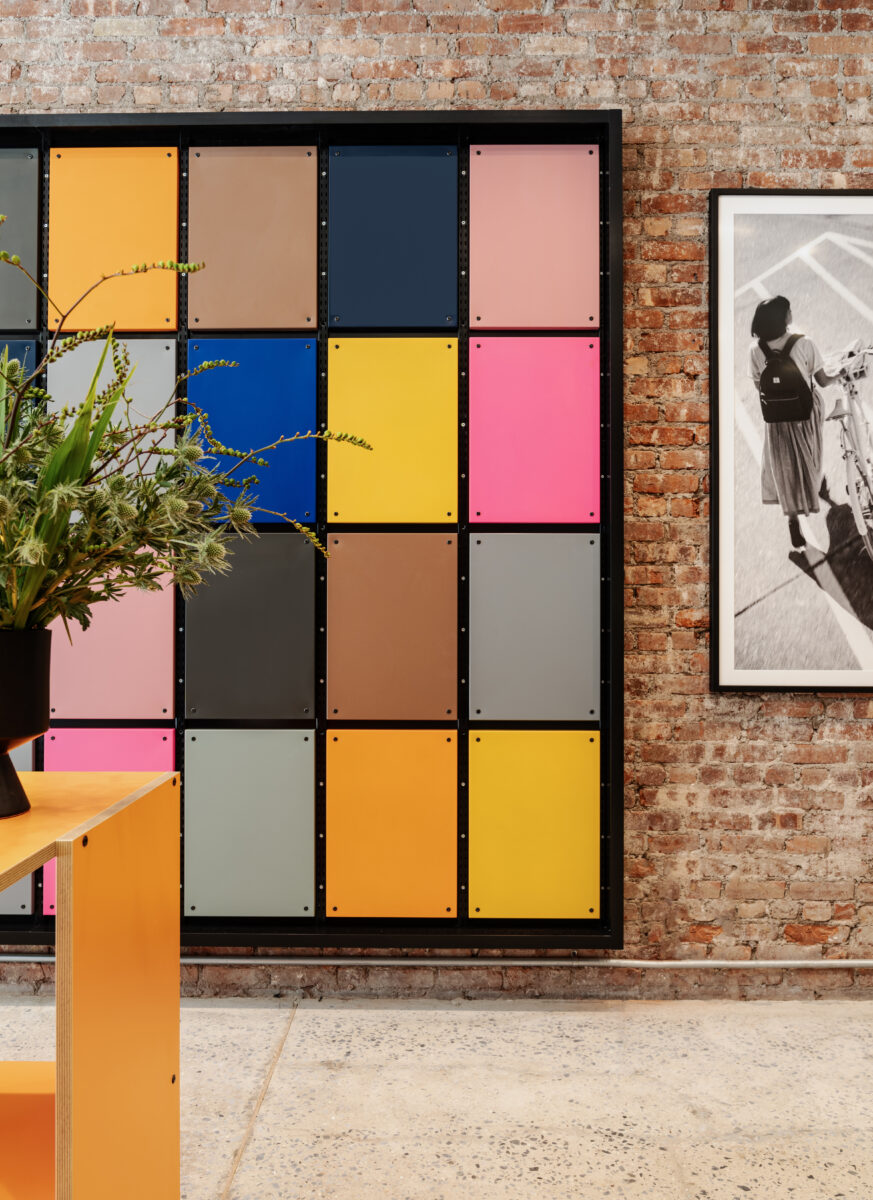
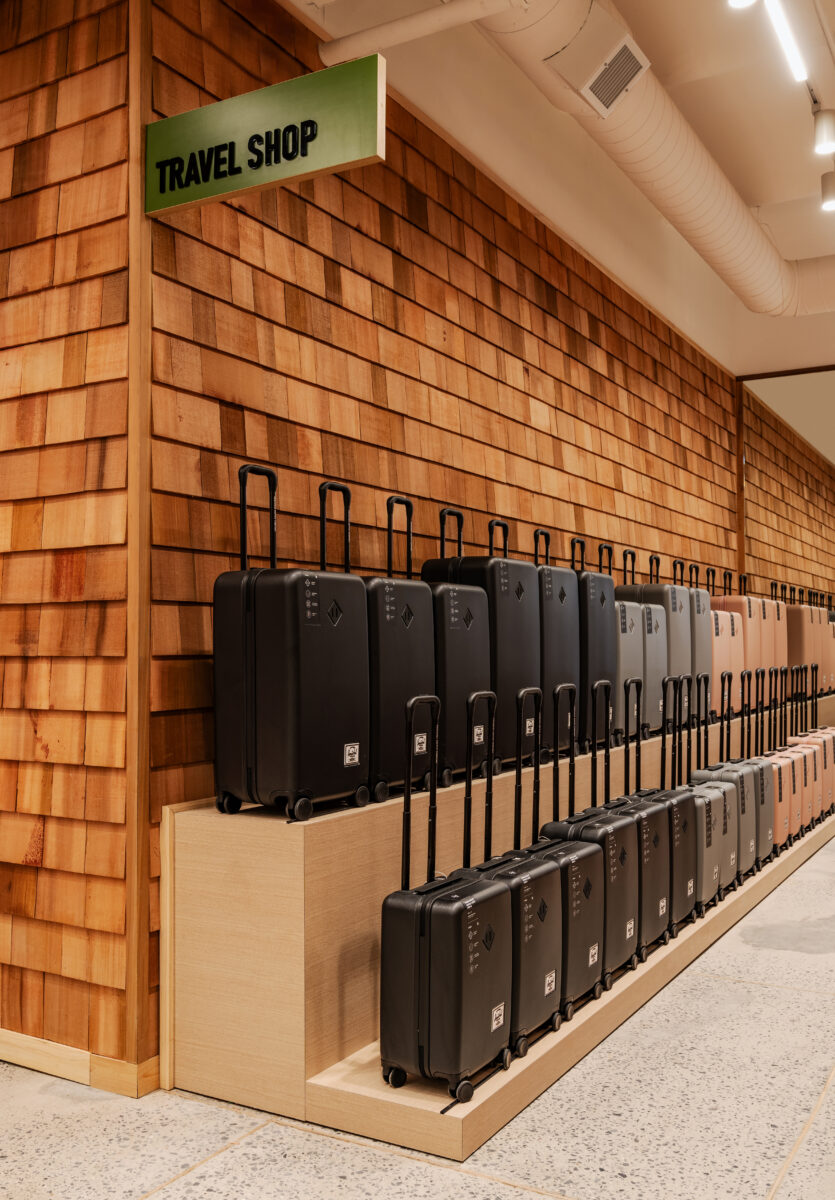
“Paying homage to the brand’s roots in Vancouver, BC, the store’s design incorporates natural western red cedar and granite boulders in its “from the coast” theme. The space features custom-designed cedar sculptures crafted in Vancouver and art by photographer Stephen Wilde. These unique touches provide a serene atmosphere for customers to explore Herschel Supply’s extensive range of products.
“The choice of location for this flagship store was intentional, with the rawness of the space playing a significant role in its selection. The concrete floors and exposed brick walls have been stripped of a century’s worth of flooring, paint, and wall coverings to reveal their original form. The resulting patina is a reminder to customers that they are in the heart of New York City.”
Herschel Supply Co Soho at 543 Broadway in NYC (Image: Herschel Supply Co)Herschel Supply Co Soho at 543 Broadway in NYC (Image: Herschel Supply Co)Herschel Supply Co Soho at 543 Broadway in NYC (Image: Herschel Supply Co)
Cormack said in 2019 the company had a pop-up in SoHo at Broadway and Grand in New York.
“That was quite an expansive store of 5,000 square feet. Pre-pandemic we were ready to start our retail journey. We were considering opening up maybe sooner but then the pandemic hit and we sort of slowed ourselves down in relation to retail openings,” he said.
“The reality is that’s behind us and so we are very excited to have a permanent store now in SoHo.”
The retailer said Herschel Supply’s new flagship store distinguishes itself by housing the largest selection of the brand’s classic products at the Broadway entrance, while the Mercer Street entrance showcases the Herschel Supply Studio Collection—an elevated line from the brand’s design studio. Their apparel line, Herschel Supply Uniform™, is also available, as well as their popular range of travel options including luggage, duffles, and accessories.
“The U.S. has always been Herschel’s biggest territory,” said Cormack. “It’s been an important market for us. When we started the brand, as much as we are Canadian and our headquarters are in Canada, we actually did our first-ever trade show, which is generally speaking going after wholesale customers, but our very first trade show we actually did was in New York as well.
“The goal from day one from this brand was to be able to spread our wings and be a global brand and be able to bring our goods to various customers whether it be in the U.S., Canada or around the world.
Herschel Supply Co Soho at 543 Broadway in NYC (Image: Herschel Supply Co)Herschel Supply Co Soho at 543 Broadway in NYC (Image: Herschel Supply Co)Herschel Supply Co Soho at 543 Broadway in NYC (Image: Herschel Supply Co)
“I think good retail whether it’s the U.S. or Canada or elsewhere is on fire. It’s amazing. It works exceptionally well. Stores are busy. People are using not only stores as retail stores but other gathering spots . . . When brands get it right, the stores are very, very successful.
“We’re early in our journey both with existing stores and future openings, we now need to make sure we’re installing retail best practices in our own stores and our own fleet. We finally have one that’s big enough that we can actually make significant learnings and changes to how we operate as a business.”
He said the Santa Monica store is the company’s first store on the West Coast of the U.S. First store in California. First store in Los Angeles.
“We’re going back to what I foresee is a rejuvenation of the Third Street Promenade which was hit pretty hard during the pandemic. But we found an epic location in the heartbeat of the 1400-block. It’s the only sub 2,500-square-foot location on the 1400-block of the Promenade—where stores are usually six, seven, eight thousand square feet—and we were able to get it, which is really exciting for us,” said Cormack
“Otherwise we wouldn’t be there because the stores are six, seven, eight thousand square feet. Not what we need for a retail store.”
Thousands of business owners across the country have signed a petition by the Canadian Federation of Independent Business (CFIB), calling for an extension to the current Canada Emergency Business Account (CEBA) repayment deadline.
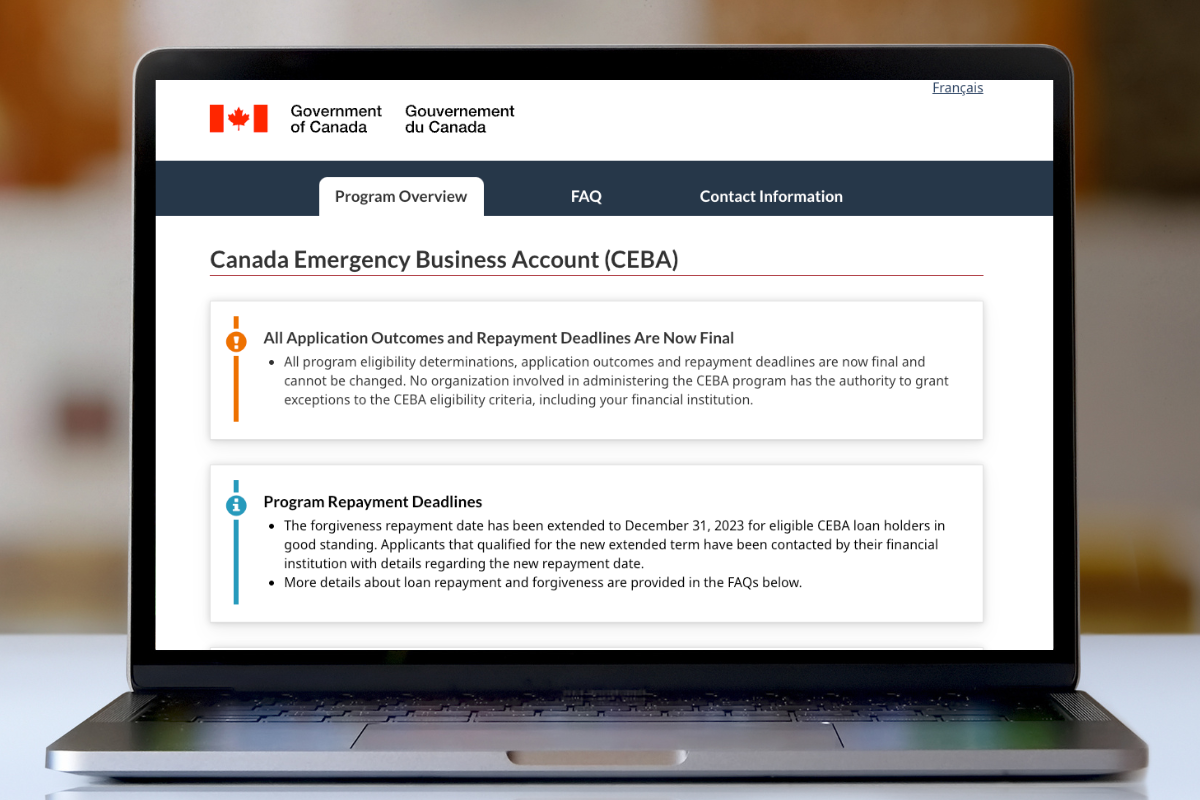
The current deadline is December 31 and if the CEBA loan is not repaid by then, small business owners will lose the up to $20,000 forgivable portion and pay the entire amount at a five per cent interest rate.
While the issue has gained much media attention in recent months, one aspect of the situation is relatively unknown.
Many small business owners are now discovering that in the fine print of the loan many of them unknowingly provided a personal guarantee on the loan, meaning even if the business closes its doors the owner is responsible personally for the debt.
Image: ceba-cuec.ca
That’s raising fears that this could lead not only to more business closures in the country but also to more personal bankruptcies.
In this video interview, Dan Kelly, President/CEO/Chair of the CFIB, explains the situation and the potential consequences.
Recently, a joint letter was sent to Deputy Prime Minister Chrystia Freeland calling for more time to repay CEBA loans while keeping the forgivable portion. More than 250 business associations from coast to coast and across all sectors signed on. CFIB’s research shows that one-fifth of all businesses in Canada—nearly 250,000 small businesses—could be at risk of closing their doors next year unless the federal government changes the deadline.
CFIB is pushing the federal government to extend the repayment deadline for the CEBA loan to the end of December 2025 or at least 2024.
The Video Interview Series by Retail Insider is available on YouTube.
Connect with Mario Toneguzzi, a veteran of the media industry for more than 40 years and named in 2021 a Top Ten Business Journalist in the world and the only Canadian – to learn how you can tell your story, share your message and amplify it to a wide audience. He is Senior News Editor with Retail Insider and owner of Mario Toneguzzi Communications Inc. and can be reached at mdtoneguzzi@gmail.com.
Also check out the other series offered by Retail Insider, including The Weekly podcast and The Interview Series, which are both available on Apple Podcasts, Stitcher, TuneIn, Google Podcasts, or through our dedicated RSS feed for Simplecast and other podcast players.
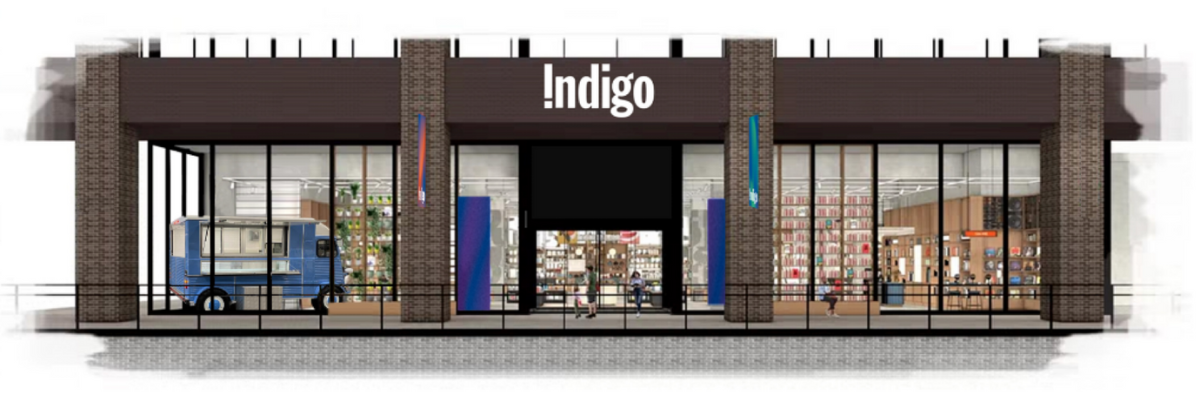
Indigo Books & Music is set to open a new Indigo banner store in downtown Toronto, with the introduction of an urban concept store that will be opening at The Well.
The 16,000 square-foot store is scheduled to open in fall 2023.
Peter Ruis
“We know our customers love the current Indigo stores, but we also know the world is changing and people are craving more meaningful experiences that get them closer to their passions,” said Indigo CEO Peter Ruis.
“We are thrilled to offer our customers an elevated experience that is much more than a shop. This will be a destination and social meeting place, celebrating the best of what Indigo does; Books, Music, Fashion, and Culture – it will be a total lifestyle emporium.”
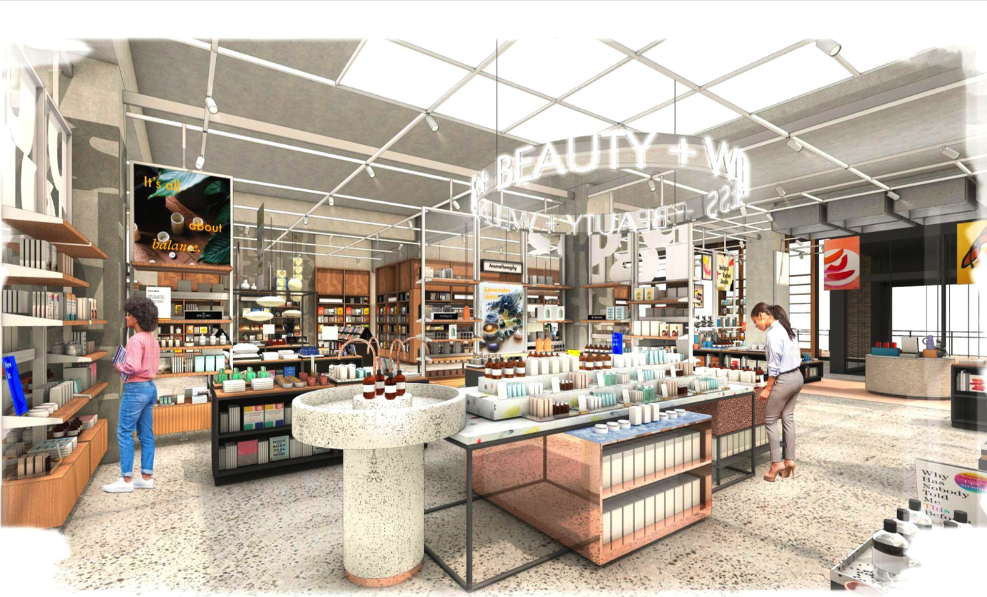
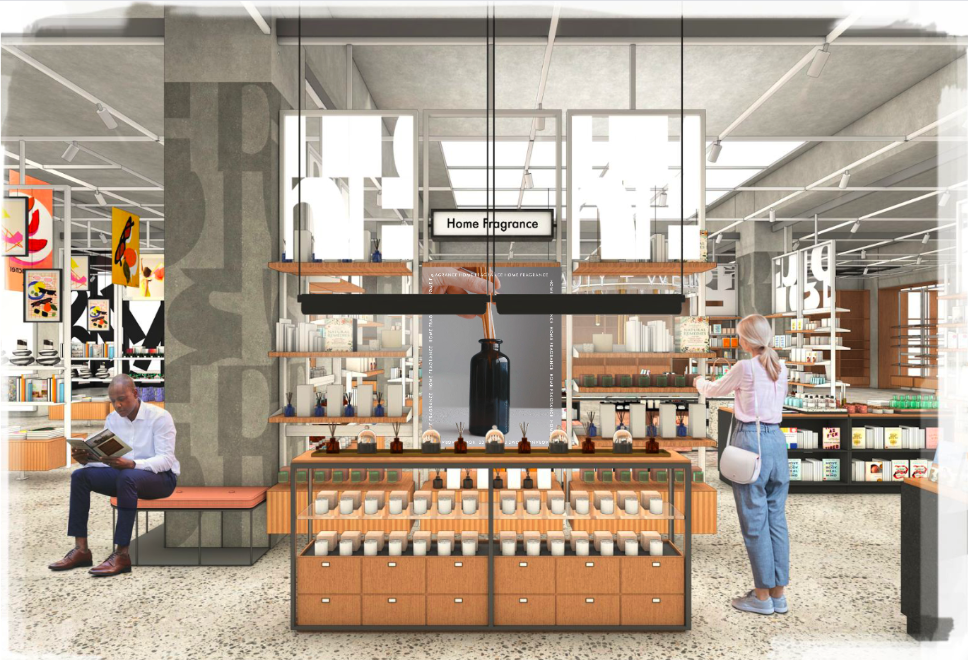
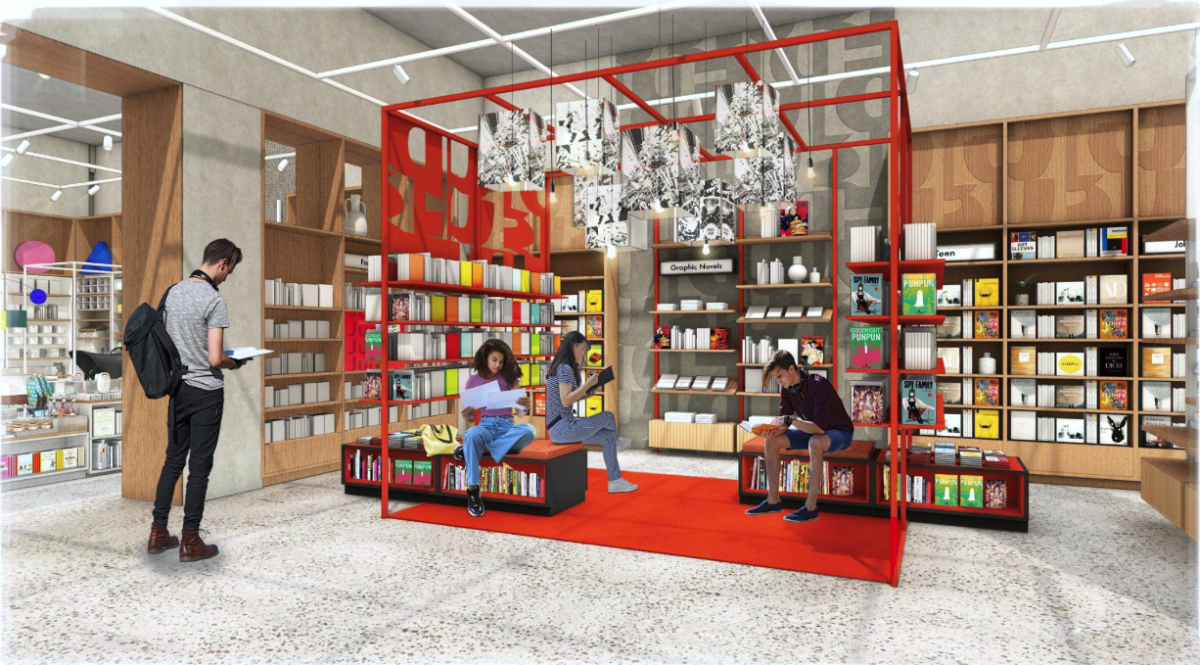
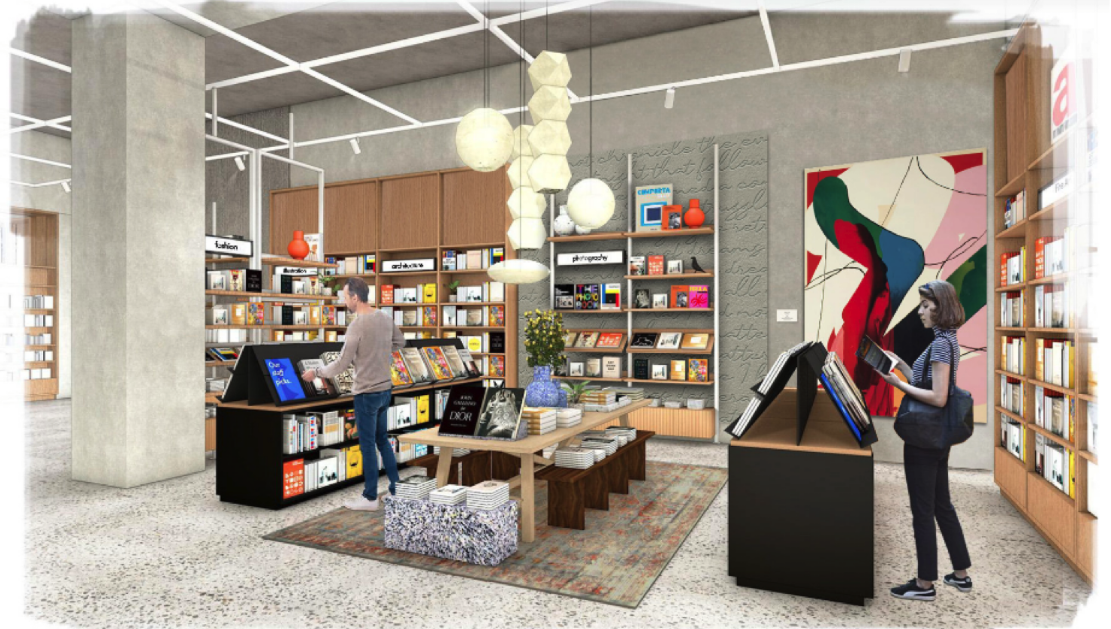
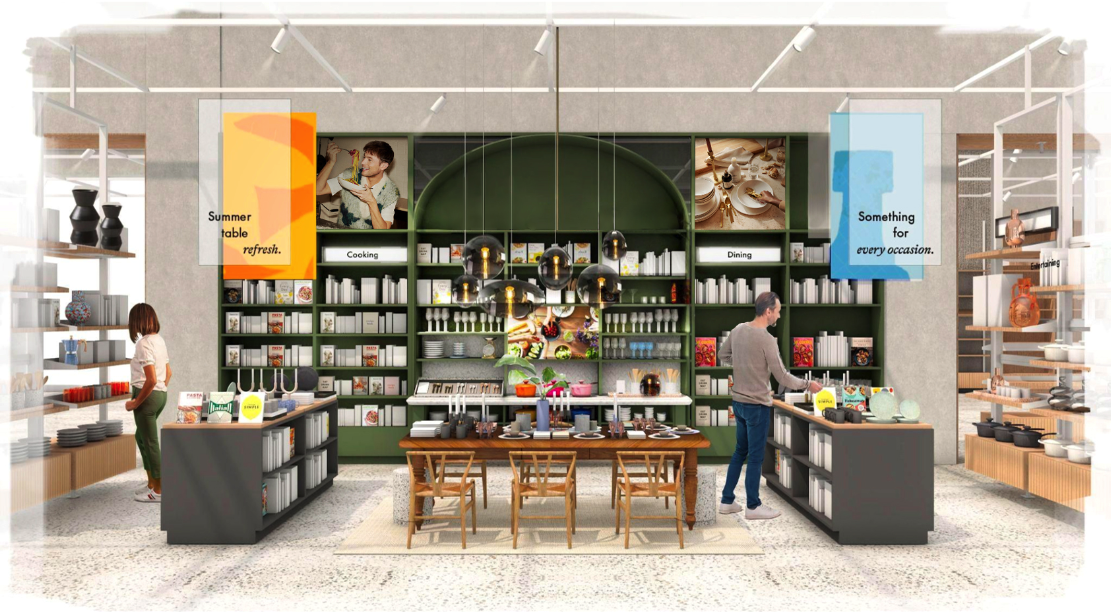
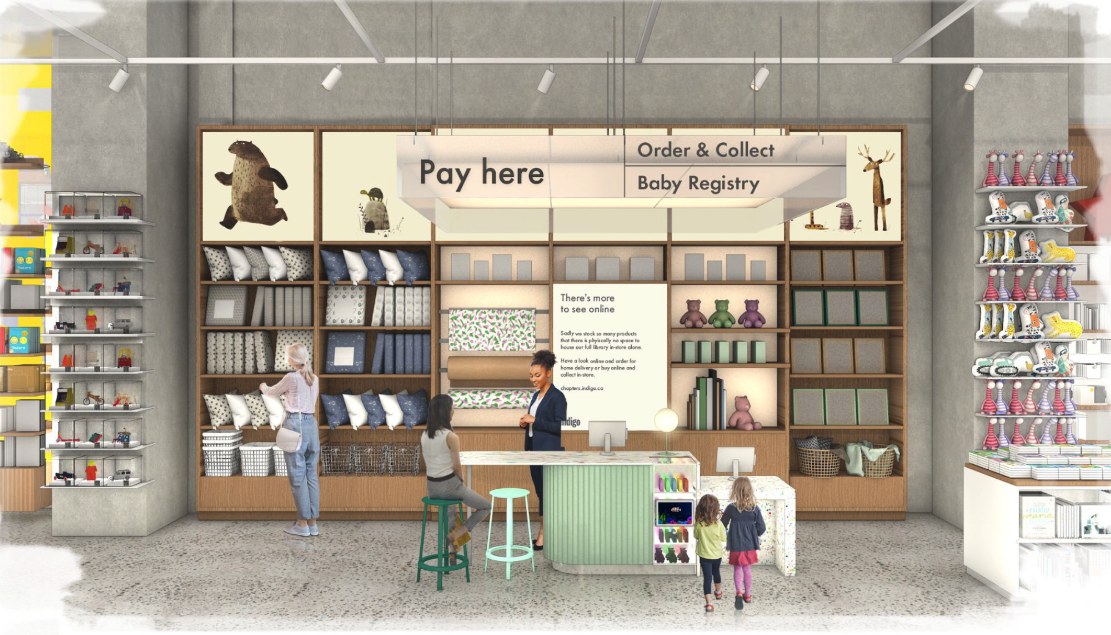
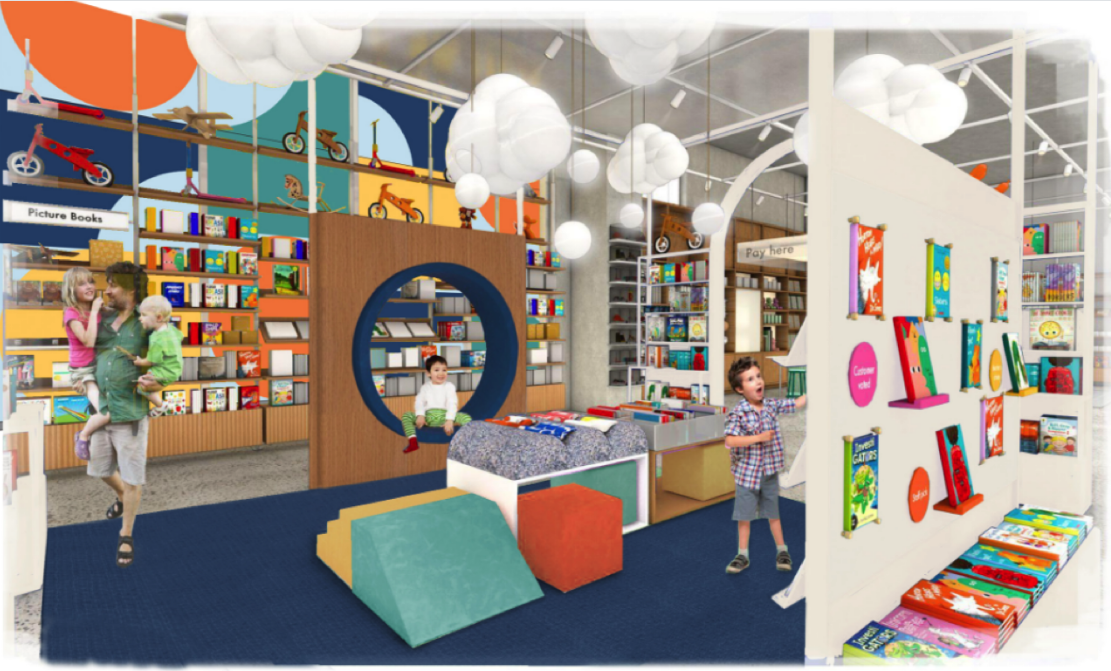
Indigo at The Well in Toronto (Rendering: Indigo)‘Wellness’ Section in Indigo at The Well (Rendering: Indigo)
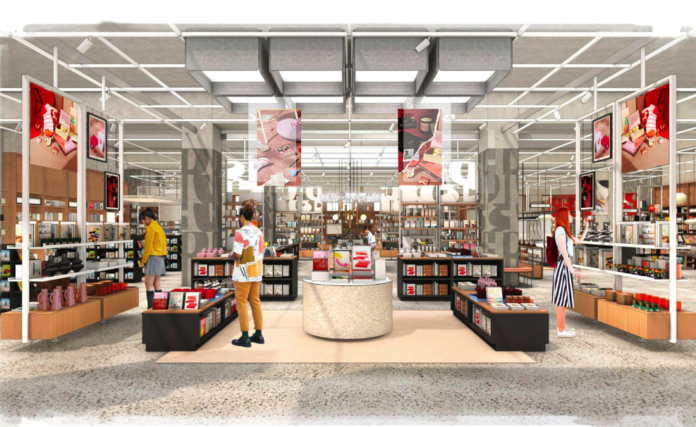
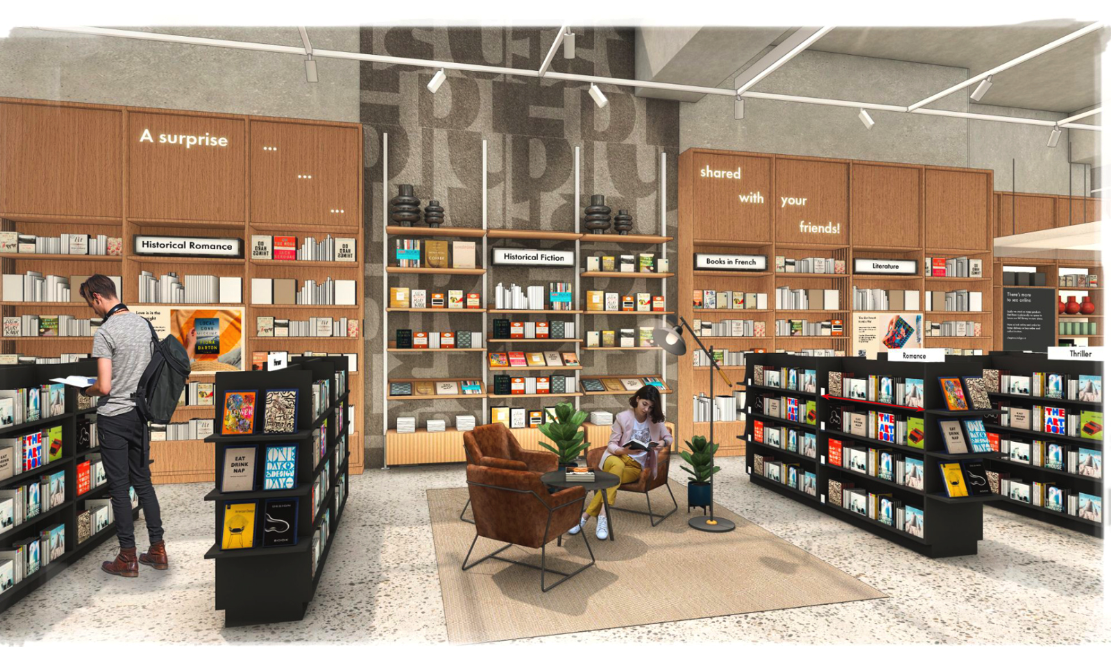
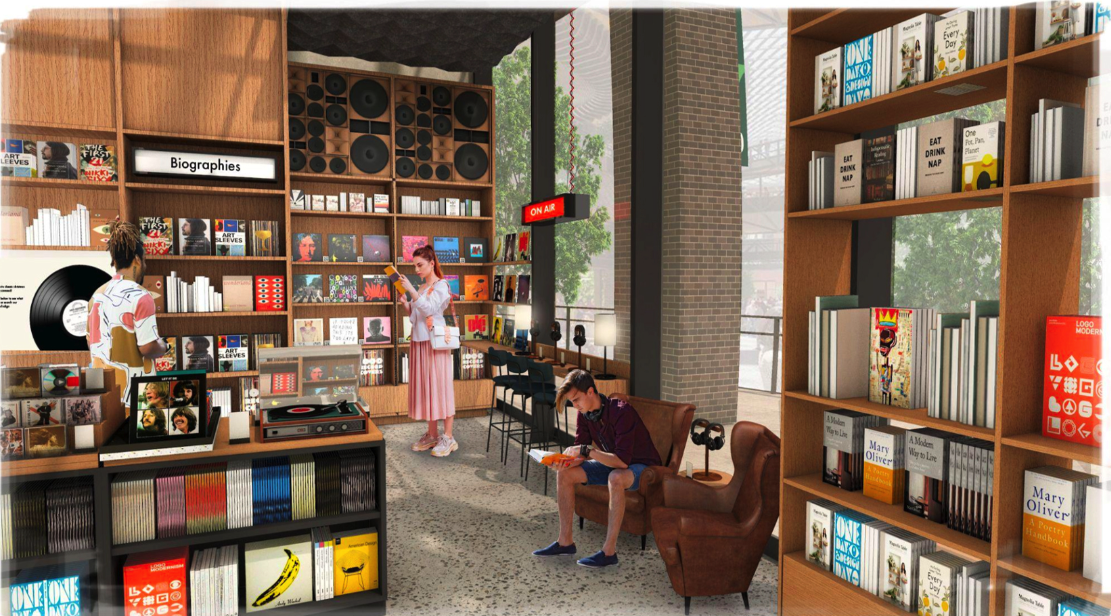
“The store’s innovative design, crafted by the UK-based brand innovation studio Dalziel & Pow, promises to be a visual delight. It will revolve around a curated selection of Indigo’s books, with a newfound emphasis on lifestyle products and immersive in-store experiences,” shared the brand.
Some of the features and plans for the store include:
Immersive Shoppable Product Vignettes: Engaging displays that allow customers to explore products in a unique way.
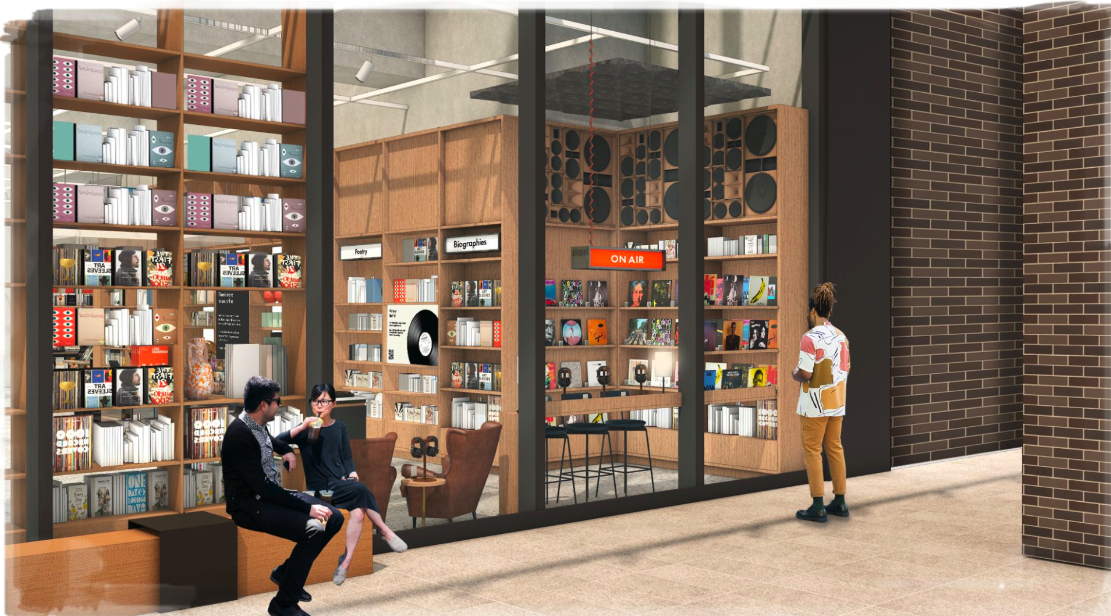
Vinyl Record Shop: Featuring a jukebox and a handpicked selection of books alongside music.
Gourmet Coffee Truck: Offering a delightful range of pastries, snacks, beer, and wine.
Plant Shop: Featuring live plants, pots, and books for the plant enthusiasts.
Book Clubs, Events & Gatherings: A space for the community to come together and celebrate literature.
‘Bookshop’ Section in Indigo at The Well (Rendering: Indigo)Listening Booth in Indigo at The Well (Rendering: Indigo)
The choice of location for the new store at The Well was deliberate, aligning with the development’s innovative concept.
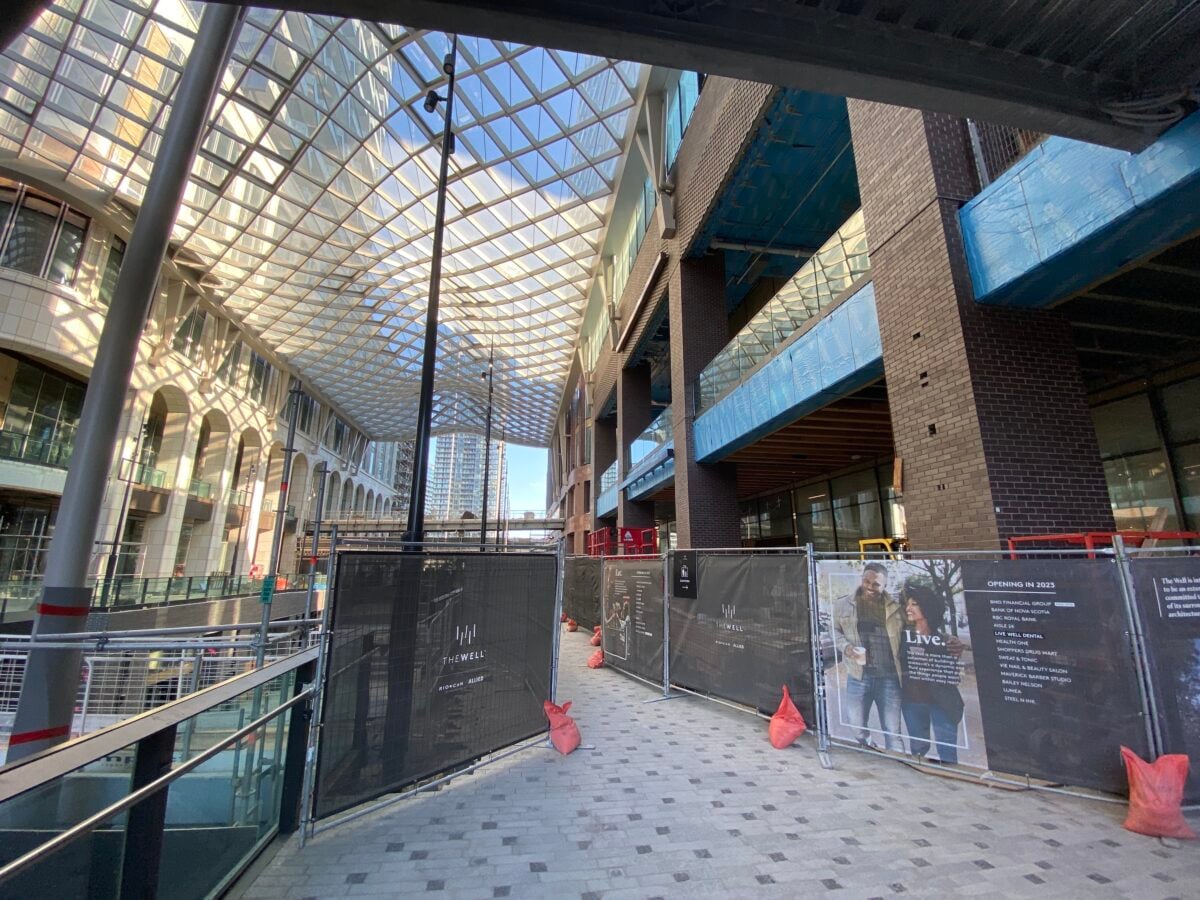
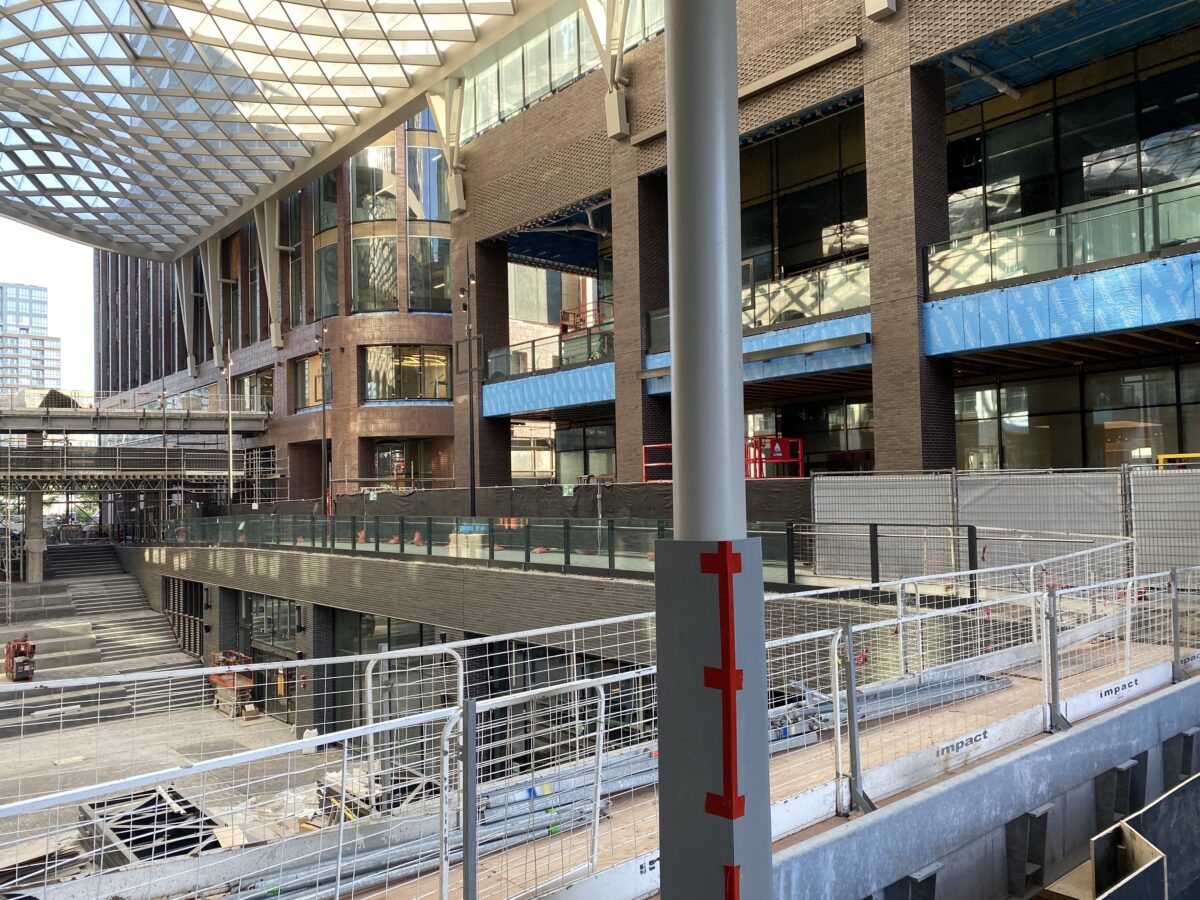
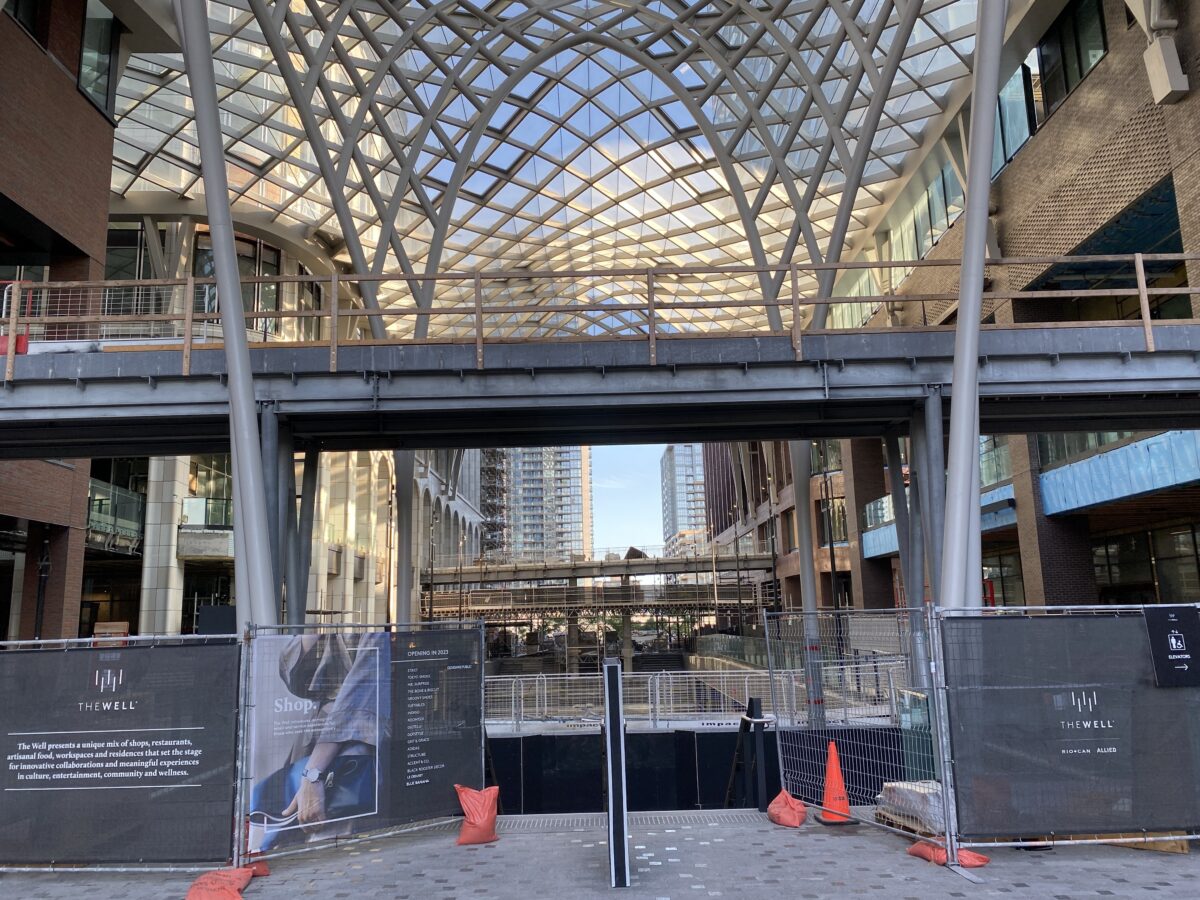
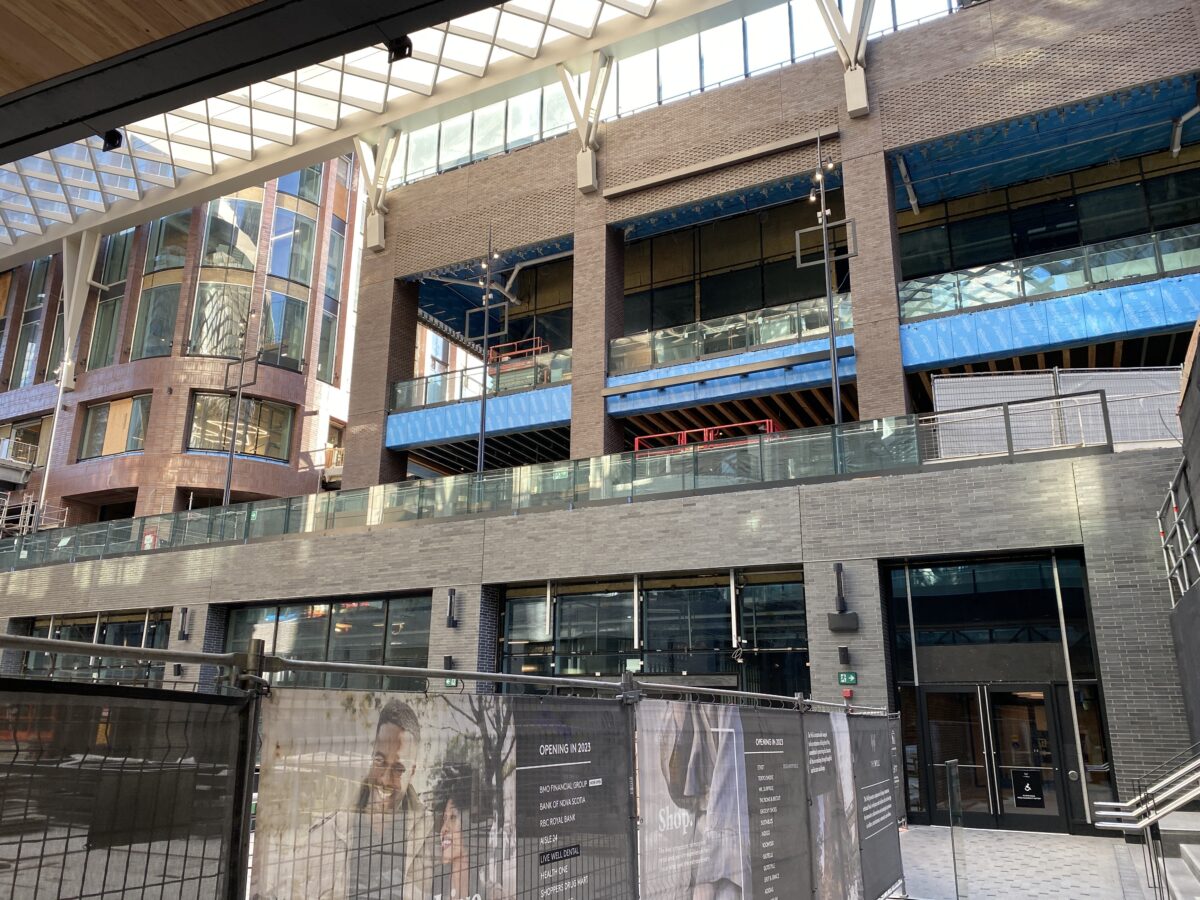
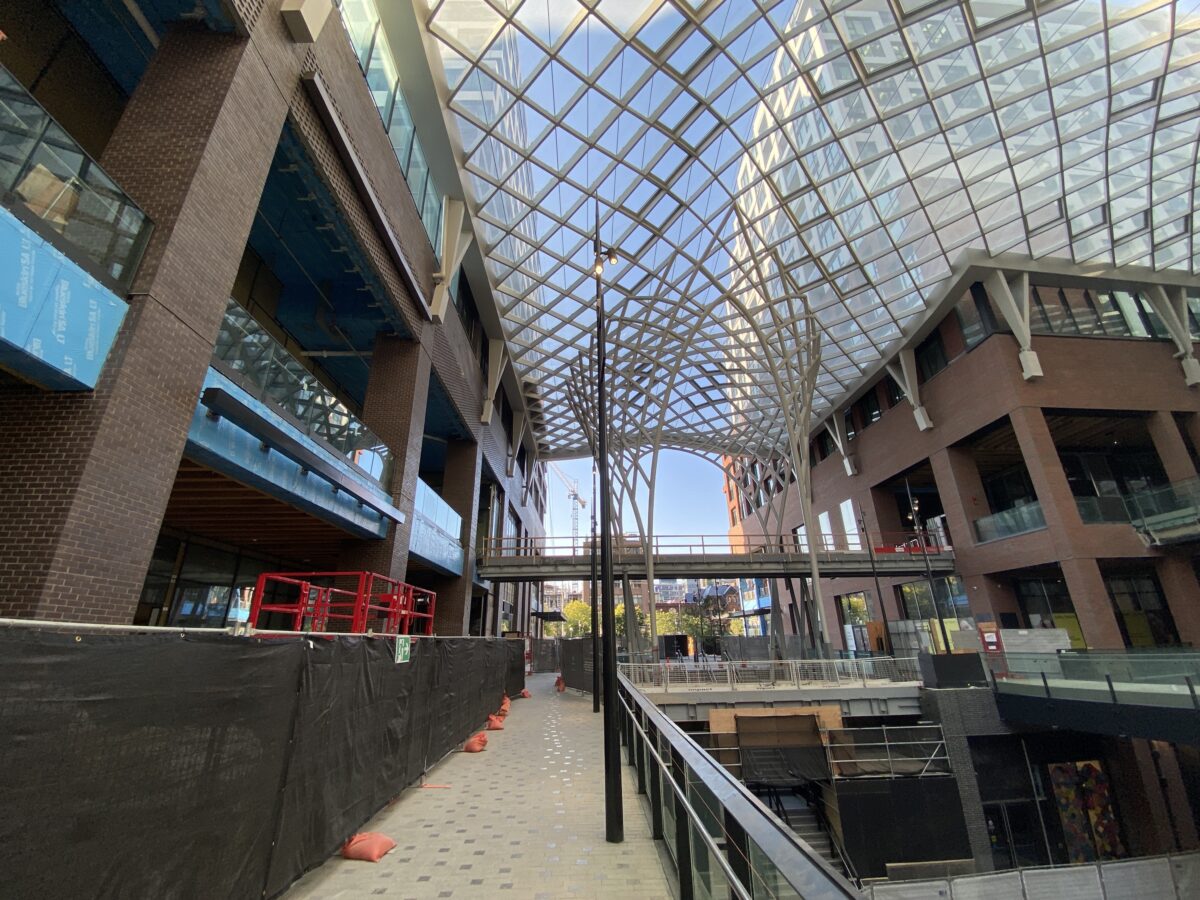
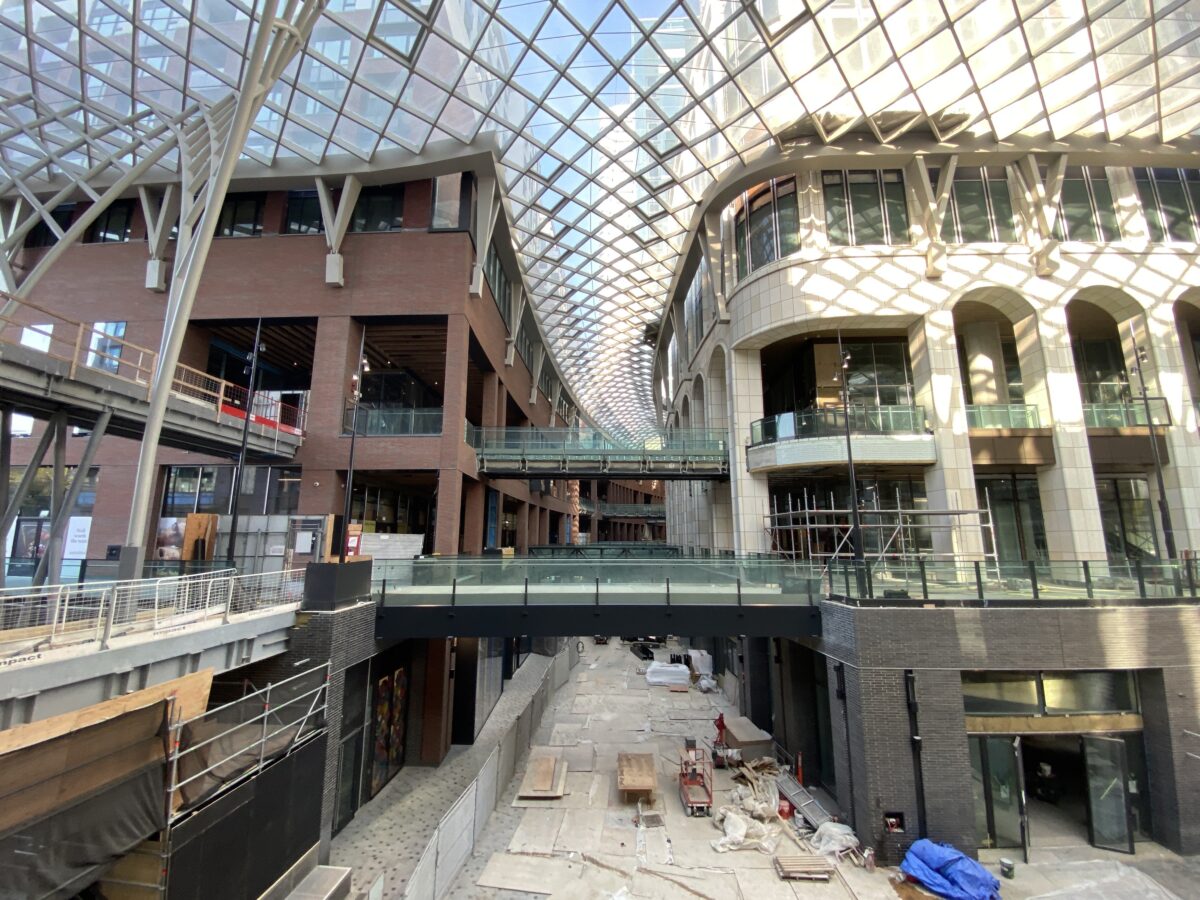
The Well is set to become a destination with an eclectic tenant mix, including more than 320,000 square feet of retail and food service and 1.2 million square feet of office space. It has 1,700 residential residences spread throughout six buildings, with three rental and three condominium buildings, plus one office building connected to a three-level retail base and parking for 1,650 cars and 1,900 bikes.
Peter Ruis added, “This location is a perfect fit and is in total harmony with our vision. Indigo will be at the forefront of creating an experiential destination, adding value for residents and visitors to this new vibrant community.”
Future Indigo (right) at The Well (Image taken August 22, 2023 by Dustin Fuhs)Future Indigo above Shoppers Drug Mart at The Well (Image taken August 22, 2023 by Dustin Fuhs)
The first Indigo location opened in Burlington, Ontario, in 1997. Indigo Books & Music Inc. (“Indigo”), as it exists today, was created in August 2001 upon the merger with Chapters Inc. Indigo has evolved to become the world’s first cultural department store with 87 superstores under the Chapters and Indigo banners, with 84 small format stores, under the Coles and Indigospirit banners. The brand operates in all 10 provinces and one territory and also offers an online experience at indigo.ca.
The Company also has retail operations in the United States through a wholly-owned subsidiary, operating its first retail store in Short Hills, New Jersey since October 2018.
Averaging over 22,000 square feet, Indigo’s large format stores are designed to be destinations for culture-seekers, offering an inspiring environment conducive to browsing and community-building. Small format stores are typically located in retail shopping centres, street-front retail areas, major airports and central business districts.
Headquartered in Toronto, Ontario, Indigo employs approximately 5,000 people across Canada and is a public company, traded on the TSX under the symbol IDG.
The Well (Image taken August 22, 2023 by Dustin Fuhs)Future Indigo above Shoppers Drug Mart at The Well (Image taken August 22, 2023 by Dustin Fuhs)Future Indigo at The Well (Image taken August 22, 2023 by Dustin Fuhs)The Well (Image taken August 22, 2023 by Dustin Fuhs)The Well (Image taken August 22, 2023 by Dustin Fuhs)
Additional Renderings from Indigo at The Well
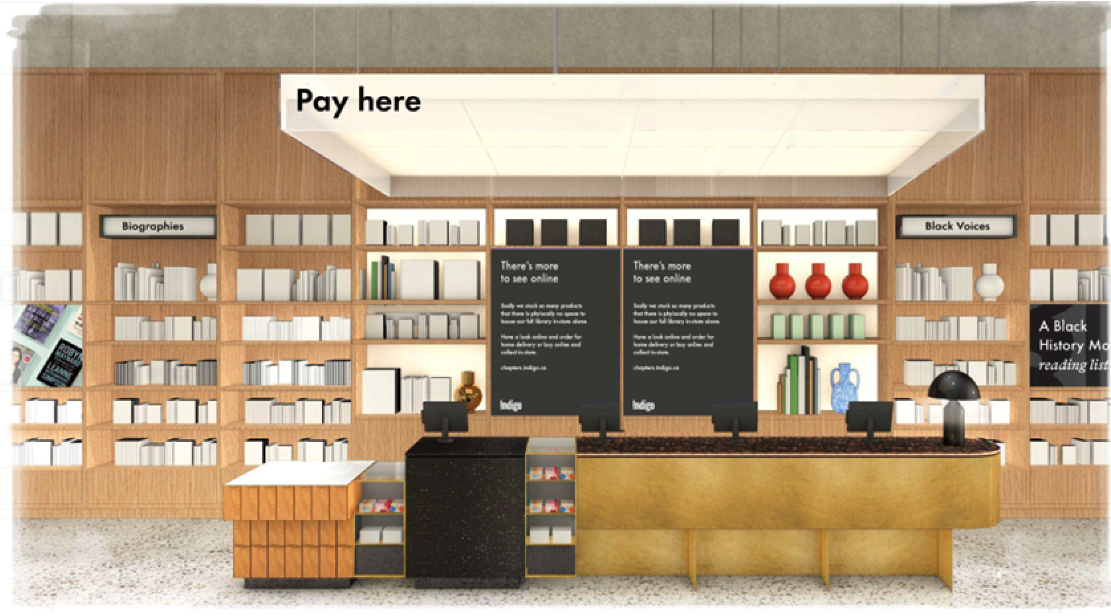
‘Fragrance’ Indigo at The Well in Toronto (Rendering: Indigo)Listening Booth in Indigo at The Well (Rendering: Indigo)Listening Booth in Indigo at The Well (Rendering: Indigo)‘Manga’ Section in Indigo at The Well (Rendering: Indigo)‘Bookshop’ Section in Indigo at The Well (Rendering: Indigo)Bookshop – Art & Culture in Indigo at The Well (Rendering: Indigo)‘Lifestyle’ Section in Indigo at The Well (Rendering: Indigo)Main Cash in Indigo at The Well (Rendering: Indigo)‘Kids Cash’ Section in Indigo at The Well (Rendering: Indigo)‘Kids’ Section in Indigo at The Well (Rendering: Indigo)
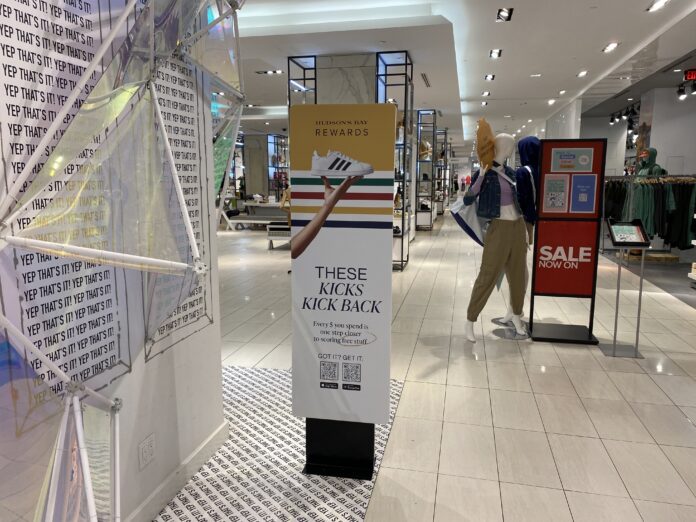
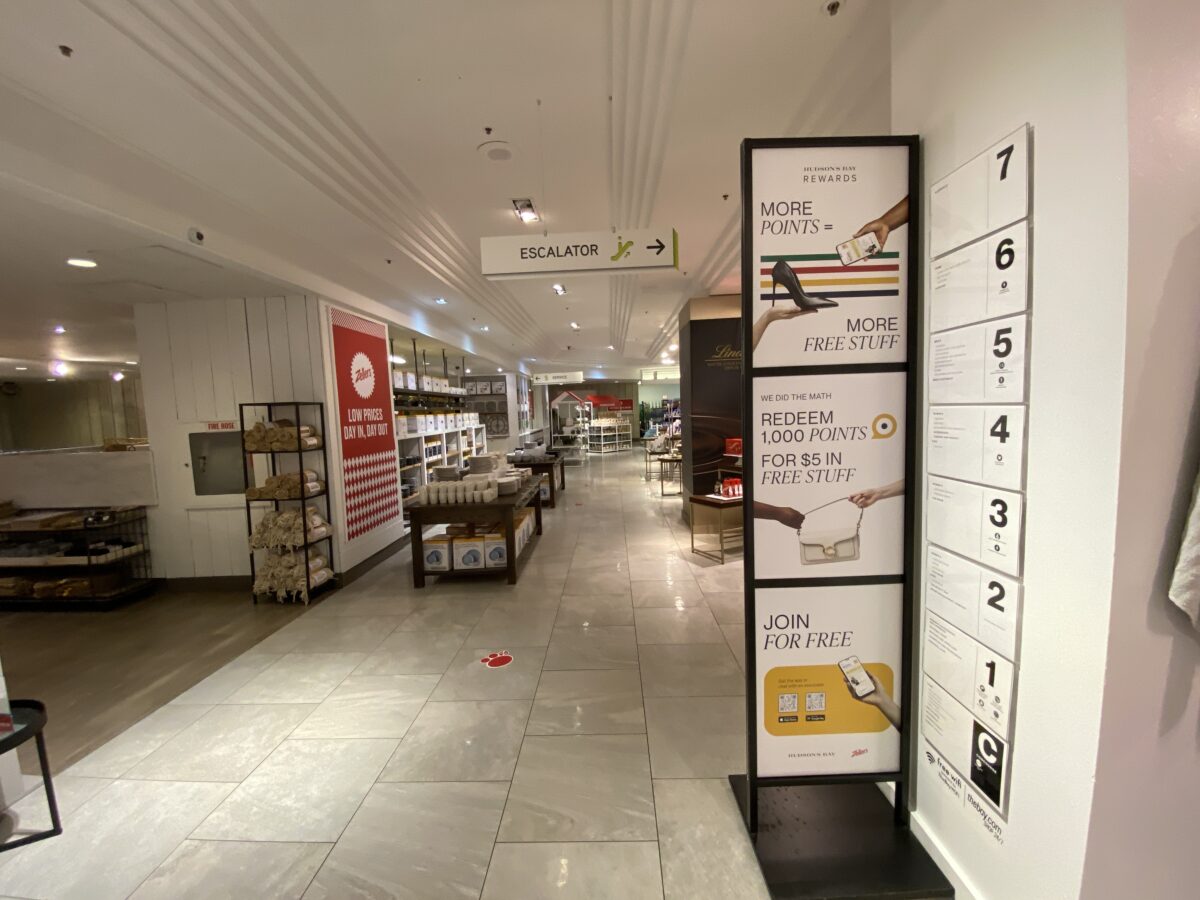
Hudson's Bay Rewards at Hudson's Bay Queen Street Toronto (Image: Dustin Fuhs)
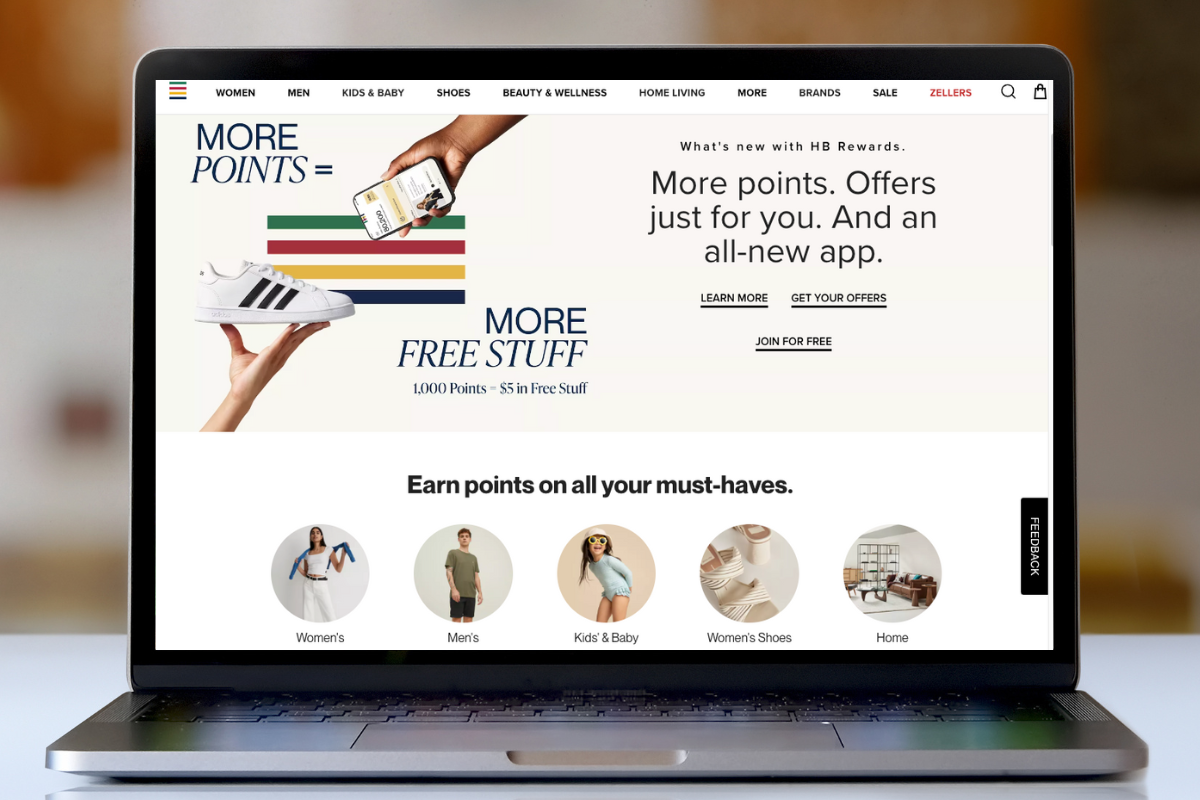
Retail giant Hudson’s Bay has relaunched its Hudson’s Bay Rewards, with a new app that brings together the best of customer loyalty programs in a new, fun and valuable Rewards experience.
In a news release on Tuesday, the company said the Hudson’s Bay Rewards app delivers exclusive offers personalized to members based on preferences and shopping habits, in-app ‘Quests’ that take members on a journey for higher returns, access to special events, and other perks.
Members earn rewards points by shopping in store or online at Hudson’s Bay and Zellers, as well as by using their Hudson’s Bay Mastercard anywhere Mastercard is accepted.
Kevin Parry
“Hudson’s Bay was one of the first to introduce a Rewards program in Canada, and since then we have seen tremendous change in how people are shopping, how they are prioritizing their purchases, and what they are looking for in a loyalty program” said Kevin Parry, VP Credit and Loyalty at Hudson’s Bay.
“We wanted to level up our rewards game – giving our customers an exceptional experience that essentially lets them earn more points faster, to redeem for the things they need and want for themselves and their families, and have some fun while doing it.”
Hudson’s Bay Rewards at Hudson’s Bay Queen Street Toronto (Image: Dustin Fuhs)Image: Hudson’s Bay Rewards
Lisa Hutcheson, a retail strategist and consultant and Managing Partner of the J.C. Williams Group, said we have been seeing more revamps of rewards programs over the past year such as Canadian Tire, Air Miles with BMO and ScotiaBank Scene.
Lisa Hutcheson
“We also just witnessed Royal Bank trying to expand its Avion program with a link to Taylor Swift tickets, and making it open to non RBC clients,” she said. “As Canadians weather the current economic challenges, rewards programs are a way to boost sales and traffic with targeted offers. Moreover, rewards programs provide rich data about when and how its customers spend – something HBC, and other retailers, needs right now.
“The program rewards seem quite low – unless the customer moves up to the top tier. At both of the lower tiers, they are getting less than one per cent discount – may be better rewards through a credit card. And interesting, it is lower than Nordstrom’s program.
“I believe they only have six million current members – nowhere near the PC Optimum program. The revamp/relaunch is a way to gain more members. The in-app quests element is an interesting component using gamification that targets a younger demographic.”
“Rewards programs today are a very different Marketing and intelligent animal spirit. They need to be interactive and engaging. At its core, these programs must continue to build customer retention and loyalty. However, the opportunity for personalization caters to customer preferences and behaviours. In today’s AI data-driven world, this isn’t just a perk. It is an expectation. As we all know, data is king in any consumer-driven business model and by being able to use real-time data, HBC can more proactively respond to customers’ needs and wants with their live inventory and future planning,” he said.
“This is also an evolution into modern technological connection with customers and shopping trends for HBC. Creating what could be a seamless shopping experience from online to offline. HBC also needed to reach far more sophisticated consumers who are digitally intelligent themselves. The introduction of an in-app ‘Quests’ is a smart first move to a growing field where AI personal assistants are in development; this is one way to respond to those impending threats.
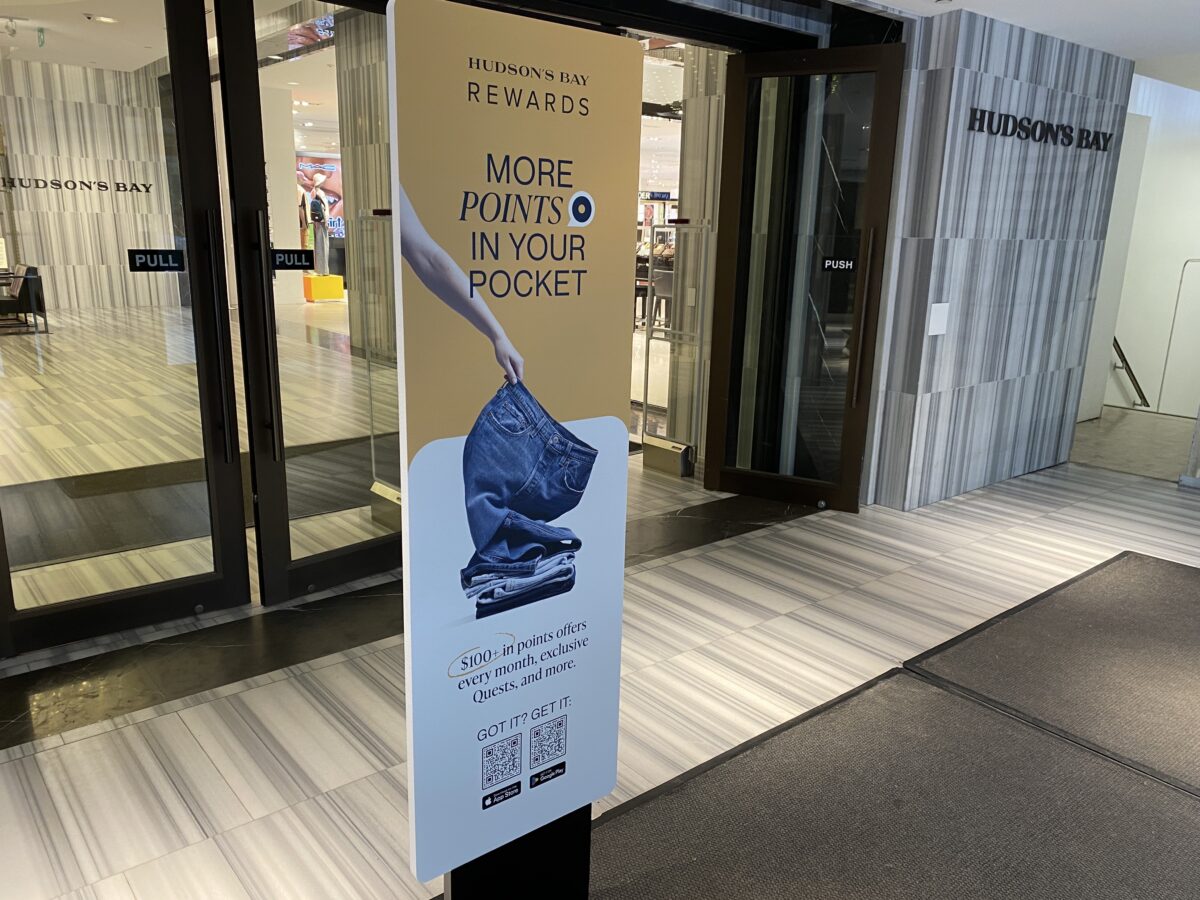
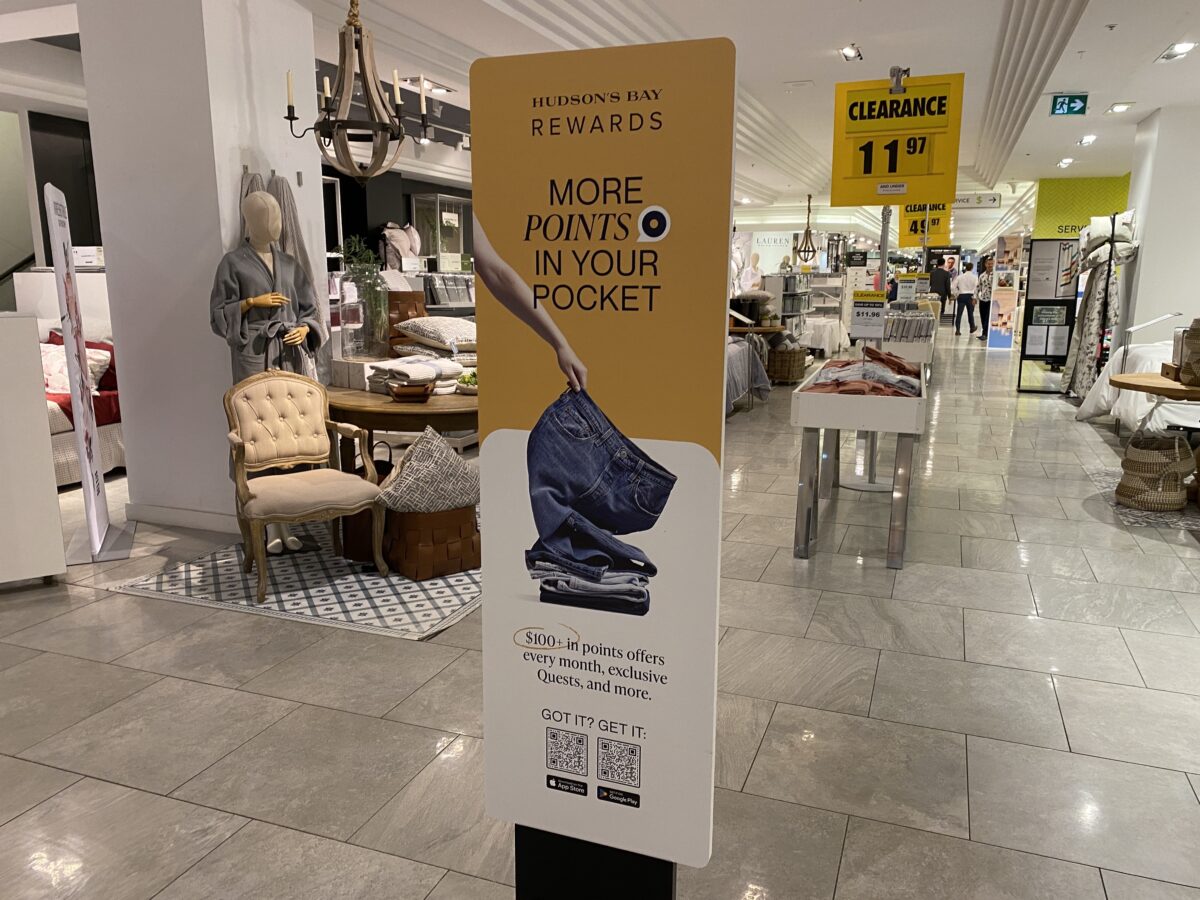
Hudson’s Bay Rewards at Hudson’s Bay Queen Street Toronto (Image: Dustin Fuhs)
“There is also an economic context to this for both HBC and consumers; with inflation and higher interest rates, a robust rewards program can incentivize spending by offering genuine value through monetary savings and exclusive experiences beyond just products. The speed of marketing to keep the brand in front of mind with consumers is also of economic benefit to HBC.
“Ultimately, HBC has an opportunity here to elevate its brand and draw more customers back to its physical stores as well, provided they can be as engaging and compelling with this rewards program with the potential that technology has to offer. Done right, what an incredible opportunity to be able to communicate any time, tell your evolving brand story to customers and differentiate from competitors.”
Hudson’s Bay Rewards at Hudson’s Bay Queen Street Toronto (Image: Dustin Fuhs)
HBC said shoppers can achieve different levels of membership through a 3-tiered program: Hudson’s Bay Rewards, Rewards Plus, and Rewards VIP. The more points earned, the higher the level for increased earn and redemption rates.
“New to the program is in-app quests, which are a series of linked milestones that, when all met, trigger a bonus. For example, a quest may be to build a head to toe outfit from Hudson’s Bay. The quest can be completed over an extended period of time, and progress can be tracked along the way. Once complete, a bonus is earned,” said the retailer.
“To redeem, points can be applied instantly to any purchase. Shoppers have access to thousands of national brands across beauty, home, apparel and accessories.”