Advertisement
Advertisement
Home Blog Page 735

PepsiCo’s Decision to Stop Selling Chips to Loblaws Symptomatic of Larger Problem in Food Industry: Charlebois

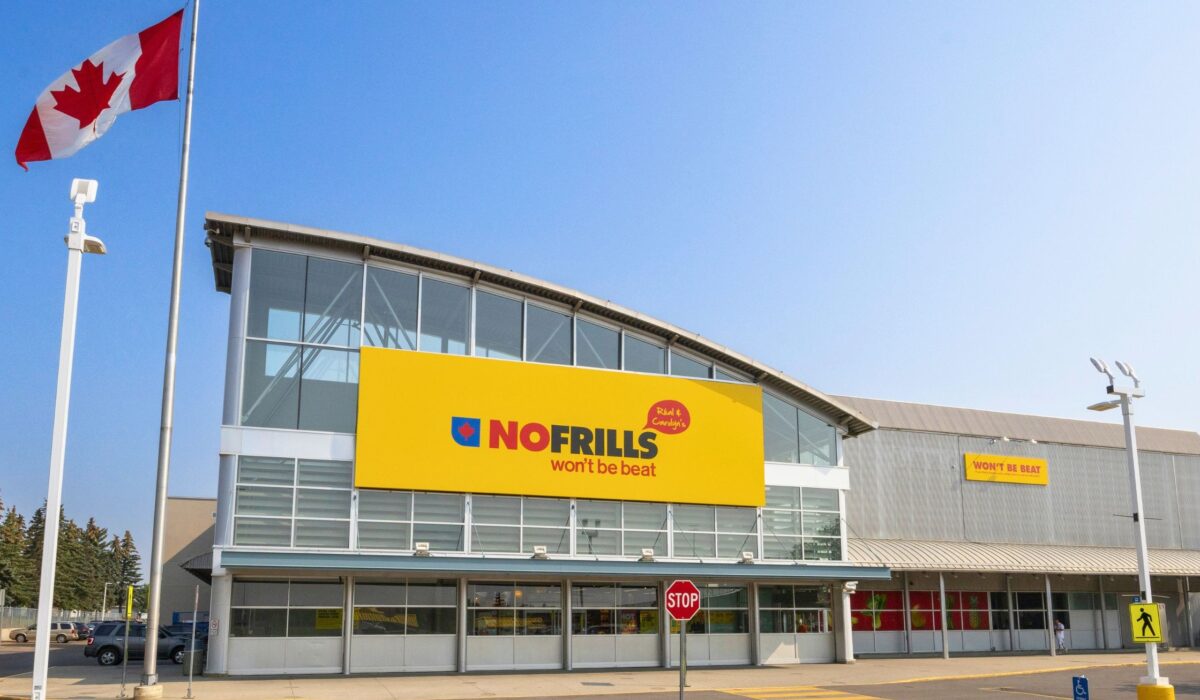
We recently learned that Frito-Lay, a brand owned by giant PepsiCo Canada, opted to stop selling to Loblaws after the retailer refused requests by Frito-Lay to increase their prices. Food manufacturers, when selling products to grocers, have suggested retail prices. With low profit margins, labour shortages, packaging issues and supply chain woes, inflation has been violently disruptive to the manufacturers. Not the first time this has happened. But this stop-sell’s scale is unprecedented, and the manoeuvre by PepsiCo is telling us that food manufacturers in Canada have had enough of grocers changing the rules to their advantage.

Unlike other industries, in the food industry suppliers will pay clients to do business. Such a strange environment for the neophyte. Manufacturers will pay listing fees to have the privilege of selling to grocers. It’s always been that way. But in recent years, grocers have arbitrarily charged more fees and—in some cases—reduced suggested prices without consent, a nightmare for manufacturers who need market discipline to protect brand equity. As a food producer, the last thing you want is a price war involving your own products. If things were free, we wouldn’t have much of an economy or jobs to support Canadians. So, supply chain order is critical to our entire food ethos; jobs and economic growth are at stake. Frito-Lay products are made in Canada, using Canadian potatoes grown by Canadian farmers.

The PepsiCo Canada and Loblaws rift was long overdue, and it was only a matter of time before the news came out. And make no mistake, many other manufacturers and other grocers are involved in a similar tug-of-war match. It’s happening in dairy, bakery and any food categories are impacted by this. Reporters just happened to only have PepsiCo Canada’s story, likely because someone wanted the public to know.

Canadians may be puzzled by the news. Why would Loblaws be blamed for keeping prices lower for consumers? Well, the answer’s not simple. For grocers, the game is easy as they have all the power in the world. Almost 90% of all the food Canadians buy is sold by only five retailers. Grocers want to remain competitive and will defend margins the best they can against market rivals. It’s an oligopoly. If Loblaws get a lower price, it doesn’t mean Canadians benefit all the time. They may sometimes, but shareholders are often the big winners.

But don’t expect empty shelves in the chips department, or in other sections of the grocery store, any time soon. Or at least, they won’t be there for long. We may see a few, temporarily, but it won’t last. Grocers will find a way to fill shelves with other brands including, likely, their own house brands. With current market conditions and the fact that the food inflation rate is north of 6% now, consumers will be trading down and seeking more house brands. Grocers know it, so the time may be right for them. Remember, they have the power and many weapons at their disposal.

Ever since the pandemic started almost two years ago, many food manufacturers including PepsiCo Canada have thought of selling food directly to consumers. They could control market conditions and gain more authority over their brands. The pandemic has made the supply chain more democratic and inherently more virtual. In terms of store merchandising, PepsiCo Canada is one of the best companies out there. It masters the middle mile to support in-store merchandizing for grocers. The company is incredibly efficient. They could extend their fleet of trucks to connect their plants with consumers. This is a definite possibility, but the transition from business-to-business to business-to-consumer is never easy. Many companies have failed miserably during the pandemic while attempting to pivot.

For years, during supply chain games, food manufacturers always had to blink first. PepsiCo’s move signals that the sector is tired of and desperate to stop “supply chain bullying”. And therefore, the industry desperately needs a code of practice, so companies can go to the arbitrator to avoid more market disruptions. This situation affecting the chips section of the grocery store is concrete evidence of how supply chain wars can impact consumers directly. We need supply chain peace; we need an authoritative code.

Some may feel they can simply live without PepsiCo products, or other products for that matter. Fair enough but remember: with fewer manufacturing options for grocers come higher retail prices, eventually.

MR MIKES Steakhouse Launches New Concept Location with Expansion Plans Targeting Secondary Markets: Interview

Image: MR MIKES in Merritt

National casual steak brand MR MIKES restaurants has just opened its 45th location in Canada with plans for further expansion with its latest design and floor plan.

The latest location opened in Merritt, BC, in a 4,000-square-foot space with an open concept and a centre bar that is one of the main features noticed by customers as soon as they walk into the restaurant. The brand said the new layout creates visibility and energy in the room where dining and socializing will enjoy the same space.

The first MR MIKES was opened by two brothers, Bob and Nick Constabaris. Over the past decade, the restaurant concept has embraced the heritage that was established back then but it also has been revitalized by Mike Cordoba, Al Cave, and Robin Chakrabarti with the introduction of the Steakhouse/Casual concept. 

Tony Zidar, Senior Vice President with the Burnaby, BC-based company, said the new concept is “a really welcoming space.”

Image: MR MIKES in Merritt

“It’s just a blending in the middle that really kind of marries the energy into both sides (restaurant and lounge) without one trumping the other. I’m thrilled with the design. It’s a home run.”

The Merritt location is the brand’s 17th in BC. It also has 17 locations in Alberta, five in Saskatchewan, four in Manitoba and two in Ontario.

“It started off in BC and it was more of a steak and salad bar concept. At its height, we don’t have the exact number of how many units it got to, but it was over 80 and then went through a few incarnations of concepts throughout the years as concepts do,” said Zidar.

“In 2010, it was acquired by the current owners and rebranded as MR MIKES SteakhouseCasual which was kind of a new space in the steakhouse world. Obviously The Keg being the Godfather of classic steakhouses in Canada and that niche is filled. Our strategy was to go into different and smaller markets to fill that in with the need for a steakhouse but not wanting to compete with The Keg.”

Image: MR MIKES

“Obviously if you can not compete with the big gorilla it’s probably a wise strategy. Also our markets are different and we wanted to be open for lunch in all of our markets and we rebranded as more of an every day person’s, every occasion approach to a steakhouse. So great product, great steak offering, super beverage program in a little more relaxed atmosphere bringing some good humor to the brand.”

Zidar said the company plans to continue to expand and is in growth mode.

“COVID was troubling to restaurant growth and investors as everything was unknown when it hit. In our business, we talked about having a pipeline of leads and prospects and that for us has already started to pick back up again quite vigorously,” said Zidar. 

“We’re very happy with how it’s sprung back to life with the end of COVID obviously in sight. Our plans are to fill in holes in the West. We can certainly go into different markets, now even smaller or a closer shared market space, now that it’s a smaller footprint (with the new concept). So filling in the West but really going to begin to focus on the Ontario market where we have two stores.

“The Ontario market is, almost in our world, the same size as the rest of Canada when you look at market share. That’s pretty much wide open for us. We have a lot of leads out there right now that were put on hold by COVID but re-engaging them. We’re looking at the end of everything and getting business back to normal. We are setting our team back into growth mode where the past two years was really in support mode – keeping our existing franchisees maneuvering through COVID with all of its pitfalls and government regulations and the financial help available to them. It was really two years of assisting them. We came through with all of our stores still in operation and we’re thrilled with that. The franchise community really did an amazing job coming together, helping each other out, getting all the information they could through that time and now our reset is for growth again.”

Vancouver-Based RYU Apparel to Shut All But 1 Storefront

RYU on Queen Street in Toronto (Image: Dustin Fuhs)

Vancouver-based RYU Apparel Inc. (aka “Respect Your Universe”) announced that it will focus on online sales as it shuts two of its three remaining retail storefronts. At one time the company had planned to open over 100 stores prior to financial struggles. 

The brand once had 11 stores and recently has been in the process of downsizing its brick-and-mortar presence after a restructuring last year. Now the company says that it will shut its Toronto and New York City storefronts while keeping its Vancouver flagship open for the time being. The New York City store closed Sunday February 20th and the Toronto store will shut on March 27th. 

The soon-to-close Toronto store is located at 361 Queen Street West and the shuttered New York City storefront was located at 76 N 4th Street in the Williamsburg area of Brooklyn. The company’s 5,600 square foot Vancouver flagship is located at 1745 W. 4th Avenue. Until recently RYU had stores in the California market and had planned to target major markets across North America as well as internationally. 

Exterior of Vancouver RYU store on 4th Street. Photo: RYU

In a press release, RYU says that it is instead focusing on e-commerce after seeing a boost in online sales.

Retail Insider did some digging and found sources saying that challenges with current company management are partly responsible for the brand’s issues including a lack of consumer awareness.

A source Retail Insider spoke with said that RYU had the opportunity to work with a well-known fashion designer who would have propelled the brand to new heights while bringing new manufacturing and supply chain capabilities. RYU’s headquarters would have relocated to Toronto. A deal never concluded after a brief meeting that went sideways. The source said that now “without a brand” RYU’s future as an apparel business is limited — indeed a concern for a publicly traded company. 

In 2014 Marcello Leone, part of the luxury retail family dynasty in Vancouver, took control of RYU with plans to make it a global brand with over 100 storefronts. A challenging retail environment and the pandemic halted much of the expansion and Leone himself exited his company nearly two years ago. 

Interior of Queen Street West RYU store. Photo: RYU

In April of 2020 Leone was paid the equivalent of $1.845 million in shares as a settlement and he exited RYU. Toronto-based entrepreneur Cesare Fazari was announced to be the new CEO and Chairman of the Board. At the time it was announced that e-commerce would become a focus for RYU, which also operated storefronts in the Vancouver, Toronto, New York and Southern California markets. Fazari, a self-made millionaire and notable personality known for his philanthropy, has invested heavily in RYU.

RYU was founded in 2011 as a mixed martial arts brand based in Portland, Oregon. Marcelo Leone was originally an investor and in 2014 he took over the business and incorporated in Vancouver. RYU’s intention at the time was to become the world’s top multi-discipline performance training and fitness brands. 

Canadian Retail Sales Had a Good 2021, But Things are Cooling Down Going into 2022: Strapagiel

CF Toronto Eaton Centre (Image: Dustin Fuhs)

Statistics Canada has just released numbers for last December and we can now look at the year 2021 overall. A summary of annual Canadian retail sales growth over the last few years is as follows.

Retail sales growth in 2021 was 11.6%, the highest in the last 5 years. While this looks good, there are a number of caveats. First of all, the high sales gain in 2021 reflects a rebound from the previous year, when total retail sales actually declined thanks to COVID. The annual gain was also significantly boosted by the Automotive & Related sector, especially gasoline stations whose 2021 sales increased 24.4% due to gas prices. Furthermore, most of last year’s gain occurred in the first half of the year; by the time the 4th quarter rolled around, retail sales were up a more modest 6.4% year-over-year.

The chart above shows the slowing momentum of Canadian retail sales. The 3 month growth trend (orange line) peaked in Q2 2021 and has significantly declined since. The underlying 12 month trend (green line) has now gone flat and is poised to decline going into 2022.

Food & Drug

After setting records in 2020, the Food & Drug sector had very modest growth in 2021, with sales up just 1.9%. The trend lines declined over most of the year. In Q4, retail sales recorded a rare dip into negative territory, down 0.6% year-over-year. The underlying 12 month trend has also taken a nosedive, despite inflation and population growth. None of this bodes well going into 2022.

Grocery stores account for just over half of retail sales in the sector, but their sales were down 1.1% year-over-year in Q4 2021. Convenience stores also saw a large Q4 decline, with retail sales down 8.9% year-over-year. Among all food & beverage retailers, only beer, wine & liquor stores recorded a sales gain in Q4 of 4.8%.

Health & personal care stores had a fairly strong start to 2021, but this evaporated over the course of the year. Their retail sales were down 1.8% in Q4.

Store Merchandise

Retail sales for the Store Merchandise sector were up 12.8% in 2021, a record high. But again, this was a rebound from slow sales from the year before due to COVID. Also, most of this sales increase happened in Q2 and things have slowed somewhat since. In Q4, year-over-year retail sales were up 8.1%, which is still a healthy increase, but just not as good as earlier in the year.

Clothing & clothing accessories stores did have an exceptionally good 2021. Their retail sales were up 21.2% for the year and 24.5% in Q4 alone. General merchandise stores also did well, with sales up 8.7% for the year and up 10.7% in Q4.

Electronics & appliance stores tended to lag the rest of the Store Merchandise sector in 2021. Nevertheless, they did manage a 4.5% retail sales increase for the year, although this deteriorated to a 6.5% decline in Q4.

Automotive & Related

Retail sales in the Automotive & Related sector were up a whopping 19.5% in 2021. This was due to strong gains in vehicle sales earlier in the year combined with big gains in gasoline station sales throughout most of 2021. By Q4 however, sales gains at new car dealers slowed down to 3.4% year-over-year. This was more than offset by a nosebleed 34.8% increase in gasoline station retail sales in Q4.

Gas stations’ huge sales gains are due to high increases in pump prices, and this tends to distort the overall retail picture. While overall Canadian retail sales were up 6.4% in Q4, this would be only 4.0% if gas stations are excluded. When you pay more for gas, your vehicle doesn’t go any further and the ride isn’t any better – but you do have less money to spend on other things. Furthermore, increasing gas prices are inflationary, both directly and because everything one buys has to trucked to a warehouse, distribution centre, store, or home.

By The Numbers

Note that the data and analysis in this report are always based on not seasonally adjusted (or unadjusted) retail sales statistics.

For definitions of store types, see Statistics Canada NAICS.

Canadian E-Commerce Sales

Annual Canadian e-commerce retail sales increased by 74.2% in 2020 as COVID hit, and then by a further 14.2% in 2021. E-commerce is still growing, but not as fast as it used to. In Q4 2021, e-commerce sales actually declined by 4.2%, and growth may be flat going forward as COVID restrictions continue to be lifted.

Overall, e-commerce represented about 6.2% of retail sales over the past 12 months, according to Statistics Canada, including both pure plays as well as bricks & clicks stores. Note that Canadian consumers may also buy online from foreign websites which is not captured in these numbers.

Location based retail is the same as that in the preceding “By The Numbers” table. It’s what’s normally reported as Canadian retail sales. Except that it isn’t. Location based retail excludes another section called Non-Store Retailers (NAICS code 454), which includes electronic shopping and mail-order houses, which in turn is where (mostly) pure play e-commerce businesses are. In 2021, electronic shopping and mail-order houses had an estimated $26.6 billion in e-commerce sales.

But that’s not the only source of e-commerce, as (mostly) bricks & mortar location-based retailers also sell online. For 2021, this group had an estimated $17.1 billion in e-commerce sales. With electronic shopping and mail-order houses, there’s a grand total of $43.8 billion in e-commerce sales by Canadian operators. Note that this does not include foreign e-commerce purchases made by Canadian consumers, but it does include e-commerce purchases made by foreigners at Canadian operations.

For electronic shopping and mail-order houses, an estimated 96.0% of their sales are currently allocated to e-commerce. For (mostly) bricks & mortar retailers, it can be estimated that 2.5% of their total sales are attributable to e-commerce.

In the final section of the above table, (mostly) pure play operators (namely, under electronic shopping and mail-order houses) generated an estimated 60.9% of all e-commerce sales in Canada, while (mostly) bricks & mortar location-based retailers’ share of e-commerce was 39.1%.

For more explanation on the e-commerce numbers, see Statistics Canada: Retail E-commerce in Canada.

Monthly Update Notification

This analysis is updated monthly as new numbers are published by Statistics Canada. If you would like notification from Linkedin of when an update becomes available (and you’ve read this far), please connect with Ed Strapagiel on LinkedIn.

22 February 2022

Buy-Now-Pay-Later Company Klarna Enters Canadian Market

Image: Klarna

Swedish fintech company Klarna announced Tuesday that it has officially entered the Canadian market. The buy-now-pay-later platform includes an app and Klarna has already secured some big name retailers in Canada including homegrown brands Harry Rosen, Mejuri, and Frank And Oak and international players such as Sephora Canada, L’Oreal Canada, and GameStop among others. 

“Consumers across the world are moving away from traditional credit models to alternatives that better meet their expectations by offering smarter and more transparent ways to purchase, and the Canadian shopper is no different,” said Klarna Co-Founder and CEO Sebastian Siemiatkowski

Sebastian Siemiatkowski

“Recent Klarna research has found that at least half of Canadian shoppers ages 25-56 are looking for flexible payment options at checkout. With our expansion to Canada, we are bringing consumers the more sustainable, flexible payment alternatives they are looking for, empowering them to save time, money and make more informed financial decisions.”

Klarna’s “Pay in 4” allows consumers who use Klarna at a retail partner’s checkout to be able to split their purchases into four interest-free payments paid every two weeks from the time of purchase. Klarna says that the benefits include “greater transparency, financial control and choice”.

The Klarna app has over 23 million monthly active users globally. App users can track and manage Klarna payments, access to exclusive rewards via Klarna’s Rewards Club, along with price drop notifications, curated content, and delivery tracking. 

Klarna said in a release that Canadian consumers will soon be able to access additional app features including Klarna’s innovative “Shop Anywhere” service that allows users to “Pay in 4” at any online store, regardless of whether they are a Klarna retailer or not, as well as money saving tools, and live shopping experiences. 

Kristina Elkhazin, Head of Canada, Klarna; John Tory, Mayor of Toronto; David Sykes, Head of North America, Klarna; Stephen Lund, Chief Executive Officer, Toronto Global (Photo: George Pimental)
Kristina Elkhazin

“We look forward to working closely with our fast-growing network of Canadian retail partners to help them to navigate the increasingly omnichannel retail landscape, adapt to new consumer demands, and help them reach new audiences,” said Kristina Elkhazin, Head of Canada, Klarna.

Toronto is Klarna’s hub in Canada. The company has opened its first North American product development and tech hub in the city with plans to hire more than 500 engineers by 2025. Offices are also planned for Vancouver and Quebec at some point and Klarna said in a release that it plans to work with local academic institutions to “help develop a skilled workforce that will deliver new innovative solutions, and, in turn, help other businesses thrive and grow.”

Klarna partnered with Moneris for its expansion into the Canadian market. Klarna was founded in 2005 and has over 100 million global active users and 2 million transactions per day. Klarna boasts over 250,000 global retail partners, including such names as H&M, Saks, Sephora, Macys, IKEA, Expedia Group, and Nike. Klarna has over 5,000 employees and is active in 20 markets and has a valuation of USD $45.6 billion.

Bentley Launches Line of Fully Vegan Handbags and Wallets

RIONA Vegan Collection (Image: Bentley Leathers)

Montreal-based luggage, bag and accessory retailer Bentley has launched a new line of eco-friendly cruelty-free vegan handbags and wallets that the company says is approved by PETA. The new line is called the RIONA collection and it is part of a trend away from utilizing leather and other real animal skins. 

The RIONA collection is being designed in Montreal under the direction of Bentley’s Category Manager for Handbags, Maddie Ciccone. She sought-out high-quality polyurethane as a material which is a a biodegradable material that is less harmful to the environment. 

The bags are beautiful and modern and will resonate with a wide range of consumers. The gilded components on RIONA handbags are made with high-grade zinc which Bentley notes is a strong and durable alloy that does not tarnish over time. The interior finish of the bags is made with 100% recycled plastic bottles with approximately 10 bottles being utilized for the monogram Jacquard lining for each bag.

Sustainability is a hot topic as many consumers seek out ways to preserve the environment. Vegan fashions is another hot topic as more people seek out animal alternatives.

“Bentley continues to constantly improve our ways, be creative, strive for excellence, and never stop learning while providing our customers with high-quality and timeless handbags and wallets. Our RIONA Collection is a beautiful evolution of styles, providing sustainability, practical and functional silhouettes at affordable prices, while helping to protect the planet and animals,” said Walter Lamothe, President of Bentley.

The collection includes handbags, crossbody and satchel bags, totes, mini essential bags, pouches, make-up cases, wallets, card holders, key chains, and coin purses in a variety of colours such as black, pink, cognac, taupe, burgundy, and khaki.

Bentley added RFID protection in its handbags and wallets, incorporating the latest RFID signal blocking technology to ensure that a user’s personal data, cards, and keys are safe. Metallic layers are integrated into the card slots (in wallets) or interior zipper pockets (in handbags) preventing thieves from electronically scanning or skimming one’s cards and personal data.

Retail Insider recently partnered with Best Edmonton Mall and its Youtube channel which features a biweekly quiz night that has been well received. Retail Insider sponsors the show and recently worked with Bentley to give away three $100 gift cards during the Best Edmonton Mall segments. Sunday February 13 saw the first $100 lucky winner and two more will be given away on the evenings of February 27 and March 13 (8pm Mountain time/10pm Eastern).

Canadian Retail News From Around The Web For February 22nd, 2022

Canadian Retail News From Around The Web

News at a Glance

Retail Insider is streamlining its Canadian retail news from around the web to include a handful of top news stories that can be viewed quickly during the day. Here are the top stories from the past four days including the long weekend Monday.

Capilano Mall in North Vancouver Adds New Concept Jeep Showroom

Foundation Auto Vancouver Jeep at Capilano Mall

Foundation Auto Vancouver has opened a 2,457 square foot automobile showroom and apparel store at North Vancouver’s Capilano Mall, with the debut of Foundation Auto Vancouver Jeep Store.

The “Jeep Lifestyle Centre” features Jeep vehicles on display with branded clothing and merchandise, which is the first-ever enclosed shopping centre storefront for the Jeep brand.

“Given that Jeep is the top SUV brand in Canada and many Jeep enthusiasts live on the North Shore, Capilano Mall was the perfect venue to display our incredible Jeep products,” says Clive Stanley, Director of Business Development for Foundation Auto Vancouver.

Foundation Auto Vancouver Jeep at Capilano Mall

The brand will be implementing a number of strategies that have been utilized at a number of other showrooms, including test drive appointments, complementary car appraisals and credit approvals.

Jeep joins the increasingly competitive Canadian shopping centre automotive market, with two separate strategies taking place – the dealership and concept store.

West Edmonton Mall Toyota opened in a full-scale 125,000 square foot dealership in 2021, taking over the former Sears location in Phase One of the iconic shopping centre. Yorkdale Shopping Centre has a Tesla showroom and the Nissan Studio, with Lucid Motors and VinFast opening in 2022. Lucid opened at CF Pacific Centre recently amid a Canadian expansion.

Rise of Social Commerce Helps Bolster Ecommerce Performance and Further Expands a Growing Retail Ecosystem in Canada [Feature]

The past couple of years have proven to be a very interesting and challenging time for retailers operating all over the world. Fluctuating restrictions on business combined with a customer who’s apprehensive about physical brick-and-mortar experiences, both the result of health and safety concerns related to the COVID-19 global pandemic, have served as a backdrop to an industry that’s currently rife with uncertainty and disruption. It’s also, however, been a time representative of innovation as merchants everywhere shifted and pivoted to keep up with the demands of a rapidly evolving retail landscape. It’s an evolution that’s been driven primarily by an accelerated digitization of the industry, prompting many retailers to develop or enhance their online offering amid a sharp escalation in ecommerce sales. Canadian merchants have, in general, risen to the challenges that they’ve faced extremely well. And, according to Chris Sheridan, BD and Sales Enablement Lead at Square, the increasing assurance with which retailers are operating online is helping them meet consumer needs and fuel further growth of the retail omnichannel ecosystem.

“Back during the beginning of 2020, when the pandemic first hit, retailers realized very quickly that they needed to ensure that their website was equipped to handle an influx of online customer orders,” he reflects. “But what that primarily meant during the initial months of the pandemic was enabling the online placement of pickup and delivery orders. They were by far the two most popular fulfillment channels, particularly when in-store operations were closed or limited. And they continued to gain momentum and adoption throughout the two years that have followed. However, the way retailers responded at the onset was very operationally-focused, and rightfully so. But today, after experiencing a lot of success rolling out and developing curbside pickup and delivery service, what we’re seeing is a higher level of confidence among retailers in managing these channels and fulfilling all of the online orders, which is in turn leading to greater experimentation and an expansion of online channels.”

Expanding retail ecosystem

One of the Canadian retail industry’s trusted partners, Square has served as a critical support for merchants attempting to navigate through the current challenges and optimize their omnichannel offering. Its suite of hardware and software tools, including an array of in-store and online commerce solutions, has been pivotal in equipping its clients with the capability of competing and thriving within today’s economy and to continue growing to satisfy the expectations of an increasingly digital consumer. And, just last month, in an effort to simplify the fulfillment of local deliveries for merchants, the company launched Square Online and On-Demand Delivery, leveraging the reliable courier services of DoorDash. It’s all part of the overall support that Sheridan says Square is proud to provide merchants, adding that it’s an incredibly exciting time to be partnered with the industry. Retailers across the country have really started to ramp up their ecommerce capabilities, he explains, deepening their understanding of ecommerce and beginning to capitalize on the opportunities that are inherent in emerging sales channels.

“There’s a much broader awareness of ecommerce now among those operating within the industry,” he says. “Retailers no longer view the website as a separate entity from their in-store operations. A new retail world has developed over the course of the past couple years, and all channels, whether physical or online, are being given the same level of priority. They’re understanding now that each is an extension of the other, which is an incredibly powerful realization for retailers to make. It really shows how intensely they are focused on the consumers’ experience in-store as well as their experience online. And, now that the infrastructure has been built, the retailer mindset has shifted to contemplate whether or not they are leveraging the full power of the available channels and explore ways to grow them. Considering this perspective, retailers are now seeing that social channels provide a very natural next step to the evolution of ecommerce and their businesses.”

The rise of social commerce

Indeed, channels such as Instagram, Google Shopping, Facebook, TikTok and Snapchat are all presenting viable, potentially lucrative, streams of revenue and growth for merchants within the industry. And, given that it’s where the majority of consumers spend their time, researching, sharing and now increasingly shopping, it makes, as Sheridan points out, perfect sense for retailers to leverage these channels in order to tap into the rise of social commerce and complement their existing ecommerce offering. He believes that social channels may end up serving as the next big opportunity for retailers. And, if recent social statistics are at all accurate, he may just be right. According to Statista, there are now 31.8 million active users of social media sites in Canada, representing a penetration rate of 83 percent, standing Canada as one of the world’s most connected populations.

“The potential posed by social media sites when it comes to the promotion and selling of product is immense,” he asserts. “It’s where much of any retailers’ audience is gathering all the time, finding ideas and inspiration. It’s a great place for brands to represent themselves and to direct consumers to their catalogues and offering. They present a fantastic way for retailers to extend their core set of online fulfillment channels of shipping, pickup and delivery by expanding into social selling and bolstering their online ecosystem with the inclusion of more channels. It’s an expansion and evolution of the online world that’s really been made possible by the way retailers have matured and built confidence in managing volumes through their existing channels, resulting in their desire to leverage additional channels and grow further.”

Challenges and opportunities

Although the recent trajectory of online retail sales has been impressive, there remain obstacles in retailers’ way. Disruptions to the global supply chain has created instability across the industry. And, of course, an ongoing retail staffing crisis also threatens to stunt any growth that those within the industry might be vying for. They are impediments that are currently wreaking havoc throughout the entire retail enterprise. Despite these challenges, however, Sheridan believes that there are still significant opportunities available for growth if merchants are concentrated and focused on the right areas of the business.

“The more channels that a retailer launches, the more focus needs to be paid to properly managing inventory,” he says. “Having tools in place that can help merchants track inventory in real-time, providing them with alerts that signal low stock or sold-out items is extremely important. It’s definitely an area in which data and analytics are helping to better inform decisions and create greater efficiencies. Marketing is another critical piece of the retail operation that’s been dramatically impacted by the expansion of the online world and the amount of data that’s generated. With so much information about what the customer is looking at buying in-store and online, marketing has been able to evolve to better promote all of the channels at a retailers’ disposal and drive awareness of them, enticing customers to use them. In addition, rewards, such as gift cards and loyalty program points, can be earned and redeemed around pickup and delivery orders and applied across all fulfillment channels. Retailers that can get tighter controls on their inventory, leverage marketing to engage consumers in the online world and create that consistent experience across channels will position themselves well for omnichannel success going forward.”

Supporting growth and success

As the digitization of the world around us continues unabated, retailers continue to tweak and develop their online capabilities, enhancing the service they offer and shopping options that they provide their customers. Their efforts are lending to an expansion of the channels available to consumers through which they can engage with and make purchases from their favourite brands, transforming the retail environment toward a simpler and more seamless way of transacting. And, as the industry propels forward into this brave new world of retailing, exploring the seemingly endless possibilities that it presents, Sheridan says that Square will be there every step of the way to support merchants and help them reap the benefits of a growing omnichannel environment.

“Whether retailers across the country realize it or not, they took a massive step toward achieving a truly omnichannel presence when they launched pickup and delivery in 2020. At Square, we want to help retailers understand that it’s possible to go omnichannel, positioning them well to pursue the opportunities that are abound online. The confluence between all of the different channels that are available today and the data that can be generated around consumer behaviour and sentiment is extremely powerful. And there seems to be a growing awareness among retailers of the ways they can leverage everything in front of them in order to continue their progress, moving toward the creation of meaningful and lasting growth for their organizations.”

For information concerning the ways Square and its suite of commerce solutions can help your business optimize opportunities for success and growth in an increasingly digitized world, visit squareup.com

Retail Insider partnered with Square for this sponsored article.

Italian Luxury Brand Furla Continues Canadian Store Expansion with 1st Vancouver Location: Interview

Furla at McArthurGlen Designer Outlet (Image: Furla)

Italian luxury brand Furla has expanded its footprint in the Canadian market with the opening of its third location in the country at the McArthurGlen Designer Outlet retail complex at the Vancouver Airport.

Its first store opened October 2019 at the Yorkdale Shopping Centre in Toronto then its second store was launched in October 2020 in the Toronto Premium Outlets retail mall in Halton Hills, Ontario.

Carole Teitelbaum, President of Halcyon Brands which operates the Furla brand in Canada, said it’s always been the company’s intention to take Furla nationally.

“With Toronto being our first foray into the market, we thought it was quite timely to now move out West. Vancouver is a very, very strong retail market. And this project in particular has a very high traffic component, particularly from the airport,” she said. “So as travel resumes we’ll only see that increase as well.

“There was also a demand for the brand out in Vancouver and we just thought in the climate it was really great timing.”

The Vancouver store is 1,500 square feet at the open air mall with a very bright and clean design that truly enhances the product.

“Customer reaction in the first few days has been phenomenal. We’re pulling the local clientele but as well pulling tourists and travelers from across Canada.”

The Vancouver store is the same square footage as the Yorkdale location but about double the size of the store in Halton Hills.

Halcyon, which is based in Montreal, was established in 2019. 

“We are very experienced in the Canadian market. I myself have brought in American brands and expanded them across the country and have a great passion for retail and opening retail shops here in Canada where we feel there’s white space. Furla is our first brand in this venture,” said Teitelbaum.

“We have a spectacular store in Yorkdale. Great location. Corner. We’re very, very pleased with that store. Then came the dreaded pandemic and things in Ontario were very difficult. We were closed probably in the last two years for about eight months due to government mandated closures but we’ve reopened in Yorkdale since July of 2021 and now we’ve just opened our third location in Vancouver which we’re very, very excited about.

“It’s another jewel in our crown.”

Furla at McArthurGlen Designer Outlet (Image: Furla)

Teitelbaum said notwithstanding the pandemic years the company is pleased with the results from the Toronto locations.

“Customer reaction has been extremely positive. We have a lot of Furla fans out there,” she said. “Furla is a premium luxury brand which sells handbags, designed and manufactured in Italy. They’re all proprietary designs from our design house in Milan and it’s a family owned business that was established 90 years ago. The head office is based in Bologna and the design and product development office is in Milan.

“The future is very cloudy right now in my crystal ball. But I really do foresee further growth for the brand (in Canada). Definitely. We just hope we have clear sailing as far as health and safety of Canadians and we no longer face restrictions in being able to conduct business and expand our brand across the country.

“What sets us apart in the marketplace is the Italian craftsmanship, the wonderful quality, price, the value quotient of the bags and that’s been really embraced by the Canadian consumer.”

Jeff Berkowitz of Aurora Realty Consultants is brokering lease deals for Furla as it opens this and other stores in Canada.