Advertisement
Advertisement
Home Blog Page 736

Company Launches Canada’s 1st Coworking Facility for Ecommerce Brands in Vancouver: Interview

Image: ECOMsquare

A unique and innovative co-working facility built specifically for ecommerce brands has launched in Vancouver to help them grow their business.

ECOMsquare, a bi-level, 7,000-square-foot space at 1758 West 8th Ave., was established by JIBE, which helps brands elevate their ecommerce business.

“It’s been a journey over the last year prepping for the launch of our space. Our event activations over the fall were amazing confirmation that our community is eager to collaborate and build ecommerce businesses in this city. We’re looking forward to welcoming early-stage ecommerce business owners and practitioners,” said Steve Krueger, founder and CEO of JIBE and ECOMsquare.

JIBE has worked with brands such as 7mesh, Arc’teryx, Sugoi and Organika. The company started in 2009.

Image: ECOMsquare

“We help facilitate in building up their infrastructure and operation and we essentially become the ecommerce department for some of the smaller brands that we work with and we work on special projects to help implement and expedite their builds,” said Krueger. “We work with vendors like BigCommerce, Shopify and Magento on the technology side.

“It’s been an amazing journey for us.”

ECOMsquare offers business memberships via an á la carte menu and provides all the necessary elements for running a successful small-scale ecommerce business: photo studio with lighting, cameras and backdrops, small-scale pop-up spot for product launches or retail events, a podcasting sound booth, a small-scale storage facility for inventory, a community clubhouse for networking (accessible for all members), plus meeting space, workstations, bike storage, parking and showers.

Community memberships are $59 per month and provide access to reserve amenities and the community clubhouse, while space membership pricing starts at $459 a month for full access. All members have unique access to the ECOMsquare app, which allows for easy booking for meeting rooms, workstations, events, equipment and more. Additionally, the app provides Wi-Fi support, location details, a public events calendar, and customer support all in one place.

The idea has its roots in 2014 with a group called ECommerce Vancouver with events, conferences and meetups with the sole purpose of creating a community and being able to share information between small business owners who were just starting their business to mid-level or enterprise level businesses.

“We did those pretty much for six years . . . We did them all throughout the city and then we started doing them down in Seattle, Portland, San Diego, Chicago, Boston and then we were going to do Toronto and New York but COVID ended up happening,” said Krueger.

“ECOMsquare is kind of the product of a lot of the problems that we ended up hearing throughout the years through those events. We looked at a  lot of the pain points of scaling a small business up to a certain size and having that support structure for SMBs. A lot of people were solopreneurs so they were working by themselves, they had no co-workers, or they couldn’t hire anybody. They had no outlet for networking, no option for sharing their problems and also looking for solutions for those.

Image: ECOMsquare

“The other problem on the other side is that once you start scaling a business you start to procure systems and processes in tooling that help either create or expedite a more personable experience to the end customer or a greater or higher quality of that engagement . . . We looked at capex exposure for these brands and we wanted to address how do we subsidize that cost while creating an ecosystem to help support these early stage small business owners. So ECOMsquare was our place where we can put all of that underneath the same roof. We have the content studios where you can do your photography and video for your products, we have a little small self fulfillment storage, we have Canada Post right across the street from us so you can do all your shipping and pick and packing for your product and we have our co-working space which is mostly a community space for business owner to talk about their ideas and their challenges.”

For more information or to book a membership, visit ecomsquare.co. Find images of the space HERE.

Shawn O’Neill of SpeedSense, an eCommerce website performance consultancy in Vancouver, said ECOMsquare is a “no-brainer home base for up-and-coming D2C brands in Vancouver.”

“Where else could you possibly find office space, boardrooms, a photo studio and warehousing, all under one roof, with a postal depot next door? Great vibe in the environment, in a great location,” he said.

“ECOMsquare inspires our company to drive forward, and the space enables us to move steps forward each day,” said Aaron Laslo, CEO of Cando, a green technology company based in Vancouver with a presence in Helsinki, Finland, and Austin, Texas. “We can engage with our team in a productive environment and collaborate with like-minded technology startups and entrepreneurs.”

Birks to Shut Government Street Store and Exit Victoria BC Market After 74 Years 

Maison Birks at 1023 Government St, Victoria, BC (Photo: 'Amir' via Google Images)

The prominent Birks jewellery store in downtown Victoria will shutter next month on March 26, marking the end of a 74-year run for the retailer in the Victoria market. It’s also the second downtown Birks store to close in Canada in less than a three month timespan. 

The current Birks store at 1023 Government Street opened in June of 2001. The store, which includes a facade along Fort Street, spans 1,561 square feet and opened as part of a major investment at the time to create a more “contemporary” fleet of stores across Canada. The downtown Victoria store reportedly cost about $500,000 to build. A year before, Birks reportedly spent $300,000 to outfit a store at Victoria’s Hillside Mall, which has since closed. Birks was owned by Italy-based Iniziativa Regaluxe SrL at the time. 

The location of the downtown Victoria Birks store is exceptional, being across the street from the entrance to the Government Street Hudson’s Bay department store. The area features quaint historic architecture and is a short walk from the beautiful Inner Harbour area. As with many cities, Victoria’s downtown core has recently suffered from a lack of tourism and increased vagrancy and drug use which some say was partly responsible for the exit of iconic and historic 160-year-old clothing retailer W&J Wilson from Government Street last year. 

Government Street Birks store, image via Google Maps screen shot
Image from the Victoria Times Colonist for the opening of the Birks store on Government Street in Victoria BC on June 13, 2001. Image via newspapers.com

The 1023 Government building that Birks currently occupies in Victoria was formerly occupied by a METRO Today’s Clothing store, which opened in 1994. From the mid 1950s to 1993, an Indigenous art retailer called The Quest operated a store there. A 1952 newspaper advertisement noted a “K Shoe store” that occupied that address at the time. 

Prior to moving to Government Street in 2001, Birks occupied a significantly larger storefront at 706-708 Yates Street. The location would become considered too remote as the city’s retail core shifted from Douglas Street to Government Street a block west in more recent years. 

The March 1948 opening of the Yates Street Birks store was met with fanfare as Henry G. Birks, grandson of the founder of the retailer, was on site for the day. The Poodle Dog Cafe occupied the site prior to its owner’s retirement. 

Image from the Victoria Times Colonist for the opening of the Birks store on Yates Street in Victoria BC on March 4, 1948. Image via newspapers.com

Birks has closed several downtown stores in Canada in recent years. Most recently in December, Birks’ downtown Saskatoon store closed. That closure came with sadness for some given the 92-year run for Birks in the city as well as the prominence and prestige the store brought with its own standalone building in the downtown core. Downtown Saskatoon’s streetfront retail has lost out to the foot traffic of the Midtown Centre which is an enclosed downtown mall anchored by a Hudson’s Bay department store. 

Over the past decade, Birks has closed several stores in Canadian downtowns. That includes stores in downtown Edmonton at the Manulife Place, Cornwall Centre in Regina, and downtown St. John New Brunswick. In years prior Birks had many more stores with the Hamilton Ontario market alone once boasting three Birks stores alone. 

We’ll be reporting on plans to renovate the Vancouver flagship Birks store following major renovations to the retailer’s downtown Montreal and Toronto Manulife Centre flagships in recent years. Birks also operates downtown stores in the Vancouver, Calgary, Winnipeg, and Ottawa markets. The Montreal-based retailer was founded by Henry Birks in 1879 and has a storied history in Canada. 

‘Skimpflation’ A Trend As Consumers in Canada See Reduction in Customer Service at Retailers with Fewer Employees: Study

A recent consumer survey by Field Agent Canada, a company that leverages crowdsourcing and mobile technology to collect retail audits and conduct mystery shops for retail operations, has found that shoppers are experiencing higher prices as packages are getting smaller and customer service is getting worse.

JEFF DOUCETTE

Jeff Doucette, General Manager for Field Agent, said inflation is one of the top issues for Canadians right now and recently the company surveyed 1,554 shoppers about what they are experiencing for groceries and other household consumables.

He said inflation is prevalent but shoppers are also noticing ‘skimpflation’ which is a reduction in services and ‘shrinkflation’ which are smaller packages of items but still at the older price.

Doucette said 61 per cent of shoppers had noticed fewer employees in stores these past few months, and 44 per cent said they have experienced worse customer service lately.

Skimpflation (Image: Field Agent Canada)
Save on Foods, Surrey BC (Image: Field Agent Canada)

“Skimpflation is basically when service levels are pulled back a bit in order to save money. So you can see that in the hotel industry for instance maybe they don’t come in and make up your bed every day and they just do it when you check out or every third day or something like that. Or they don’t change the towels every day,” he said.

“In a grocery store retail concept, it’s basically when you’ve got less services or less people on the floor to help you in retail or to maintain the store or to work the cash out.

“It is getting noticed for sure that money is being pulled back. It is sort of an interesting question of those two factors whether it’s just cost-cutting or it’s also availability of labour and there’s roles or jobs that are going unfilled. Or COVID vacancies. People are out sick and the stores are playing short-handed because their staff is out sick but definitely it’s getting noticed one way or the other.”

The survey found that 96 per cent of respondents have noticed higher prices while shopping in stores lately, compared to 58 per cent who have noticed smaller packages.

The Field Agent report said retailers are feeling the pinch, and some of the associated costs have to be passed along to shoppers.

IKEA Stock Availability Signage (Image: Dustin Fuhs)
No Frills Tottenham, ON (Image: Field Agent Canada)

Compared to a year ago, the following issues have been noticed more by consumers regarding groceries/household consumables over the last three months – out of stocks, 79 per cent; long lines, 55 per cent; insufficient numbers of checkout clerks, 48 per cent; difficulty locating employees, 47 per cent; insufficient numbers of checkouts, 39 per cent.

The report quoted shopper Betty V. from Markham, ON:  “Customer service has gotten very poor the past few years. I find the people are not as friendly and will not interact with you much. I find there are less workers available to help out.”

Betty, clearly, is not alone, said Doucette.

He said Canadian consumers are definitely aware of the tradeoff between lower prices and service levels.

“If you just look at the rise of the discount grocers like No Frills and Food Basics and those guys, as well as Walmart, that idea that literally there are no frills and some of those frills are employees, and they don’t have as many of them. That’s just par for the course and I think people are willing to make that tradeoff in general,” said Doucette.

“And in fact when we asked people whether they would rather see higher prices on an individual item or keep the price the same but shrink the package or have worse customer service, they chose worse customer service. Canadians are willing to take that tradeoff but it’s definitely being noticed. Where it gets dangerous is if I’m at a full-service grocery store and my service is declining then why don’t I just go to the discounter because they’re offering the same service levels or something along those lines.”

Fresh Co Brentwood, Calgary Alberta (Image: Field Agent Canada)

Declining customer service could push more Canadians to those discount brands.

When asked how worse customer service has specifically impacted the way people shop for groceries/household consumables, they listed the following – spending less time shopping in-store, 35 per cent; shopping at different retailers, 26 per cent; shopping in stores less overall, 23 per cent; spending less money in-store, 19 per cent; and shopping more online, 18 per cent.

Shoppers were also asked to rank the following by how willing they are to accept each attempt to cut/pass along costs as they shop for groceries/household consumables – poorer customer service, 45 per cent; small packages, 32 per cent; and higher prices 23 per cent.

Doucette offered three ideas on how retailers and brands can respond to skimpflation.

First, they can’t fix what they can’t see so walking around stores and doing audits would be a good idea. Second, in the age of skimpflation, understanding the shopper’s world will allow companies to pivot and meet their needs. Third, companies need to keep track of their reputations and the perception shoppers and customers have of them to respond if needed.

Peavey Mart to Expand into Canadian Maritime Provinces with 1st Store in Nova Scotia [Exclusive]

Peavey Mart Peterborough (Image: Peavey Industries)

Peavey Mart, Canada’s largest farm and ranch retailer, will be expanding its national footprint to truly become a coast-to-coast brand when it opens its first store east of Ontario in September in Bedford, Nova Scotia, just outside of Halifax, Retail Insider has learned.

It will be the 90th location for the company which is headquartered in Red Deer, Alberta.

Jest Sidloski, Vice President of Marketing for Peavey Mart, said the company’s President and CEO, Doug Anderson, is an opportunist. “He wants to continue growing the brand across Canada – a proud Canadian organization, a proud Canadian retailer. The opportunity came up in that community where there was a location and demographics that fit the mold for a Peavey Mart.”

Peavey Marts offer a unique selection of agriculture, farm and ranch, pet, work wear, lawn and garden, hardware and homesteading supplies for those who enjoy a down-to-earth rural lifestyle.

Peavey Mart in Bedford, Nova Scotia (Rendering: Peavey Mart)

A representative with Elad Canada says “Peavey Mart’s new store of 39,000sf will be a vibrant addition to Bedford Place, a 265,000 sf community shopping centre also anchored by Giant Tiger,  Fit 4 Less (by GoodLife) and Dollarama. Elad Canada is extremely pleased to partner with Peavey Mart in their first store in Atlantic Canada.”

The company’s roots go back to 1967 in Canada when it started as National Farmway, a chain of “super farm markets” whose first location opened in Dawson Creek, BC. By 1975, the chain became known as Peavey Mart, a subsidiary of Peavey Company of Minneapolis. In 1984, the company returned to Canadian ownership and to this day remains 100 per cent Canadian and employee owned. In 2017, Peavey Industries LP acquired the TSC Stores banner, based in London, Ontario with stores operating in Ontario and Manitoba. In 2021 it converted all remaining TSC Stores to the Peavey Mart brand.

“We’re very agriculture focused. You’ll have all of your feeds and supplies for livestock and animals, you’ll have your garden centres, your growing goods. Anything for life in the country, or as a homeowner, you will find at a Peavey Mart.” said Sidloski.

Peavey Mart Hyde Park (Image: Peavey Industries)

Typically, Peavey Mart has been located in smaller more rural centres but in recent years two were opened in Winnipeg and one in Edmonton.

“What’s so great about those urban centres is that there is a shift for people, and this was especially true with COVID, of getting back to living in their backyards and growing their own foods, growing their own gardens, fixing and projects, and homesteading. We really became this lifestyle store even for people in large urban markets that shared that lifestyle,” said Sidloski.

The companies COO, Dave Simmonds had these final words “People on the east coast have been asking us to come that way for many years. We’ve heard your feedback and we are very excited and proud to be joining the east coast for the first time later this year. We look forward to meeting you soon, Nova Scotia”

Costco Wholesale Continues Canadian Expansion with 167,000 Square Foot Relocated Store in Kelowna

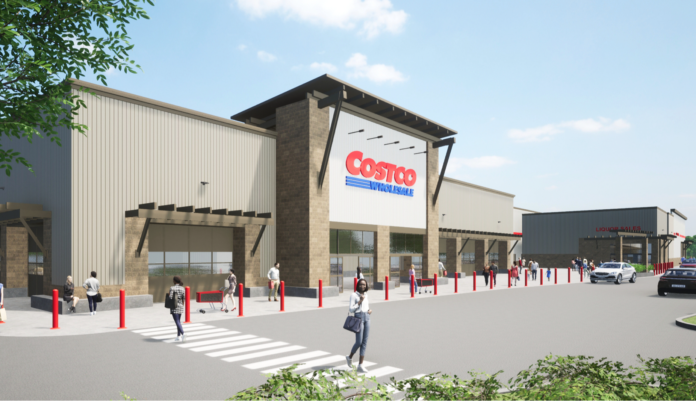
Costco Wholesale in Kelowna, BC (Image: Costco)

Seattle-based retail giant Costco Wholesale is continuing with its strategy of opening new warehouses in communities that had older format stores in Canada, with the newest location opening in Kelowna BC.

The store at 2125 Baron Road is over 24 percent larger than the previous location and is increasing the overall scale of the operation in categories across the table.

“With the opening of this new warehouse, we can serve all of our members in the Kelowna and surrounding area and can bring new consumers and businesses to uncover the benefits of a Costco membership,” said Pierre Riel, Senior Vice-President and Country Manager, Costco Wholesale Canada. “We are very proud to share this new location with our valued members and member businesses in the local community and throughout the area.”

Kelowna was named the fastest growing Census Metropolitan Area in Canada according to Statistics Canada, which released the 2021 Census data from last week. The population grew from 194,892 in 2016 to 222,162 in 2021 – an increase of 14%.

Rendering of the Kelowna Costco Wholesale Image Credit: Submitted/City of Kelowna
Site Plan: WSP Canada Group Limited
Mayor Colin Basran

“We are thrilled about the Costco Wholesale Kelowna relocation,” said Kelowna Mayor Colin Basran. “The upgraded Costco has created valuable employment opportunities for the region, and will strengthen the local economy by offering a wider selection of goods and services to our residents and visitors.”

The brand provided a full breakdown of the location, which “features wider aisles and a larger selection of food offerings than in the past. It also includes a larger variety of specialty departments, such as an on-site bakery, fresh meat, expanded produce area, rotisserie chicken section, optical centre – including an on-site independent optometrist – a newly-introduced hearing aid centre, five tire centre bays, large food court, gas station with 24 pumps, propane station and an expanded pharmacy. With 14 checkout registers, a new self-checkout section with nine stations and 1,000 shopping carts, the warehouse features 871 parking spots – 246 spots more than the former Kelowna location.”

Costco Wholesale has been introducing the new store concepts for relocations across the country, including a 155,000 square foot location in Montreal that opened in October. The brand has also been expanding its footprint of Business Centre concept stores, with three new stores debuting in 2021 in Gloucester and St. Catherines in Ontario and in Edmonton. Those stores joined the the original location in Scarborough which opened in 2017 and Saint-Hubert in Fall 2020.

Exterior of new Costco Business Centre in Edmonton. Photo: Costco

The warehouses are open to members only, with an annual fee of $60 for a Business Membership or $60 for a Gold Star Membership.

The retailer currently operates 817 warehouses worldwide and 105 warehouses across Canada.  The first Costco Wholesale location opened in Burnaby, BC in October 1985 and has since grown to an organization that employs more than 40,000 people in Canada.

Canada has a higher concentration of Costco stores than the United States per capita, speaking to the success of the Canadian market for the retailer.

David Yurman Unveils Beautifully Renovated Yorkdale Flagship in Toronto [Photos]

David Yurman Yorkdale (Image: Michael Muraz)

New York City-based jewellery and watch brand David Yurman has unveiled its beautifully renovated storefront at Toronto’s Yorkdale Shopping Centre. The Yurman Canadian flagship store’s look is inspired by the retailer’s new 57th Street New York City flagship which features an updated design using high-quality materials in a decidedly more casual yet luxurious space. 

The 1,625 square foot Yorkdale David Yurman store opened in late 2013 and recently relocated temporarily for several months for the full store renovation. What has been unveiled is a new more informal space featuring a mix of stone and wood that is meant to be both welcoming and luxurious. 

The store’s new design was conceptualized by President Evan Yurman who also holds the title of Chief Creative Officer for the David Yurman brand — Evan is also David Yurman’s son. Evan collaborated with award-winning architect Michael Gabellini on the store that features a floor made of dark cardoso stone and pale Bardiglio marble slabs, interior millwork made from white oak, and nickel and silver travertine countertops. Other design elements include a solid oak decorative ceiling, a rose gold and stone façade, and custom rose gold plaster feature walls. 

David Yurman Yorkdale (Image: Michael Muraz)

Luxurious private shopping rooms in the store are furnished with mid-century modern pieces inspired by the Yurman family’s personal collections and their connection to art and design. Artwork is also featured throughout the store, including sculptures and paintings by David Yurman and his wife Sybil. 

While the current store was being renovated, Yorkdale’s David Yurman boutique relocated into a temporary 2,250 square foot retail space in the mall formerly occupied by British luxury brand Mulberry which exited the Canadian market in 2020. Now that Yurman is back in its original space, the former Mulberry space will be split up so that adjacent luxury brands Cartier and Bulgari can both expand their existing Yorkdale stores. 

It’s not yet known if David Yurman will open any more standalone stores in Canada. David Yurman currently operates several concessions which feature an older store design that is also luxurious and impressive. A 1,649 square foot Yurman boutique at Holt Renfrew’s Bloor Street flagship store opened in 2019 on the main floor carrying a range of women’s and men’s designs in dedicated areas. That year as well, David Yurman unveiled a 1,200 square foot concession on the main floor of Holt Renfrew Ogilvy in Montreal. 

David Yurman Yorkdale (Image: Michael Muraz)

In late 2016, David Yurman opened a 1,226 square foot concession at Holt Renfrew in Vancouver which at the time was the largest concession in the world for the brand. The Vancouver store was one of only five globally at the time to feature Yurman’s ‘high jewellery’ collection with some pieces exceeding $100,000. Currently, the Vancouver concession is the only David Yurman boutique in Canada to feature the pricey pieces. 

David Yurman also operates concessions at Holt Renfrew stores in downtown Calgary and at Square One in Mississauga. The brand also has a shop inside of Nordstrom in downtown Vancouver. 

When it opened in September of 2014, Nordstrom’s first Canadian store at Calgary’s CF Chinook Centre housed a David Yurman concession area, as did Saks Fifth Avenue’s downtown Toronto store which opened in February of 2016. Both of those Yurman shops have since closed.  

David Yurman Yorkdale (Image: Michael Muraz)

Designer David Yurman founded his eponymous company in 1980, and in 1983 introduced his signature bracelet which propelled the brand. The bracelet features a twisted helix adorned with gemstones on its end caps, available at different price points depending on materials. Designs now include pieces for women and men that range from earrings to necklaces to gift items such as pens, as well as a line of timepieces and engagement rings. 

The company operates numerous standalone stores in the United States as well as concessions and shop-in-stores in upscale department stores. Various upscale jewellery retailers also carry the brand in the United States and Canada. 

Additional Photos

David Yurman Yorkdale (Image: Michael Muraz)

World’s Largest Global Cosmetic Clinics Company Enters Canadian Market with 1st Location and Plans for More

Laser Clinics at Hillcrest Mall (Image: Laser Clinics)

Laser Clinics, the world’s largest global cosmetic clinics company, has entered the Canadian market with its first location at Hillcrest Mall, Richmond Hill, in the Greater Toronto Area. 

George Jeffrey

And Laser Clinics Canada, which offers advanced beauty treatments, skincare services and products, plans an aggressive expansion throughout the country in the near future.

The brand has 194 clinics in Australia, New Zealand, Singapore and the United Kingdom.

George Jeffrey, Managing Director for Laser Clinics Canada, said the company is convinced Canadians will appreciate having greater access to more affordable medical-grade, top quality aesthetics treatments that are tailored to their individual needs and desired results.

Laser Clinics at Hillcrest Mall (Image: Laser Clinics)

“Laser Clinics originated in Australia back in 2008 and it really is a business focused on clients in the advanced beauty and aesthetics space. It’s primarily known for laser hair removal with medical grade lasers  . . . The business evolved from there to also include skin treatments,” he said.

“We hope to have a lot more (in Canada). We plan to have nine open and operating by June 30. We have leases active and signed on multiple locations now and it should be reachable . . .  We do have a plan for the next calendar year for an additional 20-plus clinics across Canada. We’re going to be a national brand. 

“We’re starting in the GTA with a smaller team for market entry and leveraging our assets there first but we will be coming and most likely head west from the GTA actually. It’s on the radar on the near term.”

Laser Clinics also offers cosmetic injectables and Skinstitut and Dr. Roebucks – two clean and sustainable cosmeceutical skin care products made with Australian botanicals that enhance treatment results. Skinstitut specializes in high-performance cosmeceutical skincare with clinically proven ingredients that are as effective as they are affordable, because its mission is that everyone should experience the confidence that comes from happy, healthy skin. Dr. Roebuck’s line is a pioneer in the clean, sustainable skincare movement that delivers maximum results with minimal ingredients, bringing complexions to their healthiest, most radiant state, said the company. 

Laser Clinics at Hillcrest Mall (Image: Laser Clinics)

“Our tagline probably says it all. Beauty tailored to you. There’s an element of the client’s journey, the client’s experience, here that really starts with transparency. I think for a long time, services that have been provided from dermatologist offices and the availability and access to advanced beauty and aesthetics has been fairly closed and high priced. The transparency around what someone would expect to pay for some of these types of services and treatments was less known,” said Jeffrey. 

“You typically would go in for a consultation in the past. You would pay for that consultation. The market is opening so these types of consultations are now typically complimentary – though not everywhere. But at Laser Clinics we are. You can come to us and have a free consultation to talk to a trained medical aesthetician about what you’re looking to achieve. We design and prescribe a treatment path for Canadians that is affordable – affordable relative to other service providers that are in the market today.

“We democratize advanced beauty. We’re trying to make it more available and open access. There’s certainly a growing demand for these services in Canada but the access and the market is under-developed and under-served today. So we’re very excited to create great points of access for Canadians.”

Laser Clinics at Hillcrest Mall (Image: Laser Clinics)

He said Laser Clinics counts on the expertise and vision of a Medical Advisory Committee that oversees and approves equipment and treatments offered by the Laser Clinics network. The committee is comprised of leading dermatologists and non-surgical aesthetic doctors who meet regularly to review and engage in careful governance of the network’s product and service offering while overseeing the quality of the customer experience. Its priority is to ensure client safety always remains first.

Jonathan Hopkirk

“We’ve curated a treatment menu that was previously available only at a high cost from dermatologists,” said Dr. Jonathan Hopkirk, Global Medical Director and head of the company’s Medical Advisory Committee. “We have more than 300 experienced doctors, registered nurses, and cosmetic injectable experts who create a tailored treatment program for each and every client.”
Jeffrey added that Laser Clinics Canada is actively seeking expansion through the same unique 50-50 franchise-corporate co-owned business model that has worked exceedingly well in other markets. The company is now scouting for Laser Clinic co-owners who meet eligibility requirements, have a proven record of leadership and are passionate about helping clients look and feel their best selves. 

Laser Clinics is owned and operated by KKR, a leading New York-based private equity firm and it delivered more than three million treatments globally in 2021. 

Jackson Turner and Kate Camenzuli of CBRE are representing Laser Clinics in its Canadian expansion.

Spending Boost to Come as Restrictions Lift in Canada Says Study by Moneris

CF Fairview Mall (Image: Dustin Fuhs)

Pandemic restrictions have certainly had a negative impact on spending as ongoing and recent restrictions have made it difficult for Canadian small businesses to operate. 

However, data from 2021 by Moneris, Canada’s largest financial technology company that specializes in payment processing, demonstrates that as restrictions lift, Canadians’ spending and support for businesses increases. 

As restrictions lift in 2022, spending will likely increase, as Canadians continue to prioritize health and wellness and spend on experiences they missed out on during lockdowns.

Peter Goldsztajn, Director of Corporate Data Analytics for Moneris, said 2021 was an interesting year in consumer spending.

“We did see some pretty substantial growths over 2020. When you talk about lockdowns, especially when you’re comparing them to 2020 they had significant impacts. Now I would say it’s much more focused on certain areas of the economy.

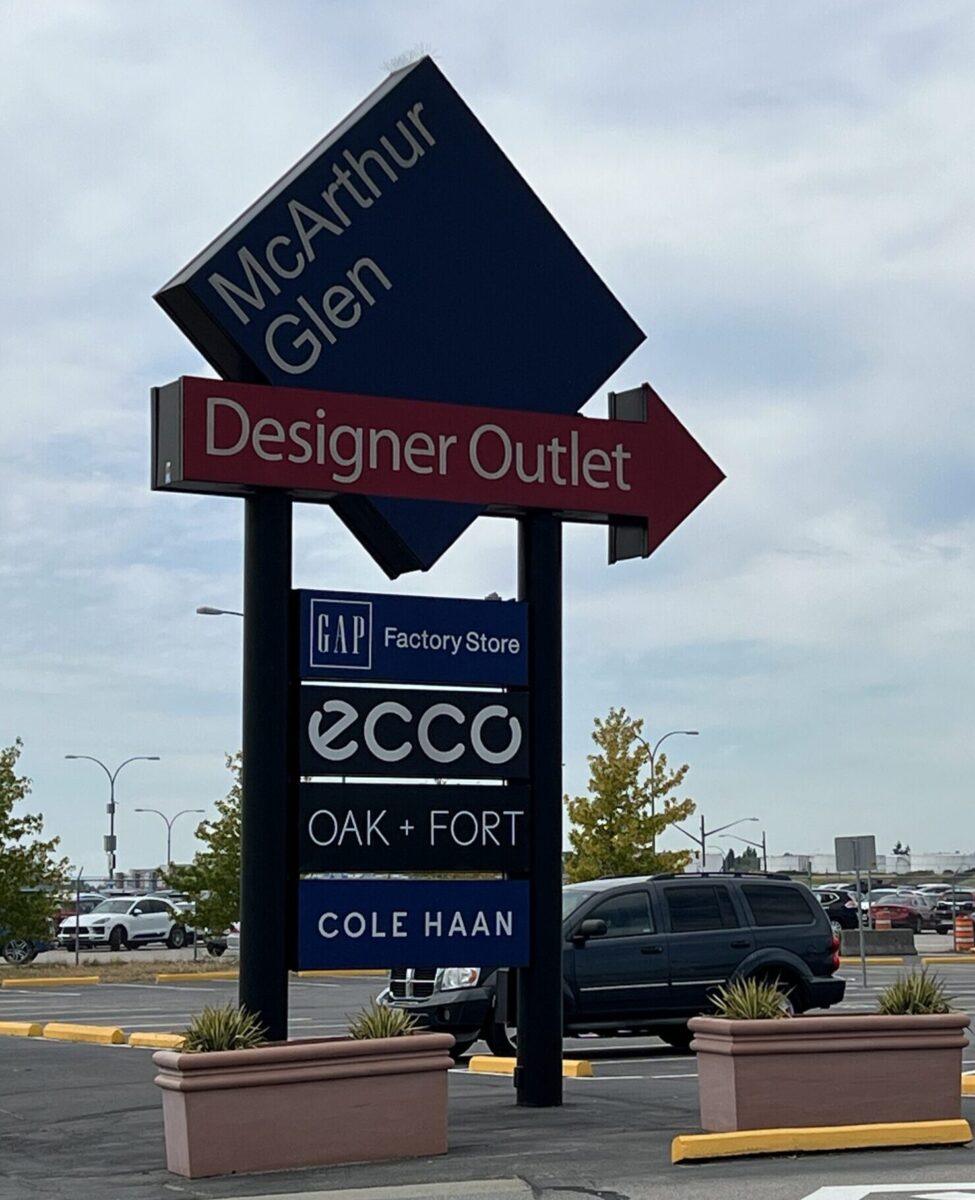
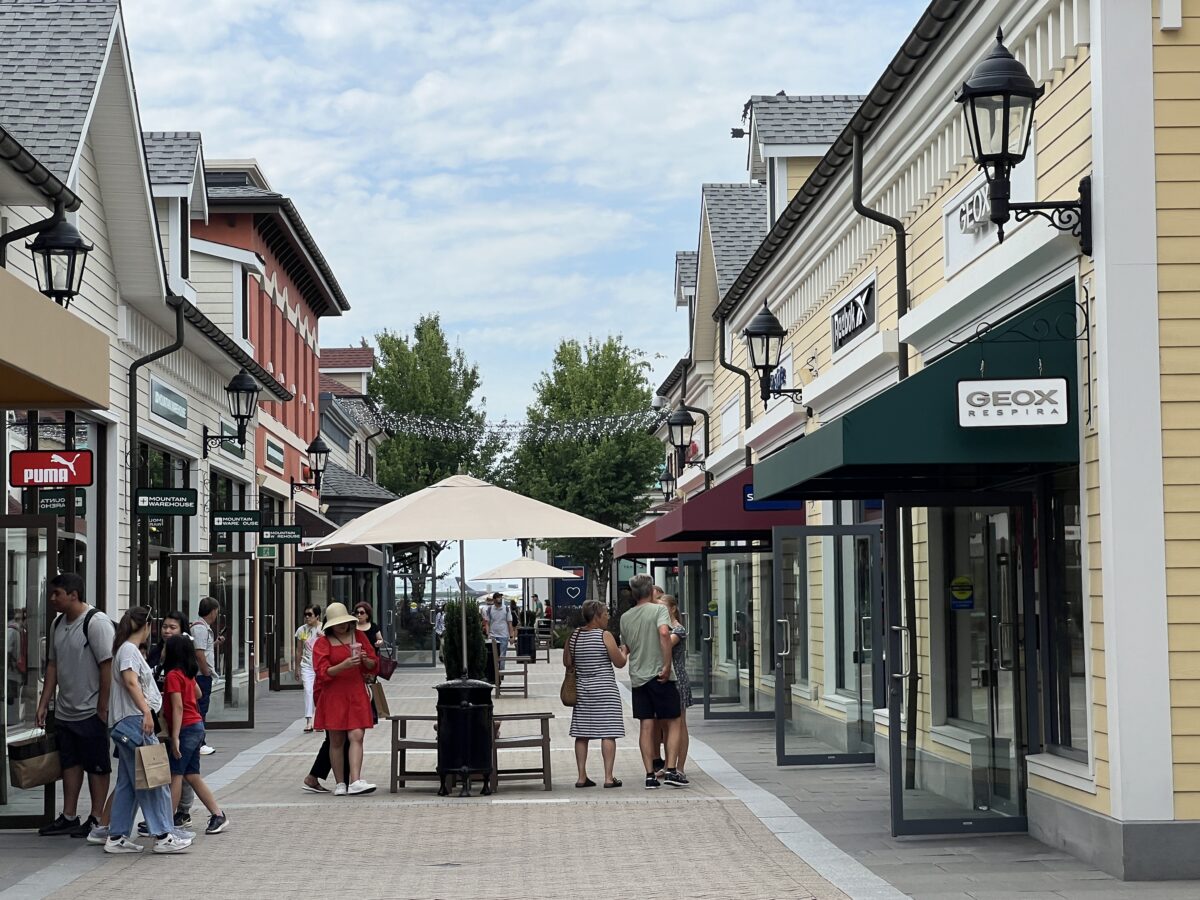
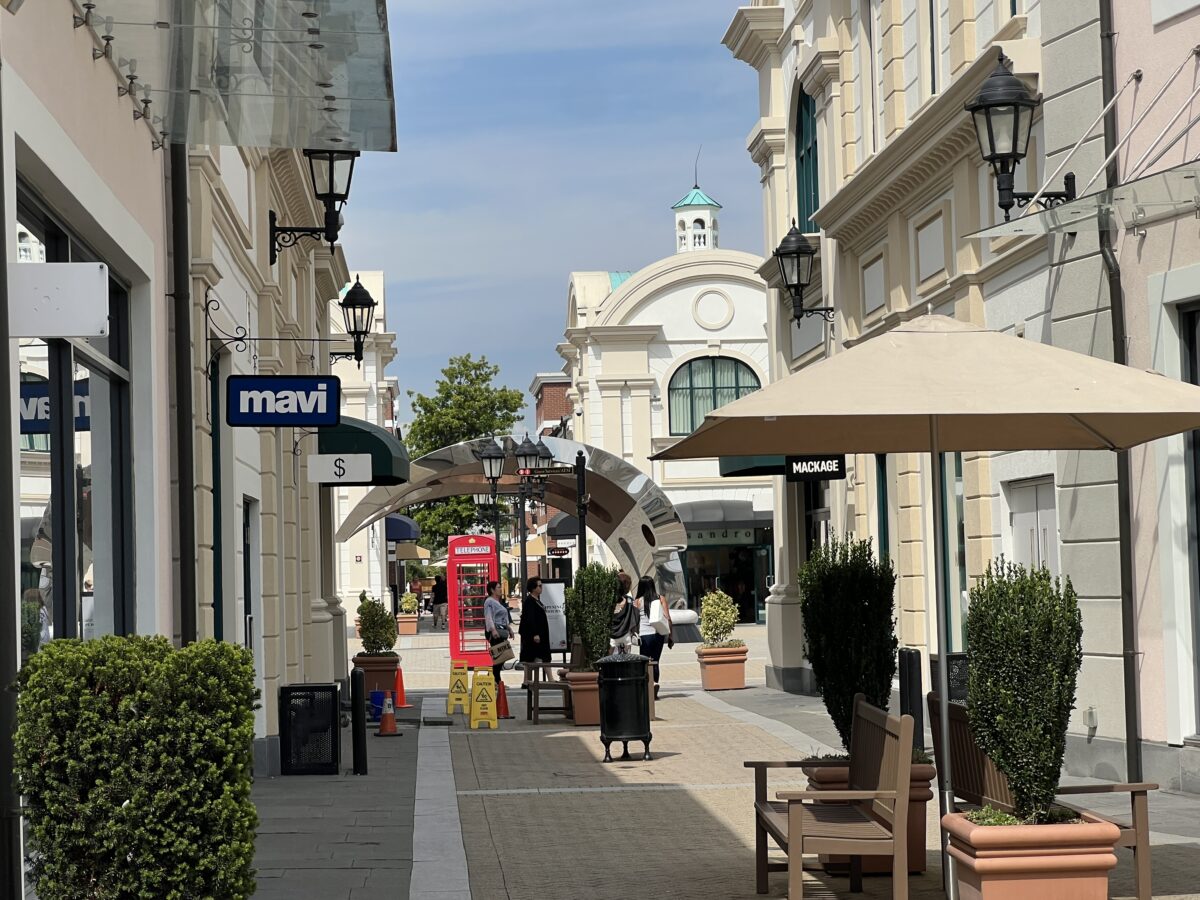
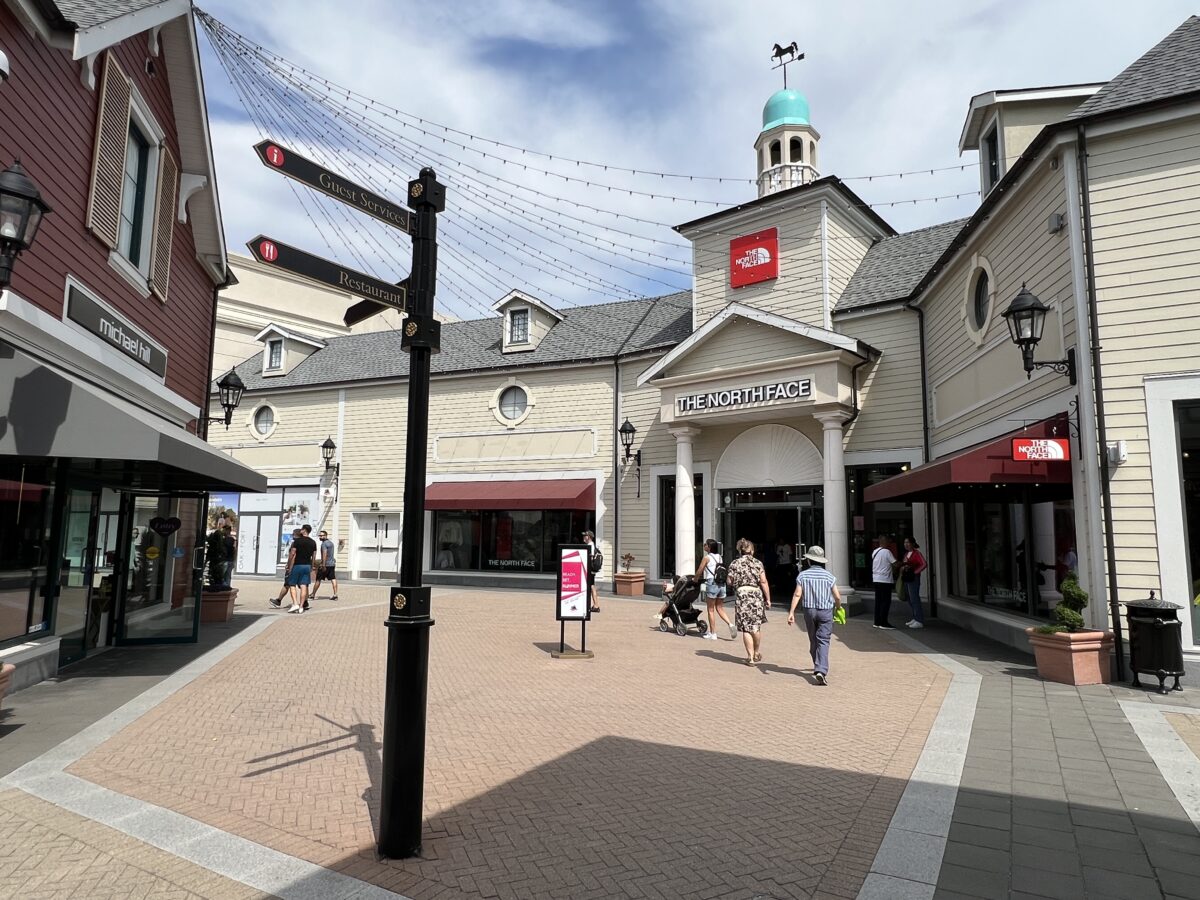
Image: McArthurGlen Vancouver Airport

“There’s no surprise that restaurants and travel have been a common theme. On the positive side, things tend to rebound quite quickly. It’s pretty obvious. As soon as we lift restrictions people tend to hit the stores and try to get their fixes for going out as well as spending some money on the things they wouldn’t have otherwise.”

Goldsztajn said the household industry as well as the health and wellness industry benefited through the lockdowns because as people couldn’t go out and shop as much as they’d like they were buying things for their home and buying items for their personal fitness.

“These are areas that are still growing and it hasn’t changed with the exception that I think consumers are being a little bit more adjusting their behaviour with regards to concerns about supply chain issues,” he said.
Data by Moneris indicates that between January to March 2021 many Canadians continued to work from home and chose to spend their money on home office and general home upgrades. In the first quarter of 2021, Moneris saw a 52 per cent volume growth in the household spending category compared to March 2020. Health and wellness and outdoor recreation were also prioritized by Canadians in the early months of 2021.

Between April and June 2021, as reopening phases began to roll out across the country and stores and restaurants started to open their doors again, Moneris saw retail sales volumes increase by 15 per cent and restaurant sales volumes increase by 35 per cent compared to the second quarter of 2020. With travel restrictions still in place, Canadians spent their money on local recreation, services and hobbies.

Image: Calgary Downtown Association

Then between July and September 2021, the lift on travel restrictions caused a dramatic spike in plane ticket purchases (282 per cent) and hotel bookings increased by 45 per cent compared to the third quarter of 2020. Looser restrictions on get-togethers caused Canadians to make up for lost time spent with friends and family during lockdowns; significant spending increases were seen at: Amusement parks: +183 per cent; Bowling alleys: +57 per cent; Movie theatres: +406 per cent; Bands & orchestras: +166 per cent; Tourist attractions: +132 per cent; and Recreational sports leagues/camps: +82 per cent.

From  October to December 2021, Moneris said spending on entertainment continued with an increase of 89 per cent compared to 2020 and sales at indoor recreational and entertainment facilities increased as the temperatures dropped.

“People have been spending money,” said Goldsztajn. “I can tell you that 2020 was below the normal no doubt about that but 2021 after March, in Alberta specifically, according to our data we’re actually seeing above the normal stats. There’s probably some element of pent-up demand. I can imagine that. People are also saving money and not commuting. Staying at home.

“But I do see substitutions. We’re basically at the same level or above in some industries. So people are still spending their money.”

Goldsztajn said that overall e-commerce has done well throughout the pandemic. 

“I suspect as things open you’re going to see some more substitution around that. People will be heading to the stores more frequently. As we always say, shop local. You really want to support your local small businesses and if you can order directly from them or perhaps just go visit them in the store or curbside pick up and things like that.”