Advertisement
Advertisement
Home Blog Page 758

How Calgary-Based Women’s Fashion Brand SophieGrace Plans to Grow after Launching Pre-Pandemic

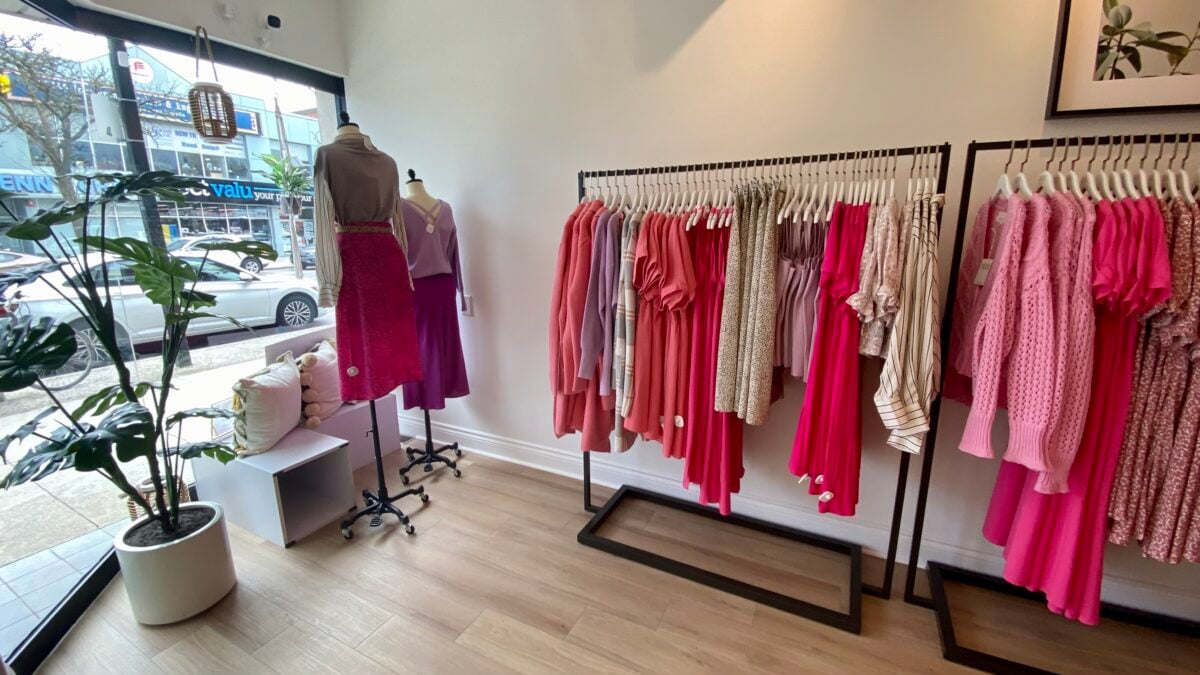
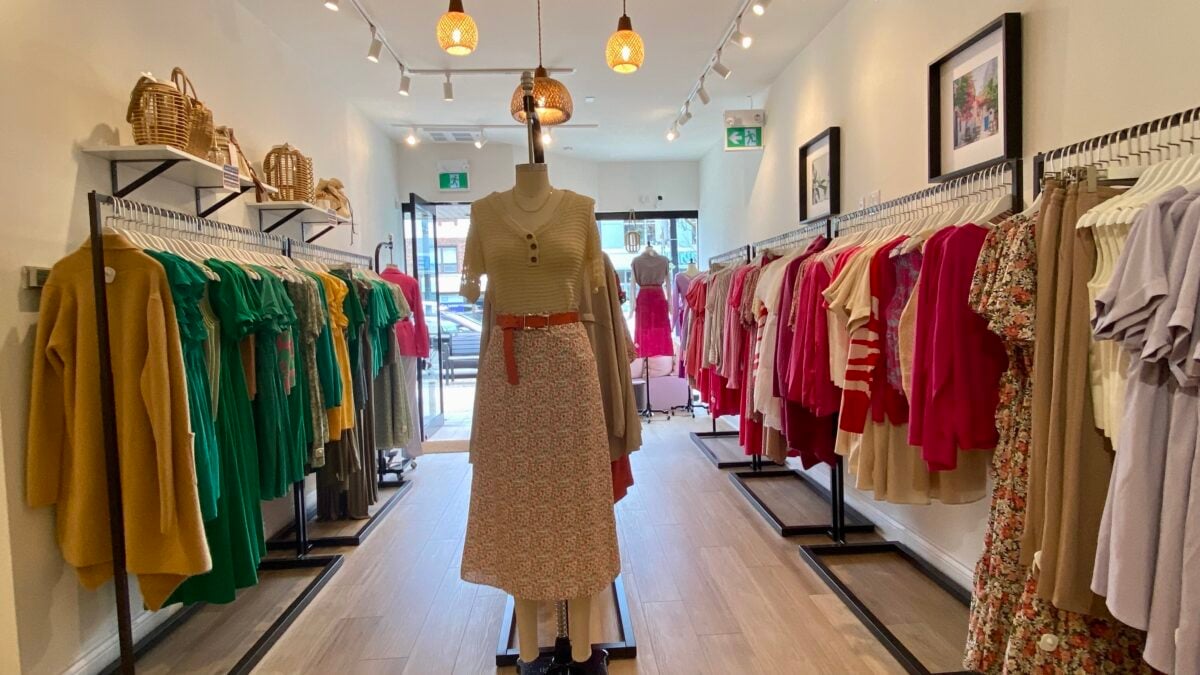
Image: SophieGrace Yorkville Village Pop-Up

SophieGrace was founded on the simple principle of making working women’s lives easier.

As an entrepreneur, activist, mom and real estate business leader – not to mention a former lawyer and political staffer – Emma May understands the challenges of wanting to look good while short on time.

Standing in her closet in 2018 she wondered why there wasn’t a brand that focused on creating streamlined elegant mix and match staples. So she made one.

Image: SophieGrace Yorkville Village Pop-Up
Emma May

Today, SophieGrace, which officially launched in January 2020, has two showrooms in Calgary and in Vancouver with potential growth in the future to other markets. The concept initially began as an online retailer.

“I wouldn’t call them stores. We have what we call a showroom strategy,” said May, who is also co-founder of Charles Real Estate in Calgary. “We have showrooms that we use as offices as well in Calgary and Vancouver. People can come in and try on the product but it’s primarily by appointment.

“I started planning it before the pandemic when we were all going into the office. Really what it was is I realized that when I was working professionally I wore a ton of mix and match separates as opposed to suiting. What I wanted to do is create a collection of mix and max separates. The original inception was sort of for professional women that were easily transitioned into outfits that almost looked like suiting but could also be worn in different environments.”

May said the concept has really connected to that audience – women who are just looking for something that is really easy but elegant and a comfortable way to dress.

Image: SophieGrace

“So instead of people having to sort through like 6,000 sku’s of crop tops and ruffles and all of the really avant garde fashion stuff we give them these basics that are the pieces that women grab and reach for every day and they can wear in any aspect of their life whether it’s in a boardroom meeting or whether it’s on the sidelines of the soccer field,” she said.

May describes herself as a “giant” online shopper and she knew her customers weren’t necessarily geographically concentrated in one area. So she always wanted to create something that would allow her to reach customers who were all around the world, particularly throughout North America, without having to make a giant investment in a retail space and commit to the staffing that requires.

“This was a strategy where it was let’s start online and have a digital first strategy. There are some people who still aren’t necessarily comfortable buying online or who want to touch and feel the product first,” said May.

“That was where the showroom concept came in. To be honest, initially when I launched, the idea was that we would actually go to where these women are. But then the pandemic hit. So that changed that whole plan. The initial plan was that we would actually go downtown where our customers were and do pop-ups in the places that they are at because I find my customers aren’t necessarily in the mall. They’re working. They’ve got jobs. They’re busy. They got other things on their minds.”

Image: SophieGrace

“So it was about how do we take this product to where they are at. They’re all on their computers. They’re all on their phones. The digital sphere is obviously something that is where they are. When it became evident that people weren’t in their offices anymore, but there were a lot of women who still wanted to touch and feel the product or they would say hey is there a store we could come too, that was when we decided to move ahead with the showroom strategy. That worked. We’ve got a stylist in Calgary who works with customers and shows them really how the concept works. We do those virtually and online as well.”

May said in the future she could see the retailer opening more showrooms with more regular hours or in more regular shopping places. It would likely be focused as people move back to in and out of the house – in places where people are working.

“If you think about Toronto there’s the PATH downtown which is like the underground mall down there or like in Calgary in the Plus 15s or downtown Vancouver where people are but it would be smaller places where we would not have inventory in place. It would really be about coming in, being able to experience the product, experience the brand, experience how the product feels on your body and then you would place your order and the product would be delivered to you,” said May.

“The reason we do that is I think it’s easier. People are used to ordering online even though they sometimes want to have a physical experience with the product and we can get product to people pretty quickly through our shipping.”

May said the retailer did a pop-up in Toronto in the fall that went really well in Yorkville Village. What was interesting was that most of the people who came to it were people who had interacted with SophieGrace online.

Bruce Winder, author of RETAIL Before, During & After COVID-19 and President of Bruce Winder Retail, said pop-up retail remains an excellent method to test retail concepts without the long-term commitment of leasing a permanent store – and with numerous mall vacancies, now is the time to take advantage of this approach.

Bruce Winder

“Many companies, big and small have come to the realization that they need to test a brand or a product before launching it. Smart retailers execute a series of small tests under different circumstances (price, marketing, format, signage, etc.) and harvest customer feedback as they go so that when they launch more permanently, they have refined the concept. This approach can save a lot of time and money on would-be duds,” he said.

“Also, since pop-ups became popular, many companies have been able to match physical retail space to seasonal demand with temporary store fronts, kiosks, outdoor activations and more. As an example, why spend tens of thousands of dollars in rent for year-round shops when 70-90 per cent of your demand occurs in the fourth quarter? Or in June and July or January and February? Retailers are better able to match operational expense with revenue.

“Pop-up stores also help digitally native brands turbo-charge ecommerce sales when creating regional brick and mortar locations. Customers engage with brands on a new level through staff and community. Nothing beats touching and feeling a product to close that sale and pop-ups can help do just that. With malls running at high vacancy rates due to COVID-19, it has never been a better time to negotiate a good deal to offer a pop-up store to your customers.”

Harry Rosen Launches Online Discount Platform ‘FinalCut’: Interview

Harry Rosen at Yorkdale Shopping Centre
Harry Rosen at Yorkdale Shopping Centre - Photo by Dustin Fuhs

Iconic retailer Harry Rosen has introduced its online platform FinalCut, which the company says is the only platform of its kind for top-tier, online luxury menswear in Canada with up to 60 per cent savings every day on luxury brand ticket prices.

Ian Rosen

“We’ve designed FinalCut for a customer who loves the thrill of building an exceptional wardrobe at accessible price points for luxury brands,” said Ian Rosen, EVP Digital & Strategy. “It’s a modernized, online shopping destination for the man who has style and savvy – who commands quality and value. The man who wants to steal the limelight at a fraction of the price.

“Final Cut is the destination for Canadians who want to build a head-to-toe wardrobe in luxury designer brands for great value. They’re looking for sharp prices, 365, every single day of the year, not necessarily only on those big holiday periods. We have built an experience that is digital first and is going to be built and marketed to meet the needs of the customer who’s always looking for something exciting and we feel like we have the merchandise, the marketing plan and the digital capabilities to really hit it out of the park.

Harry Rosen FinalCut

“The genesis of this idea was twofold. Number one, we were noticing customer behaviour when it came to really shopping on a more value side of our business. The customer didn’t want something one day. They were looking every day. They were looking for something exciting and that wasn’t necessarily the business we were built to deliver. So we said why don’t we build something for that, call it, thrill seeker shopper who really wants to be picking up something really exciting at a sharp price. We feel FinalCut is that.”

“And similarly we built a lot of capability on the digital and ecommerce side over the last 365 days. We felt it was time to put it to work on the new project. A really exciting next step in our strategy.”

Rosen said the retailer wants to really lean into what it has been great at doing. As a retailer, it has developed a lot of capability in being very targeted in the way it markets and being message-driven.

“We felt like we could scale that capability into a new frontier which is that thrill seeking, value oriented side of the market where it’s very competitive but we feel like we could definitely be a key player in the Canadian market,” he said.

Image: Harry Rosen

ShopFinalCut.com is the newest Harry Rosen banner to complement the investments the company has made to establish itself as an e-commerce leader in Canada. Exceeding 2023 targets three years early in 2020, digital sales have nearly tripled since 2019. FinalCut is the next evolution in Harry Rosen’s digital transformation strategy to provide Canadian men with an immersive and high-end experience.

Merchandise will include new brands that are exclusive to the online property and that are not available at Harry Rosen or at The Outlet by Harry Rosen. The platform provides access to a limited selection of items at a superior price-value equation, said the retailer.

“FinalCut is Harry Rosen’s response to what so many customers are looking for in a shopping experience. It’s for the man who is always on the hunt for the next great find,” said Rosen. “This platform showcases clothing and a lifestyle with an elegance that aligns with Harry Rosen’s reputation as a luxury brand experience that raises a man’s game. For over six decades, we’ve always taken pride in helping men present their best in their personal and professional lives. This is the next generation in that legacy.

“We are also seeing a younger customer start to gravitate the shopping experience already. This is something we want to welcome people into the Harry Rosen ecosystem and show them a great experience, deliver their package in a day and a half, two days, and maybe they’ll fall in love with the product and shop more with FinalCut. Maybe they’ll look to Harry Rosen next time they’re trying to get enough to build their wardrobe. Perhaps it’s a milestone event or something that’s changing where they want to make a purchase. For us, we’re trying to expand our reach and we like this as a really exciting way to do that.”

Harry Rosen was founded in 1954 and has grown from a 500-square-foot store in Toronto to 17 stores across Canada.

Frustrating Online Experiences Driving Consumers to Shop In-Store in Canada: Report

Disruptions to the global supply chain, which were hastened by the negative impacts associated with the spread of the COVID-19 virus, persist without any signs of easing. Highlighted by supply shortages, port congestion and price inflation, the current situation around the retail supply network is uncertain, to say the least, perpetually threatening merchants’ ability to provide their customers with accessibility to the products they seek. These disruptions and uncertainties often result in a disjointed and dissatisfying online experience for the customer and a loss of their trust in the brands they shop with. In fact, according to recent KPMG research, nearly two-thirds (64%) of Canadians have grown frustrated by the online experiences currently offered and express a desire to return to in-person shopping. It’s a sentiment that retailers ought to pay attention to, says Katie Bolla, Partner, GTA Consumer and Retail Industry Lead, KPMG in Canada, lest they lose the trust and loyalty of their customers.

“Many Canadians have embraced online shopping over the course of the past year-and-a-half, particularly in new categories like grocery,” says Bolla. “Generally speaking, consumers were patient at the start of the pandemic when they were receiving less than ideal experiences because online shopping was satisfying that base need of providing access to goods. As COVID has prolonged, however, and consumers have increased their adoption of digital channels, they’re now expecting experiences that are similar, if not better, than those that they are used to receiving in-store. But, inconsistencies around products that did not meet the consumer’s needs or expectations, including things like clothes that didn’t fit, replacement items on grocery orders or product that showed up damaged, resulted in frustration. And, many returns policies offered by retailers are seen by the consumer as inconvenient or complicated, adding further friction to their experience.”

Integrity

As a result, Bolla explains, many Canadians are increasingly yearning for the in-store experience, to be immersed in the brand, touching and interacting with the product or service, and receiving tailored advice from knowledgeable and experienced associates. In addition, the simple sense of discovery that the physical brick-and-mortar retail experience elicits in visitors is something that most utilitarian websites just can’t replicate. In fact, 65 percent of Canadians say that they “really miss the in-store shopping experience”, with 69 percent believing that retailers need to think differently about the online experience in order to mimic that of the in-store encounter, leveraging things like virtual reality dressing rooms powered by augmented reality and artificial intelligence that can allow consumers to see how clothes might look on them without physically trying them on.

They are insights from KPMG’s new 2021 Customer Experience Excellence report which goes a long way toward highlighting some of the opportunities that a pent-up demand among consumers to return to the physical retail store environment presents to brands. Its analysis also recognizes the increased pressure that’s been placed on retail organizations to deliver the experiences consumers are looking for. With the challenges involved in satisfying today’s consumer needs in mind, the report also presents six pillars of customer experience. Based on more than 11 years of research, the pillars provide retailers with a foundation from which to strengthen their customer engagement and support. And, as Bolla points out, much of what the customer is looking for is rooted in the integrity of the brands they shop with.

“What we noticed even before the pandemic was the inclusion, for the first time ever, of values as a top three purchase consideration for consumers,” she says. “And this sentiment has only heightened during the past 18 months or so. The vast majority of Canadians prefer to buy from brands whose actions align with their values. They’re also showing more of a willingness to pay for green and ethically-made products, presenting a number of ways by which retailers can satisfy these desires and strengthen their relationships with customers. Providing transparency concerning the source of products, including where it was made, how it got here, and the communities that were supported through ethical manufacturing, is critical. There are also rising trends around support for local and small businesses. Retailers that celebrate their communities and support the growth of local artisans will really resonate with consumers. And, consumers today want transparency into the way organizations treat their people and what their policies are, seeking brands that focus on things like fairness, inclusion, diversity and mental health.”

Expectations and resolution

Indeed, the actions, or inaction, of retailers around environmental, social and governance issues have certainly intensified over the course of the past year-and-a-half as Canadians took the opportunity to reassess their own values and the things that matter to them most. They want retailers to place greater focus on initiatives like reducing waste, with 90 percent believing that brands should start leveraging technology to do so by limiting the amount of product returns that occur. In fact, as a result of the pandemic and the subsequent accelerated digitization of the retail environment and world around us, retailers also have the opportunity to leverage technology to properly and effectively communicate with their customers. And, according to Bolla, it can help them satisfy two more of the report’s pillars.

“Managing customer expectations and resolution have always been two of the core foundational elements of customer excellence,” she asserts. “Prior to the pandemic it was important to address these pillars. But, over the course of the past 18 months, when many retailers have not had the same opportunity to have the high frequency interaction with consumers, communication and effective care have become essential. As a result, companies have been establishing new channels of communication. And, even more significantly, they’ve been demonstrating empathy through the communications and channels used to maintain or, in some cases, even strengthen their relationships. As part of this communication, many retailers have been trying to figure out the most effective ways to do so with their audiences, presenting them with ways by which they can be engaged and how their services can be used most effectively. Providing clarity around membership or loyalty programs during the pandemic period and developing more favourable return policies are some of the things that retailers have done to establish this communication, becoming proactive to address customer challenges and, at times, preventing them before they occur.”
Personalization and empathy

Bolla goes on to explain that a critical layer of communication and customer care involves a deep understanding of the consumer based on their behaviour. This understanding might allow brands to pre-populate online baskets for their customers or send them notifications regarding sales on items that they frequently purchase. It enables retailers to anticipate consumer needs and challenges and address them effectively. In fact, according to KPMG’s report, 41 percent of Canadian consumers like the idea of retailers predicting what they want when they want it and delivering it to their home. It empowers retailers with the ability to personalize their engagement with consumers, conveying to them a sense of consideration and compassion concerning their needs.

“Personalization and empathy are two key pillars of differentiation,” says Bolla. “Personalization is most highly linked to customer loyalty. It’s about data and knowing their customer better than they know themselves. An empathetic approach involves them using that information and equipping their employees with it so they can better understand the customer and enhance their experience through personalized service. It allows the retailer to make consistent improvements to product creation and recommendations, the channels leveraged, the experiences designed, pricing and offers and, of course, communication. And, based on some of the enhancements that have been made by brands over the course of the past year-and-a-half, many consumers are now expecting retailers to be able to predict what they want, when they want it and deliver it to their homes. And the best brands are leveraging digital to really listen to their customers, understanding them at a deeper level, figuring out what’s working and what’s not working, and continuing to tailor their service to them.”

Time and effort

In addition to the pillars of integrity, expectations, resolution, personalization and empathy, extensive KPMG research also suggests time and effort as a vital component of an excellent customer experience. In other words, the ease with which consumers can interact with brands, and the convenience of doing so, are still major considerations within the minds of consumers, perhaps increasingly so in lockstep with the digitization of the retail environment. For retailers, this often means being accessible and offering a frictionless omnichannel experience, providing the information and product that consumers are looking for. In fact, according to KPMG research, 78 percent of Canadian consumers say they will switch brands if they can’t get what they want when they want it. It’s an alarming statistic, and one that Bolla says speaks to the importance of reducing the time and effort a consumer needs to spend in order to receive the experience they seek.

“The retailers and brands that can create a seamless, integrated experience for their customers will be those who differentiate themselves from competitors going forward,” she says. “It shouldn’t matter where a consumer starts their connection with a brand. They should be able to pick up exactly where they left off in another channel without the need to start over, repeat themselves and re-enter information. This experience needs to be uninterrupted across all channels. Some of the ways retailers have been addressing this need is by experimenting with pop-up stores, bringing their products and experiences to their customers. Others have launched digital waiting lines so customers don’t have to physically stand in a line to wait for service. The offering of easy self-serve options has also reaped rewards for retailers. And, ensuring that returns are not forgotten, providing an easy and convenient resolution path for consumers, is key in providing that seamless engagement.”

Achieving customer experience excellence

In light of the six pillars that KPMG put forward as fundamental requirements in meeting the needs and desires of today’s consumer, there are a number of opportunities that arise for retailers to deliver the excellent experiences that they’re increasingly expecting. They are requirements, says Bolla, that are inextricably intertwined and, in combination, provide a powerful mechanism to help organizations understand how well their customer experience is delivered across channels, industries and company types. And, she adds, they also help provide insights into the ways in which they can leverage the tools at their disposal to seize the opportunities in front of them.

“For retailers to enjoy success going forward, they can’t forget about the basics. Personalization and empathy are differentiators. But you can’t get the true value out of those qualities if you neglect the basics. Brands have got to ensure their integrity with respect to customer safety and trust, providing transparency into their operations. They’ve got to focus on customer resolution, being clear around managing expectations, and create an easy and convenient experience. Understanding the customer through data and information is also critical in informing improvements to the products that are created and sold, the channels through which we engage, the service that’s offered and experiences that are created for customers. All of this, needless to say, has got to be designed and organized with the six pillars of customer experience excellence in mind, creating a culture within the organization that’s aligned to them. And, to support all of this, retailers have got to make sure that they continue to innovate and digitally transform their businesses. By continuously improving their experiences across digital channels, allowing a seamless engagement with ease, personalization, empathy and clear expectations, retailers will engender increased trust and loyalty among their customers and achieve growth for their brands.”

Related Retail Insider Articles

Walmart Canada Bolsters Ecomm Operations with Digital Data Platform Acquisition

Exterior of Walmart Store. Photo: Walmart

Walmart Canada is acquiring Foodmaestro, a Toronto-based digital data platform serving retailers and consumer package goods companies across Europe and North America, to enhance the giant retailer’s online shopping experience and grow its ecommerce business.

Walmart said the acquisition would allow the company to offer more personalization capability for its customers, such as highlighting safe products for those with food allergies or healthier options for people living with diabetes.

Horacio Barbeito

“We are very excited to welcome Foodmaestro to the Walmart Canada family,” said Horacio Barbeito, President and CEO, Walmart Canada. “Together we will continue elevating the online experience for our customers by sharing knowledge, investing in resources, people and product transparency. This enhancement to our online experience will allow our customers to make healthier personalized choices, which helps them live better.”

It is Walmart’s first acquisition since the pandemic started.

Foodmaestro’s digital platform processes over 14 million product attributes, 300,000 search requests and six million product validations in real-time each day. The service helps retailers who want to differentiate customer experience and deepen relationships with customers through enriched dietary information. Foodmaestro also enables its clients to provide their customers with greater product transparency and trusted information-beyond the label, through SmartLabel.

Walmart Canada announces plans to acquire Foodmaestro, a Toronto-based data platform serving retailers and consumer package goods companies across Europe and North America with strong capability to turn substantial amounts of data into usable attributes.

“Having spent the past several years pioneering digital transparency and helping shoppers around the world to find the right foods, we are thrilled to have been invited to join a family as prestigious as Walmart,” said Jaed Khan, Founder and CEO, Foodmaestro. “We have worked with Walmart for almost four years now and this investment signals Walmart’s continued commitment and increased focus to help provide consumers with the transparency they need to make informed decisions about the products they buy. We are tremendously excited about the future.”

Khan said Foodmaestro started in 2015 in the UK but moved to Toronto in about 2018.

“It’s just helping customers with dietary needs find the product that they want . . . Reading an ingredient label to figure out if I can eat that product or not with that miniscule font becomes really, really difficult . . . So how do we from an online perspective make it easier for customers with specific dietary needs . . . how do we allow them to find what they are looking for and very quickly grab the products that are suitable for them?”

Khan said much of the company’s growth from its inception has come from working with retailers and enabling those retailers to leverage Foodmaestro’s data and technology and drive their ecommerce platforms and their additional offerings. It has clients in the UK, Sweden, Portugal, Canada and the US.

Walmart Canada Marketplace

“Over the past few years it’s been a hell of a journey shall we say across five countries for a startup. It’s been quite phenomenal.”

Khan said there is a growing trend in society around food transparency and the need for consumers to know what they are actually eating.

“Consumers are increasingly becoming a lot more aware and conscious about what we’re putting into our bodies. At the same time, the health agenda is increasing immensely. We want to be healthier . . . There’s a huge awareness and drive to move us to healthier eating and healthier living,” said Khan.

“Combine that with the drive to digital or the use of digital, whether that be ecomm or mobile in store, the two things come together really nicely because through digital and ecommerce we can do what we traditionally couldn’t do on a physical pack. So all of a sudden we’ve created this opportunity for these consumers who have this increasing need and we’re now able to solve it because we have the tools and the means and a captive audience to do that.”

Walmart said the acquisition of Foodmaestro is part of the retailer’s goal to enhance its e-commerce experience as it transforms to be “the best and first omnichannel retailer for Canadian families.”

“The acquisition of this talented team of experts from Foodmaestro is a big part of our transformation at Walmart Canada,” said John Bayliss, Executive Vice President, Chief Transformation Officer. “I am energized by what the future brings with our talented team of engineers and health and wellness resources working together to make the online experience even better for our customers.”

Walmart Canada operates a chain of more than 400 stores nationwide serving 1.5 million customers each day. Its online store, Walmart.ca, is visited by more than 1.5 million customers daily.

Foodmaestro was recognized as part of the top 100 agri-tech companies from FoodTech 500 2020 and a member of the European Union’s EIT Rising Food Stars.

Aussie Eyewear Retailer ‘Bailey Nelson’ Doubles Canadian Store Count Since Start of Pandemic with Plans for More: Interview

Bailey Nelson at Scarborough Town Centre (Image: Bailey Nelson)

Despite the continuing economic challenges brought on by the ongoing COVID-19 pandemic, it’s not slowed down Australian eyewear company Bailey Nelson’s expansion plans in the Canadian market.

Founded in 2012 in Sydney Australia, Bailey Nelson now has 94 stores across Australia, New Zealand, Canada and the UK and will be at 100 stores by March.

The first store in Canada was opened in June 2017 on Robson Street in Vancouver and the company now has 35 stores in Canada.

“We opened our 17th store in the Canadian market in March of 2020 so we’ve doubled our footprint since the pandemic started and I don’t think there’s many others that can claim to have achieved that,” said Nick Perry, company founder.

Bailey Nelson at CF Market Mall
Bailey Nelson at CF Market Mall. Photo: Jessica Finch
Nicholas Perry

“We’ve seen opportunity to grow the business multiple times in Canada from where we are now. We’ve got highly engaged, very passionate store teams with really passionate optometrists and we’ve got a competitive proposition in the market where we’re about a third of the price of most of our competitors and the traditional chains and then we’ve got sort of a modern retail location that Canadians are responding to really, really warmly and so we just see a huge opportunity to continue to grow the business here in Canada.”

Many international players have entered the market in recent years. Webb said the competition in the optical marketplace has been driven by consumers who want additional options.

“Relative to other markets that we operate in like the UK or Australia, the chains have a larger section of the market and so I think there’s probably a perception that Canada is still potentially under consolidated and that there’s large groups of consumers that would respond positively to new entrants into the market. I think that’s why we’ve seen new people enter the space,” he said.

Bailey Nelson Kitsilano (Image: Bailey Nelson)

Recently, Bailey Nelson announced it has partnered with end-to-end 3D and Augmented Reality (AR) platform Plattar to implement a world-leading Virtual Try On solution that has seen the company’s online sales conversion grow by over 600 per cent in 2021.

James Kerridge

In early 2021, Bailey Nelson began working with fellow Australian disruptor Plattar to launch a Virtual Try On trial function for online shoppers across 60 of its core eyewear products. Plattar identified several touchpoints that combined to provide a consistent Virtual Try On experience across the complete range of devices, including the latest iPhone and iPad models. Plattar maximized the capabilities of Apple’s TrueDepth camera, together with the realism of 3D using the LiDAR scanner on the iPhone and iPad, to create a virtual experience that gives shoppers the ability to digitally wear Bailey Nelson’s frames in real-time, from anywhere.

“In 2020, our team was tasked with developing tactics to differentiate in an increasingly crowded e-commerce space and create a way for customers to receive the same try on experience as they would in store, from their homes. It was crucial for the brand to ensure that what customers experienced online matched what arrived in the mail,” said James Kerridge, Head of Marketing and Digital at Bailey Nelson.

“We had previously considered virtual try on solutions but found many of the solutions available on the market were outdated and, critically, did not utilize the capabilities across multiple generations of iPhone. Plattar was forward thinking, market leading and using the latest tech stack. Together we have deployed a solution quickly that meets our high expectations of customer experience around fashion and fit and is having a very positive business impact. This solution will play a significant role in our marketing approach now and beyond COVID.”

Kerridge said that during COVID customers were highly reluctant to come into stores and physically pick up and try glasses.

“Also, many of our stores were shut for periods of time. Glasses is one of those categories where it’s quite a high commitment purchase. Canadians only typically buy prescription glasses every three years. So this was developed fairly quickly. It’s considered leading edge in the industry,” said Kerridge.

Jeri Brodie of Aurora Realty Consultants represents Bailey Nelson’s lease negotiations in the Canadian market.

QuadReal Seeing Success with National Pop-Up Retail as New Brands Enter Marketplace: Interviews

Wedding Bells at Bayview Village Shopping Centre (Image: QuadReal)

The COVID-19 pandemic has had a dramatic impact on the retail industry with some businesses having to close their doors permanently.

Andy Clydesdale

But the ongoing health crisis has also provided opportunities for other retailers to kick open the doors and enter the marketplace – and some have been using the concept of pop-ups to do that.

“Notwithstanding the necessity of pop-ups in this day and age, the current climate has helped to underscore their importance,” said Andy Clydesdale, EVP, Retail, QuadReal Property Group.

“While the permanent-temporary nature of the physical shopping experience 3.0 is a bit of an oxymoron, this creative re-imagining of our spaces has allowed us to bring marketing and activation out of the shadows of operations.”

The Great Indoor Market at Bower Place (Image: QuadReal)

“Not only are these types of retail solutions vital to our centres, they’re critical to our tenant’s success and help to further define our role within our community as more than just places to shop.”

Melissa Evans, Vice President, Retail, National Marketing, with the QuadReal Property Group, said the biggest benefit of pop-ups for both retailers and mall owners is that it allows for a courtship period during which time each party can figure out if a longer-term marriage is going to work. 

“Obviously from the tenant’s perspective, there’s lots of benefits to this arrangement whether it’s the ability to test-drive the location, introduce their brand to a new audience, connect face-to-face with customers and of course, experiment with lower risk and financial commitment. On our end, we’re keen to incubate unique tenants with long term potential, as well as surprise and delight our customers by offering something new and exciting,” she said.

Image: Bayview Village – Candyland

“Our philosophy is really to ‘incubate, activate, innovate and animate’. When we think of temporary retail solutions, we’re thinking in terms of five types: marketing-driven pop-ups, marketing and leasing hybrid pop-ups, temporary leasing deals, community uses and other creative uses of spaces.

“Experimentation on the part of the tenant and incubation on the landlord’s side is going to continue to be a huge trend going forward, as will the need for flexibility and creativity. Notwithstanding the changing nature of our industry, customers are extremely savvy which together is really a giant wake up call for the whole industry. To really understand the assignment means reaching a lot higher to fill these spaces than what was acceptable in the past. There’s filling a space and then there’s filling the space with the right use in a way that contributes to the overall leasing strategy and brand storytelling efforts.”

From a marketing-driven pop-up perspective, these are typically more event-style, extremely photogenic and buzzy, explained Evans. Candyland at Bayview Village Shopping Centre is an example of this, working with NYC artist Robyn Blair, “the ultimate and sweetest Instagrammable moment vis-à-vis a candy-themed art gallery moment’ has been created. 

She said the month-long “I do, I do, I do” wedding-themed pop-up also at Bayview Village Shopping Centre was another example where, in partnership with Weddingbells magazine, a series of thematic events took place in an empty CRU that had been reconfigured to include a Wedding Chapel for wedding-themed fashion shows, a Gifted Boutique with suggestive gift-giving ideas, a Matrimonial Kitchen for couples cooking classes, etc.

Wedding Bells at Bayview Village Shopping Centre (Image: QuadReal)

“Marketing and leasing hybrid pop-ups are joint forces initiatives whereby marketing really sets the table from a presentation and storytelling perspective while leasing (and sometimes the Operations team) curates the vendor lineup. The Great Indoors Market at Bower Place is the perfect example of this whereby a portion of the former Sears box was transformed into a month-long holiday-themed marketplace featuring 14 external vendors in a Winter Wonderland-type setting. Several of those vendors have now graduated to their own temporary locations within the shopping centre.

“Temporary leasing deals are obviously the most common in our industry, however we want to make sure what we’re offering goes way beyond ‘common’. The incoming tenant isn’t just filling a void for us, they become part of our storytelling so brand fit and presentation is critical. Second Nature Boutique, which is a high-end designer consignment store at Bayview Village Shopping Centre, not only dovetails with the existing merchandising mix, it looks like it’s a permanent store. In short, if we’re going to do this, we want to ensure we do it well and there isn’t this disconnect for our customers. 

“Over at Willowbrook Shopping Centre, Willow Way, which is the pop-up space just outside Hudson’s Bay, allows for a constant rotation of local artisans and vendors in a turnkey setup. Right now, we’re test-driving a number of retail uses including Lee’s Donuts, aka the OG of the Vancouver donut scene.”

Lee’s Donuts at Willowbrook Shopping Centre (Image: QuadReal)

Community use is also a way to give back to the community where the shopping centre owner can. For example, it devoted over 20,000 square feet at Cloverdale Mall for a vaccination clinic to assist with the City of Toronto’s vaccination efforts. Also at Cloverdale, the mall participated in ArtworxTO, the City’s year-long public art project, with about 4,000 square feet now housing an exhibition curated by local artist Claudia Arana.

“Last, but not least, we like to think about other ways in which we can creatively use our spaces, the emphasis being on out-of-the-box thinking and ways in which we can spark joy for our customers. At Westshore Town Centre, we joined forces with Incredible Closets to create a merchandising space that promoted their closet system while showcasing seasonal must-haves from our tenants. At Capilano Mall, the hoarding wall became the canvas for an augmented reality art installation,” added Evans.

International luxury lifestyle brand ALPAKA, founded in 2007 in Estonia, has seen the benefits and potential of using the pop-up concept as it currently has one at Bayview Village until mid-January.

The company has its flagship store at CF Pointe Claire, with stores also at CF Sherway Gardens and CF Laval.

ALPAKA at Bayview Village

Are Kudeviita, one of the retailer’s founders, said Bayview is one of the top malls in Toronto and the company saw much potential in the area.

“This kind of brand was needed in Bayview and people really love our products and they go out from our store with only smiles on their faces. They’re really happy,” he said.

“We are looking to get something more permanent for Bayview and Yorkdale and also Ottawa at (CF) Rideau Centre because the pop-up shops we use as we always have in mind the possibility to make it long term. We want to select the good malls that are good for us.

“We’re also looking at Vancouver maybe for next year. We are interested in expanding in Canada but doing it step by step. But because of the COVID we have to make new plans. We grew from three shops last year to six shops this year plus we have the new cooperation agreement with Hudson’s Bay so we have four locations also with them with the shop in shop. The Bay shops are in Laval in Montreal, Pointe Claire in Montreal, then we have Quebec City St. Bruno and then we have Ottawa across the Rideau Centre.”

Food Supply Chain Resilience has a New Meaning in Canada with Ongoing Flooding in BC [Op-Ed]

Image: BC Ministry of Transportation

Images coming from British Columbia this month were simply heartbreaking: human casualties, dairy cows barely breathing above water being pulled to safety, the loss of livestock across the Fraser Valley. Just devastating. And the flow of goods on both rail and roads is severely compromised. Many have now claimed that flash floods and atmospheric rivers in B.C. were highly predictable due to nature’s occasional destructive wrath. But supply chains out West have always been vulnerable, and that’s not going to change anytime soon.

In the East, the importance of supply chains has often been underappreciated by the public. Ontario, Quebec, and the Atlantic Provinces have been spoiled with the St. Lawrence Seaway. Access to supplies has been easy and we’ve forgotten the Seaway’s logistical genius. Food from Europe, the Middle East and beyond has just floated up the Seaway for decades, servicing the founding provinces of our country at an inexpensive rate. In a Europe-centric global economy, it made sense to rely on Halifax and Montreal.

In the West, business with Asia has only grown over the years. The Port of Vancouver sees over $12 billion worth of agri-food products and commodities, coming in and going out of the country yearly. That is $35 million a day. The Port is close to where half of the world lives. In the fall, commodities grown in the Prairies are Asia-bound, which is why the B.C. disaster could not have come at a worse time for farmers across the country. The weak harvest this year gave them little to sell. And much of those products are now stuck on trains, stranded somewhere in the Rockies.

In the West, building an equivalent to the St. Lawrence Seaway has been a long-standing issue, ever since our nation’s creation, but especially in the last 20 to 30 years. Not building better gateways and corridors has made our Western agri-food economy more vulnerable, especially with climate change. As a result, with the globalization of trade, this vulnerability is now far-reaching, and the B.C. floods have reminded us that we are always one natural disaster away from seeing major bottlenecks.

To be realistic, however, given the topography of the region, it is going to be challenging to develop new options, and build supply chain resiliency. Trading through the U.S. is one option, but bureaucratic compliances and protocols would need to be worked out. We need to secure the few options we do have across the Rockies going into either Vancouver and/or Prince Rupert, now the third busiest port in Canada, after Vancouver and Montreal.Maintenance and making these routes secure will require massive investment. It should have happened years ago.

Beyond trade, the B.C. situation will generate food access issues in the region. Firstly, we will see shortages of certain products, either because the production of certain commodities like milk, eggs and poultry has been severely hampered for a while, or because products cannot get into the Vancouver area. Remember, the Fraser Valley is the breadbasket of the province. Farmers’ boards will need to work with other provinces like Alberta, Saskatchewan, and beyond to provide needed help.

For the rest of Canada, we are expecting sporadic shortages of food products that would have come from Vancouver, but nothing to bring any markets in Canada even close to food insecurity. We just need to adjust our expectations, as we were doing due to supply chain disruptions which were already happening before the B.C. floods.

Climate skeptics will argue relentlessly that bizarre and extreme weather events have been happening for centuries. After the heat dome and wildfires this past summer, and now with the current floods, if you are still a skeptic, you are simply not paying attention. The true backbone of our agri-food system is our supply chain. It’s as simple as that, and we need to take care of it.

The average Canadian doesn’t see or interact with any elements of the supply chain, ever. It’s invisible, but it’s always working. We need to have faith that our resilient food industry will continue to deliver. For governments though, to take care of our logistical network out West, faith is certainly not enough.

Bogner Reopens Store on Toronto’s Bloor Street Luxury Run & 1st Canadian Outlet Store

Bogner on Bloor (Photo by Craig Patterson)

German luxury fashion brand Bogner has reopened its first corporately-run storefront in Canada on the luxury run of Toronto’s Bloor Street West, and the store could become permanent. The brand has also opened its first Canadian outlet store at the Toronto Premium Outlets in Halton Hills.

The Bloor Street Bogner ‘Winter Boutique’ pop-up store at 131 Bloor Street West will remain open at least until March of 2022. The 3,320-square-foot space in The Colonnade is next to Italian luxury brand Moncler — the Yorkville area is home to the largest concentration of affluent households in Canada and since opening earlier this month, sales have been robust at the Bogner store. 

Bogner on Bloor (Photo by Dustin Fuhs)

The Bloor Street retail space includes a mix of outerwear and fashions — compared to the 2020 pop-up which was open for a shorter time period because of the pandemic, this year’s collection is considerably more expansive with some light-weight fabrics in shirts and other garments and fall styles that would be appropriate for winters in a warmer climate such as Vancouver. The popular Bogner skiwear line features prominently as well including a range of winter jackets considered to be among the warmest available. 

The Bogner Fall/Winter 2021 collection is described as offering a mix of sportive, timeless and technical fashions including iconic down jackets, stylish catsuits, luxurious knitwear and stirrup pants in elegant colours that are combined with casual sportswear pieces. 

Bogner on Bloor (Photo by Dustin Fuhs)

The brick-and-mortar expansion for the Bogner brand delivers “personal onsite retail experiences to both new and existing customers is the perfect addition”, according to the brand. Bogner’s co-CEO Heinz Hackl said, “We are actively scaling Bogner’s footprint in the US and Canadian markets and were able to efficiently test these in 2020. Now, we can act on that invaluable data to scale further, faster, and smarter. We are looking forward to the new season, this time with four exclusive winter boutiques and again with Flagship as a strong partner by our side.”

Bogner partnered with New York City-based FlagshipRTL to implement the Bloor Street store opening — FlagshipRTL is known to be a next-gen retail platform that also facilitated the launch of the temporary Bogner stores that opened this fall in New York City on Madison Avenue, Greenwich Avenue in Greenwich CT, and Oakbrook Centre near Chicago. 

Bogner on Bloor (Photo by Craig Patterson)

Bogner was founded in 1932 by Willy Bogner who imported skis, equipment, and Norwegian knit wear. His wife Maria revolutionized fashion in 1948 when she designed trousers made out of stretch material with stirrups — the dictionary now refers to these as ‘Bogners’. The iconic “B” zipper was introduced to garments in 1955. Willy Bogner Junior launched Bogner’s first ski collection in 1971 called ‘Formula W’. Last year Bogner relaunched its classic jackets with a modern interpretation and is now in expansion mode.

The resort town of Whistler, British Columbia, is also home to a Bogner ‘partner store’ run by a local franchisee. The only other North American storefront for Bogner is a permanent store in New York City’s Soho area. Bogner operates stores globally with a focus on European cities and resort towns known for skiing. 

In Halton Hills, Bogner recently launched an outlet store at the Toronto Premium Outlets which will remain operational into the spring of 2022. The large storefront replaced Moncler at the outlet centre which is home to numerous luxury brands. 

Bogner also has a Canadian website that will soon include ecommerce at: bognercanada.com

Additional Photos

Bogner on Bloor (Photo by Craig Patterson)
Bogner on Bloor (Photo by Dustin Fuhs)
Bogner on Bloor (Photo by Craig Patterson)