If you prefer to listen to the audio version, it is available below:
The Interview Series audio podcasts by Retail Insider Canada are available on Apple Podcasts, Stitcher, TuneIn, Google Play, or through our dedicated RSS feed for Overcast and other podcast players. Also check out our The Weekly audio podcast where Craig and Lee discuss popular content published on Retail Insider which is part of the The Retail Insider Podcast Network.
Drop us a line at Craig@Retail-Insider.com. You can also rate us in Apple Podcasts or recommend us in Overcast to help more people discover the show!
Background Music Credit: Hard Boiled Kevin MacLeod (incompetech.com). Licensed under Creative Commons: By Attribution 3.0 License. http://creativecommons.org/licenses/by/3.0/
Retail Insider is streamlining its Canadian retail news from around the web to include a handful of top news stories that can be viewed quickly during the day. Here are the top stories from the past three days.
A new global survey by Salesforce of 5,000 consumers across Canada, Australia, the US, the UK, and Singapore reveals critical changes to consumer spending amid inflation and economic uncertainty.
Key Canadian results include:
Nearly 60 per cent of Canadian consumers say sharing relevant personal information is valuable for an instantly personalized experience with a Retail & Consumer Goods business;
Nearly half of Canadian consumers expect a better experience from retailers as a result of the current economic conditions;
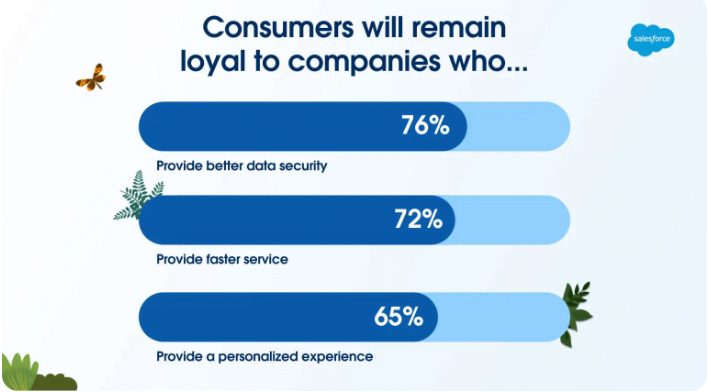
76 per cent of Canadian consumers will remain loyal to companies this next year if they provide better data security; and
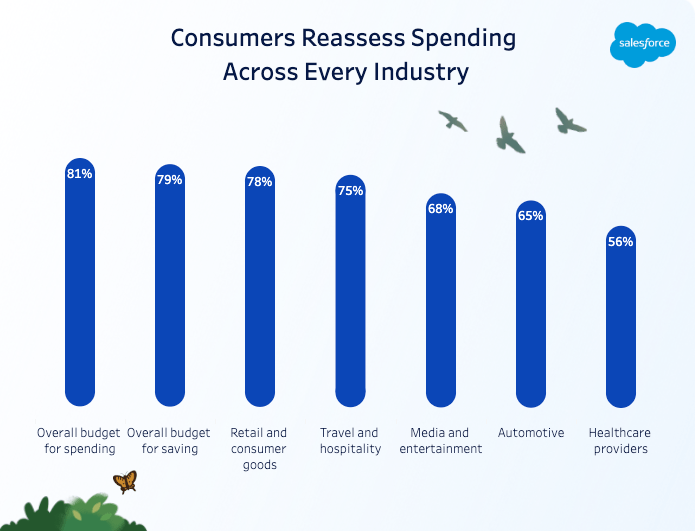
78 per cent of Canadian consumers plan to reassess their retail spending over the next 12 months.
Key global results include:
Having a disconnected experience is consumers’ #1 frustration when dealing with organizations;
Consumers are more likely to break up with a brand over poor quality service than high prices; and
Nearly 60 per cent of consumers say communications or offers from a company should have the most-up-to-date information within hours.
Image: Salesforce
Image: Salesforce
Caila Schwartz, Director of Consumer Insights and Strategy for Retail and Consumer Goods for Salesforce, a global leader in Customer Relationship Management, said overall the survey showed that value is incredibly important today for consumers and has driven much of decision making when it comes to spend.
Caila Schwartz
“We saw that across the board from a global level and down through the regions. In particular, we saw discounting strategy really driving demand. What we ended up seeing is retailers holding on to discounts,” she said.
“Over the last couple of years we had really strong demand and really low inventory. So it drove down discounting overall. This year was a little bit different. We didn’t have the same inventory challenges and demand wasn’t as strong. So what we thought we would see is retailers leaning into a very commercial season which is overall what we did end up seeing but when and how they discounted was quite different.
“We anticipated what we had been seeing over the last several years – I want to say maybe even since 2017 or 2016 – was an increase in discounting in those early November weeks . . . That is not what we saw this year. It was very quiet in the first couple of weeks of November and discounting was not as aggressive as it had been in the past in those early weeks. And it wasn’t until Cyber Week when we actually saw promotions kick in. And ultimately that really drove demand. Consumers saw that discounting was really low and they didn’t take the bait. They held back on purchases. And so those early weeks of November, leading up to Cyber Week, we actually saw quite significant declines in online sales and a lot of spend really got pulled back into that Cyber Week period. That’s when we saw the discounts start to rise. That was really driven I think by retailers looking to hold onto margins as much as they could.”
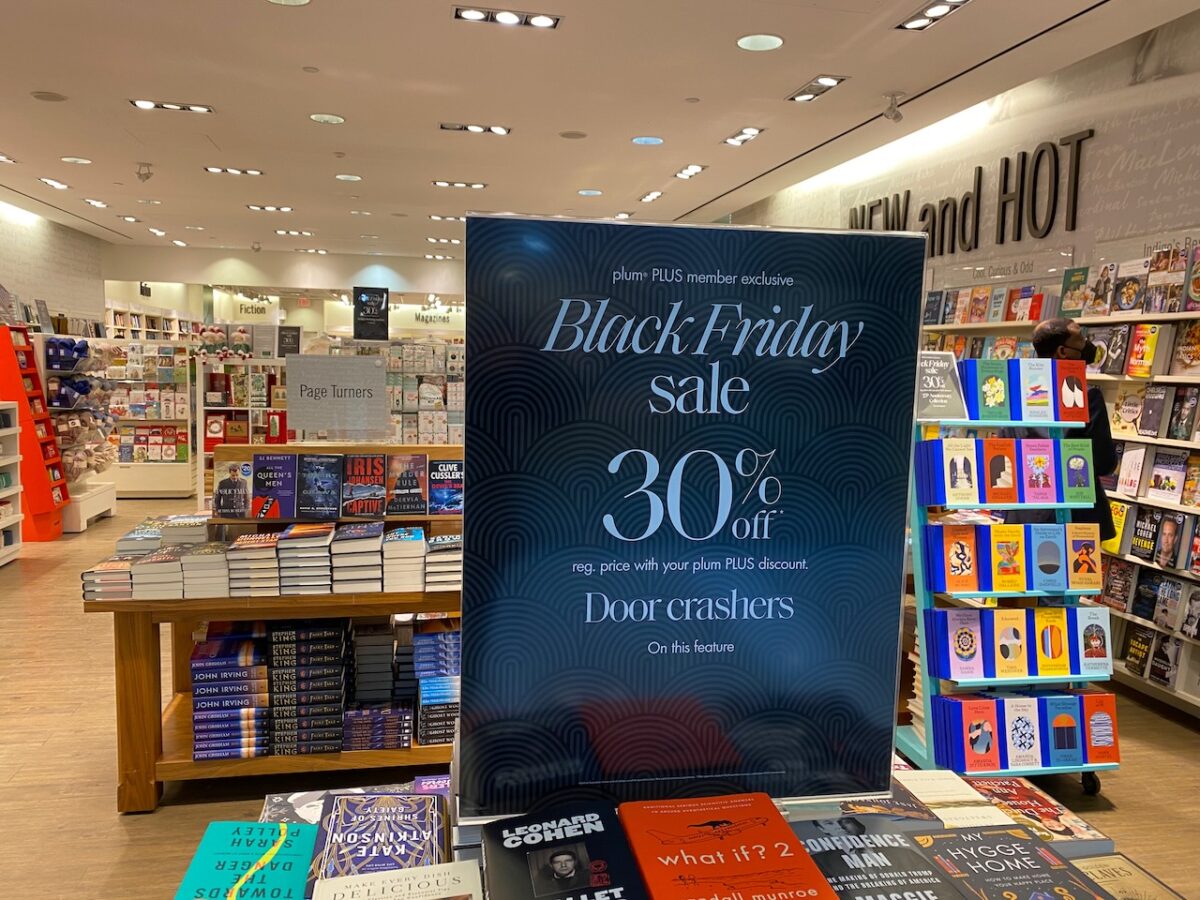
Black Friday Sale at Indigo in First Canadian Place (Image: Dustin Fuhs)
Schwartz said that even before the holiday period starting around the early summer of 2022 more and more consumers were saying that they were only going to buy products that were on sale.
“That was true across all generations, across all income levels. More and more consumers as the year rolled on were becoming price conscious and that ultimately is what ended up shaping what we saw play out,” she said.
“Discretionary spending is definitely down and there’s a focus more on necessities versus those nice to have type goods.”
The global survey found that 81 per cent of consumers say they will reassess their budget over the next 12 months as they seek more personalized experiences. Also, 52 per cent of consumers say poor quality service is the primary reason they won’t make a repeat purchase. And over 60 per cent expect companies to react instantly with up-to-date information when transferred between departments.
It said retail, travel, hospitality, media and entertainment are most at risk as consumers rethink spending.
Image: Salesforce
“Retailers are most at risk. Seventy-nine per cent of consumers say they will reassess their spending with retail brands over the coming year. Travel and hospitality and media and entertainment also face the potential for lowered spend, with 78 per cent and 70 per cent of consumers, respectively, reporting reassessment plans in those sectors,” said Salesforce.
“An economy plagued by inflation and staffing shortages hasn’t lowered consumers’ expectations for top-notch service. Fifty-two per cent, in fact, expect a better experience from their favorite brands as a result of the current economic climate.
“The good news is these same consumers are clear about what they believe makes an improved experience. Seventy-two per cent say they will remain loyal to companies that deliver faster service, and 65 per cent say they will stay loyal if the company offers a more personalized experience.
Consumers also expect brands to use their data to offer more relevant customer services, with over 60 per cent reporting they expect companies to react instantly with the most up-to-date information when transferring across departments. Bolstering trust can also be an opportunity for loyalty; 76 per cent of consumers say that companies that provide data security will encourage their loyalty.”
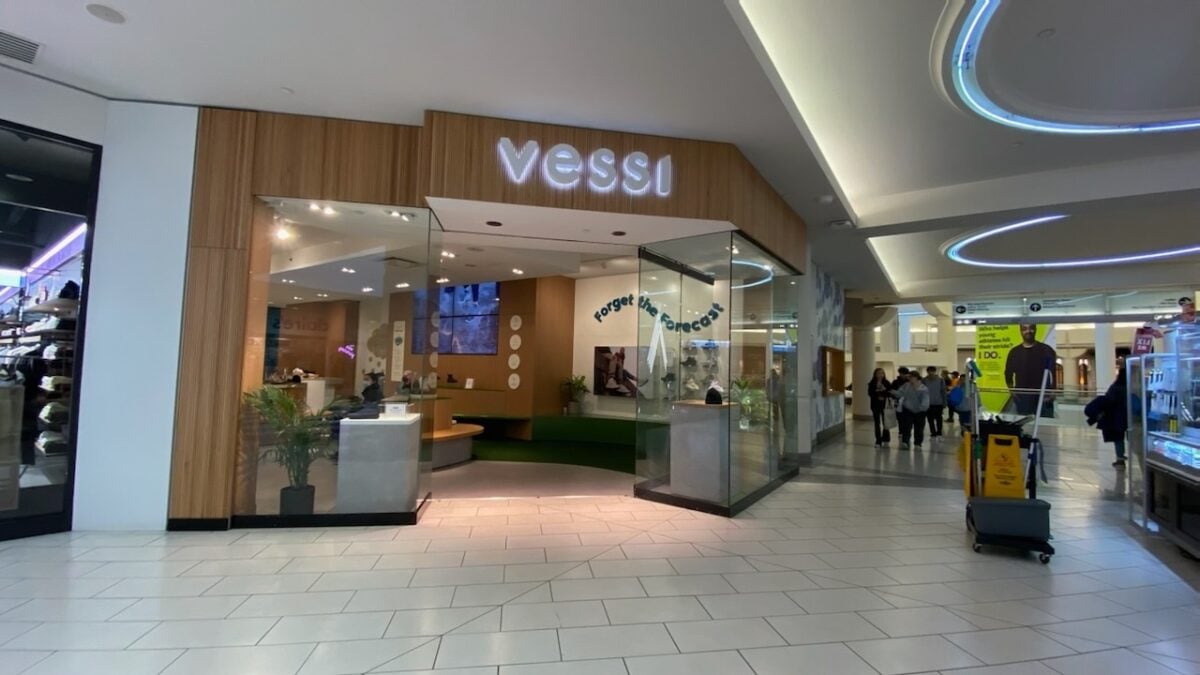
Vessi at Metropolis at Metrotown (Image: Craig Patterson)
In early January, Salesforce released its 2022 holiday shopping recap, analyzing November and December shopping data from over 1.5 billion shoppers on retail sites using Salesforce Customer 360 (including 24 of the top 30 U.S. online retailers).
While November’s online sales were lower than in 2021 and 2020, Cyber Week deals and Buy Online and Pick Up In Store (BOPIS) offerings helped retailers drive success in 2022. Across the 2022 holiday season, consumers spent a total of $1.14 trillion online globally and $270 billion in the U.S.
“Retailers closed out the 2022 holiday season with stronger online sales growth than expected – driven in large part by U.S. demand, steeper discounts on peak days, and BOPIS options,” said Rob Garf, VP & GM of Retail, Salesforce. “Staggering return numbers show that consumers are still cautious amid economic uncertainty, however.”
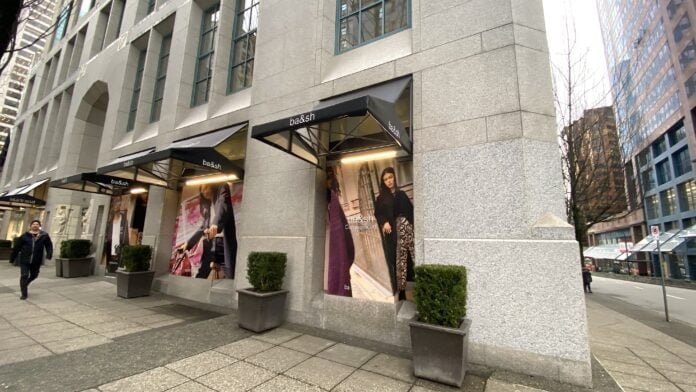
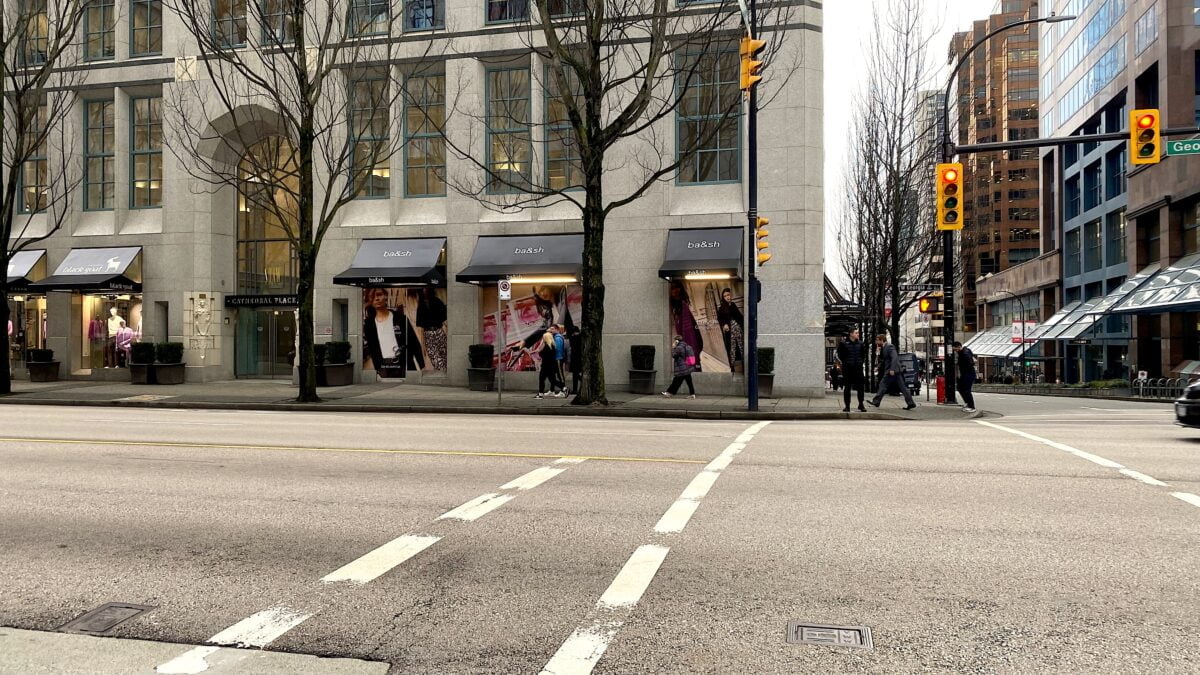
Future ba&sh storefront at 925 W. Georgia Street in Vancouver. Photo: Craig Patterson
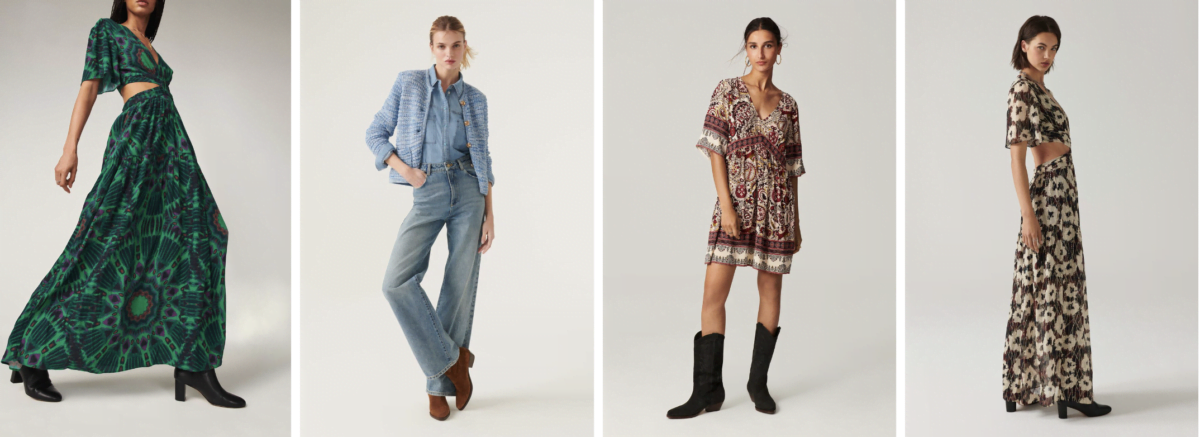
French women’s fashion brand ba&sh is expanding into the Vancouver market this spring with its first store that will be located in the city’s downtown core. It will be the fourth location for ba&sh in Canada after the brand opened stores in Toronto and Montreal during the pandemic.
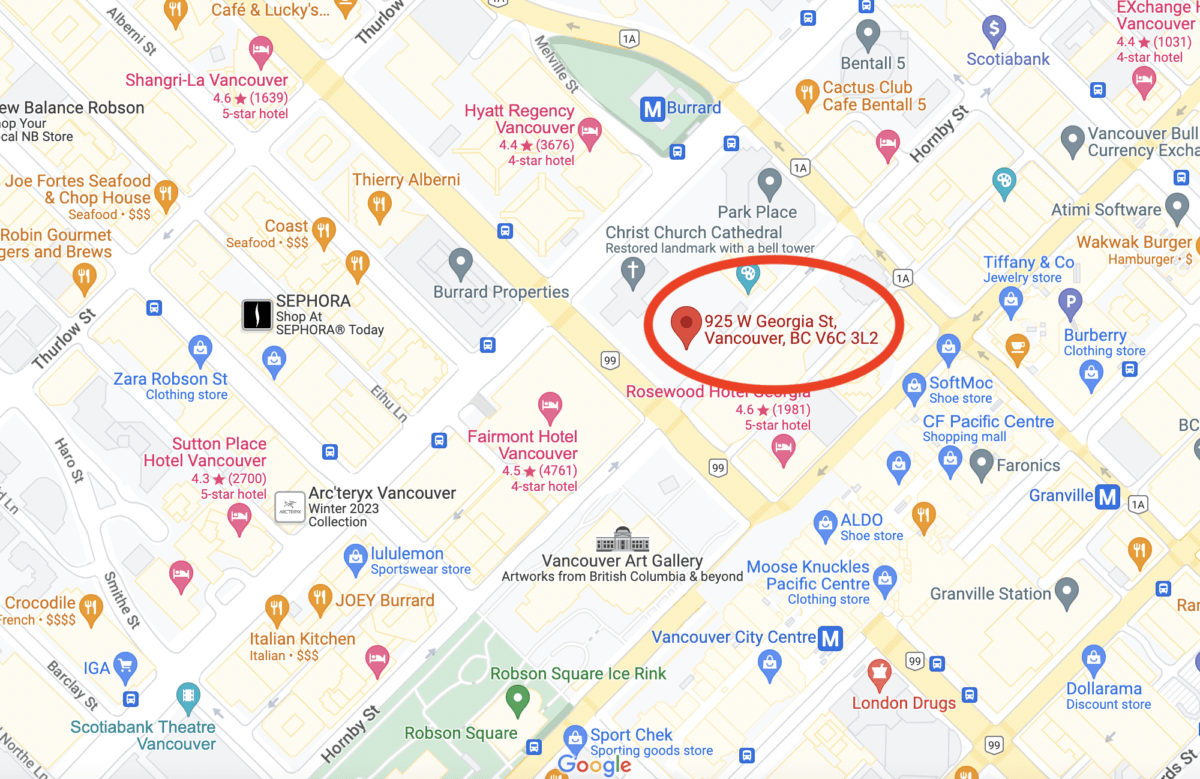
The Vancouver ba&sh storefront will be contained within a 660 square foot retail space at 925 West Georgia Street at the base of the Cathedral Place office tower. The new ba&sh will be located strategically across the street from the Fairmont Hotel Vancouver which is home to flagship stores for Gucci, Dior and Louis Vuitton. The ba&sh store will replace French jeweller Chopard which last year relocated to a beautiful new space nearby on Alberni Street.
Vancouver’s ba&sh store will carry a curated assortment of the brand’s ready-to-wear and accessories collection. It will be the first location in North America to showcase the new ba&sh global design concept that the brand says focuses on a soft, natural aesthetic with organic materials, rounded shapes, burned wood details, and Venetian plaster.
Click image for interactive Google map
Included will be two fitting rooms equipped with phone chargers and custom Parisian mirrors. Plans include a regular events schedule to engage with the local community, including private shopping parties and creative workshops, according to ba&sh.
“We are thrilled to be opening our first free standing boutique in Vancouver, in an incredible location that offers an elevated shopping experience,” said Desiree Thomas, CEO of North America in a statement. “Our Canadian business has expanded rapidly since we opened our first store in the market in 2020, and we are excited to continue growing our footprint. We know our effortless, Parisian aesthetic resonates well with Canadians.”
Images via ba&sh websiteLooking towards the new ba&sh from in front of the Gucci flagship store at the Fairmont Hotel Vancouver. Photo: Craig Patterson
There are over 400 ba&sh retail stores around the world, including 11 stores in the United States. The brand also has strategic partnerships with retailers in Canada including Holt Renfrew and Nordstrom.
In the fall of 2019, ba&sh launched its Canadian wholesale expansion in a partnership with the Hudson’s Bay Company to open ba&sh shop-in-stores inside Hudson’s Bay locations in Toronto, Montreal, and Vancouver.
The ba&sh brand was founded in Paris by two best friends, Barbara Boccara and Sharon Krief, in 2003. The name ‘ba&sh’ is a hybrid of their first names. The brand, described as being a hybrid of “rock and roll and bohemia” focuses on feminine clothing that is also comfortable. Collections include ready-to-wear, bags, accessories and footwear. The price-point is in the ‘contemporary’ range with dresses generally in the $400-$1,000 range, blouses costing in excess of $300, bags priced over $500, and shoes priced into the hundreds of dollars depending on style.
The brand’s international expansion was made possible in part by a significant investment by LVMH investment arm L Catterton.
We’ll report back when ba&sh opens its Vancouver store, which is anticipated for mid-March of this year.
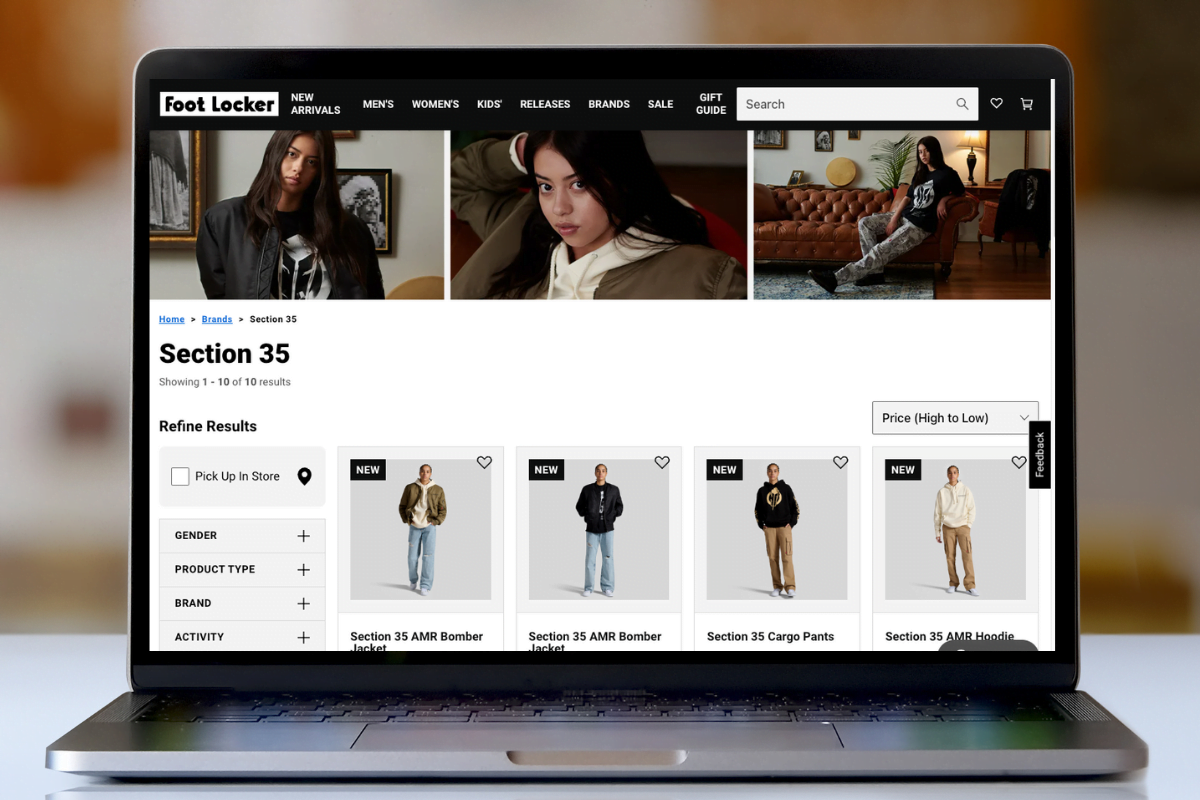
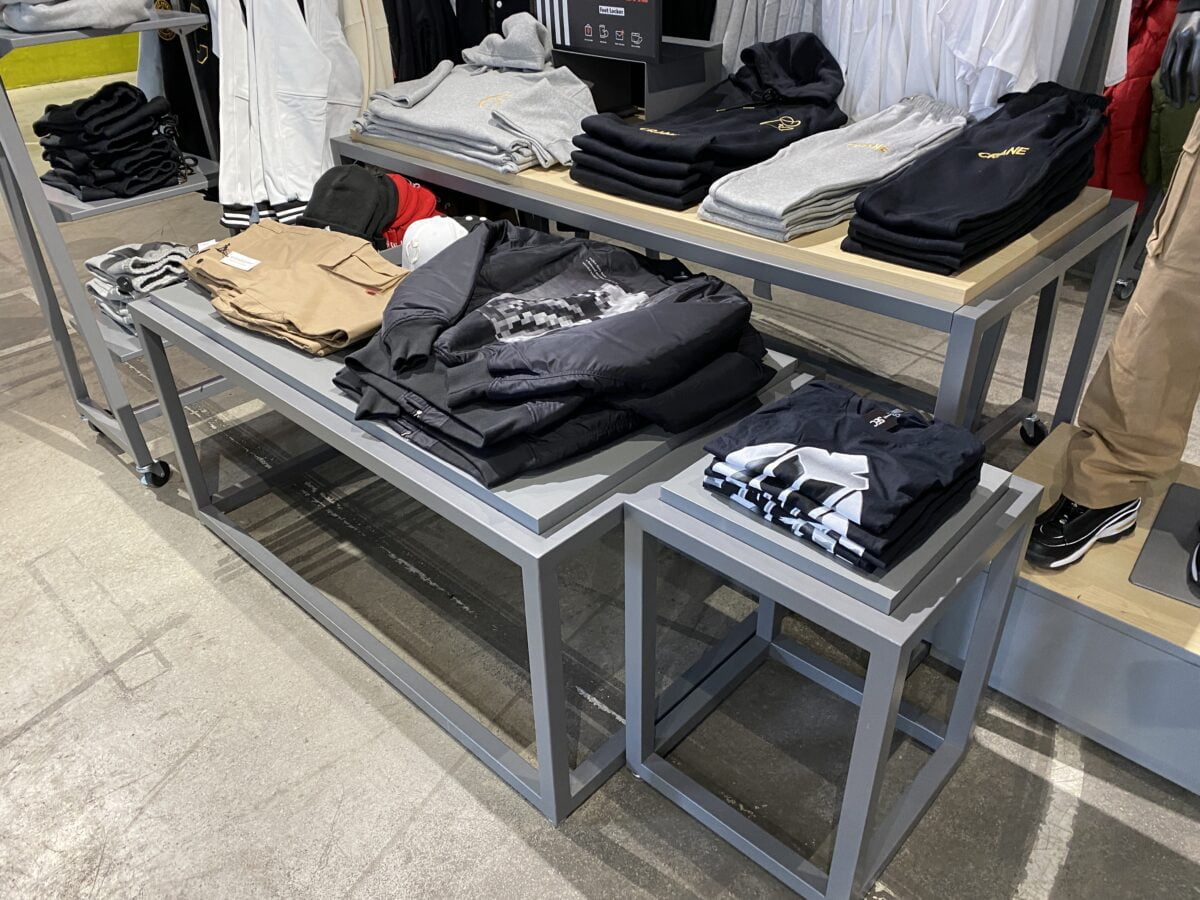
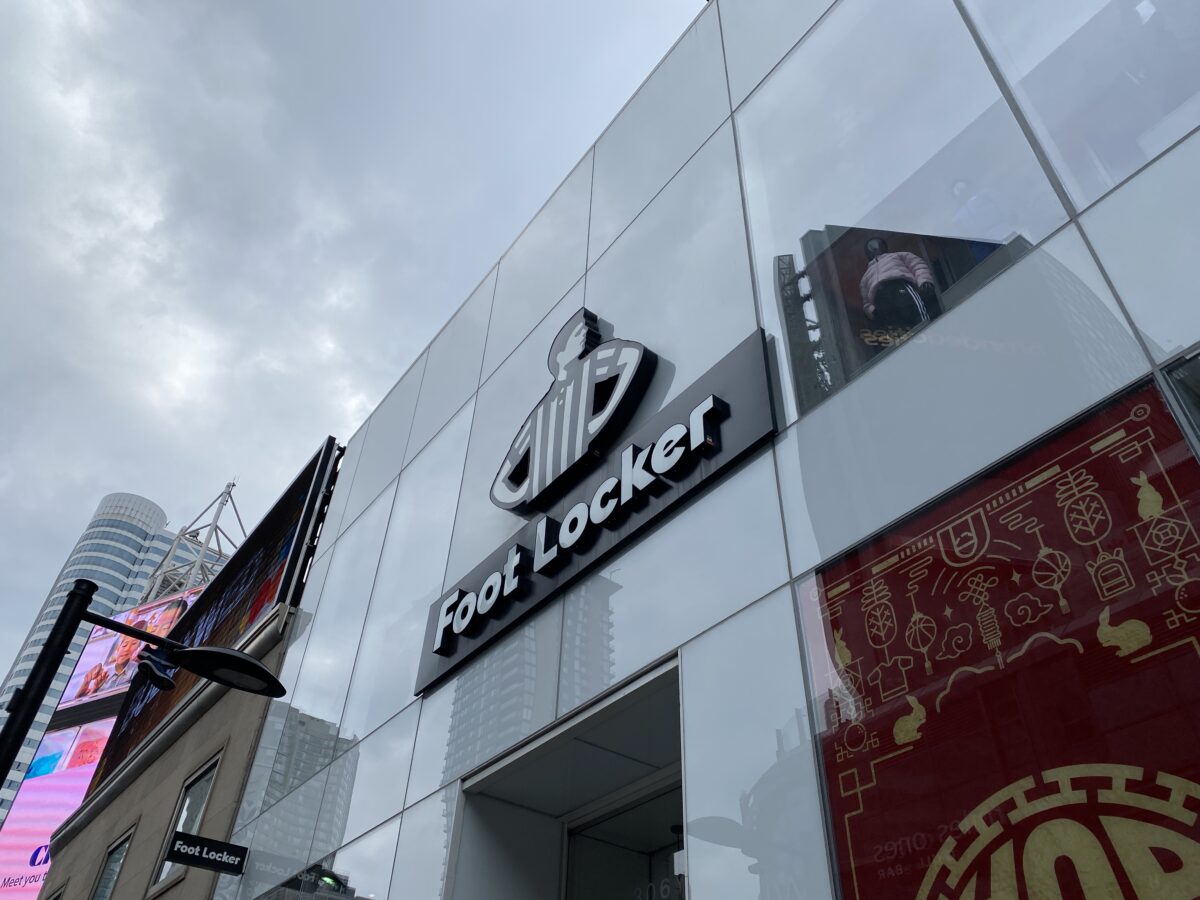
Foot Locker’s Home Grown platform showcases local up and coming designers throughout the US and Canada, connecting communities with brands that are the future of streetwear.
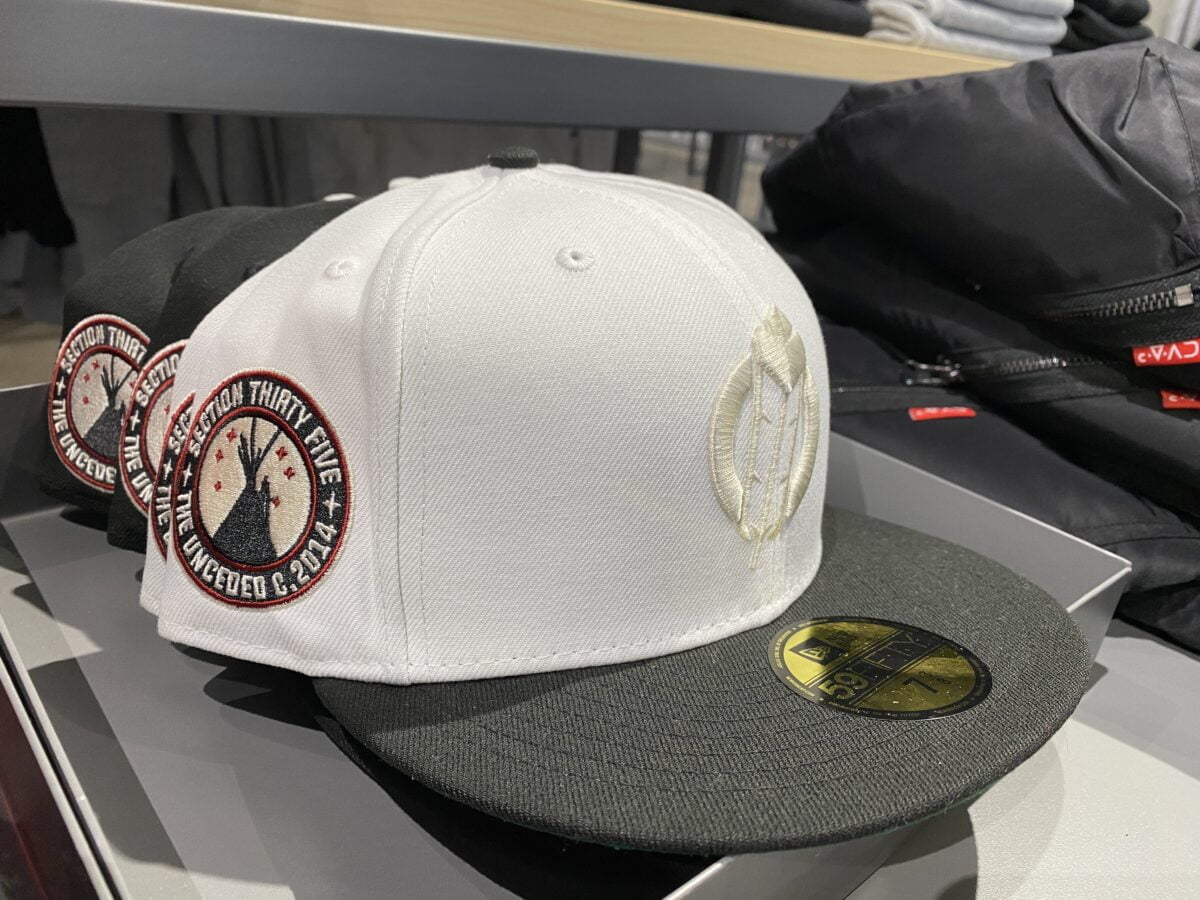
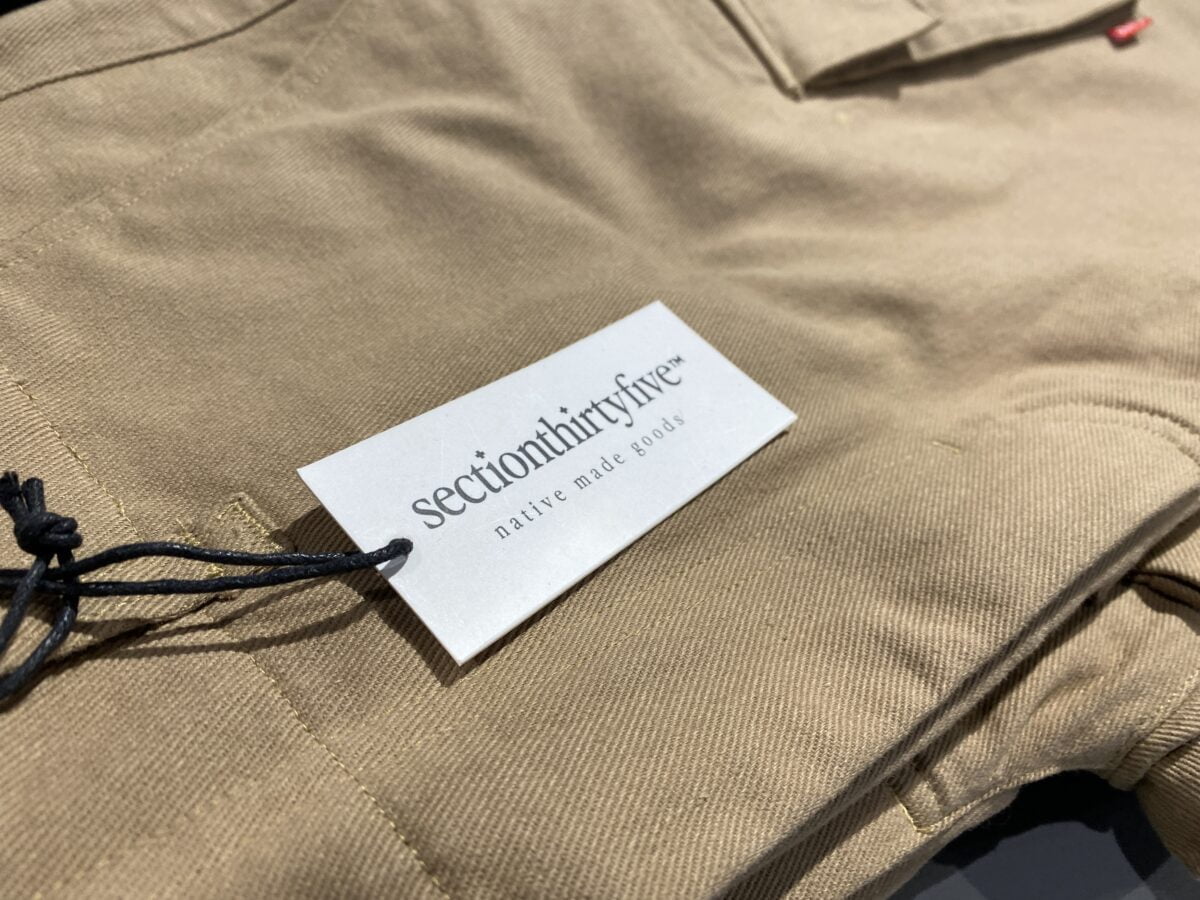
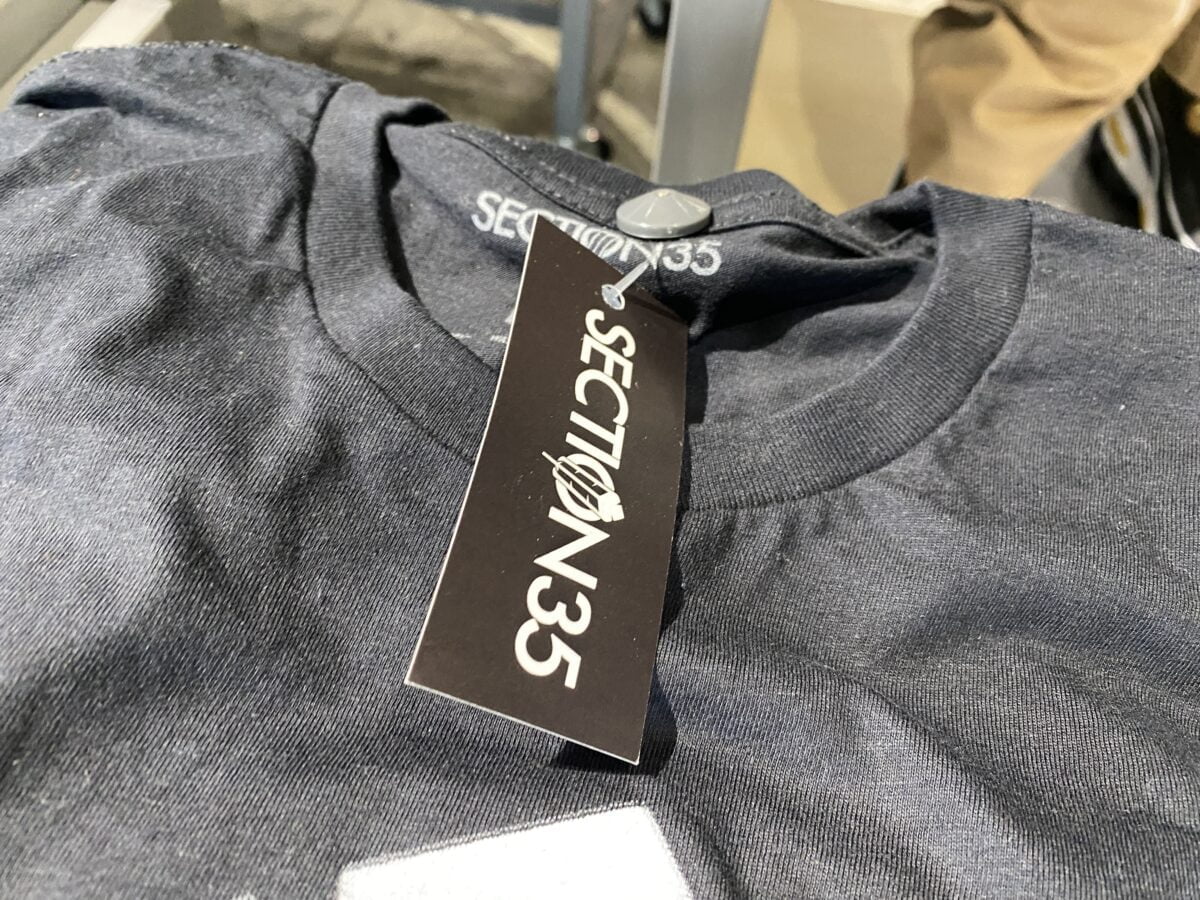
The Vancouver-based brand was founded by Creative Director and Designer Justin Louis, in which the name comes from Section 35 of the Canadian Constitution, the part that recognizes and affirms Indigenous and Treaty rights in Canada.
“So there’s a political undertone to the name and obviously it’s a big piece of who we are as Indigenous people and our rights. So we took that and put a creative spin on that and it kind of became the name for the brand and it’s been with us ever since,” he said.
The brand was launched in 2016.
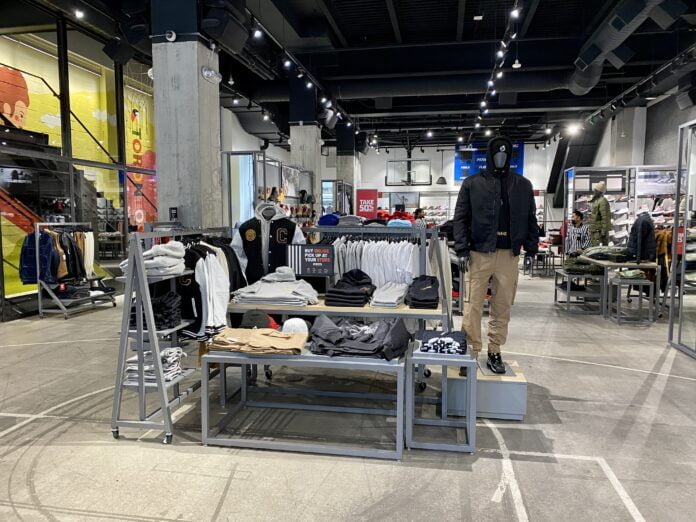
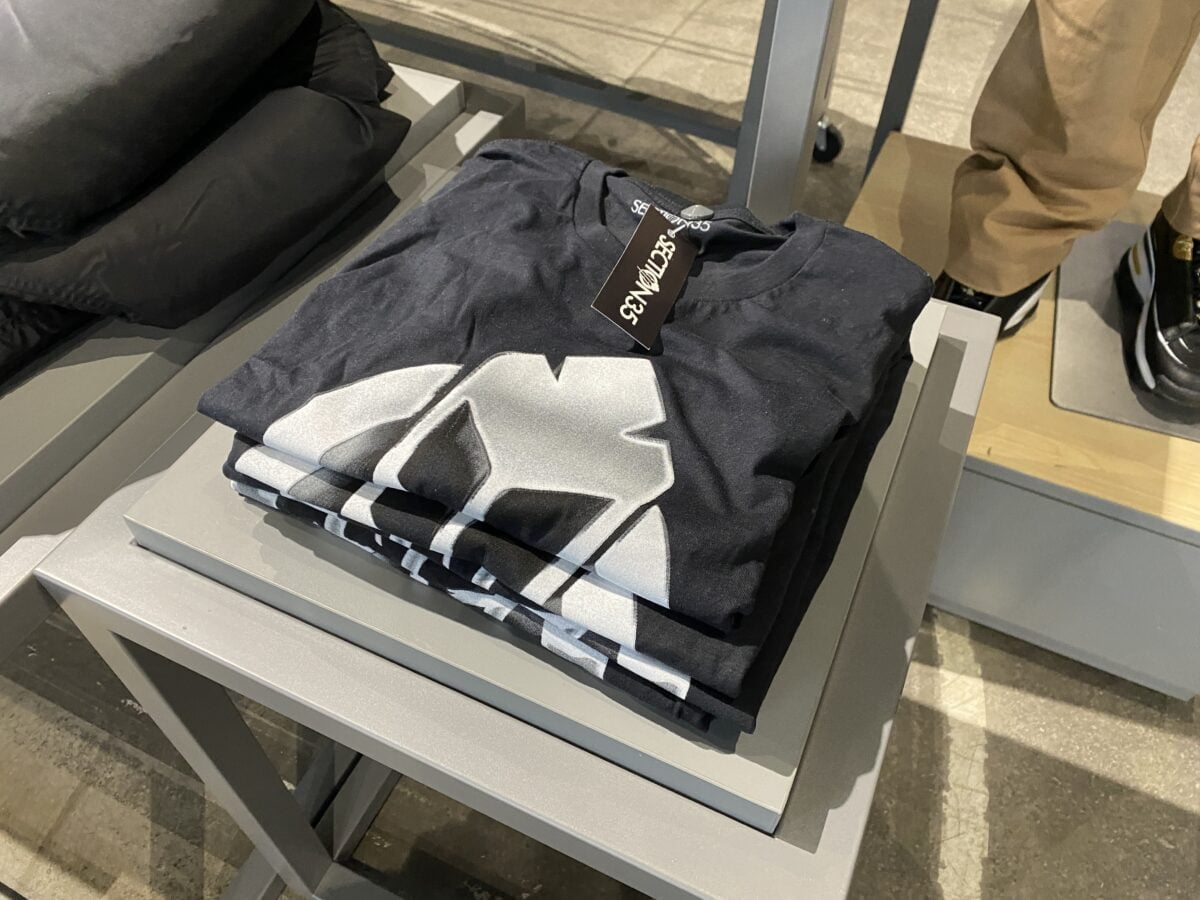
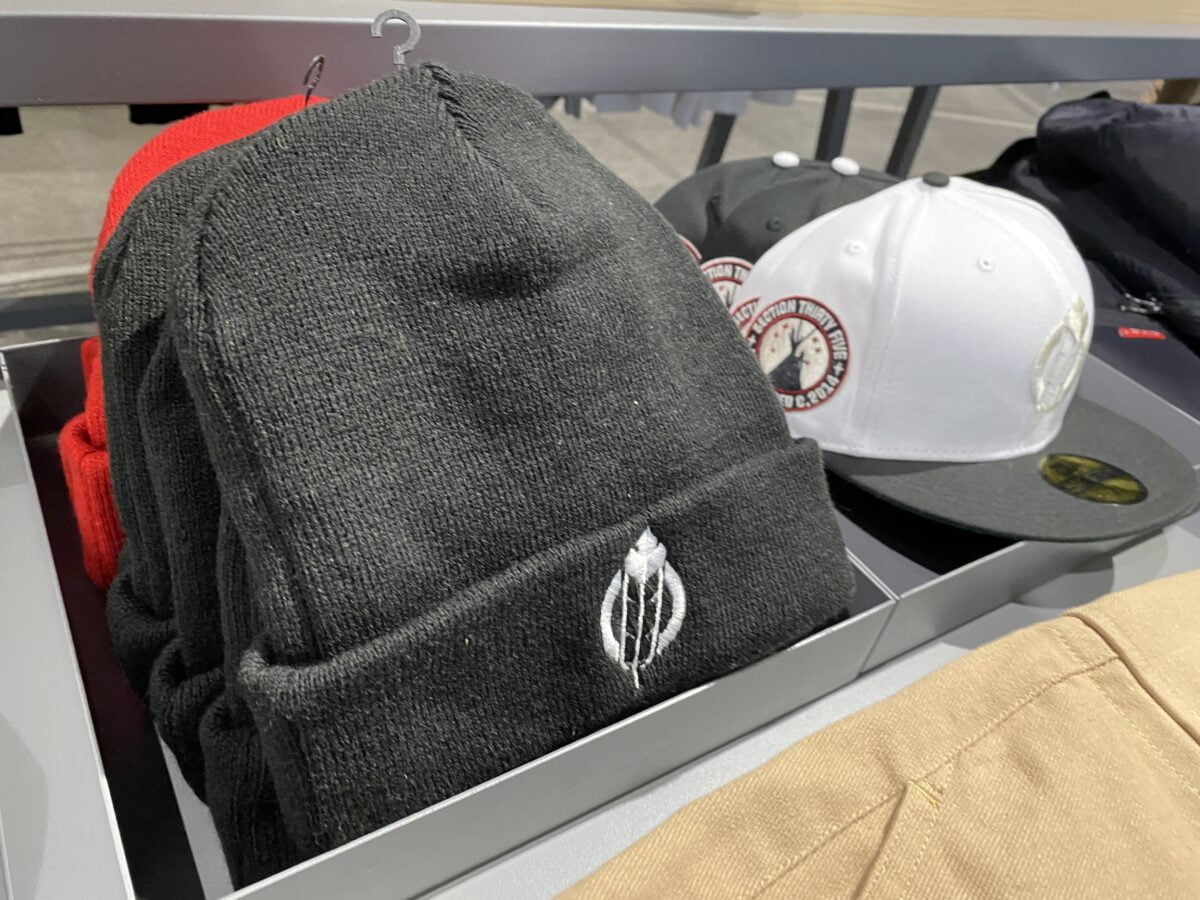
Section 35 x Foot Locker Canada (Image: Dustin Fuhs)Section 35 on FootLocker.ca
Louis is a member of the Samson Cree Nation and was born and raised in Nipisihkopahk (Samson) on Treaty 6 Territory. He is a fashion designer, photographer, and graphic designer – his work blends the past with the present and finds inspiration in the juxtaposition between these elements.
He launched Section 35 in 2016 with the intention to use art and fashion to tell his people’s stories. The brand’s products were previously on display at the Metropolitan Museum.
The launch of its presence in Foot Locker stores will expose the brand to a greater consumer audience. Section 35 officially will launch at Foot Locker stores online at FootLocker.CA and in-store at the following locations: Vancouver, Toronto, Montreal, Edmonton, Calgary, Saskatoon, Winnipeg, Quebec City, Ottawa and Halifax.
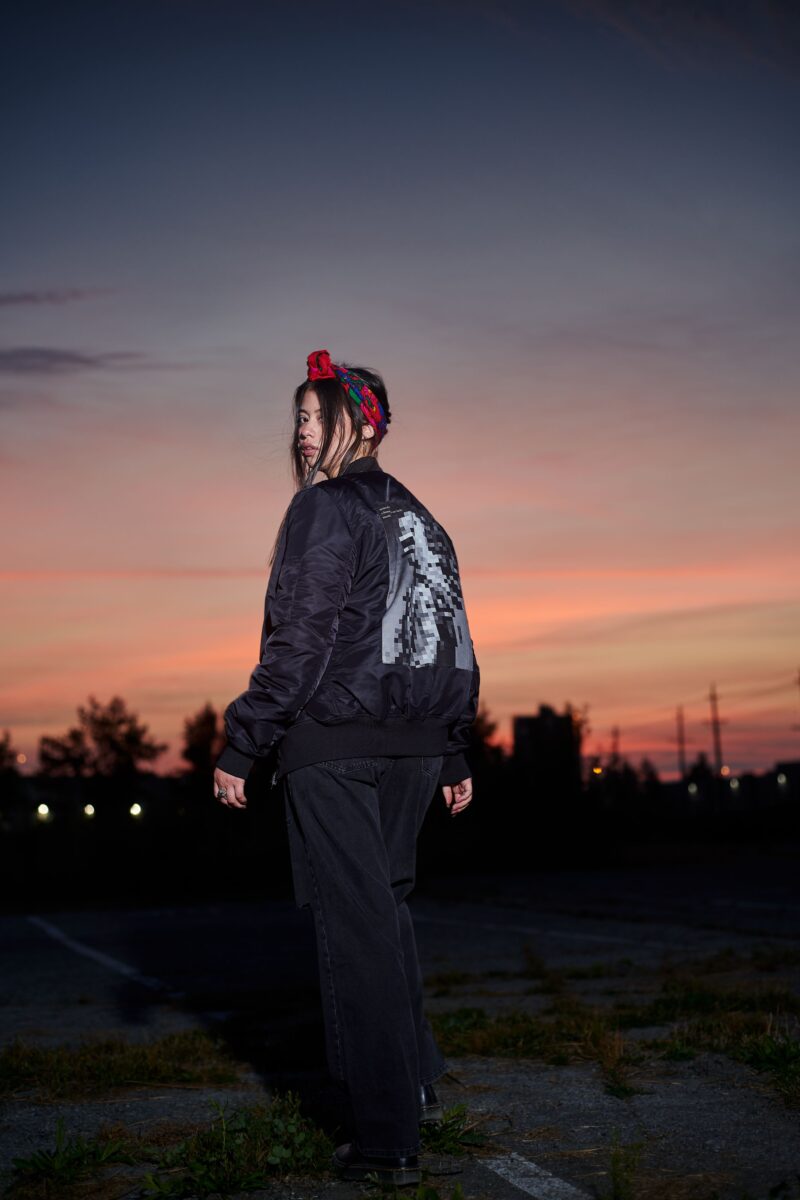
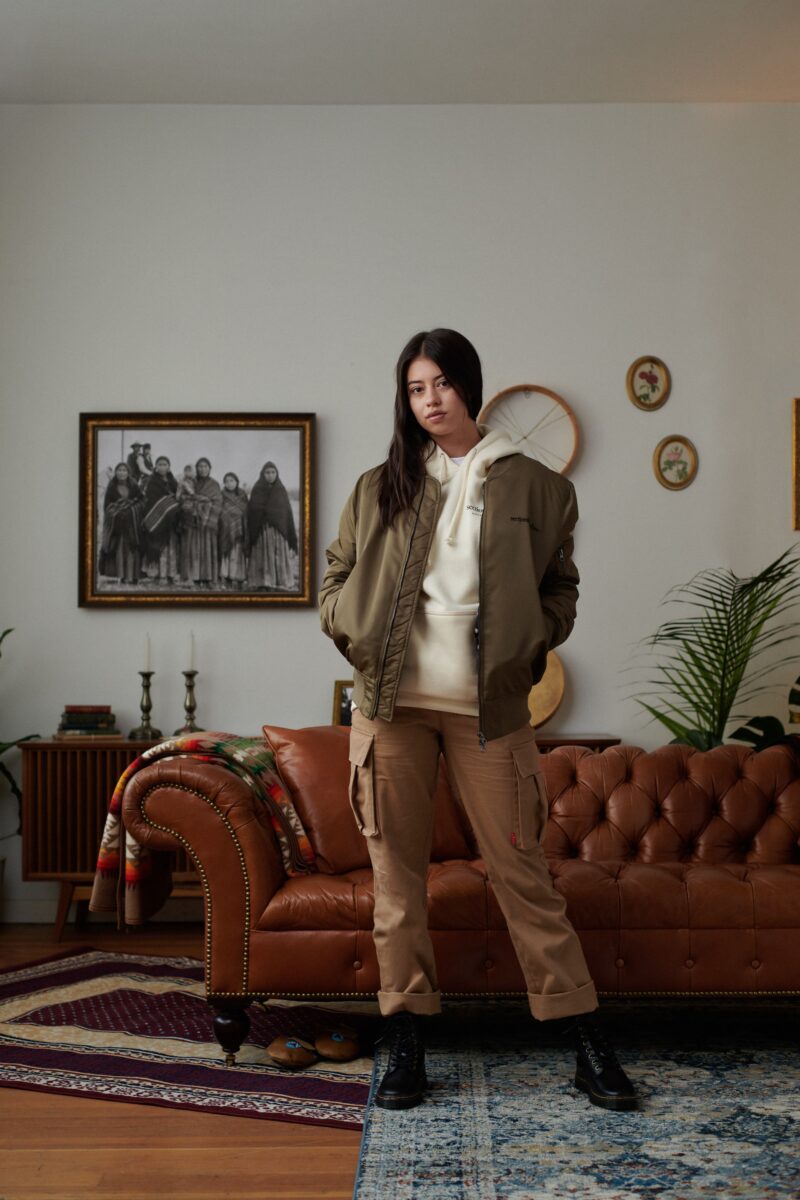
“This collection features a lineup of ready-to-wear staples from bomber jackets, hoodies, tees, and cargo pants. I am always moved when we compare the past, the present, and future. The graphics are inspired by my exploration around the imagery of the past and my internal dialogue around imagery that can be found in the public domain including some of my own ancestors’ imagery,” he said.
“Our stronghold is probably here in Western Canada and we do have a reach into the Western United States. I would say 70 to 80 per cent of our online sales are probably in Canada and maybe 20 per cent goes into the States.”
Louis said the retailer would love to have a bricks and mortar presence in the future with the brand. It’s been a goal of his for a long time but the company is not ready for that yet plus the market is uncertain.
Amber Midthunder wearing Section 35 (Image: Alex Waber)
Amber Midthunder wearing Section 35 (Image: Alex Waber)
Section 35 x Foot Locker Canada (Image: Dustin Fuhs)
In the past, Section 35 has worked with some other retailers to grow its presence as well as pop-ups including one with Foot Locker at its Robson Street flagship store in Vancouver.
“It’s special to be recognized by a company the size of Foot Locker and for them to believe in the work that we are doing and who we are as a brand to be prepared to bring us in. I think it’s important as well giving a brand that comes from maybe a community that’s a little more marginalized a chance to bring our culture and our art and our work to a broader audience. I think that’s awesome,” said Louis.
“It’s an opportunity for us to reach more of our customers across the country. Some people don’t like to order online and it’s helping us to have a reach into some of these other markets that are a little bit further away from where we are. I think that’s really cool. People can go in and actually try on the product and touch it and feel it.”
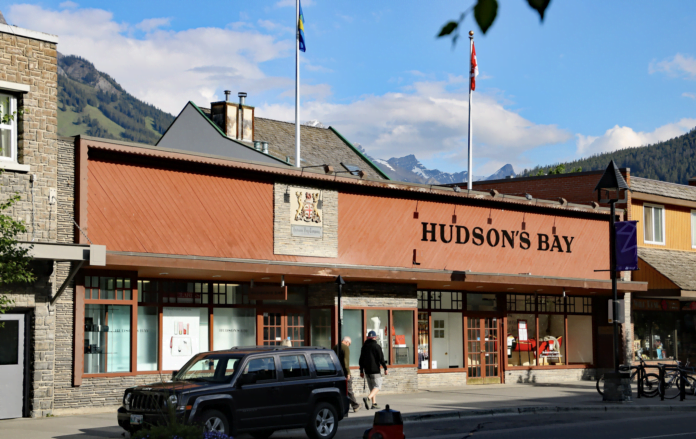
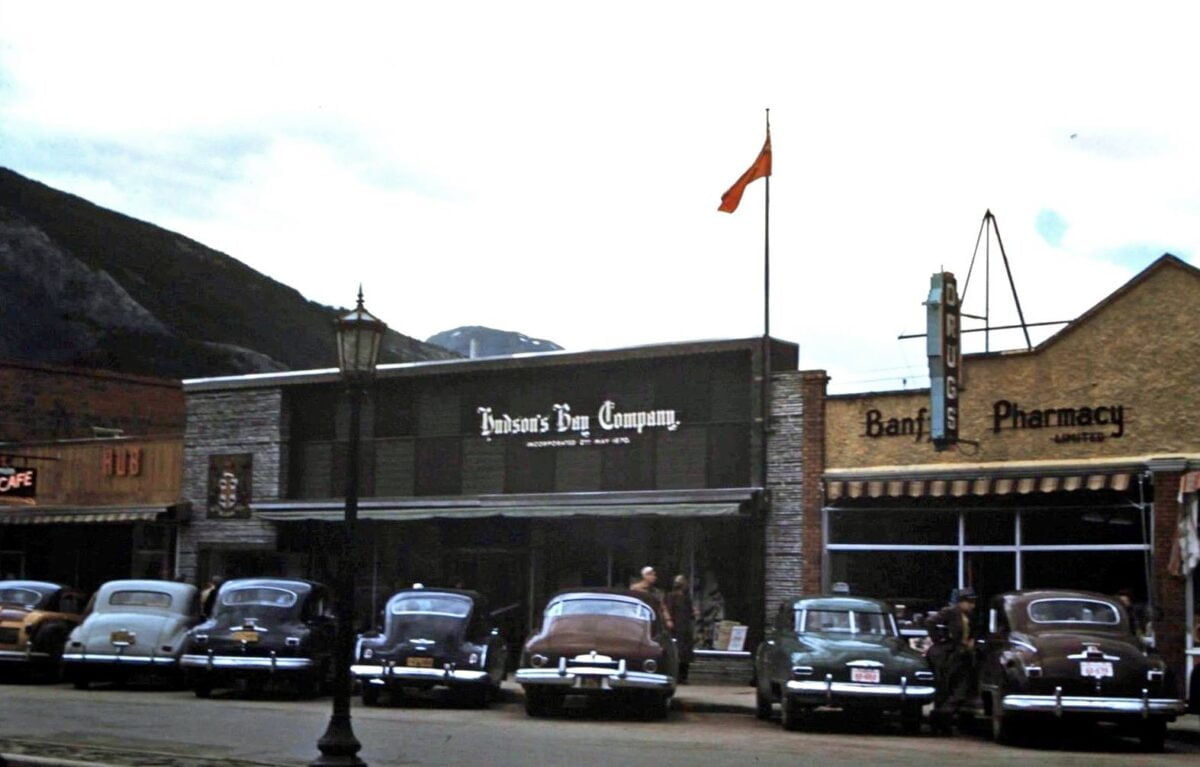
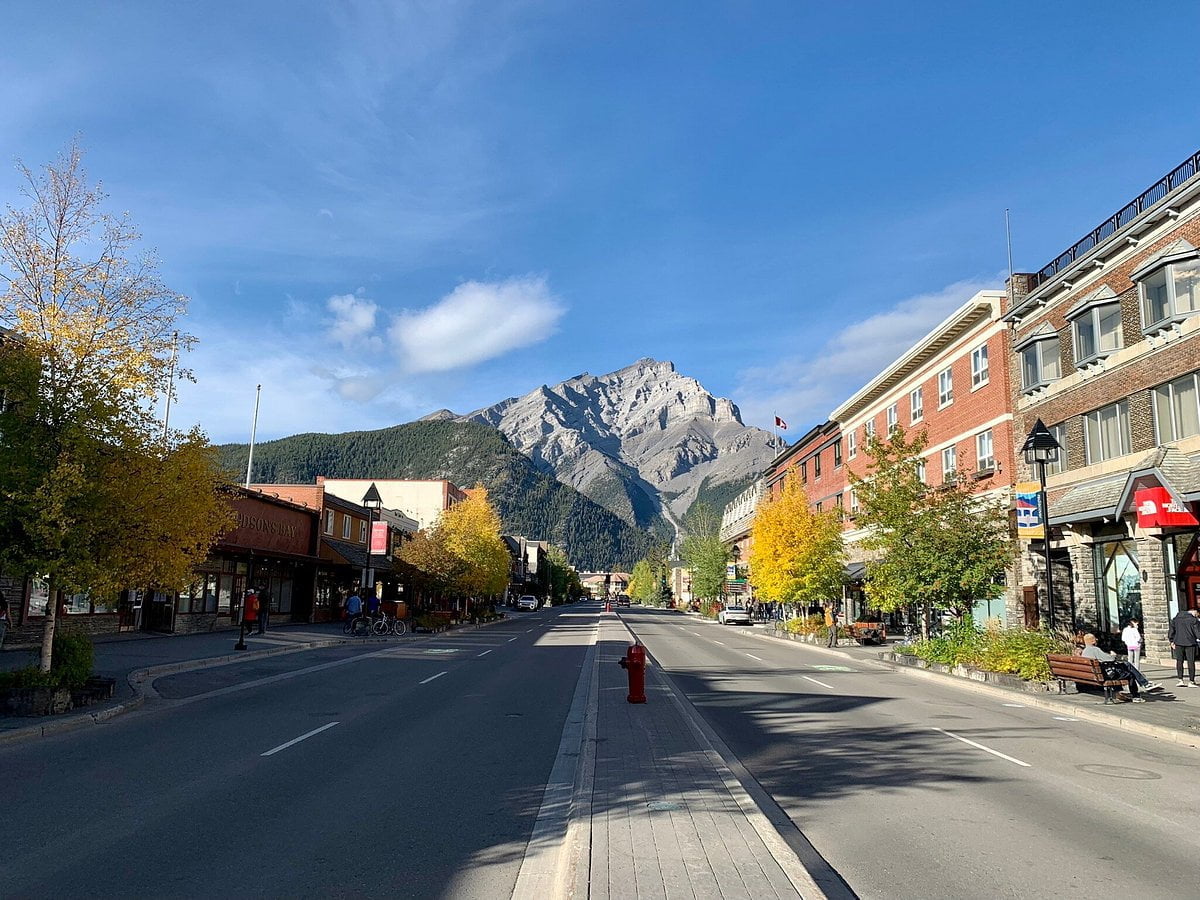
The Hudson’s Bay store in Banff, Alberta, will be shuttering in August of this year. The store is the smallest in the chain and has a prominent location on the main shopping street in the town known as a tourist hot spot. Hudson’s Bay has operated department stores in the town since 1940.
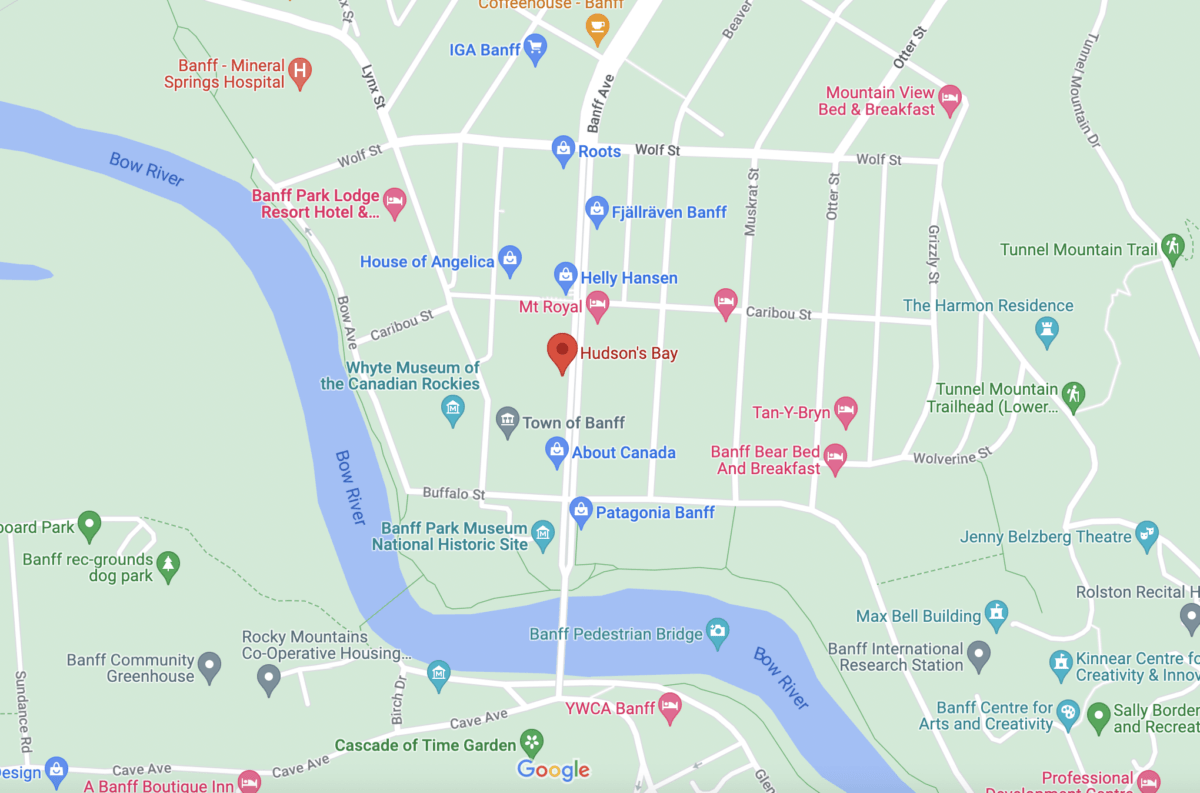
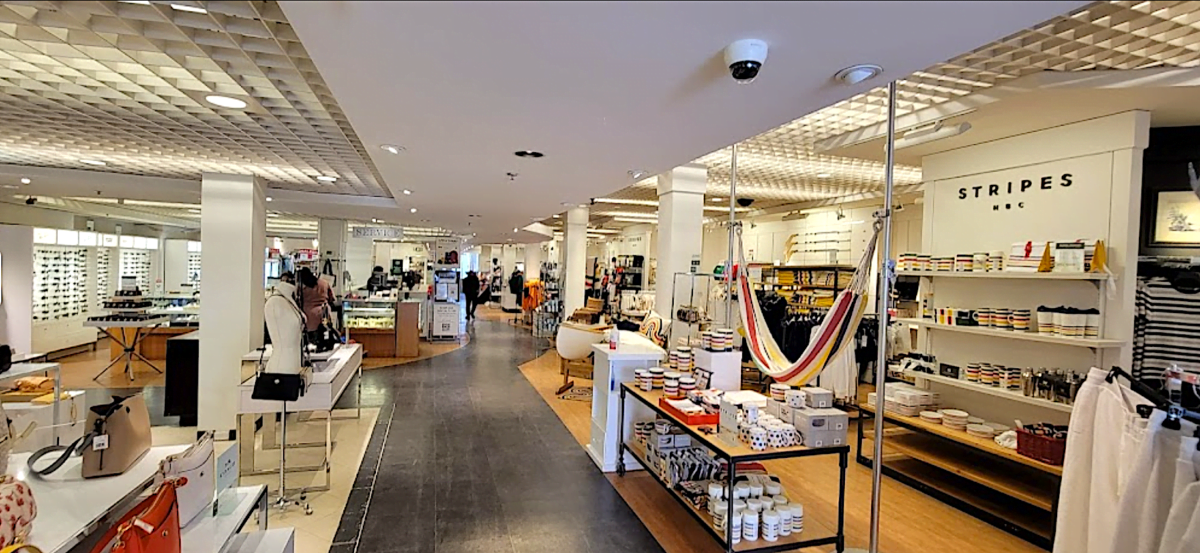
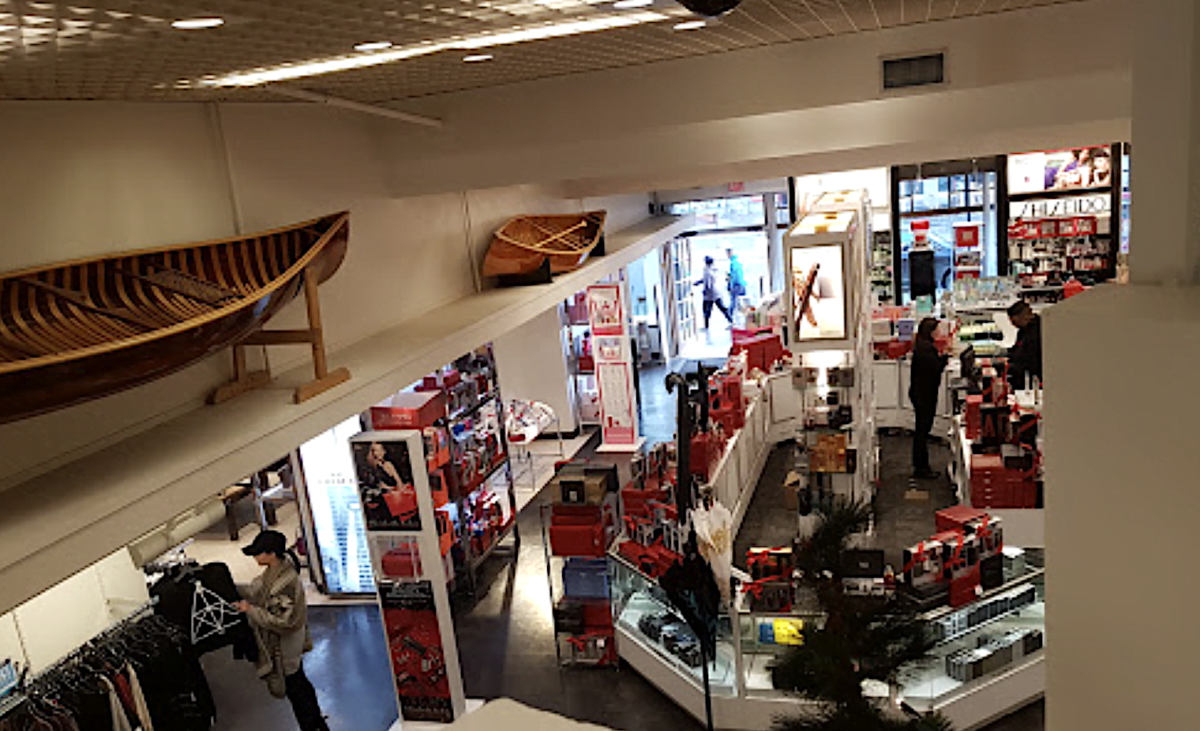
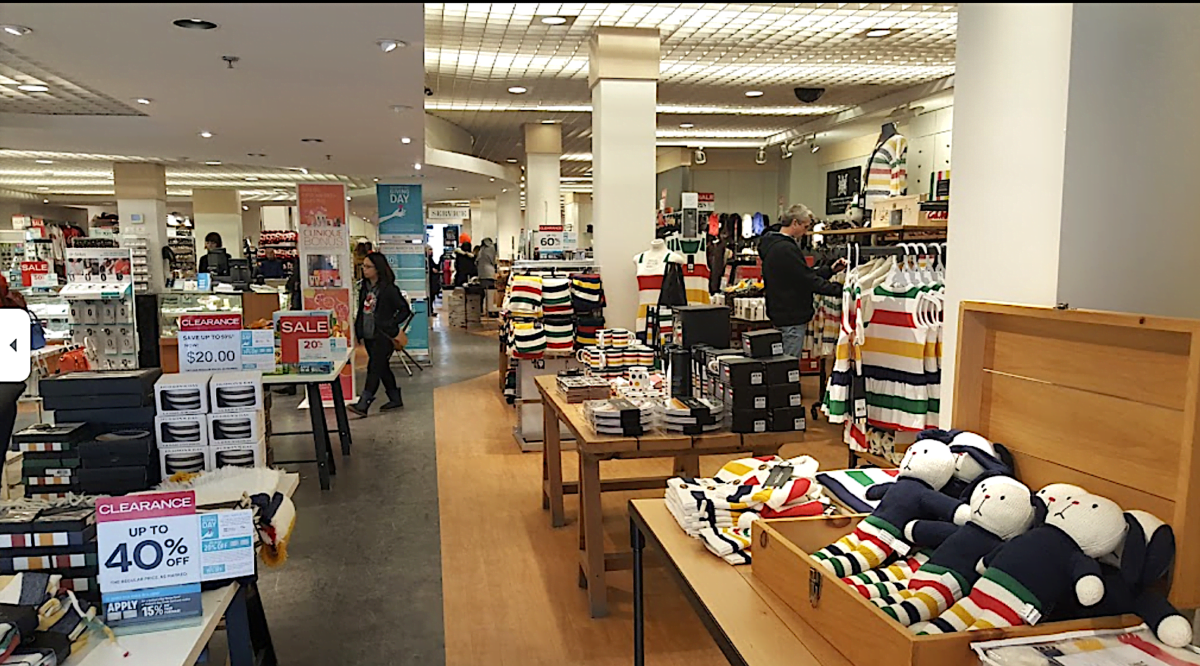
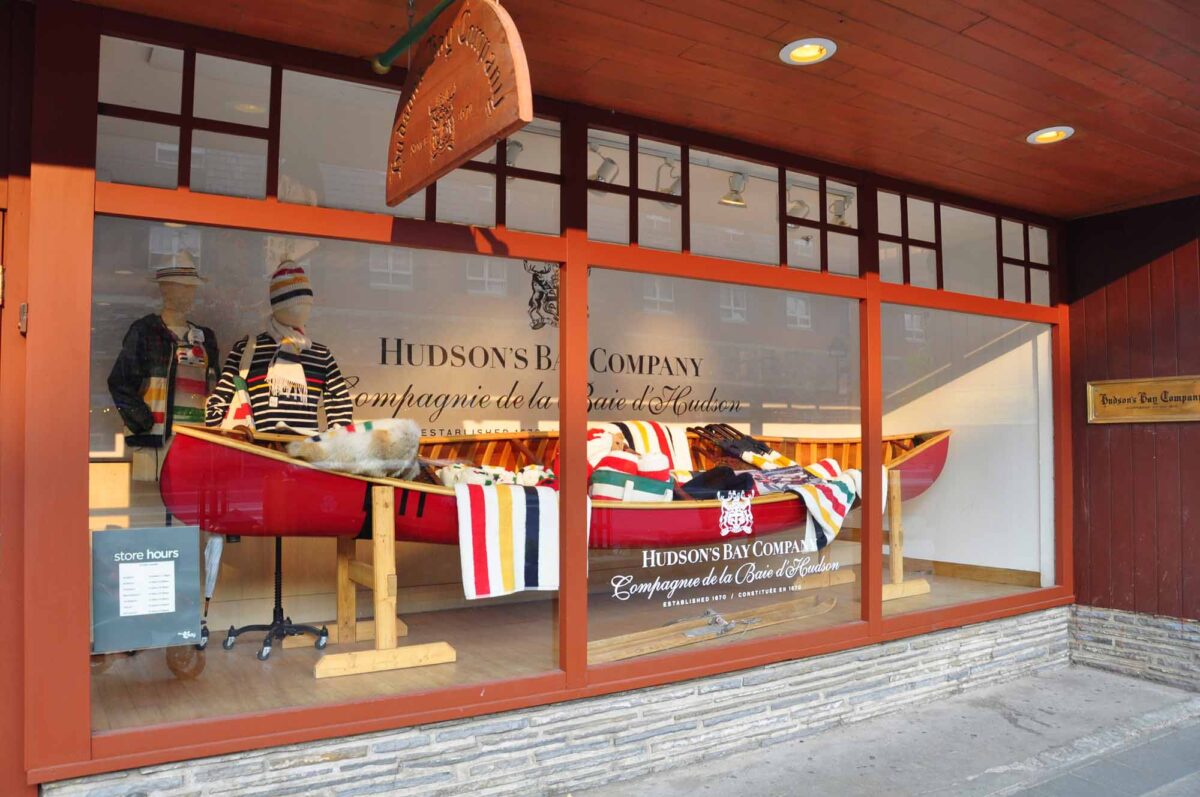
The current Banff Avenue Hudson’s Bay store spans about 20,000 square feet over two levels. Located at 125 Banff Avenue, it’s the largest store in Banff at the moment and its closure spells the end of such window displays as canoes with HBC striped point blankets and other branded merchandise. The current store is actually the second department store location for Hudson’s Bay in Banff.
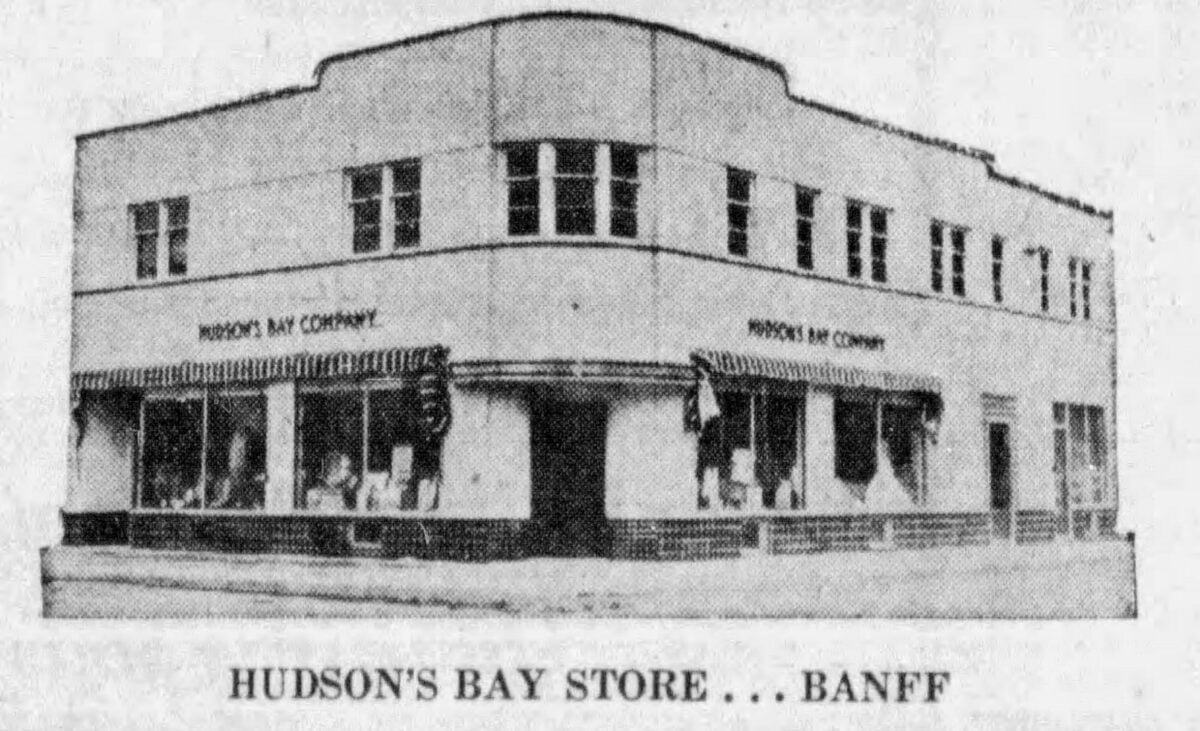
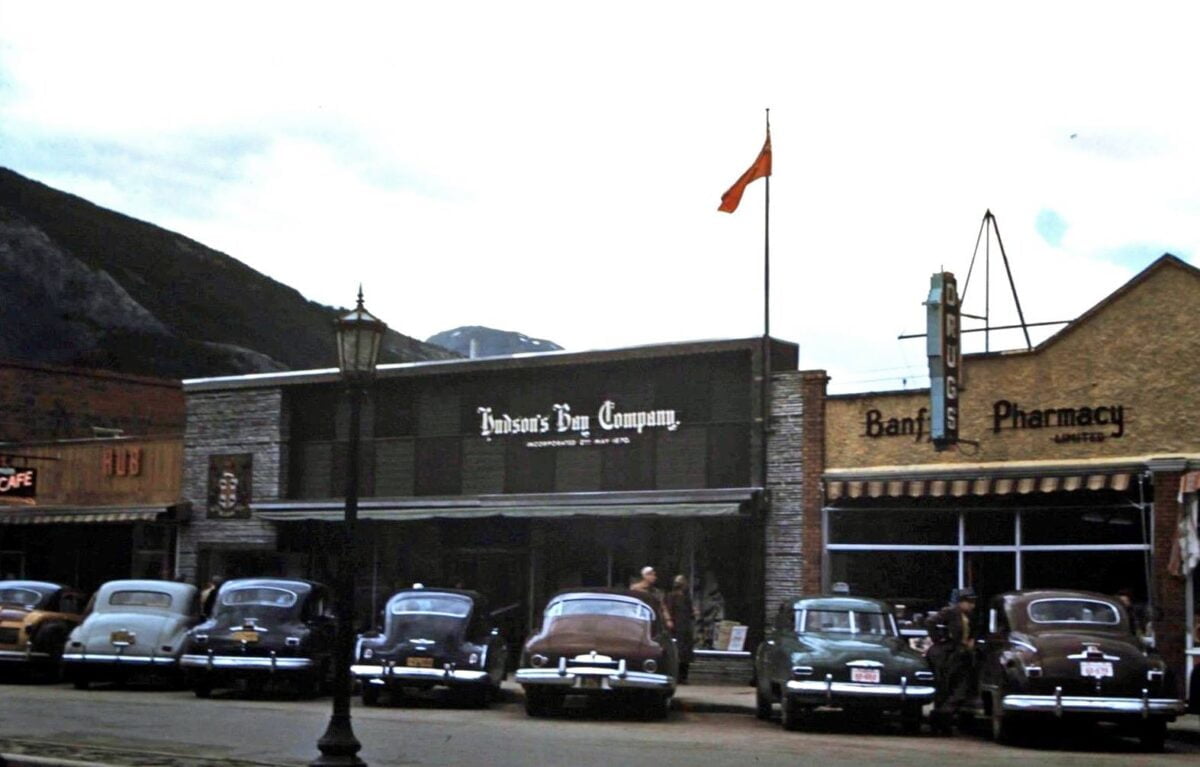
The first Hudson’s bay department store in Banff opened at 202 Banff Avenue in 1935 according to the Crag & Canyon, and the building is still standing to this day and is named ‘Caribou Corner’. In 1947 Hudson’s Bay relocated to its current 125 Banff Avenue location which was expanded by annexing a restaurant space in 1979.
The prior tenant at 125 Banff Avenue was Adams Radio Parlors Ltd., which had various electrical appliances including radios that could be rented.
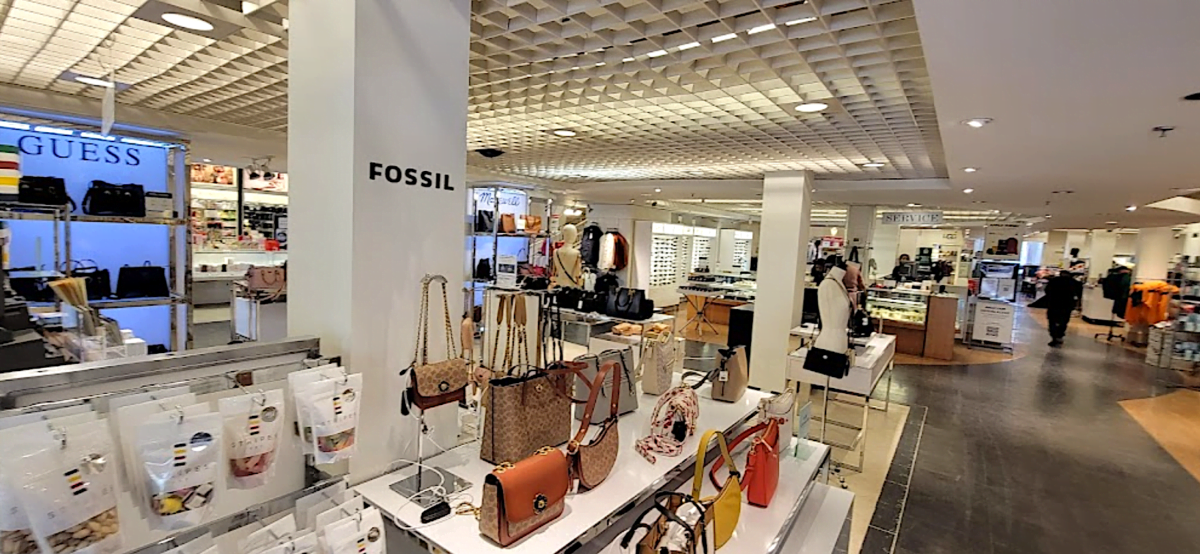
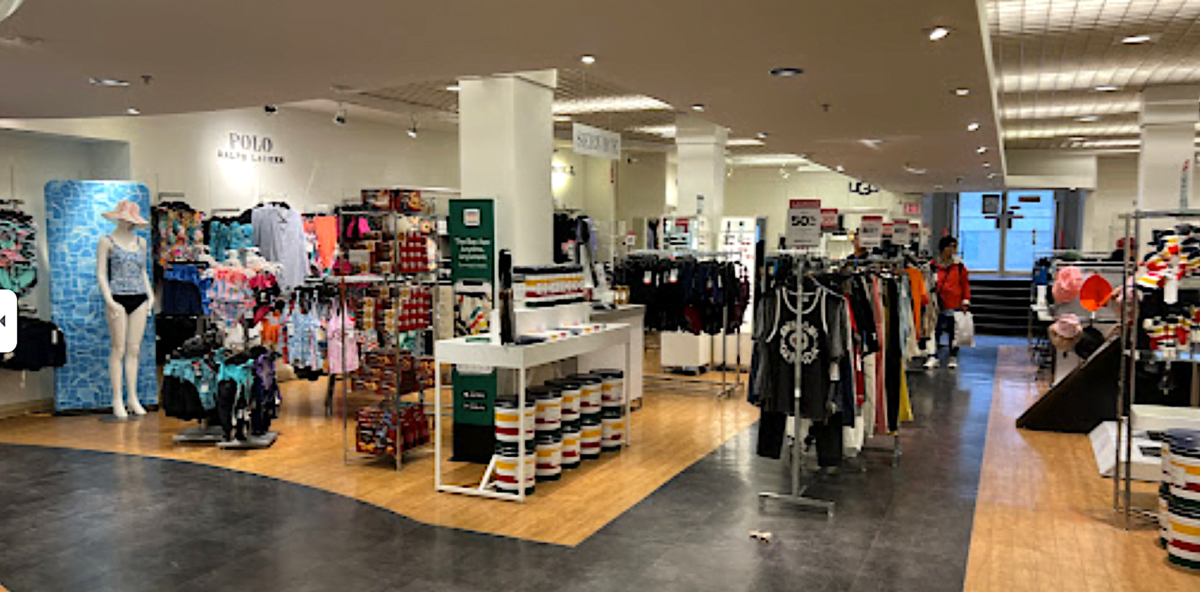
Click image for interactive Google MapThe original Hudson’s Bay store in Banff at 202 Banff Avenue in 1940 — the store relocated to 125 Banff Avenue in the early 1960s. Photo via ‘The Albertan’, www.newspapers.com searchinside the 125 Banff Avenue Hudson’s Bay store. Photo: Jonathan B. via Google Images inside the 125 Banff Avenue Hudson’s Bay store. Photo: Jonathan B. via Google Images
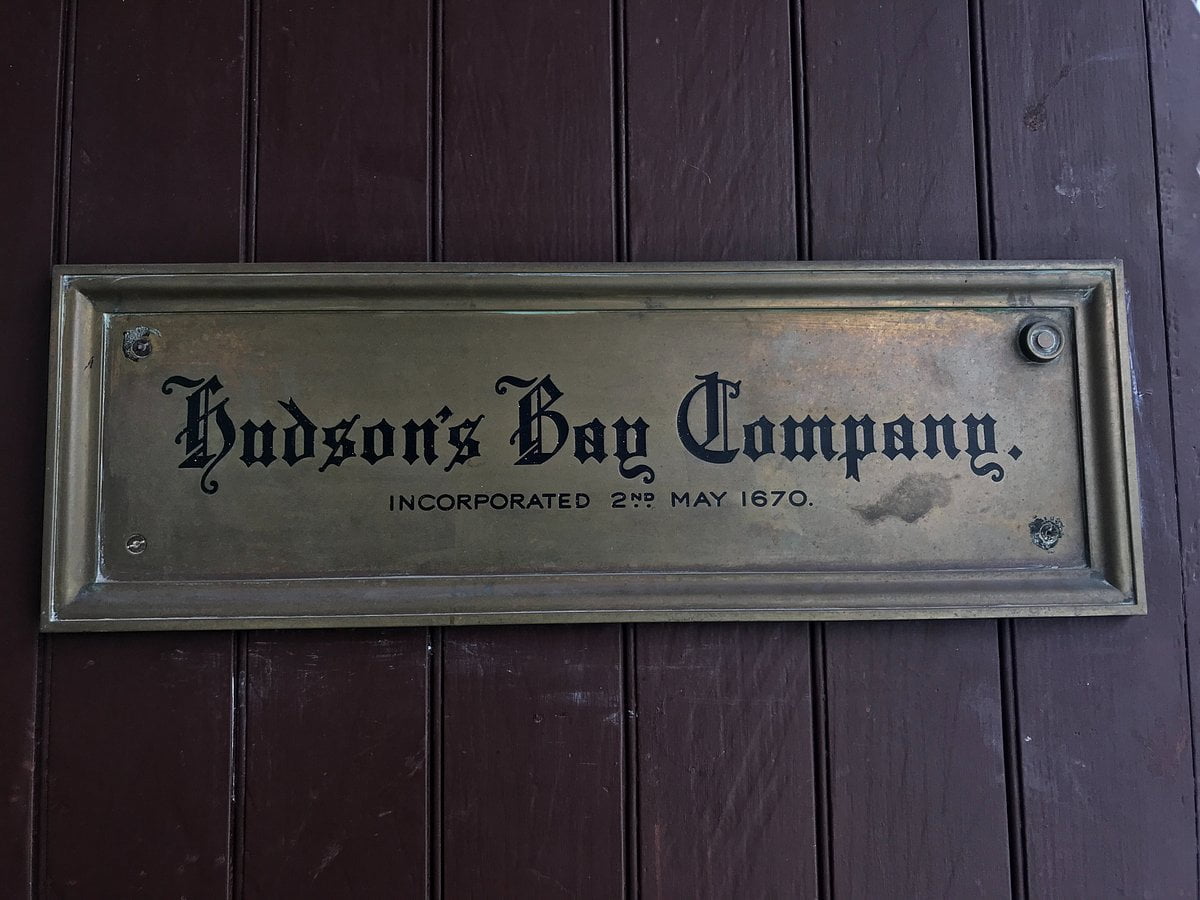
Over the years the 125 Banff Avenue Hudson’s Bay store has sold a wide variety of merchandise including fashions, handbags, accessories and cosmetics, as well as the iconic HBC stripe merchandise that has proven popular with tourists. Fur coats and accessories were also part of the mix in decades past as the Hudson’s Bay Company was a seller of fur garments, having begun in the fur trade in 1670.
The configuration of the current Banff Avenue Hudson’s Bay store is rather awkward, with each level spanning just under 10,000 square feet. That includes a street level and a basement level that features remarkably low ceiling heights.
Given the low ceiling heights in the basement and the single-level above ground, the Banff Hudson’s Bay store could be ripe for redevelopment. That could include demising the street level into multiple retail units, or demolishing the building entirely for something new. The store boasts 75 feet of frontage on Banff Avenue and a lot depth of more than 130 feet. Hudson’s Bay owns half the building at 123-125 Banff Avenue, and another company owns the other side according to a report in RMO Today.
inside the 125 Banff Avenue Hudson’s Bay store. Photo: Sergey Reznichenko via Google Images inside the 125 Banff Avenue Hudson’s Bay store. Photo: Jeremy Gillespie via Google Images inside the 125 Banff Avenue Hudson’s Bay store. Photo: Dale Bennett via Google Images Photo: AmeriCar The Beautiful via Facebook
Various redevelopment opportunities are possible. A new mini-mall could be developed on the site — Banff Avenue is home to several, featuring smaller interior storefronts with businesses catering primarily to tourists. A hotel or other use could be located above, and even residential units if the market warrants it.
It’s not yet known if Hudson’s Bay will return to Banff with a smaller storefront featuring Hudson’s Bay Company striped merchandise, which is popular with international tourists. In the past Hudson’s Bay has opened such dedicated smaller stores in busy airports.
News of the closure of the Banff Hudson’s Bay store follows our exclusive report last week that Hudson’s Bay’s Londonderry Mall store in Edmonton will be shutting in August as well. The 118,000 square foot store opened in 1971 and saw soft sales in recent years as the store was downsized to include just two central check-outs. Over the course of the pandemic, Hudson’s Bay has shut stores in downtown Edmonton and downtown Winnipeg as well as at Les Jardins Dorval in suburban Montreal.
Hudson’s Bay on Banff Avenue (Image: TripAdvisor)Hudson’s Bay on Banff Avenue (Image: TripAdvisor)Hudson’s Bay on Banff Avenue (Image: Facebook)Hudson’s Bay on Banff Avenue (Image: Canada AmeriCar)
Retail Insider is streamlining its Canadian retail news from around the web to include a handful of top news stories that can be viewed quickly during the day. Here are the top stories from the past three days.
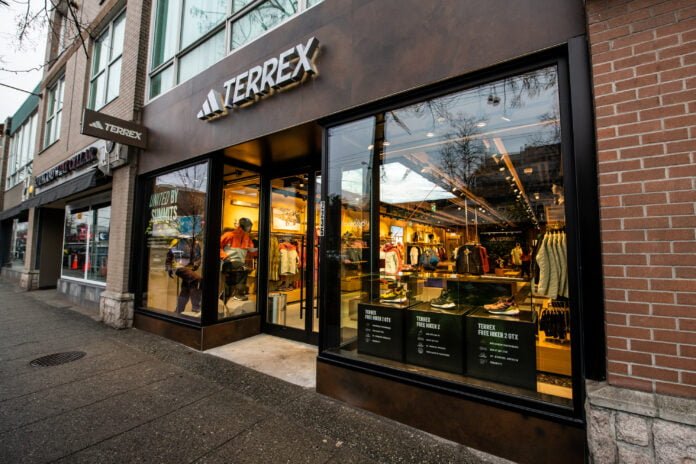
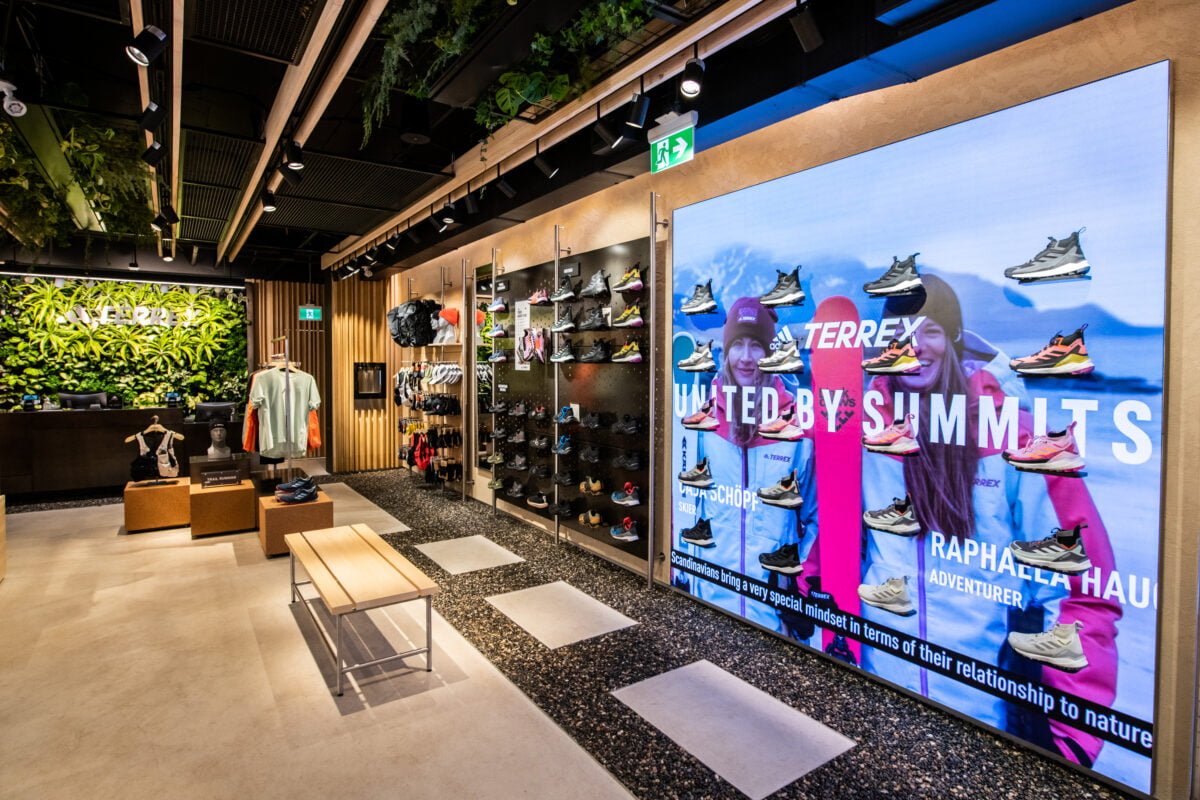
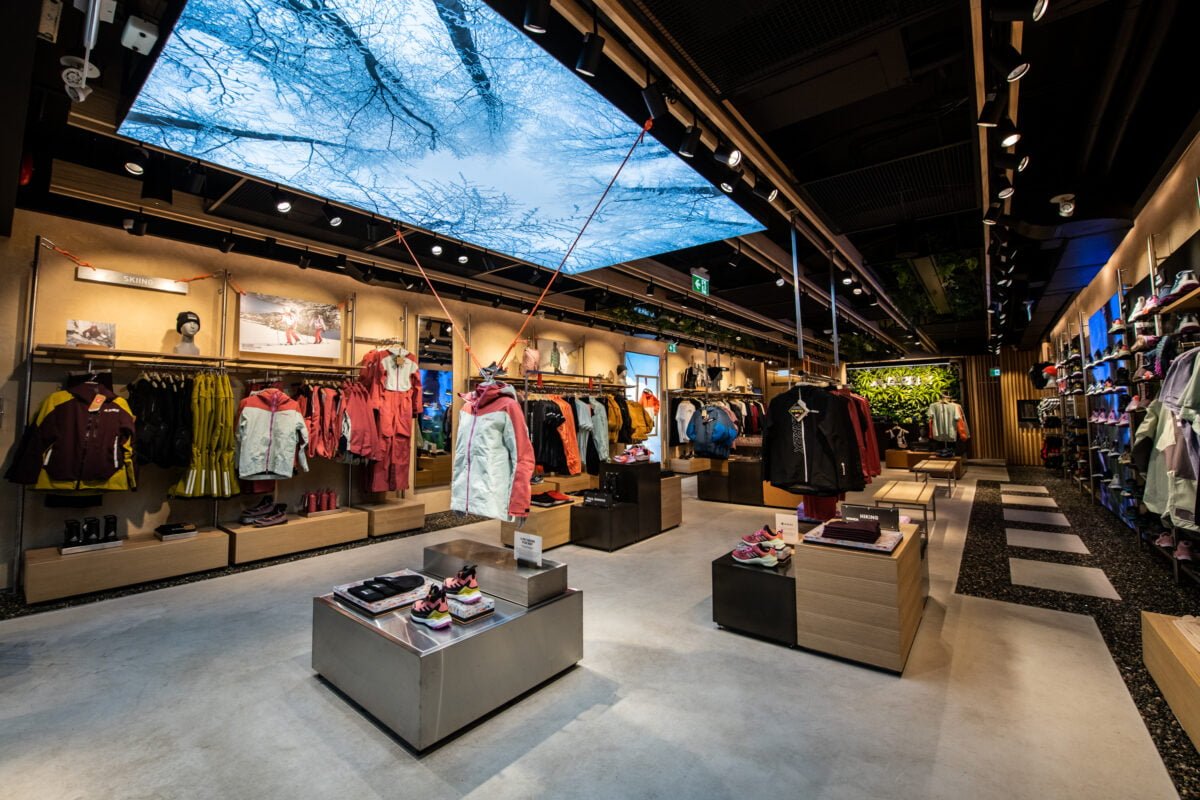
Sportswear retailer adidas has opened its first branded TERREX storefront in North America in the Kitsilano neighbourhood of Vancouver, BC.
TERREX is adidas’ outdoor brand with an extensive product assortment of footwear, apparel, and accessories.
Retail Insider reported on the announcement back in July 2022, which included exclusive renderings and an interview with Lesley Hawkins, VP Retail at adidas Canada.
“Why Vancouver? Because it is absolutely the home of the outdoors,” shared Hawkins. “There are more consumers engaged in the outdoors every day in the Vancouver market, as they enjoy an unbeatable array of amenities including numerous outdoor parks, the mountains and the ocean on their doorstep.”
The first global branded TERREX storefront opened in Munich, Germany in 2021.
Adidas Terrex Kitsilano (Image: adidas)
Lesley Hawkins
“The TERREX store is something we are thrilled to bring to Vancouver and Canada.”
“As a brand attuned to the harsh conditions of the outdoors, we couldn’t think of a region better suited than Vancouver to start our journey. It’s an opportunity to give local outdoor lovers access to the adidas TERREX products they’ve been waiting for.”
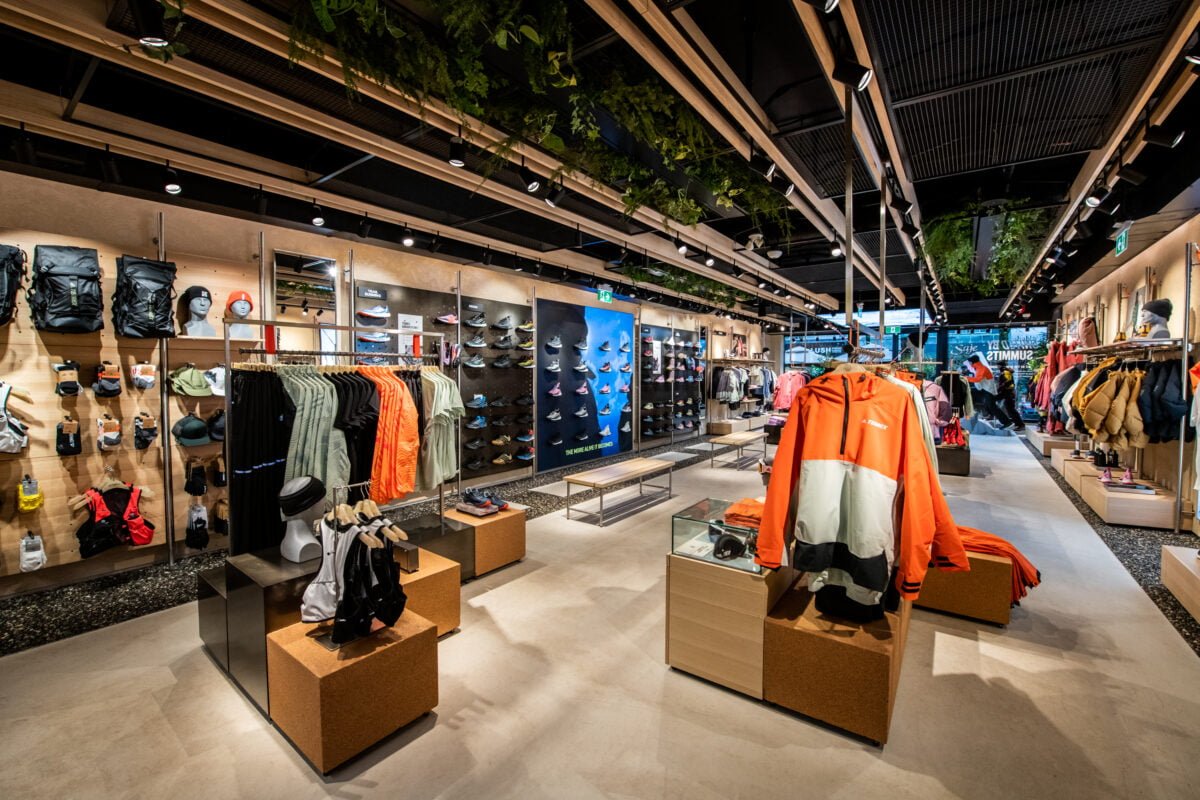
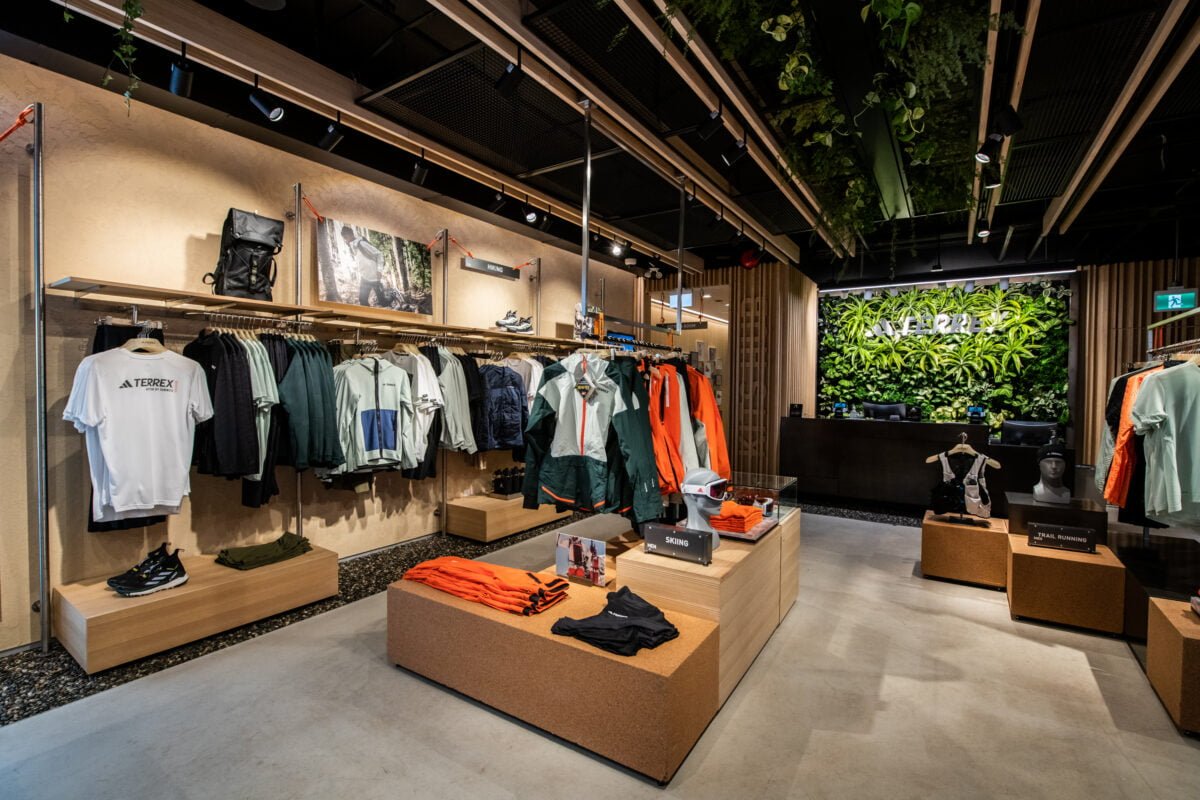
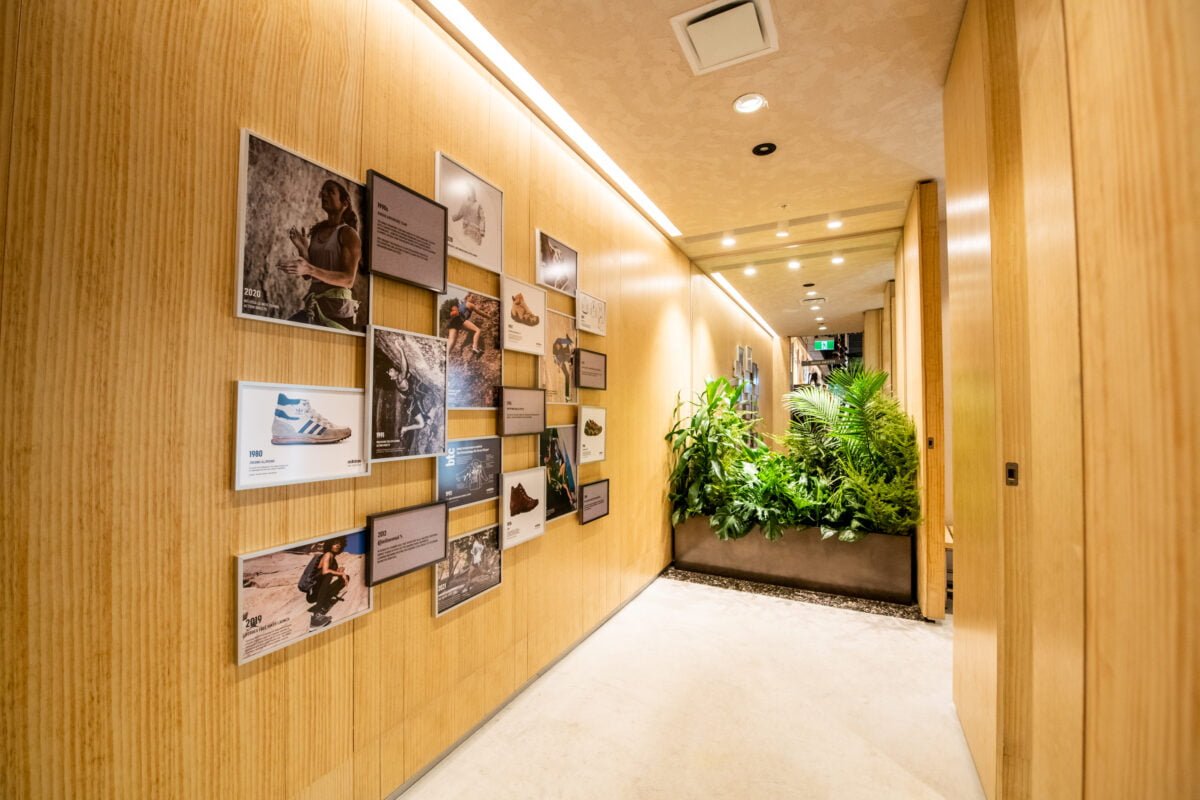
The apparel, footwear and accessories product assortment at the Kitsilano store have been specifically curated for the Vancouver outdoor enthusiast, be it climbing, trail running, hiking, mountain biking, skiing and more.
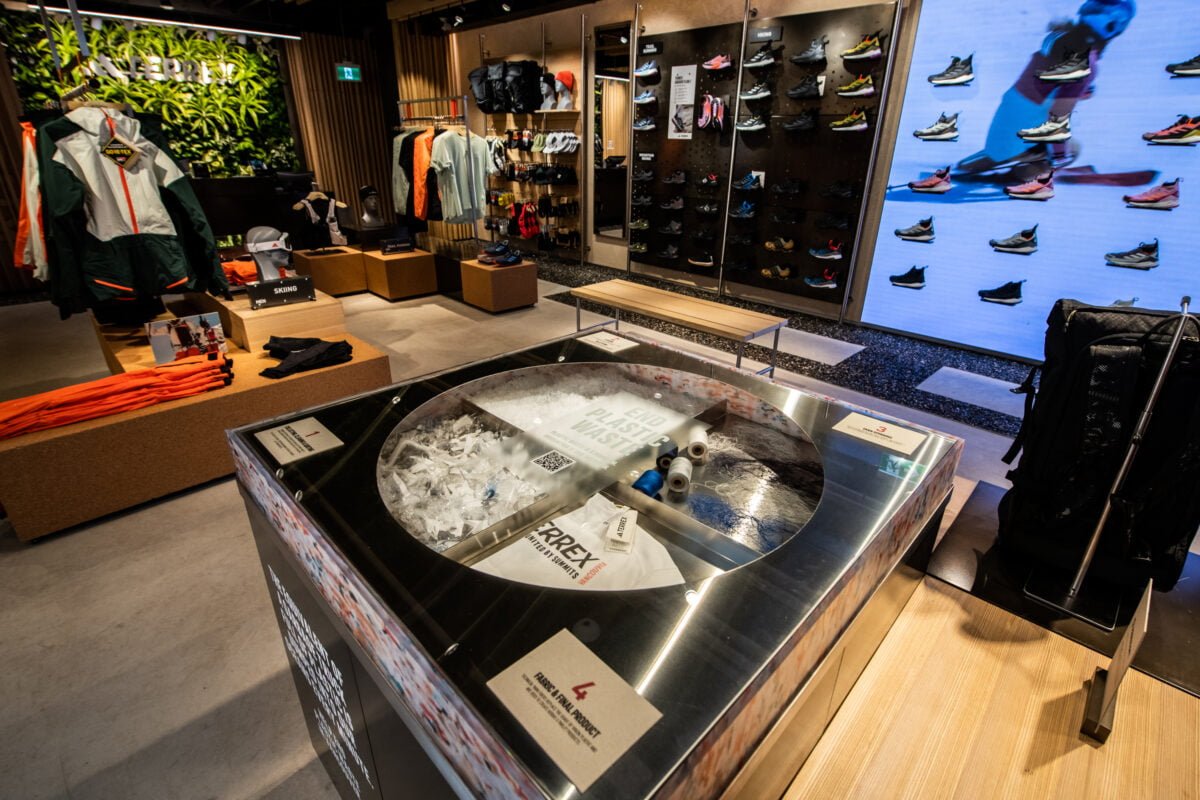
Adidas Terrex Kitsilano (Image: adidas)
“The Kitsilano TERREX store brings the outdoors into a retail community environment,” shared Hawkins. “Using state-of-the-art materials and technology, the space showcases adidas’ commitment to innovation and sustainability.”
Welcomed by an immersive canopy featuring live plants, store visitors can learn about adidas’ efforts to help end plastic waste in the store’s discovery zone. To further bring the outdoor community together, Kitsilano TERREX will serve as a gathering place where consumers can learn from in-house gear fitters, test new products and connect before or after their many outdoor adventures.
The new adidas TERREX location is located at 2235 W 4th Avenue in Vancouver.
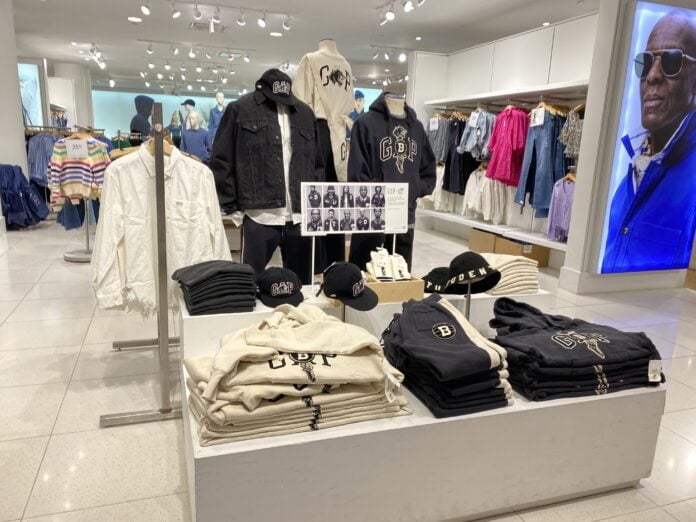
GAP at CF Toronto Eaton Centre (Image: Dustin Fuhs)
This year will be a return to normal for Canada’s retail apparel market, says a new report by Trendex North America, a marketing research and consulting firm.
The report is forecasting a 3.6 per cent increase in 2023 in retail apparel sales to $34.4 billion.
“It’s a return to normal. The growth that we’re going to see is reflective of what we saw pre-COVID and that will also include growth for the e-commerce market and the luxury market,” said Randy Harris, President and Owner of Trendex North America.
“The only thing that’s more interesting is that the second-hand or resale apparel market will grow the most and that will affect the luxury market to some degree. To what degree is hard to say at this point. But there’s no doubt that it is a very, very important sector that we never even talked about five years ago and now it is.
“I think the interesting thing from my perspective is again because I’m a contrarian, there were two things that did not happen in 2022. We did not see a spike in corporate bankruptcies. There were only three. One less than the year before. So all the gloom and doom about companies going out of business might happen especially in the weed business but certainly not in the apparel business.”
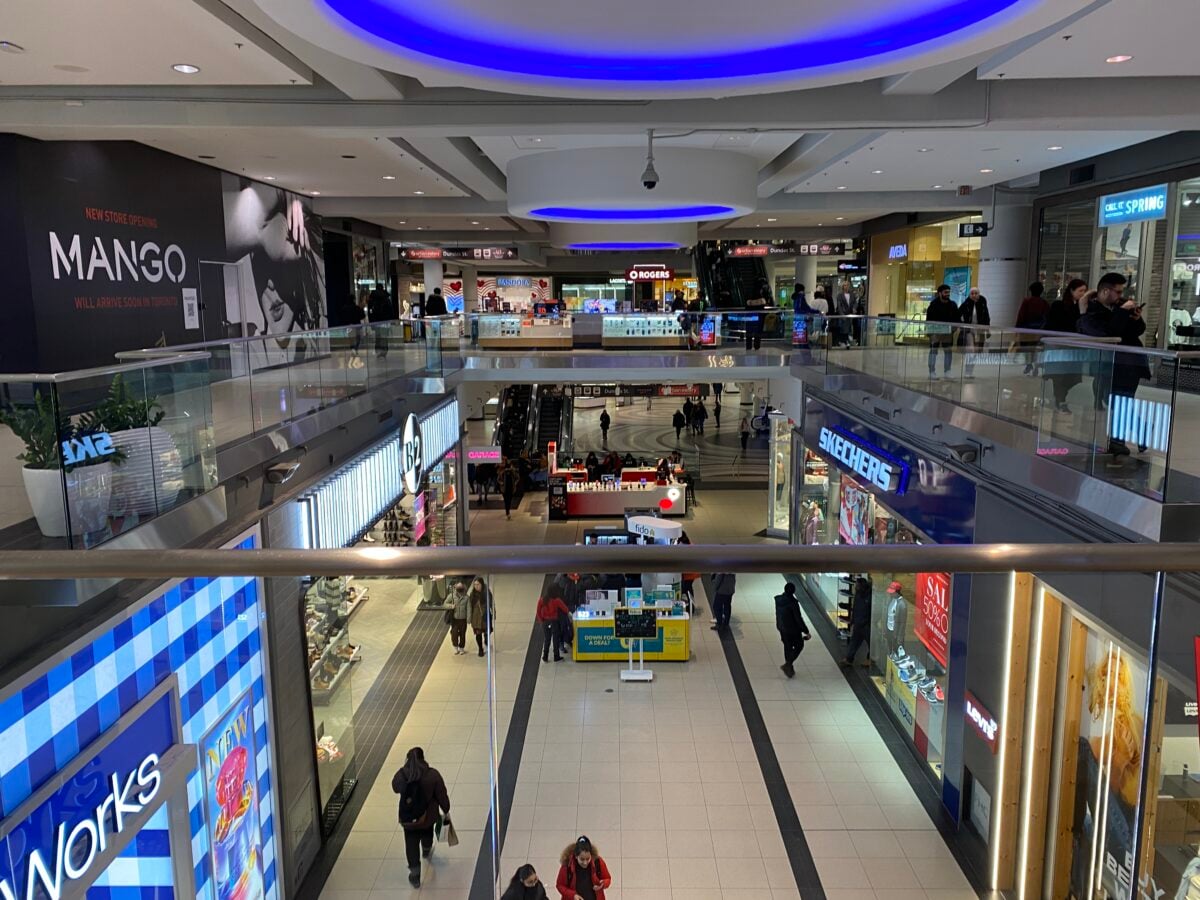
CF Toronto Eaton Centre (Image: Dustin Fuhs)
The Trendex report is forecasting apparel sales to rise 2.5 per cent to $35.2 billion in 2024 and by another 2.8 per cent to $36.2 billion in 2025.
“The other thing I felt was interesting is that there’s a lot of talk about inflationary pressures and the market. There is no such thing as inflationary pressure within the apparel segment. Last year, apparel prices went up 0.2 per cent. Now I believe that the overall rate of inflation was like six per cent plus. But our prices are not going up,” said Harris.
“That says something though. And that is a lot of discounting is going on in the marketplace for apparel and there is no indication yet that an overall higher rate of inflation in general is negatively affecting discretionary purchases like apparel. Not yet at least. I know inflation is a big deal in every article you read about Canada but it seems to have no effect on the Canadian apparel market based on the government’s own data.”
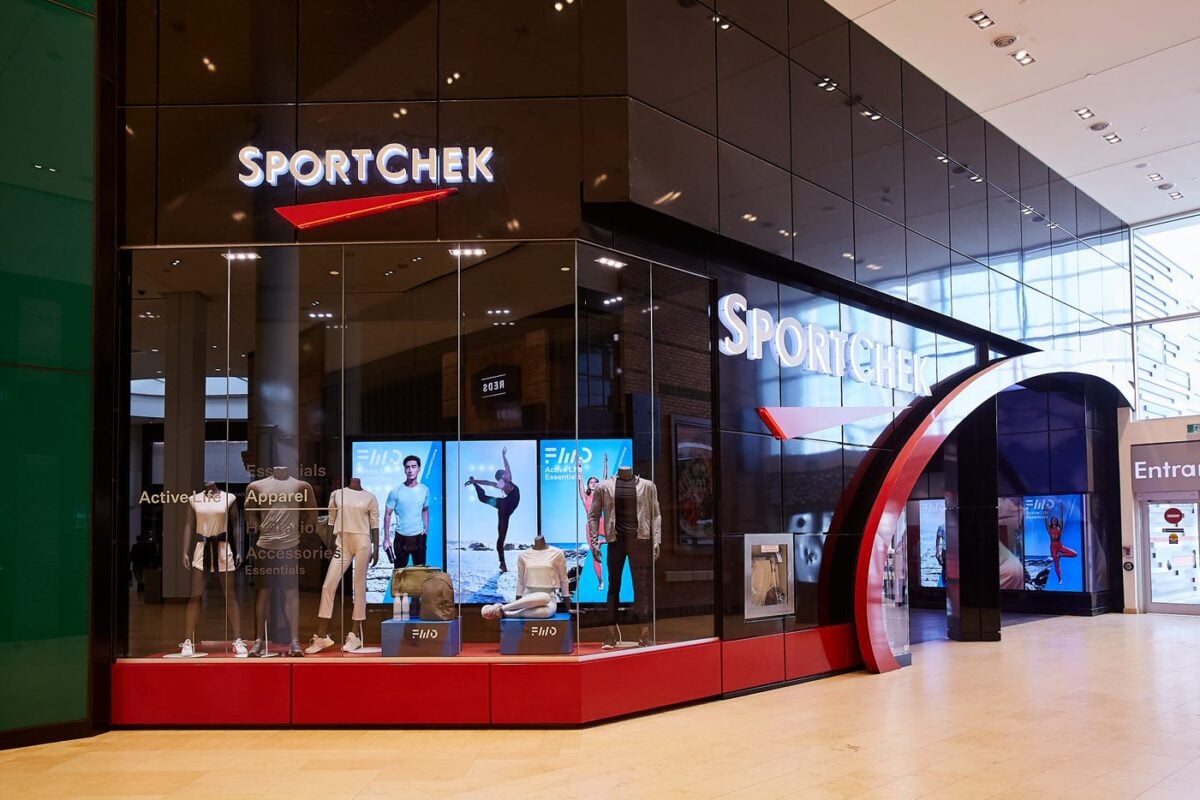
Forward With Design at SportChek (Image: Canadian Tire)
The Trendex report said there are two important unknowns: whether the country will experience a recession in 2023 and to what degree the rate of inflation will negatively affect Canadian’s discretionary purchases including those for apparel.
The Trendex forecast also found:
Apparel e-commerce sales will increase by 6.6 per cent. Holding down its growth will be an increase in the number of retailers eliminating free returns and the elimination of any remaining in-person shopping restrictions;
Luxury apparel sales will increase by 7.0 per cent. The increase will be driven by a number of factors including an increase in tourism;
Resale apparel sales will increase at a rate at least two times greater than that for the entire retail apparel market;
As inflation continues to negatively impact consumers discretionary purchases, both the fast fashion and off-price channels will gain share;
The incidence of buy now/pay later for apparel will increase to the point that instead of it being a competitive advantage if offered it will become a competitive disadvantage if it is not available;
Sustainability will finally become an important variable in the purchase decision especially among young female consumers (note: forget younger men, as they are a lost cause);
Gender fluid fashion sales will explode from a small sales base;
Retailers will continue to use/experiment with social media, which is becoming more expensive, in order to develop ongoing relationships with potential customers;
Direct to consumer brands will continue to open pop-up locations and retail stores in order to reduce the cost of customer acquisition;
Activewear’s sales will continue to decline as working from home will become a pleasant but distant memory;
To enhance its awareness in the United States, Aritzia will join lululemon and Gildan in listing its stock on a U.S. exchange;
Sport Chek will struggle, as a result of both an increase in the number of its direct competitor’s doors and a slowing in athletic apparel sales.
Aritzia Yorkdale (Image: Aritzia)
Harris said the market grew by 19.6 per cent in 2022 to $33.2 billion.
“A lot of that was frontloaded in the beginning of the year. But if you look for example at the most recent months, October apparel sales were up only 4.6 per cent. So we’re beginning now to compare apples and apples,” he said.
“By last October in 2021, we had been pretty much through all the COVID restrictions and retailing had begun to return to normal. So when we’re talking about the growth in the market it sounds like it was wonderful and it was at the beginning of the year but by the end of the year we settled into the normal three, four, five per cent growth rates and I expect by the end of the year December will be up about six per cent.
“What we have is a different market. So many of the things you read do not apply to the Canadian apparel market. Some do but a lot of them do not and certainly one is inflation and the other one is e-commerce is not growing that much at all and it’s going to probably get worse going forward because more and more retailers are going to start charging for returns.”
Calgary-based Anatolia Turkish Foods has embarked on an expansion strategy that will see the brand grow into other markets in Canada.
The concept by chef-entrepreneur Mahmut Elbasi began in 2005 with a location at the Crossroads (farmers’) Market. Today it has locations there and at the two Calgary Farmers’ Markets (in the north and south parts of the city) as well as a restaurant in the heart of downtown Calgary and its recently-opened flagship restaurant and specialty store in the TransCanada Centre in northeast Calgary.
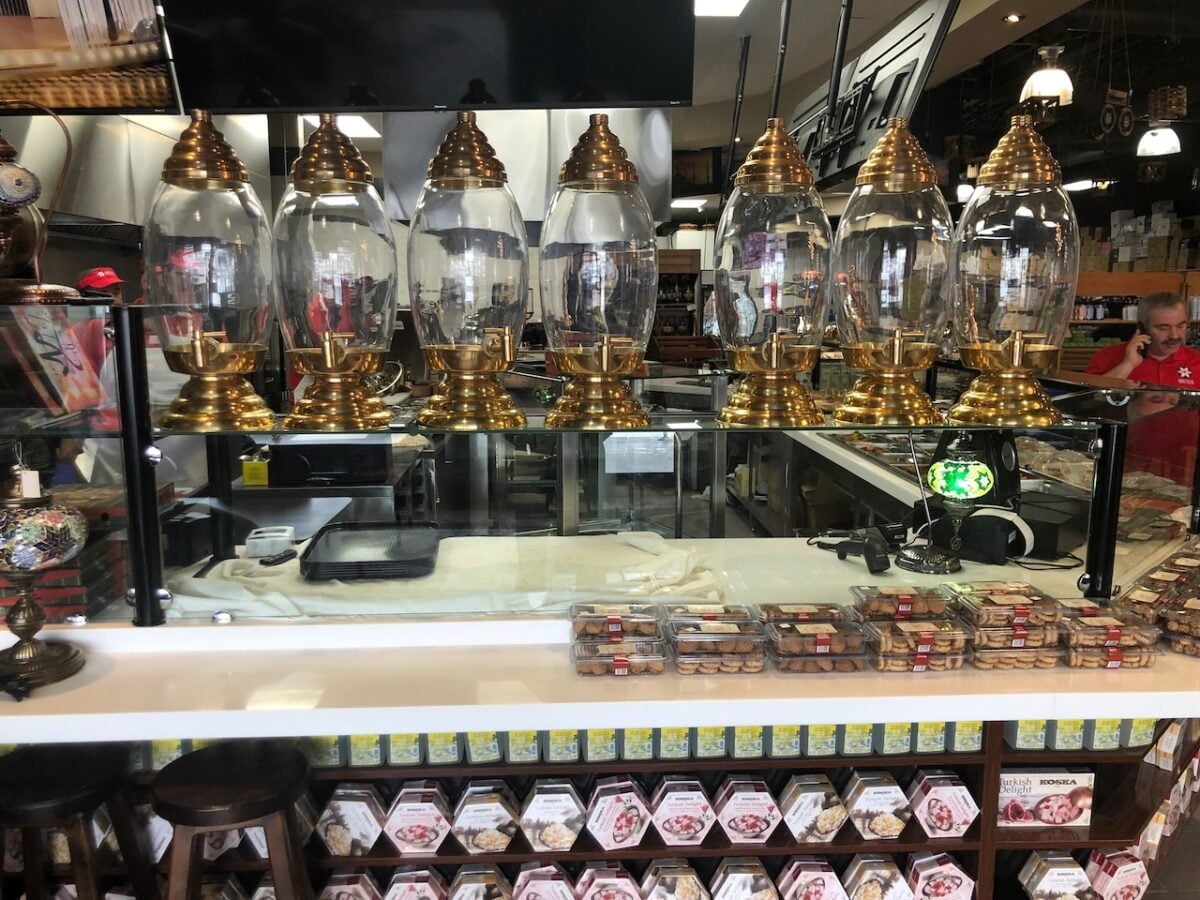
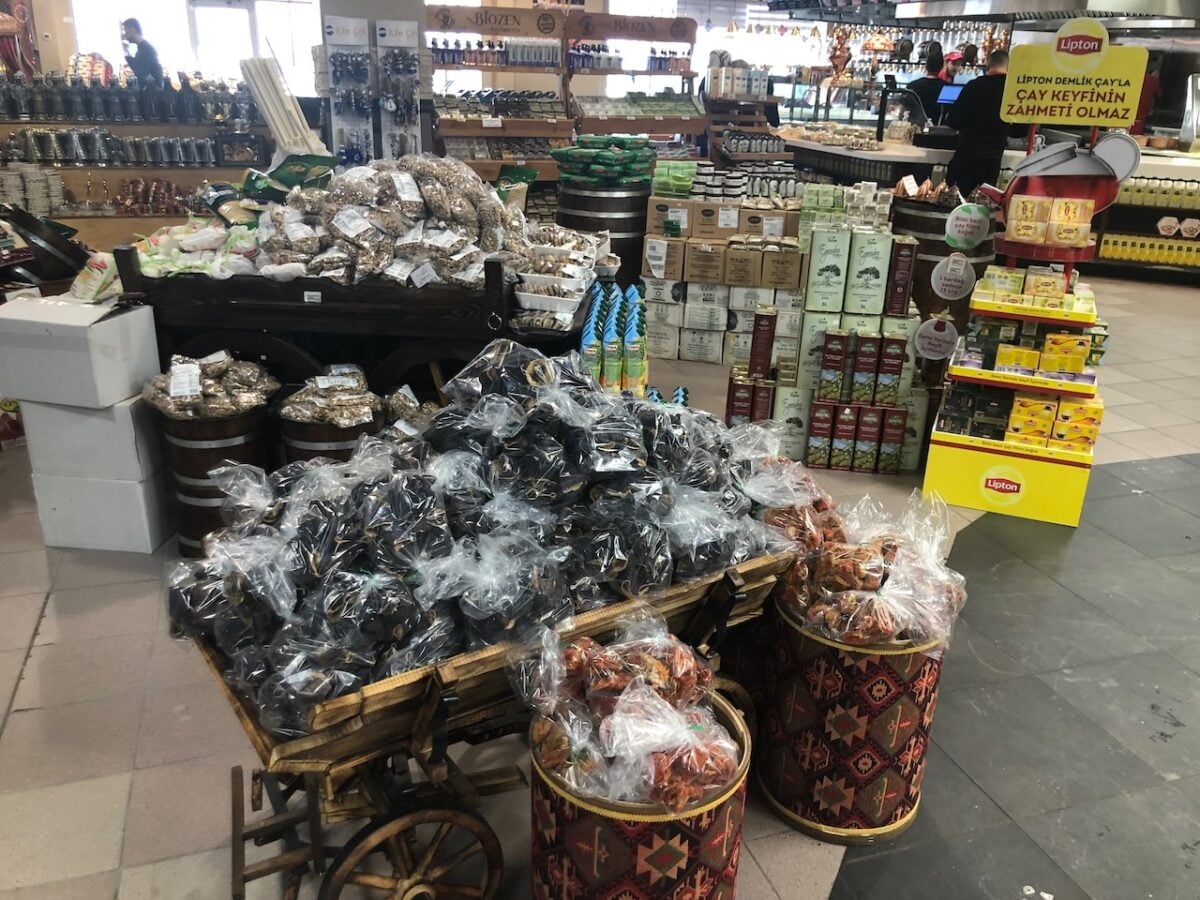
The TransCanada location is about 5,300 square feet and is an ethnic food store/restaurant combination, featuring an expanded offering of imported specialty food and retail items as well as the Turkish cuisine the brand is known for.
“We are looking at three more locations in Calgary. We visited a couple of months ago Vancouver, a couple of places. And Edmonton,” said Elbasi.
Anatolia Turkish Food (Image: Mario Toneguzzi)
The company, which also has a wholesale business, is also looking at the Toronto market for growth.
Fairfield Commercial Real Estate in Calgary has been retained as the exclusive leasing representative for Anatolia Turkish Foods.
“In the restaurant business, you have to be patient,” said Elbasi.
“The second thing to be effective, I think if I was not a chef I think it would fail. My wife and I we work together a lot. At the beginning we were selling a six-seven dollar plate of food which was like for nothing. But we kept going for five or six years. People needed to get a very good experience.
“Also, lots of people are visiting Turkey and they taste the food there. They come and ask us if we have this food or that food.”
He added prices for the food items on their menu have gone up since when he started but they are still much less expensive than what they could be. Customers are also attracted to the fact the business is family-operated.
Anatolia Turkish Food (Image: Mario Toneguzzi)
Anatolia is a region of Turkey where Elbasi came from. He worked there initially in the food industry as a dishwasher and moved his way up to being a chef. Many of the recipes at the different Anatolia Calgary establishments are traditional ones from that region.
When he moved to Calgary about 22 years ago he was hired by a local Turkish restaurant, Istanbul, as a chef. From there, Elbasi decided to go on his own and opened up his first location in the Crossroads Market with plans now to grow the concept in other major markets in Canada.
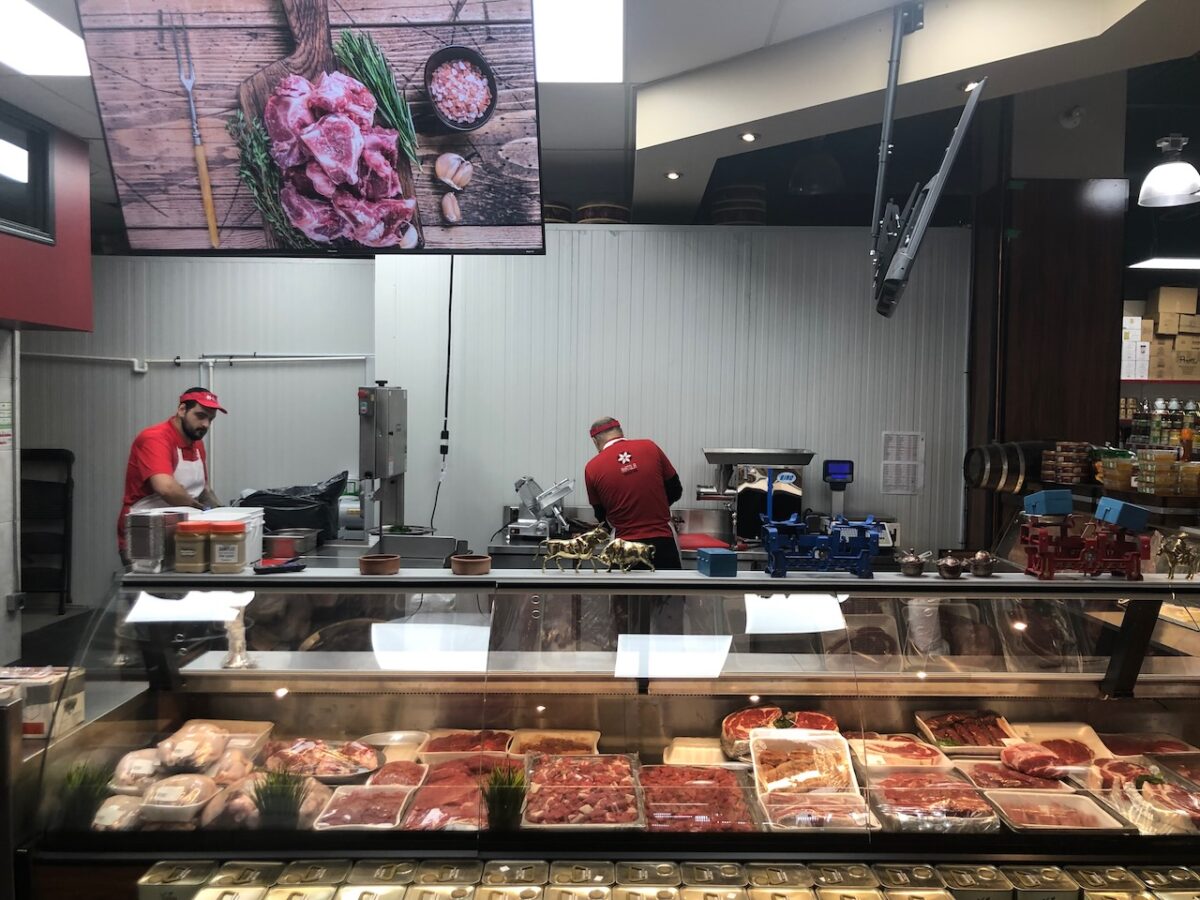
The firm offers a unique concept of authentic European – Turkish cuisine that features halal meat options, as well as a variety of fresh menu items for vegan and vegetarian patrons.
Anatolia is carving out its own niche within the Canadian food service industry and is embarking on a multi-format expansion program with its regional operating partners in greater Vancouver, Calgary, Edmonton, and the greater Toronto markets.
Anatolia Turkish Food (Image: Mario Toneguzzi)Anatolia Turkish Food (Image: Mario Toneguzzi)
According to Fairfield Commercial Real Estate, the company has the following, immediate food services space requirements:
Casual Mediterranean dining restaurants 2,000 – 2,500 square feet in Burnaby, Langley, South Surrey and the greater Toronto market;
Ethnic food store / restaurant combo 5,000 – 6,000 square feet in southwest Calgary and northwest Edmonton; and
Food Halls in mixed-use urban projects and regional shopping centre food courts 450 – 600 square feet in the Calgary market.