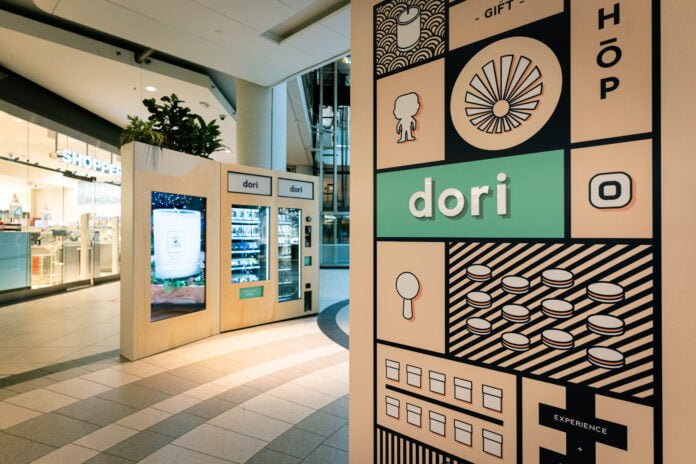
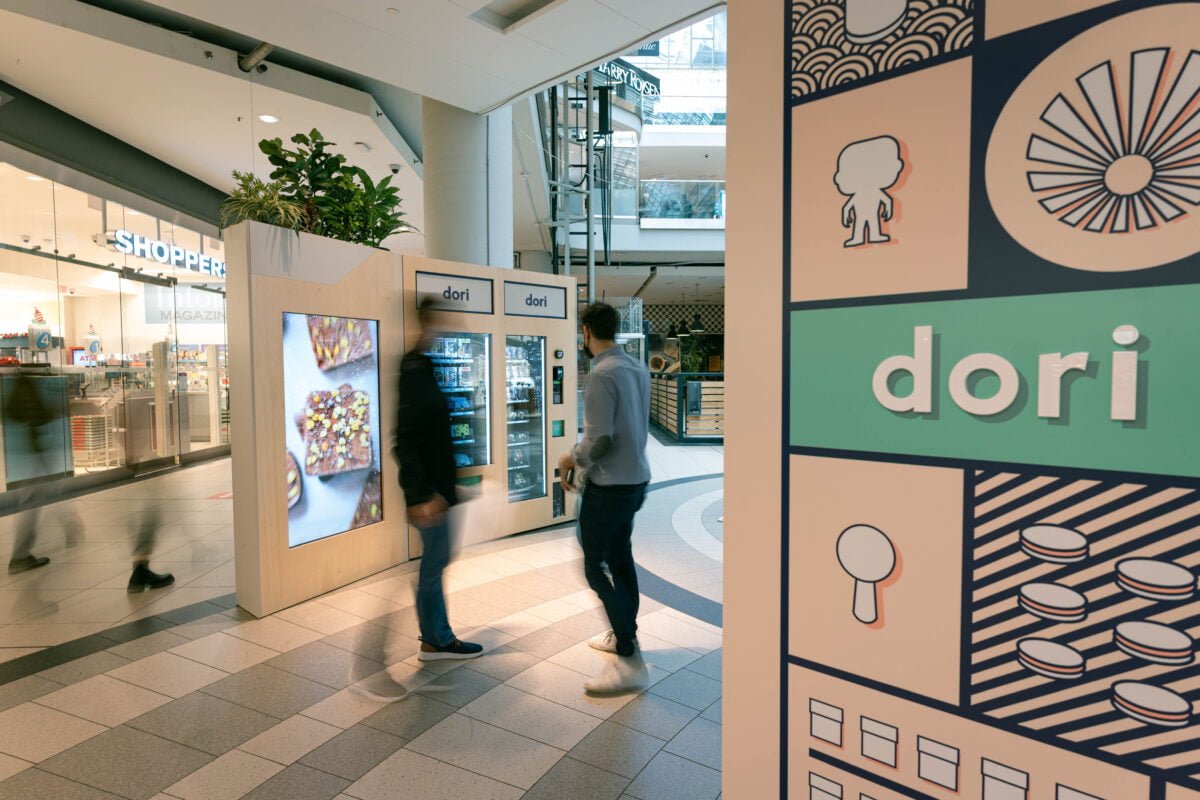
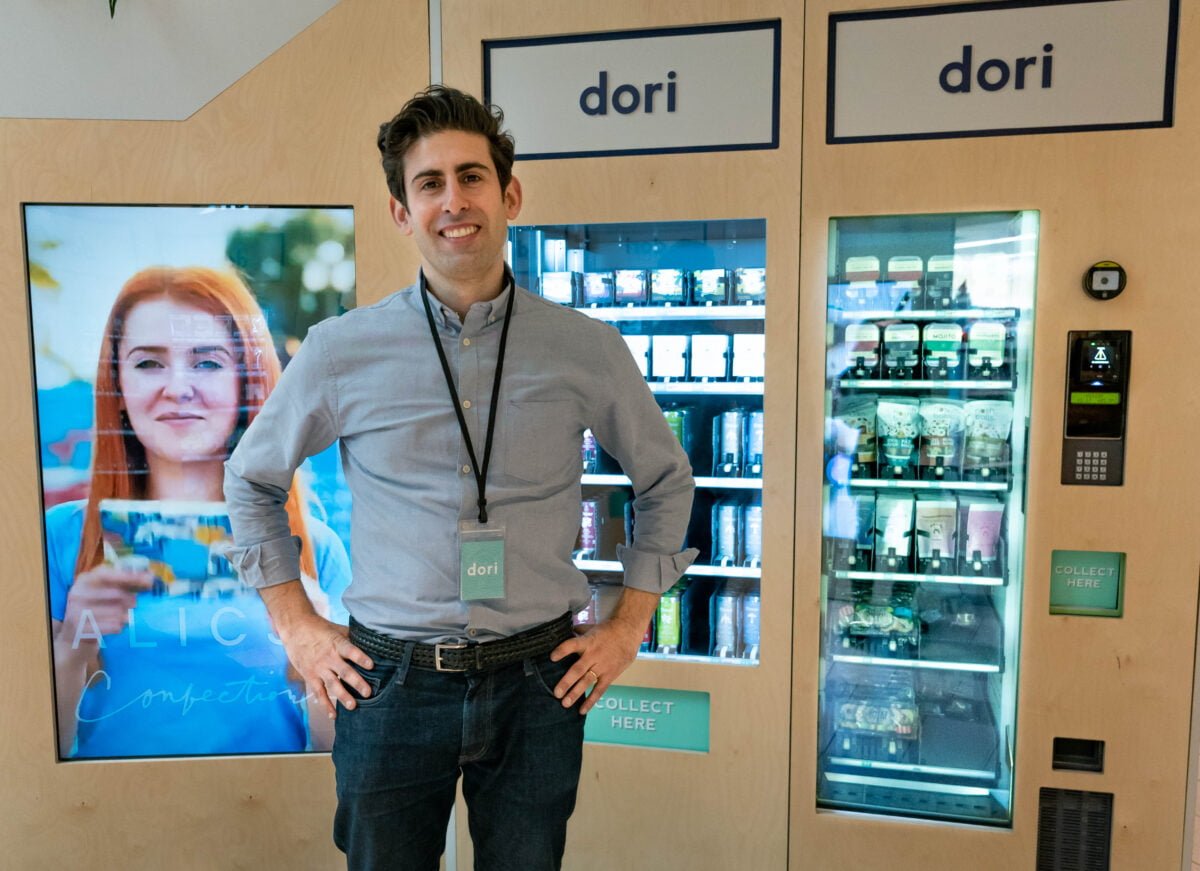
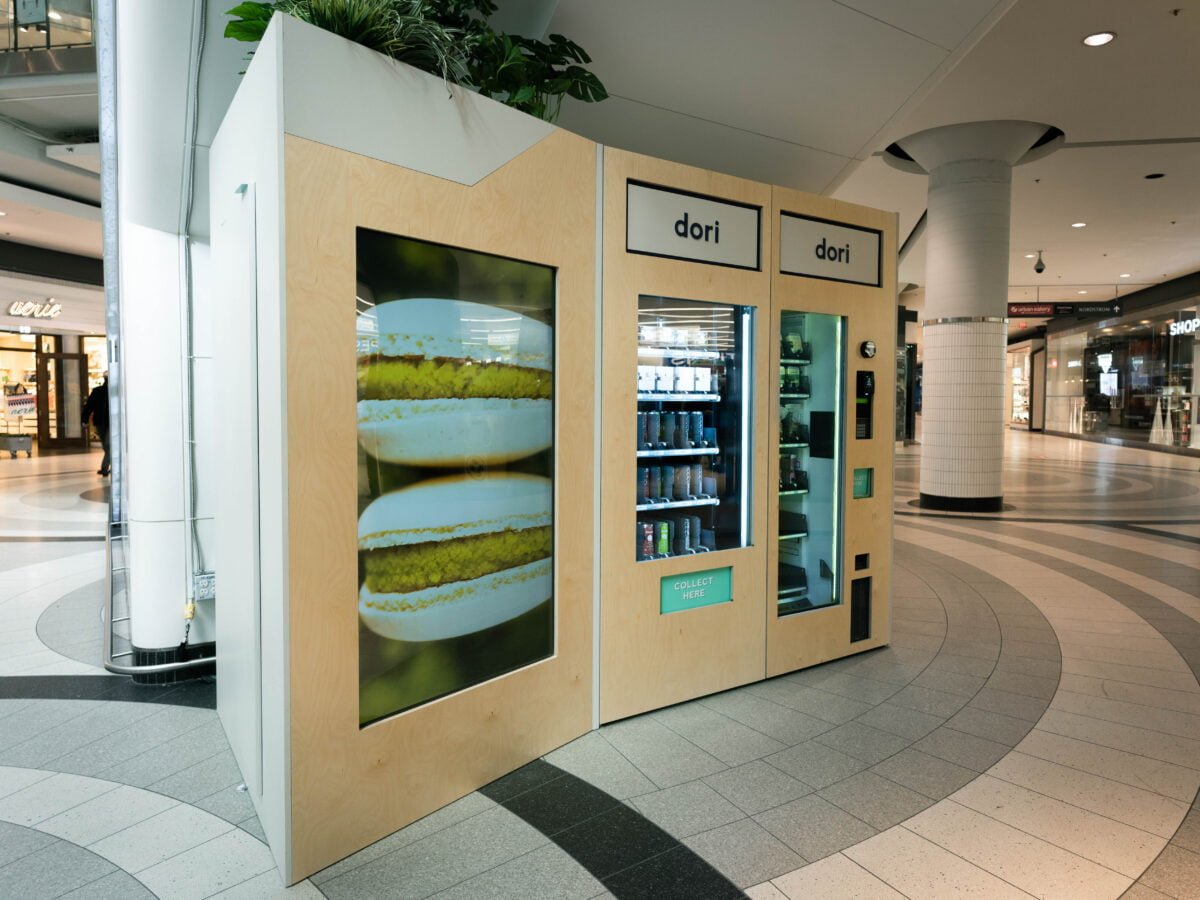
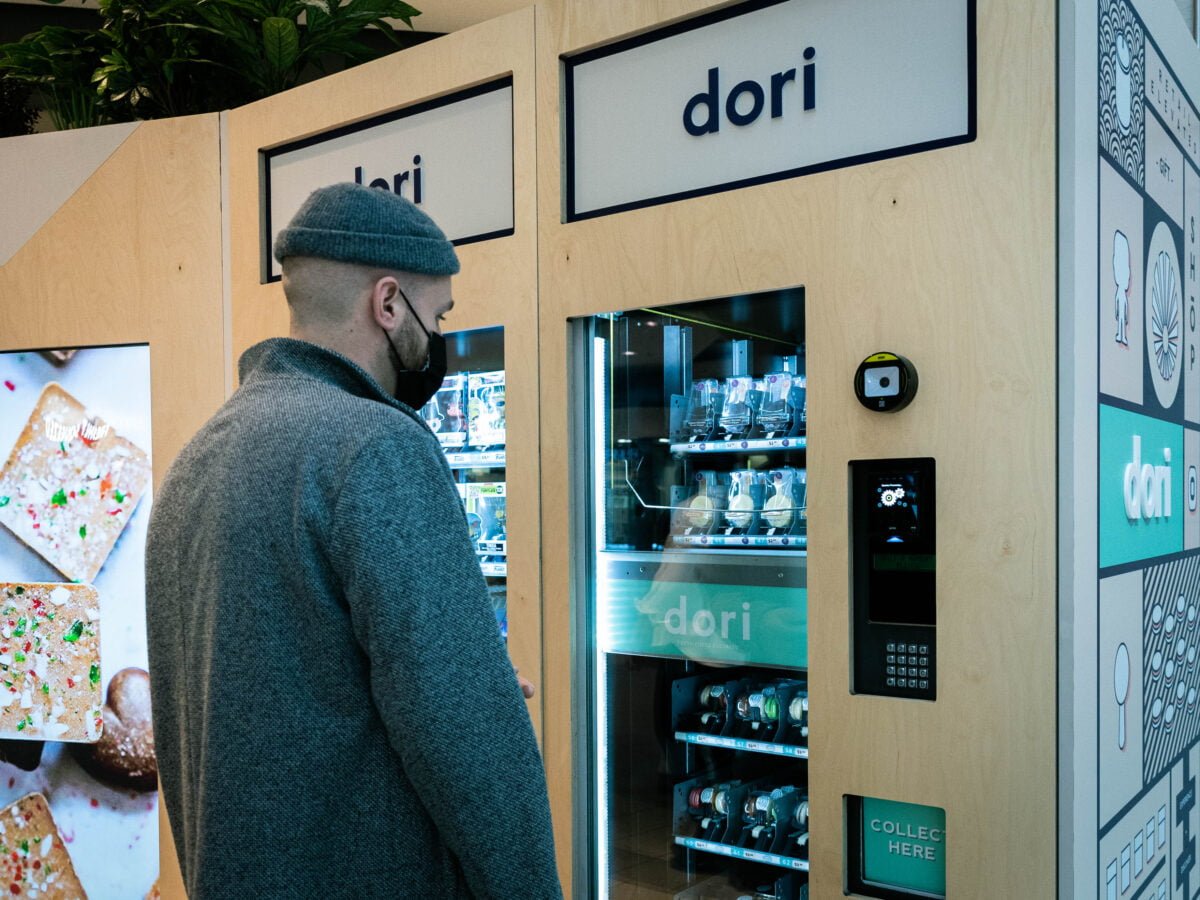
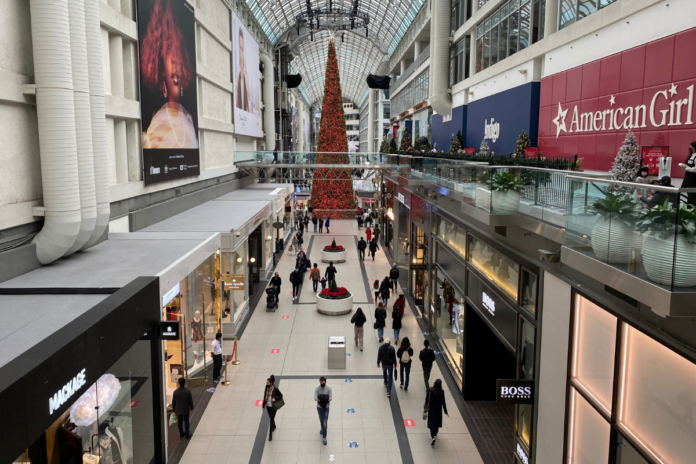
Dori at CF Toronto Eaton Centre (Image: InHouse Creative)
A new kiosk concept called Dori is being launched as a pilot project in the CF Toronto Eaton Centre, which is basically a mini-department store made of multiple brands with products that are curated for the location the kiosk is located.
Noam Hazan, CEO of Dori, said the business model for this new concept is simple.
“We help brands access high footfall locations through automated kiosks and we help landlords activate underutilized space for retail. It’s a plug and play model where we take care of all the operational elements of the business and let the brand maintain control of the digital – such as pricing, advertisements on location and even updating SKU’s,” he said.
“The beauty is that brands can now launch stores remotely from the comfort of their offices. For example an Australian company can set up a physical point of sale in Toronto without ever stepping foot in the country. Eventually we will also have a click and collect feature where people can order items in advance. This is just the tip of the iceberg of what we are working on.”
Hazan is an architect who used to design commercial projects such as retail and office spaces.
“The future of retail is going to be highly automated and why don’t we see if there’s a way to start experimenting in that space,” he said. “That was where Klear Vending came out of, a PPE vending concept which was their first exposure in non-traditional vending in the public domain.
“From there we thought, how can we really provide a valuable experience to brands and to customers through automated retail. A lot of direct to consumer local brands are trying to become more omnichannel. They’re trying to find ways to get their product out there beyond what they have available to them.
“For example, for most direct to consumer brands opening a physical store requires a huge investment. It’s a completely different type of infrastructure. We’re offering an easier way to ease into a brick and mortar space and provide an opportunity to sell products in a physical location at a very low risk on flexible terms. That’s sort of the thesis and how we can basically help brands get their product in front of people in high foot traffic locations without having to open a full brick and mortar store and do a build out.”
The pilot project with Dori at the Eaton Centre will feature products that would appeal to shoppers on a more experiential basis – French macarons, cheesecake on a stick, gourmet candy, high end soaps and candles, and a collection of novelty items and gifts. There will be eight to 10 brands.
The Cocktail Box Co
Alicja Confections
Carole’s Cheesecake Company
Clover Botanicals
Maple & Leather
The Macaron Boutique
Funko
Sweet Sushi
Bon Bons
Nosh Balls
It will be located on the lower concourse on the south side by the Queen’s Street entrance.
“We’re using really sophisticated machines and we are really focused on the retail experience,” said Hazan.
“When people think of vending machines, they think of chocolate bars and potato chips. These are much higher end products.”
Hazan said the goal is to expand the concept across the country and eventually into the US.
“We want to work with a variety of landlords to offer this retail experience whether it’s malls, hotels, potentially hospitals, business centres. For each location we would curate the types of brands that we are offering at those locations for the people there,” he said.
“Right now we’re starting with the malls because we have a relationship with those landlords and we’ll see where it goes.”
The system is modular so depending on the location, the kiosk size can be increased or reduced depending on the available space.
“What may seem like regular Vending’s machines from their appearance, Dori has developed a whole backend technology that enables brands to view live data and analytics and also manage their content and prices, remotely.”
The company is planning to launch a smart sampling program in 2022 that enables brands to give away thousands of samples whilst also collecting user-input data such as emails or phone numbers. Their technology will also enable real-time feedback and deep sales analytics.
Quick service restaurant brand Wendy’s recently opened its 400th location in Canada with a plan to significantly accelerate growth in the near future.
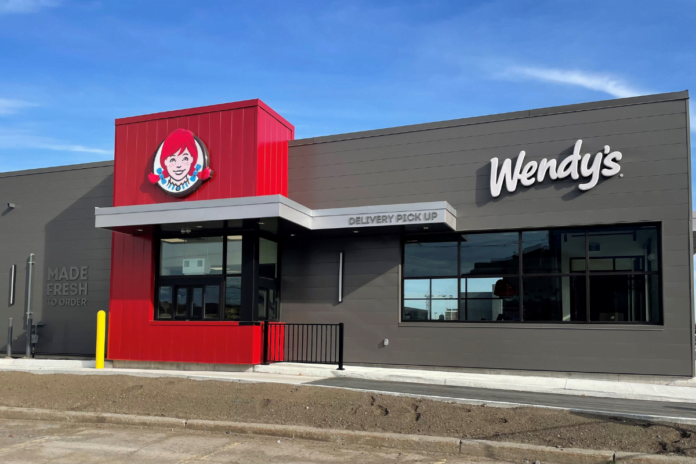
The newest location on Carling Avenue in Ottawa is what the company calls state-of-the-art, delivering Wendy’s newest design experience.
“This opening represents a milestone for Wendy’s. The new location introduces a wholly enhanced restaurant design to Canada and also marks our 400th restaurant in the country, a turning point for accelerated growth for Wendy’s in Canada. It is a testament to our performance in the country in recent years and it signals where we are headed,” said Paul Hilder, SVP & Managing Director, Canada and UK, The Wendy’s Company.
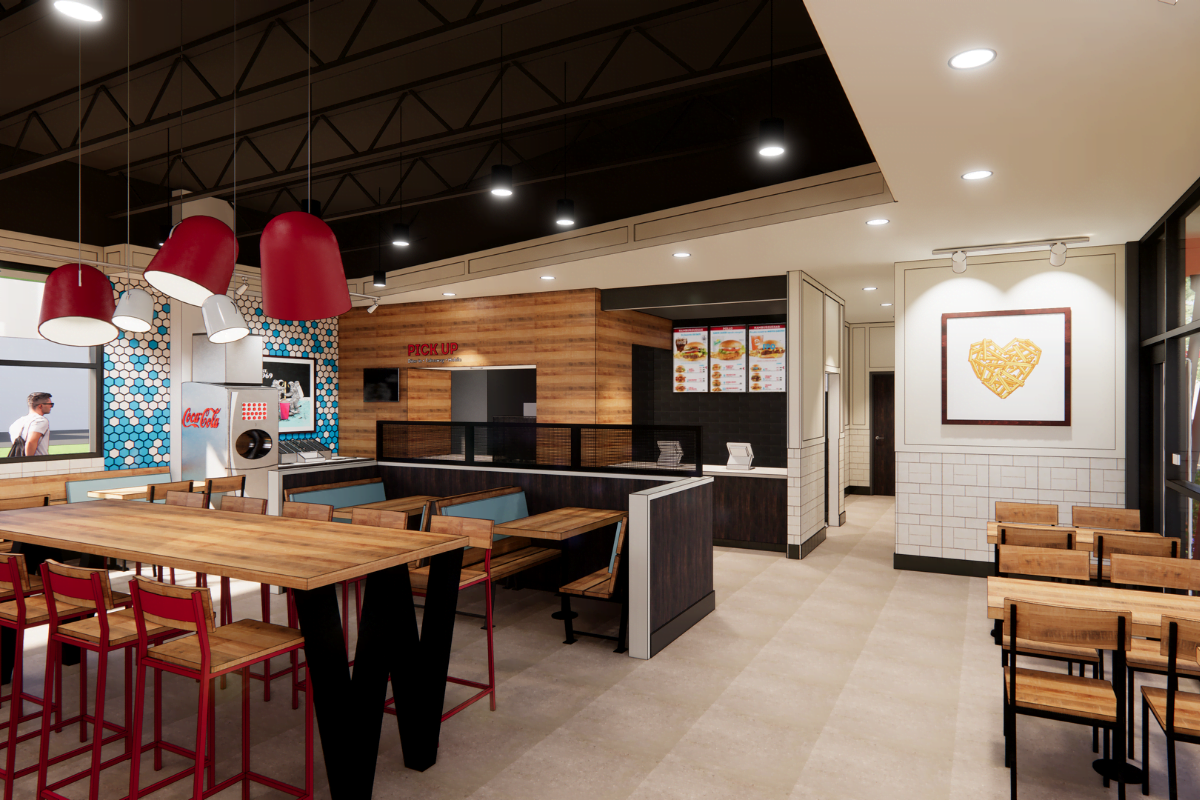
Wendy’s Canada 2.0 NextGen Concept
“The new restaurant at 2545 Carling Avenue in Ottawa, owned by Wendy’s franchisee the Thakker organization, is the first free-standing version of the new NextGen global 2.0 brand standard for Wendy’s in Canada. The new brand standard includes a smaller footprint with a simple, efficient design, costing less to build while optimizing the Wendy’s experience for customers, staff and delivery drivers.”
Hilder said Wendy’s has been in Canada for over 40 years and Canada is currently its largest international market.
“There is a lot of opportunity in Canada. We have opened more than 50 new locations in recent years, and are focusing our efforts on engaging existing franchisees and recruiting new franchisees to continue to bring more Wendy’s to more people across the country. We are incredibly proud of our 400th restaurant milestone,” he said.
“To accelerate our growth, we are actively recruiting new franchisees across Canada, with significant opportunity in Quebec, one of the most populous provinces in Canada, and the Maritimes. Both are regions where Wendy’s currently has a smaller footprint and is looking to expand.
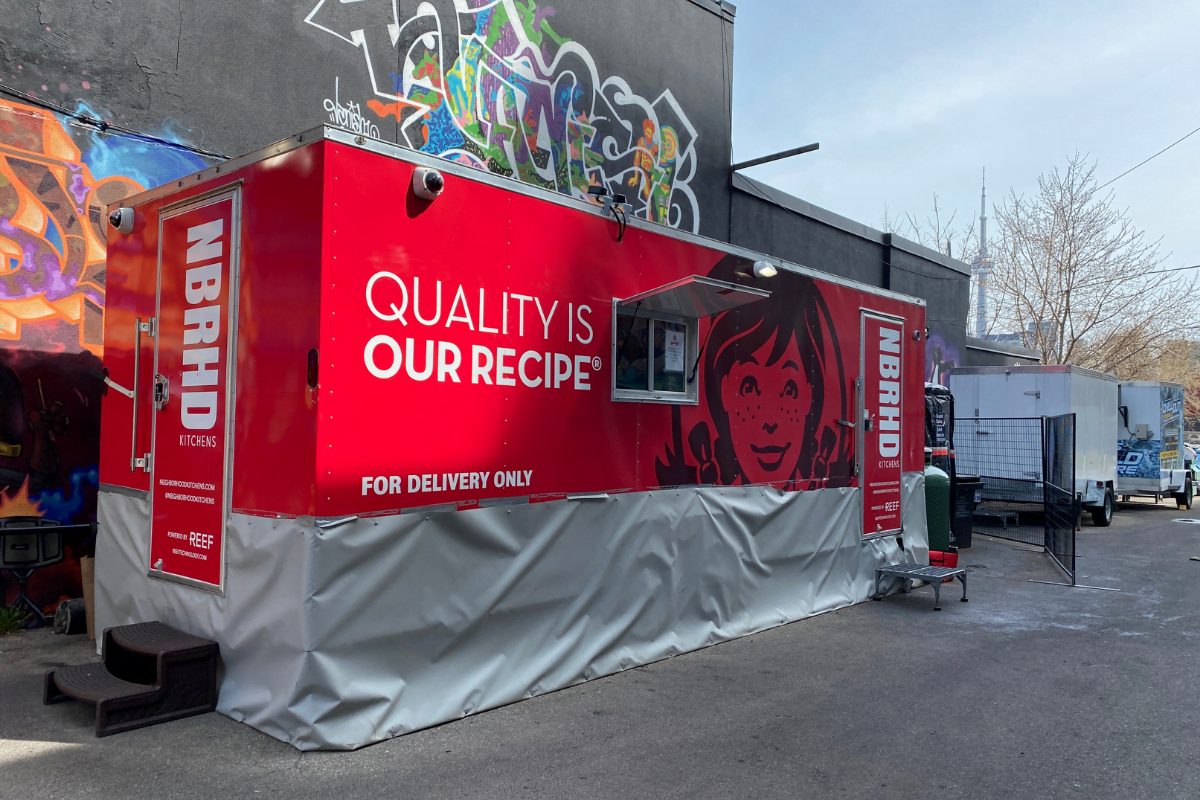
REEF Pickup Location for Wendy’s on College (Photo by Dustin Fuhs)
“We are also focusing on innovating to provide more access and convenience for urban customers, including through investments in our mobile app and delivery business. This includes a new development commitment with REEF to open and operate 700 delivery kitchens over the next five years across Canada, the U.S. and the UK. In 2020, we launched the pilot with REEF here in Canada and currently have nine REEF delivery kitchen locations across the country. As part of our investment in our delivery business, we recently welcomed Uber Eats to our delivery partner line-up alongside SkipTheDishes.”
Hilder said the new store format is a global brand standard for Wendy’s and it will be rolling out to new locations from here. More free-standing locations are planned for Canada, such as a drive-thru and walk-up-only model slated to open in Trenton, Ontario, and a restaurant similar to Ottawa will soon open in Parksville, Vancouver Island.
“The great thing about this new design is that it is adaptable to a range of locations and applications— urban retail locations, food courts, drive-thru only and even shipping containers,” he said.
Hilder said the QSR industry in Canada is competitive and has undergone a lot of changes as a result of the global pandemic.
“For Wendy’s, we keep our focus on the reason why we exist in the first place, and that is our high quality food. Quality is our recipe and you see this with our fresh Canadian beef, our greenhouse grown tomatoes and lettuce, and by bringing fresh made-to-order food to Canadians. This focus of ours is the reason why Wendy’s is now ranked third in the Canadian QSR category,” he said.
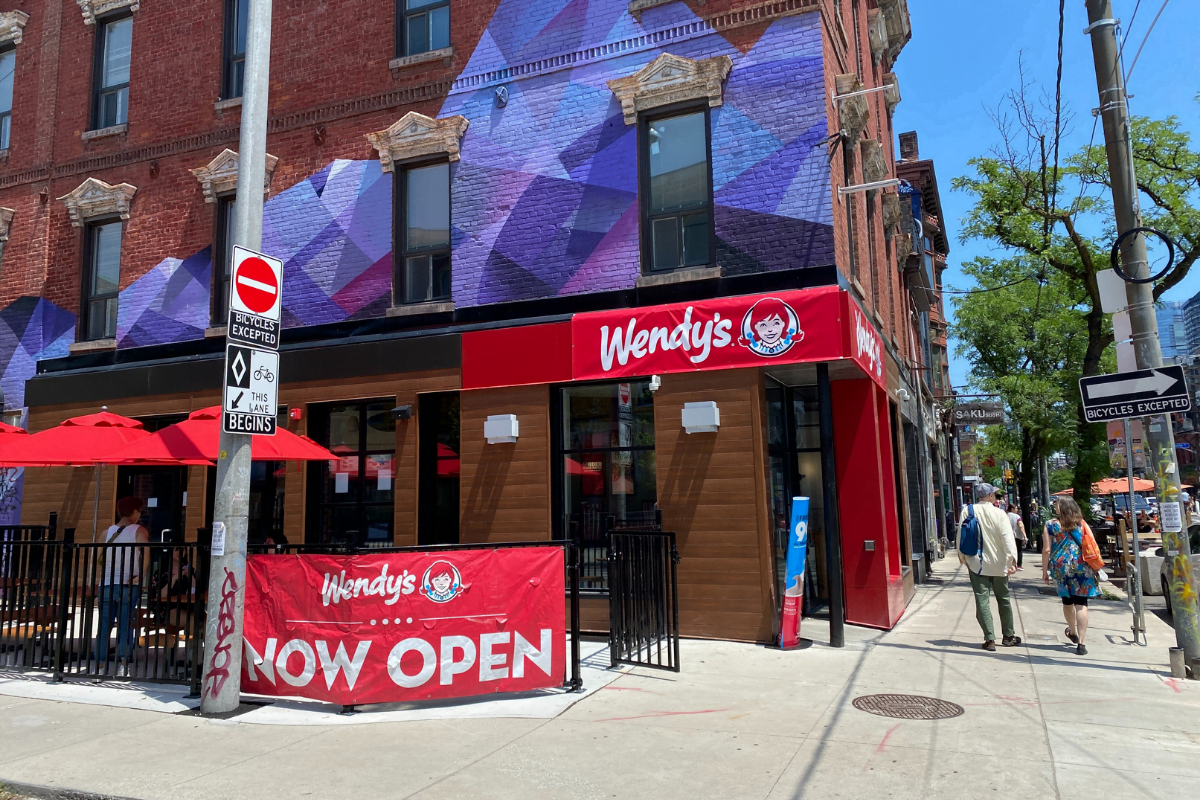
Wendy’s on Queen Street in Toronto (Photo by Dustin Fuhs)
“We also live in an era where people are looking for safe and convenient ways to get great food. Convenience has always been a top factor for the QSR industry, but this has taken on more importance since the onset of the pandemic. People want to add great food to their experience, whether it is through a drive-thru restaurant or by ordering through a delivery service. “The pandemic has opened doors to new QSR customers looking for this convenience, so up-to-date delivery options, mobile ordering and payments, and digital possibilities have rapidly become a must for QSR, and a significant focus for Wendy’s. We will continue to evolve our digital business to provide speed, convenience and affordability to our fans.”
The new brand standard includes a smaller footprint with a simple, efficient design that costs less to build while being adaptable to a range of locations including urban retail locations, food courts, drive-thru only and even shipping containers.
The state-of-the-art Ottawa restaurant, which is the first free-standing version of the new next generation global 2.0 brand standard in Canada, is designed to optimize the Wendy’s experience for customers, restaurant team members and delivery drivers. It includes one exterior pick-up window that serves two purposes: one side is for drive-thru customers and the other is a walk-up window for delivery drivers. This allows those who are ordering via drive thru to place their orders faster and at the same time increases the speed for delivery pickup. The interior includes a new order flow system, modern finishes, lighting and artwork and the latest, highest efficiency HVAC system that utilizes significantly more fresh air from outside with much less reliance on recirculated air.
Abigail Pringle
Wendy’s was founded in 1969 by Dave Thomas in Columbus, Ohio. The first Wendy’s restaurant in Canada opened in 1975. The brand has more than 6,800 restaurants worldwide.
“Looking ahead, and with commitments from current franchisees and through the recruitment of future franchise partners, we’ve laid out an ambitious plan to significantly accelerate growth.Expanding our presence also allows us to create more career opportunities as we bring more high-quality, freshly prepared food to customers across Canada,” said Abigail Pringle, Wendy’s President, International and Chief Development Officer
The Story Behind Ren's Pets with CEO Scott Arsenault
Craig discusses the Ren’s Pets story with Scott Arsenault, including how the retailer came about and where it’s going post-acquisition.
The Interview Series podcast by Retail Insider Canada is available on Apple Podcasts, Stitcher, TuneIn, Google Play, or through our dedicated RSS feed for Overcast and other podcast players. Also check out our The Weekly podcast where Craig and Lee discuss popular content published on Retail Insider which is part of the The Retail Insider Podcast Network.
Drop us a line at Craig@Retail-Insider.com. You can also rate us in Apple Podcasts or recommend us in Overcast to help more people discover the show!
Background Music Credit: Hard Boiled Kevin MacLeod (incompetech.com). Licensed under Creative Commons: By Attribution 3.0 License. http://creativecommons.org/licenses/by/3.0/
The 2021 holiday shopping season has already begun across the country as consumers visit their favourite malls and storefronts, both physical and digital, seeking out exceptional experiences. And, as the festive period really commences its crescendo with fast-approaching Black Friday and Cyber Monday events, retailers throughout the industry feverishly search for offering and service enhancements that will meet increasing consumer expectations. Heightened by the impacts of the pandemic, which resulted most significantly in an accelerated digitization of the world around us and shifting consumer behaviour, they are expectations that continue to increase. And, according to Marcelo Souhami, VP of Customer Experience at SAP Canada, the ability for retailers and brands to satisfy the desires of today’s consumer is going to be paramount as we head into the most important stretch on the retail shopping calendar.
“Customer behaviour seems to be crossing over from high expectation to impatience,” Souhami suggests. “There’s a growing perception among consumers that retailers and brands have had plenty of time and opportunity during the pandemic to be able to sort out and optimize their online offering. Because many have, a new gold standard has been set with respect to the experiences that consumers expect. This standard continues to rise. Retailers have learned over the course of the past 18 months or so that their communication with customers needs to improve. Any disconnect from the buying, delivery or return experience just won’t be acceptable anymore. Retailers and brands need to make sure that they’re communicating effectively with their customers at every step of their journey. By stating and keeping the promise, whether it has to do with product quality, returns policies, providing expertise and advise concerning the product and recommendations of adjacent complimentary products, is critical. Communication with the customer has to be clearer than ever before, and it has to be executed at all touch points.”
Mobile-first
Mobile coupon redemption.
One of the most important of those touch points with respect to today’s evolving retail operation, suggests Souhami, is mobile. With the estimated number of smartphone users in Canada in excess of 30 million – a number that continues to grow – and steadily increasing mobile internet user penetration, he may just be right. Current usage and penetration within the country illustrate Canada as one of the world’s most connected online populations, he says, underscoring the need for retailers and brands to develop meaningful and effective strategies in order to support the mobile experience consumers are seeking.
“It seems as though many within the industry have been talking about a mobile-first approach for a very long time,” says Souhami. “It’s amazing to see that some brands are still hesitant to treat mobile as the de facto channel from both a conversion and marketing perspective. Retailers and brands have got to be focusing on their mobile strategies and assessing whether or not the mobile experience they offer is adequate. When product information is being shared, does it render properly in the mobile environment, and is the story consistent? For those that have developed a quality mobile experience, there are a lot of opportunities to be had. People have been couped up in their homes for a very long time and are beginning to crave experiences. The retailers that are able to create a means by which consumers can interact with product or service in unique and different ways, leveraging innovations like augmented reality, will be able to elicit their interest and engender loyalty in them.”
Evolving omnichannel behaviour
As important as Souhami believes mobile to be, however, it is but one of the channels comprising the entirety of the retail ecosystem. As such, it must be considered as part of a larger omnichannel retail experience being developed and offered by retailers and brands in which the transition from channel to channel is seamless and complementary. However, more significant than their need to build the experience, suggests Souhami, is the understanding that retailers and brands must develop concerning rapidly evolving consumer behaviour and the ways in which they are traversing through the omnichannel environment.
“There’s been a bit of a shift in how consumers are leveraging omnichannel within their shopping journey,” he recognizes. “The original conversation was about people going into the store, discovering products and then going home to purchase them online. Most recently during the pandemic, however, people have started to do a lot of their discovery online and then go into the store to buy the item. This shift in behaviour actually presents retailers and brands with the opportunity to reduce returns with the physical store serving as a critical showroom and destination for product review and confirmation. If built and executed properly, a strong omnichannel offering can also reduce friction within the customer journey, creating efficiencies and enhancements, allowing retailers to deal with these changes smoothly.”
Supply chain efficiencies?
Beyond ensuring that consumers are able to interact with the brand whenever and wherever they want within one seamless shopping experience, Souhami suggests that a focus must also be paid to finding efficiencies within the supply chain. Uncertainty has reigned over global supply since the onset of the pandemic, and there doesn’t seem to be any end in sight to container shortages and delays occurring all over the world. They are negative effects on the retail supply that, according to Souhami, can result in disappointment and dissatisfaction among consumers. However, he adds that through creativity and innovative thinking, useful modifications and adjustments can be made, yielding improved outcomes.
“Supply chain is absolutely going to be the boogeyman for retailers this holiday season,” he asserts. “And, because there’s been so much disruption to the supply resulting in a lot of negative customer experiences, the challenge seems to be magnified. In order to combat this, retailers have got to ensure that they clearly communicate their supply chain situation to their customers, including availability of inventory and delivery times. People will not convert to paying customers if they don’t have a high level of confidence that their needs are going to be met. With respect to the product itself, retailers need to promote availability. Whatever product they have in stock is the supply that should be prioritized. Retailers’ customer care staff should be empowered to help address issues and problems, proactively offering solutions. In these ways, retailers can optimize their supply chains and build trust in their customers.”
Readying the organization
In order to properly empower their customer care teams, however, Souhami suggests that a readiness plan needs to be developed. In doing so, he says that cross-team communication is promoted, leading to further efficiencies throughout the operation and an elevated experience for the customer. In addition, he adds that it instills confidence in retail teams, from the supply chain through to frontline staff, that they’re prepared and equipped to deal with any of the challenges that they might face within a changing retail environment.
“Retailers can’t assume that their teams are going to know how to deal with all of the issues that are going to arise,” he states. “They’ve got to look ahead an anticipate where there might be issues and challenges with promotions or anything else and understand how to use the tools available to fix those issues. If customers are reaching out for support, despite the channel they’re reaching out on, are you and your teams ready to provide that support in the most effective way? IT usually prepares readiness plans for the holiday season in order to deal with higher volumes of ecommerce orders. But, it’s just as important to prepare staff that will be supporting the delivery of these higher volumes and all-important communication with the customer.”
Understanding demand
Souhami goes on to explain that a readiness plan not only prepares staff across the organization with the knowledge and tools to address issues and challenges, it also provides them with a clearer view into projected volumes and demand. It allows them to merchandise more effectively and market personalized promotions and enticements to customers more accurately, allowing for a much more strategic approach to just about everything. Underpinning all of the readiness and projections is the power of data. It’s something that the multinational software developer is intimately familiar with, and a tool that Souhami reckons is more valuable today than at any time previous.
“At SAP, we believe that if you’re not data-driven, you’re missing out on a lot of opportunities that you didn’t even know existed,” he says. “Data simply takes a lot of the guesswork out of a number of retail and business decisions. When it comes to things like supply chain or the customer experience, data makes everything so much simpler, almost pointing to trends and other spikes to pay attention to. More and more, the quality of the data is being valued above all. So, all of the consented data that retailers can earn from their customers will become increasingly valuable and beneficial to the brands collecting it. It’ll provide them with insights concerning the products consumers are interested in, as well as those that they’re planning to purchase. Even abandoned online shopping carts are yielding incredibly valuable data, rich information that can be leveraged in order to enhance the customer experience.”
Supporting the retail experience
In the end, for a company that is massively involved in analyzing, dissecting and ultimately understanding the customer experience through the accumulation and use of data, SAP is helping to support the enhancement and improvement of businesses all over the world. In fact, it runs an estimated €576 billion of gross merchandise value on its commerce systems in addition to housing 3 billion customer identities. It lends dramatically to the company’s collective insights and expertise. However, more importantly, says Souhami, it’s insights and expertise that allow the teams at SAP to continue supporting the efforts of retailers and brands everywhere.
“When it comes to succeeding and growing as a retail organization, there are obviously a lot of moving parts to consider. But, no matter which department within the organization or segment of the operation that you’re talking about, it all comes back to the customer and the experience that you’re providing for them. Leveraging as many insights from as many sources as possible can be the difference between growth and stagnation, or worse. As the world becomes more and more digitized and connected, these data and insights are being generated from a multitude of channels and platforms. Those who can properly utilize it can make more informed decisions, more easily identify opportunities for growth and elevate the customer experience to heights never imagined.”
Customer experience (CX) has been on every one’s lips for a long time. While it seems obvious that if you are in business, you are there to serve your clients, many retail organizations have only recently discovered the notion of elevated customer experience. And it’s not a moment too soon! In a world where goods can be found by anyone and shipped from anywhere, the customer experience, whether online or in physical stores, has become a key differentiator. However, research showsthat too few organizations are nailing the CX. It seems inconsistent from store to store or from channel to channel and firms are finding it difficult to scale.
This difficulty perhaps results from the fact that the ability to deliver on customer experience is directly linked to the people who work in the organization. Simply put, as Richard Branson was famously quoted as saying, “Clients do not come first. Employees come first. If you take care of your employees, they will take care of the clients.”
In a tight labour market like the one we are currently experiencing, retailers who want to succeed in delivering memorable customer experiences cannot do so without focusing first on the experience of their employees. Doing so increases attractiveness for their organizations (it helps recruit staff), boosts staff retention and ultimately drives customer experience, ROI and profits. And while some might argue that turnover is high in retail and focusing on employees is a waste of money, it is exactly the reason why retailers must do so going forward.
Here are three reasons why it makes good business sense to focus on the employee experience.
It enhances your company’s attractiveness
Retailers let go of hundreds of employees during Covid, leading to severe labour shortages. Customer-facing jobs were already known to have some of the lowest wages, but despite handling additional tasks such as fulfilling online orders, selling virtually, and managing curbside pickup, salaries remained largely unchanged. As a result, many left the industry, deepening the labour crisis.
Today, employees have the luxury of being more selective, driving employers to make long-needed salary adjustments. Several retailers are now offering higher wages to lure applicants as well as adding signing bonuses and going as far as promising to pay college tuition to store associates.
However, wages aren’t the only issue. The current shortages have also highlighted the deficiencies of the retail industry. When millions of people were dismissed as a result of the pandemic, they reassessed their lives and priorities. In many areas such as professional development, pay, flexibility, family life or a combination of all four, retail jobs just don’t measure up. Employees want better working conditions. Offering reasonable downtime or pledging advance scheduling and manageable work hours is what will ensure companies attract and retain the best talent.
In other words, employees want to feel welcome and respected. A recent study of retail associates found that a significant portion of retail workers have felt neglected and undervalued by their companies, especially during the pandemic. More than 42% indicated that they were considering leaving the industry entirely.
If retailers want to fill the growing number of vacancies on the sales floor, they must show their customer-facing employees that they are as valuable as any other employee who works in the company’s headquarters. They also have to strive to build a culture where retail is considered a serious profession, with training and growth opportunities, and not a side gig done while waiting for a “true career” to take off.
It helps increase talent retention
Retail’s talent drain was happening long before the pandemic with Canada’s turnover rates reaching upwards of 16%, making them the highest in North America. The crisis exacerbated the problem as retailers pivoted their attention to e-commerce, often at the expense of their customer-facing employees.
Yet despite the rise of online shopping, brick-and-mortar stores remain relevant with online retail still representing less than 15% of total retail sales. Unfortunately, many employees have grown disengaged. When faced with poorly paid jobs that require more from them than before, they want to understand what’s in it for them and more importantly, why they do what they do.
A Zipline report showed that only 24% of associates consider that retailers are doing enough to retain talent and build an ambitious retail workforce. Indeed, it is critical for retail organizations to make employees feel valued and cared for. They must show that they genuinely believe in fostering a culture of equality and diversity where all are encouraged and supported in their quest for success. This can be done by creating clear road maps for advancement and by offering training and development programs that make the sales roles more appealing and rewarding. As the world moves deeper into the digital revolution, the sales associate’s role keeps changing. Staff need to be able to serve clients as brand ambassadors while relying on technology to support tasks such as restocking and checkout. For them to feel confidently at ease in their jobs, retailers must prioritize investing in digital technologies that enhance human intelligence and focus on upskilling their teams in digital literacy, data analytics, and end-to-end customer experiences.
Upskilling teams and providing comprehensive career paths is the best way to retain top performing employees. As a 2019 Gartner survey revealed, in organizations where employees are fully satisfied with their employee experience, more than 60% intend to stay in the company, increasing retention significantly. Some retailers are already taking note: Best Buy is focusing on hiring more full-time employees, growing technology talent, and investing in helping employees develop specific expertise that will enhance their job descriptions.
Companies that recognize the importance of retaining qualified employees make a strategic decision that will pay dividends. They understand that delivering a positive employee experience is a key factor in employee retention.
It drives revenue
We all know that “happy employees make for happy customers.” If retailers are serious about managing profitable organizations, they must be serious about delivering exceptional customer experiences. And to do so, they must first and foremost build truly employee-centric organizations. It is not only good for employee retention and motivation, but it also helps improve customer satisfaction, and hence the bottom line.
A recent Harvard Business Review Analytic Services survey stated that 55% of executives believe it is impossible to provide great customer experience without providing great employee experience (EX). There is a clear correlation between EX and CX. A Temkin Group report directly linked success in customer experience to employee engagement, showing that companies that excel at customer experience are also those who have 1.5 times as many engaged employees as customer experience laggards.
There is little doubt that employee-centred companies will improve customer experiences. Not only are engaged employees more likely to recommend their company’s products and services but they also tend to go above and beyond without being asked to deliver better service. When companies focus on employees, the customer experience improves.
When employees are fully satisfied with their work experience, almost 80% intend to stay in the company, increasing retention significantly. But what is even more compelling is that firms with highly engaged workforces outperform their peers by 147% in earnings per share.
While focusing on the employee experience helps increase companies’ attractiveness and drives employee retention, it also helps grow the bottom line. Isn’t that what all retailers want?
Conclusion
The retail sector has made a lot of money by taking advantage of cheap labor. The pandemic has exposed deep cracks in the system. People who have been mistreated and underpaid are willing to give the sector up. The current crisis requires entirely rethinking the business model, putting far greater value on the people.
Physical stores are critical in delivering a human experience and telling a brand’s story better than any advertisement could. If front line workers are responsible for a portion of the brand’s marketing, shouldn’t we re-evaluate the budgets allocated to Marketing versus Learning and Development and perhaps ensure that a significant amount is spent on the latter? What if organizations looked at their human capital as part of the marketing team?
Customer experiences will make or break retail businesses. So why is training client-facing staff to deliver on the experience not part of the marketing budget? Luxury retail brands in North America alone spend over $5.5 Billion in marketing and more specifically in advertising. It should be easy to find a few hundred thousand dollars to develop super stars to represent the brand and create quality experiences in stores.
Solange Strom
Solange Strom, Program Director R.I.S.E to Excellence
A visionary retail leader and entrepreneur, Solange Strom has over 20 years of experience helming global brands in North America, leading with a client-focused approach long before it was popular. Known for consistently driving exceptional growth through employee-centric strategies, she has leveraged her expertise to develop innovative training programs for retail’s customer-facing teams, helping them exceed expectations and build successful outcomes. Solange is currently the program director for R.I.S.E to Excellence, an in-depth retail education program focused on supporting Canadian retailers in their quest to achieve excellence in service, both online and in their physical spaces.
Photo: Frederic Dimanche
Frédéric Dimanche, Director & Professor, Ted Rogers School of Hospitality and Tourism Management, Ryerson University.
Dr. Frederic Dimanche is a Professor and Director of the Ted Rogers School of Hospitality and Tourism Management. He has thirty years of professional and academic experience in service marketing and consumer behaviour, particularly in hospitality and tourism. He has also contributed as a guest lecturer or as a consultant to universities, private companies and national or regional tourism organizations in several countries.
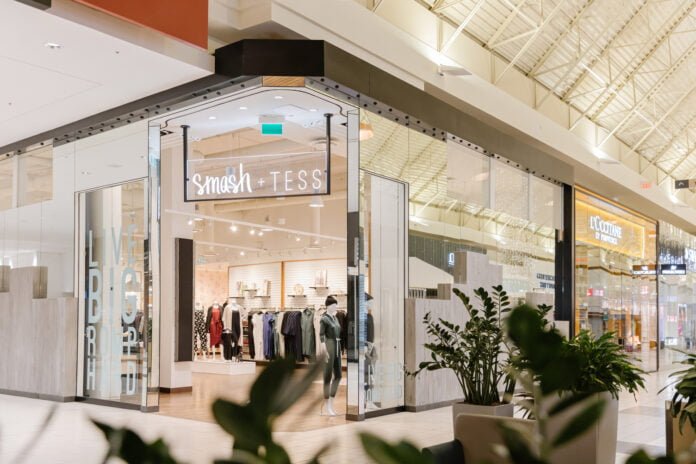
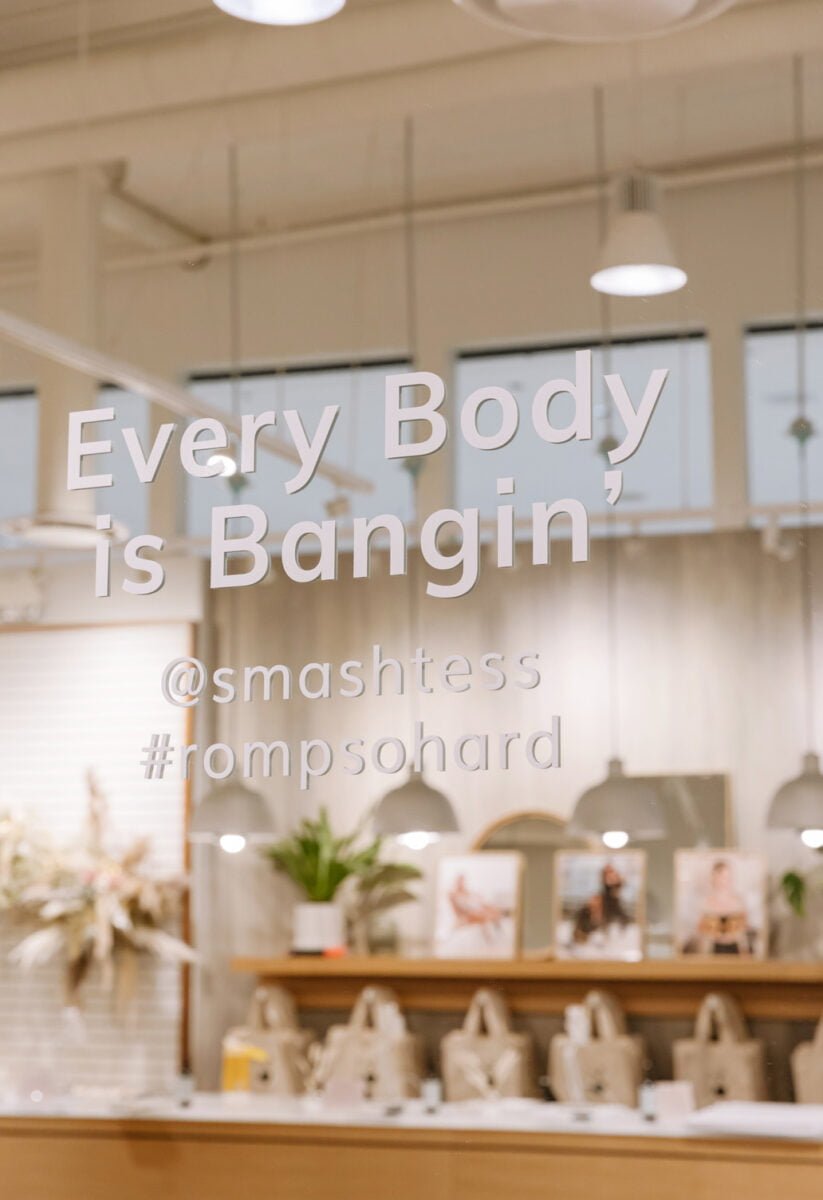
Smash + Tess at Coquitlam Centre (Photo: Smash + Tess)
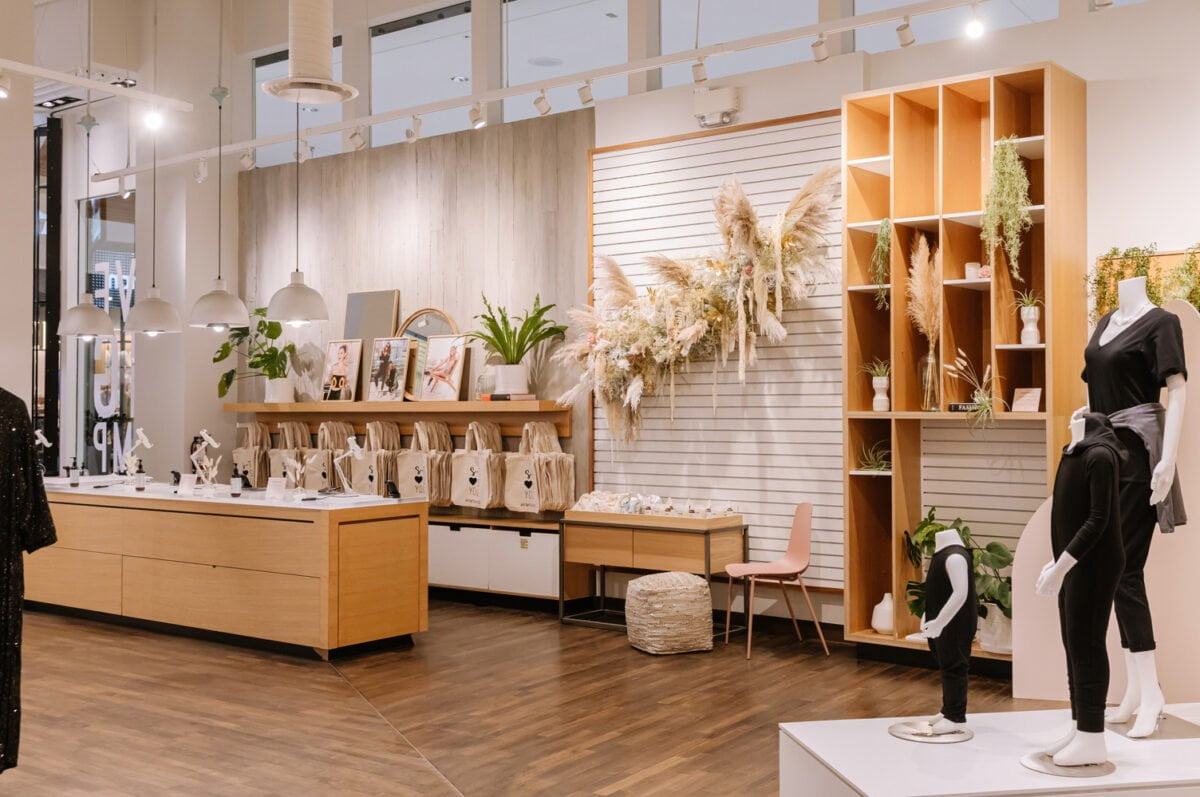
Vancouver-based clothing retailer Smash + Tess has opened a 3,500 square foot holiday pop-up retail store at Coquitlam Centre in Coquitlam, marking the brand’s first brick-and-mortar location.
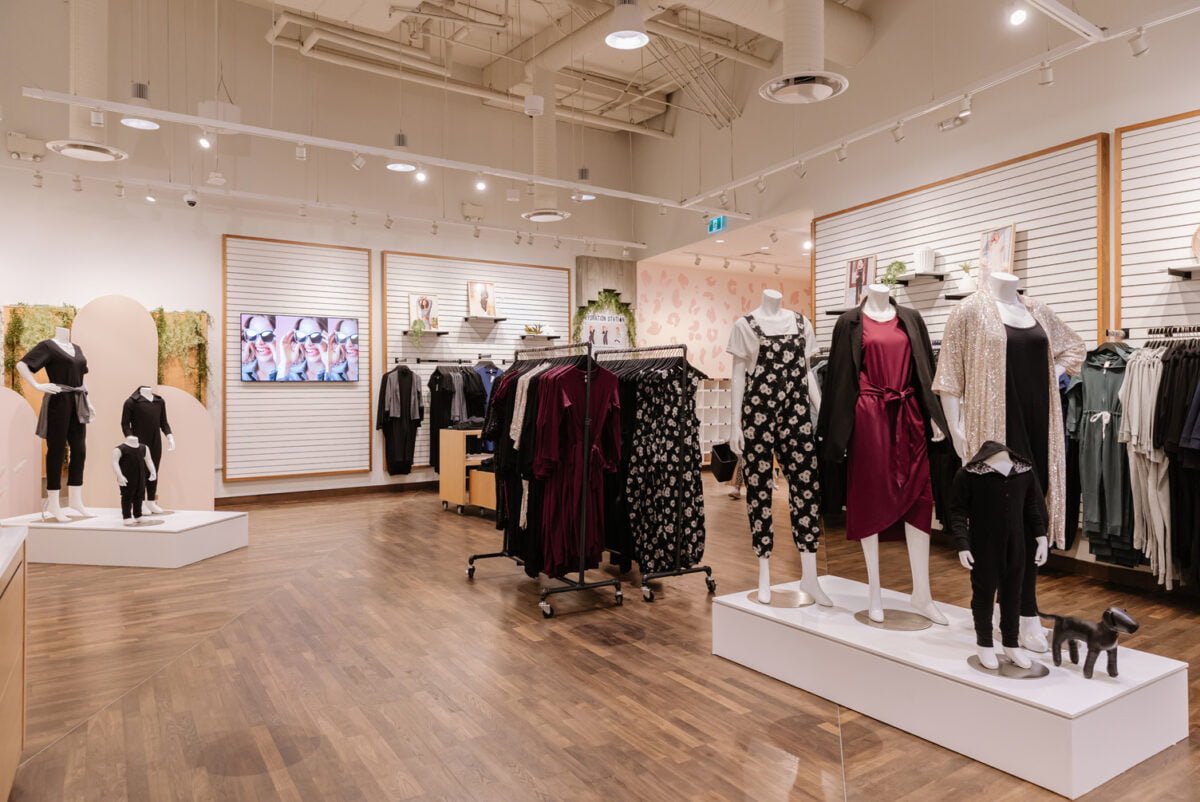
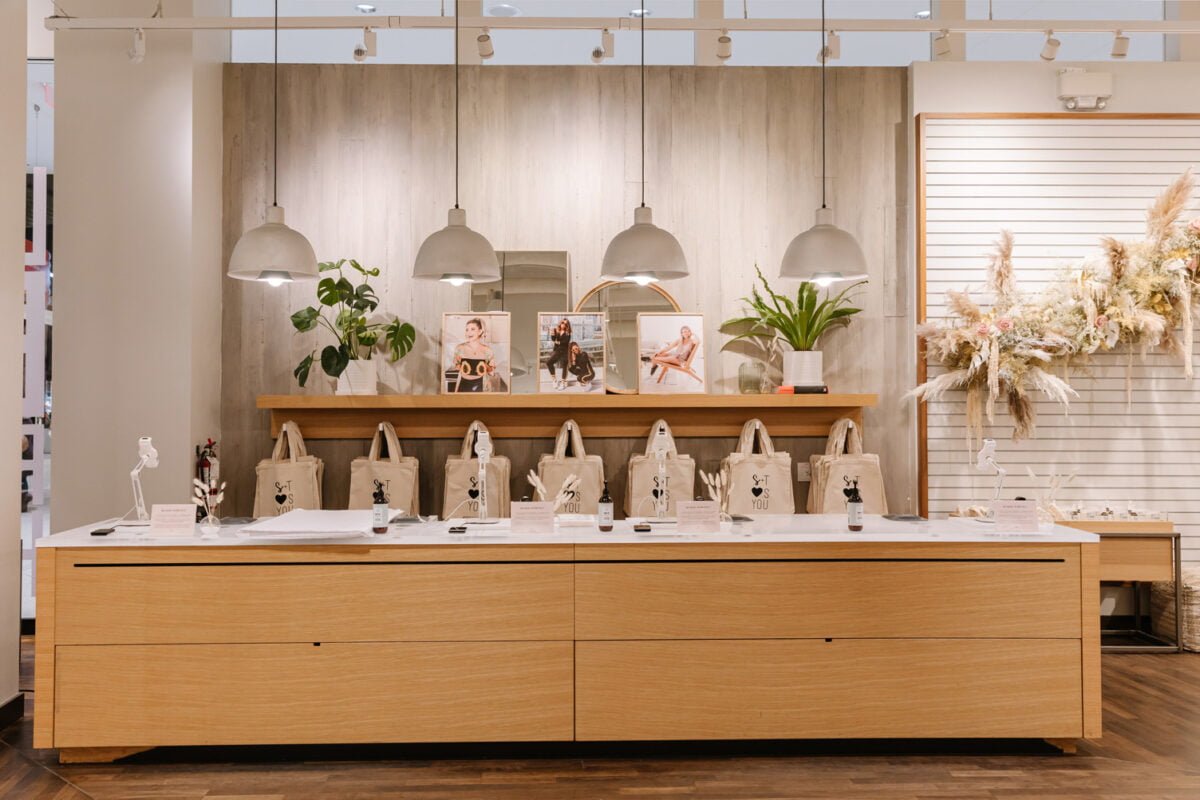
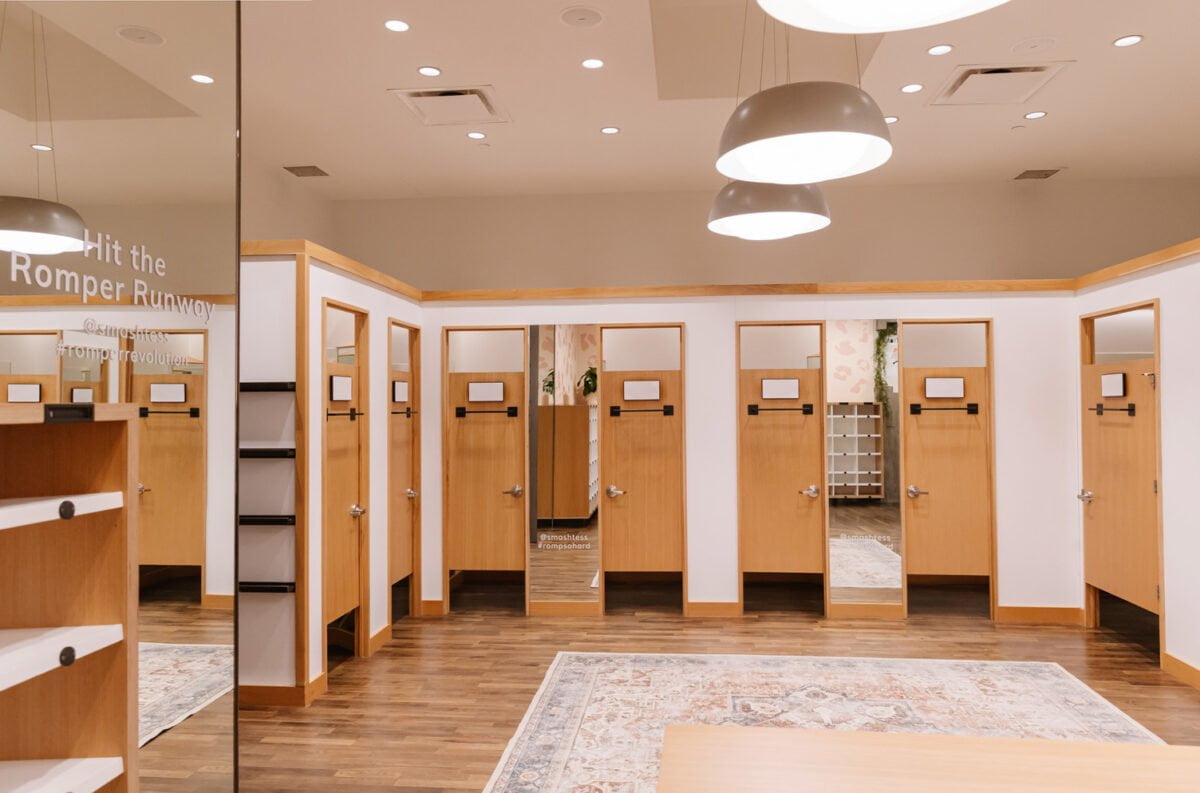
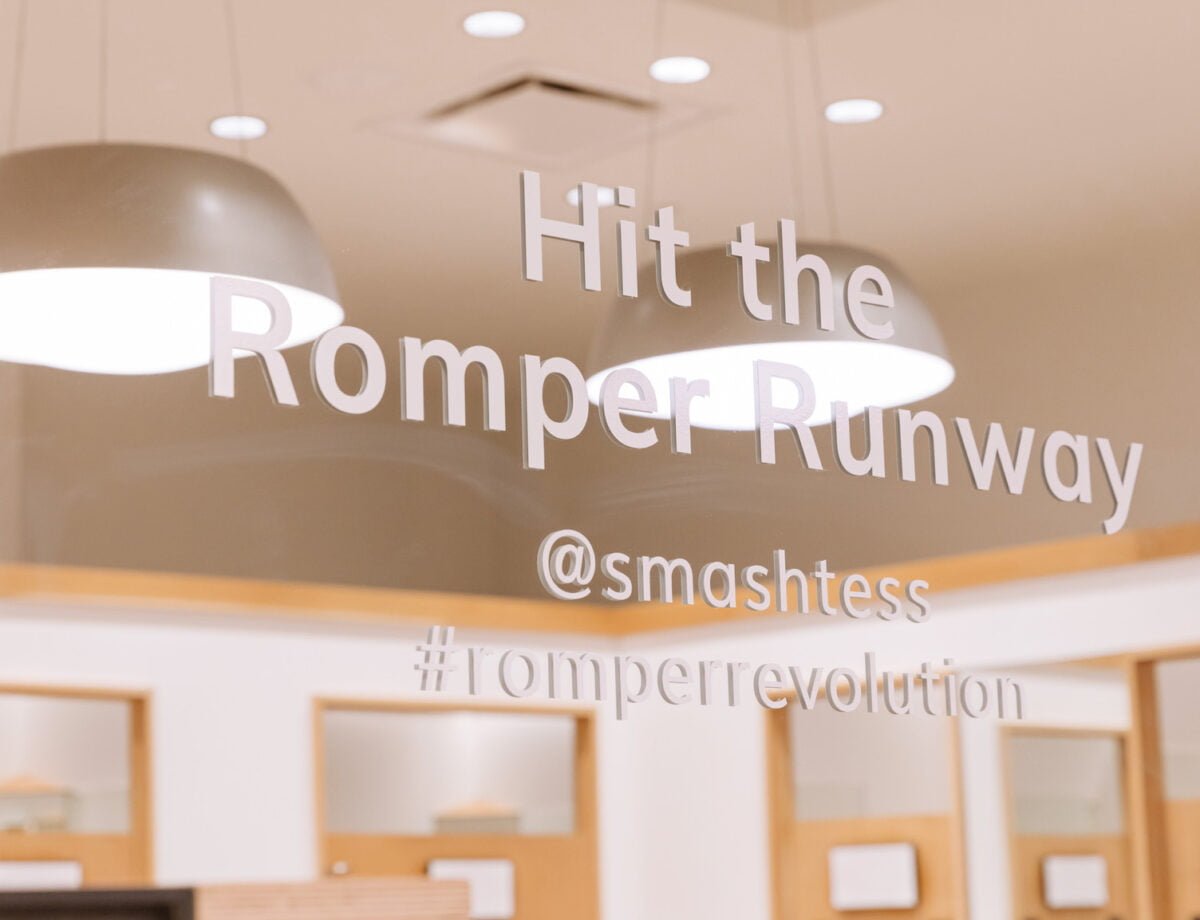
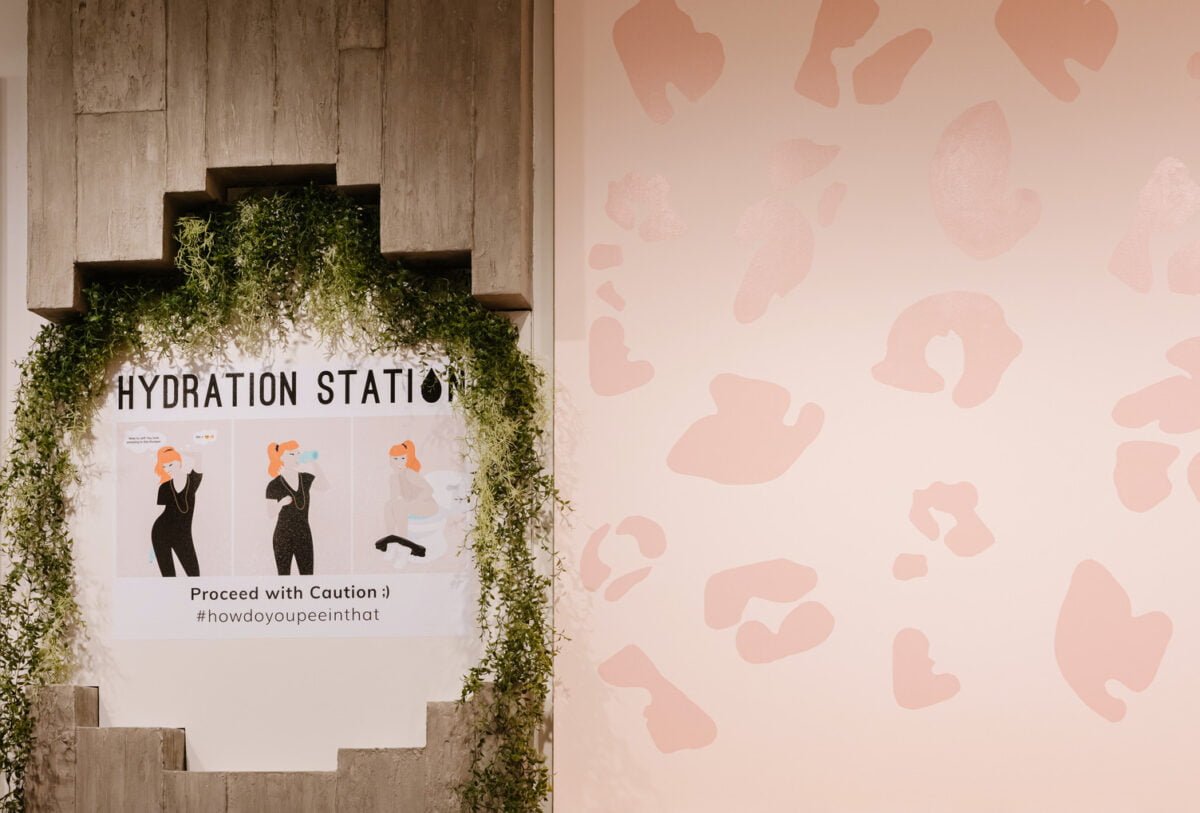
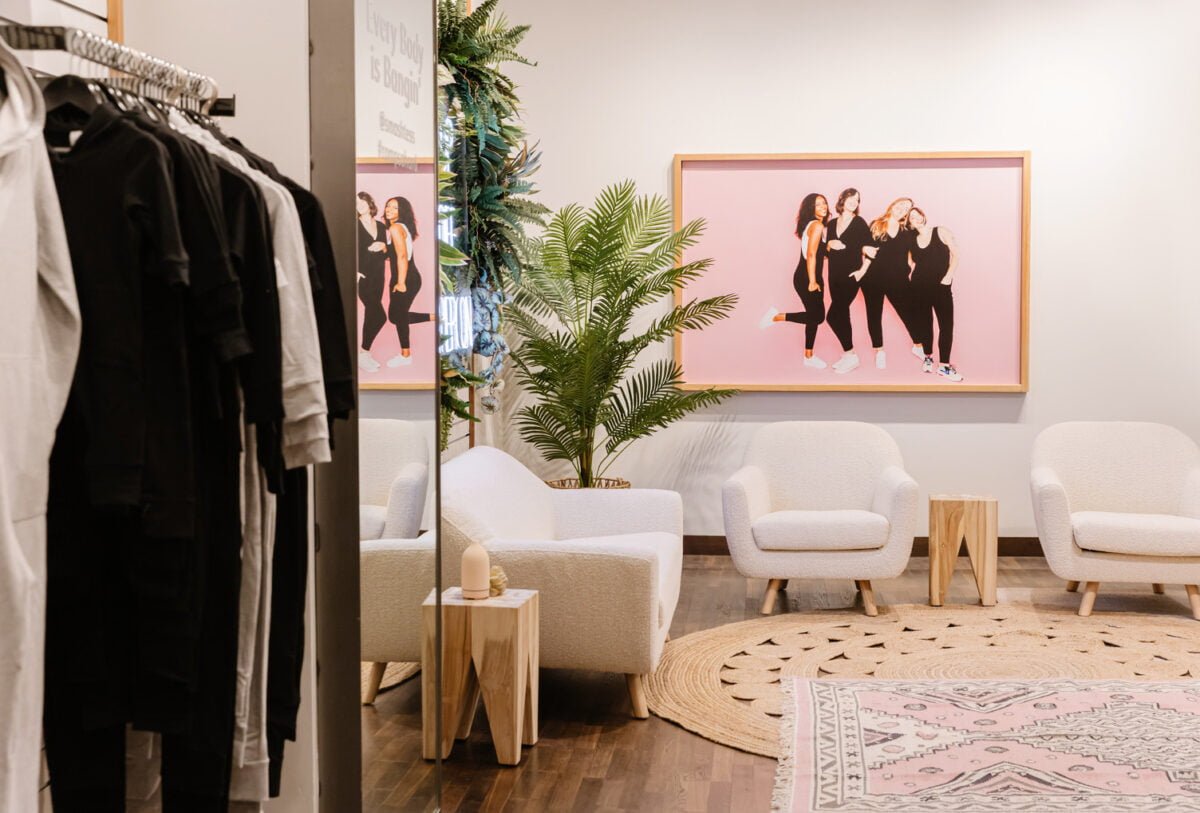
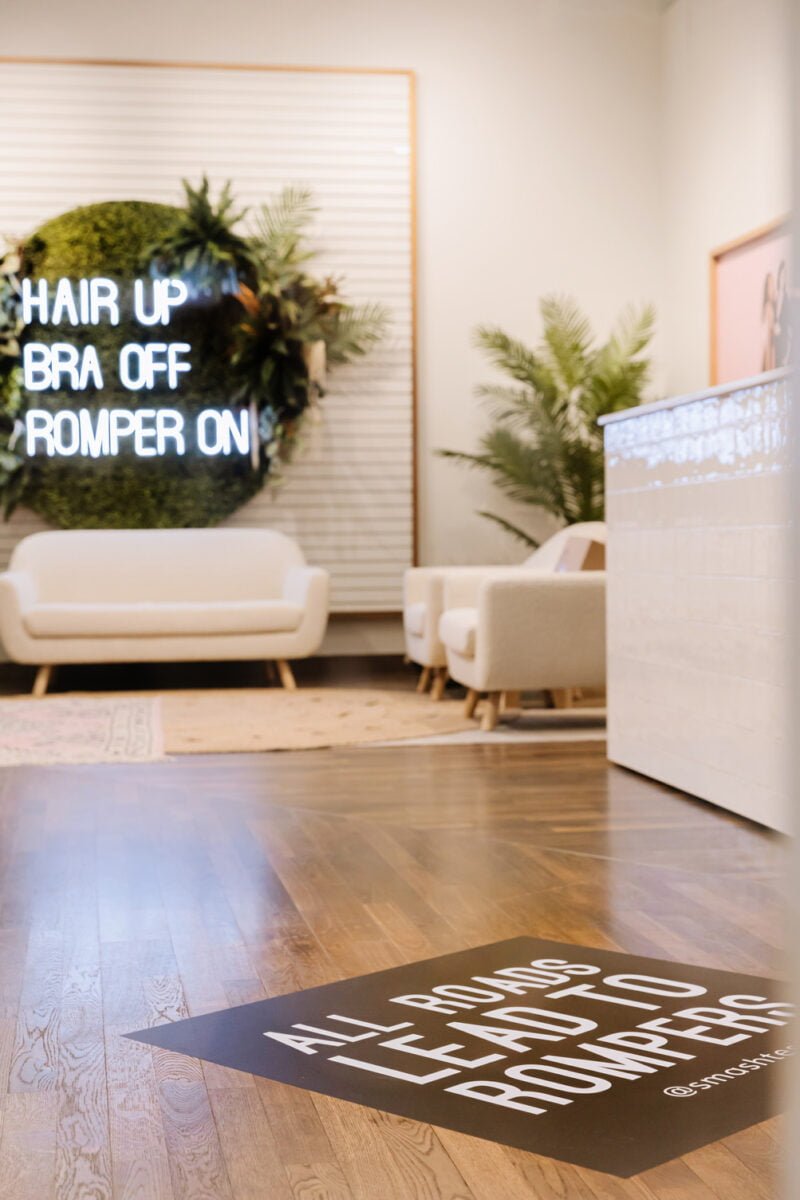
Smash + Tess is known for the Romper, which is featured prominently in the space, in addition to a rotating shop-in-shop with complimentary brands. It will also bring a number of limited edition product launches, a lounge and was designed with the Instagram backdrop in mind.
”Opening our first owned retail space is a major milestone for Smash + Tess.” said Ashley Freeborn, Co-Founder and CEO. “As an e-commerce-led business, we were excited by the challenge of bringing our brand experience to life in a retail environment. The online community we’ve built over the past five years is incredibly loyal. Not only are they passionate about Rompers, they also connect deeply to our value of inclusivity by design. We wanted this store to feel like an extension of our values, and we’re proud to be creating a space where our customers can feel represented, comfortable and confident.”
Smash + Tess at Coquitlam Centre (Photo: Smash + Tess)
The team encountered a challenge with the design of the pop-up shop, which included a notable absence of mannequins larger than XL (standard size 14). With Smash + Tess championing empowerment and inclusivity without exception, the brand will be offering their full size range in store, which covers 3SX – 4X.
Smash + Tess is a Vancouver designed and North American made brand created by “mother-daughter-bestie trio” Ashley & Teresa Freeborn and Mercedes LaPorte.
Additional Photos from the Coquitlam Centre Pop-Up
Smash + Tess at Coquitlam Centre Smash + Tess at Coquitlam Centre Smash + Tess at Coquitlam Centre Smash + Tess at Coquitlam Centre Smash + Tess at Coquitlam Centre Smash + Tess at Coquitlam Centre Smash + Tess at Coquitlam Centre Smash + Tess at Coquitlam Centre Smash + Tess at Coquitlam Centre Smash + Tess at Coquitlam Centre
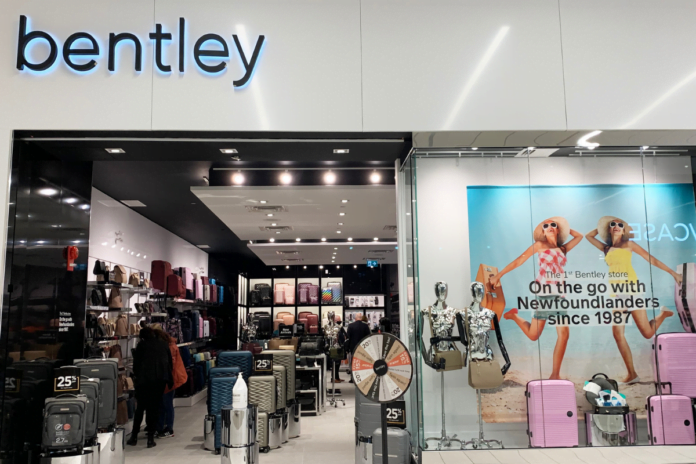
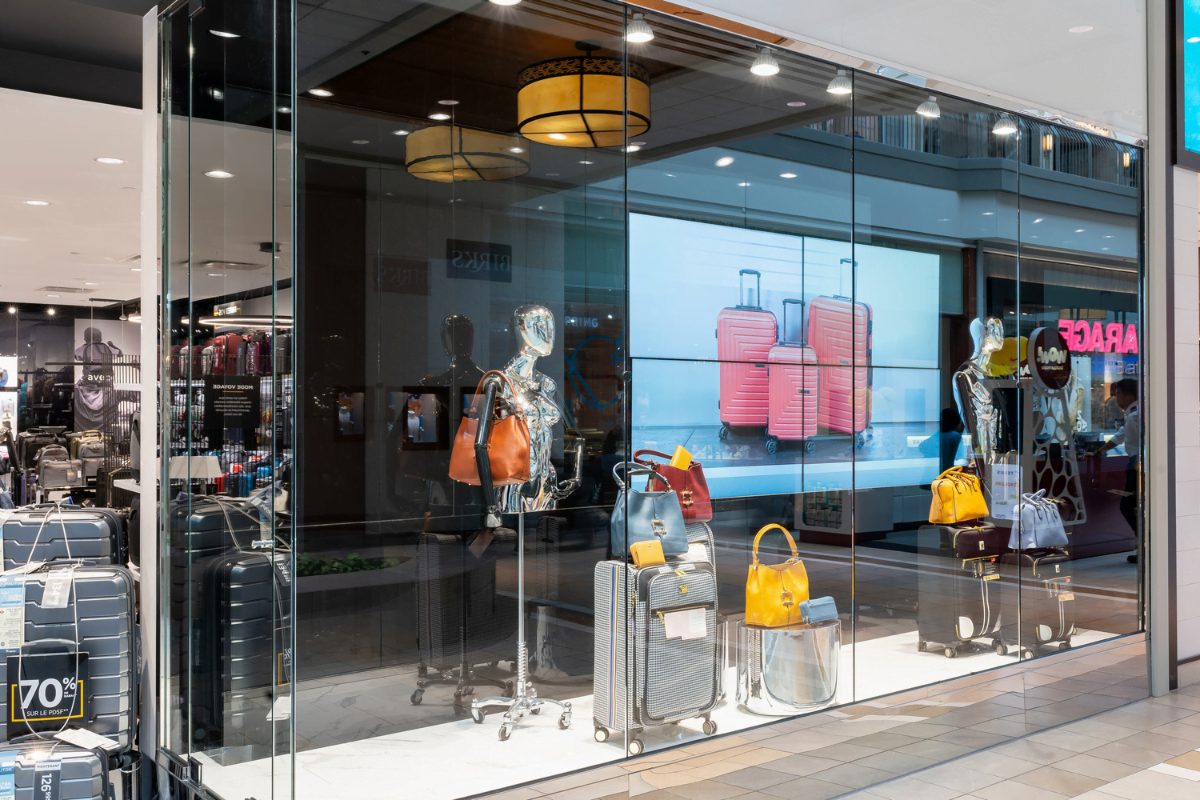
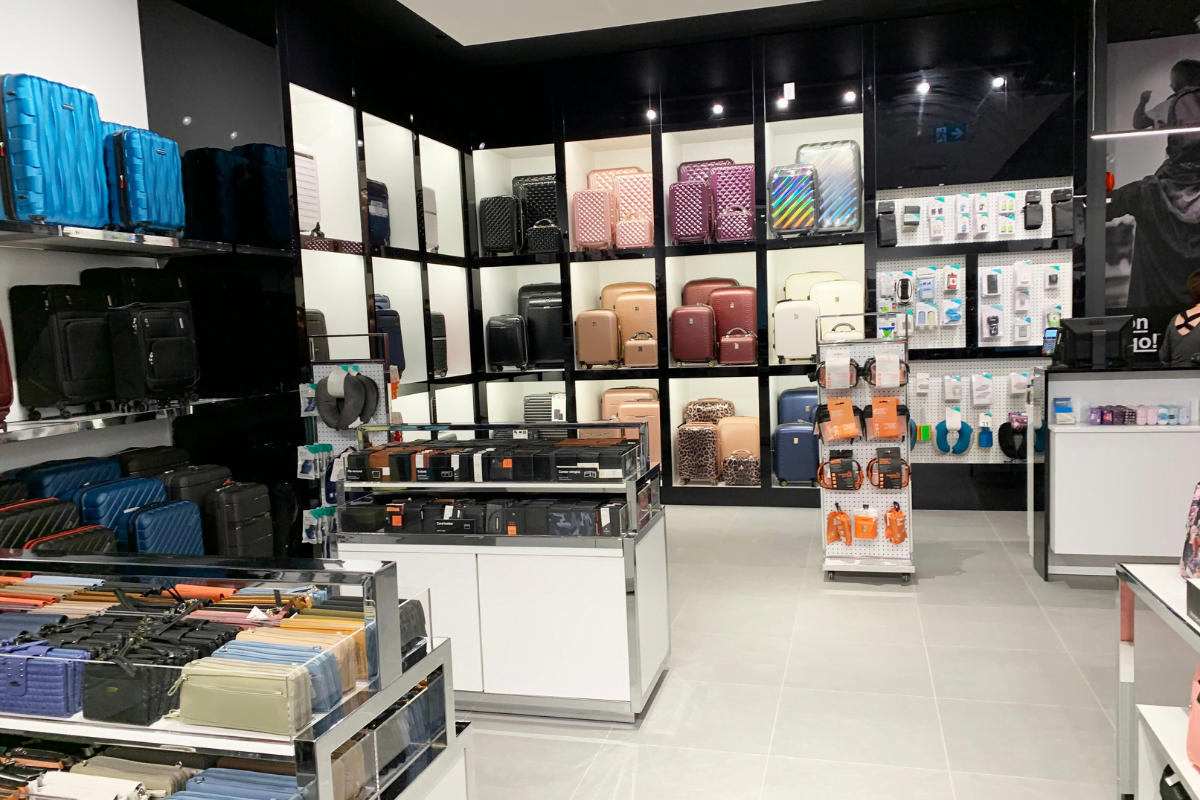
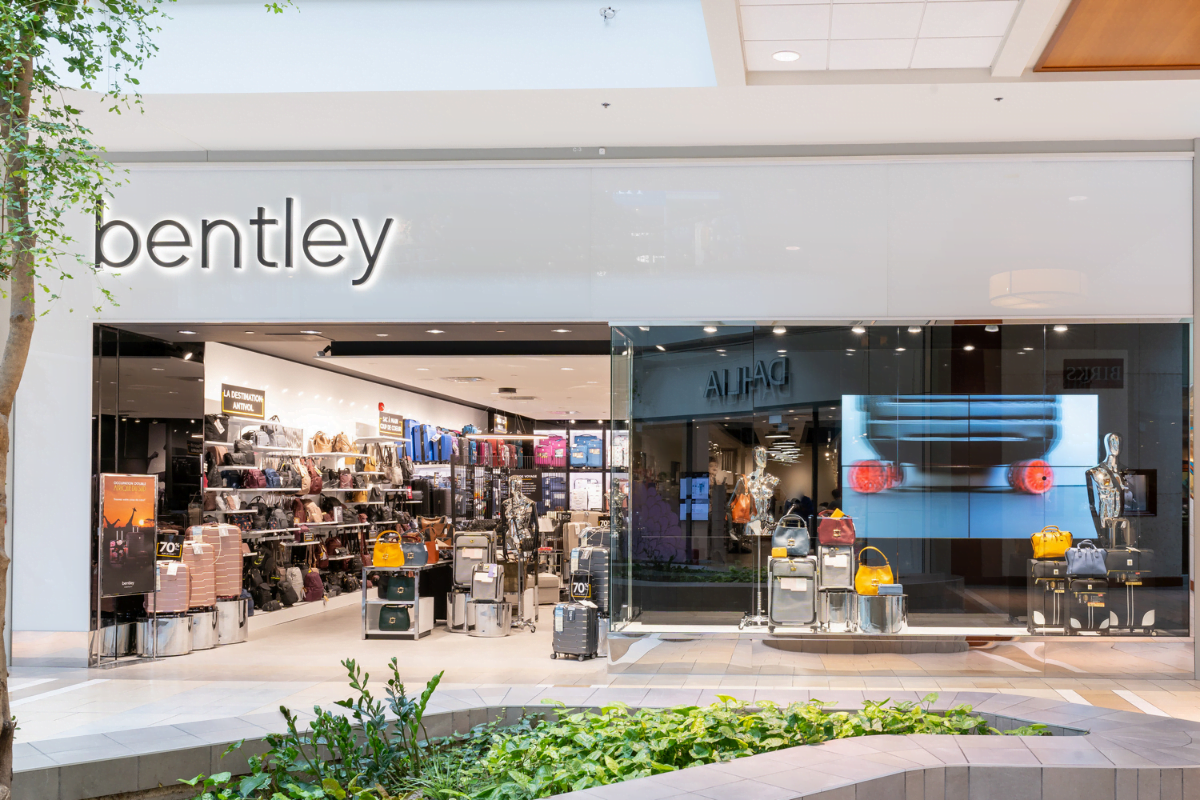
Montreal-based luggage and handbag retailer Bentley has debuted a new store design in Avalon Mall, 33 years after opening its first-ever location in the St. John’s, Newfoundland shopping centre.
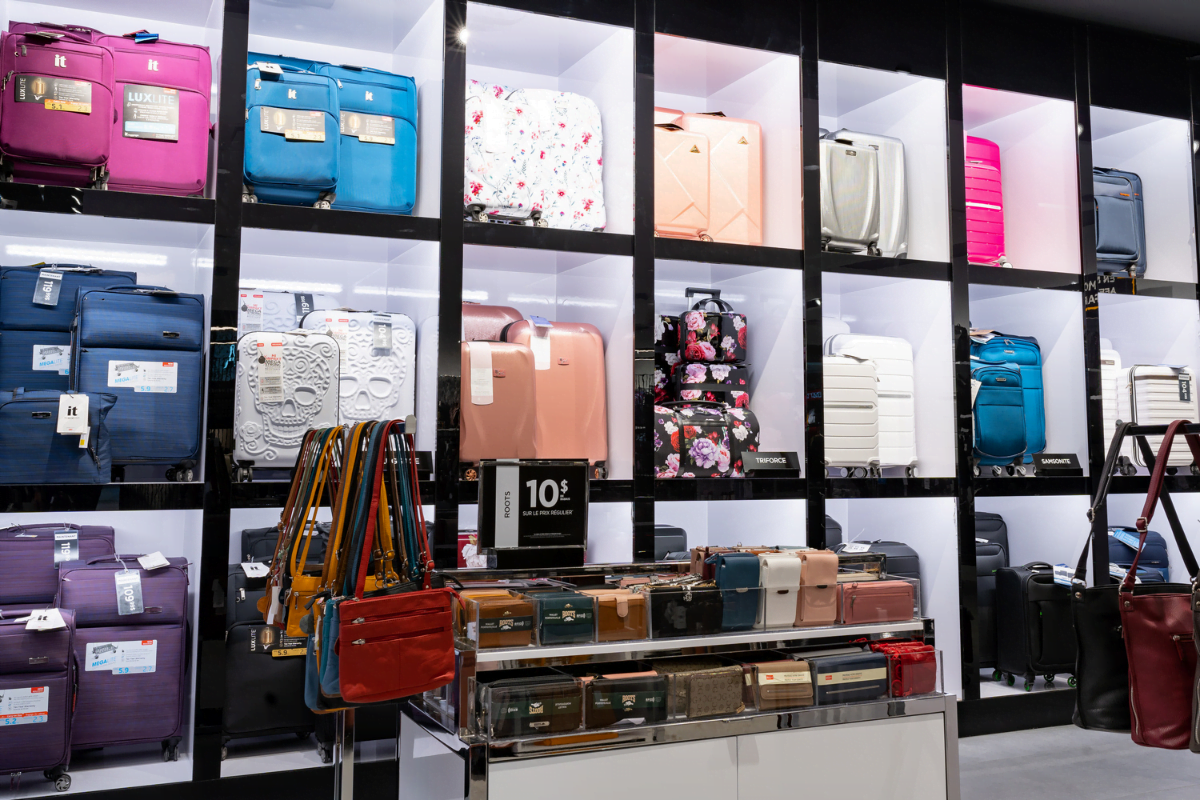
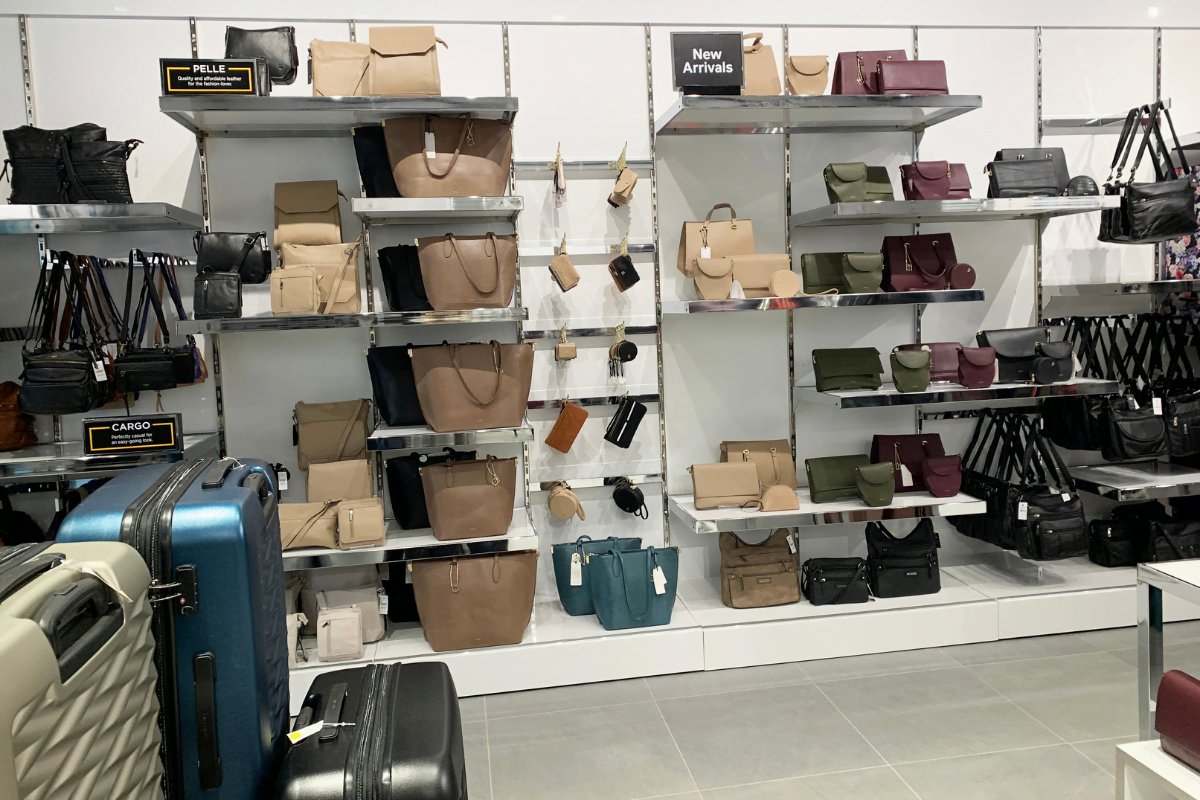
The 1,980 square foot re-modeled Bentley store showcase store has a streamlined presentation of featured products. This concept is expected to be implemented into other stores over time.
During the pandemic, Bentley underwent a restructuring process, which included closing underperforming stores and reducing inventory.
“Over the years, we’ve listened and evolved with our customers,’’ says CEO Walter Lamothe. “Right now, they’re excited to start traveling again and they’re particularly thrilled to shop our new spacious retail environment where our designers have curated a collection of the best travel items to make their journey a success.”
Bentley was founded in St. John’s in 1987 and has grown to operate 160 stores and 3 Evez luggage repair shops, in addition to owning and operating the TRACKER destination shops.
“Our customers appreciate a downsized, well-curated collection of products that are stylish, functional and offer longevity of use,” says Lamothe. “The days of big assortments are over.”
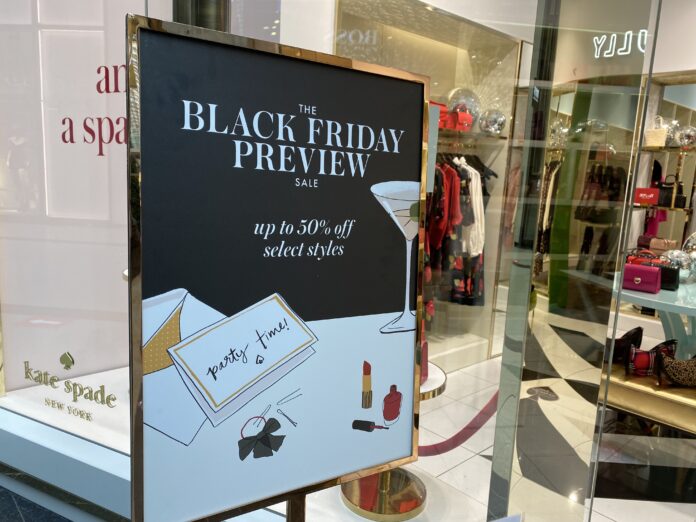
Black Friday at Kate Spade (CF Toronto Eaton Centre) Photo by Dustin Fuhs
Black Friday has become the busiest shopping day of the holiday season for Canadian retailers.
According to Moneris, Canada’s largest provider of mobile, online and in-store payments, Black Friday last year overtook the Friday before Christmas with the most retail sales. And yes, it’s become even more popular than Boxing Day.
Peter Goldsztajn, Director of Corporate Data Analytics for Moneris, said Black Friday has definitely taken the lead over the last few years.
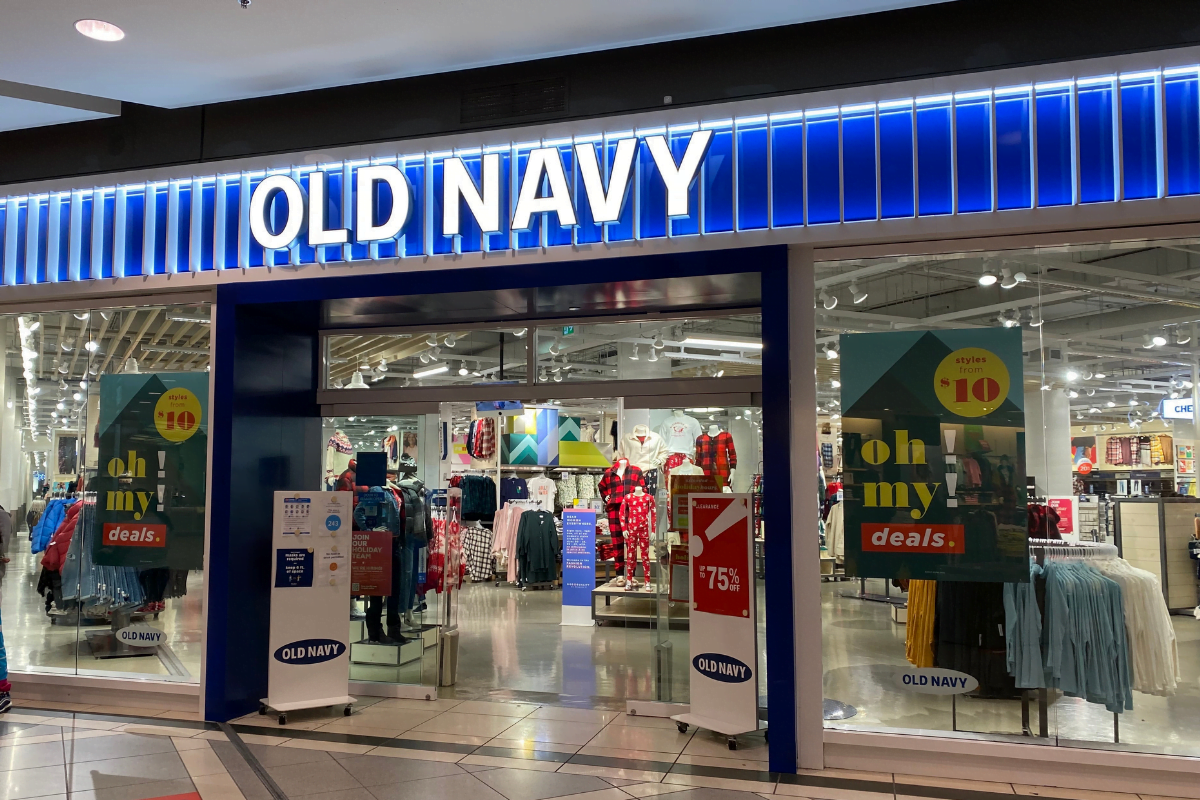
Old Navy at CF Toronto Eaton Centre (Photo by Dustin Fuhs)
“Last year, given all the restrictions and capacity limits (due to the COVID-19 pandemic) and in certain regions complete lockdowns, it wasn’t I would say as popular but it was still the busiest day,” he said.
Peter Goldsztajn
“Moneris processed I think at one point 550 transactions per second. Although it was lower than prior years by about 100 transactions, which was probably related to the lockdowns and restrictions, it’s expected that this year that trend will continue. It’s hard to say how much more but I do anticipate it’s going to be a rebound for sure.
“We can actually observe the busiest shopping time between 2 and 4 p.m. Eastern. It’s essentially when we record pretty much consecutively as the busiest shopping time.”
Goldsztajn said Moneris is expecting a spike in activity this year over last year and the company expects apparel, household goods, mass merchandise and specialty categories to top the lists of items purchased this Black Friday. Moneris is also forecasting consumers throughout the holiday season will seek experiences and experience-related gifts to enjoy with loved ones.
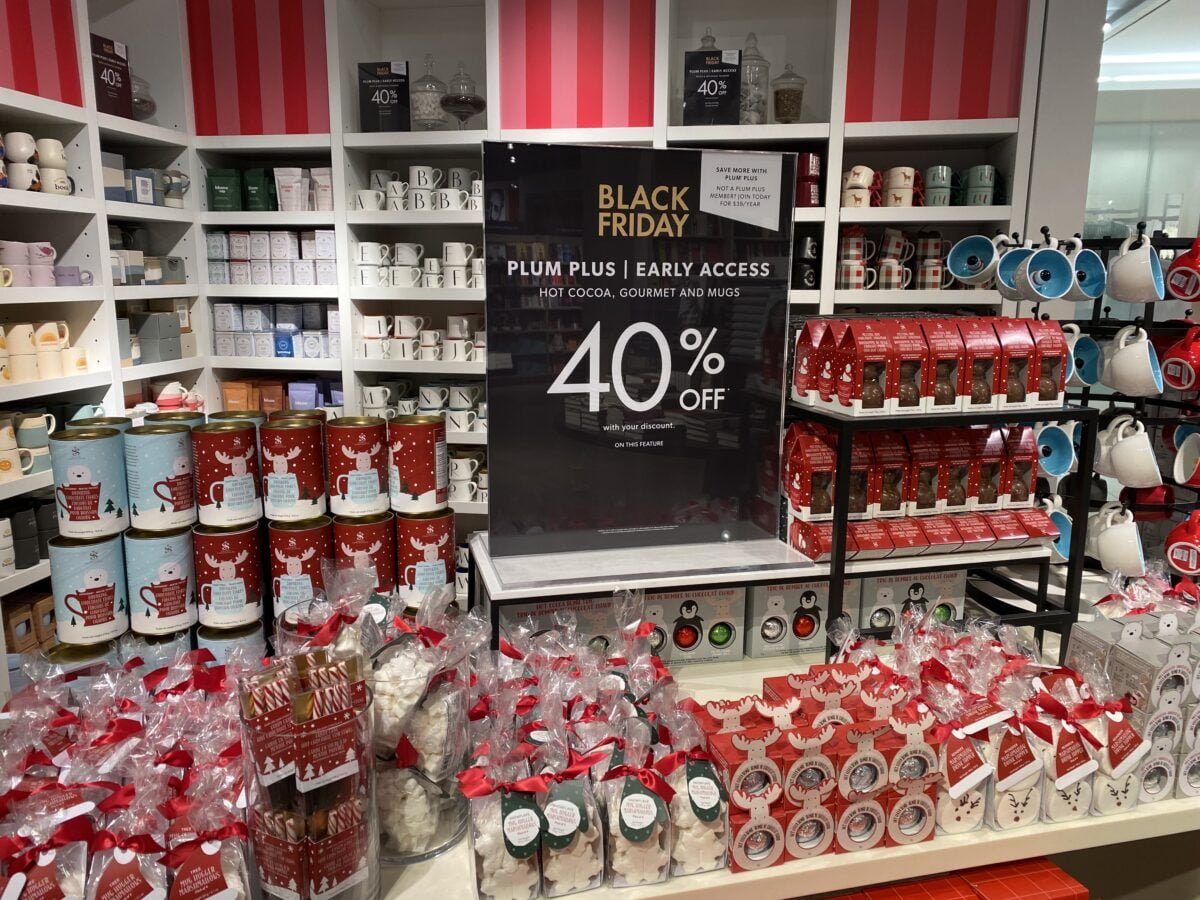
Indigo at Bay & Bloor (Photo by Dustin Fuhs)
He said that Black Friday has overtaken Boxing Day and much of that has to do with the timing of the event.
“I think a lot of people like to take advantage of the schedule essentially of the day and how it lands before the holidays to capture some of those sales for gifting,” said Goldsztajn.
Moneris is also expecting transaction levels during the peak of the Black Friday rush to be closer to pre-pandemic levels, now that capacity limits at stores are lifted in most provinces across Canada and consumer confidence is higher.
“Another interesting thing here is that retail experts caution on the availability of toys and apparel. Because of limitations due to the impact of COVID ongoing globally in regards to the availability of products, we definitely recommend shopping earlier,” he said.
“It’s much more important. If you’re looking for that hot new toy, then you should probably get out there earlier and if you can’t get out there earlier, a good alternative to shopping is gift cards.”
He said that over the past year average transaction sizes for shopping have increased.
“People are spending more with a lower amount of visits,” added Goldsztajn. “We do expect a little bit of that as well. That trend has been continuing throughout the latter half of 2020 into 2021. I don’t see that trend slowing down yet.
“People are still focusing on experience-based activities. That trend has been pretty vivid throughout the pandemic . . . We’ve seen a large lift this year in areas like movie theatres, going out, triple digit growth. That trend seems to be very much aligned with the rebound and the recovery from COVID. That’s going to be an interesting trend to watch, especially over the holidays.”
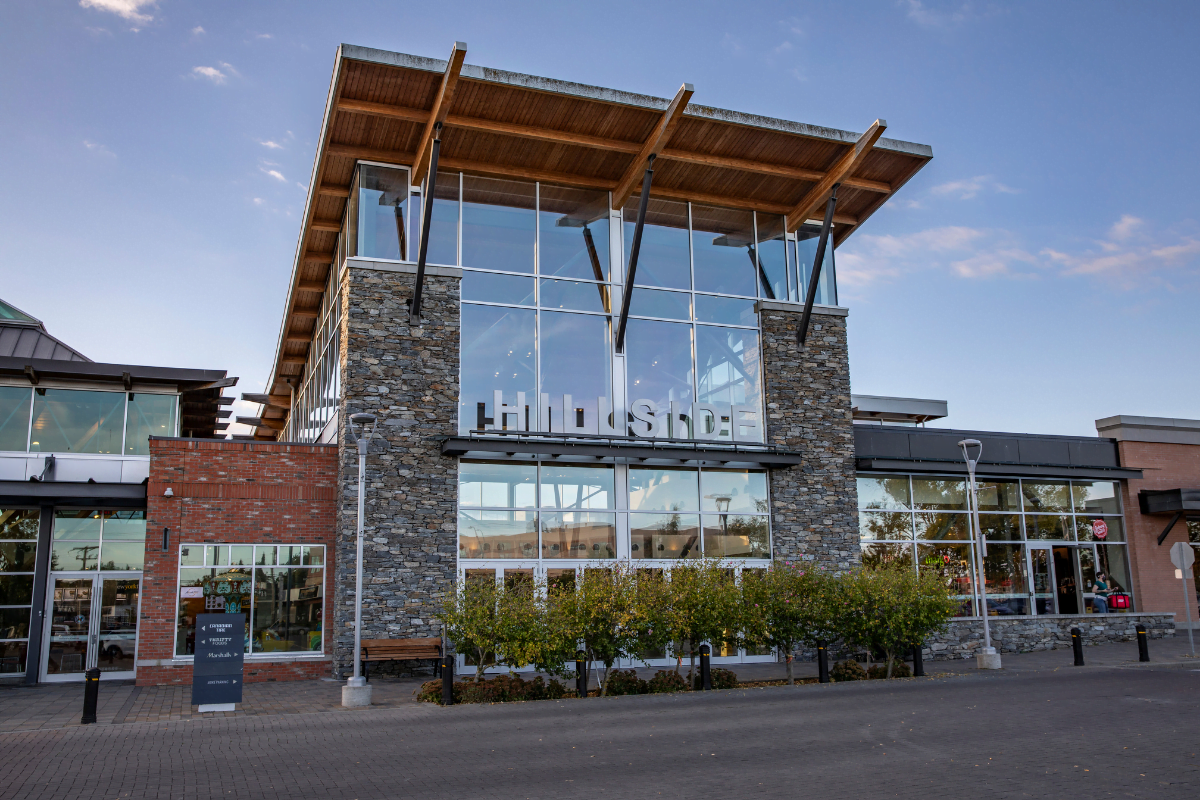
The ongoing COVID-19 pandemic has presented a challenging time for the retail sector in Canada but for the Hillside Centre in Victoria it’s also been an exciting time as the popular shopping centre has welcomed several new retailers and will be introducing two retail giants in the near future.
Kerry Shular, the Centre’s General Manager, said the high profile additions will include a 150,000-square-foot Walmart as well as a 15,000-square-foot Dollarama.
“We have quite a few new retailers actually. The last year and a bit has been pretty exciting for Hillside shopping centre. Like everyone we lost the Sears when they went bankrupt, and since then we have procured a new Walmart for Hillside Centre which is currently under construction. It will open in May of 2022. So that’s very exciting for us,” she said.
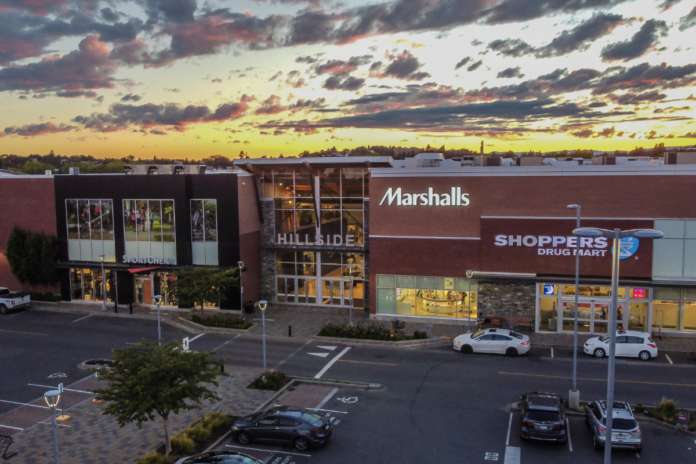
Hillside Centre in Victoria, BC
“We’ll also be welcoming a new 15,000-square-foot Dollarama within Hillside and that will open in the Spring of 2022. In the last year, we’ve welcomed a number of smaller retailers including an amazing independent BC store called BC Shaver + Hobbies.”
Shular said having Walmart and Dollarama as part of the mall’s offering is going to be a huge draw for the property.
“We know that the Walmart at the Uptown shopping centre in Victoria is in the top 10 in Canada in terms of performance for them. We also know that it’s wholly hated for its parking. When they come to Hillside, you can pretty much drive right up to the front door. I think it’s going to be huge for Hillside and for the neighbourhood and for our customers.”
The Centre, which opened in 1969, is close to 590,000 square feet at the corner of Shelbourne Street and Hillside Avenue. It has about 110 shops and services including Marshalls, SportChek/Atmosphere, Canadian Tire, Shoppers Drug Mart, Thrifty Foods and Bolen Books. The property is owned by the BentallGreenOak Prime Canadian Property Fund.
Hillside Centre in Victoria, BC
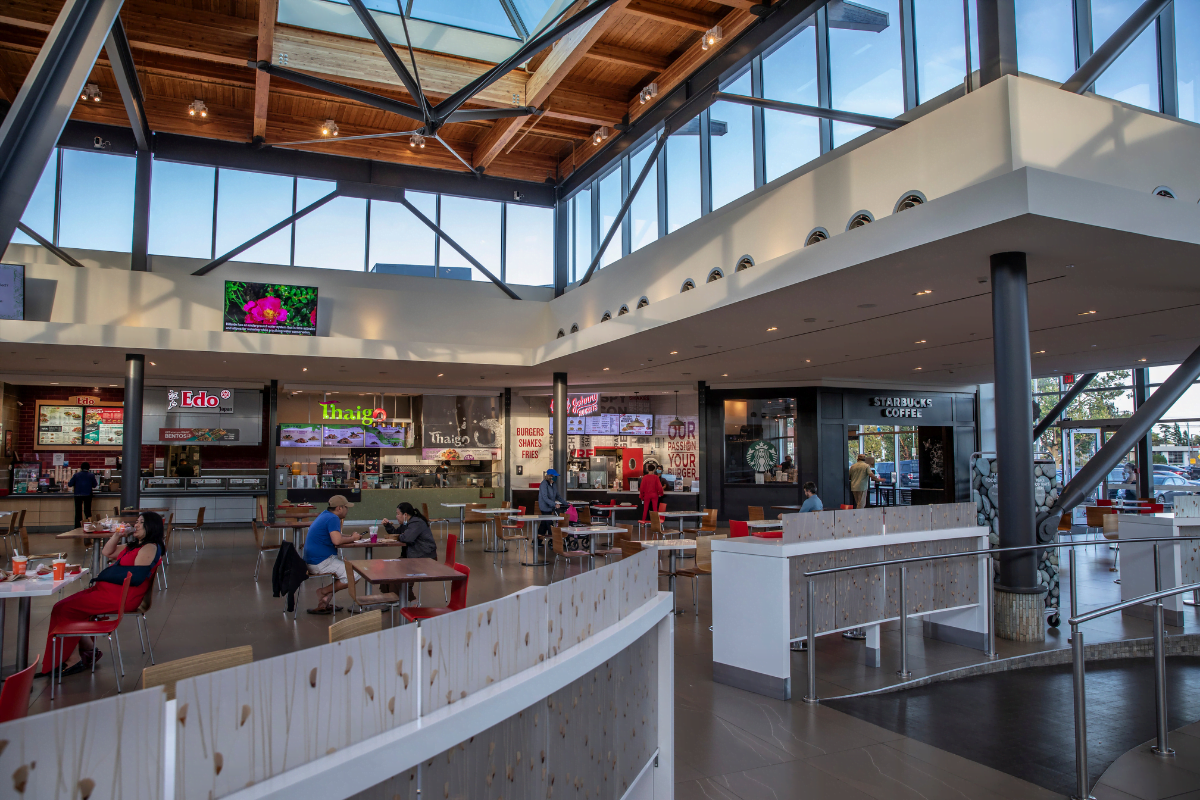
It also has a 600-seat food court.
The shopping centre is primarily on one level but a newer section was added in 2013 that is two levels on the south end of the property encompassing a two-level Marshalls and a two-level Sport/Chek on that end.
The first OceanWall in Canada, a 12’ x 7’ screen, is located in the upper food court. It offers amazing footage of the Salish Sea with all its incredible inhabitants including orcas, humpbacks, and harbour seals.
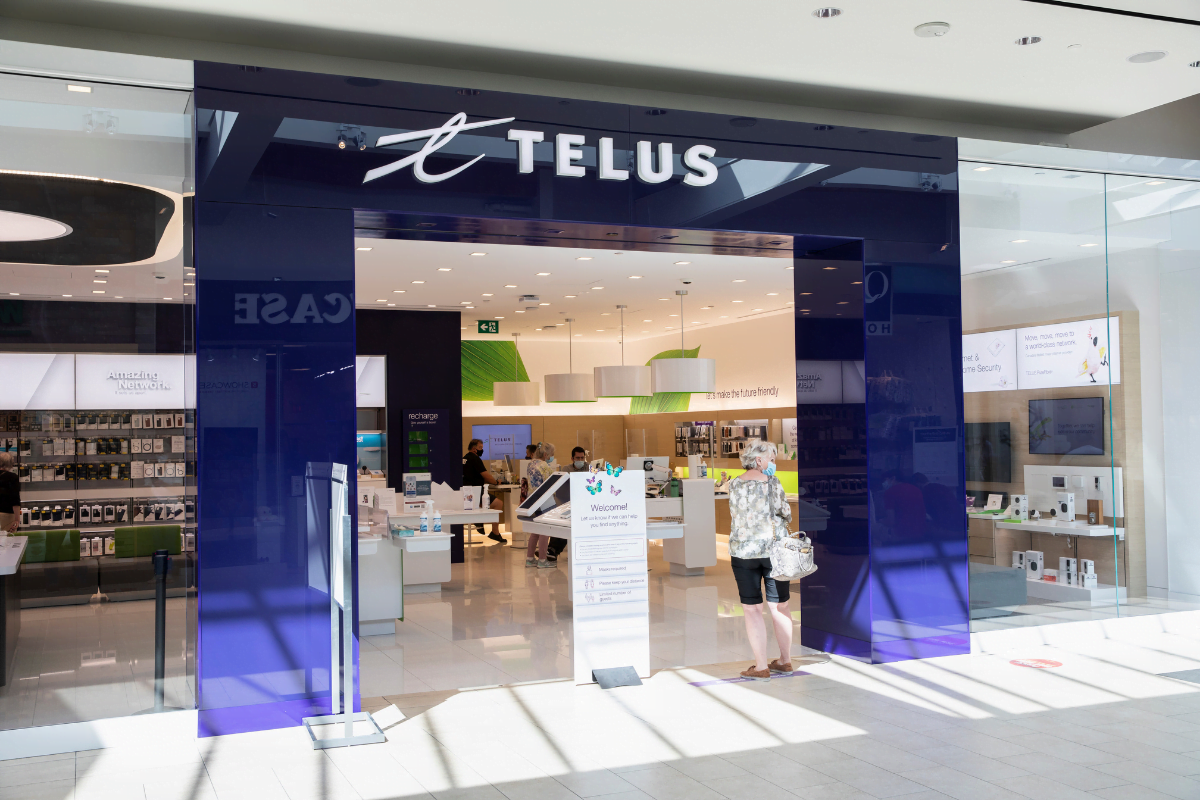
Other new retailers recently added to the mall include Local Pizza, Noodle Fans, CinnZeo, Out of Bounds, Ronsons. TELUS has also done a major expansion by doubling the size of its location.
Telus at Hillside Centre in Victoria, BC
“Like any other shopping centre, we were closed for a period of time. Not completely closed. The mall never closed but most of the retailers closed between March and May of 2020 and we’ve seen a slow recovery since then,” said Shular. “I would say that now our traffic is equal to or very close to what it was pre-COVID and depending on the retailer what you do and how you do it some have fully recovered and some are still in recovery mode. But Hillside has actually fared better than most retail centres I would say.
“We have one of the largest Canadian Tires in Western Canada and again he’s generally in the top 10 in terms of performance across Canada. We’ve got a really good Shoppers Drug Mart. We don’t see their numbers but my understanding is that he’s very happy. Thrifty Foods has just completed a major renovation of their store. It’s like walking into a brand new store.
“With the addition of Walmart and Dollarama and the smaller retailers, we hope that it’s very well positioned for continued growth into the future and we’re pretty happy with where we are.”