Advertisement
Home Blog Page 821

Arlington Group Developments is Bullish on Calgary’s 17th Avenue as it Completes Latest Retail Project: Interview

Rendering: The Fifth

Calgary-based Arlington Group is bullish on the city’s 17th Avenue S.W. high street area and its latest project there is The Fifth – destined to be a residential and retail destination just off the downtown core.

Frank L Lonardelli. Photo: LinkedIn

Frank Lonardelli, Founder/CEO of Arlington, said the project was started four months after the beginning of the COVID-19 pandemic in March 2020.

The building has 12,500 square feet of main floor retail space and 52 rental apartments above in the five-storey building.

“What’s noteworthy, given all the negativity around retail, what happened was when people saw the sign go up they kind of sat back and said ‘well I’m not sure these guys are going to build the building’. So we didn’t get a whole heck of a lot of traction,” said Lonardelli. “And the second we came out of the ground and we completed the main floor podium at 16 feet with concrete, people just started calling saying ‘holy cow you guys are actually doing this thing’.

“Of the almost 13,000 square feet of retail, we got 46,000 square feet of applicants. We just told everybody we were going to take all the applications in and the closer we get to summer and the completion of the actual structure we’re going to start making decisions of who we’re going to work with.

Rendering of the Scotia Block at 1429 17 Avenue SW, via Arlington Group
The Fifth, Rendering via Arlington Group
Royal Park, located across from Mount Royal Village on 17 Avenue. Rendering: Arlington Group

“It is exactly what we wanted which was individual curated retail. Ideally super local but we were okay with strong regional. No national. We’re  super happy with what we received and we’re super happy with what we’ve landed on. I think it’s the perfect mix for this area. There’s a lot of vibrancy towards it. People are really excited.”

The businesses include Bro’s To Go, Nue Cocktail Bar, Cinnaholic, The Mash, Burnin Bird and Amato Gelato with a flagship store.

Lonardelli said Amato Gelato is going to have the largest patio on 17th Avenue with about 50 seats.

Timeline for opening is expected to be around September 1.

“They’re all very much complimentary to what’s happening on the street and we’re super happy about that. This will be the first mixed-use development that has been built in the last 20 years on 17th Avenue,” said Lonardelli.

High Street on 17th, rendering via Arlington Group
The Windsor, rendering via Arlington Group

“If you look at pedestrian traffic in any centre or any section within the centre of Calgary – Beltline or Downtown – there’s more people walking through or driving past this intersection in the urban marketplace than anywhere else in Canada. We were looking for unique curated opportunities but we were also looking for people who wanted to expand their business.

“It also flows into their urban vibe for these businesses. They’re not interested in doing power centres in the suburban market because they’ve already got their concepts in those areas. So as they think about growing their businesses, their businesses are going to be urban centric. It just so happens, we think and they think, the best urban location they’ve got.”

Despite all the negativity surrounding retail throughout COVID, Lonardelli said Arlington has 100 per cent occupancy on all of its retail space along 17th Avenue.

“17th Avenue has always been a place to do curated retail for strong local or regional players,” he said. “A lot of the negativity around 17th had a lot to do with tenants going into leases they never should have gone into and landlords charging prices they should never have gone into and that’s a fatal combination.”

High Street. Photo: Arlington Group Calgary

Lonardelli said Arlington’s 17th Avenue project has 42 separate buildings that it owns with eight different development sites. The first three developments have been started or completed. The National building was the first. Then came The Fifth. The third is the Fishman’s development site. Another site is further west on 17th where the Buon Giorno restaurant is located. The entire 17th Avenue project will be completed with a site on the corner at 14th Street. All the mixed-use developments will include retail as the anchor.

“I think anything in the urban market in a high profile location requires the main floor to be retail anchored for two reasons. Number one it’s the live, work, play concept of rolling in these developments and getting closer to the urbanized landscapes of Toronto, Vancouver, Ottawa and Montreal,” said Lonardelli. “We’re just so far behind everybody.

“Number two is there’s two amenities when you live here. The first amenity is when you go down the elevator shaft and go to the main floor podium you can get your coffee, you can get your ice cream, you can get your cocktail. It’s right there. The second thing is when you walk out your front door you can go four blocks any way and have a hundred different service and retail options. That is what this urban program is all about.

“We’ve always said we’re not building buildings here. We’re building a corridor which it already is but really is the epicentre to all the live, work, play opportunities in the urban market.”

Podcast [Interview]: John Crombie of Cushman & Wakefield Discusses Retail Before, During and After the Pandemic

Craig and John G. Crombie, Executive Managing Director of Retail Services Canada at Cushman & Wakefield, discuss a shift in retail over the course of the pandemic as we look to the future after a significant digital transformation.

The Interview Series podcast by Retail Insider Canada is available on Apple Podcasts, Stitcher, TuneIn, Google Play, or through our dedicated RSS feed for Overcast and other podcast players. Also check out our The Weekly podcast where Craig and Lee discuss popular content published on Retail Insider which is part of the The Retail Insider Podcast Network.

Interviewed this episode:

Subscribe, Rate, and Review our Retail Insider Podcast!

Follow Craig:

Follow Retail Insider:

Listen & Subscribe:

Share your thoughts!

Drop us a line at Craig@Retail-Insider.com. You can also rate us in Apple Podcasts or recommend us in Overcast to help more people discover the show!

Background Music Credit: Hard Boiled Kevin MacLeod (incompetech.com). Licensed under Creative Commons: By Attribution 3.0 License. http://creativecommons.org/licenses/by/3.0/

Canadian Retail News From Around The Web For August 20th, 2021

Canadian Retail News From Around The Web

Top Stories: National

Central/Eastern Canada News

Western Canada News

Toronto is Getting a One-of-a-Kind Content Creation Hub

Image: STYLEPHOTOS

There is no mystery that retail and entertainment industries are in dire need for creative and high quality content to either push retail sales, or create visual assets.  Given the importance of Canadian presence in film, music, and retail industries, some companies are continuously developing new propositions and services that would allow Canadian brands to further strengthen their positioning by offering quality visuals and content in this highly competitive landscape.

One of such companies is OriginalLuxury Inc, an official distributor of high-end European fashion apparel and accessories that began it’s operations in 2018. It was able to transform during the COVID-19 drama into a robust e-commerce retailer in unison with its content creation powerhouse subsidiary company Stylephotos Canada. Working with the largest Canadian retailers, Stylephotos Canada has been able to grow its client portfolio and expertise in e-commerce content creation, allowing national brands and even small retailers to save time and money when dealing with creating consistent content for their respective websites. A logical continuation of this success is a direct transition to offering more services, especially in the movie and commercial production direction, both of which are experiencing a significant and consistent increase in demand. The future of content creation is dependant on new technological advancements that will make this process more efficient, consistent, and most importantly attainable for clients.

In our recent  conversations with the leadership of OriginalLuxury, we discovered that the company has not stopped revolutionizing the content creation aspect of their business, but rather made a decision to take a bold step forward with creating a one-of-a-kind content creation powerhouse here in Toronto. OriginalLuxury Inc. has made an agreement with a strategic investor for its  content creation arm – Stylephotos Canada, to create one of the largest LED Studios in North America in the next six-to-eight months. Located in Toronto, this studio will be equipped with the latest technological advancements in terms of software and hardware from one of the leading integrators based out of Europe. At 160 by 5 metres in size, the high-end professionally equipped studio will cater to online retailers as well as those looking to rent the space  for movie production, talk-shows, music videos and other activities.  Currently, OriginalLuxury is finalizing the real estate selection and final equipment specifications with the manufacturers.

It is truly a great opportunity for the province and our country to stay focused on leading the content creation revolution that is apparent virtually in all industries. With recent changes introduced by Youtube in how commercials will be played, it only makes sense that the demand for high quality, creative content will only exceed the supply that is currently available on the market. We are proud of our fellow Canadian partners at OriginalLuxury Inc. for taking the risk in pushing the boundaries of content creation while bringing the latest technological innovations to our country.

*Partner content. To work with Retail Insider, contact craig@retail-insider.com

Greater Diversity and Inclusion Required Within Canadian Retail Industry: Feature

The Canadian retail industry is a proud one, boasting a history that’s filled with ground-breaking innovations, trendsetting achievements and world acclaim. Through the years, many of the country’s homegrown brands have risen to global success and renown, transcending business and paving a way that’s enabled others to forge their own paths. These successes have ensured the industry’s continuous development and growth, an ever-broadening pool of possibility and opportunity, and a place firmly entrenched within the Canadian identity. It’s a status that most retailers operating within the country acknowledge with a certain amount of honour. However, in order for the industry to most effectively represent the country’s composite, more accurately reflect the consumers it serves and enable greater accessibility to opportunities for all, much greater emphasis needs to be placed on diversity and inclusion efforts within organizations. In fact, according to business consultant, teacher and expert entrepreneur, Donovan Dill, it’s becoming an imperative of doing business.

“A lot of the cultural norms that have existed within the corporate structure through the years have resulted in corporations becoming reflections of their leaders,” he says. “If you were to take a picture of the executive board of many companies in Canada, you’d primarily see older, distinguished white gentlemen who are now mentoring younger white gentlemen to one day take over those positions. You unfortunately won’t see many women or BIPOC in that population, certainly not more than 5 or 10 percent. Narcissism breeds in those types of environments where nobody can elevate toward the higher echelons unless they are a reflection of their leaders. But, this, of course, isn’t the case right across the board. Some of the very best companies and brands out there realized early on that in order to properly target and serve a market in Canada, they had better represent that market within their organizations. Canada is a multicultural society. And so, ensuring broad representation should be a no-brainer. But it seems in most cases to be a bit of a generational barrier in that some of the older executives aren’t realizing the growth potential that can be tapped through greater executive diversity.”

Scourge of society

The ‘generational divide’, as Dill describes it, certainly seems to show up in the attitudes and decisions of the industry’s old guard. However, it’s a divide that is perhaps most evident in the general collective sentiment of the younger generations. In fact, Deloitte’s recent A call for accountability and action – a global survey of the Millennial and Gen Z cohort – found that at least one in five respondents said that they feel personally discriminated against “all of the time” or “frequently” as a result of their backgrounds. Six in 10 Gen Zs and 56 percent of Millennials see systemic racism as “very” or “fairly” widespread in general society, with 22 percent of Millennials stating that they have felt discriminated against by businesses, and 23 percent of Gen Zs stated to have suffered the same abuse in their workplaces and educational institutions. Results of the report serves to further highlight the continuation of the scourge of discrimination in society. However, the issues clearly run far deeper.

Another report developed and published by the Canadian Marketing Association (CMA) titled Diversity and Inclusion in Canada’s Marketing Sector: CMA Research Findings 2021, explores the issue within the context of the workplace at a more granular level, raising the need for greater awareness and concrete action when it comes to inclusion. According to the report, the vast majority (86%) of marketers believe that their perspectives are included in decision-making, while minority women (82%) are less likely to hold this view, compared to non-minority men (95%). Nearly one-third (32%) of respondents have witnessed staff from diverse backgrounds being talked down to or ignored in meetings. And a majority (63%) of respondents have noticed others being less engaged due to institutional, interpersonal, structural or internalized systems of discrimination.

Addressing the issues

Image: Donovan Dill

As a remedy to these problems, the survey suggests that a more inclusive workplace can be achieved through greater diversity at the leadership level. Respondents who work for organizations with diverse leadership are more likely (72%) to feel engaged at work. Despite this, however, creating a truly diverse workplace remains an aspiration at best for most companies. Only 23 percent of respondents described their companies’ executive suites as well diversified; a meagre 54 percent said that there is a senior-level diversity role within their organizations; and less than half (48%) believe that members of BIPOC communities are given the opportunity to elevate themselves to senior positions. Dill, a seasoned investor and advisor who has helped more than 1,000 entrepreneurs and startups launch successful businesses since 1994, has experienced most of these challenges firsthand. And he’s witnessed the benefits that real diversity and inclusion efforts can yield as well.

“There’s a transition that’s been happening within the country for some time now,” he says. “The younger entrepreneurs are understanding more clearly the changing demographics in Canada and the business advantages of diversity and inclusion. Not only are retailers and brands better able to market, communicate and appeal to different segments of their audience when those segments are represented within the company, the innovation and creativity that’s generated as a result is tremendous. The presence of multiple perspectives, and the unique talents and skills that they bring to the table, is perhaps the greatest return from this kind of diverse and inclusive culture and approach. And, in the end, it’s a culture that, if cultivated honestly and organically, will be a big differentiator for brands going forward. Ensuring diversity and inclusion will help them attract the best talent to their organizations and an unequalled breadth of customers to their stores.”

Investors demanding diversity

Not only do diversity and inclusion efforts, or the lack thereof, impact a retail organization’s ability to acquire top talent and prospective customers, they are increasingly informing where some of the country’s top retail investors put their money. According to the 2020 RIA Investor Opinion Survey, which is based on an Ipsos poll of 1,000 individual investors in Canada, found that 73 percent of respondents would like a portion of their portfolio to be invested in organizations providing opportunities for the advancement of women and diverse groups. And 72% want their fund manager to engage with Canadian corporations to encourage more diversity in leadership. In addition, the survey found that 89 percent of respondents believe it is important for Canadian companies to create inclusive workplaces that are free of discrimination, while 85 percent said Canadian companies should provide more leadership opportunities to qualified women and people of diverse backgrounds. The report’s findings provide an encouraging indication that the social needle just might be pushing toward greater awareness and inclusion. And that’s a “really positive” thing, says Anne Marie Pham, Executive Director at the Canadian Centre for Diversity and Inclusion (CCDI), and perhaps a sign that the business community is finally aligning to the realities of the Canadian market.

“It’s vitally important for retailers and other businesses to think proactively about diversity and inclusion,” she asserts. “The market has changed significantly. About 30 or 40 years ago, the Canadian market was fairly homogeneous. But as the country continues to rapidly change, expectations from the market also change. And if retailers want to thrive, they need to become more responsive to the needs of that changing market and of the changing social conditions. As a society, we’re evolving in terms of our values. There are more conversations and national discourse on the importance of these issues. Organizations that are not involved in these conversations are going to miss out on the current realities and expectations of their customers, which will lead to a loss of market share and brand relevance.”

Holistic approach

Pham also recognizes the positive effect that a culture of diversity and inclusion can have on retailers’ recruiting efforts, adding that a lack of such a culture can also negatively impact current employees, resulting in disengagement, disgruntlement and disdain for the organization that they work for and their role within it. In fact, she says that the issue of diversity and inclusion needs to be addressed and approached holistically by companies looking to increase their efforts, suggesting that the solution needs to be as wide-ranging as the problem it’s intended to cure. By doing so, she says, organizations will benefit in ways that they never could have imagined.

“When the diversity and inclusion lens is applied to everything that organizations do, whether its policies, programs, services, processes, people, communications or community partnerships, they open up massive amounts of opportunities,” she says. “It enables them to strengthen relationships between people and to perhaps unlearn some of the things that were incorrect in our socialization and relearn new ways of understanding and working with each other. It promotes a much more open mindset which allows them to design their retail spaces to be more accessible to people with disabilities and to seniors. The objective and result of a truly inclusive setting is the creation of an environment that is welcoming and safe for people of all backgrounds and experiences.”

Changing of the guard?

If findings from the CMA’s Diversity and Inclusion in Canada’s Marketing Sector report is any indication, it seems that there are some encouraging signs concerning increased recognition of the issue among Canadian organizations. Of those surveyed, 85 percent said that their organizations are making at least some effort to diversify their leadership and supporting those efforts by hiring talent from diverse communities (47%); creating diversity and inclusivity committees, taskforces, networks and/or affinity groups (43%); and developing formal diversity and inclusion training and management programs (40%). Pham believes that exploring and following through on all of the above endeavours is the best place to start for organizations looking to create a more diverse and inclusive environment for their employees and visitors, stressing the importance of a genuine approach that starts at the top.

“We invite all organizations to ask themselves a few key questions,” she says. “Who’s at your decision-making table? Who are the leaders within the organization who are making the decisions that impact employees, locations, products and services? How homogeneous is that group of leaders? Do you have in place systems by which you can engage diverse voices and experiences to review products and services? Who’s missing? And, what programs and policies does the organization have in place? Are they working for all? Has the organization taken the opportunity to review those programs and policies through a diversity, equity and inclusion lens? These are some really important questions for organizations to think about in order to create a more welcoming, safe and nurturing environment for all.”

Mentorship is key

Pham also urges organizations to visit CCDI’s website (ccdi.ca) for resources including educational webinars, toolkits and guides aimed at helping to create and foster a diverse and inclusive workplace. They are resources, among more that are offered by other groups and associations, that Dill agrees are vital in providing the right education in order to raise awareness around these important issues. He recognizes their value in enabling a greater understanding at the executive level of the things that need to be done to correct the corporate imbalance. However, to properly and most effectively make a real difference among leadership, he believes that strong, dedicated mentorship is required. Only then, he says, can meaningful progress be made within any organization.

“Organizations everywhere need to sit down and assess the way they operate, the ways they promote from within and the way they communicate with employees. And, they’ve got to realize that they aren’t going to create a more diverse and inclusive environment by hiring one or two token minorities. To make a real impact, organizations have got to develop strategies around mentorship. Many underemployed groups within our society have not been exposed to the same opportunities and environments as others. There’s not often a gap in ability, talent or skills. But they require guidance from the senior level in order to be set up for success. The right mentorship can change the trajectory of thinking in an individual, opportunities within their career and for the organization as well. True inclusivity means that you’re going to hire an individual, walk them through the process that isn’t closed or limited access, and train and develop them to be successful at that level, no matter their culture, colour, background or sexual preference. The benefits that result are incredible, lending to the development and growth of individuals within the organization and the organization as a whole.”

Related Retail Insider Articles

Podcast [Interview]: Walter Lamothe, President/CEO of Bentley Leathers and the Future of the Retailer Including Airport Stores

The Interview Series - With Special Guest Walter Lamothe

Craig and Walter discuss Bentley Leathers including its restructuring, challenges during the pandemic and what the future might hold. That includes a global expansion of Airport stores called ‘Tracker’ as well as wholesale in multi-brand retailers.

The Interview Series podcast by Retail Insider Canada is available on Apple Podcasts, Stitcher, TuneIn, Google Play, or through our dedicated RSS feed for Overcast and other podcast players. Also check out our The Weekly podcast where Craig and Lee discuss popular content published on Retail Insider which is part of the The Retail Insider Podcast Network.

Interviewed this episode:

Subscribe, Rate, and Review our Retail Insider Podcast!

Follow Craig:

Follow Retail Insider:

Listen & Subscribe:

Share your thoughts!

Drop us a line at Craig@Retail-Insider.com. You can also rate us in Apple Podcasts or recommend us in Overcast to help more people discover the show!

Background Music Credit: Hard Boiled Kevin MacLeod (incompetech.com). Licensed under Creative Commons: By Attribution 3.0 License. http://creativecommons.org/licenses/by/3.0/

Toys R Us Canada Sold to Sunrise Records Owner: Interview with Doug Putman

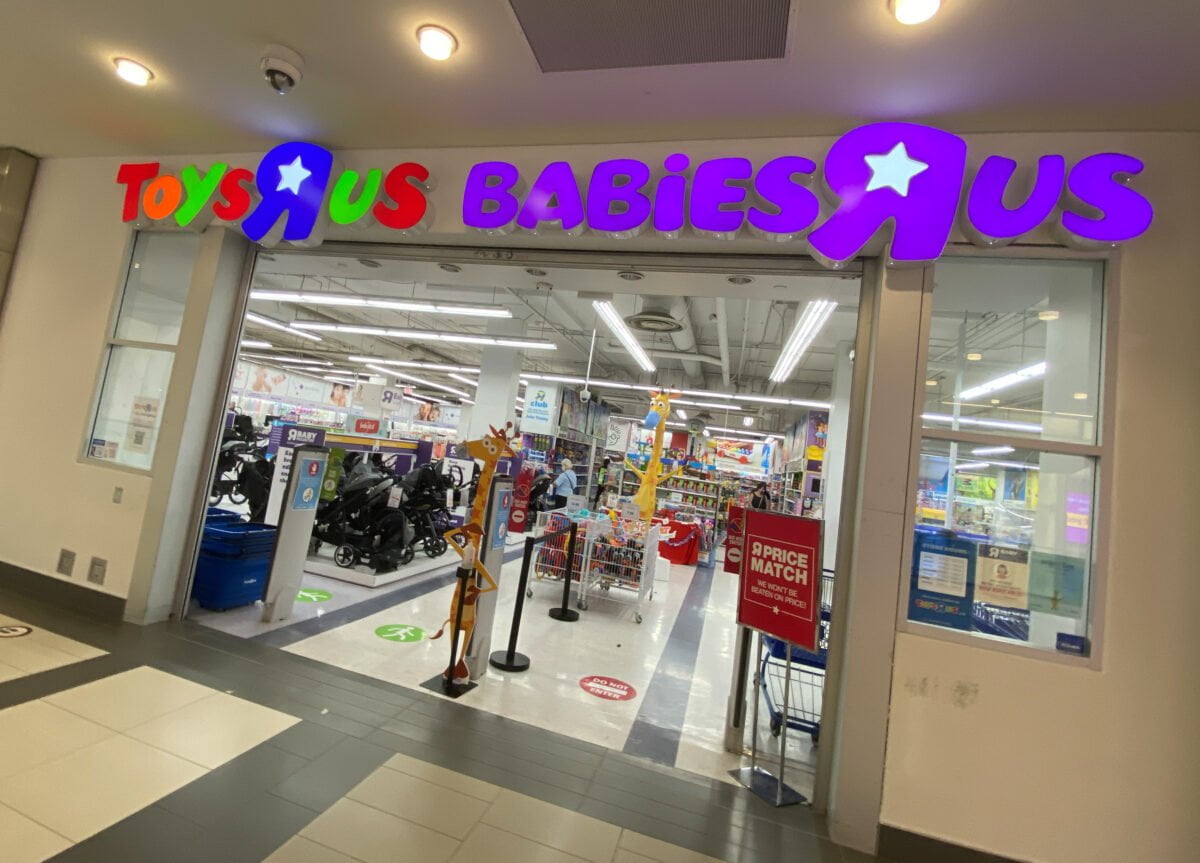
Toys"R"Us Canada Storefront

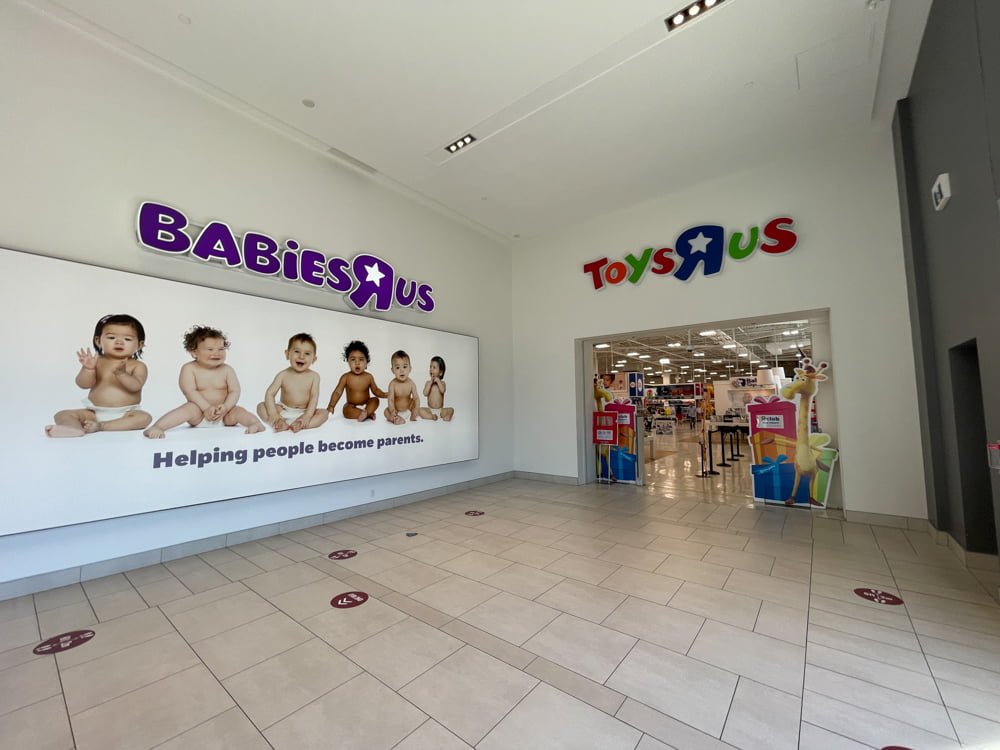
Putman Investments, a Canadian-based, family-owned company, is planning to acquire Toys’R’Us and Babies’R’Us Canada, Canada’s national toys, games and baby specialist, from certain affiliates of Fairfax Financial Holdings Limited.

Doug Putman headshot
DOUG PUTMAN

Doug Putman, founder of Putman Investments, said the two brands are extremely strong.

“Since its split from the U.S., we’ve watched the way in which the company has grown and focused on the Canadian customer. Much has been achieved and we’re excited to help to drive the business forward,” he said.

“They’re very iconic brands. I think most people grew up with them and have great feelings towards them. Obviously the toy industry is a great industry and sales are strong in the toy industry. With the pandemic, you’ve seen a lot of people choosing to buy a lot more things for their kids whether it’s for outdoor activities or indoor stuff.

“We obviously like retail a lot and so it just fit together for us really well.”

The two brands have 81 stores across all the provinces.

Toys R Us at Willowbrook Mall in Langley (July 2021). Photo: Lee Rivett.

Putman said the pandemic has demonstrated the resilience of the toys, games and baby sector and its value in the hearts of Canadians as was evidenced by the large growth of toy sales the last year.

“We clearly think there’s a lot of growth to be had. We’re 81 stores. I think from our viewpoint we believe that we can open a lot more. There’s a lot of cities out there that don’t have a Toys’R’Us or a Babies’R’Us so I feel there’s definitely some great opportunity,” he said.

“It’s a hard one to quantify. Do I think you can go from 81 stores to 110, 115? For sure. You can grow the chain by 30 plus stores and then the question is where else can you grow? There’s Canada but there’s lots of other countries out there. Where else do we see growth? There’s potential growth in other countries in the toy business. We’ll start with Canada and see where we can get Canada and where it goes.”

Toys ”R” Us Yonge Eglinton – Photo by Dustin Fuhs

Putman is a serial entrepreneur. He is also an owner with Sunrise Records, T. Kettle, FYE (For Your Entertainment), Alex Brands, HMV Retail Ltd (UK), The Granite Restaurant (Bancroft, Ontario), Makin Waves Marine (Bancroft) and Everest Toys (Hamilton).

On Sept. 19, 2017, Toys’R’Us (Canada) Ltd./Ltee announced that after voluntarily filing for Chapter 11 protection in the U.S., the company also commenced a parallel voluntary reorganization proceeding under the Companies’ Creditors Arrangement Act (Canada) in the Ontario Superior Court of Justice in Toronto, Ontario.

At the time, Melanie Teed-Murch, President of Toys’R’Us and Babies’R’Us Canada, said “the restructuring is intended to facilitate the continued success of our iconic brands; building a stronger company for our customers, business partners and team members.”

The company at the time had 82 stores.

“We have financing commitments to ensure normal operations throughout the CCAA proceedings,” said Teed-Murch.

“We are confident that this process will enable us to leverage Toys’R’Us’ existing strengths to succeed. These strengths include our ability to drive same store sales growth, strong EBITDA growth, a portfolio of strong proprietary brands, a leadership position on trend, first to market with exclusive products; and an evolving omnichannel strategy connecting customers wherever, whenever and however they want through our webstore, mobile and store shopping experience.”

Melanie Teed-Murch, Former President of Toys “R” Us and Babies ”R” Us Canada (Image: Toys R Us Canada)

On April 27, 2018, it was announced that Toys ‘R’ Us (Canada) Ltd. had  received both U.S. and Canadian court approval for its sale to Fairfax Financial Holdings Limited.

“Toys ‘R’ Us has a 34-year track record of standalone profitability in Canada (over the last three years, revenue has exceeded C$1 billion annually and, for the last nine years, EBITDA has exceeded C$100 million annually).  With over two decades working in Canada for Toys ‘R’ Us, Melanie has the experience necessary to lead the dedicated employees of Toys “R” Us for the benefit of all stakeholders, kids, families and communities across Canada,” said Prem Watsa, Chairman and CEO of Fairfax, at the time. “We look forward to building for the long-term and allowing the Toys “R” Us team in Canada to re-invest in the business, instead of the past history of just sending earnings to the U.S.”

In a news release on Thursday about the sale to Putman Investments, Watsa said “the transaction continues the implementation of the monetization plan for certain non-insurance holdings of Fairfax.”

Michael Kehoe

“Fairfax retains substantially all of the real estate acquired in our original purchase of Toys’R’Us Canada and, through a continuing royalty stream, we are provided with an opportunity to benefit over time in the future success of the business,” he said.

Michael Kehoe, broker/owner with Fairfield Commercial Real Estate, said the sale of Toys’R’Us and Babies’R’Us Canada by Putman Investments is a significant vote of confidence for Canadian retail and bricks and mortar shopping.

“With 81 stores and around 5,000 staff, this transaction is a major event on the Canadian retail scene in what has been a most unusual year so far.

These brands are a staple on the retail landscape across 10 provinces and their viability is enhanced with the Putman acquisition into the foreseeable future during these challenging times,” he said.

Canadian Retail News From Around The Web For August 19th, 2021

Canadian Retail News From Around The Web

Top Stories: National

Central/Eastern Canada News

Western Canada News

A Year-and-a-Half of Disruption and Uncertainty Creating Retail Forecasting Conundrum in Canada: Feature

Image: Getty Images

It goes without saying that the past 17 months or so have disrupted things, just about everything, in fact, across the entire world. For retailers in Canada, impacts of the COVID-19 global pandemic have, in some cases, turned the business upside down, resulting in chaos and confusion within numerous departments of the operation. Disturbances to the in-store experience and supply chains, as well as shifts in consumer behaviour and the ways product is transferred, have changed the parameters for retailers, yielding significantly altered cost and revenue structures by which the business is run. And, although many of the alterations are expected to be sustained, resulting in long-term impact and influence to which the industry will need to adjust, many are suggesting that it presents a more immediate challenge for retailers. In fact, according to Peter Woolford, industry observer and President of Clairmark Consulting Ltd., the changed parameters, combined with a distinct lack of normalcy over the past year-and-a-half, are making it next to impossible for merchants to comfortably predict what might happen next.

“A friend of mine, Jim Dion, once said that ‘retail isn’t brain surgery, it’s twice as hard,’” he says. “And, in the case of retailers operating today, that statement is exactly right. It’s going to be very difficult for them to sort out the signals that are coming from the marketplace. They’re going to have to look very carefully at what their customers have been doing over the last long while in order to get at least a glimpse of what to expect going forward. In fact, this may be a time when retailers have got to return to their old-fashioned gut decision-making. The data may not tell them as much as they had in the past, driving a need to make decisions based on that understanding and ‘feel’ that good merchants have for their customer and business.”

Factors and considerations

He goes on to explain that the recent Statistics Canada index for retail services, widely considered a proxy for margins within the industry, indicates that margins have remained strong throughout the pandemic. It’s a curious result that’s been generated in spite of the fact that retailers have generally been challenged with respect to sales, have been forced in many cases to shift channels of distribution and have also had to contend with all sorts of extra costs to the business. As a result, he suggests, the signals that are coming from the data and from their own store and company-specific sources are extremely difficult to properly read and accurately interpret.

“As retailers look at their back-to-school and holiday seasons, they’re going to be looking back at previous orders, months and years,” he says. “And, as they do, they’ll need to obviously adjust for periods when their store operations were closed and account for surges that occurred when those stores were allowed to be open. They’ll need to reflect that, in many cases, the number of stores that they have now as well as their GLA footprint may be less than they were pre-COVID. And, they’ll also be required to pay attention to signals they’ve seen over the course of the past few months as sales have surged and then dropped in response to the pandemic. Based on all of this, they’ll need to make their own personal call as to where everything is going to be in the Fall. Of course, all of this prognosticating will be contingent on the severity of a fourth wave of the virus and whether or not there will be any further lockdowns associated with it.”

What to expect?

Of course, the most dramatic shift that retailers will need to take into consideration and make adjustments for is the dramatic shift that occurred in consumer spending, accelerating a pre-existing trend from purchases made in-store to the online digital channels. Each retailer will be required to take a thoughtful look at their own experiences of late in order to make some inspired judgements with respect to the way their consumers will behave heading into the future. It’s easy, says Woolford, to assume that the shift toward online activity and spending will continue. However, he adds that it may not be the case and that at least a modicum of caution needs to be present in each analysis and decision that retailers make going forward. One area, however, that he believes the industry can be confident about is customer spending as we approach the final quarter of the year.

“Back to school was a bust for most retailers last year because nobody went back to school,” he acknowledges. “So, all of that buying that would have happened in late July, August and September simply didn’t occur or was really constrained. There were concerns about income among Canadians. And, many parents and their children were at home. There were a whole series of factors that had a big impact on customer behaviour last September that will not be present this year. And so, you’ve got the reduction in spending constraints, as well as a lot of pent-up demand to buy new clothes for work, outfits and footwear for the kids for school and new school supplies as well. Looking ahead to the holiday season, a lot of people are preparing to celebrate. They couldn’t do a great deal of celebrating last year. And it seems that the sentiment is that they’re going to make up for it this year, which will almost certainly result in strong holiday sales for the industry.”

Pragmatic and strategic approach

Despite the performance of retailers over these key shopping periods, however, it will be difficult to properly determine failure and success because of the uncertainty of our times. And, for those fool enough to compare and benchmark based on 2019 or 2020 sales data, Woolford believes they could be leading themselves astray from the realities of our current landscape, proclaiming false increases and growth rates. It’s a sentiment shared by retail consultant and expert, Ed Strapagiel, who believes that the approach taken by retailers heading into the next number of months, as we slowly approach a post-pandemic world, will need to be pragmatic and strategic in order to succeed.

“Things are going to continue to change and evolve over the next little while,” says Strapagiel. “They’ll eventually settle into something of a new normal. So, retailers can’t assume that the pre-pandemic environment and circumstances will return. Nor can they assume that the numbers they’ve been experiencing, or will experience, are going to continue for any amount of time going forward. What they’re going to need to do is incorporate strategies that are flexible, allowing them to react properly without over-committing to something simply because of a couple months of really strong sales.”

More uncertainty ahead

Strapagiel points to the potentially blatant error that retailers could make in comparing current sales with those of 2020, suggesting that it just shouldn’t be done. Instead, it’s the strategic and cautious approach to the numbers that he says will allow them to properly gauge the tenor of the times as we collectively move toward a new normal. It will allow for the flexibility that he says will be critical, enabling retailers to deal with any adverse conditions that may arise in the near-term, of which he says there may likely be many, impacting nearly all areas of the business.

“Because there has been such a shock to the system, right across the board, retailers and other businesses can expect to experience a good deal more uncertainty and turmoil, at least for the time being,” he says. “Take the current vulnerability of the supply chain as a great example. The economy and businesses run most efficiently when the level of both supply and demand stays about steady. If there’s even the slightest swing in either direction, it causes a big problem and opens up the potential of getting caught on the short end. Retailers aren’t going to be able to accurately, with any certainty, predict what’s going to happen with the supply chain going forward. And, they can likely expect more disruptions of a similar nature impacting other areas of their operations as well. It’s why it’s going to be critical over the next number of months for retailers to do what they need to do to ensure that they aren’t exposed in the event that more turbulence occurs.”

Evaluating growth

As tenuous as anyone’s understanding of the current and future market is, however, Woolford points to the fact that overall sales for the industry have stayed relatively in line with pre-pandemic numbers. Therefore, he suggests that if a retailer is showing a pattern of growth that’s similar to what they had prior to the outbreak of COVID, they can be fairly confident that they’re doing just as well as most everyone else within the industry, adding that some hard questions might need to be asked if they aren’t. And, as is often the case, with or without pandemic-induced uncertainty, the share of market is going to be one of the best indicators of growth over the next while, with a twist.

“If a retailer is taking share from their competitors, it means that they’re doing something better, smarter and faster than the rest,” Woolford asserts. “The difficulty with that in these circumstances, of course, is that COVID has taken out a fair amount of selling capacity. There are a lot of stores that have been closed. Retailers of all sizes have disappeared from the scene. And that means that there’s market share up for grabs. So, if your share hasn’t increased, you should be concerned, because there’s some loose share to be gained.”

Providing an experience

Woolford also stresses the impact that a rejuvenated service sector could have on retail sales. He explains that as economies become healthier, the very long-term shift from goods to services will continue, with COVID accelerating the trend significantly. It’s reminiscent of what’s already happening in the United States where consumers have been starved of experiences and are showing it in their spending. And, the same kind of behaviour is expected in Canada as our economies continue to open up. In fact, Woolford expects services to take some share from retail as a whole in the short-term, and possibly over the longer term as well, potentially leading to what he says will be a rise in real experiential retail.

“Experiential retail is one of the clever things that retailers have developed in response to the consumers’ desire for service. People have always visited physical stores, not just to buy things, but to experience retail as well. It’s fun. It’s interesting. It’s social. And the best retailers have realized that if they want to compete in a service-hungry market, if they want to bring customers into their establishments, they really need to dial up the experiences that they offer. In fact, the development of these types of engaging and interactive experiences may go a long way toward shaping what retail looks like in a post-pandemic world and consumer expectations going forward.”

Related Retail Insider Articles

Street Food Concept ‘The Halal Guys’ Launches Cross-Canada Expansion with New Locations

Image: The Halal Guys

New York City’s legendary The Halal Guys has big expansion plans in Canada after the beloved concept recently made its Western Canadian debut with a new location in Calgary – the first of five set for the city and the region.

Dan Rowe

Dan Rowe, CEO of Fransmart, which is based in the US and does the franchising for the brand worldwide, said The Halal Guys have one location in Calgary, two in Toronto metro, one coming in Vancouver and it’s about to sell the franchise rights for Edmonton and another group is about to sign up for five units in suburban Toronto.

“We’re going to go after the five or six biggest metro markets – Toronto, Montreal, Vancouver, Calgary, Ottawa and Edmonton – and then we’re going to see. We’re not sure but probably 40 or 50 total locations across Canada,” said Rowe.

“The food is lightning quick. The food is very, very fast. It’s fresh. The highest quality ingredients with Halal food. There’s a really good price value relationship. The uniqueness is this all started on carts in New York City. There’s a lot of copycats but there’s no one doing it exactly the same way we are.”

The Halal Guys Calgary Grand Opening
The Halal Guys Calgary Grand Opening – Image: The Halal Guys Facebook

Rowe said there are 97 locations worldwide with immense potential for growth.

“Our primary target is the 50 biggest markets in North America. We’re already in southeast Asia. We want to keep growing there. We’re in London, England already and we want to continue growing the bulk of England and you’ll hear about us going into Germany and France later this year. That’s the focus. We want to be the largest Halal restaurant chain in the world – going after all the biggest markets in the world,” he said.

The Calgary location opened on July 30 on the popular high street 17th Avenue S.W.

Andrew Eck

“What started as a single food cart on a busy Manhattan Street in 1990 has grown into a worldwide sensation, operating across the U.S., Canada, Indonesia, South Korea, and the United Kingdom. We are thrilled about opening our first location in Calgary, the second Canadian province we’re opening in after our Ontario locations in Toronto + Mississauga, and hope to continue expanding within this region, “ said Andrew Eck, Vice President of Marketing for The Halal Guys.

“Since the opening of our first franchise location in 2015, the brand has evolved to keep up with consumer and industry demands – from spearheading ghost kitchens, to adapting our restaurant design with customer health and safety in mind. The Halal Guys is committed to upholding our founders’ legacy, always providing quality service – and of course white sauce. We’re excited to watch this growth continue in Calgary and beyond, and support franchisee Youssef El Sweify in sharing his love for The Halal Guys with his community.”

Image: The Halal Guys

Calgary franchise owner Youssef El Sweify said the first location in Calgary is on a busy street for both vehicle and pedestrian traffic.

“You get thousands of people a week who go through this street,” he said. “I think this is a very centralized location for our first flagship store. Just easily accessible to anyone who is either downtown or throughout the community. Everyone just comes to this area to hang out.”

The concept became a well-known New York City brand largely via word-of-mouth thanks to Muslim cab drivers in the 90’s who appreciated delicious, fresh and well-priced American Halal Food.

“The Halal Guys is a unique concept, and there is nothing like it in Canada. The demand for The Halal Guys is very strong here, and we are extremely excited to be opening in the greater Calgary area,” said El Sweify.

The Halal Guys is the #3 Most Yelped business in NYC, and as reported by Time Magazine, it is in the Top 10 Most Yelped businesses in the United States. The Halal Guys is the largest American Halal Street Food concept in the world. Founded in 1990 by Mohamed Abouelenein, Ahmed Elsaka and Abdelbaset Elsayed, The Halal Guys is now franchising worldwide via a new fast casual / QSR restaurant format.

Called “one of the longest-running and best-known food-cart businesses in New York City” by the New York Times, The Halal Guys was named Buzzfeed’s #1 Most Popular Food Truck for 2013, and was featured on Bloomberg Television and Fox News.